• Skip to primary navigation
  • Skip to main content
  • Skip to primary sidebar
  • Home
  • About Us
    • Privacy Policy
    • Comment Policy
    • Disclosures & Disclaimers
  • Resources
    • Links, Essays & Articles
    • Fandomology!
    • CLAMP Directory
    • BlogRoll
  • Features & Columns
    • 3 Things Thursday
    • Adventures in the Key of Shoujo
    • Bit & Blips (game reviews)
    • BL BOOKRACK
    • Bookshelf Briefs
    • Bringing the Drama
    • Comic Conversion
    • Fanservice Friday
    • Going Digital
    • It Came From the Sinosphere
    • License This!
    • Magazine no Mori
    • My Week in Manga
    • OFF THE SHELF
    • Not By Manga Alone
    • PICK OF THE WEEK
    • Subtitles & Sensibility
    • Weekly Shonen Jump Recaps
  • Manga Moveable Feast
    • MMF Full Archive
    • Yun Kouga
    • CLAMP
    • Shojo Beat
    • Osamu Tezuka
    • Sailor Moon
    • Fruits Basket
    • Takehiko Inoue
    • Wild Adapter
    • One Piece
    • After School Nightmare
    • Karakuri Odette
    • Paradise Kiss
    • The Color Trilogy
    • To Terra…
    • Sexy Voice & Robo
  • Browse by Author
    • Sean Gaffney
    • Anna Neatrour
    • Michelle Smith
    • Katherine Dacey
    • MJ
    • Brigid Alverson
    • Travis Anderson
    • Phillip Anthony
    • Derek Bown
    • Jaci Dahlvang
    • Angela Eastman
    • Erica Friedman
    • Sara K.
    • Megan Purdy
    • Emily Snodgrass
    • Nancy Thistlethwaite
    • Eva Volin
    • David Welsh
  • MB Blogs
    • A Case Suitable For Treatment
    • Experiments in Manga
    • MangaBlog
    • The Manga Critic
    • Manga Report
    • Soliloquy in Blue
    • Manga Curmudgeon (archive)

Manga Bookshelf

Discussion, Resources, Roundtables, & Reviews

Features & Reviews

Manga the Week of 6/21/17

June 15, 2017 by Sean Gaffney, Anna N, Ash Brown and Michelle Smith 1 Comment

SEAN: It’s that time again. Time for this list of titles to take forever, time for your wallet to scream in pain, time for Anna to wonder why Yen doesn’t license more shoujo. Yes, it’s that week of the month.

Dark Horse has another Hatsune Miku manga, this one called Acute.

Drawn and Quarterly gives us another Kitaro volume, The Great Tanuki War. I’ve reviewed it here.

ASH: I’m always ready for more Kitaro!

SEAN: Haikasoru has the 4th Legend of the Galactic Heroes novel, which seems more timely than ever these days.

ASH: That it does.

MICHELLE: Someday, I really will read these.

ANNA: I just got the first one!

SEAN: J-Novel Club has the 4th Grimgar of Fantasy and Ash out digitally.

Their debut this week is If It’s For My Daughter, I’d Even Defeat A Demon Lord, which is a very light novel title if nothing else. J-Novel’s founder described it as being “like Bunny Drop”, then had to hurriedly walk that back after fans recoiled in horror. The good parts of Bunny Drop, apparently.

Kodansha continues to rush Nodame Cantabile to its finish digitally, here’s Vol. 23.

MICHELLE: Woot!

SEAN: Kodansha in print has a 7th volume of Inuyashiki, which recently ended in Japan.

And an 11th volume of Kiss Him, Not Me!, which despite its cover is unlikely to end with anyone married.

There is also a 7th Real Account.

Seven Seas gives us a 3rd volume of “would you read this in public?” series Holy Corpse Rising. (Answer: no.)

The new title is Otome Mania!, a reverse harem series that runs in Sylph, and whose author has done a lot of Shonen Jump BL doujinshi. So, pretty much the opposite market to Holy Corpse Riding.

Viz gives us the 21st volume of Dorohedoro, which crawls closer to its conclusion, but I don’t mind it taking so long.

ASH: I continue to adore Dorohedoro. It will be sad when it ends, but it has been an astonishing ride so far.

SEAN: Viz’s big debut is Golden Kamuy, a Young Jump title which sounds absolutely amazing, and co-stars an Ainu woman? Sign me up.

ASH: I’m really looking forward to this series!

ANNA: This looks cool.

SEAN: The 6th Goodnight Punpun omnibus is also out next week.

ASH: We’re drawing near the end of this depressing yet compelling work.

SEAN: And an 11th Master Keaton.

Lastly (from Viz, don’t get excited), there’s a lucky 13th volume of Tokyo Ghoul.

That leaves Yen, but we’re not even halfway through the list. A huge number of light novels next week, starting with the 10th Accel World, which I hope is more lighthearted after the last few books.

Is It Wrong To Pick Up Girls In A Dungeon’s side story, Sword Oratoria, is not making viewers of the anime adaptation happy, but will they enjoy this 3rd light novel more?

The first of two debuts this month, Magical Girl Raising Project is one of THOSE series, featuring a lot of cute and determined magical girls who will be brutally slaughtered.

The 4th volume of Psycome goes off campus, as our heroes deal with Eri’s family and past.

Re: Zero’s 4th volume starts a new arc which no doubt means more deaths and save points for our hero.

The most exciting debut of the week for me is Sound Euphonium, a book about a high school band that was adapted into a beloved anime series. I believe this is the only volume licensed, though a sequel is out in Japan. Buy it, I hear it’s great.

MICHELLE: I don’t often go in for light novels, but for this I think I’ll make an exception.

ASH: I’ll absolutely be reading this. Band was the highlight of my high school years.

SEAN: Spice & Wolf turns out to be not quite over, as we get this 18th volume of the series.

And the first two Sword Art Online: Progressive novels are out digitally next week.

On to Yen’s manga. There’s a 5th Aoharu x Machinegun.

The Asterisk War has a 4th volume of its manga adaptation.

And Bungo Stray Dogs gets a 3rd volume.

The Devil Is A Part-Timer’s 9th manga volume is out as well.

And a 7th Dragons Rioting. Sorry, no witty remarks, no snark, just a long list of things I don’t read.

I do read Erased, though, and look forward to the 2nd omnibus.

ASH: It should be good! The first omnibus was a little slow for me at first, but by the end I was hooked.

SEAN: If you want to read Grimgar but hate books, here is the first volume of the Grimgar of Fantasy and Ash manga.

And there’s a 6th volume of Handa-kun.

The Honor Student at Magic High School is once again behind the light novels, to my relief. Here’s the 7th manga volume.

How to Raise a Boring Girlfriend has reached Vol. 6.

Kiniro Mosaic has a 3rd volume of basically not a lot happening to cute, yuri-ish girls.

My Youth Romantic Comedy Is Long As I Expected still has a long title, even 5 volumes in. (A reminder this sis the manga adaptation, though Amazon has gotten better at differentiating the two now.)

A spin-off of No Game No Life (whose own manga adaptation seems to be on hiatus in Japan), No Game No Life, Please! focuses on Izuna, as the title’s verbal tic likely gave away.

Of the Red, the Light and the Ayakashi may not make much sense to me, even after 7 volumes, but it’s got style.

MICHELLE: I’m enjoying it!

ASH: I’ve been enjoying it, myself.

SEAN: And we have a 7th Prison School omnibus.

ASH: I’m still reading this series, too. It’s definitely not for everyone, though.

School-Live! still has not run out of zombies, as we have Vol. 7 here.

And a 7th Strike the Blood manga will not surprise, but may satisfy anyway.

Today’s Cerberus gives us a 4th print volume of the already out on digital series.

Lastly, the your name novel gets a manga adaptation, and this is Vol. 1.

Phew. What’s for you next week? Or does the list just make you dizzy?

Filed Under: FEATURES, manga the week of

Uncomfortably Happily

June 15, 2017 by Ash Brown

Uncomfortably HappilyCreator: Yeon-sik Hong
Translator: Hellen Jo
U.S. publisher: Drawn & Quarterly
ISBN: 9781770462601
Released: June 2017
Original release: 2012
Awards: Manhwa Today Award

Lately it seems as though there has been something of a renaissance or Korean literature in English translation. Korean comics haven’t yet experienced quite the same kind of resurgence, but they do continue to be licensed and translated. One of the most recent and notable manhwa releases in English is Yeon-sik Hong’s aptly named Uncomfortably Happily. Previously published in France in 2013 under the title Historie d’un Couple (History of a Couple), Uncomfortably Happily was originally released in Korea in two volumes in 2012 where it won the Manhwa Today Award. Drawn and Quarterly’s English-language edition of the work collects the entirety of Uncomfortably Happily in a single volume and features a translation by Hellen Jo, an accomplished comics creator and illustrator in her own right. The volume also includes a personal essay by Jo. Uncomfortably Happily is Hong’s first major personal work, a memoir of the short time he and his wife lived in the Korean countryside. Prior to its release, Hong was predominantly involved in commercial creative projects.

Yeon-sik Hong and Sohmi Lee are recently married and looking for a new home; their current apartment is on loan to Yeon-sik from one of his previous publishers and it’s past time that they move on. Since they’ll need to leave anyway, the couple decides to take the opportunity to find a place that’s more suited to their needs. Somewhere quiet and less complicated, congested, and expensive than city life in Seoul; somewhere they can both focus on their creative work. Eventually the two become enamored with a house and a bit of land for rent on the top of a mountain in rural Pocheon. With the clean air, beautiful countryside, and calm environment it seems like the perfect place for them–at least at first. Yeon-sik, Sohmi, and their three cats make the move only to discover that living in the country brings along with it its own sorts of challenges. But despite the isolation, inadequate public transportation, confrontations with hostile hikers, inclement weather, and encroaching development, they slowly build a home for themselves. It can be difficult at times, though, and some things never really change–financial hardship, personal anxieties, and looming deadlines don’t simply disappear and it’s just as easy to find distractions in the countryside as it is in the city.

Uncomfortably Happily, page 131Though I currently live in a more urban environment, I grew up and have spent most of my life in a very rural area. In Uncomfortably Happily, Hong captures beautifully what it is like to live in the country, both the good and the bad, the satisfaction and the stress. The volume’s chapters are divided by season, the narrative perfectly conveying the rhythms of the natural world and the lifestyle that is so closely dependent upon those rhythms, including the winters that seem to last forever with no relief in sight. Hong’s style of illustration is relatively simple but the attention given to the detail of the land- and cityscapes establish a real sense of place. In addition to the external world, the visuals in Uncomfortably Happily also reveal Hong’s internal mindscapes and imaginative fantasies. Though the subject matter can often be quite serious, Hong takes a charming and lighthearted approach. The small family (animals included) frequently break into musical numbers and Hong’s psyche manifests on the page in both amusing and affecting ways. But while humor is generally present in Uncomfortably Happily, the manhwa is also a sincere and honest work.

Uncomfortably Happily is a straightforward yet layered story of the day-to-day life of a newlywed couple going through a major transition in their life. There is the move to the countryside itself and all that entails, but Uncomfortably Happily is also the story about Hong’s emotional and mental turmoil as he struggles with professional and personal insecurities. At the beginning of Uncomfortably Happily Hong is already approaching burnout and the potential for a breakdown doesn’t seem to be very far behind; meanwhile Lee is making tremendous progress in her career as a picture book illustrator. It was bound to happen eventually regardless of location, but Hong having to confront and come to terms with his own abilities and limitations, wants and needs while living on a secluded mountaintop has a certain poetic appropriateness to it. While Hong’s particular situation and psychological journey are certainly unique, the themes explored in the manhwa are universal; Uncomfortably Happily is an engrossing and immensely relatable work.

Thank you to Drawn & Quarterly for providing a copy of Uncomfortably Happily for review.

Filed Under: REVIEWS Tagged With: Drawn and Quarterly, manhwa, Manhwa Today Award, Yeon-sik Hong

Golden Kamuy, Vol. 1

June 15, 2017 by Katherine Dacey

If you have a strong constitution and a healthy appetite for adventure, you’ll cotton to Golden Kamuy, a solid, if sometimes workmanlike, manga that reads like a mash-up of The Revenant and The Treasure of the Sierra Madre. Set on the Hokkaido frontier in 1905, Golden Kamuy tells the story of Saichi “Immortal” Sugimoto, a battle-scarred veteran of the Russo-Japanese War who’s desperately trying to raise money for a fallen comrade’s widow. After a chance encounter with a chatty ex-con, Sugimoto learns about a hidden treasure worth millions. Sugimoto then sets off to find the gold — no mean feat, as the map pinpointing its location has been tattooed onto the backs of a dozen prisoners, each with his own design on the loot.

Sugimoto faces another major obstacle to success: the harsh Hokkaido winter. A second fortuitous meeting — this time with an Ainu teenager — furnishes Sugimoto with a expert guide to wilderness survival. Like Sugimoto, Asirpa is searching for the treasure, albeit for a different reason: the men in her village died to prevent it from falling into Japanese hands. Though Asirpa slots into the common and often stereotyped role of “native sidekick,” she’s not just a repository of useful skills and earthy wisdom; she’s an individual with the courage to challenge Sugimoto when his determination shades into ruthlessness, and the tenacity to fight her way out of difficult situations by improvising traps, creating smokescreens, and throwing punches. Oh, and she brings down a hungry bear with a single well-placed arrow. She’s a baller, and one of the best reasons to read Golden Kamuy.

As skillful as Noda may be in establishing his setting and characters, the script suffers from frequent — if brief — patches of clumsy dialogue and narration. One of the most egregious examples occurs in chapter four, when Sugimoto goes mano-a-mano with another soldier. The artwork makes it plain that Sugimoto’s opponent gets the best of him by grabbing and disabling his rifle, but Noda interrupts the scene to inform us, “The moment they moved away from each other, the man depressed the bolt stop and pulled out the bolt, rendering Sugimoto’s rifle useless.” Such intrusions are all the more puzzling because Noda’s draftsmanship is crisp, stylish, and easy to parse; even when Noda indulges in an extreme close-up or odd camera angle, we’re never in doubt about what’s happening.

Speaking of Noda’s artwork, he draws guts, wounds, and scars with a surgeon’s precision, offering a nightmarish vision of bodies torn apart by bullets — and bears. Though a few sequences skirt the line between dramatic necessity and cinematic flourish, these horrific images play an essential role in conveying the brutality of frontier experience and the horrors of trench warfare. Anything tamer would rob the story of its urgency, and reduce Sugimoto to a simple opportunist, rather than a fierce survivor who’s cheated death dozens of times.

So if you can soldier past the tin-eared dialogue and frequent arterial spray, you’ll be rewarded with a briskly paced thriller that transports you to another time and place, capturing the Hokkaido wilderness in all its squalor, beauty, and promise. Recommended.

A copy of volume one was provided by the publisher. Golden Kamuy will be available on June 20, 2017.

GOLDEN KAMUY, VOL. 1 • ART AND STORY BY SATORU NODA • TRANSLATION BY EIJI YASUDA • VIZ MEDIA • RATING: M FOR MATURE (FOR READERS 18+) • 192 pp.

Filed Under: Manga, Manga Critic, REVIEWS Tagged With: Action/Adventure, Satoru Noda, Seinen, VIZ Signature

Yona of the Dawn, Vol. 6

June 15, 2017 by Sean Gaffney

By Mizuho Kusanagi. Released in Japan as “Akatsuki no Yona” by Hakusensha, serialization ongoing in the magazine Hana to Yume. Released in North America by Viz. Translated by JN Productions, Adapted by Ysabet Reinhardt MacFarlane.

One of the hallmarks of many a shoujo series is the idea of the man falling for a woman, among other reasons, because of her sheer stubbornness – the idea being that he no longer sees her as merely a weak girl who can’t do anything because of the fire in her eyes. And given that Jaeha is proving to be a tough nut to crack, it makes sense that we’d get one of these scenes with him and Yona as well. Of course, Yona of the Dawn is not your standard high school romance, and therefore the stubborn streak that Yona has involves truly death-defying walks along a sheer cliff face to acquire a much-needed herb. Jaeha can see how terrified Yona is of the whole thing, but also sees her reasoning behind why she still does it (mostly as she narrates it aloud to him, admittedly). It’s the best scene of the book.

The rest of the book is pretty nifty as well. We meet the pirate crew that Jaeha is working with, and they’re the ‘good’ kind of pirates, of course, led by a badass old woman who I hope we see more of but I suspect will be gone after this arc. The pirates are here to stop the evil slave traders kidnapping young girls, which makes Yona an obvious choice to be bait. (The other choice, equally obvious if you know this series, is Yun, who fills the tsundere role admirably and looks fantastic in women’s clothing (as he says himself). This does lead us to one of the series’ running themes, which is that it’s very difficult to conduct a secret mission to save the kingdom if you have fiery red hair that everyone knows is like the Princess. Yona’s solution here is very clever, and another sign of how she’s growing by leaps and bounds.

As for the romance side of the manga, well, Jaeha is falling for Yona, though he’s not quite ready to admit it. The second best scene in the book is when he talks to Hak and tries to get the measure of what the relationship between him and Yona is. Hak is very tightly wound, with most of his affection for Yona coming out as teasing and the occasional serious “dedication to duty” conversation, but it becomes clearer the longer he watches her that there is an intense pent-up desire there. This is normally the sort of thing that can’t stay pent up forever, but given this is a Hana to Yume romance, I expect it will likely stay pent up for quite some time. Still, it’s beautifully conveyed.

Ending with a truly loopy alternate universe omake (I love the idea of Yona as a ditz with a flower growing out of her head), this is another strong volume in an already strong series. Still one of the best Shojo Beat titles being released right now. I can’t wait to see what happens next.

Filed Under: REVIEWS, yona of the dawn

My Big Sister Lives in a Fantasy World: The Melancholy of the High School Girl Light Novel Author?!

June 13, 2017 by Sean Gaffney

By Tsuyoshi Fujitaka and An2A. Released in Japan as “Neechan wa Chuunibyou” by Hobby Japan. Released in North America digitally by J-Novel Club. Translated by Elizabeth Ellis.

I will save my objections for later in the review, so let me start by saying that a lot of this book is fun as usual. The author is getting more blatant in his Haruhi rip-offs, from the title of this volume to the fact that the villain is disappointed at Yuichi’s proactive personality and says she wants someone who says “yare yare” all the time, and it’s still funny. Mutsuko gets a lot less to do here than she normally does, but is still amusing in a “if I start to take her seriously she will be a Cthulian horror’ sort of way. Aiko and Yoriko make a good double act, and I’m amused at people saying Aiko’s not as much of a threat in the ‘love interest’ category as she’s too passive. And the overarching plot, which looks like it will be the core of the rest of the series, is not all that bad, taking the metatextual Haruhi stuff and trying to spin it in a dramatic way.

But enough of that, let’s move on to Kanako, who gets the spotlight here at last. I admit I had been misreading her in the first couple volumes as something of an airhead type, but now it becomes apparent that it’s more ‘withdrawn from reality’. And more to the point, Kanako has suicidal thoughts, and the book begins with her attempting to kill herself (it’s when she first meets Mutsuko and Yuichi). I will be fair, this scene works quite well. Mutsuko’s flip “that’s boring!” grates, but her solution, although ludicrous, teaches an important lesson, one that I think Kanako grasps. No, the trouble I have with Kanako’s subplot comes later in the book. Her relationship with her mother is written in a completely serious, realistic way, with no parodic elements at all, and the scene where she sees her, happy with her new family, is devastating. Having the villain take credit for her entire past, including her mother wanting a son so much that it poisoned her entire relationship with her child, is frankly awful and makes light of Kanako’s pain.

As for the climax of the book, Yuichi pays some lip service to the fact that you can’t just magically fix a suicidal person’s thoughts with a few well-intentioned words, but then he goes ahead and does it anyway. And Kanako is now added to the love interest pile, and I have a sneaking suspicion that we aren’t really going to touch on her problems again. It’s maddening in many ways, and one reason I find it hard to fully embrace this series – if it’s going to be a parody of Haruhi and similar series, it shouldn’t be using darker subplots like this one and the kidnapped girls one from Book 3, and if it does use the serious plots it should commit to them seriously and not handwave it away with the power of Yuichi’s GAR. And so I’m left with feelings of ambivalence. I do hope the next book uses Mutsuko more, as I find the series at its most intriguing when it’s examining her incredibly broken mindset.

Filed Under: my big sister lives in a fantasy world, REVIEWS

Bookshelf Briefs 6/12/17

June 12, 2017 by Michelle Smith and Sean Gaffney Leave a Comment

Anne Happy, Vol. 5 | By Cotoji | Yen Press – There’s a new character introduced in this volume who I thought at first was going to be an antagonist but it turns out is merely another one of our broken, unlucky heroes. That said, “terminally shy” is not really unlucky so much as a basic personality flaw. As for the class, we’re looking beyond graduation, and while I will marvel if some of these ditzes manage to survive in the adult world, it’s a good thinking exercise to get them to ponder dreams they’d like to achieve—Botan as a school nurse is amusing and obvious, Hibari’s “botanical research technician” a bit less so. As for the culture festival, they’re doing a play, probably to continue trying to force them to interact with others till they can do it more naturally. Mildly recommended. – Sean Gaffney

Captive Hearts of Oz, Vol. 2 | By Ryo Maruya and Mamenosuke Fujimaru | Seven Seas – As I noted in my review of the first volume, folks did not particularly read Alice in the Country of Hearts for the reverse harem—or if they did, the worst volumes of it were only concerned with that. No, they read it for the dark subtext, and I am pleased that Captive Hearts of Oz is well aware of that and turns the dark subtext into text. There are some sweet, heartwarming moments, don’t get me wrong, such as Leon finding his courage and Nick’s daring rescue of Hayward. But there’s also chilling stuff here, as one of the crows we met earlier is vanished into black mist, and after seemingly being killed in the rapids, Nick just… comes back wrong. I am fully down with this series now. – Sean Gaffney

Fairy Tail: Rhodonite | By Kyouta Shibano | Kodansha Comics – This says volume two on it, but it’s actually a single volume spinoff—volume one was Twin Dragons of Sabertooth. This second volume deals with Gajeel and his past, and as such has a lot of cool fights, disturbing revelations and shonen stubbornness. But of course I didn’t get it for that reason. I got it because Gajeel x Levy 5-evah. And I am pleased to note that fans of this pairing will have a lot to work with, from Levy’s realization that she’s never really asked much about Gajeel’s past, to Juvia’s straight-up shipping of the two of them (who can blame her), to Gajeel’s pure and honest respect for Levy. They’ve come a long way from his beating her to unconsciousness and crucifying her. Recommended for Gajevy fans. – Sean Gaffney

Food Wars!: Shokugeki no Soma, Vol. 18 | Story by Yuto Tsukuda, Art by Shun Saeki | VIZ Media – I was hesitant going into this volume since the beginning of the “Erina’s horrible dad takes over” arc was rather distressing. It isn’t over yet, and several research societies get squashed in the shokugeki they requested to challenge the order to disband. Still, Yukihira does prevail in his rigged showdown with the fate of Polaris dormitory on the line, so there’s some hope. Too, we learn that Azami at one point idolized Yukihira’s dad and is now doing all of this because the “rotten and corrupt” culinary world “dared to ruin” him. Oh, and Erina now knows that the person she looks up to more than anyone is Yukihira’s dad, causing her to reflect on all the times she’s treated him shabbily. Probably my favorite part of this volume is seeing her among the Polaris gang; I hope she loosens up a bit more under their influence. – Michelle Smith

Haikyu!!, Vol. 12 | By Haruchi Furudate | VIZ Media – Ah, what a tremendously satisfying volume! With little preamble, the first game of the Spring Tournament preliminaries begins. Everyone is much more confident now after spending so much time practicing against strong Tokyo teams, and Karasuno makes it through its two exciting games, earning a spot in the qualifier round. Essentially, this volume offers both in-game awesomeness as well as training montages, as the two months between tournaments pass quickly, with various guys making improvements, Hinata and Kageyama’s new quick set upping its success rate, and even Tsukishima asking for tips on how to effectively block a superior player. It’s also great to see Hinata getting respect on a wider stage. Sounds like volume twelve will be a great one, too! – Michelle Smith

Murcielago, Vol. 2 | By Yoshimurakana | Yen Press – Hinako is on the cover of this volume, and she does get a chapter of focus to herself, which mostly serves to make us wonder if she’s meant to be sixteen years old or six. It’s also unclear exactly what her relationship with Kuroko is beyond ‘buddy with car.’ Kuroko certainly seems like she can handle things herself, finishing up the murder mansion subplot with a few more corpses and a lot more gore—though less than I expected, as the murderous maid loses a few limbs but not her life—something it’s hinted she may regret. We also begin a new arc, trying to rescue a girl from her father, who may be a serial killer. If you like lots of over the top violence and lesbian sex, Murcielago STILL may not be for you—it’s pretty twisted. – Sean Gaffney

Please Tell Me! Galko-chan, Vol. 3 | By Kenya Suzuki| Seven Seas – As with the second volume, this one ramps back on the sex talk, though there is still some as we discuss pubic hair and the benefits and drawbacks to large breasts. Mostly what we get is more character-based gags, as Galko and company go video shopping, visit an art museum, and have a school festival, which brings about the majority of the drama in the latter half of the volume—Galko is excellent at reading aloud, so is drafted as narrator of the school play. But this means she can’t do the festival with Otako and Ojou! Fortunately, she has a childhood friend who, while he’s attracted to her, also understands her needs, and the problem is solved to a degree. A lot of fun. – Sean Gaffney

Rose Guns Days Season Two, Vol. 3 | By Ryukishi07 and Nana Natsunishi | Yen Press – This ended up being a lot more idealistic than I was expecting, even if there was a bit of manufactured drama when Zel’s real identity is revealed. The chase is on to try to rescue her father and also help Rose not surrender to the Chinese—something Lee is happy to help with provided he can consolidate his power base. Also, turns out a few of the cast from Season One are not quite as killed off as they appeared. The whole season is set up like a heist film, and a heist is what you get in the end. If there’s a problem, it’s that it all goes far TOO smoothly—you get the sense that even more was cut from the visual novel to squeeze this one. On to season three, which is in 1949. – Sean Gaffney

Filed Under: Bookshelf Briefs

My Week in Manga: June 5-June 11, 2017

June 12, 2017 by Ash Brown

My News and Reviews

Last week at Experiments in Manga, I announced the winner of the Anonymous Noise give away. The post also includes a list of manga which have characters who have notable singing voices. I got a particularly kick out of the fact that not all of the manga were necessarily music manga. Also, a bit of a heads up: I’m switching around my usual posting schedule. Normally the second week of the month would be devoted to the Bookshelf Overload feature, but I’ll be posting an in-depth review this week instead–Yeon-Sik Hong’s award winning manhwa Uncomfortably Happily is being released in English by Drawn & Quarterly on Tuesday and I’m working on putting the finishing touches on my write-up. Spoilers: I enjoyed the work immensely.

As for interesting reading elsewhere online: Hitomi Yoshio, a professor and translator, wrote a little about teaching Japanese Literature in Translation. And speaking of Japanese literature in translation, it looks like the second volume of Yu Godai’s Quantum Devil Saga: Avatar Tuner will finally be released sometime later this summer. (I enjoyed the first volume a great deal when it was published three years ago and sincerely hope that the wait between future volumes is much shorter.) I’ve known about the upcoming translation of Kazuki Sakuraba’s A Small Charred Face for a while, but now it’s official–Haikasoru will be releasing the novel in the fall. Sakuraba may best be known as the creator of Gosick, but my introduction to author’s work was through Red Girls: The Legend of the Akakuchibas, which I loved. Finally, I’d like to draw attention a series of fascinating Golden Kamuy Cultural Notes & Video References put together by @zeppelichi on Twitter.

Quick Takes

Blinded by the IceBlinded by the Ice by Saicoink (An Nguyen). In general, I don’t buy very many fan works or doujinshi, generally preferring to support artists’ original comics over their explorations of other people’s creations. However, I do occasionally make exceptions and I was very excited for Saicoink’s Yuri!!! on Ice fan book Blinded by the Ice. In addition to some bonus comics, illustrations, and research notes, the volume focuses on two main stories. The first and longest, Don’t Leave Me This Way, was probably my favorite comic of the two. I enjoyed Makes Me Think of You as well–it’s a charming and sweet holiday story which takes place after most of the events of the original anime series–but Don’t Leave Me This Way is the one that really impressed me. The comic is set in the late seventies and early eighties, featuring an alternative universe in which Victor and Yuri’s relationship must develop over both time and distance due to the fact that Victor is a high-profile athlete for the USSR. The only time the two of them can really meet in person is during competitions and even then it is very challenging and difficult. Blinded by the Ice is fantastic; I love the humor and insight that Saicoink brings to the stories and the time and effort Saicoink put into research really pays off, too.

Delicious in the Dungeon, Volume 1Delicious in Dungeon, Volume 1 by Ryoko Kui. I enjoy tabletop role-playing games (or at least enjoy being present while other people are playing them) and I love food manga, so Delicious in Dungeon was a series that immediately caught my attention. The groups that I’ve played pen and paper RPGs with actually tended to devote a fair amount of attention to the food within the games. Our adventures never quite turned out how it does for Laois and his dungeoning companions, though. When, partially due to hunger, his party is nearly wiped out by a dragon, Laois and the other survivors find themselves facing the prospect of having to launch a rescue mission to save one of their own. There’s just one problem: their supplies are limited and they don’t have any food. And so Laois proposes that they simply find what they need to eat and sustain themselves inside the dungeon itself, something that he’s apparently been wanting to try for a very long time. The others, on the other hand, are much more skeptical. Conveniently, they are all fortunate enough to meet a dwarf who is much more skilled and experienced than Laois when it comes to making monsters palatable. The conceit of Delicious in Dungeon is frankly brilliant. Unsurprisingly, I loved the first volume of the series and definitely plan on reading more.

Descending Stories: Showa Genroku Rakugo Shinju, Volume 1Descending Stories: Showa Genroku Rakugo Shinju, Volume 1 by Haruko Kumota. Although I haven’t actually had the opportunity to watch it yet, Kumota’s manga series Descending Stories was first brought to my attention due to its recent anime adaptation. The excitement surrounding the anime and the licensing of the original manga made Descending Stories one of the debuts I was most looking forward to in 2017; I was not disappointed. Rakugo is a traditional Japanese performance art which isn’t as popular as it once was but still has a devoted following. Familiarity with rakugo isn’t at all necessary to enjoy Descending Stories, but readers who have at least some basic understanding of it will likely get even more out of the series. But while rakugo is an important and interesting part of Descending Stories, it’s the relationships and drama between the characters that really make the manga so engrossing and compelling. Kyoji is an outgoing young man who has recently been released from prison. Curiously, the first thing he does with his freedom is to seek out Yakumo, a famous rakugo artist, and demand to become his apprentice. Up until this point Yakumo has always rejected those who want to study under him, but to everyone’s surprise on a whim takes Kyoji into his household.

Filed Under: FEATURES, My Week in Manga Tagged With: comics, Delicious in Dungeon, Descending Stories, Haruko Kumota, manga, Ryoko Kui, Saicoink, Yuri on Ice

Delicious in Dungeon, Vol. 1

June 11, 2017 by Sean Gaffney

By Ryoko Kui. Released in Japan as “Dungeon Meshi” by Enterbrain, serialization ongoing in the magazine Harta. Released in North America by Yen Press. Translated by Taylor Engel.

This is, when you come right down to it, a straight up mix of two popular genres right now. Dungeon Crawling is popular in both isekai works and others that just like the genre of the fantasy RPG. And cooking manga has always been popular in Japan for years, with people spending pages upon pages telling readers how delicious they can make something in great detail. Combining the two is a clever idea, and on the face of it the main reason to read this book, but I’m going to be honest, I found the actual RPG and food sections rather boring. No, the real reason to read this book are the main characters, who, while not the most original bunch, do give a off a certain weird charm – emphasis on the weird. They’re individually eccentric, but even more eccentric when put together.

Our party seems very standard by RPG terms: among others, they have a front-line warrior, an elf mage, and a small, grumpy trap expert. At the beginning of the title, they have even more people, but they miscalculate what supplies and food they need to successfully fight off a monster, and as a result are exhausted and starved. So they lose and have to run away – and worse, our hero’s sister in literally eaten by one of the monsters. When most of the rest of their team quits, they’re left in dire straits – the sister can be rescued, but only if they return immediately. Thus a truly foolish, desperate idea – save on supplies by eating the monsters they capture. With the help of a dwarf who had a lot of cooking knowledge and very little common sense, they set out to slowly return to where they left off and maybe try to rescue the sister, though honestly they’re taking so long I’m not expecting much.

As I said above, the main reason to read this is the off-kilter sense of humor it has. Laios, our hero, is a monster freak with a lot of idealism and book knowledge, but it’s also made him a bit of a ditz. Marcille, the elf mage, is a walking font of common sense for the most part, forever forced to be the tsukkomi and be shocked to find the technically gross things she’s eating are actually really tasty when cooked properly. The other one with some common sense is Chilchuck, the trap expert, and he contrasts well with the dwarf, Senshi, who is a bit of a pop-eyed lunatic when he’s not talking about food. Fortunately, Chilchuck is easily flattered. Together, the four of them get into vaguely death-defying situations as they attempt to save Laios’ sister, whose fate seems to be a bit of a running gag, but I suspect will pop up later on if only as the alternative is a bit too dark.

I’m not exactly sure if this is a series I’d want to keep reading on a regular basis, but the first volume was amusing enough, and is definitely worth it if you enjoy dungeon crawls. As for the foodie crowd… possibly less so.

Filed Under: delicious in dungeon, REVIEWS

Yona of the Dawn, Vol. 6

June 11, 2017 by Anna N

Yona of the Dawn Volume 6 by Mizuho Kusanagi

I’m always happy when a new volume of Yona of the Dawn comes out. The cover of this volume, featuring Yona and Sinha sheltering from the rain under a giant leaf, is particularly adorable. Yona is tested in many ways as she learns more about the Green Dragon and his pirate companions.

Although Yona doesn’t have any superpowers, the force of her forthright personality proves to be an incredible advantage for her. When the Green Dragon Jaeha announces that he won’t join up with her, she reacts calmly, saying that she’ll ask him to join her but would never order or try to compel him to change his mind. Yona is tested even further when Jaeha takes her to meet the pirate queen, Captain Gi-Gan. She tests the companions and refuses to accept Yona, since Yona doesn’t have any special or useful abilities. Gi-Gan tells Yona to gather a rare medicinal herb, which requires some treacherous hiking at the edge of a cliff. Yona is determined to prove herself worthy of taking part in the upcoming battle, and she heads off to face her test, accompanied by Jaeha. Jaeha’s Green Dragon protective instincts kick in even as he tries to fight the bond he has with Yona.

There were a bunch of very cute Yona and Hak moments in this volume. Hak points out that her attitude towards the Green Dragon’s recruitment is totally at odds to her ordering him to accompany her on her journey and she gets incredibly flusters and tells him to shut up because “You’re different.” Hak secretly finds this adorable. Hak’s jealousy kicks into high gear when Jaeha talks about how unique and cute Yona is. His emotions are tested even more when Yona decides to go undercover to subvert the local warlord’s terrible plans for human trafficking with the village girls. Sometimes I’m not a fan of such slowly developing romances, but while Hak has clearly acknowledged his feelings internally, it still seems like Yona hasn’t examined her feelings for him quite as closely. Hopefully there will be more developments here in the next volume or so!

As I was reading this volume of Yona of the Dawn, I realized that it reminded me quite a bit of Basara. There’s the superficial similarity of awesome pirate queen characters popping up in both manga, but the slower pace of the storytelling allowing the author to introduce an expansive cast with plenty of character development along the way is the main reason why I like both series.

Filed Under: Manga Reviews, REVIEWS Tagged With: shojo beat, shoujo, viz media, yona of the dawn

Girls’ Last Tour, Vol. 1

June 8, 2017 by Katherine Dacey

Was Tsukumizu an architect in a previous life? That question lingered with me as I read volume one of Girls’ Last Tour, a sci-fi manga that unfolds in a not-too-distant future filled with crumbling infrastructure and empty cities. Tsukumizu details the physical environment with precision, from sagging girders and abandoned cranes to pockmarked skyscrapers, broken trestles, and rusting water tanks. The sense of loss is palpable on every page, whether the principal characters are surveying an airplane “graveyard” filled with rusting turboprops, or searching for safe passage through a partially flooded city. Though we don’t learn what caused the devastation, Tsukumizu’s vivid illustrations suggest that the world we’re seeing was torn apart by violence.

If only the characters were rendered with such specificity! Yuuri and Chito — the “girls” of the title — are opposites: Yuuri is the brawn, Chito the brain. Both are so focused on their own survival that we have little sense of who they were before the apocalypse, or what brought them together. That in itself isn’t a fatal flaw; Robert Redford’s character in All Is Lost, for example, had no obvious backstory to explain why he was sailing by himself, or who might miss him if he drowned at sea. Yet the movie was compelling, as Redford’s character was painfully aware of his own vulnerability, and the unlikeliness of being rescued. In Girls’ Last Tour, by contrast, the dramatic stakes are low; many chapters revolve around simple activities — jerry building a hot tub, finding a place to sleep — that don’t reveal much about either girl’s personality, or the dangers they face.

The one exception is a story arc spanning chapters six, seven, and eight, in which Yuuri and Chito meet a cartographer who’s been diligently mapping an unnamed city. When an accident scatters Kanazawa’s maps to the wind, his anguish at their loss generates a visceral jolt of emotion. “I may as well fall with them,” he declares, a statement that Chito and Yuuri forcefully reject before dragging Kanazawa to safety atop a tower. As they peer out over the city, their bodies dwarfed by sky and buildings, the darkness gives way to a brilliant patchwork of lights that illuminate their faces and the rooftops around them — a potent reminder that the city once teemed with life.

Tsukumizu frustrates the reader’s efforts to make sense of the characters, however, by drawing Chito and Yuuri as a pair of affectless automatons. Yuuri’s comments about the lights indicate that she’s genuinely moved, but her face and her body don’t register any emotion; she might as well be discussing what she had for dinner, or whether railroad ties make good firewood. Perhaps the flatness of her delivery is meant to convey just how weary she is, or how pragmatic she must be to survive, but the banality of her conversations with Chito suggest that Tsukumizu had some difficulty creating characters as sharp and memorable as the world they inhabit.

The bottom line: Your mileage will vary: some people may appreciate the series’ absence of dramatic conflict, while others may find it a little too measured to be engrossing. I’m on the fence about this one; on the strength of the final story arc, however, I’ll be picking up volume two.

GIRLS’ LAST TOUR, VOL. 1 • STORY AND ART BY TSUKUMIZU • TRANSLATION BY AMANDA HALEY • YEN PRESS • RATED T, FOR TEEN (13+) • 162 pp.


Filed Under: Manga, Manga Critic, REVIEWS Tagged With: Post-Apocalyptic Sci-Fi, Tsukumizu, yen press

Manga the Week of 6/14/17

June 8, 2017 by Sean Gaffney, Michelle Smith and Ash Brown Leave a Comment

SEAN: Traditionally this is the small week of the month, but tradition can go hang: there are no small weeks anymore.

MICHELLE: At least there is no shortage of choices for Picks of the Week!

ASH: What a time to be alive!

SEAN: Dark Horse has the 5th volume of Fate/Zero, which will likely be as gruesome as ever.

J-Novel Club has In Another World With My Smartphone on the fast track, as we have Vol. 3 already. It’s the bouncy puppy of isekai.

And Paying to Win in a VRMMO also has its 3rd volume.

Kodansha has a pile of digital only Del Rey rescues: Alive 17, Nodame Cantabile 22, and Yozakura Quartet 13.

In new digital titles, we have a 4th Ace of the Diamond.

MICHELLE: Woot!

SEAN: Air Gear is down to one volume per year, but Kodansha can take heart that the 36th is the 2nd to last one.

Chihayafuru gets a 3rd volume digitally as well, and I will definitely be reading it.

MICHELLE: Super woot!

SEAN: There is a 5th Complex Age, a very realistic take on cosplay and aging – a bit too realistic for my taste.

MICHELLE: I’m wary, since I hated the new character in volume four so vehemently, but the series concludes with volume six, and it’d be a shame not to finish it.

ASH: I haven’t read the fourth volume yet, but the first three left a strong impression on me.

SEAN: And Fire Force has a 4th volume of supernatural firefighting.

One Peace has an 8th volume of its light novel series Rise of the Shield Hero.

Seven Seas has a 12th volume of Dragonar Academy, which I hear some people buy and enjoy.

There is also a 5th Masamune-kun’s Revenge, which I have been enjoying with reservations.

A debut! Red Riding Hood and the Big Sad Wolf (Akazukin-chan wa Ookami-san o Nakasetai!) is a Zero-Sum series which seems to have a less grim take on Grimm.

ASH: That could be interesting.

SEAN: Species Domain was more fun than I expected, and a 2nd volume should hopefully be as fun.

The other Seven Seas debut is Tales of Zestria, a manga version of the RPG game. It’s also a Zero-Sum title.

SuBLime has a spinoff of the Don’t Be Cruel manga called Don’t Be Cruel: plus+. Do you pronounce both pluses?

We also see the first volume of the Finder Deluxe Edition (from SuBLime, I think – hasn’t this series had more re-releases than I can keep track of?).

ASH: This is only the second release, I promise. Digital Manga used to have the license, but SuBLime has it now. And this edition has additional content not previously released!

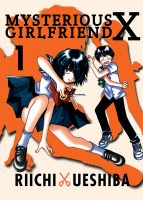
SEAN: Vertical has the 6th and final Mysterious Girlfriend X omnibus.

Viz has the debut of After Hours, their own entry into the burgeoning yuri manga market. It runs in Hibana magazine, and I understand it does not take place in a school! Gasp!

MICHELLE: Looking forward to this one!

ASH: Same! (Even more now that I know it isn’t a school romance.)

SEAN: There is also a 24th Magi, for all you Magi fans (including me, though I wish Morgiana did more).

Lastly, we have the 8th Monster Hunter: Flash Hunter.

Do any of these series excite you? Depress you? Irritate you?

Filed Under: FEATURES, manga the week of

Invaders of the Rokujouma!?, Vols. 1-3

June 8, 2017 by Sean Gaffney

By Takehaya and Poco. Released in Japan as “Rokujouma no Shinryakusha!?” by Hobby Japan. Released in North America digitally by J-Novel Club. Translated by Warnis.

This series has an unusual history, at least in terms of translation. It’s 24+ volumes in Japan, so no one was seriously considering it as a possible license. Plus it had a fan translation already. But J-Novel Club reached out to the fan translator and made a deal, and so what we have here is that translation, newly edited for published release. It’s available for free on J-Novel’s site, or you can buy it on Amazon and the usual suspects as a normal light novel. As for why you’d want to? Well, do you like Strike the Blood? Do you enjoy its blinding obvious cliches but wish that it was less action oriented and more of a harem comedy? If so, then Rokujouma may be the series for you! It’s cliched as heck, but rarely actively irritating, and at times even can be heartwarming and amusing.

If you are wondering what Rokujouma means, well, I’m a little unclear on that myself, but the basic premise is that this young man, living alone as he starts high school, has found a dirt-cheap apartment. It’s dirt-cheap because, as the landlady tells him, it’s haunted and everyone’s been driven out of it. This does not bother our hero, though, as he’s a deep sleeper. After an accident he gets into while at work (which is, somewhat frustratingly, never followed up on in any of the three books), he comes home and finds he can now see the ghost, a cute young girl trying to get him out as this is HER apartment. And then suddenly we get a self-proclaimed magical girl, a member of an underground tribe, and an alien princess and her retainer, all of whom have designs on the room for their own reasons. And it’s not even a big apartment! Hijinx, as they say, ensue.

The author notes in the afterword of Volume 1 that this is only his second book, and his first series. It shows a bit – the flaws in this series are the sort you see in a new writer’s work, with some stuff explained too much, some not explained enough, and the occasional reliance on stereotypes to take the place of characterization, though that improves as the series goes on. The first book is the weakest, since it has to introduce the cast all at once and can’t really do much else. Stronger was the second book, which involves a school athletic festival and is filled with lots of opportunities for wacky comedy – the anime version of this is likely quite amusing. The best reason to read the series is Yurika, the magical girl who absolutely no one believes. I suspect the author was watching Haruhi Suzumiya when he wrote her, as she’s basically Mikuru, but the sheer amount of abuse and contempt heaped upon her by our hero, the other girls, and even the narration is so overblown it becomes hilarious.

This is absolutely a standard harem comedy, and doesn’t really do much of anything to set itself up above the pack so far. That said, it also doesn’t really do too much to really make it horrible, either. The ghost girl gets a lot of character development in the third book, and I suspect future books will do the same for the others. If you like this genre, and haven’t already read the series online, Rokujouma is worth checking out.

Filed Under: invaders of the rokujouma!?, REVIEWS

Descending Stories: Showa Genroku Rakugo Shinji, Vol. 1

June 6, 2017 by Sean Gaffney

By Haruko Kumota. Released in Japan by Kodansha, serialized in the magazine Itan. Released in North America by Kodansha Comics. Translated by Matt Alt.

Just as there is a big difference between having the Great American Novel in your head and actually being able to turn it into an actual book, there is a difference between being able to tell a great story when you’re in a bar or with your friends and being able to tell a great story in front of an audience who is there to be entertained by your stories. And in Japan there is a tradition devoted to just such a thing: Rakugo, where the performer sits on a cushion and tells a long, involved story, usually involving multiple people, and has to make sure to differentiate between the characters, not make everything too complicated to follow, and entertain the audience. This is the sort of thing that ex-con Yotaro wants to do, and he persuades one of the last rakugo masters (it’s a dying art) to take him on as an apprentice. But of course, it’s not as easy as that.

The thing that struck me most about this series as I read it is the way that the three main characters are both sympathetic and yet very difficult to like. Yotaro is obnoxious in the sort of way that you’re glad he’s just a character in a story and not your actual friend, and his apprenticeship at times seems like he’s more of a puppy that was picked up off the streets (this is actually lampshaded). Yakumo, the rakugo master, is a cranky and aging man who is upset that his art is dying and troubled by a tragic past, including the death of his best friend, whose art he sometimes tries to show in his own work. He’s unpleasant in just the right ways to make him fascinating yet really irritating, and it’s still not quite clear why he picked Yotaro to be an apprentice when he never has before – I don’t think he really knows either, though Yotaro does have some raw talent.

The third main character is Konatsu, Yakumo’s “ward” and the daughter of the dead best friend I mentioned before. She is deeply bitter and angry about the death of her parents, which she suspects Yakumo was actually involved in more than he admits, and is also deeply angry and bitter about the fact that women are not allowed to perform rakugo – a shame as she’s really, really good at it, and she knows it. She ends up teaching Yotaro most of the basic skills, mostly as his actual master is far too busy using him as an actual dogsbody. The anguished and dark conversation between her and Yakumo, where he wishes out loud that the gods had let her be born a man, and she says she feels the same, is heartbreaking. Basically, Konatsu is a walking timebomb, and I’m curious how many volumes it will take for her to go off.

Descending Stories ran in Itan, one of Kodansha’s ‘sui generis’ manga magazines that, like many other ‘sui generis’ manga magazines, tends to get classified as josei when people try to slap a genre on it anyway. I can see why this story falls into that genre, though – the art style reminds me of Ooku, and not just because of the period kimonos and hair. Descending Stories didn’t bowl me over, but it’s a strong start, and I definitely want to say where these characters go next.

Filed Under: descending stories, REVIEWS

Bookshelf Briefs, 6/5/17

June 5, 2017 by Michelle Smith and Sean Gaffney Leave a Comment

Genshiken: Season Season, Vol. 10 | By Shimoku Kio | Kodansha Comics – When Genshiken rebooted itself as a female-driven series, and adding Hato’s gender-driven issues, it acquired a big audience that it hadn’t had before. I suspect most of that audience gradually moved away once Madarame returned and the entire plot became “who will he end up with?” And clearly it wasn’t going to be Hato, but credit to Kio here for treating Hato’s attraction to Madarame, and Madarame’s growing awareness of feelings within himself, with seriousness and sympathy, despite both parties being drunk. The rest of the volume comes off as an afterthought in comparison, though it is a bit stunning to see Keiko’s temper tantrum when she realizes Madarame is just not that into her. A bit of a train wreck, but good. – Sean Gaffney

In/Spectre, Vol. 4 | By Kyo Shirodaira and Chashiba Katase | Kodansha Comics – The murder of Saki’s police colleague amps things up tremendously for our heroes, as it’s becoming increasingly hard to shut down the legend of Steel Lady Nanase. And it becomes clear that someone else is pulling strings on the other side—someone well known to both Kotoko and Kuro. While I’m not sure the title needed the addition of an evil mastermind, she works well as a dark mirror to Kuro, and also as a threat to Saki—even now. As with previous volumes, the main reason to read it continues to be Kotoko, who is clever and earnest when working towards their goal, but remarkably petty and insecure otherwise. This is not quite as good as it used to be, but still enjoying it. – Sean Gaffney

Kamisama Kiss, Vol. 24 | By Julietta Suzuki | VIZ Media – Suzuki-sensei does a fabulous job again, first resolving the Akura-Oh plot in a way that makes me feel sorry for Yatori and then really delving into what it means for Tomoe to become human. Nanami starts working herself to exhaustion to save for their eventual life together—unwilling to leave things to chance, which makes sense after a childhood with her gambling father—but the real heartbreak of this volume is Mizuki’s reaction to her eventual departure. He tries to hold in his feelings and be happy for her, but he can’t do it, particularly after she explains that she’s human and has no choice but to grow old. I fully get what it’s like to want something impossible with all your heart, so the panel of him sobbing “Don’t get old. Don’t grow up.” really got to me. I now chiefly wish for a happy ending for Mizuki! Sniff. – Michelle Smith

Kase-san and Bento | By Hiromi Takashima | Published by Seven Seas- Last week, Sean called this series “cuteness personified” and I really cannot quibble with that description. In this installment, Yamada and Kase begin their final year of high school in the same class. A trip to Okinawa provides opportunities to be accosted by creepy drunks in the airport, angst about communal bathing, fret about relationship doubts at the aquarium, and work everything out on the beach. Maybe all the insecurity is a bit much—I wished for someone to call out Yamada’s friend, Mikawa, who was constantly stirring the pot—and it’s true Yamada looks and acts like a seventh grader sometimes, but her innocence also leads to some nice moments. All in all, this is much more my style of yuri than some I’ve seen. Is it because it runs in a “pure yuri” anthology? Perhaps. I look forward to Kase-san and Shortcake! – Michelle Smith

Kiss & White Lily for My Dearest Girl, Vol. 2 | By Canno | Yen Press – A second volume gives us focus on more girls, though as with the first, things remain somewhat ambiguous throughout. This title presents a nice balance between the fluffy sweetness of Kase-san and the turmoil of Bloom Into You. It also shows us that not all of these couples are going to be simply put-the-jigsaw-together types, as Chiharu’s crush here is unrequited, though halfway through the book we get a new contender anyway. I don’t really have much to say about the volume, but that’s because these stories feel realistic and true, at least to the extent this genre can. The weak point may be the final side-story, which ties back to the angry lead from volume one meeting the sister of her “girlfriend,” with much sister crushing ensuing. Fun. – Sean Gaffney

Log Horizon: The West Wind Brigade, Vol. 5 | By Koyuki and Mamare Touno | Yen Press – Unfortunately, this continues to be a very frustratingly inconsistent series. At its best, it’s riffing on the events of the main series and showing us how they affect and are observed by the West Wind Brigade—we wrap up the Hamelin story here, and Soujirou’s admiration for Shiroe shines through. And the side story with Kawara is excellent, especially her tears when she thinks of her dad, and her backstory. The other half of the volume, though, is pure fanservice, with discussions of peeping on Soujirou in the bath, potions turning Soujirou female, and even uniform measuring—almost all of it involving Nazuna, who is in full-on ‘drunken big-breasted cliche’ mode here. For Log Horizon fans only. – Sean Gaffney

Missions of Love, Vol. 14 | By Ema Toyama | Kodansha Comics – One thing I really enjoy about Missions of Love, despite its soap-opera dramatics and basically horrible cast, is that it shows us over and over again that manipulating others in order to achieve your love is always wrong and will always fail. Hisame’s arrival may have merely been to extend this series out for a few more volumes, but we’re really getting to know what makes him tick here, and seeing how his own series (which sells better than Yukina’s at the moment) may be just as ignorant of love. The dangers of cell-phone writing for teens. Meanwhile, there’s still a Mami and Akira plot that’s happening, as Mami is trapped in a romantic triangle she’s not even really cognizant of. Still excellent trash. – Sean Gaffney

Monthly Girls’ Nozaki-kun, Vol. 7 | By Izumi Tsubaki | Yen Press – I’m hard-pressed to identify what, if anything, was different about this volume of Monthly Girls’ Nozaki-kun. Maybe it simply hit the spot for me or something, because I loved it even more than usual. This time around the chapters are focused on things like keeping up with changing technology over the course of a long-running series, how to lose weight, playing Kokkuri-san (a game like a Ouija board), and the basketball team trying to figure out what to do about Seo. Actually, there was a fair amount of Seo/Wakamatsu and Hori/Kashima in this volume, with each pair making some incremental progress, so perhaps it was that which really made it feel special. Regardless, this series is always a breath of fresh air. Only one more volume ’til we’re caught up with Japan! – Michelle Smith

Welcome to the Ballroom, Vol. 5 | By Tomo Takeuchi | Kodansha Comics – Fujita is back to classes—and it’s nice to see a brief scene showing him not rejecting his studies—but lacks a partner again, and so a lot of this volume is devoted to introducing a new girl, seemingly harsh on the very idea of ballroom dancing but in reality a huge fan of Sengoku and his partner—I suspect we’ll see her partnering with Fujita before too long. As for Fujita, his mind is moving faster than his body, and he really has to understand that the basics are important and can’t be skipped. Of course, fundamentals are frustrating, and we feel that in everything he tries to do. Not perfect (more sudden weight loss magically making women pretty, a trope I hate), but still a good shonen series. – Sean Gaffney

Filed Under: Bookshelf Briefs

My Week in Manga: May 29-June 4, 2017

June 5, 2017 by Ash Brown

My News and Reviews

The most recent manga giveaway at Experiments in Manga was posted last week. This month everyone participating has a chance to win Anonymous Noise, Volume 1 by Ryoko Fukuyama. The winner will be announced on Wednesday, so there’s still time to enter. Simply tell me about your favorite singer or vocalist from a manga! In other giveaway news, Taneeka Stotts is sponsoring a tremendous Queer Comics Giveaway for Pride Month. I’ve read and/or own a fair number of the comics in the giveaway and they’re all great. Even if you don’t enter or win, the list itself is still well-worth checking out!

As for other interesting things that I’ve recently come across online: Terry Hong (creator of the Smithsonian Asian Pacific American Center’s BookDragon review blog, which I greatly enjoy) compiled a list of fourteen Japanese thrillers for The Booklist Reader which includes both novels and manga. (I’ve read most of the books on the list and they’re great; here are my in-depth reviews of some of the titles mentioned: The Devotion of Suspect X, Malice, and Salvation of a Saint by Keigo Higashino, The Kurosagi Corpse Delivery Service by Eiji Otsuka and Housui Yamazaki, and Nijigahara Holograph by Inio Asano.) Matt Thorn has re-posted an old article from The Comics Journal on The Magnificent Forty-Niners. Also, my Manga Bookshelf cohort Brigid Alverson is now writing for ICv2 as well. Her first post is a roundup of recent manga news.

Quick Takes

Boogiepop Doesn't Laugh, Volume 1Boogiepop Doesn’t Laugh, Volumes 1-2 written by Kouhei Kadono and illustrated by Kouji Ogata. The Boogiepop franchise began as a series of light novels but would eventually expand to include music, a live-action film, an anime, and two short manga series among other things. Boogiepop Doesn’t Laugh is actually the second of the two manga series to be released but it’s an adaptation of Boogiepop and Others, the very first Boogiepop light novel. Although the manga does include a few additional scenes, for the most part it’s a very close adaptation. Like the original novel, the narrative of Boogiepop Doesn’t Laugh is deliberately fragmented–the supernatural mysteries surrounding the serial disappearances of a number of high school girls are explored through multiple perspectives taken from before, after, and during the events. Sadly, the technique isn’t nearly as effective in the manga as it was in the novel and the adaptation never quite reaches the same depth as the original, but the story remains and interesting and curious one. Perhaps obviously what makes the manga stand apart from its predecessor is its artwork. The first quarter or so of the series isn’t especially impressive, but then Ogata switches to a style reminiscent of ink wash paintings which is quite lovely.

Persona 3, Volume 1Persona 3, Volumes 1-3 by Shuji Sogabe. Having read and largely enjoyed what has so far been translated of Sogabe’s Persona 4 manga adaptation, I was looking forward to giving the Persona 3 manga a try as well. (Especially as I’ve actually played some of Persona 3, unlike Persona 4. Granted, I still haven’t actually finished the video game.) I really wanted to like the manga, but I was very disappointed with the first three volumes of Sogabe’s Persona 3. Apparently, it was Sogabe’s first professional manga, which may explain some of the series problems. The Persona 3 manga will likely work best for readers who are already very familiar with the original, and even then I suspect that most would rather just play the game again. The manga has no clear or coherent narrative to it, jumping around in the story and in an out of battles without reason. Considering the number of fight sequences included, it’s particularly unfortunate that conveying action is one of Sogabe’s weakest areas. Characterization is largely lacking in the manga and most of the cast members are never fully or adequately introduced, but at least their designs are attractive enough. Overall, I didn’t enjoy the Persona 3 manga much at all, mostly because it didn’t make much sense at all. Some of the more comedic moments were admittedly amusing, though.

To the Abandoned Sacred Beasts, Volume 1To the Abandoned Sacred Beasts, Volumes 1-2 by Maybe. Before reading To the Abandoned Sacred Beasts I was under the impression that the series used the American Civil War as the foundation of its story. It turns out that’s not really the case, although the worldbuilding and character designs take obvious inspiration from nineteenth-century United States and the setting of the manga is a country recovering from a great war between the North and the South. (I suppose To the Abandoned Sacred Beasts could be some sort of alternative historical fantasy, but for the moment at least it doesn’t read that way to me.) In order to emerge victorious from the war, the North relied on soldiers known as Incarnates–humans who were granted tremendous abilities and battle prowess but at a great cost; they were literally turned into monsters. The metaphor may not be particularly subtle, but how To the Abandoned Sacred Beasts tackles the psychological ramifications and ravages of war is certainly engaging. Now that the conflict is over and an uneasy peace has been established, there is no longer any need for creatures of war and the Incarnate soldiers largely find themselves feared and despised. As the last of their humanity slips from their grasp, the Incarnates ultimately become the targets of the Beast Hunters.

Filed Under: FEATURES, My Week in Manga Tagged With: Boogiepop, Kouhei Kadono, Kouji Ogata, manga, Maybe, Persona, Shin Megami Tensei, Shuji Sogabe, To the Abandoned Sacred Beasts

  • « Go to Previous Page
  • Page 1
  • Interim pages omitted …
  • Page 248
  • Page 249
  • Page 250
  • Page 251
  • Page 252
  • Interim pages omitted …
  • Page 538
  • Go to Next Page »
 | Log in
Copyright © 2010 Manga Bookshelf | Powered by WordPress & the Genesis Framework