• Skip to primary navigation
  • Skip to main content
  • Skip to primary sidebar
  • Home
  • About Us
    • Privacy Policy
    • Comment Policy
    • Disclosures & Disclaimers
  • Resources
    • Links, Essays & Articles
    • Fandomology!
    • CLAMP Directory
    • BlogRoll
  • Features & Columns
    • 3 Things Thursday
    • Adventures in the Key of Shoujo
    • Bit & Blips (game reviews)
    • BL BOOKRACK
    • Bookshelf Briefs
    • Bringing the Drama
    • Comic Conversion
    • Fanservice Friday
    • Going Digital
    • It Came From the Sinosphere
    • License This!
    • Magazine no Mori
    • My Week in Manga
    • OFF THE SHELF
    • Not By Manga Alone
    • PICK OF THE WEEK
    • Subtitles & Sensibility
    • Weekly Shonen Jump Recaps
  • Manga Moveable Feast
    • MMF Full Archive
    • Yun Kouga
    • CLAMP
    • Shojo Beat
    • Osamu Tezuka
    • Sailor Moon
    • Fruits Basket
    • Takehiko Inoue
    • Wild Adapter
    • One Piece
    • After School Nightmare
    • Karakuri Odette
    • Paradise Kiss
    • The Color Trilogy
    • To Terra…
    • Sexy Voice & Robo
  • Browse by Author
    • Sean Gaffney
    • Anna Neatrour
    • Michelle Smith
    • Katherine Dacey
    • MJ
    • Brigid Alverson
    • Travis Anderson
    • Phillip Anthony
    • Derek Bown
    • Jaci Dahlvang
    • Angela Eastman
    • Erica Friedman
    • Sara K.
    • Megan Purdy
    • Emily Snodgrass
    • Nancy Thistlethwaite
    • Eva Volin
    • David Welsh
  • MB Blogs
    • A Case Suitable For Treatment
    • Experiments in Manga
    • MangaBlog
    • The Manga Critic
    • Manga Report
    • Soliloquy in Blue
    • Manga Curmudgeon (archive)

Manga Bookshelf

Discussion, Resources, Roundtables, & Reviews

Features & Reviews

A Barrage of Buffy

September 1, 2019 by Michelle Smith

Because I am a great big geek, one of my personal goals is to read all of the novels inspired by Buffy the Vampire Slayer. This is the second in a series of posts collecting relatively short reviews of these books. All of the following are set during the show’s third season.

Obsidian Fate by Diana G. Gallagher
obsidian_fateIn 1520, a Spaniard conveying stolen Aztec treasure to a secret hiding place was killed by a mudslide while holding a particular obsidian mirror. Now, his remains have been found in an archaeological dig in Sunnydale. It turns out that the mirror contains the essence of the Aztec god of night, Tezcatlipoca, who quickly makes a graduate student working on the dig his High Priestess and adopts a jaguar form to prowl around and do some chomps. The gang must prevent his brainwashed followers from offering enough human sacrifices to empower Tezcatlipoca to banish the sun forever.

There were definitely things I liked about Obsidian Fate. I liked that Buffy is worrying about her friends leaving for distant universities and colleges and trying to figure out what she herself is going to do. I liked that Angel has begun to think about moving away to let Buffy live her life. I liked that Giles is still grieving Jenny. A lot of the characterization and dialogue was good—especially Oz, which is pretty difficult to do. Surprisingly, Kendra and Faith both get a mention, though the latter is nowhere to be seen (and this is all set before she goes bad). No Wesley at all. It’s also really neat that the Mayor and Mr. Trick are facilitating Tezcatlipoca’s rise!

But oh man, so many descriptions of temples and stones and boulders and pillars. It’s very tedious. Also, one of their fellow students has become temporary host to part of Tezcatlipoca’s essence and plans to sexually assault Willow prior to sacrificing her. Nobody, besides Oz, seems to be quite as pissed off about this as they should be. Lastly, a subplot about how one of Buffy’s prophetic dreams showed Angel’s demise offers zero suspense. Still, their reunion on the final page does produce a genuinely cute moment.

Is this one worth a read? Eh, it could be worse.

Power of Persuasion by Elizabeth Massie
power_persuasionThis was a bit of a clunker, I’m afraid. The awkward teen daughter of a culinarily disinclined restaurant owner grows fed up with catering to her incompetent father’s whims and, by chanting supplications whilst surrounded by random items from the restaurant’s pantry, somehow successfully summons a Greek goddess and her two muse daughters to help her change things. They proceed to compel a lot of female students (including Willow) to join their “womyn power” crusade, which mostly involves campaigning for girls to have the right to try out for the vacancies on boys’ teams that arise when male athletes keep turning up dead.

Many of these Buffy media tie-in novels have similarly mediocre plots, but are usually made more tolerable by the author having the ability to capture how characters speak and interact. Not so much here, unfortunately. I appreciated that with Willow, Giles, and Xander falling under the sway of the villains and Angel out of town, Buffy had to rely on Cordelia and Oz to help her. But, while Cordelia’s scenes were fine, much of Oz’s dialogue and demeanor seemed wrong to me. Also, some weird abilities are ascribed to vampires, like one scene where a struggling vamp leaves scorch marks where her heels have dug into the earth.

I suppose the best praise I can muster is, “It’s pretty lame, but at least it’s short.”

Prime Evil by Diana G. Gallagher
prime_evilSeldom have I read a book so starkly divided between enjoyable parts and excruciating parts!

Set after “Doppelgangland,” the plot of Prime Evil involves a witch attuned to “primal magick” who was first born 19,000 years ago and who keeps being reincarnated and gathering sacrificial followers in an attempt to access “the source.” Her current identity is Crystal Gordon, a new history teacher at Sunnydale High, and her latest crop of doomed devotees is composed entirely of students. Obviously, it’s the Scooby Gang’s job to stop her.

First, the good. Most of the scenes with the main characters are fun, with dialogue that I could easily hear in the actors’ voices. Anya and Joyce have significant roles, and there was notable awkwardness between the latter and Giles. Although this was presumably the result of their dalliance in “Band Candy,” I liked that the explanation wasn’t explicitly stated. I thought it was interesting that Crystal tempts Willow to join her disciples by promising a cure for Oz, and I did have to snicker at a scene in which Angel, for the sake of expedience in getting to safety, has to sling Xander over his shoulder.

The bad, however, cannot be denied. There are many tedious flashbacks to Crystal’s past incarnations and these quickly became literally groan-inducing. In addition, the theoretically climactic magical battle at the end is full of prose like “The great source-river of wild magick coursed in violent abandon through the orbits of comets so ancient and distant they had never been warmed by the sun” and succeeded only in making me profoundly sleepy.

In summation… zzz.

Resurrecting Ravana by Ray Garton
resurrecting_ravanaA rash of cattle mutilations has the Scooby Gang suspecting hellhound activity, but when several people turn up eaten, after each has spontaneously killed their dearest friend, it’s clear something else is up. There’s more of a mystery here than these books generally offer, with a plot that features Hindu gods, an elderly collector of magical artifacts, his lonely granddaughter, and a certain statue that can resurrect a deity who will reward one richly for this service (and whose minions will kill everyone else).

Along the way, a new guidance counselor of Indian descent is introduced (replacing the guy who got killed in “Beauty and the Beasts”). At first, I thought this was going to be another one of those “Willow falls under the sway of a new female staff/faculty member who is secretly evil” storylines, but, refreshingly, that did not turn out to be the case. Willow just talks to her about problems with her relationship with Buffy, which come to a head in a couple of full-on brawls in the library. It takes a really long time for anyone to put together that their situation parallels the murders/devourings happening elsewhere in town, but it does lead to a nice final moment for the book.

Characterization is spotty. Pretty much each character has a moment that feels especially right as well as one that feels especially wrong. Xander and Cordelia’s bickering is even nastier than usual, and it’s never outright said that they’re being affected by the same creatures who manipulated Buffy and Willow. That said, I did enjoy all of Buffy’s interactions with her mother, particularly a late-night trip to Denny’s. All in all, Resurrecting Ravana wasn’t bad!

Return to Chaos by Craig Shaw Gardner
return_chaosReturn to Chaos is a bit different from most of the other Buffy tie-in books I’ve read. Instead of a new big villain coming to town, the plot is mostly about some new allies coming to town. A quartet of Druids, specifically, consisting of an older guy named George and his three nephews, one of whom develops feelings for Buffy. George wants to enlists the Slayer’s help in performing a spell on the Hellmouth that will supposedly prevent bad things from crossing over, but he’s really vague about his plans, and it soon becomes evident that he isn’t in his right mind. The nephews genuinely are allies, though, which is kind of refreshing.

This book was written in 1998, and it seems that the author was not privy to much that was going to happen in season three. A couple of vague references are made to Angel coming back, and about Buffy trying to move on romantically, but Xander and Cordelia are still very much together as a couple. That would put this somewhere between “Beauty and the Beasts” (episode four) and “Lover’s Walk” (episode eight), except that it is very clearly spring and we know that “Amends” (episode ten) is Christmas. Oopsies. There are a couple of other small errors, too, concerning Buffy’s eye color and Giles’ glasses.

This is another book in which there’s more of Oz than I’d been expecting. Some of his scenes and thoughts are okay, and I appreciated that the author wrote a teensy bit about Oz’s family, but at other times he just seems far too verbose. (This, combined with the errors mentioned above, makes me wonder just how familiar the author was with these characters.) Cordelia has a subplot of her own, as well, in which she falls under the thrall of a former rival turned vampire. The Druids recognize that the vampire is using a “mastery” spell, which is likened to the power Drusilla exhibited when she was able to kill Kendra so easily. I thought that was kind of neat.

In the end, despite some flaws, it turned out to be pretty decent.

Revenant by Mel Odom
revenantIn 1853, 35 Chinese laborers were killed in a mine cave-in on a site owned by some of Sunnydale’s forefathers. The incident was covered up and families were unable to provide their loved ones with a proper burial. Now, the unquiet spirits of those men want vengeance on the owners’ descendants and have managed to communicate with the troubled brother of one of Willow’s friends, who enlists her help. Honestly, this plot doesn’t make a whole lot of sense, but there’s a rich importer involved (who’s receiving help from the mayor) and chanting and statues and dragons and warehouses what go boom and demons that turn into goop.

Sometimes, Odom has a bit of trouble with characterization—Oz’s dialogue often doesn’t feel quite right, and sometimes Buffy comes off as vapid, like an early scene where she’s worried about her hair while Willow is running for her life—but other scenes are spot-on. I particularly liked a moment where Giles is forced to hotwire a truck (“I was not always a good boy”) and the final scene wherein Xander attempts to parlay his latest romantic disappointment into Buffy’s half of a Twinkie they’re sharing. Odom also incorporates and elaborates on some of the issues characters are worrying about at this point in the show: Buffy ponders her future with Angel, Xander dreads being left behind after graduation, and Cordelia seeks to avoid trouble at home by helping with research. The action scenes are easy to envision, as well.

Unlike most other books set during this season, the brief Xander/Willow fling and its fallout are acknowledged. Like the others, neither Faith nor Wesley is mentioned, and the former’s absence is particularly glaring, given the evident difficulty of the big battle. Still, Revenant ended up being a pleasant surprise.

Filed Under: Books, Media Tie-In, REVIEWS, Supernatural Tagged With: Buffy the Vampire Slayer, Craig Shaw Gardner, Diana G. Gallagher, Elizabeth Massie, Mel Odom, Ray Garton

So I’m a Spider, So What?, Vol. 6

September 1, 2019 by Sean Gaffney

By Okina Baba and Tsukasa Kiryu. Released in Japan as “Kumo Desu ga, Nani ka?” by Fujimi Shobo. Released in North America by Yen On. Translated by Jenny McKeon.

Alas, for those who want to know what happened after the cliffhanger on the “hero” side of these books, you’re still going to have to wait. The sixth volume takes place entirely in the “past” part of the books, showing our spider heroine, Ariel, Sophia and Merazophis mostly going from town to town and bonding, while at the same time the world recovers from the battle that happened in the fifth book. The non-Spider parts of the narrative bounce between Sophia, who may be a vampire baby but is also a reincarnation, so we get her thoughts on everything that’s going on, and Ronandt, the elder mage who honestly spends most of the book as ridiculous comic relief till he finally snaps out of it. There is one big battle near the end, featuring a much better Giant Spider Invasion than the one we saw on MST3K, but for the most part this book is far more introspective than previous volumes. There’s barely any stat listings!

I am at last allowed to talk about the spider heroine while using a name. Ariel names her White, fitting her appearance. This is in fact something of a power play, as naming something works the way it does in a lot of high fantasy, but it doesn’t have much effect on White as she’s already ridiculously powerful. Indeed, after Ariel figures out exactly HOW White is able to continue to be immortal, she reluctantly concludes that she HAS to ally with her, as not doing so could be disastrous. As for White herself, her thought processes are still “teenager with no real moral or ethical sense’, who’s able to cheerfully force a baby to march through the forest in order to build up their stats. That said, she’s definitely better off being influenced by Ariel, as we find when she has to confront her parallel minds, who have gone rogue and decided to destroy all of humanity. Thus we get the one battle of the book, as it’s spider vs. spider.

Ronandt, as I said, is still reeling from his first encounter with White, and unfortunately proceeds to learn exactly the wrong lesson from it, which is to try to study the spiders in the labyrinth to see how they grow stronger. The humor here has a dark edge to it, as while it’s somewhat amusing to see Ronandt run around nude and be treated as creepy by anyone who sees him, it also reminds the reader that White is a SPIDER, and that the ways that she gets stronger are not human ways. Nor should they be. This leads to a rare heartwarming moment in this mostly cynical book, where he realizes why he became a mage in the first place and goes out to stop the spider invasion even though he knows it will mean his death. (Fortunately, White gets there first.) I also liked him bonding with Julius, here a young and emotionally broken hero rather than the confident (and dead) older brother figure we meet later.

There’s some other good stuff here, such as the confrontation with the Pontiff who runs the world’s largest religion, or Sophia’s reflection on her past life (she was the stereotypical bullied nerd) and why she hates White so much (White was sort of like Komi in that her paralyzing inability to communicate came off as cool beauty.) It’s enough to make this volume very good indeed, even though I wish we’d checked back to the future with the other reincarnated cast.

Filed Under: REVIEWS, so i'm a spider so what?

Shortcake Cake Vol. 5

August 31, 2019 by Anna N

Shortcake Cake Volume 5 by suu Morishita

I feel the need to preface this review by noting that there is absolutely no Rei content in this volume, for those readers who might have been hoping for that. What this volume does feature is plenty of internal anguish and teenagers just being weird in endearing ways. There’s something about the way that Morishita is skillfully navigating some familiar shoujo tropes that has me full of suspense about what happens next instead of rolling my eyes at the potential love quadrangle that is slowly being explored.

The volume opens with Ten still trying to sort out her feelings, as her feelings for Riku have grown only after she turned him down. Meanwhile, Chiaki lurks in the background, doing his best impersonation of a second lead guy from a Korean drama, as he makes veiled references about a girl he likes to Ten, with her not realizing he is actually talking about her. There’s some great paneling in the opening pages of the manga, when Ten is thinking about her and Riku living in the same house, the illustrations of them silently looking at each other interspersed with the everyday interiors of the boarding house underscore her quiet contemplation and awkward feelings about the whole situation. Ten continues to just be adorable all around, as she starts acting incredibly awkward around Riku and boisterously slaps Chiaki on the back and tells him not to give up on his mysterious crush.

shortcake cake 5

The part of this volume that I absolutely loved was when Chiaki comes up with a bizarre excuse to go on an outing with Riku, in an attempt to smooth over any issues with them both liking the same girl. They go on a random shopping trip, followed by some bookstore browsing and debating about UFO machine strategy. It really underscored how socially awkward Chiaki is, and if if I wasn’t rooting for him do to my general tendency to fall for second lead guys, the fact that he quotes from Anne of Green Gables in this volume was extra adorable. I’m enjoying the slow pacing of this series, and definitely recommend it if you are looking for a high school romance with more depth than the typical shoujo series.

Filed Under: Manga Reviews, REVIEWS Tagged With: shojo beat, shortcake cake, shoujo, viz media

Komi Can’t Communicate, Vol. 2

August 31, 2019 by Sean Gaffney

By Tomohito Oda. Originally released in Japan as “Komi-san wa Komyushou Desu” by Shogakukan, serialization ongoing in the magazine Shonen Sunday. Released in North America by Viz Media. Translated by John Werry.

I had honestly expected that Komi, like most manga I review, would get a Vol. 1 review and then go to the Bookshelf Briefs pile. Then those four chapters happened. In the aftermath of those, I got a number of folks reassuring me that this is as bad as it gets and that I won’t have another plot quite like this, which OK. All manga have growing pains, and if I read and supported Teru Teru x Shonen I can move past this. But Christ on a bike. In any case, let’s first discuss all the OTHER chapters in the book, which are cute and advance the premise. Komi tries ramen, Komi goes clothes shopping for the first time, Komi and Tadano share an umbrella in a moment that would be really shippy if I thought the series was going to move in that direction, which I don’t. It continues to build on the strong premise at the start, has some really funny gags, introduces two new “eccentric” characters who are not literal criminals… OK, yeah, let’s talk Ren Yamai.

Here’s me in the review of Vol. 1: Likewise one of the minor characters in this book, Yamai, reads like a worryingly stereotypical psycho lesbian, and I really hope it doesn’t go down that road. Well, I was right to worry. The four chapters named “Ren” focus on Yamai, her obsession over Komi, and her realization that Tadano is in the way. She proceeds to kidnap Tadano and leave him tied in a chair in her bedroom while she goes to school to get closer to Komi. Later, after inviting Komi to her house (?!?!), she hides Tadano in the closet, then after he is found breaks down and confesses “I did it for you!” My teeth ground, my toes curled. The series wants to be funny overall, hence why Yamai actually invites Komi to her home like a numbskull – but she’s literally kidnapped and threatened Tadano – and still does after “apologizing”. It’s absolutely dire.

The really frustrating thing is that these four chapters also contain the BEST part of the book, which is Komi’s reaction to all of this. After discovering Tadano and hearing Yamai’s “explanation” for what happened, Komi’s “I decide who’s my friend” is a punch the air moment. Likewise the chapter afterwards, where Komi feels guilty for being the “cause” of all this, and tries to break off with Tadano only to have her own words turned back at her, is incredibly sweet and caring, and it would ALMOST be worth all the previous garbage if Yamai’s apology wasn’t an excuse to having her join the cast herd. She gets no real punishment for her actions, and seemingly integrates with the rest of Komi’s friends afterwards, with only one or two token “lol obsessed with Komi” jokes for the rest of the book. Honestly, she needed to leave the school and never be seen again.

So yeah, it’s one of THOSE volumes. You can’t even advise readers to just skip it, as the stuff with Komi and Tadano is the best part of the volume. You just have to read it while screaming and cursing. Not a good look for a lighthearted, heartwarming comedy about making friends.

Filed Under: komi can't communicate, REVIEWS

Go With the Clouds: North by Northwest, Vols. 1-2

August 30, 2019 by Katherine Dacey

I’ve never used the word “shambolic” in a review before, but that was the first adjective that came to mind as I read Go With the Clouds: North by Northwest, a handsomely illustrated series that can’t decide if it’s a murder mystery, a coming-of-age story, an Icelandic travel brochure, or a Knight Rider episode. Go With the Clouds’ abrupt tonal shifts and plot twists left me scratching my head, but I was never bored or disappointed by Aki Irie’s narrative choices; if anything, the messy weirdness of the first volume was ingratiating, a reminder that sometimes the most interesting storytellers aren’t particularly disciplined.

The first volume is a bumpy ride, lurching from one idea to the next without warning. In the first five chapters alone, we learn that seventeen-year-old protagonist Kei Miyama is a detective-for-hire; has a younger sibling named Michitaka who’s the chief suspect in a double homicide; and can hear his car’s thoughts. (As befits a story set in Iceland, Kei’s car is very moody.) Though volume one ends with a dramatic confrontation over Michitaka, volume two barely acknowledges the murder investigation, focusing instead on a visit from Kei’s childhood friend Kiyoshi. The two spend an agreeable week touring the Icelandic countryside by car, visiting geysers, gawking at cliffs and waterfalls, and taking pictures. Michitaka makes the briefest of cameos, but is otherwise absent from volume two—a strange choice, given how urgent his storyline seemed in volume one.

Normally, this kind of narrative sloppiness if a turn-off for me, but Irie rewards the patient reader with complex characters, interesting bits of Icelandic lore, and—best of all—breathtaking artwork that captures the starkly beautiful landscape of the Golden Circle. Her linework is crisp and her use of tone sparing; in her most striking panels, we have a sense of how empty the Icelandic countryside really is thanks to her judicious use of white space. At the same time, however, she excels at detail work, giving the reader an intimate look at houses, cafes, churches, and—yes—car interiors. That same attention to detail extends to her character designs, which are an elegant blend of naturalism and stylization; you’d be forgiven for thinking that Kei looks more like a movie star than a moody teenager.

Her characterizations are likewise thoughtful. Kei, for example, isn’t defined solely by his gift; instead, it’s just a small facet of his personality that helps shed light on how attuned he is to his surroundings. The same is true for Kei’s grandfather, who’s initially portrayed as a stubborn curmudgeon but turns out to be more perceptive than his blustery persona might suggest, especially after Michitaka enters the picture. While several seemingly important characters are still in an embryonic stage of development—most notably Kei’s imperious neighbor Lilja—Irie’s ability to depict people in all their idiosyncrasies makes me confident that the supporting cast will be more fleshed out in future volumes.

I’d be the first to admit that the series’ pacing and narrative detours won’t be everyone’s cup of tea; I was initially put off by Kei’s one-sided conversations with his trusty jalopy, and frustrated by the sudden appearance—and equally sudden disappearance—of a Japanese investigator who is convinced of Michitaka’s guilt. By the end of volume one, however, I didn’t care; I felt that Go With the Clouds had transported me somewhere I hadn’t been before—in real life or my imagination—and was eager for another installment of Kei’s saga. Recommended.

GO WITH THE CLOUDS, NORTH BY NORTHWEST, VOLS. 1-2 • ART AND STORY BY AKI IRIE • VERTICAL COMICS • NO RATING

Filed Under: Manga, Manga Critic, REVIEWS Tagged With: Aki Irie, Iceland, Mystery/Suspense, Seinen, Vertical Comics

I Saved Too Many Girls and Caused the Apocalypse, Vol. 15

August 30, 2019 by Sean Gaffney

By Namekojirushi and Nao Watanuki. Released in Japan as “Ore ga Heroine o Tasukesugite Sekai ga Little Mokushiroku!?” by Hobby Japan. Released in North America digitally by J-Novel Club. Translated by Mana Z.

Honestly, I think this would have been a much stronger book if combined with the equally short Vol. 14. I get that this series has never really had long volumes, but as with the previous one, by the time you get into the meat of this book it’s over. Fortunately the meat of the book is pretty good. Rekka, L, and the Doctor (no, still not that one) arrive in the future to try to track down the missing heroines. Unfortunately, Rekka’s mere presence causes war to break out. Speaking of which, we finally find out what caused the big war in the first place – no prizes for guessing who got the ball rolling – and hear a little bit about future Rekka, though he remains resolutely absent. (Given the series’ tendency towards parody at times – that’s what it started as, after all – I would not be surprised if Future Rekka is the Big Bad.) Fortunately, Rekka also has some future heroines who will listen to him, even if he’s not their Rekka.

While there are various things done to try to mess up Rekka’s sense of how far this is into the future, most of the girls look to be about 7-10 years older than they were in the main series. Some are almost exactly the same (Satsuki, staying on brand with the childhood friend type, and Lea, who has literally hidden herself away to avoid all this). Some are All Grown Up, in the trope sense of the word, as Harissa has gained confidence and Fam is now a Pirate Queen. The majority don’t show up at all, and the afterword has the author lamenting the fact that he wants the final book to have all the heroines get a role but has no idea how to do this. And then there’s Iris, who in her grief and anger started all this (raise your hand, who’s surprised? Anyone? Anyone? Bueller?) Fortunately, like almost all the future heroines, a hug from Rekka is all it takes to dispell most of the incipient problems. They are in love with him, after all.

As for the actual heroines that were kidnapped, we catch up with them at the end – well, some of them. The enemy has brainwashed those with the most combat power to take out our heroes. The enemy is on the cover there, and at first I wondered if it was Hibiki, but no, the answer is in fact even more obvious than that. The enemy also has managed to brainwash R, which leads to what would be an epic confrontation if it didn’t last all of half a page. I suspect the artist drew the cool color page but the author ran out of time, and so the solution is “a punch in the face fixes everything!”, which feels like a big disappointment. That said, the majority of the book is pretty fun, keeping things moving and taking Rekka back to his roots, as he has to think up clever schemes constantly in order to advance.

Now that we’ve revealed the supposed mastermind behind this – and found they may not be as mastermindy as we thought – what’s going to happen in the 16th and final volume? Will Rekka save the day? (Likely.) Will Rekka choose a girl? (Unlikely.) I look forward to finding out.

Filed Under: i saved too many girls and caused the apocalypse, REVIEWS

Kakuriyo: Bed and Breakfast for Spirits, Vols. 4 and 5

August 29, 2019 by Anna N

Kakuriyo: Bed and Breakfast for Spirits Volumes 4 and 5 by Waco Ioka, Midori Yuma and Laruha

I feel like now Kakuriyo has settled into a reliable rhythm for the reader, with each volume blending elements of food preparation and consumption and showcasing supernatural entities with some hints at the ongoing mystery surrounding Aoi’s grandfather and his relationship with the spirit world.

One of the reasons why I enjoy this manga is because it blends in very mundane concerns with a supernatural setting. This was particularly on display in volume 4 when Aoi needs to take into consideration vital aspects of business administration in her attempt to launch a cafe in a slightly inconvenient corner of the Tenjin-ya Inn. Aoi treats everyone who has been helping her get the cafe ready for opening to rice balls with individualized flavors that appeal to their unique personalities. When Aoi ventures out with Odanna to the local markets and gets a clue about a mask she remembers an ayakashi wearing who helped her a long time ago. Aoi is still running into resistance from other members of the Tenjin-ya staff, but she finds some ways of winning over new customers by creating special bento boxes for a sequestered writer. I do still sometimes wish the art for Kakuriyo was a little more elaborately detailed or creative, but I’m happy to see some unsettling ayakashi character designs such as a three-eyed woman with a snarky three-eyed baby, or the no-face handmaidens who always show up to give Aoi a makeover.

The fifth volume opens with Aoi sharing a quiet moment with Odanna, as she follows him out to his mountain retreat and learns about a new delicacy – fire chicken eggs cooked in a hot spring. Aoi also gets a new clue about the white-masked ayakashi from her past and an impactful endorsement from the badger demon novelist. Business starts to look up a little bit after Aoi also gets a visit from a fortune spirit who loves red bean paste desserts. I found myself really enjoying the way this manga is paced, with Aoi slowly finding out more about the strange world she’s been transported to, and her low key ways of getting to know ayakashi through preparing simple dishes with their unique needs in mind. Five volumes into the series, it is much more satisfying as a food manga, with the food preparation showcased in at least a page or two instead of being skipped over.

Filed Under: Manga Reviews, REVIEWS Tagged With: kakuriyo bed and breakfast for spirits, shojo, shoujo, viz media

Manga the Week of 9/4/19

August 29, 2019 by Sean Gaffney, Michelle Smith, Anna N, Ash Brown and MJ Leave a Comment

SEAN: It’s always September somewhere in the manga lists.

J-Novel Club has infinite light novels, or at least Infinite Stratos 9 (digitally) and Infinite Dendrogram 1 & 2 (print). There’s also the print debut of Ascendance of a Bookworm, as well as the 3rd light novel digitally, which wraps up the first arc. And we get the 3rd Full Metal Panic! novel.

ASH: Oh, print debut! That means it’s time for me to check out Ascendance of a Bookworm!

SEAN: In print, Kodansha debuts a spinoff, Cells At Work: Code Black. Unlike the relatively healthy body the main series takes place in, Code Black takes place in an unhealthy middle-aged body. It also seems to have Rule 63 Red and White Blood Cell. It runs, believe it or not, in Morning Magazine.

MICHELLE: Probably I will read this.

ASH: I will absolutely read this! I greatly enjoy the original Cells at Work.

SEAN: Digitally we get another debut with Smile Down the Runway (Runway de Waratte), a manga about a girl who’s trying her best to be a runway model at her father’s agency. Unfortunately… she’s only 5’2″. Can a short woman still have what it takes to be a model? Despite a very josei-sounding premise, this actually runs in Weekly Shonen Magazine. That said, it doesn’t seem like it has the usual “danger signs” of Shonen Magazine series.

ANNA: Hmmmm.

MJ: I feel like there’s no way this can be anything but horrifying. But. As Anna said, “Hmmmm.”

SEAN: There’s also Blissful Land 4, Boarding School Juliet 12, Goodbye I’m Being Reincarnated! 2, My Pink Is Overflowing 3, My Sweet Girl 6, Our Precious Conversations 4, and The Tale of Genji: Dreams at Dawn 7.

ASH: I still have my fingers crossed for print release of The Tale of Genji.

SEAN: Seven Seas debuts the Arifureta Zero light novel spinoff in print. They’ve also got Akashic Records of Bastard Magical Instructor 7, A Centaur’s Life 17, Nirvana 4, and Non Non Biyori 12.

Tokyopop gives us a 3rd Aria the Masterpiece, and a 6th Futaribeya, but still can’t provide any cover artwork without a giant ‘coming soon’ banner on it. Not that I’m bitter.

Viz has no debuts this month, alas. But hey, this does not mean they don’t have a ton. On the shonen end, we get a giant Assassination Classroom box set with every single volume. There’s also Black Clover 17, Blue Exorcist 22, Demon Slayer: Kimetsu no Yaiba 8, Dr. STONE 7, Dragon Ball Super 6, Haikyu!! 34, Kaguya-sama: Love Is War 10, One Piece 3-in-1 29, Twin Star Exorcists 16, and Yu-Gi-Oh! Arc V 6.

MICHELLE: Of these, I’m only reading Haikyu!!, but my love for it is boundless.

ANNA: One of these days I need to catch up on Haikyu!!, but my kids love it and read every volume as it comes out. I am enjoying Dr. STONE too.

ASH: Ack! I am so far behind on my Shonen Jump reading!

SEAN: On the shoujo end, there is Anonymous Noise 16, Daytime Shooting Star 2, Kakuriyo: Bed & Breakfast for Spirits 5, Snow White with the Red Hair 3, and The Demon Prince of Momochi House 14.

MICHELLE: Quite a lot of goodness here! I’m perhaps most keen for the newer titles like Snow White with the Red Hair and Daytime Shooting Star.

ANNA: Me too!

ASH: Likewise, although The Demon Prince of Momochi House still has its hooks in me, too.

SEAN: Lastly, Yen Press may be into September but it still has its August titles, some of which are debuts. Combatants Will Be Dispatched! (Sentouin, Hakenshimasu!) is a new light novel series by the creator of KonoSuba, and is supposed to be quite funny. A mix of sci-fi and fantasy, it’s about an evil minion who finds he has to invade a fantasy-based world.

The other light novel debut has a more light novel-ish title, The Genius Prince’s Guide to Raising a Nation Out of Debt (Hey, How About Treason?) (Tensai Ouji no Akaji Kokka Saisei Jutsu ~Sou da, Baikoku Shiyou~). Again, the title is the plot. The prince wants an easy life without much to do, so decides to betray his country. Sadly, he’s too good at being a genius, and every scheme he comes up with makes the nation’s people love him more.

ASH: That sounds like it could be amusing.

SEAN: There’s also an 11th Baccano!, which takes us all the way back to 1705; The Devil Is a Part-Timer! 14; and I’ve Been Killing Slimes for 300 Years and Maxed Out My Level 5.

On the manga end, Yen debuts three titles, though one is a light novel adaptation. Do You Love Your Mom (and Her Two Hit, Multi-Target Attacks)? needs no introduction by now, so we’ll move on, except to say it runs in Young Ace Up.

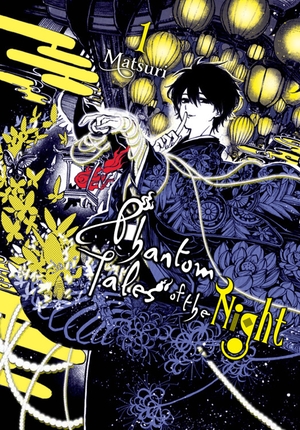
Phantom Tales of the Night (Bakemono no Yawazukushi) is a shoujo-ish series from Comic Gene, and is about an inn which takes its payment in secrets. Sounds sort of anthology-esque to me.

ASH: Oh! I’m always interested in new shoujo horror manga!

SEAN: Reborn as a Polar Bear: The Legend of How I Became a Forest Guardian (Shirokuma Tensei: Mori no Shugoshin ni Natta zo Densetsu) runs online on the Comic Walker site, and its title is, again, its plot. But, werewolf sisters! Also, the polar bear seems unlikely to amass a harem.

And we get Final Fantasy: Lost Stranger 3, Happy Sugar Life 2, DanMachi: Episode Lyu’s 4th manga, Kakegurui Twin 3, Plunderer omnibus 2, a 9th Sekirei omnibus, Spirits & Cat Ears 8, Star Wars: Lost Wars 2, and Yowamushi Pedal omnibus 12.

MICHELLE: Yowamushi!!!

ASH: Yay!!!

SEAN: So what titles are you hiding behind your textbook at school to read?

Filed Under: FEATURES, manga the week of

Outbreak Company, Vol. 10

August 29, 2019 by Sean Gaffney

By Ichiro Sakaki and Yuugen. Released in Japan by Kodansha. Released in North America by J-Novel Club. Translated by Kevin Steinbach.

The general thought behind my giving almost all light novels full reviews (as opposed to manga, where most series find their way into Bookshelf Briefs as they go on) is that the length of the book is such that I can always find something to talk about for 500+ words. Admittedly, there are times when that theory is tested, and this is one of those times. It doesn’t help that this is the second shortest light novel in my digital library, and easily the shortest in the series to date. But the other problem is that it’s mostly the 2nd half to a book where most of the plot and character beats were in Part 1. There are more cool action sequences, there’s a touching farewell to Shinichi’s family, and there’s a certain sense that we will not be returning to Japan anytime soon in this series. And there are a few more hints in the romantic resolution, if any, that this series will have. So let’s see what we can discuss.

The author straight-up admits that Shizuki was written as the series did not have a classic “tsundere” type. Petralka comes closest, but she’s too much of a softie. It’s a reminder that these series really do tend to be written around tropes and cliches, especially if you’re an author that’s been around as long as Sakaki has. Unfortunately, due to the nature of the series, we’re not allowed to develop that beyond “my brother is not as much of a loser as I thought” and see the love and affection that led to her renouncing him in the first place. Myusel praising him to the skies likely helped. Speaking of Myusel, she’s still front-runner in the “will the romance be resolved?” sweepstakes. Shinichi’s dad asks if there are harems in Eldant, and unfortunately for Shinichi, the answer is “no”, so something is going to have to be done – though of course “resolve nothing” is always an option, and one that’s more popular these days with authors, if not with fans. Still, Myusel really loves Shinichi.

As for the international intrigue part of the book, I will admit that the beginning of the book, with Minori being threatened by multiple copies of Putin (sorry, Pu**n) and the ultimate torture of having a pairing she loves reverse the ‘seme/uke’ positions was very funny, and welcome in a book that otherwise is mercifully light on fanservice. In reality, of course, Minori is merely tied up in a room somewhere, and rescuing her is the easiest part of things. Unfortunately, our heroes all then proceed to become absolute fools, as blithely getting onto a bus to return to Eldant and not realizing that there would be even more attempts to capture them was so shortsighted it counts as a flaw in the book. Fortunately, the day is actually saved by the JSDF – and how often can you type that in an anime/manga review?

The author seems to be up in the air about what to do next, but it will definitely be back in Eldant. Till then, this book is slight but enjoyable.

Filed Under: outbreak company, REVIEWS

JK Haru Is a Sex Worker in Another World: Summer

August 28, 2019 by Sean Gaffney

By Ko Hiratori. Published by arrangement with Hayakawa Shoten. Released in North America by J-Novel Club. Translated by Emily Balistrieri.

It is a rare series that creates such buzz that a publisher is ready to say “we also want to put out those unpublished short stories you have on your webnovel site”, but JK Haru is one such series, and so we have this book which I don’t believe was even collected in Japan. It’s a series of interlinked short stories taking place mostly after the events in the first book. Honestly, I was expecting something a lot more inconsequential than this, something along the lines of the “I want to eat ramen” or “let’s celebrate Christmas!” stories. And those are very cute. But the main short stories are the meat of the book, and their depth and characterization reminds the reader why the first book was so talked about. I wanted to read more about these characters, and now I can. And, while Haru is still a sex worker, there is 100% less of her working in this book, so don’t come into it expecting more sex. But if touching scenes of family and friends are what you want, good news.

The ‘wraparound’ stories in the book feature Chiba, the other guy hit by the truck and transported to another world with Haru. He wasn’t very likable in the original book, and honestly for a good portion of these stories he remains fairly unlikable, with his immaturity and need for a “mother” figure getting lampshaded in the text. He works best in a short story that pairs him up with another immature brat in Kizuha, who is the much mentioned but never seen top ranked sex worker where Haru is. Despite revolving around rampant drug use and innumerable uses of the word ‘dick’ (it’s apparently the name of the animal they both adopt, but is used knowingly as a play on words throughout the story) it actually made both characters, who elsewhere in the book are resolutely awful, appeal to me.

The best story in the book is ‘Mom’, which gives us backstory and character development for Lupe, Haru’s friend and fellow sex worker who is being groomed to take over for the current madam but spends most of the story being rather overwhelmed by events, as Haru and Kiyori are away killing the Demon Lord and without her support system she begins to accumulate stress, which she has no good way of getting rid of. It’s a terrific character examination, and you WILL cry over a scene where everyone is throwing cake at each other. Kiyori gets some wonderful depth in these stories as well, with her hero worship of Haru translating into a need to help to make this world less misogynist and awful. There’s also some ship tease with Sumo, Haru’s chef friend, but much like her feelings on Haru it’s hard to gauge where ‘love’ ends and ‘inspiration’ begins.

All this and Haru doing a Detective Conan impression. If you’ve read the original book, these stories are essential, and will put a big smile on your face.

Filed Under: jk haru is a sex worker in another world, REVIEWS

The Night Is Short, Walk on Girl

August 27, 2019 by Sean Gaffney

By Tomihiko Morimi. Released in Japan as “Yoru wa Mijikashi Arukeyo Otome” by Kadokawa Shoten. Released in North America by Yen On. Translated by Emily Balistrieri.

I had read this author’s Penguin Highway, though had not seen the adaptation, so it seems appropriate that I read this book by the same author, one where I also have not seen the adaptation. I sometimes feel a bit guilty about reading books like these, where the only reason that Yen On has licensed the book in the first place is because of the popular anime adaptation – usually a movie – of the source. The core market here are those who enjoyed the movie and want to see how it reads in prose. In addition, this is also connected the the author’s Tatami Galaxy – which also got an anime that I also haven’t seen. That said, the book does not lose any of its charm by not having visuals attached to it – indeed, it rewards the imaginative reader by allowing their flights of fancy to picture what’s going on in all its chaos. For this book is, in many ways, three stories of a seemingly peaceful event turned to chaos, and a young woman who walks among it, unaware.

The book has two narrators, neither of who are named. The titular girl is a young woman at college who belongs to a club, the other narrator is the man who is her sempai at the club, and who also has a crush on her. Being a classic socially awkward Japanese man,he deals with this by stalking her and ‘arranging coincidentally’ to run into her, in hopes that they will meet cute and fall happily in love. Fortunately, this is not the main plot of the book. The plot of the book is four separate events where the girl is walking around an event of some sort – a night out on the town drinking, a used book fair, a cultural festival, and the town brought low by a nasty cold – and interacting with various people as she does. The man is interacting with the same people, but mostly seems to just miss her, or if he does see her it’s not in the best way. That said, the plot is mostly irrelevant, as the story runs on mood, and the mood is sensational.

The story seems to be toying with being a sort of fantasy realism, and there are many times when we get so-called gods or fantastical events happening, but they could just as easily be metaphorical imaginings. The girl’s joy of life is infectious, and the guy gradually finding it in himself to analyze his own actions and wonder why he’s been doing what he’s doing is at least acceptable. Honestly, I found the romance the weak part of the book, and felt it might have done better without it. But the book is worth reading for the amusing characters, for the ridiculous small eve4nts that blow up until they’re a huge mess, and the heart that it wears on its sleeve, ending with the girl running all over town trying to care for everyone, the only person not down with a cold.

If you enjoyed the movie, you should definitely read this to see how it compares. As for me, I do want to try the movie out now, and definitely recommend this to anyone who likes great imagery and fantastical weirdness.

Filed Under: night is short walk on girl, REVIEWS

Yona of the Dawn, Vol. 19

August 25, 2019 by Anna N

Yona of the Dawn Volume 19 by Mizuho Kusanagi

An evaluation of any volume of Yona of the Dawn boils down to the sentiment “if you are not reading this series, there might be something wrong with you.” This particular volume functioned well as bridge between story arcs, as well as including some bonding humor amidst a story of spiritual possession. As the reader can guess from seeing an unmasked Sinha on the cover, the first part of the volume delves more into the history of the Blue Dragon through his encounter with one of his predecessors. There’s plenty of group bonding time along the way as Yona and her companions tease Yun for taking on an inadvertent role as the group’s “mother,” but despite all the teasing he prepares snacks and worries with great maternal instincts.

Yona of the Dawn 19

Sinha’s spiritual possession causes a number of issues, as he returns to the group with another Blue Dragon in control over his body. Everyone but Yun ends up in a super creepy tomb filled with spirits, as they attempt to deal with Sinha’s vengeful spirit. As always, Yona manages to overcome difficulties by simply being true to herself and overcoming obstacles through her humanity and compassion. What initially seems like a story about a vengeful spirit ends up highlighting the strength inherent in forgiveness.

The broader story arc that begins to be set up is a return to the Water Tribe. When Yona and her companions left previously it was clear that they’d affected a small part of a systemic drug trade. While Su-Won strategizes with his generals and tribal leaders in his palace, Yona reunites with Riri and joins up with her again to help with her mission to help the Water Tribe people. As always Kusanagi does an excellent job juggling character development and storylines with such an expansive cast. While Yona is shoujo, the romance elements are fairly sparing, but fortunately there’s a wonderful scene between Yona and Hak as they have trouble sleeping that shows romance progressing slowly. I always put each volume of Yona of the Dawn down feeling immensely satisfied at the amount of story Kusanagi is able to express in just five or six chapters.

Filed Under: Manga Reviews, REVIEWS Tagged With: shojo beat, shoujo, viz media, yona of the dawn

Neon Genesis Evangelion: Anima, Vol. 1

August 25, 2019 by Sean Gaffney

By Ikuto Yamashita. Released in Japan as “Shin Seiki Evangelion Anima” by Kadokawa Shoten, serialized in the magazine Dengeki Hobby. Released in North America by Seven Seas. Translated by Nathan Collins. Adapted by Peter Adrian Behravesh.

There have been so many spinoffs of Evangelion that it’s hard to keep track. In addition to the original TV series, the long-running manga, the current series of reboot movies, the video games, the manga based on the video games, the manga based on Episode 26’s “what if Eva were a dull harem anime” gag, the manga as a bizarre murder mystery, the gag anthology, the manga based on the gag anthology… in fact, it’s a bit surprising that one of the few spinoffs we haven’t seen is a continuation of the original. Now, granted, the original did sort of end definitively for most of the cast. But these light novels, which were serialized in the late 00s – early 10s, throw the last two episodes out and ask: what would happen if the Human Instrumentality Project failed, and it’s now three years later? The answer is more attacks, the return of some Angels, some very well-thought out battle sequences, but something missing at its core.

Three years later, Gendo and Ritsuko have disappeared and Fuyutsuki is retired, so Misato is in charge of NERV and the Evas, which are still around. Toji now has artificial limbs, and is working for NERV. Asuka has matured and is at peace with herself. Theoretically Shinji has as well, but as we find out many of the same struggles he had in the anime continue to plague him. Maya has apparently dealt with the loss of Ritsuko by turning herself INTO Ritsuko. And then there’s Rei. Actually, there’s four Reis. The plot kicks off when one of the Reis goes rogue and the others have to figure out why and what’s going on. As they do, we find the return of the mass-production Evas, now with Angels inside them, also seemingly attacking. Shinji dies (he gets better), the Lance of Longinus is once again terrifying, and almost two million people – including Hikari’s older sister – turn to salt, because what’s Evangelion without Biblical allegory?

The main issue I had with this book, I think, is that it doesn’t really settle down and take a breath at any point. The new characterization of the regulars could be interesting, but it never really gets a chance to do much before we’re plunged into the next battle – indeed, one of the Reis has a heartwarming talk with Asuka that would be fantastic if it weren’t the Evangelion equivalent of saying that she’s retiring tomorrow and has bought a boat. Likewise, I’m all for Asuka gaining maturity and peace, but there’s not really a lot explaining how it happened except for one or two token paragraphs, leading to the reader sensing that Asuka is more mature just because the authors didn’t want to write her as constantly angry. On the bright side, the plot is somewhat interesting if you don’t mind apocalypses, and the cliffhanger promises some interesting betrayal going on, though again we’re not actually given any details as to what happened.

Honestly, a lot of this reminds me of the old Evangelion continuation fanfics that were written about 20 years ago, throwing out the ending and doing their own thing. It only lacks the Original Characters the author inevitably threw in. I think Evangelion fans might like it – particularly those who like the mech aspect of the series. I just wanted a few more scenes of the characters hanging around and nothing much happening so that we could appreciate their being older and wiser(?).

Filed Under: evangelion, REVIEWS

Urusei Yatsura, Omnibus 3

August 24, 2019 by Sean Gaffney

By Rumiko Takahashi. Released in Japan in two separate volumes by Shogakukan, serialized in the magazine Shonen Sunday. Released in North America by Viz Media. Translated by Camellia Nieh.

After the soft reboot of this series with the arrival of Shutaro Mendo, Takahashi is going back and trying to see how she can work the pile of characters she introduced at the start back into the series, while also introducing new and hilarious regulars. Sometimes this works and sometimes it does not. The first half of this volume succeeds in re-integrating Sakura into the cast, now the high school nurse in addition to a shrine priestess, and we also meet Mendo’s rival Tobimaro Mizunokoji, a baseball-obsessed samurai type who is after revenge but is too dim to get it. (He’s also really obsessed with his childhood friend/rival, and has a passel of gorgeous female bodyguards that he barely pays attention to. I don’t think Takahashi intended him to have gay overtones, but…) Sakura will stay a regular, and Tobimaro will pop up now and then throughout the series. But not every new character is destined to become part of our beloved cast.

(The cover art, which has Ryuunosuke and her father; Sugar, Ginger and Pepper; and Kotatsu-neko – none of whom are introduced yet – is a tad spoilery. As are the endnotes, which discuss Ran before Ran is introduced.)

The second part of this volume seems like a series of failed cast introductions. Hanako-sensei is introduced to be a variation on the “well-meaning teacher who wants to inspire youth”, but he’s honestly pretty dang dull, and will quickly be replaced by Onsen Mark (who we’ve seen before) becoming a regular. (I will gloss right over Onsen Mark’s name in this omnibus, thanks much.) Natsuko’s volleyball-obsessed girl filled with rage is a very amusing arc, with great facial expressions, but she’s not someone you can imagine showing up over and over again. The same with Kaede the runaway ninja girl, who honestly seems like she’d be better off far away from Ataru and company. Fortunately, at the very end we meet Lum’s cousin and childhood “friend” Ran, who arrives with a cute act and a thirst for revenge, and is easily the best part of the back half of the book. You can see why she sticks around.

As for our regulars, they do pretty well. Ataru and Lum are fighting less, and frequently team up against common enemies (my favorite part being “Cry, Lum.” “Waaaaaaahh!” “See, you made her cry!”). Now, Lum still gets angry, and can be seen hear biting Ataru on the arm in addition to shocking him, but Ataru doesn’t seem to resent her presence anymore. Which is good, as she transfers into his school in this volume, thus helping to avoid finding reasons for her to show up in the classroom. The addition of the other cast members also helps take the focus of the manga off “will Ataru choose Lum” and focus more on “this obnoxious cast of obnoxious humans and aliens”, which will help it survive for the remaining fourteen omnibuses.

So there are some growing pains in this book, but it’s still highly entertaining, and Takahashi’s art has gotten to the point where you don’t have to apologize for it anymore. Still essential.

Filed Under: REVIEWS, urusei yatsura

The Right Way to Make Jump

August 23, 2019 by Katherine Dacey

Most books about the manga industry fall into one of two categories: the how-to book, which offers advice on how to draw proportionate characters, plan a storyboard, and buy the right pens; and the how-I-became-an-artist story, which charts the emotional ups and downs of breaking into the manga biz. The Right Way to Make Jump takes a different approach, pulling back the curtain on the production process.

Our guide to the manga-making process is Takeshi Sakurai, an anxiety-ridden thirty-year-old who traded his dreams of becoming a professional manga-ka for a more predictable, less demanding life as an onigiri chef. Out of the blue, Sakurai receives a call from his former editor Momiyaxx-san about a once-in-a-lifetime opportunity to “create a non-fiction manga” that explains “how Jump is made.” After much hand-wringing and angst—and a friendly nudge from his cheerful, patient wife—Sakurai accepts the assignment, embarking on a series of factory tours and interviews to learn the nuts-and-bolts of publishing an issue of Weekly Jump. His odyssey takes him to a paper mill at the foot of Mt. Fuji, the editors’ bullpen at Shueisha headquarters, and VIZ’s corporate office in San Francisco, where Sakurai gets a first-hand look at how Jump is localized for different markets.

The book is cheekily divided into ten “arcs,” each of which focuses on a specific production step. The most interesting sections focus on the manufacturing process, explaining why Jump uses colored paper and how the magazines are cut, assembled, and bound. For readers who love the Discovery Channel—and I count myself among them—these early chapters are a blast, as they are studded with weird, wonderful facts about paper and machinery. (Among the most interesting: Jump paper dust plays an important role in Tokyo’s sewage treatment program.) The later chapters, by contrast, are less effective, as the editorial staff’s answers to potentially interesting questions are couched in polite, vague language that offers little insight into what they do; you’d be forgiven for rolling your eyes when a Jump staffer offers an essentialist justification for not hiring female editors, or chalks up the order of each issue to ‘intuition.’

Where The Right Way really shines is in Sakurai’s use of clever visual analogies to help the reader grasp the most  intricate parts of the manufacturing process. In “Platemaking,” for example, Sakurai creates a muscle-bound figure who represents the resin plate, a key element in the printing process:

The figure’s transformation neatly embodies the basic principles of creating a positive from a negative by comparing the process to suntanning—something that readers of all ages can relate to from personal experience.

As informative as such passages are, The Right Way can be a frustrating reading experience. Some chapters are briskly executed, achieving a good balance between education and entertainment, while others focus too much on slapstick humor, unfunny exchanges between Sakurai and Momiyaxx-san, and shameless plugs for Weekly Jump. Sakurai’s sardonic tone—expertly captured by translator Emily Taylor—helps mitigate some of these issues, but can’t always goose the tempo when Sakurai frets and fumes about meeting his deadlines; joking about your own shortcomings can be an effective strategy for ingratiating yourself to the reader, but not when you’re using those jokes to pad your weekly page count.

The overall structure of the book, too, leaves something to be desired. Though the first chapters focus on how the magazine is printed, the later chapters tackle a seemingly random selection of topics—Jump Festa, recycled paper stock, cover design, reader contests—suggesting that no one anticipated how long The Right Way would run in Weekly Jump. A topic-of-the-week approach is fine when readers wait for each new installment, but it makes for a chaotic, sometimes repetitive reading experience when collected in a single volume. The most logical strategy for organizing the tankubon edition would have been to start with the editorial process and end with the printing; not only does sequential presentation have obvious explanatory value, it also lends the material a compelling narrative arc, something that The Right Way to Make Jump sorely lacks.

Despite these shortcomings, I’d still recommend The Right Way to Make Jump, as it offers an all-too-rare glimpse of manga publishing’s less glamorous aspects, highlighting the contributions of professionals whose efficiency, creativity, and diligence have made Weekly Jump into a global phenomenon.

THE RIGHT WAY TO MAKE JUMP • ART AND STORY BY TAKESHI SAKURAI • TRANSLATED BY EMILY TAYLOR • VIZ MEDIA • 208 pp. • RATED T, FOR TEENS

Filed Under: Manga, Manga Critic, REVIEWS Tagged With: How-To, Shonen Jump, Takeshi Sakurai, VIZ

  • « Go to Previous Page
  • Page 1
  • Interim pages omitted …
  • Page 174
  • Page 175
  • Page 176
  • Page 177
  • Page 178
  • Interim pages omitted …
  • Page 538
  • Go to Next Page »
 | Log in
Copyright © 2010 Manga Bookshelf | Powered by WordPress & the Genesis Framework