• Skip to primary navigation
  • Skip to main content
  • Skip to primary sidebar
  • Home
  • About Us
    • Privacy Policy
    • Comment Policy
    • Disclosures & Disclaimers
  • Resources
    • Links, Essays & Articles
    • Fandomology!
    • CLAMP Directory
    • BlogRoll
  • Features & Columns
    • 3 Things Thursday
    • Adventures in the Key of Shoujo
    • Bit & Blips (game reviews)
    • BL BOOKRACK
    • Bookshelf Briefs
    • Bringing the Drama
    • Comic Conversion
    • Fanservice Friday
    • Going Digital
    • It Came From the Sinosphere
    • License This!
    • Magazine no Mori
    • My Week in Manga
    • OFF THE SHELF
    • Not By Manga Alone
    • PICK OF THE WEEK
    • Subtitles & Sensibility
    • Weekly Shonen Jump Recaps
  • Manga Moveable Feast
    • MMF Full Archive
    • Yun Kouga
    • CLAMP
    • Shojo Beat
    • Osamu Tezuka
    • Sailor Moon
    • Fruits Basket
    • Takehiko Inoue
    • Wild Adapter
    • One Piece
    • After School Nightmare
    • Karakuri Odette
    • Paradise Kiss
    • The Color Trilogy
    • To Terra…
    • Sexy Voice & Robo
  • Browse by Author
    • Sean Gaffney
    • Anna Neatrour
    • Michelle Smith
    • Katherine Dacey
    • MJ
    • Brigid Alverson
    • Travis Anderson
    • Phillip Anthony
    • Derek Bown
    • Jaci Dahlvang
    • Angela Eastman
    • Erica Friedman
    • Sara K.
    • Megan Purdy
    • Emily Snodgrass
    • Nancy Thistlethwaite
    • Eva Volin
    • David Welsh
  • MB Blogs
    • A Case Suitable For Treatment
    • Experiments in Manga
    • MangaBlog
    • The Manga Critic
    • Manga Report
    • Soliloquy in Blue
    • Manga Curmudgeon (archive)

Manga Bookshelf

Discussion, Resources, Roundtables, & Reviews

My Week in Manga

My Week in Manga: October 24-October 30, 2016

October 31, 2016 by Ash Brown

My News and Reviews

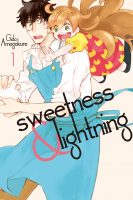
Although I was finally around for most of last week (as opposed to traveling and being busy with family stuff and such like I was for previous two weeks), all that was posted in addition to the usual My Week in Manga feature was the monthly manga giveaway for October. Experiments in Manga is currently following a more relaxed posting schedule which, while it does still frustrate me that I’m not currently able to post more, is better than not posting anything at all. Anyway! There’s still time to enter for a chance to win the first two volumes of Gido Amagakure’s Sweetness & Lightning. All you have to do is tell me a little about your favorite dad or father figure from manga.

Seven Seas was celebrating its twelfth anniversary last week and announced a slew of new licenses including Yurino Tsukigase’s Otome Mania!!, Aikawa Shou’s Concrete Revolutio, Isaki Uta’s Generation Witch, Aoki Spica’s Beasts of Abigaile!, Nozomu Tamaki’s Don’t Meddle With My Daughter, Hachijou Shin’s Red Riding Hood and the Big Sad Wolf, Aosa Tsunemi’s Akashic Records of the Bastard Magical Instructor, Shiramine’s Tales of Zestiria, and Kabi Nagata’s My Lesbian Experience With Loneliness (which is probably the manga that I’m most curious about). Also of note, it looks as though Seven Seas might be getting back into the light novel game and the first print run of Kore Yamazaki’s The Ancient Magus’ Bride, Volume 6 will be accompanied by a booklet with a bonus chapter.

Not to be outdone, Yen Press announced three new acquisitions: Delicious in Dungeon by Ryoko Kui, the original novel, manga adaptations, and spinoff novel of Makoto Shinkai’s Your Name, and No Game No Life, Desu! by Yuu Kamiya and Kazuya Yuizaki. Also, Bento Books is preparing to release some more manga, including second volume of the Math Girls adaptation and the first two volumes of Female Math Major. After a bit of a mishap the first time around, the relaunch of Digital Manga’s most recent Kickstarter is well on its way to raise funds to release several of Osamu Tezuka’s short manga collections: Under the Air, Melody of Iron, and The Crater (which has its own history of mishaps separate from Digital Manga’s). Other Kickstarters that have recently caught my eye include the queer, supernatural, erotic comic Letters for Lucardo and the supernatural horror-comedy comic Not Drunk Enough.

Quick Takes
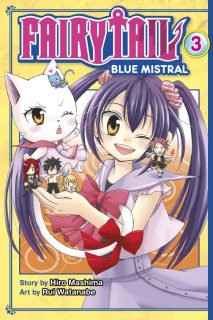
Fairy Tail: Blue Mistral, Volume 3Fairy Tail: Blue Mistral, Volume 3 by Rui Watanabe. Out of all of the various Fairy Tail spinoffs (and to some extent even Fairy Tail itself), Blue Mistral is the manga that I’m most enjoying so far. I find this particularly interesting because out of all the series, Blue Mistral is the one aimed at a demographic farthest from the one that technically I belong to. I believe Blue Mistral is currently the only shoujo version of Fairy Tail (or at least is the only one to have been published in  English at this point) and the magazine in which it was originally released is generally geared toward middle school girls. However, this audience is fitting for a series which follows Wendy Marvell, Fairy Tail’s twelve-year-old dragon slayer magic user. Although other characters from Fairy Tail do make appearances in the series, Blue Mistral is absolutely about Wendy and her adventures apart from the rest of the guild. In this particular volume, she spends much of her time posing as a boy for her own safety as she investigates the disappearances of a group of young women in the town of Aiya. After joining the town guard, she comes to discover that the circumstances are much more complicated than they first appeared. Romantic feelings play an important role in the story, but generally the romance occurs between characters who are not Wendy. Her heart does beat a little faster from time to time, though. Blue Mistral, even with all of the danger that Wendy must face, continues to be a generally upbeat, fun, and charming series.
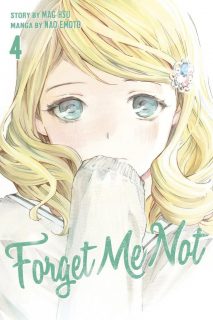
Forget Me Not, Volume 4Forget Me Not, Volume 4 written by Mag Hsu and illustrated by Nao Emoto. Although by and large I have been enjoying Forget Me Not, the third volume managed to frustrate me immensely. However, the fourth volume worked much better for me. Serizawa’s romantic relationships and attempts at romantic relationships continue to be utter utter wrecks (which considering the premise of the series is entirely expected), but at least he’s finally gained some more maturity and is able to begin to understand his own feelings. The fourth volume also delves into Serizawa’s family history which reveals some of the likely reasons that he has so much trouble forming relationships to begin with–raised by his mother after his father abandons them for another woman, he hasn’t really had a good model to follow. That’s actually something that I really appreciate about Forget Me Not. Many series which focus on romance and love tend to idealize them when in fact relationships of any sort take a tremendous amount of work. Serizawa is in the process of learning this, and it can be painful to watch as he not always successfully navigates his romances, but he is making some progress, slowly recognizing what he needs is not necessarily what the other person needs. What is missing from the fourth volume of Forget Me Not is its connection to the series’ hook, the reason why Serizawa is currently looking back on his disappointing love life; I’m hoping that the series will explore this again soon.
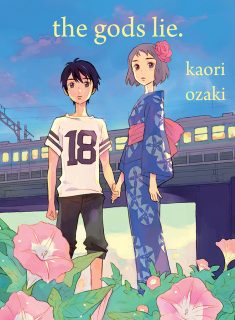
The Gods LieThe Gods Lie by Kaori Ozaki. Even though it was never fully released in English, I loved Ozaki’s Immortal Rain (or Meteor Methuselah as it was originally titled). And so when The Gods Lie was licensed, I was understandably thrilled that I would have the opportunity to read more of Ozaki’s work. Other than the fact that I recognized the creator, I didn’t actually know anything about The Gods Lie. However, I was very happy to discover that it was just as beautifully drawn and emotionally resonant as Immortal Rain. Ozaki’s storytelling in The Gods Lie is just as strong if not stronger, too. It’s also a more mature work aimed at a more mature audience, seinen rather than shoujo. The Gods Lie is a heartwrenching and devastating manga. The themes that Ozaki explores with the work are pretty heavy and hard-hitting–death, abandonment, and desperation being some of the most prominent. But there’s also love and righteousness to be found. Interpersonal relationships and families, both good and bad, provide the manga’s center. The story takes place during a very limited span of time, primarily over the course of Natsuru Nanao’s sixth-grade summer vacation, but the events that occur will have a tremendous impact on the young man. Natsuru’s characterization is incredibly well done. In part The Gods Lie is a cutting coming-of-age story. Natsuru changes and matures in very believable ways, losing some of his innocence while gaining a better understanding of and dealing with some of the world’s more unfortunate realities.
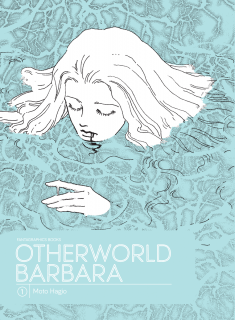
Otherworld Barbara, Omnibus 1Otherworld Barbara, Omnibus 1 (equivalent to Volumes 1-2) by Moto Hagio. Fantagraphics doesn’t currently have a huge line of manga (and sadly we may never see the rest of Takako Shimura’s Wandering Son translated), but the works it does publish are quality ones. I was very excited for the release of the first half of Otherworld Barbara; the manga was one of my most-anticipated titles for 2016. Although Hagio is a very influential creator in Japan, not much of her work has been published in English. I’ve loved everything that has been translated but have a particular fondness for Hagio’s science fiction. Otherworld Barbara is very much a part of that genre–it’s even one of the few manga to have won the Nihon SF Taisho Award–but it also includes strong elements of fantasy and the supernatural in addition to some significant family drama. Dreams, reality, past, present, and future all overlap with one another in Otherworld Barbara. Tokio is a dream pilot with the ability to enter other people’s dreams, gaining insight into their psyches in the process. Often he’s called upon to use his ability to help with criminal investigations, but more recently a group of researchers has asked him explore the dreams of a young woman who has been asleep for seven years. Surprisingly, his estranged son seems to somehow be tied to her case. The deeper Tokio probes, the more strange coincidences he uncovers, and the more dangerous the situation becomes for him and everyone else involved. I’m immensely curious to see how the story plays out.
Filed Under: FEATURES, My Week in Manga Tagged With: Fairy Tail, Forget Me Not, Kaori Ozaki, Mag Hsu, manga, moto hagio, Nao Emoto, Otherworld Barbara, Rui Watanabe

My Week in Manga: October 17-October 23, 2016

October 24, 2016 by Ash Brown

My News and Reviews

Last week was yet another week during which I wasn’t online much, though this time it was because I was on a short family vacation in Ohio to visit my folks. I did however still manage to post my review of the absolutely wonderful children’s book Are You an Echo?: The Lost Poetry of Misuzu Kaneko. The book, fully illustrated by Toshikado Hajiri, combines a biographical narrative of Kaneko’s work and life written by David Jacobson along with a selection of Kaneko’s poems presented in both the original Japanese and in English translation. Are You an Echo? is a beautiful book that adults will be able to appreciate, too; I wasn’t previously familiar with Kaneko’s poetry and am incredibly glad to have been introduced to it.

Although I was busy with family last week, a few things did catch my eye online: Vertical’s Fall 2016 manga licensing survey is now live for those interested in suggesting titles that they’d like to see the company publish in English; The Mystery Writers of Japan have released a very useful website in English which includes great information such as an outline of the group’s history and a list of recent English translations of the members’ works; As for cool queer comics Kickstarters, there is a newly launched campaign to collect Tab Kimpton’s delightful Minority Monsters comics in a single volume along with additional bonus content.

Quick Takes

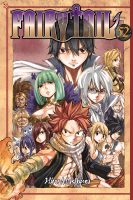
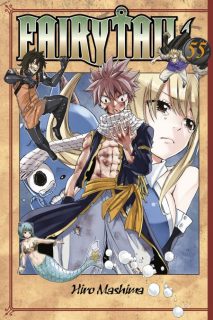
Fairy Tail, Volume 55Fairy Tail, Volume 55 by Hiro Mashima. With all of the recent developments in Fairy Tail it seems like the series might in fact be reaching its final story arcs. Granted, Mashima could just as easily stretch things out for quite a bit longer as he has repeatedly done in the past. Often Fairy Tail feels rather directionless to me, as though the creator is making things up as he goes (which he has admitted to) or isn’t sure exactly what he wants to do with the series. That being said, when Mashima actually manages to bring together disparate storylines and plot developments together in a way that makes sense and seems planned from the beginning (even if it actually wasn’t) the results can be thrilling. The fifty-fifth volume of Fairy Tail opens with one of the biggest game-changing reveals in the series as Natsu and Zeref face each other down. It’s a dramatic encounter and works tremendously well. Sadly, the rest of the volume isn’t quite as strong as its opening and many of the other plot twists and backstories feel forced at best. Still, this most recent story arc is probably my favorite out of those that I’ve so far read. (I started reading Fairy Tail part way through, so there are several arcs that I’ve missed.) I especially appreciate how it gives the tournament arc, which grew increasingly tedious, a greater purpose in the series as a whole. The action sequences and battles continue to be an exciting part of the manga as well, and there are plenty of those to be found in this volume.

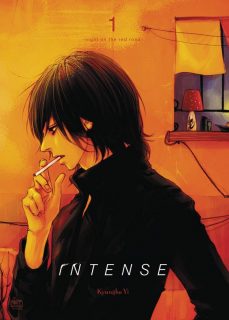
intense1Intense, Volume 1: Night on the Red Road by Kyungha Yi. I’ve deliberately been keeping a lookout for new print releases from Netcomics, but even if I wasn’t Yi’s Intense would have caught my attention. The series’ cover artwork is stunning and the manhwa’s production values and quality is some of the best that I’ve seen from Netcomics. Intense was originally released in six digital volumes, but the print edition has been collected into four. The interior artwork, though it’s not in color, is just as beautiful, striking, and moody as Yi’s cover illustrations. The story is likewise very moody and at times can be extremely dark and violent. The series follows Jiwoon, an assassin and bodyguard for a crime syndicate who has been temporarily assigned to a red-light district. There he encounters and is drawn to the mysterious Soohan who works there as a sort of handyman. With their melancholic, slightly detached personalities, it seems as though the two young men likely share a fair amount in common, so much so that the tragic backstory revealed in the flashbacks interspersed throughout the first volume could easily belong to either of them. If nothing else, Intense is certainly well named. The manhwa is heavy and intense both emotionally and psychologically, moreso than many other boys’ love stories I’ve read. I definitely plan on reading the rest of the series and I’m very curious to see how the relationship between Jiwoon and Soohan develops.

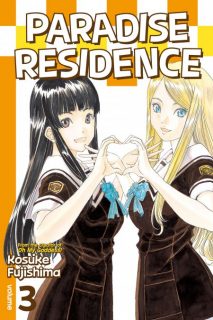
Paradise Residence, Volume 3Paradise Residence, Volume 3 by Kosuke Fujishima. Admittedly, it has been quite some time since I’ve read the first two volumes of Paradise Residence, but I really don’t remember the characters being especially infatuated with motorbikes and motorcycles which is something that is quite prominent in the third and final volume. Maybe I just completely missed it before and that’s why it seemed to suddenly come out of nowhere, but the resulting story is nice. However, it’s another sudden development that becomes the dramatic focus of the rest of the volume–due to some unfortunate circumstances, the dorm is scheduled for demolition rather than renovation and the young women living there must do all that they can to save their beloved home. They come up with a rather creative solution to their problem that, while it strains believability, is impressively audacious and clever. Paradise Residence is a series that I enjoyed much more than I thought or expected I would. It doesn’t really have a lot of substance or depth to it, but it’s a pleasant slice-of-life manga set in an all-girls high school. Though not particularly nuanced, most of the characters are generally likeable. Even with the occasional bit of drama, Paradise Residence tends to be a fairly quiet and low-key series. The artwork is attractive, too, although Fujishima seems fond of drawing characters with one eye closed; I’m not sure if they’re supposed to be winking or what.

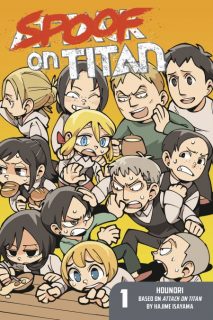
Spoof on Titan, Volume 1Spoof on Titan, Volume 1 by Hounori. In general the manga spinoffs of Hajime Isayama’s Attack on Titan depend on readers having at least some familiarity with the original series, although to varying degrees. Spoof on Titan perhaps requires a little more than many of the others as the humor relies heavily on knowledge of the characters and their personalities. Unlike Attack on Titan: Junior High, the other Attack on Titan comedy series, Spoof on Titan is firmly set in the world of the original manga. Granted, it’s a much more friendly version of that world–the Titans, though mentioned frequently, barely make an appearance and the death, destruction, and violence has been greatly toned down. The gore and darkness of Attack on Titan aren’t really to be found in Spoof on Titan. Hounori’s illustrations and character redesigns are pretty cute, too. Spoof on Titan is a four-panel comedy manga which is a format that I tend to really like when it’s done well, but the comics in Spoof on Titan tended to be fairly hit-or-miss for me. Some of them legitimately made me laugh while I barely cracked a smile at others. Overall, though, I am largely enjoying the series and find it amusing. I’m not sure that I would necessarily want to binge-read Spoof on Titan, but the series can be fun in small doses. The first volume reads like a collection of comedic Attack on Titan bonus manga, which is essentially what it is even if Isayama himself isn’t directly working on the series.

Save

Filed Under: FEATURES, My Week in Manga Tagged With: attack on titan, Fairy Tail, Hiro Mashima, Hounori, Intense, Kosuke Fujishima, Kyungha Yi, manga, manhwa, Paradise Residence

My Week in Manga: October 10-October 16, 2016

October 17, 2016 by Ash Brown

My News and Reviews

I was a little preoccupied last week, dealing with some unexpected developments at work and home, so I wasn’t online much at all. However, I did still manage to post September’s Bookshelf Overload in which I reveal the manga, comics, books, and anime that I picked up last month. Also, a few weeks ago I mentioned the short story “The Mud God” which is tangentially related to a commission that Jenn Grunigen wrote for me. Well, it’s now freely available to read online!

Quick Takes

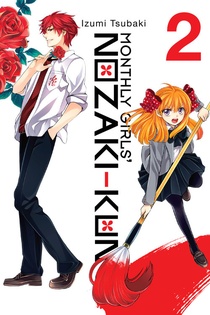
Monthly Girls' Nozaki-kun, Volume 2Monthly Girls’ Nozaki-kun, Volumes 2-4 by Izumi Tsubaki. My introduction to Monthly Girls’ Nozaki-kun was through the anime series which I adored. Because I loved the anime, it only made sense for me to seek out the original manga as well. Unsurprisingly, I enjoyed the first volume immensely. Despite that, it’s actually been quite a while since I’ve read any of Monthly Girls’ Nozaki-kun, which just means that I had the chance to fall in love with the series all over again. And I did, wholeheartedly. The series’ comedy is largely based on the characters and their personalities. The characters themselves are all a little odd but they are also incredibly endearing. Monthly Girls’ Nozaki-kun plays around with expectations, so the personality quirks of the characters intentionally defy stereotypes and are deliberately unexpected. In part, Monthly Girls’ Nozaki-kun is also a romantic comedy. The cast is fairly large and there could be any number of couples among the members except for the fact that most of the characters are completely oblivious of or misinterpret their own feelings. No one is actually together in the sense that they are dating in Monthly Girls’ Nozaki-kun (at least not yet), but in many cases they might as well be. The various relationships in Monthly Girls’ Nozaki-kun are close ones and are yet another major source of the manga’s good-natured humor.

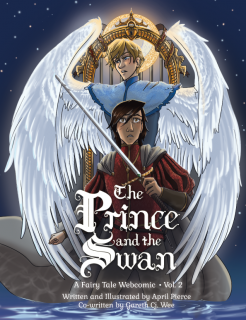
The Prince and the Swan, Volume 2The Prince and the Swan, Volumes 1-2 by April Pierce and Gareth C.J. Wee. Pyotr Ilyich Tchaikovsky’s ballet Swan Lake, itself based on Russian folklore, has been the inspiration and basis for countless other works. One of the more recent retellings that I’m aware of is the webcomic The Prince and the Swan which began in 2013. I discovered the comic while at the 2016 Toronto Comics Arts Festival where the second print volume was making its debut; I couldn’t pass up Swan Lake reimagined as a queer fairytale. Knowledge of the ballet’s story isn’t at all necessary to enjoy The Prince and the Swan although readers who are familiar with it will be in a better position to appreciate the changes made for the comic. The basic premise of the story remains the same, but in the case of The Prince and the Swan Odette is now Odet, a prince who suffers from a curse that transforms him into a swan during the day. The other lead character in the comic is Prince Siegfried who is reluctantly preparing for his coronation and marriage as king. A chance encounter between the two men will change the course of both of their lives. The pacing of The Prince and the Swan seems a little slow at first, but the artwork, characterization, and storytelling quickly improve and gain confidence as the comic progresses. I look forward to seeing how The Prince and the Swan continues to develop.

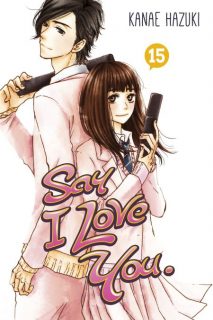
Say I Love You, Volume 15Say I Love You, Volume 15 by Kanae Hazuki. One would think that after fifteen volumes Say I Love You would no longer surprise me, but I continue to be impressed by its honesty and authenticity. I do wonder if the recently introduced Aoi twins will continue to play a role in the series as most of the main characters are graduating high school in pursuit of their individual futures. While I was initially a little unsure of the addition of prominent new characters so late in the series, I ended up really liking them and their story arcs–I’d now hate to see them discarded so soon. (Granted, Kai still has another year to go before he graduates, so I wouldn’t be surprised if the twins will continue to make appearances.) The fifteenth volume of Say I Love You would have been a natural ending point for the series. As many of the characters are preparing to go their separate ways, either by immediately entering the workforce or by continuing their education, a fair amount of time is devoted to introspection and reflection on the past. Mei in particular has changed significantly since the beginning of the series, but all of the characters have grown and matured as individuals. The characterization in Say I Love You has always been one of the series’ strong points. It will be interesting to see where the manga goes from here as both the story and characters move beyond high school.

Run, Melos! and Other StoriesRun, Melos! and Other Stories by Osamu Dazai. I forget exactly when it was that I first learned of Dazai’s short story “Run, Melos!” but it’s more or less a staple of the Japanese education system so references to the work are fairly common in Japanese popular culture. I’ve been wanting to read to story for quite some time but was under the mistaken impression that it wasn’t actually available in English. However, I recently discovered that it had indeed been translated as part of the Kodansha English Library series… which was only ever released in Japan. Thanks to the power of inter-library loan, I was finally able to read “Run, Melos!” along with six of Dazai’s other works of short fiction: “A Promise Fulfilled,” “One Hundred Views of Mount Fuji,” “Schoolgirl,””Cherry Leaves and the Whistler,” “Eight Scenes of Tokyo,” and “One Snowy Night.” I had previously read another translation of Schoolgirl but the other stories were all new to me. Normally when I think about Dazai it’s his tragic novel No Longer Human that immediately comes to mind; I had actually forgotten how humorous some of his stories can be. Even though there is still a fair amount of melancholy to be found, this humor is much more apparent in Run, Melos! and Other Stories. Overall, the volumes a charming collection of stories mostly set in early twentieth-century Japan (the exception to that being “Run, Melos!” itself) with surprisingly relatable characters.

Save

Save

Filed Under: FEATURES, My Week in Manga Tagged With: April Pierce, comics, Gareth C.J. Wee, Izumi Tsubaki, Kanae Hazuki, manga, Monthly Girls' Nozaki-kun, Osamu Dazai, Prince and the Swan, Say I Love You

My Week in Manga: October 3-October 9, 2016

October 10, 2016 by Ash Brown

My News and Reviews

Last week at Experiments in Manga, the Yona of the Dawn Giveaway Winner was announced. The post also includes a list of a variety of shoujo fantasy manga available in English that have compelling female leads. That was about it from me last week other than the usual My Week in Manga post, but I am currently working on a feature for Ichigo Takano’s Orange and a review of Are You an Echo?: The Lost Poetry of Misuzu Kaneko which I should hopefully be ready to share soon.

In licensing news, Viz Media will be releasing Yuhta Nishio’s After Hours yuri manga and has announced the acquisition of Sui Ishida’s Tokyo Ghoul:Re, Matsuri Hino’s Vampire Knight Memories, and Satoru Noda’s Golden Kamuy (which is the one I’m most interested in). Kodansha Comics announced a whole slew of licenses at New York Comic Con: Regarding My Reincarnation as a Slime by Fuse, Fairy Tail: Rhodonite by Shibano Kyouta, Kigurumi Defense Squad by Lily Hoshino, Kiss Me at the Stroke of Midnight by Rin Mikimoto, Waiting for Spring by Anashin, Love and Lies by Musawo Tsumugi, Ahogaru: Clueless Girl by Hiroyuki, Wake Up, Sleeping Beauty by Mei Morino, Frau Faust by Kore Yamazaki (the creator of The Ancient Magus’ Bride, so I’ll definitely be trying the series), and Land of the Lustrous by Haruko Ichikawa.

As for Kickstarter projects, Digital Manga announced that Under the Air and The Crater will be part of it’s upcoming Osamu Tezuka project, though I’m not sure when that will actually take place. As for a few projects that are currently underway that have caught my eye there’s the contemporary comics essay zine Critical Chips, the Johnny Wander omnibus Our Cats Are More Famous Than Us, and the second volume of O Human Star, which is a fantastic science fiction comic with queer themes.

Quick Takes

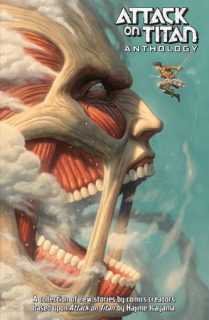
Attack on Titan AnthologyAttack on Titan Anthology edited by Ben Applegate and Jeanine Schaefer. While I wouldn’t consider myself to be a diehard of Hajime Isayama’s Attack on Titan, I do largely enjoy the series. One of the things that I actually find most interesting about the series is how it has become a worldwide phenomenon. Attack on Titan Anthology is a prime example of that, bringing together works by numerous Western comics creators which explore the world and characters of Isayama’s original Attack on Titan. There are some pretty big names among the contributors from both mainstream and independent comics. The result is spectacular and even better than I expected. I love the variety found in the works included in Attack on Titan Anthology. The stories range from darkly comedic to deadly serious (Asaf and Tomer Hanuka’s “Memory Maze” actually almost made me cry), and each work is different from the others in both style and tone. Some take place directly in the world that Isayama has created while others parody or completely reimagine it. Attack on Titan is an exciting and engaging collection. As someone who is a fan of both Western and Japanese comics, I greatly enjoyed seeing some of my favorite creators tackle Attack on Titan in their own unique ways. I suspect the anthology will appeal most to people who are already familiar with Attack on Titan, but others might be drawn to it simply due to the specific creators involved. Either way, Attack on Titan Anthology is simply fantastic. The volume’s production-quality is probably the best that I’ve seen from Kodansha Comics, too.

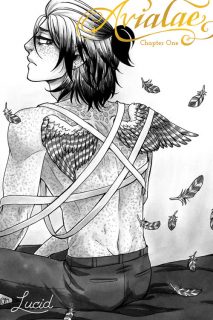
Avialae, Chapter 1Avialae, Chapters 1-2 by Lucid. Every once in a while, I pick up a comic knowing nothing about it other than the fact that I really like the cover art. That’s how I came to find out about Avialae–I saw the first chapter at the Toronto Comics Arts Festival in 2016 and had to read it. Avialae is actually a webcomic, the second chapter of which was just recently released in print. The artwork in the series is absolutely gorgeous, easily on par with the cover illustrations, and is able to effectively convey both body horror as well as erotic encounters as demanded by the story. The comic follows Gannet, a gay high school student who suddenly, and quite painfully, grows a pair of wings. Initially his next-door neighbor and classmate Gilbert is the only one who knows about Gannet’s transformation. As a result, their relationship undergoes some significant changes, too, and eventually becomes rather intimate. As far as sex goes, the first chapter is fairly tame while the second is much more explicit, easily earning the comic its 18+ rating. Avialae is marvelously sex-positive, the steamy scenes are entirely consensual, the sex is loving, and there’s plenty of communication between those involved. I find both Gannet and Gilbert to be endearing and I’m enjoying seeing how their relationship develops both physically and emotionally. Actually, all of the characters and their relationships, whether familial, romantic, or platonic, are incredibly well-realized  in Avialae. Also, much to my delight and surprise, Avialae includes a transguy and his portrayal is excellent.

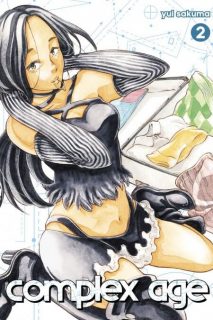
Complex Age, Volume 2Complex Age, Volume 2 by Yui Sakuma. The first volume of Complex Age surprised me. Since I don’t have a particular interest in cosplay which is a major part of the manga’s premise, I was completely taken aback by how much I was able to identify with the series and Nagisa, its main character. Complex Age is about cosplay and reading the manga has even been somewhat educational, but to an even greater extent the series is about adult fans who have hobbies that many people feel are more suited to a younger age group. It’s about women in fandom and about keeping up appearances. It’s about finding a balance between work, family and friends, and personal interests and happiness. The first volume of Complex Age also included the Sakuma’s original one-shot manga “Complex Age” which deals with similar themes. It wasn’t initially clear exactly how or if the series would tie into the original. I was very happy to discover in Complex Age, Volume 2 that the one-shot and the series actually are directly related to one another–Sawako (from the one-shot) is in fact Nagisa’s mother. I’m excited to see Sawako’s story explored more in Complex Age. It’s interesting, and in some ways a little heartbreaking, to see the impact her decision to let go of her hobby has had on her life. Now that Nagisa knows more about her mother as a person I wonder how the knowledge of Sawako’s past will influence Nagisa’s own decisions in regards to her pursuit of cosplay. Complex Age continues to surprise and impress me; I’m looking forward to reading more.

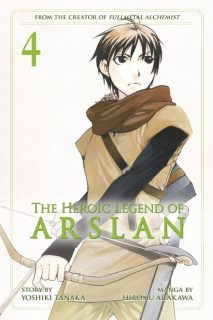
The Heroic Legend of Arslan, Volume 4The Heroic Legend of Arslan, Volumes 4-5 by Hiromu Arakawa. Neither the characters or the story of The Heroic Legend of Arslan are especially nuanced and they come across as fairly standard for the genre, but the series is nevertheless engaging and the battles are exciting. That and I’ll always glad to see more work by Arakawa (and in this case by proxy Yoshiki Tanaka) available in English. At this point in the series, Arslan and his small group of allies are fighting for their lives as they try to reach what remains of the Parsian forces along the border hoping to find reinforcements. They must face the Lusitanian invaders, confront Parsians with dubious loyalties, and contend with unknown powers working against them from the shadows. Not only that, the legitimacy of Arslan’s claim to the throne has been called into question. I enjoy historical fantasies which incorporate court and political intrigue, and The Heroic Legend of Arslan certainly has plenty of that. The forces of both Pars and Lusitania are fragmented and suffer from betrayals and infighting. The chaos this causes makes the situation increasingly dangerous and unpredictable; it is difficult know exactly what will happen next as alliances are made only to fall apart again. The Heroic Legend of Arslan can actually be pretty brutal–death, whether from battle or assassination, is a frequent occurrence. Arakawa’s artwork, while not being overly grotesque or gruesome, does still show enough blood carnage that there’s no question as to what is happening. The horses have a very rough time of it, too.

Filed Under: FEATURES, My Week in Manga Tagged With: attack on titan, Avialae, comics, Complex Age, Heroic Legend of Arslan, Hiromu Arakawa, Lucid, manga, Yui Sakuma

My Week in Manga: September 26-October 2, 2016

October 3, 2016 by Ash Brown

My News and Reviews

Although it is now October, there is still time to participate in September’s manga giveaway. This time around everyone has a chance to win Yona of the Dawn, Volume 1, the beginning of Mizuho Kusanagi’s shoujo fantasy epic! I came across a few interesting things online last week that I’d like to share: “Strip!”: The Manga Art of Anno Moyoco” at Nippon.com (once upon a time, I hosted the Moyoco Anno Manga Moveable Feast); The Lobster Dance posted The Sparkling World of 1970s Shojo Manga, Part 8 which focuses on the influence of The Rose of Versailles on Ouran High School Host Club and Haken no Osukaru; and Anne Ishii, manga translator and one of the founders of Massive, was featured on the fifteenth episode of Hey, Cool Job. There were a couple of license announcements from Viz Media that caught my eye, too: Ryoko Fukyuama’s manga Anonymous Noise will be released by Shojo Beat, and Haikasoru will be publishing the next three novels in Yoshiki Tanaka’s Legend of the Galactic Heroes!

Quick Takes

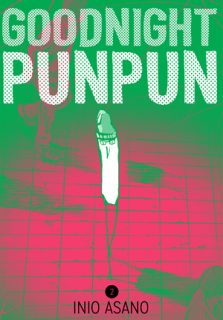
Goodnight Punpun, Omnibus 2Goodnight Punpun, Omnibuses 2-3 (equivalent to Volumes 3-6) by Inio Asano. The first omnibus of Goodnight Punpun was tremendous and left a huge impression on me. Likewise, the second and third omnibuses are incredibly well done. Goodnight Punpun is not always an easy series to read and can actually be pretty depressing and emotionally devastating. The direction of the story can often be anticipated simply by expecting that the most awful thing will happen at any given point. There are moments of joy, but for the most part the manga is a surreal and incredibly dark coming-of-age story. The worldview is extraordinarily pessimistic and bleak; most of the characters are miserable or broken in some way, and more than a few are frankly terrible people. And yet, I continue to find Goodnight Punpun to be a remarkable and compelling work even while it’s deliberately uncomfortable and heart-breaking. I find that I can empathize and even identify with most of the characters in at least some small way, which can actually be a little terrifying. Although Punpun is the series’ lead the second omnibus of Goodnight Punpun spends a fair amount of time delving into his uncle’s unfortunate past and one of the major perspectives explored in the third omnibus is that of his mother. Artistically, Asano portray’s Punpun and his immediate family more abstractly than the other characters except for during the more sexually-charged scenes, making them even more unsettling than they already are. I’m not entirely sure where Asano is going with the series or what sort of point he will ultimately make with all of the philosophical gloom, but I am willing to find out.
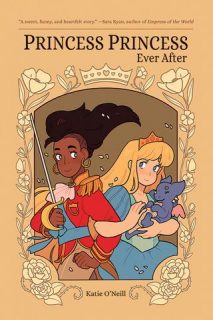
Princess Princess Ever AfterPrincess Princess Ever After by Katie O’Neill. Originally released online as a webcomic, O’Neill’s Princess Princess (not to be confused with Mikiyo Tsuda’s manga Princess Princess which is a completely different work) has now been collected in its entirety along with a new epilogue by Oni Press in a slim but beautiful hardcover edition titled Princess Princess Ever After. The comic is an absolute delight, suitable for younger readers but still enjoyable for adult audiences. After the dashing and daring Amira rescues from a tower the kind and thoughtful Sadie (with her permission first, of course), the two princesses travel together on an adventure aiding those they come across are in need of a bit of extra help. Eventually they must confront Sadie’s older sister who is the one who locked Sadie in the tower to begin with and who is an even bigger challenge than the ogre they faced while on their journey. Princess Princess Ever After is an incredibly sweet, adorable, and charming comic. Although Sadie and Amira encounter plenty of danger along the way, there really isn’t any question that they’ll get their happy ending. The comic is a lighthearted fairytale with a number of lovely twists on some of the standard tropes, most notably the romantic pairing of two princesses, neither of whom is the stereotypical damsel-in-distress, but there’s more to the story than just that. O’Neill’s artwork in Princess Princess Ever After is colorful, energetic, and cute, fitting the tone of the comic perfectly. While it’s nice to have a self-contained story, it’s almost a shame that the comic is so short and moves along so quickly; I would love to read more about Amira, Sadie, and their adventures together.

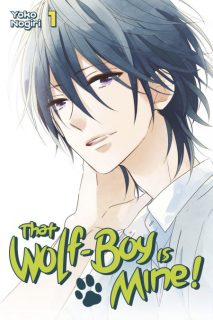
That Wolf-Boy is Mine!, Volume 1That Wolf-Boy is Mine!, Volume 1 by Yoko Nogiri. Though it’s not necessarily a new trend, ayakashi and yokai seem to be fairly prominent in many of the supernatural shoujo manga that are being licensed of late. I’m not especially bothered by this since I have a particular interest in yokai and tend to enjoy the subgenre. The presence of pretty spirit boys doesn’t hurt anything, either. But when I can easily name a half-dozen ongoing series with a similar elements (not to mention those that have already been completed), I do start to wonder what a new series has to offer that is different or unique. One of the most recent examples of a series of this type is Nogiri’s That Wolf-Boy Is Mine! from Kodansha Comics. After only one volume it hasn’t really set itself apart from other manga with ayakashi themes and it seems fairly typical for the genre, and yet it’s a very enjoyable beginning to a series. The story plays out pretty safely in the first volume and there are no real surprises, although there are hints that things might be more than they initially seem. The characters are generally likeable and endearing as well; I’m especially fond of the titular wolf-boy and his easygoing nature. While many of the characters are close to being “types,” they do have a bit more depth to them than may first appear. However, I would like to see a bit more development in the characters and their relationships as the series progresses. I do suspect that Nogiri will deliver, though. So, while I wasn’t blown away by the beginning of That Wolf-Boy Is Mine! by any means, I did like it. The manga is off to a good start and has potential. Even if Nogiri doesn’t move beyond well-worn tropes, I’m still interested in reading more of the series.

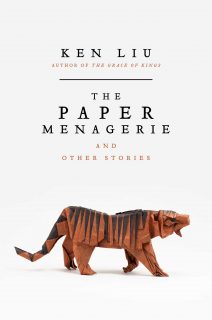
The Paper Menagerie and Other StoriesThe Paper Menagerie and Other Stories by Ken Liu. My introduction to the work of Liu was through his short story “Mono no Aware” which was collected in the anthology The Future Is Japanese. That story was enough to convince me to seek out more of his work. This turned out to be a wise decision as his debut novel The Grace of Kings was one of my favorite books from 2015. However, at least for the moment, Liu is probably best known and recognized for his shorter works which frequently earn him awards and accolades. Although The Paper Menagerie and Other Stories is Liu’s second book to be published, it is his first compilation of short stories and novellas to be released. It’s an exceptional and well-thought out collection, bringing many of Liu’s award-winning stories together with some of his personal favorites. Normally when it comes anthologies of short stories I find that their quality and strength can significantly vary from one to the next. However, all fifteen examples of Liu’s work in The Paper Menagerie and Other Stories (which includes “Mono no Aware”) are excellent. Some are certainly more powerful pieces than others, but they are all engaging, meaningful, and thought-provoking. One of the things that particularly impressed me about The Paper Menagerie and Other Stories is Liu’s ability to work in a variety of styles and genres. As a whole the collection tends to be fairly serious in tone and can be broadly described as speculative fiction, and Liu frequently incorporates aspects of Chinese and Asian culture and history, but there is still tremendous range among the individual stories. Even the stories which share common elements or themes are ultimately different from one another, offer fresh perspectives, and are each remarkable in their own way.

Filed Under: FEATURES, My Week in Manga Tagged With: comics, Goodnight Punpun, Inio Asano, Katie O'Neill, Ken Liu, manga, That Wolf-Boy Is Mine, Yoko Nogiri

My Week in Manga: September 19-September 25, 2016

September 26, 2016 by Ash Brown

My News and Reviews

Last week at Experiments in Manga I posted an in-depth review of Human Acts, an incredibly beautiful, tremendously powerful, and absolutely devastating novel by South Korean author Han Kang. (Some may recognize Kang as the author of The Vegetarian which has earned her a fair amount of international attention and acclaim.) Human Acts is one of the best books that I’ve read in quite some time, but it’s a chilling and challenging read due to its subject matter. The book focuses on the violent Gwanju Uprising and its long-lasting aftermath, however it’s not at all necessary to be familiar with that particular incident to understand and appreciate the novel.

Elsewhere online, there was some very exciting licensing news: Pantheon Books will be releasing Gengoroh Tagame’s My Brother’s Husband! The impending English-language release has been hinted at, but now it’s official and I’m absolutely thrilled. Digital Manga’s Juné imprint also had a few licensing announcements from Yaoicon: Velvet Toucher’s Eden’s Mercy, the third volume of Yoneda Kou’s Twittering Birds Never Fly, and Junko’s The Prince’s Time. And over the weekend Yen Press slipped in an announcement for the acquisition of Tsukumizu’s Shojo Shumatsu Ryoko. A few other interesting things that I came across last include a video of Viz Media’s SDCC 2016 Panel, the Comic Book Resources feature “20 Years Ago, Dragon Ball Z Came to America to Stay,” and Otaku Champloo’s BL Manga Starter Kit. Also, a couple of recent queer comics Kickstarters caught my eye: Ngozi Ukazu’s already massively successful campaign to release Check Please!, Year Two and a project to raise funds for the final volume and omnibus edition of Jennie Wood’s Flutter.

Quick Takes

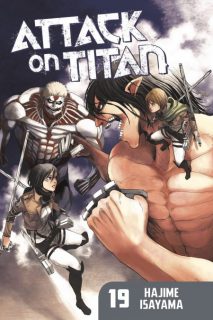
Attack on Titan, Volume 19Attack on Titan, Volume 19 by Hajime Isayama. For a while there I was starting to become a little weary of the sheer number of plot twists in Attack on Titan. Instead of renewing my interest in the story, I started to lose confidence in it. However, the more recent volumes of the series have regained some focus. The story developments and turns in the story are more exciting because of it, even if there are still a few major mysteries which have yet to be fully explained. The nineteenth volume of Attack on Titan is an exciting one as a massive confrontation between a contingent of intelligent Titans and the decimated Survey Corps begins. Eren, Mikasa, Armin, and the rest will have to directly face off against the Armored Titan and the Colossus Titan, knowing that the humans controlling them were once their comrades. It’s a kill-or-be-killed situation with very little room for negotiation. The action sequences in the nineteenth volume are dramatic and well-done, but the most notable aspect of the manga is probably the psychological impact that the battle for survival against one-time friends has on the characters. Also, for Attack on Titan fans who are interested in Levi and Erwin, the special edition of the nineteenth volume comes along with the second and final part of the No Regrets OVA anime adaptation. I haven’t had a chance to watch it myself yet, but I am glad that it’s available and am looking forward to seeing it.

CurveballCurveball by Jeremy Sorese. Although I’m only now finally getting around to reading Curveball, I’ve actually been meaning to for a while now. The comic was first brought to my attention when it became a finalist for the 2016 Lambda Literary Award for best LGBT Graphic Novel. And then at TCAF 2016 I had the opportunity to hear Sorese talk about Curveball specifically and queer science fiction in general. There are two things in particular that I especially love about Curveball. The first is the inherent queerness of the characters and worldbuilding. Numerous genders are represented in the comic and relationships, romantic and otherwise, occur in a multitude of combinations. The main character, Avery, is non-binary and there are a fair number of others who are genderqueer or genderfluid as well. This isn’t at all a big deal in the comic, it’s simply a natural and unobtrusive part of the setting. The second thing that I particularly enjoyed about the comic is Sorese’s use of color. The illustrations in Curveball are primarily grayscale except for the use of an extraordinarily vibrant and literally fluorescent orange to represent technology, and more specifically energy. The effect is very striking. Curveball is mostly about relationships, but the characters are also dealing with a developing energy crisis. The fluorescent orange and the occasional lack thereof is a constant visual reminder of this.

Seven Deadly Sins, Volume 15The Seven Deadly Sins, Volume 15 by Nakaba Suzuki. The stakes can’t get much higher than they are at the moment in The Seven Deadly Sins seeing as the fate of the entire world is in grave peril now that the extraordinarily powerful demons known as the Ten Commandments have been released. Granted, just about everyone and everything in The Seven Deadly Sins is extraordinarily powerful, so it’s sometimes difficult to get a good feel for the grand scale of the series; the shock and awe is frequently lost. Despite the tremendous abilities that everyone has and despite the massive amounts of damage dealt to both people and property, it ends up coming across as common rather than impressive. Recently Suzuki has resorted to having Hawk actually announce the combat classes and magic levels of the various characters are, but that just seems superfluous when there is effectively no difference between a class level of 3,370 and 5,500 on the page. Even so, the fight scenes and battle sequences somehow still manage to be engaging and entertaining and are honestly one of the best things about the series. The fifteen volume of the manga sees the Seven Deadly Sins starting to fight off the Ten Commandments on two separate fronts. First they must try to fend off the Commandment’s minions and are largely successful, but eventually one of the demons appears to confront them directly. By the end, things aren’t looking good for the Deadly Sins.

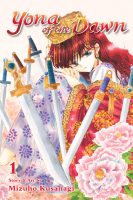
Yona of the Dawn, Volume 1Yona of the Dawn, Volume 1 by Mizuho Kusanagi. Even if it wasn’t for the fact that I tend to enjoy epic fantasy series with strong female leads, the amount of excitement surrounding the anime adaptation and the licensing announcement for the original manga series in English would have been enough for Yona of the Dawn to catch my attention and interest. Admittedly, Yona spends a large part of the series’ first volume in shock and barely able to function. The reason is understandable–she has witnessed the murder of her beloved father the king at the hands of one of the people she most loved and trusted in the world. The unexpected betrayal leaves her stunned; the only reason she avoids a similar fate is that her personal guard whisks her away from the palace. However, the very beginning of the volume implies that Yona will take control of her own destiny. That’s the story that I really want to read. I want to see Yona overcome her tragic circumstances, to find the strength to protect herself and those she loves. If the manga is able to deliver its promise (and I suspect that it will), Yona of the Dawn will indeed be a series well-worth following. While Yona comes across as weak and helpless for a significant portion of the first volume of Yona of the Dawn, showing Yona at her lowest does provide the necessary setup required for dramatic story and character developments. I’m definitely looking forward to reading more of Yona of the Dawn.

Save

Save

Filed Under: FEATURES, My Week in Manga Tagged With: attack on titan, comics, Hajime Isayama, Jeremy Sorese, manga, Mizuho Kusanagi, Nakaba Suzuki, Seven Deadly Sins, yona of the dawn

My Week in Manga: September 12-September 18, 2016

September 19, 2016 by Ash Brown

My News and Reviews

Last week at Experiments in Manga I posted the Bookshelf Overload for August. I picked up some great out-of-print (or soon to be out-of-print) manga and comics last month in addition to some highly-anticipated new releases. I was particularly busy with work and taiko last week so I wasn’t online much, but there is one thing that I’d like to draw attention to–the thirty-eighth and most recent issue of Sparkler Monthly. In it is the first part of a Skyglass side story written by Jenn Grunigen and illustrated by Mookie called “The Mud God” which, in addition to being adorably cute, is partly my fault as it’s related to another Skyglass commission that the author is working on for me. (Hopefully that one will be able to be shared soon, too!)

Quick Takes

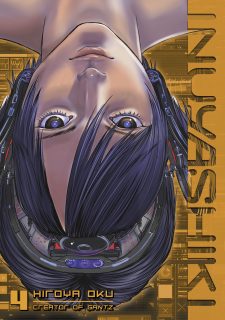
Inuyashiki, Volume 4Inuyashiki, Volume 4 by Hiroya Oku. The fourth volume of Inuyashiki begins immediately where the third volume ends, with the devastating and gruesome aftermath of Inuyashiki’s confrontation with an powerful organized crime group. It then turns to follow Shishigami’s story again. One thing that I found to be particularly interesting about Inuyashiki, Volume 4 is the character development of the two main leads. Since the beginning of the series, Inuyashiki and Shishigami have been opposites, using their newly-granted powers in vastly different ways. Though they both are mechanical monsters with many of the same abilities, Inuyashiki has focused on helping others, whether that be by curing major illnesses or fighting on behalf of those who are weaker, while Shishigami has been going on killing sprees for his own selfish reasons. Inuyashiki abhors violence, even when he is a willing participant; Shishigami delights in it. But the fourth volume of Inuyashiki sees some of that change. Inuyashiki is learning to consciously use and control his more deadly powers, specifically in order to put an end to Shishigami. He still considers it to be a necessary evil, though. As for Shishigami, his mother’s illness inspires him to use his abilities for less destructive purposes, but it’s still difficult to sympathize with him since he shows very little regret or remorse for the suffering he has wrought in the recent past.

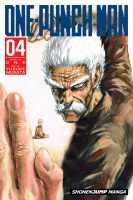
One-Punch Man, Volume 4One-Punch Man, Volumes 4-8 written by One and illustrated by Yusuke Murata. I continue to be greatly impressed by both the artwork and writing of One-Punch Man although the series is not without its flaws. The manga plays around with many of the tropes of the superhero genre and makes use of plenty of stereotypes in the process. Unfortunately, that means the introduction of an unquestionably gay hero and the perceived threat of his sexuality is intended to be comedic, resulting in an uncomfortable setup in which implied sexual assault is treated as a joke. Personally, I didn’t find this to be particularly funny. However, other than that glaring misstep, the humor in One-Punch Man is fantastic. A slew of new heroes and villains have been brought in; their powers are frequently over-the-top and frankly ridiculous, fitting the overall tone of the series perfectly. Murata’s artwork can be absolutely stunning and is incredibly dynamic, shifting from simplified illustrations to those that are nearly photo-realistic depending on the needs of the story and humor. The action sequences are great, filled with intense battles between absurdly powered opponents and accompanied by a suitably tremendous amount of destruction. It’s not at all surprising that One-Punch Man has been adapted into an anime series–the manga as a whole but especially the visual components seem to beg for it.

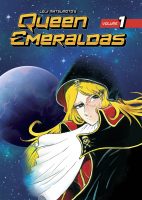
Queen Emeraldas, Volume 1 Queen Emeraldas, Volume 1 by Leiji Matsumoto. Older manga are not often released in English, so I was very excited to learn that Kodansha Comics would be publishing a classic series. I was even more interested when I found out that series would be Matsumoto’s space opera Queen Emeraldas which takes place in the same universe as his Captain Harlock stories. Although the hardcover English-language edition is based on a Japanese release from 2009, Queen Emeraldas was originally serialized in the late 1970s. The story largely follows a young man by the name of Hiroshi Umino, a runaway from Earth who crash lands on Mars in a spaceship he cobbled together himself. The titular Emeraldas is charismatic and enigmatic woman, a living legend who metes out justice as she wanders the stars. She takes a particular interest in the boy, repeatedly aiding him in his struggle to survive in space. Initially her concern seems to emerge from the fact that his story shares so many similarities with her own although later it is implied that she may have a deeper connection to him. However, like much of Queen Emeraldas, the nature of that connection is still a mystery. So far, I am thoroughly enjoying Queen Emeraldas. The manga is moody, atmospheric, and melancholic with a Western frontier flair. The characters are ambitious, seeking a life of freedom in a world that is harsh and unforgiving.

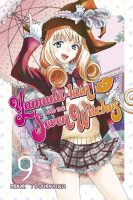
Yamada-kun and the Seven Witches, Volume 9Yamada-kun and the Seven Witches, Volume 9 by Miki Yoshikawa. It’s fairly common for bodyswap manga to incorporate a fair amount of fanservice, especially when different genders are involved, and Yamada-kun and the Seven Witches is no exception to that trend. Generally, the fanservice in the series doesn’t bother me that much especially considering the context, but every once in a while it’s more of a distraction than anything else. A case in point is a completely inexplicable panty shot in the ninth volume which completely threw me out of the story; it served no purpose for either characterization or plot, and even how the scene was illustrated didn’t make any sense. Usually, Yoshikawa is much better than that. Otherwise, I really enjoyed the ninth volume of Yamada-kun and the Seven Witches. There are some interesting twists and revelations as Yamada tries to find a way to return everyone’s missing memories. I’m not always very fond of amnesia plotlines in stories simply because they can be a lazy way for creators to write themselves out of a corner or cause unnecessary drama, but in the case of Yamada-kun and the Seven Witches it actually works really well. At it’s very heart the series about friendship and overcoming isolation. Yamada, intentionally or not, was the one who brought so many of the characters together in the first place and he will do everything that he can to bring them together again.

Filed Under: FEATURES, My Week in Manga Tagged With: Hiroya Oku, Inuyashiki, Leiji Matsumoto, manga, Miki Yoshikawa, One, one punch man, Queen Emeraldas, Yamada-kun and the Seven Witches, Yusuke Murata

My Week in Manga: September 5-September 11, 2016

September 12, 2016 by Ash Brown

My News and Reviews

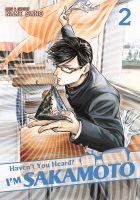
Last week was a relatively quiet week at Experiments in Manga (granted, that’s true of most weeks these days), but the winner of to Tokyo Ghoul giveaway was announced. The post also includes a list of some of the manga available in English which feature half-humans of one type or another. Elsewhere online, there were plenty of interesting things posted: Massive and gay manga were featured at Edge Media Network, and it sounds like we should be seeing more of Jiraya’s work in English later this fall; Alice Nicolov wrote an article on queer representation in manga for Dazed and Confused Magazine; Nami Sato, the creator of Haven’t You Heard? I’m Sakamoto was interviewed for the first time in either English or Japanese; and Publishing Perspectives posted some of the highlights of a conversation with Allison Markin Powell and Hiromi Kawakami about Japanese literature translation. Also, the Kickstarter project for Power & Magic, a queer fantasy comics anthology about witches of color (which looks like it should be fantastic), was recently launched.

Quick Takes

Attack on Titan: Before the Fall, Volume 8Attack on Titan: Before the Fall, Volume 8 written by Ryo Suzukaze and illustrated by Satoshi Shiki. It’s been a while since I’ve read Suzukaze’s Before the Fall light novels so I may be misremembering, but the novel adaptation seems to include characters and storylines not found in the original. It also expands on some of worldbuilding and characterizations of the franchise as a whole, so readers interested in the most comprehensive Attack on Titan experience will want to read the manga even if they’ve already read Suzukaze’s novels. Sharle, while still managing to come across as a stereotypical maiden in distress at times, is a more well-rounded and independent character in the manga. Her brother plays a more prominent and slightly more sympathetic role as well although he’s still one of the main human antagonists (and an ass). The Titans actually don’t even make an appearance in this volume and are barely mentioned as the manga focuses on the conflict and intrigue among the military, political, and religious factions. Overall, it’s an exciting volume with some interesting twists. Unfortunately it suffers some from Shiki prioritizing cool-looking panels and scenes over continuity and logical plot developments. (I’m sorry, if someone is going to daringly scale a wall to sneak into a city, they really shouldn’t be attempting the maneuver above the few guards that are present unless there’s a good reason for it.)

Devil Survivor, Volume 6Devil Survivor, Volume 6 by Satoru Matsuba. I wasn’t especially enamored with the first volume of Devil Survivor and so haven’t really been following the manga very closely. However, the series had potential, and I’m glad to see that the sixth volume delivers on that promise. The Devil Survivor manga is based on a video game in the Shin Megami Tensei franchise, one of many adaptations from the megaseries to have recently been translated in English. Probably my biggest criticism of the first volume of Devil Survivor was that it read too much like a video game and not enough like a manga. If the sixth volume is anything to judge by, the series has greatly improved in that regard. While the video game elements are still readily clear, the manga seems to be focusing more on plot and characters. I actually really like the underlying story and find some of the characters to be interesting as well. The artwork is serviceable, understandably keeping close to the designs of the video games, but the way Matsuda draws the more well-endowed women can be a bit awkward to say the least. Many of the demons invading Tokyo look pretty good, though. The sixth volume is a turning point in the story as the series enters its final arc. Important revelations are made, a major boss battle is fought, and already dangerous situations become even more dangerous as the characters prepare to do all that they can to survive and save Tokyo from destruction.

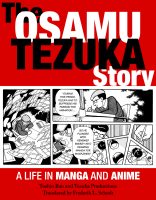
The Osamu Tezuka Story: A Life in Manga and AnimeThe Osamu Tezuka Story: A Life in Manga and Anime by Toshio Ban. While I certainly understand why Stone Bridge Press chose to release the entirety of The Osamu Tezuka Story in a single volume, the book is huge, amounting to over nine hundred pages of material. Most of the volume consists of Ban’s manga, but it also includes an excellent introduction by the translator (and friend of Tezuka) Frederick L. Schodt and one of the most exhaustive lists of Tezuka’s work that I’ve seen in one place. I’ve read my fair share of works examining the life and career of Tezuka so I wasn’t especially surprised by anything in the manga, but The Osamu Tezuka Story provides one of the most comprehensive, engaging, and accessible biographies. The manga, which is largely chronological, is divided into three parts which delve into Tezuka’s childhood, his entry into manga, and the expansion of his career into anime. Commissioned following Tezuka’s death in 1989, the biography incorporates many of Tezuka’s own words taken from his essays and earlier interviews. Ban, who was one of Tezuka’s sub-chiefs in the manga department, adopts an illustration style very similar to that of Tezuka and excerpts from some of Tezuka’s manga and anime are also used. The Osamu Tezuka Story reveals just how remarkable and influential a creator Tezuka was and is highly recommended for anyone interested in the history of Japan’s manga and anime industries.

Our Little SisterOur Little Sister directed by Hirokazu Kore-eda. I’m not sure when (or if) Our Little Sister will receive a home video release, but I recently had the opportunity to see the film in a theater. Our Little Sister is actually a live-action adaptation of Umimachi Diary (the title more literally translates to “Seaside Town Diary”), an award-winning ongoing manga series by Akimi Yoshida who some will likely recognize as the creator of Banana Fish. I’ve seen one other film by Kore-eda (Like Father, Like Son) which is similar in both theme and tone to Our Little Sister. Both films, despite intense interpersonal drama, are fairly quiet and gentle without becoming saccharine and focus on the complexities of familial relationships. In the case of Our Little Sister, the story primarily follows three sisters whose father left their mother for another woman more than fifteen years ago and whose mother largely left them behind to be raised by their grandmother. After their father dies they meet their half-sister, the daughter of his second wife (out of three), for the first time while at the funeral. For a variety of reasons, they invite her to live with them. While this does cause some raised eyebrows and strain in the family, both immediate and extended, the decision is ultimately a healing one as all four sisters grow closer as they pull together their fragmented lives. Our Little Sister is simply a lovely film. (And I’d certainly be interested in reading the original manga, too!)

Filed Under: FEATURES, My Week in Manga Tagged With: attack on titan, Devil Survivor, film, manga, Osamu Tezuka, Ryo Suzukaze, Satoshi Shiki, Shin Megami Tensei, Toshio Ban

My Week in Manga: August 29-September 4, 2016

September 5, 2016 by Ash Brown

My News and Reviews

The end of August has come and gone, but there’s still time to enter Experiments in Manga’s most recent giveaway. This time around you all have the opportunity to enter for a chance to win the first three volumes of Sui Ishida’s Tokyo Ghoul. (The winner will be announced on Wednesday.) Other than that, it was a fairly quiet week at Experiments in Manga. I was actually on vacation last week, too. I wasn’t online much, but I did catch that Viz Media will be releasing Hidenori Kusaka and Satoshi Yamamoto’s Pokémon Omega Ruby & Alpha Sapphire manga as well as a Pokémon Pocket Comics box set.

Quick Takes

Kiss Him, Not Me!, Volume 5Kiss Him, Not Me!, Volumes 5-6 by Junko. The overall narrative of the last few volumes of Kiss Him, Not Me! has fallen into a noticeable pattern; the series focuses on Serinuma’s potential romantic interests one after another in turn, each of them becoming the subject of their very own mini story arc which briefly delves into their relationship with Serinuma and how they have changed (generally for the better) because of it. Much to my surprise, yet another character has been introduced who has developed feelings for Serinuma, though just how serious he is is somewhat ambiguous. Granted, it’s mostly because of him that everyone ends up confessing their own feelings to Serinuma. As for Serinuma herself, she still seems to be completely uninterested in romance, though she is enjoying having a larger group of friends. Kiss Him, Not Me! continues to be an over-the-top romantic comedy that doesn’t take itself at all seriously. Even when the basic story elements start to feel a little repetitive (such as when Serinuma goes on a date with each of her admirers) the series is unpredictable and varied enough that it remains both entertaining and engaging. The characters aren’t especially deep, and there’s plenty about the series that’s unbelievable, but Kiss Him, Not Me! is silly fun.

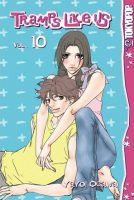
Tramps Like Us, Volume 10Tramps Like Us, Volumes 10-14 by Yayoi Ogawa. I am so glad that I made a point to collect Tramps Like Us when I did; the series is now very much out of print and unlikely to be rescued. (Although, considering the recent expansion in Kodansha’s digital offerings, there might yet be some hope there.)  I’m really not sure why it took me so long to actually get around to reading Tramps Like Us, because I ended up loving the manga and its characters. The basic premise is somewhat strange and the series frequently takes off on flights of fantasy, but somehow the emotions and relationship dynamics still manage to be incredibly real and relatable. The final volume of the series did feel a little rushed to me, and everything might have been tied up a little too nicely, but I still found the slightly bittersweet but predominantly happy ending to be very satisfying. Some of the developments weren’t really that surprising; it was only a matter of time before Sumire and Momo/Takeshi had to face what their relationship had become and actually do something about it. Although she has to give some things up, Sumire is able to find a balance between her career, home life, and love life that makes her happy. And I have to admit, although it might ultimately be a little idealistic, the ending made me happy, too.

Your Lie in April, Volume 8Your Lie in April, Volume 8-9 by Naoshi Arakawa. As a musician, I’m naturally drawn to manga in which music is featured in some way. And so, because music plays a very prominent role in Your Lie in April, the series immediately caught my attention. Arakawa captures the deep emotional connection a person can have with music remarkably well in Your Lie in April. My own relationship with music is a complicated one, so I’m glad to see that sort of complexity reflected in the manga as well. Generally, however, the series does tend more towards the angst associated with performance rather than the joy of music. Many of the characters are pouring their whole selves into their art; being a musician can be both a thrilling and terrifying experience. Effectively expressing oneself through music is a tremendous accomplishment, but frequently this is accompanied by fear and worry that one will never be good enough. Still, there are wonderful moments in Your Lie in April in which the characters are able to break through their insecurities. While music is an important part of Your Lie in April, probably even more important are the relationships between the characters, even if Kosei still seems oblivious to the fact that he means so much to so many different people.

Filed Under: FEATURES, My Week in Manga Tagged With: Junko, Kiss Him Not Me, manga, Naoshi Arakawa, Tramps Like Us, Yayoi Ogawa, Your Lie in April

My Week in Manga: August 22-August 28, 2016

August 29, 2016 by Ash Brown

My News and Reviews

A new review was posted last week at Experiments in Manga! I’ve been meaning to get around to it since the book was first released back in February, but I’ve finally written up my thoughts on Know What You Want, written by Lianne Sentar. It’s a collection of short, sexually-charged side stories related to Tokyo Demons which is a series that I absolutely love. Reading Know What You Want isn’t necessary to understand the main series, but it does provide more character development, worldbuilding, and background information. Also, like Tokyo Demons proper, the stories can often be heartwrenching.

As for other interesting things found online: Two Tsutomu Nihei interviews were recently posted, one from Brigid Alverson for Barnes & Noble and one from Deb Aoki for Anime News Network. Taiyo Nakashima has a write up of a dialogue between Tetsuo Hara and Kentaro Miura for the Silent Manga Audition website. Publishers Weekly’s podcast More to Come recently featured Frederik L. Schodt discussing Osamu Tezuka. The second episode of the Translator Tea Time podcast is now available. Also at The OASG, eleven translators of anime and manga answer how they learned Japanese.

Quick Takes

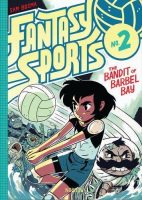
Fantasy Sports, Volume 2: The Bandit of Barbel BayFantasy Sports, Volume 2: The Bandit of Barbel Bay by Sam Bosma. I adored the first volume of Fantasy Sports. While I was looking forward to the next volume, I was also a little afraid that it wouldn’t live up to expectations. Happily, The Bandit of Barbel Bay is just as good as the first Fantasy Sports. I actually may have somehow enjoyed it even more. After defeating an ancient mummy in an epic game of basketball in order to secure an impressive amount of treasure, Wiz and Mug are trying to return to the pyramid of the Order of Mages when they end up robbed and stranded in Barbel Bay. This time they will have to win an ultimate volleyball tournament if they want to escape with the treasure and their lives. All goes well until they must face the champions of Barbel Bay, a pair of twins with godlike powers who rule the court. The story definitely has its fair share of silliness, but there’s also something sinister about the Order of Mages that is slowly being revealed. The Bandit of Barbel Bay is fantastic. Bosma’s artwork and colors are great; the characters are wonderful (the twins in particular are highly entertaining); the comic’s sense of humor is marvelous. Fantasy Sports is an absolute delight and incredibly charming; I can’t wait for the next volume to be released!

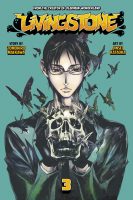
Livingstone, Volume 3Livingstone, Volume 3 written by Tomohiro Maekawa and illustrated by Jinsei Kataoka. For the most part, Livingstone continues to be a largely episodic manga. However, there is also an underlying story about Amano and the truth behind his existence that seems to be taking some precedence. Livingstone is apparently only four volumes (for some reason I thought it was longer than that), so I suspect that the fourth volume will largely be devoted to Amano. I was actually a little surprised by some of the recent developments in Livingstone and their implications–either I completely misunderstood some of the worldbuilding in the series or the creators have completely changed what they originally established. Either way, while the ambiguity is a little frustrating, overall I do find the series interesting. The individual stories, all of which deal with death in some way, range from uplifting to depressing although the series does have comedic undertones. Kataoka’s artwork fits the tone of the series well, creating a vaguely unsettling and disconcerting atmosphere while still managing to convey the humor. (One of primary reasons I was interested in Livingstone to begin with was actually because of Kataoka’s involvement.) Livingstone is a kind of a strange and uneven manga, but I’m still curious enough to want to see how it concludes.

Real Account, Volume 3Real Account, Volume 3 written by Okushou and illustrated by Shizumu Watanabe. The end of the second volume of Real Account included a major revelation about Ataru and ended with a pretty major twist on top of that. Not everything thing has been explained yet about that particular development, but the third volume abandons Ataru entirely to follow a new lead, Yuma. The creators do mention that Ataru isn’t completely gone from the series, but he doesn’t make even a token appearance in the third volume. Yuma is understandably similar to Ataru in many key ways, but the sudden shift in protagonists doesn’t work especially well. Despite knowing a fair amount of Yuma’s backstory before the volume begins, readers aren’t given much opportunity to really empathize with him before he’s thrown into the same life-or-death game as Ataru. And while I understand why the series is emphasizing how alike Yuma and Ataru are, the first chapter of the third volume feels extremely repetitive. For those reasons, I didn’t enjoy this particular installment of the series as much as the two that came before, but the series is still intriguing and the social media-inspired games are clever (though I did feel a bit cheated by some of their solutions). And I did appreciate that the third volume showed more of what is happening outside of Real Account, too.

Filed Under: FEATURES, My Week in Manga Tagged With: comics, Fantasy Sports, Jinsei Kataoka, Livingstone, manga, Okushou, Real Account, Sam Bosma, Shizumu Watanabe, Tomohiro Maekawa

My Week in Manga: August 15-August 21, 2106

August 22, 2016 by Ash Brown

My News and Reviews

After a somewhat tumultuous year, last week marked the sixth anniversary of Experiments in Manga! Though at one point I was very stressed out about the fate and state of the blog, I’m now honestly looking forward to year seven, even if I’m not able to write as much anymore. Thank you to everyone who has read and supported Experiments in Manga in the past, present, and future!

Elsewhere online, Speculative Fiction in Translation interviewed Tyran Grillo, translator of Yusaku Kitano’s award-winning Mr. Turtle, the most recent offering from Kurodahan Press. And Barnes & Noble posted a list of 8 Great Japanese Books in Translation That Aren’t by Haruki Murakami. It’s a great list–I’ve only reviewed one of the novels included (Manazuru by Hiromi Kawakami), but I’m very fond of Keigo Higashino‘s work and several of the other books are very high on my to-be-read pile.

Quick Takes

Forget Me Not, Volume 3Forget Me Not, Volume 3 written by Mag Hsu and illustrated by Nao Emoto. I was taken a little by surprise by how much I enjoyed the first two volumes of Forget Me Not and so I was looking forward to reading the third volume as well. The series delves into the life and past loves of Serizawa, a young man who so far has been shown to have very little luck when it comes to romance. Some of his relationship woes can be credited to the fact that he’s still immature and inexperienced, but that’s starting to become less and less of an excuse for him now that he’s in college. Perhaps because of that, the third volume of Forget Me Not didn’t work quite as well for me as the previous volumes did. It is very clear that the relationships shown in the third volume are heading towards an absolute train wreck. Considering the beginning of the series it’s already a known fact that Serizawa ends up alone and full of regret, but it’s still painful to watch the whole mess unfold. I feel just as badly for the two young women involved as I do for Serizawa. They both like him and he likes them both; Serizawa just hasn’t been able to figure out exactly what that means yet. Apparently, he still has quite a bit of growing up left to do. Despite my frustration with the most recent volume of Forget Me Not, I am curious to see how this unfortunate past ties in with the mystery of Serizawa’s current situation.

Noragami: Stray God, Volume 15Noragami: Stray God, Volumes 15-16 by Adachitoka. Although the series’ quirky humor hasn’t completely disappeared, Noragami has become increasingly dark and dramatic over time. Adachitoka does still find appropriate moments within the series to insert a bit of levity, but for me what makes the manga compelling is its characters. The real heart of the much of the conflict in Noragami–the frequently unpredictable relationships between the various gods as well as the turbulent relationships between the gods and mortals–has once again been thrust to the forefront of the series with the manga’s most recent story arc. One thing that I found particularly interesting about these two volumes of Noragami is that Adachitoka introduces several deities of indigenous origins in addition to recognizing the existence of foreign gods. I’m not sure that they will necessarily have a large role to play in the series (then again, it seems as though they might), but this expansion is marvelous from a worldbuilding perspective, especially as Noragami is currently dealing heavily with the court and political intrigue of the Heavens. Along with that also comes a few tremendous fight sequences. Ocassionally some of the individual actions can be a little difficult to follow amidst the chaos of battle, but overall the scenes are effective and at times even impressive.

Ten Count, Volume 1Ten Count, Volume 1 by Rihito Takarai. Although the art style in Ten Count looked familiar to me, I actually didn’t make the connection at first–Takarai was the artist of the short boys’ love series Seven Days which I loved. Ten Count, however, is a very different manga than Seven Days. Even before it was licensed in English, I was aware of Ten Count. It’s a massively popular boys’ love manga, but the series also has a fair number of detractors and understandably so. Only one volume in and Ten Count is already a deliberately uncomfortable and troubling story with dark psychological elements, dubious ethics, and emotional manipulation. The manga follows Shirotani, a young man with a severe obsessive-compulsive disorder which has remained untreated since it first manifested. After a chance meeting Shirotani catches the attention of Kurose, a clinical psychotherapist who would seem to have some emotional issues of his own. Kurose takes a particular and decidedly unprofessional interest in Shirotani, offering to help Shirotani deal with his condition off-the-record and off-the-clock. Without realizing it, as Shirotani begins to be able to more easily function within society, he has also become more and more reliant on Kurose. Romantic it certainly is not, but at least for the moment I’m part of the group that finds Ten Count compelling and definitely plan on reading more.

Another: Episode S/0Another: Episode S/0, novel by Yukito Ayatsuji, manga by Hiro Kiyohara. While I was left feeling a little cheated by how some of the major reveals were handled in the horror-mystery novel Another, for the most part I did like the book. And so I was excited when Yen Press licensed both the not-exactly-sequel Another: Episode S (the main action of the novel takes place during the original Another but is only tangentially related) and the short prequel manga Another 0, releasing them together in a single, beautiful hardcover volume. (Out of all the North American manga publishers, Yen Press has had some of the best book designs of late.) Sadly, Episode S has many of the same narrative problems found in Another, namely important reveals that, while they make sense, seem a bit unfair to the readers. I actually really liked the plot twists themselves in Episode S, it’s just that their execution falls short; once again left feeling unsatisfied by the story’s developments. Tonally, Episode S is a little different from Another–while it’s still a ghost story of sorts and there are some marvelously disturbing scenes, the mystery is emphasized far more than the horror. The atmosphere of Another 0, written and illustrated by the creator who helmed the Another manga adaptation, is much closer that of Another. The prequel relies heavily on readers’ familiarity with the original while Episode S largely stands on its own.

Ultimate Conditioning for Martial ArtsUltimate Conditioning for Martial Arts by Loren Landow. From an athletic standpoint, I have found several of the books published by Human Kinetics to be useful resources in supplementing my study of traditional Okinawan karate. Ultimate Conditioning for Martial Arts, one of the publisher’s most recent titles, can technically apply to any martial artist, but the book does tend to be geared more towards athletes and competitors. Landow also assumes that readers already have basic knowledge of anatomy, physiology, and sports training methods. While perhaps not suitable for absolute beginners, Ultimate Conditioning for Martial Arts does provide a good starting point for established martial artists who want to begin incorporating speed, agility, and conditioning work into their training. In addition to providing suggested conditioning exercises and programs, Landow also incorporates an overview of relevant and closely-related topics such as the evaluation and establishment of fitness baselines, warmups and flexibility, rest and recovery, and nutrition. The book includes a generous number of helpful photographs to accompany the descriptions of the specific exercises, but the photographs selected aren’t always the ones that would be most illustrative or useful. Additionally, rather than explaining the particular functions and applications of the individual exercises, Landow tends to broadly generalize and categorize their benefits. This lack of specificity and guidance can make the creation of an individualized conditioning program challenging for someone who has never developed one before. Ultimate Conditioning for Martial Arts groups commonly practiced martial arts disciplines together as either striking and kicking arts or wrestling and grappling arts. Landow suggests specific conditioning exercises for each category but also emphasizes the benefits of using a blended approach when developing a training program. Mixed Martial Arts is the only discipline that’s addressed in-depth but Ultimate Conditioning for Martial Arts is still broadly applicable to other martial arts and a valuable resource, providing a fine overall introduction to conditioning and endurance training.

Filed Under: FEATURES, My Week in Manga Tagged With: Adachitoka, Another, Forget Me Not, Hiro Kiyohara, Loren Landow, Mag Hsu, manga, Nao Emoto, Nonfiction, Noragami, Novels, Rihito Takarai, Ten Count, Yukito Ayatsuji

My Week in Manga: August 8-August 14, 2016

August 15, 2016 by Ash Brown

My News and Reviews

Two posts went up at Experiments in Manga last week in addition to the usual My Week in Manga feature. The first was the Bookshelf Overload for July in which I talk a little about my manga purchases for the month and the fact that I went a little overboard during some recent sales. The second was a brief wrap-up of my recently completed horror manga review project; it took me around a year and a half to review each volume in Setona Mizushiro’s After School Nightmare and Yuki Urushibara’s Mushishi. I’d like to do another review project in the future (and have readers of Experiments in Manga vote on the featured manga as they have for the past two projects), but since I’m currently following reduced posting schedule I’m going to hold off on that for the moment.

Elsewhere, NPR recently released a segment featuring food manga like Food Wars. (Interestingly, NPR was actually where I first learned of Death Note.) The seventh part of “The Sparkling World of 1970s Shojo Manga” was posted at The Lobster Dance and focuses on Sailor Moon and Revolutionary Girl Utena. Also posted last week were not one, but two interviews with Naoshi Arakawa, the creator of Your Lie in April, from when he was visiting the United States for Anime Expo: Misaki C. Kido interviewed Arakawa for Kodansha Comics while Deb Aoki interviewed Arakawa for Anime News Network. And since I’m mentioning interviews, manga translator Zack Davisson was also interviewed over at The Comics Journal about Shigeru Mizuki’s Kitaro.

Finally, a bit of licensing news: Viz Media announced at Otakon that it would be releasing Akira Himekawa’s The Legend of Zelda: Twilight Princess, Kyousuke Motomi’s Queens Quality (the sequel to QQ Sweeper), and Takako Shimura’s Sweet Blue Flowers. For me, the most exciting and unexpected license was Sweet Blue Flowers. Digital Manga previously had the rights to the series but only released one volume of a less-than-stellar digital edition. (Jocilyn Wagner posted a guest review of the manga here a while back.) Before that, a version of Sweet Blue Flowers was available through the now defunct JManga. Shimura’s Wandering Son is a tremendously important series to me, so I’m very happy that Sweet Blue Flowers will be receiving the attention it deserves. Ideally, if the series does well, it could hopefully encourage Fantagraphics to release more of Wandering Son.

Quick Takes

Haven't You Heard? I'm Sakamoto, Volume 2Haven’t You Heard? I’m Sakamoto, Volumes 2-4 by Nami Sano. I greatly enjoyed the first volume of Haven’t You Heard? I’m Sakamoto, so it was only a matter of time before I got around to finishing the rest of the series. I love the manga’s absurdity, humor, and over-the-top scenarios. First and foremost, Haven’t You Heard? I’m Sakamoto is a comedy, but it also has heart–the fourth and final volume in particular is surprisingly touching. While I’m sure I would have enjoyed reading more Haven’t You Heard? I’m Sakamoto, four volumes seems to be the right length for the series. It’s short enough that the the gags still feel fresh and unexpected, but long enough that the manga develops an underlying story to accompany its primarily episodic nature. The entirety of Haven’t You Heard? I’m Sakamoto follows Sakamoto’s first year of high school. As a transfer student it might be expected that he would have some trouble fitting in, and he seems so blissfully unaware socially that he never really does, but everyone adores him, even those who want to hate him. No matter what the circumstances, Sakamoto takes everything in cool, collected stride, frequently facing down and disarming the school’s delinquents with his utter kindness and friendship. Haven’t You Heard? I’m Sakamoto is a ridiculous series and I’m very happy that it’s available in English.

Say I Love You, Volume 10Say I Love You, Volumes 10-14 by Kanae Hazuki. Although I enjoy Say I Love You, for whatever reason it’s not a series that makes me want to rush to find out what happens next, and so I’ve managed to fall behind. But every time that I read Say I Love You, I am greatly impressed by the manga. The slow, natural development of the story and characters is actually a large part of the series appeal; a manga doesn’t have to be full of action to be dramatic and engaging. These few volumes introduce two underclassmen (a brother and sister who are twins) as important characters in an already large cast. At first, I was a little uncertain about their addition to the series, but I’ve grown to really like them. The realistic and earnest portrayal of teenage sexuality in Say I Love You is particularly well done. The characters are maturing and discovering not only who they are as individuals, but who they are in relation to other people. What I especially appreciate about Say I Love You is that sex isn’t necessarily idealized or treated as an end goal, it’s simply one potential part of a relationship which in fact often makes things even more messy and complicated. The characters in Say I Love You are at the point in their lives in which they are transitioning from adolescence into adulthood. In addition to worrying about their friendships and romances, they are concerned about the immediate future.

Sweetness & Lightning, Volume 1Sweetness and Lightning, Volume 1 by Gido Amagakure. I tend to enjoy food manga so will gladly read at least the first volume of a new series which is even tangentially related to the genre. Sweetness and Lightning most definitely fits squarely within the genre–it even contains recipes–but I was particularly interested in the series because it features a single dad who is responsible for caring for his daughter after her mother passes away. He’s a terrible cook so for months they’ve been living on convenience store food and prepackaged, ready-made meals, but when he sees how happy Tsumugi is after eating a home-cooked dinner (not even a dinner really, but a serving of rice), he decides to learn how to cook himself. Helping him is Kotori, one of the students in his high school math class, whose mother owns a restaurant. Kotori sees Inuzuka as a surrogate father, but there also seems to be the possibility that she may develop romantic feelings for him as well. The first volume of Sweetness and Lightning was adorable. Tsumugi is a cute kid, the love and care that Inuzuka shows is endearing, and sharing food with others is joyful experience for Kotori. At this point the three of them together make for a delightful combination. Sweetness and Lightning also has an air of melancholy about it as the characters are dealing with loneliness and loss. Inuzuka does all that he can to make Tsumugi happy, but being a single parent isn’t at all easy.

Filed Under: FEATURES, My Week in Manga Tagged With: Gido Amagakure, Haven't You Heard I'm Sakamoto, Kanae Hazuki, manga, Nami Sano, Say I Love You, Sweetness and Lightning

My Week in Manga: August 1-August 7, 2016

August 8, 2016 by Ash Brown

My News and Reviews

Last week brought some very good news! Sparkler Monthly‘s Kickstarter campaign for its fourth year was successfully funded, so we’ll all be getting another twelve months of phenomenal new content in addition to all of marvelous the Sparkler Monthly content that already exists, most of which is freely available online. Somewhat related to that, last week the winner of Experiments in Manga’s Sparkler Monthly Year 4 giveaway was announced. I was hoping to post the wrap up to my horror manga review project last week, too, but it looks like that should be going up sometime this week, instead.

Speaking of Kickstarters, there were two recently launched projects that specifically caught my attention last week. The first is a project to publish the second volume of Moonshot, a comics anthology featuring indigenous creators. The first volume was very impressive and earned multiple awards and honors, so I expect the second volume will be great, too. The other campaign is for the first print volume of Der-shing Helmer’s webcomic The Meek. I haven’t actually read The Meek myself yet, but I’ve heard very good things about the series.

Elsewhere online (well, I guess specifically at Anime News Network), it was a Seven Seas sort of week: Deb Aoki interviewed Okayado, the creator of the massively successful Monster Musume, at Anime Expo, the transcript of which has now been posted. I haven’t had time to listen to it yet, but the most recent ANNCast featured Jason DeAngelis, Adam Arnold and Lissa Patillo from Seven Seas. And in licensing news, Seven Seas will be releasing Atami Michinoku’s The High School Life of a Fudanshi.

Quick Takes

Fairy Tail, Volume 52Fairy Tail, Volumes 52-54 by Hiro Mashima. Despite its immense popularity, for me Fairy Tail fairly tends to be fairly hit-or-miss. Mashima readily admits that he doesn’t always know where he’s going with the story and characters, but every once in a while he manages to pull it all together to form something truly grand and epic. I have to admit, I’m really liking the most recent story arc of Fairy Tail. Once again, the members of the Fairy Tail guild are responsible for trying to save the world, but the enemies that they face this time are so strong that it’s not something that they will be able to do alone. To me, this showdown feels more personal than some of the previous world-altering battles. Granted, that impression may in part be because my reading of Fairy Tail has been somewhat fragmented. However, I greatly appreciate the more character-driven arcs of Fairy Tail. These three volumes explore the past of Fairy Tail and the guild’s connection to Zeref, the dark wizard cursed to live forever who is trying to find a way to end it all. (This I believe is all explored in greater depth in the Fairy Tail Zero spinoff, which I suspect I would likely enjoy.) The battles in this story arc are well-paced in addition to being suitably dramatic and over-the-top, fitting for a conflict that will determine the fate of the world.

Haikyu!, Volume 1Haikyu!!, Volumes 1-2 by Haruichi Furudate. Due to my increasingly busy schedule, I’ve only managed to watch the first few episodes of the Haikyu!! anime adaptation, but that was more than enough to determine that I wanted to read the original manga when it was released in English. I find that even though I’m not especially interested in sports, I really enjoy sports manga, and so far Haikyu!!, about a boys’ high school volleyball team, doesn’t disappoint. Like many other sports-oriented manga, Haikyu!! features characters who are in one way or another exceptionally skilled or naturally talented athletes. What makes Haikyu!! stand out from other sports manga that I’ve read is that it emphasizes teamwork in a way that I’ve not usually seen–the manga’s not just about great players who are simply part of the same team, it’s about teammates bringing out the best in one another, finding ways to effectively complement their strengths and weaknesses to form a group that’s more capable than any one individual. The characterization is pretty great in Haikyu!!, too, which is particularly important for a series which will likely have a fair number of characters to keep track of. I really like the characters in Haikyu!!; they all have very distinctive personalities. If Haikyu!! continues as strongly as it begins, I’m definitely in for the long haul with this series.

UQ Holder!, Volume 7UQ Holder!, Volumes 7-8 by Ken Akamatsu. There’s something about UQ Holder! that rubs me the wrong way. Frustratingly, I haven’t been able to identify exactly what it is about the series, especially as there are parts of the manga that I actually like. I do wonder if part of this dissonance is caused by the fact that I’ve never read Negima! Magister Negi Magi. Although UQ Holder! initially seemed to be a stand-alone spinoff, lately it seems to be tying itself back to the original to a greater extent; I feel like I’m missing some important context. Much of the humor in UQ Holder! seems to fall flat for me, too, even when I can tell that what I’m reading is intended to be funny. The series also seems to have a bit of an identity crisis, as though Akamatsu can’t quite decide what type of story it’s supposed to be. At this point, UQ Holder! has now suddenly veered into becoming a martial arts tournament; previous incarnations of the series included a murder mystery, among other things. The martial arts tournament was a good choice, though–the battles in UQ Holder! are generally the most entertaining aspect of the series. The tournament also gives the characters an actual, definitive goal to focus on rather than their more ambiguous ambitions. These volumes also delve more into Evangeline’s backstory, which was good to see.

Filed Under: FEATURES, My Week in Manga Tagged With: Fairy Tail, Haikyu!!, Haruichi Furudate, Hiro Mashima, Ken Akamatsu, manga, UQ Holder

My Week in Manga: July 25-July 31, 2016

August 1, 2016 by Ash Brown

My News and Reviews

A new review was posted at Experiments in Manga last week! The final review in my (at one point monthly) horror manga review project delves into Setona Mizushiro’s After School Nightmare, Volume 10. I have mixed feelings about the series’ conclusion, but overall there was a lot that I really liked about the manga as a whole. I’m not exactly sure what my next in-depth feature will be (I have a few different ideas for it), but I do plan on writing a brief wrap-up for the horror manga review project. I’m also working on the post for Experiment in Manga’s (sixth!) anniversary which will be coming up later this month.

Also posted last week was Experiments in Manga’s most recent giveaway which offers a chance to win two Sparkler Monthly paperbacks, ebooks, or audio dramas of your choosing. The last few days of the giveaway coincides with the last few days of the Sparkler Monthly Year 4 Kickstarter. The winner of the giveaway will be announced on Wednesday, but the fate of Sparkler Monthly will be determined on Tuesday. There was a surge of support for the campaign over the weekend, but it still has a little ways to go if it’s going to succeed. I wrote a little bit on Twitter about the importance of Sparkler Monthly to me personally and in general; please consider contributing to the campaign in some way if you are at all able and haven’t already!

Speaking of Kickstarters, Czap Books recently launched a campaign to support it’s 2017 Collection. Last year Czap Books released the first volume of Laura Knetzger’s Bug Boys which I adored, and the books in the 2017 Collection all look as though they should be fantastic, too. Other interesting things found online last week include Deb Aoki’s writeup on manga at SDCC 2016 for Publishers Weekly. Audio recordings of some of the panels at SDCC are now available as well. (As are audio ecordings from TCAF 2016; I don’t remember if I previously mentioned those.) I haven’t had a chance to listen to it yet, but The OSAG introduced the first episode of Translator Tea Time, a podcast featuring two professional manga translators. Also last week, Yen Press slipped in a license announcement for Miyuki Nakayama’s Spirits & Cat Ears and Canno’s A Kiss and White Lily for Her.

Quick Takes

Fairy Tail: Ice Trail, Volume 2Fairy Tail: Ice Trail, Volume 2 by Yuusuke Shirato. When I first started reading Ice Trail, a spinoff of Hiro Mashima’s Fairy Tail which follows Gray Fullbuster before he joins the guild, I had assumed that it would be a somewhat longer series. Gray is probably one of the most popular characters in Fairy Tail, but Ice Trail ends up only being two volumes long. It’s a fun and even cute series that introduces some original characters in addition to incorporating, either directly or indirectly, cast members from Fairy Tail. Readers already familiar with Fairy Tail will probably get the most out of Ice Trail, but the series doesn’t require much previous knowledge of the original story and characters to follow what is going on. The second volume concludes Gray’s search for the Fairy Tail guild, having heard that it was home to a number of great wizards. As Gray journeys to Magnolia, he more or less unintentionally forms a three-person adventure party with another boy named Pauz, a wizard whose magic is based on books and paper (a type of magic which unsurprisingly I loved) and the young thief Doronbo, who was probably my favorite character out of the entire mini-series. Although initially their relationships were somewhat antagonistic, by the end of Ice Trail the three have become close friends, keeping with the tradition and themes of Fairy Tail as a whole.

Genshiken: Second Season, Volume 7Genshiken: Second Season, Volumes 7-8 by Shimoku Kio. It’s admittedly been a little while since I’ve read the original Genshiken manga, but there do seem to be quite a few parallels between the two series. Granted, Second Season is probably much closer to being a continuation of Genshiken proper rather than an entirely separate series. One similarity that particularly struck me reading these two volumes is that both Genshiken and Second Season start as series about otaku and their hobbies but soon evolve into series that’s more about the relationships between the members of the club and inevitably romance. At this point in Second Season, Hato is coming to terms with his feelings for Madarame and is beginning to dress as a woman more frequently. (Just how closely those two things are related to each other is debatable.) As Hato starts making the moves on Madarame, the rest of Madarame’s real-life harem is thrown into turmoil. And of course everyone on the sidelines has their own pairings that they’re rooting for, treating it almost like a game which creates even more drama. Madarame himself isn’t really sure what to do with the situation and has his own conflicted feelings to work out. I won’t lie—I like Hato and Madarame together, so I’m very curious to see where this is all heading.
A Redtail's DreamA Redtail’s Dream by Minna Sundberg. I don’t remember exactly when the webcomic A Redtail’s Dream was first recommended to me, but never got around to reading it until now. Which is a complete and utter shame. I had actually forgotten about it but recently came across it again while looking for a different comic entirely. The collected edition of A Redtail’s Dream includes the entire series in a single, massive volume along with additional bonus content, commentary, and cultural notes not found online. A Redtail’s Dream is an absolutely gorgeous comic. Drawn over the course of two years, each chapter is illustrated using a different color palette and the results are simply beautiful. The comic is strongly influenced by Finnish mythology (Sundberg was born in Sweden, but was raised and lives in Finland), but familiarity with those stories and legends is not at all necessary to appreciate and enjoy Sundberg’s epic. A Redtail’s Dream follows Hannu and his beloved dog Ville who are given the responsibility of rescuing the souls of their friends, family, and neighbors when a young spirit fox accidentally causes their village to slip into a dream realm which is dangerously close the land of the dead. Hannu is actually fairly antisocial, so it’s interesting (and amusing) to see him crankily take on the role of the hero when he’d much rather just be left alone.

Seven StoriesSeven Stories by Hiroshi Mori. Outside of Japan, Mori is probably best known as the creator of The Sky Crawlers, which was adapted as an anime film directed by Mamoru Oshii in 2008, and his debut novel The Perfect Insider, which was even more recently adapted as an eleven-episode anime series. Inside of Japan, Mori is an extremely prolific, well-known, and popular author. (Apparently, Mori also wrote the novelization of Moto Hagio’s Heart of Thomas, which I didn’t even know existed; I’d love to read that.) It wasn’t until recently that any of Mori’s writing was translated into English, thanks to the efforts of Breakthrough Bandwagon Books. As can be safely assumed by the title, Seven Stories collects seven of Mori’s short works, some of which are representative of his earliest short stories and most of which can be generally categorized as mysteries with some interesting twists: “The Girl Who Was the Little Bird,” “A Pair of Hearts,” “I’m In Debt to Akiko,” “Silent Prayer In Empty,” “Kappa,” “The Rooftop Ornament of Stone Ratha,” and “Which Is the Witch?” (The last two stories are actually from Mori’s S&M series which is a continuation of sorts of The Perfect Insider.) The collection also includes an essay by the editor and translator, providing additional background information and context for the stories which I greatly appreciated. The translation tends to be more literal and academic than literary, but the dry humor present in some of the stories still comes through quite well.

Filed Under: FEATURES, My Week in Manga Tagged With: comics, Fairy Tail, Genshiken, Hiroshi Mori, manga, Minna Sundberg, Redtail's Dream, Shimoku Kio, Yuusuke Shirato

My Week in Manga: July 18-July 24, 2016

July 24, 2016 by Ash Brown

My News and Reviews

Other than the regular My Week in Manga feature, there were no posts from me last week at Experiments in Manga. I was, however, able to make some progress on my review for the final volume of Setona Mizushiro’s manga series After School Nightmare. I hope to finish and post the review in the very near future, and then officially wrap up my horror manga review project.

Elsewhere online last week, I came across two interesting interviews: a translation of a 2006 conversation between Taiyo Matsumoto and Fumiko Takano as well as an interview with Kazue Kato, creator of Blue Exorcist, from Anime Expo 2016. The San Diego Comic Con took place over the weekend and there were a few licensing announcements to come out of the event: Kodansha Comics is planning a deluxe edition of Masamune Shirow’s Ghost in the Shell; Udon Entertainment has acquired Yuztan’s Dragon Crown manga adaptation in addition to more artbooks, Manga Classics, and a Street Fighter novel; and Viz Media will be releasing a Princess Mononoke artbook as well books based on RWBY.

Finally, in part due to a suggestion made by a regular reader of Experiments in Manga, I’d like to start more regularly mentioning some of the crowdfunding projects that I’m either supporting or that have caught my eye. In the past, I’ve tended to only mention projects that were directly or tangentially related to manga in some way, but I’d like to begin highlighting other campaigns as well. And so! Natasha Alterici is raising funds for the second volume of Heathen, a beautifully illustrated comic about lesbian Vikings. Jason Thompson, author of Manga: The Complete Guide and a comic creator in his own right, is printing a poster map of alien invaders. Bones of the Coast is an anthology of horror comics inspired by the Pacific Northwest.

I’d also like to take this opportunity to give the Sparkler Monthly Year 4 campaign another shout out. (If you follow me on Twitter, that’s pretty much all I’ve been doing for the last week or so, and will probably continue to do so for a while.) I really love everything that Sparkler Monthly/Chromatic Press is doing, and will be legitimately heartbroken if the Kickstarter doesn’t succeed.

Quick Takes

Fairy Tail, Omnibus 2Fairy Tail, Omnibus 2 (equivalent to Volumes 6-10) by Hiro Mashima. When I first started reading Fairy Tail, I ended up jumping into the series around the twenty-fifth volume. Fairy Tail has a huge following, but it just didn’t seem to click with me. However, now that I’ve read some of earlier volumes, I think I finally more fully understand the appeal of the series. Fairy Tail is a fun and exciting manga with likeable characters and an emphasis on friendship and found family. One of my complaints about Fairy Tail in the past has been that it often seems directionless. Even this early in the series Mashima readily admits to making things up as the he goes with no concrete plan in place. He even seemed surprised when he realized that the series would reach ten volumes. (And it’s now over fifty and still ongoing.) Interestingly, this lack of direction didn’t seem to bother me as much as it has before, I think in part due to the fact that Mashima spends a fair amount of second omnibus exploring the main characters’ back stories which provided the needed amount of focus. I liked getting to know the characters better, something I missed out on by starting with a later story arc. Also, Kodansha’s massive, oversized “Master’s Edition” omnibuses show off Mashima’s artwork and are a great way to catch up on the series.

Princess Jellyfish, Omnibus 2Princess Jellyfish, Omnibus 2 (equivalent to Volumes 3-4) by Akiko Higashimura. I am still incredibly happy that Kodansha Comics is releasing a print edition of Princess Jellyfish. I’m also glad that the series seems to be worth the risk and is doing fairly well for the publisher so far. I am especially looking forward to reaching the parts of the story that weren’t included in the anime adaptation. While there are some differences, for the most part the second omnibus fall entirely into what was adapted for the anime. Because of that I’m not at all surprised by any of the plot developments, but I still am thoroughly enjoying the story and characters. I also get a kick out of the visual nods to classic shoujo manga that Higashimura scatters throughout the series, usually when something particularly dramatic is going on. Princess Jellyfish is probably first and foremost a comedy, but through its humor it explores issues of gender roles and expectations. There is a fair amount of relationship drama, too. At this point in the series, Kuranosuke is trying to come up with a plan to raise the funds needed to save the Amamizukan apartments from being demolished and in doing so becomes more and more attached to Tsukimi. As for Tsukimi, she’s dealing with her own personal and romantic turmoils.

A Silent Voice, Volume 7A Silent Voice, Volume 7 by Yoshitoki Oima. The first volume of A Silent Voice left a huge impression on me, and the series as a whole has consistently been one of the strongest stories that I’ve recently read. Granted, A Silent Voice isn’t always an easy read and the subject matter can be pretty heavy. Bullying, depression, social anxiety, suicide attempts, and other tough issues all come into play. Oima isn’t afraid to let the relationships between the characters be extremely messy and complicated. I especially appreciate that Oima doesn’t just slap romance on the situation like magical bandage that will fix everything or erase the misdeeds of the past. From time to time, I was a little worried that might happen, but A Silent Voice takes a more nuanced and much less stereotypical route with the story. If anything, the romantic feelings just complicate matters further. The characters themselves are realistically and believably flawed people. Frankly, they can even be unlikeable, they still remain interesting and compelling. Many of them are struggling with mistakes that they have made and are dealing with devastating regret. But by the end of the series, the characters able to begin to look forward towards the future instead of wallowing in what can’t be changed; their pasts have shaped who they are, but won’t be the only thing that defines them.

Filed Under: FEATURES, My Week in Manga Tagged With: Akiko Higashimura, Fairy Tail, Hiro Mashima, manga, Princess Jellyfish, Silent Voice, Yoshitoki Oima

  • « Go to Previous Page
  • Page 1
  • Interim pages omitted …
  • Page 3
  • Page 4
  • Page 5
  • Page 6
  • Page 7
  • Interim pages omitted …
  • Page 17
  • Go to Next Page »
 | Log in
Copyright © 2010 Manga Bookshelf | Powered by WordPress & the Genesis Framework