• Skip to primary navigation
  • Skip to main content
  • Skip to primary sidebar
  • Home
  • About Us
    • Privacy Policy
    • Comment Policy
    • Disclosures & Disclaimers
  • Resources
    • Links, Essays & Articles
    • Fandomology!
    • CLAMP Directory
    • BlogRoll
  • Features & Columns
    • 3 Things Thursday
    • Adventures in the Key of Shoujo
    • Bit & Blips (game reviews)
    • BL BOOKRACK
    • Bookshelf Briefs
    • Bringing the Drama
    • Comic Conversion
    • Fanservice Friday
    • Going Digital
    • It Came From the Sinosphere
    • License This!
    • Magazine no Mori
    • My Week in Manga
    • OFF THE SHELF
    • Not By Manga Alone
    • PICK OF THE WEEK
    • Subtitles & Sensibility
    • Weekly Shonen Jump Recaps
  • Manga Moveable Feast
    • MMF Full Archive
    • Yun Kouga
    • CLAMP
    • Shojo Beat
    • Osamu Tezuka
    • Sailor Moon
    • Fruits Basket
    • Takehiko Inoue
    • Wild Adapter
    • One Piece
    • After School Nightmare
    • Karakuri Odette
    • Paradise Kiss
    • The Color Trilogy
    • To Terra…
    • Sexy Voice & Robo
  • Browse by Author
    • Sean Gaffney
    • Anna Neatrour
    • Michelle Smith
    • Katherine Dacey
    • MJ
    • Brigid Alverson
    • Travis Anderson
    • Phillip Anthony
    • Derek Bown
    • Jaci Dahlvang
    • Angela Eastman
    • Erica Friedman
    • Sara K.
    • Megan Purdy
    • Emily Snodgrass
    • Nancy Thistlethwaite
    • Eva Volin
    • David Welsh
  • MB Blogs
    • A Case Suitable For Treatment
    • Experiments in Manga
    • MangaBlog
    • The Manga Critic
    • Manga Report
    • Soliloquy in Blue
    • Manga Curmudgeon (archive)

Manga Bookshelf

Discussion, Resources, Roundtables, & Reviews

My Week in Manga

My Week in Manga: February 6-February 12, 2017

February 13, 2017 by Ash Brown

My News and Reviews

Last week at Experiments in Manga I posted the Bookshelf Overload for January–it was kind of a strange month for manga and other media acquisitions for me, but it wasn’t as absurd as December so at least my wallet’s a little happier. I also managed to finish my draft for February’s in-depth review, so I should have that cleaned up and posted sometime later this week.

Last week I came across a few interesting things online related to queer manga, comics, and other media. Massive has now released Jiraiya’s Two Hoses in English, a manga telling the story of “The Greatest Couple,” characters who were initially designed for the company as part of its launch. (Massive has released Jiraiya’s Caveman Guu manga, too, which was subsequently collected in the excellent anthology Massive: Gay Erotic Manga and the Men Who Make It.)

I haven’t had a chance to actually listen to it yet, but the most recent ANNCast focused on LGBT representation in manga and anime with guests Erica Friedman, Jason Thompson, and Valerie Complex. Friedman also visited the University of Michigan back in January to discuss queer manga. The recording of her presentation Alt Manga, Queer Manga: Telling Our Own Stories is now available to watch on YouTube.

There were a few Kickstarter campaigns that caught my attention last week as well. First and foremost, Chromatic Press is raising funds to release the final volume of Lianne Sentar’s series Tokyo Demons in print, produce a revised edition of the first novel, as well as reprint the other books in the series. It isn’t a secret that I am a huge fan of the series, so I definitely want to see the project succeed. Tabula Idem is a great-looking tarot-themed queer comics anthology with an accompanying queer-themed major arcana tarot deck. I’m not very familiar with most of the artists involved, but Kaiju (whose comics I greatly enjoy) is contributing the cover illustration. Pamela Kotila has also launched a campaign to print the second volume of the webcomic Spidersilk. Though I haven’t actually read it yet, I recently picked up the first volume so this project seems to be aptly-timed.

Quick Takes
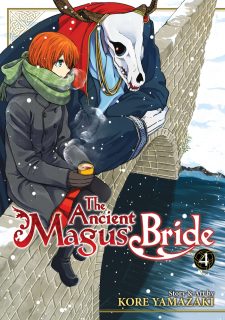
The Ancient Magus' Bride, Volume 4The Ancient Magus’ Bride, Volumes 4-6 by Kore Yamazaki. It’s been a little while since I’ve read The Ancient Magus’ Bride but that’s not because I don’t like the manga. In fact, it’s quite the opposite–The Ancient Magus’ Bride is actually one of my favorite series currently being released in English. I simply wanted to have a whole stack of volumes to read all at once. (Also worth noting: The first printing of Volume 6 is even accompanied by a special booklet with an additional comic!) Somehow, I had managed to forget just how much I enjoy The Ancient Magus’ Bride. I love its moody atmosphere and setting, beautiful artwork, and intriguing characters. Elias remains something of an enigma although parts of his past have now been revealed. He isn’t particularly happy about this development, though. Likewise, more is known about Chise, too, although she is still hesitant to share. The relationship dynamics in The Ancient Magus’ Bride are somewhat peculiar but remain compelling. Most of the characters in the manga are struggling with some sort of heartbreaking loneliness or feelings of isolation. To see them slowly drawing closer together, forming bonds of friendship, family, and love is immensely satisfying.

Mr. Mini MartMr. Mini Mart by Junko. Although the boys’ love manga Mr. Mini Mart was released in English first, my introduction to Junko’s work was through the series Kiss Him, Not Me. Because I was enjoying that series, I made a point to track down a copy of Mr. Mini Mart which for a time had gone out-of-print. (It’s more-or-less back in print again, but the manga seems to only be available directly from Juné Manga’s online store.) I forget why I initially passed on Mr. Mini Mart but I’m very glad that I finally got around to reading it. Mr. Mini Mart collects two boys’ love stories. Most of the volume is devoted to the titular “Mr. Mini Mart” but a short, unrelated one-shot manga “Young Scrubs” is included as well. It’s not nearly as good, though. “Mr. Mini Mart” is wonderful and surprisingly sweet. The story follows the high-school-aged Nakaba who, after an unfortunate incident in middle school, has been living as a shut-in. He gets finally gets out of the house when his uncle gives him a job at his store, but Nakaba has a difficult time getting along with his coworker Yamai and his abrasive personality. I’ll admit, I’m a sucker for a sensitive tough guy and it turns out that Yamai is an amazing example of one and is just a great person in general.
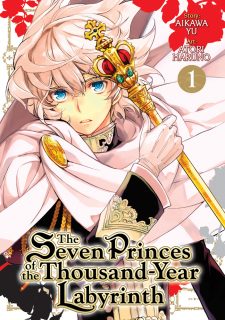
The Seven Princes of the Thousand-Year Labyrinth, Volume 1The Seven Princes of the Thousand-Year Labyrinth, Volume 1 written by Yu Aikawa and illustrated by Haruno Atori. I really wanted to like the first volume of The Seven Princes of the Thousand-Year Labyrinth more than I actually did. The basic premise is intriguing. A group of some of the kingdom’s most noteworthy, and in some cases most notorious, citizens wake up to find themselves trapped together in an elaborately booby-trapped castle. (The exception is the protagonist Ewan whose only distinguishing characteristics are his trusting nature, inherent kindness, and the fact that he’s from the kingdom’s most remote island.) The assumption is that whoever manages to survive the ordeal will become the kingdom’s emperor and reigning lords. There is a ton of potential in this set up, but The Seven Princes of the Thousand-Year Labyrinth simply didn’t work for me. Mostly I think it’s because the characters all come across as types rather than well-rounded individuals. What’s more is that they don’t even feel like they should all be a part of the same series; I found this lack of cohesiveness to be frustrating. The artwork is pretty, though, if not especially distinctive and there are plenty of plot twists, too.
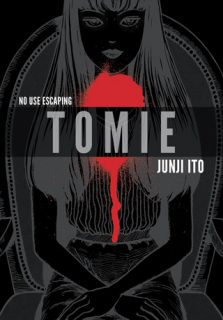
TomieTomie by Junji Ito. Although uncommon, license rescues aren’t particularly rare, but Ito’s horror series Tomie is one of the very few manga to have been released in English by three different publishers. Most recently, Viz Media has collected the entire series in a single, massive tome with over seven hundred forty pages. The translation used is the same as the one in Dark Horse’s Museum of Terror series which I own, but I couldn’t resist the deluxe, hardcover treatment the volume received to match Viz’s other recent re-releases of Ito’s manga. Tomie was actually Ito’s award-winning professional debut and began serialization in 1987 in a shoujo magazine. The manga is largely episodic although there may be several chapters devoted to a single story arc and later stories sometimes make passing references to earlier ones. What ties the series together is the presence of Tomie, a beautiful young woman who is seemingly immortal. Time and again men fall desperately in love with Tomie and are eventually overcome by a desire to murder and dismember her. Not only does Tomie survive, she regenerates and multiplies, and so the horror continues. While not as mind-bendingly bizarre as some of Ito’s later works, Tomie is still weird, horrifying, gruesome, and grotesque.
Filed Under: FEATURES, My Week in Manga Tagged With: Ancient Magus' Bride, Haruno Atori, Junji Ito, Junko, Kore Yamazaki, manga, Seven Princes of the Thousand-Year Labyrinth, Tomie, Yu Aikawa

My Week in Manga: January 30-February 5, 2017

February 6, 2017 by Ash Brown

My News and Reviews

Last week at Experiments in Manga the winner of the Please Tell! Me Galko-chan manga giveaway was announced. The post also includes a fairly comprehensive list of the full-color manga and manhwa that have been released in print in English. (However, I just now realized that I neglected to include manga like Katsuhiro Otomo’s Akira and Buronson and Tetsuo Hara’s Fist of the North Star which, while not originally illustrated in full-color, had some full-color editions released in English.) Otherwise it was fairly quiet week, but I am well on my way to completing an in-depth review for February. Happily, my goal to write at least one long-form feature every month so far seems achievable.

I wasn’t actually online much at all last week (things were pretty hectic at work and there are always a fair number of taiko and lion dance performances I’m involved in around Chinese New Year) but there were still a few things that caught my attention: Vic James wrote an essay for Tor.com about Yukio Mishima and Forbidden Colors–The One Book That Made Me Move to Japan. (Mishima fascinates me and was actually my introduction to Japanese literature; I’ve reviewed quite a few books by and about him.) The most recent issue of Words without Borders is devoted to international graphic novels. Also, Digital Manga’s Juné imprint announced two new print licenses (Psyche Delico’s Even a Dog Won’t Eat It and Choco Strawberry Vanilla) as well as its upcoming Kickstarter project to publish the first volume of Velvet Toucher’s Eden’s Mercy.

Quick Takes

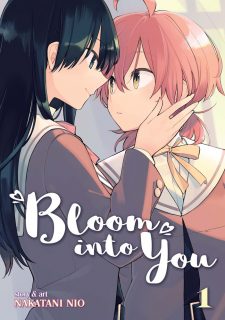
Bloom into You, Volume 1Bloom into You, Volume 1 by Nakatani Nio. I’ll have to admit, recently I’ve grown a little weary of high school romances. Even so, I was still very interested in reading Bloom into You, one of Seven Seas most recent yuri series. Specifically, I was curious about the manga’s treatment of aromanticism, something which I haven’t seen many series address. Yuu has never fallen in love and so she is glad to meet Nanami, an upperclassmen who likewise has never felt that way about anyone before. Finally Yuu has someone she feels comfortable confiding in about it except that Nanami is now falling in love with her. One of the things that I really appreciate about Bloom into You is how considerate and respectful Nanami is of Yuu’s feelings (an exception being a stolen kiss). It’s also obvious that they both care about each other, even if Yuu hasn’t yet experienced the romantic spark that Nanami has only recently found for herself. The two of them actually communicate, too, so there’s none of the silly misunderstandings that plague so many other series that would easily be solved if the characters would simply talk to each other. I would definitely like so see how Yuu and Nanami’s relationship continues to develop from here.

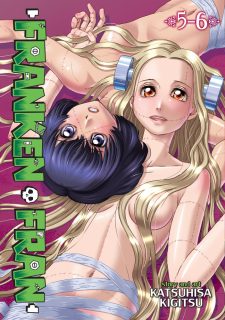
Franken Fran, Omnibus 3Franken Fran, Omnibus 3-4 (equivalent to Volumes 5-8) by Katsuhisa Kigitsu. Despite what the cover illustrations would seem to imply, Franken Fran isn’t particularly heavy on fanservice. Granted, there is some nudity in the series, but it’s generally more discomfiting than it is titillating. Franken Fran is a manga that delights in making its readers uncomfortable. But although it is frequently gruesome and grotesque, the quirky horror is accompanied by a great deal of humor as well. Kigitsu uses actual medical and scientific phenomenon as inspiration but takes them to such logical and illogical extremes that they become almost unrecognizable. The horror in Franken Fran works as well as it does because there are these little kernels of truth underneath it all. For the most part Franken Fran tends to be episodic although the stories can largely be categorized by recurring types, settings, and characters. For example, there are numerous chapters based in Fran’s school as well as a set of quickly escalating stories about the supposedly superheroic Senitals. More characters are introduced as the series progresses, too, including Fran’s incredibly crass, vulgar, and homicidal older sister Gavril.

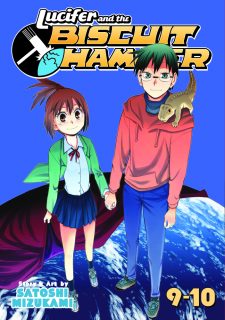
Lucifer and the Biscuit Hammer, Omnibus 5Lucifer and the Biscuit Hammer, Omnibus 5 (equivalent to Volumes 9-10) by Satoshi Mizukami. It’s been quite a while since the last omnibus of Lucifer and the Biscuit Hammer was released. I’m not entirely sure why it took me so long to finally get around to reading it though since there was so much about the series that I enjoyed. The ending of the series was pretty great. It was immensely satisfying to see the Beast Knights pull together for the final battle against Animus as a tightly knit team, surpassing everything that they’d previously accomplished. They are a group of troubled outsiders who have established a tremendous and lasting bond with one another despite, or maybe because of, their differences. As weird a manga as Lucifer and the Biscuit Hammer can be–and it can be very weird (which is admittedly something that I like about the series)–it still manages to have a surprisingly deeply resonant core. If it wasn’t already clear, the conclusion of the series’ makes its theme explicit. Underneath the psychic powers and supernatural battles is a story about growing up regardless of how old someone actually is, about survival in the face of the worst that life can throw at somebody, and about forming meaningful connections with others.

Filed Under: FEATURES, My Week in Manga Tagged With: Bloom into You, Franken Fran, Katsuhisa Kigitsu, Lucifer and the Biscuit Hammer, manga, Nakatani Nio, Satoshi Mizukami

My Week in Manga: January 23-January 29, 2017

January 30, 2017 by Ash Brown

My News and Reviews

The end of the month is approaching which means it’s time for Experiments in Manga’s monthly giveaway. The winner of the most recent giveaway will be announced on Wednesday, so there’s still a little time left to enter for a chance to win the first volume of Kenya Suzuki’s delightful full-color manga series Please Tell Me! Galko-chan. Speaking of manga giveaways, there’s also an opportunity to win a copy of the first omnibus in Kei Sanbe’s Erased over at The OASG.

Elsewhere online, I came the Young Adult Library Services Association’s 2017 Great Graphic Novels for Teens. As usual, the list includes a fair number of manga along with all of the other excellent comics. Ichigo Takano’s Orange (which was also one of my notable manga from 2016) even made the top ten list. Out of the many other manga included as part of YALSA’s larger list, I have in-depth reviews of Junji Ito’s Cat Diary: Yon & Mu and Akiko Higashimura’s Princess Jellyfish, Omnibus 1, both of which I loved.

Another list I came across recently was BookRiot’s feature on Japanese speculative fiction in translation. Overall, I think it’s a great list–I’ve previously reviewed three of the books included (Miyuki Miyabe’s The Book of Heroes, Yusuke Kishi’s The Crimson Labyrinth, and Taiyo Fujii’s Gene Mapper) and most of the others I’ve been meaning to read for quite some time or were already high on my list of books to read in the near future.

It’s been a while since I’ve mentioned Kickstarter projects here, but there are a few campaigns for print comics that have caught my eye lately: Maya Kern is looking to print the second volume of the adorable webcomic Monster Pop; Amanda Lafrenais is campaigning to release the second Titty-Time print collection of erotic comics; and Deandra Tan is hoping to release a print edition of her graphic novel Love Debut!.

Quick Takes

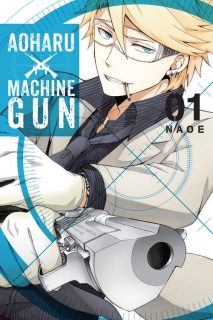
Aoharu X Machinegun, Volume 1Aoharu X Machinegun, Volume 1 by Naoe. I picked up the first volume of Aoharu X Machinegun more on a whim than anything else but I ended up enjoying it much more than I expected. On the surface there are a few things about the beginning of Aoharu X Machinegun that are oddly reminiscent of Ouran High School Host Club–Masamune works in a host club and Hotaru, who is often mistaken for a boy, gets wrapped up in his schemes after she needs to earn some money for damaging the club’s property–but the similarities mostly end there. Hotaru has an overly-strong sense of of justice and has a tendency to get into fights because of it. Masamune is the leader of a competitive survival/war game team and has decided the Hotaru should become its third member after her aggressiveness leaves a distinct impression on him. Initially, the team’s second member Tooru, who also happens to be well-known hentai mangaka, is less than thrilled about this. They’re both completely unaware that Hotaru is a girl, too, which could cause some trouble later on. Aoharu X Machinegun is kind of ridiculous but fun. I enjoyed its action and sense of humor and this point would be interested in reading more.

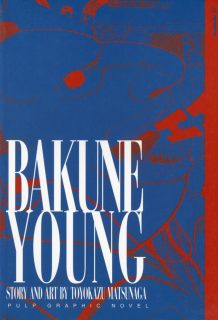
Bakune Young, Volume 1Bakune Young, Volumes 1-3 by Toyokazu Matsunaga. I’ve been meaning to read Bakune Young for quite a while now but the short series is long out-of-print and can be somewhat difficult to find. (Fortunately, it turned out that my library actually owns a complete set.) Reading Bakune Young is quite an experience to say the least. Matsunaga’s artwork, while it’s frequently and deliberately grotesque and at times could even be described as ugly, is tremendous. The story itself is nearly nonsensical, but it does manage to have a bizarre sort of logic to it. The series opens with the titular Bakune Young in a pachinko parlor before he begins targeting yakuza in a killing spree. His rampage quickly escalates and eventually not only the yakuza, but Japanese police, a ninja assassin from the French Foreign Legion, psychics, and even the American military all become involved as the death count increases exponentially. Bakune Young is certainly not for the faint of heart. It’s incredibly violent, viciously dark, and legitimately absurd, but assuming one isn’t bothered by all that, it can also be extraordinarily funny. I suspect Bakune Young is a manga that readers either love or hate without there being much middle ground.

The Encyclopedia of Early EarthThe Encyclopedia of Early Earth by Isabel Greenberg. I recently read and absolutely loved Greenberg’s The One Hundred Nights of Hero and so immediately made a point to seek out more of her work. The Encyclopedia of Early Earth was Greenberg’s first graphic novel and received great acclaim when it was published. The comic’s premise is simple: a nameless storyteller as travels the world in search of a missing piece of his soul. The graphic novel shares some obvious similarities to The One  Hundred Nights of Hero in its structure, themes, artwork, and setting. Both comics take place in the pre-prehistoric Early Earth and utilize the same mythologies, cosmologies, and pantheons. Both comics, in addition to love, are also about the importance of stories and storytellers; they find inspiration in and retell existing folktales while intertwining them with those of Greenberg’s own making. Otherwise, the two comics aren’t directly related. The Encyclopedia of Early Earth feels less politically-charged than The One Hundred Nights of Hero which may make it more palatable to some audiences but as a result it isn’t nearly as powerful a work overall in comparison. Even so, The Encyclopedia of Early Earth is wonderful.

Wolf MagicWolf Magic by Natsuki Zippo. So far, Wolf Magic is the only manga by Zippo to have been released in English. As far as I can tell, Wolf Magic is also Zippo’s first professional work. Especially considering that, it’s a very strong collection of boys’ love manga, and I’d certainly be interested in seeing more from Zippo translated. Wolf Magic opens with “The Water of Love for the Withered Flower” which is about Hanasaki, a florist whose severe appearance is at complete odds with what most people would associate with his profession. However, he still manages to unintentionally catch the eye of Hata. The manga then turns to the various “Wolf Magic” stories which follow Nagase, a young gay man, as he falls in and out of love during high school and then continues to look for “the one” in college. In the process, he develops a surprising relationship with Higuchi. While the two story arcs are unrelated and are quite different from each other, thematically they are very similar. Both Hanasaki and Nagase are searching for love and acceptance and both ultimately find it in unexpected places and ways. Overall, with its attractive artwork and excellent characterizations, Wolf Magic is quite well done.

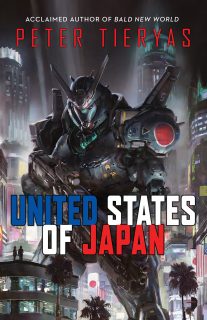
United States of JapanUnited States of Japan by Peter Tieryas. I’ve often heard United States of Japan described as a spiritual sequel or successor to Philip K. Dick’s The Man in the High Castle. In some ways that is certainly true–Tieryas’ novel probably would not have existed were it not for Dick’s and makes multiple references to The Man in the High Castle–but the two novels are drastically different from each other in tone and style. The underlying premise, however, is the same. Emerging victorious from World War II, Japan now controls a significant portion of what was once the United States of America. The grim cyberpunk alternate history presented in United States of Japan (complete with mecha battles and graphic torture) can be extraordinarily brutal and gruesome. The lead characters aren’t exactly the most likeable or sympathetic people, either, though they become slightly more so as the novel progresses. Captain Ben Ishimura, whose only talent seems to be hacking and programming, is a censor who comes to the attention of Agent Akiko Tsukino when an illegal video game which imagines America winning the Second World War threatens to embolden resistance against the rule of Japan.

Filed Under: FEATURES, My Week in Manga Tagged With: Aoharu X Machinegun, Bakune Young, comics, Isabel Greenberg, manga, Naoe, Natsuki Zippo, Novels, Peter Tieryas, Toyokazu Matsunaga

My Week in Manga: January 16-January 22, 2017

January 23, 2017 by Ash Brown

My News and Reviews

It’s been several months since my last in-depth review, but over the weekend I actually managed to post one delving into the eighth omnibus of Makoto Yukimura’s Vinland Saga. I really love this series so I am thrilled that Kodansha Comics was able to continue publishing it. The eighth omnibus marks the start of an exciting new story arc and introduces some great new characters. On a personal note, it also felt good to actually finish writing a review since it’s been so long. I’d like to continue posting at least one long-form review or feature every month in addition to the usual My Week in Manga, Bookshelf Overload, and Giveaway features. On the surface it seems to be a reasonable goal, so I guess I’ll see how it goes!

Elsewhere online, Sparkler Monthly‘s first issue of 2017 has been released. As can be expected, all of the content is great, but this issue specifically features Denise Schroeder and her delightful lesbian-themed comic Before You Go. I took a look at the first installment of Before You Go as part of my Year of Yuri review project a couple of years ago. It’s a great comic, so I’m glad so see more of it. And if things go well, there should be a collected edition in the near future as well! Also last week, Seven Seas announced its collaboration with J-Novel Club to release Ao Jyumonji’s Grimgar of Fantasy and Ash and Chiyomaru Shikura’s Occultic;Nine in print.

Quick Takes

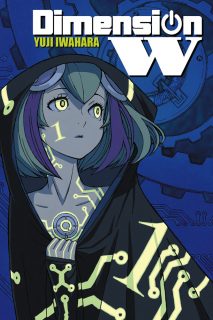
Dimension W, Volume 2Dimension W, Volumes 1-2 by Yuji Iwahara. Several of Iwahara’s manga series have been released in English. I’ve read and enjoyed both Cat Paradise and King of Thorn, but there’s also Chikyu Misaki and most recently Dimension W. I’ve come to expect a few things from Iwahara’s manga: great artwork and action, large and diverse casts, intriguing settings and premises, and entertaining stories that take numerous twists and turns (and which often end up rather convoluted as a result). So far, it seems as though Dimension W will also follow this pattern and, being Iwahara’s longest series, I suspect that the plot will go in some truly bizarre directions. But even considering that Iwahara seems to be constantly making up and changing the rules when it’s convenient just to make the story work, I’m actually really enjoying Dimension W. In the series, New Tesla is a company that has gained a tremendous amount of political and social influence due to the fact that it monopolizes a nearly limitless source of energy and the technology needed to use it. The power could be dangerous in the wrong hands, and New Tesla may very well be the wrong hands.

Firefighter! Daigo of Fire Company M, Volume 11Firefighter! Daigo of Fire Company M, Volumes 11-20 by Masahito Soda. One of the things about Firefighter! is that once I start reading it, I can’t seem to put it down. It’s a fantastic action series that’s firmly based in reality, although some of the scenarios are so completely over-the-top that they strain believability. Even so, the drama and intensity of Firefighter! is thrilling. With every rescue Soda keeps increasing the stakes, finding ways to make each one even more daring and astonishing than the last. And seeing as the first half of Firefighter! ends with Daigo intentionally crashing a fire engine into a building, that’s a pretty impressive feat. Admittedly, the series can get pretty absurd, but it’s always entertaining as well as engaging. The character development is excellent, too. In the heat of the moment, Daigo has the tendency to make some incredibly dangerous although ultimately life-saving decisions, but afterwards he struggles to come to terms with his actions and underlying motives. Firefighter! is a great series and well-worth a look. The manga is currently out-of-print, but fortunately it is readily available digitally.

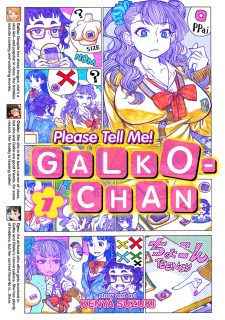
Please Tell Me! Galko-chan, Volume 1Please Tell Me! Galko-chan, Volume 1 by Kenya Suzuki. I first learned about the Please Tell Me! Galko-chan manga due to its recent anime adaptation (which I haven’t actually seen yet), but I was still very curious about the original series. What I didn’t realize until I picked up the first volume was that the manga is actually completely illustrated in color; the palette and style that Suzuki uses for the cover illustration is pretty much what is used for the interior artwork as well. Please Tell Me! Galko-chan is a surprisingly sweet, funny, and charming series, especially considering that it frankly deals with issues surrounding puberty, sex, and so on. Some of the subject matter is more innocent, but there’s plenty of  dirty humor and jokes, too. Though the framing of the series is fictional, the largely short and episodic manga of Please Tell Me! Galko-chan do incorporate a fair amount of factual information. What I really appreciate about Please Tell Me! Galko-chan is that while the topics covered often embarrass the characters–frequently they’re discussing breasts, menstruation, and sex in a deliberate attempt to make each other blush–there’s never a sense that they or their bodies are shameful.

Ze, Volumes 10-11 by Yuki Shimizu. Despite at one point being rather fond of Shimizu’s supernatural boys’ love Ze, it’s taken me a while to actually get around to reading the main manga’s last story arc and conclusion. (Granted, that may have also been partly due to the numerous delays and unreliability of Digital Manga’s release schedule.) As a whole Ze tends to be fairly sexually explicit, but these two volumes are for the most part relatively tame and include very little sex at all. The relationships and power dynamics in the series are still pretty intense, though. The final story arc of Ze is almost entirely devoted to revealing the backstory of Waki and his connection to the Mitou family. In an interesting twist, it turns out that Waki has always been an asshole and there was nothing in particular that made him that way; although unfortunate things have certainly happened to him, his depraved personality is completely his own. The Mitou family’s past is certainly a strange and tragic one that has resulted in a great deal of suffering over time, but Shimizu does manage to end the series on a positive and redemptive note.

Filed Under: FEATURES, My Week in Manga Tagged With: Dimension W, Firefighter, Kenya Suzuki, manga, Masahito Soda, Please Tell Me Galko-chan, Yuji Iwahara, Yuki Shimizu, ze

My Week in Manga: January 9-January 15, 2017

January 16, 2017 by Ash Brown

My News and Reviews

Last week at Experiments in Manga I posted the Bookshelf Overload for December. It includes a pretty big list of things, in part due to massive holiday sales, so hopefully future months won’t be quite as ridiculous. Another thing that happened last week that was kind of cool was related to a post that I wrote back in 2014. My Spotlight on Masaichi Mukaide is probably one of the most noteworthy things that I’ve ever written and it actually got quite a bit of attention when I posted it. Well, Masaichi Mukaide himself apparently came across it recently and even left a comment.

Probably the biggest manga news from last week was the slew of licenses and other announcements made by Seven Seas. Here’s the list of manga:

Absolute Duo by Takumi Hiiragiboshi and Shinichirou Nariie
Alice & Zouroku by Tetsuya Imai
Captain Harlock: Dimensional Voyage by Leiji Matsumoto and Kouichi Shimahoshi
The Count of Monte Cristo by Moriyama Ena
Cutie Honey a Go Go! by Hideaki Anno and Shinpei Itou
Devilman G by Go Nagai and Rui Takatou
Dragon Half by Ryusuke Mita
Hatsune Miku: Bad End Night by Hitoshizuku-P x Yama and Tsubata Nozaki
Hatsune Miku Presents: Hachune Miku’s Everyday Vocaloid Paradise by Ontama
Magical Girl Special Ops Asuka by Makoto Fukami and Seigo Tokiya
Sleeping Beauty by Yumi Unita
Spirit Circle by Satoshi Mizukami
The Testament of Sister New Devil Storm by Tetsuto Uesu and Fumihiro Kiso
Unmagical Girl by Ryuichi Yokoyama and Manmaru Kamitsuki
Wadanohara and the Great Blue Sea by Mogeko

Seven Seas is getting back into translating novels and has a deluxe edition of Ryo Mizuno’s Record of the Lodoss War: The Grey Witch with illustrations by illustrations by Yutaka Izubuchi in the works, too. Also announced was a full-color edition of Madeleine Rosca’s Hollow Fields and five more illustrated literary classics. (I found Seven Seas release of Lewis Carroll’s Alice’s Adventures in Wonderland and Through the Looking-Glass to be quite enjoyable.)

It’s a pretty interesting group of announcements with a fairly wide range of titles to choose from. There’s even a manga from the late ’80s (Dragon Half), and not many of those are licensed any more. I’m particularly curious about Moriyama Ena’s adaptation of The Count of Monte Cristo (the cover art is gorgeous), the josei manga Sleeping Beauty by Yumi Unita (whose Bunny Drop left me with extremely conflicted feelings), as well as the number of titles which are part of classic franchises.

Quick Takes

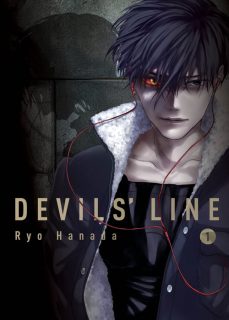
Devils' Line, Volume 1Devils’ Line, Volumes 1-2 by Ryo Hanada. I actually didn’t realize it at first, but Devils’ Line is the second work by Hanada to be released in English. The first was the doujinshi Good-bye Geist which overall I enjoyed. However, Devils’ Line is Hanada’s first professional series. In general, I’m liking it, too, except that the artwork is terribly inconsistent. At times it’s absolutely spectacular (the cover illustrations are especially great) but within a few panels it may have lost all sense of scale an anatomy. I can’t quite tell if this is mean to be deliberate or not; if so, the execution is unconvincing. The story isn’t as tight as it could be, but it does have a nice blend of genres, including romance, horror, action, crime, and thriller. And, like Good-bye Geist, the series has a marvelously ominous atmosphere. The plot centers around Tsukasa, who unfortunately seems to be a magnet for both vampires (or “devils”) and sexual assault, and Anzai, a half-vampire working for the police in a unit specializing in devil-related incidents. Vampirism in Devils’ Line has an intensely sexual component to it; the eroticism often associated with vampires in other stories is in this case incredibly dark and violent.

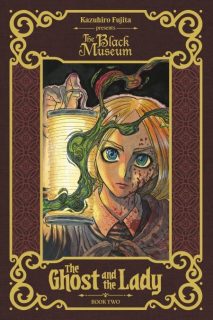
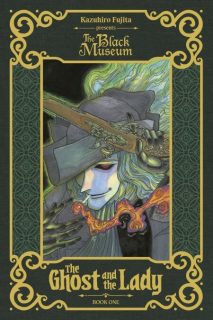
The Ghost and the Lady, Volume 2The Ghost and the Lady, Volume 2 by Kazuhiro Fujita. Admittedly, The Ghost and the Lady is kind of a strange manga series. In part historical fiction and in part supernatural drama, the manga’s disparate elements don’t always perfectly mesh, but I still enjoyed the series a great deal. In The Ghost and the Lady, Fujita mixes together historical facts and legends, reimagining the life of Florence Nightingale and her accomplishments during the Crimean War with a distinctly supernatural flair. It’s clear that Fujita has done a tremendous amount of research for the series; and as the afterword by the series’ translator Zack Davisson points out, more or less every named character in the manga has a historical counterpart. There’s Nightingale herself as well as the people she knew, Grey is based on a famous ghost of the Drury Lane theater, and even historical figures like the Chevalier d’Éon have prominent roles to play. (Speaking of whom, I really need to find a good biography of d’Éon to read.) Despite the presence of the ghosts, the supernatural aspects of The Ghost and the Lady seem to come and go; I do wish that the eidolons had been utilized a little more in the series’ second half because it’s great when they are.

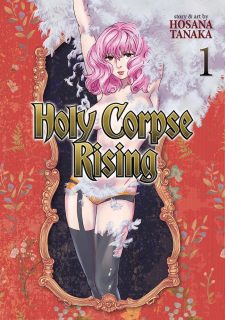
Holy Corpse Rising, Volume 1Holy Corpse Rising, Volume 1 by Hosana Tanaka. As can be safely assumed by provocative cover art, Holy Corpse Rising is a manga series that includes a fair amount of nudity and scantily clad women. However, despite the occasional ridiculousness, the fanservice is largely keeping with the style and tone of the series as a whole, so it doesn’t feel out-of-place; a significant portion of Holy Corpse Rising is intended to be titillating. In general, Tanaka’s artwork is quite attractive, though the women in the series are the most beautiful. They’re also by far the most powerful characters, both in ability and status. The first volume of Holy Corpse Rising serves as an introduction to the war between the Credic Church and the witches. Nikola, a monk who is a specialist in witch lore, is charged with securing the aid of the coven of first witches in the Church’s fight against their descendants. But first Nikola must resurrect them and in the process manages to put himself in some rather compromising situations. So far the first witches each seem to gain their power from a different bodily fluid (tears, blood). And since there are twelve of them, Holy Corpse Rising has the potential to enter some pretty kinky territory.

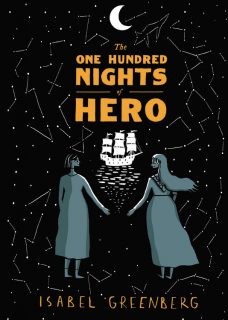
The One Hundred Nights of HeroThe One Hundred Nights of Hero by Isabel Greenberg. I don’t recall exactly what it was that brought The One Hundred Nights of Hero to my attention, but I’m so glad that I read it because it is marvelous; I loved the comic. Greenberg takes inspiration from existing stories and even provides retelling of folktales over the course of the graphic novel. The framework is deliberately similar to that of One Thousand and One Nights and there are stories within stories within stories. In fact, The One Hundred Nights of Hero is about the power of stories and storytellers. It’s also about love and “brave women who don’t take shit from anyone.” At the center of the comic is Cherry and her maid Hero, two women who love each other dearly. Night after night, Hero spins tale after tale in an effort to save their lives. The world of The One Hundred Nights of Hero is an incredibly misogynistic one. While different from our own, in some ways it is also tragically reminiscent. The One Hundred Nights of Hero isn’t always particularly subtle and can at times feel somewhat heavy-handed, but it’s a wonderfully powerful and unabashedly feminist work. I definitely plan on seeking out more of Greenberg’s comics.

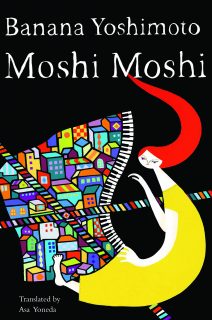
Moshi MoshiMoshi Moshi by Banana Yoshimoto. Despite being an extremely prolific author and one of the most well-known Japanese novelists translated in English, I haven’t actually read any of Yoshimoto’s works until now. The story of Moshi Moshi is told from the first-person perspective of Yoshie, a young woman whose father has recently died. A successful musician, the circumstances surrounding his death are somewhat unclear, but it’s believed that he committed double suicide with a woman who neither she or her mother knows. The novel follows Yoshie as she tries to come to terms with the unexpected loss of her father by reinventing her life in the chic neighborhood of Shimokitazawa. Her mother joins her there, feeling that the ghost of her husband is haunting the family home, and Yoshie herself is plagued with recurring dreams in which her father appears, searching for his phone. Though Moshi Moshi does tend to drag a little in places, I really liked how Yoshimoto handles the themes of love, loss, and the inevitability of change in the novel. I suspect that Moshi Moshi likely isn’t the best introduction to Yoshimoto’s work, but for the most part I did appreciate it.

Filed Under: FEATURES, My Week in Manga Tagged With: Banana Yoshimoto, comics, Devils' Line, Ghost and the Lady, Holy Corpse Rising, Hosana Tanaka, Isabel Greenberg, Kazuhiro Fujita, manga, Novels, Ryo Hanada

My Week in Manga: January 2-January 8, 2017

January 9, 2017 by Ash Brown

My News and Reviews

Last week at Experiments in Manga the winner of the Kuroko’s Basketball giveaway was announced. The post also includes a list of some of the tournament and competition manga that has been licensed in English. As per usual these days, there wasn’t much else from me, but there is some other very exciting Manga Bookshelf news: The Manga Critic is back! Be on the lookout for some great content from Kate Dacey. Last week I also read Makoto Yukimura’s eighth Vinland Saga omnibus which was, as expected, excellent. (I highly recommend the series as a whole.) However, you won’t find a quick take of it below because I’m going to try to write up a full-length review of it instead. We’ll see how it goes!

Elsewhere online, The OASG has started a new series called How Fans Can Help the Anime & Manga Industries Grow in which industry folk share their experiences an thoughts on the subject. So far, the responses from Charlene Ingram, Viz Media’s senior manager of marketing, and Charis Messier, lead translator at Cross Infinite World, have been shared. Another interesting read courtesy of Sakuga Blog is a translation of a roundtable with three manga editors (Tatsuya Kusunoki, Katsuyuki Sasaki, and Ryouji Takamatsu) discussing the growth of the yuri genre. As for boys’ love, Khursten at Otaku Champloo takes a closer look at the Dangerous BL Manga list for 2017.

Quick Takes

Firefighter! Daigo of Fire Company M, Volume 2Firefighter! Daigo of Fire Company M, Volumes 2-10 by Masahito Soda. I enjoyed the first volume of Firefighter! well enough to seek out the rest of the manga (while the entire series is now available digitally, most of the individual volumes are well out-of-print) and I am so incredibly glad that I did. I’m only halfway through, but Firefighter! is fantastic. It has exciting action, compelling drama, and engaging characters. The titular Daigo is a rookie firefighter who, although he seems to have good instincts, has a lot to learn. Each rescue he’s a part of is more audacious than the last and he frequently ends up in the hospital as a result. Daigo hasn’t lost anyone yet, but his unorthodox ways, disregard for direct orders, and tendency to go overboard puts his own life and the lives of other rescue workers at risk. It seems like it’s only a matter of time before tragedy will strike, but no one can deny that he has saved people who would have otherwise died. Firefighter! is intense and thrilling, but it actually has a fair amount of humor as well. (For all his bravery, Daigo is kind of a goofball.) I’m definitely looking forward to reading the series’ second half.

Horimiya, Volumes 2-4 written by Hero, illustrated by Daisuke Hagiwara. While I wasn’t quite as taken with these few volumes as I was with the first, I am still enjoying Horimiya a great deal. After accidentally discovering each other’s secrets, Miyamura and Hori have developed a close friendship which is slowly evolving into something more. It takes some time, but eventually they’re able to recognize their feelings and actually act on them. In large part, Horimiya is a manga about relationships of all types. Friendship and family are just as important, and are sometimes even more important, than the series’ romance. It’s also a manga which excels in depicting the characters’ multifaceted natures, showing how they behave differently depending on who is present. As more characters are introduced (including Hori’s father and some of Miyamura’s friends from middle school), the social dynamics in the series naturally change. Horimiya isn’t a manga that has me on edge desperate to know what will happen next, but the characters are tremendously endearing and I do want to see things work out for all of them.

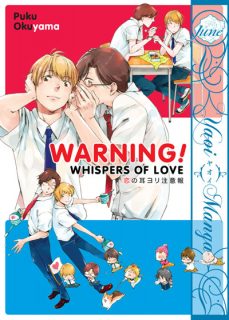
Warning! Whispers of LoveWarning! Whispers of Love by Puku Okuyama. So far, only two of Okuyama’s boys’ love manga have been released in print. I had previously read and wasn’t overly impressed by the more recent Caramel despite liking some of the manga’s individual elements (in fact, overall I can’t really say that I enjoyed it much) but I already had a copy of Warning! so I figured I should at least give it a try. I’m happy to say that I enjoyed Warning! much more than I did Caramel. It’s a collection of rather silly boys’ love stories ranging from the subtly amusing to the overtly goofy. They tend to be fairly cute as well and generally any physical intimacy that is shown is limited to a few kisses and chaste embraces. Most of Warning! is devoted to the story of Hajime, a first year at an all-boys school, and the incredibly awkward relationship that develops between him and an upperclassman who seems to want nothing more than to clean the wax from Hajime’s ears. It’s easily the most ridiculous setup in the entire volume but it can be legitimately funny–all the boys’ love tropes and jokes that would typically be applied to sex are applied to ear cleaning instead and it’s surprisingly effective.

Wandering SonWandering Son directed by Ei Aoki. Takako Shimura’s manga Wandering Son is an incredibly important series to me personally, so I was greatly saddened when Fantagraphics stopped releasing it in English. Initially I wanted to read the entire manga before watching the anime adaptation but, seeing as the rest likely won’t be available any time soon, I finally gave in. The Wandering Son anime is a lovely series. It’s not an exact adaptation of the manga, but it is faithful to the original story and characters. In general, the narrative style of the anime tends to be a little more linear than that of the manga. However, both series provide an empathetic exploration of gender identity, following a group of middle school students who are learning who they are. It’s a fairly realistic portrayal, meaning that society isn’t always the most accepting which can be absolutely heartbreaking. However, seeing the characters become more confident in their selves even when that goes against what is expected of them is exceptionally validating. The anime only adapts a portion of the manga and doesn’t provide much of a resolution (though it does go beyond where Fantagraphics left off), but it is still very well done and well-worth watching.

Save

Filed Under: FEATURES, My Week in Manga Tagged With: anime, Daisuke Hagiwara, Firefighter, Hero, Horimiya, manga, Masahito Soda, Puku Okuyama, Wandering Son

My Week in Manga: December 26, 2016-January 1, 2017

January 2, 2017 by Ash Brown

My News and Reviews

Happy New Year, everyone! 2016 may now be over, but there’s still a little time left to enter Experiments in Manga’s December giveaway. Tell me a little about your favorite tournament manga or tournament story arc by Wednesday for a chance to win the first omnibus of Tadatoshi Fujimaki’s Kuroko’s Basketball. Also posted at Experiments in Manga last week were my random musings about some of the notable manga, comics, and other books that debuted in 2016. Despite there being three posts last week (which hasn’t happened in a very long time!) I actually wasn’t online much at all. As a result, I probably missed out on some interesting reading and announcements, so do let me know if there was anything particularly cool. One thing that I did see though was an interview with Kabi Nagata, creator of My Lesbian Experience with Loneliness which is scheduled to be released in English by Seven Seas later this year (and which I’m really looking forward to).

Quick Takes
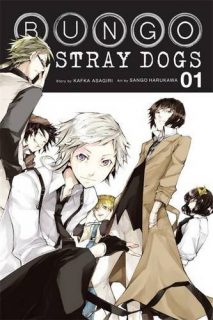
Bungo Stray Dogs, Volume 1Bungo Stray Dogs, Volume 1 written by Kafka Asagiri and illustrated by Sango Harukawa. The Armed Detective Agency specializes in the dangerous cases that the Japanese police and military either won’t or can’t handle. It’s a team of uniquely skilled individuals who have abilities that seem to come right out of fiction, but the “good guys” aren’t the only ones with formidable powers. While there are names that a more casual reader might recognize—Osamu Dazai, Edogawa Rampo, Junichiro Tanazaki, Ryunosuke Akutagawa, and so on—others, like the lead Atsushi Nakajima, are less well-known in English. (I actually happen to be a pretty big fan of Nakajima’s work.) Their supernatural talents and personality quirks are all based on their namesakes. For example, Dazai’s power is named No Longer Human and he has a penchant for attempting suicide. It’s off to an intriguing start, but I’m not sure if Bungo Stray Dogs will appeal quite as much to someone not as familiar with the literary references being made. It’s not necessary to understand them to enjoy the manga, though. So far, I am getting a kick out of the series and look forward to seeing how it develops.

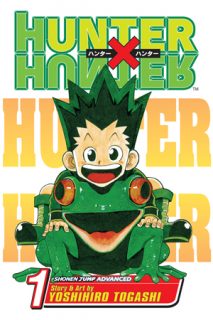
Hunter x Hunter, Volume 1Hunter x Hunter, Volumes 1-8 by Yoshihiro Togashi. I’ve been somewhat reluctant to start reading Hunter x Hunter (it might have something to do with the manga already being over thirty volumes long), but I’ve seen so much excitement and fan art for the series recently that I finally gave in. And I’ll admit, there’s a tremendous amount that I found appealing about the beginning of Hunter x Hunter. The setting is interesting, too, especially the concept of Hunters. These are people who, after putting their lives at risk to pass a grueling series of tests, are granted access to resources and information that others can only dream of. The manga largely follows Gon, a boy who wants to become a Hunter in order to find his father Ging, himself a hunter of great renown, as well as the friends and enemies Gon makes along the way. I really enjoyed the first story arc in which the candidates are trying to pass the Hunter exam. The second arc, while it serves an important purpose, I found to be a bit tedious as some of the world’s metaphysics are overexplained. However, the series quickly recovers its momentum again with clever action, intriguing characters, and drama.

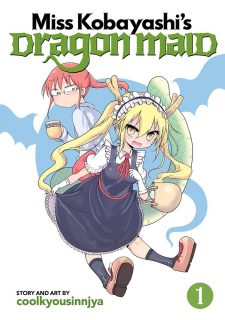
Miss Kobayashi's Dragon Maid, Volume 1Miss Kobayashi’s Dragon Maid, Volume 1 by Coolkyousinnjya. Out of Seven Seas more recent monster girl manga, Miss Kobayashi’s Dragon Maid is the one that I was most interested in. For one, I happen to really like dragons. It also doesn’t hurt that the series is yuri-esque and that the titular Miss Kobayashi is an adult woman working as a systems engineer. Miss Kobayashi’s Dragon Maid features some nudity and bawdiness but for the most part it doesn’t tend to be overly-sexualized which is also refreshing. The manga can actually be surprisingly cute,  charming, and sweet. Hotaru is a dragon who has taken it upon herself to act as Kobayashi’s maid after Kobayashi saves her life. For her part, Kobayashi thought it was all an alcohol-induced dream and so is very surprised to discover that a dragon girl has made herself at home in her apartment. Why a maid specifically? It turns out that Kobayashi is a bit of a maid otaku (which becomes very clear when she goes off on drunken rants on the subject). Hotaru, who loves Kobayashi dearly, wants to do anything to make Kobayashi happy even if her efforts are somewhat awkward and frequently miss the mark.

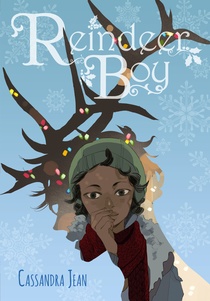
Reindeer BoyReindeer Boy by Cassandra Jean. I am a fan of Jean’s illustration work, and so I was very excited to learn that an original graphic novel was in the making. Reindeer Boy is based on a series of character drawings that Jean has been creating (and that I’ve been following) since 2013. The comic follows Quincy, a young woman whose life takes an unexpected turn when a group of students, all of whom have antlers, transfer into her high school. They seem to take particular interest in her, especially the flirtatious Cupid who claims they are Santa’s reindeer. Quincy’s not sure what to make of it all, but the more she gets to know them the more she likes them. Admittedly, the story of Reindeer Boy does feel like it was made to fit the characters rather than the other way around. It’s kind of a strange comic, but it’s fun, goofy fluff with a bit of romance, delightful characters, and beautiful, sensual artwork. Reindeer Boy, while telling a complete story, does seem to end rather abruptly. I’m not sure if there are plans to release any additional reindeer comics, but I’d love the opportunity to spend more time with the characters and learn more about the mythology that Jean has created.

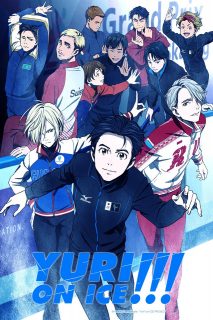
Yuri!!! on IceYuri!!! on Ice directed by Sayo Yamamoto. It’s been a long while since I’ve had the time and opportunity to marathon an entire anime series, but I knew that once I started Yuri!!! on Ice that I wouldn’t want to stop. And I was right; I love this series so much and hope that there will be a nice physical release that I can purchase in the future. The underlying story is fairly straightforward and simple: After a miserable performance at the Grand Prix, the career of Japanese figure skater Yuri Katsuki is falling apart when his idol Victor Nikiforov unexpectedly quits competing to become his coach. Yuri!!! on Ice is a series about love, passion, and inspiration in many forms. It’s also about people struggling against their selves, fighting through failure and realizing their self-worth. Yuri!!! on Ice is a tightly written and immensely satisfying show, but I do think it would have been even better if there were just a few more episodes to allow the characters and story more room to breathe. That being said, there is still some impressive character development with the series’ short span and the psychological elements are handled particularly well. Understandably, the leads receive the most attention, but I’d really like to know more about the supporting cast, too.

Filed Under: FEATURES, My Week in Manga Tagged With: anime, Bungo Stray Dogs, Cassandra Jean, comics, Coolkyousinnjya, Hunter X Hunter, Kafka Asagiri, manga, Miss Kobayashi's Dragon Maid, Sango Harukawa, Yoshihiro Togashi, Yuri on Ice

My Week in Manga: December 19-December 25, 2016

December 26, 2016 by Ash Brown

My News and Reviews

Nothing other than the usual My Week in Manga feature was posted last week at Experiments in Manga. However, I still have a few things in store before the year is through. Later this week you’ll want to be on the lookout for the monthly manga giveaway for December. I’ve also been hard at work on my list of notable manga, comics, and other books that I’ve read that were released in 2016. That list should be ready to post in the very near future as well!

Quick Takes

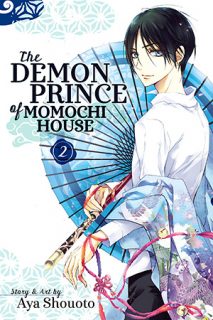
The Demon Prince of Momochi House, Volume 2The Demon Prince of Momochi House, Volumes 2-6 by Aya Shouoto. It was the beautiful artwork and yokai that first drew The Demon Prince of Momochi House to my attention and that continues to be a large part of the series’ appeal for me. I’m also enjoying the story’s melancholic atmosphere as the manga explores themes of loneliness and the desire to belong. Himari, who is an incredibly sweet and caring person, is steadily building her relationships and friendships with the locals, ayakashi and humans alike. However, more the romantic elements of the series are admittedly less convincing. Although there is an underlying story about the mysteries surrounding Aoi and Himari’s efforts to free him from his tragic fate, The Demon Prince of Momochi House frequently almost seems episodic in nature as Himari is introduced to a variety of supernatural wonders and dangers. The seemingly directionless and less-than-cohesive storytelling can be frustrating and sometimes even feels a little shallow, but overall I find the series to be alluring and provocative and look forward to reading more.

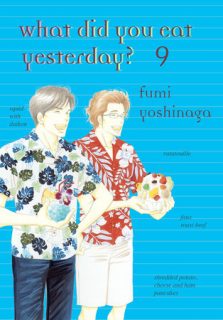
What Did You Eat Yesterday?, Volume 9What Did You Eat Yesterday?, Volumes 9-11 by Fumi Yoshinaga. I am incredibly happy that What Did You Eat Yesterday? is being released in English, so it makes me sad that the series doesn’t seem to be doing especially well in translation. It’s a shame, because it really is a wonderful manga. While I certainly appreciate the food aspects of What Did You Eat Yesterday?, I particularly love the realistic and nuanced characterizations found in the series. The food is all well and good, not to mention beautifully illustrated, but it’s the characters and their relationships that really make the series work. Shiro’s character development has probably been the most interesting and satisfying. I’m very glad to see his relationship with his parents improving even after some significant setbacks. While he’s still not out in his professional life, it is clear that he is becoming more comfortable publicly expressing his sexuality. Fortunately, Shiro and his long-term boyfriend Kenji have the love, support, and acceptance of others which makes that easier. More recently, rather than their homosexuality, what they’ve had to worry about are Shiro’s aging parents and the rising cost of living.

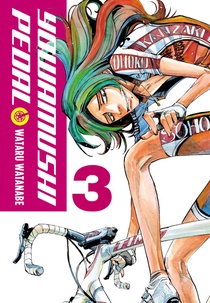
Yowamushi Pedal, Omnibus 3Yowamushi Pedal, Omnibuses 3-4 (equivalent to Volumes 5-8) by Wataru Watanabe. Out of the recent spate of new sports manga being released in North America, Yowamushi Pedal is currently one of my favorites. I have seen a fair amount of the anime adaptation so at this point I am very familiar with where the plot is heading, but even so I still find the original manga to be immensely engaging. Before Yowamushi Pedal, I actually didn’t realize how much of a team effort cycling could be; it’s interesting to learn about the various strategies that can be used to win a race. These couple of omnibuses largely focus on Sohoku’s intensive training camp and also introduce some of the major competition. The characters are fun, some of them are frankly pretty cool, too, and they all have distinctive personalities. The Sohoku team especially is made up of a group of quirky but likeable and talented young cyclists. Art-wise Yowamushi Pedal could almost be described as ugly, but I really like its highly dramatic and energetic style. Watanabe probably uses more speedlines than any other artist I’ve seen, but the effect is great.

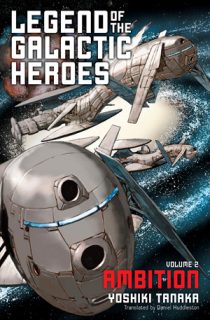
Legend of the Galactic Heroes, Volume 2: AmbitionLegend of the Galactic Heroes, Volumes 2-3 by Yoshiki Tanaka. Despite the nearly constant war and political upheaval present in the Legend of the Galactic Heroes novels, the series isn’t really that action-oriented. I suspect some people will actually find it to be rather dry and perhaps even textbook-like. With only the occasional bout of melodrama, the series quickly moves from one event or venue to the next and the cast of characters only continues to grow. (Granted, as this is war, not all of them survive very long after being introduced.) Because the scope is so sprawling sometimes it feels as though Legend of the Galactic Heroes lacks depth of story and characters, instead opting for a wider view and summary of major events. However, Tanaka does show how the complexities of societal, political, economic, and militaristic influences can impact one another. The books frequently read like a popular history, and the series actually reminds me a bit of Romance of the Three Kingdoms, too. So far I’m really enjoying the series and find its story and characters interesting. I like the focus on tactics and strategy as well as the influence that real-life history has had on the series.

Filed Under: FEATURES, My Week in Manga Tagged With: Aya Shouoto, demon prince of momochi house, fumi yoshinaga, Legend of the Galactic Heroes, manga, Novels, Wataru Watanabe, what did you eat yesterday?, Yoshiki Tanaka, Yowamushi Pedal

My Week in Manga: December 12-December 18, 2016

December 19, 2016 by Ash Brown

My News and Reviews

After a slight delay, November’s Bookshelf Overload was posted last week at Experiments in Manga. Last week I also came to the sad conclusion that my feature on Ichigo Takano’s Orange simply isn’t going to happen despite the progress that I’ve made on it and all of my best efforts. I’d like to extend an apology to everyone who was looking forward to that post, myself included. Orange deeply resonated with me and my own experiences and I wanted to share that with others. Specifically, I wanted to write an essay exploring its sensitive, honest, and compassionate portrayal of the very personal challenges surrounding issues of guilt, depression, and suicide. Ironically, it’s partly due to my own mess of anxieties, et al. that I’m having so much trouble lately. Even when I have the inspiration and desire, I’m still having a terribly difficult time actually writing. So, I’m not sure when my long-form features will return–even though I miss writing and sharing them, I’m trying to be kind to myself by giving myself a bit of a break–but I hope that it is sooner rather than later. However, I can at least still commit to regularly posting My Week in Manga, Giveaways, and Bookshelf Overload features! It’s not much compared to my past output, but at least it is something. Oh, and I’ll definitely be posting my list of notable 2016 releases at the end of the month!

Quick Takes

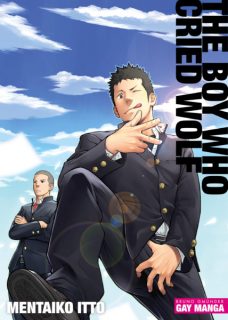
The Boy Who Cried WolfThe Boy Who Cried Wolf by Mentaiko Itto. Bruno Gmünder’s Gay Manga line began in 2013 and the publisher has been slowly but steadily releasing gay erotic manga in English translation ever since. The Boy Who Cried Wolf is the second collection of Mentaiko Itto’s erotic doujinshi to be published by Bruno Gmünder. The volume collects three of Itto’s short manga: “Hamu and the Boy Who Cried Wolf,” “Holy Night,” and “As Swift as Lightning.” As I’ve come to expect from Itto’s work, in addition to uninhibited sex scenes there is also a fair amount of humor to be found in The Boy Who Cried Wolf as well as a great deal of heart. Unlike Priapus, Itto’s previous collection in translation, The Boy Who Cried Wolf is generally more realistic and less fantastic in nature. Granted, as a historical comedy of sorts, “As Swift as the Lightning” deliberately includes its fair share of anachronisms. But Itto actually incorporates some autobiographical elements in “Hamu and the Boy Who Cried Wolf,” a manga about a young man who is initially so deeply closeted that he unintentionally hurts the person he cares most about. However, because this is Itto, the story isn’t nearly as gloomy as that description sounds. The Boy Who Cried Wolf is a great collection of highly entertaining erotic manga. I truly hope that more of Itto’s work will be translated in the future.

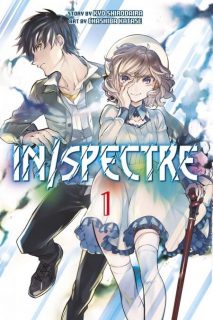
In/Spectre, Volume 1In/Spectre, Volume 1 by Chasiba Katase. Although In/Spectre is based on the novel Invented Inference: Steel Lady Nanase by Kyo Shirodaira, Katase seems to have been given plenty of freedom in adapting the story as a manga series. If the note from the original author is to be believed, the currently ongoing In/Spectre manga is actually the more popular of the two renditions. Unsurprisingly, I was primarily drawn to the manga because yokai play a prominent role in the series. Considering the title I thought it might also be a mystery manga which, as it turns out, in some ways it is and in some ways it isn’t. I didn’t find the first volume of In/Spectre to be as engaging as I hoped it would be–at times the pacing can be agonizingly slow–but I am still greatly intrigued by the series. Now that the setting has been established and the rather peculiar characters have been introduced, I’m hoping that future volumes have more energy to them because I really do like the basic premise of the series. In/Spectre largely follows a young woman named Kotoko Iwanaga who has become a god of wisdom to Japan’s yokai. This has its benefits, but it also cost her an eye and a leg. She is responsible for helping to mediate disputes between yokai, but also for keeping the more unruly ones in check when humans are in danger.

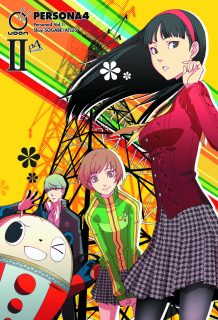
Persona 4, Volume 2Persona 4, Volumes 2-5 by Shuji Sogabe. Though I suspect that I would enjoy it, I still haven’t actually played the original Persona 4 video game, so it’s difficult for me to directly compare Sogabe’s manga adaptation. However, I can say that for the most part the manga can stand alone as its own work. However occasionally it does feel as though the characters are being railroaded and the story has only one possible path to take, probably a remnant from the manga’s RPG origins. While overall the artwork is attractive and stylish, the action-oriented scenes and fight sequences can be somewhat lacking in their execution. But I love the themes that Persona 4 deals with, especially those of personal identity and self-acceptance. As the series progresses, concepts of gender and sexuality come into greater play as well which (as always) I find particularly interesting. In general like all of the characters, too. Yosuke can unfortunately be a homophobic ass from time to time, but I absolutely adore Kanji, a tough guy with a good heart who has traditionally feminine interests and hobbies. Much of the character and story development in Persona 4 is ambiguous enough that multiple and sometimes opposing readings and interpretations are possible, some of which are frankly unflattering. Personally, I prefer and am more comfortable with the more positive interpretations.

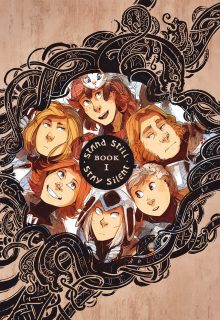
Stand Still, Stay Silent, Volume 1Stand Still, Stay Silent, Book 1 by Minna Sundberg. The first book of Sundberg’s ongoing Stand Still, Stay Silent collects the award-winning webcomic’s prologue, first five chapters, and additional bonus content. It’s available in both digital and physical editions, but the hardcover print volume is absolutely gorgeous. Much like Sundberg’s earlier epic A Redtail’s Dream, Nordic influences are a major part of Stand Still, Stay Silent. The comic is stunningly illustrated with beautiful, full-color artwork. Stand Still, Stay Silent is a post-apocalyptic tale of adventure and exploration with an ominous touch of horror and the unknown. At the same time, the comic manages to be lighthearted and humorous. The prologue establishes the comic’s fascinating setting–a seemingly harmless disease which turns out to be fatal quickly spreads across the globe. Ninety years later, Iceland, which was able to completely close itself off from the rest of the world, has become the center of known civilization, but a team has been assembled to see what can be found beyond the relative safety of the Nordic countries. Despite scenes of intense terror and action, the plot of Stand Still, Stay Silent is actually on the slower side; the focus is almost entirely on the characters and their interpersonal dynamics. The character writing, worldbuilding, and humor in Stand Still, Stay Silent is simply fantastic.

Filed Under: FEATURES, My Week in Manga Tagged With: Chasiba Katase, comics, In/Spectre, manga, Mentaiko Itto, Minna Sundberg, Persona, Shin Megami Tensei, Shuji Sogabe, Stand Still Stay Silent

My Week in Manga: December 5-December 11, 2016

December 12, 2016 by Ash Brown

My News and Reviews

Last week at Experiments in Manga I announced the winner of the Kodansha Comics Collection manga giveaway. The post also includes a list of Kodansha Comics’ 2016 print debuts, the variety of which quite impressed me. I’ve made a little more progress on my Orange feature, but not as much as I originally intended as I found myself working on a job application instead (which is greatly stressing out my current supervisor).

Anyway! There were a few things that caught my attention online last week: Manga translator Jenny McKeon was interviewed for Forbes. Sally Ito, one of the translators of the marvelous Are You an Echo?: The Lost Poetry of Misuzu Kaneko, was interviewed over at Tofugu. In licensing news, Kodansha Comics recently announced the acquisition of the anthology Otomo: A Tribute to the Mind Behind Akira, which sounds like it should be fantastic, and Haruko Kumota’s Descending Stories: Showa Genroku Rakugo Shinju, which I am extremely excited about. (I’ve actually known about the licenses for a while now, but I didn’t want to say anything until the official announcement was made.)

Quick Takes

Gate: Where the JSDF Fought, Volume 1Gate: Where the JSDF Fought, Volume 1 written by Takumi Yanai and illustrated by Satoru Sao. Sekai Project primarily localizes visual novels and video games but has very recently expanded its catalog to include manga. Gate is Sekai Project’s first manga publication. The Gate manga is based on an ongoing series of light novels by Yanai. After a gate to another world opens up in Ginza, the Japanese Self-Defense Forces successfully fights off an invasion of knights and dragons and establishes a base on the other side. What I especially liked about Gate is that it addresses the real-world politics and implications of the gate alongside those encountered in the fantasy-like environment. Japan obviously wants to maintain control of the gate and the resources to which it can provide access, but the United States (supposedly Japan’s ally) and China are both preparing to leverage their weight, too. On the other side of the gate, the standing empire is using some less-than-ethical tactics as it struggles to maintain its power and control after such a tremendous defeat. Despite some peculiar name choices (the princess Piña Co Lada, for one), so far the setting and culture clashes of Gate are interesting. It’s also really nice to see so many competent female characters in prominent roles.

Intense, Volume 2Intense, Volumes 2-4 by Kyungha Yi. The first volume of Yi’s boys’ love manhwa Intense was, well, intense. The rest of the series continues to be psychologically and emotionally heavy and at times is outright bleak. However, it is beautifully drawn. The second and third volumes of Intense aren’t quite as compelling as the first–though necessary and important to the story, I didn’t find the temporary focus on the political dynamics of organized crime to be especially engaging–but the fourth volume more than makes up for that. Overall, Intense was a very satisfying series. Jiwoon and Soohan’s happy ending does not come easily. (Honestly, I was afraid they wouldn’t get one at all and was steeling myself for the tragedy that I hoped wouldn’t come.) Even after they are able to extricate themselves from the crime syndicate that more or less owned Jiwoon, things do not go well. Though they deal with them in vastly different ways, both Jiwoon and Soohan struggle with abandonment issues. Soohan is surprisingly controlling and overbearing, desperate to be indispensable, while Jiwoon hasn’t yet developed a sense of self-worth or the ability to stand up for himself. This combination of traits is devastating and heartbreaking. They both care tremendously for the other, but initially neither of them are in a healthy enough place to make the relationship work.

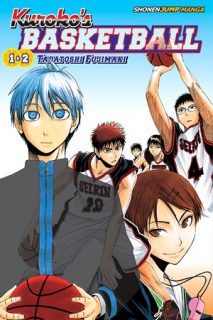
Kuroko's Basketball, Omnibus 1Kuroko’s Basketball, Omnibus 1 (equivalent to Volumes 1-2) by Tadatoshi Fujimaki. In Japan, Kuroko’s Basketball has been hugely successful. English-reading fans have been clamoring for the series to be licensed for years, but it was only picked up relatively recently. There has been something of a renaissance when it comes to sports manga in translation, and Kuroko’s Basketball is one of the major series to usher in that trend. However, while I did enjoy the first omnibus a great deal, so far I’m not quite as enamored with it as I am with some of the other leading sports manga, namely Haikyu!! and Yowamushi Pedal. Still, Kuroko’s Basketball has quite a few things going for it and even turns a few well-worn tropes on their heads. Rather than being overly realistic, Kuroko’s Basketball takes a more fantastic approach–the abilities of the highly-skilled players and coaches are almost supernatural. Kuroko, the lead, is deliberately one of the most nondescript and unassuming  characters in the series, but he is able to use this to his a team’s advantage on the court. Kuroko’s Basketball can actually be quite clever and entertaining. I was also absolutely delighted to discover that instead of having an attractive young woman as its manager (which is fairly standard for a sports manga), Kuroko’s team has an attractive young woman as its coach. I hope that remains the case as the series progresses.

Yona of the Dawn, Volume 2Yona of the Dawn, Volumes 2-3 by Mizuho Kusanagi. I enjoy epic fantasies and seem to have a particular proclivity for epic shoujo fantasies specifically, so reading Yona of the Dawn was an obvious choice. While the first volume did an excellent job of setting the stage for the unfolding drama, Yona herself spent much of it in shock and barely functioning. Fortunately, although she is still devastated by her father’s death and the betrayal of her cousin Su-won, Yona recovers in the second volume and by the third she begins to show her mettle by actively taking control of her life and destiny. These couple of volumes also expand on the series’ worldbuilding, introducing myths, legends, and prophecies that will have a direct impact on the story. Seeking a way not only to protect herself but also the people she cares about and those who are doing all that they can to keep her safe, Yona sets off on a quest to secure the help of the descendants of the four dragons who aided the country’s first king. Yona’s close friend and bodyguard Hak continues to accompany her but others begin to join them on their journey as well–Yona is proving to be a leader worth following. No longer the sheltered and naive girl she once was at the palace, Yona is working to improve and strengthen herself in addition to making an effort to learn more about her country and its people.

Save

Save

Filed Under: FEATURES, My Week in Manga Tagged With: GATE, Intense, Kuroko's Basketball, Kyungha Yi, manga, manhwa, Mizuho Kusanagi, Satoru Sao, Tadatoshi Fujimaki, Takumi Yanai, yona of the dawn

My Week in Manga: November 28-December 4, 2016

December 5, 2016 by Ash Brown

My News and Reviews

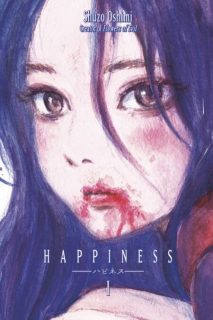
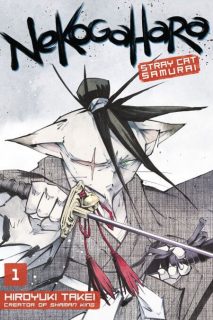
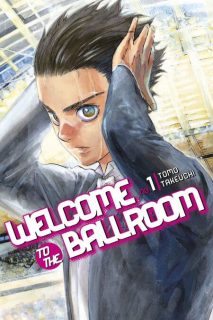
November may have come and gone, but there’s still time to enter November’s manga giveaway for a chance to win the first volumes of Shuzo Oshimi’s Happiness, Hiroyuki Takei’s Nekogahara: Stray Cat Samurai, Hico Yamanaka’s The Prince in His Dark Days, and Tomo Takeuchi’s Welcome to the Ballroom. The winner will be announced on Wednesday, so get those entries in! Other than the monthly giveaway, last week continued to be rather quiet at Experiments in Manga. Happily though, I was able to make some progress on my feature for Ichigo Takano’s Orange.

In case you’re looking for more giveaways, Manga Test Drive’s annual holiday giveaway is currently underway. (Also, if you’re looking for some great manga reviews, Manga Test Drive is well-worth checking out.) As for other interesting things online: Vertical has posted its novel survey which includes the opportunity to make a license request; Justin at The OASG has compiled a list of Princess Jellyfish‘s chapter title pop culture references; and the final part of The Sparkling World of 1970s Shojo Manga has been posted at The Lobster Dance.

Quick Takes

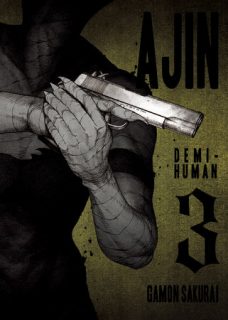
Interviews with Monster Girls, Volume 1Interviews with Monster Girls, Volume 1 by Petos. I’ve come to associate monster girl manga with Seven Seas and so initially I was a little surprised to learn that Interviews with Monster Girls was actually being released by Kodansha Comics. Of course, there’s nothing wrong with another publisher giving a recently but immensely popular niche some attention! Tetsuo Takahashi, a high school biology teacher, has both a personal and professional interest in demi-humans. He has always wanted to meet one but has never had the opportunity until he suddenly and unexpectedly encounters not one but four demi at his school. Three are students–an energetic vampire, a lonely dullahan, and a meek yuki onna–while the fourth is both a succubus and one of the school’s math teachers. One thing that’s different in Interviews with Monster Girls from many of the other monster girl manga that I’ve read is that the demi don’t seem to be a separate species from humans but are instead a sort of spontaneous, rare genetic mutation. So far, Interviews with Monster Girls is fairly innocuous. The story tends to be fairly quiet and even introspective with touches of humor, focusing on the daily lives, troubles, and worries of the young demi women.

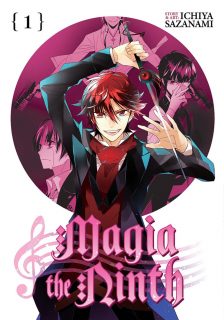
Magia the Ninth, Volume 1Magia the Ninth, Volume 1 by Ichiya Sazanami. I had previously read and enjoyed Sazanami’s earlier series Black Bard which would have been enough to interest me in Magia the Ninth but when I heard that the series was about magic-wielding, demon-hunting, bishonen composers I knew that I wouldn’t be able to resist it. The manga follows Takeru, a young man whose parents were killed by demons. He wants revenge and so seeks the aid of  the magia, a group of people imbued with the souls of classical composers who use musical masterpieces as exorcism tools. Specifically, he tries to convince Beethoven to make him his apprentice. Honestly, at times Magia the Ninth is barely coherent. The worldbuilding is a mess and the story nearly nonexistent. The manga is a spectacle without being spectacular but even so, I absolutely loved the first volume. It’s an absurd but highly entertaining and energizing manga. And due to my classical training, I’m in a position to appreciate Sazanami’s nods to the personal quirks and histories of the original composers. Apparently Magia the Ninth is actually only two volumes long. I don’t know if Sazanami planned it to be that short or if the series was canceled early (which wouldn’t surprise me), but I definitely plan on reading the second half.

Prison School, Omnibus 3Prison School, Omnibus 3-5 (equivalent to Volumes 5-10) by Akira Hiramoto. I’m not sure if Prison School could be any more different than Me and the Devil Blues, currently the only other manga by Hiramoto to have been licensed in English. The only immediate similarity between the two series is Hiramoto’s exceptional artwork. Many people will find Prison School appalling and rightly or at least understandably so, especially if they’re expecting something more akin to Hiramoto’s earlier work. Prison School is blatant in its highly sexualized and fetishized characterizations, story, and illustrations. The fanservice is frequently so extreme as to be grotesque. But it’s all done deliberately–Prison School is so absolutely ridiculous and over-the-top that it’s impossible to take seriously. While it’s not exactly a parody, it is a romantic comedy of sorts. Assuming someone isn’t simply outright offended by the manga, Prison School is legitimately funny and at time even hilarious. It’s definitely not for everyone, but I’ll admit to enjoying the series. These particular omnibuses conclude the first major story arc and begin the second which delves more deeply into the pasts of several characters.
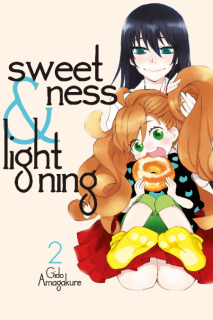
Sweetness and Lightning, Volume 2Sweetness and Lightning, Volume 2 by Gido Amagakure. I really enjoyed the mix of food and family present in the first volume of Sweetness and Lightning and so was looking forward to reading more of the series. The second volume continues in very much the same vein with perhaps just a little less melancholy. Granted, there are still a few heartwrenching moments, it’s just that there are plenty of heartwarming moments to go along with them. Inuzuka’s skills as a single dad and as a cook continue to slowly grow as the series progresses. One of his most recent stumbling blocks is trying to find a way to incorporate green peppers and other bitter vegetables into meals and have them be acceptable to his young daughter Tsugumi. The father-daughter relationship between Inuzuka and Tsugumi is one of my favorite relationships in Sweetness and Lightning and is one of the main reasons I enjoy the series so much. The dynamic is very sweet in addition to being portrayed very realistically–sometimes there are smiles and sometimes there are tears, sometimes there is laughter and joy and sometime there is yelling and frustration, but most importantly there’s always love. All of the good food doesn’t hurt things, either.

Save

Save

Filed Under: FEATURES, My Week in Manga Tagged With: Akira Hiramoto, Gido Amagakure, Ichiya Sazanami, Interviews with Monster Girls, Magia the Ninth, manga, Prison School, Sweetness and Lightning

My Week in Manga: November 21-November 27, 2016

November 28, 2016 by Ash Brown

My News and Reviews

With American Thanksgiving, traveling, and visiting family, last week was once again a quiet one at Experiments in Manga. However, I am at least still reliably posting the My Week in Manga feature. Yen Press, though, was a little busier than I was last week and announced three new licenses: Asari Endō’s Magical Girl Raising Project light novel, Mutsumi Okubashi’s Grimgar of Fantasy & Ash manga, and the first Sound! Euphonium novel by Ayano Takeda. Of the three, Sound! Euphonium is definitely the one that I’m most interested in and am looking forward to. Even if I wasn’t a brass player (fun fact: I actually have a degree in horn performance), that would probably still be the case.

Quick Takes

Attack on Titan: Lost Girls, Volume 1Attack on Titan: Lost Girls, Volume 1 written by Koji Seko and illustrated by Ryosuke Fuji. Considering how well Hajime Isayama’s Attack on Titan has been doing in North America, it’s not too surprising that most of the various spinoff series have been licensed as well. I actually didn’t know much about Lost Girls before reading it except that the series focuses on some of the more prominent female characters of Attack on Titan. The first volume of Lost Girls is a complete story in and of itself featuring Annie during the time she served as part of the Military Police Brigade. (Interestingly, it’s one of the few spinoff stories to take place within the context and timeline of the original series.) What I didn’t anticipate was that the first volume of Lost Girls is basically a murder mystery, or at least that’s what it turns into after Annie agrees to investigate the disappearance of a young woman. I’ll admit, I was pleasantly surprised by the first Lost Girls; it’s actually pretty great. The manga follows Annie as she searches for clues, uncovering some of the seedier aspects of the city and kicking ass as necessary. It also delves into her backstory. After reading the first volume of Lost Girls, I’ve come to appreciate even more how interesting a character Annie is.

Fire Force, Volume 1Fire Force, Volume 1 by Atsushi Ohkubo. Although Fire Force isn’t the first manga by Ohkubo (who is probably best known as the creator of Soul Eater) to be released in English, it is the first one that I’ve actually read. I really like the basic premise of Fire Force. In order to fight back against something akin to demonic possession combined with spontaneous human combustion, brigades of Fire Soldiers have been formed. These teams are essentially exorcism units with unique firefighting capabilities, including pyrokinetic members who can control and create fire. The series’ main character is Shinra, a young fire user with a tragic past who has recently joined one of these brigades and who has the unfortunate habit of grinning maniacally whenever he’s nervous. Fire Force has the potential to be a fun and exciting manga with some great action sequences, but the first volume managed to extinguish most of my enthusiasm for the series. Ohkubo’s exposition is incredibly heavy-handed, frequently stating the obvious and relying on forced conversations to tediously explain everything that is going on rather than using more natural methods of worldbuilding or allowing the artwork to convey the action on its own.

His House, Volume 1His House, Volumes 1-3 by Hajin Yoo. If I recall correctly, the first manhwa that I ever read was Yoo’s boys’ love series Totally Captivated and it remains a series of which I am quite fond. And so, when I learned that Netcomics was releasing His House, one of Yoo’s most recent full-color manhwa, I was immediately interested. The series follows Gangyoo, an orphan trying to finish college while struggling to make ends meet. In order to earn enough money for room, board, books, and tuition, he’s been renting himself out to women who for one reason or another temporarily need a fake boyfriend. Fortunately, his most recent gig pays so well that he won’t have to worry about his finances for a long time, however it’s a challenging and strange situation–not only is his client Soohyun a man, he doesn’t seem to actually like Gangyoo or even be interested in his services. The strongest points of Yoo’s manhwa tend to be the lead characters and their well-developed personalities. The stories, while engaging with excellent pacing, can sometimes run a little wild and end up somewhat convoluted. This is true of His House, too, but I still enjoyed the series. The manhwa is a page-turner as Gangyoo and Soohyun’s relationship evolves and their hidden pasts and true motivations are slowly revealed.

My Love Story!!, Volume 7My Love Story!!, Volume 7-10 written by Kazune Kawahara and illustrated by Aruko. I absolutely love My Love Story!! and yet I still somehow manage to forget just how much I enjoy the series between readings. This, of course, means that I get to rediscover my love for the manga on a fairly regular basis which isn’t necessarily a bad thing. My Love Story!! is one of those series that just makes me incredibly happy to read it and sometimes that’s just exactly what I need in a manga. It’s a funny, charming, and upbeat series with loveable and endearing characters which, incredibly, doesn’t come across as being overly sweet or idealistic. Takeo and Yamato’s earnest and pure romance is marvelously refreshing. But while I have no doubt that their relationship will continue there is still some uncertainty in it and it still takes communication and work on both of their parts. They have moments when they feel insecure or lack confidence, often because they love each other so much and want the absolute best for the other. Takeo and Yamato’s friendships with the other characters in My Love Story!! are likewise wonderful. I especially appreciate Sunakawa’s presence in the series and the closeness that exists between him and Takeo. I continue to adore My Love Story!!.

Filed Under: FEATURES, My Week in Manga Tagged With: Aruko, Atsushi Ohkubo, attack on titan, Fire Foce, Hajin Yoo, His House, Kazune Kawahara, Koji Seko, manga, manhwa, My Love Story, Ryosuke Fuji

My Week in Manga: November 14-November 20, 2016

November 21, 2016 by Ash Brown

My News and Reviews

Nothing except the usual My Week in Manga feature was posted last week at Experiments in Manga. I was hoping to have my random musings on Ichigo Takano’s Orange ready for November, but the month has been particularly stressful and energy-draining so at this point it looks as though December will be far more likely. Hopefully, I’ll have an in-depth feature of some sort to share soon. I also have my list of notable release from 2016 to work on, too!

There is one thing from last week that I’m very excited for–the most recent Sparkler Monthly Kickstarter! The campaign is raising funds to support the print edition of Heldrad’s highly-amusing send-up to shoujo manga Orange Junk. I greatly enjoyed the first volume of Orange Junk, which I’ve previously reviewed, but the series gets even better as it goes along. Never read any of Orange Junk? Give it a try over at Sparkler Monthly and if you like what you see please consider contributing to the Kickstarter!

Quick Takes

Ajin: Demi-Human, Volume 3Ajin: Demi-Human, Volumes 3-8 by Gamon Sakurai. For a variety of reasons, while I’ve continued to stockpile Ajin, I’ve been rather lax when it some to actually reading the manga. The eighth and latest volume in English was released relatively recently, so I figured it was probably about time that I finally got around to catching up with the series. In retrospect, I’m actually kind of glad that I had a whole stack of Ajin to read all at once. The manga generally tends to be very quickly paced so it was nice to be able to move directly from one volume to the next in succession. Ajin is best, both in art and in storytelling, when there’s action going on. Sakurai’s fight sequences are tremendously dynamic and exciting. The use of the demi-humans’ immortality and black ghosts can actually be quite clever at times, too. While the series continues to be exceptionally violent and brutal, it doesn’t seem to be as gruesome and grotesque as it once was when the demi-humans were shown to be the subjects of live experimentation. The story can be a little heavy-handed, especially when it comes to government corruption and the revelation of everyone’s tragic backstories, but the psychological elements do tend to be handled well in spite of this.

Happiness, Volume 1Happiness, Volume 1 by Shuzo Oshimi. I’m not especially interested in vampires and they seem to have been so overdone lately that there often has to be some sort of extra impetus for me to actually pick up a vampire manga. In the case of Happiness, the additional push that was needed came from the fact that Oshimi is also the creator of The Flowers of Evil, a manga series which left a pretty big impression on me. Oshimi is incredibly skilled at establishing the mood and atmosphere of a series. Happiness is about Okazaki, a bullied high school student who survives being attacked by a vampire only to become one himself. The pacing of Happiness is leisurely, showing only the first few days of Okazaki’s new existence as he struggles to adjust to his emerging symptoms. Given how the first volume unfolds, Okazaki’s descent into vampirism can easily be read as a metaphor for puberty and sexual awakening; it will be interesting to see if the manga continues in that direction. Happiness has an underlying sense of eroticism mixed in with its horror which, at least in my opinion, is exactly how a vampire story ought to be. There is also a fair amount of angst in the manga, something that I’ve come to expect from Oshimi’s work.

Kitaro, Volume 2: Kitaro Meets NurarihyonKitaro, Volume 2: Kitaro Meets Nurarihyon by Shigeru Mizuki. I am still absolutely thrilled that more of Mizuki’s Kitaro manga is being released in English. However, I was a little sad that the second volume of Drawn & Quarterly’s new series didn’t include the same sort of bonus activities that were present in the first. Those were fun. But then again, Kitaro Meets Nurarihyon is plenty of fun in and of itself. In addition to an opening essay and a closing set of yokai files by the series’ translator Zack Davisson,  the volume collects seven of Mizuki’s short Kitaro manga, most of which are from the latter part of the 1960s although one is from the late 1970s. Generally when I think of yokai, I think of traditional Japanese folklore. However, the term can also be applied more broadly. In Kitaro, Mizuki doesn’t limit himself and incorporates mythology, urban legends, and popular culture from both within and outside of Japan. For example, in Kitaro Meets Nurarihyon, a descendant of Dracula plays a very important role in one of the stories. Sometimes the results are more cohesive than others, but I particularly enjoy and find it interesting how Mizuki is able to meld seemingly disparate elements and traditions together.

Nekogahara: Stray Cat Samurai, Volume 1Nekogahara: Stray Cat Samurai, Volume 1 by Hiroyuki Takei. Best known as the creator of Shaman King (which I somewhat surprisingly haven’t actually read yet), one of Takei’s most recent manga series is Nekogahara. Story-wise, it’s a fairly familiar tale of a ronin wandering the country, doing good deeds while trying to outrun past tragedies. There are numerous manga, novels, anime, and film that follow a similar premise. What makes Nekogahara stand out from all of those is that all of the principal players are literally cats. Granted, they’re cats dressed in kimono, carrying swords, and so on. Humans exist in Nekogahara, too, more or less as the daimyo, though they are generally discussed rather than seen. The lead of Nekogahara is Norachiyo, a scarred tom who was once a kept cat but who is now living his life as a stray. He is an extremely capable fighter and legend has it that he once even killed a person. Both the story and the visuals of Nekogahara rely on chanbara tropes. The actual flow of movement and action can sometimes be difficult to discern, but overall the artwork and character designs are rather stylish. Nekogahara is played fairly straight, but the characters’ more cat-like behaviors do bring levity to the manga.

The Black Cat Takes a Stroll: The Edgar Allan Poe LecturesThe Black Cat Takes a Stroll: The Edgar Allan Poe Lectures by Akimaro Mori. Bento Books doesn’t release very many titles, but the publisher’s books tend to be interesting so I make a point to keep an eye out for them. The Black Cat Takes a Stroll is one of Bento Books most recent releases. In addition to being the first volume in Mori’s Black Cat series, it was also the winner of Japan’s inaugural Agatha Christie Award for mystery fiction. The book collects six largely episodic but related short stories featuring the Black Cat, a young but respected professor specializing in aesthetic truth, told from the perspective of his personal assistant, a female graduate student whose research focuses on Edgar Allan Poe. I really wanted to like The Black Cat Takes a Stroll more than I actually did. I love the series’ basic concept and all of the literary and cultural references found in the stories. Sadly, the mysteries come across as trying too hard to be intellectual or overly academic and their solutions are frequently convoluted and coincidental. In addition to that, despite having a few charming and endearing quirks (such as his fondness for strawberry parfaits), the Black Cat tends to be infuriating more than anything else, misusing his intelligence in a way that is deliberately cryptic and intentionally manipulative of both the narrator and readers.

Filed Under: FEATURES, My Week in Manga Tagged With: Ajin, Akimaro Mori, black cat, Gamon Sakurai, Happiness, Hiroyuki Takei, Kitaro, manga, Nekogahara, Shigeru Mizuki, Shuzo Oshimi

My Week in Manga: November 7-November 13, 2016

November 14, 2016 by Ash Brown

My News and Reviews

Last week was pretty quiet at Experiments in Manga (like most weeks these days, really) but I did finally get around to posting October’s Bookshelf Overload for those interested in some of the cool things I picked up last month. Last week was pretty stressful for a variety of reasons so I wasn’t online much, but I did recently find out about two Japanese novels scheduled to be released in translation next year that I’m very excited about. In May be on the lookout for Minae Mizumura’s Inheritance from Mother. Only two of Mizumura’s long works have been translated so far–A True Novel which in part is a reimagining of Emily Brontë’s Wuthering Heights, and the utterly fascinating nonfiction treatise The Fall of Language in the Age of English–both of which were tremendous, so I’m really looking forward to reading more by Mizumura. And in June look for Tomoyuki Hoshino’s Me, a novel exploring themes of identity. Hoshino’s stories are frequently challenging and unsettling but I find that it’s well-worth the effort it takes to read them. Like Mizumura, currently there are only two books by Hoshino available in English–the novel Lonely Hearts Killer and the short fiction collection We, the Children of Cats which in particular left a huge impression on me–so I’m happy that there will be a third.

Quick Takes

Cells at Work!, Volume 1Cells at Work!, Volume 1 by Akane Shimizu. Sometimes the premise of a manga is so fantastically odd that I can’t help but be curious. Cells at Work, in which the cells of the human body, bacteria, and such are literally personified, is one such series. It’s also an educational manga–readers may very well learn a thing or two about microbiology and human anatomy and physiology thanks to Cells at Work (assuming they weren’t already familiar with how the body functions). Although there are recurring characters, the first volume of Cells at Work is fairly episodic, mostly focusing on the immune system’s response to injury and potential infection. Things are more exciting when the world seems like it’s about to end and a catastrophe must be averted. Bacteria are portrayed like monsters and villains out of some sort of super sentai show. White blood cells are fairly cool and laid-back, at least until they’re fighting off invaders and are completely overcome by maniacal bloodlust. Influenza causes a zombie outbreak. Cedar pollen triggers an apocalyptic allergies. Sneezes take the form of enormous missiles. Cells at Work is actually kind of ridiculous and over-the-top (with artwork to match), but it’s a great deal of fun.

ghostlady1The Ghost and the Lady, Volume 1 by Kazuhiro Fujita. As far as I can tell, The Ghost and the Lady actually makes up the last two volumes of the three-volume series The Black Museum. I don’t believe Kodansha Comics has any current plans to release the rest of The Black Museum, but if it’s anywhere near as good as the first volume of The Ghost and the Lady then I hope to one day see it. The Ghost and the Lady is admittedly somewhat peculiar. Basically it’s a supernatural retelling of the life and legends surrounding Florence Nightingale. Tormented by eidolons–spectral manifestations of ill-will and malice–Florence seeks her own death, asking a ghost known as the Man in Grey to kill her. He agrees, but declares he will only take her life once she reaches the depths of despair. (Grey, who haunts a theater, has perhaps seen Shakespeare’s tragedies one too many times.) The Ghost and the Lady is intense and enthralling with both Grey and Florence precariously balanced on the edge of insanity. The series is a little difficult to describe in a way that conveys just how great it is. Honestly, I wasn’t quite sure what to expect from The Ghost and the Lady, but I loved the first volume and am looking forward to reading the second half of the story.

Requiem of the Rose King, Volume 4Requiem of the Rose King, Volumes 4-5 by Aya Kanno. I continue to thoroughly enjoy Requiem of the Rose King, Kanno’s dark and sensual reimagining of Shakespeare’s plays Henry VI and Richard III and of the historical Wars of the Roses. Shakespeare took some liberties when dramatizing England’s dynastic conflicts and Kanno has as well. The most notable difference in Requiem of the Rose King is the deliberate ambiguity of Richard’s sex–the perceived imperfection of his physical body contributing to his supposed demonic nature and already established mental and emotional anguish. Kanno’s artwork in the series is fittingly provocative, moody, and atmospheric. Dreams and reality are heavily intertwined which can occasionally make some of the transitions in the story difficult to follow, but for the most part it’s a marvelously effective technique. Anyone even remotely familiar with Shakespeare or history will know that Requiem of the Rose King can only end in tragedy. The never-ending political and personal betrayals along with the characters’ constant struggles to determine the destiny of the kingdom and of their selves makes for an immensely engrossing and provocative tale. I absolutely love the series.
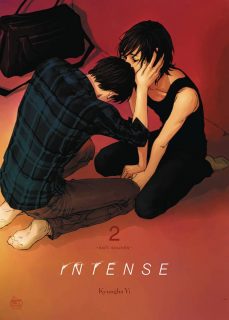
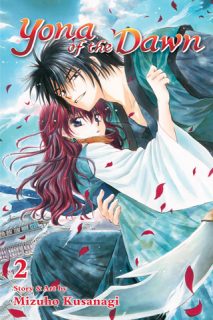
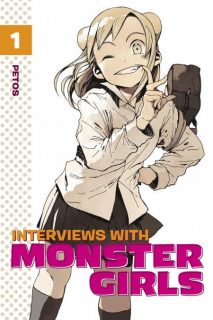
Welcome to the Ballroom, Volume 1Welcome to the Ballroom, Volume 1 by Tomo Takeuchi. Even with the resurgence of sports manga in translation, I still wasn’t expecting that Welcome to the Ballroom would be licensed. Competitive ballroom dancing, despite being very physically demanding, probably isn’t what immediately comes to most people’s mind as a sport. In addition to that, in my experience many people are unfairly dismissive of dance and especially of men who dance. I, however, more than welcome a series on the topic. Welcome to the Ballroom is about a high school student, Tatara Fujita, who ultimately becomes interested in dance after finding refuge from a group of bullies at a local studio. At first he’s embarrassed and he hides the fact that he’s taking lessons, but at last he’s finally found something in his life to be passionate about. Unfortunately for him, he doesn’t seem to have any natural talent for dance except for the uncanny ability to shadow and mimic another dancer. The first volume of Welcome to the Ballroom didn’t engage me as much as I thought or hoped that it would and some of the characters’ casual sexism was bothersome, but I’m still curious to see where the series goes from here, in part because it ends with quite a cliffhanger.

Filed Under: FEATURES, My Week in Manga Tagged With: Akane Shimizu, Aya Kanno, Cells at Work, Ghost and the Lady, Kazuhiro Fujita, manga, requiem of the rose king, Tomo Takeuchi, welcome to the ballroom

My Week in Manga: October 31-November 6, 2016

November 7, 2016 by Ash Brown

My News and Reviews

Last week at Experiments in Manga the winner of the Sweetness & Lightning manga giveaway was announced. The post also includes a list of some of the manga available in English that feature notable fathers or father figures. As for more in-depth features, I’m (still) currently working on some random, but rather personal, musings about Ichigo Takano’s manga series Orange. Progress on that post is a little slower than I would like it to be, but hopefully I’ll have something to share in the relatively near future.

As for interesting things that I’ve recently found online: The Honolulu Museum of Art recently hosted a series of lectures and discussions called Manga in Japan, Hawai‘i, and Throughout the World; many of the recordings can now be watched online. The proceedings of the Manga at a Crossroads symposia are available to read or download from The Ohio State University. Anna Madill has also posted the slides from her 2016 Comics Forum keynote address–Genre, genealogy, and gender: Reflecting on Boys’ Love manga–which includes some interesting results from her BL Fandom Survey. And speaking of boys’ love, Digital Manga’s Juné imprint is seeking the print rights for Asumiko Nakamura’s Classmates (Doukyusei).

Quick Takes

Haikyu!!, Volume 3Haikyu!!, Volumes 3-5 by Haruichi Furudate. The new Karasuno team has made it through its first game, but the members still have some practicing to do before they can completely shed the nickname of the fallen champions. But considering their tremendous talent and potential, that might not take them too long. With these volumes, a few more Karasuno veterans are introduced, as are their rivals, before the series quickly moves from training to tournaments. Although there are some very exciting moments, I actually find the games to be the least interesting part of Haikyu!!, which may (but not necessarily) present a problem in the long run for what is primarily a sports manga.  Some of the action was a little difficult for me to follow until I got used to Furudate’s visual language, probably because I’m not actually all that familiar with volleyball gameplay. Growing up, my family’s anything-goes backyard games followed vastly different rules; Haikyu!! is actually teaching me how volleyball as a sport is really played. However, I am still enjoying Haikyu!! immensely. I particularly love the series’ focus on teamwork and even more so its unflagging positivity. Haikyu!! manages to be competitive without being mean. I also really like the distinctive personalities of the characters, and Furudate’s sense of humor and comedic timing is great. The manga continues to be great fun.

Neo-Parasyte fNeo-Parasyte F by Various. Hitoshi Iwaaki’s series Parasyte happens to be not only one of my favorite horror manga, but one of my favorite manga in general. That’s probably the main reason I was so excited that the Parasyte shoujo tribute anthology Neo-Parasyte F was licensed, but the list of contributors is exciting in and of itself, too. I was especially happy to have the chance to read more of Asumiko Nakamura’s work, but there are other creators that English-reading fans will likely recognize as well, such as Ema Toyama, Kaori Yuki, and  Yuri Narushima among others. Neo-Parasyte F collects fifteen short manga that in one way or another pay tribute to Parasyte. Some of the stories take place within the same world as Parasyte–Shinichi and Migi, the main characters of the original series, even make a few appearances–while others are set completely apart. Many of the manga are still horror-themed, but there are a surprising number that actually take a more humorous approach. Ever wonder what Parasyte would be like as an otome game? Neo-Parasyte F presents one possible interpretation of just that. Overall, the volume is a great anthology containing an excellent variety of genres and styles. Neo-Parasyte F will likely appeal most to readers who are fans of or at least familiar with Parasyte, although a few of the contributions can stand completely on their own.

The Prince in His Dark Days, Volume 1The Prince in His Dark Days, Volume 1 by Hico Yamanaka. In Japan, Yamanaka is probably better known for her boys’ love manga, but that’s not all that she’s done. For example, The Prince in His Dark Days, Yamanaka’s English-language debut, does not fall into that particular genre. However, it is poised to explore gender and sexuality in interesting ways, which is what first brought the series to my attention. The story follows Atsuko, a high school student from a broken and abusive family who is struggling to make ends meet. She is more or less coerced into becoming the stand-in for Itaru, the wealthy heir to a major corporation who has gone missing. Very possibly he ran away due to some of his own unfortunate circumstances. Until Itaru is found, Atsuko will be taking them on in his place. Although she’s not exactly leading a life of luxury–parts of Itaru’s own life are less than ideal–at least she’s no longer quite as miserable as she once was. The initial setup of The Prince in His Dark Days is a little rough and feels a somewhat forced, but it does establish understandable reasons for everything that follows. Admittedly, the whole situation is rather strange, but once Atsuko has adopted her new role she devotes herself completely to it. In the process, she begins to create meaningful if somewhat peculiar relationships with the people around her. I’m not entirely sure where The Prince in His Dark Days is heading, but I do know that I want to find out.

Princess Jellyfish, Omnibus 3Princess Jellyfish, Omnibus 3 (equivalent to Volumes 5-6) by Akiko Higashimura. I am still incredibly pleased that Princess Jellyfish manga series is being released in print. I thoroughly enjoyed the anime adaptation and was left wanting more after it ended, so I’m thrilled to finally have the chance to read the original manga. The anime began around the same time that the sixth volume was originally being released in Japan, so from this point on more and more of what is seen in the manga will either be new or significantly different. It has been a while since I’ve watched the anime so I may be misremembering parts of it, but already I can identify where notably different choices were made as to plot and characters. However, the heart of both the manga and the anime are definitely the same. Despite the various romantic and relationship dramas, Princess Jellyfish is largely a comedy. Serious matters like familial and social expectations are addressed and explored in the series, but Higashimura primarily does so through humor, sometimes more successfully and sometimes less so. Princess Jellyfish is an energetic manga that can be over-the-top and ridiculous, but it can also be very touching. As the women of Amamizukan search for a way to save their beloved home they are finding new ways to express themselves through skills and talents that they never realized they had, slowly coming out of their shells in ways they never expected.

Filed Under: FEATURES, My Week in Manga Tagged With: Akiko Higashimura, Haikyu!!, Haruichi Furudate, Hico Yamanaka, manga, Parasyte, Prince in His Dark Days, Princess Jellyfish

  • « Go to Previous Page
  • Page 1
  • Page 2
  • Page 3
  • Page 4
  • Page 5
  • Page 6
  • Interim pages omitted …
  • Page 17
  • Go to Next Page »
 | Log in
Copyright © 2010 Manga Bookshelf | Powered by WordPress & the Genesis Framework