• Skip to primary navigation
  • Skip to main content
  • Skip to primary sidebar
  • Home
  • About Us
    • Privacy Policy
    • Comment Policy
    • Disclosures & Disclaimers
  • Resources
    • Links, Essays & Articles
    • Fandomology!
    • CLAMP Directory
    • BlogRoll
  • Features & Columns
    • 3 Things Thursday
    • Adventures in the Key of Shoujo
    • Bit & Blips (game reviews)
    • BL BOOKRACK
    • Bookshelf Briefs
    • Bringing the Drama
    • Comic Conversion
    • Fanservice Friday
    • Going Digital
    • It Came From the Sinosphere
    • License This!
    • Magazine no Mori
    • My Week in Manga
    • OFF THE SHELF
    • Not By Manga Alone
    • PICK OF THE WEEK
    • Subtitles & Sensibility
    • Weekly Shonen Jump Recaps
  • Manga Moveable Feast
    • MMF Full Archive
    • Yun Kouga
    • CLAMP
    • Shojo Beat
    • Osamu Tezuka
    • Sailor Moon
    • Fruits Basket
    • Takehiko Inoue
    • Wild Adapter
    • One Piece
    • After School Nightmare
    • Karakuri Odette
    • Paradise Kiss
    • The Color Trilogy
    • To Terra…
    • Sexy Voice & Robo
  • Browse by Author
    • Sean Gaffney
    • Anna Neatrour
    • Michelle Smith
    • Katherine Dacey
    • MJ
    • Brigid Alverson
    • Travis Anderson
    • Phillip Anthony
    • Derek Bown
    • Jaci Dahlvang
    • Angela Eastman
    • Erica Friedman
    • Sara K.
    • Megan Purdy
    • Emily Snodgrass
    • Nancy Thistlethwaite
    • Eva Volin
    • David Welsh
  • MB Blogs
    • A Case Suitable For Treatment
    • Experiments in Manga
    • MangaBlog
    • The Manga Critic
    • Manga Report
    • Soliloquy in Blue
    • Manga Curmudgeon (archive)

Manga Bookshelf

Discussion, Resources, Roundtables, & Reviews

Features

Manga Giveaway: Arisa Giveaway

September 25, 2013 by Ash Brown

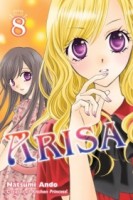
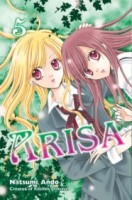
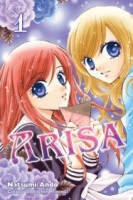
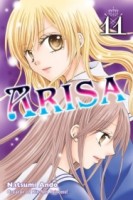
It’s just about the end of the month, which means it’s time for another manga giveaway here at Experiments in Manga! This month’s giveaway is for not one, but two volumes of Natsumi Ando’s manga series Arisa–both the first and the most recent volumes published in English. (I’ll explain my odd thought process for this below.) As always, the contest is open worldwide!

Arisa, Volume 1Arisa, Volume 11

Okay, so why the first and eleventh volumes? Because Arisa has a set of twin sisters. Volume 1, because it’s the first volume. (In general, I like to give away first volumes.) And what do you get when you have two 1s? 11. And there you have it. (I told you I’m a bit odd.) Anyway.

People are fascinated by twins. It’s probably not too surprising that twins, both fraternal and identical, make frequent appearances in manga, often with an important role to play in the story. Naoki Urasawa’s Monster, Yumi Tamura’s Basara, and Rei Hiroe’s Black Lagoon are just a few examples off the top of my head. It wouldn’t take me long to come up with even more. (And I will next week.) In Arisa we have Tsubasa Uehara and Sonoda Arisa, identical twin sisters who have been separated by their parents’ divorce. Tsubasa takes Arisa’s place at school to try to discover why her sister would attempt to commit suicide, uncovering some very disturbing goings-on in Arisa’s class in the process.

So, you may be wondering, how can you win a copy of Arisa, Volumes 1 and 11?

1) In the comments below, tell me a little about a set of twins that you have encountered in manga and in which manga they appear. (If by chance you’ve never come across twins, simply mention that.)
2) If you’re on Twitter, you can earn a bonus entry by tweeting about the contest. Make sure to include a link to this post and @PhoenixTerran (that’s me).

It’s as easy as that. For this giveaway, each person can earn up to two entries. As usual, there is one week to submit comments. If you have trouble leaving comments, or if you would prefer, you can e-mail me your entries at phoenixterran(at)gmail(dot)com and I will post them in your name. The giveaway winner will be randomly selected and announced on October 2, 2013.

VERY IMPORTANT: Include some way that I can contact you. This can be an e-mail address (which if you submit through the comment form won’t be publicly displayed), a link to your website, Twitter username, or whatever. If I can’t figure out how to get a hold of you and you win, I’ll just draw another name.

Contest winner announced–Manga Giveaway: Arisa Giveaway Winner

Filed Under: FEATURES Tagged With: arisa, manga, Natsumi Ando

It Came From the Sinosphere: State of Divinity (Part 3)

September 24, 2013 by Sara K. 3 Comments

Yue Buqun

Yue Buqun in soliloquy mode.

Yue Buqun in soliloquy mode.

When I first read the novel, Yue Buqun did not leave such a strong impression on me, and I did not understand why so many people consider him to be the character that the entire story turns on. As I’ve read/seen more adaptations, I have gotten a better understanding of his importance, but it is this adaptation which really drove home to me what a great character he is.

What really distinguishes State of Divinity’s Yue Buqun is that, unlike any other version of the story I’ve seen/read, we get to see his inner thoughts.

In the original novel, everything we know about Yue Buqun comes from Linghu Chong or Lin Pingzhi, and since Yue Buqun never reveals his private thoughts to these two characters, we can only understand him based on his actions. By contrast, State of Divinity offers Yue Buqun ample opportunities for soliloquy.

What really struck me is that Yue Buqun’s thoughts as depicted by State of Divinity are very different from what I expected – yet entirely consistent with canon. This, of course, is a reflection of just an enigma Yue Buqun is – though we know what he does, the reader never knows what he says to himself.

Yue Buqun ... vulnerable?

Yue Buqun … vulnerable?

And State of Divinity shows Yue Buqun being vulnerable. This is something I have never seen in any other version of the story. One of the principles of Yue Buqun’s personality is that he *never* shows vulnerability (at least not in Linghu Chong or Lin Pingzhi’s presence). To be honest, vulnerable!Yue Buqun shocked me.

I now think that Yue Buqun is one of Jin Yong’s finest characters.

Lin Pingzhi

I ended up really liking Lin Pingzhi in State of Divinity.

I’m not just saying that I thought he was well-written and well performed (though I do think that). I actually ended up liking the character himself.

Lin Pingzhi with his mother.

Lin Pingzhi with his mother.

While most versions of the story note that Yue Buqun and Lin Pingzhi have similar personalities, State of Divinity really emphasizes that Lin Pingzhi = young!Yue Buqun. Thus they reinforce each other’s position in the story.

Laughing on the Wind introduces Lin Pingzhi as being privileged, coddled, and spoiled, which of course sets him up for being disliked by the audience. It’s almost satisfying to watch him suffer.

State of Divinity, by contrast, makes it really easy to love Lin Pingzhi. This was hard for me, because I knew what happens to Lin Pingzhi at the end. I wanted to hope that State of Divinity would show some mercy to Lin Pingzhi … but I already knew that hope was in vain.

Lin Pingzhi is experiencing a  Horrible Revelation.

Lin Pingzhi is experiencing a Horrible Revelation.

In this adaptation, it is Lin Pingzhi who breaks my heart the most.

About the Music

Well, a lot of the music used in the show is not original (for example, it borrows the soundtrack from Ashes of Time, among other sources). I still found it a bit jarring to hear music pulled from other contexts. Then again, borrowing really good music was probably wiser than composing original-yet-mediocre music – and what original music the show has is mostly uninteresting.

There is one original song which actually stands out is the tune of “The Laughing Proud Wanderer” itself. According to the story, it’s the more beautiful song the characters have ever heard, but I don’t think the audience actually expects that of the makers of the TV show.

The song works because it fits the atmosphere story. Bach it is not, but it does a pretty good job of condensing 43 episodes of story into a single tune. That is much more important than being a great music in its own right.

A Shift in the Ending

This scene wasn't in the original novel, so where have I seen this before ... oh that's right, it's just like that scene in Shēn Diāo Xiá Lǚ

This scene wasn’t in the original novel, so where have I seen this before … oh that’s right, it’s just like that scene in Shēn Diāo Xiá Lǚ

Every adaptation (except Lee Chi-Ching’s manhua) alter the ending.

To be fair, the ending of State of Divinity is actually mostly the same as the ending of the novel. But there is one crucial change.

In the original novel, Linghu Chong is helpless at the end. There is practically nothing he can do to change the course of events. His must experience whatever fate sends his way.

Linghu Chong experiences utter despair.

Linghu Chong experiences utter despair.

And that is what State of Divinity tweaks. At the end, Linghu Chong does change the course of events.

That doesn’t make it a bad ending. But I find it interesting that most adaptations feel that have to change that part.

Comments on the Acting

Overall, I think both shows have very good acting. Even when they did not cast the most suitable actor, at least it is somebody competent enough to make the part work anyway.

That said, these are the highlights for me (from both shows)

Xu Qing as Ren Yingying and Wei Zi as Yue Buqun

Xu Qing as Ren Yingying and Wei Zi as Yue Buqun

Xu Qing as Ren Yingying (LitW) – I think it’s a bit unfair to compare Xu Qing and Fiona Leung’s performances as Ren Yingying, since the script of LitW gives Xu Qing a lot more to work with. Nonetheless, I think Xu Qing does a better job of exposing Ren Yingying in her most vulnerable moments.

Wei Zi as Yue Buqun (LitW) – It is really hard to decide whether Wei Zi (LitW) or Wong Wai (SoD) is a better Yue Buqun, but my gut says that Wei Zi’s acting is a little better (though as far as the script, Yue Buqun is definitely better written in SoD).

He Meitian as Yilin and Jackie Lui as LInghu Chong

He Meitian as Yilin and Jackie Lui as LInghu Chong

Jackie Lui as Linghu Chong (SoD) – This is an example of great casting. To quote a review (which I can’t find right now) ‘Jackie Lui is Linghu Chong’. Li Yapeng’s performance in LitW is also good, but he fails to embody the character as fully as Jackie Lui.

He Meitian as Yilin (SoD) – If casting Jackie Lui as Linghu Chong is great, then casting He Meitian as Yilin is perfect. In a show which sets a very high bar for acting, it is Jackie Lui and He Meitian who really stand out. He Meitian also plays Qi Fang in another of my favorite wuxia dramas, A Deadly Secret, where she is once again a highlight.

Small Evil is Scarier than Great Evil

One of the messages of this story (and most of Jin Yong’s work) is that good cannot defeat evil.

Good can avoid evil. Evil can self-destruct. Good can even, rarely, persuade evil to change. But good cannot defeat evil.

Ren Woxing holds a puppy in his arms as Ren Yingying rushes up to him.

Evil can also rescue puppies.

Some adaptations (including Laughing in the Wind) try to turn one of the villains into the Big Bad, which the heroes can then take down and triumph over. That’s not how the original novel works. In the original novel, all of the villains are narrow-minded men (none of the villains are cis-female). Though they can fall individually, they can never be eliminated as a group. If you take down one petty tyrant, another will emerge.

This is scary.

Ren Yingying and Linghu Chong look really scared.

Yep, they’re scared.

If you think in terms of great evil, at least there is the hope that, after taking out the Big Bad, you will be free once and for all. But if evil is like a weed which will grow back from the soil of human nature as soon as you pull it out, then it will be with you forever.

The villains are horrible not because they are inhuman, but because they are human.

My Encounter with the TV Show

I had been in Taiwan for a short time, and I was just starting to feel out Chinese-language media. As a starting point, I would channel-surf. During my channel-surfing, the wuxia dramas caught my eye the most, since they were quite different from what I was familiar with.

state32

However, even with my lack of listening comprehension skill, I could tell that wuxia TV dramas follow Sturgeon’s Law.

There was one wuxia drama which stood out. I could only understand 10-20% of the dialogue, so of course I couldn’t follow the story, but it still drew me in. Without understanding it, I still felt that what was happening mattered.

I remember one scene where a certain nun killed another character.

This nun has just killed somebody.

This nun has just killed somebody.

Now, I understood enough to know that the nun was horrified by the fact that she had just killed somebody. I also knew that Buddhist nuns are generally not supposed to killing living creatures. I did not know the broader context – for example, I did not know what the nun’s relationship to the victim was – but I *felt* it.

Scenes like this made an impression on me, even though I didn’t know what they mean.

Well, I had to find out what this TV show was – and I learned it was State of Divinity, adapted from a novel by Jin Yong.

Yep, this TV show was my gateway drug, both to Jin Yong specifically and the wuxia genre as a whole (I’ve even written about this before).

Now, even if I hadn’t caught reruns of this show, I would have almost certainly encountered Jin Yong and wuxia anyway. But if my first encounter had been, say The Book and the Sword, I might have concluded that it wasn’t for me, and left it at that.

And if I hadn’t gotten hooked on wuxia, this column would be really, really, really different.

Linghu Chong, Xiang Wentian, and Ren Woxing by a bonfire on the beach.

I remember watching this scene on Taiwanese TV.

It also made for a weird experience when I finally read the novel. As I read a scene, images from the TV show
would emerge in my head, and I would have lots deja-vu moments -‘This seems oddly familiar’, ‘So, this is what that was actually about’, ‘Oh shit, this is the scene where she dies!’

Availability in English

As far as I know, this show is currently not available in English.

It is listed on Dramafever as ‘coming soon’, but there are so many Hong Kong dramas which are listed as ‘coming soon’ that, unless Dramafever has a gigantic army of translators/subtitlers/etc. at its command, not all of those dramas can ‘come soon’. My guess is that ‘coming soon’ means ‘we have a license to stream this show, but we’ll only actually translate it if we think it will generate a lot of interest among our viewers’.

So if you would like to see this show with English/Spanish subtitles, tell Dramafever.

Conclusion

Okay, in some ways, Laughing in the Wind does kick State of Divinity‘s ass. Yet I think it should be obvious that I love State of Divinity much more.

I think most people agree with me. While both shows get onto many people’s ‘best wuxia TV show’ lists, everybody who has compared the two (including a Laughing in the Wind fansite!) says that State of Divinity is better.

I would take it a step further. There are many classic wuxia TV shows I have yet to see – as well as many classic Chinese-language TV shows in other genres. But of all of the Chinese-language dramas I have seen, State of Divinity is the best. That’s right, it is better than every other single TV show I have discussed here at Manga Bookshelf.

This show is so highly recommended that I think I have just wrecked the roof.


Sara K. made some comments about Shén​ Tōu​ Tiān​xià​ by Zheng Feng (who also wrote Passionate Wastrel, Infatuated Hero and Spirit Sword) over at her personal blog.

Filed Under: Dramas, It Came From the Sinosphere Tagged With: Hong Kong, jin yong, State of Divinity, The Laughing Proud Wanderer, TVB, wuxia

My Week in Manga: September 16-September 22, 2013

September 23, 2013 by Ash Brown

My News and Reviews

Well, I somehow managed to post three reviews last week. This is a little unusual for me as normally I only have one or two ready to go. The first review was for Hinoki Kino’s No. 6, Volume 2. The pacing, characterization, and world-building improves on the first volume, which I was very glad to see. (I’m really hoping that the manga will have a better ending than the anime.) The second review was for Yoshiyuki Tomino’s Mobile Suit Gundam: Awakening, Escalation, Confrontation, an omnibus of a trilogy of early Gundam novels–the first part of the Gundam franchise to be officially released in English. (To be honest, though, I much prefer Yoshikazu Yasuhiko’s manga series Mobile Suit Gundam: The Origin.) I also reviewed Sherlock Bones, Volume 1 by Yuma Ando and Yuki Sato. I was very skeptical going into the series, but found the first volume of the manga to be surprisingly entertaining.

As for a few interesting things found online: Comic Natalie has announced the winners of its first annual manga awards. If you don’t read Japanese and can’t identify manga by their covers, Vertical compiled a list of the winners currently avilable in English (in addition to posting a hint for an as of yet unannounced Vertical license.) As reported by the Business Standard, Viz Media is apparently entering the market in India–Top Manga publisher set to make India entry. And if the relationship between Kodansha Comics, Del Rey/Del Rey Manga, and Random House has you confused, Kodansha posted a brief explanation/clarification of the situation on its Tumblr account.

Quick Takes

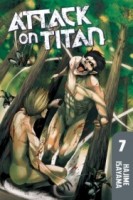
Attack on Titan, Volume 7Attack on Titan, Volume 7 by Hajime Isayama. The terror in Attack on Titan has started to shift. At the beginning of the series the fear was much more about the unknown–the titans were these terrifying creatures beyond comprehension. But now the fear is coming from the knowledge that other humans may very well have a hand in what is happening. There have been plenty of deaths in Attack on Titan, but when those deaths involve characters who you’ve gotten a chance to know instead of just being nameless faces, suddenly the casualties carry even more weight. It makes the terror, frustration, and utter despair experienced by the characters even more palpable. Attack on Titan is dark, and it has been from the start, but the developments in the seventh volume pack quite a punch. I’ve had my doubts about the series in the past, and the artwork is still terribly inconsistent and occasionally difficult to follow, but I am hooked on it.

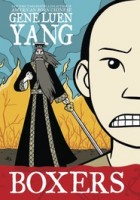
BoxersBoxers & Saints written and illustrated by Gene Luen Yang, colors by Lark Pien. Boxers & Saints is easily one of the best comics that I’ve read this year. The two graphic novels that make up the duology can be read separately, but together they are even more powerful. The work is a retelling of the Boxer Rebellion–a violent uprising against foreign and Christian influence in northern China that took place at the turn of the 20th century. Boxers follows the life of a young man who becomes one of the leaders of the rebellion while Saints shows the conflict from the perspective of a young Chinese woman who converted to Christianity. Although very different in their details and narrative style, the two volumes follow a similar story arc as the characters come of age and find something to believe in, but are then challenged by those beliefs and conflicted over their decisions and actions. The Boxer Rebellion was a complicated and tragic event for both sides of the dispute. Boxers & Saints is a fictional account, but Yang put in a tremendous amount of research into the work. Highly, highly recommended.

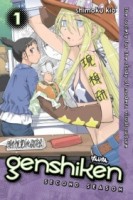
Genshiken: Second Season, Volume 1Genshiken: Second Season, Volumes 1-3 by Shimoku Kio. The Genshiken has turned into a fujoshi club. This doesn’t really bother me (I also enjoy BL and yaoi), but to an extent I do miss the greater variety of otaku that were represented in the original series. Still, even the fujoshi have their quirks and differences–the Genshiken has always attracted weirdos. And then there’s the cross-dressing Hato-kun, who for me is really stealing the show in the second season of Genshiken. The only male first-year to join the club, he’s created a very complete and convincing female persona. I find him to be the most interesting new character in the new series and he seems to be the focal point for much of the drama. I’m also particularly enjoying Yajima’s character development. She is uncomfortable with Hato’s cross-dressing but becomes very protective of him. As for the older characters, I was very happy to see Madarame return as he remains one of my favorites. Put him and Hato together in a scene and it’s just perfect.

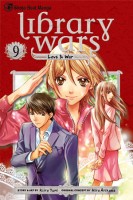
Library Wars, Volume 9Library Wars: Love & War, Volumes 9-10 by Kiiro Yumi. Perhaps it’s because I’m a librarian, but I can’t help but be fond of Library Wars even when it’s not always the strongest series. Sometimes the characters and their interactions are fantastic, and sometimes it seems as if they’re all acting like a bunch of high school students when they’re supposed to be mature, capable adults. Granted, there are some delightfully awkward scenes now that Iku has come to the realization that Dojo is her “prince.” He’s known for quite a while, but he doesn’t know that she knows, yet. It’s all rather amusing. I am very glad that Iku seems to be more competent now than she was at the beginning of the series. I don’t care how enthusiastic a person is, if they don’t have the needed skills for the job there’s not much hope for them. Library Wars is a fantasy, but it actually does address some real issues encountered in the library world. Censorship is the biggest one and at the core of the series, but things like sexual harassment and dealing with inappropriate patron behavior come up, too.

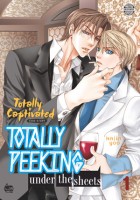
Totally Peeking Under the Sheets, Volume 1Totally Peeking Under the Sheets, Volumes 1-2 by Hajin Yoo. Totally Peeking Under the Sheets is a collection of side stories relating to Yoo’s boys’ love manwha Totally Captivated. It’s definitely intended for those who have read and enjoyed the original series. The first volume contains quite a few short manhwa, some of them only a few pages long. Many of these stories emphasize the more humorous aspects of Totally Captivated and its characters. And as might be expected from the title Totally Peeking Under the Sheets, several stories are also rather racy–what little plot there is is used to get Ewon and Mookyul into bed with each other. (Not that that’s very difficult.) The focus of the second volume is a much longer sequel manhwa called “The Final Chapter.” Although there were some great character moments, the story felt forced to me. Ewon suddenly has to deal with his family, particularly the mother who abandoned him. I’m not sure the situation would have really played out in the way that Yoo presents it. Overall, I much preferred the first volume.

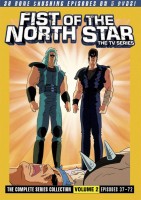
Fist of the North Star, Collection 2Fist of the North Star: The TV Series, Volume 2 (Episodes 37-72) directed by Toyoo Ashida. While the first collection of the Fist of the North Star anime series had quite a bit of filler, the second collection starts to really dig into the plot and characters. The series is much better for it. Plus, the anime has now reached a point in the story beyond the manga that was released in English. Some of the fights do still get to be a little repetitive, especially when the protagonists face off against large groups of unnamed bad guys and minions, but there’s always something about each battle that makes it stand out from the rest. The best fights, though, are those that occur between two martial arts masters. But Fist of the North Star isn’t just about power, skill, and strength (although that’s certainly an important part of it). The series is also about destiny, loyalty, friendship, and love. Kenshiro is a tragic hero who continues to lose those who are close to him. Fist of the North Star is a post-apocalyptic martial arts epic, and I’m loving it.

Filed Under: FEATURES, My Week in Manga Tagged With: anime, attack on titan, Boxers and Saints, comics, Fist of the North Star, Gene Luen Yang, Genshiken, Hajime Isayama, Kiiro Yumi, Lark Pien, library wars, manga, manhwa, Shimoku Kio, totally captivated

Manga the Week of 9/25

September 19, 2013 by Sean Gaffney, Ash Brown, Michelle Smith, Anna N and MJ 1 Comment

SEAN: A surprisingly huge last week of the month. Shall we get right down to it?

Cyborg-009-Cover

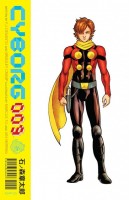
Archaia has their new modern adaptation of Cyborg 009 debuting this week. I recall the old 60s series when Tokyopop took a flyer on it, and it was fun if very ‘a product of its time’. It’s a series that a modern retelling, getting rid of some of the racism and sexism, could really work wonders. Intriguing.

ASH: I’ve already got my copy of this one. I haven’t read it yet, but I can say this–Archaia’s Cyborg 009 has one of the coolest book designs that I’ve seen in quite a while.

SEAN: Kodansha continues the speedup of Attack on Titan with Vol. 7, which reminds you that the series can still be really, really brutal.

ASH: Yes it can! If Attack on Titan has one thing going for it, it’s the series’ intensity. And tragic deaths.

MICHELLE: I feel very wrong that “tragic deaths” has seriously made me consider Attack on Titan.

ANNA: I feel the same way. What is the ratio of tragic deaths to non-tragic deaths per volume?

MJ: I also would like to see some statistics on this. Yes.

SEAN: Also, lest you think there’s only omnibuses, there’s the 18th volume of Battle Angel Alita: Last Order.

And speaking of speedups, here’s Fairy Tail 30, which wraps up its very long S-class arc, and has a major plot shift that affects… well, not quite everything.

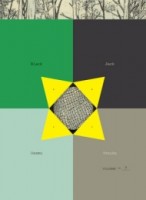
I admit I sometimes miss things coming out via Picturebox and their cadre of indie manga releases. Here’s a new one called World Map Room, which I know nothing about.

ASH: Picturebox is a publisher that has really caught my eye this year. I don’t always enjoy Yuichi Yokoyama’s manga, but I can certainly appreciate his draftsmanship and experimental work.

MJ: Agreed. I’m very interested in what they’re doing.

dictatorialgrimoire_vol1_full

SEAN: I had assumed that Dictatorial Grimoire: Cinderella was another series from Quin Rose in the Alice in the Etc Etc. vein, but apparently not. This is from Media Factory’s oddball shoujo-ish Comic Gene, and is a Grimm’s Fairy Tales rewrite, in a way.

MICHELLE: Huh. I’m feeling a little oversaturated with fairy tail adaptations, though.

ANNA: I love fairy tale adaptations! Not sure if I will check it out although content from oddball shoujo-ish magazines sounds promising.

MJ: Well, huh. This does sound like my kind of thing!

SEAN: Alice in the Country of Clover: Cheshire Cat Waltz is almost finished, I believe, but not quite, so here’s more Boris and Vol. 6.

Mobile Suit Gundam: The Origin has been one of my most awaited titles of 2013, with every volume desperately needing to get into my hands as quickly as possible. Vol. 3 is called Ramba Ral!

ASH: I’ve been very impressed by Vertical’s edition of The Origin. It’s a great manga and a gorgeous release. Plus, I’m a fan of Yoshikazu Yasuhiko’s manga.

MICHELLE: I’m enjoying it, too!

ANNA: I am so happy that Vertical is putting out this series.

SEAN: If you’d told me a few years ago Vertical would be licensing a Young Animal title, I’d have laughed. But here we are. Sickness Unto Death is along the lines of Flowers of Evil, but only 2 short volumes. The first ships this week.

ASH: I’m very curious about this one.

MICHELLE: I don’t know what to think about it.

MJ: I’m always interested in what Vertical has to offer, so count me in!

SEAN: Are You Alice? has a 2nd volume that may potentially have something comprehensible happen, which Vol. 1 lacked, in my opinion.

And The Betrayal Knows My Name, a series that feels like it should be Wings but is instead in Asuka (which is becoming the new Wings), hits Vol. 6, and has lots of reincarnation romance.

MJ: I have been shamelessly addicted to this series ever since my holiday marathon read last year. More, more!

Mori_Bride_StoryV5_HC

SEAN: A Bride’s Story really picked up for me with the introduction of the twins in Vol. 4, so seeing their wedding in this new volume is definitely high on my list of things to do.

ASH: I’m always happy to see a new volume of Kaoru Mori’s A Bride’s Story! (Now, if we could only get Emma back into print, too…)

MICHELLE: Someday I will have time to read this.

ANNA: Me too. I need to catch up. The first two volumes were lovely.

MJ: I adore this series, and I’m very excited about the wedding! Hurray!

SEAN: Kieli hits Vol. 9… of the novels, that is. Don’t get your novels and manga mixed up, especially from Yen, which tends to license both more than most companies.

The regular old manga may be ending in Japan, but its gag spinoff continues, as we see the 7th volume of The Melancholy of Haruhi-chan Suzumiya.

Lastly, Soul Eater hits sweet 16, and will likely start spinning out new plot threads here to see what sticks. Always fun.

What’s whetting your appetite?

MICHELLE: Isn’t Goong 13 coming out too this week, now that I think about it? At least, Amazon has it with the same date as the other Yen, and I just got it in a box of review copies (yay!).

ANNA: eeeeeeeee!

MJ: YAY GOONG YAY!

SEAN: It’s still hard for me to remember Korean books…

Filed Under: FEATURES, manga the week of

My Week in Manga: September 9-September 15, 2013

September 16, 2013 by Ash Brown

My News and Reviews

I posted two reviews here at Experiments in Manga last week. The first was for Yusuke Kishi’s novel of horror and survival The Crimson Labyrinth. Currently The Crimson Labyrinth is the only work by Kishi available in English, but Vertical will begin releasing the manga adaptation of his novel From the New World later this year. (The same From the New World recently had an anime adaptation, too.) I also posted my latest Blade of the Immortal review–Blade of the Immortal, Volume 25: Snowfall at Dawn. The last few volumes of Blade of the Immortal have been building up to the showdown between Shira and Manji; finally the time has arrived when they face each other.

There were a couple of interesting things that I came across online last week. First, there was an interview with Annaliese Christman, a freelance letterer for Viz Media. I didn’t know much about lettering, so I found it to be a very interesting read. The other item I wanted to mention was Dan Kanemitsu’s examination of the impact the upcoming Tokyo Olympics may have on censorship in Japan–Fear and Loathing in the Bold New Olympic Era. (Too long, didn’t read? CBLDF has a nice overview of the article with some additional commentary–Tokyo Olympics Emboldens Censors.)

Quick Takes

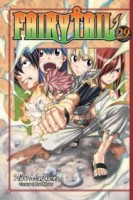
Fairy Tail, Volume 29Fairy Tail, Volume 29 by Hiro Mashima. This is only the second volume of Fairy Tail that I’ve had the opportunity to read in its entirety. At this point my general impression is that it’s a fun, but rather generic series. I just can’t seem to shake the feeling that I’ve seen it all before. I do like the variety of magic styles, though. Most of the twenty-ninth volume focuses on the battle between five young members of the Fairy Tail guild and Hades, the guild’s former grandmaster. Although not entirely unexpected, there were some great moments during fight that really show off the group’s teamwork. Fairy Tail moves along quickly with plenty of battles and action sequences. For the most part, Mashima’s art works nicely. However, all of the cuts and scratches that the characters end up with over the course of their fights make them look like they all have scales, which is a little odd. Although for some characters, like Natsu with his dragon abilities, it’s rather appropriate.

Nana, Volume 16Nana, Volumes 16-18 by Ai Yazawa. The more of Yazawa’s manga that I read, the more I am impressed by it. Nana is a fantastic series. The characters are complex and multilayered; the story is dramatic and absorbing without being overwrought. These particular volumes deal just a little less with the music industry and the bands as a whole. Instead, they delve more into the characters’ personal lives. Particularly important is the revelation of Nana and Shin’s pasts as well as their less than ideal family circumstances–something that proves to be very problematic. Also included in these volumes are two lengthy side stories. One shows Nobu and Nana’s relationship back when they were in school together. Similarly, Takumi’s complicated feelings for Reira is the focus of the other. The side stories are a really nice addition to Nana, giving the story even more depth. They show the importance of the characters’ relationships and how they developed over time to become what they are in the series proper. I’m really looking forward to reading the rest of Nana.

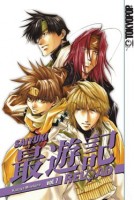
Saiyuki Reload, Volume 7Saiyuki Reload, Volumes 7-9 by Kazuya Minekura. While the early part of the series seemed directionless, by the end of Saiyuki Reload Minekura has a great narrative drive going. Some of the plot elements and storylines do unfortunately seem to have been dropped or forgotten (though perhaps she pulls them all back in for the finale) but the manga does benefit from having a stronger focus. What is particularly interesting about these volumes is that the yokai’s side of the conflict is shown in more detail. Although there have been exceptions, for the most part the yokai have simply been the series’ monsters. Minekura makes it very clear here that the yokai are really not all that different from humans and that it is the humans who are sometimes the real monsters. Looking back, this has actually been one of the recurring themes in the series. Although Saiyuki Reload is ten volumes long, only nine volumes were ever released in English. It’s particularly tragic since the ninth volume ends on one heck of a cliffhanger.

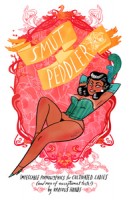
Smut PeddlerSmut Peddler by Various. Smut Peddler had its beginnings as a three-issue indie minicomic series back in 2003. In 2012, Smut Peddler returned as a full-length anthology collecting twenty-six short erotic comics. Smut Peddler is a phenomenal collection of sex-positive, lady- and queer-friendly comics. I was particularly happy to see the diversity included in the anthology, not only in terms of the characters’ various identities but in genre as well. Smut Peddler contains science fiction and fantasy as well as reality-based works, both historical and contemporary. The stories are short, sexy, and sweet. Some are more serious and others are more humorous, but they are all heartfelt. I was previously familiar with and already follow the work of many of the creators included in the anthology, but there were plenty of artists and writers who I was encountering for the first time. (I now have even more creators I want to seek out.) Work has already begun on a second Smut Peddler anthology, currently scheduled for release in 2014. I can’t wait.

Velveteen & MandalaVelveteen & Mandala by Jiro Matsumoto. Reading Velveteen & Mandala was a rather odd experience for me. I was consistently engaged while I was reading it, but I wasn’t sure that I actually liked it. But after finishing Velveteen & Mandala I couldn’t seem to get it out of my head which to me is a sign of a good manga. The more I think about it, the more I want to read it again–it’s like a lingering and intense fever-dream (or nightmare.) Velveteen & Mandala is a very strange horror manga with strong psychological elements, extremely black humor, frequent pop culture references, and characters who all seem to be at least slightly insane. The ending’s big twist was something that I suspected from the very beginning of Velveteen & Mandala but that doesn’t make it any less effective. Velveteen & Mandala easily earns it’s 18+ rating–it’s gruesome, violent, and sexually explicit. The manga’s off-beat, weird, and bizarre horror and humor definitely aren’t for everyone, but if you can stomach it Velveteen & Mandala is a strangely intriguing work.

Filed Under: FEATURES, My Week in Manga Tagged With: Ai Yazawa, comics, Fairy Tail, Hiro Mashima, Jiro Matsumoto, kazuya minekura, manga, nana, Saiyuki, Smut Peddler

Manga the Week of 9/18

September 12, 2013 by Sean Gaffney, Michelle Smith, Ash Brown and MJ 3 Comments

SEAN: Three weeks this September have a huge pile of manga, one is merely a small pile. This is that week. (Though some may get Yen titles one week early via Diamond.)

Genshiken has continued to prove that if you have a good enough ensemble cast, it doesn’t matter who the ‘lead character’ or stars are. It rotates students in, it rotates students out. Well, OK, Madarame and his not-quite-harem continue to be the focus of the 2nd Season. Vol. 3 is out this week.

MICHELLE: I must admit that I have never read any Genshiken.

ASH: I haven’t read any of the second season yet, but I did rather enjoy the Genshiken omnibuses. Guess I’ll need to catch up!

MJ: I’ve always been interested in this title, but missed picking up the first season, so I’ve never managed to get into it. I would like to rectify that at some point!

SEAN: The other Kodansha title, Sherlock Bones, you may at first glance think is meant for younger readers, especially once you see the premise “Sherlock Holmes reincarnated as a dog”. That said, I think there may be something I can do to tempt old-school mystery and manga fans to get this volume: “From the creator of Kindaichi Case Files.”

MICHELLE: … and also !!! That certainly tempts me!

MJ: What she said!

tropic

SEAN: Everyone knows that old-school manga titles are not really looked at by companies anymore. UNLESS… they’re by the late director Satoshi Kon, aka Perfect Blue, Tokyo Godfathers, etc. Tropic of the Sea was a single-volume manga he did for Kodansha’s Young Magazine in 1990, and it’s at the start of his career, before he became famous for other things. It promises to be riveting, from what I hear.

ASH: I’m really looking forward to Tropic of the Sea. That cover is simply gorgeous and the interior art I’ve seen is also striking.

MJ: I’m very interested in this as well.

SEAN: Bokurano: Ours must still have cast members to kill off in a tragic yet heartwarming and life-affirming way, as the series is still going. Here’s Vol. 9 from Viz, whose continued support of the SigIKKI line I will always appreciate.

MICHELLE: I’ve fallen somewhat behind on Bokurano: Ours, but I do like it.

SEAN: Lastly, Ooku: The Inner Chambers has a new volume. We’re caught up with Japan, and the series doesn’t come out all that rapidly anymore. But this just makes this alternate world tale of court intrigue a rare treat.

MICHELLE: Yay, more Ooku!

ASH: Indeed! Hooray for more Ooku!

MJ: Insert additional cheers here!

SEAN: What manga dost thou wish to acquire on the morrow?

Filed Under: FEATURES, manga the week of

It Came from the Sinosphere: State of Divinity (Part 2)

September 10, 2013 by Sara K. Leave a Comment

Linghu Chong and Ren Yingying sit by a waterfall

Picking up from last week, here is even more State of Divinity.

Background

This is a TVB production.

TVB Hong Kong’s (and the Cantonese-speaking world’s) biggest commercial television station, and one of the most popular television production companies in all of Asia. Their hit shows get dubbed in Vietnamese Indonesian, Hindi, Mandarin, Thai, and other widely major languages.

In wuxia, ‘TVB’ is a legendary name. Many people around Asia (and in Asian communities abroad) first got hooked onto wuxia due thanks to a TVB production. TVB has also been a launching point for the careers of many of Hong Kong’s top actors. In particular, the 1980s is known as the ‘golden era’ of TVB wuxia dramas.

Chow Yun-Fat as Linghu Chong and Rebecca Chan as Ren Yingying from the 1984 TV adaptation.

Chow Yun-Fat as Linghu Chong and Rebecca Chan as Ren Yingying from the 1984 TV adaptation.

Well, this drama, State of Divinity, was made in the 1990s, after the ‘golden era’. Yet on every single list I have ever seen ranking wuxia dramas from the 1990s, State of Divinity is always in first or second place. This is actually the second time that TVB has adapted this novel – the first adaptation was The Smiling Proud Wanderer 1984, starring Chow Yun-fat as Linghu Chong. Yet, in spite of the fact that The Smiling Proud Wanderer 1984 was made in the golden 80s, every single reviewer says that State of Divinity is much, much better.

This is also TVB’s last adaptation of this novel – in 2000, Jin Yong revoked TVB’s license to adapt his work.

The Visuals

State of Divinity is not ugly. At times, it’s pretty. But if you compare it to Laughing in the Wind, which is probably the most beautiful TV drama I have ever seen, it will lose really, really badly. Therefore I will be merciful, and not compare them.

Shenggu is wearing a veil as she walks out of a burning building.

I do like this dramatic shot.

Yilin and the Hengshan Sect

I think Yilin, the young Buddhist nun, might be one of the most under-appreciated characters in the story. Almost nobody takes her because she’s just a teenage girl, and as well all know, teenage girls – particularly teenage girls with strong feelings combined with doubt – are by default silly. But if you actually think about what she says and what she does … it actually does not seem so silly after all, at least not to me.

state12

She says that if doing the right thing would mean going to hell, then she would willingly spend an eternity in hell. Think about that for a moment. If she things that doing the right thing *might* send her to hell, that means that she does not consider the Buddhist world order to be perfectly just. While her religion heavily influences her sense of ethics, she thinks it does not have the final word on what is right and what is wrong. And she is so committed to doing the right thing that she would be willing to go to hell for it.

Can you bribe someone who is willing to go to hell in order to do the right thing? Can you threaten them?

In this respect, Yilin and Linghu Chong are very much alike. For most of the story, Linghu Chong believes that he is going to die quite soon, so whenever somebody tries to bribe/threaten him, his standard response is ‘I am going to die soon, so why should I care?’

The nuns of the Hengshan Sect

The nuns of the Hengshan Sect

And then there is the doubt. Her religious order tells her on thing, her father tells her another thing, and then there are the feelings inside her own heart that she doesn’t completely understand. It is therefore quite reasonable that she is not sure what to do, and she is humble enough to recognize this. However, in the deepest levels of her heart, I think she has no doubt that she wants to do the right thing, it is merely a question of what the ‘right’ thing actually is.

Of course, Yilin is part of the Hengshan Sect, which is the voice of morality in the story. And many of the issues specific to Yilin also apply to the whole sect. The Hengshan sect is an order of Buddhist nuns who have taken vows to live a simple life and do no harm. While many characters publicly praise the Hengshan Sect for their upright way of life, they privately hold contempt for that ‘bunch of nuns’. I think this partially because the nuns are women, but I think it’s also because, by putting morality and humility first, they silently critique anybody whose goal is to amass power and prestige.

state14

It’s interesting to note that, while the Hengshan Sect has many rules, whenever those rules come into conflict with what’s right, they always bend the rule and do what’s right. This is something which almost no other group in the story will do – and indeed the Hengshan Sect gets heavily criticised for bending its rules. How dare they put ethics first! Silly women!

Laughing in the Wind removes much of Yilin’s and the Hengshan Sect’s role in the story, and I understand why – its interpretation of the story doesn’t need them so much. State of Divinity, on the other hand, really does justice to Yilin and the Hengshan Sect. They are a crucial part of State of Divinity’s humanistic vision.

The Thick, Deep Humanity of It All

One thing that is really striking about this drama is the depth of the human relationships.

For example, more than any other version of this story I’ve experienced (including the original novel), this TV show establishes really well the relationships within the Huashan Sect. While
they certainly aren’t a perfect ‘family’, overall, it feels like a tight, warm group.

Linghu Chong is injured. Again.  Never fear, the Huashan Sect looks after its own.

Linghu Chong is injured. Again. Never fear, the Huashan Sect looks after its own.

Of course, this makes the eventual fate of the Huashan Sect all the more heartbreaking.

And then there is Zuo Lengshan. Unlike most of the ‘villains’, he doesn’t seem to have any redeeming qualities. Yet in this adaptation, he feels human. That’s not to say he is *not* a villain – his actions, after all, are pretty much the same as in every other version of the story. But it feels like there is a human being behind those actions, rather than a mere ‘bad guy’.

Zuo Lengshan is puzzled.

Zuo Lengshan is puzzled.

I think what made the difference to me was the very first episode, where Zuo Lengshan was pondering something which puzzled him. Something about that very simple act – trying to figure out a something he doesn’t understand – made Zuo Lengshan feel like a genuine person.

Indeed, it seems much of the artistic directive in this TV drama was to make everybody feel like a real person. For example, there is an entire new subplot which is added just to explain why Yue Lingshan acts a certain way (she does the same thing in most versions of the story, but it usually difficult to buy it).

Yue Lingshan looks very unhappy as she hugs a pine tree.

Yue Lingshan

Clearly, the actors put a lot of work into making their characters feel genuine, and to make their connections feel authentic. In addition to the actors work, there’s also the work of the camera operators and editors – I didn’t realize just how much of this TV show consists of meaningful glances and reaction shots until I translated that scene for Part 1. It all works really, really well.

The Bad Gender Baggage

Alas, there is a huge exception to the story’s humanistic vision, and that’s the way it handles non-binary/cis gender. Or, if I may be blunt, it’s transmisogynist.

state18

During the course of the story, four characters lose their testicles. One of them loses his testicles in an ‘ordinary’ way – while he loses his interest in sex, his voice doesn’t change, and he generally still seems fairly masculine. This is consistent with what happens in the real world to people who lose their testicles post-puberty.

The other three, however (I am making up a term in order to avoid spoilers) ‘go through the mork’. In addition to losing their genitalia, they become stereotypically feminine – they develop an interest in pretty clothes, make-up, embroidery, etc. Clearly this is due to ‘going through the mork’, not just the absence of their testicles.

The thing is, these three characters happen to be villains.

Now, in some versions of the story, you could argue that they were evil *before* they ‘went through the mork’, and that it’s just a coincidence that the characters transitioning from male to female are all evil. Well, in State of Divinity that argument doesn’t hold – it clearly depicts the characters becoming *more* evil after they ‘go through the mork’. Now you could say that it’s just a coincidence that the same thing which makes them evil also makes them feminine … but that’s not what the characters in the story think (to paraphrase Ren Yingying ‘Don’t trust him because he’s a neither male nor female freak’).

I actually like Henry Lo's performance.  It's not his fault that the story is transmisogynist.

I actually like Henry Lo’s performance. It’s not his fault that the story is transmisogynist.

Believe me, I have tried to interpret this story in a way which is not transmisogynist … and basically the only two ways to pull that off is a) change the story (which is what Laughing in the Wind does to reduce the transmisogyny) or b) not be honest with myself.

Some people might excuse the transphobia/transmisogyny by saying that it was written in the 1960s. My response is that Liang Yusheng managed to write an wuxia novel in 1960s Hong Kong with a transwoman character *without* implying that MtF people are evil. If he could do it, why not Jin Yong?

I am really disappointed that such a great story is also transmisogynist.

If Laughing in the Wind is a Work of Art, then State of Divinity Is a Cat

As I’ve described before, Laughing in the Wind feels like it’s been curated by somebody with impeccable artistic taste. Part of the joy of watching that show is wondering what exquisite delight is coming next, for the TV show manages to get the viewer to trust its artistic sense pretty quickly.

State of Divinity is not like that. It does not dazzle the audience with its refined elegance. It feels like a typical wuxia TV show – just as the opening theme song announces. It submits itself so entirely to being a standard wuxia TV show that it has become a ‘cat’.

state19

The actress Uta Hagen says in the book Respect for Acting that, if you put an adult human on stage with an animal, such as cat, or a very young child, then the audience will probably pay more attention to the animal/young child than the adult human. That’s because animals/young children are not very stage conscious, and will probably act more authentically than adults who have been trained to monitor themselves. Uta Hagen said that her goal, as a performer, is to always be more fascinating to watch than a cat.

State of Divinity is so true to what it is that it sucks the viewers in and holds onto them tightly. I actually cannot think of another TV show – in any language and any genre – which excels State of Divinity in this specific respect.

And I Still Have More to Say…

So come back next week!

state20

Filed Under: Dramas, It Came From the Sinosphere Tagged With: Hong Kong, Jackie Lui, jin yong, State of Divinity, The Laughing Proud Wanderer, TVB, wuxia

My Week in Manga: September 2-September 8, 2013

September 9, 2013 by Ash Brown

My News and Reviews

Last week I announced the Blood Lad Giveaway Winner. The post also includes a list of manga licensed in English that feature vampires, too, if you’re looking for something to sink your teeth into. I posted two reviews last week in addition to the giveaway announcement. The honor of the first in-depth manga review for September goes to Shigeru Mizuki’s Kitaro. The manga collects stories from the first three volumes of Mizuki’s yokai classic GeGeGe no Kitaro. I absolutely loved it. I also reviewed Manga: Introduction, Challenges, and Best Practices, edited by Manga Bookshelf’s own MJ and presented by the Comic Book Legal Defense Fund. It’s a great resource and recommended for anyone wanting to learn a bit more about manga. The book’s general release is in December, but it is possible to purchase an early copy directly from CBLDF.

Elsewhere online, Vertical’s licensing and reader survey is now open and will close on September 25. It’s a great way to let Vertical know what you’re reading. If you want you can even suggest manga you’d like to see Vertical publish in English. Related to Vertical manga, Matt Cycyk at Matt Talks About Manga has a nice post about Knights of Sidonia and why fans of Attack on Titan might want to check the series out–Attack on Sidonia: Selling Knights of Sidonia to Attack on Titan Fans. And speaking of manga, I was amused to come across the article Attack on Titan’s author causes a stir with his less-than-stellar sketches at RocketNews24. (Amused since I’m used to hearing complaints about the artwork in Attack on Titan and didn’t realize it was something so shocking.)

Quick Takes

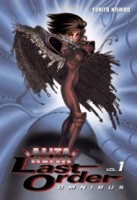
Battle Angel Alita: Last Order, Omnibus 1Battle Angel Alita: Last Order, Omnibus 1-2 (equivalent to Volumes 1-6) by Yukito Kishiro. Although I have been aware of Battle Angel Alita for quite some time I haven’t read any of the manga until now. Last Order is the original series’ immediate successor, serving as a sort of alternate ending. It’s still ongoing in Japan. The manga is a little difficult to jump into without already having some familiarity with the franchise; I frequently found myself confused why certain characters were important to the story and what their motivations were. But by the time I reached the second omnibus I had started to settle into the series and even began to enjoy myself. I like Last Order best when Kishiro isn’t trying to be too serious with the story and focuses more on the action–cyborg battles, ancient Martian martial arts, space karate, and so on. Alita is an appealing lead, but at the moment I think I like the more erratic and unruly supporting character Sechs even better.

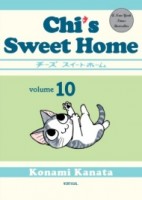
Chi's Sweet Home, Volume 10Chi’s Sweet Home, Volume 10 by Konami Kanata. I can always count on Chi’s Sweet Home to bring a smile to my face. Kanata’s color work is lovely and Chi is adorable. I grew up around a lot of cats and continue to be surrounded by them, so I can particularly appreciate Chi’s antics. And with the tenth volume of Chi’s Sweet Home, there are even more kittens romping around–Cocchi and Chi have befriended a pair of sibling kittens. Kanata captures the attitudes and behavior of cats perfectly. Chi has finally come to the realization that she’s a not a human, but she still has a far way to go before mastering all the skills expected of a feline. In many ways Chi’s Sweet Home is very episodic, but there’s also the underlying story of Chi being separated from her original family. By the end of the tenth volume it looks as though she may be getting closer to finding her mother. (She’s easily distracted, though.) Generally the series is funny and sweet, but there’s a bit of sadness and drama, too.

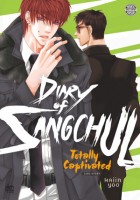
Diary of SangchulDiary of Sangchul by Hajin Yoo. Two side stories from Yoo’s Totally Captivated boys’ love manhwa were released in English. One of those is Diary of Sangchul, which is a prequel to the main series. It’s not absolutely necessary to have read Totally Captivated in order to enjoy Diary of Sangchul, but the manhwa will probably appeal most to those who have. The majority of the volume is devoted Sangchul’s story through which is shown Mookyul’s rise to power and how he earns the respect of the men who work under him. Dairy of Sangchul also reveals more about Mookyul’s relationship with the Chairman (who looks a lot younger here than he does in the original series.) Diary of Sangchul dovetails quite nicely with Totally Captivated. There is also a short manhwa about Mookyul and the Chairman’s first meeting included in the volume. In the epilogue Yoo goes on to outline the rest of their story. I’m not sure if she ever drew it, but I’m okay if she didn’t–it’s extraordinarily melodramatic.

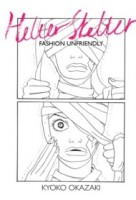
Helter Skelter: Fashion UnfriendlyHelter Skelter: Fashion Unfriendly by Kyoko Okazaki. I’m always happy to see more josei released in English, but I was especially excited for Okazaki’s debut. Okazaki is a particularly influential josei artist. (The marvelous Moyoco Anno even once worked as her assistant.) The award-winning Helter Skelter is a harsh and brutal tale about the darker side of the entertainment industry. Thanks to drastic and repeated plastic surgery, Liliko is enjoying the height of her career as a celebrity but the operations can only take her so far. As her body begins to deteriorate her life begins to spin out of control. Her obsessions and society’s unrealistic expectations drive her to extremes; in the end she isn’t the only one ruined. Helter Skelther is an startling work. Even though the characters are often unlikeable, the manga is extremely engaging; it’s hard to look away from their unraveling. Helter Skelter works simply as fiction, but it can also be read as a deeper criticism of celebrity culture.

Filed Under: FEATURES, My Week in Manga Tagged With: Battle Angel Alita, chi's sweet home, Hajin Yoo, Konami Kanata, Kyoko Okazaki, manga, manhwa, totally captivated, Yukito Kishiro

Manga the Week of 9/11

September 5, 2013 by Sean Gaffney, Ash Brown, Michelle Smith, Anna N and MJ 3 Comments

SEAN: Manga is here, let’s to’t.

Dark Horse has the 27th volume of Blade of the Immortal, one of Dark Horse’s long-running prestige manga titles. It’s still badass.

ASH: That it is! Blade of the Immortal was one of the first manga series that I started reading and I’m still hooked on it.

MICHELLE: I read the first volume and was really impressed by the art, and I own a bunch more of it, but I’ve still never continued. The same thing happened with Vagabond too, actually.

ANNA: I read the first three volumes or so and really liked it. If I ever stumble across a library with a good chunk of this series, I would check it out again. Vagabond as always has my eternal devotion, I think I might be behind with one or two of the VizBig editions.

MJ: I wish I’d gotten hooked early on. At this point the length feels so daunting! Yet I feel I’d probably love it.

smss1SEAN: They also have the 4th volume of OreImo. No spoilers in the comments, bitter fans of the anime. (I wonder if OreImo will pull a School Rumble in terms of sales now that the ending is out in Japan?)

DMP have a BL title coming out called Priceless Honey. Seems to be a short story collection from the author of Punch Up!.

MJ: I’m not big on BL anthologies, but I did like Punch Up!…

SEAN: Kodansha have the 2nd to last Arisa, which I got very, very behind on. Luckily, it’s out digitally now, so I can try to catch up!

ASH: I’m a bit behind on Arisa as well, but it had a great start and I’ve been meaning to read more of it.

MICHELLE: I’ve read through volume ten. It’s become rather snickerworthy, as I noted in brief back in June, but I’m still planning to see it through to the end.

ANNA:
I haven’t read this, for some reason Kodansha’s current shoujo releases don’t appeal to me very much, but I’m looking forward to some of the new series they’ve recently announced!

Not out digitally (here or in Japan) but certainly out in print is the first collection of Sailor Moon Short Stories. These ran in Nakayoshi’s sister magazines throughout the run of the manga, and originally were interspersed through the original volumes. The re-release collected them all at the end. This first of two volumes collects the Chibi-Usa side stories, and the Exam Battles starring the other Inners. It also has my 2nd favorite Sailor Moon manga moment.

MICHELLE: I’m not sure how wise it was to put the short stories in their own collection. True, this way they don’t interrupt the main flow of the narrative, but when I read the Japanese edition this way I was sort of… underwhelmed. Maybe they’ll fare better in English.

manoftangoANNA: One of these days I will marathon Sailor Moon, I feel like I should block out a day and stock up on Sailor Moon reading supplies. I’m envisioning a lot of sweet milky tea and many star-shaped cookies.

SEAN: I’ve come to love His Favorite without ever reading it, just for the look of disgust on the face of the uke on every single cover. It’s an absolute delight, and I hope he’s just as grouchy in the manga itself. Vol. 5 is out this week.

MJ: I’m a volume behind on this now, but the manga really is as delightful as its covers, in my experience. And that character is pretty grouchy. It could sort of read as an AU xxxHolic fanfic, if that gives you some sense of what you’re in for.

SEAN: Also out from SubLime is The Man of Tango, which sounds like it should star Robert Vaughn and David McCallum. The cover art for this is easily the best design SubLime’s ever done (their cover design has been a very weak point to date), and really looks smokingly passionate. This apparently has previously unpublished content as well.

ASH: I’m very excited about the release of The Man of Tango! Originally licensed by Aurora but never released, I was thrilled to see SuBLime pick it up.

ANNA: I don’t read a ton of yaoi, but this was one manga that I actually pre-ordered when Aurora was supposed to release it. Glad this is coming out finally, I found the title and cover of this manga very intriguing.

MJ: I’m looking forward to this as well!

SEAN: Udon still puts out manga, and not just artbooks. Today, it’s Disgaea 3: School of Devils 2. Next week, Arsenal 4, Tottenham nil.

arata15And a trio from Viz. 07-GHOST just ended in Japan last month, but fear not, there’s still a lot to go before we catch up. Here’s Vol. 6.

MICHELLE: It seems like volumes of this series are appearing like bunnies! Soon we’ll be caught up with Go!Comi, if we’re not already!

ANNA: ACK, I’m three volumes behind now! I do like this series, though.

MJ: I am too, yikes!

SEAN: Arata: The Legend is about a year and a half behind Japan, which is not uncommon for a Shonen Sunday mid-list title, even if it is by Yuu Watase. Here’s Vol. 15.

MICHELLE: I do enjoy Arata, even if I can’t get as squeeful about it as, say, Genbu Kaiden.

ANNA: Genbu Kaiden deserves all the squees!

MJ: Agreed, re: Genbu Kaiden. I’m iffy on Arata.

SEAN: And Vol. 22 of Hayate the Combat Butler, which is 3 1/2 years behind Japan and growing farther away every biannual release, but sadly, sales. The manga is still in Greece, and this volume has what may be one of the best romantic heartbreakers of the entire series to date.

Anything strike your fancy?

Filed Under: FEATURES, manga the week of

It Came From the Sinosphere: State of Divinity (Part 1)

September 3, 2013 by Sara K. 1 Comment

Linghu Chong wears a black cloth covering the lower half of his face as his sword is pointed at a merchant'st throat.

Linghu Chong is asking for a ‘donation’.

I noted that the opening theme for Laughing in the Wind is so low-key that it stands out from other wuxia TV shows without being pretentious at all. Compare that to the opening them of State of Divinity 1996, which is adapted from the very same novel as Laughing in the Wind:

This TV theme does not stand out at all. It is a very typical wuxia TV show opening theme. Whereas the Laughing in the Wind theme says ‘This is not your typical wuxia drama’, the State of Divinity Theme says ‘Another standard TVB wuxia drama coming right up!’

This difference in approach explains a lot of what makes these two adaptations feel different.

So, let’s look at a ‘typical’ scene from a ‘typical’ drama.

Example Scene: Why This Show Is So Addictive

This scene is not particularly special, but it is precisely because it is not special that it is good for demonstrating how State of Divinity keeps ratcheting up the tension to keep the audience hooked (of course most of the credit goes to Jin Yong, who wrote the novel). I am going to translate the scene (with abridgements), and whenever something happens which increases the tension, I will increase the font size. Ready?

This is a dinner party hosted by Liu Zhengfeng, where everybody is polite. They won’t stay polite for long.


Yu Canghai: Yue Buqun, you’re looking younger and younger! Apparently the Violet Mist Divine Skill is extending your life.
Yue Buqun: You flatter me, my skills are nothing much really. But you look like you are in excellent shape.
Yu Canghai: Oh, you are much too polite.
Liu Zhengfeng: Welcome, Yue Buqun and Yu Canghai.
[polite talk that I’m not translating]
Liu Zhengfeng: Ah, Abbess Dingyi has arrived. Oh, and the Huashan Sect disciples have also come. Welcome, welcome!
[more polite talk]
[but Abbess Dingyi looks displeased]
Yue Buqun: Abbess Dingyi, is there a problem?
Dingyi: Ah, it is best that you are here. I want an explanation.
Yue Buqun: What do you want me to explain?
Dingyi: Your unbridled disciple Linghu Chong’s absolutely unexcusable behavior.

[Yue Buqun looks at the Huashan Sect disciples. I should note that Yue Buqun is the leader of the Huashan Sect.]

The Huashan Sect disciples.

The Huashan Sect disciples.

Yue Buqun: Though my disciple is a bit mischievous, he’s always been frank and outspoken. If he’s said anything which offended you, I will apologize for him.
Liu Zhengfeng: Let’s discuss this slowly and calmly, and keep the peace.
Yue Buqun: Yes.
Dingyi: Yue Buqun, please bring your horrid disciple Linghu Chong out immediately!
Yue Buqun: Bring him out?
Dingyi: Your horrid disciple is associating with that rapist Tian Guangbo, and they kidnapped my disciple Yilin!


[tension goes up]
Yue Buqun: That is impossible. Though Linghu Chong often misbehaves, he would never do such a thing. There must be a misunderstanding.
Dingyi: This is completely true. Taishan Sect’s Tian Songdao saw it with his own eyes! And Yu Canghai’s disciple Mai Renda also saw it!

[tension goes up]
Yu Canghai: My disciple saw it? Then it must be true. [laughs] I never would have though that the great ‘gentleman sword’ Yue Buqun would train such a base disciple! [laughs more]

Yue Buqun, though not amused, stays calm.

Yue Buqun, though not amused, stays calm.

Yue Buqun: Abbess Dingyi, I feel that what you said still leaves room for doubt. Alas, Linghu Chong isn’t here now to tell his side of the story. For the moment, we cannot get to the bottom of this.
Dingyi: You think that just because Linghu Chong isn’t here, you can clear yourself of this matter?!
Yue Buqun: That’s not what I mean, but…
Taishan Sect Person: Linghu Chong, you scum, bring your ass out now!
[The Taishan Sect comes in with two bodies, one dead]


[tension goes up]
Taishan Sect Person: Linghu Chong, you monster, I am going to kill you!
[Liu Zhengfeng approaches one of the bodies, which is still moving]
Liu Zhengfeng: How did Tian Songdao get so severely injured? Who killed Chi Baicheng?
Tianmen Daoren: It was that rapist Tian Guangbo! Yue Buqun, bring out that Linghu Chong immediately!
Lingshan: What does the fact that Tian Guangbo attacked your disciples have to do with Brother Linghu Chong?
Tianmen Daoren: Though Linghu Chong didn’t kill him himself, it’s Linghu Chong’s fault that he died! He injured my disciple, killed my disciple, and Linghu Chong sat and did nothing! He should pay!
[sounds of agreement]
Liu Zhengfeng: Tianmen Daoren, let’s slow down a little. How could Linghu Chong be with Tian Guangbo? We should wait for this to be fully investigated. If Linghu Chong did do something wrong, I will persuade him to change his ways.
Tianmen Daoren: Persuade him to change his ways?! We should expel him, and take his head!
Lu Dayou: Tianmen Daoren, you’re taking this too far! Brong Linghu Chong hasn’t killed anybody, so nobody should execute him!
[Yu Canghai, leader of the Qingcheng Sect, is still smiling]
Dingyi: Who says he hasn’t killed anybody? He killed someone from the Qingcheng Sect!
[Yu Canghai stops smiling]

This is Yu Canghai *not* smiling.

This is Yu Canghai *not* smiling.


[tension goes up]
Yu Canghai: WHAT! Linghu Chong killed one of my disciples? Killed who?
[The Qingcheng Sect disciples enter with a dead body]
state05
Qingcheng Disciple: Shifu, it’s too late!
Yu Canghai: What happened?
Qingcheng Disciple: Brother Luo has been killed!
Yu Canghai: Who killed him?
Qingcheng Disciple: Linghu Chong!
Yu Canghai: So Linghu Chong really did kill him.
Qingcheng Disciple: I saw it with my own eyes. Alas, I was no match for Linghu Chong, and couldn’t save Brother Luo from that villain!
Lingshan: Who are you calling a villain?!
Yue Buqun: Did you really see Linghu Chong kill him?
Qingcheng Disciple: I’d recognize him even if he were a heap of ashes!
[Yu Canghai pulls out a sword from the dead body. The sword has the name ‘Linghu Chong’ engraved on it]

Linghu Chong's sword

Linghu Chong’s sword


[tension goes up]
Yu Canghai: It’s proven that Linghu Chong did this, what do you say now, Yue Buqun?
Yue Buquen: This is definitely Linghu Chong’s sword. Yu Canghai…
Yu Canghai: You’re still defending your disciple?! You hypocrite!
Liu Zhengfeng: Yu Canghai, you have my deepest sympathies. But it has not been proven beyond all doubt that Linghu Chong did this. If we keep going on like this, I fear we will break the peace … we must find and question Linghu Chong. What do all of my guests think?
Yue Buqun: Brother Liu, you are right. Denuo and Dayou, go out and bring Linghu Chong here.
Denuo and Dayou: Yes, shifu.
Yu Canghai: You three, help them find Linghu Chong. I don’t trust that Yue Buqun won’t try to shelter him.
Qinggcheng Discipes: Yes, shifu.
Liu Zhengfeng: Danian, send someone to help them find Linghu Chong and Yilin.
Danian: Yes, shifu.
Liu Zhengfeng: Abbess Dingyi, don’t worry, we’ll soon find your disciple Yilin.
Yilin: Shifu!
[Yilin, the nun who was ‘kidnapped by that rapist Tian Guangbo and the horrid Linghu Chong’ enters]
Dingyi: Yilin!

[tension goes up]
Yilin: [weeping] Shifu, I never thought I would live to see you again!
Dingyi: Yilin, don’t cry. Shifu asks you, did you see that horrid Linghu Chong?
Yilin: Brother Linghu? [Yilin weeps some more]
Dingyi: Don’t cry! Tell shifu, did you see him or not?
Yilin: Disciple did see Brother Linghu.
Dingyi: Where is he?
Tianmen Daoren: Yes, where is Linghu Chong?
Yilin: Brother Linghu … he’s … he’s dead.
Huashan Sect People: Dead!
[I should point out that Linghu Chong is *the main protagonist*. And this is episode 6 out of 43 episodes. Therefore, the tension practically leaps into the air here. However, for technical reasons, I am not going to increase the font size to 50]

Yilin and Abbess Dingyi

Yilin and Abbess Dingyi


Lingshan: Sister Yilin, who did you hear this from?
Yilin: I saw it with my own eyes.
[Lingshan faints]
Huashan Sect Disciples: Sister!
Yue Buqun: Take her back to her room.
Huashan Sect Disciples: Yes, shifu.
Yu Canghai: Well, it’s best that Linghu Chong is already dead. It looks like I won’t have to sully my hands by killing him.
[Yue Buqun gives Yu Canghai a stare]
Yue Buqun: Yilin, do you know who killed Linghu Chong?
Yilin: Linghu Chong … was [points at dead Qingcheng disciple Luo Renjie] killed by him!
Yu Canghai: [expletive], my disciple Luo Renjie was clearly killed by Linghu Chong! Are you saying that my disciple is Linghu Chong’s murderer?! What logic is this!
Yilin: Brother Linghu really was killed by this bad man!
Yu Canghai: You DARE SAY THAT! The people of my Qingcheng Sect are bad people? All of your Five-Mountain-Alliance people are good people, eh?
Yilin: I didn’t say that Uncle Yu was bad just … just that he [pointing at the body] is bad.
Yu Canghai: You… [approaches Yilin, Dingyi blocks him]
Dingyi: You dare threaten my disciple! Yilin, don’t fear, your shifu is here to protect you. Please explain to everybody exactly why he [pointing at the body] is a bad man.

I could keep translating, but I think you already understand why it was hard for me to stop myself from watching this (even though I already know the story). Suffice to say, it’s an interesting dinner party.

The Story

I have summarized the story already hereand here. Instead of summarizing it again, I will offer this quote from a minor
character, Huang Zhonggong, which I think sums up the essence of the story:

state08

“When we four brothers first entered the Sun Moon Cult, we thought we could carry out heroic deeds all over jianghu. Who knew that Ren Woxing [leader of the Sun Moon Cult] was so violent, and so hungry for power? Long after we four brothers had been disillusioned, Dongfang Bubai became the leader, and he loves wickedness even more. He executed all of the elders, and we four became even more disheartened. We decided to retreat to Plum Villa, and guard the prisoner. Firstly, far from Heimuya [headquarters of the Sun Moon Cult], we did not have to participate in all of the internecine struggle and backstabbing. Secondly, we could quietly live by Xihu, and fill our days with music and books. We can say that we have had twelve happy years. Nevertheless, in life the sorrows are many, and the joys are few. That is the nature of life.”

Just after saying that, Huang Zhonggong dies. With a few changes (i.e. replace ‘we four brothers’ with ‘Linghu Chong’), this would be an even better summary of the entire story that what I wrote.

I also suspect there is a touch of autobiography. The China where Jin Yong grew up was torn between various groups vying for control. In high school, he was punished for insulting the government in power.

As an adult, he moved to Hong Kong, where he has definitely lived a life full of books and letters … yet he could do almost nothing about the political situation in China. Many people say that Jin Yong had supported the Chinese Communist Party (some people say he is still a communist). This novel was written during the Cultural Revolution.

I am far from done…

So come back next week for Part 2!


Last week, Sara K. helped make some mud volcanic tofu, and then ate it. Why is it called mud volcanic tofu? It’s made from soybeans, water, and mud from a mud volcano. It actually tastes quite good.

Filed Under: Dramas, It Came From the Sinosphere Tagged With: Hong Kong, jin yong, State of Divinity, The Laughing Proud Wanderer, TVB

My Week in Manga: August 26-September 1, 2013

September 2, 2013 by Ash Brown

My News and Reviews

I only posted one review last week, but that wasn’t the only thing going on at Experiments in Manga. The review was for Yoshikazu Yasuhiko’s Mobile Suit Gundam: The Origin, Volume 2: Garma. The third volume is scheduled to be released later this month and I realized that I hadn’t reviewed the second one yet. If you enjoy science fiction manga the series is definitely worth checking out, even if you’re not a Gundam fan. What else was going on at Experiments in Manga? I posted August’s Bookshelf Overload for those interested in the absurd amounts of manga I manage to collect. My most recent manga giveaway is currently in progress as well; there’s still time to enter for a chance to win the first Blood Lad omnibus. Since Experiments in Manga is now part of the Manga Bookshelf team, I’ve also started to participate in some of the group features: Pick of the Week and Manga the Week of.

Elsewhere online, Dan Kanemitsu wrote an opinion piece for CBLDF about the recent ban of Keiji Nakazawa’s Barefoot Gen manga in Japan–The Inconvenience of Barefoot Gen. Happily, the ban has since been lifted. (In the past I reviewed both the first volume of Barefoot Gen and Nakazawa’s autobiography for the Barefoot Gen Manga Moveable Feast.) Sean Kleefeld at Kleefeld on Comics has put together some pie charts based on Alex Woolfson’s survey of the readers of his Young Protectors comic–Who Reads Yaoi Webcomics?. I found the results and demographics to be very interesting. Finally, Ng Suat Tong posted Island of Sex, Panorama of Empire at The Hooded Utilitarian, an in-depth analysis of Suehiro’s Maruo’s The Strange Tale of Panorama Island manga and Edogawa Rampo’s original novella. (In the past, I reviewed the manga and the novella separately.)

Quick Takes

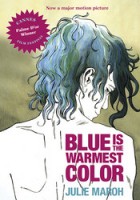
Blue Is the Warmest ColorBlue Is the Warmest Color by Julie Maroh. Originally published in French in 2010, Blue Is the Warmest Color has only recently been released in English. The graphic novel has won several awards as has its film adaptation. It’s a beautiful comic and a beautiful love story. Maroh’s artwork is wonderful. I particularly liked her use of color; much of the graphic novel is illustrated with muted tones with blue as an accent color.Clementine is in high school when she completely falls for Emma. She must come to terms with her identity and sexuality–something that is at first difficult for her to fully embrace and something even more difficult for many of her friends and her family to accept. Although the ultimate ending of Clementine and Emma’s story is known from the very beginning of Blue Is the Warmest Color, Clementine’s death still seems to come rather suddenly. Blue Is the Warmest Color is tragic and bittersweet, but it is also a lyrical exploration of love and desire.

Bunny Drop, Volume 7Bunny Drop, Volumes 7-9 by Yumi Unita. Parts of Bunny Drop were spoiled for me early on but I wanted to see how things played out and how Unita handled it all. These volumes actually do a great job showing Rin’s developing relationship with her mother as well as her struggle with her feelings for Daikichi and his response to them. But then along comes a huge plot reveal in the fifty-fourth chapter that attempts to smooth everything over and make it okay. (Honestly, I was kind of pissed off about it.) It’s as though Unita was trying to find an easy way out after backing herself into a corner. Unfortunately it doesn’t really work, contradicts earlier parts of the story, and even negates previous character developments. In part due to poor planning, the twist is neither satisfying nor believable. Perhaps if Unita had taken the time to show the intervening two years and how Daikichi’s feelings evolved it would have been more convincing. Even though I found the ending of Bunny Drop to be disappointing, I still plan on picking up the final volume of short stories.

Sankarea: Undying Love, Volume 2Sankarea: Undying Love, Volume 2 by Mitsuru Hattori. I’m a little surprised by how much I’m liking Sankarea. At least I can say that I enjoyed the second volume more than the first. I even chuckled out loud a few times while reading it. I hope the series continues to improve. At this point Sankarea is definitely more of a romantic comedy than it is a horror story. The horror elements are still there though, as are the nods to zombies in popular culture. But it’s Rea’s father who remains the creepiest part of the series. In one delightful scene, Chihiro even calls him out on it directly to his face. And even though Sankarea is a comedy, I’m glad to see that Danichiro’s disturbingly unhealthy relationship and obsession with his daughter isn’t seen as funny. On the other hand, Rea’s relationship with Chihiro–as weird as it is and as weird as they both are as individuals–is almost charming. Sankarea is kind of a strange series, but then so are hydrangea zombies.

Wolfsmund, Volume 1Wolfsmund, Volume 1 by Mitsuhisa Kuji. Very few historical manga with a European setting have been licensed in English, and so I was intrigued by Vertical’s acquisition of Wolfsmund. I was even more interested when I learned that Kuji was once an assistant for both Kentaro Miura and Kaoru Mori, whose work I love. (I particularly noticed Mori’s influence in how Kuji draws many of the character’s eyes in Wolfsmund.) Wolfsmund takes place in 14th-century Switzerland and is a retelling of sorts of the legend of William Tell. So far the story has focused on those attempting to illicitly cross through the Sankt Gotthard Pass, generally unsuccessfully but not without putting up a fight. While Wolfsmund isn’t overly graphic–most of the gorier moments are implied rather than actually seen–it is a violent and brutal manga. Very dark and very intriguing, I’m looking forward to the next volume of Wolfsmund a great deal.

Filed Under: FEATURES, My Week in Manga Tagged With: bunny drop, comics, Julie Maroh, manga, Mitsuhisa Kuji, Mitsuru Hattori, Sankarea, Wolfsmund, Yumi Unita

Manga the Week of 9/4

August 29, 2013 by Sean Gaffney, Michelle Smith, Ash Brown, MJ and Anna N 4 Comments

SEAN: As I’ve noted before, Diamond Comics and Amazon’s street dates are looking farther apart than ever before. As a result, this list is a fusion of Amazon (the major, book-company publishers) and Midtown Comics (the comics-first publishers).

Dark Horse brings us the 4th volume of Blood Blockade Battlefront, the alliterative series from the Trigun creator.

shinji1

There’s also a new Evangelion spinoff coming out as well, with the first volume of Shinji Ikari Detective Diary. From the description, it sounds like this is aimed squarely at the BL Evangelion shippers, in much the same way that the Raising Project manga is aimed at harem fans.

Fanfare/Ponent Mon has the 4th volume of mountain climbing manga Summit of the Gods, one of those “blogger popular” titles I keep meaning to catch up on but have never quite done so. It is supposed to be excellent, though.

MICHELLE: Oh, nice! I really like Jiro Taniguchi, but have been waiting for this series to come out in full before reading it. I think there’s one more volume still.

ASH: Oh! I’m one of the reasons this is a “blogger popular” title. Summit of the Gods is easily my favorite Jiro Taniguchi collaboration; I’m very happy to see that Fanfare/Ponent Mon is continuing to release the series. Only one more volume to go after this!

MJ: Count me in for this one as well!

SEAN: Amazon has Wandering Son 5 listed for November 2nd. If Kodansha is the publisher that is consistently always arriving at bookstores first and comic shops later, Fantagraphics is the classic example of the opposite. Here’s Wandering Son 5, hitting comic shops. In this volume, I believe we get to high school and introduce some new supporting players.

MICHELLE: I am lamentably several volumes behind with Wandering Son, but it’s still nice to see new volumes make their appearance!

ASH: We actually have a few years of junior high to get through before reaching high school, but you’re right about the new supporting characters.

ANNA: I really need to catch up on this series!

MJ: I adore this series, and I can’t wait to read volume five, whenever it appears!

ymh3

SEAN: Seven Seas has the final volume of one of my favorite series from them, Young Miss Holmes by Kaoru Shintani (of Area 88 fame). This omnibus, containing Books 5-7, is even larger than the previous two, and is filled with mysteries, mayhem, and killer maids. There’s a sequel in Japan, featuring 17-year-old Christie continuing to solve crimes. Seven Seas has noted its possible license (Slightly Older Miss Holmes?) depends on sales of the first, so go get it! Also, there’s only one Conan Doyle story in here (the rest are originals based on ‘unseen cases’, so less danger of offending Holmes purists.

ANNA: I somehow missed that this was by the mangaka of Area 88! I still have all my ancient Eclipse Comics/Viz editions of Area 88 stashed in a box somewhere. Now, I might finally pick up Young Miss Holmes. I hope there are scenes of people in flight suits with floppy hair looking incredibly emo in Young Miss Holmes, because Area 88 was awesome at that.

SEAN: There’s also a 2nd omnibus from Seven Seas, with Vols. 3-4 of Zero’s Familiar. I was surprised that the dark shroud of fan opinion surrounding the tsundere heroine turned out to be more of a off-white silk scarf more than anything, and wonder if my opinion will stay the same as we go further into this fantasy harem series.

I presume that those who read Bleach either have done so for years, or are likely never to do so. But if you’ve been catching up via the omnibus, the 3 volumes collected in the 6th one are some of the very best, and remind me of those olden days when Kubo could pace properly.

MJ: Agreed. I have much nostalgia for those early volumes, and this is a particularly strong little set.

SEAN: Demon Love Spell has been one of Shinjo’s best titles at walking that fine line between ‘sexy, forceful guy’ and ‘complete ass’, and I’m hoping that Vol. 4 continues that balance.

ANNA: I have just read this and it was hilarious. This is rapidly becoming my favorite Shinjo series, despite my long-standing fondness for Sensual Phrase.

MJ: I’m absolutely addicted to this series.

SEAN: Dragon Ball has an omnibus as well, and it’s hit Vol. 2. New Dragon Ball readers are born every day! This omnibus is probably for them more than those of us who bought the VIZBig, or the original volumes. Or the digital volumes. And stay tuned for Dragon Ball cranial ports, coming in 2015.

midnightsecretary1

Midnight Secretary has a lot of good buzz. So much good buzz, in fact, that Viz has already licensed another title by the same author before this one has even come out. You know they trust it will do well. And why will it do well, you ask? One word: vampires. That said, the heroine is also apparently an excellent draw, and is not your usual Petit Comic office lady. I’m very intrigued about this one. Can’t wait.

ANNA: I think this will be a must get for paranormal romance manga fans. I am also looking forward to this. I mean, the title alone is fantastic.

MJ: Agreed on all counts!

SEAN: The 6th Naruto omnibus is out. I still need to catch up on this title. So… ninjas?

ASH: Yes. Ninja. Lots and lots of ninja.

SEAN: One Piece has reached Vol. 68. There is an awful lot of fighting happening here, and several of our heroes continue to be in the wrong bodies, leading to humorous situations. Recommended as top-drawer entertainment.

MICHELLE: I continue to love One Piece.

SEAN: Last time, Psyren turned its attention to our villains, and did a damn good job of fleshing them out. I expect it will go back to the heroes this time, as we’re getting near a climax (I think we’ve only 5 volumes to go).

MICHELLE: I need to catch up on Psyren. So many books (and responsibilities), so little time.

SEAN: And Strobe Edge hits its second half with Vol. 6. We may have resolved one of the obstacles standing between our two lovebirds last time, but the course of true love definitely doesn’t run smooth in this title. Something bad’s going to happen, I can feel it. Be there to read it when it does.

MICHELLE: I really love Strobe Edge, and I admit I kinda wouldn’t mind seeing something bad happen.

ANNA: This is one of those shoujo series that just seems to get better as it goes along.

MJ: This is a strong week for addictive shoujo, I see. Lovely, lovely.

SEAN: Any manga jump out at you this week?

Filed Under: FEATURES, manga the week of

Manga Giveaway: Blood Lad Giveaway

August 28, 2013 by Ash Brown

It’s the last Wednesday in August which means it’s the first day in Experiment in Manga’s monthly manga giveaway! Up for grabs this time around is the first omnibus volume of Yuuki Kodama’s Blood Lad manga as published by Yen Press, which is equivalent to the first two volumes of the original Japanese release. Since the anime is currently airing, I thought there might be some renewed interest in the series. As per usual, the contest is open worldwide!

BloodLad1

Vampires seem to be a perennial favorite in film and literature. Manga is no exception and vampires abound. They show up in many different genres–action, comedy, horror, romance (just to name a few)–and appear in all of the major demographics. Shōjo? Matsuri Hino’s Vampire Knight. Shōnen? Hirohiko Araki’s JoJo’s Bizarre Adventure. Josei? Tomu Ohmi’s Midnight Secretary. Seinen? Yuuki Kodama’s Blood Lad. (And that’s just off the top of my head…there are many, many more examples I could provide.) Generally, I prefer my vampires to be real monsters, terrifying creatures that pose a genuine threat to the humans around them. But I’ll admit, I am greatly amused by Staz in Blood Lad. He’s such an otaku goofball that I can’t help but like him.

So, you may be wondering, how can you win a copy of Blood Lad, Omnibus 1?

1) In the comments below, simply tell me who your favorite vampire in manga is and why. (Be sure to mention which manga they’re from, too.)
2) For a second entry, name a vampire manga that hasn’t been mentioned yet by me or by someone else.
3) If you’re on Twitter, you can earn a bonus entry by tweeting about the contest. Make sure to include a link to this post and @PhoenixTerran (that’s me).

And there you have it! Each person can earn up to three entries; you have one week to submit your comments. If you have trouble leaving comments, or if you would prefer, you can e-mail me your entries at phoenixterran(at)gmail(dot)com and I will post them in your name. The giveaway winner will be randomly selected and announced on September 4, 2013.

VERY IMPORTANT: Include some way that I can contact you. This can be an e-mail address, link to your website, Twitter username, or whatever. If I can’t figure out how to get a hold of you and you win, I’ll just draw another name.

Contest winner announced–Manga Giveaway: Blood Lad Giveaway Winner

Filed Under: FEATURES Tagged With: blood lad, manga, Yuuki Kodama

Cute, But Kind of Awful – Young Gangan Magazine

August 28, 2013 by Erica Friedman 4 Comments

YGanganEnglish-language readers are more familiar with the pages of Young Gangan than they might expect, due to Yen Press’s relationship with Square Enix.  Bamboo Blade, Sekirei, Working!! and Saki are other titles that have been brought over as manga or anime. Nonetheless, it’s hard to be an adult paging through this magazine without thinking one is missing something crucial to actually enjoying it.

On the other hand, Young Gangan is also home to award-winning, slightly wacky and unique Arakawa Under The Bridge, by Nakamura Hikaru. This is one of the most popular series in the magazine and the anime was licensed for North America by NIS, but the manga remains almost wholly unknown here.

The magazine website for Young Gangan, which is part of Square Enix’s family of magazines, has little original content. Ads for upcoming volumes, magazine specials, upcoming events and issue content fills the page.

Young Gangan runs just around 470 pages for 320 yen ($3.26 at time of writing), with twice monthly distribution. When you visit Japan, Young Gangan and magazines just like it fill convenience store racks, looking to hook young (nebbishy?) men with manga about other young (nebbishy) men and pictures of partially clothed girls. In fact, the above picture for the current volume at time of writing is not representative at all. The cover is far more likely to show a girl in a bikini, like this:

YG2

With not-quite softcore photos of “gravure” idols filling the pages and manga that is rarely standout good or bad, for better or for worse, I tend to categorize this as a magazine for the kind of guys who call girls “fake geeks.” The magazine is very boy’s club, but not very kind to its readers. Male leads in the manga in  biweekly Young Gangan are often slight loser-y nebbishes, confused by their lives and the madness that surrounds them. I have long felt that if I were a nebbishy guy, I’d rather read a story in which the nebbish triumphs over whatever, gets the girl and lives happily ever after. But that never seems to occur to the creators of these manga.

Young Gangan from Square Enix: http://www.square-enix.co.jp/magazine/yg/

Filed Under: Magazine no Mori Tagged With: Erica Friedman, Magazine no Mori, Manga Magazines, square enix

It Came From the Sinosphere: Laughing In the Wind (Part 2)

August 27, 2013 by Sara K. Leave a Comment

Read part 1

What Sense of Vision!

I have come to really appreciate the films of Li Han-hsiang. He once studied to be a painter, and it really shows in the way that his films are full of beautifully framed. He also happens to be one of the most influential Chinese-language movie directors ever.

This drama gives me the same sense of wonderfully arranged images (the people who made this drama most likely studied the work of Li Han-hsiang during their film studies).

I mentioned the gorgeous scenery in the previous post, but there is much more to making a visually beautiful TV drama than selecting locations well. Aside from the natural scenery, this drama has a dazzling abundance of striking imagery.

Take, for example, this picture of Lin Pingzhi:

Lin Pingzhi looks out a window.

I really like the way the windows (with its square pattern) frames Lin Pingzhi, and I like the way Lin Pingzhi’s body contrasts with the shadow of his right arm.

And here’s a shot of Yue Buqun and Ning Zhongze (though it’s hard to tell it’s them):

Yue Buqun and Ning Zhongze stand beside a tall stone structure, with a setting sun and mountain in the background.

I think we can agree that it’s not the setting itself that is impressive, but the composition of the stone structure, the sun, the mountains, and the figures which stands out. There’s also the effect of the light and prevalence of grey (which really fits the mood of this particular scene).

And look at these two women in the cave:

xajh16

It’s a nice cave, but what really makes this image work is the thin, diagonal slit through which we can see the characters. Diagonal lines are generally more eye-catching than horizontal or vertical lines.

I could keep on pulling more and more examples if I wanted, because this TV drama simply has so much fantastically composed images. I just need to pick a random spot in a random episode in order to find more noteworthy images in a short time.

There’s also the attention paid to the characters’ appearances. For example, Yu Canghai and his Qingcheng sect have rather imaginative costumes…

Yu Canghai wears a yellow mask in mid-fight.

… with the final touch being that, when he’s in a serious fight, he pulls various colorful masks out from his hyperspace arsenal.

And then there are the visual metaphors. For example, as Ren Yingying and Linghu Chong’s romantic feelings grown into a committed relationship, a group of ducklings grow into ducks. And, considering that this is wuxia, and that to be real wuxia, a story has to present someone weeping over an injured/dying loved one (or at the very least subvert this trope), I find it appropriate that we see the mature ducks as Ren Yingying weeps over a bashed-up Linghu Chong for the first time.

Ren Yingying bent over an injured Linghu Chong among a flock of ducks in a bamboo forest.

This TV drama truly is a feast for the eyes.

… And There’s the Ending

This is such a good drama … and then, at the end, it drops the ball.

Obviously, I cannot describe the problems with the ending in detail without spoilers. But I think I can make some general, spoiler-free observations.

The underground stronghold of the Sun Moon Cult

The best comparison I can make (which would be familiar to MangaBookshelf readers) is the first Neon Genesis Evangelion anime. The last two episodes are infamous for disappointing viewers. Of course, that wasn’t the ending which was originally planned, but Gainax went over-budget, so they needed and ending which could be produced cheaply.

In spite of the last two episodes, I still think that Neon Genesis Evangelion is one of the greatest anime ever made (I pretend that the original anime ends at episode 24). Likewise, I think that, in spite of the last few episodes, Laughing in the Wind is one of the best Chinese-language dramas I’ve ever seen.

Furthermore, the last few episodes are still as visually fantastic as the entire drama.

Furthermore, the last few episodes are still as visually fantastic as the entire drama.

The fact that the ending of Laughing In the Wind diverges from the original novel is not the problem. However, if you change the ending of a good story, you need to change things throughout the story in order to maintain consistency. The Ang Lee version of Crouching Tiger, Hidden Dragon was good about making the necessary changes throughout the story so that, when it does have an ending different from the original novel, it feels natural to the audience. Yet the the ending of the original novel would have felt more natural in Laughing In the Wind than the ending which the drama actually has. To me, that indicates that a) they had probably originally intended to have an ending closer to the one in the original novel and b) the choice to change the ending was probably not made for artistic reasons.

So why change the ending? I can speculate…

– Budget. I don’t think the original ending would have been any more expensive to produce, but maybe I’m wrong about that, and this show went over-budget just like Neon Genesis Evangelion (I can easily believe that it went over-budget at least).
– Other Production Reasons. Maybe they were originally promised 45 episodes, and then an executive somewhere told them that it can only be 40 episodes long.
– Audience Reaction. Maybe they thought audiences wouldn’t like the original ending so much. In that case, they are wrong – I have never seen/read any complaints about the ending of the original novel, whereas I have encountered quite a few complaints about the way that Laughing in the Wind ends.
– Political. It’s well known that many people interpret this story as a political allegory, so maybe some censor wanted to change the ending to de-politicize it. But I think this would have been a silly move. The original, uncensored novel is currently widely available in China, so changing the ending to make it more politically palatable seems pointless.

I think ‘Budget’ and ‘Other Production Reasons’ are the most likely speculations.

Ning Zhongze holds a red piece of cloth

Personally, I pretend that Laughing in the Wind ends the same way as the novel.

Availability in English

I’ve already mentioned that it’s available, in its entirety, on Dramafever. It’s also available on Region 1 DVDs with English subtitles, which you can find for sale on the internet very quickly using ordinary search techniques.

Conclusion

This drama feels like it was put together by an exquisite artisan. The casting of the actors is excellent, the scenery is spectacular, the script (barring the last few episodes) is superb, the costumes are imaginative, etc.

Yet it manages to pull off this artistry without ever feeling pretentious. It does not show off its artistic excellence to the audience. Instead, it invites the audience to entire a space which has been curated for virtuosity. It doesn’t need to tell the audience that it’s good, it simply just is good.

I think it is this attention to detail, in addition to the strength of the story itself, which makes this drama such a delight to watch. Highly recommended.

And Then There’s State of Divinity

State of Divinity 1996 is yet another TV adaptation of the same novel. In fact, this novel has been adapted for television a whopping six times (including the 2013 adaptation, starry Joe Chen from Fated to Love You, not to mention two sets of movie adaptations (and this is before we talk about the manhua and video game adaptations).

However, people generally hold up Laughing in the Wind and State of Divinity as being the best adaptations of the novel. Though I’m not familiar with every adaptation, I agree, these are the two best. But how do these two compare with each other? You’ll find out, because next time my subject will be State of Divinity 1996.

And I'm going to lock up the lesser of these two TV adaptations in this cage.

And I’m going to lock up the lesser of these two TV adaptations in this cage.


Sara K. just happened to be away from Taiwan proper when a typhoon came along. This is why she was at Fuao harbor an hour and a half before they started selling tickets for the Taima ferry – and the line was already long (lots of flights had been cancelled). She did get a ferry ticket – and while the Taima ferries are usually quite smooth and comfortable, this last ride through an approaching typhoon was the most stomach-churching boat ride Sara K. has ever been on. And the ride lasted nine hours (to be fair, the first 4-5 hours were okay – the ferry wasn’t so close to the typhoon at first). She remained dizzy for over an hour after she reached land (she kept on wondering why the ground was shifting under her).

Filed Under: Dramas, It Came From the Sinosphere Tagged With: China, jin yong, Laughing in the Wind, The Laughing Proud Wanderer, TV, wuxia, Zhang Jizhong

  • « Go to Previous Page
  • Page 1
  • Interim pages omitted …
  • Page 70
  • Page 71
  • Page 72
  • Page 73
  • Page 74
  • Interim pages omitted …
  • Page 115
  • Go to Next Page »
 | Log in
Copyright © 2010 Manga Bookshelf | Powered by WordPress & the Genesis Framework