• Skip to primary navigation
  • Skip to main content
  • Skip to primary sidebar
  • Home
  • About Us
    • Privacy Policy
    • Comment Policy
    • Disclosures & Disclaimers
  • Resources
    • Links, Essays & Articles
    • Fandomology!
    • CLAMP Directory
    • BlogRoll
  • Features & Columns
    • 3 Things Thursday
    • Adventures in the Key of Shoujo
    • Bit & Blips (game reviews)
    • BL BOOKRACK
    • Bookshelf Briefs
    • Bringing the Drama
    • Comic Conversion
    • Fanservice Friday
    • Going Digital
    • It Came From the Sinosphere
    • License This!
    • Magazine no Mori
    • My Week in Manga
    • OFF THE SHELF
    • Not By Manga Alone
    • PICK OF THE WEEK
    • Subtitles & Sensibility
    • Weekly Shonen Jump Recaps
  • Manga Moveable Feast
    • MMF Full Archive
    • Yun Kouga
    • CLAMP
    • Shojo Beat
    • Osamu Tezuka
    • Sailor Moon
    • Fruits Basket
    • Takehiko Inoue
    • Wild Adapter
    • One Piece
    • After School Nightmare
    • Karakuri Odette
    • Paradise Kiss
    • The Color Trilogy
    • To Terra…
    • Sexy Voice & Robo
  • Browse by Author
    • Sean Gaffney
    • Anna Neatrour
    • Michelle Smith
    • Katherine Dacey
    • MJ
    • Brigid Alverson
    • Travis Anderson
    • Phillip Anthony
    • Derek Bown
    • Jaci Dahlvang
    • Angela Eastman
    • Erica Friedman
    • Sara K.
    • Megan Purdy
    • Emily Snodgrass
    • Nancy Thistlethwaite
    • Eva Volin
    • David Welsh
  • MB Blogs
    • A Case Suitable For Treatment
    • Experiments in Manga
    • MangaBlog
    • The Manga Critic
    • Manga Report
    • Soliloquy in Blue
    • Manga Curmudgeon (archive)

Manga Bookshelf

Discussion, Resources, Roundtables, & Reviews

Blog

Comic Conversion: A Wrinkle in Time

October 29, 2012 by Angela Eastman 3 Comments

A Wrinkle in Time | Novel: Madeleine L’Engle / Laurel Leaf | Graphic Novel: Hope Larson / Farrar Strraus Giroux

Meg Murry is the intelligent daughter of two world-renowned scientists, but her world is still falling apart. Unable to cope in school, she’s failing her grade and getting in fights with teachers; meanwhile her four-year-old brother Charles Wallace, the smartest, kindest person in her life, refuses to talk to those outside his family, leaving the whole town thinking he’s a simpleton. Everything would be better with her father around, but Mr. Murry has been missing for years, ever since he went to Washington to work on a top secret project. Then, a mysterious old woman named Mrs. Whatsit appears at their house on a dark and stormy night. She and her friends, Mrs. Who and Mrs. Which, take Meg, Charles, and their friend Calvin on a quest through space and time to save their father and fight a battle against the darkness that threatens to consume the universe.

First published in 1962, A Wrinkle in Time has won a number of awards, including the Newbery medal for children’s literature. Despite that, Madeleine L’Engle had quite a struggle getting it published, being rejected almost 30 times because the story was “too different.” Now, her science fiction novel has been continuously in print for 50 years and continues to make showings on lists of top books for children. In 2010 publishing house Farrar, Strause and Giroux — the original publishers of A Wrinkle in Time — decided to create a graphic novel version of the now classic book, signing on artist Hope Larson to bring the beloved story to life.

I’ve been a long-time fan of Madeleine L’Engle, and though my awe of her really began with A Ring of Endless Light (to this day one of my favorite books) A Wrinkle in Time and all of its companion novels hold their own special place. It’s difficult to think of a contemporary novel, children’s or adult, that you can compare this to. Very basically it is the usual story of good versus evil — the light against the dark — but her characters aren’t as simple as that. Charles Wallace is empathic and smarter than most humans can imagine, but he’s also arrogant, while Meg, the ultimate hero of the story, is emotional, angry, and easily affected by the evil creature IT. When talking about Earth, which is shadowed by a darkness that has taken over many other worlds, their friend Calvin admits, “We make some awful bloopers there.” But, he points out, humankind is fighting the shadow, trying to be better than they have been. That is what A Wrinkle in Time is about, perhaps more than good vs. evil; it’s about knowing and accepting your own faults, and striving to be better than you may have been before.

Right away in the graphic novel we see the famous opening words scrawling across the page: “It was a dark and stormy night.” From that point on, Hope Larson remains faithful to the original book. She did still make the decision to edit down some parts, such as when Meg is momentarily left alone in the darkness after she rescues her father from his prison. These were things that worked very well in the context of the book, increasing the apprehension and Meg’s fear. In the graphic novel, however, this would have resulted in repetitive images and slowed down the pace.

Though L’Engle’s original novel is written in the third person, the story is told entirely from Meg’s point of view. Obviously aware of this, Larson used some effective techniques to keep it that way. Rather than copy-and-pasting narrative passages from the novel, Larson reworded portions so they were Meg’s first-person thoughts, keeping us close to Meg. Larson also does something interesting with her art while Meg is paralyzed — there is none. For five and a half pages there are is nothing but small black squares as Meg struggles to move and listens in on her father and Calvin’s conversation. By keeping the panels small, Larson maintains the steady pace while also creating the feeling of movement more effectively than one black page full of text would have done.

Larson made the interesting choice to color the entire graphic novel in shades of blue. While I would have loved to see the story in full color, the soft monotone grants the images an ethereal quality that fits with the novel’s tone. The character designs, for the most part, were what I’ve been imagining for years: Meg is scruffy and grumpy, and Larson remembered to keep a bruise on her cheek throughout, while Calvin is lanky and adorable. The only one that didn’t quite reconcile with the image I’d had in my head is Charles Wallace. Larson’s attempts to have Charles look far too intelligent and wise for his years made him look a bit strange to my eyes. This works much better later on when Charles is being controlled by IT, but Larson’s design makes him appear a bit creepy long before that’s supposed to be the case.

Really, any problems I have with the graphic novel are just nitpicking. Any changes Larson made were minimal and effective in maintaining the flow and tone of L’Engle’s novel. The biggest issue I had was with some of the character designs, but that’s ultimately a matter of preference rather than quality. Larson’s love and respect for A Wrinkle in Time is apparent in every page, and I couldn’t have ever possibly hoped to experience a more satisfying adaptation of L’Engle’s work. I would always want to urge kids to read L’Engle’s book, it would not be disappointing in the least to see them reading this graphic novel instead.
Filed Under: Comic Conversion, FEATURES & REVIEWS Tagged With: A Wrinkle in Time, graphic novel, Hope Larson, Madeleine L'Engle, Teen Lit

Department of Excuses: Hurricane edition

October 29, 2012 by MJ 5 Comments

Good [insert your time of day here], Manga Bookshelf readers!

We’ve got some great content planned for you this week, along with the usual weekly columns and whatever passes as “news” in the North American manga industry. Unfortunately, Mother Nature may have other ideas! As nearly all of our primary bloggers* live somewhere in the path of Hurricane Sandy, it’s likely that power outages (hopefully just power outages) may disrupt our ability to geek out on manga, or at least our ability to share that geeking out with you!

In case of abrupt blog silence, please accept our apologies. We promise to make it up to you!

Sincerely,

The Manga Bookshelf Battle Robot


*It’s all up to you, Michelle. Y’know. No pressure.

Filed Under: UNSHELVED Tagged With: announcements, site news

My Week in Manga: October 22-October 28, 2012

October 29, 2012 by Ash Brown

My News and Reviews

Last week was the Vampire Manga Moveable Feast. As part of my contribution, I reviewed Vampire Hunter D, Volume 1–Saiko Takaki’s manga adaptation of Hideyuki Kikuchi’s novel of the same name. I still haven’t read the original Vampire Hunter D novels, but the manga adaptation of the series is starting to grow on me. Keeping with the vampire theme, I also reviewed Hideyuki Kikuchi’s vampire novel Yashakiden: The Demon Princess, Volume 3. There are parts of Yashakiden that I really enjoy but there are just as many parts that frustrate me immensely. Since there are only two more volumes in the English release, and I’ve already come this far, I’ll probably end up finishing the series at some point. Completely unrelated to vampires, but because it’s a graphic novel I wanted to mention it here: Over at my other blog, Experiments in Reading, I’ve posted a review of Mark Siegel’s Sailor Twain: Or, The Mermaid on the Hudson, which I quite enjoyed.

Quick Takes

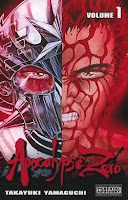
Apocalypse Zero, Volumes 1-6 by Takayuki Yamaguchi. Unfortunately, only six of the eleven volumes of Apocalypse Zero were released in English. I can’t say that I’m surprised and I don’t expect that the license will ever be rescued–the series will appeal only to those with a strong constitution and who aren’t offended easily. It’s extremely graphic, bloody and violent. The imagery is deliberately repulsive, gloriously grotesque, and highly sexualized. Honestly, I feel a little dirty admitting that I loved Apocalypse Zero in all of its outrageousness, but I did. Yamaguchi does make use of a lot of standard tropes and cliches, but he takes them to such ridiculous, over-the-top extremes that they are almost unrecognizable.

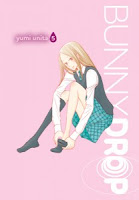
Bunny Drop, Volumes 5-6 by Yumi Unita. With a ten year time skip, Bunny Drop has become an entirely different series. It’s not bad, but it has lost much of charm that made the first four volumes stand out. However, the character interactions are still great. The “new” Bunny Drop probably wouldn’t be a series that I would follow had I not already been invested its characters. It seems to have turned into a pretty typical high school drama. I did enjoy seeing the kids all grown up though, Rin and Kouki especially. Unfortunately, Daikichi, who has always been my favorite, has almost become a secondary character in these volumes (although, a very important one). I do still like Unita’s artwork and plan on finishing the last few volumes in the series.

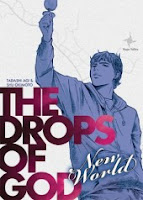
The Drops of God: New World written by Tadashi Agi and illustrated by Shu Okimoto. It’s sad to say, but New World may very well be the last volume of The Drops of God to be published in English. At the request of the author, this omnibus (collecting volumes 22 and 23 of the original release) jumps ahead in the story to a point which features New World wines. As Shizuku heads to Australia and Issei heads to America in search of the seventh apostle, they both manage to get into some serious trouble. The plot might be a little ridiculous at times, but I still find The Drops of God to be entertaining and informative. Who knew the world of wine could be so dangerous?

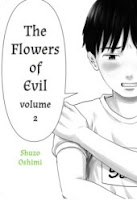
The Flowers of Evil, Volumes 2-3 by Shuzo Oshimi. I really thought that I was through with middle school dramas, but then I started reading The Flowers of Evil. The series is exceedingly dark and ominous. I have a hard time looking away as the events unfold. I have no idea where Oshimi is going with this series and I’m almost afraid to find out. It’s intense, to say the least. The characters in The Flowers of Evil are so incredibly messed up. Even those who at first appear “normal” have some serious issues; it’s hard to tell what’s really going on in their heads. Kasuga is caught in this agonizing relationship between Saeki, the girl he idolizes, and Nakamura, the girl who torments him but from whom he can’t seem to break away.

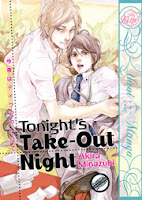
Tonight’s Take-Out Night! by Akira Minazuki. A collection of three boys’ love stories, Tonight’s Take-Out Night is the first manga that I’ve read by Minazuki. While I enjoyed the stories, the high-contrast art style is what really caught my attention. The stories are short, so the development of the couples’ relationships has to happen fairly quickly. However, Minazuki’s characterizations are strong enough that they carry the stories fairly well. I liked the pairings and I liked their relationships which were mostly free of non-consensual elements. The first and third story are both good-natured and a little quirky. But the second story, with it’s period setting and supernatural twist, was my personal favorite.

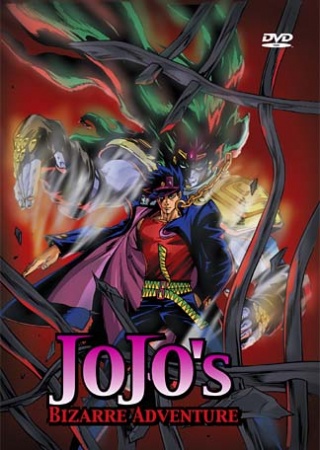
JoJo’s Bizarre Adventure, Volumes 1-6 produced by Studio APPP. Technically, the JoJo’s Bizarre Adventure anime adaptation is two series. The last six episodes were released between 1993 and 1994 while the first seven were released between 2000 and 2002. I do prefer the manga over the anime, but the OVA series is an excellent adaptation. The anime strips the story down to it’s core. The humor and the horror elements of the original tend to be downplayed; the anime focuses mostly on the action and battles. This does mean that some of my favorite moments from the manga were cut, but all of the fights that are particularly important to plot and character development are included. No matter what the medium, I love JoJo’s Bizarre Adventure.

Filed Under: My Week in Manga Tagged With: Akira Minazuki, anime, Apocalypse Zero, bunny drop, Drops of God, Flowers of Evil, JoJo's Bizarre Adventure, manga, Shu Okimoto, Shuzo Oshimi, Tadashi Agi, Takayuki Yamaguchi, Yumi Unita

Manga Bestsellers: 2012, Week Ending 28 October

October 29, 2012 by Matt Blind Leave a Comment

Comparative Rankings Based on Consolidated Online Sales

last week’s charts
about the charts

##

Manga Bestsellers

1. ↔0 (1) : Sailor Moon 8 – Kodansha Comics, Nov 2012 [429.5] ::
2. ↑1 (3) : Sailor Moon 1 – Kodansha Comics, Sep 2011 [362.7] ::
3. ↓-1 (2) : Sailor Moon 3 – Kodansha Comics, Jan 2012 [357.7] ::
4. ↑1 (5) : Sailor Moon 4 – Kodansha Comics, Mar 2012 [341.8] ::
5. ↑1 (6) : Sailor Moon 2 – Kodansha Comics, Nov 2011 [341.7] ::
6. ↑5 (11) : Negima! 36 – Kodansha Comics, Oct 2012 [331.3] ::
7. ↑1 (8) : Death Note vols 1-13 box set – Viz Shonen Jump Advanced, Oct 2008 [327.4] ::
8. ↓-4 (4) : Yotsuba&! 11 – Yen Press, Sep 2012 [312.6] ::
9. ↑1 (10) : Cardcaptor Sakura Omnibus 4 – Dark Horse, Oct 2012 [303.3] ::
10. ↓-1 (9) : Sailor Moon 7 – Kodansha Comics, Sep 2012 [296.4] ::

[more]

Top Imprints
Number of volumes ranking in the Top 500:

Yen Press 99
Viz Shonen Jump 87
Viz Shojo Beat 57
Kodansha Comics 46
Viz Shonen Jump Advanced 34
Dark Horse 24
Seven Seas 24
Viz 15
Vertical 14
Tokyopop 12

[more]

Series/Property

1. ↔0 (1) : Sailor Moon – Kodansha Comics [1,093.9] ::
2. ↔0 (2) : Naruto – Viz Shonen Jump [659.0] ::
3. ↔0 (3) : Bleach – Viz Shonen Jump [575.6] ::
4. ↔0 (4) : Maximum Ride – Yen Press [537.2] ::
5. ↔0 (5) : Negima! – Del Rey/Kodansha Comics [502.8] ::
6. ↑5 (11) : Vampire Knight – Viz Shojo Beat [474.2] ::
7. ↓-1 (6) : Death Note – Viz Shonen Jump Advanced [438.1] ::
8. ↑5 (13) : Black Butler – Yen Press [396.5] ::
9. ↑12 (21) : Rosario+Vampire – Viz Shonen Jump Advanced [382.5] ::
10. ↓-1 (9) : Cardcaptor Sakura – Tokyopop/Dark Horse [371.2] ::

[more]

New Releases
(Titles releasing/released This Month & Last)

6. ↑5 (11) : Negima! 36 – Kodansha Comics, Oct 2012 [331.3] ::
8. ↓-4 (4) : Yotsuba&! 11 – Yen Press, Sep 2012 [312.6] ::
9. ↑1 (10) : Cardcaptor Sakura Omnibus 4 – Dark Horse, Oct 2012 [303.3] ::
10. ↓-1 (9) : Sailor Moon 7 – Kodansha Comics, Sep 2012 [296.4] ::
11. ↓-4 (7) : Naruto 58 – Viz Shonen Jump, Sep 2012 [295.3] ::
12. ↑1 (13) : Bleach 48 – Viz Shonen Jump, Oct 2012 [268.8] ::
17. ↑4 (21) : Dance in the Vampire Bund 13 – Seven Seas, Oct 2012 [245.2] ::
21. ↓-1 (20) : Skip Beat! 29 – Viz Shojo Beat, Oct 2012 [229.1] ::
22. ↑7 (29) : Maximum Ride 6 – Yen Press, Sep 2012 [224.3] ::
23. ↓-1 (22) : Berserk 36 – Dark Horse, Oct 2012 [224.1] ::

[more]

Preorders

1. ↔0 (1) : Sailor Moon 8 – Kodansha Comics, Nov 2012 [429.5] ::
13. ↓-1 (12) : Sailor Moon 9 – Kodansha Comics, Jan 2013 [267.3] ::
18. ↓-2 (16) : Sailor Moon 10 – Kodansha Comics, Mar 2013 [238.9] ::
25. ↑36 (61) : Rosario+Vampire Season II 10 – Viz Shonen Jump Advanced, Nov 2012 [211.0] ::
34. ↑9 (43) : Naruto 59 – Viz Shonen Jump, Nov 2012 [174.4] ::
41. ↑38 (79) : Vampire Knight 15 – Viz Shojo Beat, Nov 2012 [159.9] ::
47. ↑28 (75) : Sailor Moon vols 1-6 box set – Kodansha Comics, Nov 2012 [152.2] ::
50. ↑26 (76) : Sailor Moon 12 – Kodansha Comics, Jul 2013 [146.8] ::
52. ↔0 (52) : Nausicaa of the Valley of the Wind 2 vol hardcover box set [complete] – Viz Ghibli Library, Nov 2012 [146.3] ::
75. ↓-1 (74) : Omamori Himari 9 – Yen Press, Nov 2012 [117.2] ::

[more]

Manhwa

170. ↑ (last ranked 30 Sep 12) : Black God 15 – Yen Press, Jan 2012 [63.0] ::
263. ↑35 (298) : March Story 4 – Viz Signature, Oct 2012 [41.7] ::
293. ↑ (last ranked 30 Sep 12) : Black God 14 – Yen Press, Oct 2011 [36.5] ::
567. ↑35 (602) : Bride of the Water God 11 – Dark Horse, May 2012 [16.7] ::
688. ↑ (last ranked 9 Sep 12) : 100% Perfect Girl 5 – Netcomics, Apr 2008 [11.7] ::
711. ↑ (last ranked 5 Aug 12) : Chunchu: Genocide Fiend 2 – Dark Horse, Oct 2007 [11.0] ::
744. ↑ (last ranked 29 Aug 10) : Very Very Sweet 3 – Yen Press, Mar 2009 [10.1] ::

[more]

BL/Yaoi

40. ↓-13 (27) : Loveless 9 – Viz, Sep 2012 [164.3] ::
67. ↓-29 (38) : Finder Series 6 Passion within the View Finder – DMP Juné, Jul 2012 [128.5] ::
90. ↑253 (343) : Punch Up! 2 – SuBLime, Oct 2012 [101.1] ::
107. ↓-38 (69) : The Tyrant Falls in Love 7 – DMP Juné, Sep 2012 [91.7] ::
169. ↑42 (211) : Honey*Smile – DMP Juné, Oct 2012 [63.3] ::
227. ↓-21 (206) : Only the Ring Finger Knows (novel) 5 – DMP Juné, Sep 2012 [47.6] ::
249. ↑38 (287) : Awkward Silence 1 – SuBLime, Jul 2012 [43.7] ::
277. ↓-47 (230) : Ai no Kusabi (novel) 7 – DMP Juné, Sep 2012 [39.1] ::
310. ↓-137 (173) : Secret Thorns – DMP Juné, Oct 2012 [33.8] ::
314. ↓-56 (258) : Private Teacher 3 – DMP Juné, May 2012 [33.2] ::

[more]

Ebooks

16. ↓-1 (15) : Maximum Ride 1 – Yen Press, Jan 2009 [251.6] ::
27. ↓-9 (18) : Naruto 57 – Viz Shonen Jump, Jul 2012 [201.6] ::
28. ↑7 (35) : Maximum Ride 5 – Yen Press, Dec 2011 [198.5] ::
42. ↓-10 (32) : Naruto 56 – Viz Shonen Jump, May 2012 [159.8] ::
46. ↑37 (83) : Maximum Ride 4 – Yen Press, Apr 2011 [156.0] ::
61. ↓-5 (56) : Maximum Ride 2 – Yen Press, Oct 2009 [134.4] ::
66. ↓-7 (59) : Naruto 55 – Viz Shonen Jump, Mar 2012 [128.7] ::
72. ↓-4 (68) : Maximum Ride 3 – Yen Press, Aug 2010 [123.8] ::
79. ↓-9 (70) : Blue Exorcist 1 – Viz Shonen Jump Advanced, Apr 2011 [112.7] ::
96. ↓-2 (94) : Naruto 1 – Viz Shonen Jump, Jul 2003 [96.4] ::

[more]

Filed Under: Manga Bestsellers Tagged With: Manga Bestsellers

Pick of the Week: Halloween!

October 29, 2012 by Sean Gaffney, Katherine Dacey, MJ and Michelle Smith 4 Comments

With Halloween quickly approaching (and a decided lack of new manga to choose from this week), it’s time once again for the Battle Robot to make their picks for the occasion!


SEAN: Generally speaking, I’m not a big horror fan, unless it has a healthy dose of comedy. With that in mind, I’m going with my perennial favorite Higurashi: When They Cry. In between its harem antics, its mystery plotting, and its tragic futility, there’s no end to terrifying images, ranging from Rena’s scratching at imaginary maggots to Keiichi eating a needle hidden in his riceball to… well, the entire epilogue of the Cotton-Drifting Arc. Some truly nightmare-inducing imagery, especially given the cute moe-type heroines.

KATE: My favorite Halloween title? That’s a tough call, but if I had to choose just one—and death was not an option!—my pick would be Rumiko Takahashi’s Mermaid Saga. This four-volume series follows the adventures of Yuta, a fisherman who accidentally ingests mermaid flesh, gaining immortality in the process. Though Yuta is keen to regain his humanity, he crosses paths with people who seek mermaid flesh as a remedy for illness, old age, or the death of a loved one. Say what you will about InuYasha or Rin-ne, when Takahashi is working in short-story form, she’s an undisputed master of horror; her spooky morality plays are a skillful mixture of suspense, humor, and horror, with a generous dose of pathos. Hands-down my favorite Takahashi series.

MJ: This particular pick is really difficult for me—not because I’m a big fan of horror comics in particular (I’m not) but because for whatever reason, the spooky comics I do like, I tend to really love. Tempting choices include Setona Mizushiro’s emotionally complex epic After School Nightmare and of course my very favorite CLAMP manga, Tokyo Babylon (due for re-release any day now from Dark Horse Comics!). But I’ll take the opportunity this year to throw my vote to JiUn Yun’s ghost story manhwa, Time and Again. Not only is this series genuinely scary on a regular basis, but it also packs an emotional punch in the very best way possible. In my discussion of its final volume, I said, “Time and Again kicks you in the gut with elegant brutality,” and indeed that is what it does. What more can I ask of a comic, really?

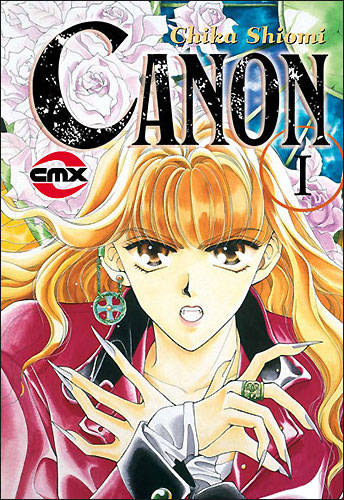
MICHELLE: Having just finished Chika Shiomi’s Canon, a four-volume vampire saga from CMX, I’ll cast my vote in its direction. It has some lovely ’90s art, a strong heroine, some plot surprises, and a snarky talking vampire crow. Though it falters a bit towards the end, it’s still a very good read!

What’s your favorite scary manga?

Filed Under: PICK OF THE WEEK

BL Bookrack: October 2012

October 28, 2012 by MJ and Michelle Smith 3 Comments

Welcome to the October installment of BL Bookrack! This month, Michelle takes a look at the debut volume of Bond of Dreams, Bond of Love from SuBLime, while MJchecks out My Dear Prince at JManga. In Brief: Hitorijime Boyfriend (JManga) and est em’s ULTRAS (DMG).


Bond of Dreams, Bond of Love, Vols. 1-2 | By Yaya Sakuragi | Published by SuBLime | Rated Mature – I’ve confessed before that I tend to judge BL by its cover, and I must admit that had I not previously read and enjoyed something by Yaya Sakuragi, I would’ve passed on Bond of Dreams, Bond of Love. Unfortunately, however, this isn’t one of those times where the cover belies the contents. What you see is, in fact, exactly what you get. This manga is all about a shrimpy teenager repeatedly pushing his feelings on his older, tsundere neighbor.

The story begins when seventeen-year-old Ao Sawanoi has a wet dream about Ryomei Kosaka, his neighbor, older-brother figure, and priest of the nearby Shinto shrine. Ao proceeds to openly discuss this occurrence with several people, including Ryomei himself, and then becomes obsessed with making the dream a reality. He pesters Ryomei quite a lot, and eventually snags a kiss, which convinces him that he is in love. Ryomei puts up some token resistance, but when Ao takes his rejection too much to heart and ceases his daily visits to the shrine, Ryomei ends up seeking him out and encouraging his feelings. (There are two volumes yet to go of this series, so as of the end of volume two, the guys are not yet a couple.)

Bond of Dreams, Bond of Love is another of those BL titles that isn’t outright bad, but it’s pretty generic. (I think I am going to start keeping a tally of how often I see that gross, obligatory panel in which a “sexy” string of spittle connects the tongues of the two leads in a BL manga.) I don’t like Ao—he’s vacuous and immature—and I don’t understand why Ryomei would be interested in him. I also don’t get why Ryomei’s friend is encouraging the relationship, but then again, this is the same guy who lets his second-grade daughter man a convenience store alone and has her cook meals for guests when it’s her bedtime.

Most likely I am taking this too seriously, but with so much BL manga now available, there are much better things to read.

– Review by Michelle Smith


My Dear Prince | By Fumi Tomoe | Published by JManga/Libre Publishing | Rated Mature – Shinta and Tsukasa (whose name can also be pronounced “Prince”) have been dating for a while—in secret, according to the adamant Shinta. The reality is that their whole class knows about them and would do practically anything to keep them together, if only to help out their beloved Prince. Tsukasa (who initiated the relationship) worries constantly that Shinta doesn’t really want to be with him, and Shinta worries constantly that Tsukasa will find out that he’s a “pervert,” but no matter their troubles, there’s a sense from the start that everything will always be okay.

If this sounds like a story with too little conflict to be engaging, that’s definitely a concern. Yet somehow, despite its overly rosy view of teenaged romance, there’s a freshness and adorableness about My Dear Prince that saves it from becoming a total snore. Tsukasa’s spells of paranoia feel mostly warranted, and thus avoid falling completely into either melodrama or camp. In fact, they’re actually quite endearing, which keeps the overall tone light. Meanwhile, Shinta’s worries feel authentic to the trials of adolescent sexuality without ever becoming creepy or pushing him into overbearing seme territory. Mostly, though, what really carries this fluffy little story along is the genuine charm of it all. No matter how unrealistic the boys’ story seems, it’s undeniably pleasant to read.

Like so many BL one-shots, My Dear Prince is only a few chapters long, leaving the rest of the volume to be filled in with several short manga—often of lesser quality. Tomoe’s shorts are a little better than most, mainly due to the same charm she brings to the title story. Even the creepiest of the bunch, “Happy Bride Project,” about a delinquent high school student who strives to become the perfect “bride” after his teacher requests his hand in marriage, is almost saved (I repeat, “almost.”) from its potentially skeevy premise and hideous devotion to traditional gender roles by the power of a cute puppy:

As you see in this panel, Tomoe’s artwork is clear and cute, and that carries over into the volume as a whole, even on a philosophical level. Problems are easily understood and solved, people are adorable—inside and out, and happiness is as accessible as a cute little puppy.

My Dear Prince is no masterpiece, and there’s no denying that amidst a stronger lineup, it would hardly make an impression. But sometimes a bit of good-natured fluff is enough to win the day.

– Review by MJ


In Brief:

Hitorijime Boyfriend | By Memeco Arii | Published by JManga/Ichijinsha | Rated Mature – Back in elementary school, Kensuke parted with BFF Hasekura on painful terms. Reunited now in high school, Kensuke has a second chance to rekindle their friendship, but “friendship” may not be what Hasekura has in mind. Such is the premise of Hitorijime Boyfriend. Sounds unoriginal but potentially cute, right? Sadly, “potential” is really all it’s got. Though best-friends-turned-lovers is one of my favorite romantic fantasy scenarios, even that can’t survive the book’s relentless non-con or a clumsy English adaptation that becomes less and less readable as the story goes on. JManga has had an increasingly strong track record with BL since first launch. Unfortunately, Hitorijime Boyfriend goes against the trend. Not recommended. – MJ

ULTRAS | By est em | Digital Manga Guild | Rated Mature – Ordinarily, I’m not a huge fan of BL anthologies, but the format really shows off est em’s gift for swiftly establishing her characters, enabled by her distinctive, economical, and expressive artistic style. The title story, about a pair of Spaniards who are as passionate about soccer (though for opposing teams) as they are for each other, is more than a love story, it’s a lesson in both tolerance and pursuing what you want despite what others may think. Although this is the best story in the collection, the others are pretty interesting, too. My favorite is probably “Say Hello to Mr. Smith,” which involves a conman, a pickpocket, and a monkey. I hope that someday est em decides to tackle a multi-volume work—it’s awesome to contemplate what greatness might ensue! – Michelle Smith


Review copies provided by the publishers.

Disclosure: MJ is currently under contract with Digital Manga Publishing’s Digital Manga Guild, as necessitated for her ongoing report Inside the DMG. Any compensation earned by MJin her role as an editor with the DMG will be donated to the Comic Book Legal Defense Fund.

Filed Under: BL BOOKRACK Tagged With: yaoi/boys' love

Chatting About Canon

October 28, 2012 by Michelle Smith

The following discussion contains spoilers.

MICHELLE: As we did for the CLAMP Manga Moveable Feast, special guest Karen Peck and I decided to collaborate on a contribution. This month’s MMF theme is vampires, so we opted (actually, this was totally Karen’s brainwave) to talk about Canon, the four-volume Chika Shiomi shoujo series published by CMX. I really didn’t know what to expect, having never read it before, but I think you had, right, Karen?

KAREN: I read it years ago, as I am a total Chika Shiomi fangirl, and figured the MMF would be a great excuse to talk about a lesser-known CMX series. A little background on Chika Shiomi and the series—Canon was her first series after her 1993 debut, running in Mystery Bonita Special. She’s one of those mangaka who’s had her work released by several English-language publishers—Night of the Beasts by Go!Comi, one volume of Queen of Ragtonia by Aurora, and Viz has most recently released Yurara and its sequel series Rasetsu. Her current work is Yukarism, a time-travel tale running in Bessatsu Hama to Yume, which is currently on hiatus.

Canon Himuro, ill with an incurable disease, was the sole survivor of a massacre that left her classmates dead. Months later a reporter runs into her, and she looks healthier than before—and carries a secret. Her classmates were attacked by a vampire, who then turned Canon into one. Horrified and wracked by guilt, she declares revenge on the vampire with silver hair and blue eyes. Holding onto her humanity, Canon refuses to drink blood, and wears a cross necklace given to her by a kindly foreigner, as explained in the second chapter. She is also accompanied by a vampire crow, Fui, who helps keep the story going and provides the humor. Canon is out for vengeance; Fui would just like a snack.

So, Michelle, what did you think of the series? Beyond the ’90s fashion, that is?

MICHELLE: I shall tell you, though we really must get back around to the fashion topic!

I ended up enjoying Canon quite a lot, though moreso in the first two volumes. The story begins episodically, and after a first volume that I’d describe as “not riveting, but entertaining,” the second volume packs a real wallop as Rod (such an intimidating name!)—the silver-haired, blue-eyed vampire—makes his entrance. By this point, Canon has met Sakaki, a smug and violent half-breed who’s also out for revenge against Rod (who murdered his parents), and they’ve formed an alliance. Fairly soon, though, Rod’s servants are telling Canon that their master lives as a hermit and couldn’t possibly be responsible for the attack upon her classmates, and suggesting that the real culprit is Sakaki. Canon resists the truth until Fui overhears a conversation confirming it (and is gravely wounded by Sakaki as a result).

I probably should’ve seen this reveal coming, but I was sort of enjoying the series in an uncomplicated way and wasn’t expecting it to veer into territory this dark. Ultimately, you’ve got Canon unable to forgive Sakaki, Sakaki unable to forgive Rod, and some uncomfortable parallels for Canon to navigate as her own hatred (fueled by the humiliation of having been tricked) threatens to undo her efforts to retain her human heart. It’s good stuff, really!

That said, I thought the entrance of Glenn as a common enemy kind of squandered the momentum a little. I mean, I’m glad that Rod and his awesome servant, Machua, got to become good guys, but Glenn lacks any real depth as a character, and I found his sudden change of heart regarding Canon—he’d previously been adamant about the need to exterminate her—rather baffling.

KAREN: The names crack me up, too. “Rod” just doesn’t sound… menacing. Rod and Glenn sound like they’d be assistant managers at an Office Depot, not powerful vampires.

It is good stuff! One thing I dislike about vampire stories—in manga and in print—is the angsty, boohoo I’m a vampire aspect. Canon does not wallow in that too much, the action is swirling around her and she’s a part of it all—she’s not a passive character. I think the shortness of this series helped as well; she had to stick to the unexpectedly twisty story–everyone has a motive, and they’re bound by vampire laws and revenge. Except Glenn. I agree with you, Michelle, that his change of heart is baffling–he’s the person that exists to move the story in one direction yet doesn’t seem to be upset that his purpose in the story is nullified by that direction. It’s a bit sloppy, but given how well she plotted out everything else, I’ll give Shiomi-sensei a pass since this is her first work.

As for the Canon/Sakaki relationship, at first I didn’t get it. After some consideration, though, it does fit in with what Canon was trying to get through to Sakaki and Rod–to stop the cycle of vengeance, that everyone can move on. Yes, Sakaki created Canon and messed with her memories to create a weapon to get at Rod in an exquisitely personal way, but her own words apply just as much to herself. She could kill him for her own vendetta, or she could remember that little boy who was left bleeding next to the corpses of his parents and understand what drove him. There’s a theme of forgiveness and breaking cycles here that I think is (mostly) well-done.

So, back to the fashion. Canon’s ankle boots have actually come back around to being fashionable again, but I fear that Rod’s overcoat on top of a turtleneck overcoat look will never be repeated. I suppose hermit vampires who feel bad about killing their best friends are just naturally chilly?

MICHELLE: I hadn’t actually seen that about Rod’s garb until you pointed it out, but once I did, I couldn’t stop noticing it. I think I thought the black one was a cloak at first, but upon closer inspection, it clearly has sleeves.

You’re absolutely spot-on about Canon remembering the terrible things that had happened to Sakaki that caused him to inflict terrible things upon her. And though it might feel like a betrayal of her classmates, she can’t stop loving him. This reminded me a lot of Shuri and Sarasa in Basara, actually, where she is able to forgive him for the atrocities committed as the Red King, even though other villagers will never be able to. And, of course, any time something can be compared to Basara is a good sign!

Speaking of comparisons to other works, the side story in volume four about the other half-breed who briefly takes care of orphaned Sakaki reminded me a lot of Shion’s backstory in Please Save My Earth, as another example of a boy in such tremendous need who tragically loses yet another person who could’ve shown him love. And Sakaki’s physical appearance reminds me some of Tokyo Babylon‘s Seishirou, especially round about the shoulder region.

Actually, Sakaki’s got some fashion challenges of his own to surmount. In this picture, his coat’s billowing so much it looks like a frickin’ hoop skirt!

KAREN: I know–why does he need two coats? I think it’s a little hypocritical of a vampire to wear turtlenecks anyway.

Now you’re reminding me that I need to finish reading Basara! But it’s a good comparison, and one that reflects favorably on Chika Shiomi–I think a lot of people can write a love story, but it’s harder to write one where it makes sense and is right for the characters. Hand-waving with a “that’s how love is!” is lazy, and she doesn’t take the easy way out. The ending offers a further complication, but again, it goes with the feeling that the characters really need to want this instead of just engaging in relationship fanservice.

The art—especially for Sakaki—really had a CLAMP-circa-X vibe going on, but this was 1994. I also enjoyed Machua’s style, even if it wasn’t as flamboyant and flowing.

MICHELLE: I liked her, too, though at first I thought she might be a dude!

The art really is frequently lovely in that early-’90s kind of way. Below I’ve included an image of one of my favorite two-page spreads, where you’ve got all sorts of overlapping panels, huge flowers, leads superimposed over a background of space… My cynical side wonders if Shiomi had a checklist of specific items to include, but the overall effect is still one I enjoy. And, of course, I can’t help thinking that MJ, with her well-documented love for old-school shoujo art, would just love this to pieces. (Click image to enlarge.)

KAREN: This is some lovely ’90s art, and it holds up pretty well—Canon herself (sans ankleboots) could just as easily be a design in a modern Chika Shiomi work. I also enjoyed her eye for action–I was a little unsure about how the vampires were always leaping about, but I assume it’s a case of Our Vampires Are Different. The pages you picked show how nice a page with flashbacks and conversations can be–it’s not just good storytelling, it also sets an emotional mood that really sells the scene for me.

I’m glad there was a Vampire MMF to make me get this series off the shelf and re-read it. It’s one of those quiet CMX series that came and went with little fanfare, but shows how well-curated their shoujo line was–I’m sure they could have found a more sensationalistic vampire manga with prettier, broodier boys, but this is one with an overall strong story and a tough heroine. It may not be a classic on the lines of contemporary works like X, but it’s cheap on the used market and, in my opinion, a good short series.

MICHELLE: I definitely agree! Thank you for suggesting it!

And now, an announcement: because Karen and I had such a good time reading Canon, it really fanned the flames of “Damn, we miss CMX.” And so, to help offset our still-lingering pain, we’ve decided to embark upon a monthly feature called The CMX Project, where we will revisit both the lauded and the lesser-known works from the CMX catalog. Look for the first column—featuring Land of the Blindfolded—in January 2013!

Filed Under: FEATURES Tagged With: Chika Shiomi, cmx

School Rumble, Vol. 1

October 28, 2012 by Sean Gaffney

By Jin Kobayashi. Released in Japan by Kodansha, serialized in the magazine Weekly Shonen Magazine. Released in North America originally by Del Rey, now released digitally by JManga.

Way back ages ago, I reviewed Del Rey’s omnibus release of Vols. 14 through 16, and noted it left off on a nasty cliffhanger. And there it sits, as Del Rey became Kodansha and Kodansha decided its sales were not sufficient to release more. But now JManga is picking up some of Del Rey’s old abandoned series, and have put all the prior Del Rey volumes up on their site, with more apparently to come. With that in mind, I decided to go back and review Volume 1, and see just how different things were back at the start.

Well, for one, that huge cast is not quite so huge. School Rumble starts off as being very much a two-hander, with the point of view switching back and forth. Our heroine, Tenma Tsukamoto, has a hopeless crush on stoic weirdo Karasuma, but is unfortunately hopeless at romance… and studies… and athletics… and pretty much life. Well, except for cosplaying. She is, however, a happy girl with lots of spirit. Contrasting this is our hero, Kenji Harima, a former biker who is trying to turn over a new leaf, mostly as he’s fallen head over heels for Tenma. Harima is strong and good at athletics, but otherwise is in the same boat as Tenma – he’s not all that bright, and his attempts to woo her are laughable. Add wacky situations and stir.

The comedy is all important here, as it would be through most of the early days of this series. The chapters have a lowered page count compared to most Shonen Magazine series (about 9-12, as opposed to 16-18), a sure sign that the editors consider it one of the funny manga rather than a romantic harem manga. There isn’t even a harem yet, really. Just a love triangle. Harima loves Tenma, Tenma loves Karasuma, and Karasuma… we have no idea what he thinks. This is also an unusual series in that it ran simultaneously in two magazines. The main Tenma and Harima plot ran weekly in Shonen Magazine, while the chapters at the end dealing with ‘side characters’ (the ones with a flat note as opposed to a sharp) ran in the monthly Magazine Special. In this volume they’re focused on Yakumo, Tenma’s younger yet more mature sister.

Ah yes, Yakumo. As I said earlier, there’s a large cast coming, and we see glimmers of it here. Tenma, for all that she is lovable and hyperactive, is pretty much exactly what she seems. Yakumo has a lot more to give us. She’s also a great cook, and pretty, and athletic – her perfection is noted by the boys at her school. When otaku who should know better talk about ‘waifu’ type characters, nine times out of ten they mean someone like Yakumo. Her one fault is her seeming obliviousness to guys. And I say ‘seeming’ because we know something about Yakumo that they don’t – she can read minds of anyone who likes her! (School Rumble has occasional fantasy content – Tenma is telekinetic once – but except for Yakumo, it’s always for the sake of a gag.) And given the typical minds of teenage boys, this has likely served to make her even more shy and retiring than she already is.

As for the other main characters, we do meet Eri, Mikoto, Akira, and (briefly) Hanai, but for the most part they look like they’re just going to be generic best-friend type classmates. Eri is stuck-up, Mikoto is tomboyish, Akira is deadpan. They haven’t been brought into the story, mostly as the story i still just about Tenma and Harima. But as their attempts to confess their love explode outwards, others will be drawn into the web. Especially Eri.

For a first volume, this is big, dumb goofy fun. Both leads are histrionic and over the top, and there’s lots of silly here, with an understanding that no one is going to be confessing their love anytime soon. What’s more, Tenma is still the focus of almost every chapter. As the series goes on, and as the popularity polls start to come out, this will begin to change…

Filed Under: REVIEWS

The Disappearance of Nagato Yuki-Chan, Vol. 2

October 27, 2012 by Sean Gaffney

By Nagaru Tanigawa and Puyo. Released in Japan as “Nagato Yuki-chan no Shoushitsu” by Kadokawa Shoten, serialization ongoing in the magazine Young Ace. Released in North America by Yen Press.

In an earlier post regarding this book’s imminent debut, it was noted that the series is essentially a fanfic AU written by someone who wants to get Kyon and Yuki together, just like you see with the infinite Harry/Hermione or Zuko/Katara fanfics on FFNet. And there’s honestly no denying it; that is exactly what this is. It’s light and fluffy fun, but it is essentially Haruhi with all the spiky bits filed off it. Everyone’s more agreeable, everyone’s more adaptable, and everyone’s simply happier. Including Yuki Sue… um, Yuki Nagato.

Now, this isn’t saying that this manga is horrible. I like it a lot. It’s simply saying that this manga is not particularly gripping or filled with tension. In essence, it’s not really a spinoff of the Haruhi series itself as it is a spinoff of the SD-manga spinoff Haruhi-chan. Various ideas from that series (Ryoko as an onee-sama type, though a comedic one; Nagato’s gaming habits; Haruhi going after Santa) are used in this AU, mostly to show off the author’s own preferences. But whereas in Haruhi-chan everything ends up being a setup for a punchline, here everything is a setup for an adorable heartwarming moment. Even the dramatic moments.

This volume sees the introduction of Haruhi herself (as well as Koizumi, who is essentially a non-entity in this series). She’s not totally unrecognizable. She’s still trying to befriend aliens, time-travelers and espers, and will scream this out to anyone who asks. She’s still bulldozing through people to get her own way, and quickly takes up residence at the literature club even if she goes to a different school. and she’s not above using Kyon as her personal punching bag when a punching bag is needed. But she’s more mature than the Haruhi of the original series, and it’s striking that, even though we see her starting to fall for Kyon here, she’s not going to get all that jealous about it. Haruhi doesn’t have the power to change the world with a bad mood here, and it seems to have made her a better person.

As for Yuki and Kyon, they continue to grow closer, much to Ryoko’s encouragement and chagrin. Valentine’s Day is in this volume, and of course there is chocolate to be made. This leads to what’s probably the best sequence of the book, where we’re led to believe that we will see a cliched misunderstanding lead to heartbreak. It’s not entirely out of the question – this manga isn’t all that original. But this Yuki is more of a ditz than a doormat, and the misunderstanding turns out to have been… well, a misunderstanding. And Haruhi, who’s no dummy and can clearly see that Yuki is head over heels for Kyon, challenges her to step up and go after him. In a genre where high school girls are so often cruel and heartless, it’s fantastic to see love rivals be open and honest.

The flaws I mentioned in Volume 1 are still here. The art simply isn’t all that great, though it’s getting better. And Kyon needs more snark desperately. But of course no one is particularly reading this book for Kyon, but for the moe cuteness. And in that respect, few things deliver on that promise like Nagato Yuki-chan. That said, I’m not sure the series can coast on cute fluffiness forever. I hope that the author comes up with a more serious arc by, say, Volume 4. (Foreshadowing: your key to quality literature.)

(Also, is it wrong of me to ship Haruhi/Ryoko? Cause I totally am.)

Filed Under: REVIEWS

Saturday Spotlight: “There is this fish.”

October 27, 2012 by MJ Leave a Comment

As we here on the east coast prepare for the arrival of Sandy, my mind turns to visions of water, water, and more water. And being an obsessive fan of 80s shoujo manga, thoughts of water lead to Moon Child.

Today’s Saturday Spotlight archive post comes from March of this year, when Michelle Smith and I sat down to discuss mermaids, aliens, giant fish, Broadway dancers, Chernobyl, environmentalism, Vaslav Nijinsky, and the epic weirdness awesomeness of Reiko Shimizu’s Moon Child.

Come reminisce with us, and if you’re on the east coast, get some batteries in those flashlights!

Filed Under: Saturday Spotlight Tagged With: moon child

  • « Go to Previous Page
  • Page 1
  • Interim pages omitted …
  • Page 742
  • Page 743
  • Page 744
  • Page 745
  • Page 746
  • Interim pages omitted …
  • Page 1072
  • Go to Next Page »
 | Log in
Copyright © 2010 Manga Bookshelf | Powered by WordPress & the Genesis Framework