• Skip to primary navigation
  • Skip to main content
  • Skip to primary sidebar
  • Home
  • About Us
    • Privacy Policy
    • Comment Policy
    • Disclosures & Disclaimers
  • Resources
    • Links, Essays & Articles
    • Fandomology!
    • CLAMP Directory
    • BlogRoll
  • Features & Columns
    • 3 Things Thursday
    • Adventures in the Key of Shoujo
    • Bit & Blips (game reviews)
    • BL BOOKRACK
    • Bookshelf Briefs
    • Bringing the Drama
    • Comic Conversion
    • Fanservice Friday
    • Going Digital
    • It Came From the Sinosphere
    • License This!
    • Magazine no Mori
    • My Week in Manga
    • OFF THE SHELF
    • Not By Manga Alone
    • PICK OF THE WEEK
    • Subtitles & Sensibility
    • Weekly Shonen Jump Recaps
  • Manga Moveable Feast
    • MMF Full Archive
    • Yun Kouga
    • CLAMP
    • Shojo Beat
    • Osamu Tezuka
    • Sailor Moon
    • Fruits Basket
    • Takehiko Inoue
    • Wild Adapter
    • One Piece
    • After School Nightmare
    • Karakuri Odette
    • Paradise Kiss
    • The Color Trilogy
    • To Terra…
    • Sexy Voice & Robo
  • Browse by Author
    • Sean Gaffney
    • Anna Neatrour
    • Michelle Smith
    • Katherine Dacey
    • MJ
    • Brigid Alverson
    • Travis Anderson
    • Phillip Anthony
    • Derek Bown
    • Jaci Dahlvang
    • Angela Eastman
    • Erica Friedman
    • Sara K.
    • Megan Purdy
    • Emily Snodgrass
    • Nancy Thistlethwaite
    • Eva Volin
    • David Welsh
  • MB Blogs
    • A Case Suitable For Treatment
    • Experiments in Manga
    • MangaBlog
    • The Manga Critic
    • Manga Report
    • Soliloquy in Blue
    • Manga Curmudgeon (archive)

Manga Bookshelf

Discussion, Resources, Roundtables, & Reviews

Blog

Pick of the Week: JManga Scramble

March 18, 2013 by MJ, Anna N, Sean Gaffney and Michelle Smith 5 Comments

With a distinct lack of new print manga available in stores this week, we thought we’d take the opportunity to recommend a few last-ditch titles from soon-to-expire digital publisher JManga. If you’ve got extra points to spend and are looking for a great, last-minute read, here are a few titles to consider!


ANNA: I’m always on the lookout for more josei manga, and while I was disappointed in the variety of genres Jmanga offered at its initial launch, I was pleasantly surprised when I saw more Harlequin romance, Ohzora, and josei titles popping up in the months to follow. The title I was most excited to see was the fourth volume of Walkin Butterfly 4. I collected the earlier print volumes and was so happy to be able to read the end of the series on Jmanga. While there are series left unfinished with Jmanga’s closure, I feel it is good to celebrate some of the series that Jmanga finished! Walkin’ Butterfly is the story of a tall misfit tomboy named Michiko who begins to find herself when she accidentally becomes part of the fashion world. Her relationship with the temperamental up and coming designer Mihara changes them both, and the series shows how she transforms herself in an atypical way for an ugly duckling becoming a swan type story. Tamaki’s illustrations convey the world of modeling and fashion in an edgy way – while there are occasional flashes of elegance, this is much grittier than the stylized fashion portrayed in a title like Paradise Kiss. walkinb
SEAN: I think I’ve banged the gong for Wonder! and High School Girls enough, so I’ll note that my favorite aspect of JManga was that they could pick up some of the weirdest titles. Not just normal seinen weird like Ninja Papa or Anesthesiologist Hana, but stuff that no one else would license in a million years. Things like Young-kun, a stick-figure 4-koma that I still don’t think I ever understood, or Edo Nekoe Jubei Otogizoshi, a mystery-solving cat manga from Shonen Gahosha’s magazine of cat manga. And of course there was a pile of yuri titles that fans have been wanting for years, from Love My Life to Poor Poor Lips to YuruYuri. The saddest thing is that there was simply too much content I wanted to read, and I may never get the time to now. But man, it was great content. edo
MICHELLE: If there was just one title that I’d recommend people read while they have the chance, it would be est em’s Working Kentauros. Here’s what I said about it in a Going Digital column from last year: “Like the best speculative fiction, est em uses her offbeat “centaurs in the workplace” concept to communicate universal truths. Everyone wants to be free to be themselves, and no one wants to watch someone they love get sick and pass away. Even if they happen to be a centaur. Highly, highly recommended.” kent
MJ: Many of my favorite series at JManga are hard to recommend at this juncture, simply because they’re unfinished. As much as I adore titles like Sweet Blue Flowers, Dousei Ai, or Pride, I can’t wholeheartedly recommend that anyone sign themselves up for that kind of heartbreak. One of my long-touted BL favorites, however, is Haruko Kumota My Darling Kitten Hair, which, though unfinished, is so committed to its low-key, slice-of-life format that it’s guaranteed to offer no lingering angst or nail-biting cliffhangers. From my review of the second volume: “It’s so rare to read a BL series (or any relationship-driven story) that is about staying in love rather than falling in love, and there’s a reason for that. It’s hard! As difficult as it can be to write authentic, well-developed romance, much like actual romance, it’s even harder to keep that fire burning after the initial rush of first love. Thankfully, My Darling Kitten Hair stands as a lovely example of how to do exactly that. And it’s a real pleasure to read.” Two volumes are available. kittenhair

Readers, any last-ditch JManga titles you’d recommend?

Filed Under: PICK OF THE WEEK Tagged With: JManga

JManga: The post-mortems begin

March 18, 2013 by Brigid Alverson

I weighed in on the demise of JManga at MTV Geek. Sean Gaffney works through several of the stages of grief, while Lori Henderson discusses JManga’s good and bad points and speculates on what may have gone wrong. At The Digital Reader, Nate Hoffelder argues that publishers who use DRM are punishing their paying customers (like the people who are about to lose the comics they thought they purchased). Lissa Pattillo compares JManga to other digital manga services and points out some of the flaws at Kuriousity.

I looked over the past week’s new manga at MTV Geek, and Lissa Pattillo tackled the list as well at her On the Shelf column at Otaku USA.

Jason Thompson takes a look at Black Lagoon in his latest House of 1000 Manga column at ANN.

The local paper interviews Chris Beveridge, the guy behind the anime/manga blog The Fandom Post.

Reviews

Connie on vols. 3 and 4 of Ai no Kusabi (Slightly Biased Manga)
Daniella Orihuela-Gruber on Apartments of Calle Feliz and Yakuza Cafe (All About Manga)
Connie on vol. 15 of Bakuman (Slightly Biased Manga)
Ash Brown on vol. 19 of Blade of the Immortal (Experiments in Manga)
Manjiorin on vol. 1 of Blood-C (Organization ASG)
Daniella Orihuela-Gruber on Caramel (All About Manga)
Erica Friedman on the March issue of Comic Yuri Hime (Okazu)
Justin on chapters 22, 23, and 24 of Cross Manage (Organization ASG)
Lesley Aeschliman on vol. 3 of A Devil and Her Love Song (Blogcritics)
Connie on vol. 6 of A Devil and Her Love Song (Slightly Biased Manga)
Drew McCabe on vol. 23 of D.Gray-Man (Comic Attack)
Connie on vol. 6 of Dogs (Slightly Biased Manga)
Leroy Douresseaux on vol. 3 of His Favorite (I Reads You)
Connie on I Love You, Chief Clerk! (Slightly Biased Manga)
Lesley Aeschliman on vol. 5 of Kamisama Kiss (Blogcritics)
Jocelyne Allen on vol. 8 of Kaze to Ki no Uta (Song of the Wind and Trees) (Brain Vs. Book)
Daniella Orihuela-Gruber on vol. 1 of Kizuna (All About Manga)
Anna N on vol. 1 of Knights of Sidonia (Manga Report)
Connie on Laugh Under the Sun (Slightly Biased Manga)
Connie on vol. 1 of Limit (Slightly Biased Manga)
Johanna Draper Carlson on vol. 2 of Lizzie Newton: Victorian Mysteries (Comics Worth Reading)
Connie on vol. 1 of Neon Genesis Evangelion (Slightly Biased Manga)
Connie on New Beginnings (Slightly Biased Manga)
Sweetpea on Oresama Teacher (Organization ASG)
Kristin on vol. 14 of Otomen (Comic Attack)
Matt Cycyk on Planetes (Matt Talks About Manga)
Leroy Douresseaux on vol. 11 of Rosario + Vampire: Season II (The Comic Book Bin)
Connie on vol. 6 of Sailor Moon (Slightly Biased Manga)
Lesley Aeschliman on vol. 9 of Sailor Moon (Blogcritics)
Daniela Orihuela-Gruber on Same Difference (All About Manga)
Connie on vol. 2 of Strobe Edge (Slightly Biased Manga)
Anna N on vol. 3 of Strobe Edge (Manga Report)
Katherine Hanson on A Transparent Orange in the Lip (Yuri no Boke)
Lesley Aeschliman on vol. 5 of Tsubasa (Blogcritics)
Leroy Douresseaux on vol. 16 of Vampire Knight (The Comic Book Bin)
Justin on chapters 3, 4, and 5 of World Trigger (Organization ASG)

Filed Under: MANGABLOG

Bookshelf Briefs 3/18/13

March 18, 2013 by Sean Gaffney, Anna N, MJ and Michelle Smith 1 Comment

This week, Sean, Anna, MJ, and Michelle look at recent releases from Dark Horse Comics, VIZ Media, Kodansha Comics, and Vertical, Inc.


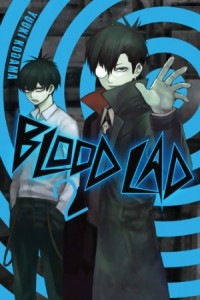
bloodc1Blood-C, Vol. 1 | By Ranmaru Kotone, based on a concept by Production I.G. and CLAMP | Dark Horse Comics – I haven’t read any of the Blood the Last Vampire/Blood+ series that this one is supposedly part of, but I think I get the gist. A cute clumsy girl is revealed to be the last stand humanity has against demonfolk who are attacking innocents, which she then kills with her big sword. Most of this first volume focuses on her cute and sweet classmates (who will no doubt die horribly), except for one sullen guy who avoids her (who screams ‘love interest’) The battles are OK, and the character designs are sort of CLAMP-ish, but I won’t be trying any more of this for one big reason: I was bored to tears reading it. Every single page of this reeks of media tie-in, and not the good kind. Readers who like CLAMP are advised to get the Tokyo Babylon omnibus instead. – Sean Gaffney

dawn9Dawn of the Arcana, Vol 9 | By Rei Toma | VIZ Media – Nakaba’s powers of magical vision have revealed the depth of Loki’s feelings to her, and to her credit her reaction is to be very concerned about all that her faithful servant must have suffered, both due to his actions in shielding her from harm and Nakaba’s ignorance of his emotions. There isn’t much time to dwell on romance, as the political situation in Lithuanel grows even more tense, and Nakaba sees how scheming royalty use the life of an Ajin to bolster the succession. Nakaba and Caesar’s relationship is stronger than ever and I hope Loki is able eventually to find some sort of happiness. Dawn of the Arcana continues to be an entertaining fantasy manga, made more interesting by Nakaba’s use of her powers. – Anna N

devil7A Devil and Her Love Song, Vol. 7 | by Miyoshi Tomori | VIZ Media – A Devil and Her Love Song is unique in the way that emotions that tend to be buried in more typical shojo series are drawn out and discussed in detail. Here Maria is dealing with the fallout of her friendship with Anna, relying more on Yusuke (at his insistence) but still being drawn towards Shin despite his attempts to distance himself from her. The manipulations of a voice coach who seems to take a marked interest in Maria makes it seem like he will play a larger role in upcoming volumes. This series continues to be a go-to read when I want a manga packed full of drama, with a few sweet moments along the way. – Anna N

fairytail24Fairy Tail, Vol. 24 | By Hiro Mashima | Kodansha Comics – We’ve finally come to the end of the Edolas arc, with Natsu resolving things with his usual straight-ahead heroics… or in this case, villain posing. The next arc will show the characters competing in a battle to be the next S-class wizard, which promises to shed some light at last on Cana, who’s mostly just been “the pretty alcoholic” till now. But most folks remember this volume for the BIG SPOILER. I have no issues with the spoiler itself – god knows I’ll do anything for my happy endings. That said, the premise behind it coming about does require a large amount of disbelief suspension in a series that already has issues with that sort of thing. As for how it affects future volumes, who knows? After all, the extras already hint that Mashima has rewritten his future outline to be quite different from his original plan. – Sean Gaffney

limit3Limit, Vol. 3 | By Keiko Suenobu | Vertical, Inc. – Out of the three currently-available volumes of Keiko Suenobu’s Limit, the third is perhaps the cruelest (and certainly the best). Things begin on an unexpected upswing, as most of the group begins to recover their humanity in the wake of unstable Morishige’s fall from power, which is solidified further by the appearance of another surprise survivor. But as Morishige’s mental condition deteriorates, things eventually become more frightening than ever which, by Limit‘s standards, means quite a bit. I left this volume experiencing a hopeless, sinking sensation in the pit of my stomach that felt far more real than it should have. And isn’t that a shining example of the power of good fiction? This series continues to become more compelling and addictive with each new volume. Wholeheartedly recommended. – MJ

strobe3Strobe Edge, Vol. 3 | By Io Sakisaka | Published by VIZ Media – I am officially beginning to love Strobe Edge, by which I mean I’ve developed an affection that goes beyond simply being happy to see that a new volume has come out. Slowly, and whilst tip-toeing around some stock shoujo scenarios, Strobe Edge has grown more compelling with each volume. The love… shape between Ninako, Ren, Mayuka, and Ando grows more complicated and painful, and is so well done that any accusations of this being “generic” shoujo should be firmly squashed by this volume. Not only do I love that Ren’s friends are becoming concerned that maybe he does like Ninako, but I love that Mayuka is intimidated, too, and now we have two thoroughly likeable girls both in love with the same boy and feeling awkward about the presence of the other in his life. This is so much better than malicious rivals or wacky hijinks! Highly recommended. – Michelle Smith

Filed Under: Bookshelf Briefs

Knights of Sidonia, Vol. 1

March 17, 2013 by Anna N

Knights of Sidonia, Vol 1 by Tsutomu Nihei

I was excited to see that Vertical was releasing Nihei’s Knights of Sidonia, because I greatly enjoyed Biomega. As I was reading this manga, I realized that there really is a dearth of giant mecha manga being published in English. One viewing of the Evangelion anime was enough for me, so I haven’t been following the various manga spinoffs. Most shonen seems to be more of the monster of the week/fantasy variety now, and it wasn’t until I was reading Knights of Sidonia that I realized how much I missed GIANT ROBOTS FIGHTING IN SPACE!

Nihei’s manga centers on Nagate Tanikaze, a human on the seed spaceship Sidonia which is carrying humanity away from the destruction of the solar system by aliens called Guana. Nagate lives in an underground area, sharing his cramped apartment with his grandfather’s corpse and spending his time training in an alien combat simulation fighter. The human race has been split to an extent, with most opting for a procedure that allows them to photosynthesize. Nagate still needs regular human food and he is captured by others on the spaceship when he ventures out for rice. Nagate begins to assimilate into current human society, and he gets signed up to pilot a Garde – the mecha who fight the Guana that attack the Sidonia. Nagate is socially awkward but seems to have an odd ability to tolerate pain and heals up very quickly. Being a regular human might give him a bit of an edge over his modified compatriots?

As Nagate trains to fight he meets Izana, a human who can be both genders. He also meets a variety of photosynthesizing clones. Nagate’s isolation causes him to be several years behind with recent developments, but he throws himself into piloting the Tsugumori, the Guarde unit he is assigned to. There isn’t anything else going on with his life. The space battles are where a horror element comes in as the semi-sentient Guana can shift their shapes, even taking on the outward appearance of a human that they’ve killed. They’re blobby and somewhat fetus-like, if a fetus was a giant shifting alien.

One of the things I like about Nihei’s work is that he tells a compelling story without over-explaining everything. I’m getting to the point where having an origin spelled out in the first couple chapters of a manga starts making my eyes glaze over, but Knights of Sidonia manages to be intriguing without being frustrating. I’m interested to find out more about the human society on the Sidonia, the reasons for Nagate’s previous exile, and to learn more about his progress as a Guarde pilot. Knights of Sidonia doesn’t yet have some of the great desolate scenes of beauty that I enjoyed so much in Biomega, but one of the things I enjoy about Nihei’s art is his ability to convey scale and space in his backgrounds. When Nagate falls through a hole into an enormous rice storage bin, it is easy to get a sense of just how massive the Sidonia is.

Most importantly for fans of Biomega, there is a talking bear in Knights of Sidonia. She doesn’t have a machine gun yet, but she does have an artificial arm. Seriously, a talking bear in outer space with an artificial arm is reason enough to buy this manga, and all the great mecha/alien battle scenes and Nagate’s journey are really just a bonus.

Filed Under: REVIEWS Tagged With: knights of sidonia, talking bears, vertical

Adventures in the Key of Shoujo: Strobe Edge, Vol. 1

March 17, 2013 by Phillip Anthony Leave a Comment

Strobe Edge Vol.1 | By Io Sakisaka | Published by VIZ Media | Rated: Teen

strobe_Edge

Here is your basic relationship equation: Girl (Ninako Kinoshita) likes school friend (Daiki Korenaga) but develops feelings for other school boy (Ren Ichinose). After finding out she might love Ren, Ninako discovers Daiki has feelings for her. So, Boy + Boy / Girl = Story. Not the most original idea but Strobe Edge uses what it’s got and delivers a good slice of teenage angst with some aplomb. Some parts I liked in its execution, some I did not. Shall we begin?

Understanding love is one of the fundamental questions of humanity. What is it? Why is so good and bad at the same time for us? Why do we need it so much? What does it feel like? For teenager Ninako, the fact that she’s never been in love, never been loved (that she knows of) and doesn’t know how it feels is the smartest and dumbest thing about this manga. I would like to say that there’s more to it than that but I respect when authors can just explore a simple idea and run with it, warts and all.

On one hand you want to scream at the girl for being so naïve that she doesn’t know what love is, presumably because she must be loved at home. I mean, I haven’t seen her family yet but she gives no indication that things are bad. Plus she has her friends in school, so she must know what love is! Yes, I know, love for your friends is not the same as love for a significant other. But the basic feeling is the same. I don’t understand why Io Sakisaka tries to present Ninako as laughing with her friends in school and then have her go into automaton mode around Ren. It’s like “What is feeling I have? I … feel? What is feel?” (Sorry, I’m being really simplistic with that last sentence but you get the idea). It’s a set of mental tracks that doesn’t seem like it’s going anywhere. I don’t know if I have the fortitude to root for a character who is that emotionally stunted.

Yet, in the same way, it is fun to watch her as she tries to make sense of these two guys and their attempts (or non-attempts) at getting her to like them. If I had to choose, I would say that Ren is a better character than Daiki. Daiki comes across as a nice guy but there’s something off about a guy who wants the girl but when he finds out that somebody who is dating his sister is interested in the girl, he warns them off from the girl but not his sister. I dunno, but Ren for all of his aloof slightly bad boy angle is a better idea in action as everybody, and I mean everybody, reacts against him. He doesn’t need to do anything and people take notice of him or are aware of him. Ninako is aware of him but as she gets into the mystery of who Ren is as a person we see her change as she realizes that by studying him, she fell in love with him. This is done in a slowly unfolding manner rather than BOOM! I LOVE HIM. Which would cheese me off as that isn’t what Sakisaka is possibly going for here.

The best way of describing the three kids; relationship is this: imagine if they were part of a solar system, OK? Ninako is in the middle of the system and Daiki is the sun. The sun in Ninako’s world is bright, happy to have her around and has always been in her view. But one day a gas giant, Ren, which had always been there but did nothing, suddenly exerts an influence over the planet in the middle. Not enough to completely dislodge it from the sun’s view but once the gas giant has started, a critical change occurs on the planet in the middle. Daiki isn’t going to give up Ninako to someone like Ren but I don’t think it’s as simple for them as “I must possess her!” because Ninako is trying to sort out her own head at the same time. Speaking of Ren, I don’t know why the author chose to insert that final revelation about Ren and his relationship with Ninako at the point she did. I can’t go into specifics without spoiling certain things, but it felt like it was an attempt to promote the idea that Ren really was too good to be true. I am not saying that it is unwelcome but it could have been left until volume two and that would have been a better jumping point for the cast to deal with in the rest of volume two. It’s kind of happily maddening, that’s how I would describe it.

Is there a point in saying that the artwork in this is gorgeous? It’s not master craftsmanship levels at work but the story that it tells, the work on display suits it perfectly and I don’t have a problem with the amount of daydreaming the cast seem to engage in as long as the art looks like this.

I am a bit of a soap drama watcher and while I don’t need to obsess over every episode of the shows I watch, I would say that Strobe Edge has some of that going on here. This first volume presents a few problems for me, that much is certain, but there’s just enough in the way Sakisaka presents the cast and the setup that doesn’t allow me to dismiss it out of hand without giving it a proper whirl. Much like those soaps I am not supposed to like.

Filed Under: Adventures in the Key of Shoujo Tagged With: shojo, shojo beat, VIZ

Trigun: Multiple Bullets

March 16, 2013 by Sean Gaffney

By Various Artists, series created by Yasuhiro Nightow. Released in Japan by Shonen Gahosha direct to tankobon. Released in North America by Dark Horse.

I am generally a manga person, though I have a lot of anime that I love. But if you were to ask me which I preferred, the manga or the anime, 90% of the time I would pick the former. Trigun is one of those exceptions, however. I saw the anime first, and was entertained and riveted by its over the top action and comedy slowly wending its way towards inevitable tragedy. It, like many other Shonen Gahosha series (including Hellsing and Excel Saga) was licensed for an anime very early on in its run, so had an ending that had many of the same beats the author wanted but was distinctly different. Unfortunately, Nightow’s action scenes tend to leave me hopelessly confused, as I simply can’t follow what he’s drawing half the time. His storytelling is also very oblique (typical to a Western). As such, I never really got into Trigun Maximum.

trigunmultiple

But I picked up this anthology anyway, as I was curious to see what other writers would do with Nightow’s vision. Of course, what most people might pick this up for is Nightow himself – it contains the 80-page story he wrote up to go with the release of the Trigun movie. The story, Badlands Rumble, is pretty much an encapsulation of the manga. Meryl and Milly are there but don’t do anything, Vash is really silly and then not so much, Wolfwood gets irritated but clearly is siding with Vash, and there are innocents and villains who are out of Bob’s Big Book of Western Cliches. If you liked Trigun, you’ll get a kick out of it.

Of the remaining stories, there were two that didn’t really work for me. Boichi’s story about a woman giving birth to an atomic bomb – sort of – and plays on Vash’s pledge to avoid killing. It is, however, filled with Boichi’s fanservice (he writes Sun-Ken Rock), something Trigun is usually blissfully free of. And the 4-koma with Meryl and Milly is really, really slight and not all that funny.

But there’s also some excellent storytelling here. The folks who worked on this anthology love to play around in Nightow’s world, rather than just writing character-based stories about Vash. Satoshi Mizukami, who does my pet favorite The Lucifer and Biscuit Hammer, has a story about whether the various warring races (humans, plants, worms) can really come together, but it’s actually cuter than I make it sound. Yusuke Takeyama’s is dark and depressing, with another typical Western cliche: the bit of hope that is then brutally cut down. That said, it’s tense, gripping stuff. And Sagami Akira’s Vash/Meryl story about the impossibility that is Vash’s hair is really shippy in exactly the same way that the Trigun manga never is. (The anime was a bit better at it.)

And easily the gold standard in this collection is the storybook tale that retells Trigun as a fairy tale, written by Ark Performance (better known for their Gundam stuff). The art is fantastic, the style is gorgeous, and the reveal of who’s telling the story is the perfect sweet (and bittersweet) capper. The entire volume is worth getting just for this 16-page story.

I generally prefer character-driven works to world-building stories, and Trigun definitely falls into the latter category. That said, many writers love walking around in someone else’s world, and Nightow’s is probably one of the best to wade into. This anthology had more hits than misses, and is a good epilogue to the Trigun series.

Filed Under: REVIEWS Tagged With: trigun

Off the Shelf: Dark Horse Saves the Day

March 16, 2013 by MJ and Michelle Smith 7 Comments

MICHELLE: Life’s a funny thing, you know. Within a span of two days, JManga calls it quits, but a Veronica Mars film becomes a (future) reality. Without the latter to buoy my spirits, I would’ve been much more crushed by the former.

MJ: Since I wasn’t a Veronica Mars fan (I know, I know, everyone says I should watch it), I admit I’m just kind of existing in a shell-shocked haze. Between JManga and Google Reader, I’m feeling pretty disoriented in my digital world right now.

MICHELLE: I’m sad about Google Reader, too! It seems like all the other alternatives are too fussy. I want a minimalist option. Anyway, was there anything in the world of manga to cheer you?

tokyobabylon1MJ: Fortunately, there was. Though this week became tragic in multiple ways, it began at least with the blissful knowledge that we’d finally be seeing Tokyo Babylon, my favorite CLAMP manga, back in print. Originally published by TOKYOPOP, the series was officially out of print (with a few volumes still easily available online) long before the company shut down its North American publishing operations. Fortunately, Dark Horse announced in 2011 that they’d be adding the series to their growing catalogue of CLAMP omnibus releases. It was originally slated for publication later that year, leading some of us to wonder whether we’d gotten our hopes up too soon, but the first volume finally hit some stores this week! I’m still waiting for my print copy to ship from Amazon, but I was able to preview a PDF of the book, which has temporarily tided me over.

So, it’s no secret that I love Tokyo Babylon. In fact, I once volunteered to host the CLAMP MMF purely out of a desire to make people talk about it. It’s a concise, fairly intimate series that somehow manages to feel genuinely epic (and genuinely tragic) over the course of just seven short volumes (Dark Horse is doing it in two). I’ve already written about the full series at length, both in my original review of it at Comics Should Be Good and in our roundtable discussion last year, so I won’t spend time repeating myself here. Instead, I’ll talk about what’s different in Dark Horse’s edition.

Unfortunately, since I haven’t yet received my print volume, I can’t personally confirm anything about paper quality or trim size, except to (happily) note that Dark Horse’s website lists it as 5 3/4″ x 8 1/4, which was the same size as their Cardcaptor Sakura volumes—and the ideal format for CLAMP’s gorgeous artwork, in my opinion. I’ll be absolutely thrilled, assuming this is the case. Volume one also boasts of “over a dozen” color pages—most of which are, I believe, the same color pages that TOKYOPOP’s editions contained, though there may be extras I’m not noticing as I read through the PDF preview.

What I can confirm is that Dark Horse’s English adaptation is noticeably different, presumably thanks to the hand of its new editor, Carl Horn. Carl has a gift for making English dialogue really come alive, and his influence is apparent immediately. For example, in the beginning of the first chapter, Subaru innocently describes a scene in which a spirit he exorcised turned out to be the ghost of a young girl who committed suicide after being cruelly dumped by the celebrity whose bed she was haunting every night.

In TOKYOPOP’s version, Subaru mentions that the girl’s strongest memories were not of the room itself, but just of the bed, at which point Hokuto laughs, “In other words, the only thing that guy showed her was the ceiling in his bedroom!” In Dark Horse’s new version, it’s Subaru who wonders at the fact that it was only the ceiling of the room that the girl remembered, giving Hokuto the response, “I guess that’s the only part the guy ever showed her!” It’s a small change, but moving the detail about the ceiling to Subaru just makes the joke work better. It’s somehow much, much funnier. And this kind of thing continues throughout the volume.

MICHELLE: I hadn’t really planned on buying the series over again, but if it’s got a better, more natural English adaptation, then perhaps I ought to reconsider. I believe Carl Horn’s also known for writing entertaining end notes—has he done that this time, too?

MJ: He hasn’t (at least not in the PDF I have), and in fact there are actually fewer notes than in TOKYOPOP’s version, as Dark Horse’s doesn’t include a glossary and doesn’t require endnote translations for the sound-effects, either (they are translated right alongside in Dark Horse’s edition). But I really do recommend the new adaptation. Plus, if the trim size is as promised, it’s going to be gorgeous. I’m hoping they’ve used really nice paper, too.

The one difference I haven’t mentioned so far is one that genuinely concerns me, though I hope to have that concern abated shortly. In the TOKYOPOP editions, Hokuto’s terrific side-story (you know, the one where she basically becomes awesomeness incarnate) is included at the end of volume two. But though Dark Horse’s first omnibus spans partway through volume four of TOKYOPOP’s edition, her side story is yet to be found. I’m hoping that it’s just been put into the second volume, and I have an e-mail out to Dark Horse to confirm this, but I’ve yet to receive a reply. Edited to add 3/18/13: Carl Horn says yes, the story will appear! Hokuto fans everywhere rejoice! (It all comes down to the tankobon vs. bunko editions—if you want more detail ask me in comments.)

MICHELLE: That is worrying, but I can’t imagine that they wouldn’t include it!

MJ: I’ll be sure to report back!

So, have you found any manga to ease your pain this week, Michelle?

saika1MICHELLE: Sort of. My solo read for this week was the first volume of Durarara!! Saika Arc, which is a sequel series to the regular Durarara!! that I’ve talked about a few times before. I didn’t always like the original—sometimes it didn’t make sense, and I took issue with a couple of female characters happily falling in love with killers—but it remained intriguing, chiefly due to the fascinating headless “black rider,” Celty.

Perhaps I should backtrack a little. This series is set in Ikebukuro, where all manner of strange characters dwell. The first series was primarily the saga of Celty’s missing head, but now it’s a year later and something strange and new has begun. The area is being plagued by a slasher, whose non-fatal attacks have been increasing in frequency lately. The slasher links together some seemingly unconnected story elements—interrupting bullies as they gang up on a girl who feels disconnected from the world, attacking a reporter working on a feature about who’s the strongest in Ikebukuro—and ends up with Celty on his trail and Shizuo Heiwajima (a guy with massive brute strength that he can’t control) in his heart. Although there’s more to it than that. In, like, a supernatural way.

So far, this is shaping up to be a lot more linear than the original, and I’d say a definite improvement. Granted, I would probably be fascinated by just about anything Celty did. I suppose one could start here, as the story is so far very self-contained, but it would probably be disorienting to encounter so many characters at once. (Not unlike the beginning of the original, actually.)

MJ: I was going to ask about exactly that, actually. I could not get into the original no matter how hard I tried, and I thought I might have better luck with this. But I do wonder if I’d be able to figure out what was going on.

MICHELLE: I think you probably could. There are only a couple of references to what happened in the first series, and no real lingering plot threads. The real challenge would be all the “who the heck is this person?!” moments you’d encounter. Even for me, there are a still a couple of characters whose names I don’t know, but they barely appear. (Actually, why even bother including them? I do not know.)

Anyway, I like it well enough to continue with it.

Looks like it’s your turn to introduce our mutual read this time!

MJ: Indeed it is!

emeraldThis week, we both read Emerald and Other Stories, a collection of short manga by Hiroaki Samura, creator of Blade of the Immortal. I’ll admit that I’ve actually not read any of Blade of the Immortal, but though this short manga collection is a little uneven (as all short manga collections seem to be), I found enough to like in it that I’m anxious now to read more of Samura-sensei’s work.

Samura comments at the end of the volume that this collection was originally called Sister Generator, because he’d noticed that nearly all of its main characters were women—and that is probably the biggest draw for me here. The stories start strong, beginning with a tale set in the American Old West, in which a woman hires a male “hero” (in this world, “heroes,” are often just really successful criminals) to save a young girl from a life of servitude to the owner of a brothel—not that the “hero” has any idea that this is what he’s being hired for. It’s a tense, well-told story with a fairly nuanced take on Old West morality and its challenges for women, and a seriously badass female lead, all of which is certainly the key to my heart.

As the volume continues, the content varies widely, from a somewhat uncomfortably erotic story about a teen girl’s final days with her dying father, to a semi-autobiographical story-within-a-sci-fi-story, to a series of humorous schoolgirl vignettes called, “The Uniforms Stay On.” And though I’ve described the collection as “uneven,” I should clarify to say that even in its weakest moments (a story written about a guy’s embarrassing rock-song confession probably worked the least well for me) there is always something brilliant or intriguing to latch on to.

The gag comics are unusually funny. The fantasy comics are surprisingly coherent. The erotic elements are genuinely erotic, even when they’re vaguely uncomfortable. And though some of that can be chalked up to Samura’s thoughtful, detailed artwork, he’s also just a really strong storyteller. So often, stories in short manga collections feel… experimental (read: unfinished) and that’s not at all the case here. Each short story reads as a real story, and that’s a rare find in this format. I was more than pleasantly surprised.

MICHELLE: Wow, I am so tempted to say “what she said,” because I think you touched on most of my own reactions, too.

“Emerald” is probably my favorite story of the bunch, simply because I love a clever female lead, and this one has two of them. I didn’t see where it was going at first, but it surprised me, and ended up being wholly satisfying, which is quite a rare thing for a short story. And, in fact, being surprised was somewhat of a theme here. I don’t necessarily mean plot events, either, but more in the line of a story not really being what you thought it was, like “Shizuru Cinema,” the story of the aspiring manga artist and his high-school aged girlfriend/muse. “Uniforms” was often genuinely amusingly random—the girls discuss things as various as religion, Korean influence, and pig-spinach hybrids—and I liked “Brigitte’s Dinner” quite a bit, too. That one had kind of a happy ending, actually, if the last few pages mean what I think they mean.

I’m with you regarding the love song story working the least well—it also has some final pages of murky meaning—and I was also completely baffled by the autobiographical tale of some mahjong game, and squicked by “The Kusein Family’s Grandest Show,” but on the whole this was a very strong collection. And I love Samura’s artwork, which is even more impressive in Blade of the Immortal (of which I have admittedly only read one volume).

MJ: I’m quite certain you’re reading the end of “Brigitte’s Dinner” as intended! I thought it was a happy ending of a sort, too. And actually, “of a sort” is key here, because one of the book’s greatest strengths is that nothing is really black and white. I don’t want to spoil that story for anyone, so I’ll refrain from explaining exactly what I mean, but it’s the kind of story that is both tragic and happy at the same time. Much like real life.

MICHELLE: I agree. Dark Horse’s back cover describes these stories as “seven powerful, short pieces” and that’s really true. Too often, short stories are forgettable. Or, maybe there will be one good one, and then a bunch of others that drift out of your brain a couple of hours after reading them. But here we have several strong ones that I think will stay with me a while.

MJ: Same here. So, after a rough week, I’ll thank Dark Horse manga for stepping up to save the day!

Filed Under: OFF THE SHELF Tagged With: durarara, emerald and other stories, tokyo babylon

Mourning JManga

March 14, 2013 by MJ 28 Comments

doseiai1Any manga fan who has peeked in on Twitter today will know that our community has been a-tweet over the sudden departure of JManga from the digital manga scene. Reactions have ranged from thoughtful analysis to indifference, from contempt to rage, and everything in between. Sean’s recent post, Some Thoughts on the End of JManga I think sums things up the best. My own reaction has been closest to plain ol’ heartbreak. So while others analyze, I’d like to take a moment to simply mourn.

I loved JManga. I loved the concept, a reasonable amount of the execution, and a whoooole lot of its manga titles. Not only did I name JManga as my “Pick of the Year” in 2012, but quite a number of its titles made their way onto my Best of 2012 lists, including my choices for Best BL and my Top Five Digital-Only Manga.

pride4My greatest mourning is for the titles left unfinished, including my favorite BL manga of last year, Setona Mizushiro’s complex, awesome Dousei Ai, Takako Shimura’s exquisite (and just barely begun) Sweet Blue Flowers, Yukari Ichijo’s josei epic, Pride, and Haruko Kumota’s utterly adorable My Darling Kitten Hair.

Aoi_Hana_manga_volume_1_coverI am genuinely heartbroken to know that I will not be able to finish reading these series. To the credit of JManga’s often-criticized catalogue, I loved each of these just as much as any of my print favorites. Despite their apparent lack of viability in the English-language market, they were far from B-list titles in my book. These titles are a real loss and I will miss them terribly.

I also sincerely mourn JManga as a company. I had the pleasure of meeting and spending time with a number of its staff during October’s New York Comic Con, and they were as a whole some of the nicest, most genuine, and most enthusiastic folks I’ve met in the manga industry so far. They cared about user concerns and actively sought out criticism. They genuinely cared about how we used and experienced their product. I wish them all well and hope they will recover quickly from this loss. Losing a company you believe in is even harder than just losing a job, and my heart goes out to them.

I once told JManga’s business manager Robert Newman that if I could read all the manga I wanted to read in high quality on my iPad, I could essentially give up print manga forever. At the time, I thought JManga would be the company to make that happen. I’m earnestly sorry to see it go.

Goodbye, JManga, and thanks for trying so hard. You’ll be greatly missed.

Filed Under: UNSHELVED

Goodbye JManga

March 14, 2013 by Anna N

Well, I’ve been wondering why JManga seemed to be spinning its wheels a bit in terms of new releases, and I got my answer today when the notice was posted on the site that the service was going to be terminated. It is really too bad, because they were a unique outlet for niche manga, but as much as I would like to think that there are thousands upon thousands of North American manga fans wanting to read obscure josei manga and manga about train station bento boxes, maybe there are only about fifty or so people willing to pay for it.

Jmanga gave me review points, which I greatly appreciated. I did sign up and pay for the service at the beginning, but at launch time there wasn’t enough content on there to keep me busy. While I greatly enjoyed the few series from Jmanga I was able to read, it was only in more recent months that they started releasing more titles in the genres I enjoy from publishers like Ohzora and Shueisha. Some people have pointed to a lack of support for iPads as one reason why they didn’t subscribe more to JManga, and the titles I read on JManga I read because I was so interested in them that I was willing to read them in my browser, which isn’t really my preferred viewing methods for digital comics.

Jmanga was an ambitious effort, and it is unfortunate that it is shutting down. I imagine this will have a chilling effect on digital manga distribution in the future. I’ll always be delighted that JManga gave me a chance to read the last volume of a josei series that I thought I’d never get to finish, Walkin’ Butterfly. Jmanga had some fun Harlequin and romance manga, and it enabled me to read Est Em’s manga about Centaur Salarymen. Those were some great reading experiences, and I’ll miss Jmanga for what it was and what it had the potential to be. I’m going to be rereading some of my favorite titles before the site goes dark.

Filed Under: UNSHELVED Tagged With: jmanga.com

Manga the Week of 3/20

March 14, 2013 by Sean Gaffney, Anna N, Michelle Smith and MJ 1 Comment

vagabond34SEAN: So yeah, remember me bragging I got Yen releases a week early? Not this month.

What does that mean?

It means Vagabond 34, that’s what it means. And that’s it. Luckily, Vagabond is pretty damn awesome. So for Vagabond fans, new volume!

ANNA: Vagabond is pretty great.

SEAN: For everyone else, catching up on the stacks of manga to read next to you, like me?

MICHELLE: And how! Seriously, there are literally stacks.

MJ: What she said!

Filed Under: FEATURES, manga the week of

  • « Go to Previous Page
  • Page 1
  • Interim pages omitted …
  • Page 684
  • Page 685
  • Page 686
  • Page 687
  • Page 688
  • Interim pages omitted …
  • Page 1048
  • Go to Next Page »
 | Log in
Copyright © 2010 Manga Bookshelf | Powered by WordPress & the Genesis Framework