• Skip to primary navigation
  • Skip to main content
  • Skip to primary sidebar
  • Home
  • About Us
    • Privacy Policy
    • Comment Policy
    • Disclosures & Disclaimers
  • Resources
    • Links, Essays & Articles
    • Fandomology!
    • CLAMP Directory
    • BlogRoll
  • Features & Columns
    • 3 Things Thursday
    • Adventures in the Key of Shoujo
    • Bit & Blips (game reviews)
    • BL BOOKRACK
    • Bookshelf Briefs
    • Bringing the Drama
    • Comic Conversion
    • Fanservice Friday
    • Going Digital
    • It Came From the Sinosphere
    • License This!
    • Magazine no Mori
    • My Week in Manga
    • OFF THE SHELF
    • Not By Manga Alone
    • PICK OF THE WEEK
    • Subtitles & Sensibility
    • Weekly Shonen Jump Recaps
  • Manga Moveable Feast
    • MMF Full Archive
    • Yun Kouga
    • CLAMP
    • Shojo Beat
    • Osamu Tezuka
    • Sailor Moon
    • Fruits Basket
    • Takehiko Inoue
    • Wild Adapter
    • One Piece
    • After School Nightmare
    • Karakuri Odette
    • Paradise Kiss
    • The Color Trilogy
    • To Terra…
    • Sexy Voice & Robo
  • Browse by Author
    • Sean Gaffney
    • Anna Neatrour
    • Michelle Smith
    • Katherine Dacey
    • MJ
    • Brigid Alverson
    • Travis Anderson
    • Phillip Anthony
    • Derek Bown
    • Jaci Dahlvang
    • Angela Eastman
    • Erica Friedman
    • Sara K.
    • Megan Purdy
    • Emily Snodgrass
    • Nancy Thistlethwaite
    • Eva Volin
    • David Welsh
  • MB Blogs
    • A Case Suitable For Treatment
    • Experiments in Manga
    • MangaBlog
    • The Manga Critic
    • Manga Report
    • Soliloquy in Blue
    • Manga Curmudgeon (archive)

Manga Bookshelf

Discussion, Resources, Roundtables, & Reviews

Blog

Manga the Week of 7/31

July 25, 2013 by Sean Gaffney, Michelle Smith, MJ and Anna N 5 Comments

SEAN: It’s the dreaded 5th week of the month, but there’s more to find here than usual, with a couple of really tasty manga treats, particularly if you like old-school manga.

Dark Horse has the 28th volume of Gantz. I’m not certain if they’re still all wearing shiny leather catsuits. I have to assume they are. Sadly, this series is still not Hen or HEN, two series (yes, they are separate, though connected) by the same author that I would rather see licensed over here.

MICHELLE: Do they involve chickens? (Please say yes.)

henSEAN: Nope. Hen involves a straight high school boy falling in love with another boy, and trying to convince himself that his love is a girl who’s just trapped in a boy’s body. HEN is essentially the same, only the lead is a girl falling for another girl (this version got an anime). They’re both more interesting than they sound. (Hen means ‘strange’ in Japanese.)

MJ: Is it awful that I’m more excited about this Hen/HEN discussion than I am about the actual items on this week’s list?

MICHELLE: So am I. Gender-complicated romance trumps shounen fighting sagas.

MJ: Amen.

MICHELLE: Even if there are no chickens.

MJ: Even then.

SEAN: I also note that both Hen and HEN ran in Young Jump (which explains much of the fanservice scattered throughout both titles). So they’re not just seinen gay manga, but MANLY seinen gay manga. :) (They also take place in the same ‘universe’, and intertwine slightly.)

I found out about HEN from Erica, who has the series in Japanese.

MJ: I feel somehow that this week’s featured image should be Hen. Or HEN. One of the two. :D No?

SEAN: Sadly, it would require Viz to license the series (or sublicense it to Dark Horse, but honestly Gantz is more their style), which I doubt will happen unless the market changes a lot more than it has to date. This is late 80s-mid 90s stuff, let’s remember. :)

MJ: Oh, well. *sniff*

SEAN: Kodansha Comics has a new Fairy Tail, also a Vol. 28. Still speeding up, though if you have a digital option, you can get up to Vol. 33 now, I believe. I believe that fights are still happening.

MICHELLE: That is a good bet.

mohicansSEAN: Picturebox debut their new line of ’10-cent manga’, which seems to pick up various influential old-school titles, Yes, Tezuka is coming in the fall, but first we have Shigeru Sugiura, who was almost as influential but is criminally underrepresented outside Japan. His Last of the Mohicans came out in 1953, though I believe this hardcover release is from his 1970s redraw/touch-up of that. This is not a straight-up adaptation, though. Surreal is the word of the day. Highly anticipated.

MICHELLE: Huh. Interesting.

MJ: I’m definitely interested in this, though with the slightest concern over my ability to fully appreciate it. But I have high hopes!

ANNA: This sounds off the beaten path and very interesting. I’m always glad when something unconventional gets released, and old-school manga is something that we’ve not seen as much of over here as I would like.

SEAN: And in case you really wanted Tezuka, Vertical has the sequel to Princess Knight, Twin Knights. This came out in 1958, 5 years before the Princess Knight we saw over here, which was a redone version of the original Princess Knight from 1954, of which this is a direct sequel. If that made sense to you, congratulations, you are a Tezuka fanboy. This should be light, frothy adventure fun.

MICHELLE: Maybe it will be missing the elements of Princess Knight that kinda made me mad.

MJ: I’m hoping so. A lot.

ANNA: Looking forward to this!

SEAN: Lastly, Yen releases another in their series of Kingdom Hearts releases, this one an omnibus repackaging of Kingdom Hearts II. This is a full-on shonen adventure, which ran in Square Enix’s main magazine, Gangan. The only odd thing about it is Donald Duck and Goofy’s presence, really. Otherwise this could be Fairy Tail or Soul Eater.

MICHELLE: I regret to say that I could not possibly care less about Kingdom Hearts.

MJ: I probably could, but not a lot less.

SEAN: Are these titles too old-school for you? Or not old enough? Or do you want HEN as well? (No, it’s still not licensed – that image above is from the French release.)

Filed Under: FEATURES, manga the week of

It Came from the Sinosphere: Starry Starry Night

July 23, 2013 by Sara K. Leave a Comment

Right near the beginning of the film, our protagonist is sitting inside Taipei Train Station, with a train ticket in her hand. Then it begins to snow.

starry01

I think that says more about what kind of movie this is than any blurb I can think up.

The Story

Xiaomei is not as happy living in the city with her parents as she was when she lived with her grandfather in the countryside. She becomes friends with her new classmate, Xiaojie, who is often bullied by the other students.

There is a piece missing in her “Starry Starry Night” jigsaw puzzle, and she can’t find it or replace it.

starry06

Eventually, shortly after her grandfather’s death, Xiaomei’s parents announce that they are going to divorce. Afterwards, Xiaomei runs away with Xiaojie to go to the house where she lived with her (now dead) grandfather. But they get lost…

Background

This film is based on the picture book by the very successful Taiwanese illustrator/writer Jimmy Liao, which in turn was named after a certain Vincent Van Gogh painting. It was a Chinese-Taiwanese co-production (China supplied the money, Taiwan supplied the creativity), and the first public screening was at the Busan International Film Festival.

Location, Location, Location

Wow.

First of all, when I saw the first scene, which was filmed in Taipei Train Station, I thought “that is exactly how it looked when I was living in Taipei.” I remember when the scaffolding in the background was first put up. However, it’s been over a year since Taipei train station looked like that (the scaffolding was for the renovation), so I checked. Lo and behold, that scene was shot in March 2011, when I was still living quite close to the train station. Back then, I spent quite a bit of time wandering around Taipei station, pondering whatever was on my mind (for example, I remember one evening when I was walking around Taipei train station and couldn’t stop thinking about Basara). The fact that this is exactly how Taipei Train Station looked when I lived around there (minus the snow, of course) makes this specific scene very nostalgic to me. When I get around to discussing Mars (I can hardly believe that I haven’t dedicated a post to Mars yet) I will say more about the neighborhood.

And then there are the scenes in the Alishan mountains.

This looks like it's might still in the subtropical zone, so I suspect this scene isn't too deep into the Alishan mountains.

This is nothing compared to the famous cypress or bamboo forests in the Alishan region.

The film never says that Xiaomei’s grandfather lived in the Alishan mountains … but it looks like the Alishan mountains, and I know that it was filmed in the Alishan mountains.

The Alishan mountains have an important place in Taiwan’s cultural heritage. First of all, Taiwan’s most famous kind of tea, Alishan mountain tea, is grown there. A popular Taiwanese drink/desert, aiyu, originated in the Alishan mountains, and the best aiyu I’ve ever consumed was in Ruifeng, one of Alishan’s villages. Alishan is one of the most popular places to view Yushan, Taiwan’s highest – and most culturally revered – mountain. And then, there is the famous Alishan Forest Railway, which an important cultural symbol, as well as notorious for its many mishaps. Currently, only a few sections of the railway are in operation (the tracks have a tendency to collapse during earthquakes and typhoons). The silver lining is that, because the trains aren’t running, it is safe to walk on the tracks, which is sometimes the best way to get around the transportation-hostile Alishan range (roads are often washed-out, buses get cancelled, etc). In fact, during the film, Xiaomei and Xiaojie do walk on some train tracks.

There are tons of tea fields in the Alishan region.

There are tons of tea fields in the Alishan region.

Currently, the grandfather’s house is in the historic town of Fenqihu. The movie was not filmed there, but the county requested they move the film set to a place where tourists could visit it. At the time I visited it, I had not seen the movie, but I could see the loving and meticulous care put into all of the little details of the house.

What Does France Have To Do With It?

Xiaomei’s mother is into all things French. She wears French clothes, drinks French wine, decorates her home with French artwork, often talks in France, and after the divorce, she moves to France.

A scene in France.

A scene in France.

Until a few decades ago, most prominent visual artists in Taiwan received their training abroad, usually in Japan, China, or … France. When I visit art galleries focusing on Taiwanese artists from before 1980, I can often tell whether the artist trained in Japan, China, or France. Since the institutions to support native talent in the fine arts in Taiwan are relatively young, patrons of the arts who are not so interested in contemporary work often devote most of their attention to foreign art.

What I find interesting is that, in Xiaomei’s imagination, Alishan/Taiwan and France/Europe are not separate worlds. They are part of the same world – her world. Nothing illustrates this more clearly than the scene where an Alishan alpine train rolls through Van Gogh’s “Starry Starry Night.”

The Alishan alpine goes through Van Gogh's Starry Starry Night

Climate-wise, Alishan and France are also not so different. Though Taiwan is a tropical island, the Alishan region is at such as a high elevation that it’s climate is temperate, as you can tell in the movie. When I show some of the photos I’ve taken in Taiwan’s mountainous interior to both Taiwanese and European people, they often comment ‘that looks like Europe’.

The Alishan region also has a significant number of European Catholic missionaries – as reflected in the movie by the abandoned church.

The abandoned church, next to a section of the Alishan railway.  There are reasons why most of the Alishan train line is not operating right now, and reasons why, back when it was operating, it was unreliable and had a number of accidents which killed a bunch of passengers.

The abandoned church, next to a section of the Alishan railway. There are reasons why most of the Alishan train line is not operating right now, and reasons why, back when it was operating, it was unreliable and had a number of accidents which killed a bunch of passengers.

Strike ‘Em With Magical Realism

A lot of the appeal of this movie comes from juxtaposing ordinary things in an extraordinary way. For example, Taipei Train Station is ordinary, and snow is ordinary, but snow in Taipei Train Station is extraordinary. Ditto with the Alishan alipine train and the painting ‘Starry Starry Night’.

However, sometimes it’s a little more subtle – light the shadow of Xiaomei’s half-naked body in an abandoned church (I’m surprised that I’m calling the silhouette of an adolescent girl changing her clothes inside a church “subtle”).

starry09

However, the climax of the movie is Xiaomei’s nightmare.

starry04

In her nightmare, her friend Xiaojie, and then her parents, are a jigsaw puzzle – and the pieces are falling apart.

The Human Side

However, what makes a deeper impression on me than the magical realism is the human side of the story.

Xiaomei's Mother

Xiaomei’s Mother

One of the most memorable scenes is when Xiaomei is dining with her mother in a very posh establishment. Xiaomei asks her mother if she’s happy, and her mother says that she is very happy. It’s obvious to the audience, however, that she is not at all happy. To get away from the topic of her (un)happiness, her mother spontaneously pulls her daughter out of her seat for a dance. For a moment, mother and daughter are cheerfully dancing together and then … the cheerfulness recedes.

It’s little touches like this throughout the film which makes the characters feel lively and real.

Availability in English

This movie is available on DVD with English subtitles.

Conclusion

I don’t get this movie.

Though I appreciated many of the individual elements in this movie, for some reason, the trees would not come together in my mind to form a forest.

It’s not that the plot is hard to follow. The plot is quite easy to follow. It’s the significance of what happens which baffles me.

I know this is supposed to be a movie about the loss of childhood innocence, and I can get that the jigsaw puzzle is a metaphor for Xiaomei’s life/world. However, I still do not get how some elements tie into this, and I’m not completely sure what the movie is trying to say about the loss of childhood innocence.

Maybe if I were to see the movie again next year, I would totally get it, and wonder why it wasn’t obvious to me before. Or maybe I still wouldn’t get it.

In spite of all this, the movie is still recommended. Even though I had trouble figuring out the sum of the parts, nearly all of the parts are very charming.

Next Time: Shadow of Visions (manhua)


As long as there isn’t a typhoon, or a big earthquake, or roads closed by landslides, or huge rocks falling for no obvious reason, Taiwan’s mountains are an excellent place to get away from the heat of the Taiwanese summer. Sara K. plans to go into the mountains next week, partially for that very reason. Alas, there are plenty of things which can foil her plans. Fortunately, she is less susceptible to altitude sickness than many people, which makes things a little easier.

Filed Under: It Came From the Sinosphere Tagged With: movie, Starry Starry Night, taiwan

Happy Hustle High!, Vol. 1

July 23, 2013 by Sean Gaffney

By Rie Takada. Released in Japan as “H³ School!” by Shogakukan, serialized in the magazine Shoujo Comic. Released in North America by Viz Media.

As many of you know, Viz has been releasing many of its titles digitally. And, while it’s great to have the latest Naruto or One Piece on your tablet, the main reason this is an amazing boon for consumers is seeing some of the older, out of print titles of yesteryear return. Let’s face it, I have enough trouble keeping up with the current titles I read, much less trying to go back and grab that series I missed 8 years ago. And this one intrigued me in particular, because I had vague memories of people really enjoying it. My other two experiences with the author – Punch! and Gaba Kawa – were more mediocre, so I wanted to give this a try to see if it was the exception. Sure enough, this is so far an excellent shoujo series with a great, spunky heroine.

hhh1

Hanabi Ozora is typical of the shoujo heroines I like – takes no shit from anyone, generally beloved by her female classmates, can be dense as lead when it comes to the opposite sex, etc. These qualities are put to the test for her when her school is folded into a boys’ school as it wasn’t doing all that well. Now she and her classmates have to deal with boys – boys who seem, at times, arrogant, haughty, and cold. But also, y’know, really amazingly handsome. In fact, the girls’ school council can’t deal with the devastatingly attractive Yoshitomo, who is making rules against classmates dating. That can’t stand! Enter Hanabi, who has no issues whatsoever dealing with handsome guys – hell, her biggest issue is her frizzy hair.

The romantic male lead, by the way, is not the aforementioned Yoshitomo, who so far tends to be the ‘arrogant with a nice streak underneath’ sort, but the school vice-president, Yasuaki. Yasuaki has trouble dealing with girls in general, so getting Hanabi in his face every day is almost too much for him. His cold aloofness, naturally, turns out to be shyness. Oh, and did I mention he’s a surfer? Hanabi has to get his signature in order to ditch the anti-fraternization rule, and he gradually comes to appreciate her never-quit attitude, which seems to apply to her entire life as well as her petitions.

The complications start when the other school council member, Tokihisa, starts to fall for Hanabi, who’s never dealt with romance, so has no idea why being friendly with another guy would make the first guy jealous. This must be resolved by a tennis match… between men! (With added Hanabi.) It doesn’t help that Yasuaki is effortlessly good at everything he does, leading to Tokihisa having a serious inferiority complex. And if you guessed we’d be dealing with a forceful kiss by the end of this, you’re right… in fact, as a bonus, we also get mouth-to-mouth resuscitation after a surfing accident too!

Absolutely nothing about this is original, but as I’ve noted before, if you want originality, why are you reading shoujo manga? This manga gave me what I wanted: a strong, amusing heroine, a variety of hot guys she could potential end up with, the one cool, brooding guy she obviously will end up with, and some nice surfing shots. (The author, by the way, has moved on to josei, writing for Hakusensha’s Silky and Shogakukan’s Judy. Since those two magazines combined have inspired zero North American licenses, we may not get much more of her over here.) I’ll definitely be checking out further volumes of this series.

Filed Under: REVIEWS

Weekly Shonen Jump Recap: July 1-15, 2013

July 22, 2013 by Derek Bown 1 Comment

July 15 CoverIn case it hasn’t become painfully obvious, my writing time is currently dependent on how busy work is. For the foreseeable future I’ll have to write these as a bi-weekly or tri-weekly column. It all depends on how things go at work during the week.

One Piece Ch. 712-714
Oh Sanji. Sanji, Sanji, Sanji. You used to be so cool? What happened man? Now you’re just the butt of jokes; sure I laugh at those jokes every time, and maybe a little part of me thinks it’s karma for your womanizing ways, but even I wish for a return to the Mr Prince times. Still, you manage to shine a little bit, but only after Violet looks into your mind and is horrified by what she sees. And considering she can read minds I imagine she’s seen some pretty perverted stuff. And somehow your sincerity brings her over to your side. I’m not sure if you’re really smooth or you just got lucky for once in your life.

What’s been great about One Piece these past few weeks is how much ground has been covered in the story. Splitting focus between multiple story lines is not an easy task, and most manga authors avoid it as much as possible. And yet, somehow Oda manages to do it not just chapter by chapter, but page by page in each individual chapter. He even manages to bring back old characters like Noland. And astute readers, such as the gentlemen at the One Piece Podcast, will notice that the seeds for the current arc were planted even so far back as the Skypiea arc. And there’s really nothing quite like one chapter ending with possibly one of the funniest faces in One Piece, and another ending with one of the many “most epic One Piece moments.” Luffy punches out a giant, what more do you want from your manga? (Please leave all answers to that question in the comments section.)

One Piece

Naruto Ch. 636-638
I’ve found that a lot of my time commenting on Naruto is spent referencing all the terrible stuff that has happened before the chapters in question. And in a way that is supremely unfair. After all, I dislike being judged for the deeds of my ancestors, so who am I to hold what came before against the most recent chapters?

Is what I’d love to say, but let’s be honest here. Once burned twice shy, and this manga has burned me multiple times. So already it’s impossible for me to really get invested in anything that happens in this series, because I know full well how bad things can get in this series. And even if I am able, with the most supreme of efforts, to forget everything I’ve disliked about this series in the past, I still find the recent chapters dull and uninspired. I could talk about specifics, but why bother? Everything is summed up in the most recent chapter; a chapter so rote and by the numbers that I’m amazed it was penned by the author of one of the most popular manga in the world. So the big event this most recent chapter was based on? The villain gets stronger. Shock and awe! I’ve never seen this exact scenario played out even as far back as say…JoJo’s Bizarre Adventure (and even before that). “But wait,” you might say, you hypothetical reader, “It’s not about the events, it’s about how they are portrayed. After all, originality died a long time ago. To really be great one must do what’s done before but do it better, or in a slightly different way.” Unfortunately neither of those happen. The reveal that Obito is now more powerful is as generic as it can get. I honestly think this series should have ended a long time ago, it’s just being stretched for time because someone in Shonen Jump is afraid of what will happen if Naruto ends at the same time Bleach is wrapping up. Well, I can tell you something that’s worse than this hypothetical eventuality, what we’re getting right now. There is nothing worse than a creatively bankrupt piece of art. Of course it’s impossible to separate manga from their commercial nature, but there is room to allow for decisions motivated by artistic integrity rather than a business committee. Ultimately consumers will react to great art, it’s just unfortunate that turning out a bunch of garbage and some good stuff is more economically sound.

One-Punch Man Ch. 021-023
Thanks goodness for series where sometimes the artist just decides, “Forget actually having a story, I’m going to spend an entire chapter drawing each and every exact motion my characters are making.” Sure it may not make for the longest read, and sure it may mean we get less story than in a chapter of Bleach, but the last thing I feel like doing is criticising the one shonen/seinen manga that is trying something different. Are some of these chapters a pain to read on a phone? Most definitely, but when I get around to reading them on my computer there is nothing better than how meticulously Murata captures motion in his art.

One-Punch Man

Toriko Ch. 239-241
There’s a stark difference when we move from Toriko and Starjun’s fight to the events in the coliseum. I may love Toriko, but he is not necessarily as interesting as pretty much every other character in this series. It’s when we focus on the next big reveal that this series really shows its strength. And of course, after a brutal two chapters, where the lines of reality and fantasy are blurred (though I could have sworn they were blurred long ago, Toriko is confusing when it comes to what is a physical manifestation and what is a metaphysical representation of a concept), we get a reveal that Shimabukuro knows how to draw women. After years of nothing but butch men and mostly butch women I’m amazed to see that Shimabukuro has finally gone outside his comfort zone and drawn a conventionally attractive woman. Though this latest reveal, that Froese was a woman, has shown a possible trend. I’ve been noticing that a lot of the cooks paired with gourmet hunters tend to be women, once again casting doubt as to what Komatsu’s gender was originally meant to be, or if perhaps there’s some gender role commentary going on here.

Toriko

Cross Manage Ch. 039-041
Cross Manage has managed a three week streak (not counting the weeks before of course) of absolute excellence. And now, with the end of the big game upon us, I find myself still wondering whether this series will be ending soon or not. Had they won I would have considered that the final nail in the coffin. After all, who ends a sports manga with the heroes losing to their big rivals? Possibly a genius, because the fact that they lost the game doesn’t mean that there will ever be a rematch. Whatever comes next, even if this series meets an early end, it has been handled so well that I’m certain whatever comes next, and however this series ends, it will be perfectly satisfying. I’ll still be enraged that the youth of Japan are incapable of recognizing true quality, but I’ll try my hardest to convince myself that this series has done everything it set out to do.

World Trigger Ch. 020-022
So we finally learn something about Yuma. Finally we get to see his back story. Keep in mind that for twenty chapters he’s more or less been the focus and we know nothing about him or his goals. And here we are twenty chapters in and we don’t exactly have a goal, but the author has admitted that he needs a goal. Too bad that goal he finally decides on is awful. And not just awful, awfully derivative. I won’t say that someone dipped into someone else’s creative well, but I have to say, this whole concept of a three man team competing against other three man teams to rise in the ranks of their organization sounds awfully familiar. I know I may be coming across as being impossible to please, but when we go from having absolutely not direction to having terrible direction then I have to put my foot down. This idea of a tournament, which is already a terrible idea no matter who writes it (minor exceptions apply), but for a series so early on to suddenly jump into a tournament is absolute lunacy. And if nothing else this series feels like its wasting the golden chance it’s been given. Shonen Jump is not an easy magazine to get into or stay inside. You’d think that anyone who finally manages to work their foot into the door would realize how lucky they are and not waste their time throwing the laziest tropes in the game at us.

What makes it worse is that there is some legitimately entertaining character work in chapter twenty two. There’s definite skill going into this manga, that skill just isn’t being applied where it should be. And even though I enjoyed the latter half of chapter twenty two, it doesn’t undo the rage I felt reading the first couple pages.

Nisekoi Ch. 080-082
Nisekoi continues to be funny, though the addition of fanservice in two of the three chapters these last three weeks makes this a bit of an uncomfortable set of chapters to read for older fans. Of course, they’re not real characters blah, blah, but yegads it feels so weird reading a series where one is reminded that the target audience is considerably younger. Not like that’s ever stopped me from enjoying a comic or cartoon before, but one does not like to be reminded of one’s age. Good thing the fanservice is not the only reason for these chapters. They also happen to be just as funny as any of the chapters preceding them. And in some cases they are even funnier.

Bleach Ch. 543-545
Sometimes I feel like a failure of a reviewer when I read Bleach and, when I try to actually review it, I can’t remember what happened. Well, after I blame the manga for that and not myself, I strain and I strain and I manage to remember a little bit of what happened these last three weeks. Mostly questions. Questions that I can’t help but ask. Such as, “If this woman brutally murders hot guys instead of having sex with them, why hasn’t anyone realized that maybe her room is the last place any horny guy should be going?” Is nobody in this army asking what’s happened to Private Hans? Isn’t there a commanding officer of some kind that might wonder what happened? No role call? Anything? Not even rumors about the crazy woman calling men to her room and then they never appear? Seems like the kind of gossip the new recruits would need to hear about. Just because WE didn’t know about her habits, doesn’t mean the entirety of the Bleach universe does not know. Things can exist before we see them. Some might even say that in order to write a good story one MUST do this.

It just goes to show, how little Kubo cares about his human characters, when it took me a couple seconds to realize the strange guy asking about Ichigo was Keigo. Maybe a smaller cast for your next project, Kubo-sensei? Something a little more manageable perhaps? Or you could do as Toriyama did and do professional character design for a while.

Bleach

Dragon Ball Z Ch. 022-024
Good old Dragon Ball Z. Sometimes all it takes is some mindless action to cool down after a long day of raging and commenting on other manga. Just this once, I think I won’t bother commenting on these chapters, and instead just let the good old action tropes of the past soothe my soul.

Blue Exorcist Ch. 047
But not for too long. We’ve got one of our monthlies to talk about. Of which I will say this, it’s amazing how enjoyable a series can become when one abandons the discipline of shipping. In the past perhaps I would have raged about the lack of any satisfying romantic development. But instead I will just enjoy the cute moment between friends and siblings, and the fact that this chapter reminds me of how importance friendship is. Sure romance is good and all, but not at the cost of other relationships. Love triangles may be fun and all (for some, I hate them myself), but sometimes it’s better to just focus on what really matters.

Jaco The Galactic Patrolman Ch. 001
It’s amazing how an old veteran can come on to the scene and show all the rookies how a first chapter should be written. Our characters have been introduced, and we’ve gotten two sources of conflict and plot. One of our main characters has a goal, and the other has been exposed to the variables he needs to determine his own goal. Will he work to save the world, or let Jaco destroy it? Considering that the character in question is a grumpy old man, I can’t say which way he’ll decide. Sure the humor may fall flat at some points, but Toriyama himself says some people are either too young or too not-Japanese to get it. And I’m perfectly happy with that, all I need is a first chapter that actually does what a first chapter should do. Take notes, World Trigger.


If you want to hear more, check out the Manga^3 Podcast Archives. Or go directly to the last few episodes, Episode 054 – July 1, 2013 – The Portrayal of Overweight People in Manga | Fairy Tail Vol. 9 and Episode 055 – July 8, 2013 – The Top Five Old People in Manga | Fairy Tail Vol. 10.

Filed Under: FEATURES & REVIEWS, WSJA Recaps Tagged With: bleach, blue exorcist, Cross Manage, Dragon Ball Z, Jako The Galactic Patrolman, naruto, nisekoi, One Piece, toriko, world trigger

Bookshelf Briefs 7/22/13

July 22, 2013 by Michelle Smith, Anna N and Sean Gaffney 3 Comments

This week, Michelle, Anna, & Sean look at recent releases from Viz Media, Last Gasp, Kodansha Comics, & Vertical, Inc.


kamisama13Kamisama Kiss, Vol. 13 | By Julietta Suzuki | Viz Media – This volume concludes the storyline where Nanami and her companions visit Himemiko’s erstwhile fiance Nishiki for their wedding, even though Himemiko is still in love with her human boyfriend Kotaro. Nishiki has gradually been changed by Nanami’s presence and his growing awareness of other people’s emotions. Nanami sees Kotaro and Himemiko’s relationship progress in a way that gives her hope for her feelings towards Tomoe, but everything is derailed a little bit when a toad spirit possesses her body. Nanami’s possessed form is unusually cheerful and doll-like, and Nanami as an amphibian is comically dispirited. Kamisama Kiss is always delightful and this volume is no exception! – Anna N.

knights3Knights of Sidonia, Vol. 3 | By Tsutomu Nihei | Vertical, Inc. – Man, Knights of Sidonia is so good, I think I could happily read, oh, 25 volumes in a row. Plus, compared to Nihei’s enigmatic (to put it mildly) BLAME!, we’re actually getting quite a few answers already. True, new mysteries are cropping up all the time, including the rapid evolution of the enemy gauna that sees them creating a replica of one of Tanikaze’s fallen comrades, but the final chapters, in which readers learn the truth of Tanikaze’s origins, are incredibly rewarding. I’m honestly surprised that this information was revealed so quickly and coherently. About the only thing I could wish for from this series would be more “life on the Sidonia” segments. The battles are fascinating, but I’d like to see more of the characters off-duty. There’s a little of that here, and it’s neat, but more, please! – Michelle Smith

pelu2Little Fluffy Gigolo PELU, Vol. 2 | By Junko Mizuno | Last Gasp – Delightfully strange. Wonderfully absurd. If either of these descriptive phrases appeals to you, then you might enjoy Junko Mizuno’s Little Fluffy Gigolo PELU. In this volume, Pelu (an alien fluffball who has come to Earth in search of a bride to have his baby) pines for an enigmatic “soap girl” from afar, is duped by a sentient crocheted puppet, competes for yakiniku on a gameshow, becomes a sex slave and unwitting porn star, nearly runs off with a broken-hearted kappa girl, and meets his niece, who has an adventure of her own involving quintuplets and sparkly, magical sausages. PELU is wholly original and you are guaranteed to encounter scenes you’ve never come across in manga before. And even with all this absurdity, the story is still both coherent and compelling. Highly recommended. – Michelle Smith

missions4Missions of Love, Vol. 4 | By Ema Toyama | Kodansha Comics – As I’ve noted before, my tolerance for trashy shoujo manga is basically proportional to the self-confidence of the heroine. This is likely the only reason I’m still reading Missions of Love like it’s eating candy. Everyone in this title is horribly flawed in some way, shape or form, none more so than our heroine, who has no idea what she does to everyone around her. We also have the addition of Mami, who is such a cliched “jealous rival girl” that I have to wonder if it’s parody of some sort. But the big draw for this title is still the sexiness, and more to the point, the dissonance between the brains of the lead couple and their emotions, which give the scenes like ‘bite me on the neck’ an extra erotic charge which you wouldn’t see if it were intentional. This manga is so bad for you, but I can’t stop. – Sean Gaffney

natsume14Natsume’s Book of Friends, Vol. 14 | By Yuki Midorikawa | Viz Media – This new volume of Natsume starts with two one-shots, one melancholy and one sweet. But the bulk of it is given over to his discovering more about his grandmother Reiko’s past, as we start to see what might become a backstory indicating how she even had a child – noted here to be out of wedlock. Natsume’s opening up to people is absolutely a good thing, and one of the ways in which he’s able to differentiate himself from his grandmother. But it also leads to pitfalls, as he can’t simply take advantage of his friends and family the way Reiko used to do. Caring too much is something Natsume has always done, but lately it’s getting worse, and you get the feeling that we’re headed to a breaking point. For now, though, we get some more yokai, and a slowly advancing plot. – Sean Gaffney

rin-ne12Rin-Ne, Vol. 12 | By Rumiko Takahashi | Viz Media – The last third of this volume of Rin-Ne is much like the previous 11 volumes, which is to say slice-of-afterlife comedy involving people who weren’t able to fulfill love so were unable to pass on, or alternately laughing at how poor Rinne is. The majority of the book, though, is devoted to a longer plot involving Rokumon, who is taking an exam to see if he can become a ranked Black Cat (which means a bigger budget for Rinne). He faces off against all the other familiars in the series, and the result is, as you’d expect from someone like Takahashi, more of a battle royale than a final exam. It does show off how earnest and dedicated Rokumon is, though, and how he can think fast when the need really arises. If you like Takahashi and don’t mind lack of plot movement, Rin-Ne won’t disappoint. – Sean Gaffney

Filed Under: Bookshelf Briefs

My Week in Manga: July 15-July 21, 2013

July 22, 2013 by Ash Brown

My News and Reviews

Last week I posted two in-depth manga reviews here at Experiments in Manga. The first review was for Hiroaki Samura’s Blade of the Immortal, Volume 23: Scarlet Swords. Now that Manji has made his escape from the dungeons under Edō Castle the series has started to focus a bit more on the Ittō-ryū once again, which I’m happy to see. My second review last week was my contribution to the Yun Kouga Manga Moveable Feast. I took a closer look at Viz Media’s new release of Kouga’s Loveless. I had previously read Loveless when Tokyopop published the first eight volumes years ago, but Viz’s first omnibus quickly reminded me why I find the manga so peculiarly compelling.

Last week was also the San Diego Comic-Con. Seeing as it’s clear across the country from me and it’s unlikely that I’d ever be able to handle such a huge event, I wasn’t in attendance. However, I did pay attention to some of the news and announcements coming out of SDCC. I was most interested in Haikasoru’s plans for a graphic novel adaptation of All You Need Is Kill (I reviewed the original a few years ago), a new translation of Battle Royale (I reviewed the previous translation a few years ago, too), and a collection of essays on Battle Royale. In other news: Viz is relaunching the Viz Kids imprint as Perfect Square; Kodansha is adding more shoujo titles to its catalog, including some Del Rey license rescues; and Naoki Urasawa’s 20th Century Boys won its second Eisner Award this year.

Oh! And the next Manga Moveable Feast will soon be upon us! Khursten of Otaku Champloo is hosting August’s Feast early in the month in order to coincide 8/01 (a.k.a. “yaoi day.”) Khursten’s calling it a fujojo fiyaysta and the Feast will be focusing on boys’ love and yaoi. So, join us from August 1 to August 10 for a good time, giveaways, and more!

Quick Takes

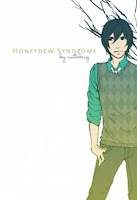
Honeydew Syndrome, Volumes 1-2 by New Shoe. I thoroughly enjoyed Honeydew Syndrome, particularly it’s quirky and true-to-life characters. Initially released as a webcomic, the boys’ love series was later collected in print in two volumes with additional bonus content. The first volume focuses on the somewhat awkward relationship between Metis and Josh which only gets its start after Josh hauls out and punches Metis in the face. The second volume partly overlaps with the first–some of the same events are seen from different perspectives–and focuses on their friends. Honeydew Syndrome doesn’t really have a driving plot; instead, it’s much more about relationships (and not just the romantic ones.)

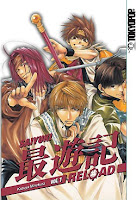
Saiyuki Reload, Volumes 1-3 by Kazuya Minekura. Though the manga changed names, magazines, and demographics, Saiyuki Reload is a direct followup to Minekura’s Saiyuki. While I enjoyed the slightly ridiculous Saiyuki, for some reason Saiyuki Reload doesn’t seem to be clicking as well with me. Despite a few flashbacks delving into Sanzo’s past, these early volumes just don’t feel like they’re going anywhere with either the story or the characters. It’s as if Sanzo and his crew are simply playing their previously established roles; the character development seems to be missing. However, the artwork in Saiyuki Reload is more polished than that in Saiyuki. (It is a more recent series after all.) The action sequences tend to be clearer and easier to follow, too.

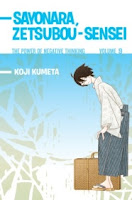
Sayonara, Zetsubou-Sensei: The Power of Negative Thinking, Volumes 9-10 by Koji Kumeta. Sayonara, Zetsubou-Sensei was originally released in English by Del Rey, but it is one of the series that Kodansha now continues to publish. It’s a slow seller–there hasn’t been a volume released in over a year–but I can understand why. The series tends to be episodic, has a very specific sense of humor, and the sheer number of cultural references it uses makes the series challenging to translate and adapt. Despite the fact that I often find Sayonara, Zetsubou-Sensei to be hilarious in a darkly absurd way, I can only read a volume or two at a time without it feeling like a chore. But I do like the series and am glad that it’s available.

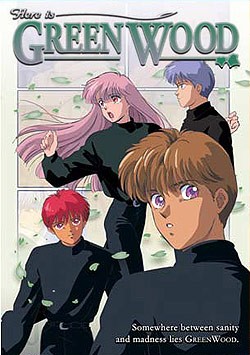
Here Is Greenwood directed by Tomomi Mochizuki. Based on the shoujo manga series by Yukie Nasu, Here Is Greenwood is a six-episode OVA. Although it is a mix of strict adaptation, new material, and slight re-imaginings of the stories in the original, the anime stays very true to the tone of the manga. I read and enjoyed Here Is Greenwood and I enjoyed the anime as well, but I don’t think that it will hold much appeal to those who aren’t already familiar with the characters. Here Is Greenwood is fairly episodic but the stories all revolve around the perpetually stressed-out high school student Kazuya Hasukawa, his oddball dorm and class mates, and the often absurd situations they find themselves in. The series is quirky and funny and made me laugh on several occasions.

Filed Under: My Week in Manga Tagged With: anime, comics, Here Is Greenwood, Honeydew Syndrome, kazuya minekura, Koji Kumeta, manga, New Shoe, Saiyuki, sayonara zetsubou-sensei

Pick of the Week: Limit

July 22, 2013 by MJ, Anna N and Sean Gaffney 1 Comment

limit6MJ: It’s a bit of a slow week for new manga, since we looked at Yen Press’ releases last week, but I still have a clear pick in the mix. I’m all in for the final volume of Keiko Suenobu’s Limit, out this week from Vertical. I’ve been on the edge of my seat since the very beginning, and the tension could not be higher as we go into this last volume. It’s rare that a short series like this packs such a punch. It’s the one and only pick for me this week.

ANNA: I will throw in for Limit as well. Looking forward to catching up on this series!

SEAN: Yeah, Limit 6 for me as well. Its overblown melodrama is its greatest weakness, but also its biggest strength.

What looks good to you this week?

Filed Under: PICK OF THE WEEK

Yun Kouga MMF: Final Link Roundup

July 21, 2013 by MJ Leave a Comment

loveless-blossomsWe’ve come to the end of the Yun Kouga Manga Moveable Feast! Though participation was undeniably low, we’re excited about the contributions that were made to the Feast. Here’s a roundup from the past few days:

I weighed in with a new 3 Things Thursday, in which I picked out three (ish) of my favorite female characters from Yun Kouga’s catalogue, including one from Earthian, which I read for the first time this week.

The male-centric sensibility often applies to shoujo manga as well—particularly those penned by creators who enjoy a strong undercurrent of BL subtext in their work, and this absolutely describes Yun Kouga. After all, even Gestalt‘s kick-ass heroine, Ouri, is actually a man temporarily endowed with a female form. Still, Kouga-sensei does not let me down! Female characters are always part of the fabric of her stories, even the most BL-rific of her worlds. For today’s 3 Things Thursday, I’ll look at three of these!

soubi-bound At Experiments in Manga, Ash Brown revisits the first two volumes of Loveless by way of Viz’s new omnibus release – Loveless, Omnibus 1:

The beginning of Loveless is a story of intense yearning and loneliness with characters who have been broken, damaged, and twisted. But even when they despair they still cling to hope. Ritsuka has trouble accepting himself and difficulty trusting others; the attention he receives from Soubi is both welcomed and feared. Loveless is also a story about the power of words. In part because of his association with Soubi, Ritsuka is pulled into a world where battles are waged with words and spells are cast that can cause considerable pain and physical damage … The first omnibus of Loveless raises more questions than it provides answers, but it does establish an intriguing tale and characters. Even having read it before, I still find Loveless to be a strangely enthralling and compelling manga.

Continuing the trend, our own Anna Neatrour at Manga Report gives the Viz’s first omnibus a second chance and finds she’s glad she did – Loveless Vols. 1 and 2:

Some manga seems a bit too edited or mass produced. Unless you’re seeking out manga from some of the more alternative magazines, most mainstream manga isn’t all that weird. The pinnacle of enjoyable manga weirdness in my mind is Est Em’s Working Kentauros. That manga about the slice of life tribulations about Centaur salarymen provides the reader with a peak into a manga creator’s subconscious and ability to be creative without boundaries. Loveless isn’t as unconventionally weird as Working Kentauros, but its combination of cat people, light bondage, magical battles, mysterious organizations, abusive parents, master/servant relationships, and occasional licking definitely add up to a manga that’s a bit more distinctive and quirky than one might expect.

And it’s all Loveless, all the time as Michelle & I celebrate our 100th installment of Off the Shelf with an epic discussion of the series – Off the Shelf, MMF Edition: Loveless:

MICHELLE: I really love the imagery of the “I can’t let go of anyone’s hand” moment, too. Another thing that strikes me about that shirt-buttoning scene is what Ritsuka says during it: “Y’know… I could never do anything like that for you.” Even though he finds violence abhorrent, it’s still his instinct to give Soubi what he needs/craves, and it saddens him that this is something that he simply cannot do.

MJ: Yes, yes! The fact that he words it that way, “for you” rather than “to you” (which is surely the way Kio sees it) acknowledges its importance to Soubi, and makes it clear that, even if Ritsuka can’t quite understand why Soubi would want something like that, he understands that he shouldn’t just dismiss Soubi’s feelings about it.

100-COLUMNS2

This wraps up the Yun Kouga MMF! Many thanks to everyone who participated. The complete archive can be found here. We now make way for the Boys’ Love MMF, to be hosted in August by Khursten Santos at Otaku Champloo!

Filed Under: UNSHELVED Tagged With: Manga Moveable Feast, MMF, Yun Kouga

K-On! College

July 21, 2013 by Sean Gaffney

By Kakifly. Released in Japan by Houbunsha, serialized in the magazine Manga Time Kirara. Released in North America by Yen Press.

It’s hard to be drawn in sometimes when a series is just so corporately driven. There was nothing wrong with the ending of the original K-On! It ended quite well, with the girls graduating and moving on to college. And yet suddenly, a few months later, we return with not one but TWO new series, each running in a separate magazine. It’s hard not to look at this and think that the publisher asked the writer to drag things on a little bit longer. What’s more, it is only a little bit – each sequel only lasted one volume, and the ending for this college volume just isn’t as satisfying as the original ending. Not to mention that many of the new characters fill similar functions to the old group. So, why read this cash-in?

k-oncollege

Well, because the author still knows how to write cute girls doing cute things and having cute situations. I mentioned in a comment on a previous review that I use ‘moe’ in two distinct and separate ways, and this is the first one. Everything about this is designed to make the reader happy to read about girls doing everyday things and trying to keep their high school rock band going. There is zero romance, and next to zero fanservice (there’s a suggestive color page of Mugi at one point). And there are absolutely no little sisters being this cute. Well, there’s Ui, but she acts the part of the responsible oneesama in any case. In any case, what we have here is more of the same, but at college. But if you enjoyed the first four volumes, there’s a high percentage you’ll enjoy this.

There is even, dare I say it, a bit of character development, showing that the girls might be growing up. Yui is trying to think about why she wants to keep playing music, even if she tends to think so hard it gives her a fever. Ritsu is the same, only she’s not a prodigy like Yui or a hard-worker like Mio and Mugi, so her fears tend to come to the fore. Mio still has her little foibles, but is cringing and freaking out a lot less, and is able to give just as good as she gets (her friendship with Ritsu remains a highlight). As for Mugi, she’s on her own for the first time in her life, so has her own insecurities that the others have never worried about. Seeing her joy in the little things we take for granted is really sweet.

As for the new girls, they get fleshed out more than I expected. Akira in particular I wasn’t fond of when we first met her, as it was fairly clear that the author needed someone for Yui to glomp and Azusa wasn’t around anymore, so here was a nearby replacement. Gradually, as the manga wears on, though, we see that she’s isn’t just another tsundere. She’s also allowed to have an old male crush, since she’s not one of the original cast and fanboys won’t burn merchandise in protest. But fear not, it doesn’t go anywhere. Sachi and Ayame round out the rest of that trio, and each have their own little quirks (particularly Sachi), but sadly don’t get as much time as Akira to develop in the minimal pages we see here.

Again, there’s nothing here that doesn’t support the idea that the author was asked to draw a little bit more to make some more money. But the core of what made K-On! enjoyable is also still here, and there’s nothing actively wrong with this. If you enjoyed reading about the four girls before, you’ll enjoy it here. If not, well, get it so that you can watch Ritsu’s hair evolve over the course of the volume.

Filed Under: REVIEWS

Off the Shelf, MMF Edition: Loveless

July 20, 2013 by MJ and Michelle Smith 27 Comments


Warning: This column contains SPOILERS for all volumes of Yun Kouga’s Loveless currently available in English.


MJ: Hello readers! As you know, Manga Bookshelf is currently hosting the Manga Moveable Feast, a monthly virtual book club in which the manga blogosphere comes together to discuss a single manga, topic, or mangaka. This month’s Feast features the work of Yun Kouga (read my introduction), a versatile artist whose work runs the gamut from RPG-style shounen fantasy, to josei romance, to boys’ love, and more. But in North America, Kouga-sensei is best known by far for her ongoing series Loveless, a shoujo fantasy involving supernatural intrigue, spell battles, and cat ears, but most of all, heartbreak. Lots and lots of heartbreak.

loveless-2006Originally published in Ichijinsha’s action-heavy, BL-tinged shoujo magazine Comic Zero Sum, Loveless was a great fit for Tokyopop’s lineup, alongside titles like Kazuya Minekura’s Saiyuki Reload and Shiho Sugiura’s Silver Diamond, but after the demise of Tokyopop’s North American publishing division, fans of the series were left hanging with no new releases after 2008’s release of volume 8. Fortunately, Viz Media has come to the rescue, not only releasing the series’ subsequent volumes (now standing at 11, both here and in Japan), but also re-releasing its earlier volumes in omnibus format.

As a latecomer to Loveless, all I really knew about it going in is that it featured cat boys and (possibly) some kind of sketchy shota relationship—either of which would have been enough to send me running quickly in the opposite direction—but as Michelle and I delved in to the series’ first two volumes, I quickly discovered that the series has much, much more to offer. Viz’s second omnibus release (encompassing volumes 3-4) inspired me to rave excitedly on camera, and further reading has only increased that excitement. Events of the third omnibus (volumes 5-6) led to this ode, Lovesick over Loveless. I’ll let that post speak for itself.

The truth is, Yun Kouga’s work (and Loveless in particular) hits so many of my personal storytelling kinks in so many instances, it would be prohibitively time-consuming to catalogue them all. But perhaps more significantly, she manages to address several of my usual turn-offs (and at least one known deal-breaker) in a way that makes them somehow palatable, even to me. As a result, my reaction to Loveless has begun to resemble nothing more than a kind of romantic longing, characterized by ever-wandering thoughts and a persistent love-struck haze. in short, I’m lovesick over Loveless.

Now that Viz’s omnibus releases have finally caught up to the newer volumes, I’ve been able to race through what’s available in this series, and though I think the latest volume may have broken my heart beyond repair, I’ve invited Michelle to become broken along with me. I hope she’ll forgive me. Michelle?

MICHELLE: As someone who wishes for more unhappy endings in manga, I certainly don’t object to heartbreak! And Kouga-sensei offers the best kind, as it’s not her style to simply serve up dramatic and/or tragic plot twists, but rather to focus on what these upheavals mean and feel like to the characters. And it’s in the understanding and the relating that lies the heartbreak.

MJ: Well said, Michelle! For those who may just be joining us, I’ll briefly go over the story’s premise, and some more recent plot points.

Ritsuka is a 12-year-old who has suffered a couple of major tragedies. First, two years prior, he experienced some sort of massive amnesia which left him with no memory whatsoever of the person he was before that time. This sent his mother into an increasingly unstable condition in which she does not believe that he is her son, and physically abuses him whenever he betrays himself as not “her Ritsuka.” More recently, his older brother, Seimei, to whom he was very close, was found horribly murdered—burned beyond recognition—with no explanation other than a cryptic message left for Ritsuka blaming his murder on an organization called “Septimal Moon.”

As the story begins, Ritsuka is approached by Soubi, an art college student whom Ritsuka has never met or even heard of, though he claims to have known Seimei. Soubi introduces Ritsuka to an underground society in which spell battles are fought by two-person teams made up of one “fighter,” who performs the spells, and one “sacrifice,” who directs the battle and takes all the damage for the team. Ritsuka, he is told, is a sacrifice, like his brother before him. Furthermore, Soubi was his brother’s “fighter” and has been bequeathed to Ritsuka upon his brother’s death.

(read right-to-left)

loveless-soubi-intro2
loveless-soubi-intro1

This situation is difficult for Ritsuka, as he struggles to get used to the idea of Soubi, who wants (needs?) to be completely dominated by him, but as the two find themselves forced to fight together, they eventually form a meaningful bond. Just as Ritsuka’s starting to get used to his new circumstances, things get even more complicated when, in volume seven, he finally discovers two very painful truths—that Seimei is alive (and had someone else killed in his place) and that Soubi is still bound to him.

Obviously, there’s a lot more to these points (the second one, in particular, becomes absolutely heartbreaking in volume eleven), and much more has happened than what little I’ve stated here, but I expect these things will come to light as the column goes on.

MICHELLE: Yes, there’s so much that I hardly know where to start. I guess I’ll go chronologically, and start with the fact that I’m absolutely fascinated by whatever it was that happened right around Ritsuka’s tenth birthday. It’s not just amnesia, and it’s not just a personality shift—even the subjects he’s good at in school are suddenly different! That might be, to me, the most ominous thing. Where did that ability come from? Was it always latent in Ritsuka? What on earth happened to cause such a psychic break? I have a feeling it has to be something absolutely horrible perpetrated by Seimei, and I wonder how many years it’ll be before readers finally know the answer.

loveless-amnesia

And, of course, the massive betrayal in learning that someone you loved and thought you knew was never really that person in the first place? And this is exactly what I meant in my response above—the reveal to readers that Seimei is alive is handled with absolutely no fanfare. Kouga-sensei is not attempting to shock the readers, she’s forcing the readers to watch Ritsuka find out, and that’s where the real drama is.

MJ: Yes! That whole thing is just brilliantly executed, in my opinion. Some of that realization starts slowly, as Ritsuka finds out, little by little, that the Seimei he thinks he knew doesn’t resemble the one anyone else knew in the slightest, and that even he knew on some level that Seimei was really frightening all that time, but hid those thoughts away, even from himself. Just that is horrifying enough. But then he discovers the truth–that Seimei is alive–in the cruelest way possible, from a third party, as he faces Seimei’s new fighter in battle.

What I love most about all of this, though, is that Ritsuka gets to have real, complicated reactions to all of it. There’s no switch inside him that turns off his love for Seimei or, to a great extent, even his trust in Seimei, despite the genuinely awful truths he’s learned. Seimei isn’t the person Ritsuka thought he was, but Ritsuka’s version of Seimei doesn’t just die. It can’t. It’s too much a part of Ritsuka himself.

There’s a scene in volume 8, where Ritsuka is finally face-to-face with Seimei (who has slaughtered his way through the building to get to him, even writing “Ritsuka, I’m back,” on the walls in blood), and he’s thinking, “The fact that Seimei is here… it’s proof of so many lies.” Yet his first real reaction is gratitude that his brother isn’t dead after all. And that’s not a feeling he can just put aside.

(read right-to-left)

loveless-proof
loveless-gratitude

MICHELLE: It happens a lot of times in Loveless that Ritsuka is allowed to feel two different things simultaneously, which is not something I’ve seen a lot of in manga, come to think of it. In the earlier volumes, this happens most often regarding Soubi, whom Ritsuka simultaneously wants to see and wants to avoid. And just when he decides to believe in Soubi, Seimei comes back and puts everything in turmoil.

Soubi’s reaction to learning Seimei is alive (in volume six) is heartbreaking as well, as you so eloquently (and with perfect visual aids) write about in your Fanservice Friday post. I love how this just really cements the realization that Soubi, despite appearances to the contrary, isn’t some simple creepy seme type. He’s a broken and vulnerable person who feels more Loveless than Beloved. He’s been cast aside with apparent ease by the person who was his “God,” and is desperate for Ritsuka to make their bond stronger. He must know that his bond with Seimei still exists, but would now rather have Ritsuka for his “master.”

MJ: I’m glad you brought this up so quickly, Michelle, because it’s Soubi’s place in all this that has broken my heart most gravely, and it’s ultimately a greater source of pain for Ritsuka, I think, than his brother’s betrayal—at least by the time the end of volume eleven rolls around. The danger signs are there early on and, as you say, even when he is first struck with the truth of Seimei’s betrayal, there’s a sense that he already understands the potential ramifications of that in his relationship with Ritsuka. Even before we’re made fully aware of the … inseverable nature of his fighter bond with Seimei, it’s clear that something’s up, and as Ritsuka’s face-off with his brother looms closer, Soubi becomes more and more visibly desperate to belong to Ritsuka, and Ritsuka alone.

The scene in volume seven where Soubi entreats Ritsuka to fully accept him so that he can fight for him against Seimei’s new fighter, Nisei, is one of the most affecting in the series—and in a series like this, that’s saying a lot. “If you accept me, Ritsuka… If you forgive me, Ritsuka… If you want me, Ritsuka…” Soubi says with startling calm, like he was reciting a sutra, as the brand Seimei marked him with bleeds painfully on his neck. It’s a stunning scene, made more so by the fact that Ritsuka’s left to wrestle with his own motivations—his fear that by accepting Soubi he’s simply manipulating him.

(read right-to-left)

loveless-reborn1
loveless-want3

MICHELLE: Ritsuka really does have all the power. More than he wants to have, really, especially when Soubi insists that Ritsuka treat him like an object. It’s rather hard for me to understand wanting so desperately to be dominated, but in Soubi’s case it seems to have some connection to wanting to forget that he is a person and the emotional pain to which people are susceptible.

MJ: There are some pretty powerful scenes around this same time-frame on that subject, too. I’m thinking particularly of the beginning of volume seven, which is when Ritsuka finds out that his brother carved his name, “Beloved,” into Soubi’s neck. It’s Soubi’s friend Kio who lets the cat out of the bag, as he opens Ritsuka’s eyes to Seimei’s violent tendencies. The whole scene is pretty powerful, with Ritsuka demanding that Soubi show him the damage Seimei did to his body. But the bit that really strikes me is the conversation afterwards, in which Soubi explains that, from his perspective, Seimei’s brand isn’t violence, but rather a bond—one that he entered into willingly.

It’s complicated for the characters and for us as readers, as we try not only to wrap our heads around the world as Soubi sees it, but also try to reconcile that with the knowledge that Seimei really is violent, and that his bond with Soubi was only forged to serve himself. I really like the fact that Kouga portrays Soubi’s subservience to Ritsuka and Seimei as being both the same (from Soubi’s viewpoint) and totally different (from Ritsuka and Seimei’s viewpoints).

(read right-to-left)

loveless-strip
loveless-strip2

MICHELLE: I found that whole sequence absolutely chilling, somehow. Perhaps it was seeing normally upbeat Kio delivering a line like, “Oh, I knew him. I hated him.” It just sets the tone for all that follows, as Ritsuka begins to realize all the weird little things that would happen when Seimei was around, like fish mysteriously dying and such. Ritsuka pushed these niggling doubts aside and convinced himself he wasn’t afraid of Seimei and that he loved him, but the truth was, he knew something was off all along. Just more evidence to the support the “Seimei did something awful” theory for the amnesia onset.

MJ: Yes, I agree (I can’t wait until we finally get some answers about that), though I wonder, of course, how Seimei is the way he is, too. I mean, is he just a sociopath? That’s the simplest answer, but I don’t necessarily expect things to be simple in a Yun Kouga manga.

I was going back just now to the first omnibus, which I hadn’t read in quite a while, and was struck anew with Soubi’s surprise at discovering that he actually loved Ritsuka. He’d gone to him, because Seimei had ordered him to do it, and had told Ritsuka he loved him, because Seimei said he must. But he somehow hadn’t expected to really feel that kind of love. At the time that just kind of went right by me, but now that we know so much more about Seimei, and especially about his relationship with Soubi, it makes so much sense. He’d only learned to be subservient to these really horrible people—first Ritsu, then Seimei—and had no idea that a master like Ritsuka even existed. It’s heartbreaking, really.

MICHELLE: It is. It makes you wonder what kind of person Soubi could’ve become without these influences. Not that he’s at all a bad person as he is, of course. But he certainly isn’t free; it’s the last thing he wants.

Your comment does bring up the point that there’s tremendous reread potential in Loveless. There are all manner of nuances that the reader puzzles over initially, and perhaps that’s why I’ve seen some reviews describe the series as confusing, but which might make a great deal more sense in retrospect. Even though the series is kind of notorious for the time it’s taking to unfurl, that’s actually due to the publishing schedule and not to any lollygagging about in the story itself. At least, I don’t think so. I get the sense that Kouga knows exactly what she’s doing.

MJ: I agree, though I think we’re definitely at an advantage being fed all of it at once. Still, as you say, there is tremendous re-read potential in this series, and I expect I can keep myself busy during the year-long wait between volumes revisiting what’s come before. Just the short time I spent with the first two volumes today made me want to re-read the entire thing from the start—and I’ve barely just finished!

You know, as anxious as I am to find out what happened to Rtisuka’s memories, I feel like it might break my heart to lose the Ritsuka we know now.

notknowsmMICHELLE: I was thinking last night that Ritsuka’s plight reminds me some of Echo in Dollhouse, in that the protagonist has this other/earlier self that s/he’s trying to regain, believing it to be superior to their current self. (Ritsuka even believes that his being who he is now is “a sin for which I deserve to be punished.”) But what will happen to the person s/he is currently? In Dollhouse a melding of sorts happened, if I recall rightly, and I hope that we’ll get something like that in Loveless.

Because Ritsuka really is very endearing and very consistently characterized, too. One of the things that most impresses me about how he’s written is how his most strongly held opinions and desires are clearly the result of the things he has been through, but Kouga just lets readers notice that themselves rather than putting up flashing arrows pointing it out. He’s yearning for someone to love, he jumps at the chance to “make memories” and leave people with photographs of himself so they won’t forget him, he’s utterly opposed to inflicting any kind of violence, and he absolutely hates secrets and lies. When Kio apologizes after bringing up Seimei’s violent tendencies, Ritsuka reacts with, “There isn’t anything that I don’t want to know! Not knowing is the worst!”

He’s an honest, gentle, and caring boy in a way that isn’t cloying at all.

MJ: And he’s just willful enough to take charge in the way Soubi needs him to as well, without being a sadist like his brother. There are a number of scenes that spring immediately to mind for me when I think of Ritsuka and the moments that have most defined him for us over the course of the story which I’d love to discuss with you. I’m glad you mentioned Ritsuka’s burning need to “make memories,” with people, because the there was an early scene along those lines that struck me much more profoundly a second time around.

I was startled to recall as I paged through the first omnibus volume again that the very first thing he does with Soubi after meeting him is to drag him off to “make memories.” The guy’s a complete stranger and an adult, but since he identified himself as a friend of Seimei’s (or, well, he let Ritsuka identify him as such—I think that’s an important distinction), that was good enough for Ritsuka. Then, my heart broke to pieces in just one panel, when Ritsuka insists that he’s sure Soubi will forget that Ritsuka was even there with him if he doesn’t take pictures. It’s a tiny thing then that we don’t fully understand until later, but it just shattered me.

MICHELLE: Practically the first thing I thought when Ritsuka immediately buys into the “a friend of Seimei’s” claim is “Nooo, don’t go with him, little boy!” And, y’know, Ritsuka’s not a stupid kid. I’m sure he knows not to go off with strangers, but he was desperate for any kind of link to his beloved (no pun intended) brother, and so he just lights up and his demeanor changes entirely.

His assertion that, without photos, Soubi will just forget he was ever there makes me wonder if something like that has actually happened to him. It doesn’t seem that Misaki, his troubled mother, has forgotten him particularly so much that she doesn’t see the person he is now, unless it’s to accuse him of not being “her” Ritsuka.

MJ: I wonder this, too, and it keeps on coming up, over and over again, in various ways. Then later, in the battle with Bloodless—a pair who use their enemies’ worst fears against them—we find out that Ritsuka’s worst fear is not just that he’ll be forgotten, or even that he’ll forget himself again, but that the few memories he actually has will be proven false as well. He’s already lost the memory of most of his own life, and now he’s discovered that his most precious memories of his brother may be nothing but lies as well. So if Seimei is a lie and Ritsuka is also a lie, what does he even have that’s real at all?

I’m thinking it all comes around to the memory loss in one way or another, compounded by the revelation of Seimei’s massive deception. In another scene that comes to mind from early in volume seven, Kio expresses disbelief that anyone could forgive the kind of violence that Seimei perpetrated on Soubi and accuses Soubi of being a “total fool.” Ritsuka responds by calling himself a fool as well. “You’re a fool and a masochist, Soubi, so you’re happy no matter what’s done to you! And Seimei is a sadist, so he can do anything to you, right? And I’m a fool for sticking my nose into this, aren’t I?” Then he thinks to himself, “But… I can’t let go of anybody’s hand.”

His response is very much in character, in that it’s yet another admission that he’s afraid to let go of anyone he loves (and who might love him), but it’s what he does afterwards that I find the most telling. He turns to Soubi and starts buttoning up his shirt so that he won’t catch a cold. For all he’s been through and how much he’s found to be scared of, more and more as the series goes on, his instinct is to become the grownup and take care of other people. (His speech to Soubi late in volume eleven takes this even one step further, but I expect we’ll come back to that later on.) Partly I think he has found, time and again, that he can’t trust adults to take care of themselves, let alone him, but also I think he’s desperately trying to hold things (and people) together on his own, every little bit that he can, lest he lose one more thing.

(read right-to-left)

loveless-fool1
loveless-fool2

MICHELLE: I really love the imagery of the “I can’t let go of anyone’s hand” moment, too. Another thing that strikes me about that shirt-buttoning scene is what Ritsuka says during it: “Y’know… I could never do anything like that for you.” Even though he finds violence abhorrent, it’s still his instinct to give Soubi what he needs/craves, and it saddens him that this is something that he simply cannot do.

MJ: Yes, yes! The fact that he words it that way, “for you” rather than “to you” (which is surely the way Kio sees it) acknowledges its importance to Soubi, and makes it clear that, even if Ritsuka can’t quite understand why Soubi would want something like that, he understands that he shouldn’t just dismiss Soubi’s feelings about it. It’s really touching, actually.

MICHELLE: Another scene that really stands out for me happens in volume five. It’s late at night and Nisei has tipped Misaki off that Ritsuka is not at home—he’s at Soubi’s house using the video-game interface to get information on Septimal Moon—and when Ritsuka finally shows up, she tries to contain herself but cannot. The ensuing abuse is incredibly disturbing, and I’m fascinated by Soubi’s reaction to it and his realization about Ritsuka. “Ritsuka is the way he is because of his mother. Ritsuka is searching for someone to love. He wants to find that person so badly. And when he thinks he’s found them, he gives them his all. But that kind of unwavering trust that won’t budge a millimeter… that in itself is madness.”

I think it’s important to note here that Soubi—his own acceptance of Seimei’s violent tendencies aside—knows that the face Seimei showed Ritsuka was not his true one, but isn’t going to be the one to shatter his illusion.

MJ: There’s something else that connects these two scenes, actually, and I never would have noticed it had we not discussed them together! I just realized that in the scene you mention in volume five, it’s Soubi who is taking care of Ritsuka, giving him his coat so that he won’t get cold. And it’s somewhere in between these two scenes—I think probably at the point in which Soubi discovers that Seimei is alive and his world gets shattered—Ritsuka becomes the adult and Soubi the child. When I think about it, that’s the turning point. Everything between them is different after that.

MICHELLE: I think you’re right! I think that’s when Ritsuka—and the reader—realizes how much power he truly has over Soubi. I must admit I now have geekbumps because YOU HAVE FOUND THE CRUX OF LOVELESS.

MJ: Hee! Well, it may be too early to identify it as the crux of the whole series, but I feel excited by the discovery all the same. I admit that I was surprised to read Sarah Ash’s feelings about Ritsuka’s shifting character, because to me he’s grown up drastically in the past few volumes. And it really does all start just at the moment that Soubi falls apart. As many times as I read it, I’m still blown away by that scene in volume six when Soubi arrives at Ritsuka’s house, broken to pieces and begging Ritsuka to run away with him. It’s the last page of chapter four where it happens. Ritsuka, stunned by Soubi’s sudden earnestness thinks, “If you’re serious… then… I’ll be serious too.” And suddenly he’s the grownup. I mean, he still has his moments of childishness and uncertainty here and there, but that’s really when he takes charge, and we see this build all the way through volume eleven, up to the point when Seimei takes the opportunity to crush him.

And really, that’s significant to me, too. Even after Seimei’s return, he’s held it together pretty well, still taking care of Soubi (that one of the first things he asks Seimei when he confronts him is “Why are you scaring Soubi?” is, to me, indescribably touching). But you know how, no matter how grownup and independent you become, it can be almost impossible not to regress in the company of your family? For instance, I’m senior management at my job, but when my parents come to visit the office, I find myself struggling to maintain that “in charge” version of myself in front of them. It’s so hard not to become the child again in those circumstances. I realize we don’t yet fully understand Seimei’s motivation for destroying Ritsuka, but I almost feel like his part of his objective in volume eleven is to show Ritsuka that he’s still the little brother–as helpless and dependant as ever–and that even growing up is something he can’t do without his older brother’s permission.

MICHELLE: That scene where Soubi arrives and shows Ritsuka his emotional pain reminds me of an earlier time when a wounded Soubi turned up at Ritsuka’s window, but then wondered why he came and decided to go away again and spare Ritsuka the sight of his injury. Now they’re so close that he can show Ritsuka, if not the full truth of what’s happened at least some sign of his despair.

Another moment that really sticks out for me the most in the post-Seimei aftermath is when Ritsuka shows up at Soubi’s place to cook him an omelet. He wants to do something to cheer him, and he’s twelve so he can’t do much, but he can make an omelet with an inspirational ketchup message on it! I like that it was a sort of grown-up thought to be having, but an age-appropriate execution.

loveless-childishcropMJ: What a wonderful way of putting it, Michelle! A “grown-up thought to be having, but an age-appropriate execution” is exactly right, and that’s the kind of thing Yun Kouga does really well, too. Even as she’s having Ritsuka take on the adult role with Soubi, it’s not like she turns him into an adult. In fact, ruminating on the ideas of “adult” vs “child” is a major theme in this series, and I love all the ways in which she explores that topic.

I’ve already gone on and on about how brilliant I think the whole cat ears thing is—how she uses a common (and fairly silly) manga trope to both comment on our society’s obsession with the significance (and ramifications of) losing one’s virginity, while also providing silent notes on all her characters—but she’s got a lot of things to say which reveal themselves in other ways.

There are a few scenes in particular that spring immediately to mind, two of which are in volume eleven. First, I thought of Ritsuka’s conversation with Yuiko early on (I adore Yuiko, by the way, in case I haven’t mentioned that). He’s trying to figure out what to do or even think about his brother, the sociopath—something no kid his age should be having to figure out—and though Yuiko has no idea what’s going on, she’s trying to help. Twice in that conversation she mentions the fact that they’re just kids, and that this means that they can do what they want. “Even if we make mistakes, it’s okay because we’re kids!”

And of course, that’s the whole problem. Ritsuka’s just a kid, but he’s being put in this position where his mistakes might have truly dire consequences, both for him and for others. Meanwhile, it’s the adults in the story who are acting like kids—allowing their own issues to get in the way of being the grownups, even when they’re dealing with children. (Maybe even especially when they’re dealing with children?)

“Lately, I’ve met a lot more adults,” Ritsuka tells his psychiatrist, just a few scenes later, “And I think adults are actually pretty childish.”

Well said, Ritsuka. Well said.

MICHELLE: The way adults interact with children seems to be something Kouga is particularly interested in. Earlier this week, I read your post about Crown of Love, and was struck by the dialogue “If you think I can’t lie to you when you look me right in the eyes… then you really are just a kid. If you think adults are always nice to children, you’re making a big mistake.” And then in volume nine of Loveless you’ve got Nagisa saying that Ritsuka “understands all too well that adults are not always kind to children.” That’s a neat insight into how Kouga views the comparative maturity of these two characters.

And, I note, I love Yuiko, too!

MJ: But, true to form, even while acknowledging that adults often fail to act as adults and are often unkind to children, she doesn’t straightforwardly vilify them for it. She has a way of writing a character from the point of view of “Wow, you fucked up,” without just abandoning them, much as Ritsuka doesn’t abandon those who have failed him, for better or worse. Meanwhile, she lets the kids show us how it’s done, without making them into perfect saints either.

One of my favorite scenes, post-Seimei, comes immediately after his escape from Seven Moons Academy—an escape ultimately facilitated by Soubi, who is unable to refuse Seimei’s order to essentially break him out. There’s a lot packed into that event, as it’s when both Ritsuka and we are confronted with the true power of Seimei’s bond with Soubi, and the extent to which their shared name, “Beloved,” is able to maintain that bond, even against Soubi’s will. Soubi is devastated by his own betrayal of Ritsuka, and reverts into what Ritsuka calls “toddler mode,” and though Ritsuka is not completely sure how he’s supposed to handle it, handle it he does, basically by ordering Soubi to get over it and go to sleep. Ritsuka’s grumpy and tired, and not as nice as he might like to be, but he’s still taking care of Soubi and keeping him close, rather than letting Soubi distance himself or wallow in his own regret.

MICHELLE: I like that scene, too, ‘cos it’s like Soubi—having been compelled to obey Seimei—is repeating the refusal (“don’t want to”) that he wishes he could have made. And, of course, with Ritsuka he would’ve been allowed to make such a rejoinder without repercussions, but when he rejoins Seimei in volume eleven he’s ordered not to speak until given permission. “I don’t want to hear your voice.” Soubi would be so much happier if he could serve only Ritsuka.

(read right-to-left)

loveless-why1
loveless-why2 1

I wonder… is the bond really a thing that’s compelling him, like supernaturally, or is it just Soubi’s internalization of the bond that renders him incapable of disobeying? And, actually, I wonder why this Fighter/Sacrifice system exists at all, especially with the academy. Why was it established? Surely not for the purpose of all this infighting! Is there a greater threat out there to which we’ve not even been introduced?

MJ: There’s definitely a lot we haven’t been told yet, including the entire purpose of Seven Moons Academy and Septimal Moon, and I think whenever we finally find that out, we may understand a lot more about the bond between fighters and sacrifices. But I feel like there are a few scenes that have been intended to let us know that the name itself is a powerful supernatural bond that can’t be broken, especially when the fighter is a “blank” as Soubi is—or certainly Soubi’s been made to believe that this is the case. He’s told repeatedly by both Ritsu, who trained (and abused) him and Seimei who claimed (and abused) him that it’s impossible for him to betray his sacrifice once he’s been marked with his name. That said, I specifically pointed out that both have abused him (both physically, emotionally, and in Ritsu’s case, sexually), because it certainly seems possible that, between them, they’ve brainwashed Soubi into believing something that’s not actually true.

I wonder, though… one of the things I found most heartbreaking about Soubi breaking the window for Seimei to escape, is that I got the impression in the previous volume that Soubi thought it might be possible, if Ritsuka truly wanted him and accepted him as his fighter, that he could actually become his fighter. He’s been told that a blank’s ownership is absolute (yet non-exclusive for the sacrifice, how cruel is that?) but the later flashback to Soubi’s first meeting with Seimei, in which Seimei describes his marking of Soubi as allowing him to be “reborn” as his property, makes me wonder if Soubi though it just might be possible to reborn once more, if only Ritsuka would fully accept him. And I wonder if he is pleading, hoping for the same thing later in the graveyard in volume eleven.

MICHELLE: I got that impression, as well. Soubi wants their bond to be real. I’m not sure Ritsuka fully grasps that, though, because as Soubi is walking away, he thinks, “In the end… all those times… Soubi only ever listened to me as an indulgence.” Perhaps he thinks he was being pitied or humored by Soubi when the latter would “consent to obey” him, but it wasn’t really like that for Soubi.

(read right-to-left)

loveless-soubiaway3
loveless-soubiaway4

MJ: I think that’s what I found most painful about that whole sequence of events, actually. I mean, what happens is obviously heartbreaking, with Seimei cruelly taking Soubi from Ritsuka, as if Ritsuka hasn’t lost enough already. But even more awful, in my opinion, is Ritsuka’s misunderstanding of Soubi’s feelings on the matter. That’s what ultimately broke me, and it really did break me, to an extent from which I’ve yet to recover. The fact that this misunderstanding seems to have been Seimei’s intent? I just… wow. He actually waits to remove Soubi from Ritsuka just at the moment when it would hurt Ritsuka the most. And Soubi.

I realize his true objective must be larger than this;there’s no reason for him to need to hurt Soubi, for instance, for whom he feels nothing, unless it serves some other purpose to do so, which means it has to be Ritsuka he’s really trying to hurt. But why? Is it related to the memory loss? Is he trying to punish Ritsuka for something? Is he trying to break him down in order to control him as well? Or is it even bigger than that?

Time will tell, I realize, but in the meantime, I mostly just want to kill Seimei. Possibly with my own bare hands.

MICHELLE: He’s the one that put them together in the first place, with orders for Soubi to love Ritsuka, so he is obviously enjoying getting them to really care about each other and then ripping them apart. Somehow I get the feeling he’s trying to trigger something in Ritsuka. I don’t know. But it’s almost like… Seimei did something that got Ritsuka to the person he is now, and now he’s trying to make him into something else that he can use. I thought it was interesting to see that Seimei’s actually been creepy from day one, as his first thought upon seeing his baby brother was that his mother had created Ritsuka expressly for him.

MJ: Heh, yes. Though, it’s so difficult to figure out what Seimei actually enjoys. I mean, it certainly seems like he must enjoy hurting people. Yet he’s so cold about it all.

reason-smallThere are a number of other fighter/sacrifice pairs introduced over these later volumes, and we’ve barely talked about them at all; I’ll the first to admit that I’m too focused on the major players right now to give them the attention they deserve. One of the darker stories, however, comes from Mikado, another sacrifice who felt a kinship with Seimei when they were both training, because of their shared inability to comprehend emotion. Mikado describes them both as “empty inside,” which absolutely jives with what we’ve seen in Seimei. And when Seimei orders his fighter, Nisei, to rape her and cut off her hair, she’s horrified, less by the act itself, and more by the fact that, from her perspective, Seimei broke their “code,” by doing it (in his words) for “no particular reason.” So is it really that he enjoys hurting people? I’d say that’s absolutely true of Nisei, who revels in watching Ritsuka cry. But what’s the deal with Seimei?

MICHELLE: I found the Mikado reveal very shocking. I mean, yes, Seimei has definitely killed at least one person (the guy whose body was used as a Seimei stand-in) and slashed a couple characters with his knife, not to mention inflicting all sorts of mental and emotional anguish, but this just seemed exceptionally horrible, even for him. Ritsuka is sure Soubi would never do such a thing, but if commanded by Seimei… I am not so sure, and that kind of makes me feel ill. I would hope Soubi could break the spell, either literally or figuratively, if it came to that.

This incident did put something else in perspective, storytelling-wise. After the major Seimei drama goes down at the end of volume eight, it’s as if the story takes a step back from the precipice. Our characters go back to their lives, Ritsuka goes back to school, where Youji and Natsuo enroll and act like brats. One starts to wonder where the story’s momentum has gone. But in the midst of that there was a story about Yuiko being bullied and when Ritsuka confronts the girls, they admit they have no reasons for their actions. He’s angry at them, and yet, here is Seimei giving the same answer. What’s it going to take for Ritsuka to stop feeling like he’s “on Seimei’s side” in all this?

MJ: That’s a very good question, and… yes. “Yes” to everything you’ve said here. I find myself wondering if Seimei is escalating his most gruesome behavior almost to see how far he can go. How far can he push his fighter? Are there limits to his control? Or maybe even, is there anything he can do that’s awful enough to make him feel regret? What are his own limits?

I admit I kind of don’t even want to think about how far Soubi would go if commanded by Seimei. I love Soubi too much to handle it. Yet, I suspect Kouga will confront me with it sooner or later, anyway. Probably sooner. She’s never been afraid to push her readers into uncomfortable places, of course, which is one of the things I love best about her.

Speaking of which, this is a bit of a shift in topic here, but wow does she push at my boundaries with Ritsuka and Soubi’s relationship. We see this again in volume eleven, when Ritsuka is ordering Soubi to “take action” in a way that looks very much like physical action, because Soubi never believes his words. Obviously, we don’t actually see anything truly inappropriate take place, and she’s been really careful to draw a line there, but it’s absolutely uncomfortable. And part of why it’s uncomfortable is that she makes clear all along that it’s problematic, though we can’t help rooting for them as… something. Something close, but not that close.

(read right-to-left)

loveless-abandonment1
loveless-abandonment4
loveless-abandonment3

MICHELLE: I honestly don’t know how I feel about that aspect of their relationship. I feel like it’s going to end up getting physical eventually, but probably not before Ritsuka grows up. (Soubi, perhaps, not wishing to do what was done to him?) And that it will be because of who they are and not what their roles are. Like, Soubi has suggested that he’d want to be “taken” in that scenario, which I don’t interpret simply as being the uke, but just in terms of “the ball is in your court, whenever you want me I am here.” But it’d be better if Soubi wanted it because Ritsuka is Ritsuka and not just his master.

Does any of this make sense? It’s a bit rambly.

MJ: It does make sense, and I guess I’m there with you. I mean, I can’t help wanting to see them together for the long term, I just don’t know what that really means, or if it’s in the cards. I mean, out of all the mess, Kouga does seem to like giving her characters happy romantic endings of some kind. And there’s no denying that Ritsuka and Soubi’s relationship feels… well, kinda romantic—for the reader, at least. I admit I’ve occasionally wondered if part of the purpose of the cat ears is to constantly reassure us that Ritsuka is still a child, at least in the Loveless universe’s sense of the word.

On a somewhat related note, I find it particularly ironic that Soubi doesn’t trust Ritsuka’s words in a story that is largely about the power of words. All the teams’ battles are fought with words, Seimei’s greatest weapon during his initial confrontation with Ritsuka is the power of his words (and the possibility that he’ll force Ritsuka to use words to somehow subjugate himself). And Ritsuka has this fantastic revelation in volume nine about words and how important they are. Yet Soubi doesn’t believe a single thing he says, at least not as far as his own worth to Ritsuka goes.

loveless-words

MICHELLE: At first, I found the spell battles kind of silly, but they’re actually depicted rather well, with Kouga showing some subtle differences between fighters at different levels of skill. And even the sacrifices are able to impact the battle by imparting words of encouragement upon their fighters.

About Soubi, he probably just can’t believe that someone would tell the truth to him when they weren’t forced to do so, given all the abuse and manipulation he’s endured.

MJ: I agree, I’ve found the spell battles to ultimately be pretty spectacular, not just because they’re extremely well-drawn (they really, really are), but because they’ve offered us both numerous character notes for our leads (and supporting characters, of course) and what feels like a rather fresh take on the idea of the power of words, which is a pretty common theme in manga. I admit that I’ve always been fascinated with stories that include variations on kotodama, and this feels like a modern take on the concept.

loveless-bestMICHELLE: This is a somewhat out-of-the-blue topic shift, but before we conclude I want to make sure to talk at least a little about Yuiko and Kio, who are the closest friends of Ritsuka and Soubi, respectively. We’re privy to Yuiko and Ritsuka’s meeting in volume one, during which she’s persistent and he thinks she’s a ditz, but it’s not until volume nine, during which Kio is being held hostage by Seimei’s group, that we learn that he and Soubi actually became friends under very similar circumstances.

Both characters keep our leads grounded in the world and support them with positive attitudes, which is why hints that they may be involved on a deeper level are kind of.. troubling. There’s a rather random reveal in volume ten regarding Kio, for example, and I also can’t help wondering whether upbeat Yuiko could possibly be the real Loveless fighter. After all, Youji tells Ritsuka that it’s someone he’s probably already met, while Yuiko notes in volume six that, “When I’m with Ritsuka I feel my best… He makes me feel like I can do anything.”

I should clarify that I don’t mean “troubling” in the sense that these characters aren’t absolutely genuine, because I believe they are. But I would like to keep them out of harm’s way, especially Yuiko, who seems to be leading a relatively happy and normal life.

MJ: I’ll admit that, deep down, I’d prefer that Yuiko remain the grounded, non-supernatural friend she is to Ritsuka now, because I think she’s really good for him like that (and of course, she’s a lot safer out of the fray), but I’m not sure what the chances are, since we’ve had this rather stunning reveal regarding Kio’s secret life. I really like both characters, though, and I appreciate the fact that they are, in their individual ways, true, devoted friends, even if they can’t completely understand what Ritsuka or Soubi are really about. I’m also glad that both Ritsuka and Soubi have come to value their friends, despite their initial resistance.

I’m not completely sold on Kio’s odd backstory at this point—I rather liked his place in Soubi’s life as it was—but I’m willing to trust that Kouga will win me over to it.

Is it terrible that I harbor an unfounded hope that the name “Loveless” might appear on Soubi, instead of… well, anyone else? I know that, as a blank, that’s supposed to be impossible. But I can’t help wishing it could be true.

MICHELLE: I wish for it, too. And the fact that Ritsuka’s name has yet to appear on his body gives me at least some hope that something special is going to happen for this particular pair.

MJ: Of course, it will be a long time before any of our questions or hopes are answered, and after having the opportunity to essentially marathon this series on our first read, I suspect the wait for volume twelve will be difficult to bear. But I’m so very glad that Viz provided us the opportunity to give this series a real chance. It has won my heart completely.

MICHELLE: And mine!


100-COLUMNS2


All images © Yun Kouga. Original Japanese edition published by ICHIJINSHA, INC., Tokyo. English translation rights arranged with ICHIJINSHA, INC., Tokyo. Published by VIZ Media, LLC.


To submit your contributions to the Yun Kouga MMF for inclusion in this month’s archive, please send your links by email to mj@mangabookshelf.com or via Twitter to @mjbeasi between now and Saturday, July 20th. If you would like your contribution(s) to be hosted at Manga Bookshelf, please email them to MJ, along with any included images. Contributions to the Yun Kouga MMF will be archived here.

Filed Under: OFF THE SHELF Tagged With: loveless, Manga Moveable Feast, MMF, Yun Kouga

  • « Go to Previous Page
  • Page 1
  • Interim pages omitted …
  • Page 684
  • Page 685
  • Page 686
  • Page 687
  • Page 688
  • Interim pages omitted …
  • Page 1072
  • Go to Next Page »
 | Log in
Copyright © 2010 Manga Bookshelf | Powered by WordPress & the Genesis Framework