• Skip to primary navigation
  • Skip to main content
  • Skip to primary sidebar
  • Home
  • About Us
    • Privacy Policy
    • Comment Policy
    • Disclosures & Disclaimers
  • Resources
    • Links, Essays & Articles
    • Fandomology!
    • CLAMP Directory
    • BlogRoll
  • Features & Columns
    • 3 Things Thursday
    • Adventures in the Key of Shoujo
    • Bit & Blips (game reviews)
    • BL BOOKRACK
    • Bookshelf Briefs
    • Bringing the Drama
    • Comic Conversion
    • Fanservice Friday
    • Going Digital
    • It Came From the Sinosphere
    • License This!
    • Magazine no Mori
    • My Week in Manga
    • OFF THE SHELF
    • Not By Manga Alone
    • PICK OF THE WEEK
    • Subtitles & Sensibility
    • Weekly Shonen Jump Recaps
  • Manga Moveable Feast
    • MMF Full Archive
    • Yun Kouga
    • CLAMP
    • Shojo Beat
    • Osamu Tezuka
    • Sailor Moon
    • Fruits Basket
    • Takehiko Inoue
    • Wild Adapter
    • One Piece
    • After School Nightmare
    • Karakuri Odette
    • Paradise Kiss
    • The Color Trilogy
    • To Terra…
    • Sexy Voice & Robo
  • Browse by Author
    • Sean Gaffney
    • Anna Neatrour
    • Michelle Smith
    • Katherine Dacey
    • MJ
    • Brigid Alverson
    • Travis Anderson
    • Phillip Anthony
    • Derek Bown
    • Jaci Dahlvang
    • Angela Eastman
    • Erica Friedman
    • Sara K.
    • Megan Purdy
    • Emily Snodgrass
    • Nancy Thistlethwaite
    • Eva Volin
    • David Welsh
  • MB Blogs
    • A Case Suitable For Treatment
    • Experiments in Manga
    • MangaBlog
    • The Manga Critic
    • Manga Report
    • Soliloquy in Blue
    • Manga Curmudgeon (archive)

Manga Bookshelf

Discussion, Resources, Roundtables, & Reviews

Blog

Loveless Vols. 1 and 2

July 20, 2013 by Anna N

I’ve had the first omnibus of Loveless for a fair amount of time. I tried reading it once when I was a bit distracted and put it aside after a few pages. The Yun Kouga manga moveable feast was the perfect opportunity to give this series a second try, and I’m glad I did. Some manga seems a bit too edited or mass produced. Unless you’re seeking out manga from some of the more alternative magazines, most mainstream manga isn’t all that weird. The pinnacle of enjoyable manga weirdness in my mind is Est Em’s Working Kentauros. That manga about the slice of life tribulations about Centaur salarymen provides the reader with a peak into a manga creator’s subconscious and ability to be creative without boundaries. Loveless isn’t as unconventionally weird as Working Kentauros, but its combination of cat people, light bondage, magical battles, mysterious organizations, abusive parents, master/servant relationships, and occasional licking definitely add up to a manga that’s a bit more distinctive and quirky than one might expect.

The world of Loveless features cat-people who seem to lose their extra cat-ears when they lose their virginity. So all the teens in the book have cat-ears and tails, while the adults look like normal humans. Ritsuka Ayoyagi shows up for the first day at a new school, attractive, mysterious, and bedecked with bandages. He’s still dealing with the emotional fallout from the murder of his beloved older brother Seimei. Ritsuka’s home life is difficult. He sees a counselor. His personality evidently shifted a few years back, and his mother treats him like a changeling and scapegoat. Ritsuka’s personality is understandably abrasive, and he promptly rejects the girls in his new class except for the persistent but simple Yuiko who appoints herself his new friend.

Ritsuka’s life takes a sudden turn when the college student Soubi shows up at his school and announces that he’s a former friend of Seimei. Soubi pledges his love for Ritsuka and announces that he’ll protect him, and they’re suddenly thrown into a mystical battle with a pair of fighters. Soubi casts spells, while Ritsuka serves as a sacrifice absorbing the pain of the others’ attack. Kouga’s art is graceful and dynamic, making the fighting scenes look very stylish with plenty of dramatic yelling and flowing hair. She’s particularly good at making Ritsuka appealing and sympathetic, as his facial expressions shift from closed-off to beseeching and vulnerable.

I’m glad I read this omnibus, because I probably would have been a bit unsure about continuing the series after just the first volume, but in the space of two volumes Kouga builds an intriguing world and made me invested in seeing what would happen next for Soubi and Ritsuka. While Ritsuka is allegedly the the one in charge of giving Soubi directions, Soubi is snarky and sophisticated enough to make the reader question who is really in control. The mystery of Seimei’s death, Ritsuka’s shift in personality, and the presence of the organization Septimal Moon all add up to a lot of plot points to explore in future books. I enjoyed Loveless more than I thought I would after my first reading attempt, although I can see myself getting a bit frustrated if answers to some of the questions raised in the first two volumes aren’t explored thoroughly in the manga series as a whole.

This two-in one omnibus has plenty of extra author’s notes, side stories, and character illustrations, and I think it would appeal to fans who already bought the first part of the series when it was published by Tokyopop. At roughly $12 per volume now on amazon, the first three omnibus volumes are a solid value for readers.

Filed Under: REVIEWS Tagged With: loveless, Manga Moveable Feast, Yun Kouga

License Request Day – Another Look At Bestsellers

July 20, 2013 by Sean Gaffney

I was reminded after Kodansha’s recent licenses at San Diego Comic Con (I’ll have a post on them later) that they had both been on my last major License Request pile. So, since I’ve used those requests up for the most part, let’s take a look back at the bestseller charts. June 2013, to be precise.

I’m looking at the Top 50, which has 32 distinct titles on it (some titles have multiple volumes). 20 of these 32 are licensed, which shows you how “Company X never licenses the really popular stuff!” isn’t true. So, already off the list are: One Piece, Naruto, Hunter x Hunter, Kimi ni Todoke, Attack on Titan, Blue Exorcist, Yotsuba&!, Bleach, Detective Conan, Black Butler, Real, Magi, Natsume’s Book of Friends, Fairy Tail, Neon Genesis Evangelion, Toriko, Vagabond. Inu x Boku SS, Say “I Love You”, and Drifters. Even if one of those is only as of yesterday. :)

That leaves 12 titles. Let’s look at them, and find good reasons they should be licensed, and good reasons they may never be licensed.

saintyoungmen

1) Saint Young Men, Kodansha.
— Why? It’s a smart, witty, funny and heartwarming story about Jesus and Buddha in modern-day Japan, dealing with subways, hot springs, and spending far too much money. It’s a cult favorite on the internet.
— Why not? This is the only title I can think of – EVER – where the Japanese company has taken it upon themselves to say they’re not licensing it to North America. They believe the market isn’t ready for it. I’m inclined to agree with them. All it takes is one angry parent going onto the 700 Club… Also, it’s filled with obscure references and would need a Zetsubou-sensei amount of notes at the end. Kodansha are trying to cut back on endnotes, and Vertical avoids them when possible.

2) Silver Spoon, Shogakukan.
— Why? It’s the latest manga by the author of Fullmetal Alchemist, which was a huge seller over here. It’s filled with humor and heart, and lots of likeable characters. It’s a bestselling Shonen Sunday title, and we need more of those. There’s an anime currently running.
— Why not? It’s a farming manga. And I mean that most sincerely – this isn’t a romance manga or action manga that takes place on a farm, it is a manga about farming that takes place at an agricultural college. You know the last Ag College manga that they tried over here? Remember Moyashimon’s fate? Yeah.

3) Kuroko’s Basketball, Shueisha.
— Why? It’s the biggest sports title Weekly Shonen Jump currently has. It also has a HUGE fandom, admittedly heavily female and “BL” oriented. It’s a lot of fun.
— Why not? It’s over 20 volumes and showing no signs of ending soon. Viz is still trying to finish Slam Dunk, also a Jump manga about basketball with a large female fandom. Its fandom is controversial in Japan due to psychos who threaten to bomb every single doujinshi event featuring it.

4) Assassination Classroom, Shueisha.
— Why? It’s the latest big breakout hit from Weekly Shonen Jump. It has all the things you want from a Jump comic – comedy, action, and lots of heartwarming, as the students of the “failure” classroom all learn valuable lessons thanks to their so-called “evil” teacher. The teacher is a smiley face on legs, which sells itself.
— Why not? Did you look at the title? Stories about a teacher whose students try to kill him in various ways, and with various weaponry, are a bit of a tough sell here.

sakamoto

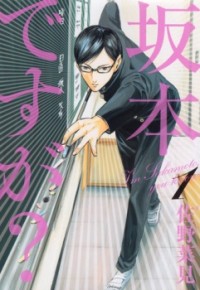
5) Sakamoto Desu Ga?, Enterbrain.
— Why? This is, no doubt about it, the funniest title on this list. It’s brand new, so there’s no issue with it having tons of volumes risk-wise. Did I mention how funny it is?
— Why not? It’s also really incredibly weird. In fact, it may remind people of Cromartie High School, which did not sell well here if you recall. There’s only one volume out in Japan, so people may want to wait a bit to see if it can keep up its one joke. It is a very funny joke – Sakamoto does everything awesomely – but still one joke.

6) Ao Haru Ride, Shueisha.
— Why? It’s the latest from the author of Strobe Edge, and is basically a fantastic Shojo Beat candidate. High school romance, people trying to learn from past mistakes, heartwarming, tearjerking, etc.
— Why not? Strobe Edge is still running, and I imagine its success or failure will give a hint as to whether this title will do well. That’s really about it.

7) March Comes In Like A Lion, Hakusensha.
— Why? From the author of Honey & Clover. It’s charming and well-written.
— Why not? Many reasons. Shogi features heavily in the plot. Honey & Clover didn’t sell all that great here. Hakusensha really only has one market left – Viz – and they tend to focus on their shoujo titles there. This seinen title isn’t quite the same.

8) Terra Formars, Shueisha.
— Why? That’s not a misspelling – this is a manga about taking back Mars, which due to a terraforming project gone wrong is now inhabited by humanoid cockroaches. It sounds a bit like Starship Troopers, to be honest. It’s won awards, and is only 5 volumes long so far.
— Why not? It’d have to be a Signature title, and those are always hit-or-miss sales-wise. Viz also tends to avoid Young Jump series.

spacebrothers

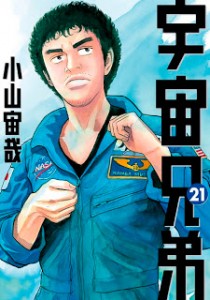
9) Uchuu Kyoudai, Kodansha.
— Why? It’s an epic space story with an anime that has won many awards.
— Why not? It’s far too long for a seinen title (20+ volumes), and its fanbase, while vocal, is pretty damn small. It runs in Weekly Morning, which generally doesn’t have much of a license presence here.

10) Chihayafura, Kodansha.
— Why? It’s incredibly well-written and heartwarming, has an anime adaptation, and its fanbase is VERY vocal.
— Why not? It’s about that Japanese poetry game where you pick out the right card. It’s josei, running in the magazine Be-Love. It’s over 20 volumes and still going.

11) Gintama, Shueisha.
— Why? A digital-only release could be a great way to revive this title, which combines humor and serious business like no other Jump title out there – even One Piece isn’t quite as mood whiplashey as Gintama can get. Some of its best stuff hasn’t come out over here yet.
— Why not? Contrary to popular belief, Viz almost never drops series unfinished. They did so with this one. That implies bad sales. It’s also got a huge volume count, and shows no signs of ending. There really are an awful lot of poop jokes.

12) Mix, Shogakukan.
— Why? It’s a Mitsuru Adachi baseball manga, taking place in the same universe as his acclaimed Touch. Nuff said.
— Why not? Cross Game didn’t sell that great. There are other Adachi titles I’d want to see before this.

And there you have it. Some of these are quite likely to get looked at in future (Ao Haru Ride, Terra Formars), while some are pipe dreams. Which of these bestsellers do you most want to see over here?

Filed Under: LICENSE REQUESTS, UNSHELVED

3 Things Thursday: Kouga’s Women

July 18, 2013 by MJ 3 Comments

If you’ve been a reader of this blog for any significant amount of time, you’ll know that I gravitate towards female writers—a tendency I wasn’t even fully aware of myself until the moment I realized that nearly all of the series that made my personal top ten list a couple of years ago had been written by women. Fortunately, this preference tends to offer me a fairly spectacular array of terrific female characters to meet and fall in love with, and I’ll be grateful to the Japanese comics industry forever for nurturing the talent of so many incredible female artists and publishing them in such volume.

Unfortunately, there is one female-dominated manga genre in which female characters are drastically under-utilized (and often vilified), and that would be boys’ love. And yes, I do realize that a love story in which both members of the primary romance are male will inevitably have male characters at its center, and that there isn’t often room in the romantic universe of two for anyone else of significance. Still, I admit I long to see relatable female characters as essential parts of any story, and I tend to hold BL authors who agree in the highest regard.

The male-centric sensibility often applies to shoujo manga as well—particularly those penned by creators who enjoy a strong undercurrent of BL subtext in their work, and this absolutely describes Yun Kouga. After all, even Gestalt‘s kick-ass heroine, Ouri, is actually a man temporarily endowed with a female form. Still, Kouga-sensei does not let me down! Female characters are always part of the fabric of her stories, even the most BL-rific of her worlds. For today’s 3 Things Thursday, I’ll look at three of these!

3 favorite female characters in the worlds of Yun Kouga:

1. Gestalt: Suzu – Ouri is a scene-stealing character from Gestalt‘s start to its finish, but I admit that my true heart belongs to dark elf Suzu, who begins as an antagonist, sent by the church to capture and return Father Olivier, and slowly but surely becomes part of our heroes’ party. Though she’s a character who is slow to open up, even to the reader, this scene in volume three in which she finds the courage to battle her sisters, by whom she’s been made to feel inadequate for pretty much her entire life, really begins to reveal who Suzu is. And that Suzu is awesome.

gestalt-suzu

2. Earthian: Elvira – Though Earthian‘s romantic drama revolves largely around its primary couple—partnered angels Chihaya and Kagetsuya—a major key to its larger plot is human/angel hybrid Elvira, daughter of the fallen angel Seraphim, who fell in love with a human woman. Her role is complicated in many ways, but it’s her persistence that brings to light the angels’ true plans for the Earthian. She’s smart, angry, manipulative when she needs to be, and I can’t get enough of her.

elvira

3. Loveless: Yamato & Kouya – It may seem like I’m cheating by choosing these two characters together, but together is the way they belong, and they’re willing to risk life as they know it to ensure that it’s how they’ll remain. The story of this “Zero” team is one of my favorites in Loveless‘ early volumes, and I particularly love the way that Kouga-sensei references and then rejects the trope sometimes known as “Bury Your Gays” by setting these two up to sacrifice themselves for the sake of their love, and then turning that completely on its head. Also, they just kick ass.

loveless-girl-zeros


Do you have favorite female characters created by Yun Kouga? Share them here!


To submit your contributions to the Yun Kouga MMF for inclusion in this month’s archive, please send your links by email to mj@mangabookshelf.com or via Twitter to @mjbeasi between now and Saturday, July 20th. If you would like your contribution(s) to be hosted at Manga Bookshelf, please email them to MJ, along with any included images. Contributions to the Yun Kouga MMF will be archived here.

Filed Under: 3 Things Thursday Tagged With: earthian, gestalt, loveless, Manga Moveable Feast, MMF, Yun Kouga

Manga the Week of 7/24

July 18, 2013 by Sean Gaffney, MJ, Michelle Smith and Anna N 1 Comment

SEAN: As you’d expect when I get Yen a week early, that makes this week look pretty damn tiny. What’s coming in? All final volumes this week!

bloodymonday11

Kodansha has the 11th and final volume of Bloody Monday. There are two sequels out in Japan, but I have a sneaking suspicion this may be it for the title on these shores. Let’s hope it ends better than your average season of 24!

MJ: I abandoned this series early on, though the fact that it wraps up in 11 volumes might be enough to draw me back to it eventually. I guess time will tell.

MICHELLE: I only ever bought the first two volumes of this one. I wonder if it’ll be the first series by this pseudonym-happy creator to actually finish in America, even if we don’t get the sequels. GetBackers, Drops of God, Kindaichi Case Files… all stopped short of the end. Oh, wait, there was Psycho Busters. Exactly my last choice of that group.

SEAN: Vertical has the 5th and I believe final volume of Heroman. Everyone on the cover looks happy, particularly the giant robot.

Lastly, Vertical also has the 6th and final volume of Limit, which has spend 5/6 of its time torturing its cast. Will it kill everyone off, or do we get to survive to see a sequel where they crash on a desert island or something?

MJ: This is definitely the most compelling item on the list for me this week. It has consistently kept me on the edge of my seat, so I’ll be anxious to find out what happens!

MICHELLE: I must confess that I haven’t read beyond volume one of Limit. One day I will!

ANNA: I need to catch up on this too! I enjoyed the first two volumes very much.

SEAN: Which series are you wrapping up?

Filed Under: FEATURES, manga the week of

Yun Kouga MMF: Link Roundup 1

July 17, 2013 by MJ Leave a Comment

ritsukaThe Yun Kouga Manga Moveable Feast is underway! Things have begun slowly, but here’s a quick rundown of contributions to the Feast so far:

I kicked things off on Sunday with an Introduction to Yun Kouga, including descriptions of all her series currently available in English and an ode to her gorgeously messy characterization and her insights into the human heart.

But if she leaves us unable to deny our darker impulses, she at least doesn’t leave us alone. There’s a sense, always, that Kouga loves her characters fully and without conditions, even when they’re at their worst. We’re all ugly and beautiful in Yun Kouga’s world, and there’s nothing to do but to try to navigate the mess as best we can.

“Mess” is a key word here, and though Kouga-sensei’s artwork is a consistent highlight—genuinely gorgeous and a real treat to behold—one might say that her greatest talent is in making a mess. She writes messy characters in messy relationships, and if these are often accompanied by some messy plotting as well, perhaps that’s an unavoidable side-effect.

Also at Manga Bookshelf, guest contributor Sarah Ash gets some frustrations off her chest in A Letter to Yun Kouga:

Before the handsome new Viz volumes came out (and they are very handsome) I had resigned myself to never seeing a conclusion to Loveless. I had decided to appreciate the plus points and try to forget the minuses. I was ready to admire again the accurate way that you depict children on the verge of adolescence (and their teachers!) capturing the cruelty and the intensity of their interactions. Your damaged adults are just as fascinating: Soubi grimly painting the butterflies he says he hates so much because they’re stupid enough to let themselves be caught and killed. Shinonome-sensei breaking down in tears in class when one of her class answers back, unwittingly using the same words Soubi has used to reject her.

My frustration as a reader stems, I guess, from the fact that there was – is – such potential in Loveless that I can’t bear to see it being frittered away.

At his blog, Manga Energy, Aaron takes this opportunity to complain about Loveless and The Modern Misappropriation of Moé:

loveless-color

… with all of this being said it’s not so much Loveless as a series I’d like to write about. More an aspect of it’s fandom in particular the use of the term Moé by some fans to the discussion of Aoyagi as a charcter or his relationship with Soubi in particular, as I feel it’s a term that gets misappropriated too often now in Otaku circles. Loveless is just one of many prominent examples I’ve seen where the term is used I feel with out a real grasp of the term it’s self.

And finally, back here at Manga Bookshelf, I delve into one of the primary themes of Kouga-sensei’s josei romance Crown of Love with Crown of Love: Hey Jealousy:

Where Crown of Love differs is in its execution, specifically in the fact that it portrays its hero’s obsession as genuinely problematic, rather than romantic or cute. It is also completely up-front about the painful and unsatisfactory nature of unrequited love (and unbalanced relationships of all kinds). And though it is technically a love story, it could also be described as a story primarily about jealousy. And wow does Yun Kouga get jealousy.

A full list of the Feast’s contributions (updated as they come) can be found in the Yun Kouga Archive, with lists of older articles to browse through as well. More to come as the week continues!


To submit your contributions to the Yun Kouga MMF for inclusion in this month’s archive, please send your links by email to mj@mangabookshelf.com or via Twitter to @mjbeasi between now and Saturday, July 20th. If you would like your contribution(s) to be hosted at Manga Bookshelf, please email them to MJ, along with any included images. Contributions to the Yun Kouga MMF will be archived here.

Filed Under: UNSHELVED Tagged With: Manga Moveable Feast, MMF, Yun Kouga

Pretty Guardian Sailor Moon, Vol. 12

July 17, 2013 by Sean Gaffney

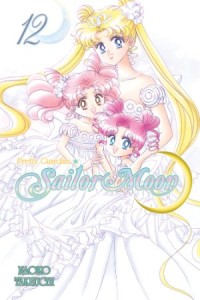
By Naoko Takeuchi. Released in Japan as “Bishoujo Senshi Sailor Moon” by Kodansha, serialized in the magazine Nakayoshi. Released in North America by Kodansha Comics.

And so at last we come to the climax of Sailor Moon’s story. We’ve seen her start off as a whining crybaby of a superhero, and advance to the point where the obvious solution is “kill the entire population and then let Sailor Moon resurrect everyone”. She’s gained friends, a lover, and a future child. Her life has, despite the ongoing war against various miasmic shrouds of darkness, been pretty damn awesome. So what happens when you take all of that from her? Worse, when her enemies are alien versions of her – Sailor senshi from other planets who were the Sailor Moons of their worlds, now fighting with Galaxia in an effort to gain some form of happiness and peace? Why is Usagi Tsukino the special one, why is she the hero, why (if we get right down to it) is she the messiah? This is heavy stuff for a manga that runs in a magazine for 7-9 year old girls.

sailormoon12

Of course, Usagi’s never truly alone in this volume, if only as we need people to stare at the enemy and scream her name. The Starlights, Princess Kakyuu (who decides it’s time to man up and become a senshi at EXACTLY the worst time, I feel I should note), and of course the mysterious Chibi-Chibi. Best of all, when things are at their worst, and she’s being attacked by evil forms of all her friends (which is incredibly creepy and wrong – they’re not only using “Galaxia” versions of their attacks, but the expressions of cruel glee on “Venus” and “Saturn’s” faces as they try to kill Sailor Moon just screams out WRONG), back from the future comes Chibi-Usa and her own senshi, the Asteroids, to protect their own slowly dissolving future. I’ve given Chibi-Usa a bad rap over the years, but in the manga, where there’s no filler or drawn-out irritation to deal with, she’s become a really great character. Even if there’s not much she can do here.

Despite all this, in the end it’s down to Usagi herself to save the day, as you would expect. In this she’s helped by Chibi-Chibi, whose real identity is finally revealed (and is quite different from the anime, I note). Well, sort of revealed. Takeuchi has always had pacing problems, and the ending of the series can be quite rushed in places. Sailor Cosmos would seem to be a future Sailor Moon who was unable to take the pressure and ran away, but it’s unclear if she’s meant to be our Sailor Moon or one of the many, many senshi we see scattered throughout this arc (my personal favorite being ‘Soul Hunter Sailor Heavy Metal Papillon’, who cries out for an origin story, one that I hope involves Jem and the Holograms in some way).

The decision Usagi has to make, though, is laid out very well. Chaos is the origin of conflict in this universe, and Usagi can destroy it, leading to eternal peace (but her friends will all be gone), or bring back her friends and doom the world to an ongoing battle with darkness. This is laid out in such a way that it sounds like Usagi makes a horribly selfish decision, but that’s not what’s happening here at all. Life *is* conflict. Life is struggle. Choosing eternal peace is merely choosing death. And if you can’t reach out to save your friends and try to create a future that will last as long as it possibly can, then what’s the point of fighting in the first place? Usagi makes the right decision here, noting offhandedly that she’s never fought for peace or justice, but just for the sake of her friends and loved ones.

Who return at the end, because this is not a sad manga. (On a side note, I’d also like to address something that is really upsetting to me, as seen on the TVTropes page for Sailor Moon. The page states that since we don’t see the cats resurrected at the end along with everyone else, that we can assume they were genuinely killed off. No. That is 100% incorrect. I am sick of you fandom psychos going around to every happy, heartwarming, uplifting series we have and trying to inject your own DC Comics angst and murder into everything. Sailor Moon is a story about a messiah who resurrects the world MULTIPLE TIMES, for Christ’s sake. We didn’t see the cats as Naoko didn’t have room to fit them in in the rushed final chapter. They’re not dead just so that you can say that there’s always tragedy somewhere. This reminds me of all the readers who followed series like Negima or Bleach, and got very upset when their perfect unhappy endings were ruined by the day being saved. What the hell are you reading manga for? Go away. I hate you. The cats live.) And we have a wedding, where Usagi notes she can tell she’s already pregnant with Chibi-Usa. The final page may feel a little self-congratulatory towards Sailor Moon, but really, she’s been through a lot here. Cut her some slack. (Also, Minako’s top hat in that cover page is awesome.)

And so the main series of Sailor Moon concludes, though there are two volumes of short stories still to come. And in the end, after re-reading the series, I find that if anything I love it even more. A classic magical girl tale, not afraid to have kickass women defending love and justice, or whiny crybabies who save the universe. The stories could get a little similar at times (this arc even lampshades that, with the cloud of darkness noting all the other clouds of darkness Sailor Moon fought earlier were its siblings), and yes, 60 chapters of manga will never have the same time to develop character that 200 episodes of anime do as well. But you can have both in your heart, and cherish them equally. I am so pleased that this series is back in print. Everyone should read it.

Filed Under: REVIEWS

Crown of Love: Hey Jealousy

July 16, 2013 by MJ 3 Comments

“This is jealousy. This is… anger.”

this-is-jealousyFrom the pages of josei magazine Comic Crimson, Yun Kouga’s Crown of Love is a fairly unusual tale of teen romance—unusual in that, despite its characters’ ages, it begins as a tale of romantic obsession that resists romanticization. Published under Viz’s Shojo Beat imprint here in North America, Crown of Love‘s premise resembles any number of shoujo titles in which a teen heroine (or, in this case, hero) breaks into show business in order to pursue the love of a celebrity.

Where Crown of Love differs is in its execution, specifically in the fact that it portrays its hero’s obsession as genuinely problematic, rather than romantic or cute. It is also completely up-front about the painful and unsatisfactory nature of unrequited love (and unbalanced relationships of all kinds). And though it is technically a love story, it could also be described as a story primarily about jealousy. And wow does Yun Kouga get jealousy.

You’ve been there, right? That sudden, awful realization that sends your heart pounding and your head spinning until you can’t even see straight? Or maybe the slow, ugly burn that sits in the pit of your stomach making you sicker, day by day? Oh, jealousy… jealousy. I’m not sure there’s anything that feels worse.

A friend once told me, “Jealousy is a warning.” She was right, of course, but it’s not always clear what exactly the warning means. Is your mind finally comprehending the clear, stark reality of your partner’s infidelity? Is it letting you know that you need to watch your back? Or is it simply trying to tell you that you’re way too deep into something that can only bring you pain?

whyHisayoshi Tajima is an aloof, good-looking violin student at an elite performing arts high school, whose chance encounter with popular teen idol Rima Fujio has sent him head over heels. Determined to somehow meet her again, he allows Rima’s former manager, Ikeshiba, to scout him as an idol, despite the (literally) violent objections of his opera singer father.

Signing with Ikeshiba does indeed place Hisayoshi close to Rima, but it doesn’t remotely help his cause, as she sees him only as a rival for the attentions of both the public and Ikeshiba, for whom she’s long harbored romantic feelings.

Wracked with jealousy, Rima fails utterly to hide her animosity towards Hisayoshi, which only serves to make her feel wretched and more threatened—a vicious cycle. This leaves Hisayoshi, in turn, feeling painfully jealous of Ikeshiba (for whom Rima’s crush is largely a nuisance).

Hisayoshi’s jealousy is raw, ugly, and occasionally creepy, as he struggles to handle real rejection for the first time in his life. He’s completely overwhelmed by the strength of his feelings and his inability to maintain his natural poise. Hisayoshi’s desperation is palpable, and he is horrified to recognize in himself the same miserable clinging he’s always despised in his mother’s relationship with his father. Love, let alone unrequited love, is a new experience for him, and it’s enough to turn him into, well… a stalker (despite his insistence otherwise). But it’s jealousy that really does a number on him, as he compares himself to smug, confident Ikeshiba whom Rima so admires.

(click images to enlarge – read right-to-left)

crown-anger1
crown-anger2

Hisayoshi’s star is rising, but he’s no plucky shoujo heroine, cheerfully striving to do his best. Instead, he’s fighting his hormones, his entitled upbringing, and his pride in a an ongoing attempt just to not make a complete ass of himself in front of his manager and the girl he’s fallen for so hard.

Needless to say, he mostly fails.

crown-tease

Despite what Ikeshiba says here, there’s nothing cute about Hisayoshi’s behavior at all, and he knows it. And this only serves to feed his desperation and the lengths to which he is willing to go to try to justify his feelings and actions. Though, to his credit, he’s relatively self-aware, even when he’s at his worst. “It’s so obvious I have ulterior motives,” he thinks to himself as he’s tutoring Rima in her schoolwork. “How low can I get?”

While Hisayoshi’s jealousy is raw and openly childish, Rima’s is more controlled, at least in most environments. Having lived in the public eye for years, she’s learned the importance of keeping her composure in front of… well, pretty much anyone. She’s also anxious to act the adult for Ikeshiba, who, in her opinion, has never taken her feelings seriously. Still, Hisayoshi’s appearance on the scene is an obvious punch in the gut.

crown-rima-realization

Later, when she’s faced with the full power of Hisayoshi’s idol appeal, she’s able to turn her insecurity into competitiveness, which at least allows her to maintain at least a little dignity in front of Ikeshiba. But Kouga-sensei deftly uses Rima’s body language and her expressive way with eyes to let us see Rima’s true vulnerability.

(click images to enlarge – read right-to-left)

crown-rima-jealous1
crown-rima-jealous2

Perhaps the most intriguing character in the middle of it all, however, is the source of everyone’s jealousy, Ikeshiba. Married, with two young daughters and a hospitalized wife, Ikeshiba is smooth, guarded, and definitely a player, in every sense of the word. He’s never willing to exactly say no to Rima, even as he keeps her at arm’s length, and he’s certainly not ashamed to manipulate Hisayoshi in order to make money off of him.

crown-pitter-patter

Early in the series, Ikeshiba’s machinations tend to come off as, frankly, adorable, and usually played for sly laughs. But one of the most chilling scenes in the series occurs at the end of volume three, when Ikeshiba finally gives Rima a taste of what she’s been asking him for all these years.

Later, certain that something has happened between Rima and Ikeshiba (something has), Hisayoshi barges into Ikeshiba’s house to confront him in a fit of jealousy. Kouga captures Hisayoshi’s condition perfectly—the adrenaline-fueled fear/rage of jealousy that heats him to a fevered state. But it’s Ikeshiba who gives us the chills, as he cooly lies to Hisayoshi’s face.

“It’s a harsh world,” he thinks as he swears nothing has happened. “If you think I can’t lie to you when you look me right in the eyes… then you really are just a kid. If you think adults are always nice to children, you’re making a big mistake.”

(click images to enlarge – read right-to-left)

crown-messedup3
crown-messedup4
crown-messedup5

It’s scenes like this that make Crown of Love really work, and also what makes it stand apart from most “shoujo” offerings here in North America. It’s also a prime example of Kouga-sensei’s skill with this kind of characterization. I love a good shoujo romance as much as the next middle-aged lady, but it’s this kind of writing—this ability to get me invested in flawed, petty, maddeningly relatable characters—that keeps me coming back to Yun Kouga, time and again.


To submit your contributions to the Yun Kouga MMF for inclusion in this month’s archive, please send your links by email to mj@mangabookshelf.com or via Twitter to @mjbeasi between now and Saturday, July 20th. If you would like your contribution(s) to be hosted at Manga Bookshelf, please email them to MJ, along with any included images. Contributions to the Yun Kouga MMF will be archived here.

Filed Under: FEATURES & REVIEWS Tagged With: crown of love, Manga Moveable Feast, mmc, Yun Kouga

It Came from the Sinosphere: The Crane-Iron Pentalogy (Part 2)

July 16, 2013 by Sara K. 12 Comments

I actually do not think this image from the manhua is quite in the spirit of the original novels, but it's still pretty.

I actually do not think this image from the manhua is quite in the spirit of the original novels, but it’s still pretty.

Read Part 1

The Development of a Pentalogy

Though the internal chronology is Crane Frightens Kunlun / Precious Sword, Golden Hairpin / Sword Force, Pearl Shine / Crouching Tiger, Hidden Dragon / Iron Rider, Silver Vase, the first novel to be written/published was the central one, Sword Force, Pearl Shine, followed by Precious Sword, Golden Hairpin, with Crane Frightens Kunlun.

In other words, Wang Dulu first went back in time, and then decided to go back forward in time.

Sword Force, Pearl Shine is the shortest of the five novels, and I suspect that it was originally intended to be a stand-alone novel. However, being shorter, it is also a little less developed than the other novels. This underdevelopment may have been a blessing in disguise, for I suspect it led Wang Dulu to ask himself about Yu Shulien and Li Mubai’s origins, which inspired Precious Sword, Golden Hairpin, and then he asked himself about Southern Crane, which led to writing Crane Frightens Kunlun. Crane Frightens Kunlun itself has a loose end, and tying that up leads to the creation of a key character (Yu Jiaolong) and much of the plot of Crouching Tiger, Hidden Dragon. Whether that loose end was put in Crane Frightens Kulun on purpose because Wang Dulu was already planning to write Crouching Tiger, Hidden Dragon, I do not know. I strongly suspect, however, that Wang Dulu did deliberately write that open-ended finale ine Crouching Tiger, Hidden Dragon because he was already planning to write Iron Rider, Silver Vase.

The point is, Wang Dulu did not have a master-plan when he was writing the pentalogy. He let it unfold organically, one book at a time, and even he probably didn’t know where the story was going to go more than a book in advance. The novels are much better because of this.

The scriptwriter Brian McDonald says that storytellers should be the slaves, not the masters, of their stories. To me, it seems that Wang Dulu was not the master of his stories, and I mean that in a good way. On the surface, they seem quite humble and not at all impressive, but they prove to be surprisingly powerful.

About the 2000 Ang Lee Film

Nowadays, even in the Chinese-speaking world, most people know about the Crane-Iron Pentalogy thanks to the 2000 film Crouching Tiger, Hidden Dragon. So how does it compare?

Crouching_tiger_hidden_dragon_poster

The film simplifies the story. A lot. It has to. It’s only two hours long, and most of the audience is not familiar with the events of Crane Frightens Kunlun / Precious Sword, Golden Hairpin / Sword Force, Pearl Light.

While I love the Crane-Iron Pentalogy as a whole, Crouching Tiger, Hidden Dragon is the novel I love the least. Unlike the other novels, I felt CTHD has some rather long, tedious sections. The film, quite wisely, leaves out all of the tedious stuff, while keeping the most interesting parts.

Of course, while the movie leaves out a lot detail, it certainly drops quite a few hints. For example, one of the major characters is Cai Xiangmei, a girl who performs acrobatics on the street, yet the only reference to her in the entire movie is a single shot showing a girl performing acrobatics on the street. I think this is Ang Lee’s way of saying ‘Yes, I read the novel, but I simply do not have the screen time to include this character’s story’. I do not think people who haven’t read the novels are consciously aware of these little hints throughout the movie … but I suspect they can still feel that this is just part of a broader story.

Ultimately, the feel of the movie is not the same as the novels. That does not make it a bad movie – in fact, it probably would have been a worse movie if it had tried to stick too close to the novel. I have trouble imagining the subtle psychological tug-and-pull in the novels translating well into film, and of course the gorgeous cinematography of the film is totally absent in the novels.

It’s a good movie, and I recommend it. But…

The Thing Which Bothers Me About the Movie

I am going to be a bit vague to avoid spoilers.

The message of the movie is that you need to recognize, pursue, and consummate (romantic) love before it’s too late. That’s not the message of the original novel, but that is not a problem, nor is it a problem that the movie changes the ending to pull this off. The movie implies that a certain couple never got married because they did not realize how much they loved each other / did not have the courage to pursue their love, and that they regret this. That is also not a problem. The problem is … the couple used to demonstrate this point is Character Y and Character Z (I said I was going to be vague).

In the novels, Y and Z know that they love each other, and they didn’t remain unmarried because of a lack of courage. They stayed unmarried because they decided they did not want to marry. While one could have a great discussion about why they make this choice, it clearly is a deliberate choice on their part.

And they put up with quite a bit of nonsense from other people because of this.

Years after they have made their decision clear, their friends are still scheming up ways to get them married. They get kicked out of shelter onto the street in the middle of the night because of their unmarried status. At one point, someone practically orders them to get married.

But the movie glosses all over this. If two people who are in love with each other refuse marriage, there simply must be a problem, they cannot just be mature adults making thought-out choices about their own personal lives.

I think that’s rather insulting to Character Y and Z, and I think it contradicts the point the novels try to make about freedom in personal relationships. I really wish the movie had found a different way to make this point.

About the New Movie

The word is that Yuen Wo Ping, who was the action choreographer for the Ang Lee film, will be directing the new movie, which I’ve seen titled as both Iron Rider, Silver Vase and Crouching Tiger, Hidden Dragon 2 – the Green Destiny.

My guess is that it will be even less faithful to the original novels than the Ang Lee film, but will probably incorporate at least parts of the story of Iron Rider, Silver Vase. Personally, as long as they make a good movie which does not do anything too irritating, I’ll be happy. That said, I do hope they will include Han Tiefang and not change him too much, since he’s one of my favorite characters in the pentalogy.

The Heart of Wuxia

One of the things which strikes me about wuxia is the emphasis on the characters’ thoughts, feelings, and relationships with each other. This introspective emphasis is much heavier in wuxia than in western speculative fiction (with some exceptions). That’s not to say that wuxia is better than western speculative fiction, since western speculative fiction explores plenty of other things. Nonetheless, the emphasis on feelings and relationships makes wuxia stories (particularly novels) sometimes feel more like romance fiction than the speculative fiction I grew up with.

The Taiwanese edition of Precious Sword, Golden Hairpin

The Taiwanese edition of Precious Sword, Golden Hairpin

I have not read many of the old (as in written before 1950) wuxia novels, so I cannot make my own analysis, but I’ve read that the older wuxia novels are full of lots of exciting, magical, action-packed adventures, and contain not so much psychology. The claim is that Wang Dulu, and the Crane-Iron Pentalogy in particular, changed that.

Now, anybody reading the Crane-Iron Pentalogy for the fights and action sequences is going to be disappointed. It’s not that it’s badly written, it’s just that all of the ‘action’ parts are really brief. Wang Dulu always uses violence/action as a tool to get the characters where they need to go, and never as an end in itself.

Some say Wang Dulu brought the wuxia genre to maturity. His wuxia-romances certainly became very popular very quickly, and I can tell that he has a strong influence on later writers. Based on what I know, it seems that his major contribution is putting the ‘heart’ – the passion, the introspection, the intense human relationships – into wuxia.

Availability in English

Simon and Schuster acquired the English translation rights to Crouching Tiger, Hidden Dragon, and possibly the other novels as well, and then did … nothing.

The 2001 Ang Lee movie, the 2004 movie, and manhua which bear the name Crouching Tiger, Hidden Dragon are all available in English. I haven’t seen the 2004 movie, though generally it’s considered inferior to the Ang Lee film. I have also yet to read the manhua, but the word is that the first two volumes are actually based on Precious Sword, Golden Hairpin, and that starting around volume 3 the story gets further and further away from the novels.

The manhua, again.

The manhua, again.

Conclusion

I love the Crane-Iron Pentalogy. I’m still left with a sense that there is something wonderful about the stories which I have totally failed to convey in these two posts.

My love, as you may have gathered, is not equally distributed among the novels. Crouching Tiger, Hidden Dragon gets the least love from me, whereas my favorites are Iron Rider, Silver Vase and Precious Sword, Golden Hairpin. Particularly Precious Sword, Golden Hairpin. It is a beautiful novel which swept me up and then left me in tears. Part of me wishes they would adapt Precious Sword, Golden Hairpin into a movie, and part of me cannot imagine any movie adaptation being as moving as the original.

Next Time: Starry Starry Night (movie)


Sara K. worked on this post as Typhoon Soulik made its way across Taiwan. Soulik managed to greatly annoy Sara K., but it did not do her any major harm.

Filed Under: It Came From the Sinosphere Tagged With: Chinese, Crane Frightens Kunlun, Crouching Tiger Hidden Dragon, Iron Rider Silver Vase, Iron-Crane, Novel, Precious Sword Golden Hairpin, Sword Force Pearl Shine, Wang Dulu, wuxia

Guest Contribution: A Letter to Yun Kouga

July 15, 2013 by Sarah Ash 4 Comments

A Letter to Yun Kouga (written with love, respect, and bafflement.)

Dear Kouga-sensei,

Way back in 2006, I reviewed the first volume of your new series Loveless:

Seimei, Aoyagi Ritsuka’s older brother, has been murdered. Ritsuka, who has been suffering from amnesia for two years, is left to live with his abusive and disturbed mother who keeps demanding that he return the ‘real’ Ritsuka to her. Loveless, by Yun Kouga, is a twisted tale of loss, awakening desire, and magic. In this alternate version of our own present, children are born with cat’s ears and tails which disappear when they lose their virginity. (Ritsuka’s teacher, Shinonome-sensei, still has her ears and tail, which causes some comment in the school corridors.)

On the first day at his new school, the aloof and prickly Ritsuka is adopted by Yuiko, a sweet but needy latch-key child, tall and well-developed for her age, who constantly refers to herself in the third person. Yuiko may seem a bit of an airhead but she is quick to notice that Ritsuka is skilled at presenting a cheerful front to the teachers. ‘Sorry. I just can’t stand when people worry about me,’ he tells her to which she says, ‘You’re weird. Like you live a double life.’

On leaving school, Ritsuka is met by a good-looking stranger who introduces himself as Soubi – and tells Ritsuka that he was Seimei’s friend. Ritsuka instantly demands that Soubi go with him to ‘make some memories’ and proceeds to take photographs. ‘We have to take pictures or you’ll forget all about me.’ When they are alone together in the park, Soubi begins to behave very strangely and having assured Ritsuka that he won’t do anything to him, kisses him. Now Ritsuka finds himself bound to Soubi in an intense and dangerous world of spell battles against Septimal Moon, the mysterious organisation that killed his brother.

Yun Kouga reveals this perverse and compelling tale through her beautiful and evocative artwork; two colour pages are a bonus, further demonstrating her range as an artist. If any readers feel uncomfortable with the underlying implications of this work, especially the developing relationship between the student Soubi and twelve-year-old Ritsuka, they should first read the fascinating epilogue by adaptor Christine Boylan, ‘Words as Spells in Loveless.’ The first volume leaves the reader desperately eager to unravel the mysteries surrounding Ritsuka; will he and Soubi track down Seimei’s killers? What happened to Ritsuka two years ago? Can Soubi be trusted? Excellent, distinctive artwork conveying a compelling piece of fantasy story-telling: Loveless is manga at its best. Volume 2 is promised in June…

Obviously, I was smitten. Love at first sight! And I continued to follow Loveless faithfully through the anime adaptation as well as the subsequent volumes of the manga. But something has gone wrong. Here we are, ten+ years on, and, Sensei, you’re still – sporadically – producing chapters of Loveless. In the meantime, you’ve done the character designs for two major anime: Gundam Mobile Suit 00 and Un Go. You’re also working on another ongoing shoujo series Blood High School which is now being turned into an anime. Great! I don’t blame you, Sensei, for working on several projects at once; it’s a tough old world out there and mangaka, like other authors, have to seize every opportunity that comes along.

So what’s so compelling about Loveless? The art, for starters. No other mangaka can draw eyes quite as eloquently as you, Kouga-sensei. Your gorgeous colour pages are an added bonus. Storywise, you deliver a dark and disturbing tale that – in those early volumes – resonates with passionate and forbidden feelings. Yet you also have a gift for delightfully quirky yet believable character interactions; for example, any time Natsuo and Youji (the Zero boys) show up, their outrageously unconventional and unpredictable approach to life always enlivens the action. Then there are the spell battles, the intriguing concept of ‘fated partners’ and the mysterious Fighters and their Sacrifices. You’re not afraid to deal with serious issues either: child abuse; obsession; identity. I could – maybe should – devote paragraphs to the shota conundrum: is Soubi’s relationship with Ritsuka inappropriate? Nothing is ever that straightforward in your work; we learn that Soubi was an abused child and, even though he may be an adult in years, Ritsuka is often depicted as the more mature of the two. And even though you tease us with suggestively Boys’ Love situations (and you obviously have fun doing it!) the complex web of feelings that binds Soubi and Ritsuka together can’t be so easily labelled and packaged; you’re too subtle and original a writer to resort to clichés.

But when it comes to the questions that you set up to tantalize us in the first volume, alas, very little has been answered. In fact, everything about the way your manga has (slowly) been evolving suggests a haphazard, scattershot approach. As more plot tendrils are introduced and go merrily shooting off in all kinds of random directions, the strong story at the heart begins to fade and die. Too many new teams of fighters ending in ‘less’ (all with emotional baggage and back-stories) resulting in ‘I could care…less.’

I find myself faced with a fundamental issue about the function of plot, or story, if you will, that crops up time and again in manga. Even though many eminent nineteenth century European novelists like Dickens and Dumas also produced their work as serials, in regular instalments, they usually brought their novels to a satisfying conclusion, and resolved the conflicts and mysteries they had set up to hook their readers in. But the mangaka working for a monthly magazine like Zero Sum can go on indefinitely – or so it seems – with no other impetus than to produce yet another chapter to advance the story, but not to resolve it. For a reader, though, this eventually becomes a turn-off; the everyday interactions between Yuiko, Yayoi, and Ritsuka that once seemed both cute and pertinent (such as the discussion on what they’ll do when they grow up in Chapter 5 of #6) now seem like pointless filler (‘A Guppy’s Observation Log’ in #11.)

Some of the basic questions that you really need to answer are:

  • Assuming that the Loveless name will appear somewhere soon on Ritsuka’s body (as it should according to the rules set out in the story) – who is the other Loveless fighter?
  • What was Ritsu’s connection with Soubi’s mother? (And if it isn’t relevant, why was it so strongly flagged?)
  • What’s going on with Kio and his (twin?) sister?
  • Why did Ritsuka lose his memory two years ago? What will happen when/if he gets it back?
  • Where is Aoyagi père? And the social services? (Ok, wipe that last question, even if it’s set in the present, it’s an alternative fantasy present…)
  • Who is Madam Chiyako? Is she connected with Septimal Moon?
  • What is Septimal Moon and why do they hold spell battles?
  • And… why does Ritsuka look younger in recent volumes than in the earlier ones? It’s as if, Kouga- sensei, you’ve unconsciously altered the way you portray him; surely he should be showing signs of growing older by now? Does time pass differently in this world of cats’ ears and tails? He also seems to be behaving in a much younger way; the sullen, strong, angry Ritsuka (skilled at concealing his vulnerability) that we met in the earlier volumes is now depicted as a much more passive, dependent child. I wondered if this might be because you wanted to show Ritsuka at a loss when he learns the truth about Seimei… Or is this the ‘old’ Ritsuka who ‘disappeared’ two years earlier? If so, it needs flagging more clearly, so that the reader can reflect on what might have precipitated this change.

I’d love to hope that you will answer these questions – and many more – when you bring Loveless to a conclusion. But I suspect that – as your attentions are diverted elsewhere again – the once urgent need to resolve Ritsuka’s tale has faded. The intensity of those early volumes has just…melted away. This may well be because the anime version created a resolution (of sorts) based on the material you had produced at that time and now you’ve simply moved on and lost interest in working with these characters. (sob)

Is the much-desired commissioning of a TV anime series the kiss of death? The pages of Zero Sum have spawned several anime other than Loveless: 07-Ghost, Karneval, Amatsuki, and now Makai Ouji; Devils and Realist. Smaller in scale than ongoing shounen sagas like Naruto, the makers of these TV series have to devise an ending even when the mangaka is nowhere near reaching a conclusion. I can’t help wondering whether – once the anime series is done – somehow the material doesn’t seem like the mangaka’s ‘own’ work anymore and she/he loses some of the creative impetus to finish it (because someone else has already ‘finished’ it for them.)

Before the handsome new Viz volumes came out (and they are very handsome) I had resigned myself to never seeing a conclusion to Loveless. I had decided to appreciate the plus points and try to forget the minuses. I was ready to admire again the accurate way that you depict children on the verge of adolescence (and their teachers!) capturing the cruelty and the intensity of their interactions. Your damaged adults are just as fascinating: Soubi grimly painting the butterflies he says he hates so much because they’re stupid enough to let themselves be caught and killed. Shinonome-sensei breaking down in tears in class when one of her class answers back, unwittingly using the same words Soubi has used to reject her.

My frustration as a reader stems, I guess, from the fact that there was – is – such potential in Loveless that I can’t bear to see it being frittered away. It could have been so good. But by Volumes 10 and 11, the vital spark seems to have faded and that compelling intensity seems to have been significantly diluted. Such a shame…because Loveless is special to me. Different. Perhaps my suspicions are unfounded. Perhaps you will answer all those questions of mine (and many more.) You would make your readers all over the world so very happy!

Sarah (AnimeUKNews reviewer) www.animeuknews.net


To submit your contributions to the Yun Kouga MMF for inclusion in this month’s archive, please send your links by email to mj@mangabookshelf.com or via Twitter to @mjbeasi between now and Saturday, July 20th. If you would like your contribution(s) to be hosted at Manga Bookshelf, please email them to MJ, along with any included images. Contributions to the Yun Kouga MMF will be archived here.

Filed Under: FEATURES & REVIEWS Tagged With: loveless, Manga Moveable Feast, MMF, Yun Kouga

My Week in Manga: July 8-July 14, 2013

July 15, 2013 by Ash Brown

My News and Reviews

Last week I posted two reviews. The first was for The Vast Spread of the Seas, the third novel in Fuyumi Ono’s fantasy series The Twelve Kingdoms. I’ve really been enjoying reading The Twelve Kingdoms and this volume was no exception. I also reviewed Jen Lee Quick’s Off*Beat, Volume 1. Originally published by Tokyopop, the recently established Chromatic Press has rescued the series and I couldn’t be happier. The new Chromatic editions also include some additional bonus content as well.

Elsewhere online: Xavier Guilbert has published his interview with Taiyo Matsumoto from the 2013 Toronto Comic Arts Festival. The most recent episode of the Comic Books Are Burning In Hell podcast focuses on Suehiro Maruo. Kodansha Comics is offering two digital samplers containing the complete first chapters of many of its series. The Real sampler collects chapters from Kodansha’s “real-life” manga: Arisa, Bloody Monday, Danza, Genshiken, Genshiken: Second Season, I Am Here, Kitchen Princess, Missions of Love, and Vinland Saga. The Unreal sampler includes chapters from Kodansha’s fantasy, science fiction, and supernatural series: @ Full Moon, Attack on Titan, Cage of Eden, Fairy Tail, Mardock Scramble, Ninja Girls, No. 6, Sankarea: Undying Love, and Until the Full Moon.

Finally, this week is the Yun Kouga Manga Moveable Feast! MJ of Manga Bookshelf is hosting this round and has already posted a marvelous introduction. For my contribution to the Feast I’ll be reviewing the first Loveless omnibus later this week. Loveless was originally published in English by Tokyopop, but Viz Media rescued the license last year (which made me very happy.) Although I enjoy Loveless, I haven’t actually read any of Kouga’s other manga. I look forward to seeing what everyone else has to say about her work.

Quick Takes

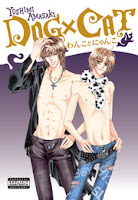
Dog X Cat, Volume 1Dog X Cat, Volumes 1-3 by Yoshimi Amasaki. Junya and Atsu have been friends since they were young. They’re in college now and their friendship becomes a little more complicated when Junya lets it slip that he’s actually in love with Atsu. Dog X Cat might not have the most original plot–I’ve seen the friends becoming lovers storyline many a time–but the two young men have a charming relationship with each other and a lot of sex. (Dog X Cat is part of Digital Manga’s more explicit 801 imprint, after all.) Some chapters are told from Junya’s perspective while others are from Atsu’s. It’s nice to see both sides of their story. Dog X Cat is an ongoing series; the fourth volume is scheduled to be released in English in 2014.

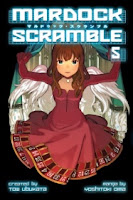
Mardock Scramble, Volume 5Mardock Scramble, Volumes 5-7 by Yoshitoki Oima. I’ve read Tow Ubukata’s original Mardock Scramble, but somehow managed to forget how pivotal child and sexual abuse was to the plot. The manga handles it fairly well and hasn’t turned it into something titillating. One thing that I didn’t forget from the novels was the lengthy casino scene. In particular, nearly two hundred pages worth of Blackjack which sorely tried my patience. Although some of the finer details and plot complications are glossed over in Oima’s adaptation, I much preferred reading the two volumes of manga covering the same material. This left one volume for Oima to bring everything to a quickly paced, action-packed close. For the most part, Oima’s interpretation of Mardock Scramble largely succeeds.

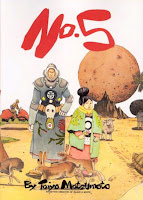
No. 5, Volume 1No. 5, Volumes 1-2 by Taiyo Matsumoto. Only two volumes of No. 5 were ever released in English in print. However, the entire series is now available digitally (on a platform I can’t use). I’ve come to love Matsumoto’s work in general and I particularly enjoy No. 5. The story follows Number Five, a member of the Rainbow Council of the International Peackeeping Forces, a small group of people with superhuman abilities. He’s fallen in love and gone rogue and now his teammates must hunt him down. While Number One and the rest of the Rainbow Council try to maintain control of the situation, there are others who are making the argument that the group is obviously dangerous and should no longer exist.

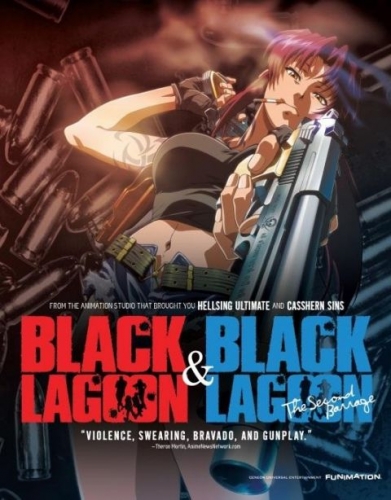
Black Lagoon, Episodes 13-24 directed by Sunao Katabuchi. Although I still enjoyed the second half of Black Lagoon anime, for some reason that I can’t identify I didn’t like it quite as much as the first. The anime follows the manga fairly closely, but takes a few of its own liberties while keeping the same tone as the original. I do think that I still prefer the manga slightly more than the anime, but the anime is entertaining as well. Additionally, the action is a little clearer and easier to follow in the anime. And I continue to be impressed by the sound design. The Black Lagoon anime tends to be violent and bloody and even the protagonists aren’t really “good guys.” They can be just as vicious as the other people they come up against.

Filed Under: My Week in Manga Tagged With: anime, black lagoon, Dog X Cat, manga, mardock scramble, No. 5, Taiyo Matsumoto, Yoshimi Amasaki, Yoshitoki Oima

  • « Go to Previous Page
  • Page 1
  • Interim pages omitted …
  • Page 685
  • Page 686
  • Page 687
  • Page 688
  • Page 689
  • Interim pages omitted …
  • Page 1072
  • Go to Next Page »
 | Log in
Copyright © 2010 Manga Bookshelf | Powered by WordPress & the Genesis Framework