• Skip to primary navigation
  • Skip to main content
  • Skip to primary sidebar
  • Home
  • About Us
    • Privacy Policy
    • Comment Policy
    • Disclosures & Disclaimers
  • Resources
    • Links, Essays & Articles
    • Fandomology!
    • CLAMP Directory
    • BlogRoll
  • Features & Columns
    • 3 Things Thursday
    • Adventures in the Key of Shoujo
    • Bit & Blips (game reviews)
    • BL BOOKRACK
    • Bookshelf Briefs
    • Bringing the Drama
    • Comic Conversion
    • Fanservice Friday
    • Going Digital
    • It Came From the Sinosphere
    • License This!
    • Magazine no Mori
    • My Week in Manga
    • OFF THE SHELF
    • Not By Manga Alone
    • PICK OF THE WEEK
    • Subtitles & Sensibility
    • Weekly Shonen Jump Recaps
  • Manga Moveable Feast
    • MMF Full Archive
    • Yun Kouga
    • CLAMP
    • Shojo Beat
    • Osamu Tezuka
    • Sailor Moon
    • Fruits Basket
    • Takehiko Inoue
    • Wild Adapter
    • One Piece
    • After School Nightmare
    • Karakuri Odette
    • Paradise Kiss
    • The Color Trilogy
    • To Terra…
    • Sexy Voice & Robo
  • Browse by Author
    • Sean Gaffney
    • Anna Neatrour
    • Michelle Smith
    • Katherine Dacey
    • MJ
    • Brigid Alverson
    • Travis Anderson
    • Phillip Anthony
    • Derek Bown
    • Jaci Dahlvang
    • Angela Eastman
    • Erica Friedman
    • Sara K.
    • Megan Purdy
    • Emily Snodgrass
    • Nancy Thistlethwaite
    • Eva Volin
    • David Welsh
  • MB Blogs
    • A Case Suitable For Treatment
    • Experiments in Manga
    • MangaBlog
    • The Manga Critic
    • Manga Report
    • Soliloquy in Blue
    • Manga Curmudgeon (archive)

Manga Bookshelf

Discussion, Resources, Roundtables, & Reviews

Blog

Attack on Titan, Vol 1

January 28, 2014 by Anna N


Attack on Titan Vol 1 by Hajime Isayama

At this point, given the ubiquity of Attack on Titan on manga best seller lists, reviewing it is a bit like reviewing the air, but I decided to finally get around to reading this series when Mangablog alerted me to the crazy deal for the kindle edition of the first volume that was running recently. Sometimes I have no trouble reading manga on my Kindle Paperwhite, but I had more difficulty figuring out what was going on with the art with the reduced size, and quickly switched over to reading this manga on my iPad instead.

I’ve been reading a bunch of post-apocalyptic fiction recently, just because there are so many YA dystopian novels out there, and I’m also in the middle of reading Justin Cronin’s The Twelve. Attack on Titan is an interesting twist on the dystopian genre as many years into the future humanity has retreated into walled cities in order to protect themselves from the Titian, giant zombie-like humanoid creatures who enjoy eating human flesh. Eren is in many ways a fairly typical brash and opinionated shonen hero, whose close companion is a quieter and seemingly more pragmatic girl named Mikasa. Eren is worried about the complacency his town seems to be developing, as Titans haven’t attacked it for a long time.

Sure enough, a devastating attack on the town follows, as a Titan bigger than anyone has seen before easily breaches the wall, causing panic and confusion in the town where few humans are equipped to deal with a direct attack. Years later, Eren and Mikasa are ready to take their work assignments in the town, and they have to choose the safer duty of directly protecting the townspeople or joining up with the riskier survey corps. Eren wants to avenge his family, and Mikasa is quietly determined to follow him in order to protect him.

By far the weakest element of Attack on Titan is the art. The characters are drawn stiffly and not in proportion. For much of the time Eren and his comrades are yelling at each other, with facial expressions that don’t have very much variation. At the same time, the more detailed renderings of the Titans are plenty creepy, with their musculature visible on their bodies due to lack of skin, wide jaws, and shark-like rows of teeth. In contrast to the art, the worldbuilding in Attack on Titan is excellent, and it is clear that Isayama has spent plenty of time plotting out the events in his future history, thinking through the weapon systems and defenses the humans have constructed, and setting up the relationships between the characters in an interesting way. The first volume ended on a cliffhanger that was both shocking and weirdly refreshing from a manga plotting perspective, making me wonder a bit if Attack on Titan is going to be serving up a bit of metacommentary about manga plot cliches. Even though the art was fairly awkward, I was still able to follow along with the action sequences, and the Titans were genuinely unsettling, with their grimacing silence and habits of eating people in one gulp. I’m a little leery of taking on such a long series, but I can certainly see why Attack on Titan is so popular.

Filed Under: REVIEWS Tagged With: attack on titan, kodansha

Bookshelf Briefs 1/27/14

January 27, 2014 by Sean Gaffney, Anna N and Michelle Smith 1 Comment

This week, Sean, Anna, and Michelle look at recent releases from Yen Press, Viz Media, Seven Seas, Kodansha Comics, and Vertical, Inc.


blackbutler16Black Butler, Vol. 16 | By Yana Toboso | Yen Press – Ciel remains on assignment at Weston College, looking into the disappearance of one of Queen Victoria’s relatives. It’s been pretty fun to see Ciel in this environment, be it currying favor with prefects or befriending an earnest boy his own age. In this volume, he’s putting Sebastians talents to use in an attempt to perform well enough in the annual cricket tournament (despite a near-total lack of athletic ability) to earn an invitation to tea with the headmaster, who could hold all the answers. Okay, brilliant this isn’t, but I liked that it became a little like a sports manga (with players shouting out their moves, like “Rushing Violet Vapour, Purple Burnoutt!!”) and enjoyed the subtle Harry Potter references, like the appearance of a Hedwig clone and references to some of the actors from the movies. – Michelle Smith

bridesstory3A Bride’s Story, Vol. 3 | By Kaoru Mori | Yen Press – In this volume Mori shifts from mainly telling the story of Amir and her young husband Karluk to exploring what happens to the European researcher Mr. Smith when he travels to a town and has a chance meeting with Talas, a young woman who has been widowed many times. Talas’ mother in law views Mr. Smith as a last chance to ensure that Talas will be taken care of after she dies, and the young couple start developing a liking to each other in spite of all of the manipulations to throw them together. But as women Talas and her mother in law have very little autonomy or ability to decide how they are going to live their lives. As always, Mori’s painstakingly researched details combined with her facility for showing slice of live scenes in a market or herding sheep bring history to life. Amir and Karluk make a brief appearance, and we also see hints of the next Bride’s story as the young Pariya gets her own chapter as well. Delightful as always! – Anna N

grimoire2Dictatorial Grimoire: Snow White, Vol. 2 | By Ayumi Kanou | Seven Seas – I must admit, I greatly enjoyed this volume while I was reading it. It’s a lot of fun, I really like the character of Hiyori, and the design of Rapunzel was incredibly striking. That said, there’s no denying that this is basically a series of shonen cliches wrapped up in a pretty-boys package, and so if originality is your goal, you can skip this. But as a tasty manga treat you’ll forget about 10 minutes after you read it, it’s pretty much dead-on. Snow White is amusingly snarky (the conversations between him and Hiyori are comedy gold), Otogi gets to find his missing resolve and start fighting again, and as a reward gets lots of BL tease with Cinderella. I’m actually very interested in what will happen i the next ‘arc, which seems to feature Red Riding Hood (also male, of course). – Sean Gaffney

kiminitodoke18Kimi ni Todoke, Vol. 18 | By Karuho Shiina | Viz Media – Sometimes when a volume of a manga gets too happy, I start to get worried. Let’s call this the Joss Whedon effect. Everything is going so well for Sawako and her friends and family in this volume that I actually checked to see whether the series was ending soon, because it definitely has that feeling. It doesn’t appear to be, so now I’m a little fretful. What’s going to happen to stir this all up?! I know; I really should be content with what we get here, because it’s been so well-earned. Sawako and Kazehaya are finally on the same page in their relationship, Ayane may finally have found the right guy, and Chizu is perhaps slightly less clueless than before. And I’m happy to see that the focus on female friendships is still going strong in Kimi ni Todoke, even with all the romance in the air. Unequivocally recommended. – Michelle Smith

sidonia4Knights of Sidonia, Vol. 4, by Tsutomo Nihei | Vertical, Inc. – I really enjoy the way Nihei juxtaposes giant robots fighting giant gross aliens in space with hints of an overarching back story about the history of the colonization spaceship Sidonia. There’s a bit of the whole Battlestar Galactica “This has happened before, and it will happen again” theme in this volume as Tanikaze gets increased responsibility and is relied upon in battle more than ever, slowly acting more and more like he is going to live up to the legacy of his creator/father. The occasional bit of daily life on the Sidona is also included, making it clear that Tanikaze’s comments about loving the food, organisms, and people on the spaceship reflect his protective feelings. Hints of human and Guana experimentation continue to maintain the elements of horror that make this manga much more interesting than a simple space opera. Still highly recommended. – Anna N

otomen17Otomen, Vol. 17 | By Aya Kanno | Viz Media – Well, I knew this volume was going to hurt, and sure enough, it did. Kiyomi’s emotional manipulation of her son reaches its zenith, and the fallout affects everyone around Asuka. Particularly Ryo. You know it’s a crisis when Ryo is suddenly cooking and sewing well. At the center of all of this is Asuka’s sense of identity, and how can he remain true to it and keep both his family and his love. Sadly, Asuka is making the wrong choices here, but then, it is the second to last volume of the series. It looks as if we’re setting up for a big finale speech, one that I suspect may get interrupted several times. The manga may be a bit melodramatic at times, but the characterization is solid (I’ve come to terms with every single male in the cast being a secret otomen by now) Bring on the final volume. – Sean Gaffney

Psyren14Psyren, Vol. 14 | By Toshiaki Iwashiro | Viz Media – Oh dear, it’s an all-fighting volume of Psyren, where even the minimal word count I have to write for these briefs seems excessive. The writer enjoys trotting out the big book of shonen cliches, with “i was just holding back, now you’ve made me use my full power”, dead mentors, and “I can teach you how to do this, but it may destroy you.” Oddly, there’s also a subplot about how constant fighting is a bad end in itself, and when the main characters win, they think to themselves that destroying the other side is not a great feeling after all. Fighting to protect vs. fighting to destroy, fighting for a peaceful future world vs. fighting for the apocalypse that already exists… this is what Psyren’s been doing. I have a feeling next volume will be all fighting again, but as long as it heads towards that peaceful end, that’s fine.– Sean Gaffney

Sankarea4Sankarea: Undying Love, Vol. 4 | By Mitsuru Hattori | Kodansha Comics – The difference in cover art between the Japanese and American volumes has never been starker than it is here. And I honestly think I prefer this version, mostly as the moe antics are the least interesting part of this book. The best moments here are discovering more of Rea’s tragic backstory, and the constant war between Rea and her zombie desires – one she seems to lose more and more each time, despite the genuine love she seems to have for Furuya. It makes me curious to see how far this series can go. Given it’s also fond of fanservice and tsundere antics, can it really descend into pure horror and abandon its romantic comedy stance? And more to the point, will Rea actually kill anybody? That does seem to be a real turn=-off for many guys… though perhaps not Furuya, given his obsessions. – Sean Gaffney

Filed Under: Bookshelf Briefs

Pick of the Week: Everything’s Gone Greenwood

January 27, 2014 by MJ, Michelle Smith, Sean Gaffney, Ash Brown and Anna N 2 Comments

thumb-10293-HIG_09_webMJ: There’s not much for me in this week’s haul, so I decided to take a look at what’s been coming out digitally from Viz… and wow, the choices are abundant! Some of my long-time favorites are mid-release in Viz’s digital store, including Yumi Tamura’s Basara (now up to volume 18), CLAMP’s X (omnibus volume 4), Kentaro Yabuki’s Black Cat (volume 20), and Yoko Kamio’s Boys Over Flowers (volume 11). But I’ve got my eye on Here Is Greenwood, Yukie Nasu’s shoujo take on boys’ dormitory life, originally published from 1987-1991—possibly my favorite period for shoujo manga. I missed this series when it was first published in English, and was thrilled to see that it is now available in its entirety (nine volumes) at vizmanga.com. I guess I know what I’ll be picking up this week!

MICHELLE: I had no idea that Here Is Greenwood was available digitally, but now that I do I must enthusiastically endorse it. MJ, I think you would seriously love this manga. There’s also a thoroughly charming OVA of the series that I am lucky enough (and old enough) to own on VHS. It looks like even more Shojo imprint titles have been added while I wasn’t looking… Doubt!! (from the creator of Seiho Boys’ High School) and W Juliet, for example!

potw2SEAN: I can’t help but agree here. Here Is Greenwood is one of my favorite old shoujo titles, filled with humor and heart and more humor. Having it digitally is a huge win, and I definitely endorse it as pick of the week.

ASH: Well, here I was all set to pick Attack on Titan for the week and you all had to go and complicate things for me! I think I’ll probably stick with that, but I’d also like to throw in my support for Here Is Greenwood and all the other great out-of-print shoujo manga Viz is now releasing digitally.

ANNA: I’m now convinced that I need to read Here Is Greenwood! I’m going to pick a different Viz digital title though, Firefighter! Daigo of Fire Company M. I’ve read the first couple volumes of this series, and I’m very happy that all the shonen firefighting struggles are now available in digital format. My main memories of the first couple volumes was that there was plenty of passion and shouting about fires! I’m going to be buying some of this series for my iPad for sure.

What looks good to you this week?

Filed Under: PICK OF THE WEEK

My Week in Manga: January 20-January 26, 2014

January 27, 2014 by Ash Brown

My News and Reviews

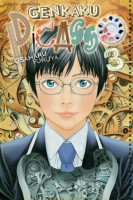
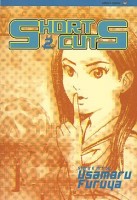
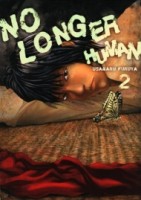
Last week I declared it to be Usamaru Furuya Week here at Experiments in Manga. Ostensibly, it was to celebrate Furuya-sensei’s birthday, but mostly it was just an excuse for me to finally get around to reviewing more of his manga. I have now written an in-depth review of all of Furuya’s manga currently available in English. As for last week’s Furuya reviews, I have for your reading pleasure Short Cuts, Volume 2 (the final volume of one of my favorite gag manga), the second and third volumes of Genkaku Picasso (probably the most accessible entry into Furuya’s English manga), and the second and third volumes of No Longer Human (an excellent adaptation of Osamu Dazai’s novel No Longer Human). I’d love to see more of Furuya’s work translated. Although there are no immediate plans, I know that Vertical has expressed interest, so I am hopeful that someday we’ll see more.

Elsewhere online, manga translator and scholar Matt Thorn has an excellent piece Regarding Inio Asano’s gender identity. (He also talks a bit about his own gender identity.) And speaking of the complexities of gender, sexuality, and translation, a few months back I attended the lecture “Out Gays” or “Shameless Gays”? What Gets Lost, and What is Gained, when U.S. Queer Theory is Translated into Japanese? and posted some random musings about queer theory, Japanese literature, and translation. Well, the video of the lecture was posted earlier this month and is freely available to view. The most recent ANNCast, Vertical Vortex, features Ed Chavez from Vertical and included a license announcement for Takuma Morishige’s comedy manga My Neighbor Seki. In other licensing news, Seven Seas has acquired Kentarō Satō’s horror manga Magical Girl Apocalypse. Also, Seven Seas will soon be announcing licenses for a new yuri manga and a doujinshi (which is very unusual in English). Finally, Shawne Kleckner, the president of Right Stuf (one of my favorite places to find manga), recently participated in a Reddit Ask Me Anything.

Quick Takes

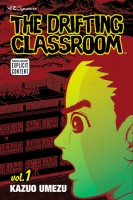
The Drifting Classroom, Volume 1The Drifting Classroom, Volumes 1-3 by Kazuo Umezu. An award-winning horror manga from the early 1970s, The Drifting Classroom is a series that I’ve been meaning to read. After a bizarre earthquake, Yamato Elementary School along with more than 860 students and staff disappear, leaving behind an enormous hole in the ground and very few clues as to what has happened. From the students’ perspective, everything outside the school has been turned into a wasteland. The situation they find themselves in may be extreme and unbelievable, but the consequences that follow are terrifyingly probable. The series’ setup allows Umezu to freely explore humanity’s darkness. The Drifting Classroom isn’t frightening because of the unknown; the true horror comes from how people react out of fear to the unexplainable. There are immediate concerns for survival, such as the lack of food and water, but even more problematic is the violence the erupts among the school’s survivors. The Drifting Classroom is an intense horror and survival manga with extremely dark psychological elements. I’ll definitely be reading more.

Missions of Love, Volume 6Missions of Love, Volume 6 by Ema Toyama. I started reading Missions of Love in the middle of the series. Although there is some background information that I am missing, I was still able to pick up on the major plot points fairly quickly. I really should go back and read the earlier volumes, though, as I’m enjoying the series much more than I anticipated. None of the characters are particularly nice people; their relationships are a twisted and tangled mess because of how they are all manipulating one another. And in the process, they’re confusing their own personal feelings as well. Missions of Love is intentionally scandalous and deliberately suggestive. However, it’s not exactly what I would call fanservice since it is meant more for the story and characters’ sakes rather than for the readers’. There are intimate moments and scenes of extreme vulnerability that challenge appropriateness but never quite cross the line, although Toyama frequently pushes the limits. I’m just waiting for something really terrible to happen. At this point, I can’t imagine that any of the characters in Missions of Love will be able to make it through the series unscathed.

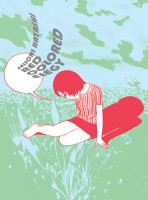
Red Colored ElegyRed Colored Elegy by Seiichi Hayashi. Another manga from the early 1970s, originally serialized in the alternative manga magazine Garo, Red Colored Elegy is only one of two volumes of Hayashi’s work available in English. The story follows Ichiro and Sachiko, two young animators in love and living together, but who are struggling to make ends meet as life slowly drives them apart. Hayashi’s artwork is deceptively simple and often free of backgrounds, placing the emphasis on the characters and their tumultuous lives and relationships. He conveys a tremendous amount of emotion through a minimalist, almost stream-of-conscious approach. Hayashi’s style in Red Colored Elegy can make it feel a bit disjointed from page to page, as though it were a collection of closely related vignettes rather than a single continuing story, but the overall melancholic mood created by the manga is consistent. Red Colored Elegy is about falling into and out of love and about pushing through life’s tragedies, both small and large. Emotionally compelling and beautifully crafted, Red Colored Elegy stands up to multiple readings.

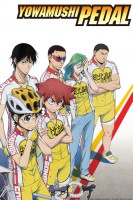
Yowamushi PedalYowamushi Pedal, Episodes 1-14 directed by Osamu Nabeshima. The Yowamushi Pedal anime series is based on an ongoing manga by Wataru Watanabe. Sakamichi Onoda is an otaku trying to revive the anime club at his new high school, but he quite unexpectedly finds himself caught up in the bicycle racing club instead. He has some natural talent at cycling–his frequent 90 km trips by bike to Akihabara probably didn’t hurt–but he has had no formal training. That’s about to change, though. The series so far has mostly focused on Onoda and the Sohoku High School racing club. The other teams that they will be facing have only been shown briefly. However, now that Onoda has started to get the basics of cycling down, the other cyclists are becoming more prominent in the story. I particularly like Yowamushi Pedal‘s casting; all of the characters have very distinctive speech patterns and voices which are very entertaining. I’m enjoying the series a great deal. Although I never was a racer and I don’t cycle as much as I used to (once upon a time, it was my primary mode of transportation), Yowamushi Pedal makes me want to get my bike out again.

Filed Under: FEATURES, My Week in Manga Tagged With: anime, Drifting Classroom, Ema Toyama, Kazuo Umezu, manga, missions of love, Seiichi Hayashi, Yowamushi Pedal

No Longer Human, Vol. 3

January 25, 2014 by Ash Brown

No Longer Human, Volume 3Creator: Usamaru Furuya
Original story: Osamu Dazai

U.S. publisher: Vertical
ISBN: 9781935654377
Released: February 2012
Original release: 2011

Osamu Dazai’s semi-autobiographical novel No Longer Human, originally published in Japan in 1948, has had a least three manga adaptations. Of those, only one is currently available in English–a three-volume series by Usamaru Furuya. I have been interested in Furuya’s work ever since I read Lychee Light Club, and so I was very happy when Vertical licensed his No Longer Human manga series. No Longer Human, Volume 3 was first published in Japan in 2011 while the English-language edition was released in 2012. The original novel was a fairly dark work. While Furuya has taken some liberties with his version of the story–using himself as a framing character and updating the setting to contemporary Japan, among other changes–the No Longer Human manga is also quite dark. Furuya argues in the afterword that his ending is somewhat more uplifting than Dazai’s, but it is still severe. Vertical describes the third volume as “the devastating finale” which is incredibly apt.

Disowned by his family and the survivor of a double suicide, Yozo Oba’s life was falling apart. Getting by on his good looks, he lived for a time as a kept man until he ran away from that situation, too. But then he met and fell in love with Yoshino, a young woman working at the cigarette shop that he frequented. Yoshino and Yozo elope and have now been married for a year. For the first time in his life Yozo is genuinely happy. He has a wonderful trusting wife who loves and accepts him for who he is, the only person with whom he can be completely open and honest. He’s gainfully employed, his manga for children is popular and selling well and with the extra income from his side job drawing erotic illustrations, he and Yoshino are able to live quite comfortably. Yozo still carries some guilt over his past, something that his supposed friend Horiki never lets him forget, but he’s now starting to look forward to his future. And then it all comes crashing down. Yozo’s perfect fantasy life is destroyed and he is destroyed along with it.

Having previously read Dazai’s orignal novel (several times, actually), I was all too aware the direction that Furuya’s No Longer Human was heading. Actually, from the beginning of the manga series alone it is known that Yozo’s story is not a happy one. But knowing what’s in store does not necessarily make it any easier to witness it happen. There is nothing that the reader can do but to watch the events unfold. Yozo is doomed from the very start. Something happens to this young man, seemingly loved by all, to cause his life to completely shatter. He should be in the prime of his youth but becomes so broken that most assume him to be more than twice his age. The third volume of Furuya’s No Longer Human outlines his final and ultimate downfall, the one from which he is never to recover. It’s made even more tragic because he has finally experienced true happiness and contentment only to have it torn from his grasp.

Throughout the No Longer Human manga the tremendous disconnect between how Yozo views himself and how others perceive him has been shown. It’s one of the driving forces behind the story. Up until the very end people insist that Yozo is a good person, but to him it has all been an act. He holds a pessimistic view of the world and recoils from humanity. What many people would consider to be a source of hope and salvation only guarantees Yozo’s undoing. Eventually he becomes a drug addict which only amplifies his fears and anxieties and further damages his precarious state of mind. His increasingly twisted and tormented psyche is reflected quite clearly in Furuya’s artwork. No Longer Human is an unrelenting and even terrifying tale. Even at his worst I can still see a little bit of myself in Yozo. It’s perhaps because of this that I find the series to be so effectively gut-wrenching. Furuya’s adaptation of Dazai’s novel is excellent, bringing his own interpretation to the story while staying true to the dark heart of the original.

Filed Under: REVIEWS Tagged With: manga, no longer human, Osamu Dazai, Usamaru Furuya, vertical

Genkaku Picasso, Vol. 3

January 24, 2014 by Ash Brown

Genkaku Picasso, Volume 3Creator: Usamaru Furuya
U.S. publisher: Viz Media
ISBN: 9781421539201
Released: May 2011
Original release: 2010

The third and final volume of Usamaru Furuya’s short manga series Genkaku Picasso was originally published in Japan in 2010. Viz Media released the English-language edition of the volume in 2011 under its Shonen Jump imprint. Genkaku Picasso was initially serialized in the manga magazine Jump SQ. Furuya mentions in the series’ afterword that he was somewhat surprised to have been approached to create a manga by one of the Jump SQ editors since he didn’t consider his previous work to have had much popular, mass appeal. (Furuya made his debut in the alternative manga magazine Garo and is particularly well-known for some of his more avant-garde work.) Genkaku Picasso was originally intended to be only two volumes long. Happily, Furuya was able to expand the series to three volumes, which allowed him to tie everything together in the way that he wanted. Although I enjoyed the first volume of Genkaku Picasso the manga starts out a little unsteady. But by the end, Furuya has created a fantastic series.

For most of his life, Hikari Hamura has been content to keep to himself and concentrate on his drawing. He’s earned himself the nickname of Picasso from his classmates (much to his dismay as he greatly prefers the work of Leonardo da Vinci), but up until recently they have mostly ignored him. Picasso is as strange and gloomy as he ever was, if not more so, but many of his classmates are beginning to feel drawn to him for some unknown reason. What they don’t realize is that Picasso has been helping to solve their personal problems. After nearly dying in a bizarre accident Picasso has gained a strange ability that allows him to see and draw the darkness that exists in another person’s heart. He can enter into those sketches, and by changing them he influences his classmates lives, hopefully for the better. This power is something that Picasso has tried to keep hidden from the others but it becomes difficult for them to disregard his increasingly odd behaviour, especially when he seems to know things that they would never reveal to someone else.

Genkaku Picasso starts out as a fairly episodic series. Generally, I found the longer stories–those lasting several chapters–to be more successful than the shorter ones as they feel less rushed and more thoroughly developed. It’s only really during the second volume that it becomes clear that there is also an overarching plot. The details of that larger story are completely reveled in the third volume of Genkaku Picasso. With a little bit of a lead in, “Hikari’s Story” takes up nearly half of Genkaku Picasso, Volume 3. It’s the longest story in Genkaku Picasso and is what pulls together the entire series. Up until this point in the manga, while Picasso has certainly been the protagonist, the stories have largely focused on his classmates and the issues that they are struggling with. But in “Hikari’s Story” their roles are reversed and it’s Picasso who needs help. It’s an extremely effective turn of events that brings the series full circle quite nicely.

The ending of Genkaku Picasso is actually a little heart-wrenching. Picasso starts the series almost a complete loner. Except for Chiaki, who hung out with him despite his protests, most of his classmates simply took no notice of him. Picasso was perfectly fine with this, or at least that’s what he told himself. As Genkaku Picasso progresses, Picasso slowly gathers people around him as he helps them with their problems. But it’s not until the third volume that he actually admits that he has friends and that he actually wants friends. Picasso has to be completely honest with himself and with the others, which in reality is a very terrifying thing to have to do. With “Hikari’s Story” the entire series becomes about Picasso and shows the tremendous amount of growth that he has gone through. I’m very glad that Furuya was able to extend Genkaku Picasso and give it a marvelous conclusion. Even considering its somewhat awkward start, Genkaku Picasso is a wonderful series. I thoroughly enjoyed its quirky humor and characters, its engaging artwork, and its somewhat peculiar but ultimately heartfelt story.

Filed Under: REVIEWS Tagged With: genkaku picasso, manga, Shonen Jump, Usamaru Furuya, viz media

Manga the Week of 1/29

January 23, 2014 by Sean Gaffney, Michelle Smith, Ash Brown and MJ 1 Comment

SEAN: Next week is the last week of the month, and as ever this means few titles arrive (unless you get stuff from Diamond – all this week’s missing stuff is arriving next week). But not without worthy things to discuss.

gantz30

Dark Horse really hit on a winner when they licensed Gantz from Shueisha (leaving aside the amazing fact that they licensed something from Shueisha and were not named Viz). It’s been a consistent seller for them, particularly among the ‘comic shop buyer’ fan. And now it’s hit Vol. 30.

MICHELLE: Wow, I had no idea Gantz went on for so long.

ASH: Yup, it ended last year in Japan with thirty-seven volumes. It’s been quite a while since I’ve actually read any of the series, though.

SEAN: DMP’s Deflower the Boss seems like one of those BL titles that I’d expect to do quite well simply due to the title alone. Also, just by giving you the title, you can likely guess the plot. I’m hoping it’s at least fun and silly.

MICHELLE: …

MJ: What she said.

SEAN: Lastly, Kodansha’s Attack on Titan finishes its speed-up with Vol. 11. It now lines up with Japan, meaning we’ll see Vol. 12 in April. That said, get a Crunchyroll subscription and you can read right up to this month’s magazine chapter.

ASH: I’ve gotten so used to new volumes of Attack on Titan coming out every month that April now seems to be very far away.

SEAN: What manga are you deflowering this week?

MICHELLE: *snerk*

Filed Under: FEATURES, manga the week of

Short Cuts, Vol. 2

January 23, 2014 by Ash Brown

Short Cuts, Volume 2Creator: Usamaru Furuya
U.S. publisher: Viz Media
ISBN: 9781591160694
Released: August 2003
Original release: 1999

Originally serialized in Young Sunday, Short Cuts was Usamaru Furuya’s first manga created for a major, mainstream publication. It was also his first manga to be completely released in English. His debut work, Palepoli, was serialized in the alternative manga magazine Garo and has only partially been made available in English. (Select excerpts from Palepoli are available in Japan Edge: The Insider’s Guide to Japanese Pop Subculture and Secret Comics Japan: Underground Comics Now.) Short Cuts began its serialization in 1996, two years after Furuya made his manga debut. The second collected volume of Short Cuts was initially published in Japan in 1999. The English-language edition of the volume was released by Viz Media in 2003. This was after Pulp, the magazine in which Short Cuts was being serialized in English, was canceled. I very much enjoyed the first volume of Short Cuts and so am happy that both volumes, though sadly now out of print, were released.

Short Cuts is a darkly comedic and vaguely surreal gag manga and satire. Each cut–there are exactly one hundred of them in the second volume–is a short manga only a page or two in length. As in the first volume, there are some recurring jokes, characters, and setups, but even the related cuts can generally be read on their own. Any sort of overarching plot is nearly nonexistent. Kogals and the kogal subculture, which were particularly prominent in Japan while Short Cuts was initially being serialized, remain the most common topics in the manga. However, there are plenty of other subjects that Furuya uses for his material, often the stranger the better. He draws inspiration from Japanese pop culture and celebrities, other manga creators (frequently mimicking their individual styles in the process), and even history and contemporary politics.

In the afterword to the series, Furuya mentions that Short Cuts was initially intended to be “light, pop, and sexy” but as the series progressed it became a bit stranger until “old people and weirdos stood out.” I’m pretty sure Furuya includes himself when he is talking about weirdos. Increasingly, the gags in Short Cuts refer to the trials and tribulations of manga artists and illustrators. Furuya has several personal avatars in Short Cuts who either break the fourth wall to interact with the cuts or are the stars of their very own. With the second volume the humor in Short Cuts has become even more self-aware. Furuya is not afraid to make fun of himself or his manga. Another recurring character is a kogal named Mai. (The frequency of her appearances actually becomes a joke in and of itself.) She’s a delightfully peculiar young woman with an even odder family. In some ways, Mai and Furuya together are representative of the series as a whole and the relationship between creation and creator. The ending of Short Cuts–if a series without much of a plot can be said to have an “ending”–is actually rather touching because of this.

Short Cuts is a very strange manga, which is probably one of the major reasons that I like it so well. I enjoy Furuya’s chameleon-like artwork in the series as well as his absurd, dark, and surreal humor, all of which can admittedly be rather raunchy and vulgar from time to time. Many but certainly not all of the gags in Short Cuts rely on the reader having at least passing familiarity with Japanese culture and society, but there are plenty of notes from the translator included for those who might need a bit of extra help. Overall, I think I slightly preferred the first volume of Short Cuts over the second, though I can’t seem to identify exactly why that is. I was still consistently amused by Short Cuts, Volume 2 and Furuya can still make me laugh out loud. Short Cuts remains one of my favorite gag manga, but its peculiar sense of humor and sharp social commentary definitely won’t be to everyone’s taste.

Filed Under: REVIEWS Tagged With: manga, Short Cuts, Usamaru Furuya, viz media

No Longer Human, Vol. 2

January 22, 2014 by Ash Brown

No Longer Human, Volume 2Creator: Usamaru Furuya
Original story: Osamu Dazai

U.S. publisher: Vertical
ISBN: 9781935654223
Released: December 2011
Original release: 2010

Usamaru Furuya’s manga series No Longer Human is an adaptation of Osamu Dazai’s 1948 semi-autobiographical novel No Longer Human. Furuya’s manga adaptation began serialization in Weekly Comic Bunch in 2009. The second volume of the series was published in Japan in 2010 while the English-language edition was released in 2011 by Vertical. No Longer Human was the second manga by Furuya that was published by Vertical, the first being the one-volume Lychee Light Club. Although Furuya’s No Longer Human is based on Dazai’s novel, he has taken a few liberties with his rendition, one of the most notable changes being that the story is now set in the 2000s instead of the 1920s and ’30s. Furuya has also inserted himself into the manga as a framing character. These changes, as well as others, are actually quite effective. It is not at all necessary to have read the original No Longer Human to appreciate Furuya’s interpretation of the story.

Yozo Oba attempted a double suicide with a club hostess named Ageha, but only she drowned while he survived. He’s come to the realization that although he doesn’t want to die, he doesn’t want to live, either. Yozo has long since been disowned by his family and the one person for whom he held any sort of honest feelings is now gone. He spends his days directionless and in despair, slowly recovering from a torturous situation partly of his one making. He desperately wants some meaning to his life, but has failed to discover what that might be. At one point he thinks he’s found it, only to have it snatched away from him. Yozo was once adored by all and even in his current pitiful state people are drawn to him and dare to care about him. He uses this to his advantage, putting on airs to get what he wants and needs, recognizing all the while how distasteful it is. Yozo uses people and he knows it. To him, life is still an act.

No Longer Human is a dark and troubling manga series. Yozo doesn’t treat himself well and treats those around him even worse. He is extremely manipulative and frankly can be a terrible person. And yet at the same time Yozo is a tragic figure; No Longer Human is heart-wrenching. While I don’t find his portrayal in the manga to be as sympathetic as it is in the novel, there are still points with which I can empathize. Yozo has a fear of people and their expectations of him that prevents him from being authentic. He’s repeatedly told that he is a good, sweet, and kind person, but this is the last thing he wants to hear. Yozo’s extraordinarily anxiety-ridden and conflicted over it because he see the life he is living as one big lie. He is very aware of his dishonesty and how he misleads people, but continues to do so because he is so desperate to be liked and accepted. Occasionally he manages to express some feelings of legitimate remorse and genuine caring, but more often than that it is already too late to undo any of the damage done.

No Longer Human, Volume 2 follow Yozo from the depths of despair to the heights of happiness and back again. Those glimmers of hope that Yozo will be able to turn his life around make his failure to do so even more anguished as he lets chance after chance to slip through his fingers. Furuya’s artwork in No Longer Human suits the story well, capturing Yozo’s internal and emotional turmoil and dragging the readers along for the ride. Furuya provides disconcerting glimpses into Yozo’s psyche, visually expressing his suffering through imagery of suffocation (harkening back to his near-drowning) and showing the ugliness he sees in the world. No Longer Human isn’t necessarily an easy read and it can be emotionally exhausting, but I find it to be incredibly compelling and difficult to turn away from as well. Yozo may not often be particularly likeable, but as with so many of the other characters in the series I can’t help but wish the best for him no matter how doomed he seems.

Filed Under: REVIEWS Tagged With: manga, no longer human, Osamu Dazai, Usamaru Furuya, vertical

Weekly Shonen Jump Recap: January 6, 2014

January 22, 2014 by Derek Bown Leave a Comment

Weekly Shonen Jump Cover Jan 6, 2014Sometimes life gets the better of us and despite our beset intentions we may find ourselves falling behind in obligations. Whether those obligations be self-imposed or involuntary doesn’t really matter, what matters is that once you say you’ll do something, you’d better do it.

Towards the end of 2013 I found myself struggling to keep up with some of my own obligations, and the more they piled up the harder it was to even do the things I wanted to do. Sometimes all we can do is just throw our past failures to the wind and start fresh. Speaking of which, you may have noticed that there were no reviews of weekly shonen jump posted in December. Suffice to say a busy year kept me from really spending any time actually thinking about manga. And rather than write about something old I’ve decided to start fresh this year and post brand new content every week as soon as the chapters are released. After all, what’s the fun in discussing manga if I wait for a month to even think about writing down my opinions. With that said, I look forward to discussing the latest Shonen Jump chapters every week with all of you.

So let’s get started with this week.

One Piece Ch. 733
The battle to take Dressrosa back continues as the Toy Soldier and Usopp’s teams begin their assault. Meanwhile Rebecca continues to stick it through in her fight but an unknown force seems to have taken control over the match. One Piece has had some pretty amazing chapters the past several weeks, and while this specific chapter doesn’t have anything particularly ground breaking being revealed, it’s still an excellent chapter. The plot is in full motion, and it looks like the arc is moving towards a conclusion. It won’t be any time soon, but we’ll be getting some one on one battles not too soon I imagine. It turns out that the toy soldier is actually very strong, despite being in a fragile toy body. I like the idea that he’ll be limited based on his durability, any kind of handicap given to characters is more than appreciated and helps ratched the tension up. Overall this was a great chapter, even if it didn’t have any ground breaking revelations.

One Piece

Naruto Ch. 660
The majority of this chapter focuses on giving Shukakuu a back-story where before he was just a pure evil monster that drove Gaara to become a homicidal maniac. As such it is a bit difficult to take the more positive direction Kishimoto has been driving the tailed beasts, especially when applied to a character who we only knew as a force of destruction. In fact, I find it hard to remember that this is the same Naruto that I once enjoyed reading. I’m not saying I don’t like the tailed beasts becoming good, but when the entire development over the course of the series with one exception, was to show how evil and destructive these monsters are, then I have a hard time taking this sudden turn to good seriously. I still remember how out of left field Kurama becoming a good guy was, and I’m not about to accept the same of Shukakuu without proper development. And I can’t really say this chapter does much to add to that development. I can accept someone hating humanity because of how horrible they are, because frankly we have our terrible moments. But this is also the same character that terrorized a little child, an innocent I might add, by saying that he would kill everyone if Gaara ever fell asleep. I will say, in this chapter’s favor, that seeing Naruto apparently lose the nine tails’ chakra makes for a pretty great cliffhanger.

Naruto

Toriko Ch. 263
Sentimentality is not Toriko‘s strong point. In theory I really love the idea of Toriko being confronted by all of his success and how much his discoveries have meant to people. It’s actually really easy to forget that Toriko was actually an accomplished gourmet hunter, considering how throughout the course of the series he keeps coming across foods that he doesn’t know that other people do know about. Kind of hard to remember that there are foods he was the first person ever to discover. It might have helped if we’d actually seen him discover some new foods, without being directed there by someone else. My one problem with this chapter is I have no idea how all those random people knew that Toriko needed a pep talk? And am I really supposed to believe that someone in this series was allergic to all kinds of food except for one? Is that even possible? The montage of all the powerful beasts of the gourmet world was a lot of fun, even though by now the power levels are completely meaningless. And while we’ll be having a month long break, I’m hopeful that this series will come back more insane than before.

Toriko

Seraph of the End Ch. 008
There really isn’t that much I can say about this chapter. I enjoy seeing the characters in their uniforms, but nothing has changed beyond the dress code. Well, that’s not entirely true, we can finally drop the facade of this being a school series, but all the characters I hated are still annoying, and we get another character who promises to be just as annoying as the rest of the cast. And please keep in mind, I normally tolerate most characters that other manga fans hate. But this series is just comprised of nothing but annoyances. And on top of that the comedy isn’t even any good. There are multiple attempts to make me laugh, but they are all just too painful to do anything but give a sarcastic little laugh.

Nisekoi Extra Chapter!
The nice thing about Nisekoi is that even when on the surface a chapter is nothing but shameless fanservice, and this special chapter is so very much that, there is still something to enjoy for people that aren’t complete degenerates. In this case it’s a twist on the old “guy being trapped in the girl’s hot springs”. Rakku is in fact not only completely innocent, but he’s exactly where he is meant to be and it’s the girls encroaching on him. Of course this doesn’t stop him from being pummelled. And the reason for having the girls in such an embarrassing situation actually kind of works. Having to get their clothes back makes perfect sense, since those are kind of important. Though methinks it would have been easier for them to just ask Rakku to get their clothes out of the tree and put them somewhere they can get to them without him catching a glimpse. But if everyone in comedies acted rationally there would be no story. Overall, a fun chapter if somewhat awkward to read at work.

One-Punch Man Ch. 031.2
Saitama fights off the alien barrage, while the knight confronting the alien monster finds himself in a bad spot. I think that One-Punch Man is surprisingly good at action despite having a hero who can do something ridiculous like punch giant bullets out of the air. But beyond saying that the designs in this chapter are really cool I don’t have much else to say.

One-Punch Man

Bleach Ch. 563
I love Mask de Masculine. It feels like Kubo just stopped caring and drew whatever nonsense came to mind, and what we got was glorious. Mask refuses to go down, coming back with even more insane abilities. Renji is clear to win this battle, but it’s stretched out in a way I can’t help but love. Content wise this chapter was kind of sparse, but it was glorious nonetheless.

Bleach

World Trigger Ch. 045
The invasion seems to be a lot more serious than I’d thought it would be. World Trigger has avoided serious fatalities by having its characters never really be in harm’s way. This chapter actually felt tense, despite the heroes being able to bail out. I actually look forward to this war even more now. I’d had high hopes, but by this point I think my faith has been rewarded and we will get some pretty amazing action.

Nisekoi Ch. 105
Fortunately we got a Nisekoi chapter this week that wasn’t entirely fanservice. And one of my favorite characters gets some focus again. I really love how Nisekoi can take some standard character tropes and yet still make them interesting. Onodera may be the standard nice girl, but she was hysterical this chapter. I was laughing the entire way through, even during the minor lulls in the story. That’s not an easy thing to do.

Nisekoi

Blue Exorcist Ch. 053
Well then, this chapter was just a little bit dark. I’m still annoyed at Kato introducing the professor character. Can we please not have blatant pedophile characters please? I’m not sure I’m a huge fan of the direction this story is going, I don’t mind dark, but there are times that I’d rather not put up with an excessively dark story. But really my problem right now is that I don’t know what to think of this chapter. It certainly explains why Izumo is the way she is.

Blue Exorcist

Dragon Ball Z Ch. 046
Vegeta is defeated by being crushed under a giant child. I’m surprised he had any dignity left in this series after that. But at least the arc is wrapping up, with Vegeta declaring that he needs to escape, finally he is defeated. And so ends one of the better arcs of the Dragonball manga.


This was a pretty great week overall. If you had any favorite chapters this week let me know, also, has anyone tried out the crunchyroll manga section? It’s pretty great and I highly recommend it, beyond a few teething problems they seem to be having with getting the new chapters out.

If you want to hear more, check out the Manga^3 Podcast Archives.

Filed Under: FEATURES & REVIEWS, WSJA Recaps Tagged With: bleach, blue exorcist, Dragon Ball Z, naruto, nisekoi, One Piece, one punch man, toriko, world trigger

  • « Go to Previous Page
  • Page 1
  • Interim pages omitted …
  • Page 626
  • Page 627
  • Page 628
  • Page 629
  • Page 630
  • Interim pages omitted …
  • Page 1048
  • Go to Next Page »
 | Log in
Copyright © 2010 Manga Bookshelf | Powered by WordPress & the Genesis Framework