• Skip to primary navigation
  • Skip to main content
  • Skip to primary sidebar
  • Home
  • About Us
    • Privacy Policy
    • Comment Policy
    • Disclosures & Disclaimers
  • Resources
    • Links, Essays & Articles
    • Fandomology!
    • CLAMP Directory
    • BlogRoll
  • Features & Columns
    • 3 Things Thursday
    • Adventures in the Key of Shoujo
    • Bit & Blips (game reviews)
    • BL BOOKRACK
    • Bookshelf Briefs
    • Bringing the Drama
    • Comic Conversion
    • Fanservice Friday
    • Going Digital
    • It Came From the Sinosphere
    • License This!
    • Magazine no Mori
    • My Week in Manga
    • OFF THE SHELF
    • Not By Manga Alone
    • PICK OF THE WEEK
    • Subtitles & Sensibility
    • Weekly Shonen Jump Recaps
  • Manga Moveable Feast
    • MMF Full Archive
    • Yun Kouga
    • CLAMP
    • Shojo Beat
    • Osamu Tezuka
    • Sailor Moon
    • Fruits Basket
    • Takehiko Inoue
    • Wild Adapter
    • One Piece
    • After School Nightmare
    • Karakuri Odette
    • Paradise Kiss
    • The Color Trilogy
    • To Terra…
    • Sexy Voice & Robo
  • Browse by Author
    • Sean Gaffney
    • Anna Neatrour
    • Michelle Smith
    • Katherine Dacey
    • MJ
    • Brigid Alverson
    • Travis Anderson
    • Phillip Anthony
    • Derek Bown
    • Jaci Dahlvang
    • Angela Eastman
    • Erica Friedman
    • Sara K.
    • Megan Purdy
    • Emily Snodgrass
    • Nancy Thistlethwaite
    • Eva Volin
    • David Welsh
  • MB Blogs
    • A Case Suitable For Treatment
    • Experiments in Manga
    • MangaBlog
    • The Manga Critic
    • Manga Report
    • Soliloquy in Blue
    • Manga Curmudgeon (archive)

Manga Bookshelf

Discussion, Resources, Roundtables, & Reviews

Blog

Bookshelf Briefs 6/9/14

June 9, 2014 by Sean Gaffney, Anna N and Michelle Smith Leave a Comment

This week, Sean, Anna, & Michelle look at recent releases from Kodansha Comics, Digital Manga Publishing, and Viz Media.

cage14Cage of Eden, Vol. 14 | By Yoshinobu Yamada | Kodansha Comics – We’ve moved past the ‘everyone is fighting against horrible prehistoric animals’ stage of the manga, and the ‘everyone is bathing naked in rivers so you can see their breasts’ stage has at least lessened (the biggest fanservice moment in this volume is for the ladies, as Yarai shows off his manly naked body). So now we seem to be at the ‘actually trying to figure out what’s going on’ stage, as Sengoku and company explore the depths of a pyramid filled with death traps, surprisingly Japanese-made machinery, and even more giant stuff that makes no sense – plants this time. I’m not sure there’s any explanation that justifies all the buildup, but this is still a lot of good shonen fun. -Sean Gaffney

gangsta2Gangsta, Vol. 2 | By Kohske | Viz Media – This volume develops a bit on the first, teasing us with a little more backstory regarding Nic and Worick and their respective backgrounds. There’s also a lot more worldbuilding, as we meet some rival families and groups who will no doubt continue to influence events. Mostly, though, it’s a volume that shows us just how terrible and knife-edge everyone’s lives are at the moment – violence runs rampant throughout, there’s tons of casualties, Nic goes into a drug-induced berzerker rampage, and even Ally, who spends almost the entire volume staying at the office, is having drug-induced hallucinations leading to psychotic breaks. If you like Black Lagoon but thought it was too cheery, Gangsta is right up your alley. – Sean Gaffney

itazura10Itazura Na Kiss, Vol. 10 | By Kaoru Tada | Digital Manga Publishing – This volume is an excellent one for showing us how far we’ve come since the first. Yes, Kotoko can still be shallow and aggravating, and Naoki can be heartless and insensitive. But it’s almost in the minority by now, as they deal with fresh new crises; the birth of her friend Satomi’s child, visiting her mother’s embarrassing family (who all have so many stories to tell her new husband), and dealing with Naoki deciding he has to intern in Kobe in order to better specialize (in pediatrics, god help those children). I’ve described Itazura Na Kiss as a bitter coffee of a manga, but the coffee now has milk and sugar in it, and the bitterness is mostly knowing it’s about to be cut short by the author’s death. – Sean Gaffney

kimi19Kimi Ni Todoke, Vol. 19 | By Karuho Shiina | Viz Media – I was a little grumpy about a third of the way through this volume, as Kento really is being a little too perfect to be realistic. But then, so is the rest of the cast, if I want to be honest. And it dawned on me that there’s nothing particularly wrong with that. This is a manga filled with nice people having quiet, gentle moments with each other. The only real conflict comes at the end, when Kazehaya’s controlling father shows up to provide a cliffhanger. Everything else is just heartwarming, sweet, and adorable moments. Even Pin, who does get to be goofily obnoxious, gets a sweet, heartwarming backstory here. I should stop trying to make this title more than what it is – just the nicest manga you’ll ever read. – Sean Gaffney

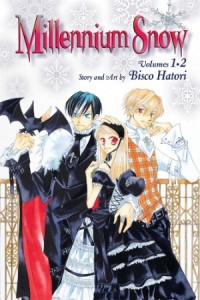
milsnow3Millennium Snow, Vol. 3 | By Bisco Hatori | Viz Media – Perhaps the best and worst thing I could say about the continuation of Millennium Snow (after a ten-year hiatus) is that it reminds me of Hatori’s much more famous series, Ouran High School Host Club. Remember those episodic chapters in Ouran where the gang would try to help a schoolmate with their problems? That’s basically what’s going on in this volume, as a seemingly cold-hearted nurse turns out to be nurturing guilt over the death of her child and a bullied girl befriends an injured supernatural beastie that feeds on the power of words. It’s kind of dull. However! Ouran also had a sense of humor that appealed to me, and I found myself giggling a couple of times in this volume, namely at the image of an immortal vampire’s hesitant first encounter with a stapler and the notion of his bat servant hastening to the supermarket because “Eggs is on sale!” So, in the end, not the best ever, but I’ll read the fourth and final volume anyway. – Michelle Smith

littlemonster2My Little Monster, Vol. 2 | By Robico | Kodansha Comics – It’s not that the plot of My Little Monster is new and original—it is, after all, a romance manga—but I think the characterization of the protagonist, Shizuku Mizutani, is nicely done. As we begin the volume, she’s been rejected by former wild child Haru but has declared she’ll make him fall for her. Unfortunately, she has no idea how to do this, and proceeds to be her usual prickly self even while helping him out of various troublesome situations. Eventually a new character, Oshima, falls for Haru too, and Shizuku is so distracted by this that her schoolwork begins to suffer. She decides that anything that detracts from securing a stable future is unnecessary, which of course coincides with Haru seemingly realizing that he does fancy her after all. It’s a lot better than this synopsis makes it sound, and Oshima is intriguing in her own right. Plus, there is a chicken! – Michelle Smith

rein3Sweet Rein, Vol 3 | By Sakura Tsukuba | Viz Media – If Sweet Rein has a fault, it is that it can sometimes be a tiny bit too sweet at times, but anyone who enjoyed the first two volumes of this series about a teen girl Santa and her handsome bonded transforming boy/reindeer will enjoy the third volume. The volumes follow a fairly predictable pattern of going through the seasons as the characters stubbornly refuse to age. Kurumi has to deal with Kaito during the spring, when all the reindeer have spring fever and become even more irresistible. A reindeer whose master has left him behind fixates on Kurumi in an unhealthy matter, and Kaito finally is driven to actually express a preference in a way that influences Kurumi’s behavior. This is a fun vacation read, as it isn’t terribly demanding on the reader! There’s also a bonus story from Tsukuba’s CMX series Penguin Revolution included in this volume, and I enjoyed being able to dip back into that series as well. This is light romance shoujo at its fluffiest. – Anna N.

tigerbunny5Tiger & Bunny, Vol. 5 |By Mizuki Sakakibara, et al. | Viz Media – I haven’t exactly been complimentary in my previous reviews of Tiger & Bunny, citing an inability to connect with the lead duo, but something has really clicked for me in these past few volumes. True, the story still flows swiftly, but it also does so with admirable clarity, focusing mostly on action but without forgetting to flesh out the characters. Not only does Barnabas come to trust Kotetsu more as his partner, which is nice to see and handled in a “show don’t tell” kind of way, but we also learn more about several of the supporting Heroes and how they feel about their responsibilities and each other. The plot, involving a villainous organization responsible for killing Barnabas’ parents, may not be the most riveting thing ever, but seeing this proud guy accept help in figuring things out is enough to keep me interested. I am finally on board! – Michelle Smith

Filed Under: Bookshelf Briefs

Pick of the Week: Staples & Surprises

June 9, 2014 by Ash Brown, Michelle Smith, Sean Gaffney and MJ 2 Comments

potwASH: With only six new volumes of manga being released this week, you might think that it would be easy to pick just one, but no. I’m already following more than half of the series. Still, if I have to choose, I’ll once again go with Crimson Spell. I continue to be very happy that SuBLime rescued the series.

MICHELLE: You know, I never thought I’d say this, but Tiger & Bunny has really grown on me with recent volumes, so I’m gonna award its fifth volume my pick for this week. It’s fun, with easy-to-follow action and enough focus on characters to keep me interested. I’m surprised by how much I’ve come to like it considering how underwhelmed I was initially.

SEAN: I think I’ll go for the 2nd volume of Say “I Love You” this week. It’s rapidly going in directions I hadn’t expected, and it’s refreshing to see both a lot of casual sex happening in high school, and also some of the consequences, mostly mental and emotional, that come from that. Add to this our heroine’s natural introversion and you have something that’s more addicting now than it was in the first volume.

MJ: I’ve been staring at the shipping list with desperation, and I’ll admit that there’s nothing really crying out to me this week, so I’ll throw caution to the wind and go along with Sean and Say “I Love You.” I haven’t yet read the first volume, but his description here is compelling as hell, so I’m just going to have to check it out for myself. I’m sold.

What looks good to you this week?

Filed Under: PICK OF THE WEEK

My Week in Manga: June 2-June 8, 2014

June 9, 2014 by Ash Brown

My News and Reviews

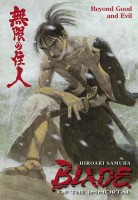
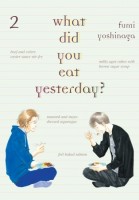
Three posts last week! The first was the announcement of the Oi, Oishinbo! manga giveaway winner, which also includes a list of some of the food manga that has been licensed in English. And speaking of food manga, last week I reviewed Fumi Yoshinaga’s What Did You Eat Yesterday?, Volume 2. I’m really enjoying the series and am thrilled that it’s being released in English. I also reviewed Blade of the Immortal, Volume 29: Beyond Good and Evil by Hiroaki Samura, which is pretty much the beginning of the end of the series. I love Blade of the Immortal, so I’m interested to see how Samura will wrap everything up and who, if anyone, will survive its conclusion.

Things have been a bit hectic in my life lately, so I’ve not been able to pay attention to all of the news and announcements recently, but I did catch a few things on Vertical’s Twitter account. Apparently, its warehouse is down to the last 24 copies of Message to Adolf, Part 1 and it may or may not be reprinted. So, if you want a copy, you should probably grab it sooner rather than later. Adolf was my introduction to Osamu Tezuka, and it remains one of my favorite works by him. Also, Vertical was at AnimeNEXT and made a new license announcement—Dream Fossil: The Complete Short Stories of Satoshi Kon. Though it wasn’t perfect, I enjoyed Kon’s Tropic of the Sea a great deal, so am looking forward to this collection as well as the other Kon manga announced by Dark Horse a couple of months ago.

Quick Takes

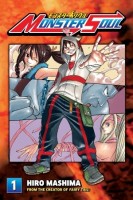
Monster Soul, Volume 1Monster Soul, Volume 1 by Hiro Mashima. For readers intimidated by the length of Fairy Tail or Rave Master, Mashima’s two-volume Monster Soul sets a much lower bar for entry to his work. During the Human-Monster War, the Black Airs were an elite group of exceptionally powerful monsters. Now that the war is over, and the monsters have lost, they mostly try to keep to themselves. But with human poachers, a ghost with an agenda, and another monster picking a fight, trouble seems to find them anyway. Monster Soul is somewhat episodic, but Mashima does seem to be developing some sort of underlying plot. Since the series is only two volumes long though, it probably can’t be particularly convoluted or in-depth. That being said, I’m not entirely sure what direction Monster Soul will be taking. The story moves along very quickly, there are numerous fights, and the characters are boisterous. I wasn’t blown away, but the first volume of Monster Soul could be entertaining.

Otomen, Volume 16Otomen, Volumes 16-18 by Aya Kanno. I’m not sure that Otomen really needed to be eighteen volumes long, but I enjoyed every volume of it. The series just makes me so incredibly happy. It can be ridiculous and eyeroll-worthy at times, usually deliberately so, but I love it. The characters, while they don’t have much depth, are incredibly endearing. Kanno plays around with gender roles and expectations in Otomen, that’s one of the major points of the series, but never in a denigrating way. The not-so-subtle message of Otomen is that it is just fine to be whoever it is you are. These final three volumes find Asuka and many of the others in their last year of high school. They begin drifting apart for various reasons, the biggest being the influence of Asuka’s mother, and it is heartbreaking to see. Kanno has never hesitated to make use of well-worn tropes and plot developments in Otomen–frequently the series verges on parody because of that–but I was a little unsure about the memory loss arc. Ultimately though, the series ends in a very satisfying way.

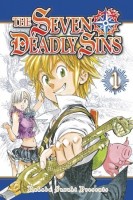
The Seven Deadly Sins, Volume 1The Seven Deadly Sins, Volumes 1-2 by Nakaba Suzuki. Back in my undergrad days I took a fantastic course that focused on the use and portrayal of the seven deadly sins in music and literature, and so Suzuki’s The Seven Deadly Sins manga immediately caught my attention. At first, I was a little uncertain about The Seven Deadly Sins. It took a few chapters to really grow on me, and when present Meliodas’ lecherous tendencies still seem more like a tired cliché rather than any sort of legitimate character development, but the series has great potential. The Seven Deadly Sins are a group of extremely talented warriors who may be the only ones capable of stopping the Holy Knights from destroying Britannia. It isn’t yet known why the group goes by “The Seven Deadly Sins,” or what sins the members have committed to earn their monikers, but I’m assuming that will be revealed sometime in the future. The Holy Knights are the ones being framed as the series’ villains, but the Sins aren’t entirely good, either, which I appreciate. With interesting characters and epic battles, I’m looking forward to reading more.

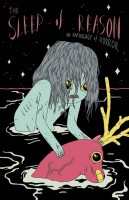
The Sleep of ReasonThe Sleep of Reason: An Anthology of Horror edited by C. Spike Trotman. Edited by the same person who has been coordinating the new Smut Peddler anthologies, The Sleep of Reason collects twenty-six short horror comics. Some of the creators (like Jason Thompson and Carla Speed McNeil, among others) I was already familiar with, but there were plenty of other contributors whose work I was encountering for the very first time. That’s one of the things I love about anthologies like The Sleep of Reason–they introduce me to new artists that I want to follow. I also love being exposed to so many different styles of art and storytelling. There is some blood, death, and gore in The Sleep of Reason, but the collection isn’t a splatter fest and relies much more heavily on the psychological aspects of horror rather than on violence. As with any anthology, some of the stories are stronger than others. I’m not sure that I even completely understood some of them, but they all were eerie, disconcerting, and creepy. The Sleep of Reason is a great collection; definitely recommended for fans of horror.

Filed Under: FEATURES, My Week in Manga Tagged With: Aya Kanno, comics, Hiro Mashima, manga, Monster Soul, Nakaba Suzuki, otomen, Seven Deadly Sins

Blade of the Immortal, Vol. 29: Beyond Good and Evil

June 8, 2014 by Ash Brown

Blade of the Immortal, Volume 29Creator: Hiroaki Samura
U.S. publisher: Dark Horse
ISBN: 9781616553371
Released: May 2014
Original release: 2011
Awards: Eisner Award, Japan Media Arts Award

Beyond Good and Evil is the twenty-ninth volume in the English-language release of Hiroaki Samura’s award-winning manga Blade of the Immortal. Published by Dark Horse in 2014, Beyond Good and Evil is equivalent to the twenty-eighth volume of the Japanese edition of Blade of the Immortal released in 2011. Blade of the Immortal is a long-running series. The collected volumes of the manga first began to be released in Japan in 1994 while the first collection in English was published in 1997. Personally, I discovered Blade of the Immortal in 2007 and have been reading it ever since. The series is now in its final volumes and is drawing closer and closer to its conclusion. Since I’m fond of Blade of the Immortal, I’m both excited and saddened to see it end. Beyond Good and Evil is the beginning of the series’ last battle as all of the surviving characters are brought together to face one another and to confront their destinies.

The members of the Ittō-ryū who were escaping Edō by way of the Mito road have been annihilated. They put up a magnificent fight against Habaki Kagimura’s Rokki-dan and there were casualties on both sides, but in the end it was the Ittō-ryū that was brought closest to its demise. A very small group of the Ittō-ryū’s most elite warriors, including its leader Anotsu Kagehisa, still remain and are on the run. They stayed behind in Edō long enough to wreak havoc at the city’s castle before fleeing, hoping to reunite with the rest of the Ittō-ryū at the port of Hitachi before sailing for Satsuma. But with their companions dead, a few unexpected allies, and no small number of enemies, Anotsu’s carefully laid plans will have to change. As for Habaki, who has very little left to lose, he is willing to do anything that it takes and to commit any atrocity necessary in order to ensure that Anotsu and the remaining Ittō-ryū members, as well as anyone who might lend them their aid, are completely wiped out.

One of the things that has always impressed me about Blade of the Immortal is its complex, morally grey characters. The protagonists and antagonists of the series are constantly shifting, making it difficult to strictly categorize them as being good or bad guys; they are simply extremely flawed people. The confrontation between Habaki and Anotsu and the rest of the survivors has been building over the last few volumes. They all finally meet again, likely for the last time, in Beyond Good and Evil. It’s an aptly named volume. None of the characters are entirely in the right and they are all guilty of countless deaths. There is no turning back for them and they must see their chosen paths through to the end, even knowing that there is a strong possibility that they will fail or have failed already. Anotsu, Habaki, and the others may or may not survive, but even if they do, survival does not necessarily mean victory.

With the final battle of Blade of the Immortal approaching, one might expect it to be a heroic showdown of epic proportions, except for the fact that there aren’t really any heroes in the manga. Instead, the atmosphere surrounding the characters and their confrontation is one of inevitability and futility. There will be a battle and because those who have managed to survive for this long are the most skilled fighters it will be intense. However, very little will be accomplished by the skirmish except for perhaps mutual destruction. The Ittō-ryū barely exists anymore and it is very unlikely that Anotsu’s hopes and dreams of restoring the way of the sword to Japan will come to fruition. For Habaki, destroying the Ittō-ryū won’t allow him to regain his lost honor or to erase his heinous deeds. At one point both men were fighting to change Japan and to right the wrongs that they saw in their society, but their ideals and ambitions may come to nothing in the end.

Filed Under: REVIEWS Tagged With: Blade of the Immortal, Dark Horse, Eisner Award, Hiroaki Samura, Japan Media Arts Award, manga

Millennium Snow, Vols. 1-3

June 8, 2014 by Sean Gaffney

By Bisco Hatori. Released in Japan by Hakusensha, serialized in the magazine LaLa DX. Released in North America by Viz Media.

This release of the third volume of Millennium Snow, along with an omnibus re-release of the first two volumes, gives us a unique glimpse into the world of manga publishing. Here we have a small series by an author which, halfway through, stopped for 10 years as suddenly a one-shot by the author blew up into a much MORE popular series (Ouran High School Host Club). After Ouran finished, the author returned to Millennium Snow, but brought with her ten extra years of talent and experience. What’s more, Viz has a similar arc – the first two volumes of this series came out seven years ago, but that was all there was until just last year, and it’s been long enough that they can’t rely on the buyer having the old volumes. So how does the older half of this supernatural shoujo series match up with the new volume?

millennium

Hatori admitted that she had a great deal of difficulty re-reading the old volumes to refamiliarize herself with the plot and characters, as she was taken aback by how poor it seemed to her now. I can see her point, though it’s certainly readable enough. The differences between the first chapter and one of the chapters in the third volume are startling. This can even be seen on the omnibus covers, as the three leads are drawn in a very sharp, angular style with wide mouths that is also typical of early Ouran, but which she gradually softened over the years. The cover to the third volume, with Toya lying on the ground being tortured and gorgeous, is far more mature – and also far prettier.

The changes don’t just limit themselves to the art, though. The first two volumes of this series are pretty good – I really love the heroine, Chiyuki, particularly after she recovers and starts to act like the energetic, snarky girl she’s always wanted to be. but you get the sense that Hatori wasn’t quite sure where she wanted to go with this series. Clearly it will end next volume with Toya and Chiyuki together for the next thousand years, as is fairly blatantly signposted from the start. However, the first half reads like a shoujo romance, with various young men coming into (or returning to) Chiyuki’s life to make things difficult for her and Toya. It’s told fairly well, but it’s pretty standard.

The third volumes switches gears, turning more towards an examination of Toya himself, as well as the supernatural world around him. Instead of potential boyfriends swarming around Chiyuki, we how have almost a yokai series, as Toya and Chiyuki investigate various supernatural events. Toya is also opening up his worldview, not just to Chiyuki but in general, and becoming less lonely as a result. It’s no coincidence that Satsuki, the werewolf boy who’s introduced as the main rival for Chiyuki in the early parts of the series, has a much smaller role in the third volume – there’s no real need for him to be there anymore.

Millennium Snow is a good read if you’re a fan of Hatori’s Host Club series, or like supernatural romances. But it’s also a great read because you see an artist return to a work she had to abandon for so long and not only pick up seamlessly where she left off, but raise it to a higher level. It’s not perfect (I just didn’t care for Yamimaru, whose cutesy accent didn’t help things), but it’s still above-average shoujo.

Filed Under: REVIEWS

What Did You Eat Yesterday?, Vol. 2

June 6, 2014 by Ash Brown

What Did You Eat Yesterday?, Volume 2Creator: Fumi Yoshinaga
U.S. publisher: Vertical
ISBN: 9781939130396
Released: May 2014
Original release: 2008

Fumi Yoshinaga’s series What Did You Eat Yesterday? is a manga which I have been hoping would be released in English for years. Happily, Vertical stepped up and recently began publishing the series. In addition to featuring a fairly realistic portrayal of a gay couple in contemporary Japan (two forty-something men who are living together), What Did You Eat Yesterday? also includes plenty of delicious food. I read and enjoyed the first volume a great deal and so was looking forward to reading the second as soon as I could get it into my hands. What Did You Eat Yesterday, Volume 2 was originally released in Japan in 2008 while Vertical’s English-language edition was published in 2014. The series is currently eight volumes long and is still being serialized, so I’m hoping and expecting to be able to enjoy the manga for some time yet. It makes me extraordinarily pleased to know that Vertical is releasing What Did You Eat Yesterday?. So far, the publisher has done a fine job with it.

Shiro Kakei and Kenji Yabuki have been living together for the last three years or so and have known each other for a little while longer than that. It’s an arrangement that works well for them. Shiro happily cooks the meals for the household while Kenji, unlike some of Shiro’s past flames, is more than willing to help out with the chores. Kenji also happens to be an appreciative audience for Shiro’s culinary creations. Shiro has a passion for food and derives great pleasure in preparing delicious meals as frugally as possible. Entire menus can be inspired by a single ingredient that just happens to be on sale at the time and he is very careful not to let anything go to waste. Granted, there seems to be only so many different ways for a person to use celery. But with a little help from his coworkers and friends, not to mention his natural creative talent in the kitchen, Shiro is usually able to figure something out. And generally Kenji doesn’t take too much convincing to happily eat whatever it is Shiro comes up with.

There are two major aspects to What Did You Eat Yesterday?: the characters and their lives, and the food itself. I feel the series does best when these two things are working in tangent to tell the stories, but quite frequently the meals and their preparation seem to be separate elements entirely. Shiro has the habit of narrating every step as he is cooking. This means that each chapter includes at least one recipe detailed enough that it could be replicated, but people who more interested in the manga’ stories will likely find it to be tedious. However, those sections can easily be skimmed by readers who don’t care for the cooking minutia without too much being lost from the narrative or plot of What Did You Eat Yesterday?. In general, Yoshinaga’s beautiful illustrations of the food and Shiro’s techniques are more than enough to follow along with what is happening in the kitchen. In some cases, the time spent and the complexities of the recipes are actually used make a point: the extra effort put into a meal imbues it with additional value and meaning for those preparing and eating it.

I do love the food in What Did You Eat Yesterday?, but I love the characters and the stories that Yoshinaga is telling even more. In this volume I was particularly delighted to learn how Shiro and Kenji first met and started living together. (One of my favorite moments is Shiro recognizing that Kenji’s not even his “type,” but that he is still incredibly lucky to have him.) I also appreciate how the two of them have important relationships outside of each other. Their friends, families, and coworkers all have their roles to play in the series. A major theme that becomes apparent in the second volume of What Did You Eat Yesterday? is communication. Usually it’s Kenji that needs to be verbally heard; Shiro tends to be more reserved, expressing himself more through his cooking than through words, but he knows when he needs it Kenji will be there to listen to him, too. I’m looking forward to learning more about the series’ characters and their relationships in the next volume of What Did You Eat Yesterday? immensely.

Filed Under: REVIEWS Tagged With: fumi yoshinaga, manga, vertical, what did you eat yesterday?

Manga the Week of 6/11

June 5, 2014 by Sean Gaffney, Michelle Smith, MJ, Ash Brown and Anna N Leave a Comment

SEAN: After this week’s deluge, the six books coming out next week feel like a mild summer breeze in comparison. Makes me feel fine.

MICHELLE: Okay, Seals.

sayiloveyou2

SEAN: Kodansha has the second volume of Say “I Love You”. It runs in Dessert, which is technically shoujo in the same way that Shoujo Comic is technically shoujo, but there really is an awful lot of nudity and sex in this volume, so it really edges towards josei a lot more than My Little Monster (which runs in the same magazine).

MJ: I haven’t delved into this series, but I’m interested. Though I can’t decide whether all the nudity and sex is a plus or a minus. :D

MICHELLE: I liked the first volume, and I have a feeling the second will wring all the dramatic potential out of its sex scenes. So… probably a plus. :)

ASH: I also liked the first volume and am interested in seeing where it leads.

ANNA: This series hasn’t been on my radar before, but now I find myself intrigued.

SEAN: SubLime has quieted down a bit, but they’re still giving us some top quality BL. Vol. 4 of Crimson Spell has almost the same cover situation as Vols. 1-3, and I like to imagine that the entire title is just 800 pages of one man slowly taking the shirt off of his lover and nothing else. With many stern, dangerous looks passing between them.

ASH: I need to catch up with Crimson Spell now that we’ve made it past what was previously released in English. I suspect more happens than just a loss of a shirt, though.

ANNA: I keep meaning to check this out. One day!

arata18

SEAN: There’s Vol. 18 of Arata the Legend, which is now in terms of length Watase’s most successful series, though I suspect it has a ways to go before it catches up to Fushigi Yuugi’s obsessive fanbase.

And there’s Vol. 3 of Deadman Wonderland, whose cover is trying to exude cool, but isn’t quite getting there for me.

MJ: Same here, though I’m still giving it a chance.

SEAN: Magi has Vol. 6, and has barely begun to mine The Arabian Nights for characters and plots, so we are no doubt in for a long ride. Can’t wait.

MJ: I’ve finally caught up on some of this series, so I’m looking forward to more!

MICHELLE: Whereas I am somewhat behind, but I really did like the first couple of volumes.

SEAN: Lastly, Tiger & Bunny 5 catches us up with Japan, which means the next one could be a while. That said, this fandom knows how to create its own content, so I suspect they’ll be fine.

What manga is blowing through the jasmine of your mind?

MICHELLE: *snerk*

Filed Under: FEATURES, manga the week of

Girls Und Panzer, Vol. 1

June 5, 2014 by Sean Gaffney

By Girls Und Panzer Project and Ryohichi Saitaniya. Released in Japan by Media Factory, serialization ongoing in the magazine Comic Flapper. Released in North America by Seven Seas.

I wasn’t sure what to think of this title when I first saw it. It’s based off of an anime, though the fact that the story is by a ‘Prroject’ team clearly says they had multimedia franchise planned from the start. It’s also a moe manga about tanks, and I had assumed it would be similar to Strike Witches, a moe anime about fighter planes. This time, though, the girls are not anthropomorphic personifications, there’s no horribly gratuitous fanservice, and the cuteness actually welds itself into the story with no great effort. By the end of Volume 1, I was surprised to see how much I had enjoyed reading it.

panzer1

This is not to say that the premise is not inherently RIDICULOUS. In fact, its very ridiculousness was one of the things that appealed to me before I read it. It takes place in a world much like ours except that, similar to flower arranging and tea ceremony, tank driving is a feminine art that all proper young ladies must know. Our heroines form a tank team at their high school and engage in mock combats, all the while extolling the virtues of tanks. If you can’t buy into this premise, this is definitely not the manga for you. It’s also not shy about its fetishing of tanks – there’s minimal fanservice of the girls here, but that’s possibly due to the long, lingering shots of treads and turret guns we see here – for once, we may have a moe manga where the cute girls doing cute things is just a spice.

I understand that the anime follows Miho, the shy but determined girl who seems to have some sort of tragic tank backstory. In the manga, however, she’s more of the cool and awesome sempai of the group. The manga’s viewpoint character is Yukari, who likes tanks a WHOOOOOLE lot, to the point where she’s alienated all of her old classmates. Thus she is over the moon to be attending a school where she can gush about tanks and not be shunned (though the others do think she goes a bit overboard). Yukari is fun, a loud, energetic tank otaku who gets to react a lot, just what you like in a typical cute heroine. The rest of the main cast includes Saori, who is on the lookout for cute boyfriends; Hana, who is the yamato nadesico of the group, and Mako, who seems to be combining the emotionless stoic and the odd weirdo into one cast member. I like her best, probably.

As I said before, what I think I like most about this manga adaptation is that it doesn’t do what I expected (note: this is Volume 1. Future volumes may make me eat my words). There are no long nude bath scenes, no one is groping everyone else’s boobs, no one trips and falls over all the time. It’s just girls and tanks, and mock battles (with hopefully mock ammo – it’s never made clear how injury is avoided). More to the point, the fact that it’s not focusing on the obvious lead character – Miho – gives it a sort of off-kilter perspective I enjoyed quite a bit. It may become more cliched later on, but for now, if you like a gonzo premise, girls being pretty awesome, and don’t mind a lot of tank warfare, this is a title for you.

Filed Under: REVIEWS

Manga Giveaway: Oi, Oishinbo! Winner

June 4, 2014 by Ash Brown

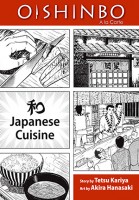
Oishinbo, A la Carte: Japanese CuisineAnd the winner of the Oi, Oishinbo! manga giveaway is…AshLynx!

As the winner, AshLynx will be receiving a copy of Oishinbo, A la Carte: Japanese Cuisine by Tetsu Kariya and Akira Hanasaki. Oishinbo is one of the most successful and well-known food manga out there (at least in Japan), so for this giveaway I asked that people tell me a little about their own favorite food manga. Check out the giveaway comments for everyone’s responses. As usually, I’ve also taken the giveaway as an opportunity to compile a list. Below you’ll find some food-centric manga, as well as a few manga where food isn’t the focus but still plays an important role.

Some of the food manga licensed in English:
Antique Bakery by Fumi Yoshinaga
The Drops of God written by Tadashi Agi and illustrated by Shu Okimoto
Eat For Your Life! by Shigeru Tsuchiyama
Food Wars!: Shokugeki no Soma written by Yuto Tsukuda, illustrated by Shun Saeki
Gente by Natsume Ono
Iron Wok Jan by Shinji Saijyo
Kitchen Princess written by Miyuki Kobayashi, illustrated by Natsumi Ando
Mixed Vegetables by Ayumi Komura
Moyasimon: Tale of Agriculture by Masayuki Ishikawa
Neko Ramen by Kenji Sonishi
Noodle Fighter Miki by Jun Sadogawa
Not Love but Delicious Foods Make Me So Happy! by Fumi Yoshinaga
Oishinbo, A la Carte written by Tetsu Kariya, illustrated by Akira Hanasaki
Project X: Cup Noodle written by Tadashi Kato, illustrated by Akira Imai
Ristorante Paradiso by Natsume Ono
Seiwa High School Bento Club! by Umitamako
Takasugi-San’s Obento by Nozomi Yanahara
Toriko by Mitsutoshi Shimabukuro
What Did You Eat Yesterday? by Fumi Yoshinaga
Yakitate!! Japan by Takashi Hashiguchi

I love food, and I love manga, so food manga is a great combination for me. Thank you to everyone who shared their favorites; now we all have something to tide us over until the next manga giveaway!

Filed Under: UNSHELVED Tagged With: Akira Hanasaki, manga, Oishinbo, Tetsu Kariya

Attack on Titan: No Regrets, Vol. 1

June 3, 2014 by Sean Gaffney

By Hikaru Suruga and Gun Snark (Nitroplus). Released in Japan as “Shingeki no Kyojin Gaiden – Kuinaki Sentaku” by Kodansha, serialization ongoing in the magazine Aria. Released in North America by Kodansha Comics.

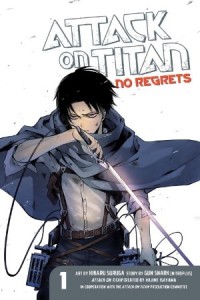
Given what the fandom is like, both in the West and in Japan, a spinoff of Attack on Titan featuring Levi is possibly the most obvious moneymaker in the history of time itself. He’s the most popular character by a factor of two over everyone else, and his backstory has not been covered by the main manga itself (though that may be changing soon). Based on a visual novel that was released with one of the DVDs, this manga tells the story of how Levi came to join the survey corps, what his motivations may have been, and his complicated relationship with Erwin Smith, the other lead character shown here.

noregrets

Not that those are the only two characters. Levi is shown to be living in the underground slums as we open this volume, surviving with the help of some purloined vertical maneuvering gear and two other friends. The friends are a lot of fun. Isabel is young, full of spunk and energy, and a tomboy that Levi probably sees as a younger sister type. Furlan is more sensible, and seems to be the one with the plan the three of them come up with – Levi is a bit too pinpoint obsessed to really be far-thinking. The three of them make a very good team, both before and after they join the survey team. That said, the narrative is telegraphing Isabel and Furlan’s deaths by the end of the next volume, so I will be VERY surprised if they both make it past Volume 2.

The other half of the narrative is Erwin and his political machinations, which is something that we already get plenty of in the main story, but it’s always nice to see. The Survey Corps is constantly in danger of being dissolved, so he has to resort to scurrilous means of getting what he wants (including blackmail and threats). His recruitment of Levi and his friends is important – he needs people not only talented enough to kill titans, but driven enough to kill them. Levi certainly qualifies – the final battle with the titan at the end of this book is riveting, and shows off how talented Levi and his friends are in comparison to everyone else.

You could argue that Levi is a little too perfect and awesome, and you’d be right – but given this is a title dedicated to showing him off, and it runs in the shoujo magazine Aria, what did you expect? (Yes, No Regrets is a shoujo title. Shelve it next to Kitchen Princess.) There’s not only a lot of fast, thrilling action but scenes such as Levi getting dressed up in his ‘cleaning clothes’, which serves no point except to have the reader go ‘kyaa!’. You just roll with it, and you’ll find it’s a lot of fun. For those looking for other cast members, you won’t find many – Hange is here, but she only appears a couple of times and has no lines. But that’s OK, as Levi and Erwin can carry this on their own.

For Attack on Titan fans, particularly those who like Levi, this is a must-buy. For anyone else, it’s worth a shot – the Titans themselves only pop up towards the end, and most of the volume is devoted to setting up the odd mentor relationship between Erwin and Levi. It should end with Volume 2, so I’m expecting a lot of bad things to happen next time.

Filed Under: REVIEWS

  • « Go to Previous Page
  • Page 1
  • Interim pages omitted …
  • Page 627
  • Page 628
  • Page 629
  • Page 630
  • Page 631
  • Interim pages omitted …
  • Page 1072
  • Go to Next Page »
 | Log in
Copyright © 2010 Manga Bookshelf | Powered by WordPress & the Genesis Framework