• Skip to primary navigation
  • Skip to main content
  • Skip to primary sidebar
  • Home
  • About Us
    • Privacy Policy
    • Comment Policy
    • Disclosures & Disclaimers
  • Resources
    • Links, Essays & Articles
    • Fandomology!
    • CLAMP Directory
    • BlogRoll
  • Features & Columns
    • 3 Things Thursday
    • Adventures in the Key of Shoujo
    • Bit & Blips (game reviews)
    • BL BOOKRACK
    • Bookshelf Briefs
    • Bringing the Drama
    • Comic Conversion
    • Fanservice Friday
    • Going Digital
    • It Came From the Sinosphere
    • License This!
    • Magazine no Mori
    • My Week in Manga
    • OFF THE SHELF
    • Not By Manga Alone
    • PICK OF THE WEEK
    • Subtitles & Sensibility
    • Weekly Shonen Jump Recaps
  • Manga Moveable Feast
    • MMF Full Archive
    • Yun Kouga
    • CLAMP
    • Shojo Beat
    • Osamu Tezuka
    • Sailor Moon
    • Fruits Basket
    • Takehiko Inoue
    • Wild Adapter
    • One Piece
    • After School Nightmare
    • Karakuri Odette
    • Paradise Kiss
    • The Color Trilogy
    • To Terra…
    • Sexy Voice & Robo
  • Browse by Author
    • Sean Gaffney
    • Anna Neatrour
    • Michelle Smith
    • Katherine Dacey
    • MJ
    • Brigid Alverson
    • Travis Anderson
    • Phillip Anthony
    • Derek Bown
    • Jaci Dahlvang
    • Angela Eastman
    • Erica Friedman
    • Sara K.
    • Megan Purdy
    • Emily Snodgrass
    • Nancy Thistlethwaite
    • Eva Volin
    • David Welsh
  • MB Blogs
    • A Case Suitable For Treatment
    • Experiments in Manga
    • MangaBlog
    • The Manga Critic
    • Manga Report
    • Soliloquy in Blue
    • Manga Curmudgeon (archive)

Manga Bookshelf

Discussion, Resources, Roundtables, & Reviews

Blog

Even More Licenses

February 19, 2014 by Sean Gaffney

I swear companies check my blog to make sure I’ve posted, then do announcements.

So yes, 2 new titles from Kodansha today (well, technically 3, they’re putting out Attack on Titan 1-5 in a giant 1000-page omnibus). Let’s investigate.

gdgd

First, we have another Ema Toyama title. Despite hitting high above its supposed age bracket, Missions of Love has been doing pretty well for the company, and they already did an omnibus of I Am Here!. Now we get a series that cries out for a translated title, GDGD-DOGS (Kodansha will release it as Manga Dogs). Running for 3 volumes in Aria magazine, this series about a teenage manga artist and her pretty boy wannabe students seems to be light and fluffy, and I wonder if Kodansha will do it as one big omnibus or 3 separate volumes.

As for Noragami, that’s 10 volumes and counting, and may be the next big thing to come over here from Monthly Shonen Magazine. This one has an anime currently airing, which is likely a big reason they’re taking a chance on the series. The author is best known over here for Alive, the post-apocalyptic manga that Del Rey put out 8 volumes of before it became part of the Giant Del Rey Title Purge. The plot sounds oddly a bit like Kamisama Kiss. Looking forward to see where it goes.

Also, although I’m not sure Yen has officially announced this, but the 3rd Durarara!! arc, subtitled Yellow Flag Orchestra (that sound you hear is Baccano! light novel fans crying), will be beginning this fall. Like Umineko, Durarara!! seems to be a series that Yen enjoys, but is only licensing in chunks. Makes sense, given it’s pretty much caught up with Japan. This arc focuses more on Kida’s troubled past and wavering loyalties.

Filed Under: NEWS, UNSHELVED

Writing the Love of Boys: Origins of Bishōnen Culture in Modernist Japanese Literature

February 19, 2014 by Ash Brown

Writing the Love of BoysAuthor: Jeffrey Angles
Publisher: University of Minnesota Press
ISBN: 9780816669707
Released: February 2011

I’ve recently become rather enamoured with Edogawa Rampo and his writings which is how I happened to come across Jeffrey Angles’ Writing the Love of Boys: Origins of Bishōnen Culture in Modernist Japanese Literature. Published by the University of Minnesota Press in 2011, the volume is an extension of Angles’ 2004 PhD dissertation “Writing the Love of Boys: Representations of Male-Male Desire in the Literature of Murayama Kaita and Edogawa Rampo.” Angles is currently an associate professor of Japanese literature, language, and translation at Western Michigan University. His primary research interests include translation, modern Japanese poetry, and romance and sexuality in Japanese literature, and especially the portrayal of same-sex desire. All of these subjects are at least touched upon if not thoroughly explored in Writing the Love of Boys. They are all topics that I am particularly interested in as well, so I was rather pleased to discover Writing the Love of Boys while searching for more information on Rampo and his works.

In Writing the Love of Boys, Angles examines the expression of same-sex desire, and specifically male-male desire, in Japanese literature during the late Taishō era (1912-1926) and early Shōwa period (1926-1989). In doing so he focuses on the work of three authors in particular: Murayama Kaita (1896-1919), who was also a poet and a painter; Edogawa Rampo (1894-1965), an incredibly influential writer of detective and mystery fiction among other things; and Inagaki Taruho (1900-1977), whose avant-garde work is noted as being particularly innovative. All three of these authors produced work that either incorporated or directly addressed male-male desire of both homosocial and homoerotic nature. Writing during a time in which attitudes towards sexuality in Japan were changing due to the influence of new medical and psychological approaches, Kaita, Rampo, and Taruho portrayed male-male desire in a way that was different from their immediate predecessors. Placing them within this historical and literary context, Angles also shows how their work would influence creators who followed them as well.

Another subject that is particularly important in Writing the Love of Boys is the erotic grotesque nonsense movement and fad of the 1920s and 1930s. Ero guro literature allowed its authors to explore the bizarre and the strange, including sexual desire that was considered by society to be perverse. However, although Kaita, Rampo, and Taruho were all involved in the rise of ero guro literature, Angles argues that their portrayal of male-male desire was frequently sympathetic and even subversive within the context of the genre which generally used sexuality for the purpose of titillation. Of the three authors that Angles focuses on in Writing the Love of Boys, it is Rampo who is the most well-known in English and who has had more of his work translated. Reading Angles’ analyses and translated excerpts of these three authors’ work, I can’t help but lament the fact that more of their writing isn’t currently available in English. But even though most of the works discussed in Writing the Love of Boys have yet to be released in translation, it is still interesting and valuable to learn about their place and importance within the literary and queer history of Japan.

For me, one of the most intriguing parts of Writing the Love of Boys was the literary lineage that Angles outlines, beginning with Kaita, who influenced Rampo, who in turn collaborated with Taruho, who was a direct inspiration to Takemiya Keiko, one of the creators whose work in the 1970s would lay the foundation for the entire boys’ love genre. In fact, much of the conclusion of Writing the Love of Boys is devoted to the lasting influence and legacies of Kaita, Rampo, and Taruho that can be seen in boys’ love manga. Angles credits Taruho as one of the authors who began developing an aesthetic of male-male desire for a female audience; several of his stories, including his debut, were published in magazines for women. This is one of the links that Angles uses to tie these three authors to the more recently developed genre of stories featuring male-male love primarily written for women by women. To some extent it does feel a little tangential to the work as a whole, and it was somewhat jarring to jump from the 1930s to the 1970s and beyond, but there is a legitimate connection. I found Writing the Love of Boys to be incredibly fascinating; it ended up addressing more of my interests than I initially realized it would–queer theory, ero guro, and even manga, in addition to many other topics.

Filed Under: REVIEWS Tagged With: Edogawa Rampo, Jeffrey Angles, Kaita Murayama, Nonfiction, Taruho Inagaki

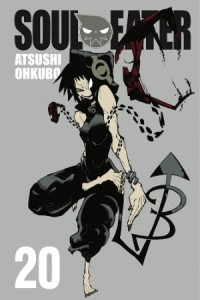
Soul Eater, Vol. 18

February 19, 2014 by Sean Gaffney

By Atsushi Ohkubo. Released in Japan by Square Enix, serialization ongoing in the magazine Shonen Gangan. Released in North America by Yen Press.

Soul Eater is an ensemble cast, but as with most ensemble casts, some characters are more lead than others, and so Soul Eater really stars Maka and Soul. Throughout the series we’ve seen the growing closeness between the two, and the confidence that they now have. Which is why the chapters on Envy and Sloth that they both go through are so traumatic. It’s such a shame that Maka, deep down, really has these issues with her. Of course, Maka is all of us, and you can never quite get rid of that core of self-loathing, no matter how much confidence you have. Luckily, Maka has Soul to snap her out of it.

soul18

As for everyone else, the Lust chapter actually plays out a lot faster than everyone thought, once the basic ‘what if they all changed sexes’ gag is done. Naturally, the more repressed a person is, the longer it takes to change back, which gives us an excuse to watch Tsubaki and Liz be humiliated. Gluttony, Wrath and Pride are excuses for character-based humor, as Black*Star and Patti pig out and we have to deal with the return of the most annoying sword in the world, which even Liz can’t wield in order to save Kid. (There’s some amusing 4th wall breaking here, as it’s noted that Black*Star screaming at Excalibur is buried in the gutter of the book.)

Speaking of 4th wall breaking, the art itself undergoes a change in the Sloth chapter, fitting in with what Maka and Soul are going through. This is probably the most disturbing part of the book, as Giriko shows up and threatens to rape Maka using extremely crude language, which (being in an existential crisis) she just sits there and takes. Luckily, Soul is there to come to her rescue, and she’s able to supposedly kill Giriko, though this may prove trickier than they expected. “People don’t explode when you kill them!” Is this meant to be another commentary on shonen tropes?

And then there’s Kid. We’ve had his obsessive-compulsive disorder used for humor for so long that it’s a bit jarring to see it be so serious now. And, truth be told, it’s a great way to get Kid to turn to the side of evil – point out that the best way everything can truly be symmetrical forever is to make everything become nothing, the empty symmetry of nonexistence. It’s chilling. Luckily, we have the one man whose ego is so big that facing off against something like this is nothing, and the cliffhanger sets us up for the big fight between Kid and Black*Star. The first time they fought, Kid wiped the floor with him, but I suspect things will go differently this time.

Soul Eater is slowly makes its way towards a big confrontation, but the journey is also fun, and this continues to be one of the best shonen titles out there.

Filed Under: REVIEWS

Dawn of the Arcana Vols 11 and 12

February 19, 2014 by Anna N

Dawn of the Arcana Vol 11 by Rei Toma

Dawn of the Arcana is a series that I think is best experienced in mini bursts of 2 or 3 volumes, simply due to the deliberate pace of the storytelling in the manga, as well as the fact that it sometimes takes a half volume or so for my brain to kick in with my memories about what happened in the previous volume due to all the relationships developing and the shifting nature of the geopolitical situations happening in Toma’s world. Usually I’m far too impatient to let the volumes pile up like this though!

After 10 volumes, the new status quo for red haired socially outcast with alarming powers of precognition Princess Nakaba and formerly arrogant but really a nice guy who has a social conscience inspired by the power of love Prince Caesar is to be separated. Nakaba has returned to Senan, determined to do some ruling in her own right, and Caesar is back in his home country of Belquat, dealing with his evil family. This volume shows the emotional impact of Nakaba’s power, the Arcana of Time, as she is determined to save the outcast child of a village that is in the direct path of an avalanche. This becomes a story that further explores the position of the humanoid animal hybrid race called ajin, as Lala the child with bunny ears is actually the product of a human/ajin encounter, leading to her abandonment. Lala has one human friend, and Nakaba’s ever present ajin protector Loki is there to save the day as always.

Loki always seems to have a new revelation every few volumes, either about his emotions or background, and a secret is revealed in this volume that shows that he and Nakaba have even more in common than I previously thought. While there’s the more conventional romantic storyline with Caesar and Nakaba, I actually find Nakaba’s relationship with Loki much more interesting, as they trade off protector duties in unexpected ways. Nakaba decides to take power in her home country, and her choices are largely driven by wanting to prevent Loki from going too far for her.

Dawn of the Arcana Vol 12 by Rei Toma

Everything keeps zipping along, as now that Nakaba and Caesar are in power in their respective countries, they have a chance to finally see each other again, when Caesar is ordered to invade Senan. Nakaba’s been looking in on Caesar and remarks that he’s going to start a revolution, so she’s “Here to lend a hand.” Nakaba’s power also provides Toma with a great way of providing more backstory about her characters. Nakaba looks back at Caesar’s father when he was young, even though Loki warns her that it might be difficult for her to see because she’s “too kind”. Nakaba sees King Guran’s first meeting with his unconventional first queen, the commoner Sara. The unhappy ending of this romance provides a reason for why King Guran might have ended up so twisted and bitter, but it doesn’t prevent a confrontation that is sure to cause even more fallout to happen in the volumes ahead.

One of the things that I really like about the art in this series is that it is so clear and easy to read. Toma might not have the most intricate backgrounds or innovative approach to paneling, but I’m never left puzzled about action scenes or finding that I have to go back and reread a page to make sure I understand the sequencing. The wordless exchanges between Nakaba and Caesar and the sidelong glances between Loki and Caesar do more to express the tensions between the characters than several pages of dialog. Overall, these were two very solid volumes in a fantasy series that is always surprising me with unexpected depths. I’m looking forward to the next few volumes to see what will become of Nakaba, Caesar, and Loki (well, really mostly Loki).

Filed Under: REVIEWS Tagged With: dawn of the arcana, shojo beat, shoujo, viz media

New license news

February 18, 2014 by Brigid Alverson

The Japanese cover of The Garden of Words

The Japanese cover of The Garden of Words

Let’s kick off the week with some new-license news: Vertical announced three new series at Katsucon this past weekend: Ajin, by Gamon Sakurai; Witch Craft Works, by Ryū Mizunagi; and The Garden of Words, the manga adaptation of Makoto Shinkai’s anime.

Yen Press also announced three new titles on Friday: Accel World, based on the light novels by Reki Kawahara; Übel Blatt; and Barakamon.

The latest addition to the Shonen Jump lineup is Stealth Symphony, by Durarara!! writer Ryohgo Narita and Yoichi Amano, who was once an assistant to Gintama artist Hideaki Sorachi.

Lissa Pattillo has some info on Seven Seas’ new yuri title, Citrus.

The Manga Bookshelf team discusses this week’s new releases and their Pick of the Week.

Queenie Chan (The Dreaming, Odd Thomas) is writing a series of articles on her blog about being a professional manga artist. You can jump right in with today’s post on how she started drawing manga and first connected with Tokyopop, or you can go right back to the beginning, with her introduction and the first part of Part 1.

Here’s another insider view: Justin at Organization Anti-Social Geniuses talks to manga translator Amanda Haley, who got her start in the JManga Translation Battle and now translates Coppelion for Crunchyroll, as well as being part of the Digital Manga Guild.

Daniella Orihuela-Gruber has some thoughts on Hetalia and history.

Shisei

Shisei

Jocelyne Allen gives us a peek at a lovely manga that hasn’t been translated (yet!), Shizuka Nakano’s Shisei, which has an interesting retro art style.

Lori Henderson looks at some new series and some complicated couples in her latest Manga Dome podcast at Manga Xanadu.

News from Japan: Takehiko Inoue is putting Vagabond on hiatus until June. Boys Over Flowers creator Yoko Kamio has ended her Ibara no Kanmuri manga. Love Roma creator Minoru Toyoda is starting a new series, Obake no Sally (Sally the Ghost), a children’s manga that will launch in the May issue of Shogakukan’s Shōgaku Ichinensei magazine. Hisae Iwaoka, creator of Saturn Apartments, is starting the final arc of her latest manga, Hoshi ga Hara Ao Manjū no Mori.

Congratulations to Fullmetal Alchemist creator Hiromu Arakawa on the birth of her third child.

Reviews: Ash Brown brings us through a week’s worth of manga reading at Experiments in Manga.

Kate on Basara (Reverse Thieves)
Ash Brown on Blue (Experiments in Manga)
Lesley Aeschliman on vol. 12 of Case Closed (Lesley’s Musings… on Manga)
Rebecca Silverman on vol. 1 of A Centaur’s Life (ANN)
Leroy Douresseaux on vol. 1 of Deadman Wonderland (I Reads You)
Leroy Douresseaux on vol. 13 of A Devil and Her Love Song (The Comic Book Bin)
Rebecca Silverman on vols. 1 and 2 of From the New World (ANN)
Kristin on vol. 1 of Gangsta (Comic Attack)
Maggie on Good-Bye Geist (Organization Anti-Social Geniuses)
Johanna Draper Carlson on vol. 4 of Happy Marriage?! (Comics Worth Reading)
Ben Leary on vol. 4 of Hetalia (The Fandom Post)
AstroNerdBoy on vol. 38 of Negima! (AstroNerdBoy’s Anime and Manga Blog)
Drew McCabe on vol. 1 of Nisekoi (Comic Attack)
Leroy Douresseaux on vol. 17 of Otomen (The Comic Book Bin)
Lesley Aeschliman on vol. 20 of Pokemon Adventures (Lesley’s Musings… on Manga)
Sarah on vol. 12 of Sakura Hime (nagareboshi)
Johanna Draper Carlson on vols. 1 and 2 of Sherlock Bones (Comics Worth Reading)
Johanna Draper Carlson on vol. 2 of Sweet Rein (Comics Worth Reading)
Rebecca Silverman on vol. 1 of Takasugi-san’s Obento (ANN)
Lesley Aeschliman on vol. 13 of Tsubasa: Reservoir Chronicle (Lesley’s Musings… on Manga)

Filed Under: MANGABLOG

Catching Up On Some Licenses

February 18, 2014 by Sean Gaffney

I’ve been away the last few days, as you can tell by the lack of content. Naturally, whenever I go away, tons of news and announcements happen. Yen and Vertical are our culprits this time, so let’s see what’s new with them.

Yen had already announced the Accel World light novels last August, so it’s no big surprise that the manga will be coming to our shores as well. It runs in ASCII Media Works’ Dengeki Bunko, and is 4+ volumes. In case you missed the novel license, think ‘protagonist falls into RPG world’ plot.

ubel

The biggest license of the week in terms of total volumes is Übel Blatt, a 14+ volume fantasy title from Square Enix’s Big Gangan. It seems to be a dark fantasy sword-and-sorcery type story, and has some fanservice judging from that cover. The author, Etorouji Shiono, is best known over here for Brocken Blood, a JManga license that got 3 volumes out.

And from SE’s Gangan Online site we have Barakamon, a slice-of-life comedy by Yoshino Satsuki. This seems to be a fish-out-of-water type plot, as a city boy has to move to an island and finds life is totally different around these parts. It’s 8+ volumes so far, and has an anime coming soon.

As for Vertical, I’ll start with Witch Craft Works, which Random House sort of spoiled by throwing it on their site a couple of weeks ago. This is a Kodansha title from good! Afternoon, a spinoff of the main Afternoon magazine, and is 7+ volumes. The description seems to indicate ‘average boy, exceptional girl’, and as you’d guess from the title, also has a fantasy aspect to it. The anime is currently running.

ajin

Also from good! Afternoon is Ajin, which seems to be a horror/thriller title, 3+ volumes. The co-author, Tsuina Miura, is currently writing High-Rise Invasion from Mangabox. Hopefully this series will have a bit less survival game to it.

Lastly, from regular old Afternoon comes The Garden of Words, an adaptation of the anime film which is complete in one volume. The author also wrote 5 Centimeters Per Second, which did better for Vertical than they expected, I believe, so this new license makes sense. I hope for a happy ending, but given the author’s prior works (he also did Voices of a Distant Star), suspect ‘deeply bittersweet’ will be what I get.

Which of these are you most looking forward to?

Filed Under: NEWS, UNSHELVED

My Week in Manga: February 10-February 16, 2014

February 17, 2014 by Ash Brown

My News and Reviews

Not one, but two in-depth manga reviews were posted last week at Experiments in Manga. It wasn’t intentional on my part, though it did make me happy, but both manga deal with queer themes. The first review was for Takako Shimura’s Wandering Son, Volume 6. Even though it can be a somewhat difficult read for me personally since the subject matter often hits very close to home, I’m still absolutely loving this series. The seventh volume of Wandering Son is currently scheduled for release in August, which feels like a long ways off right now. As part of my “Year of Yuri” review project, last week I also took a closer look at Kiriko Nananan’s Blue, the only example of her long-form manga available in English. It’s a sweet and melancholic story of first love which follows the relationship of two young women who are classmates at an all-girls high school. The artwork in particular is very striking.

I’ve come across plenty of interesting reading and news over the last week. Brigid Alverson attended the Angoulême International Comics Festival this year and has been writing several reports on the experience. One of those explores the current state of the French manga market. In other festival news, The Guys with Pencils podcast interviewed Christ Butcher to talk about the fantastic Toronto Comics Arts Festival which he co-founded in 2003. Justin Stroman recently wrote two articles that I found to be particularly interesting: The Great Tumblr Industry Experience for Organization Anti-Social Geniuses and The Legal Manga Reading Sites You Don’t Know About for Manga Bookshelf. Finally, there has been some more movement on the licensing front. Yen press announced three new manga titles (Übel Blatt by Etorouji Shiono, Barakamon by Satsuki Yoshino, and Hiroyuki Aigamo’s adaptation of Accel World), as did Vertical (Gamon Sakurai’s Demi-Human, Ryū Mizunagi’s Witchcraft Works, and Midori Motohashi’s adaptation of The Garden of Words).

Quick Takes

Mister Mistress, Volume 2Mister Mistress, Volume 2 by Rize Shinba. It’s been quite a while since I read the first volume of Mister Mistress, but I did enjoy it enough that I made a point to track down the now out-of-print second volume. (Happily, both volumes are now available digitally from SuBLime, though I don’t believe there are currently any plans to continue the series.) Mister Mistress works best for me when it sticks to being a comedy. Shinba introduces a somewhat tragic backstory for Rei in this volume, but fortunately it doesn’t take too long for this to be turned around and played for laughs. The series’ strength really isn’t its plot, but its humor. Fujimaru is a bit of a goofball who can’t quite decide what to do about Rei. He halfheartedly attempts to exorcise the incubus several times, but on occasion he actually appreciates having him around. Though I’m not entirely convinced by their developing feelings for each other, it can be rather convenient for a horny teenager to have a personal incubus to aid in the realization of his sexual daydreams. As such, the sex scenes in Mister Mistress tend to be a little unusual.

Sherlock Bones, Volume 2Sherlock Bones, Volumes 2-3 written by Yuma Ando and illustrated by Yuki Sato. I wasn’t sure after reading the first volume of Sherlock Bones, but after reading the second and third volumes it appears as though the series will be mostly episodic. Which is just fine and works pretty well. After the basic premise of the series has been established–Sherlock Holmes reincarnated as a mix-breed puppy–the mysteries tend to be fairly self-contained. I was pleasantly surprised by the first volume of Sherlock Bones and, if anything, I think these two volumes are even better than the first. Sherdog seems to always be present when a murder is taking place, so Sherlock Bones isn’t really a “whodunit.” Instead, the series focuses on outwitting the criminals and finding ways to reveal their attempts to cover up what they have done. For the most part this means relying on circumstantial evidence and pressuring the killers into confessing. Although murder seems to be the crime du jour, Sherlock Bones features some more lighthearted and silly investigations as well which take advantage of the fact that Sherdog is adorable.

Stone, Volume 1Stone, Volumes 1-2 by Sin-ichi Hiromoto. In 2004, the editor of the English edition of Hiromoto’s short manga series Stone called it a “tribute to all of the fantastic sci-fi/action/fantasy films of the past thrity-odd years.” That seems to be a fairly accurate description of Stone. Hiromoto borrows and remixes elements from many films and franchises along with his own creations to devise something entirely his own. I was frequently reminded of Waterworld and to some extent Dune, and I definitely caught nods to Hellraiser and Star Wars. I get the feeling that there were references that I completely missed, too. Stone is a quickly paced manga with plenty of action set in a post-apocalyptic world in which the planet has been covered in a literal sea of sand. My favorite parts of Stone are the nightmarish sand creatures that Hiromoto has designed. Zizi, a fiesty young woman and the series’ lead, is also pretty great. I did prefer the series’ beginning over its end. As the manga becomes increasingly chaotic as the story progresses. The artwork remains visually interesting and engaging, but the plot makes less and less sense as it goes along.

Two Flowers for the Dragon, Volume 5Two Flowers for the Dragon, Volumes 5-6 by Nari Kusakawa. I have now reached the point in this series where I must lament the fact that the final volume wasn’t able to be released in English before CMX folded. These two volumes form the climax of Two Flowers for the Dragon and include some extraordinarily significant plot developments and betrayals. The direction the story has taken was definitely foreshadowed, but that doesn’t make it any less heart-wrenching to see play out. I thought it was all very well done. One of the things that I like the best about Two Flowers for the Dragon is how well-developed and complicated the main characters are. They all have their strengths and their weaknesses, flaws as well as redeeming qualities. The supporting cast is likewise well-rounded, though at this point the series’ true villain unfortunately seems to be less so. The characters and their interactions are a highlight of Two Flowers for the Dragon, but I’m really enjoying the story as well. I like the mix of action, fantasy, romance, and intrigue. So much so, that I’m tracking down a copy of the last volume in Japanese. I want to know what happens!

Filed Under: FEATURES, My Week in Manga Tagged With: manga, Mister Mistress, Nari Kusakawa, Rize Shinba, Sherlock Bones, Sin-ichi Hiromoto, Stone, Two Flowers for the Dragon, Yuki Sato, Yuma Ando

Pick of the Week: Gangsta, Blood Lad

February 17, 2014 by Ash Brown, Michelle Smith, Sean Gaffney, Anna N and MJ 2 Comments

potw-2-17ASH: It’s another good week for manga releases (granted, I think just about every week is a good week), but there are two manga that I’m particularly interested in this time around–the fifth volume in Hinoki Kino’s manga adaptation of No. 6 and the first volume of Kohske’s Gangsta. No. 6 keeps getting better with each volume so I’m looking forward to reading the next installment, but I think my official pick of the week will have to go to Gangsta‘s debut.

MICHELLE: This is ordinarily the spot where I’d be all “Pandora Hearts!,” and I am still looking forward to volume twenty, but since I haven’t had a chance to mention it in a while, this week I’m going with Blood Lad, my official “Surprise Favorite of 2013.” Some elements of the series aren’t really my thing, but its sense of humor is, and I’m glad we’re finally getting a bit more of it!

SEAN: I’ll be brief: Gangsta for me as well!

ANNA: I’m going to have to go for Gangsta too. It certainly looks like the most intriguing manga coming out this week.

MJ: I’m certainly interested in Gangsta, but I’m going to stand in solidarity with Michelle here, and proclaim my love for Blood Lad! I feel a little guilty about forsaking my beloved Pandora Hearts, but Blood Lad was such a stunning surprise for me, I can’t help but rejoice that we’re finally seeing the next chunky volume! I really can’t wait to read it.

What looks good to you this week?

Filed Under: PICK OF THE WEEK

Blue

February 14, 2014 by Ash Brown

BlueCreator: Kiriko Nananan
U.S. publisher: Fanfare/Ponent Mon
ISBN: 9788493340971
Released: 2006
Original release: 1997

I first discovered Kiriko Nananan’s work while reading Secret Comics Japan: Underground Comics Now. Two of her short manga–“Heartless Bitch” and “Painful Love”–were included in the volume. I was quite taken by the pieces and so was determined to find more of Nananan’s manga in English. Sadly, very little has been translated. Another of her short manga, “Kisses,” was collected in Sake Jock: Comics from Today’s Japanese Underground, an early English anthology of alternative Japanese manga. Nananan debuted in the avant-garde manga magazine Garo in 1993, which is one of the reasons her work is found in these “underground” collections. She is particularly well-known for her short manga; Blue is her only long-form manga to have been released in English. Originally published in Japan in 1997, Fanfare/Ponent Mon published the English edition of the manga in 2006 after releasing a Spanish-language edition in 2004. Blue has also been translated into French and German. The manga was also popular enough to receive a live-action film adaptation directed by Hiroshi Ando in 2002.

“The sky that stretches out above the dark sea. The school uniforms and our desperate awkwardness. If those adornments of our youth held any color it would have been deep blue.” Thus begins Kiriko Nananan’s Blue. Kayako Kirishima, a senior at the Hijiri all-girls high school, is fascinated by her classmate Masami Endō, the young woman who sits directly in front of her. Endō was suspended from school the previous year. Because of that and her general attitude, many of the students at Hijiri find her difficult to approach. But Kirishima eventually musters up the courage to finally talk to Endō. Her fascination becomes friendship and eventually love. But their relationship isn’t an easy one. Uncertainty, worry for the future, and past regrets all have an impact on Kirishima and Endō and how they relate to each other and to the rest of their friends. Love can be a wonderful thing, but it can also be painful. As high school draws to an end, they must face the inevitable changes in their lives either together or alone.

Nananan’s artwork in Blue is very simple, almost minimalistic, and yet it is also incredibly arresting. There is very little shading employed. In fact, the use of negative and white space is just as important to the manga’s composition as the deep black of Nananan’s ink work. It has a distancing and cooling effect. The fragility of Kirishima and Endō’s relationship is reflected in the fragility of Nananan’s lines. At times the pages are nearly empty, giving a sense of loss and contemplativeness, as if the feelings of the two young women are in danger of disappearing altogether. Body language is especially important in Blue. Hands in particular are a recurring motif and are very expressive–they reach out to grasp someone or to push them away, they hide a face in shame or frustration. Nananan shows intimacy of varying degrees in Blue through the characters’ actions and touch. It can be extremely sensual, but it can also be very chaste.

Blue has a reflective, poetic, and lyrical quality to it. The manga is a fairly simple and straightforward story of first love which is both sweet and sad. However, Nananan is adept at capturing the realistic complexities of love and all of the feelings associated with it–the jealousy and heartache as well as the happiness and joy. Kirishima is constantly thinking about Endō. Even when she isn’t immediately present on the page Endō is the focal point of the manga and always on Kirishima’s mind. The two of them obviously care deeply about each other and so it is particularly unfortunate that they seem unable to be completely open and honest with each other or with themselves. They are both young and don’t always make the best or most mature decisions. Blue is told from Kirishima’s perspective as she looks back from some point in the future to her high school days with understandable sentimentality. Although the manga is frequently melancholic and intensely emotional, it never comes across as melodramatic. Blue is a beautiful and striking work; I would love to see more of Nananan’s manga translated.

Filed Under: REVIEWS Tagged With: Fanfare/Ponent Mon, Kiriko Nananan, manga, Year of Yuri

Manga the Week of 2/19

February 13, 2014 by Sean Gaffney, Michelle Smith, Ash Brown and MJ 1 Comment

SEAN: Third week of the month is pretty hefty this month thanks to Yen Press’s pile o’ stuff, plus a few titles from everyone else.

strikewitches1Kodansha brings us the 13th volume of Cage of Eden. The series has now ended in Japan, so we know there will be 21 total. That still leaves us many more volumes of huge killer animals and naked women bathing to go.

And for those of you who are of a more BL disposition, Kodansha also has the 5th No. 6.

ASH: I’m actually really enjoying this series! After a somewhat weak first volume, it keeps getting better and better.

MJ: Ash’s endorsement here makes me feel like I should check it out!

SEAN: Seven Seas debuts a new series whose anime is already famous – or, indeed, infamous. Strike Witches: Maidens in the Sky is known to me primarily as “that anime with the girls who are WWII fighter pilot archetypes and wear no pants.” Let’s see how the manga entertains.

MICHELLE: … So very not for me.

MJ: Uh. Yeah.

SEAN: There’s also Vol. 4 of World War Blue, which prefers to use video game companies for its archetype needs.

We have reached the penultimate volume of Bokurano: Ours from Viz, so surely the cast must be down to only 1 or 2 people, right?

MICHELLE: I need to get caught up with this one!

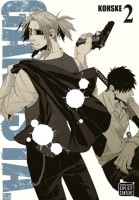
gangstaSEAN: The debut I’m most excited for this week is Gangsta, a seinen series from Shinchosha’s Comic Bunch with 87,000 tons of style.

ASH: I’m very interested in this one, too.

MJ: Agreed!

SEAN: Blood Lad has caught up with Japan, so it’s been a while since we saw it. This 4th omnibus should have Vols. 7 and 8 from Japan. Can’t wait, this is one of my big sleeper hits.

MICHELLE: Woot! It’s been a long time!

MJ: I am so happy to see more Blood Lad! It is one of my very favorite series currently running, and I am so surprised to be saying that.

SEAN: We have also reached Vol. 5 of BTOOOM!, which I understand has finally given its survival game heroine a name.

MICHELLE: I made myself snicker by imagining her name was “Crotchina.”

MJ: ❤

SEAN: Now that The Disappearance of Nagato Yuki-chan has gotten rid of its big plot surprise, can it still entertain while going back to slice-of-life cuteness?

Yen also has Vol. 7 of Is This A Zombie?. I keep wanting there to be a sequel called “Yes, This IS A Zombie!”

pandora20MICHELLE: *snerk*

SEAN: Vol. 9 of Jack Frost, one of Yen’s longer-running manwha titles. I lost track of it. Is it Horror? Action? Comedy?

Speaking of survival game manga, we also get Vol. 3 of Judge, which continues Doubt‘s basic themes with a (mostly) new cast.

It’s Pandora Hearts 20! Huzzah! Be warned, I think we’re nearly caught up with Japan. The days of every other month are almost over.

MICHELLE: Waah.

MJ: WOE IS MEEEEE. Though of course I’m happy to see this volume. :)

SEAN: Puella Magi Kazumi Magica 4 continues to ask the question: “How much more money can we earn by putting magical girls through horrible trauma?” The answer. A whole lot.

Lastly, there is the 3rd and final hardcover omnibus of Thermae Romae, Mari Yamazakis tribute to baths and bathing filtered though Ancient Rome. Can Lucius find a happy ending and a nice long soak?

MJ: I’m looking forward to this, if a bit passively.

What’s your manga valentine?

Filed Under: FEATURES, FEATURES & REVIEWS, manga the week of

  • « Go to Previous Page
  • Page 1
  • Interim pages omitted …
  • Page 628
  • Page 629
  • Page 630
  • Page 631
  • Page 632
  • Interim pages omitted …
  • Page 1054
  • Go to Next Page »
 | Log in
Copyright © 2010 Manga Bookshelf | Powered by WordPress & the Genesis Framework