• Skip to primary navigation
  • Skip to main content
  • Skip to primary sidebar
  • Home
  • About Us
    • Privacy Policy
    • Comment Policy
    • Disclosures & Disclaimers
  • Resources
    • Links, Essays & Articles
    • Fandomology!
    • CLAMP Directory
    • BlogRoll
  • Features & Columns
    • 3 Things Thursday
    • Adventures in the Key of Shoujo
    • Bit & Blips (game reviews)
    • BL BOOKRACK
    • Bookshelf Briefs
    • Bringing the Drama
    • Comic Conversion
    • Fanservice Friday
    • Going Digital
    • It Came From the Sinosphere
    • License This!
    • Magazine no Mori
    • My Week in Manga
    • OFF THE SHELF
    • Not By Manga Alone
    • PICK OF THE WEEK
    • Subtitles & Sensibility
    • Weekly Shonen Jump Recaps
  • Manga Moveable Feast
    • MMF Full Archive
    • Yun Kouga
    • CLAMP
    • Shojo Beat
    • Osamu Tezuka
    • Sailor Moon
    • Fruits Basket
    • Takehiko Inoue
    • Wild Adapter
    • One Piece
    • After School Nightmare
    • Karakuri Odette
    • Paradise Kiss
    • The Color Trilogy
    • To Terra…
    • Sexy Voice & Robo
  • Browse by Author
    • Sean Gaffney
    • Anna Neatrour
    • Michelle Smith
    • Katherine Dacey
    • MJ
    • Brigid Alverson
    • Travis Anderson
    • Phillip Anthony
    • Derek Bown
    • Jaci Dahlvang
    • Angela Eastman
    • Erica Friedman
    • Sara K.
    • Megan Purdy
    • Emily Snodgrass
    • Nancy Thistlethwaite
    • Eva Volin
    • David Welsh
  • MB Blogs
    • A Case Suitable For Treatment
    • Experiments in Manga
    • MangaBlog
    • The Manga Critic
    • Manga Report
    • Soliloquy in Blue
    • Manga Curmudgeon (archive)

Manga Bookshelf

Discussion, Resources, Roundtables, & Reviews

Blog

Manga the Week of 6/28/17

June 22, 2017 by Sean Gaffney, Michelle Smith, Ash Brown, Anna N and MJ Leave a Comment

SEAN: It’s the end of the fiscal year! The real 2016 ends on June 30th! What are publishers putting out before the end of the budget?

Bookwalker has been a site that distributes digital titles for many publishers, but they’ve decided to dip their own toe into the pond with a new light novel series, The Combat Baker and Automaton Waitress. It appears to feature delicious bread.

MJ: I do like delicious bread… Can a great title like this lure me into a light novel series? Stay tuned to find out!

SEAN: I’m always wary to list DMP titles these days given how iffy they’ve been with print the last two years, but The Tyrant Falls in Love 10 is still listed by Amazon as coming out next week.

ASH: Yeah… DMP’s distribution is almost nonexistent these days. The manga might eventually make it to other sellers, but The Tyrant Falls in Love, Volume 10 isn’t even available through June Manga’s website yet.

SEAN: J-Novel Club has another debut with Demon King Daimaou, a fairly old series that had an anime out back in 2010. It has a magical academy, a boy who will grow to be a demon king, a harem of girls who zzzzzzzzzzzzzzz….

Kodansha wraps up a license rescue next week, as Nodame Cantabile comes to an end with Vols. 24 and 25. There’s also a 14th Yozakura Quartet.

In print, there’s a 3rd volume of Clockwork Planet.

Back to digital for the 2nd volume of Giant Killing, which is not about killing giants in a fantasy way, just in a sports way.

MICHELLE: And it’s so good! I’m looking forward to this one.

SEAN: Kodansha’s print debut next week is Land of the Lustrous (Houseki no Kuni), a seinen series from afternoon about gemstones fighting in a war. From what I’ve seen, the gemstones are genderless, so be warned that there may be a translation fight here (remember Wish?).

ASH: I am rather curious about this series. (And speaking of Wish, I wonder if Dark Horse’s forthcoming omnibus edition will be using a new translation… )

MJ: So… like Steven Universe, but without Steven?

SEAN: And a new volume of Vinland Saga is always welcome, here’s the 9th.

ANNA: Yay! I have been buying these faithfully even though I have not read them yet. Waiting until I feel particularly vikingish to go on a reading binge.

ASH: It is SO GOOD. I’m thrilled that we’re getting more of the series! There were some really great female characters introduced recently, too.

SEAN: Seven Seas has not one, but two debuts next week. The first is Beasts of Abigaile (Bara Kangoku no Kemono-tachi), a shoujo manga from Princess (man, have we had any Princess titles since Tokyopop shut down its manga?) that’s a reverse harem with werewolves.

ANNA: OK, paranormal reverse harem does interest me.

MJ: Maybe, maybe…

SEAN: Concrete Revolutio: The Complete Saga, as the name might suggest, is a done-in-one omnibus from Young Ace. The subtitle in Japan is “Superhero Fantasy”, and that seems entirely correct.

MICHELLE: Both appear to feature protagonists with pink hair!

SEAN: Seven Seas also has a new omnibus of Freezing, Vols. 15-16.

And there’s also a 5th Hour of the Zombie, which has caught up to Japan, I believe.

Udon, like DMP, has constantly slipping and sliding dates on Amazon, but it does say the 4th Persona 3 is out next week.

ASH: I’m not enjoying the Persona 3 adaptation nearly as much as the Persona 4 adaptation.

SEAN: Vertical gives us the 4th massive tome in their BLAME! Master’s Edition.

And a 2nd volume of slice-of-magical-life series Flying Witch.

MICHELLE: I enjoyed volume one quite a bit, so I’m looking forward to this!

SEAN: Vertical Inc. has the next novel in the Monogatari series. Nisemonogatari is split into two volumes that deal with Araragi’s younger sisters – this is the first, Karen Bee.

Viz has a new digital release, at least “new” in terms of a collected volume. The Emperor and I runs in Shonen Jump+, and is, well, about an emperor. An emperor penguin, that is.

Yen Press has some digital titles as well, with the 11th Corpse Princess and the 10th Saki.

They also have two digital debuts. Gesellschaft Blue is a Young Gangan series filled with blood, gore and action. It’s a very dark fantasy.

IM: The Great Priest Imhotep seems more like a standard shonen fantasy, and appropriately it runs in Shonen Gangan.

There’s always one lone Yen title that’s pushed back a week from the others, and this month it’s Leg Horizon’s 8th novel, which focuses on the younger members of the guild and their adventures.

Lastly, Sword Art Online gets 3 more light novel digital releases with Vols. 5-7.

Did you budget properly? Do you have money left over to buy manga next week?

Filed Under: FEATURES, manga the week of

Master Keaton, Vol. 11

June 22, 2017 by Katherine Dacey

If you’re a connoisseur of British crime procedurals, you’ve undoubtedly watched Midsomer Murders, England’s answer to Murder, She Wrote. It isn’t the edgiest or smartest mystery series on television, but it is among the most consistently enjoyable, delivering a satisfying answer to the question, “Whodunnit?” at the end of every episode. Much of the series’ appeal lies with its formula: someone commits a ghastly murder, prompting DCI Barnaby to scrutinize the crime scene, interrogate reluctant witnesses, and suss out hidden clues before assembling the suspects to reveal the killer’s identity and motives. This formula is flexible enough to offer a new murder scenario every week, yet predictable enough to reassure viewers that there’s a payoff for keeping track of the subplots and false leads that frustrate Barnaby’s efforts to solve the mystery.

Master Keaton — a joint effort by Hokusai Katsushika and Naoki Urasawa — offers the same kind of experience in manga form. Every volume features an assortment of mysteries, all solved by the brilliant investigator Taichi Hiraga Keaton. (In an original touch, Keaton works for an insurance agency, though he frequently moonlights as a private eye.) Though the stories’ denouements occasionally veer into Scooby Doo territory — more on that later — Katsushika and Urasawa have a knack for spinning a good yarn, whether the story involves lost Nazi gold or a conscience-stricken assassin.

One key to Katsushika and Urasawa’s success is that they carefully adhere to the same basic rules as Midsomer Murders, setting each mystery in a community where resentments fester, secrets abound, and strong personalities clash. Katsushika and Urasawa put a fresh spin on this storytelling technique by choosing a new locale for each story, rather than limiting the action to a fictional English county, a la Midsomer. In volume eleven, for example, Keaton flits from East Germany to the Scottish highlands to a haunted London mansion. As disparate as these settings may be, each is as much “a cauldron” or “microcosm” as a country village — to borrow a phrase from Midsomer creator Anthony Horowitz — thus creating the right setting “for something unpleasant — a murder, for example — to take place.”

Consider “The Lost Genius Director,” one of the shortest, most tightly plotted stories in volume 11. In just two pages, Katsushika and Urasawa create a virtual “village” populated with vivid characters: a perfectionist director, his devoted wife, a vain leading man, and a nervous producer who’s caught between the director’s vision and the bottom line. All of these characters are living and working in close proximity on the set, clashing over the director’s insistence that the cast re-shoot several key scenes. When the director is found dangling from a noose, Keaton discovers a video of the victim’s final moments, a video that first implicates, then exonerates, the most obvious suspect. This narrative feint makes the actual “reveal” more satisfying, as we come away from the story feeling as if we were just a step or two behind Keaton in solving the crime.

The few stories that falter do so because Katsushika and Urasawa violate this second unspoken rule of whodunnits. In “Love from the Otherworld” and “Lost Beyond the Wall,” the endings feel arbitrary; there simply aren’t enough clues to justify the outcome of the story. The problem is especially acute in “Otherworld,” a supernatural mystery that plays out like a classic Scooby Doo episode: a book publisher hires Keaton to investigate a ghost who’s been roaming the halls of his mansion. Though it doesn’t take a great leap of imagination to realize that one of the household members is, in fact, “the ghost,” the story is so compressed that we don’t learn enough about the characters to independently arrive at the same conclusion as Keaton. More frustrating still, the denouement is handled in such a bald, clumsy fashion that the culprit all but declares, “And I would have gotten away with it, too, if it hadn’t been for you meddling kids and that darn dog!”

It’s easy to overlook the few clunkers, however, as Katsushika and Urasawa clearly have a deep love for the mystery genre. Nowhere is that more evident in “Return of the Super Sleuth?!” and “Pact on Ben-Tan Mountain,” two stories that knowingly borrow elements from Rear Window and Strangers on a Train. Both stories honor the spirit of the source material, preserving the most important details while finding new and surprising ways to resolve these famous plotlines. Equally important, Katsushika and Urasawa don’t take any narrative shortcuts on the way to revealing whodunnit, granting the reader the same delicious sense of closure characteristic of Midsomer Murders — or, I might add, Alfred Hitchcock Presents. Recommended.

A review copy was provided by VIZ Media.

MASTER KEATON, VOL. 11 • STORY BY HOKUSAI KATSUSHIKA AND NAOKI URASAWA, ART BY NAOKI URASAWA • TRANSLATED BY JOHN WERRY • VIZ MEDIA • RATING: TEEN+ (OLDER TEENS) • 318 pp.

Filed Under: Manga, Manga Critic, REVIEWS Tagged With: Hokusai Katsushika, Master Keaton, Mystery/Suspense, Naoki Urasawa, VIZ

Bookshelf Overload: May 2017

June 22, 2017 by Ash Brown

Ah yes, May. The month that I know I will end up adding a tremendous amount of material of various types to my collection if for no other reason than this little event called the Toronto Comic Arts Festival.  I picked up so many comics at TCAF 2017! Fortunately, I budgeted for this well in advance. In addition to all of the new things in May, I also found some interesting older manga like Yukinobu Hoshino’s Saber Tiger and Seiji Horibuchi’s Shion: Blade of the Minstrel. (Also, a heads up for those who might be interested in the series, it looks as though The Story of Saiunkoku is likely going out of print.) As for May’s preorders, I was especially excited to see the most recent volumes of Nagabe’s The Girl From the Other Side, Izumi Tsubaki’s Monthly Girls’ Nozaki-kun, and Kanno’s Requiem of the Rose King, as well as the debuts of Haruko Kumota’s Descending Stories and Ryoko Kui’s Delicious in Dungeon. Also the first omnibus in Gengoroh Tagame’s My Brother’s Husband, one of my most anticipated releases for 2017.

Also in May, I received an early copy Yeon-sik Hong’s Uncomfortably Happily for review although the volume wasn’t technically released until June. Hopefully, my review of the manwha conveys just how much I enjoyed the work. Speaking of reviews, I’m currently working on an in-depth review Tomoyuki’s Hoshino’s ME, one of my most anticipated novels in translation of 2017. (This novel was also technically released in June rather than May, but I managed to snag an early review copy.) In general, I find Hoshino’s work to be challenging but ultimately rewarding. One of the other novels that I was particularly looking forward to this year was Inheritance from Mother by Minae Mizumura, whose previous work in translation I adored. Another May release worth mentioning is Shun Medoruma’s In the Woods of Memory, credited as the first novel by an Okinawan author to be translated into English.

Manga!
Bloom into You, Volume 2 by Nakatani Nio
Cat Eyed Boy, Volumes 1-2 by Kazuo Umezu
Cells at Work!, Volume 4 by Akane Shimizu
Delicious in Dungeon, Volume 1 by Ryoko Kui
Descending Stories: Showa Genroku Rakugo Shinju, Volume 1 by Haruko Kumota
Dreamin’ Sun, Volume 1 by Ichigo Takano
The Girl From the Other Side: Siúil, A Rún Volume 2 by Nagabe
Gangsta: Cursed, Volume 2 written by Kohske, illustrated by Syuhei Kamo
Girls’ Last Tour, Volume 1 by Tsukumizu
The High School Life of a Fudanshi, Volume 1 by Michinoku Atami
Haikyu!!, Volumes 11-12 by Haruichi Furudate
JoJo’s Bizarre Adventure, Part 3: Stardust Crusaders, Volume 3 by Hirohiko Araki
Monthly Girls’ Nozaki-kun, Volume 7 by Izumi Tsubaki
Murciélago, Volume 2 by Yoshimurakana
My Brother’s Husband, Omnibus 1 by Gengoroh Tagame
My Love Story!!, Volume 12 written by Kazune Kawahara, illustrated by Aruko
Pet Shop of Horrors, Volume 10 by Matsuri Akino
Pet Shop of Horrors: Tokyo, Volumes 1-8 by Matsuri Akino
Requiem of the Rose King, Volume 6 by Aya Kanno
The Royal Tutor, Volume 1 by Higasa Akai
Saber Tiger by Yukinobu Hoshino
Shion: Blade of the Minstrel by Seiji Horibuchi
The Story of Saiunkoku, Volumes 1-9 written by Sai Yukino, illustrated by Kairi Yura
Sweetness and Lightning, Volume 5 by Gido Amagakuure
Yona of the Dawn, Volume 6 by Mizuho Kusanagi

Manhwa!
Uncomfortably Happily by Yeon-sik Hong

Comics!
5 Worlds, Volume 1: The Sand Warrior written by Mark Siegel and Alexis Siegel, illustrated by Xanthe Bouma, Matt Rockefeller, and Boya Sun
Adventure Girlfriends, No. 1-2 by Morgan Shandro
Adventure Girlfriends: Vignettes by Morgan Shandro
Aim High Bird Friends by Linda Teaa
Banchan in Two Pages, Issue 2 by Robin Ha
Blinded by the Ice by Saicoink
Blindsprings, Volume 1 by Kadi Fedoruk
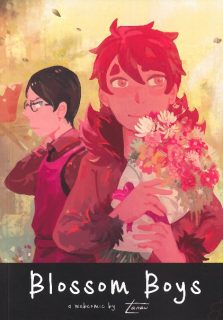
Blossom Boys by Tanaw
Butterfly Dream by PlumLi
The Disappearance of Melody Dean by Alexis Sugden
Eidoughlons: A Field Guide for the Aspiring Dumplingmancer by Jade Feng Lee
Electric Ant, Issue 2: Exquisite Corpses edited by Ryan Sands
Elements: Fire edited by Taneka Stotts
Expired Seafood, Volume 2: Tied Up by Various
Fujoshi Trapped in a Seme’s Perfect Body, Volume 2 written by Seru, illustrated by Joberu
Fujoshi Trapped in a Seme’s Perfect Body: Wedding Night written by Seru, illustrated by Kisumi
Go Gently edited by Christine Wong and Victor Martins
Half Moon Heroes, Issue 1 by Jade Feng Lee
Haunted: A Fairytale by Natalie Andrewson
Hearts for Sale by Miyuli
Hemlock, Issue 1 by Josceline Fenton
Hidden by Kou Chen
Love Debut by Deandra Tan
Mana, Volume 1 by Priya Huq
Martial Spirit by Dirchansky, Wai Au, and Kage
Oh Dear! Mr. Dear by Wai Au
Our Cats Are More Famous Than Us by Ananth Hirsh and Yuko Ota
Plant Fever Zine, Volume 1 by Various
Queen Street by Emmanuelle Chateauneuf
Ram-com by Emily Forster
Ramen Robot Cafe by Dandra Tan
Safe by Anna Sellheim
Shattered Warrior written by Sharon Shinn, illustrated by Molly Knox Ostertag
Shit and Piss by Tyler Landry
Smokescreen by A. C. Esguerra
So Pretty / Very Rotten by Jane Mai and An Nguyen
Starrytellers edited by Samantha Calcraft and Alisha Jade
Super Life on the Hill by Dirchansky, Kim Hoang, and Wai Au
(Tr)eat Yoself by Wai Au
Wax & Wane by Kelly Bastow and Caitlin Major
What Is A Glacier? by Sophie Yanow
You & a Bike & a Road by Eleanor Davis

Light Novels!
Tokyo Ghoul: Past by Shin Towada

Novels!
The Eternal Zero by Naoki Hyakuta
In the Woods of Memory by Shun Medoruma
Inheritance from Mother by Minae Mizumura
Kamikaze Girls by Novala Takemoto
ME by Tomoyuki Hoshino
Missin’/Missn’ 2 by Novala Takemoto
Notes of a Crocodile by Miaojin Qiu

Anthologies!
Monkey Business: New Writing from Japan, Volume 7 edited by Motoyuki Shibata and Ted Goossen

Nonfiction!
Manchu Princess, Japanese Spy by Phyllis Birnbaum

Filed Under: Bookshelf Overload, UNSHELVED

Requiem of the Rose King, Vol 6

June 21, 2017 by Anna N

Requiem of the Rose King Volume 6 by Aya Kanno

My only minor quibble with this series is that as it progresses, I sometimes have difficulty telling all the blonde Englishmen apart. However, once I’m further into each volume I start remembering the more subtle aspects of Kanno’s character designs and then I can tell who is who.

One of the themes of this series is the brutality of war and the psychological cost associated with making kings, both with those who seek power through manipulation and the kings themselves who end up as pawns in a bigger game of statesmanship. Richard and Henry have found a peace with each other that is utterly separate from their hidden identities as opposing Tudor and Yorks. While Richard as the central character of this manga is undoubtedly fascinating, I enjoyed the way this volume focused on the kingmakers Buckingham and Warwick, their varying relationships with Richard and the hazards of trying to seize power through putting someone forward for the throne.

Kanno’s artistic and surreal portrayal of Richard’s psychological torment and the horrors of war is a highlight in this series. The battle that Richard fights is made even more confusing by a fog that envelops the troops, causing the soldiers to be uncertain if they are fighting their own side or the enemy. As Richard heads towards the vengeance he desires for the death of his beloved father, he’s going to be even more overset when he finds out just who his Henry really is. It always feels like there’s quite a long wait between volumes, but this is one series that I’m going to be rereading from start to finish as soon as the final volume comes out, just to be able to get swept up in this fascinating story again.

Filed Under: Manga Reviews, REVIEWS Tagged With: requiem of the rose king, shojo beat, shoujo, viz media

Paying to Win in a VRMMO, Vol. 3

June 21, 2017 by Sean Gaffney

By Blitz Kiva and Kuwashima Rein. Released in Japan as “VRMMO wo Kane no Chikara de Musou suru” by Hobby Japan. Released in North America digitally by J-Novel Club. Translated by Elizabeth Ellis.

The afterword mentions that this volume’s story was not part of the original webnovel, but was especially written for the books in order to try to flesh out Sakurako/Kirschwasser’s character, as she doesn’t get much to do in the main series. She gets a lot more to do here, and I like her determination and devotion to the game, but I wish that we’d gotten a little bit more of the mysterious backstory she has – it’s hinted she’s “had a rough life”, but that doesn’t really go anywhere, and we don’t have any flashbacks to how she met Ichiro. The author, in the afterword, notes that Sakurako’s age was a factor – not with him, but with the editors, who apparently think that being a Christmas Cake makes you unable to be a heroine. Bleah. That said, her scenes were good, even if the novel, understandably, feels like it’s just marking time.

The fight between Nem and Iris occupies most of this volume, and you feel frustration with both of them, though obviously far more with Nem. I kept feeling a sort of tension regarding their real-life identities – given Megumi’s irrational jealousy of Iris, finding out her real-life identity would be catastrophic, as she can and would destroy Iris’ life. Fortunately, this is likely not that serious a series, and instead the whole confrontation seems to be more of an object lesson than anything else. As for Iris, when she’s putting herself down adn indecisive she shows off her actual age – ironically, it’s only when tearing Ichiro apart verbally that she really comes alive, and I’m pleased that any romance, if there is any, is far away – I much prefer Iris wondering why on earth everybody else falls for him.

Ichiro himself spends most of this volume in the real world, meeting with the creator of Narrow Fantasy Online and also talking about his worldview with an AI that is one of the game’s sysadmins. This section serves more as setup for future volumes than anything else, but it does feature Ichiro being far less irritating than he was in the first two books. That said, his lack of presence in the game until the very end means that there’s not as much ‘parody’ in this story that’s meant to parody a certain type of genre, even if you add in obvious fanservice like the return of the Kirihitters. The main thing I enjoyed about this volume are the small details that come up throughout the book- I won’t go into specifics, but a description here, a character reveal there. It’s the sort of volume where the little things distract you more than the main plot and thrust of the book itself, which – as I said above – feels like it’s treading water. Which it is, that’s what it was designed to do.

So this is still a solid, but not great series. I hope the next volume features more of Ichiro being ludicrous and Iris screaming at him, which let’s face it is why I read this by now.

Filed Under: paying to win in a vrmmo, REVIEWS

Bookshelf Briefs 6/19/17

June 19, 2017 by Michelle Smith and Sean Gaffney Leave a Comment

Ace of the Diamond, Vol. 4 | By Yuji Terajima | Kodansha Comics (digital only) – This volume might’ve set a record for “number of times Michelle got verklempt due to sports manga.” Eijun’s skills continue to improve, but moreso his character does, as he realizes that taciturn catcher Chris has really been looking out for his best interests all along. Eijun becomes determined to pay him back by showing him some improvement before he graduates, practically forgetting that two junior varsity players have the opportunity to move up in his desire to express his gratitude to his teammate. Sniff! And then Chris, who has missed a year of play due to injury, gets the chance to show how terrific he’s been all this time. Meanwhile, his former varsity teammates are all pulling for him to rejoin them for their final summer season. Did I mention sniff? Great stuff! – Michelle Smith

Black Clover, Vol. 7 | By Yuki Tabata | Viz Media – This is another of those transition volumes we see so often in Shonen Jump, wrapping up the last plot, taking out a supposed traitor (who merely seems to have been corrupt), and going to the beach to show off some fanservice. We also get a few new characters, the best of whom is Kahono, who may be too good to be true somewhere down the line, but for now seems to be just what Noelle needs to finally get past the baggage of her past. The rest of the team gets to fight a bevy of enemies, either winning easily or losing just as easily. This is a team of fighters, but so far Asta and Noelle are the only important ones. Still quite readable, though, and I look forward to seeing how the fights end next time around. – Sean Gaffney

Chihayafuru, Vol. 3 | By Yuki Suetsugu | Kodansha Comics (digital only) – I love Chihayafuru so much that each time a volume ends I feel legitimately bereft. In this volume, Chihaya and Taichi manage to recruit a couple of new members to their karuta club, giving them a sufficient number to receive official club status. Taichi is really the star of this volume, helping to bring on one of the new players, as well as moderating Chihaya when, in her earnest desire to help everyone become strong, she nearly works them past the point of exhaustion. And then it’s time for the Tokyo qualifiers for the high school karuta championship, and he once again proves to be the pillar of the team. I think Chihaya’s begun to see him in a new light, too. Anyway, all of the tournament stuff is fascinating and it ends on a most excruciating cliffhanger. Worse, there’s no release date for volume four yet! – Michelle Smith

Haikyu!!, Vol. 12 | By Haruichi Furudate | Viz Media – Most of this volume is dedicated to a battle against a team with a very, very tall guy, which has its obvious advantages in volleyball that get put to good use here to try to crush our heroes, particularly Hinata. Of course, we’ve spent a couple of volumes now seeing Karasuno improving itself more and more, and so it should come as no surprise to find David taking down Goliath by the end of this match. The team is beginning to feel in sync, Kageyama is feeling (gasp!) happy and confident again, and even Tsukishima continues to try to improve himself and put said improvement in practice. As with most sports manga, you enjoy seeing the obvious growth and development laid out in excruciating detail. We get that here. – Sean Gaffney

The High School Life of a Fudanshi, Vol. 1 | By Atami Michinoku | Seven Seas – I was already a bit wary of this series, not being familiar with the anime and wondering how many of the jokes would be variations on “no homo.” (Not as many as I thought, but still too many.) But making the series a 4-koma is absolutely the wrong decision for what it wants to be, as the gags just aren’t funny enough in that format and the characters need more development. I liked the relationship between Sakaguchi and his fellow BL enthusiast Nishihara, as their fandom talk reminded me of fandom talk I have seen. But it wasn’t really enough of a draw to keep turning the pages. The author has mostly done Gintama BL smut before this, and this seems to be a dip in the waters of non-smut. 65%, Must Try Harder. – Sean Gaffney

Kamisama Kiss, Vol. 24 | By Julietta Suzuki | Viz Media – The underworld arc ends here, and it’s as epic and exciting as you’d expect. The real teary drama is in the second half of the book, though, as Nanami realizes she can’t keep being Shrine God if she’s going to be with a human Tomoe. So she runs herself ragged trying to prepare for a future she hadn’t given much thought to so as not to turn out the way her father did. Mizuki, meanwhile, is simply unable to accept that Nanami is going to get old, die, and leave him behind, and has a truly in-character hissy fit that ends up not taking as long as I thought it would. Possibly as the next volume is the last one. I’ve really loved this series as it’s gained depth, and will be incredibly sad to see it end. – Sean Gaffney

Kuroko’s Basketball, Vols. 11-12 | By Tadatoshi Fujimaki | VIZ Media – Seirin has reached the final four of the Tokyo Winter Cup qualifiers, from which two teams will emerge to represent Tokyo at the Winter Cup. Kuroko debuts his nifty new “vanishing drive” move, which helps his team overcome a deficit and tie up the game with Shutoku. Next, they face Kirisaki Daiichi, a team that employs dirty tricks to win. It was in a game against them that Kiyoshi suffered his injury, and once the first years are informed of this, they’re fired up for payback. Kiyoshi really is front and center (no pun intended) this volume, as we learn about the formation of the basketball club the year before and his past with Hyuga, though I confess I most loved seeing Kuroko get to be not just mad but kind of a badass. Even better, we don’t end on a cliffhanger for once! – Michelle Smith

Red Riding Hood and the Big Sad Wolf, Vol. 1 | By Hachoujou Arata | Seven Seas – Like the Fudanshi release I discussed earlier, this has a lot of 4-komas in it, though it intersperses it with longer stories. It’s another one of those anthropomorphic personification titles, as we meet a Red Riding Hood who loves to burn things down and the straight-man wolf whom she sets her sights on. As the title goes on, we see a bunch of new characters, all various varieties of crazy. If you enjoy sadistic grins and seeing a cute guy cry, this may be the series for you. I would not recommend it, though, for the simple reasons that I didn’t like anyone in it. Usually I say with first volumes to wait on that one clearly unlikeable character. But when they’re all like that… I’m not going to wait. – Sean Gaffney

Species Domain, Vol. 2 | By Shunsuke Noro | Seven Seas – This was still very enjoyable—there are some characters I disliked in it, but they were clearly signposted as being deliberately awful, and felt bad later. Moreover, we’re finding that it’s not only Kazamori who is having confidence issues about her lack of obvious supernatural traits—Hanei is an angel who can’t fly, which causes her a more subdued amount of stress. The main focus of the book continues to be humor, and while not as funny as the first book I find it very good. More importantly, as we get to know the cast better they’re bonding as friends, which is the most important thing in titles like this. Species Domain won’t knock any socks off, but it’s a solid and fun title. Good art, too. – Sean Gaffney

Filed Under: Bookshelf Briefs

Pick of the Week: Strike Up the Band!

June 19, 2017 by Sean Gaffney 1 Comment

MICHELLE: I have read very few light novels and, to be honest, very few appeal to me. Sound! Euphonium is an exception, though. It’s about a high-school band—the kind with cumbersome brass instruments—and looks cute!

SEAN: Lots of my favorites, including Dorohedoro and Kitaro, and I’m also interested in Golden Kamuy. But like Michelle, my pick this week is definitely Sound! Euphonium. It’s not the sort of title you see translated to English at all, and I really want to see it succeed. Plus, brass band!

KATE: Is there a manga of Sound! Euphonium? Because I’d read that in a heartbeat. Until that arrives on bookshelves, I’m going to plug Golden Kamuy, a manly-man adventure in the vein of Kazuo Koike. The story takes place on the Hokkaido frontier in the waning days of the Russo-Japanese War. Though Golden Kamuy is violent — OK, really violent — it’s got a gonzo plot and great characters. Oh, and bears. Hungry ones. Here’s my two cents on volume one.

ASH: Wow! There are so many things being released this week that I’m interested in that it’s hard to choose just one. As for ongoing series, Dorohedoro is always high on my list, as is Kitaro. I’m really curious to see how Erased continues to develop, too. As for the debuts, I’m with everyone else so far–it’s Sound! Euphonium and Golden Kamuy for me!

ANNA: Thanks to Kate’s review, I’m definitely curious about Golden Kamuy. Manly adventure manga set in Hokkaido sounds like a fun summer diversion.

MJ: Add me to the Sound! Euphonium crowd, here! I’m interested in many of these (especially the second volume of Erased), and Kate’s mention of bears intrigues the John Irving fan in me, but for once, a novel is sounding the most appealing. I figure I should go with that and give it a try!

Filed Under: PICK OF THE WEEK

My Week in Manga: June 12-June 18, 2017

June 19, 2017 by Ash Brown

My News and Reviews

It’s been couple of months since there’s been an in-depth review here at Experiments in Manga (I mostly blame TCAF 2017), but last week I was very pleased to write about Yeon-sik Hong’s award-winning manhwa Uncomfortably Happily which was just released by Drawn & Quarterly this past Tuesday. It’s an engrossing and relatable memoir about the time Hong and his wife moved from the city of Seoul to the countryside of Pocheon. Normally I would have posted May’s Bookshelf Overload last week, but because I wanted to feature Uncomfortably Happily close to its release date, I’ll be posting it later this week instead.

As for other interesting things to read online, The OASG interviewed a few cosplayers about their opinions on Yui Sakuma’s Complex Age, a manga in which cosplaying takes a very important role. (I’ve fallen a little behind in reading the series, but the first volume in particular left a huge impression on me.) Matt Thorn’s blog, which had been dormant for so long, has a couple of new posts now, too: Before the Forty-Niners takes a look at the early history of shoujo manga while Who’s to Judge Tezuka’s Rivals? delves into even more shoujo manga history by looking at some of Osamu Tezuka’s contemporaries.

Quick Takes

Blossom BoysBlossom Boys by Tanaw. I don’t exactly remember how I came across Blossom Boys, but it may have been thanks to one of Tanaw’s Yuri!!! on Ice fanworks. Tanaw is an illustrator and comics creator based in the Philippines. Blossom Boys had its start as part of a webcomics class that Tanaw decided to take and was finished a year later. It’s a charming boys’ love story that is earnest, adorable, sweet, and even a little surprising. Reese is a university student who wants nothing more than to be loved. He’s desperate for someone to ask him out–it doesn’t really matter who they are or what their gender is–and so he is ecstatic when he unexpectedly receives a bouquet of flowers in the middle his math class. Thus begins Reese’s endearingly awkward relationship with Prince, a florist whose peculiarly stern demeanor is the complete opposite of Reese’s bubbly personality. Although Blossom Boys does have an overarching story, many of the individual chapters can be fairly episodic. Tanaw also experiments with different illustration styles, palettes, and techniques over the course of the comic. What holds Blossom Boys together instead is its delightful characters and sense of humor. I enjoyed the comic a great deal and I’m glad to have found it; I would definitely be interested in reading more of Tanaw’s work.

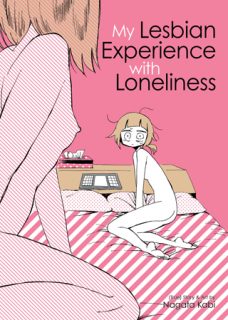
My Lesbian Experience with LonelinessMy Lesbian Experience with Loneliness by Kabi Nagata. Before it was picked up by a manga publisher, Nagata released the majority of My Lesbian Experience with Loneliness on Pixiv. The manga is an autobiographical and very personal account of Nagata’s struggles with her mental wellness and sexuality. My Lesbian Experience with Loneliness is a powerful work which has been met with well-deserved acclaim. Nagata is forthright, frankly portraying her experiences in a way that is both accessible and disarming. Even though the subject matter is quite serious (self-harm, eating disorders, anxiety, and debilitating depression are all discussed), the pink-hued artwork in the manga is actually rather cute. My Lesbian Experience with Loneliness outlines a turning point in Nagata’s life. On the verge of giving up on life, feeling so incredibly isolated and alone, Nagata makes the impulisve decision to hire a lesbian escort. Ultimately the whole affair doesn’t really solve any of Nagata’s problems and even amplifies some of those that already existed, but it does encourage her to look critically at who she is and the source of her suffering. That’s the story that Nagata captures in My Lesbian Experience with Loneliness and the story with which so many readers have found they could identify. Admittedly and understandably, it’s not always an easy read, but it is a very good one.

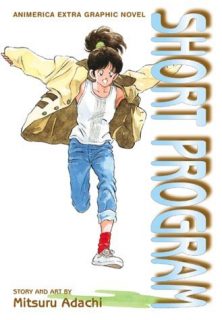
Short Program, Volume 1Short Program, Volumes 1-2 by Mitsuru Adachi. My introduction to Adachi’s work was through the baseball manga series Cross Game and its anime adaptation. I only recently discovered that Adachi’s first manga to be translated into English was actually Short Program. The series is a collection of short manga taken from a variety of magazines from all of the major demographics (shounen, shoujo, seinen, and josei) spanning from the late 1970s to the early 2000s. Viz Media only ever published the first two volumes of Short Program; it would have been nice to have seen the rest of the series released as well, but since the stories are largely unrelated to one another, at least it’s not like readers will be left with a cliffhanger or otherwise unresolved narrative. For the most part, the short manga of the first two volumes of Short Program are quirky romances, often with twist endings that add a little surprise to what would otherwise be fairly straightforward and even mundane stories. Adachi successfully works within a number of different genres in Short Program–some of the stories are comedies while others are thrillers, some are unabashedly romantic while others are intentionally disconcerting. Overall, Short Program is a solidly engaging and consistently entertaining series.

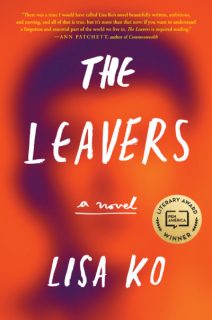
The LeaversThe Leavers by Lisa Ko. Although Ko has written numerous short stories and essays, The Leavers is her debut work as a novelist and the winner of the 2017 PEN/Bellwether Prize for Socially Engaged Fiction. It’s a particularly timely novel, too, examining the impact of illegal immigration on the families both directly and tangentially involved. The Leavers follows two entwined lives, alternating perspectives between them. First there is Deming, a young man who has yet to find his place in the world. After his undocumented mother Polly suddenly disappears when he is eleven, Deming is fostered and adopted by a white couple who rename him Daniel, never knowing what happened to her. The second is narrative is that of Polly herself, telling the story of her background, how she came to the United States from China, and eventually what really happened to her before and after she was gone from her son’s life. The Leavers is in turns compelling and tedious, engaging and exasperating. The issues explored are important ones, but the telling of the character’s stories, especially Deming’s, can sometimes be frustratingly unfocused. Granted, this may also be a deliberate reflection of Deming’s own obscured state of mind.

Filed Under: FEATURES, My Week in Manga Tagged With: comics, Kabi Nagata, Lisa Ko, manga, Mitsuru Adachi, Novels, Short Program, Tanaw

After Hours, Vol. 1

June 19, 2017 by Sean Gaffney

By Yuhta Nishio. Released in Japan by Shogakukan, serialization ongoing in the magazine Hibana. Released in North America by Viz. Translated by Abby Lehrke.

There is something of a history in yuri manga of the protagonists realizing their feelings for each other while still in school. Sometimes it’s just them, sometimes we get another couple, and sometimes everyone in the school seems to be gay, but the theme is “students”. After Hours, therefore, with its relationship between a shy 24-year-old college graduate and the 30-year-old DJ she meets at a club, is a breath of fresh air for no reason other than the fact that it’s about two adults. Fortunately, there’s a lot more to it than just that, and in fact the ‘yuri’ part of the volume is touched on a lot less than it is in those school stories. These two meet, hook up that evening, and any angst or worry they have has nothing to do with the fact that they’re both girls. It’s great to see.

Emi is the blonde on the cover, and she and her friend are going out clubbing, something Emi is not really wild about. She’s even less wild when her friend hooks up immediately and leaves her to fend for herself. Luckily she’s saved by Kei, who works at said club. The first chapter may have been a one-shot that got turned into a series, as it’s really simple: they get on, Kei invites her to come over and look at her etchings… erm, collection of old records, and things end up progressing from there. Even the morning after, aside from a brief “OMG what did I just do!” look from Emi, is really sweet. Most of the rest of the first volume stays at that simmer, though it’s apparent that when Vol. 2 comes out there may be a bit more angst and drama. Emi is unemployed at the start, and dialogue hints that she’s living in an apartment with a guy… who she’s in the process of breaking up with. Much of this happens on the edges of the story, as Emi is understandably reluctant to bring this up with Kei, though she tries once or twice.

The other reason to read this manga is the excellent look it gives into Japanese club culture. Kei is a DJ, and shows Emi how to be a VJ and provide images for her songs about halfway through the book. It shows the fun and rush of doing these things, while a flashback of Kei’s shows how difficult it can be as well, particularly when you’re just starting out. (Kei is very laid-back and knowing for most of the present day stuff, and it’s nice to see that she used to be a ball of pent-up frustration and anger.) There’s a large group of clubbers here, almost all men, but they seem nice (accidental Jagermeister shots aside), and also seem to understand that Emi and Kei are in a relationship without it ever being brought up. After Hours is a yuri title, but the yuri in the first volume seeks, for once, to make things LESS awkward – Emi and Kei bond very fast, much faster than I think they would have if Kei had been a man. I really enjoyed the first volume, and hope Vol. 2 comes out soon (it’s not out in Japan yet, I believe.)

Filed Under: after hours, REVIEWS

In Another World With My Smartphone, Vol. 3

June 17, 2017 by Sean Gaffney

By Patora Fuyuhara and Eiji Usatsuka. Released in Japan as “Isekai wa Smartphone to Tomo ni” by Hobby Japan. Released in North America digitally by J-Novel Club. Translated by Andrew Hodgson.

The author and reader are clearly settling in for the long haul here in this third volume of Smartphone. ON the author’s end, he’s become aware that he wants to tell a long, convoluted (if ridiculous) story, so is starting to add more key backstory and introduce characters who may not obviously influence the plot right away. Indeed, he goes a bit too far in the other direction – the new possible villain or possible ally, Kaworu… um, sorry, Ende… is casually introduced, implied to be important to both the past and present of this world, and then just goes away for the rest of the book. I’m all for foreshadowing, but again, Smartphone guy is keeping it real and making it as thuddingly obvious as possible. Fortunately, the rest of Smartphone is also the same as always, which means totally ridiculous and compulsively readable.

On the cover, as you can see, we have Sakura from Sakura Taisen… erm, Yae, whose country we visit at the start of the book. This allows Touya to singlehandedly put down a war with nothing but a few swipes from his phone – even finding out some of his foes are undead and can’t be killed by his normal go-to means is only a prelude to him trying something even more ludicrous and over the top, which works a charm, of course. He also manages to take out another “Monarch”, this one being a twofer combo of Gamera and a giant snake. Naturally, they soon become adorable plushie versions of themselves, as Touya owns them so hard the entire harem thinks he’s being too cruel. He gains access to a floating Garden of Babylon, complete with a gynoid servant who is easily the nest addition in the book. Touya’s main harem are all just as pure as he is, so a deadpan robot girl who constantly makes sexual innuendo and comes on to him was desperately needed. Unlike the stupid extra story from the last book, I don’t mind Cesca at all because both her dialogue and Touya’s reactions to same are entirely in character.

Speaking of the harem, I admit to being rather surprised at how fast things are advancing on that front. Clearly the author has realized that a) there’s no point in dragging out the ‘will they confess?’ any longer given that they’re all too pure to go any further than kissing anyway, and b) given this is a world where it’s OK to take up to 20 wives provided you can in fact be rich enough to support 20 wives, ‘who is best girl?’ is mostly irrelevant anyway. I was impressed with Linze for taking the advantage on the kissing front, showing off that she may be shy most of the time but is secretly the bolder of the twins. I was a bit less thrilled with Yumina basically already admitting that Sue, her little girl cousin, will also be part of the harem once she grows up, but I suppose I shouldn’t have been surprised. I was also amused that he asked advice from God (remember this all started with God?) on how to deal with this, and gets a pep talk not only from the main God but also the God of Love, who judging by the illustration and behavior, is Marielle from Log Horizon.

One of the themes of this book is that Touya completely does not realize how ridiculously OP and amazing he is, because he tends to think of it as “I did very little to achieve this, therefore it wasn’t all that great”. Combine that with him not realizing why the girls all like him, and he’s very much harem protagonist material. That said, it’s the rare harem novel that actually takes the hero aside and literally has two gods telling him he’s being foolish and to try being a bit more selfish once in a while. That brings me to my last shuddering realization about this series: I can’t in good conscience call it bad anymore. Yes, it is terminally ridiculous (the scene where our hero builds an entire hot spring for the hotel he used to stay in in approximately five minutes may set a new record for laughable), and the lead is such a ridiculously overpowered twink that anyone who takes isekai seriously will be grinding their teeth, but by god, it’s fun.

Filed Under: in another world with my smartphone, REVIEWS

  • « Go to Previous Page
  • Page 1
  • Interim pages omitted …
  • Page 424
  • Page 425
  • Page 426
  • Page 427
  • Page 428
  • Interim pages omitted …
  • Page 1048
  • Go to Next Page »
 | Log in
Copyright © 2010 Manga Bookshelf | Powered by WordPress & the Genesis Framework