• Skip to primary navigation
  • Skip to main content
  • Skip to primary sidebar
  • Home
  • About Us
    • Privacy Policy
    • Comment Policy
    • Disclosures & Disclaimers
  • Resources
    • Links, Essays & Articles
    • Fandomology!
    • CLAMP Directory
    • BlogRoll
  • Features & Columns
    • 3 Things Thursday
    • Adventures in the Key of Shoujo
    • Bit & Blips (game reviews)
    • BL BOOKRACK
    • Bookshelf Briefs
    • Bringing the Drama
    • Comic Conversion
    • Fanservice Friday
    • Going Digital
    • It Came From the Sinosphere
    • License This!
    • Magazine no Mori
    • My Week in Manga
    • OFF THE SHELF
    • Not By Manga Alone
    • PICK OF THE WEEK
    • Subtitles & Sensibility
    • Weekly Shonen Jump Recaps
  • Manga Moveable Feast
    • MMF Full Archive
    • Yun Kouga
    • CLAMP
    • Shojo Beat
    • Osamu Tezuka
    • Sailor Moon
    • Fruits Basket
    • Takehiko Inoue
    • Wild Adapter
    • One Piece
    • After School Nightmare
    • Karakuri Odette
    • Paradise Kiss
    • The Color Trilogy
    • To Terra…
    • Sexy Voice & Robo
  • Browse by Author
    • Sean Gaffney
    • Anna Neatrour
    • Michelle Smith
    • Katherine Dacey
    • MJ
    • Brigid Alverson
    • Travis Anderson
    • Phillip Anthony
    • Derek Bown
    • Jaci Dahlvang
    • Angela Eastman
    • Erica Friedman
    • Sara K.
    • Megan Purdy
    • Emily Snodgrass
    • Nancy Thistlethwaite
    • Eva Volin
    • David Welsh
  • MB Blogs
    • A Case Suitable For Treatment
    • Experiments in Manga
    • MangaBlog
    • The Manga Critic
    • Manga Report
    • Soliloquy in Blue
    • Manga Curmudgeon (archive)

Manga Bookshelf

Discussion, Resources, Roundtables, & Reviews

Blog

Bluesteel Blasphemer, Vol. 2

July 18, 2017 by Sean Gaffney

By Ichirou Sakaki and Tera Akai. Released in Japan by Hobby Japan. Released in North America digitally by J-Novel Club. Translated by Kevin Steinbach.

In general, I tend to divide up books to review on this site into four categories: Great, Adequate/Good, Adequate/Bad, and Bad. The first and the last are obviously the easiest to review, as there are any number of things that you can say about them to show why you think they’re worth reading (or, in the case of the bad books, not worth reading). Adequate/Bad is tougher, but at least you can usually get away with a laundry list of things that the title is doing wrong. But oh dear, those books which are good but that’s about it. You really have to work at the review, because “good but that’s about it” makes the reader not want to read a book. But they *are* good, and very readable. It’s just there’s really nothing that stands out and makes you go “wow, that made buying this book worth my time’. Such a series is Bluesteel Blasphemer, which is adequate. HIGHLY adequate.

This second volume picks up (after a short setup prologue) right where we left off. Yukinari is settling in uncomfortably as the new erdgod of Friedland, and trying to figure out how to make the village prosper, less by sacrifices and more by irrigation and trade. He’s accompanied by Dasa, who fulfills both the Rei Ayanami clone and Clingy Jealous Girl types in one; Berta, whose love/worship of Yukinari continues to be vaguely disturbing – it makes sense for her character given how she was raised, but I’d really like her to get a hobby or two; and Fiona, the de facto mayor of the village, who sometimes acts as a tease but more often fills the straight man role. We also add Ulrike, who is the main familiar of the erdgod the next village over, a giant forest/tree who uses humans whose lifespan is at an end to become its familiars (Ulrike is seen in the prologue, a cute young kid who dies by getting impaled on a tree. Fortunately, she was impaled by the right tree). Together, they fight against a cadre of grumpy priests whose job is suddenly gone, and some grumpy soldiers who are still trying to be zealots.

If I were to pinpoint things I didn’t care for with this book, it would be the same as the last – the harem stuff feels false and tacked on, and I wish it would go away. Other than that, this is a very smooth, easy to read book. I enjoyed the motivation of the other erdgod, and how a village that doesn’t have much beyond LOTS OF WOOD might turn to it as an alternative to more modern-day thinking like medicine. I liked the examination of what happens to the priests after Yukinari takes over, particularly in regards to the orphanage that suddenly doesn’t have villagers paying to feed its orphans. I liked the vaguely evil foreshadowing going on between the evil old priest and his stacked alchemist which will clearly become the climax to the final book. And the slingshot was hilarious.

So this is a good, solid book that fans of the light novel genre will enjoy, particularly if they like Kamen Rider-style books. But if you’re thinking “I need to cut back on light novels, what would be good?”, this series also comes to mind immediately. I’m happy it’s not 20+ volumes, I can tell you that.

Filed Under: bluesteel blasphemer, REVIEWS

Bookshelf Briefs 7/17/17

July 17, 2017 by Michelle Smith and Sean Gaffney Leave a Comment

Anonymous Noise, Vol. 3 | By Ryoko Fukuyama | Viz Media – I was wondering at some point reading this volume if we could simply make the series 200 pages per volume of Nino screaming into a mic. The scenes where she does so are so electrifying, they draw you in so much, that it makes the rest of the teen drama feel a bit less by comparison. Honestly, the series can also be exhausting, because Nino is just so MUCH—not just the singing, but everything she does is to the point of collapse and pain, and it makes you desperately want to tell her to slow down. I think the creator would do well to follow that advice as well—I could use a lull somewhere in here. But man, does this book ever succeed at showing the power of music. – Sean Gaffney

The Full-Time Wife Escapist, Vol. 4 | By Tsunami Umino | Kodansha Comics – We’re making progress here—Hiramasa and Mikuri seem to be able to admit to themselves that they’re falling in love, and both want things to be a bit more physical. But oh my God, the communication problems here are enough to ruin a reader’s enamel. I appreciate the slow burn here, but it’s hard not to bang your head against a wall every time these two think about finally opening up and hashing everything out, and then deciding not to. I do like the fact that they’re both equally at fault, really—Mikuri may be the viewpoint character but she compartmentalizes so much of what’s happening that accessing real emotions is proving difficult. Even hugs may not help here. – Sean Gaffney

Ghost Diary, Vol. 2 | By Seiju Natsumegu| Seven Seas – This title still walks a fine line between pandering and creepy, and it still remains on the creepy side, which is good, given it’s meant to be a horror manga. The Kukuri and Tatsumi chapter was probably my favorite, giving some depth to those two, even as it revolved around some pretty strange shenanigans (and twins who reminded me of the Sonozakis). Less successful is Mayumi, who too frequently falls into the garden variety tsundere mode, which frankly just isn’t enough by itself anymore. The series is at its best when it’s wrong-footing us and making us not completely trust Chloe, but there’s less of that here, and therefore I’d say it’s not as intriguing as the first volume. But it’s still worth a read for horror fans. – Sean Gaffney

Hana & Hina After School, Vol. 2 | By Milk Morinaga | Seven Seas – Last time we saw how fast Hina fell for Hana, adn this time it’s Hana who, by the end of the volume, is questioning how she feels about her friend. Hana doesn’t not have the past experience Hina does, though, so it may take longer. Of course, the fact that Hina has experienced rejection in the past leads her to try to distance herself from Hana, and so much of the volume has them not working together (their new co-employees are, shall we say, not as good). Fortunately, it’s all resolved by the end, in time for a festival with fireworks. That said, where would a yuri title be without the return of the ex-girlfriend? She doesn’t make a full appearance in this book, but she’s on the fringes, so I’m sure volume three will be all about her. – Sean Gaffney

Horimiya, Vol. 8 | By Hero and Daisuke Hagiwara | Yen Press – There are some people who have complained that Horimiya isn’t as good as it was because it’s changed so much from its initial premise. I can sort of see what they mean, but I’m still really enjoying seeing these kids struggle through high school and try to have a relationship. Sex doesn’t come up again here, but we do get more of the weirdest BDSM relationship in all of manga, which is even weirder given it’s in public. The athletic festival is also amusing, if only as Hori does horribly as she’s so easily distracted. Bonus points for the ouendan costume as well. So yes, one could argue that the series is meandering a bit here, and needs real drama, but I also am happy just reading about these kinds being big doofs. – Sean Gaffney

Horimiya, Vol. 8 | By Hero and Daisuke Hagiwara | Yen Press – It’s Sports Festival time for Katagiri High! Even though Miyamura is a third-year student, it’s his first time truly participating, and he really gets into it, cheering for his teammates, competing against Hori, etc. In the end, he’s surprised by how much fun he had and I was surprised by how not tiresome yet another sports festival arc was. After this, we see the return of the relationship dynamic in which Hori wants Miyamura to be mean/rough with her. While I can appreciate seeing that sort of predilection depicted in a teen romance manga, what troubles me is that he’s clearly not enjoying it and only doing it for her sake. It’s also odd that none of their friends or classmates is showing concern, especially when Miyamura questions a love rival’s ability to hit her. I’m not sure where Horimiya is going with all this. – Michelle Smith

Interviews with Monster Girls, Vol. 5 | By Petos | Kodansha Comics – Two-thirds of this volume is devoted to the same school antics as the previous ones, as we see the cast of friends getting closer, our succubus teacher continuing to fail to seduce Takahashi-sensei, and any number of monster girl trivia items. The last third moves to an apartment to show the adventures of a college girl who happens to live with a Zashiki-Warashi, and the complicated feelings this stirs up in her, especially as it’s not as easy to deal with as it sounds. This is cute but feels irrelevant compared to the main plot—I wonder if the author is running out of things to talk about. Still, ‘cute’ is pretty much the brief for this series, and as long as there’s plenty of that I don’t think the readers will complain. – Sean Gaffney

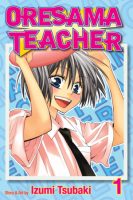
Oresama Teacher, Vol. 22 | By Izumi Tsubaki | VIZ Media – What a fantastic volume of Oresama Teacher! The Super Bun impostor is revealed, and though in retrospect I probably should have guessed who was responsible, it didn’t make the resulting story (and backstory) any less satisfying. Plus, the final chapters of the arc featured Mafuyu in a pig mask (Super Ham!) and the members of the Student Council working together to find the culprit. After that, there are a couple of bittersweet chapters about the third years graduating that are quite nice, but I really wasn’t prepared for that penultimate page. This series is frequently very silly, but a beaming Miyabi telling Mafuyu that she’s his hero made me tear up instantly. It’s a rare series that’s only getting better at volume twenty-two! – Michelle Smith

Filed Under: Bookshelf Briefs

Pick of the Week: Polar Opposites

July 17, 2017 by Sean Gaffney Leave a Comment

MICHELLE: I’m a bit torn for my pick this week. Waiting for Spring is a shoujo debut I’ll be checking out, but it’s an unknown quantity. I’ve been burned before, so I think I’ll play it safe this week and go with Princess Jellyfish.

SEAN: I think I’ll play it safe too, because nothing makes me happier this week – in fact, I reviewed it already so it’s already made me happy – than the new Monthly Girls’ Nozaki-kun.

KATE: I’m torn between the compulsively readable Princess Jellyfish and The Hound and Other Stories. Although I’ve never been especially interested in H.P. Lovecraft’s writing, I do have a soft spot for horror manga. A quick glance at the preview suggests that Gou Tanabe’s artwork is crisp and atmospheric, so I’m leaning ever-so-slightly towards Hound for my pick of the week.

ASH: I’ll definitely want to read the next volumes of Monthly Girls’ Nozaki-kun and Princess Jellyfish as soon as I get my hands on them, but like Kate The Hound and Other Stories is what gets my official pick this week! (I tend to enjoy well-drawn horror manga.)

ANNA: New series are always something to celebrate, but I remember being totally amazed that Princess Jellyfish was licensed! Happy about the latest volume!

Filed Under: PICK OF THE WEEK

Plum Crazy! Tales of a Tiger-Striped Cat, Vol. 1

July 17, 2017 by Michelle Smith

By Natsumi Hoshino | Published by Seven Seas

It is definitely a good time to be a manga fan, particularly if you (like me) are fond of niche genres like food manga, sports manga, and cat manga. The latest entry into that final category is Plum Crazy! Tales of a Tiger-Striped Cat and, predictably, it’s cute.

Plum lives with the Nakarai family, including a woman who teaches traditional Japanese dance and her teenage son, Taku. One day, Plum brings home a kitten in distress, and what follows are her efforts to help take care of the kitten while said kitten (soon named Snowball) is more interested in administering chomps.

With the exception of a few pages of 4-koma comics at the back of the volume, Plum has no internal dialogue, but her actions and expressive face convey her thoughts well. She does typical cat-like things, but she’s far from ordinary. For example, not only does she actually listen to her owner’s directives, but she actually complies. Snowball is more realistically temperamental, only cuddling with Plum when she feels unwell and otherwise tormenting her until another cat shows up, at which point Snowball is jealous of their playtime.

Really, there isn’t a lot of plot here. The only thing that comes close is the Nakarai family learning valuable lessons about keeping a clean litterbox, or the dangers of heatstroke, or the fact that cats don’t like wearing reindeer antlers and posing for pictures. To all of these I give a big “duh!,” and it’s somewhat frustrating to see people so cavalier about these and other topics—they don’t seem to worry about a tiny kitten wandering the neighborhood, for example—but I guess part of the point of the manga was to be educational.

At any rate, this was an enjoyable addition to the roster of cat manga available in English, and I plan to continue with it.

Plum Crazy! is ongoing in Japan, where sixteen volumes have been released. Seven Seas will publish the second volume in English in September.

Filed Under: Josei, Manga, REVIEWS

My Week in Manga: July 10-July 16, 2017

July 17, 2017 by Ash Brown

My News and Reviews

Things are more or less back on regular schedule here at Experiments in Manga which means last week I posted the Bookshelf Overload for June. It was a relatively small month, especially when compared to other recent months, but I was still very excited about the various manga, comics, and other books that I picked up. Since I’m back on schedule, later this week I’ll be posting my long-overdue review of Tomoyuki Hoshino’s novel ME. Like the rest of Hoshino’s work available in English (I’ve also reviewed We, the Children of Cats and Lonely Hearts Killer in the past), the novel is challenging but I think worth the effort it takes to read.

Speaking of things that I’ve reviewed in the past, Yeon-sik Hong’s Uncomfortably Happily was a manhwa that I greatly enjoyed. The translator, Hellen Jo, was recently interviewed about her work on the comic and how she personally related to Hong’s story. Manga podcasts seem to be making a comeback these days, and I don’t see that as a bad thing. Last week saw the release of the first episode of Manga in Your Ears, a podcast featuring a few of the manga bloggers that I particularly admire, so I’m very excited to give it listen. Another interesting development that I caught wind of last week was Digital Manga’s most recent crowdfunding campaign. Juné Manga is attempting to raise funds to reprint some titles (A Promise of Romance by Kyoko Akitsu, Endless Comfort by Sakuya Sakura, and Secrecy of the Shivering Night by Muku Ogura) directly through its website rather than through Kickstarter.

Lately, I’ve been somewhat remiss in mentioning the Kickstarter projects that have caught my eye, so here’s a quick list of some of the comics campaigns that are currently running: Lucy Bellwood’s 100 Demon Dialogues is a collection of wonderful short comics exploring themes of anxiety and self-doubt; Elizabeth Beier’s autobiographical comics about bisexuality are being collected together in The Big Book of Bisexual Trials and Errors; the comics anthology Immortal Souls, which focuses on queer witches and dark magicis the followup to the excellent Power & Magic; the third and final volume of Speculative Relationships brings together a variety of science fiction romance comics; Tim’rous Beastie has a great lineup of creators whose comics take inspiration from works like Redwall, The Rats of NIHM, and Watership Down; and finally there’s We’re Still Here, an anthology bringing together fifty-five trans comic creators in what should be phenomenal collection.

Quick Takes

Land of the Lustrous, Volume 1Land of the Lustrous, Volume 1 by Haruko Ichikawa. Despite the frequently heavy-handed and detailed exposition present in the first volume of Land of the Lustrous, I can’t say that I necessarily understand everything that’s going in the series yet, but I am most definitely intrigued. If nothing else, Ichikawa’s illustrations are incredibly striking and I would be happy to read more of the manga for no other reason than the artwork. Twenty-eight crystalline lifeforms known as the Lustrous, each with their own unique qualities and abilities, battle for survival against the enigmatic Lunarians. Phosphophyllite wants nothing more than to fight but, being such a fragile gem, is instead given the task of writing a natural history. Though it’s said to be a vitally important job, Phos isn’t particularly pleased but comes to realize that many of the other gems aren’t wholly satisfied with their lots either. The first volume’s theme is “searching for purpose” which at this point seems to apply both to the series itself as well as to its characters. At first the narrative feels somewhat directionless, generally serving as a vehicle for stunning visuals and not much else, but once the peculiar world and characters have been thoroughly established, a tantalizing potential for greater drive and meaning begins to coalesce.

Sacred HeartSacred Heart by Liz Suburbia. Sacred Heart is Suburbia’s debut graphic novel, a completely redrawn version of her webcomic by the same name. When Ben Schiller comes across the dead body of someone she knows very early on in the comic–a moment that is acknowledged but passes with surprisingly little excitement or comment–it’s one of the first clues that something is off about the town of Alexandria. Eventually it’s revealed that all of the adults have left, supposedly to return, but no one knows when that will be. In the meantime the teenagers have the run of the place, waiting for their parents and distracting themselves from their predicament by spending their time partying and hooking up. But that can only last for so long–tensions are high and more and more people are dying under peculiar circumstances. While there is an underlying and marvelously ominous unease pervading the story, Suburbia also shows a great sense of humor in the comic. The very end of Sacred Heart was a bit abrupt and not everything is completely explained (which admittedly isn’t necessary), but for the most part I really enjoyed the comic and would be interested in reading more of Suburbia’s work. Fortunately, it seems that Suburbia has plans for three more volumes to follow Sacred Heart as sequels.

Whispered Words, Omnibus 2Whispered Words, Omnibuses 2-3 (equivalent to Volumes 4-9) by Takashi Ikeda. While I enjoyed Whispered Words from its very start, I do feel that it’s a series that gets even better as it progresses. Though there is still a fair amount of humor, Ikeda largely moves away from the over-the-top ridiculousness found in the early series in favor of a more mature exploration of Sumika and Ushio’s changing relationship. It’s extremely unfortunate then that the quality of One Peace Books’ edition somehow manages to get even worse as it goes along. Probably most problematic is that partway through the third and final omnibus a page was skipped. The series is still readable, but the flow of the manga and the two-page spreads are completely ruined as a result. Ikeda has a tendency to develop the story by simultaneously exploring the character’s feelings and experiences from multiple points in time. It’s a technique that can be quite effective, but the printing error can make the transitions between the flashforwards and flashbacks jarring. I do believe the publisher corrected the issue of the missing page in later printings, so it’s something to be aware of and look out for. Quality control aside, Whispered Words is generally a pretty great yuri series. (It also gets bonus points from me for being about karate, too.)

Filed Under: FEATURES, My Week in Manga Tagged With: comics, Haruko Ichikawa, Land of the Lustrous, Liz Suburbia, manga, Takashi Ikeda, Whispered Words

Infinite Dendrogram: The Beginning of Possibility

July 16, 2017 by Sean Gaffney

By Sakon Kaidou and Taiki. Released in Japan by Hobby Japan. Released in North America by J-Novel Club. Translated by Andrew Hodgson and Nick Nomura.

The cliche has become that every single light novel released over here in the past four years or so has been a variation on “fighting monsters in a fantasy role-playing game”, but each of them have had their own little variations to separate them in some way. There’s the old ‘trapped in the game’ variation, like Sword Art Online or Log Horizon. We’ve had ‘the mechanics of the world are game-oriented but it’s just a fantasy’ like Danmachi and Death March. We’ve had ‘resurrected into fantasy worlds that are clearly based around cliches’ like KonoSuba and Isekai Smartphone. It’s been rare that we’ve actually seen a light novel that is just ‘let’s watch the hero play a new VRMMO game’. Playing to Win is closest, but even there the conceit is not that of the average guy playing a game, it’s that Ichiro is a arrogant rich guy. With Infinite Dendrogram, we finally have a book that (at least so far) is only ‘let’s explore the new game’.

Our hero is not playing the game the day it comes out – he had to study to pass college exams first. So it’s about a year and a half later, and he’s well behind his older brother, who’s been somewhat impatiently waiting for him to join. Once he does, Reiji (aka Ray in the game) picks out his weapon, his home base, and his Embryo, which is basically a sentient weapon/defense that grows along with the player’s character. His turns out to be a sword (later a halberd) which can also become a cute girl (because of course – come on, it is still a light novel) who essentially serves as his partner – though sometimes reluctantly, especially when dealing with zombies and the like. Together they try to level up while dealing with player killers, the fact that the home base they chose is rapidly losing its population due to wars, and the usual inconveniences that come up in a game.

The idea is that the game has more variations than almost any other known to man – we see a journalist as one of the minor characters, not a normal character type in a game like this, and one player is even a pimp with his own succubus. (This is actually the most amusing part of the book, as the player is underage, so his succubus specializes in things like really soothing backrubs because of the age restrictions). That said, Ray and Nemesis (his Embryo) are fighting types, and while there are indeed signs that he is a Very Special Hero indeed, for the most part we see him fight, explore, learn, and fight some more. The fights are quite well done, and the book as a whole reads very well. If there’s one thing that disappointed me, it’s that I was expecting more of a twist, I suppose? There are suggestions that the game is meant for some higher purpose, but here in the first book it’s just a lot of cool fights, RPG exploring, and endless bear puns. There’s no ‘gimmick’ yet.

Still, if you like this genre, and want something uncomplicated, this is an eminently readable book. Recommended for light novel and RPG fans.

Filed Under: infinite dendrogram, REVIEWS

Oresama Teacher, Vol. 22

July 15, 2017 by Sean Gaffney

By Izumi Tsubaki. Released in Japan by Hakusensha, serialization ongoing in the magazine Hana to Yume. Released in North America by Viz. Translated by JN Productions.

After the previous volume’s ups and downs, I’m pleased to say that this Oresama Teacher is back on target with a very strong entry, as we discover just who has been impersonating Super Bun. It’s not exactly a surprise, particularly once you realize the evil doppelganger is not all that evil. The rest of the volume is devoted to the graduation of the third years, including Okegawa (at last), and Hanabusa, who this volume is really all about. Because yes, spoiler, he was the Super Bun impersonator. We finally get a lot of answers in this book regarding just what he was planning to do and why the Student Council is filled with so many broken people. And throughout it all we get Mafuyu, running forward no matter what as always, showing off the qualities that make her one of my favorite shoujo heroines.

The best scenes in the volume, as I said, revolve around Hanabusa. He’s always been a somewhat ambiguous villain, and the reason for that is that he’s not really much of a villain at all. The revelation that the Student Council members, with a few exceptions (Momochi, who’s still recovering from events of the last few books, and Shinobu and Wakana, who luckily fit the bill anyway) are there to be PROTECTED rather than to be the PROTECTORS turns a lot of events in the series on their ear. It also shows how far Hanabusa himself has come, as now he feels it’s safe enough to leave his friends behind and go to school in Tokyo. The final scene in the book with Mafuyu, where he thanks her for everything she did the past year and says she’s his hero, is one of the two scenes in the book that made me choke up (the other being the ending to the hide and seek game).

As for the rest of the cast, Takaomi once again takes a back seat except to provide helpful advice. Hayasaka is also not given much to do, but that’s fine as I’m assuming that the finale, which should be in a few more volumes, will feature him heavily. Okegawa gets more focus, though, mostly as he too is moving on, though I have a feeling we’ll see more of him in future volumes than Hanabusa. His relationship with “Morse” has always been subtly different from all the others, and I felt that if this is the last we see of him, it got a good sendoff. And of course there are any number of hilarious moments here – it’s no Nozaki-kun, but it acquits itself admirably, especially with the various alternate Super-Bun masks and the over the top reactions to everything.

We don’t get this series all too often since it’s caught up in Japan, but I always enjoy each volume we do get. I have a feeling it may be wrapping up in 2-3 more volumes, but for now we have this. Go get it.

Filed Under: oresama teacher, REVIEWS

Log Horizon: The Larks Take Flight

July 14, 2017 by Sean Gaffney

By Mamare Touno and Kazuhiro Hara. Released in Japan by Enterbrain. Released in North America by Yen On. Translated by Taylor Engel.

After spending the 6th book with Akatsuki and the other women of Akiba, and the 7th book with Shiroe and Naotsugu and their heist movie, this book continues the trend by turning to the rest of Log Horizon, the junior members. And for the most part it succeeds admirably, not only telling a good story and going into greater depth about what it really means to be trapped in a game, but also giving added depth to four out of the five main characters. (Apologies to Serara, but you still haven’t risen much above the level of a moeblob.) This goes doube for Isuzu, who has the biggest picture on the cover and arguably grows the most throughout the book, as she tries to overcome her amazingly huge amounts of self-loathing and realize that she can go past her limits and do something to save the People of the Earth.

Much of this book goes into greater depth about the People of the Earth; how they live their day-to-day lives, what life is like now that the adventurers are inventing so many amazing things (many of which the adventurers regard as commonplace or unimportant), and how they react to a girl going around singing music they’ve never heard before. Isuzu not only thinks that she’s a crappy musician (thanks to something her father told her, which we later learn she may have misinterpreted, and seeing her father’s own skills) but also that what’s she’s doing now isn’t even her skill as she only plays cover songs. It’s up to her not-boyfriend Rundelhaus (who is amazing in this book, and is about ten times more serious than the anime) to tell her the truth: this world only had 42 songs – the 42 pieces of BGM for the Elder Tales game. ‘Music’ and ‘the forty-two’ literally mean the same thing to them. So Isuzu really is changing lives. And when she finally begins to sing a song she composed herself, well, she cam move mountains. Or at least buildings.

Meanwhile, Touya and Minori are not left out. They’re both dealing with growing up as well, Minori trying to be the team strategist and thinking on her feet, and Touya by essentially being the team heart, and being able to see the true feelings behind a faked smile. We also get two new characters… well, sort of new. Roe2 is clearly related to Shiroe in some way, to the point that I was a bit aggravated that no one observed “isn’t that just Shiroe with breasts?” when they first saw her. As for Dariella, the book keeps her identity a secret till the very end (the complete opposite of the anime, which showed who she was from the start), and in retrospect you can see and feel a little bad for who she is and what she’s trying to escape. And for those who like a darker flavor to her Log Horizon books, we get the Odysseia Knights, who seems to have been driven half-mad by being trapped in the game, unlike Akiba’s “welp” sort of player, and Mizufa, a warrior who is a Person of the Earth, but just as terrifying as any adventurer.

It’s rare that I, a spoilerholic, say “I don’t want to spoil more”, but it’s true. This book is a delight, with many passages you’ll want to go back and reread immediately, and has Log Horizon’s usual depth of worldbuilding and characterization. I love Sword Art Online too, but if you’re going to read only one trapped in a game light novel, this should be the one.

Also, Isuzu says she sang a “Snoopy” cover to the People of the Earth, which makes me think it has to be “Snoopy vs. the Red Baron” by the Royal Guardsmen. It even works well with lute, drums and keyboard!

Filed Under: log horizon, REVIEWS

Ravina the Witch?

July 13, 2017 by Katherine Dacey

Cute characters behaving badly — that’s been Junko Mizuno’s MO since her professional debut twenty years ago. Her latest work, Ravina the Witch?, is more picture book than manga, eschewing panels and word balloons for glossy, full-color illustrations, but the story it tells is pure Mizuno: a young woman meets a witch, inherits her wand, and then wanders the countryside meeting depraved men whose hobbies run the gamut from S&M to binge-drinking.

There’s a little more to the story, of course, since Mizuno loves to embroider a simple narrative with odd details. Ravina, we learn, was raised by crows in a junkyard, impervious to human custom and language. Once exiled from her home — by eminent domain, no less! — Ravina uses her new-found powers to cure disease, embarrass a cruel tyrant, and make mushrooms dance. She also finds time to work as a dominatrix and do crossword puzzles with an enormous owl. Oh, and she’s almost burned at the stake for being a witch.

As the plot suggests, Ravina sits somewhere between fractured fairytale and feminist rumination. Mizuno clearly recognizes the way in which female healers are viewed as both powerful and subversive; why else flirt with the idea that Ravina might be a witch, the quintessential symbol of dangerous femininity? Yet Mizuno’s obsession with food complicates any understanding of Ravina as a feminist text. In almost all of her works, from Pure Trance to Ravina the Witch?, Mizuno’s female characters binge, purge, and pop diet pills with ferocious abandon. Mizuno plays these scenes for uncomfortable laughs, blurring the line between criticism of the characters’ self-destructive behavior and critique of the cultural attitudes that fuel it. Ravina, for example, doesn’t just eat a meal; she gorges herself on animals, pies, and bottles of wine, with Cabernet-stained drool seeping down her chin. It’s not clear if Mizuno is showing us how the other characters see Ravina — as a repulsive, unstoppable force of nature — or if Mizuno is celebrating Ravina’s obvious pleasure in eating, defying social expectations that she be restrained, demure, or self-abnegating — in short, refusing to be lady-like in the presence of food.

The ambiguity of these binge-eating scenes stems, in part, from Mizuno’s trademark Gothic kawaii style, which subverts the true horror of what’s she depicting; even the most ruthless characters have soft, round faces that belie their rotten natures. (Heck, her maggots are cute.) Her illustrations are framed by a pleasing assortment of pastel doodles, with flowers, ravens, curlicues, and smiley-faced cabbages filling the nooks and crannies of every page. Although Mizuno is no stranger to full-color comics — all three of her VIZ titles are printed in color — Ravina is printed on glossy paper stock that enables Mizuno to exploit the natural shine and texture of metallic paints to striking effect, mitigating the flatness of her character designs and backgrounds with tactile accents.

Though Ravina the Witch? feels like a step forward for Mizuno’s artistry, story-wise it reads more like a remix of Cinderalla and Princess Mermaid. There’s nothing wrong with mining the same vein of inspiration to produce new works, but when your storytelling approach is this mannered, there are only so many times you can rehearse the same schtick before it feels tired. I’m not sure where Mizuno goes from here, but a gonzo sci-fi adventure, a crime procedural, or even a high-school comedy might give her fresh opportunities to stretch herself without rehashing the same Grimm plotline.

RAVINA THE WITCH? • BY JUNKO MIZUNO • TITAN COMICS • NO RATING (MATURE THEMES) • 48 pp.

Filed Under: Manga, Manga Critic, REVIEWS Tagged With: Alt-Manga, Fantasy, Junko Mizuno, Titan Comics

Manga the Week of 7/19/17

July 13, 2017 by Sean Gaffney, Ash Brown, Anna N, MJ and Michelle Smith Leave a Comment

SEAN: Duck folks, here comes another week.

MICHELLE: Quack!

SEAN: We start off with Dark Horse, which has a 2nd volume of Hatsune Miku: Rin-chan Now!

They also have the first in a series of collections of H.P. Lovecraft manga, The Hound and Other Stories. These are by Tanabe Gou, who seems to specialize in Lovecraft horror manga adaptations, and ran in Enterbrain’s Comic Beam (something Dark Horse actually point out, showing how big a name Comic Beam now has among Western manga fans).

ASH: Wow, two Dark Horse titles in one week? I don’t really have a particular interest in Hatsune Miku, but The Hound and Other Stories looks to be very intriguing.

SEAN: J-Novel has 3 titles coming out next week, as they continue to increase their publications. We get the 2nd Arifureta: From Commonplace to World’s Strongest, which is very, very “what teenage boys with a power fantasy want”.

ASH: For those who prefer physical media, it was recently announced that Seven Seas will be working with J-Novel to release Arifureta in print, too.

SEAN: And we have the 4th I Saved Too Many Girls and Caused the Apocalypse, which I find slight but amusing.

And the 4th Mixed Bathing in Another Dimension, a title I enjoy far, far more than its fanservicey title deserves. Can’t wait.

Kodansha still has digital Del Rey rescues, with Alive 19 and School Rumble 21 (which may be its 2nd to last, depending on whether Kodansha cares about the one-volume School Rumble Z or not).

There’s a pile of print releases for once, starting with Aho Girl, a broad 4-koma series (which Kodansha itself noted they rarely do) about the titular girl, who is… well, as the title says. It runs in Weekly Shonen Magazine, and is best known as the 4-koma that isn’t Seitokai Yakuindomo.

In/Spectre seems like it may be coming to a climax, though I’m not sure how many volumes the manga will be. This is the 5th.

In digital news, there’s a 3rd Kasane coming out.

Princess Jellyfish has a 5th omnibus, as they try to save the farm by putting on a show in best Judy Garland/Mickey Rooney style.

MICHELLE: Hee. I’m looking forward to this. It’s less depressing than Tokyo Tarareba Girls!

ASH: I’m still thrilled this series was picked up for a print release. (Also, here’s hoping that Kodansha’s recent “digital-first” trend is truly digital-first and that we’ll eventually see titles like Tokyo Tarareba Girls in print, too.)

ANNA: Looking forward to this as well!

SEAN: Kodansha also has the 7th Sweetness and Lightning.

ASH: I’m really enjoying Sweetness and Lightning. It can be bittersweet and absolutely adorable in turns.

SEAN: The other print debut is Waiting for Spring, a “shosei” manga from Dessert about a shy girl who gets some life lessons from a group of handsome men. Despite that description making me wary, it’s apparently pretty cute and fluffy.

MICHELLE: I am cautiously optimistic.

ANNA: Might be worth a shot!

SEAN: The last Kodansha title this week is the 6th Welcome to the Ballroom. Will we finally get a more permanent dance partner for our lead?

One Peace has a 5th Kuma Miko, which some comics shops may have gotten already. It’s highly beariable.

Seven Seas has a 2nd volume of cute yuri title Hana & Hina After School.

ASH: I tend to enjoy Morinaga’s manga, but I still liked Hana & Hina After School more than I was expecting.

SEAN: There’s also a 4th Lord Marksman and Vanadis.

And lastly, a 7th volume of Magika Swordsman and Summoner (has he hit 72 yet?).

Vertical’s big debut is the first volume of Mobile Suit Gundam WING. This is actually the Endless Waltz manga – OK, the longer and better variation of the Endless Waltz manga – and currently runs in Gundam A magazine. Will it have Relena Peacecraft, that’s my question…

Vertical also has the 9th and penultimate volume of Nichijou. You’ll never guess the plot twists!… wait, no, Nichijou. You’ll never guess the random gags!

Viz’s Terra Formars has reached 18 volumes. My word.

MICHELLE: Jeez.

SEAN: Yen On’s titles mostly ship the week after next, but next week does give us the 3rd and 4th Sword Art Online: Progressive volumes digitally.

Yen’s manga titles are (mostly) shipping next week, starting with the 11th Akame Ga KILL!.

A mere 4 years after the last volume, here is the 7th The Betrayal Knows My Name. That should excite folks.

MJ: Woo hoo!

SEAN: A Certain Magical Index’s manga reaches double digits, and I think is still adapting the 7th novel.

And Death March to the Parallel World Rhapsody has a 4th book.

Yay, a book I’m buying! An 8th Horimiya, a series I always look forward to.

MICHELLE: Me, too.

ASH: It is a great series.

SEAN: More light novel adaptations with the 7th Danmachi manga.

A print debut for a digital-only title from a while back, now getting an anime, Kakeguri – Compulsive Gambler combines the thrills of survival game-style manga with the joys of gambling.

ASH: While it’s not Kaiji, I’m still rather curious about this series.

SEAN: MORE light novel adaptations with the 4th KonoSuba manga.

Liselotte & Witch’s Forest has its 5th volume, which may catch us up with Japan – the author has been busy with her incredibly mediocre sequel to Fruits Basket lately.

MICHELLE: Yeah. Sigh.

SEAN: And an 8th Monthly Girls’ Nozaki-kun, which I think has also caught up with Japan, though that’s for more normal reasons.

MICHELLE: I might have to hoard this one for a rainy day.

ASH: I can’t blame you for that; Monthly Girls’ Nozaki-kun is SO GOOD! It always makes me happy to read it.

SEAN: Watamote, whose title is too exhausting to type out, has its 10th book.

The Royal Tutor is moving fast now that it’s in print – here’s Book 2.

ASH: The first volume was a little goofy, but fun!

SEAN: And we get a 2nd Smokin’ Parade.

And a 13th Spice & Wolf – is the manga wrapping up soon?

There is also a 7th Taboo Tattoo.

Lastly, we have a 13th volume of Triage X, which is lucky for me as I’m not reading it.

SOOOOOOO much. What interests you?

Filed Under: FEATURES, manga the week of

  • « Go to Previous Page
  • Page 1
  • Interim pages omitted …
  • Page 424
  • Page 425
  • Page 426
  • Page 427
  • Page 428
  • Interim pages omitted …
  • Page 1053
  • Go to Next Page »
 | Log in
Copyright © 2010 Manga Bookshelf | Powered by WordPress & the Genesis Framework