Here on the penultimate evening of Girls Only Week, I talk about the most recent volume of my favorite long-running shonen series which just happens to be written and drawn by a woman. Is this a coincidence? One must wonder. Meanwhile, enjoy:
Fullmetal Alchemist, Vol. 19
By Hiromu Arakawa
Published by Viz Media


In this volume, Hawkeye reveals the truth about President Bradley’s son to Mustang, though he finds it impossible to believe. Ed is badly injured in the attempt to take down Kimblee and ends up purposefully disappearing along with a couple of Kimblee’s men. Finally, Al is discovered by Scar and Winry’s group in time to warn them away from Fort Briggs, though it isn’t long before he suffers a repeat of last volume’s experience in which he begins to feel pulled out of his body. All of this feels almost trivial, however, compared to this volume’s real story, which reveals the origins of Father and the homunculi (down to their names), as well as the distant past of Ed and Al’s father, Von Hohenheim, and the dark history they share.
…
 Tegami Bachi has all the right ingredients to be a great shonen series: a dark, futuristic setting; rad monsters; cool weapons powered by mysterious energy sources; characters with goofy names (how’s “Gauche Suede” grab you?); and smart, stylish artwork. Unfortunately, volume one seems a little underdone, like a piping-hot shepherd’s pie filled with rock-hard carrots.

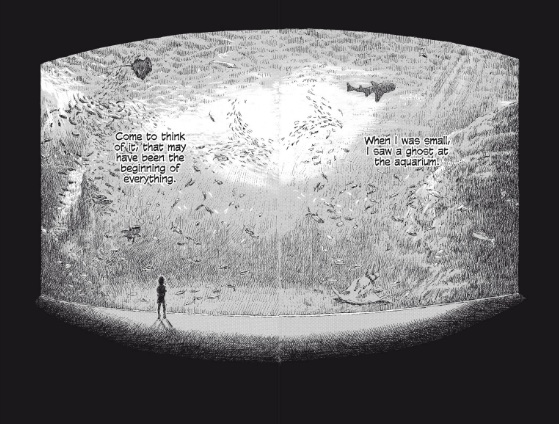
 The ocean occupies a special place in the artistic imagination, inspiring a mixture of awe, terror, and fascination. Watson and the Shark, for example, depicts the ocean as the mouth of Hell, a dark void filled with demons and tormented souls, while The Birth of Venus offers a more benign vision of the ocean as a life-giving force. In Children of the Sea, Daisuke Igarashi imagines the ocean as a giant portal between the terrestrial world and deep space, as is suggested by a refrain that echoes throughout volume one:


