Kobato Hanato has a job to do: if she can fill a magic bottle with the pain and suffering of people whose lives she’s improved, she’ll have her dearest wish come true. There’s just one problem: Kobato is completely mystified by urban life, and has no idea how to identify folks in need of her help. Lucky for her, Ioryogi, a blue dog with a foul mouth and fierce temper, has been appointed her sensei and guardian angel, tasked with helping Kobato develop the the street smarts necessary for completing her mission.
It’s perfectly possible to read Kobato as a story about a sweet, clueless girl who teams up with a gruff but lovable animal to collect wounded hearts. That book is beautifully drawn, but isn’t terribly interesting; most of the stories follow the same template so, well, doggedly, that even the most committed fan of cute would find Kobato too repetitive to be much fun. A more productive way to understand Kobato is as a moe parody, a gleeful skewering of an entire genre in which the cute, underage heroine’s primary role is to endear herself to readers with her mixture of enthusiasm, naivete, and sensitivity.
Exhibit A in the case for moe parody: CLAMP has provided Kobato with a name and a mission, but no history that would explain her bizarre behavior. (Is she an amnesiac? An alien? A simpleton?) Nor does CLAMP reveal Kobato’s deeper motivation for collecting wounded souls. “There’s a place I want to go!” she cheerfully tells Ioryogi without elaborating on the why and where. Exhibit B: Kobato’s behavior seldom endears her to anyone. When Ioryogi instructs her to “do the things that are appropriate for Christmas,” for example, Kobato casually asks a stranger to spend the night with her in a hotel, to the consternation of his girlfriend, while an old man interprets her request to “heal his heart” as a solicitation for sex. Exhibit C: Ioryogi has a sadistic streak that far outstrips the basic demands of the plot. Though his comments are shockingly abrasive at first, it doesn’t take long for the reader to realize that Ioryogi’s assessment of Kobato is spot-on; in effect, he gives the audience permission to dislike Kobato, despite her sweet face and Holly Hobbie outfit.
CLAMP has performed this sleight of hand before with Chobits, another series that can be read as a straightforward genre exercise or a parody. In the case of Chobits, CLAMP starts from the basic nebbishy-guy-meets-magical-girl premise, adding some perverse ruffles and flourishes that call attention to the genre’s more unsavory aspects. (Chi, the magical girl/robot/love interest, behaves like a horny frat guy’s idea of the perfect girlfriend, eschewing underwear, hanging on her owner’s every word, and buying him porn magazines as a gift.) The complexity of the story and the size of the cast eventually overwhelm the satire, however, making it hard for the reader to know how, exactly, she’s supposed to react to Chi and Hideki’s relationship. In Kobato, on the other hand, CLAMP strips things down to the bare essentials, putting the focus squarely on the darkly comic hijinks.
Lest I make Kobato sound unbearably mean-spirited, the manga equivalent of kicking a puppy, let me assure you that it’s actually good fun. Ioryogi, the unquestionable star of the series, is a hoot; CLAMP wrings considerable laughs from the cognitive dissonance between his cute, doll-like appearance and his destructive rages, martial arts moves, and unsavory habits. (Like Mokona Modoki, Ioryogi is always jonesing after beer or sake.) Long-time CLAMP fans will enjoy the cameos sprinkled throughout the book, as characters from Chobits, Suki, and xxxHolic cross paths with Kobato in subtle, unexpected ways — think Where’s Waldo for the Card Captor Sakura crowd. (Bonus points if you can identify the characters without consulting the translation notes.) As one might expect, the artwork is clean and elegant, filled with beautiful costumes, lovely title pages, and crisply executed action sequences in the manner of Tsubasa: Reservoir Chronicles.
A quick glance at the Wikipedia entry suggests that future volumes of Kobato may cant more towards romance than satire. So long as Ioryogi is along for the ride, however, I’m confident that Kobato will remain edgy enough for readers, like me, who have a limited tolerance for insipid heroines. Recommended.
Review copy provided by Yen Press. Volumes one and two of Kobato will be released simultaneously on May 18, 2010.
 If you ever wondered what Freaky Friday might have been like if Jodie Foster had switched bodies with Leif Garrett instead of Barbara Harris, well, Ai Morinaga’s Your & My Secret provides a pretty good idea of the gender-bending weirdness that would have ensued. The story focuses on Nanako, a swaggering tomboy who lives with her mad scientist grandfather, and Akira, an effeminate boy who adores her. Though Akira’s classmates find him “cute and delicate,” they declare him a timid bore — “a waste of a man,” one girl snipes — while Nanako’s peers call her “the beast” for her aggressive personality and uncouth behavior, even as the boys concede that Nanako is “hotter than anyone.” Akira becomes the unwitting test subject for the grandfather’s latest invention, a gizmo designed to transfer personalities from one body to another. With the flick of a switch, Akira finds himself trapped in Nanako’s body (and vice versa).
 Kingyo Used Books starts from a simple premise: an eccentric group of people run a second-hand bookstore in an out-of-the-way location. Various customers stumble upon the shop — usually by accident — and, in the process of browsing, find a manga that helps them reconnect with a part of themselves that’s been suppressed, whether it be a youthful capacity for romantic infatuation or a desire to paint expressively.
 Part Bad News Bears, part Boys of Summer, Diamond Girl follows a time-honored sports-comedy formula in which a team of losers have their pennant dreams rekindled after an unlikely but undeniable talent joins their ranks. In Diamond Girl, those hard-luck athletes are Baba, Seto, and Takagi, the heart and soul of the Ryukafuchi High School baseball club. The trio discovers, by accident, that the new transfer student has the throwing arm of a youthful Roger Clemens, capable of nailing a moving object hundreds of feet away or throwing a shotput with the ease and precision of a softball. The catch: Tsubara is a girl, making her ineligible to play.
 10. DEJA-VU: SPRING, SUMMER, FALL, WINTER
 9. NARRATION OF LOVE AT 17
 8. PRIEST
 7. RUN, BONG-GU, RUN!
 6. 10, 20, AND 30
 5. GOONG: THE ROYAL PALACE
 4. FOREST OF GRAY CITY
 3. SHAMAN WARRIOR
 2. DOKEBI BRIDE
 1. BUJA’S DIARY
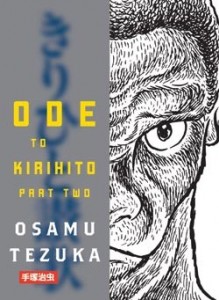
 “When he heard his cry for help, it wasn’t human” — so went the tagline for Ken Russell’s Altered States (1980), a bizarre fever-dream of Nietzchean philosophy, horror, and mystical hoo-ha in which a scientist’s experiments result in his spontaneous devolution. That same tagline would work equally well for Osamu Tezuka’s Ode to Kirihito (1970-71), a globe-trotting medical mystery about a doctor who takes a similar step down the evolutionary ladder from man to beast. In less capable hands, Kirihito would be pure, B-movie camp with delusions of grandeur — as Altered States is — but Tezuka synthesizes these disparate elements into a gripping story that explores meaty themes: the porous boundaries between man and animal, sanity and insanity, godliness and godlessness; the arrogance of scientists; and the corruption of the Japanese medical establishment.
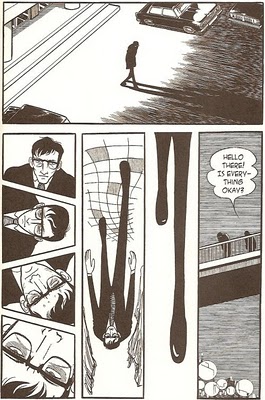
 At a deeper level, however, Ode to Kirihito is an extended meditation on what distinguishes man from animal. Kirihito’s physical transformation forces him to the very margins of society; he terrifies and fascinates the people he encounters, as they alternately shun him and exploit him for his dog-like appearance. (In one of the manga’s most engrossing subplots, an eccentric millionaire kidnaps Kirihito for display in a private freak show.) The discrimination that Kirihito faces — coupled with Monmow’s dramatic symptoms, such as irrational aggression and raw meat cravings — lead him to question whether he is, in fact, still human. Throughout the story, he wrestles with a strong desire to abandon reason and morality for instinct; only his medical training — and the ethics thus inculcated — prevent him from embracing the beast within.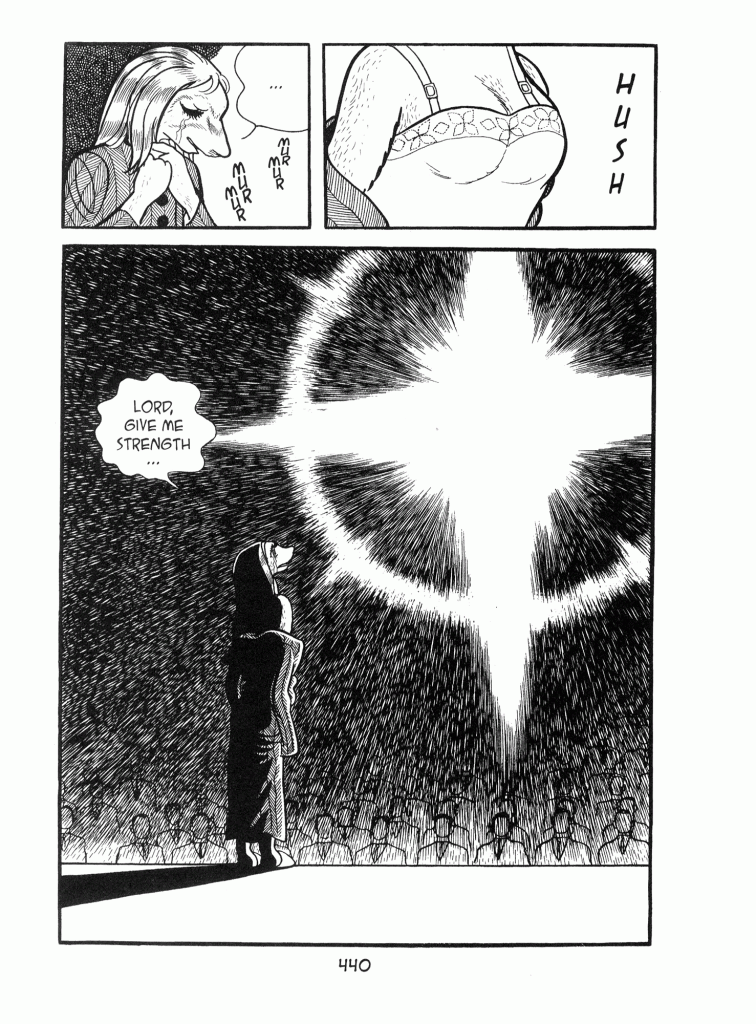
 As a feminist, yaoi puts me in a difficult position. On the one hand, I love the idea of women creating erotica for other women, of creating a safe and fun space where female readers can explore their sexual fantasies. (I don’t know about you, but Ron Jeremy has never factored into any of mine.) On the other hand, I’m often uncomfortable by the way in which rape is conflated with extreme romantic desire in yaoi; it’s disappointing to see the “you’re so irresistible, I couldn’t help myself!” defense trotted out as a justification for sexual violation. To be sure, the rape-as-love trope abounds in romance novels and mainstream pornography as well, but as a feminist, it makes me just as uncomfortable to encounter it in yaoi as it does to encounter it in an episode of General Hospital. Then, too, there’s the issue of the characters’ homosexuality, which is sometimes trivialized (i.e., they’re not gay, they’re just so good-looking they couldn’t help themselves!), ignored, or “explained” by a character’s tragic past, as if sexual orientation were a simple, situational decision.