• Skip to primary navigation
  • Skip to main content
  • Skip to primary sidebar
  • Home
  • About Us
    • Privacy Policy
    • Comment Policy
    • Disclosures & Disclaimers
  • Resources
    • Links, Essays & Articles
    • Fandomology!
    • CLAMP Directory
    • BlogRoll
  • Features & Columns
    • 3 Things Thursday
    • Adventures in the Key of Shoujo
    • Bit & Blips (game reviews)
    • BL BOOKRACK
    • Bookshelf Briefs
    • Bringing the Drama
    • Comic Conversion
    • Fanservice Friday
    • Going Digital
    • It Came From the Sinosphere
    • License This!
    • Magazine no Mori
    • My Week in Manga
    • OFF THE SHELF
    • Not By Manga Alone
    • PICK OF THE WEEK
    • Subtitles & Sensibility
    • Weekly Shonen Jump Recaps
  • Manga Moveable Feast
    • MMF Full Archive
    • Yun Kouga
    • CLAMP
    • Shojo Beat
    • Osamu Tezuka
    • Sailor Moon
    • Fruits Basket
    • Takehiko Inoue
    • Wild Adapter
    • One Piece
    • After School Nightmare
    • Karakuri Odette
    • Paradise Kiss
    • The Color Trilogy
    • To Terra…
    • Sexy Voice & Robo
  • Browse by Author
    • Sean Gaffney
    • Anna Neatrour
    • Michelle Smith
    • Katherine Dacey
    • MJ
    • Brigid Alverson
    • Travis Anderson
    • Phillip Anthony
    • Derek Bown
    • Jaci Dahlvang
    • Angela Eastman
    • Erica Friedman
    • Sara K.
    • Megan Purdy
    • Emily Snodgrass
    • Nancy Thistlethwaite
    • Eva Volin
    • David Welsh
  • MB Blogs
    • A Case Suitable For Treatment
    • Experiments in Manga
    • MangaBlog
    • The Manga Critic
    • Manga Report
    • Soliloquy in Blue
    • Manga Curmudgeon (archive)

Manga Bookshelf

Discussion, Resources, Roundtables, & Reviews

Katherine Dacey

Manga on the Big Screen: Love*Com, NANA, and Ping Pong

August 5, 2011 by Katherine Dacey 1 Comment

As anyone who’s seen Green Lantern or Captain America can attest, adapting a comic for the silver screen is an art, not a science. Done poorly, comic book movies alienate fans with the omission of favorite characters and glossing of seminal plotlines, or confuse newcomers with in-jokes and choppy storytelling. Done well, however, comic book movies can appeal to just about anyone who’s receptive to the genre and the characters. VIZ Pictures may not have released as many comic-book movies as DC or Marvel, but its catalog includes adaptations of several popular manga, including Aya Nakahara’s Love*Com, Ai Yazawa’s NANA, and Taiyo Matsumoto’s Ping Pong. These three films make an instructive case study, as they illustrate the pitfalls and potentials of bridging the gap between page and screen.

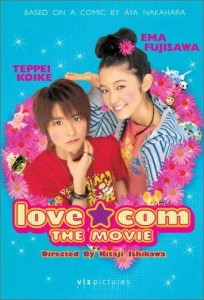
LOVE*COM: THE MOVIE

VIZ PICTURES • 100 MINUTES • NO RATING

Risa, the tallest girl in the seventh grade, develops a crush on Otani, the shortest boy in her class. Though superficial opposites, the two are really kindred spirits, sharing an enthusiasm for Umibozu (a Japanese rap artist that their classmates detest), swapping good-natured insults, and bonding over memories of rejection for being too tall and too short, respectively.

Whether you’ve read Aya Nakahara’s charming manga or not, you won’t have too much difficulty guessing how the story will end. The problem, however, is that Risa and Otani’s journey from bickering classmates to boyfriend and girlfriend seems utterly contrived. The scriptwriter borrows two romantic rivals from different volumes in the series’ run, but only succeeds in making Mr. “Mighty” Maitake, Risa’s handsome homeroom teacher, an integral part of the story. Even then, Mighty’s arrival is a bolt from the blue, and is never satisfactorily explained; he’s simply inserted into the final act of the story so that he and Otani can compete for Risa’s affections. (And when I say “compete,” I mean it: the two play a pick-up basketball game in front of the entire school.)

The other major drawback to Love*Com is its superficial treatment of the principal characters. Though Aya Nakahara’s manga charts the ups and downs of Risa and Otani’s friendship in minute detail, the movie’s frantic pace never allows us to get to know the characters or understand why they’re drawn to each other; we simply see them walk through a variety of stock scenes — cultural festivals, school trips — without actually seeing the evolution of their feelings dramatized.

It’s a pity that the Love*Com script feels so hastily assembled, as the film has the potential to appeal to both long-time fans and newcomers. The button-cute leads have some chemistry, even if the script doesn’t give them much to do. And the script shows flashes of inspiration; a “director” surrogate periodically interrupts the proceedings to explain certain peculiar-to-manga conventions (most notably the nosebleed-as-sign-of-arousal), intoning this information over strains of Beethoven’s Moonlight Sonata. These digressions occur just a few times, but add some much-needed humor to a film that lacks the wit and honesty of the source material.

The verdict: Skip it. This flat, uninspired retelling of Risa and Otani’s courtship will bore all but the most devoted Love*Com fans.

This review originally appeared at PopCultureShock on 3/24/08.

NANA

VIZ PICTURES • 114 MINUTES • NO RATING

I admire Kentaro Otani’s chutzpah in bringing NANA to the big screen, as it’s the kind of story that inspires intense devotion to the characters; make a poor casting decision or cut a beloved character and you run the risk of angering the manga’s most devoted fans. Otani steers clear of those hazards, however, assembling an appealing cast that look and sound like their cartoon doppelgangers.

The movie offers a somewhat streamlined account of the manga’s first five volumes, beginning with the two Nanas’ fateful encounter on a Tokyo-bound train and ending with Trapnest’s first visit to the girls’ apartment. Most of the dramatic juice is supplied by Hachi’s relationship with the feckless art student Shoji, and by Nana O.’s relationship with Trapnest bassist Ren.

As much as I enjoy the manga, I’ve always found Hachi’s relentless enthusiasm and boy-crazy antics irritating and couldn’t imagine why the fierce, scornful Nana O. didn’t feel the same way about her. As portrayed by Aoi Miyazaki, however, the character makes more sense. Miyazaki does a superb job of convincing us that Nana O. would befriend someone who seems too ditzy, too dependent, and too femme to hang with an up-and-coming punk act by showing us what the girls have in common. Mika Nakashima, as Nana O., also turns in a solid performance, playing her character as a believable mixture of belligerence, determination, and vulnerability.

The other great advantage of the movie is its soundtrack. All of the rock-n-roll shoptalk and song lyrics seemed a little preposterous on the page; I had a hard time imaging why Trapnest or Black Stones commanded loyal followings, as they seemed like pallid imitations of Siouxsie and the Banshees. Seeing and hearing these acts in the film, however, transported me back to my college years, reminding me how passionately I felt about certain musicians, and how much their songs felt like an expression of my own identity. The film’s two lengthy concert scenes are highpoints of the film, offering us a window into both girls’ complicated emotional lives — their dreams, their disappointments, their improbably close relationship.

I had a few small bones to pick with the scriptwriters — what happened to Junko and Kyosuke? — but on the whole, I found NANA immensely entertaining. The true measure of the film’s appeal, however, is that my sister, who isn’t a manga maven, loved it too, and wanted to know if there was a sequel. Thank goodness the answer is yes.

The verdict: Rent it. Some die-hard fans may take issue with the casting and script, as the film isn’t as faithful to the manga as the anime adaptation is.

This review originally appeared at PopCultureShock on 3/24/08.

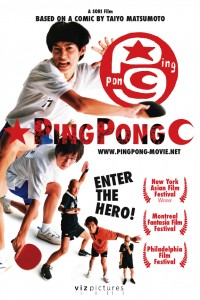
PING PONG

VIZ PICTURES • 114 MINUTES • NO RATING

Based on Taiyo Matsumoto’s manga of the same name, Ping Pong focuses on a pair of friends: Peco (Yosuke Kubozuka), a flamboyant table tennis star who’s obsessed with the game, and Smile (Arata), a reticent young man whose primary motive for playing is to spend time with Peco, whom he quietly regards as a hero. Peco’s swaggering style — complete with acrobatic leaps, trash talk, and frequent dives — makes for good theater, but he’s trounced in a tournament by long-time rival Demon (Koji Ohkura). Despondent over the loss, Peco quits the team and burns his paddle. The coach, himself a former champion known as “Butterfly Joe” (Naoto Takenaka), then turns to Smile to lead his peers to victory in the next major competition, a responsibility Smile is reluctant to accept.

Like Hoosiers, Rocky, Rudy, or A League of Their Own, Ping Pong sticks close to the sports movie playbook, delivering epiphanies with clockwork precision. Smile discovers his inner competitor. Peco discovers that he can’t live without ping pong. “Butterfly Joe” imparts wisdom to Smile. And so on.

Yet for all its sports-movie posturing, Ping Pong is weirdly thrilling, thanks, in large part, to the colorful cast of supporting characters: there’s Peco’s chain-smoking grandmother (Mari Natsuki), a fierce devotee of the sport who runs a table tennis dojo; China (Sam Lee), a washed-up Chinese champion seeking a fresh start in Japan; and Dragon (Shidou Nakamura), a competitor who shaves his eyebrows in an effort to look more intimidating. The other key to Ping Pong‘s success is its fidelity to Taiyo Matsumoto’s original vision. Director Fumihiko Sori’s painstaking efforts to recreate the look and feel of the manga are evident throughout the film, from the casting decisions to the extreme camera angles, jump shots, and fleeting fantasy sequences; Sori manages to capture Ping Pong‘s heightened reality without becoming too arch or mannered.

Fans wanting a behind-the-scenes look at the table tennis action or a few pointers for their own game will want to view the omake on this two-disc set, which includes a 54 minute “making of” documentary, a short “how to” feature reviewing ping pong techniques, and the usual assortment of trailers, tv spots, and cast profiles. All in all, Ping Pong makes a great addition to your library, especially if you still have dog-eared copies of No. 5 kicking around the attic.

The verdict: Rent or buy it. The film captures the arch, surreal quality of Taiyo Matsumoto’s writing even better than the animated version of Tekkonkinkreet.

This review originally appeared at PopCultureShock on 8/28/07.

Filed Under: Manga Critic Tagged With: Ai Yazawa, love*com, Movie Reviews, nana, Ping Pong, Taiyo Matsumoto, VIZ Pictures

Manga on the Big Screen: Love*Com, NANA, and Ping Pong

August 5, 2011 by Katherine Dacey

As anyone who’s seen Green Lantern or Captain America can attest, adapting a comic for the silver screen is an art, not a science. Done poorly, comic book movies alienate fans with the omission of favorite characters and glossing of seminal plotlines, or confuse newcomers with in-jokes and choppy storytelling. Done well, however, comic book movies can appeal to just about anyone who’s receptive to the genre and the characters. VIZ Pictures may not have released as many comic-book movies as DC or Marvel, but its catalog includes adaptations of several popular manga, including Aya Nakahara’s Love*Com, Ai Yazawa’s NANA, and Taiyo Matsumoto’s Ping Pong. These three films make an instructive case study, as they illustrate the pitfalls and potentials of bridging the gap between page and screen.

Love*Com: The Movie
VIZ Pictures • 100 minutes • No Rating
Risa, the tallest girl in the seventh grade, develops a crush on Otani, the shortest boy in her class. Though superficial opposites, the two are really kindred spirits, sharing an enthusiasm for Umibozu (a Japanese rap artist that their classmates detest), swapping good-natured insults, and bonding over memories of rejection for being too tall and too short, respectively.

Whether you’ve read Aya Nakahara’s charming manga or not, you won’t have too much difficulty guessing how the story will end. The problem, however, is that Risa and Otani’s journey from bickering classmates to boyfriend and girlfriend seems utterly contrived. The scriptwriter borrows two romantic rivals from different volumes in the series’ run, but only succeeds in making Mr. “Mighty” Maitake, Risa’s handsome homeroom teacher, an integral part of the story. Even then, Mighty’s arrival is a bolt from the blue, and is never satisfactorily explained; he’s simply inserted into the final act of the story so that he and Otani can compete for Risa’s affections. (And when I say “compete,” I mean it: the two play a pick-up basketball game in front of the entire school.)

The other major drawback to Love*Com is its superficial treatment of the principal characters. Though Aya Nakahara’s manga charts the ups and downs of Risa and Otani’s friendship in minute detail, the movie’s frantic pace never allows us to get to know the characters or understand why they’re drawn to each other; we simply see them walk through a variety of stock scenes — cultural festivals, school trips — without actually seeing the evolution of their feelings dramatized.

It’s a pity that the Love*Com script feels so hastily assembled, as the film has the potential to appeal to both long-time fans and newcomers. The button-cute leads have some chemistry, even if the script doesn’t give them much to do. And the script shows flashes of inspiration; a “director” surrogate periodically interrupts the proceedings to explain certain peculiar-to-manga conventions (most notably the nosebleed-as-sign-of-arousal), intoning this information over strains of Beethoven’s Moonlight Sonata. These digressions occur just a few times, but add some much-needed humor to a film that lacks the wit and honesty of the source material.

The verdict: Skip it. This flat, uninspired retelling of Risa and Otani’s courtship will bore all but the most devoted Love*Com fans.

This review originally appeared at PopCultureShock on 3/24/08.

Nana
VIZ Pictures • 114 minutes • No Rating
I admire Kentaro Otani’s chutzpah in bringing NANA to the big screen, as it’s the kind of story that inspires intense devotion to the characters; make a poor casting decision or cut a beloved character and you run the risk of angering the manga’s most devoted fans. Otani steers clear of those hazards, however, assembling an appealing cast that look and sound like their cartoon doppelgangers. The movie offers a somewhat streamlined account of the manga’s first five volumes, beginning with the two Nanas’ fateful encounter on a Tokyo-bound train and ending with Trapnest’s first visit to the girls’ apartment. Most of the dramatic juice is supplied by Hachi’s relationship with the feckless art student Shoji, and by Nana O.’s relationship with Trapnest bassist Ren.

As much as I enjoy the manga, I’ve always found Hachi’s relentless enthusiasm and boy-crazy antics irritating and couldn’t imagine why the fierce, scornful Nana O. didn’t feel the same way about her. As portrayed by Aoi Miyazaki, however, the character makes more sense. Miyazaki does a superb job of convincing us that Nana O. would befriend someone who seems too ditzy, too dependent, and too femme to hang with an up-and-coming punk act. Mika Nakashima, as Nana O., also turns in a solid performance, playing her character as a believable mixture of belligerence, determination, and vulnerability.

The other great advantage of the movie is its soundtrack. All of the rock-n-roll shoptalk and song lyrics seemed a little preposterous on the page; I had a hard time imaging why Trapnest or Black Stones commanded loyal followings, as they seemed like pallid imitations of Siouxsie and the Banshees. Seeing and hearing these acts in the film, however, transported me back to my college years, reminding me how passionately I felt about certain musicians, and how much their songs felt like an expression of my own identity. The film’s two lengthy concert scenes are highpoints of the film, offering us a window into both girls’ complicated emotional lives — their dreams, their disappointments, their improbably close relationship.

I had a few small bones to pick with the scriptwriters — what happened to Junko and Kyosuke? — but on the whole, I found NANA immensely entertaining. The true measure of the film’s appeal, however, is that my sister, who isn’t a manga maven, loved it too, and wanted to know if there was a sequel. Thank goodness the answer is yes.

The verdict: Rent it. Some die-hard fans may take issue with the casting and script, as the film isn’t as faithful to the manga as the anime adaptation is.

This review originally appeared at PopCultureShock on 3/24/08.

Ping Pong
VIZ Pictures • 114 minutes • No Rating
Based on Taiyo Matsumoto’s manga of the same name, Ping Pong focuses on a pair of friends: Peco (Yosuke Kubozuka), a flamboyant table tennis star who’s obsessed with the game, and Smile (Arata), a reticent young man whose primary motive for playing is to spend time with Peco, whom he quietly regards as a hero. Peco’s swaggering style — complete with acrobatic leaps, trash talk, and frequent dives — makes for good theater, but he’s trounced in a tournament by long-time rival Demon (Koji Ohkura). Despondent over the loss, Peco quits the team and burns his paddle. The coach, himself a former champion known as “Butterfly Joe” (Naoto Takenaka), then turns to Smile to lead his peers to victory in the next major competition, a responsibility Smile is reluctant to accept.

Like Hoosiers, Rocky, Rudy, or A League of Their Own, Ping Pong sticks close to the sports movie playbook, delivering epiphanies with clockwork precision. Smile discovers his inner competitor. Peco discovers that he can’t live without ping pong. “Butterfly Joe” imparts wisdom to Smile. And so on.

Yet for all its sports-movie posturing, Ping Pong is weirdly thrilling, thanks, in large part, to the colorful cast of supporting characters: there’s Peco’s chain-smoking grandmother (Mari Natsuki), a fierce devotee of the sport who runs a table tennis dojo; China (Sam Lee), a washed-up Chinese champion seeking a fresh start in Japan; and Dragon (Shidou Nakamura), a competitor who shaves his eyebrows in an effort to look more intimidating. The other key to Ping Pong‘s success is its fidelity to Taiyo Matsumoto’s original vision. Director Fumihiko Sori’s painstaking efforts to recreate the look and feel of the manga are evident throughout the film, from the casting decisions to the extreme camera angles, jump shots, and fleeting fantasy sequences; Sori manages to capture Ping Pong‘s heightened reality without becoming too arch or mannered.

Fans wanting a behind-the-scenes look at the table tennis action or a few pointers for their own game will want to view the omake on this two-disc set, which includes a 54 minute “making of” documentary, a short “how to” feature reviewing ping pong techniques, and the usual assortment of trailers, tv spots, and cast profiles. All in all, Ping Pong makes a great addition to your library, especially if you still have dog-eared copies of No. 5 kicking around the attic.

The verdict: Rent or buy it. The film captures the arch, surreal quality of Taiyo Matsumoto’s writing even better than the animated version of Tekkonkinkreet.

This review originally appeared at PopCultureShock on 8/28/07.

Filed Under: Manga Critic, Movies & TV, REVIEWS Tagged With: Ai Yazawa, love*com, nana, Ping Pong, Taiyo Matsumoto, VIZ Pictures

Now You’re One of Us

August 3, 2011 by Katherine Dacey Leave a Comment

Noriko, the young heroine of Asa Nonami’s Now You’re One of Us, initially thinks she’s hit the marriage jackpot. Not only are her in-laws wealthy and well regarded by their neighbors, they’re also quick to embrace her as a member of the family. Her husband Kazuhito is handsome and utterly devoted; her mother-in-law Kimie, generous and uncritical; and her sister-in-law Ayano, solicitous to everyone in the household, including Kazuhito’s oddly child-like brother Takehami. Even the Shito matriarch, ninety-eight-year-old Ei, welcomes Noriko to the clan by declaring her the family’s “treasure” and “future.”

Shortly after Noriko arrives at the Shitos’ Tokyo home, a strange, slightly disheveled neighbor approaches her while she works in the garden. Though Kimie is quick to dismiss him as a troubled tenant who’s fallen on hard times, Noriko can’t shake the feeling that the neighbor was about to divulge something damning — a feeling intensified by his mysterious death in a fire several days later. The Shitos’ oddly muted, impersonal response to his death further arouses Noriko’s suspicion, as do the family’s clandestine midnight meetings. Though the Shitos offer reasonable, measured responses to Noriko’s inquiries, she begins wondering if the Shitos run an illicit business… or worse.

Thanks to a fluid translation by Michael and Mitsuko Valek, Asa Nonami’s simple, unfussy prose draws the reader into Noriko’s insular world, showing us how a simple girl from a working class family is lured into the Shitos’ web. In this passage, for example, Nonami reveals Kazuhito to be a deft manipulator, appealing to Noriko’s vanity by suggesting that Ei’s endorsement carries special significance:

“Great Granny’s been watching people for ninety-eight years — she can see through them at a glance, so lots of people in the neighborhood come to ask her for advice.” He explained how delighted he was that Great Granny had taken a liking to her; it showed that he hadn’t been blinded by attraction. He felt like the luckiest man in the world for having found someone of whom his family approved.

Unfortunately, Nonami is never content to let a passage like this one stand alone; she feels compelled to explain how Kazuhito’s words swayed Noriko by telling us exactly what Noriko is thinking at the moment he gives this speech. The obviousness of Noriko’s interior monologues is especially frustrating; Nonami does a competent job of revealing her characters’ motivations and feelings through their actions without resorting to such editorial interventions.

The other drawback to Nonami’s storytelling is that she begins telegraphing the ending just a few chapters into the book. Savvier readers will quickly figure out what the Shitos’ secret is — and it’s a doozy — though they probably won’t mind wading through another hundred pages to have their ickiest suspicions confirmed, especially since Nonami manages a few surprises in the final pages.

The bottom line: Now You’re One of Us is an entertaining, atmospheric potboiler that’s probably best read in the privacy of one’s own home.

This review originally appeared at PopCultureShock on 2/8/08.

NOW YOU’RE ONE OF US • BY ASA NONAMI, TRANSLATED BY MICHAEL AND MITSUKO VALEK • VERTICAL, INC. • 240 pp.

Filed Under: Manga Critic Tagged With: Mystery/Suspense, Novel, vertical

Now You’re One of Us

August 3, 2011 by Katherine Dacey

Noriko, the young heroine of Asa Nonami’s Now You’re One of Us, initially thinks she’s hit the marriage jackpot. Not only are her in-laws wealthy and well regarded by their neighbors, they’re also quick to embrace her as a member of the family. Her husband Kazuhito is handsome and utterly devoted; her mother-in-law Kimie, generous and uncritical; and her sister-in-law Ayano, solicitous to everyone in the household, including Kazuhito’s oddly child-like brother Takehami. Even the Shito matriarch, ninety-eight-year-old Ei, welcomes Noriko to the clan by declaring her the family’s “treasure” and “future.”

Shortly after Noriko arrives at the Shitos’ Tokyo home, a strange, slightly disheveled neighbor approaches her while she works in the garden. Though Kimie is quick to dismiss him as a troubled tenant who’s fallen on hard times, Noriko can’t shake the feeling that the neighbor was about to divulge something damning — a feeling intensified by his mysterious death in a fire several days later. The Shitos’ oddly muted, impersonal response to his death further arouses Noriko’s suspicion, as do the family’s clandestine midnight meetings. Though the Shitos offer reasonable, measured responses to Noriko’s inquiries, she begins wondering if the Shitos run an illicit business… or worse.

Thanks to a fluid translation by Michael and Mitsuko Valek, Asa Nonami’s simple, unfussy prose draws the reader into Noriko’s insular world, showing us how a simple girl from a working class family is lured into the Shitos’ web. In this passage, for example, Nonami reveals Kazuhito to be a deft manipulator, appealing to Noriko’s vanity by suggesting that Ei’s endorsement carries special significance:

“Great Granny’s been watching people for ninety-eight years — she can see through them at a glance, so lots of people in the neighborhood come to ask her for advice.” He explained how delighted he was that Great Granny had taken a liking to her; it showed that he hadn’t been blinded by attraction. He felt like the luckiest man in the world for having found someone of whom his family approved.

Unfortunately, Nonami is never content to let a passage like this one stand alone; she feels compelled to explain how Kazuhito’s words swayed Noriko by telling us exactly what Noriko is thinking at the moment he gives this speech. The obviousness of Noriko’s interior monologues is especially frustrating; Nonami does a competent job of revealing her characters’ motivations and feelings through their actions without resorting to such editorial interventions.

The other drawback to Nonami’s storytelling is that she begins telegraphing the ending just a few chapters into the book. Savvier readers will quickly figure out what the Shitos’ secret is — and it’s a doozy — though they probably won’t mind wading through another hundred pages to have their ickiest suspicions confirmed, especially since Nonami manages a few surprises in the final pages.

The bottom line: Now You’re One of Us is an entertaining, atmospheric potboiler that’s probably best read in the privacy of one’s own home.

This review originally appeared at PopCultureShock on 2/8/08.

NOW YOU’RE ONE OF US • BY ASA NONAMI, TRANSLATED BY MICHAEL AND MITSUKO VALEK • VERTICAL, INC. • 240 pp.

Filed Under: Books, Manga Critic, REVIEWS Tagged With: Mystery/Suspense, Novel, Vertical Comics

PotW: Kaze Hikaru, Gintama, Saiunkoku, Cardcaptor

August 1, 2011 by Katherine Dacey, Michelle Smith, Sean Gaffney, MJ and David Welsh 4 Comments

It’s another strong week at Midtown Comics! Check out the Manga Bookshelf bloggers’ picks below!


KATE: After last week’s meager offerings, this week’s new arrival list has something for everyone: robots, magical girls, hoop fanatics, mad surgeons, cross-dressing samurai. Though I’m looking forward to reading Tank Tankuro: The Pre-War Years, 1934-1935, my heart belongs to Kaze Hikaru, which returns to the VIZ publishing schedule after a one-year hiatus. Volume nineteen unfolds against the backdrop of Commodore Perry’s arrival in Tokyo Bay. Taeko Watanabe milks this political crisis for all its dramatic potential, but never loses sight of her story’s core: the relationship between Sei and Soji. Crisp artwork, memorable characters, and a sophisticated treatment of Edo-era history are the frosting on this delicious cake.

MICHELLE: There’s much on this week’s Midtown list that I will personally be buying—especially Cardcaptor Sakura and Slam Dunk—but nothing that I want more or care about more than volume nineteen of Kaze Hikaru, so I’m going to have to piggyback on Kate’s pick this week. The fact that the heroine is cross-dressing throughout may give one the impression that the series is a comedy, and certainly there are humorous elements, but mostly it’s an emotional story of one girl’s attempts to understand the other samurai and their notions about honor. It’s been a full year since the release of volume eighteen, which leaves me pretty worried for the fate of the series. This is not a case where releases have slowed down because we’ve caught up to Japan—volume 30 just came out there—but simply due to low sales. So, please check out Kaze Hikaru! Even if you think you don’t like shoujo.

SEAN: This saddens me, but I too must pick a doomed series as my Pick of the Week. The final volume of Gintama from Viz is not, of course, the final volume in Japan. There, the series is quite popular, and in no danger of ending soon. Sadly, that may be *why* Viz is ending it – mediocre sales don’t justify its constant release. A shame, as it’s not only one of Jump‘s funniest series, but also highly dramatic and battle-heavy at times, with great female characters to boot.

MJ: This really is a tough week, isn’t it? With new volumes of Black Jack and Cardcaptor Sakura shipping this week, not to mention a whole host of terrific options from Viz’s Shonen Jump and Shojo Beat lines, it’s incredibly difficult to choose just one. In the end, I think I’ll cast my vote for volume four of The Story of Saiunkoku, one of my favorite new shoujo titles from the past year. Quite a number of us have written glowingly about this series, and particularly about its smart, spunky, civic-minded heroine, but I think one of my favorite observations about her comes from Cathy Yan’s recent installment of Don’t Fear the Adaptation, ” Shoujo heroines often pay lip service to a life framed around something other than romance, but Shurei actually lives that life.” Yes, that. Definitely a must-buy.


DAVID: Good grief, it is an embarrassment of riches this week. I could easily pick Tezuka’s Black Jack or Saiunkoku, or I could branch out for Gajo Sakamoto’s Tank Tankuro. All of the reasonable arguments for these books are deafened by how much I loved Dark Horse’s first omnibus of CLAMP’s Cardcaptor Sakura. Adorable, sly, funny, exciting, and beautifully produced, I’ve been counting the days to this release since about the minute I finished reading the first volume.


Readers, what looks good to you this week?

Filed Under: PICK OF THE WEEK Tagged With: cardcaptor Sakura, gintama, kaze hikaru, the story of saiunkoku

Basic Anatomy for the Manga Artist

July 26, 2011 by Katherine Dacey 8 Comments

Billed as “Everything You Need to Start Drawing Authentic Manga Figures,” Basic Anatomy for the Manga Artist helps artists apply what they learned in life drawing class to character design.

The book is divided into six sections. In the first, “Basic Head Elements,” author Christopher Hart shows readers how to draw eyes, ears, noses, and mouths, stressing the importance of correct placement and symmetry in rendering the face. The next three sections, “The Foundation of the Body,” “Topographical Anatomy,” and “Body Symmetry and Asymmetry,” focus on the skeleton and musculature, offering readers clear strategies for representing bones, tendons, and muscles in their figure drawings. The final two sections, “How Movement, Light, and Perspective Affect the Body” and “Putting It All Together,” build on insights from the earlier chapters, leading readers through the process of drawing dynamic poses and creating original character designs.

Though the book is filled with useful illustrations and helpful advice, Hart’s approach is inconsistent. In some chapters, he breaks down tasks into discrete steps, using simple shapes and guidelines to show readers how to draw a mouth in three-quarters view or render a well-toned leg. Other chapters assume more experience on the part of the reader; a novice would have a hard time re-creating some of Hart’s character designs, as even the preliminary sketches are very polished. (Hart also presumes familiarity with illustration software, instructing readers to add shading to their finished drawings without offering tips for doing so.)

The book’s other problem is in the way that it frames manga as a style, not a storytelling medium. “Basic Anatomy for Manga Artists contains instructions specifically designed for drawing idealized heads and bodies in the authentic Japanese style of manga,” Hart declares in the introduction. But what, exactly, is “the authentic Japanese style of manga”: Naruto? Fruits Basket? 20th Century Boys? Lone Wolf and Cub? Instead of defining manga as a style, it would have been more useful for Hart to show how manga artists use a common set of techniques to achieve different results; after all, Goseki Kojima used the same shortcuts for rendering faces and bodies as Hiromu Arakwa and CLAMP, a point that’s glossed over in the text.

Despite its conceptual flaws, Basic Anatomy for the Manga Artist is still a useful reference. Hart’s cutaway illustrations of the muscular and skeletal systems are particularly helpful for the artist who wants a better understanding of how the body moves. Hart also does a fine job of showing readers how to represent muscles, bones, and facial features using a few well-placed lines — an invaluable skill for any sequential artist, regardless of style.

Review copy provided by Watson-Guptill Publications.

BASIC ANATOMY FOR THE MANGA ARTIST: EVERYTHING YOU NEED TO START DRAWING AUTHENTIC MANGA CHARACTERS • BY CHRISTOPHER HART • WATSON-GUPTHILL PUBLICATIONS • 160 pp.

Filed Under: Manga Critic Tagged With: Christopher Hart, How-To, Watson-Gupthill

Basic Anatomy for the Manga Artist

July 26, 2011 by Katherine Dacey

Billed as “Everything You Need to Start Drawing Authentic Manga Figures,” Basic Anatomy for the Manga Artist helps artists apply what they learned in life drawing class to character design.

The book is divided into six sections. In the first, “Basic Head Elements,” author Christopher Hart shows readers how to draw eyes, ears, noses, and mouths, stressing the importance of correct placement and symmetry in rendering the face. The next three sections, “The Foundation of the Body,” “Topographical Anatomy,” and “Body Symmetry and Asymmetry,” focus on the skeleton and musculature, offering readers clear strategies for representing bones, tendons, and muscles in their figure drawings. The final two sections, “How Movement, Light, and Perspective Affect the Body” and “Putting It All Together,” build on insights from the earlier chapters, leading readers through the process of drawing dynamic poses and creating original character designs.

Though the book is filled with useful illustrations and helpful advice, Hart’s approach is inconsistent. In some chapters, he breaks down tasks into discrete steps, using simple shapes and guidelines to show readers how to draw a mouth in three-quarters view or render a well-toned leg. Other chapters assume more experience on the part of the reader; a novice would have a hard time re-creating some of Hart’s character designs, as even the preliminary sketches are very polished. (Hart also presumes familiarity with illustration software, instructing readers to add shading to their finished drawings without offering tips for doing so.)

The book’s other problem is in the way that it frames manga as a style, not a storytelling medium. “Basic Anatomy for Manga Artists contains instructions specifically designed for drawing idealized heads and bodies in the authentic Japanese style of manga,” Hart declares in the introduction. But what, exactly, is “the authentic Japanese style of manga”: Naruto? Fruits Basket? 20th Century Boys? Lone Wolf and Cub? Instead of defining manga as a style, it would have been more useful for Hart to show how manga artists use a common set of techniques to achieve different results; after all, Goseki Kojima used the same shortcuts for rendering faces and bodies as Hiromu Arakwa and CLAMP, a point that’s glossed over in the text.

Despite its conceptual flaws, Basic Anatomy for the Manga Artist is still a useful reference. Hart’s cutaway illustrations of the muscular and skeletal systems are particularly helpful for the artist who wants a better understanding of how the body moves. Hart also does a fine job of showing readers how to represent muscles, bones, and facial features using a few well-placed lines — an invaluable skill for any sequential artist, regardless of style.

Review copy provided by Watson-Guptill Publications.

BASIC ANATOMY FOR THE MANGA ARTIST: EVERYTHING YOU NEED TO START DRAWING AUTHENTIC MANGA CHARACTERS • BY CHRISTOPHER HART • WATSON-GUPTHILL PUBLICATIONS • 160 pp.

Filed Under: Books, Classic Manga Critic, Manga Critic, REVIEWS Tagged With: Christopher Hart, How-To, Watson-Gupthill

Pick of the Week: Boys, Girls, & Ghosts

July 25, 2011 by David Welsh, Katherine Dacey, Michelle Smith, Sean Gaffney and MJ 1 Comment

It’s a slow but not quite dismal week at Midtown Comics. Check out the Manga Bookshelf bloggers’ picks below!


DAVID: It’s a narrow but interesting selection at Midtown Comics. In one of my experiments in crowd-sourcing, I ended up pre-ordering Kikuko Kihuya’s Entangled Circumstances, which will consequently earn my Pick of the Week status. I admit that I’m shallow enough that part of this was because I really found the cover design to be striking. It’s also about grown-ups with jobs, which makes my heart flutter, though the protagonists also share a past of some degree of awkwardness tracking back to their university days. I’m really just that easy to please, though: make it look nifty, and make your protagonists old enough to drink or sign a lease.

KATE: Them’s some slim pickings at Midtown Comics this week! But if I had to pick something from the list, I’d choose the sixth and final volume of Time and Again (Yen Press). I admit that I found the first few volumes a bumpy ride, as the script abounded in slangy phrases and anachronistic jokes that detracted from the spooky atmosphere. By volume three, however, author JiUn Yun had a better handle on the material, and the series began to evolve into something more interesting: a character study about a troubled young exorcist. The final volume explores the family curse that doomed Baek-On to a life of lonely wandering, allowing us to fully appreciate the origins of his prickly, detached personality. Oh, and that flashback? It’s a heck of a ghost story, too.

MICHELLE: You’re not kidding about the paucity of options on Midtown’s list! Still, like David, I find myself intrigued by the new batch of DMP releases. Entangled Circumstances has the prettiest cover, it’s true, but some of the others fare pretty well, too, like This Night’s Everything, which definitely doesn’t look like your typical BL. It also involves grown up with jobs—apparently a politician and his bodyguard who coldly handles dirty work—and sounds like it has potential to be an interesting story.

SEAN: I am going to rebel against the Midtown list, as they are apparently involved in some giant Kodansha boycott or something, and make my pick the thirtieth volume of Ken Akamatsu’s Negima!, which Diamond will be shipping to all non-Midtown stores this week. The manga has been in its ‘Magical World’ for about 10 volumes now, and things are finally getting to a big action-packed climax, which will take several volumes and is still ongoing as of this writing. This is the start of it, where Negi finds out the truth about his mother’s so-called treachery and the enemy makes their move against his students. Also, I believe this volume is low on fanservice, so it’s a great one to pick up if you dislike that aspect of it.

MJ: Since Kate’s already put the spotlight on what would have been my pick from Midtown, the final volume of JiUn Yun’s Time and Again, I’ll follow Sean’s lead and go rebel against the list by naming volume eleven of Peach Pit’s Shugo Chara! from Kodansha Comics, which by all appearances should be arriving this week, but isn’t. Shugo Chara! is a long-time favorite of mine, thanks to its feisty, deeply-conflicted heroine, her idiosyncratic team of friends, heart-pounding tween-fantasy romance, adorable artwork, and identity-searching themes that resonate more personally with this forty-something reader than they probably should. This is the final volume of the original series, with volume 12 picking up the published chapters of its sequel, Shugo Chara! Encore!, thankfully continued by Kodansha Comics after being pulled from Del Rey Manga. So if you’ve never tried this thoughtful magical-girl series, this is the time to start!


Readers, what looks good to you this week?

Filed Under: PICK OF THE WEEK Tagged With: negima!, shugo chara!, time and again, yaoi/boys' love

Bookshelf Briefs 7/24/11

July 25, 2011 by Sean Gaffney, Michelle Smith, MJ and Katherine Dacey Leave a Comment

This week, Michelle, MJ, Kate, & Sean check out recent releases from Kodansha Comics, Viz Media, Seven Seas, & Vertical, Inc.


Dengeki Daisy Vol. 5 | By Kyousuke Motomi | Published by Viz –I cannot help but compare the cover of this volume of Dengeki Daisy to those of Black Bird, which runs in the same magazine in Japan. Black Bird’s covers always reminded me of sexual assault, with inappropriately placed blood and a terrified heroine. Dengeki Daisy also features a somewhat bloody hero clutching his heroine, but the image here is meant to invoke protection, and she isn’t frightened of him at all. I find that much better. As for the story itself, the plot continues to get more and more dangerous, as Tasuku is even briefly hospitalized. The enemy is trying to confront Teru psychologically, and it’s to her credit that she’s keeping it together as much as she is. Meanwhile, she and Tasuku are still hiding things from each other about her knowledge of Daisy, and are finding it increasingly hard to deal with their burgeoning feelings. Tense, gripping stuff, this series is a real page-turner.– Sean Gaffney

Ikigami: The Ultimate Limit, Vol. 7 | By Motoro Mase | Viz Media – Every volume of Ikigami: The Ultimate Limit follows the same template: Motoro Mase introduces the victim, then shows us how he or she copes with the news of his impending death. Though a few victims have violently resisted their fates, almost all the stories have an uplifting ending in which the victim reaches out to an estranged relative, apologizes to a friend for callous behavior, or gives a final performance. I think these stories are meant to underscore how unjust the National Welfare Act really is, but the cumulative effect induces numbness, not outrage. Death messenger Fujimoto’s own journey to conscientious objection is unfolding at such a slow pace that it’s hard to know if he’ll ever have the courage to resist his charge. And with no one actively fighting the government, Ikigami is rapidly devolving into an unpleasant hybrid of Afterschool Special and snuff film. In a word: grim. -Katherine Dacey>

RIN-NE, Vol. 6 | By Rumiko Takahashi | Published by VIZ Media – Even though RIN-NE is now up to its sixth volume, nothing has really changed much. (Sort of) shinigami Rinne is still stingy and still besotted by perpetually calm classmate Sakura Mamiya, who assists him in aiding spirits to pass on. The addition of a female shinigami with the hots for Rinne (Ageha) and the continued presence of incompetent exorcist Jumonji (with the hots for Sakura) do little except fuel occasional episodic diversions, such as when Jumonji is tricked into cursing Rinne. Storylines are usually wrapped up within three or four chapters, with few lasting repercussions aside from a slowly growing cast of recurring characters. Speaking of which, I am seriously weary of Sabato, Rinne’s irresponsible dad, whose deceitful ways just bring more misfortune upon our hero. It’s probably expecting too much to hope for his comeuppance to happen any time soon, alas. – Michelle Smith

Shugo Chara!, Vol. 11 | By Peach-Pit | Published by Kodansha Comics – Three of Amu’s Guardian Characters have disappeared and, led by the fourth in an effort to find them, she embarks upon a journey along the wibbly-wobbly, timey-wimey (not to mention sparkly) “road of stars,” catching glimpses of various characters with whom she interacted over the course of the series—friend and foe alike—who are all now working hard and having fun. What would be a warm and fuzzy conclusion is marred slightly by the fact that the mystery of the Embryo is never explained and one of Amu’s friends never divulges an important secret, but maybe these things will be rectified in the final volume, which “explores the side stories of the other characters.” My advice is to try not to think too hard about the dangling plot threads and just enjoy the good-hearted vibe of this delightful magical girl series. – Michelle Smith

Toradora! Vol. 2 | By Yuyuko Takemiya and Zekkyo | Published by Seven Seas –Memo to the manga artist for Suzumiya Haruhi: take a few lessons from Toradora’s adaptation. The series finishes up Vol. 1 of the light novels here and starts Vol. 2, and manages to keep the romantic comedy aspects going without it ever becoming tiresome. Taiga can be incredibly overbearing, but we see a lot more of her softer side than most manga tsunderes, and her facial expressions make this worth the purchase price alone. The artist knows when to do exaggeration and when to keep it real, fortunately. As for the plot, well, after the worst love confession I’ve seen in a long time, Taiga and Ryuuji seem to be back to Square One. But they’re not giving up, not even as a new girl arrives on the scene to make everything much worse. A fun, breezy read for those who like comedic romance hijinks and don’t mind tsunderes.– Sean Gaffney

Twin Spica, Vol. 8 | Kou Yaginuma | Vertical, Inc. – I often worry that I don’t have enough new to say about continuing volumes of Twin Spica, not because there is little worth noting, but because it so faithfully maintains its high quality over the course of its run that it’s hard to keep topping my own praise. The truth is, no matter how much I’ve raved about any particular volume, each new installment renews those feelings ten-fold, as mangaka Kou Yaginuma continues to dig deeper into the minds and hearts of his young student astronauts. This volume is largely about partings (or the prospect thereof) and left me teary at several points, while also steadily building up my anticipation and imagination as I ponder what’s in store for its characters, personally and professionally. Yaginuma’s nostalgia-tinted artwork is especially effective in this volume, and I’m constantly surprised by how expressive it is, despite its simple aesthetic. Still recommended. – MJ

Filed Under: Bookshelf Briefs Tagged With: Dengeki Daisy, ikigami, rin-ne, shugo chara!, toradora!, twin spica

Magic Knight Rayearth, Vol. 1

July 22, 2011 by Katherine Dacey 24 Comments

Shonen manga in drag — that’s my quick-and-dirty assessment of CLAMP’s Magic Knight Rayearth, a fantasy-adventure that adheres so closely to the friendship-effort-victory template that it’s easy to forget it ran in the pages of Nakayoshi. A closer examination reveals that Rayearth is, in fact, a complex, unique fusion of shojo and shonen storytelling practices.

If you missed Rayearth when it was first released by Tokyopop, the story goes something like this: three schoolgirls are summoned to defend the kingdom of Cefiro from the wicked priest Zagato, who’s imprisoned Cefiro’s regent, Princess Emeraude, in a watery dungeon. In order to rescue Emeraude, Fuu, Umi, and Hikaru must endure a series of trials that will reveal whether the girls are equal to the task. As the girls advance towards their goal of becoming Magic Knights, however, they begin to realize that Clef Guru, their guide and protector, has misrepresented the true nature of their assignment.

On a moment-to-moment basis, Rayearth reads like shojo. The girls bicker and complain about school; they chibify whenever they’re flustered or frustrated; they cluck and fuss over cute animals; and they share a collective swoon over the series’ one and only cute boy. (He makes a brief but memorable cameo early in the story, as the girls struggle to escape The Forest of Silence.) The girls’ fights, too, are tempered by shojo sentiment; “heart” and compassion play as important a role in defeating many of their enemies as strength and speed.

What sets Rayearth apart from so many other shojo fantasies, however, are the lengthy battle scenes. Fuu, Umi, and Hikaru prove just as adept at repelling surprise attacks and killing monsters as their shonen manga counterparts; though all three girls experience pangs of self-doubt, they show the same steely resolve in combat that Naruto, Ichigo, and InuYasha do. Equally striking is their fierce loyalty to one another; each girl is willing to sacrifice herself so that her friends might live to complete their mission. Though shojo manga can and does stress the importance of female friendship, Rayearth places unusual emphasis on the girls’ shared sense of purpose and commitment to one another. From the very earliest pages of the story, Fuu, Umi, and Hikaru characterize their bond as “sisterhood,” and believe that their love for one another is crucial to their success — a belief that’s systematically tested and proven throughout their journey.

And if you need further proof of Rayearth‘s shonen manga influence, look no further than the Mashins, a trio of anthropomorphic battle robots that Fuu, Umi, and Hikaru awaken in their quest to become Magic Knights. The Mashin are towering, sleek, and lupine, reminiscent of Yoshiyuki Tamino’s iconic mecha designs. Most importantly, the Mashin are fundamental to the story; they’re not an afterthought, but an essential element of the third act, providing the girls with the firepower necessary to combat Zagato.

Yet for all its shonen swagger, Rayearth has some of the most graceful, feminine artwork in the CLAMP canon. The girls’ physical transformations have the same sensual quality as Bernini’s The Ecstasy of St. Theresa, while their magical spells are depicted as undulating waves of energy that envelop their enemies, rather than jagged bolts of light that pierce and slice. Even small, seemingly inconsequential details — Princess Emeraude’s hair, Zagato’s robes — are infused with this same graceful sensibility — the visual antithesis of the spiky, angular aesthetic that prevails in shonen manga.

I only wish Rayearth was as satisfying to read as it is to critique. For all its genre-bending bravado, the script is so painfully earnest that it verges on self-parody. (Sample: “In Cefiro, the heart controls everything. The power of my belief can change the future!”) The girls, too, lack distinctive personalities. Fuu, Umi, and Hikaru are defined primarily by their magical powers and hairstyles, with only superficial differences in behavior and attitude to help readers distinguish them from one another. Perhaps most disappointing is the conclusion, in which we finally grasp the true cause of Emeraude’s imprisonment. For a brief moment, Emeraude seems poised to break free of an onerous responsibility that demands her complete self-abnegation to fulfill. Yet CLAMP’s desire for a dramatic ending demands that Emeraude be punished for even desiring her freedom, making Emeraude the umpteenth female character to be taken out to the woodshed for resisting such a fate.

That said, Magic Knight Rayearth‘s historical importance can’t be denied. Not only was it CLAMP’s first big commercial hit, it was also the title that demonstrated just how effortlessly they could cross genre boundaries. The resulting hybrid of shonen and shojo, sci-fi and fantasy, RPG and classic adventure story is as unique today as it was when it first appeared in the pages of Nakayoshi eighteen years ago, even if some of the visual details and dialogue haven’t aged well. Recommended.

MAGIC KNIGHT RAYEARTH, VOL. 1 • BY CLAMP • DARK HORSE • 640 pp. • RATING: TEEN (13+)

Filed Under: Manga Critic Tagged With: clamp, Dark Horse, Magic Knight Rayearth, shojo

Magic Knight Rayearth, Vol. 1

July 22, 2011 by Katherine Dacey

Shonen manga in drag — that’s my quick-and-dirty assessment of CLAMP’s Magic Knight Rayearth, a fantasy-adventure that adheres so closely to the friendship-effort-victory template that it’s easy to forget it ran in the pages of Nakayoshi. A closer examination reveals that Rayearth is, in fact, a complex, unique fusion of shojo and shonen storytelling practices.

If you missed Rayearth when it was first released by Tokyopop, the story goes something like this: three schoolgirls are summoned to defend the kingdom of Cefiro from the wicked priest Zagato, who’s imprisoned Cefiro’s regent, Princess Emeraude, in a watery dungeon. In order to rescue Emeraude, Fuu, Umi, and Hikaru must endure a series of trials that will reveal whether the girls are equal to the task. As the girls advance towards their goal of becoming Magic Knights, however, they begin to realize that Clef Guru, their guide and protector, has misrepresented the true nature of their assignment.

On a moment-to-moment basis, Rayearth reads like shojo. The girls bicker and complain about school; they chibify whenever they’re flustered or frustrated; they cluck and fuss over cute animals; and they share a collective swoon over the series’ one and only cute boy. (He makes a brief but memorable cameo early in the story, as the girls struggle to escape The Forest of Silence.) The girls’ fights, too, are tempered by shojo sentiment; “heart” and compassion play as important a role in defeating many of their enemies as strength and speed.

What sets Rayearth apart from so many other shojo fantasies, however, are the lengthy battle scenes. Fuu, Umi, and Hikaru prove just as adept at repelling surprise attacks and killing monsters as their shonen manga counterparts; though all three girls experience pangs of self-doubt, they show the same steely resolve in combat that Naruto, Ichigo, and InuYasha do. Equally striking is their fierce loyalty to one another; each girl is willing to sacrifice herself so that her friends might live to complete their mission. Though shojo manga can and does stress the importance of female friendship, Rayearth places unusual emphasis on the girls’ shared sense of purpose and commitment to one another. From the very earliest pages of the story, Fuu, Umi, and Hikaru characterize their bond as “sisterhood,” and believe that their love for one another is crucial to their success — a belief that’s systematically tested and proven throughout their journey.

And if you need further proof of Rayearth‘s shonen manga influence, look no further than the Mashins, a trio of anthropomorphic battle robots that Fuu, Umi, and Hikaru awaken in their quest to become Magic Knights. The Mashin are towering, sleek, and lupine, reminiscent of Yoshiyuki Tamino’s iconic mecha designs. Most importantly, the Mashin are fundamental to the story; they’re not an afterthought, but an essential element of the third act, providing the girls with the firepower necessary to combat Zagato.

Yet for all its shonen swagger, Rayearth has some of the most graceful, feminine artwork in the CLAMP canon. The girls’ physical transformations have the same sensual quality as Bernini’s The Ecstasy of St. Theresa, while their magical spells are depicted as undulating waves of energy that envelop their enemies, rather than jagged bolts of light that pierce and slice. Even small, seemingly inconsequential details — Princess Emeraude’s hair, Zagato’s robes — are infused with this same graceful sensibility — the visual antithesis of the spiky, angular aesthetic that prevails in shonen manga.

I only wish Rayearth was as satisfying to read as it is to critique. For all its genre-bending bravado, the script is so painfully earnest that it verges on self-parody. (Sample: “In Cefiro, the heart controls everything. The power of my belief can change the future!”) The girls, too, lack distinctive personalities. Fuu, Umi, and Hikaru are defined primarily by their magical powers and hairstyles, with only superficial differences in behavior and attitude to help readers distinguish them from one another. Perhaps most disappointing is the conclusion, in which we finally grasp the true cause of Emeraude’s imprisonment. For a brief moment, Emeraude seems poised to break free of an onerous responsibility that demands her complete self-abnegation to fulfill. Yet CLAMP’s desire for a dramatic ending demands that Emeraude be punished for even desiring her freedom, making Emeraude the umpteenth female character to be taken out to the woodshed for resisting such a fate.

That said, Magic Knight Rayearth‘s historical importance can’t be denied. Not only was it CLAMP’s first big commercial hit, it was also the title that demonstrated just how effortlessly they could cross genre boundaries. The resulting hybrid of shonen and shojo, sci-fi and fantasy, RPG and classic adventure story is as unique today as it was when it first appeared in the pages of Nakayoshi eighteen years ago, even if some of the visual details and dialogue haven’t aged well. Recommended.

MAGIC KNIGHT RAYEARTH, VOL. 1 • BY CLAMP • DARK HORSE • 640 pp. • RATING: TEEN (13+)

Filed Under: Manga, Manga Critic, REVIEWS Tagged With: clamp, Dark Horse, Magic Knight Rayearth, shojo

Pick of the Week: Something for everyone

July 18, 2011 by MJ, David Welsh, Katherine Dacey, Michelle Smith and Sean Gaffney 5 Comments

It’s a relatively slow week at Midtown Comics, but what’s there is well worth reading, as the Manga Bookshelf bloggers reveal below!


MJ: I’m feeling pretty indecisive this week, with new volumes of a couple of my favorite series shipping into Midtown Comics, as well as new work from a favorite creator. Viz Media’s releases are few but fantastick, as they offer up the latest volume of Fumi Yoshinaga’s Ooku as well as the older (but new to us!) La Quinta Camera from the ever-glorious Natsume Ono. Still, I’ll throw my vote to volume eight of Kou Yaginuma’s Twin Spica, just out from Vertical. Twin Spica contains everything I look for in a series, thoughtful characterization, carefully crafted plot, awesome female characters, and more than a dash of bittersweet whimsy. It’s one of my favorite series currently running, and I wouldn’t miss this volume for the world. Neither should you!

DAVID: Ono and Yoshinaga have become linked in my thinking, as they’re both creators who seem to tell precisely the kind of stories that please them, and if someone would like to publish those stories in their magazines, that’s lovely, but neither is inclined to accommodate the house style. And I love that in a creator. So, while it’s cruel of Viz to force me to pick just one of their works, circumstances demand it. As a result, I’ll go with Yoshinaga’s Ooku, as it’s been longer since I’ve read a new volume of her work than Ono’s. I’m looking forward to more mesmerizing period drama about women in power.

KATE: Tempting as it is to join the chorus of folks praising La Quinta Camera, Ooku: The Inner Chambers, or Twin Spica, I’m going a little further off the reservation with my Pick of the Week: Marvel Comics’ 15 Love. Anyone who’s read my site knows that I’m not a Big Two kinda gal; I’m not keen on superhero comics, and seldom find much outside of DC’s Vertigo imprint that appeals to me as a reader. But I’m genuinely excited to buy 15 Love, a three-issue mini-series about a teenage tennis player who’s juggling competition, school, and a modeling career. The series has an interesting history: originally commissioned in 2003, the project was completed but never published — until now. I’m not sure who Marvel hoped would read it, but the concept and preview art have a pleasant, shojo manga vibe. (You can view a few pages at The Beat.) Even if the story doesn’t live up to Sho Murase’s awesome cover, art 15 Love seems like the kind of comics project that deserves my support as a female reader.

MICHELLE: I am a huge fan of Takehiko Inoue’s Slam Dunk, and though I must admit that I have yet to actually read his other VIZ series, Real and Vagabond, I have been buying them faithfully. I started picking up the Vagabond VIZBIG editions when I had a Border’s gift certificate to burn and, seeing the first one on the shelf, proceeded to flip through it, whereupon I encountered color illustrations so gorgeous I immediately, and without hesitation, proceeded to the checkout counter. My pick this week, therefore, is the tenth VIZBIG edition of Vagabond, collecting what I presume is volumes 28 to 30 of the series.

SEAN: I will be picking the latest Natsume Ono, La Quinta Camera. I didn’t really get into not simple, which I found a bit too depressing for my taste. This new one-shot seems to be more along the lines of Ristorante Paradiso and Gente, however, which is fantastic, as I loved those to death. Ono seems to be at her best when people are sitting around having a conversation, usually while not looking at each other. And this still isn’t quite all of her backlog, either, as we’re supposed to get the short-story collection Tesoro later in the year.


Readers, what looks good to you this week?

Filed Under: PICK OF THE WEEK

Bookshelf Briefs 7/18/11

July 18, 2011 by Michelle Smith, MJ, David Welsh, Katherine Dacey and Sean Gaffney 1 Comment

This week, Michelle, MJ, David, Kate, & Sean check out recent releases from Kodansha Comics, Viz Media, Yen Press, & Vertical, Inc.


Arisa, Vol. 3 | By Natsumi Ando | Kodansha Comics – With the help of classmate Manabe, Tsubasa continues to look for the identity of the “king,” an unknown person who grants wishes and made her twin sister Arisa his target. In this volume, suspicion falls on Midori, Arisa’s boyfriend, who is nearby after a nicely creepy fun-house mirror King sighting, and who is also one of the chosen five, an elite group of students allowed to submit their wishes to the king. Tsubasa can’t believe he’s involved, though, as his friendliness seems too genuine, but she may have to do some untrustworthy things herself if she wants to help her sister. Fast-paced, spooky, and yet thoroughly shoujo, Arisa is a great deal of fun to read. Each time I finish a volume I lament that I do not already have the next in hand. – Michelle Smith

Black Butler, Vol. 6 | By Yana Toboso | Yen Press – The sixth volume of Yana Toboso’s Black Butler finds young aristocrat Ciel Phantomhive and his devilish (literally) butler Sebastian infiltrating a circus upon Queen Victoria’s orders. They’ve been assigned to investigate a string of missing children whose last-known whereabouts coincide with the troupe’s itinerary, and the bulk of the volume sees them first qualifying to join and then attempting to find an opportunity to do some poking around while contending with chores and the appearance of an unfriendly grim reaper. It’s not a bad volume by any means—certainly better than the recent silliness involving a curry competition—but suffers some from being only the first half of the story. Still, the creepy atmosphere Toboso creates for the circus is fun, and there’s a certain satisfaction to be derived from watching imperious Ciel peel potatoes. – Michelle Smith

Black Jack, Vol. 15 | By Osamu Tezuka | Vertical, Inc. – Readers who love Tezuka in his crazy, kitchen-sink mode will find plenty of over-the-top stories in volume fifteen. Black Jack performs a full-body skin graft on a porphyria patient, saves a boy who’s begun sprouting leaves from his body, and gets trapped not once but twice in caves with critically injured people. Entertaining as these stories are, the real highpoint of volume fifteen is “A Surgeon Lives for Music,” in which a famous doctor finds an ingenuous way to circumvent a totalitarian regime’s ban on “decadent” music. “A Surgeon” may not be Tezuka’s best work, but it’s a deeply personal story, touching on two of the most important things in his life: his medical training, and his passion for Ludwig van Beethoven. Highly recommended. – Katherine Dacey

Cross Game, Vol. 4 | By Mitsuru Adachi | Viz Media – Due to an error on Viz’s Facebook page, some of us were afraid that this was the final volume that Viz would publish. Unpleasant as those hours of uncertainty were, they served as a reminder that this series should be praised as often as decency allows, if not somewhat more frequently. The most consistently amazing thing about Adachi’s tale of high-school baseball players is that there’s absolutely no contrivance to it – not in the evolution of the team, not in the prickly relationship between star pitcher Ko and childhood frenemy Aoba, not even in the endearing bits of fourth-wall demolition that Adachi occasionally indulges in. I can think of few manga where the reader is invited to know the characters so well and like them so much, and even fewer examples where that was accomplished with this kind of gentle understatement. Just read it. You won’t be sorry. – David Welsh

Eyeshield 21, Vol. 36 | By Riichiro Inagaki and Yusuke Murata | Viz Media – This is the penultimate volume of Eyeshield 21, and like the volume before it there is a sense that it should have ended with the Christmas Bowl. Much as it’s nice to see Sena take on Panther one last time, this feels more like a victory lap than an actual plot point. Still, it’s a fun victory lap, as we see lots of what make shonen sports manga so great – thinking you’re the strongest and then finding guys who are even stronger, faster, and smarter than you. The second half is the football game, and it’s great seeing all the Japanese stars on the same team. But the highlight is earlier in the book, watching Hiruma and Clifford in a high-stakes poker game, where both parties come out feeling like they’ve lost. Tense stuff. – Sean Gaffney

Seiho Boys’ High School!, Vol. 6 | By Kaneyoshi Izumi | Viz Media – For shoujo manga veterans, the fact that this volume begins with preparations for a school festival (one that involves slapstick humor mixed with cross-dressing, no less) does not bode particularly well. Fortunately, the real purpose of the festival plotline is to explore further one of the series’ most unconventional relationships—that between crude student Nogami and school nurse Fukuhara. The fact taht Izumi is the first creator since Fumi Yoshinaga to make me even remotely interested in a high school student/faculty affair is noteworthy on its own, and if Izumi doesn’t quite have Yoshinaga’s genius, her work still stands out, and in a decidedly positive way. This volume remains true to the tone of the series so far, with its refreshing mix of thoughtful drama and boy-centric humor. Still recommended. – MJ

Skip Beat!, Vol. 24 | By Yoshiki Nakamura | Viz Media – From the creator of Tokyo Crazy Paradise, still unlicensed! (Yes, it never gets old.) After the method acting controversy of the last volume (which apparently bothered me a lot more than it did everyone else), we move on to romance again for this Skip Beat!, as Kyoko is dealing with Valentine’s Day attacks on three fronts: she’s missed Ren’s birthday, and is debating a Valentine gift for him; the loathsome Reino blackmailing her into chocolates; and Sho’s jealousy becoming almost its own separate character. Misunderstandings fuel that last one, but it’s a reminder that it’s not all the Ren and Kyoko show yet. Sho still has a hold of her heart, and isn’t about to give it up easily, as we find out in a gripping cliffhanger. Sho and Kyoko are far more alike than either is really comfortable with. – Sean Gaffney

Skip Beat!, Vol. 24 | By Yoshiki Nakamura | VIZ Media – Valentine’s Day is a staple of shoujo manga, but never has it been so awesome as in volume 24 of Skip Beat!. Just about every male character is hyper-interested in who Kyoko is giving chocolates to and why, from first love and current enemy Sho, who mistakes the “go to hell” chocolates Kyoko makes under duress for Reino (his musical rival) for the real thing, to Ren, who already receives a plethora of chocolates that he never eats but who would still secretly like to receive something romantic from Kyoko. There’s so much misunderstanding—of the justifiable, non-annoying variety, thank goodness—that I’m almost reminded of a Shakespearean comedy. And if that isn’t high praise, I don’t know what is! – Michelle Smith

The Story of Saiunkoku, Vol. 4 | Art by Kairi Yura, Story by Sai Yukino | Viz Media – The latest volume of Saiunkoku focuses on masked Minister Ko, revealing the real reason he hides his face from all but a few close associates. Though these passages have a delicious, soap opera quality to them, volume four feels a little pokey whenever the spotlight shifts to one of the other supporting cast members. The script often bogs down in expository dialogue and voice-overs; a little judicious pruning of subplots and minor characters would do wonders for improving the story’s pace. On the whole, however, Saiunkoku remains an engaging read, thanks to its smart, capable heroine and her dedication to becoming the first woman to take Saiunkoku’s civil service exam — think Yentl with bishies. – Katherine Dacey

Yotsuba&!, Vol. 9 | By Kiyohiko Azuma | Yen Press – I was listening to a podcast in which the participants were discussing some of the pop culture artifacts that they particularly missed. One that came up was Bill Watterson’s Calvin and Hobbes, that marvelous ten-year look into the mind of a rambunctious little boy and his stuffed tiger. This volume of Yotsuba&! reminded me forcefully of Watterson’s strip, and not just because the title tot gets her own teddy bear. Like Watterson, Azuma absolutely respects the inner life and logic of the kid at the center of his storytelling. Azuma’s approach may be less fanciful than Watterson’s, but it has the same combination of raucous humor and emotional truth. Highlights here include an extended trip to a hot air balloon festival and dinner out for grilled meat. Lovely and spot-on as the balloon outing proved to be, few things delight me as much as seeing Yotsuba hang out with her father and his friends. – David Welsh

Filed Under: Bookshelf Briefs Tagged With: black butler, black jack, cross game, eyeshield, seiho boys high school, Skip Beat!, the story of saiunkoku, yotsuba!

Ghostface, Vol. 1

July 12, 2011 by Katherine Dacey

“What doesn’t kill you will try again later” — so goes the tag line for Min-Woo Hyung’s Ghostface, a sci-fi thriller in which a female assassin is sent to recover a top-secret drug from a gang of thieves. If only the story was as snappy as the jacket copy! Alas, Ghostface is the kind of talky, self-serious comic that interrupts a perfectly good action scene so that one of the characters can intone nonsense about destiny, or explain a key plot detail for the reader’s benefit, or remind his arch-enemy about the source of their mutual animosity.

It’s a pity that Hyung saddled Ghostface with such a ponderous script, as he’s a terrific artist, capable of drawing sexy, strong characters, evocative landscapes, and scary-looking monsters. Sodo, the island on which Ghostface takes place, offers ample evidence of his skill; though the island’s abandoned buildings and shattered roadways are something of a sci-fi cliche, Hyung’s expert use of color imbues these wasted cities with a sepulchral beauty. His characters, too, are stylish: his women are tall and curvy butt-kickers — the better to fill out their skin-tight costumes — while the men have leonine faces and impossibly chiseled torsos. (In a nod to equal-opportunity fanservice, many of Hyung’s male characters like to accessorize a chic outfit with a bare pec or two.)

Storytelling, on the other hand, is not Hyung’s forte. The basic plot is clearly delineated, but the script’s slack pacing and macho posturing grow tiresome quickly. If I had to point to the moment at which I officially lost interest in Ghostface, it would be a scene in which a drug-addled supervillain hovers over an unconscious woman and hisses, “Your flesh will sustain me and bear my fruit… You were born to be my chalice.” Not since Baudelaire declared, “Your memory in me glitters like a monstrance!” have I read such an uninviting pick-up line involving a sacred object.

And if the relic pillow-talk wasn’t goofy enough, Hyung then introduces a sexy ninja, complete with butt-floss outfit, mystical powers, and a taste for other beautiful women. She’s the kind of character who might have worked in the context of a Koike-Ikegami raunchfest, but Hyung’s story is so self-important that he won’t allow her be to crazy or evil or interesting; her primary role is to strike provocative poses, whether she’s torturing the heroine or lying comatose in a hallway. Hyung doesn’t even have the good graces to let us savor how tough she is, treating her big moment of bad-assery so casually that I didn’t realize that she had stabbed herself in the heart with an acupuncture needle until I re-read the scene.

The bottom line: Ghostface looks like a million bucks, but takes itself so seriously that it forgets to be fun.

GHOSTFACE, VOL. 1 • BY MIN-WOO HYUNG • TOKYOPOP • 140 pp. • RATING: MATURE (18+)

Filed Under: Manga Critic Tagged With: Ghostface, Min-Woo Hyung, Tokyopop

Pick of the Week: Cross Game & Others

July 11, 2011 by Sean Gaffney, MJ, David Welsh, Katherine Dacey and Michelle Smith 1 Comment

It’s another heavy release week at Midtown Comics. Join the Manga Bookshelf gang as they choose their week’s picks with new battle robot limb Sean Gaffney leading the way!


SEAN: My pick of the week is Cross Game Volume 4, which has now reached the halfway mark with this volume. Judging by what few sales numbers we see, Cross Game seems to do ‘OK, not great’. Therefore, we must continue to push it to everyone we know, as it really is a fantastic series, not only making baseball exciting even to non-fans, but also having a completely different mood and flow compared to both the typical shonen plot and the typical shonen lead couple. Plus it’s an omnibus, so you get two here! This will have the Japanese volumes 8 & 9.

MJ: I have a feeling Cross Game could be a popular choice this week, so I’ll take up the cause for one of my favorite shounen series, Jun Mochizuki’s Pandora Hearts. Yen Press releases volume six this week, and while it is probably the goofiest installment in the series so far, it still maintains the beautifully creepy vibe I’ve enjoyed all along. Currently running in Square Enix’s GFantasy, this series brings on the girl-friendly fanservice I’ve come to expect from that magazine, along with healthy portions of supernatural adventure, wry humor, and heart-wrenching human drama. And did I mention that it’s creepy? Throw in some really gorgeous costuming, and you’re pretty much got me hooked.

DAVID: MJ’s intuition is correct, as I’m going to second Sean’s recommendation of the fourth Cross Game collection. In spite of industry contractions, we’re still getting a ton of great new manga, and I would put this series right near the top of the list in terms of quality, inventive storytelling, and overall entertainment value.

KATE: Sean said everything that I would have said in support of Cross Game, so I’m going to recommend volume thirty-nine of Case Closed instead. Don’t be intimated by the sheer number of volumes; readers can jump into Case Closed at almost any point in its run and follow the action without difficulty, as the stories are generally short and self-contained. The latest volume pits kid sleuth Conan Edogawa against a serial arsonist whose likes to leave a small model horse at the scene of his fires. True, the story rehearses some familiar mystery/crime procedural tropes, but the brisk pace, smart-looking artwork, and snappy dialogue prevent the series from devolving into a manga re-hash of the Agatha Christie canon.

MICHELLE: Count me in as another voice in support of Mitsuru Adachi’s Cross Game, but I’m also personally looking forward to revisiting Rumiko Takahashi’s RIN-NE, which is now up to its sixth volume. I don’t love the series as ardently as I do some of Takahashi’s other creations, but I’m feeling in the mood to see what’s happening in the story since I last picked it up in volume four. Plus, with InuYasha wrapping up earlier this year, this is now the only Takahashi series with new releases to look forward to. I would probably continue to follow it just for that reason alone!


Readers, what looks good to you this week?

Filed Under: PICK OF THE WEEK

  • « Go to Previous Page
  • Page 1
  • Interim pages omitted …
  • Page 63
  • Page 64
  • Page 65
  • Page 66
  • Page 67
  • Interim pages omitted …
  • Page 89
  • Go to Next Page »
 | Log in
Copyright © 2010 Manga Bookshelf | Powered by WordPress & the Genesis Framework