• Skip to primary navigation
  • Skip to main content
  • Skip to primary sidebar
  • Home
  • About Us
    • Privacy Policy
    • Comment Policy
    • Disclosures & Disclaimers
  • Resources
    • Links, Essays & Articles
    • Fandomology!
    • CLAMP Directory
    • BlogRoll
  • Features & Columns
    • 3 Things Thursday
    • Adventures in the Key of Shoujo
    • Bit & Blips (game reviews)
    • BL BOOKRACK
    • Bookshelf Briefs
    • Bringing the Drama
    • Comic Conversion
    • Fanservice Friday
    • Going Digital
    • It Came From the Sinosphere
    • License This!
    • Magazine no Mori
    • My Week in Manga
    • OFF THE SHELF
    • Not By Manga Alone
    • PICK OF THE WEEK
    • Subtitles & Sensibility
    • Weekly Shonen Jump Recaps
  • Manga Moveable Feast
    • MMF Full Archive
    • Yun Kouga
    • CLAMP
    • Shojo Beat
    • Osamu Tezuka
    • Sailor Moon
    • Fruits Basket
    • Takehiko Inoue
    • Wild Adapter
    • One Piece
    • After School Nightmare
    • Karakuri Odette
    • Paradise Kiss
    • The Color Trilogy
    • To Terra…
    • Sexy Voice & Robo
  • Browse by Author
    • Sean Gaffney
    • Anna Neatrour
    • Michelle Smith
    • Katherine Dacey
    • MJ
    • Brigid Alverson
    • Travis Anderson
    • Phillip Anthony
    • Derek Bown
    • Jaci Dahlvang
    • Angela Eastman
    • Erica Friedman
    • Sara K.
    • Megan Purdy
    • Emily Snodgrass
    • Nancy Thistlethwaite
    • Eva Volin
    • David Welsh
  • MB Blogs
    • A Case Suitable For Treatment
    • Experiments in Manga
    • MangaBlog
    • The Manga Critic
    • Manga Report
    • Soliloquy in Blue
    • Manga Curmudgeon (archive)

Manga Bookshelf

Discussion, Resources, Roundtables, & Reviews

Ash Brown

Manga the Week of 9/9

September 3, 2015 by Sean Gaffney, Ash Brown, MJ, Michelle Smith and Anna N 1 Comment

SEAN: The second week of the month is always the oddest, in my opinion. Not drenched in Shonen Jump, Shojo Beat or Yen titles, it tends towards Viz’s Shonen Sunday, Seven Seas, and a few oddities. Let’s see what’s out next week.

d-frag6

xxxHOLIC gets its 7th and final omnibus, as the series grinds to a halt, crushing the reader within its mandibles and slowly killing them over the course of a hundred years time. I think MJfeels differently.

ASH: This will be my first time reading the ending, so I’m not sure exactly how I’ll feel about it yet.

MJ: MJfeels differently, indeed.

SEAN: Seven Seas gives us a 6th volume of comedy and not-quite-harem series D-Frag!, which will continue to make fun of bald heads, large breasts, and its supposed hero.

There’s also an omnibus of the series Dictatorial Grimoire, containing all three volumes. I remember enjoying it more than it possibly merited, mostly due to a side character I really liked.

ASH: Dictatorial Grimoire was a mess, albeit an entertaining one.

SEAN: A third volume of Love Stage!! tells us that in the future, sunglasses will be edible.

MICHELLE: *snerk*

SEAN: Viz has a 23rd volume of Arata the Legend, which is turning into Shogakukan’s answer to Hunter x Hunter in Japan, as it’s on another hiatus.

Yay, it’s time for the twice-a-year release of Hayate the Combat Butler! Vol. 26 is back to all comedy all the time, but it also deals with the fallout from the End of the World arc, namely Nagi not being able to live in the mansion anymore.

roseking2

The 10th Ranma 1/2 omnibus does not advance the plot (nothing does, really), but it has Ryouga’s depression and Ranma’s confidence finally meet head on and become legitimate attacks, which should not surprise anyone.

Lastly, we get a 2nd volume of Aya Kanno’s Requiem of the Rose King, where Richard III and Henry VI meet and are both really pretty at each other. (It’s much better than that sounds, I’m sorry, I just can’t help it.) The 3rd volume should involve less of a wait than this one did.

ASH: Kanno does pretty so well. And oh, the drama! Really looking forward to more of this series.

MICHELLE: Volume one was really interesting and I’ve been looking forward to continuing!

ANNA: I enjoyed the first volume greatly, and this is by far what I’m most looking forward too this week.

MJ: i really need to get into this!

So what’s appealing to you this week?

Filed Under: FEATURES, manga the week of

Manga Giveaway: Yumi Tamura Giveaway Winner

September 2, 2015 by Ash Brown

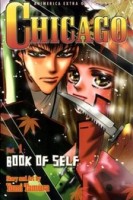
Chicago, Volume 1: The Book of SelfChicago, Volume 2: The Book of JusticeAnd the winner of the Yumi Tamura Giveaway is… Olivia!

As the winner, Olivia will be receiving a complete set of Yumi Tamura’s shoujo action thriller Chicago as published by Viz Media back in the day. I came across Chicago because Tamura was also the creator of Basara, a series that I love. And so for this giveaway, I asked that participants tell me about the mangaka whose work they always make a point to read. Check out the giveaway comments for the detailed responses, and check out below for the list of mangaka mentioned in addition to a selection of their works that are available in English!

Aki
The Angel of Elhamburg
Olympos
Utahime: The Songstress

Moyoco Anno
In Clothes Called Fat
Sakuran: Blossoms Wild
Sugar Sugar Rune

CLAMP
Cardcaptor Sakura
X
xxxHolic

Usamaru Furuya
Genkaku Picasso
Lychee Light Club
No Longer Human

Kyoko Hikawa
From Far Away

Kazuo Koike & Goseki Kojima
Lone Wolf & Cub
Path of the Assassin
Samurai Executioner

Mitsukazu Mihara
Doll
The Embalmer
IC in a Sunflower

Setona Mizushiro
After School Nightmare
Black Rose Alice
X-Day

Jun Mochizuki
Pandora Hearts

Kaoru Mori
Anything and Something
Bride’s Story
Emma

Takeshi Obata
All You Need Is Kill
Death Note
Hikaru no Go

Yayoi Ogawa
Tramps Like Us

Atsushi Ohkubo
B. Ichi
Soul Eater
Soul Eater Not!

Eiji Otsuka
The Kurosagi Corpse Delivery Service
Madara
MPD-Psycho

Yumi Tamura
Basara
Chicago
Wild Com.

Arina Tanemura
Idol Dreams
Phantom Thief Jeanne
Sakura Hime: The Legend of Princess Sakura

Jiro Taniguchi
A Distant Neighborhood
The Summit of the Gods
The Walking Man

Osamu Tezuka
Astroboy
Dororo
Message to Adolf

Yana Toboso
Black Butler
Rust Blaster

Naoki Urasawa
Master Keaton
Monster
Pluto

Yu Yagami
Go West!
Hikkatsu!: Strike a Blow to Vivify
Those Who Hunt Elves

Fumi Yoshinaga
Not Love But Delicious Foods Make Me So Happy!
Ôoku: The Inner Chambers
What Did You Eat Yesterday?

For the sake of space, I’ve limited the lists of works to up to three releases each in English, but many of the creators have other manga available in translation, too. And hopefully we’ll continue to see more of all of these mangaka! Thank you to everyone who took the time to participate in the giveaway and share some great mangaka with me. Hope to see you all again for the next giveaway!

Filed Under: Giveaways, UNSHELVED Tagged With: Chicago, manga, Yumi Tamura

Pick of the Week: Pastries and Punching

August 31, 2015 by Michelle Smith, Ash Brown, Sean Gaffney and Anna N Leave a Comment

confiserie1MICHELLE: There’s a new volume of Skip Beat! out this week, which I of course adore, but that makes it even more significant when I say my pick of the week is actually the first volume of Maki Minami’s Komomo Confiserie. I actually know nothing about this series, but I do know that Minami’s Voice Over! ended up being a surprise favorite, so I am really glad to have another new series from its creator now that it has finished.

ASH: It seems like I’ve been waiting to read One-Punch Man forever, but I enjoyed the first volume of The Ancient Magus’ Bride so much that there could be no other pick for me this week.

SEAN: I’m fairly sure that One-Punch Man takes the prize for my pick of the week. Never has invincibility been so funny.

ANNA: I’m very excited that One-Punch Man is coming out in print form, but I’ve aleady been buying the digital volumes!. I’m going to pick the shoujo series Komomo Confiserie because a shoujo series involving food just sounds incredibly entertaining.

Filed Under: PICK OF THE WEEK

My Week in Manga: August 24-August 30, 2015

August 31, 2015 by Ash Brown

My News and Reviews

Last week was a bit slow at Experiments in Manga as I decided to take it a little easy on myself, but I did still post a couple of things in addition to the usual My Week in Manga feature. The most recent manga giveaway was posted, for one, and there’s still time to enter for a chance to win a complete set of Yumi Tamura’s shoujo action thriller Chicago. I also posted an in-depth review of Minae Mizumura’s award-winning A True Novel which I absolutely loved. In part it’s a reimagining of Emily Brontë’s Wuthering Heights set in postwar Japan, but it’s not at all necessary to have read Brontë’s novel to appreciate Mizumura’s work.

Elsewhere online, Mangabrog has posted a translation of an interview of Parasyate‘s Hitoshi Iwaaki from 2005. Justin interviewed Sekai Project for Manga Bookshelf about the company entering the manga market. In licensing news, Kodansha Comics has picked up some Fairy Tail and Noragami side stories and Vertical Comics confirmed its acquisition of Maybe’s The Abandoned Sacred Beasts. Also of note, Humanoids will be releasing an anthology in 2016 called The Tipping Point which will include contributions from mangaka Katsuya Terada, Naoki Urasawa, Taiyo Matsumoto, and Atsushi Kaneko in addition to other comics creators from Europe and the United States.

Quick Takes

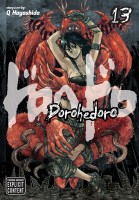
Dorohedoro, Volume 13Dorohedoro, Volumes 13-16 by Q Hayashida. Even though I love Dorohedoro, it’s been a while since I’ve read the series; I like to save up a few volumes to read all at once. The manga is now entering what I believe will be its final story arc. Granted, Dorohedoro tends to be all over the place with all sort of plot lines weaving in and out, so its difficult to identify distinct story arcs, but Hayashida is now bringing it all back together again. She’s even tying in what initially seemed to be extraneous side stories from earlier in the series more cohesively. Dorohedoro is such a bizarre manga, somehow managing to be sweet and charming at the same time it is disgusting and grotesque. Hayashida’s artwork is marvelous, creating horrific, nightmare-inducing images and an atmosphere that’s dank, dirty, and dingy. But the series is also fun and funny, with a quirky sense of humor and a peculiar fixation on food. At this point, though there is still comedy, Dorohedoro is actually getting pretty serious and dramatic. En’s dead and the rest of the family is currently homeless and on the run; the Cross-Eyes have taken over, but they seem to be losing control of the extremely deadly situation.

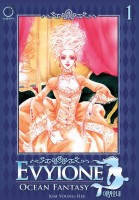
Evyione: Ocean Fantasy, Volume 1Evyione: Ocean Fantasy, Volume 1 by Young-Hee Kim. Back in the day, Udon Entertainment had a line of manwha which, sadly, didn’t end up going very far. Tragically, only the first volume of Kim’s twelve-volume series Evyione: Ocean Fantasy was translated and released. It’s admittedly disappointing that there isn’t more, but the first volume of Evyione serves as a sort of prologue and is well worth checking out even though the rest of the story will likely never be translated. The manhwa is in part inspired by Hans Christian Andersen’s The Little Mermaid except that in the case of Evyione, it’s the king of the sea who has fallen in love with a human princess. The artwork in the series is stunningly gorgeous. The ocean scenes and merfolk are beautiful, sensuous, and slightly disconcerting. There’s a touch of horror to the king’s transformation into a human, keeping with the darker aspects of the original story. On land, Kim pays particular attention to the characters’ clothing and attire, the dresses especially are intricately detailed. Although Evyione is obviously based on The Little Mermaid, it’s not a simple retelling and incorporates political and court intrigue as well as additional plot elements.

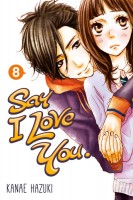
Say I Love You, Volume 9Say I Love You, Volume 8 by Kanae Hazuki. I continue to really enjoy Say I Love You. Hazuki’s forthright portrayal of teenage sexuality in particular tends to be handled quite well. After focusing on some of the series’ supporting characters, the eighth volume of Say I Love You largely turns its attention back to Mei. Most of the volume is dealing with a popularity contest being held as part of the school festival that thrusts Mei into the spotlight when she becomes a finalist—some students voting for her because they like her, and some students voting for her in hopes that she will utterly embarrass herself. Yamato is a participant in the contest as well and out of all of the boys he’s expected to win, meaning he’ll be going on an arranged date with whichever girl receives the most votes. All together, this is a very challenging situation for Mei. She doesn’t really want all of the attention and yet she feels compelled to try to win. Hazuki avoids the pitfall of a makeover suddenly changing a person into someone completely unrecognizable. It’s not so much that Mei’s outward appearance is drastically altered, it’s that she’s starting to overcome some of her insecurities and reclaim her femininity for herself.

Filed Under: FEATURES, My Week in Manga Tagged With: dorohedoro, evyione, Kanae Hazuki, manga, manhwa, Q Hayashida, Say I Love You, Young-Hee Kim

A True Novel

August 28, 2015 by Ash Brown

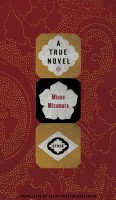
A True NovelAuthor: Minae Mizumura
Photographer: Toyota Horiguchi

Translator: Juliet Winters Carpenter
U.S. publisher: Other Press
ISBN: 9781590512036
Released: November 2013
Original release: 2001
Awards: Yomiuri Prize for Literature

So far, only two works by Minae Mizumura have been translated into English. The first was the Yomiuri Prize-winning A True Novel. Originally published in Japan in 2002, A True Novel was selected for translation as part of the Japanese Literature Publishing Project. The novel was ultimately released by Other Press in 2013 with an English translation by Juliet Winters Carpenter. Other Press’ edition of A True Novel is a lovely two-volume box set retaining the black-and-white images taken by Kyoto-based photographer Toyota Horiguchi scattered throughout the pages. Mizumura’s second work to be translated, her treatise The Fall of Language in the Age of English, was published in early 2015. It was the release of The Fall of Language in the Age of English that reminded me that A True Novel had been sitting on my shelf waiting to be read for quite some time. My excuse was that I wanted to make sure that I had the time to devote to the novel that it deserved—A True Novel is a massive work well over eight hundred pages in length.

Taro Azuma immigrated to New York from Japan in the 1960s, finding a position as a personal chauffeur. Not much was known about the enigmatic young man and he was reluctant to talk about his past, but he did very well for himself in America, eventually becoming an extremely successful, wealthy, and respected businessman. It’s only after he made a name and a fortune for himself that he began to return to Japan on occasion. Growing up Taro was an orphan raised in a poor and abusive household. His fate was changed when he was taken in as a helper by the well-off Utagawa family, becoming remarkably close with their youngest daughter Yoko. But as time passed, the differences between Taro and Yoko’s social classes became more pronounced and more problematic for the Saegusas—Yoko’s high-society relatives—especially after a series of “indiscretions.” This was what prompted Taro to initially leave the country, but his destiny had already become intrinsically connected to those of Yoko and her family.

In part, A True Novel is a retelling of Emily Brontë’s Wuthering Heights, Mizumura moving the setting of the story from nineteenth-century England to postwar Japan. While someone who has read Wuthering Heights will be able to appreciate the parallels between the two narratives, A True Novel stands completely on its own as a separate work. It’s been a long while since I’ve read Wuthering Heights, but I must say I think I actually prefer A True Novel. The structure of the novel has several layers that build upon one another. The story opens with an autobiographically-influenced prologue long enough to be its own novel which outlines Mizumura’s life growing up in America and her impression of Taro when she meets him there. A True Novel continues with a young editor named Yuske Kato relating to Mizumura his later encounter with Taro in Japan and the story told to him by Fumiko Tsuchiya who at one point in her life was a maid to the Utagawas. It is these two stories that Mizumura weaves together to form the main narrative of A True Novel.

Each of the three nested stories—Mizumura’s, Yusuke’s, and Fumiko’s—draws the reader closer and closer to the heart of A True Novel. The work is tragically romantic, Yoko and Taro born into circumstances where their love for each other is all but impossible to realize, their hopes for happiness dashed by the expectations of society and matters of privilege and class. The characters and their relationships in A True Novel are marvelously complex with love and hate, redemption and revenge all playing a role. At times they can actually be infuriating, but that’s part of the reason A True Novel is so compelling and engaging—the characters are believably flawed individuals navigating (not always successfully) a world that is inherently unfair. A True Novel is a tremendous work, the story tracing decades of family history and drama and the dynamics of complicated and shifting relationships. The novel may be lengthy, but it never felt overly long. If anything, while I was immensely satisfied I was still sad to see it end. A True Novel may very well be one of the best works of literature that I’ve read.

Filed Under: REVIEWS Tagged With: Minae Mizumura, Novels, Yomiuri Prize for Literature

Manga the Week of 9/2

August 26, 2015 by Sean Gaffney, Ash Brown, Anna N, MJ and Michelle Smith Leave a Comment

SEAN: School’s back in session. Do you have all your manga supplies? The old favorites? The new series? The zipatone? Let’s see what you might want to pick up.

Dark Horse still knows we like our samurai manga with the 6th New Lone Wolf & Cub.

ASH: I’m still catching up with the old school Lone Wolf & Cub, but I’m picking up this series, too.

nsk1

SEAN: Kodansha debuts a new series called Ninja Slayer Kills, based off of a concept by two Americans who I suspect are imaginary. It also has a novel series later this year from Vertical, and seems to be very much in the ‘flashy action sequences’ genre.

ASH: Actually, I think Vertical has one of the other manga adaptations. But, yes, lots of action.

SEAN: Kodansha also has the fourth volume of Yamada-kun and the Seven Witches. We’re still running a few witches short.

ASH: This series has been a lot of fun so far.

SEAN: Slightly creepy power imbalance aside, I really enjoyed the first volume of The Ancient Magus’ Bride from Seven Seas, so the 2nd volume coming out pleases me greatly.

ANNA: I enjoyed the first one too. I like these low-key fantasy series, they remind me of the type of thing CMX used to put out (RIP).

ASH: The first volume was one of my favorite debuts this year, so I’m definitely looking forward to the second!

MJ: I will have to catch up with this one for sure!

SEAN: And a 6th omnibus of Dance in the Vampire Bund, which combines lolis and vampires to devastating effect, or so I hear.

Now it’s time for our slate of Viz. There’s new 3-in-1s of Dragon Ball (the 10th), Naruto (the 12th, and One Piece (the 13th). Good buys if you want to save shelf space.

Kimi ni Todoke has a 22nd volume, and I really hope that a plot point suggested by the cliffhanger happens, for the sake of my own sanity.

MICHELLE: Volume 21 was great, if painful, so I am very much looking forward to another installment.

ANNA: I have around 3 volumes now I need to read to catch up. I think I was staying away from the emotional trauma. I do love this series.

MJ: I live for this kind of pain.

SEAN: Kiss of the Rose Princess 6… I admit I’ve lost track of this series. Anna?

ANNA: What’s going to happen with the Junk Rose Princess and her Four Fake Rose Knights? Now that some of Anise’s Rose Knights are powered up even more, will this throw off the dynamics in this fun and frothy reverse harem manga? Is Anise’s father really as evil as he seems? How does one engineer Rose people? How many cards can Anise collect? I don’t know but I want to find out!!!!!

SEAN: Komomo Confiserie is the new series from Maki Minami, author of Special A and Voice Over. Given that title, I’d expect food to be involved. Always love stuff from this author.

MICHELLE: I loved Voice Over! way more an I expected to, and am looking forward to Komomo Confiserie quite a lot!

ANNA: I liked Voice Over, but not enough to complete the series. On the other hand I love food manga so I will be checking this out.

ASH: Food! Pastries! Cakes!

SEAN: Nisekoi barrels along with an 11th volume, being the rare Jump romantic comedy that doesn’t die in North America (see Strawberry 100% for the fate of prior comedies of that sort).

onepunch1

After getting a few volumes out digital-only, print readers are now able to experience the gloriousness that is One-Punch Man, with its first two volumes coming out together.

ANNA: One-Punch Man is the best. It totally deserves the print edition and I hope more readers discover it because it is hilarious.

ASH: I’ve been holding out for the print edition; can’t wait to finally read it!

MJ: Same here!

SEAN: Seraph of the End gets a 6th volume. Vampires? Still? Dunno.

ANNA: Not surprisingly, I enjoy this a bunch. It has more world building than most vampire manga. Looking forward to this volume.

SEAN: Skip Beat! has a 35th volume, edging closer to the longest shoujo series in North America (Boys Over Flowers still tops it right now, I think).

MICHELLE: You are right; if you include Jewelry Box, Boys Over Flowers has 37 volumes. Also, yay Skip Beat!.

ANNA: Skip Beat! is so great. May it go on for 35 volumes more!

MICHELLE: Hear, hear!

SEAN: There’s also an 18th volume of Tegami Bachi.

Lastly, you thought there would be no Yu-Gi-Oh? Foolish mortal! Here’s Vol. 7 of Zexal.

What manga makes you want to learn logarithm tables? (None of them, I imagine, unless you have the old Math Girls manga volume.)

ASH: I in fact DO have the old Math Girls volume!

MJ: Same! :D

Filed Under: FEATURES, manga the week of

Manga Giveaway: Yumi Tamura Giveaway

August 26, 2015 by Ash Brown

It’s almost the end of the month which means it’s yet again time for another giveaway at Experiments in Manga. This month I’m offering up an entire series: Yumi Tamura’s two-volume shoujo action thriller Chicago! The series was released in English by Viz Media a decade or so ago, but is now out of print. This month’s giveaway will give you a chance to snag a complete set of the manga. And, as always, the giveaway is open worldwide!

Chicago, Volume 1: The Book of SelfChicago, Volume 2: The Book of Justice

Chicago probably wouldn’t have come across my radar if it wasn’t for the fact that it was created by Yumi Tamura. Tamura is also the mangaka of Basara, a series that I absolutely love. Back when I was trying to track down some of the harder-to-find print volumes of Basara (the print edition is going out of print, but a digital version is now available), I discovered that Tamura’s Chicago and Wild Com. had also been translated. And so, simply because I enjoyed Tamura’s work so much on Basara, I picked them up. There are other mangaka whose work I will read no matter what it is, too, including but certainly not limited to Moyoco Anno, Usamaru Furuya, Fumi Yoshinaga, and Takeshi Obata. It can be interesting to see both the similarities and differences among the manga created by the same person; some mangaka have an incredible range.

So, you may be wondering, how can you win Yumi Tamura’s Chicago?

1) Are there any mangaka whose work you enjoy so much that you make a point to read anything they create? If so, tell me a little about them and what you like about their manga in the comments below. (If not, you can simply mention that.)
2) If you’re on Twitter, you can earn a bonus entry by tweeting, or retweeting, about the contest. Make sure to include a link to this post and @PhoenixTerran (that’s me).

There you go! It’s as easy as that. You all have one week to submit comments and each person can earn up to two entries for this giveaway. If you have trouble with the comment form, or if you would prefer, entries can also be sent directly to me at phoenixterran(at)gmail(dot)com. I will then post the comments here in your name. The giveaway winner will be randomly selected and announced on September 2, 2015. Good luck to you all!

VERY IMPORTANT: Include some way that I can contact you. This can be an e-mail address in the comment form, a link to your website, Twitter username, or whatever. If I can’t figure out how to get a hold of you and you win, I’ll just draw another name.

Contest winner announced–Manga Giveaway: Yumi Tamura Giveaway Winner

Filed Under: FEATURES, Giveaways Tagged With: Chicago, manga, Yumi Tamura

Pick of the Week: Mostly Kodansha

August 24, 2015 by Sean Gaffney, Michelle Smith, Ash Brown and Anna N Leave a Comment

sayiloveyou9SEAN: There’s a surprising amount of stuff out this week for manga fans, including a new Alice that looks more plot-oriented than most, a new Attack on Titan as well as two spinoffs of same, and a new series from the creator of Gantz. I’ll give my pick to the manga tie-in of the Bodacious Space Pirates movie, Abyss of Hyperspace. It’s not very friendly to casual readers who don’t know the franchise, but for those who do, it’s pirate-riffic.

MICHELLE: I pretty much always pick this series when given the chance, but I am definitely going to be picking up the ninth volume of Say I Love You., which always thwarts traditional shoujo expectations in interesting ways.

ASH: Lots of good stuff coming out this week, and I’ll be picking up quite a few of them, but the manga I’m most curious about is the debut of Inuyashiki.

ANNA: Say I Love You is my pick as well, but I can’t believe we’re up to volume 9 already! More to get caught up on!

SEAN: I just want to add that the Say “I Love You” heroine continues to be so unhappy on these covers. She really does not want to be posing for this shot.

Filed Under: PICK OF THE WEEK

My Week in Manga: August 17-August 23, 2015

August 24, 2015 by Ash Brown

My News and Reviews

Last week Experiments in Manga reached its fifth anniversary, so I wrote a somewhat lengthy post about what I’ve been up to online and offline over the last year. Thank you again to everyone who has shown support and encouragement for Experiments in Manga over the years. Apparently, people actually want to see another five years, so I guess I better get to work on that. With that in mind, have two more in-depth reviews! Last week I took a look at Rikao Yanagita’s surprisingly entertaining The Science of Attack on Titan, one of the two non-manga books that Kodansha Comics has released so far. (The other one was related to Attack on Titan, as well.) I also reviewed Baku Yumemakura and Jiro Taniguchi’s The Summit of the Gods, Volume 5, which is the final volume in one of my favorite series. The writing and artwork in The Summit of the Gods is superb; I’m so glad that the entire manga is now available in English.

A few other things caught my eye online last week. Mangabrog has translated an article from 2013 that provides a tour through Inio Asano’s workspace. More information has been revealed about Kodansha’s digital efforts and the publisher is aiming high: digital editions of two thousand volumes translated into English by the end of 2017. Occasionally manga makes its way to NPR (which I believe is how I actually first learned about and became interested in Death Note). Most recently, one of NPR’s contributors featured a few great romantic manga: Kaoru Mori’s Emma, Ichigo Takano’s Orange, and Ai Yazawa’s Nana. I haven’t had a chance to read Orange yet, but considering the quality of Emma and Nana, I’m now looking forward to Seven Sea’s upcoming print release of the series even more. The game of manga tag continues to make it rounds, this time Narrative Investigations’ Helen tackles the questions.

Quick Takes

Castle Mango, Volume 2Castle Mango, Volume 2 written by Narise Konohara and illustrated by Muku Ogura. While I liked the first volume of Castle Mango, I really enjoyed the second and final volume of the series. Castle Mango is an unusual boys’ love manga; most of it doesn’t have anything to do with romance. The close relationship between Yorozu and Togame begins with a terribly manipulative lie, but it eventually develops into something real for both of them. In the first volume, the two men frequently seemed to have an almost father-son sort of vibe, but by the end of the series I was slightly more convinced by their intimacy as boyfriends. It does take a little while to get there though; they spend a large portion of the second volume apart. Togame is trying to give Yorozu space, feeling that it’s in the younger man’s best interest, but he doesn’t really go about it in the best way. Unfortunately, this is happening at the same time that Yorozu is struggling to take care of his little brother and his family’s business (a love hotel) when his mother is hospitalized. Yorozu is in the process of shedding the last of his immaturity and makes some terrible decisions in the process. In many ways, Castle Mango is more about Yorozu’s growth as a person than anything else.

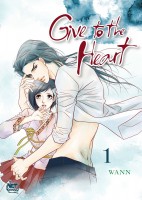
Give to the Heart, Volume 1Give to the Heart, Volumes 1-4 by Wann. After a long period of silence, about a year ago Netcomics quietly began publishing books in print again. Give to the Heart was the first manhwa to be released after the publisher’s hiatus. I was interested in reading the series because I wanted to support Netcomics, but also because it was created by Wann. (I had previously read and thoroughly enjoyed Wann’s collection of short manhwa 9 Faces of Love.) At first Give to the Heart seemed like it was going to largely be fantasy fiction, but as the series progresses, more and more science fictional elements are introduced. The ongoing story is about Sooyi, a young woman who became the wife of Ganok, the demon king who controls all water, but who is now attempting to escape him. Not only that, she is trying to find a way to kill him as well, or at least cause him as much pain as possible even if that means sacrificing her own life in the process. Though it is implied that Sooyi and Ganok were at one point content and happy as a pair, their current relationship obviously has its problems. Actually, considering the extreme imbalance of power between them—Ganok being a cruel god and Sooyi being a human with a strong will—that’s been true from the very beginning.

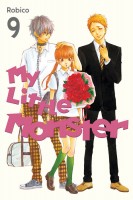
My Little Monster, Volume 9My Little Monster, Volume 9 by Robico. So, Haru and Shizuku are now officially a couple, although not much has actually changed in their relationship. But now that that has been settled, the other romantically interested parties are more or less able to move on with their lives. As a result, the plot of My Little Monster is now able to move along as well. This particular volume includes summer vacations and festivals, which is fairly standard for a high school romance, but Haru’s family drama is starting to come to the forefront of the story again. Underneath the humor of My Little Monster there seems to have been something ominous lurking waiting to be revealed. Haru’s brother Yuzan isn’t as terrifying as he once was, but there is definitely something going on between him and Haru and with Haru’s reluctance to interact with the rest of his family. Haru is trying to keep Shizuku from finding out the details, though eventually he’s really going to need to come clean with her and explain his situation. But, while Shizuku is still in the dark, at least readers get to learn a bit more. I continue to enjoy My Little Monster, especially the series’ quirky characters, and I’m happy to see the manga continue to gain some forward momentum.

Filed Under: FEATURES, My Week in Manga Tagged With: Castle Mango, Give to the Heart, manga, manhwa, Muku Ogura, My Little Monster, Narise Konohara, Robico, Wann

The Summit of the Gods, Vol. 5

August 21, 2015 by Ash Brown

The Summit of the Gods, Volume 5Author: Baku Yumemakura
Illustrator: Jiro Taniguchi

U.S. publisher: Fanfare/Ponent Mon
ISBN: 9788492444403
Released: July 2015
Original release: 2003
Awards: Angoulême Prize, Japan Media Arts Award

Baku Yumemakura’s novel The Summit of the Gods (which, sadly, hasn’t been translated into English) was published in Japan in 1998 and would go on to win the Shibata Renzaburo Award. In 2000, Yumemakura was paired up with the immensely talented artist Jiro Taniguchi to create a manga adaptation of the novel. The Summit of the Gods manga continued to be serialized through 2003 and was collected as a five-volume series. The manga also became and award-winning work, earning an Angoulême Prize and a Japan Media Arts Award among many other honors and recognitions. In addition to being one of my favorite manga by Taniguchi, The Summit of the Gods is actually one of my favorite manga in general. As such, I was waiting with great anticipation for the publication of the fifth and final volume of the series in English by Fanfare/Ponent Mon. I was thrilled when it was finally released in 2015.

Photographer Makoto Fukamachi followed the legendary climber Jouji Habu to Mount Everest to document one of the most difficult and dangerous ascents to ever be attempted: a solo climb of the southwest face in the winter without oxygen. The agreement between them was that neither one of the men would interfere with the other’s climb no matter what happened. But when Fukamachi’s life is in danger Habu rescues him anyway, putting his own life and the success of his ascent at risk. Fukamachi ultimately survives, returning to Japan to find a media frenzy; not only was Habu an infamous climber, his assault on Everest was an illegal one. And then there’s the matter of the camera that Habu had in his possession. Believed to have belonged to George Mallory, it draws considerable attention once its existence comes to light. Fukamachi’s connection to Habu and to the camera makes him a person of interest as well. Even without the additional scrutiny from the public he would find readjusting to a normal life after his fateful Everest climb to be challenging if not impossible.

Summit of the Gods, Volume 5, page 2013Three stories have become irrevocably intertwined in The Summit of the Gods: the story of George Mallory and Andrew Irvine’s’ final climb and disappearance on Mount Everest, the story of Jouji Habu’s efforts to become the greatest known climber more for himself than for any sort of fame, and the story of Makoto Fukamachi as he strives to untangle his own feelings about climbing and about life by trying to unravel the mysteries surrounding those of the others. The Summit of the Gods can be read in two different ways. It can be approached simply as a compelling tale of adventure and survival or, either alternatively or simultaneously, as a stunning metaphor for any human struggle against seemingly overwhelming odds. Climbing requires great physical and mental fortitude, and life can be just as demanding. The characters in The Summit of the Gods not only pit themselves against nature, they challenge themselves to overcome their own personal weaknesses and limitations.

Facing oneself—being able to objectively recognize the extent of one’s own abilities and admit the possibility of failure—isn’t necessarily an easy thing to do. It can also be a very lonely thing. This, too, is emphasized in The Summit of the Gods through Yumemakura’s writing and Taniguchi’s artwork. Even when working together, the climbers must ultimately rely on themselves and can only trust and depend on others so far. In the end they face the mountain and face their personal demons alone. The characters also show a constant struggle against their own insignificance, a hard-fought battle to find meaning in their lives. Taniguchi’s vistas are gorgeous and sweeping, showing just how small a person is in comparison to the rest of the world. But this also makes the climbers’ perseverance and achievements all the more remarkable. The Summit of the Gods is a phenomenal work with great writing and fantastic art, effectively telling a thrilling drama that also has great depth to it.

Filed Under: REVIEWS Tagged With: Angoulême Prize, Baku Yumemakura, Fanfare/Ponent Mon, Japan Media Arts Award, Jiro Taniguchi, manga, summit of the gods

Manga the Week of 8/26

August 21, 2015 by Sean Gaffney, Ash Brown, Anna N and Michelle Smith 1 Comment

SEAN: For a last week of the month, there’s a lot of stuff due out, particularly from Kodansha Comics.

The 16th Attack on Titan comes in a regular edition, and also a Special Edition with a set of AoT-themed playing cards.

ASH: It’ll be interesting to see how the special edition does for Kodansha.

SEAN: And there’s a 5th volume of the prequel Attack on Titan: Before the Fall.

Fairy Tail also has a spinoff, with the first volume of Blue Mistral, which I believe focuses on Wendy.

inuyashiki1

Inuyashiki is the new series running in Evening magazine from the author of Gantz. Its protagonist being an old man is unusual, its science fiction with horror/gore plot is not, at least not for this author.

ASH: Although I didn’t follow Gantz to the end, I am rather curious about Inuyashiki.

ANNA: Huh, I’m cautiously curious about this. Will wait for Ash’s review though!

SEAN: Let’s Dance a Waltz comes to an end with the third and final volume. Less fat-shaming in your next series, please.

MICHELLE: I second that request.

ASH: Yup. Also, I didn’t realize the series was so short!

ANNA: So glad I didn’t read this.

SEAN: Maria the Virgin Witch has an epilogue with Exhibition.

ASH: Maria the Virgin witch was such a quirky little series.

SEAN: Say “I Love You” has volume 9 coming out, and it’s become one of my favorite “shosei” series.

MICHELLE: Mine, too! Looking forward to this one.

ANNA: I need to get caught up! It is very good.

SEAN: And Your Lie in April has a 3rd volume. Lies indeed; it’s August, not April. You can’t trick me, manga!

ASH: Wait, it’s not April?

SEAN: There are a few titles coming out that are not Kodansha. Seven Seas has an Alice book, with White Rabbit and Some Afternoon Tea. After being an antagonist for so long in these books, Peter White finally gets his chance to be the love interest.

ANNA: Is it extra traumatic?

bodacious1

SEAN: I realize the title might put some people off, but Bodacious Space Pirates was a fantastic novel/anime series, and Bodacious Space Pirates: Abyss of Hyperspace is a manga adaptation of the feature film they made. I’m greatly looking forward to it.

ASH: Should hopefully be fun!

ANNA: If nothing else, that title is fabulous.

SEAN: Also greatly looking forward to the 4th omnibus of Lucifer and the Biscuit Hammer. Buy this please. Make Sean proud of you.

ASH: I will make you proud, Sean!

SEAN: Vertical has a 6th volume of Supernatural thriller Ajin. Be warned, it’s caught up with Japan.

And Vertical also has a novel spinoff of Attack on Titan. Harsh Mistress of the City is another one that takes place before the main manga, I believe.

ASH: It’s also illustrated by Range Murata which will be of particular interest to a few people I know.

ANNA: I didn’t know that! Interesting!

SEAN: So what are you getting next week?

Filed Under: FEATURES, manga the week of

The Science of Attack on Titan

August 19, 2015 by Ash Brown

The Science of Attack on TitanAuthor: Rikao Yanagita
Illustrator: Maru Fujishima

Translator: Ko Ransom
U.S. publisher: Kodansha
ISBN: 9781632361851
Released: June 2015
Original release: 2014

Hajime Isayama’s ongoing manga series Attack on Titan has become a worldwide phenomenon, spawning multiple spinoff manga series, anime, live-action films, games, and other media and merchandise. The franchise has been such a resounding success that Kodansha Comics, the manga’s English-language publisher, has even broken its rule of not releasing anything that isn’t manga. The first exception was the Attack on Titan Guidebook: Inside & Outside. More recently, in 2015, Kodansha published Rikao Yanagita’s The Science of Attack on Titan as translated by Ko Ransom (who also happens to the translator for the guidebook and the Attack on Titan: Before the Fall novels, among other things.) Since I’m fascinated by Attack on Titan and its immense popularity, I was particularly glad to have the chance to read a review copy of The Science of Attack on Titan. The volume was originally published in Japan in 2014 and is the first work by Yanagita to have been released in English. Credited as the Senior Researcher of the Sci-F/Fantasy Science Research Institute, Yanagita is a fairly prolific writer who has authored other “The Science of” books as well.

The Science of Attack on Titan is divided into four main sections. The first and longest, “Surprising Titan Fundamentals,” focuses on the Titans, specifically investigating their strengths and weaknesses. Once Titans have been established as the fearsome creatures that they are, in the next section Yanagita asks and answers the question “What Should I Do If Titans Attack?!” Appropriately, this is followed by “Anti-Titan Measures: How Effective Are They Really?,” a section exploring in-series technologies such as the vertical maneuvering equipment. (Also included: an entire chapter devoted to the awesomeness of Levi.) The final section, “Simple Questions about Attack on Titan,” is a sort of catchall for remaining topics that didn’t really fit into the previously established categories. There are also shorter one-page investigations called “Lingering Fantasy Science Questions” scattered throughout the volume. Accompanying the text are relevant panels and pages taken from the Attack on Titan manga as well as additional illustrations by Maru Fujishima that can be quite humorous.

The Science of Attack on Titan, page 17Although the readers who will probably be the most interested in or at least the most likely to pick up The Science of Attack on Titan are those who are already familiar with Attack on Titan as a whole, it is only fair to give the warning that the volume does include spoilers for the franchise. Most are fairly minor, but there are a few major twists that are discussed as well. The Science of Attack on Titan is based on the original Attack on Titan series up through the thirteenth volume in addition to the first volume of the Attack on Titan: No Regrets spinoff manga, the Before the Fall prequel novels, and the Attack on Titan Guidebook. Unless readers are trying to avoid spoilers at all costs, they shouldn’t be too daunted by Yanagita’s thoroughness; only a basic knowledge of Attack on Titan, and its characters and setting is required to enjoy and understand The Science of Attack on Titan. There is no need to be well-versed in all aspects of the franchise in order to follow the book. The Science of Attack on Titan is approachable and friendly for novices in science, too.

The Science of Attack on Titan may be inspired by Attack on Titan, but for the most part Yanagita spends more time discussing real-world physics, chemistry, biology, history, technology, and such than he does Attack on Titan itself. The franchise simply provides an excuse or jumping off point to explore interesting scientific concepts and how they might or might not apply to the series. Unsurprisingly, Yanagita’s analysis shows that many aspects of Attack on Titan could be nothing but fantasy, but it’s very exciting when it appears that something from the series could actually work. The Science of Attack on Titan is written to be both entertaining and engaging, though how funny it is will depend on an individual’s personal sense of  humor. While Yanagita address serious science, he recognizes that Attack on Titan is a fictional work and that subjecting it to such critical scrutiny can be inherently funny. As a result, his approach in The Science of Attack on Titan is informal and comedic, but also informative. Ultimately, the volume’s greatest value is probably in encouraging those who are interested in Attack on Titan to discover just how cool real science can be. Even I learned a few things that I didn’t previously know.

Thank you to Kodansha for providing a copy of The Science of Attack on Titan for review.

Filed Under: REVIEWS Tagged With: attack on titan, kodansha, Kodansha Comics, Maru Fujishima, Nonfiction, Rikao Yanagita

Random Musings: Five Years of Experiments in Manga

August 18, 2015 by Ash Brown

As of today, Experiments in Manga is now five years old! In some ways it feels like I’ve been writing here forever, and in other ways it seems like I’ve just started. When I first began Experiments in Manga, I had no idea how long it was going to last (honestly, I still don’t know), but I am rather pleased that I’ve been able to keep it going for so many years. And I find it especially impressive when I stop to consider all of the other things going on in my life right now.

What are some of those other things, exactly? Well, I and my partners all managed to survive our first year of parenthood, for one. (As did the little one, whose first birthday was last week.) That has certainly been a huge change in my life. I’m incredibly busy at work of late, too, since my supervisor retired in December and I’m still filling in for that position on top of my regular one. Another significant development is that I am now part of the leadership team for a new taiko performance group and I’ve more or less become an alternate for another semi-pro ensemble. I’ve actually been doing some teaching and composing for taiko, too. It’s all been rather exciting. And extremely challenging. And a bit exhausting.

There really doesn’t seem to be such a thing as “free time” anymore for me, and since Experiments in Manga is something that I do in my free time… Well, this past year is the first year that I’ve posted fewer things than I did in the year immediately preceding. Although I have been able to maintain a regular schedule, overall I’m reading less, and I’m writing less, too. I miss both things terribly (the reading especially), but I might have to cut back even more in the coming year depending on how things continue to progress and for the sake of my own sanity.

For example, I’ve decided to quietly retire the Discovering Manga and Finding Manga features. I enjoyed writing them, but I’m just not posting them frequently or regularly enough. (Which I then end up feeling guilty about.) But although I may be saying goodbye to those particular features, last year I actually introduced a new one that seems to be rather popular: Adaptation Adventures. I’ve only posted two so far—Udon Entertainment’s Manga Classics (which incidentally was one of my top posts from the last year) and The Twelve Kingdoms—but I’m hoping and looking forward to writing more.

Speaking of top posts, my Spotlight on Masaichi Mukaide was very well received. In fact, it wasn’t just one of the top posts from last year, it’s one of Experiments in Manga’s most frequently visited pages ever. It probably helped that the spotlight made the rounds on general comics sites in addition to catching the attention of manga enthusiasts. That single post may very well be the most noteworthy thing that I’ve ever written. Likely, I’ll never be able to top it. I’dbe lying if I tried to say that I wasn’t at least a little proud of it.

The most popular (or at least most frequently viewed) manga reviews at Experiments in Manga from the last year included the anthology Massive: Gay Erotic Manga and the Men Who Make It, Aki’s The Angel of Elhamburg, Mentaiko Itto’s Priapus, Aya Kanno’s Requiem of the Rose King, Volume 1, and Yaya Sakuragi’s Hide and Seek, Volume 1. (On a personal note, I am rather pleased that all five of those manga to one degree or another have a queer bent to them.)

As for my top non-manga reviews from the past year there was The World of the Shining Prince: Court Life in Ancient Japan by Ivan Morris, Haikasoru’s anthology Phantasm Japan: Fantasies Light and Dark from and about Japan, Frederik L. Schodt’s Manga! Manga!: The World of Japanese Comics, Seven Seas’ edition of Alice’s Adventures in Wonderland and Through the Looking-Glass by Lewis Carroll with illustrations by Kriss Sison, and Yu Godai’s Quantum Devil Saga: Avatar Tuner, Volume 1.

I’m actually pretty happy to see Avatar Tuner on that list; the novel was one of the books published in 2014 that left the greatest impression on me. As was Massive, for that matter. Last year was actually only the second time that I compiled a list of notable manga, comics, and prose, but I’ll likely compile another one for 2015 since I had so much fun putting together the first two. Plus, other people seem to enjoy them. That goes for my TCAF posts, too, which remain popular. As long as I attend TCAF, and as long as I’m still writing at Experiments in Manga, I plan on rounding up my experiences at the festival.

Another feature of sorts that I’ve continued to work on is my monthly manga review project—a recurring set of reviews that focuses on a specific series or genre. In November, I wrapped up my second project, “Year of Yuri”, a series of reviews featuring manga and comics with lesbian themes. For the following review project, I was feeling in the mood for some horror manga. But while I picked the genre, I let readers of Experiments in manga pick the series. It ended up being a tie between Setona Mizushiro’s After School Nightmare and Yuki Urushibara’s Mushishi, so I decided to review both series, alternating between them each month. At the moment, I’m about halfway through the project.

I still maintain that I write Experiments in Manga for myself, but it does give me great satisfaction and joy to know that other people read and appreciate it as well. Over the last year several readers have let me know that they’ve given a particular manga, comic, or novel a try simply because I wrote about it. I and Experiments in Manga have started to be referenced and cited in Wikipedia as well as other places online as well, including an Italian comics website. (Admittedly, while very cool, I also find this kind of terrifying.) As always, I would like to thank everyone out there who reads and supports my efforts here at Experiments in Manga. It’s truly appreciated. I hope that I can continue to improve and continue to provide content that is useful or at least occasionally interesting. Here’s to another year!

Filed Under: UNSHELVED Tagged With: Experiments in Manga

Pick of the Week: Big Week, Small Picks

August 17, 2015 by Sean Gaffney, Michelle Smith, Ash Brown and Anna N 1 Comment

emma2SEAN: I have gotten used to the fact that when Yen Press puts out 19-20 titles in one go, I get all excited about at least half of them and the rest of the Manga Bookshelf team tends to shrug their shoulders. So let me start this week off. There’s a pile coming out I love – new Wallflower, new Dorohedoro, new Emma. For a pick, I’ll go with the new Sword Art Online novel, if only as I want to see if the author even tries to justify why there are still MMORPGs after the disaster that was cause of the first four books.

MICHELLE: I’m guilty of shrugging, but if I didn’t already own the complete CMX run of Emma, I would surely be excited about Yen’s omnibus editions! As it is, I’m very happy that others have the chance to experience this lovely series.

ASH: There is so much to choose from this week! I’ll definitely be picking up Emma since I missed it the first time and Yen’s hardcovers are gorgeous, but I think I’ll throw my official pick towards the most recent volume of Dorohedoro. I’m thrilled that Viz continues to publish the series; it’s just so bizarrely charming.

ANNA: I’ll go with Emma. I’ve already read it, but it is a delightful series that deserves new readers. I’m glad it is coming back into print with Yen’s excellent production values.

What looks good to you this week?

Filed Under: PICK OF THE WEEK

My Week in Manga: August 10-August 16, 2015

August 17, 2015 by Ash Brown

My News and Reviews

Last week was a two-review week at Experiments in Manga. Both reviews were of manga and, more specifically, both reviews were of shoujo manga. First up was the first omnibus of Hiro Fujiwara’s Maid-sama!. The series was originally licensed by Tokyopop, which released the first eight volumes, but the manga was more recently rescued by Viz Media’s Shojo Beat imprint. Though he has his moments, I’m not particularly fond of the male lead Takumi at this point, but I absolutely adore the female protagonist Misaki. If for no other reason, I’ll be reading more of Maid-sama! for her sake. The second in-depth review from last week was of Setona Mizushiro’s After School Nightmare, Volume 5. I continue to find After School Nightmare to be both compelling and highly distressing. The review is part of my ongoing monthly horror manga review project; September’s review will focus on the fifth volume of Yuki Urushibara’s Mushishi.

As for a few other interesting manga-related posts found online last week, Comic Attack has a nice interview with Stacy King, the editor of Udon Entertainment’s Manga Classics line. (I’ve written a little bit about Udon’s Manga Classics in the past.) Also, Mangabrog has posted a translation of an interview of Kiyohiko Azuma, the creator of Yotsuba&!, from 2014. A few weeks ago I posted some random musings about my manga collection as part of a game of manga tag. One of the people who I specifically tagged to participate was Manga Xanadu’s Lori Henderson. She recently posted her own responses to the manga tag questions and Justin at Organization Anti-Social Geniuses took time to provide some answers, too. I really enjoy reading about other manga enthusiast’s collections. If you’re interested, be sure to check the posts out!

Quick Takes

Clan of the Nakagamis, Volume 1Clan of the Nakagamis, Volumes 1-2 by Homerun Ken. Although only two volumes of Clan of the Nakagamis have been released in English, it’s actually a three-volume boys’ love series. It’s unlikely that the third volume will be officially translated, but the manga tends to be fairly episodic. The final volume may be “missing,” but at least the series’ story doesn’t depend on it. Clan of the Nakagamis was brought to my attention due to the fact that Norikazu Akira, whose manga I’ve enjoyed, is somehow related to Homerun Ken. (She’s either one of the members of the two-person creative team or their older sister; I’m not entirely sure which.) Clan of the Nakagamis is intentionally ridiculous, a mashup of all sorts of unrelated tropes that the mangaka found amusing or were particularly fond of, everything from student-teacher relationships, to family conglomerates, to crossdressers. I actually wasn’t particularly impressed by the first volume of Clan of the Nakagamis, finding it to be too chaotic and lacking in cohesiveness, but I did legitimately enjoy the second. I even laughed out loud. It probably helped that it had a more coherent story and improved artwork.

Ninja Slayer Kills, Volume 1Ninja Slayer Kills!, Volume 1 by Koutarou Sekine. Ninja Slayer started as a series of novels, supposedly written by a couple of Americans, that inspired a recent anime adaptation as well as at least three different manga series (two of which have been licensed for English-language release). Sekine’s Ninja Slayer Kills! is the franchise’s shounen manga offering. It’s intended to be approachable and understandable even for readers who aren’t familiar with Ninja Slayer. I’m not sure it’s successful in accomplishing that, though. Very little of the story, characters, or setting is explained beyond broadly establishing a tale of super-powered revenge in a gritty near future. The first volume is mostly battle after battle and not much more. The fight scenes and their setups are marvelously epic, but unfortunately the action itself is difficult to follow so they lose their impact. That’s a significant flaw since so much of the manga is focused on these martial conflicts. On their own, the character designs of the cybernetic ninja are great, but they tend to blend together in the actual manga, which also makes determining what exactly is going on a challenge.

A Silent Voice, Volume 2A Silent Voice, Volume 2 by Yoshitoki Oima. I was greatly impressed by the first volume of A Silent Voice. It was a hard read due to its subject matter, specifically its realistic portrayal of bullying—how utterly cruel kids can be to each other and how adults, whether intentionally or not, can often encourage such behavior. While there is still some tragedy and darkness in the second volume, overall it’s a much lighter read; where the first is heartbreaking, the second makes it seem as though forgiveness and change is possible. Shoya, feeling that it is impossible to redeem himself for his past cruelty, plans to take his own life after apologizing to Shoko for adding so much misery to hers. But when he meets her again they end up forming an unexpected friendship instead. Even more surprisingly, Shoya eventually becomes friends with her younger sibling as well (though he doesn’t known that’s who the kid is at the time). Shoya recognizes that he can’t undo the harm that he’s already caused to Shoko and her family, but he’s slowly doing what he can to make up for it. I still think that A Silent Voice is one of the very best manga to debut this year.

Filed Under: FEATURES, My Week in Manga Tagged With: Clan of the Nakagamis, Koutarou Sekine, manga, Ninja Slayer, Silent Voice, Yoshitoki Oima

  • « Go to Previous Page
  • Page 1
  • Interim pages omitted …
  • Page 96
  • Page 97
  • Page 98
  • Page 99
  • Page 100
  • Interim pages omitted …
  • Page 140
  • Go to Next Page »
 | Log in
Copyright © 2010 Manga Bookshelf | Powered by WordPress & the Genesis Framework