• Skip to primary navigation
  • Skip to main content
  • Skip to primary sidebar
  • Home
  • About Us
    • Privacy Policy
    • Comment Policy
    • Disclosures & Disclaimers
  • Resources
    • Links, Essays & Articles
    • Fandomology!
    • CLAMP Directory
    • BlogRoll
  • Features & Columns
    • 3 Things Thursday
    • Adventures in the Key of Shoujo
    • Bit & Blips (game reviews)
    • BL BOOKRACK
    • Bookshelf Briefs
    • Bringing the Drama
    • Comic Conversion
    • Fanservice Friday
    • Going Digital
    • It Came From the Sinosphere
    • License This!
    • Magazine no Mori
    • My Week in Manga
    • OFF THE SHELF
    • Not By Manga Alone
    • PICK OF THE WEEK
    • Subtitles & Sensibility
    • Weekly Shonen Jump Recaps
  • Manga Moveable Feast
    • MMF Full Archive
    • Yun Kouga
    • CLAMP
    • Shojo Beat
    • Osamu Tezuka
    • Sailor Moon
    • Fruits Basket
    • Takehiko Inoue
    • Wild Adapter
    • One Piece
    • After School Nightmare
    • Karakuri Odette
    • Paradise Kiss
    • The Color Trilogy
    • To Terra…
    • Sexy Voice & Robo
  • Browse by Author
    • Sean Gaffney
    • Anna Neatrour
    • Michelle Smith
    • Katherine Dacey
    • MJ
    • Brigid Alverson
    • Travis Anderson
    • Phillip Anthony
    • Derek Bown
    • Jaci Dahlvang
    • Angela Eastman
    • Erica Friedman
    • Sara K.
    • Megan Purdy
    • Emily Snodgrass
    • Nancy Thistlethwaite
    • Eva Volin
    • David Welsh
  • MB Blogs
    • A Case Suitable For Treatment
    • Experiments in Manga
    • MangaBlog
    • The Manga Critic
    • Manga Report
    • Soliloquy in Blue
    • Manga Curmudgeon (archive)

Manga Bookshelf

Discussion, Resources, Roundtables, & Reviews

Archives for October 2017

Bookshelf Briefs 10/23/17

October 23, 2017 by Michelle Smith and Sean Gaffney Leave a Comment

Helvetica Standard: Bold | By Keiichi Arawi | Vertical Comics – This is a classic example of “not essential but fun,” and comes in three parts. The first is the Helvetica Standard 4-komas, which are essentially Nichijou without the main cast (though we get a cameo or two). They’re funny and strange, not in that order. The second part is Nichijou 4-komas that Arawi wrote for bookstores to promote the series. They’re pretty much what you’d expect, and a few were even used for anime gags (Mai eating the soap bubble). The third part is some miscellaneous stories and some artwork, including a Nichijou Hanafuda set I’d desperately love to buy. If you loved Nichijou, this is a good purchase. Only get it if you did, though. – Sean Gaffney

Kuroko’s Basketball, Vols. 15-16 | By Tadatoshi Fujimaki | Viz Media – Seirin vs. To-Oh is STILL the main thrust of this volume, and it’s STILL just as exciting as you might imagine. At least for the first half or so. After the end of the game, which features Kuroko (remember him? The title character?) coming up with a really clever reversal of his usual move and THE ZONE playing a major part, we see what you’d expect—some celebration from the winning team, and some introspection from the losers. We also get a cliched American Girl—the “Alex” that Kagami had mentioned training with earlier—who gives us some fanservice, which we apparently need every three volumes or so. On to the next game, which will be tough—the next opponent shut out their rivals, which is ludicrous but oh well. – Sean Gaffney

Magi: The Labyrinth of Magic, Vol. 26 | By Shinobu Ohtaka | Viz Media – I was right: Alibaba and Harukyu clashed horribly in this volume. Alibaba is a nice guy, and that’s not going to change—you’re never going to see him be all cynical and bitter. As a result, he’s like antimatter to Harukyu, who’s filled with so much power AND anger that he can’t remotely control it anymore. Once Alibaba tells him he’s not here to start the killings against those who have wronged them, a battle is the only answer. We also see Judar and Aladdin fight, and Aladdin gets to show off some sweet moves. But it’s all about that cliffhanger—how crippled is Harukyu now, and is Alibaba actually going to be killed off? Well, no, it’s unlikely. But it makes for a nice cliffhanger, doesn’t it? – Sean Gaffney

Magi: The Labyrinth of Magic, Vol. 26 | By Shinobu Ohtaka | VIZ Media – I know I frequenly congratulate Magi for being more complex than your average shounen manga, but seriously… when’s the last time you heard a shounen antagonist tell the hero “You are so calculating and hypocritical that it makes me sick!” A riveting battle between former friends Hakuryu and Alibaba ensues, with the tragedy of it all being that Hakuryu isn’t entirely wrong about Koen and could have still been a valuable ally against Al-Thamen if not for the pain and anger that has led him down a seemingly irredeemable path. Alibaba doesn’t want to fight, but learning that the people of Balbadd might soon be subjected to Hakuryu’s mind-controlling tactics leaves him little choice. It’s a dramatic confrontation with a cliffhanger ending, which makes me wonder just how intense the final ten volumes of the series will be! – Michelle Smith

The Water Dragon’s Bride, Vol. 3 | By Rei Toma | VIZ Media – Each volume of The Water Dragon’s Bride seems to flow past so quickly, thanks in particular to the clear and simple artwork, particularly in the scenes in which Asahi and the water dragon god are together. In this volume, we get glimpses of the three days per year they’ve spent together as Asahi has grown up, during which his opinion of humanity seems to have warmed. Or, at least, he’s willing to consider Asahi’s wishes when some men from another village attack, hoping to gain her supposed powers for themselves. There’s some low-key jealousy with Subaru, and the love triangle is poised to get more complicated going forward, but there’s just a special feel about this series that makes the scant plot seem more substantial. I’m optimistic they’ll be some satisfying payoff soon. – Michelle Smith

Yona of the Dawn, Vol. 8 | By Mizuho Kusanagi | VIZ Manga – While I could quibble with the anticlimactic arrival of the Yellow Dragon, it does lead to a really important question—what does Yona intend to do now that all of her dragon warriors have been assembled? Will she attempt to retake the throne? As Jaeha points out, she may see Su-Won as a traitor, but the rest of the nation might see things differently. And, indeed, after she decides that she won’t be able to help the people from within the walls of a palace, we get a story about Su-Won not only earning the loyalty of the Earth Tribe’s general but he also finding a couple of ways to boost the economy of the region. I like the idea that Su-Won might not really be an enemy, and that maybe Yona’s dad was a pretty lousy king after all! Looking forward to more, as always. – Michelle Smith

Filed Under: Bookshelf Briefs

Pick of the Week: Sports vs. Supernatural

October 23, 2017 by Sean Gaffney, Michelle Smith, Ash Brown, Anna N and Katherine Dacey 1 Comment

SEAN: As regular readers know, I’m a sucker for NISIOISIN titles, and therefore my pick of the week is Vertical’s release of Imperfect Girl, which will no doubt be twisted yet fun.

MICHELLE: And I am a sucker for sports manga, so it’s the second volume of Shojo FIGHT! for me.

KATE: I’m torn between the second volume of Toppu GP and the second volume of Shojo FIGHT!, both of which I enjoyed immensely. I’m also looking forward to Yokai Rental Shop, if only because it seems like a seasonally appropriate debut.

ANNA: The first volume of Shojo FIGHT! had a unique art style and managed to pack an entire season’s soap opera plots into just one volume. It also served as more of a prequel, setting up the characters and plot areas as everyone moves on to high school at the end. I’m looking forward to the second volume.

ASH: The debut of Yokai Rental Shop is where it’s at for me! Although the basic premise of the manga isn’t especially novel, my love of yokai knows no bounds and I was rather fond Nightmare Inspector, one of the creator’s earlier series.

Filed Under: PICK OF THE WEEK

My Week in Manga: October 16-October 22, 2017

October 23, 2017 by Ash Brown

My News and Reviews

Well, it was a very quiet week at Experiments in Manga last week. I was hoping to post my review of the first omnibus of Takako Shimura’s Sweet Blue Flowers, but a variety of things came up–little dude’s preschool open house, helping family members with their cross-country move, spending most of a day on the road for an out-of-state taiko performance, to name just a few. But never fear! I’ll almost certainly be posting the review later this week instead. I haven’t been online much recently either, but I did catch a couple of thing of interest last week. The first was an announcement from Dark Horse, which will be releasing Kentaro Miura’s official Berserk guidebook in March of next year. The second was Brigid Alverson’s discussion with Akira Himekawa, the two-person creative team behind most of the manga adaptations of The Legend of Zelda.

Quick Takes

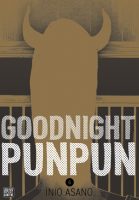
Goodnight Punpun, Omnibus 6Goodnight Punpun, Omnibus 6-7 (equivalent to Volumes 11-13) by Inio Asano. It feels like it’s been forever since I’ve read the fifth omnibus of Goodnight Punpun, but in reality it’s only been a few months. Perhaps it seems so long since Goodnight Punpun can be such a hard-hitting, exhausting experience which requires time to fully recover between volumes. (At least, that tends to be the case for me.) Goodnight Punpun is a surreal and extremely dark coming-of-age story. The series is intense, easily earning its explicit content warning with the manga’s portrayal of emotional, psychological, and physical violence. But while much of Goodnight Punpun is incredibly bleak, there are also moments of hope. Granted, that hope can also be extremely painful. Goodnight Punpun worked best for me when it was exploring the inner turmoil of its titular protagonist. I was actually frequently reminded of Osamu Dazai’s No Longer Human as the series approached its conclusion. The manga’s second major plot involving the cult wasn’t nearly as compelling or convincing, coming across as superfluous and tangential to me. But having now reached the end of Goodnight Punpun, I find that I want to read it again. The manga has multiple layers to it and I’m fairly certain there are elements that I either missed entirely or didn’t fully appreciate my first time through the series.

Waiting for Spring, Volume 1Waiting for Spring, Volume 1 by Anashin. Although the basic premise of Waiting for Spring makes it seem like the manga’s setup could easily slip into a reverse harem territory, after reading the first volume I don’t think that’s the direction Anashin will be taking with the series. However, it does still look like there will be at least some romantic rivalry involved. If there’s one thing that Mitsuki wants from high school, it’s to finally make some friends. She’s having a difficult time of it, though. The other young women in her class aren’t really hostile towards her, but she hasn’t been able to really connect with them, either. But things start to change when she gets mixed up with and is unexpectedly befriended by the four stars of the men’s basketball team. In general, most of the relationships in Waiting for Spring are very well done. The blossoming romance between Mitsuki and one of the basketball players is very sweet, but I’m particularly enjoying the friendships in the first volume. Mitsuki treats all of the guys like they’re real people. She isn’t blinded by their good looks and athletic talent (though she can still appreciate them) and doesn’t hesitate to give them what for when needed. This is actually something of a novelty for them, but it’s what allows their friendships with her to naturally develop. The already well-established relationships between the four young men are also very entertaining.

Attack on Titan Adventure: Year 850: Last Stand at Wall RoseAttack on Titan Adventure: Year 850: Last Stand at Wall Rose written by Tomoyuki Fujinami and illustrated by Ryosuke Fuji and Toru Yoshii. Growing up, I was a huge fan of the Choose Your Own Adventure series and other types of gamebooks. (I’ve even held onto a few particularly well-loved volumes from my youth.) And so I was very curious about Last Stand at Wall Rose, an interactive novel set during the Battle of Trost which takes place early on in Hajime Isayama’s original Attack on Titan manga. The mechanics of Last Stand at Wall Rose are interesting, incorporating elements of roleplaying games. Since I’m used to standard branching-plot stories, the book wasn’t as linear as I was expecting and in some ways was even more interactive than I thought it would be. Keeping pencil and paper nearby while reading can be very useful. Last Stand at Wall Rose was fun, but I did find some of the formatting and gameplay to be annoying. The most egregious issue was the amount of unnecessary flipping of pages which made the narrative more disjointed than it otherwise would have been. I also almost wish that page numbers hadn’t been included since the novel’s navigation is based on a system of independently numbered story sections rather than pages. (Also of note: Readers of the first printing of Last Stand at Wall Rose will want to refer to the errata posted online.)

Filed Under: FEATURES, My Week in Manga Tagged With: Anashin, attack on titan, Goodnight Punpun, Inio Asano, manga, Ryosuke Fuji, Tomoyuki Fujinami, Toru Yoshii, Waiting for Spring

How a Realist Hero Rebuilt the Kingdom, Vol. 4

October 21, 2017 by Sean Gaffney

By Dojyomaru and Fuyuyuki. Released in Japan by Overlap, Inc. Released in North America digitally by J-Novel Club. Translated by Sean McCann.

Realist Hero continues to keep my interest even as my teeth grind more and more at the mindset of the author and his characters, which is to its credit. Certainly there are similar isekais that did not hold my attention and have since been dropped (hi, Death March). It’s even more impressive given that, for the second volume in a row, this feels like a setup book, putting various things in place, introducing new technology that will no doubt be needed down the road, and (at last) finally answering one of the lingering questions of the series: why on Earth did the former King abdicate to Souma after merely having one conversation with him? And for fans of the romances, you not only get a new queen added to the mix, but Souma finally comes to terms with the fact that he is in this world for good, and that he is worthy of being loved, and is able to take that next step.

The girl on the cover is Roroa, who we’ve seen crop up in cameos before this book, here to save the day (despite Souma completely ruining her planned overdramatic entrance). Roroa is, in many ways, an Osaka stereotype transferred to the fantasy world: she not only has the sort-of-Southern accent, but is also far more of a merchant than she ever is a Princess. Yes, she’s the Princess in Amadonia, which is now fully incorporated into Elfrieden (which means the new name of the country is Friedonia, which I refuse to believe is by accident) and has presented herself as a prospective bride, Like other prospective brides we’ve seen in these sorts of series, she runs rings around Souma till he gives in. That said, she does look like a good addition, and it will be nice to see Souma try not to juggle economics quite as much. Oh yes, we also get a mad scientist girl, though she won’t be part of the harem. She is very much in the “ditzy teen genius” mode.

There is an extended plot here regarding slavery in this world, which I was less happy with. I accept that slavery in this fantasy world does not carry with it the baggage that it does in our own world, and that it seems to be more indentured servitude. But both Souma and the author seem to treat slavery as an intellectual problem to be solved, rather than as a monstrous evil. This is not unique to the isekai realm, of course, and I should be grateful that the protagonist doesn’t simply say “oh, slavery exists here” and shrug his shoulders like some others. It does add to my biggest beef with this series: it can be as dispassionate as its hero is, and as I’ve said before, seems like it’s one of those “dark/grey/independent” fics you always saw in Harry Potter written by teenagers who wondered what the world would be like if everything were more badass. (Hint: it involves hating Weasleys.) I like books to be fiction. I am less happy when they are thought experiments.

That said, when the book concentrates on its harem cliches, such as the relationship between Souma and Liscia, it may be less original, but it makes it more human. I hope we get a bit more of this going forward. I also hope the demon realm invades soon, as I really need Book 5 to not involve puttering around making new roads and discussing the Helsinki Accords. Mildly recommended to isekai fans.

Filed Under: how a realist hero rebuilt the kingdom, REVIEWS

Until Your Bones Rot, Vol. 1

October 20, 2017 by Katherine Dacey

When Lois Duncan passed away in 2016, fans and critics alike fondly remembered her as the author of I Know What You Did Last Summer, the first great psychological thriller for teens. Duncan’s story took a tried-and-true plot and retooled it for younger readers, focusing on a quartet of teens who commit and conceal a crime, only to be stalked by an anonymous avenger. While the plot was pure potboiler, Duncan’s characterizations were remarkably realistic, convincingly depicting the confusion, uncertainty, and rashness of the teenage mind under extreme duress.

Until Your Bones Rot explores similar terrain as I Know What You Did Last Summer. Bones’ teen protagonists — Shintaro, Akira, Haruko, Ryu, and Tsubaki — are bound by a gruesome crime they committed when they were eleven years old. Artist Yae Utsumi doesn’t immediately reveal what, exactly, they did, though he plants tantalizing clues throughout volume one: a fleeting glimpse of a nighttime ritual, a nightmarish vision of a bloodied face. The plot is set in motion by an anonymous phone call threatening to expose the group unless they meet the caller’s demands. Though the five initially work together to protect their secret, fault lines soon develop within the group, particularly between Akira — the group’s alpha male — and Shintaro, the odd man out.

Utsumi handles the set-up with finesse, but his tone is less assured. Some passages feel like they’ve been ripped from Love Hina, with bikini-clad girls fawning over the nebbishy Shintaro; other passages read more like MPD Psycho, with characters doing disgusting things to dead bodies; and still other passages play out like a Very Special Episode of The OC in which one character silently copes with an abusive boyfriend. None of these scenes feel like they belong to the same story; about the only common thread that binds them is Utsumi’s fanservice, which gratuitously eroticizes a scene of sexual assault.

It’s a pity that the first volume is so uneven, as Utsumi makes a game attempt to create believable characters. Tsubaki and Shintaro, in particular, behave like real teenagers whose emotional and sexual attraction to one another is so overwhelming that they don’t know how to have a normal conversation or behave like friends; their one-on-one interactions suggest that both were deeply scarred by their participation in the murder, but lack the words — or the maturity — to say how it effected them, instead turning to each other for physical comfort. That’s a level of psychological nuance that Lois Duncan herself might have appreciated, even if Utsumi takes a few narrative shortcuts to establish the dynamic between Tsubaki and Shintaro.

And that, in a nutshell, is what makes Until Your Bones Rot so frustrating: Utsumi clearly understands the teenage mind, but can’t decide if he’s writing a finely observed psychological thriller or a junior-league Saw. The push-pull of these two different storytelling modes robs the most gory scenes of their horror and the most dramatic scenes of their poignancy, yielding a muddled stew of blood, boobs, and tears. Someone should make him read I Know What You Did Last Summer for a few pointers on how to walk the line between Grand Guignol and Afterschool Special more convincingly.

UNTIL YOUR BONES ROT, VOL. 1 • STORY AND ART BY YAE UTSUMI • TRANSLATION BY URSULA KU • KODANSHA COMICS • RATED 16+ (SEX, PARTIAL NUDITY, GRAPHIC VIOLENCE)

Filed Under: Manga, Manga Critic, REVIEWS Tagged With: Horror/Supernatural, Kodansha Comics

Manga the Week of 10/25/17

October 19, 2017 by Sean Gaffney, Ash Brown, Anna N, Michelle Smith and MJ 1 Comment

SEAN: Honestly, thanks to Kodansha’s digital push, there are not even any medium weeks anymore. Every week is huge. Forever! Good news for manga fans, bad news for budgets.

ASH: So true!

SEAN: Dark Horse has the 3rd Hatsune Miku:Rin-chan Now!, theoretically: the title’s been bumped 3 weeks in a row.

ASH: That’s not nearly as timely as the title might suggest.

SEAN: J-Novel Club has a great deal out next week. We get the third volume of If It’s For My Daughter, I’d Even Defeat a Demon Lord, which remains heartwarming and family-oriented… FOR NOW. (ominous thunder)

The polarizing light novel In Another World With My Smartphone just finished a polarizing anime just in time for Vol. 5. I’m hoping it stays laid-back and ridiculous.

And we’re almost done with My Big Sister Lives in a Fantasy World with the penultimate book, Vol. 6.

As you can guess, there’s a lot of Kodansha. Princess Resurrection has its 19th volume, on the Del Rey rescue front.

On the print front, we see a 3rd Aho-Girl, a 7th Heroic Legend of Arslan, a 3rd Land of the Lustrous (now with an anime), a 2nd Love & Lies, and a 2nd Toppu GP, for all your motocross needs.

MICHELLE: In real life, I’ve no interest in motocross, but Kate’s review convinced me I would probably enjoy Toppu GP. I’ll check it out soon, hopefully.

ANNA: It does sound interesting!

ASH: I need to catch up on so many of these!

SEAN: The print “debut” is Fairy Tail S, which collects some of the special “omake” chapters that have been released over the course of the series. Expect a lot of fanservice, meaning both nudity *and* ‘shout outs to fans”.

On the digital front, first off, Cosplay Animal 2 apparently came out already, though is not at all major online places. Next week, we have the 5th Altair: A Record of Battles, the 2nd Grand Blue Dreaming, the 4th Kounodori: Dr. Stork, the 5th Real Girl,, the 2nd Shojo Fight!, and the 4th Tsuredure Children.

MICHELLE: Yay for more Shojo Fight! Not that I’ve been able to read the first one yet…

ANNA: So behind, I bought the first couple volumes of Altair but haven’t read it yet. Maybe too much digital????

SEAN: There will also be a horror manga being debuted by Kodansha, but we don’t know what it is yet. Be prepared!

ASH: Always prepared for more horror manga.

SEAN: One Peace has everyone’s favorite girl and bear manga, Kuma Miko. This is the 6th volume.

Seven Seas has a plethora of titles as well. There’s a 2nd Alice & Zoroku, the third volume of Hatsune Miku spinoff Bad End Night, the 6th Mushoku Tensei: Jobless Reincarnation (always #1 on lists of “where is the light novel this was adapted from?), and a 4th Please Tell Me, Galko-chan!. That’s… quite a variety of genres there.

Their debut is Yokai Rental Shop (Yokai Nii-san), whose description makes it sound like xxxHOLIC with a gender-reversed Yuko. It runs in Square Enix’s GFantasy, and I think is that rare Seven Seas title that Michelle and MJwill want to check out.

MICHELLE: Interesting! I had been curious about the creator’s other licensed series, Nightmare Inspector, but never read any of it.

ASH: I’m very excited for this one; I really liked Nightmare Inspector!

MJ: Oooooooh, honestly I’ll check out anything from GFantasy. Okay, Seven Seas, you have intrigued me!

SEAN: The title that interests me the most this week is from Vertical Comics, who are debuting a manga series written by NISIOISIN. Imperfect Girl (Shoujo Fujuubun). Like a lot of Nisio titles, it has a supernatural bent, a twisted female lead, and lots of talking. The artist will also be familiar to North American readers for the series Sankarea. This series ran for 3 volumes in Young Magazine, so should be nice and compact.

ANNA: I’m cautiously intrigued.

ASH: I’m also rather curious about this one.

SEAN: Lastly, Viz has some digital-only titles as well, with the 3rd élDLIVE and the 2nd The Emperor and I.

Any of this interest you? Or are you saving up for MANGAGEDDON the week after next?

Filed Under: FEATURES, manga the week of

Chihayafuru, Vol. 4

October 19, 2017 by Sean Gaffney

By Yuki Suetsugu. Released in Japan by Kodansha, serialization ongoing in the magazine Be Love. Released in North America digitally by Kodansha Comics. Translated by Ko Ransom.

The sign of a good series is that you care about the characters as if they were real people, and take joy in their triumphs and grieve at their setbacks. This can sometimes backfire, however, when you see the setbacks coming and think to yourself “Oh noooooo!”. The moment I saw Chihaya’s head throb, I knew immediately what was going to happen by the end of the volume, and it hurt. This is why this review is running somewhat late, because I really did not want to read what I knew was going to happen. It comes after a half volume of small triumphs and achievements, as they quality for the National Tournament, win over their faculty adviser, and slowly come together as a team, each character getting a little bit more to do and more for us to identify with. Then I saw that throbbing head. And I said “…she’s sick.” And yep. SO FRUSTRATING.

Arata gets the cover this time around, and fortunately also gets a chunk of the narrative, as we get to see the strong relationship he had with his grandfather from his POV, helping to explain why he was so devastated he abandoned Karuta. It’s portrayed very realistically: his grandfather is a vibrant, active guy who loves Karuta, but then he has a stroke, which brings memory loss and rehabilitation. And of course, this being a manga and thus obliged to observe the occasional cliche, he goes to the tournament and leaves his grandfather alone for a few hours. We all know how that’s going to turn out. It really helps bring Arata into focus and remind us that he is eventually going to be a major player in this series again, and I imagine seeing Chihaya and company here will act as a catalyst.

As for Chihaya, she does her best, and tries hard to hide her illness form everyone, but in the end they have to forfeit after she collapses. Naturally, after waking back up, she’s completely devastated, and I suspect Vol. 5 is going to have a lot of depression and self-hatred. We’ve been seeing a lot of sports titles over here lately, and usually when there’s something like this it’s a physical injury, such as a sprained ankle or somesuch. Of course, they usually deal with physical sports such as basketball or volleyball. When you have something like Karuta, which is a lot more physical than I expected but still played seated and relying primarily on memorization and strategy, a fever or nasty cold can be just as bad as that sprained ankle. It’s to the credit of the team that they kept playing after she had to forfeit, but I have a sneaking suspicion that we’ll pick up after the tournament and deal with the fallout.

Chihayafuru remains one of the best digital titles Kodansha is releasing at the moment, and I hope my review of Vol. 5 (already out) will come sooner rather than later.

Filed Under: chihayafuru, REVIEWS

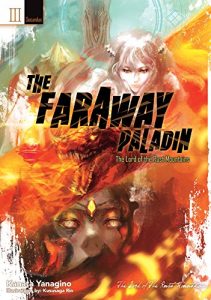
The Faraway Paladin: The Lord of the Rust Mountains

October 17, 2017 by Sean Gaffney

By Kanata Yanagino and Kususaga Rin. Released in Japan as “Saihate no Paladin” by Overlap. Released in North America digitally by J-Novel Club. Translated by James Rushton.

I’m reviewing this as one giant book, but it actually came out as two books here, called ‘Primus’ and ‘Secundus’ – in fact, Amazon thinks that those are the titles, and forgot about the whole Rust Mountains thing. It works better to see them as one big book, though, which is what the author intended. The first volume simply stops, and the second picks up right where it left off – there’s no real attempt to separate them. As for the plot, our square-jawed hero and his elf friend are here to take down an ancient dragon, helped out by some old friends and some new dwarves, including one who becomes Williams’s squire, despite being of royal blood. He is told repeatedly that if he fights the dragon now he will die, and he should gain more power and influence by letting a few people be killed so he can take it down more easily. As you might imagine, that is not how William rolls.

William is the star of this series, and the narrative fits itself around him, meaning it too tends to be like he is – straightforward, a bit humorless, and painfully, PAINFULLY earnest. This is actually the main selling point of The Faraway Paladin, which is miles away from any other fantasy light novel we have out there – there’s not an ounce of cynicism or irony in it. William is Good and True, and he can do impossible things thanks to the help of his friends, the training of his parents, and MUSCLES, which he points out are awesome several times throughout the book. The closest we get to cynicism is the villain, who is a very well-done ancient dragon, and would very much like to tempt William into allying with him to that he can sow chaos. He should know better.

The book reads quickly, and the action sequences are very well done, with no confusion about what is happening at any time. I was a little annoyed with the introduction of a tsundere elf girl, whose sole purpose seems to be to get rid of the ho yay that existed between William and Menel (there’s a lot of teasing of William for not having found a girlfriend yet, further driving the point home). Al is a good addition to the cast – it fits that someone like William gets a squire that’s almost as serious-minded as he is, and the two work well together. The translation is also good, though the Kindle version I have has both the dragon and the Gods speaking in bold text, which can get very confusing when three of them are all speaking at once – perhaps one should have been italicized instead.

Again, if you want to read a light novel but are thoroughly sick of the cliches of the genre, this is an absolute must-read. It’s the Lord of the Rings starring Superman, basically. I look forward to seeing where it goes next.

Filed Under: faraway paladin, REVIEWS

Pick of the Week: Autumn Manga

October 16, 2017 by Sean Gaffney, Michelle Smith, Katherine Dacey, Anna N and Ash Brown Leave a Comment

MICHELLE: Although it technically came out last week, it wasn’t really on my radar ’til this week, so I’m going to go with Kokkoku: Moment by Moment. I don’t read a lot of seinen thrillers, and this one sounds interesting!

SEAN: I’ve always been a big fan of Nichijou, so my pick this week will be the Bold volume of Helvetica Standard. Will it be strange? I hope it’s strange.

KATE: With Halloween right around the corner, my vote goes to Until Your Bones Rot (Hone ga Kusaru Made); it sounds a little like I Know What You Did Last Summer, only nastier. I’m not sure if Kodansha will be releasing it on Tuesday, though, since Amazon and ComiXology seem to have scrubbed all references to the series from their pages.

ASH: There’s not a lot coming out this week that I’m actively following, but I did enjoy the first half of Assassin’s Creed: Awakening and am curious to see how it ends. (I was initially drawn to the manga due to the involvement of Kenji Oiwa who was also the artist of the manga adaptation of Otsuichi’s Goth, which may be even more seasonally appropriate.)

ANNA: It is my known tendency to go for whatever happens to be light and fluffy shoujo and I’m not going to stray from tradition. My pick is the second volume of Beasts of Abigaile, because I feel it is important to celebrate the month of October with reverse harem werewolf manga.

Filed Under: PICK OF THE WEEK

My Week in Manga: October 9-October 15, 2017

October 16, 2017 by Ash Brown

My News and Reviews

Last week at Experiments in Manga I posted the Bookshelf Overload for September which includes lists of some of the manga and other books that I picked up last month (along with some brief commentary). Looking forward to future manga releases, Vertical Comics recently announced two new titles: Pop Team Epic by Bkub Okawa and The Delinquent Housewife! by Yoko Nemu. Seven Seas also had an interesting announcement to make. In addition to two licenses–Yuuna and the Haunted Hot Springs by Tadahiro Miura and World’s End Harem by Link and Kotaro Shono–Seven Seas is launching Ghost Ship, a new imprint for the publishers’ more mature titles.

Quick Takes

Captain Harlock: Dimensional Voyage, Volume 1Captain Harlock: Dimensional Voyage, Volume 1 written by Leiji Matsumoto, illustrated by Kouiti Shimaboshi. Although I immediately recognize the name of Captain Harlock, Dimensional Voyage is actually the first incarnation of his story that I’ve read or watched except for the short crossover manga  included in Kodansha Comics’ recent release of Queen Emeraldas. (Emeraldas actually makes a brief appearance in the first volume of Dimensional Voyage, too.) My understanding is that Dimensional Voyage is either a reboot or retelling of Matsumoto’s original Captain Harlock manga, written by Matsumoto himself but illustrated by a different artist. The series is completely accessible to readers who are unfamiliar with Harlock though I suspect that established fans will find the manga to be appealing as well. Shimaboshi’s designs are obviously based on Matsumoto’s though many of the main characters are much more conventionally attractive in this version. Both the dialogue and the artwork of Dimensional Voyage tends to be very dramatic and at times even melodramatic, but I don’t at all consider that to be a bad thing. As for the story itself, the manga is just getting started. The first volume establishes the basic setting and premise, but much of it is spent introducing the legends surrounding Harlock, the series’ titular space pirate.

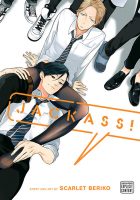
Jackass!Jackass! by Scarlet Beriko. I forget exactly how Beriko’s work as a whole was first brought to my attention, but my curiosity was immediately piqued by Jackass! when SuBLime announced that it would be publishing the manga. It’s not a terribly uncommon trope in boys’ love for two friends to ultimately fall deeply in love with each other, so Jackass! isn’t particularly surprising in that way. However, it is the first manga that I’ve read in the genre in which women’s stockings provide the initial impetus for a relationship to take that particular turn. Keisuke’s best friend Masayuki has a leg fetish. In a rather awkward turn of events, and much to Keisuke’s embarrassment, Masayuki catches a glimpse of him wearing his sister’s pantyhose. Masayuki is instantly smitten with Keisuke’s perfect legs, which understandably complicates their relationship somewhat. At times Jackass! can be unexpectedly sweet and even touches on more sobering subject matter like homophobia, but for the most part it reads as a comedy not to be taken too seriously. Jackass! includes a strong supporting cast, including Keisuke’s older sister and his confidently gay cousin, which add a great deal to the manga; the entertaining and occasionally ridiculous character interactions are the highlight of the story. I enjoyed Jackass! and would certainly be interested in reading more of Beriko’s work.

Kiss Me at the Stroke of Midnight, Volume 1Kiss Me at the Stroke of Midnight, Volume 1 by Rin Mikimoto. Hinana is known for her seriousness so most of her friends and classmates are unaware that she’s also a romantic hoping to find a fairy tale-like love. Kaede is a celebrity and rising star, admired for both his talent and incredibly good looks. The two of them meet, somewhat by chance, when Kaede is shooting on location at Hinana’s high school for an upcoming film and they end up hitting it off. Mikimoto’s artwork in Kiss Me at the Stroke of Midnight comes across as attractive but a little generic overall except for the hilariously exaggerated reaction shots drawn for comedic effect. And there is plenty of humor in the series. Kaede, idolized by his fans, does not at all have the personality that they would expect. He can be kind but, despite how he generally presents himself professionally, Kaede’s not exactly a refined gentleman. He’s also really into butts, and isn’t ashamed of that fact. Most people would probably be slightly taken aback by this, but Hinana finds his candidness refreshing. (I appreciated that aspect of his personality as well.) I was a little surprised by how much I enjoyed the first volume of Kiss Me at the Stroke of Midnight. I’m not overly interested in manga about celebrities, but Kaede is such a weirdo and Hinana is likeable, so I’m curious to see what turns their relationship might take from here.

Filed Under: FEATURES, My Week in Manga Tagged With: Captain Harlock, Kiss Me at the Stroke of Midnight, Kouiti Shimaboshi, Leiji Matsumoto, manga, Rin Mikimoto, Scarlet Beriko

Bookshelf Briefs 10/16/17

October 16, 2017 by Michelle Smith and Sean Gaffney Leave a Comment

Ace of the Diamond, Vol. 5 | By Yuji Terajima | Kodansha Comics (digital only) – It’s been a while since the last volume of Ace of the Diamond and I’d forgotten how much I enjoy it! Eijun, who began the series as a hothead, has matured without losing the emotional side that makes him sympathetic. Seeing him not only grow from Chris’ tutelage and execute one truly amazing pitch during their last inning of play together but then bawl his eyes out when he makes varsity and Chris doesn’t is, honestly, pretty darn sweet. He may be brash, but he’s a good kid. Even better, we get more insight into Furuya, who is currently stronger in pitching but lacks in people skills. I love that he doesn’t see himself as better than Eijun at all and is, in fact, motivated by him to try harder. This is such a good series and I delight in the knowledge that there are 40+ volumes still to come. – Michelle Smith

Chihayafuru, Vol. 5 | By Yuki Suetsugu | Kodansha Comics (digital only) – Well, this volume is lacking on miracles, as the Mizusawa High team makes it only a couple more rounds without Chihaya (who has fallen ill) before they are defeated. Still, there’s another day for the individual tournament, and it’s here that Chihaya meets the reigning queen, Shinobu Wakamiya, a high-school first year who trounces Chihaya by a twenty-card margin. This is completely what Chihaya needs, though, since now her dreams have achieved a solid shape: do what it takes to beat Shinobu. Taichi, meanwhile, is determined to attain his class A ranking so that he can face Arata. I absolutely love that he’s decided to devote his entire self to karuta now and look forward to all of the intense rivalty to come! – Michelle Smith

Descending Stories, Vol. 3 | By Haruko Kumota | Kodansha Comics – OK, there are extended flashbacks, and then there are flashbacks that make you think “why didn’t you just tell this story instead?,” and I think that’s what we have here. Don’t get me wrong; I’m greatly enjoying Kikuhiko and Sukeroku’s story, and the love triangle that seems to be bubbling beneath them both. I also liked the extended rakugo performance we saw here, a reminder that that’s really what the series is about. But I admit I sort of agreed with Yotaro in the afterword—isn’t this his story? I wouldn’t blame the reader for having forgotten all about him by the time we get back to the present in what I assume will be the next book. Good, just oddly paced. – Sean Gaffney

Flying Witch, Vol. 3 | By Chihiro Ishizuka | Vertical Comics – I have to admire a series that is always peaceful and soothing, yet not boring. In this volume Makoto and her cousins visit a cafe recommended by Akane, where the waitress is a shy ghost and where Makoto meets a witch her age named Anzu. She receives a hideous souvenir t-shirt from Akane, shows Nao cute edamame blossoms, and picks a plethora of radishes. A witchy newspaper delivers news about a flying whale, which the girls go see. Then they leave when they get hungry and go home to have hotcakes. And that’s it. Makoto can’t even summon any worries to ask about during a fortune-telling session. But, y’know, I’m okay with that. Plus, there are cute cats, one of which turns out to be an anthropology buff. There are times I’m definitely in the mood for manga like this. – Michelle Smith

Food Wars!: Shokugeki no Soma, Vol. 20 | By Yuto Tsukuda and Shun Saeki | Viz Media – Erina gets the cover here, and the bulk of the story as well. We’re finally starting to dig deep into her psyche, after so many volumes casting her as cold, grumpy, annoying, and unlikable. It stems from abuse, naturally, and also being exposed to Soma’s father, who showed her there was a different way to view food. That said, I suspect most Food Wars! fans have said “too little too late,” but that will just lead them to heartache. Meanwhile, to no one’s surprise, Soma did not win against the top chef of the school, but it’s alright as he gets out of his punishment on a technicality. Now we head to the next set of exams, and if you don’t do things the Azami way, you’ll be expelled. So now what? Can’t wait to find out. – Sean Gaffney

Giant Killing, Vol. 6 | By Masaya Tsunamoto and Tsujitomo | Kodansha Comics (digital only) – ETU has managed their first win of the season, and the fans are fired up. They manage to extend the streak to two games, but Sera is growing frustrated with his inability to score and his journey from self-doubt to determination progresses throughout the volume. Meanwhile, the old faithful trope “the previously unmentioned injured teammate returns” comes into play, with oddball Natsumi making his debut. It’s interesting to see a tried-and-true sports manga staple alongside the elements that make Giant Killing stand out from others in its genre, namely that a pro soccer season is way different from elimination-style tournaments, allowing the narrative to swiftly hop from match to match, sometimes skipping a few, as Tatsumi assesses the team’s mood after a series of draws. As a result, this series continues to feel fresh. – Michelle Smith

Haikyu!!, Vol. 16 | By Haruichi Furudate | VIZ Media – Karasuno has reached the semifinal round of the Miyagi Prefecture qualifier and it’s a rematch with Aoba Johsai, which turns out to be an immensely entertaining nail-biter that goes to three sets. Hinata and Kageyama potentially discover a new move they can work on in the future, each member of the team gets a triumphant moment, and Yamaguchi overcomes his nerves to achieve his first success with the jump floater serve. I always love it when characters who’d been somewhat in the background get their turn to shine, and I also loved that we actually got to see some interaction and evolution amongst the Aoba Johsai team, making one even root for them a little bit. Be forewarned, though: there’s an excruciating cliffhanger at the end of this volume! – Michelle Smith

Haikyu!!, Vol. 16 | By Haruichi Furudate | Viz Media – After seeing Yamaguchi choke under pressure last game, the highlight of this book is undoubtedly the start of it, where he manages to push past that failure and show off the serving that he’s learned—and it’s terrific. As for the rest, it’s back and forth and down to the wire, as we knew it would be. Aoba Johsai are really good, and we get a few flashbacks to show us that they’ve had their own ups and downs just like our heroes—including a player who tends to get FILLED WITH RAGE who desperately needs discipline, and manages to do it himself here. And of course loving shots of volleyball, which you can tell the author really loves. Looks like well see the end next time—who will pull it off? -Sean Gaffney

Filed Under: Bookshelf Briefs

Juni Taisen: Zodiac War

October 14, 2017 by Sean Gaffney

By NISIOISIN and Hikaru Nakamura. Released in Japan by Shueisha. Released in North America by Viz Media. Translated by Nathan A. Collins.

I wasn’t sure what to make of this when I first heard of it, and now that I’ve finished it, I’m still not quite sure. It was written two years ago, and the anime is just coming out now, so it seems like it wasn’t written solely to be a TV tie-in (Nisio has done those before, writing books in the Death Note and xxxHOLIC franchises). But honestly, it doesn’t have the same strong authorial voice that I’ve grown used to from the Monogatari and Zaregoto series – if nothing else, it has far fewer puns. If I’m going to be honest it feels like it’s a book that was written because a bit of cash was needed, and someone said “can you write us a battle royale-style book that we could potentially use later?”. Even Nakamura’s illustrations are a bit disappointing, as they’re basically just character design – if you’ve seen the cover, you’ve seen the illustrations.

That said, this isn’t that bad a book, and it gets better as it goes along. As I mentioned, the plot is essentially a Battle Royale, as 12 fighters of various types and backgrounds, all seemingly connected with the Chinese Zodiac, have been brought together to fight each other to the death, with the last one standing getting anything they wish. At first it seems like the morality discussions we get, both via internal monologue and external dialogue, are merely padding while we wait for the battles, but as the book goes on it becomes clearer that the battles are padding for the morality discussion. This should not be a surprise, given this author – even in this book, which does not feature too many incredibly talkative people, there’s still a lot of discussion about the nature of good and evil, and what it means to be a good person.

The nature of the series means that even talking about what a character says towards the end of the book can be spoiling, given it’s a ‘kill someone off every chapter’ sort of book. I will say that it’s exactly as advertised – the start of the book said 11 of the 12 would end up dead, and sure enough, that’s what happens. This includes the worst of the bad guys and the most sympathetic of the good guys. It does seem to indicate that, while wars are bad, pacifism is not necessarily the best ideal you can strive for – one of the characters, Monkey, reminds me an awful lot of Tsubasa Hanekawa, and that may be intentional. My favorite chapters were towards the end, as two of the better fleshed-out fighters discuss doing the right thing, and it’s the only time in the book you actually want to see more than one person survive – for the most part, these aren’t nice people.

Watchers of the anime will likely get even more out of this series – Nisio gave each fighter a one-page “biography” in the book, but the anime is expanding said biography to give a lot more backstory to everyone. Likewise, there’s a sequel manga running at the moment in Jump, which I believe Viz has also licensed. And they just announced a sequel novel to this book, with (presumably) a new cast. So in the end maybe this was meant to be work-for-hire to create a franchise. Still, it’s not without interest.

Filed Under: juni taisen, REVIEWS

Bookshelf Overload: September 2017

October 13, 2017 by Ash Brown

Another month, another collection of interesting stuff made its way into my domicile! It’s been a while since I’ve gotten a box full of review copies, but Kodansha Comics did send a few things my way in September. Of those, I was most excited to see the debut of Kore Yamazaki’s Frau Faust, which I already had my eyes on due to my fondness for the creator’s other series in English, The Ancient Magus’ Bride. The other September debut that I was particularly happy to see, and one of my most anticipated releases of the year, was the first omnibus of Takako Shimura’s Sweet Blue Flowers. (I should hopefully have my review of that written up and posted soon.) On the other end of the spectrum, last month I also managed to snag complete sets of a couple of out-of-print and somewhat difficult to find manga series for a good price–Mizuho Kusanagi’s NG Life and Makoto Kobayashi’s What’s Michael?–which pleased me immensely.

Manga!
Aho-Girl, Volume 1 by Hiroyuki
Appleseed Alpha by Iou Kuroda
A Bride’s Story, Volume 9 by Kaoru Mori
Blame, Omnibus 3 by Tsutomu Nihei
Bungo Stray Dogs, Volume 4 by Kafka Asagiri
Captain Harlock: Dimensional Voyage, Volume 1 written by Leiji Matsumoto, illustrated by Kouiti Shimaboshi
Fairy Tail: Rhodonite by Kyouta Shibano
Frau Faust, Volume 1 by Kore Yamazaki
Golden Kamuy, Volume 2 by Satoru Noda
Haikyu!!, Volume 16 by Haruichi Furudate
Kigurumi Guardians, Volume 1 by Lily Hoshino
Kiss Me at the Stroke of Midnight, Volume 1 by Rin Mikimoto
NG Life, Volumes 1-9 by Mizuho Kusanagi
Princess Jellyfish, Omnibus 6 by Akiko Higashimura
Sweet Blue Flowers, Omnibus 1 by Takako Shimura
That Time I Got Reincarnated as a Slime written by Fuse, illustrated by Taiki Kawakami.
Waiting for Spring, Volume 1 by Anashin
What’s Michael?, Volumes 1-11 by Makoto Kobayashi
Yona of the Dawn, Volume 8 by Mizuho Kusanagi

Comics!
Breaks, Volume 1 by Emma Vieceli and Malin Ryden
The Clerics of Midsummer by Victoria Grace Elliott
Empowered, Omnibus 3 by Adam Warren
Finding Molly: An Adventure in Catsitting written by Justine Prado, illustrated by Jenn St-Onge
Finding Peace by Jordan Alsaqa and Marie Enger
Fresh Romance, Volume 2 edited by Maytal Gilboa
Galahad and the Far-Off Horizon written by Hansel Moreno
M.F.K. by Nilah Magruder
Minority Monsters by Tab Kimpton
The Mystery of La Luna written by Rhiannon Rasmussen-Silverstein, illustrated by Ainsley Yeager
Not Stray by Wai Au
Off the Ice by Wai Au
Sex Fantasy by Sophia Foster-Dimino
Taproot by Keezy Young
Venture Forth by Ainsley Yeager
Verona written by Emily Dell, illustrated by Bryndon Everett and Mollie Helms
White Rice Fish by Wai Au

Artbooks!
Bubbly by Meredith McClaren

Novels!
Attack on Titan Adventure: Year 850: Last Stand at Wall Rose by Tomoyuki Fujinami
The Black Tides of Heaven by Jy Yang
Death’s End by Cixin Liu
Last Words from Montmartre by Miaojin Qiu
Quantum Devil Saga: Avatar Tuner, Volume 2 by Yu Godai
The Part of Me That Isn’t Broken Inside by Kazufumi Shiraishi
The Red Threads of Fortune by Jy Yang
Sweet Bean Paste by Durian Sukegawa
Yesterday by Felicia Yap

Anthologies!
The Ginza Ghost and Other Stories by Keikichi Osaka
Into the Light: An Anthology of Literature by Koreans in Japan edited by Melissa L. Wender

Nonfiction!
Womansword: What Japanese Words Say About Women by Kittredge Cherry

Filed Under: UNSHELVED

Manga the Week of 10/18/17

October 12, 2017 by Sean Gaffney, Ash Brown, Anna N, Michelle Smith and MJ 2 Comments

SEAN: There’s a little something for everyone next week, though let’s start with something announced too late to be on last week’s list.

Kodansha continues to defy me, so their new digital release is already out: Kokkoku: Moment by Moment, an award-nominated thriller that ran in Morning Two. Seems to feature time stopping?

MICHELLE: This one looks pretty interesting!

MJ: This is the one thing on this week’s list that possibly interests me.

ANNA: I agree, I am intrigued by this title.

ASH: It does seem to have great potential!

SEAN: In titles actually out next week, J-Novel Club has the 4th volume of the runaway hit (at least comparatively) How a Realist Hero Rebuilt the Kingdom.

Back to Kodansha, which has a whole pile of ongoing digital: new volumes of Hotaru’s Way (4), House of the Sun (8), Kasane (6), and Peach Heaven (7).

MICHELLE: I am slowly working through House of the Sun and it’s growing on me.

SEAN: They’ve also got some ongoing print, with a new Inuyashiki (9) and Nekogahara: Stray Cat Samurai (3).

ASH: I’ve fallen behind on both of these series, but I did get a kick out of the first volume of Nekogahara.

SEAN: Their new digital release next week is Until Your Bones Rot (Hone ga Kusaru Made), a disturbing series that was originally run on MangaBox. Seems to be horror?

ASH: I’m always ready for more good horror manga.

SEAN: One Peace has a 9th volume of The Rise of the Shield Hero. Will his fall come soon?

Seven Seas gives us a 2nd Beasts of Abigaile, whose first volume I seem to recall I found intriguing, and a 3rd Ghost Diary, which I found slightly less intriguing.

ANNA: I liked the first volume of Beasts of Abigaile and will check out the second. It is fluffy paranormal reverse harem fun!

SEAN: Their debut is another in the Hatsune Miku franchise, called Hachune Miku’s Everyday Vocaloid Paradise. As astute readers might guess by the ‘chu’, it’s a superdeformed comedy title.

Titan has the 2nd, and I believe final, volume of Assassin’s Creed: Awakening.

ASH: It is the conclusion, which surprises me a little; there’s a lot to tie up from the first volume!

Vertical gives us a semi-spinoff of Nichijou, Helvetica Standard, which comes in two volumes. The first, Bold, debuts next week. It seems to be part artbook, part spinoff, part other?

Viz has a 19th Terra Formars, as well as a 9th Ultraman.

And they also debut Tokyo Ghoul: re, which as far as I can tell is more of a continuation of Tokyo Ghoul than a sequel.

So wassamotta for you this week?

Filed Under: FEATURES, manga the week of

H.P. Lovecraft’s The Hound and Other Stories

October 11, 2017 by Katherine Dacey

If you admire the fecundity of H.P. Lovecraft’s imagination but not the turgidity of his prose, you might find Gou Tanabe’s manga adaptations of The Hound and Other Stories an agreeable alternative to the originals. Tanabe sticks close to the source material while pruning away the florid language characteristic of Lovecraft’s writing, offering more polished — and, frankly, unnerving — versions of three early works: “The Temple,” first published in 1925, “The Hound,” from 1922, and “The Nameless City,” from 1921.

Tanabe is no stranger to literary adaptations; he’s also tackled works by Maxim Gorky (“Twenty-Six Men and a Girl”), Franz Kafka (“A Hunger Artist”), and folklorist Lafcadio Hearn (“The Story of O-Tei”). Lovecraft’s writing, however, occupies a unique place in Tanabe’s oeuvre, as he’s published adaptations of other Lovecraft stories — “The Color Out of Space” (1927) and “The Haunter of the Dark” (1935)” — and expanded Lovecraft’s novella “At the Mountains of Madness” into an ongoing, multi-volume series. Reflecting on his fascination with Lovecraft, Tanabe reverentially describes him as a “priest of his own Mythos,” capable of summoning “unknowable darkness” on the page. “By illustrating his stories,” Tanabe declares, “I intend to become an apostle of the gods he made” (172).

And while Tanabe’s sentiments are a little purple, his affinities with Lovecraft are evident in his artful translation of words into images. Consider “The Temple,” a tense drama set aboard a German U-boat in the waning days of World War II. While Lovecraft’s narrator baldly ascribes the crew’s irrational behavior to “peasant ignorance” and “soft, womanish” dispositions, Tanabe focuses instead on the extraordinary claustrophobia of their environment, cramming every panel with ducts, pipes, valves, levers, and gauges; the walls of the ship seem to press in on the characters as their disabled submarine plunges to its doom. That sense of entombment is heightened by Tanabe’s stark use of tone in the story’s final act, when the light emanating from the ship barely pierces the jet-black depths of the ocean. A fleeting glimpse of a dolphin — normally a symbol of innocent playfulness — becomes a sinister omen when lit from below, its smiling visage transformed into a sneer.

Tanabe also demonstrates a flair for drawing lost cities, evoking the grandeur and mystery of ancient civilizations through sheer scale: his temples and monuments are so large that they spill off the page, while their interiors are cramped and dark, more cave than castle. In “The Nameless City,” for example, we follow the narrator through a labyrinth of dark tunnels, his torch briefly illuminating objects and surfaces that hint at the true nature of the city’s inhabitants. These panels culminate in an extraordinary two-page spread revealing a Romanesque fresco that, on closer inspection, is populated not with demons, angels, and men, but reptilian monsters arranged in concentric circles around a Christ-like figure.

The revelation of who lived there — and how they treated their human subjects — provides a moment of thematic continuity with the other two stories in the anthology. As writer Robert M. Price explains in his forward to The New Lovecraft Circle, Lovecraft’s heroes seek forbidden knowledge, “gradual[ly] piecing together… clues whose eventual destination one does not know.” Price elaborates:

The knowledge, once gained, is too great for the mind of man. It is Promethean, Faustian knowledge. Knowledge that destroys in the moment of enlightenment, a Gnosis of damnation, not of salvation. One would never have contracted with Mephistopheles to gain it. One rather wishes it were not too late to forget it. (xviii–xix)

At the same time, however, the narrator’s terrible discovery exemplifies another important strand in Lovecraft’s writing: a sense of cosmic indifferentism, the idea that the universe is, in Lovecraft’s words, “only a furtive arrangement of elementary particles” that “presage of transition to chaos.” As Lovecraft observed,

The human race will disappear. Other races will appear and disappear in turn. The sky will become icy and void, pierced by the feeble light of half-dead stars. Which will also disappear. Everything will disappear. And what human beings do is just as free of sense as the free motion of elementary particles. (Riemer)

Viewed in this light, the rendering of the fresco seems less like a simple artistic choice by Tanabe than an expression of Lovecraft’s own cosmic indifferentism. By parodying the Christian iconography enshrined on Medieval cathedral walls, ceilings, and portals, Tanabe points both the futility of belief — it didn’t save the monsters, after all — and the inevitability that mankind will repeat the cycle of birth, life, and death that the monstrous fresco depicts.

And if all of this sounds like the ruminations of a freshman philosophy major, fear not; The Hound and Other Stories can still be enjoyed on its own merits. All three stories are well paced and vividly rendered, each embodying the Romantic definition of the sublime — “all that stuns the soul, all that imprints a feeling of terror”— while offering the kind of satisfying twists that pulp fiction readers craved in the 1920s. And for those more invested in the Lovecraft mythos, The Hound provides an opportunity to revisit these stories afresh, seeing them through the eyes of an artist who has dedicated his career to finding the poetry, the mystery, and the weirdness in Lovecraft’s words. Recommended. 

References

Price, Robert M. “Introduction.” The New Lovecraft Circle. Del Rey, 2004, xiii-xxvi.

Riemer, Andrew. “A Nihilist’s Hope Against Hope.” Sydney Morning Herald, 28 June 2003, http://www.smh.com.au/articles/2003/06/27/1056683892274.html. Accessed on 11 Oct. 2017.

Tanabe, Gou. H.P. Lovecraft’s The Hound and Other Stories. Translated by Zack Davisson, Dark Horse, 2017.

Filed Under: Manga, Manga Critic, REVIEWS Tagged With: Dark Horse, Gou Tanabe, H.P. Lovecraft, Horror/Supernatural

  • « Go to Previous Page
  • Page 1
  • Page 2
  • Page 3
  • Page 4
  • Go to Next Page »
 | Log in
Copyright © 2010 Manga Bookshelf | Powered by WordPress & the Genesis Framework