• Skip to primary navigation
  • Skip to main content
  • Skip to primary sidebar
  • Home
  • About Us
    • Privacy Policy
    • Comment Policy
    • Disclosures & Disclaimers
  • Resources
    • Links, Essays & Articles
    • Fandomology!
    • CLAMP Directory
    • BlogRoll
  • Features & Columns
    • 3 Things Thursday
    • Adventures in the Key of Shoujo
    • Bit & Blips (game reviews)
    • BL BOOKRACK
    • Bookshelf Briefs
    • Bringing the Drama
    • Comic Conversion
    • Fanservice Friday
    • Going Digital
    • It Came From the Sinosphere
    • License This!
    • Magazine no Mori
    • My Week in Manga
    • OFF THE SHELF
    • Not By Manga Alone
    • PICK OF THE WEEK
    • Subtitles & Sensibility
    • Weekly Shonen Jump Recaps
  • Manga Moveable Feast
    • MMF Full Archive
    • Yun Kouga
    • CLAMP
    • Shojo Beat
    • Osamu Tezuka
    • Sailor Moon
    • Fruits Basket
    • Takehiko Inoue
    • Wild Adapter
    • One Piece
    • After School Nightmare
    • Karakuri Odette
    • Paradise Kiss
    • The Color Trilogy
    • To Terra…
    • Sexy Voice & Robo
  • Browse by Author
    • Sean Gaffney
    • Anna Neatrour
    • Michelle Smith
    • Katherine Dacey
    • MJ
    • Brigid Alverson
    • Travis Anderson
    • Phillip Anthony
    • Derek Bown
    • Jaci Dahlvang
    • Angela Eastman
    • Erica Friedman
    • Sara K.
    • Megan Purdy
    • Emily Snodgrass
    • Nancy Thistlethwaite
    • Eva Volin
    • David Welsh
  • MB Blogs
    • A Case Suitable For Treatment
    • Experiments in Manga
    • MangaBlog
    • The Manga Critic
    • Manga Report
    • Soliloquy in Blue
    • Manga Curmudgeon (archive)

Manga Bookshelf

Discussion, Resources, Roundtables, & Reviews

Archives for July 2014

My Week in Manga: July 14-July 20, 2014

July 21, 2014 by Ash Brown

My News and Reviews

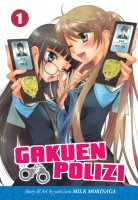
Two reviews were posted at Experiments in Manga last week, one of a manga and one not. The first review was part of my Year of Yuri monthly review project. I took a look at Milk Morinaga’s Gakuen Polizi, Volume 1, which is quite different from her other work currently available in English. The first volume at least is less of a romance and more of a buddy cop story, but it’s still fairly entertaining. (She does promise that more of the drama in the second volume will be romance-related and less crime-related, though.)

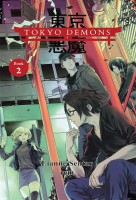
My second review last week was of Tokyo Demons, Book 2: Add a little Chaos, a novel written by Lianne Sentar with illustrations by Rem. In case it isn’t clear from the review, I absolutely adore Tokyo Demons. It can get pretty dark and heavy, but it’s a fantastic series. The second volume should be available as an ebook later this month and the print edition is currently scheduled for release in October. (Tokyo Demons is one of Chromatic Press and flagship series, so in the meantime it can also be read online at Sparkler Monthly.)

Once again I wasn’t actually online much last week, but I did catch a few things that other people may be interested in: Over at Comics Forum, Martin de la Iglesia writes about Early manga translations in the West. Kate at Reverse Thieves explains How the Library Became My Go-to Place for Manga and Comics. (I posted a bit about finding manga at the library a little while back, too.) And on Twitter, manga scholar and translator Matt Thorn hints that a project with Moto Hagio is in the works. Let’s hope so!

Quick Takes

Honey DarlingHoney Darling by Norikazu Akira. After reading and enjoying Beast & Feast I decided to track down more manga by Akira available in English. This led me to picking up Honey Darling. The manga isn’t the most realistic or believable, but it is cute, delightful, funny, and very sweet. Chihiro is a young man without any real goals in his life until he takes in a stray kitten. When Shiro falls ill, Chihiro ends up working as the live-in housekeeper for Kumazawa, the vet who treats her, and helping out in the animal clinic. Honey Darling has a lot going for it: nice art, a sense of humor, adorable cats and dogs, amusing and ttractive leads, likeable side characters (including women!), and so on. Ultimately Honey Darling is a boys’ love manga, though. As might be expected, Chihiro and Kumazawa become more than just roommates by the time the manga ends, but the development feels more like Akira fulfilling a requirement of the genre rather than being something that was necessarily called for by story itself. Still, I did enjoy Honey Darling a great deal, the two of them made me happy as a couple, and the manga frequently made me smile.
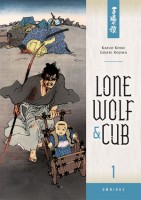
Lone Wolf and Cub, Omnibus 1Lone Wolf and Cub, Omnibuses 1-2 (equivalent to Volumes 1-5) written by Kazuo Koike and illustrated by Goseki Kojima. One of the first manga to be translated into English, Lone Wolf and Cub wasn’t released in its entirety until Dark Horse picked up the license. Sadly, the first Dark Horse edition was tiny and, while extremely portable, was difficult to read because the text was so small and crowded. Additionally, those original twenty-eight volumes have steadily been going out of print. Thankfully, Dark Horse recently started releasing Lone Wolf and Cub in an omnibus format with a larger trim size. Though quite hefty (each omnibus is around 700 pages and collects about two and a half volumes or so), the reading experience is much improved overall. Lone Wolf and Cub is an excellent series, so I’m very glad that the manga will remain in print for a bit longer. The series is fairly episodic, following the titular Lone Wolf and Cub: Ogami Ittō, who once served as the Shogun’s executioner but who has become an assassin-for-hire out of revenge over the destruction of his family, and his young son Diagorō.

Mail, Volume 1Mail, Volumes 1-3 by Housui Yamazaki. Summer is the time for ghost stories in Japan, so I felt it was appropriate to finally get around to reading Mail. I came across this short series thanks to The Kurosagi Corpse Delivery Service which shares the same illustrator. Reiji Akiba–detective, exorcist, and the protagonist of Mail–actually briefly appears in the fourth volume of The Kurosagi Corpse Delivery Service as well. One of the things that particularly struck me about Mail is how often the stories incorporated modern technology such as cell phones and computers. It’s as though traditional ghost stories and urban legends have been updated for a contemporary audience. Occasionally Akiba will present a sort of prologue to the individual chapters, giving the stories an almost Twilight Zone feel to them. Mail can be legitimately creepy and at times a bit bloody, but gore is not at all the focus of the series. In general Mail is episodic, although the final volume adds a recurring character who becomes Akiba’s assistant as a sort of homage to Osamu Tezuka’s Black Jack.
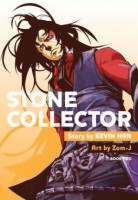
Stone Collector, Book 2Stone Collector, Book 2 written by Kevin Han and illustrated by Zom-J. I want to like Stone Collector more than I actually do, but at this point I can’t really say that I’ve been enjoying the manhwa much at all. It’s not all bad. The artwork in particular has moments when it can be impressively dynamic. The character’s facial expressions are great. Even the basic premise of the story isn’t terrible. As a whole though, Stone Collector just isn’t working for me. Though it moves along quickly, the plot is thin and the characters are underdeveloped, almost as if it’s an outline or draft than a finished product. The second half of the second volume of Stone Collector of is devoted to a side story, “Land of Ice.” I was more interested in “Land of Ice” than the main story more because of its tundra setting than anything else, but it still frustrated me and had many of the same problems that Stone Collector proper has. November 2013 was the last time there was a Stone Collector update. I’m not sure if there are plans to release more (it may simply be that “more” doesn’t exist yet), but the story clearly hasn’t reached its conclusion yet.
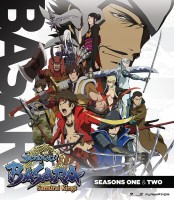
Sengoku Basara: Samurai KingsSengoku Basara: Samurai Kings, Season 2 directed by Kazuya Nomura. While I was entertained by the first season of Sengoku Basara: Samurai Kings, I really enjoyed the second season. While there are still fantastically outrageous fights and action sequences, there’s also more focus on the characters and their characterization and on battle strategies and tactics. Personally, I appreciate the added context this gives the series. The characters, who continue to be magnificently and ridiculously overpowered, come across as a bit more human since their pasts and motivations are clearer. Their confrontations carry more emotional weight because of this as well. Miyamoto Musashi makes an appearance in this season, too. I was greatly amused by the fact that he fights with a giant oar. (Legend has it that Musashi once forgot to bring a sword with him to a duel and so carved a bokken out of the oar he used to get there; this why his weapon choice in Samurai Kings is simply perfect.) Samurai Kings is a tremendous amount of fun. Based on a video game that’s nominally based on actual events and historic figures, it’s wonderfully absurd and irreverent.
Filed Under: FEATURES, My Week in Manga Tagged With: anime, Goseki Kojima, Housui Yamazaki, Kazuo Koike, Kevin Han, lone wolf and cub, Mail, manga, manhwa, Norikazu Akira, Sengoku Basara, Stone Collector, Zom-J

Terra Formars, Vol. 1

July 20, 2014 by Sean Gaffney

By Yu Sasuga and Kenichi Tachibana. Released in Japan by Shueisha, serialization ongoing in the magazine Weekly Young Jump. Released in North America by Viz Media.

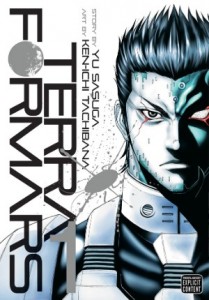
I should note up front that I actually noted this as a license request a long while back, as part of a post where I looked at Japanese bestsellers and gauged which was most likely to succeed over here. This take on the ‘Starship Troopers’ type story looked like a winner, and indeed I think still will do pretty well. It has some very good action sequences, the art is well-defined with every character easy to recognize, the horror and gore are overflowing (this is a title whose primary readers I think may be horror fans), and the villains are truly loathsome. And no, I don’t mean the roaches, I mean the human villains. That said, there are a few reasons why I think this is not the title for me.

terraformars1

Let’s start with what was discussed on the Bookshelf last week when we did our picks: the aliens that are being fought here are the descendents of cockroaches, which were dropped on Mars to help terraform the planet, with humanity planning to simply kill them off once they’d achieved their purpose. Now, they’re evolved, and look much like homo erectus, a somewhat controversial ancestor of humanity. The problem here is they look African, and they spend most of the book silent and killing off the mostly White and Asian cast. There is a crewmember from South Africa, notably… but she’s a villain, betraying the team in order to get a specimen back to Earth. I don’t think this was intentional racism on the part of either author. But it’s an unintentional racism that I’ve been discomfited by in Japanese manga before, reminding me of other Jump series like One Piece, where Luffy wears an Afro to give him the strength of black men, or Eyeshield 21, where the football players extol black tendons.

That said, the reason I’m so cool to the series did not end up being that, but rather the entire attitude of the manga, which falls squarely into the ‘kill 90 percent of your cast so that you can show off the strength of humanity against adversity. (Humanity being the two Japanese guys who are the only members of the multi-racial, multi-ethnic crew to survive.) I’d mentioned that most of this manga is an extended action sequence, but what most of the manga really is is a horror movie, killing the crew off one by one and showing the surprise and horror on their faces. Some of them fight back valiantly, or get to take out a bug or two. (Each of the crew has been genetically modified to have insect powers, which they use in lovingly detailed ways against the enemy – this is another drawback of the manga, as the author expects me to care about the various insect powers more than I really do.) And of course we get a few backstories to make it extra tragic – the tsundere childhood friend who was rescued from an abusive father is the first one to die.

This is all being orchestrated by forces from Earth, all of whom seem to want to exploit the crew in various ways – they were all chosen as they were under desperate circumstances, and are cheerfully told they have no rights and are no longer really human anymore. The villains even conspire against each other, with one set trying to get a cockroach egg to Earth while the other merely watches the carnage from hidden cameras while chuckling. I’ve no doubt that the next volume of this series (it’s 9+ in Japan) will introduce a somewhat longer-lived cast, with this first volume serving as sort of a prologue.

As I said, the series has its strengths – good action, lots of intrigue, some interesting if overly explained sci-fi concepts. But I don’t want to read about a series this bleak and cynical, especially if it’s already making me uncomfortable in how it’s portraying race. So I’m going to move on.

Filed Under: REVIEWS

Tokyo Demons, Book 2: Add a Little Chaos

July 18, 2014 by Ash Brown

Tokyo Demons, Book 2: Add a Little ChaosAuthor: Lianne Sentar
Illustrator: Rem

Publisher: Chromatic Press
ISBN: 9780993861109
Released: December 2014

For some very silly reasons, most of which are now unclear to me, initially I was hesitant to read Tokyo Demons, a trilogy of novels written by Lianne Sentar and illustrated by Rem. But after finishing the first volume, You’re Never Alone, I was hooked. I immediately went out and devoured all of the bonus content and side stories that I could find. Honestly, I hadn’t been so excited and captivated by a series in a very long time. Soon after, Tokyo Demons became one of the flagship titles for Chromatic Press. Tokyo Demons, Book 2: Add a Little Chaos was originally serialized online between 2012 and 2014. Later in 2014 it underwent final revisions and was collected into a single volume along with two additional side stories which delve further into the pasts of some of the characters. Despite my obsession with the series, for the most part I was able to restrain myself from reading Add a Little Chaos until the novel was completed. It was a difficult wait, and so I was thrilled when the second book was finished so that I could read it.

Kiyoshi has been rescued and Core’s attack on the Byakko gang at Kiseki was able to be fended off, albeit not without casualties. The survivors who have taken refuge with the Church and sided against Core are still in danger though. Under the influence of Pitch, a powerful and highly addictive drug that he was forced to take, and due to the trauma of his kidnapping, Kiyoshi is no longer the person he once was physically, mentally, or emotionally. In fact, after being caught up in something with even graver implications than the simple drug war it initially seemed to be, everyone has changed. Ayase, Jo, Sachi, and all of their friends and allies are fighting for their lives and none of them are unaffected by the violence surrounding them. They are doing all that they can with the limited information that they have to fight against Core and save the others of their group who are still caught within its grasp. Working with the Church’s resources, members of Byakko, and contacts within the police force, as well as with some unexpected aid from within Core itself, they may have a chance. But everyone has their own agendas and it’s becoming more and more difficult to know who and what can be trusted.

As with many second volumes in a trilogy, the situation the characters find themselves in quickly escalates from bad to worse in Add a Little Chaos. Tokyo Demons has always been fairly hard-hitting, dealing with heavy themes like psychological and physical abuse and violence, but Add a Little Chaos goes to some very dark places. I have come to care about all of the characters in Tokyo Demons immensely, many of whom are broken and damaged people with tragic pasts, horrible presents, and grim futures. They are all so incredibly desperate to be strong and to protect themselves and the ones that they care about the most. It’s absolutely heartbreaking to see them go about it in the wrong ways, even when they’re doing the best that they can and what they believe to be right. Some of them are able to find a few brief moments of comfort with one another that they cling to only to have them ripped away by the chaos enveloping them. With layers upon layers of loyalty and betrayal, each revelation in Tokyo Demons is shocking and gut-wrenching, not only for the characters who have to deal with the immediate consequences, but also for the readers who can do nothing but witness it all happen.

Tokyo Demons is a complex and multilayered series; many of the seemingly independent storylines which were introduced in the first volume are now beginning to crash together in Add a Little Chaos and additional plot developments have been set into motion. Tokyo Demons also features a large and diverse cast of extremely complicated characters. Their even more complicated connections to one another are critical to the story as well. How they deal with their own personal struggles impacts the people around them as well as the larger conflict in which they find themselves. Even considering all of the superhuman elements and psychic abilities involved in Tokyo Demons, what make the series so compelling and engaging are its believably flawed, exceptionally nuanced, and constantly evolving characters and the constantly shifting dynamics of their relationships. From the beginning of the series alone I could tell that the scope of Tokyo Demons was going to be huge. If anything the story only continues to expand with Add a Little Chaos and increase in its intensity. I am still absolutely loving Tokyo Demons and am both looking forward to and dreading its conclusion.

Filed Under: REVIEWS Tagged With: Chromatic Press, Lianne Sentar, Light Novels, Novels, Rem, Tokyo Demons

Manga the Week of 7/23

July 17, 2014 by Sean Gaffney, Ash Brown, Michelle Smith, Anna N and MJ 2 Comments

SEAN: There’s so much stuff coming out next week you’d think it was a first week of the month. Remember when Yen Press was just three or so titles a month?

clothesfat

We’ll start off with Dark Horse, who are still releasing Gantz, even as it’s up to Vol. 32 and surely running out of rubber bodysuits by now.

And look, it’s an old friend, MPD-Psycho, who have Vol. 11 out next week as well. This doesn’t quite have the cult following of Kurosagi Corpse Delivery Service (it lacks a lot of the humor), but is still very good for horror thrills.

ASH: It’s been what… almost three years now since the last volume was released? Glad to see that Dark Horse didn’t completely drop it.

MICHELLE: I have a couple of volumes of MPD-Psycho, but I haven’t been able to muster the courage to actually read them. Still, I’m also glad it’s still coming out!

SEAN: And Battle Angel Alita has its fourth omnibus. I will assume they’re still in the tournament arc, which I think went over 10 volumes eventually, right?

Vertical gives us another Moyoco Anno title with the one-shot In Clothes Called Fat. From what I gather, it’s a sharp look at body image pressure, low self-esteem and eating disorders. I expect it will be amazing.

ASH: I’m a huge fan of Moyoco Anno’s work, so I’m really looking forward to this release.

ANNA: This is really the only thing I’m wanting to pick up this week. Thanks again to Vertical for translating more Moyoco Anno!!!!!

MJ: This is a huge draw for me as well!

SEAN: Yen’s new light novel imprint, Yen On, gives us the first volume of Accel World. Apparently this takes place in the same world as Sword Art Online, just 20 years later, but it’s not really a sequel as such. It’s also famous for having a chubby male hero.

zombie8

MJ: I’m interested in this, for sure.

SEAN: Black Butler must be feeling very jealous. Time was when it was the series with all the volumes in the NYT bestseller list. Now Attack on Titan has stolen all its thunder. Still, it’s up to Vol. 17. Can’t be bad.

MICHELLE: It’s pleasant. :)

SEAN: I’m surprised the Blood Lad omnibuses have been coming out so fast, given it’s a fairly recent series in Japan. I suspect this may be the ‘we’re caught up now’ volume, though. Always a treat in any format, though.

MICHELLE: Wow, this came sooner than I thought it would! Still, it does mean that the wait for the next one will probably be quite long, indeed.

MJ: This is always a favorite for me!

SEAN: Inu x Boku SS has been surprisingly serious, and I understand this volume will not change that one iota.

Is This A Zombie? Ends with its 8th volume. I presume we can say “yes” at last and move on.

We also have the 4th No Matter How I Look At It, It’s You Guys’ Fault I’m Not Popular! (aka WataMote). It’s hard to read, but even harder to type out the full title.

ASH: It can be rather painful to read. The series has some incredibly dark humor.

umineko4-1

SEAN: Speaking of titles that have caught up with Japan, here’s Vol. 12 of Omamori Himari, which has every single plotline a male otaku could possibly want in one handy series.

And Vol. 21 of Pandora Hearts, which has also caught up with Japan, and has every single plotline a female otaku could possibly want in one handy series.

MICHELLE: And *cuffs*. Right, MJ? :)

MJ: YES, CUFFS. Also, everything else. And I’m sure I don’t need to tell anyone I’ll be gobbling this up as soon as it hits my doorstep.

SEAN: Soul Eater begins its final arc in Vol. 21, and I am here to tell you that it will be AMAZING.

And for those who want a kinder, gentler Soul Eater, here is the 3rd Soul Eater NOT!, compiling chapters that have been available digitally for a few months now.

Lastly, Umineko: When They Cry starts its 4th arc, Alliance of the Golden Witch. While Battler will still be around, his younger sister Ange is the focus here, now all grown up and trying to figure out what happened 12 years earlier. As you can see, she’s also a source of fanservice for manga artists. Maria’s tragic upbringing also gets a lot of attention here.

Is this enough? Or do you want even more manga next week?

Filed Under: FEATURES, manga the week of

Spell of Desire, Vol. 1

July 16, 2014 by Anna N

Spell of Desire Volume 1 by Tomu Ohmi

I am unapologetically enthusiastic about Shojo Beat’s new habit of releasing slightly smutty josei manga under the Shojo Beat imprint. More josei is a good thing! I was happy to see that after a few volumes of Tohmu Ohmi’s Midnight Secretary, another series of hers was licensed by Viz. Spell of Desire is that series, and I might even like it more than I like Midnight Secretary, as impossible as that might seem.

As you might guess from the title, with Spell of Desire, Ohmi has turned her attention to witches! Kaoruko Mochizuki is a herbalist in a small village, but one day a mysterious man named Kaname Hibiki shows up at her store and announces that she’s a witch, descended from a long line of women with mystical power. It turns out that Kaoruko’s long lost mother is a Witch Queen, and she’s sealed her power within Kaoruko. As the power begins to activate, Kaoruko will need help controlling it, and Kaname just happens to be the Knight dedicated to her protection.

I loved the contrast between Kaoruko and Kaname. She’s drawn as an earthy, hippie type, with flowing layers of clothing with botanical prints that reflect her connection to her profession. Kaoruko is a bit naive, but committed to the customers at her shop and the simple way of life that she enjoys. Kaname’s severe, with an all-black wardrobe and glasses that make him look stern. He also has a bit of a snarky and cynical personality. Kaname comes with two animal companions named Dragon and Unicorn, that appear to be a fluffy white cat and dog, but actually possess mystical powers themselves. When Kaoruko accidentally activates her mystical powers, they manifest as black vine tendrils winding across the panels in the manga, becoming more tangled as her powers become more out of control. Of course, there is a fail-safe mechanism to calm Kaoruko down – kisses from Kaname.

The first volume deals with the conflict between Kaoruko and Kaname as he insinuates himself into her life in order to protect her from her runaway witch powers. It is terrible, but Kaname and Kaoruko have to kiss very often because her powers are starting to really get out of control. While at first Kaoruko is resistant to the idea that she’s a witch, she decides to accept her situation calmly and deal with it even if there are things that she doesn’t understand. Kaname comments in response, “You’re such a decent person it’s almost ludicrous.” Kaoruko is left wondering about Kaname’s real relationship with her mother the Witch Queen, and I can see how there will be plenty to explore in future volumes as Kaoruko has to deal with her new reality as a witch and Kaname’s place in her life. Fans of Midnight Secretary or paranormal romance manga in general should snap this up!

Filed Under: REVIEWS Tagged With: shojo beat, spell of desire, viz media

Gakuen Polizi, Volume 1

July 16, 2014 by Ash Brown

Gakuen Polizi, Volume 1Creator: Milk Morinaga
U.S. publisher: Seven Seas
ISBN: 9781626920309
Released: June 2014
Original release: 2013

I greatly enjoyed the first two manga series by Milk Morinaga to be released in English–Girl Friends and Kisses, Sighs, and Cherry Blossom Pink–and so was happy to see Seven Seas license one of her most recent series: Gakuen Polizi. The first volume of Gakuen Polizi was originally published in Japan in 2013 while Seven Seas’ edition was published in 2014. Currently, Morinaga is likely the best-represented yuri creator in English in that she now has the most titles available in translation. Granted, considering how few yuri manga have been released, especially when compared to other genres, that really isn’t too difficult. Still, her work has generally been well-received. Gakuen Polizi is a bit different from Morinaga’s other manga in English. She describes it as a “high school police drama” which is more or less accurate. The series has more of a buddy cop feel to it than it does romance or drama and is inherently more comedic as well.

Ever since she was young, Sasami Aoba has wanted to be a champion of justice, dreaming of crushing evil and helping the weak, and now she finally has her chance as an assistant police officer. Specifically, Sasami has been assigned to Hanagaki Girls’ High School as one of its polizi–a young undercover cop sent to investigate issues at problem schools. The only thing is Hanagaki doesn’t actually seem to have any problems. There’s no bullying, the students and staff are all very pleasant, and even the school’s newspaper has difficulty finding juicy material to report on. Hanagaki is actually the second assignment for Sasami’s partner Sakuraba Midori. Before Sasami’s arrival, and because the school is so peaceful, Sakuraba has had plenty of time on her hands, quite a bit of which she would spend distracting herself by drawing yaoi manga. But now with the less-experienced and overly eager Sasami constantly on the verge of blowing their cover as polizi, Sakuraba has more than enough to worry about.

Gakuen Polizi is kind of a strange mashup of genres. Since nothing much happens in the way of crime at Hanagaki, there’s not much for Sasami and Sakuraba to be doing in regards to police work. The series is generally lighthearted and often silly, especially towards its beginning. At first the cases at the school are fairly inconsequential–a dog with a penchant for stealing things, small squabbles between classmates, and so on. The second half takes a more serious turn, dealing with gropers and stalkers, but even then the humor in Gakuen Polizi is a prominent feature. Most of the comedy revolves around Sasami. She is very enthusiastic and passionate, but somewhat lacking in common sense. Sakuraba, in stark contrast, is more serious and reserved. According to the afterword, readers should expect more romance-related drama to come in the series, but there is very little of that to be seen in the first volume of Gakuen Polizi, though a chemistry between Sasami and Sakuraba has begun to develop.

It is fairly obvious that Morinaga is personally having a lot of fun with Gakuen Polizi. I found the first volume to be entertaining, but readers approaching the manga hoping for a series similar to Kisses, Sighs, and Cherry Blossom Pink or Girl Friends will most likely be disappointed. Though Gakuen Polizi has the potential for some drama and romance, so far the series tends towards the absurd and ridiculous. Morinaga’s artwork and character designs are cute, with particularly dynamic facial expressions that add to the series’ silliness. While I like the characters in Gakuen Polizi, I’m not attached to them in the same way that I was to the characters in Morinaga’s other manga. I do find Sasami, Sakuraba, and their friends to be amusing though. Gakuen Polizi isn’t meant to be taken too seriously. The emphasis is definitely more on the series’ comedy than it is on its believability. Overall, Gakuen Poilizi, Volume 1 was largely an enjoyable, fluffy read. Although I may not be desperate for more, I do look forward to reading the next volume.

Filed Under: REVIEWS Tagged With: Gakuen Polizi, manga, milk morinaga, Seven Seas, Year of Yuri

JoJo’s new license adventure

July 16, 2014 by Brigid Alverson

It’s been a busy few weeks, so let’s start with new license announcements. Sean Gaffney has a thorough writeup of the Anime Expo news, which includes the big news that Viz will be releasing (or re-releasing, in the case of the third arc) JoJo’s Bizarre Adventure. Here’s a quick rundown of the rest:

Viz
Baraou no Souretsu (Requiem for the Rose King), by Aya Kanno (Otomen)
Faster than a Kiss, by Meca Tanaka (Omukai Desu, Pearl Pink)
Momochi-san Chi no Ayakashi Ouji (The Demon Prince of Momochi House), by Aya Shouoto (Kiss of the Rose Princess)
… plus a digital one-off chapter of Vampire Knight and new omnibuses of Yu-Gi-Oh and Gyo

Vertical
Yume no Kaseki (A Fossil of a Dream), a short story collection by Paprika director Satoshi Kon

Dark Horse
Panty & Stocking With Garterbelt
… plus omnibus editions of Kurosagi Corpse Delivery Service and Oh My Goddess and a Satoshi Kon artbook

Kodansha
Maria the Witch (Junketsu no Maria), by the creator of Moyashimon
A Silent Voice, which is already running digitally on Crunchyroll

In other news, SuBLime has licensed Sekai-Ichi Hatsukoi (English title: The World’s Greatest First Love:The Case of Ritsu Onodera), which is a Junjo Romantica spinoff; the anime has been running on Crunchyroll.

Returning to the present day, the Manga Bookshelf team looks at this week’s new releases.

In a panel at the Tokyo International Book Fair, translators Yoda Hiroko and Matt Alt discuss translating Doraemon for the American audience.

Wired has a short interview with Kazuto Tatsuta, who wrote about his experiences as a cleanup worker at the Fukushima nuclear plant in 1F: The Labor Diary Of Fukushima Dai-ichi Nuclear Power Plant.

This came out a couple of weeks ago, but it’s an interesting post: Justin asks some manga insiders why they think fans are still reading manga illegally and aren’t embarrassed to admit it.

News from Japan: Good news for fans of Arata: The Legend, which has been on hiatus: Manga-ka Yuu Watase plans to return to work on it in time for fall serialization.

Reviews: The Manga Bookshelf team turns in this week’s set of Bookshelf Briefs. Ash Brown looks back at a week’s worth of manga reading and reading about manga at Experiments in Manga.

Sarah on vol. 11 of Blue Exorcist (nagareboshi reviews)
David Brothers on Dorohedoro (4thletter!)
Katherine Hanson on vol. 1 of Gakuen Polizi (Yuri no Boke)
Kristin on vols. 4-6 of Midnight Secretary (Comic Attack)
Kristin on vol. 3 of Millennium Snow (Comic Attack)
J. Caleb Mozzocco on vol. 1 of My Love Story!! (Good Comics for Kids)
Sean Gaffney on vol. 1 of My Love Story!! (A Case Suitable for Treatment)
Kate O’Neil on vol. 6 of Midnight Secretary (The Fandom Post)
Lesley Aeschliman on vol. 1 of Monster (Perfect Edition) (Lesley’s Musings… on Manga)
Matthew Warner on vol. 3 of Nisekoi (The Fandom Post)
Lori Henderson on vols. 1-3 of No. 6 (Good Comics for Kids)
Alice Vernon on vol. 1 of Sword Art Online: Fairy Dance (Girls Like Comics)
Lesley Aeschliman on vol. 1 of Terra Formars (Lesley’s Musings… on Manga)
Sean Gaffney on vol. 2 of UQ Holder! (A Case Suitable for Treatment)
Lori Henderson on vol. 1 of World War Blue (Manga Xanadu)

Filed Under: MANGABLOG

UQ Holder!, Vol. 2

July 15, 2014 by Sean Gaffney

By Ken Akamatsu. Released in Japan by Kodansha, serialization ongoing in the magazine Weekly Shonen Magazine. Released in North America by Kodansha Comics.

I still get the impression as I read this second volume that Ken Akamatsu is doing a victory lap, showing off the fact that he can do what he wants now and is not as constrained by editorial fiat. Much of the time we spend here is seen watching battles between our heroes and antagonists, be they monsters, bad guys, or even jealous girls who are supposed to be on the side of justice. There’s also a healthy dose of things Akamatsu likes to write no matter what – comedy, nudity. The large number of new male characters, however, and the minimal harem antics (they are there, but it’s part of the background events for the most part) must be a relief for him, and I think he’s having a ball here. But are we?

uqholder2

The biggest change between Akamatsu’s prior works and UQ Holder is the role of the hero. Keitaro and Negi both seemed to be of a certain type – somewhat shy, a tendency to worry, a tendency to overthink everything, and a tendency to fall into other people’s boobs. Tota is very much a complete 180 change – he goes by instinct, doesn’t really dwell on anything much, and gets by on having fun and being awesome. He’s a traditional shonen hero in a battle manga, which for the most part this is. And as such he comes with the traditional shonen hero problems – he seems to be painted as exceptional far too fast. Everyone remarks here on how Tota’s ability to learn new techniques is simply superhuman beyond belief. He escapes an inescapable dungeon in only a week, learns shundo in a day, etc. Sure, he may get beat in arm wrestling, but if you don’t like ‘boring invincible hero’ types, this may not be for you.

The other two major characters here fair better, as Evangeline/Yukihime takes a step back for a bit. We finally get the story on the gender ambiguity of Kuromaru, who is actually genderless – reminiscent of the anime Simoun, when he turns 16 he’ll decide if he wants to be a man or woman. I say he as Kuromaru is clearly leaning towards the male choice. Kuromaru not only looks a lot like Setsuna from Negima, who I suspect she may be related to, but also shares many of her self-loathing traits, so it doesn’t take much for Karin to completely destroy her, noting Tota is drawn to inner strength that Kuromaru doesn’t have. Karin herself is also intriguing, having a somewhat disturbing attachment to Yukihime that is mostly played for comedy, and a corresponding hatred of Tota that is played likewise. There’s nothing comedic about the kind of immortality she has, though, and the revelation that she still feels the pain of attempts on her life is rather chilling.

There are a few more Negima teases here (the nun in the slums they’re sent to protect is named Kasuga, and some of the monster girls in UQ Holder are reminiscent of Fate’s minions), but not as much as the first volume. I’m sure we’ll here more of Negi and company later, but Akamatsu is content for now to just take the cast where it wants to go and show off awesome fighting moves. And if it all feels a bit lightweight and fluffy, I’m sure that won’t last long. For now, let’s laugh along with our boring invincible hero.

Filed Under: REVIEWS

Bookshelf Briefs 7/14/14

July 14, 2014 by Sean Gaffney and Anna N Leave a Comment

This week, Sean and Anna look at recent releases from Viz Media and Seven Seas.

midnight6Midnight Secretary, Vol. 6 | By Tomu Ohmi | Viz Media – There’s still a little bit of “but I’m just his secretary” here, but that ends up being overshadowed by all the fallout from Kaya thinking she’s pregnant. It turns out she isn’t, but the idea that she might be is not entirely unappealing to her. That said, the vampire world is unhappy with it, so much so that they send the clan leader over to threaten and disturb Kaya, implying that her feelings are being artificially induced. And when Kyohei is able to convince her otherwise, even stronger measures look to be taken. The links between vampires and humans have been bubbling over this whole series, and given the next volume is the last one I expect it will all end in tears… no wait, this is josei romance. It should be fine. – Sean Gaffney

nisekoi4Nisekoi: False Love, Vol. 4 | By Naoshi Komi | Viz Media – There is a story and character development happening here, but I am finding myself drawn more to the technical aspects of this manga, which are exceptional. I’ve mentioned before that Komi is very good at keeping his harem “balanced”, and his excellent ability at drawing goofy faces. Now here we see that he can do devastatingly good cliffhangers as well. Three of these chapters have cliffhangers that make you desperate to come back next week for more, which is all you can ask of a serialized story. We also get a new girl introduced, Marika, who is immediately set up to be an obvious villain, showing herself off as Raku’s “fiancee” and demanding he break up with Chitoge. This succeeds where other modern harem manga fail. – Sean Gaffney

one-punch2One-Punch Man, Vol. 2 | by ONE and Yusuke Murata | Viz Media – Sometimes I forget about manga I read digitally unless I get nagging e-mail reminders. I hadn’t realized that there were now three volumes of One-Punch Man now available. I am delighted that the second volume was just as ridiculous as the first. One-Punch Man goes up against an evil mad scientist who has built an underground lair called the “House of Evolution”. One-Punch Man is accompanied by his new trusty cyborg diciple Genos. The unlikely duo face off against an army of clone scientists and a monster genetically engineered assassin. There’s a great joke later on in the book featuring a superhero bicyclist, and One-Punch Man is showing signs of finally wanting some superhero notoriety for himself. Highly recommended if you enjoy dumb humor and people punching things! – Anna N

sacredblacksmith5The Sacred Blacksmith, Vol. 5 | By Isao Miura and Kotaro Yamada | Seven Seas – Given there’s no hint of it on the back cover or in the first half, I feel obliged to say that this volume has a rather traumatic rape scene in it, featuring Cecily and a new villain. We do see Cecily trying to recover from the resultant fugue state she goes into, and she does to a degree, but her final confrontation with said villain is then undercut by the entrance of Luke, who fights in her place to protect her. It left a very bad taste in my mouth, and I think I’m going to be dropping this. There are still a lot of fantasy underpinnings here, and everyone has at least two motivations for everything they do. But the rape and its aftermath have made me very apathetic towards reading more of it. – Sean Gaffney

sweet-rein3Sweet Rein, Vol. 3 | By Sakura Tsubasa | Viz Media – There’s no “Final Volume” on the back cover, and the series does not end so much as stop, but I’m pretty sure this *is* the last Sweet Rein, unless Hakusensha restarts it again a la Millennium Snow. It’s light but sweet, giving us more human/reindeer antics and the occasional not-quite romance (the two leads have still only kissed on the cheek). The Santas seem to function as shinigami a lot of the time, bringing closure to a rich boy and his butler as well as a reindeer whose master was killed, leaving him behind. This adds an element of darkness, but even then the series can’t help but resolve things with a sugar coating. There’s also an extra story dealing with Penguin Revolution, for old CMX fans – Sean Gaffney

Filed Under: Bookshelf Briefs

Pick of the Week: The Anti-pick?

July 14, 2014 by Sean Gaffney, Michelle Smith, Ash Brown, Anna N and MJ 4 Comments

potwSEAN: Well… I was going to pick Terra Formars here, but after my Manga the Week of column, there has been a torrent of “Wait, wait, haven’t you heard about it?” that has made me reconsider. I shall see how it plays in my review, but am now reluctant to grant it a pick of the week. As such, I’ll grant my pick to a Seven Seas title, D-Frag!. I like goofy club comedies, and this one promises not to lean too heavily on the harem antics. Goofy girls being weird is pretty much just what I need in these hot months.

MICHELLE: I am totally in the same boat, Sean. I was completely unaware of the title’s unsavory reputation when I wrote of my interest in the title. So, instead I’ll recommend some more seinen from VIZ in the form of Naoki Urasawa’s Monster. This is a series that’s really at its best when consumed in large chunks, so I’m pleased to see it coming out in omnibus format. If you missed it the first time, now’s your chance!

ASH: I’m still interested in reading at least the first volume of Terra Formars to see what everyone is talking about for myself, but I’ll take an easy out and choose the third volume of What Did You Eat Yesterday? for my pick this week. I like the series best when it focuses on the characters and their stories, but the food is pretty tasty, too.

ANNA: I was unaware of the issues with Terra Formars too, so I’m going to highlight Alice in the Country of Clover: Knight’s Knowledge, because I’m guessing that this reverse harem title featuring a murderous knight with no sense of direction will be much much much classier.

SEAN: Pick of the Week: We’re Not Running Away, We’re Advancing In Reverse!

MJ: I might sort of be running away. I’ll take a look at Terra Formars, but I admit I’m pretty wary now. Instead, I’ll join Ash in picking the latest volume of What Did You Eat Yesterday?, which I will undoubtedly love. Fumi Yoshinaga has never truly failed me, and this series has charmed me to bits so far. Fortunately, I have pretty much equal parts love for the characterization and the food, so I’m happy no matter what.

What looks good to you this week?

Filed Under: PICK OF THE WEEK

My Week in Manga: July 7-July 13, 2014

July 14, 2014 by Ash Brown

My News and Reviews

Two reviews were posted at Experiments in Manga last week, though neither of them were actually for manga. First up was Yasutaka Tsutsui’s The Girl Who Leapt Through Time, which collects two of his stories: The Girl Who Leapt Through Time and The Stuff That Nightmares Are Made Of. The Girl Who Leapt Through Time is one of Tsutsui’s most well-known and beloved novels and was the inspiration for Mamoru Hosoda’s 2006 anime by the same name, which happens to be one of my favorite animated films. I also reviewed Dan Mazur and Alexander Danner’s Comics: A Global History, 1968 to the Present. It’s an extremely informative volume and highly recommended for people who are interested in the history of comics, including manga. I wasn’t online much last week, but I did notice that Revealing and Concealing Identities: Cross-Dressing in Anime and Manga, Part 6 was posted at The Lobster Dance, focusing on Fumi Yoshinaga’s marvelous series Ōoku: The Inner Chambers. If there were any big announcements or other noteworthy news items that I missed, please do let me know!

Quick Takes

Andre the Giant: Life and LegendAndre the Giant: Life and Legend by Box Brown. Growing up, I knew of Andre the Giant from his role as Fezzik in the film The Princess Bride, only later learning about his professional wrestling career. Andre Roussimoff was a literal giant of a man–at one point over seven feet tall and over six hundred pounds–who also suffered from acromegaly, though he wasn’t diagnosed with the condition until he reached his twenties. Brown’s thoroughly researched biographical comic captures Andre’s life and legacy, revealing just how human the legend really was. Like anyone else, he had his strengths and his flaws. Because of his size the life he led was an unusual one and he was treated differently, and not always kindly, by other people. Surprisingly, Andre the Giant: Life and Legend is actually one of the very few works devoted to Andre. It’s a collection of stories and anecdotes about the man beginning with his childhood in France and then following him through his globe-spanning career as a professional wrestler as well as his time on the set of The Princess Bride. The comic is very well done and includes a bibliography in addition to notes on the sources used.

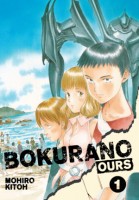
Bokurano: Ours, Volume 1Bokurano: Ours, Volume 1 by Mohiro Kito. One summer, fourteen seventh graders and a fourth grader participating in a nature school program wander into a seaside cave where they discover a strange man holed away who invites them to play a game. They will be placed in charge of piloting a giant robot in order to fight massive alien invaders. Except that the game they’ve agreed to play turns out to be much more real than any of them counted on. This early in the series it’s a little difficult to get a good feel for all of the characters since there are so many of them, but it seems that as they each have their own opportunity to pilot the robot more will be revealed about them as individuals. It also looks like the series will have a fairly high death count, too, even when it comes to main, named characters. Bokurano: Ours has a dark ambiance as well strong psychological elements. Though there are grand battles, the real drama of the series revolves around how the children respond to being granted such enormous power. Some delight in the chance to wreak havoc while others are more hesitant, understandably concerned about the strange situation they’ve gotten themselves into.

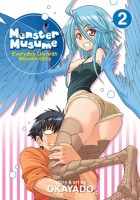
Monster Musume: Everyday Life with Monster Girls, Volume 2Monster Musume: Everyday Life with Monster Girls, Volumes 2-3 by Okayado. At its heart, Monster Musume is an unapologetic, ecchi harem series. Readers looking for nuanced characters or plot from the manga will be sorely disappointed. And considering the amount of uninhibited fanservice, highly suggestive scenarios, partial nudity, and nipples on display, I continue to be surprised that Seven Seas is able to get away with calling Monster Musume a series for older teens. Initially, I wondered if monster boys existed in the manga since the series focuses almost entirely on monster girls. They actually do, but that fact isn’t confirmed until a bunch of otaku orcs appear in the third volume. In addition to the orcs, plenty of other liminal races have been introduced as well: slimes, mermaids, zombies, ogres, cyclops, shape-shifters, and so on. Not all of the liminal ladies become love interests for Kimihito, the series’ protagonist and host family for many of the visiting monster girls, which is a good thing. Monster Musume is an extraordinarily silly and trashy manga that can actually be a lot of fun for those who don’t mind its blatantly sexualized content. Its monster girl gimmick sets it apart from other harem manga, but probably won’t win anyone over who doesn’t already read the genre.

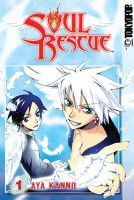
Soul Rescue, Volume 1Soul Rescue, Volumes 1-2 by Aya Kanno. I’ve really enjoyed Kanno’s other manga currently available in English (Blank Slate and Otomen), so when I discovered that Tokyopop had also published one of her series I made a point to track it down. I believe Soul Rescue was actually Kanno’s debut manga, too, which made me even more interested in reading it. Honestly, it’s a bit of a mess. The artwork is nice, even though the pages are very full, and I liked the characters and basic premise of the story, but it doesn’t quite pull together as a whole. Renji is an angel with a propensity towards being overly violent, and so he has been temporarily banished to Earth in order to mend his ways. Another angel, Kaito, has been sent along with Renji as his supervisor to keep him in check and prevent him from doing too much damage. Renji will be allowed to return to Heaven after rescuing the souls of 10,000 humans. (Kissing is somehow involved in all of this.) By the end of Soul Rescue, he’s only saved two, maybe three souls. Though there are recurring characters, the series is largely episodic with almost no overarching plot arc or real conclusion. Kanno doesn’t seem to be concerned with consistent time periods or settings in the manga, either. Modern cities, Medieval kingdoms, and fuedal Japan, all with their own anachronisms, exist simultaneously.

White GuardianWhite Guardian by Duo Brand. I’m fairly certain that White Guardian was Duo Brand’s first professional boys’ love manga; it was also their first manga to be released in English. White Guardian includes many elements found in the pair’s other manga that I’ve read, namely swords, sex, and fantasy. Granted, in the case of White Guardian, it seems to be more of a historical setting than it is strictly fantasy; there are no supernatural aspects or magic involved in the plot. The kingdom of Landa is suffering from internal conflict and corruption which the Crown Prince is determined to address with the aid of the famed General Sei. Prince Linth is a bit of an oddball, lighthearted and earnest if a bit naive. He’s also strangely accepting and forgiving of his own rape, which happens multiple times over the course of the short manga. Happily, there’s some consensual sex to be found in White Guardian, too. The manga has some actual plot to go along with its smut as well. I’ll admit to being fond of court intrigue, espionage, and battles, which are all present and play their own roles in the story. White Guardian is followed by its sequel Crimson Wind which was also released in English, though it’s a little more difficult to find at this point.

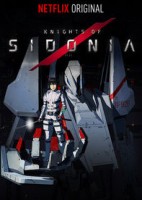
Knights of SidoniaKnights of Sidonia directed by Kobun Shizuno. I have been enjoying Tsutomu Nihei’s Knights of Sidonia manga a great deal, and so when the anime adaptation was announced I was immediately interested in watching it. Of all places, the series was exclusively made available for streaming in English through Netflix with both a dubbed version and a subbed version. Overall, the anime was a fantastic adaptation. It hits all the major plot points and highlights of the manga, and in some cases it was actually easier to follow what was going on. The anime is very faithful to the original without slavishly adapting the source material to a new medium. As should be expected, the pacing of the story is slightly changed and the visual impact of the anime is different from that of the manga. However, I was never completely sold on the 3D CG animation style. Though the backgrounds, environments, and many of the special effects looked great with it and were sometimes even stunning, the movements of the characters occasionally would feel just a little off. It did seem to improve as the series went along, but maybe it was just that I was finally getting used to it. I do look forward to seeing the second season.

Filed Under: FEATURES, My Week in Manga Tagged With: anime, Aya Kanno, bokurano: ours, Box Brown, comics, Duo Brand, knights of sidonia, manga, Mohiro Kito, Monster Musume, Okayado, Soul Rescue

My Love Story! Vol. 1

July 13, 2014 by Anna N

My Love Story! Vol 1 by Kazune Kawahara and Aruko

It is fairly rare for a shoujo manga to manage being both hilarious and heartwarming, but My Love Story! delivers. I was looking forward to this title because I absolutely adore Kazune Kawahara’s previously translated series High School Debut, and this new manga more than lived up to my expectations.

My Love Story! is extremely refreshing because in a dramatic shift from most shoujo series, it focuses on a boy as the main character. And the boy that it focuses on is Takeo, a hulking giant who is drawn exactly like the manga stereotype of a local gang leader, with a hulking body, thick eyebrows, and overabundant sideburns. Takeo is looked up to by everyone who plays sports with him, but his true friend is Suna, conventionally attractive in exactly the way a shoujo reader would expect, with windswept hair and a habit of rejecting all the girls who have crushes on him. Takeo has a habit of falling for girls who are crushing on Shun, who are then promptly turned down when they confess their feelings. On a fateful day Takeo saves a girl from being groped on a train, and she shows up the next day at his house with a cake to thank him. Rinko is an incredibly sweet and cute girl who enjoys baking and shyly blushing whenever she comes up with an excuse to be around Takeo. Unfortunately Takeo is so used to being passed over for Shun, he tries to set up Shun and Rinko, while being utterly unaware the the cute girl that he loves actually loves him back.

There’s plenty of caricature and humorous reactions as Takeo goes through extreme emotions. While it would be easy for Takeo to be the target of jokes, Shun genuinely cares for his best friend. While much is made of Takeo being an unlikely shoujo hero, he’s actually surrounded by supporters. It turns out that Shun is rejecting any girl who speaks badly about Takeo, because he has no interest in dating anyone who shows themselves as a mean person. Shun manages to get Rinko and Takeo together, and it is nice to see a manga series centered around people who just simply care about each other. My Love Story doesn’t suffer from second volume syndrome at all, by the end of the first two chapters I was utterly won over by the combination of characters, humor, and random feats of strength exhibited by Takeo as he goes about his day. The art maybe relies a bit too much on the contrast between Takeo being a blundering thug in a sparkly shoujo world, but there’s plenty of plot driven and situational humor to balance out this aspect of the manga.

As Rinko and Takeo start going out, Shun learns that his older sister has also been nursing a crush on Takeo that she has never expressed, because she was waiting to tell him her feelings when she was older. She immediately concludes that Rinko must be no good, and heads off to intervene, but Rinko and Ai quickly bond over their shared feelings. The end of the first volume of My Love Story! is too funny to spoil, but I’ll be looking forward to the second volume for this winning combination of laugh out loud moments and quirky romance.

Filed Under: REVIEWS Tagged With: My Love Story, shojo beat, shoujo, viz media

Ranma 1/2, Vols. 5 & 6

July 13, 2014 by Sean Gaffney

By Rumiko Takahashi. Released in Japan by Shogakukan, serialized in the magazine Shonen Sunday. Released in North America by Viz.

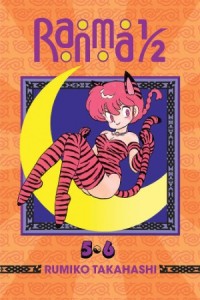
One of the benefits of re-reading this series after so many years is seeing which characters I’ve changed my opinion on in the interim, and after more experience with anime and manga in other forms. Most of this volume deals with the Chinese Amazons – Shampoo, who returns to Nerima; her great-grandmother Cologne, who is determined to marry her to Ranma; and Mousse, Shampoo’s childhood friend who loves her but is unable to take no for an answer. I’ve never really liked any of the characters, and made an effort to avoid writing any of them in the Ranma fanfics I wrote back in the day. To an extent, that’s still true; Mousse is a creep, and his “master of hidden weapons” schtick is something he uses as a license to fight dirty. Shampoo is surprisingly passive in this volume, mostly relying on either her body or her grandmother in order to win Ranma; she still needs a stronger personality. That leaves Cologne, and she was the one I found myself appreciating more this time around.

ranma5-6

Cologne is your standard trickster mentor character, and for all that she’s here to ensure Shampoo marry Ranma, this becomes a secondary concern once she realizes that Ranma has real potential. She’s sizing him up, testing his resolve and his stubbornness along with his martial arts skills. Not to spoil anything, but it’s notable that she’s the one major antagonist he never defeats through the series – at least not in a physical fight. After their first major battle, which is mostly ‘you will stay a girl forever till you agree to marry Shampoo’, Cologne surrenders the cure because Ranma actually made her try hard in a fight – something she hasn’t done in “over fifty years”. This isn’t just about Shampoo’s spouse anymore, Cologne wants to train Ranma personally.

That said, Ranma is not the type to simply acquiesce to this, so we see the start of many training matches couched as something else – in this case, a fight with Ryouga deep in the mountains. Ryouga too is reluctant to accept Cologne’s help in training, until he realizes that Ranma, driven by the events in the first half of this book, has grown MUCH better as a martial artist – to the point where Akane is almost giving him a pitiful look, his worst nightmare. Cologne takes him on, not so much for Ryouga’s sake as to drive Ranma into more desperate situations. Ranma tends to learn fastest when he’s under duress or threat of some sort, and Ryouga’s sheer toughness helps there. Akane, unfortunately, is used as kidnap bait here – she’s as disgusted with this as we are, thankfully, and for the most part rescues herself.

Speaking of Akane, she’s now settled into her standard characterization – whenever jealous, embarrassed, or otherwise emotionally overwhelmed, she lashes out at Ranma, mostly with drop kicks. Now that the majority of the cast are miles above her in martial arts talent (leaving her merely one of the most talented martial artists in the entire town – just wanted to note that), she tends to function as a Greek Chorus a lot, and her sideways flat glance, with implied, “…really?”, will also become a trademark. Akane has, I think, been burned out by too much chaos in her life all at once, and it will take a long time to sort out.

If I forgot to mention Gosunkugi, that isn’t a surprise. He’s played up as a non-entity from the start, with people not even noticing him till he draws attention to himself. He’s a grade A stalker creep, though, managing to learn of Ranma’s secret weakness by hiding under floorboards, in bushes, etc. He also has a fondness for voodoo dolls, which seem to accomplish nothing. The anime wrote him out of the early episodes, replacing him with the Kuno’s comedic ninja, Sasuke (who is anime-only). It didn’t really affect anything to see him dropped, either. He does, however, allow us to see the Cat Fist, which shows off the sheer stupidity of Genma Saotome. Genma tries to imply that he hadn’t read the instruction noting how stupid the training was, but honestly, I think he’d have done it anyway – certainly Ranma’s cat Fist *is* strong, and I think mental and emotional trauma would not bother Genma in the least if this was the result.

There are some long running gags that get introduced here: Akane’s horrible cooking, and her inability to swim, as well as the Saotome Secret Technique, one of the best gags in the entire volume. We also get Martial Arts Watermelon Smashing, which given it’s a beach story I can just about accept, and then we see Martial Arts tea ceremony, which is right about where the idea loses touch with reality altogether. Though it doesn’t help that this is easily the weakest arc in the book, with Sentaro being painfully stupid, and the story being too short to really develop anything further than ‘lol, my fiancee is a gorilla’.

The art is, as with the previous two omnibuses, taken from cleaner scans and looking much nicer in general. The translation is pretty much the same as before, with some nice lines (“Shampoo, I think it’s time we had a talk about bathtubs and men”.) Shampoo still talks in broken Japanese, but Cologne does not – her excellent Japanese is commented on, which is fine, as she’s over 100 years old. Mousse seems to speak perfect Japanese too, and one worries that Takahashi is using Shampoo’s accent for comedy effect. It also has a tendency for Western readers to devalue her intelligence (which varies from story to story, but generally she’s more with it than one would expect).

By the way, the design of Cologne is striking – Cherry was short and wizened in UY, but still looked vaguely human. Cologne’s wizened form in Ranma resembles a bird more than an old woman, something not helped by the way she pogoes around on her walking stick. In the next volume of Ranma 1/2, we’ll meet her male counterpart – one of the most loathed characters in the entire series, both in universe and out. Duck, everyone, Happosai is coming soon to a bookstore near you.

Filed Under: REVIEWS

Say I Love You, Vols 1 and 2

July 12, 2014 by Anna N

Say I Love You Volume 1 by Kanae Hazuki

Say I Love You
has a premise that is shared among plenty of shoujo series, as it details an improbable romance between a misfit girl and the most popular boy in school, but it has interesting combination of humor and some grittier than usual plot points, resulting an a series that is more entertaining for being slightly quirky.

Mei Tachibana goes throughout life without having any friends. She doesn’t say much to her classmates, and it is easy to understand why, since she’s been singled out as a target for bullies from an early age. Yamato Kurosawa is extremely handsome, and is one of the most popular boys at school. He’s pleasant, but not very interested in girls who are overly interested in him. Mei captures his attention when one of his friends trips her. Later on, his friend grabs the hem of her skirt and she responds with a silent but deadly roundhouse kick, nailing Kurosawa in the face. Yamato laughs as he’s recovering from the blow and proclaims that Mei is interesting. Yamato asks Mei to be friends and while she doesn’t respond, she calls Yamato later when she is in trouble with no one else to turn to.

Mei decides that even though Yamato is a “nonsensical guy” she’s beginning to trust him a little bit. Her classmates begin to treat her differently when they notice Yamato saying “Hi” to her at school. Gradually they start to get to know each other better, through a series of slight misadventures where Yamato proves himself as steadfast and emotionally intelligent. Mei continues to be feisty and a bit withdrawn, but her lack of caring what other people think comes into play when she defends a girl named Asami after hearing the other girls gossip about her. One of the things I like about this series is that it doesn’t focus only on the slowly developing romance between Mei and Yamato. The first volume shifts over to showing how Asami and Nakanishi get together, with some surprisingly insightful advice from Mei prompting Nakanishi to actually express his feelings.

The art in the first volume is a bit rough. The poses of the characters are stiff, the proportions are sometimes a bit wonky even by manga standards, and the paneling and backgrounds aren’t that interesting or detailed. But I found myself charmed anyway, just because Hazuki draws such cute faces! The art is something I’d expect to improve a bit as the series continued, and I thought that towards the end of the first volume and start of the second it was starting to look a bit smoother.

Say I Love You Volume 2 by Kanae Hazuki

One of the things that makes Say I Love You a little different from many of the other shoujo series that are translated into English, is that it is a bit more forthright when dealing with issues centering around sex. Asami is bullied because she has a well-developed figure. Aiko has a jealous crush on Yamato, and tries to drive off Mei by pointing out that she’s already slept with him. In some shoujo series this revelation would result in Mei and Yamato being kept apart for a couple chapters at least, but Mei asks him if it is true shortly after she finds out. Yamato explains the circumstances behind his encounter with Aiko as something that he regrets, and they are able to move on.

I enjoyed the bit of backstory Hazuki introduces to explain Mei and Yamato’s personalities. He has direct experience with bullying, when one of his friends was harassed so much that he transferred schools. Mei’s withdrawn nature is a bit more understandable when we see her relationship with her overprotective father, who tragically died young.

Mei slowly begins to transform a bit, growing her hair longer and meeting Yamato’s friend Kakeru, who unlike Yamato uses his popularity to sleep around with as many girls as possible. Aiko convinces him to make a pass at Mei, with predictably disastrous results. Mei abruptly leaves the restaurant, leaving food behind and Yamato immediately knows that Kakeru made a pass at her because her habit is to clean her plate every time she eats at a restaurant. Instead of Kakeru immediately becoming a sleazy villain, the next chapter explores more of his world, and the unending and undemanding devotion of his childhood friend Chiharu who actually appreciates him for reasons that go beyond his superficial popularity.

Overall, I really enjoyed the structure of the plot in Say I Love You, since the extended cast seems to be just as interesting as the main couple. With Kimi Ni Todoke wrapping up, I think Say I Love You would appeal to readers wanting something a little bit similar, but different enough to still be interesting. I bought these volumes on my kindle, and I can see myself investing in more e-book versions of this title as it comes out, for sure.

Filed Under: REVIEWS Tagged With: kodansha, Say I Love You

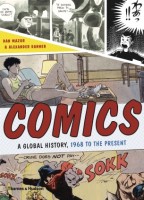
Comics: A Global History, 1968 to the Present

July 11, 2014 by Ash Brown

Comics: A Global History, 1968 to the PresentAuthor: Dan Mazur and Alexander Danner
Publisher: Thames & Hudson
ISBN: 9780500290965
Released: June 2014

Comics: A Global History, 1968 to the Present was published by Thames & Hudson in 2014. Written by Dan Mazur and Alexander Danner, both of whom are involved in comics as creators, educators, and scholars, the volume is one of the few works that attempts to outline a comprehensive history of the comics medium on a global scale, though it has a particular emphasis on the comics traditions from North America, Japan, and Western Europe. I first learned about Comics: A Global History when I came across an essay by Mazur on early shoujo manga, which excerpted and expanded sections from the book. My curiosity was piqued. Although I now have a particular interest in manga, I first started out and still enjoy reading American comics. My experience with comics from other regions of the world is somewhat limited, but those that I have read I have liked. I simply enjoy comics, regardless from where they originate. That being said, I’m not actually very familiar with much of their history, and so Comics: A Global History appealed to me immensely, especially considering that it is heavily illustrated as well.

Comics : Global History is divided into three parts (“1968-1978”, “1978-1990”, and “1990 Onward”) and nineteen chapters in addition to a preface, introduction, notes, bibliography, index of creatives, and index of comics. The preface puts the volume into context and notes its limitations, though the authors have tried to present as comprehensive a history as possible of comics from the three major comics cultures. They identify 1968 as the year in which “a number of creators in Japan, America, and Europe began to aggressively demonstrate that comics could be more than an ephemeral vehicle for children’s entertainment” and the year in which a rise in comics-as-expression was seen. It was for those reasons that 1968 was selected as the starting point for their modern history of comics. The introduction provides a brief overview of the state of comics worldwide in the postwar era and of the development of comics for an adult audience. Five chapters in Comics: A Global History are specifically devoted to American comics, five address manga (including an entire chapter on Osamu Tezuka), four present European comics, and four take a more general, border-crossing approach.

No matter how thorough it would be impossible for a single volume to address every single detail of something as complex and wide-reaching as the history of the comics art form, but from what I can tell, Mazur and Danner have done an excellent job covering the major trends, noteworthy movements, critical events and developments, influential creators, and important works in Comics: A Global History, paying attention to both mainstream and alternative comics and markets. The individual chapters can largely be read separately and follow a loose chronology rather than adhering to a strict timeline, allowing the authors to address related topics in a more thematic fashion and logical progression. There is some analysis, criticism, and review to be found in Comics: A Global History, but the volume focuses more on chronicling what was happening where, when, and by whom than it does on in-depth critique. What Comics: A Global History may lack in minute detail it makes up for in its wide breadth.

Comics: A Global History is an impressively informative and valuable text. My only real complaint is that it’s lacking a topical index. However, the chapters are presented and formatted in such a way that, combined with the two existing indices, makes the volume fairly easy to browse or search for a particular subject. I learned a tremendous amount by reading Comics: A Global History. While the volume doesn’t go into extreme detail, it does provide an excellent overview of the history of modern comics and presents enough information that readers could pursue anything that particularly captured their interest. At least I know that my reading list has certainly grown substantially as a result. Comics truly are a global art form. Though different geographical regions each have their own histories and traditions, over time they have also influenced one another. Comics: A Global History is a fantastic introduction to comics and how they have developed over the last several decades and how they continue to evolve internationally as a medium of expression.

Filed Under: REVIEWS Tagged With: Alexander Danner, comics, Dan Mazur, manga, Nonfiction

  • « Go to Previous Page
  • Page 1
  • Page 2
  • Page 3
  • Page 4
  • Go to Next Page »
 | Log in
Copyright © 2010 Manga Bookshelf | Powered by WordPress & the Genesis Framework