• Skip to primary navigation
  • Skip to main content
  • Skip to primary sidebar
  • Home
  • About Us
    • Privacy Policy
    • Comment Policy
    • Disclosures & Disclaimers
  • Resources
    • Links, Essays & Articles
    • Fandomology!
    • CLAMP Directory
    • BlogRoll
  • Features & Columns
    • 3 Things Thursday
    • Adventures in the Key of Shoujo
    • Bit & Blips (game reviews)
    • BL BOOKRACK
    • Bookshelf Briefs
    • Bringing the Drama
    • Comic Conversion
    • Fanservice Friday
    • Going Digital
    • It Came From the Sinosphere
    • License This!
    • Magazine no Mori
    • My Week in Manga
    • OFF THE SHELF
    • Not By Manga Alone
    • PICK OF THE WEEK
    • Subtitles & Sensibility
    • Weekly Shonen Jump Recaps
  • Manga Moveable Feast
    • MMF Full Archive
    • Yun Kouga
    • CLAMP
    • Shojo Beat
    • Osamu Tezuka
    • Sailor Moon
    • Fruits Basket
    • Takehiko Inoue
    • Wild Adapter
    • One Piece
    • After School Nightmare
    • Karakuri Odette
    • Paradise Kiss
    • The Color Trilogy
    • To Terra…
    • Sexy Voice & Robo
  • Browse by Author
    • Sean Gaffney
    • Anna Neatrour
    • Michelle Smith
    • Katherine Dacey
    • MJ
    • Brigid Alverson
    • Travis Anderson
    • Phillip Anthony
    • Derek Bown
    • Jaci Dahlvang
    • Angela Eastman
    • Erica Friedman
    • Sara K.
    • Megan Purdy
    • Emily Snodgrass
    • Nancy Thistlethwaite
    • Eva Volin
    • David Welsh
  • MB Blogs
    • A Case Suitable For Treatment
    • Experiments in Manga
    • MangaBlog
    • The Manga Critic
    • Manga Report
    • Soliloquy in Blue
    • Manga Curmudgeon (archive)

Manga Bookshelf

Discussion, Resources, Roundtables, & Reviews

Archives for April 2012

Pick of the Week: Quick Pick

April 30, 2012 by MJ, Michelle Smith and Sean Gaffney 2 Comments

The Battle Robot is short-staffed today, but MJ, Michelle, and Sean grab a moment to make their picks from this week’s haul at Midtown Comics.


MJ: There’s quite a bit to choose from at Midtown Comics this week, but my choice is immediately clear. I’ll be picking up the fourteenth volume of Yuki Obata’s We Were There , and it really can’t arrive too soon. Volume thirteen had me teetering on the brink of finally losing faith in the series’ core relationship, and I’m anxious to see at this point where it’ll lead me next. Will I continue to feel that Nanami should let her first love go, once and for all, or will it convince me that there’s still something there to fight for? I simply must know! There aren’t many romance series that can still keep me on the hook the way this one does, and I’m grateful to see this volume in print after half a year’s wait.

MICHELLE: I, too, am happy about the arrival of We Were There‘s fourteenth volume, ‘cos it gives me the opportunity to finally get caught up on that series, once and for all, but I am going to have to award my pick to volume four of Toshiaki Iwashiro’s Psyren. After getting off to a hesitant start, this sci-fi series from Shonen Jump has really won me over. Possibly this is due to the fact that it’s very much like what Bokurano: Ours would be if it were shounen and involved spiky-haired boys trying to get stronger so that they can protect those they care about. Though Psyren may rely on a few shounen staples, it’s still genuinely interesting and intriguing. Look for my review of this volume in next week’s Bookshelf Briefs!

SEAN: My pick of the week is rather odd, as it’s more a pick that’s about perspective rather than enjoyment. But this week gives us the third Love Hina omnibus, aka the best thing out there for showing how far anime fandom has come in the last ten years. Almost everything that Love Hina brought to the art of ‘shonen harem manga’ has now been utterly run into the ground, even by its own creator. As a result, this manga that was revolutionary back in 2003 when it came out in North America now looks even more dated than K-On! will in 10 years. And sadly, the one influence on fandom it had that continues to exist today is Naru punching Keitaro, as fans argue about how abusive (vs. comedic) this is actually meant to be to this day. That said, this omnibus has Vol. 9, which has one of my favorite chapters, dealing with Seta and Haruka.


Readers, what looks good to you this week?

Filed Under: PICK OF THE WEEK

Negima! Magister Negi Magi, Vol. 34

April 30, 2012 by Sean Gaffney

By Ken Akamatsu. Released in Japan as “Mahou Sensei Negima!” by Kodansha, serialized in the magazine Weekly Shonen Magazine. Released in North America by Kodansha Comics.

Since I wrote my last Negima review, the series has ended in Japan, and I’d love to talk about the fan reaction to it, but will have to wait till the ending comes out here a year from now. Till then, I will be content with talking about Vol. 34, which is pure balls-to-the-wall action, and gives lots of the ‘second-tier’ girls a chance to show off and be the hero. Perhaps that’s why this cover art is notable for not having Negi in it.

Let me start with Natsumi. Negima has featured a lot of shy, “normal” girls in its cast, but along the way any pretense of normality has totally vanished, with Nodoka and Yue commonly pulling off amazing feats. Natsumi, though, is the genuine article – even her artifact is a tribute to how she doesn’t stand out. Now that artifact is the one thing that might allow the cast to pull off Asuna’s rescue, which means it’s all depending on her. And she’s TERRIFIED. The way Akamatsu draws her emotions in this volume is really amazing – it’s taking every bit of willpower she has not to run away screaming. Then of course she gets to watch the cast, including the boy she’s fallen in love with, get taken down one by one. It’s no wonder she’s petrified by the cliffhanger. Keep going, Natsumi!

Where, you ask, is Negi in all this? Well, Negi is busy finding that while it’s all very well to embrace dark magic and say he’ll rely on his friends to break him out of any evil he might do, that in practice he’s still a 10-year-old boy easily controlled by his emotions. So, when he almost kills Shiori, he goes into an emotional coma. Even Chisame slapping him (which she does, AGAIN, to get him to calm down, even after he wounds her) doesn’t help. Luckily, Negi gets the traditional ‘visited by your dead family and friends’ coma flashback towards the end, and even though most of them aren’t actually dead, it’s enough to revive his spirits. Come on, he’s the hero.

The battle to rescue Asuna is pretty damn awesome, all the more so as they’re doing it without Negi. There’s several noble sacrifices, including Yuna and Sayo (petrified) and Kaede and Kotaro (beaten down), but they manage to grab the key *and* Asuna. (By the way, Natsumi, you fail as plucky girl compared to Makie. Makie just needed a pep talk, Natsumi had to be slapped and dragged away. Another reason she’s still the ‘normal’ one.) And then… oh dear. You’d think Fate’s real name, Tertium, might have clued us in, but the arrival of FOUR OTHER Fates really is absolutely no fair. The ease with which they dispatch everyone is actually rather unnerving – in particular, seeing Chachamaru blown in half is really horrible – and everything they gained since the start is seemingly lost.

Except, of course, Fate is not just one of many generic villains anymore, and he does not take too kindly to these last minute bosses stepping in and ruining his fun. Yes, in the end, Fate is much like Kotaro was 20-odd volumes ago, another young boy who simply wants to fight Negi to see who is more powerful. And if that means getting rid of the other clones who will stop that? So be it. The cliffhanger to this volume is well-paced, and it really makes you want to get to Vol. 35 as soon as possible. When, rest assured, we should begin the final Negi vs. Fate showdown.

Filed Under: REVIEWS

Saturday Night Special

April 28, 2012 by Brigid Alverson

The manga scene has been busy lately, and over at MTV Geek I posted about Viz’s new shoujo licenses and Kodansha’s announcements as well as this week’s new manga releases. What’s more, Animate USA has added three new titles to its lineup for the Kindle, including NightS, a one-shot by Kou Yoneda; vol. 9 of Kiss Ariki, by Youka Nitta; and a special Finder episode, “Viewfinder: Hard-Working Cameraman Akihito Takaba’s Romantic Life as an Indentured Servant.”

Lissa Pattillo gives her take on the latest batch of manga in her On the Shelf column at Otaku USA, and at Kuriousity she has some notes on another new license, One Peace Books’ edition of Crayon Shin-chan.

Sean Gaffney looks ahead to the manga that will be coming out next week.

Kate Dacey continues the Manga Moveable Feast at The Manga Critic, with roundups of links from days three, four, and five, all discussing Viz’s Signature manga, and she rounds it out with her own post on seven essential Signature manga. And at Slightly Biased Manga, Connie’s latest license request is a yuri romance that runs in Ikki, Gunjo.

Hunter x Hunter gets the Jason Thompson treatment in his latest House of 1000 Manga column at ANN.

Daniella Orihuela-Gruber thinks Viz should pep up its Signature line by marketing more aggressively to comics shops, which seems about right—Dark Horse has had a lot of success with this tactic.

News from Japan: Deb Aoki notes that Moto Hagio has been awarded the Japan Medal of Honor; she is the first female manga-ka to be so recognized. Tomo Kimura shows off some of Koge-Donbo’s omake about how she met her husband. GTO creator Tohru Fujisawa has a food manga in the works. Paging Ed Chavez! Ghost Talker’s Daydream creator Saki Okuse is launching a new series in the next issue of Comic Gum, and Xenon manga-ka Masaomi Kanazaki also has a new series, this one in Akita Shoten’s Play Comic.

Reviews

Kristin on vol. 20 of 20th Century Boys (Comic Attack)
Lori Henderson on vol. 1 of Bokurano: Ours and vol. 5 of Biomega (Manga Xanadu)
Connie on Boyfriend Next Door (Slightly Biased Manga)
Rebecca Silverman on vol. 3 of A Bride’s Story (ANN)
Ash Brown on vol. 1 of Dorohedoro (Experiments in Manga)
Leroy Douresseaux on vol. 23 of Excel Saga (The Comic Book Bin)
Kristin on vol. 6 of House of Five Leaves (Comic Attack)
Kate Dacey on I’ll Give It My All… Tomorrow (The Manga Critic)
Connie on vol. 9 of InuYasha (VizBig edition) (Slightly Biased Manga)
Connie on vol. 5 of Itsuwaribito (Slightly Biased Manga)
Connie on vol. 12 of Kurosagi Corpse Delivery Service (Slightly Biased Manga)
Connie on vol. 1 of Our Everlasting (Slightly Biased Manga)
TSOTE on vol. 25 of Sayonara, Zetsubou-Sensei (Three Steps Over Japan)
Connie on vol. 27 of Skip Beat! (Slightly Biased Manga)

Filed Under: MANGABLOG

Off the Shelf: BL GL Bookrack

April 28, 2012 by MJ and Michelle Smith 8 Comments

MJ: Welcome back to Off the Shelf! We’re doing something a bit different with the column this week. Usually, somewhere around this time, we’d be preparing our monthly BL Bookrack column, featuring reviews of a handful of new BL titles. This month, we decide to switch things up a bit, and take on a few Yuri titles—sort of a “GL Bookrack” if you will—inspired by the growing number of Yuri titles becoming available digitally from JManga. But as we talked more about it, we realized we both wanted to read all three of the titles currently available.

So, in the end, we bring you BL GL Bookrack, Off the Shelf style!

Michelle, would you like to introduce our first title?

MICHELLE: Hmm… where to start? I suppose the simplest title can go first, and that would have to be Hayako Goto’s Poor Poor Lips.

Told in a four-panel format, Poor Poor Lips is a comedy about Okashi Nako (whose name is a pun meaning “strange girl”), a deeply impoverished 21-year-old who answers an advertisement for a sales job at a store selling power stones. The manager, Otsuka Ren, is the daughter of a rich family who promptly tells all the applicants that she is a lesbian. When most of them flee, Nako is hired on the spot with the reassurance, “You’re DEFINITELY not my type, so don’t worry.”

Most of the manga involves gags about Nako’s extreme poverty—she eats a lot of bread crusts—and Ren’s growing fondness for her, coupled with her impulse to give Nako everything she lacks, which she is trying not to do because previous relationships have been spoiled by excess generosity. Ren also gets really jealous of Nako’s old classmate, pastry chef Furui, and does various silly things to get him to go away/keep tabs on him, including placing spy cameras in his shop.

All in all, I have to say that I didn’t find this funny at all. That’s not to say that it isn’t pleasant, but none of the gags struck me as funny. I kept thinking, “I wonder what this would be like if Nako was actually depicted as a scruffy young woman instead of looking like an eight-year-old.” I bet I would’ve liked it more then. Ultimately, I didn’t really feel much inclined to read the other two volumes available on JManga, figuring they’d simply be more of the same.

How about you?

MJ: I’d say my reaction was significantly different, at least once I’d gotten a ways into the story. What you describe is pretty much how I felt over the course of the first few chapters, but as the volume continued, I have to say it really grew on me. I began to like both of the main characters quite a bit, and I did actually find a lot of it to be quite funny, particularly the running (false) rivalry between Ren and Furui (whose family’s bakery “Furui Cake” could also be read as “old cake”).

Things like the over-the-top spying and even Nako’s young/cute appearance read as humorous to me, which I largely chalk up to its being a 4-koma. I think I would have found most of it unappealing as a regular story manga, but in comic strip format, it really worked for me.

MICHELLE: I was still envisioning it as 4-koma, but with an older-looking Nako. But, yeah, maybe a lot of over-the-top silliness wouldn’t be possible if she looked too realistic.

I will say that I think the story has surprising depth in terms of Ren’s conflicting impulses. She honestly doesn’t know how to make someone happy other than by bestowing money and gifts upon them, and it’s hard for her not to coddle someone or something she likes. Goto exemplifies this rather neatly in a few panels about a stray kitten Nako takes in, and Ren’s sad past with an overfed baby bird.

I guess I should clarify that me not finding something funny doesn’t mean I don’t think it’s worthwhile or, as I called it, “pleasant.” It is at least not outright unfunny.

MJ: I’ll point out, too, that this is one of the better localization efforts I’ve seen from JManga. It read really smoothly, the translation notes were genuinely helpful, and the fact that I found it funny at all says a lot. I think 4-koma is very difficult to bring across effectively in English.

MICHELLE: Definitely. I think I saw all of one typo. There are a few print publishers who wish they could make that claim!

So, how about you introduce the second title?

MJ: Sure! Let’s take a fairly drastic turn and look at the other single volume we each read, Ebine Yamaji’s Love My Life, originally serialized in josei magazine Feel Young, home of familiar titles like Bunny Drop (Yen Press), Happy Mania (Tokyopop), and Blue (Fanfare/Ponent Mon).

Love My Life tells the story of a young woman named Ichiko who, upon coming out to her father, discovers that he also is gay, as was her mother (who died when Ichiko was quite young). What’s especially interesting about this, is that though the story certainly centers around the relationship between Ichiko and her girlfriend, Ellie, that’s not the only thing Ichiko is dealing with by far. She’s also having to come to terms with the fact that her parents’ relationship wasn’t what she thought, and that even now, her father has been living a life completely separate from the one he has with her. And since we meet Ichiko after her relationship with Ellie has already been going on for some time, it’s neither a coming-out story nor a typical romance.

Ichiko meets her father’s boyfriend (who wants very little to do with her), helps Ellie survive her strained relationship with her own father, struggles with feelings of loneliness while Ellie studies for the bar exam, and poses as her gay (male) best friend’s girlfriend to help shield him from having to deal with his sexuality at school. It’s more of a slice-of-life manga than anything else, but emotionally resonant in a way I tend to expect from serious drama or well-written romance.

I have to say that this was probably my favorite of all the Yuri we read this week, mainly because it was by far the most relatable and true-to-life. I like genre romance a lot, but this contained some of the best aspects of romance manga (including a good amount of sexual content) without having to rely on fantasy at all, which I’ll admit is pretty refreshing. It’s also added to my yearning to see more josei in English, Yuri or otherwise.

MICHELLE: Yes, this was my favorite, as well. As you say, it’s neither a coming-out story nor a typical romance. To me, it reads simply as a growing-up story with a focus on being true to yourself. Ichiko comes out to her father, but learns a truth in return that flips her world on end. It’s a hard thing to learn that something you’d believed in was never real, and that your parents are individuals with thoughts, desires, and lives that may have nothing to do with you. As hard as that is to process, though, she achieves a better understanding of her father as a result, including the realization of how understanding he is.

And then there’s Ellie, who has been fueled by the desire to compete with her father and brother. It’s not that she particularly wants to be a lawyer, but wants to prove, “I can catch up to you. And be on equal footing with you.” Ichiko instinctively feels that this is wrong, but must learn not to meddle and let Ellie have her own journey, come to her own realizations.

I liked that there’s not a certain “happy ever after” feeling to Love My Life. Ichiko and Ellie may not last as a couple. But one definitely gets the sense that, even if that were to happen, they would still be okay.

MJ: That was all so eloquently put, Michelle! I’m not sure I could add anything of substance to what you just said. Yes. Exactly. You’re so right-on.

As I attempt to muster some kind of intelligence again, do you want to talk about our third selection?

MICHELLE: Thank you! And sure!

Our last title is Milk Morinaga’s Girl Friends, which is available on JManga in its five-volume entirety (and which will be coming to print courtesy of Seven Seas later this year). This seinen series was serialized in Futabasha’s Comic High! and takes place at an all-girls high school.

Mariko (Mari) Kumakura is somewhat shy and reserved, but accepts an invitation from a more outgoing classmate, Akiko (Akko) Oohashi, to take the train home together. This leads to Akko encouraging Mari to get a haircut, educating her about fashion, and introducing her to some friends, including glamorous Sugi and cosplay addict Tamamin. All of this helps Mari gain confidence and some independence, and as she and Akko get closer, she starts to realize that she not only doesn’t want their friendship to fade, but wants to be more than friends.

Various misunderstandings ensue. Mari despairs that hers is “a love that can never come true,” and decides to date a former classmate in an attempt to move on and be happy that she gets to be Akko’s friend. At one point she kisses Akko, but is later evasive and embarrassed and eventually plays it off as a joke. But soon, Akko is feeling jealous of the time that Mari spends with her boyfriend, and realizes that she too wants to be more than friends. Now if only she can convince Mari that she really means it, or has that ship already sailed?

Sorry, lapsed into a bit of “back cover blurb” style, there!

MJ: Well done! In some ways, the “back cover blurb” summary is very much the point. Girlfriends falls into what Erica Friedman refers to as “Story A” for the genre, which isn’t an inherently negative description, by any means, but it is an indication that this is going to be a formula romance on a basic level. It’s a very enjoyable formula romance, in my opinion, but it’s unquestionably romantic fantasy. I’d even say it’s unquestionably romantic fantasy for men, given the particular types of fanservice we see throughout, but even that isn’t really a negative. It’s just a point of fact.

As I’ve said, I absolutely enjoy genre romance, and that’s what Girlfriends is. It’s got all the sweetness and anticipation of most any high school romance you’d find in a typical shoujo magazine, and there’s nothing wrong with that at all. It’s adorable. And if the way things work out so neatly and sweetly (after getting through a few typical hurdles) feels unbelievable, that’s part of what makes it fantasy.

MICHELLE: I concur. Reading it, though, I was struck by how little yuri I have really actually read. While I knew it was all going according to formula, reading about a burgeoning relationship between two girls still felt pretty new to me.

I’m glad you brought up the fanservice, because I definitely wanted to talk about that. First off, I should mention that it’s much less than I had anticipated, knowing that this series ran in a seinen magazine. There are a few superfluous bikinis, a few crotch shots, some boobies… but that’s about the extent of it. In contrast, Love My Life has much more sexual content, but because it feels more natural to the story (with no zooming in to specific body parts) it doesn’t come off as fanservice at all.

MJ: Yeah, I would never describe the sexual content in Love My Life as “fanservice” and looking at these two titles together really highlights the difference there. But as you say, the service in Girlfriends is definitely restrained. It almost feels like little more than a shift in perspective from shoujo romance, in which the girls are usually drawn just as prettily, short skirts and all, just not by way of the male gaze.

I, too, have read relatively little yuri, but I’m very glad to see more of it becoming available in English, including romantic fantasies like Girlfriends. I’m a big fan of romance, and I’ve pretty much discovered over the years that my tastes in that genre depend very little on the genders of the characters, outside of the fact that it offers more variety in the genre, and variety is always a good thing. Possibly that makes me pretty shallow, but really, I just like a good romance.

MICHELLE: Same here! So thanks, JManga, and more of the same, please!

Filed Under: OFF THE SHELF Tagged With: girlfriends, JManga, love my life, poor poor lips, yuri

7 Essential VIZ Signature Manga

April 26, 2012 by Katherine Dacey

Are you an adult reader new to manga? Or a librarian who’s looking to add more graphic novels to your adult collection? Then this list is for you! The VIZ Signature imprint is one of the best resources for adults who read — or are curious about — manga. All of the Signature titles originally appeared in Japanese magazines that cater to grown-up tastes. As a result, the Signature line has broader appeal than many of VIZ’s other imprints, offering something for manga lovers who have “aged out” of Naruto as well as general interest readers who are more likely to discover a graphic novel through The New York Times than The Comics Journal.

Below, I’ve compiled a list of seven titles that best represent the VIZ Signature catalog. In choosing manga for this list, I was less concerned about identifying the “best” titles and more concerned with steering readers towards stories that resonate with their taste in movies, television, and comics. I’ve also focused on more recent series, as some of the line’s older titles — Monster, Sexy Voice and Robo, Phoenix — are out of print. Manga fans are strongly encouraged to add their recommendations in the comments section!

All My Darling Daughters
By Fumi Yoshinaga • 1 volume

The five vignettes in All My Darling Daughters depict women negotiating difficult personal relationships: a daughter confronts her mother about mom’s new, much younger husband; a college student seduces her professor, only to dump him when he tries to court her properly; a beautiful young woman contemplates an arranged marriage. Like all of Yoshinaga’s work, the characters in All My Darling Daughters love to talk. That chattiness isn’t always an asset to Yoshinaga’s storytelling, but here the dialogue is perfectly calibrated to reveal just how complex and ambivalent these relationships really are. Yoshinaga’s artwork is understated but effective, as she uses small details — how a character stands or carries her shoulders — to offer a more complete and nuanced portrait of each woman. (One of my picks for Best New Manga of 2010.)

Recommended for: Readers who liked Drinking at the Movies, Dykes to Watch Out For, Make Me a Woman, and other graphic novels exploring the everyday lives of women; readers who are reluctant to commit to a multi-volume series.

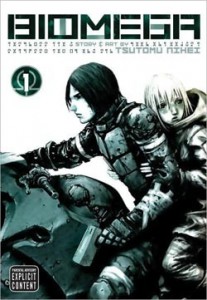
Biomega
By Tsutomu Nihei • 6 volumes
In this sci-fi/horror hybrid, an outbreak of a mysterious virus turns all but one resident of an island colony into zombies. Zoichi Kanoe, a corporate bounty hunter, is sent to retrieve that survivor, only to discover that she’s being guarded by a talking, gun-toting bear. Tsutomu Nihei has the artistic chops to pull off some outlandish stuff, including a rooftop chase scene that borrows a few pages from Bullitt and a spooky Martian prologue that would do John Carpenter proud. Nihei also has the good sense to exercise restraint — if one can describe an apocalyptic zombie scenario with pistol-packing grizzlies as “restrained” — revealing key bits of information only as the characters learn them. The result is a lean, fast-paced shoot-em-up that has just enough thought behind it to make it plausible but not so much that it seems ham-fistedly allegorical. (Reviewed at The Manga Critic on 2/14/10.)

Recommended for: Readers who like science fiction with elements of horror (e.g. Alien, John Carpenter’s The Thing); readers who like zombie fiction, comics, and movies.

Detroit Metal City
By Kiminori Wakasuhi • 10 volumes
Satirizing death metal is a bit like shooting fish in a barrel: how hard can it be to parody a style associated with bands named Cannibal Corpse or Necrophagia? Poking fun at death metal while respecting the sincerity of its followers, however, is a much more difficult trick to pull off, yet Kiminori Wakasugi does just that in Detroit Metal City, ridiculing the music — the violent lyrics, the crudely sexual theatrics — while recognizing the depth of DMC fans’ commitment to the metal lifestyle. Though the musical parodies are hilarious, the series’ funniest moments arise from classic fish-out-of-water situations: Negishi driving a tractor on his parent’s farm while dressed as alter ego Lord Krauser (complete with makeup, fright wig, and platform boots), Negishi bringing a fruit basket to a hospitalized DMC fan while dressed as Krauser… you get the idea. The series begins to run out of gas around volume six, but has the decency not to overstay its welcome. (Reviewed at The Manga Critic on 5/28/09.)

Recommended for: Readers who love musical parodies (e.g. This Is Spinal Tap, South Park, Flight of the Conchords); readers who have fond memories of attending KISS or GWAR concerts back in the day.

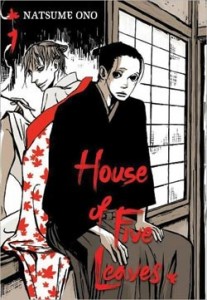
House of Five Leaves
By Natsume Ono • 8 volumes
Timid ronin Akitsu Masanosuke can’t hold a steady job, despite his formidable swordsmanship. When a businessman approaches him with work, Masanosuke readily accepts, not realizing that his new employer, Yaichi, runs a crime syndicate that specializes in kidnapping. Masanosuke’s unwitting participation in a blackmailing scheme prevents him from severing his ties to Yaichi; Masanosuke must then decide if he will join the House of Five Leaves or bide his time until he can escape. Though Toshiro Mifune and Hiroyuki Sanada have made entire careers out of playing characters like Masanosuke, Natsume Ono makes a persuasive case that you don’t need a flesh-and-blood actor to tell this kind of story with heartbreaking intensity; she can do the slow-burn on the printed page with the same skill as Masaki Kobayashi (Hara Kiri, Samurai Rebellion) and Yoji Yamada (The Twilight Samurai) did on the big screen. (Reviewed at The Manga Critic on 8/20/10.)

Recommended for: Kurosawa junkies; readers who like costume dramas; readers with an interest in Japanese history.

Oishinbo a la Carte
Story by Tetsy Kariya, Art by Hanasaki Akira • 7 volumes
Equal parts Iron Wok Jan, Mostly Martha, and The Manga Cookbook, this educational, entertaining series explores Japanese cuisine at its most refined — sake, seabream sashimi — and its most basic — rice, pub food. The stories fall into two categories: stories celebrating the important role of food in creating community, and stories celebrating the culinary expertise of its principal characters, newspaperman Yamaoka Shiro and his curmudgeonly father Kaibara Yuzan. (Fun fact: Yuzan is such a food snob that he drove Yamaoka’s mother to an early grave, causing an irreparable break between father and son.) Though the competition between Yamaoka and Yuzan yields some elegant, mouth-watering dishes, Oishinbo is at its best when it focuses on everyday food in everyday settings, shedding light on how the Japanese prepare everything from bean sprouts to ramen. Warning: never read on an empty stomach! (Reviewed at The Manga Critic on 6/24/09.)

Recommended for: Foodies, gourmets, and other people who like to watch the Food Network (or have daydreamed about becoming a restaurant critic); readers who enjoy The Drops of God.

Real
By Takehiko Inoue • 15 volumes (ongoing)
In lesser hands, REAL might have been an Afterschool Special in manga form, an earnest, uplifting story about disabled teens who find a new sense of purpose on the basketball court. Takehiko Inoue, however, steers clear of easy sentiment; his characters are tough, competitive, and profane, occasionally self-pitying, and fiercely determined to create a space for themselves that’s theirs—and theirs alone. Though the court scenes are brief (at least by shonen sports manga standards, where matches can take several volumes to unfold), Inoue captures the speed and energy of his athletes with consummate skill. A funny, honest, and sometimes rueful series that works equally well for teens and adults. (My choice for Best New Manga of 2008 at PopCultureShock; reviewed at The Manga Critic on 5/3/09.)

Recommended for: Basketball enthusiasts; readers who enjoy sports stories with a human interest angle.

20th Century Boys
By Naoki Urasawa • 24 vols.
Naoki Urasawa’s 20th Century Boys tells a twisty, layered story about ordinary people saving the world from annihilation. Other auteurs have explore similar turf — Tim Kring’s Heroes comes to mind — but Urasawa manages to sustain the reader’s interest without succumbing to cliche or unduly testing our patience. The key to Urasawa’s success is strong script with vivid characters and a clear sense of purpose, reassuring the reader that all the plot strands are just that: strands, not loose threads. Crisp, detailed artwork helps sell the more ludicrous aspects of the story, and distinguish the sprawling cast from one another. (Reviewed at The Manga Critic on 1/9/10.)

Recommended for: Conspiracy theory buffs; readers who enjoy television programs that blend elements of science fiction, suspense, and paranoia (e.g. Alcatraz, Heroes, Lost).

Filed Under: Manga, Manga Critic, Recommended Reading Tagged With: Cooking and Food, Drama, fumi yoshinaga, Horror/Supernatural, Naoki Urasawa, Natsume Ono, Sci-Fi, Sports Manga, Tsutomu Nihei, VIZ, VIZ Signature

7 Essential VIZ Signature Manga

April 26, 2012 by Katherine Dacey 10 Comments

Are you an adult reader new to manga? Or a librarian who’s looking to add more graphic novels to your adult collection? Then this list is for you! The VIZ Signature imprint is one of the best resources for adults who read — or are curious about — manga. All of the Signature titles originally appeared in Japanese magazines that cater to grown-up tastes. As a result, the Signature line has broader appeal than many of VIZ’s other imprints, offering something for manga lovers who have “aged out” of Naruto as well as general interest readers who are more likely to discover a graphic novel through The New York Times than The Comics Journal.

Below, I’ve compiled a list of seven titles that best represent the VIZ Signature catalog. In choosing manga for this list, I was less concerned about identifying the “best” titles and more concerned with steering readers towards stories that resonate with their taste in movies, television, and comics. I’ve also focused on more recent series, as some of the line’s older titles — Monster, Sexy Voice and Robo, Phoenix — are out of print. Manga fans are strongly encouraged to add their recommendations in the comments section!

ALL MY DARLING DAUGHTERS

FUMI YOSHINAGA • 1 VOLUME

The five vignettes in All My Darling Daughters depict women negotiating difficult personal relationships: a daughter confronts her mother about mom’s new, much younger husband; a college student seduces her professor, only to dump him when he tries to court her properly; a beautiful young woman contemplates an arranged marriage. Like all of Yoshinaga’s work, the characters in All My Darling Daughters love to talk. That chattiness isn’t always an asset to Yoshinaga’s storytelling, but here the dialogue is perfectly calibrated to reveal just how complex and ambivalent these relationships really are. Yoshinaga’s artwork is understated but effective, as she uses small details — how a character stands or carries her shoulders — to offer a more complete and nuanced portrait of each woman. (One of my picks for Best New Manga of 2010.)

Recommended for: Readers who liked Drinking at the Movies, Dykes to Watch Out For, Make Me a Woman, and other graphic novels exploring the everyday lives of women; readers who are reluctant to commit to a multi-volume series.

BIOMEGA

TSUTOMU NIHEI • 6 VOLUMES

In this sci-fi/horror hybrid, an outbreak of a mysterious virus turns all but one resident of an island colony into zombies. Zoichi Kanoe, a corporate bounty hunter, is sent to retrieve that survivor, only to discover that she’s being guarded by a talking, gun-toting bear. Tsutomu Nihei has the artistic chops to pull off some outlandish stuff, including a rooftop chase scene that borrows a few pages from Bullitt and a spooky Martian prologue that would do John Carpenter proud. Nihei also has the good sense to exercise restraint — if one can describe an apocalyptic zombie scenario with pistol-packing grizzlies as “restrained” — revealing key bits of information only as the characters learn them. The result is a lean, fast-paced shoot-em-up that has just enough thought behind it to make it plausible but not so much that it seems ham-fistedly allegorical. (Reviewed at The Manga Critic on 2/14/10.)

Recommended for: Readers who like science fiction with elements of horror (e.g. Alien, John Carpenter’s The Thing); readers who like zombie fiction, comics, and movies.

DETROIT METAL CITY

KIMINORI WAKASUHI • 10 VOLUMES

Satirizing death metal is a bit like shooting fish in a barrel: how hard can it be to parody a style associated with bands named Cannibal Corpse or Necrophagia? Poking fun at death metal while respecting the sincerity of its followers, however, is a much more difficult trick to pull off, yet Kiminori Wakasugi does just that in Detroit Metal City, ridiculing the music — the violent lyrics, the crudely sexual theatrics — while recognizing the depth of DMC fans’ commitment to the metal lifestyle. Though the musical parodies are hilarious, the series’ funniest moments arise from classic fish-out-of-water situations: Negishi driving a tractor on his parent’s farm while dressed as alter ego Lord Krauser (complete with makeup, fright wig, and platform boots), Negishi bringing a fruit basket to a hospitalized DMC fan while dressed as Krauser… you get the idea. The series begins to run out of gas around volume six, but has the decency not to overstay its welcome. (Reviewed at The Manga Critic on 5/28/09.)

Recommended for: Readers who love musical parodies (e.g. This Is Spinal Tap, South Park, Flight of the Conchords); readers who have fond memories of attending KISS or GWAR concerts back in the day.

HOUSE OF FIVE LEAVES

NATSUME ONO • 7 VOLUMES, ONGOING (8 TOTAL)

Timid ronin Akitsu Masanosuke can’t hold a steady job, despite his formidable swordsmanship. When a businessman approaches him with work, Masanosuke readily accepts, not realizing that his new employer, Yaichi, runs a crime syndicate that specializes in kidnapping. Masanosuke’s unwitting participation in a blackmailing scheme prevents him from severing his ties to Yaichi; Masanosuke must then decide if he will join the House of Five Leaves or bide his time until he can escape. Though Toshiro Mifune and Hiroyuki Sanada have made entire careers out of playing characters like Masanosuke, Natsume Ono makes a persuasive case that you don’t need a flesh-and-blood actor to tell this kind of story with heartbreaking intensity; she can do the slow-burn on the printed page with the same skill as Masaki Kobayashi (Hara Kiri, Samurai Rebellion) and Yoji Yamada (The Twilight Samurai) did on the big screen. (Reviewed at The Manga Critic on 8/20/10.)

Recommended for: Kurosawa junkies; readers who like costume dramas; readers with an interest in Japanese history.

OISHINBO A LA CARTE

STORY BY TETSY KARIYA, ART BY HANASAKI AKIRA • 7 VOLUMES

Equal parts Iron Wok Jan, Mostly Martha, and The Manga Cookbook, this educational, entertaining series explores Japanese cuisine at its most refined — sake, seabream sashimi — and its most basic — rice, pub food. The stories fall into two categories: stories celebrating the important role of food in creating community, and stories celebrating the culinary expertise of its principal characters, newspaperman Yamaoka Shiro and his curmudgeonly father Kaibara Yuzan. (Fun fact: Yuzan is such a food snob that he drove Yamaoka’s mother to an early grave, causing an irreparable break between father and son.) Though the competition between Yamaoka and Yuzan yields some elegant, mouth-watering dishes, Oishinbo is at its best when it focuses on everyday food in everyday settings, shedding light on how the Japanese prepare everything from bean sprouts to ramen. Warning: never read on an empty stomach! (Reviewed at The Manga Critic on 6/24/09.)

Recommended for: Foodies, gourmets, and other people who like to watch the Food Network (or have daydreamed about becoming a restaurant critic); readers who enjoy The Drops of God.

REAL

TAKEHIKO INOUE • 10 VOLUMES, ONGOING

In lesser hands, REAL might have been an Afterschool Special in manga form, an earnest, uplifting story about disabled teens who find a new sense of purpose on the basketball court. Takehiko Inoue, however, steers clear of easy sentiment; his characters are tough, competitive, and profane, occasionally self-pitying, and fiercely determined to create a space for themselves that’s theirs—and theirs alone. Though the court scenes are brief (at least by shonen sports manga standards, where matches can take several volumes to unfold), Inoue captures the speed and energy of his athletes with consummate skill. A funny, honest, and sometimes rueful series that works equally well for teens and adults. (My choice for Best New Manga of 2008 at PopCultureShock; reviewed at The Manga Critic on 5/3/09.)

Recommended for: Basketball enthusiasts; readers who enjoy sports stories with a human interest angle.

20TH CENTURY BOYS

NAOKI URASAWA • 20 VOLUMES, ONGOING (24 TOTAL)

Naoki Urasawa’s 20th Century Boys tells a twisty, layered story about ordinary people saving the world from annihilation. Other auteurs have explore similar turf — Tim Kring’s Heroes comes to mind — but Urasawa manages to sustain the reader’s interest without succumbing to cliche or unduly testing our patience. The key to Urasawa’s success is strong script with vivid characters and a clear sense of purpose, reassuring the reader that all the plot strands are just that: strands, not loose threads. Crisp, detailed artwork helps sell the more ludicrous aspects of the story, and distinguish the sprawling cast from one another. (Reviewed at The Manga Critic on 1/9/10.)

Recommended for: Conspiracy theory buffs; readers who enjoy television programs that blend elements of science fiction, suspense, and paranoia (e.g. Alcatraz, Heroes, Lost).

Filed Under: Manga Critic Tagged With: Cooking and Food, Drama, fumi yoshinaga, Horror/Supernatural, Naoki Urasawa, Natsume Ono, Sci-Fi, Seinen, Sports Manga, Tsutomu Nihei, VIZ, VIZ Signature

Manga the Week of 5/2

April 25, 2012 by Sean Gaffney

It’s a first week of the month, which means manga, manga, manga at the list we get from Midtown Comics and not from Amazon, as I’ve mentioned a few times. (Unless you shop at my store, which Diamond is not shipping anything to next week. I’m not sure why. To spite me?) So what have we got?

DMP has a new yaoi manga called Good Morning, which seems to deal with drunken office couplings and their aftermath. At least the cover doesn’t feature one guy with his arm possessively around the other. It’s a start?

Gen manga has another collection of an indie manga story that’s been serialized in their magazine. This one, Kamen, deals with… a masked man! I know, the title really threw you off.

Kodansha has the third and (I believe) final Tokyo Mew Mew omnibus, as well as the third and not final Love Hina omnibus. And to make this week re-releases week at Koda nsha, they also have the 5th volume of dinosaur seinen masterpiece Gon.

And of course there’s Viz. As you can see, I’m dedicated to spotlighting the most exciting, dynamic covers every week. So have another week of someone gazing blankly at the reader, this time from shoujo weepie We Were There. Also hitting the shoujo shelves are new volumes of Oresama Teacher and Haruka: Beyond The Stream of Reader Comprehension… um, Time. There’s also Ai Ore 5. Can the hero stay vaguely likeable, or will he remember he’s in a Mayu Shinjo manga? There’s also new omnibuses for Hana Kimi and Skip Beat, highlighting Vols. 4-6 of both series.

On the shonen side, there’s more Jump. Tegami Bachi Letter Bee 9 (I always forget if there’s a colon somewhere in that mess). Psyren 4. One Piece 62, where the Fishman Island arc makes readers forgive Skypeia and Thriller Bark everything. (I kid. But only some.) And lastly, for the kids there’s new Fluffy Fluffy Cinnamonroll, as well as a new Pokemon Black & White.

So what appeals to you this week?

Filed Under: FEATURES

The Best Manga You’re Not Reading: I’ll Give It My All… Tomorrow

April 25, 2012 by Katherine Dacey

I’m not a big fan of squirm-inducing comedies like The Office; it’s hard to root for a loser who makes everyone uncomfortable with his general lack of self-awareness and humility. Yet The Office was undeniably compelling, even if it was sometimes hard to watch. The genius was in Ricky Gervais’ performance: he embodied a type that we’ve all encountered in our working lives, someone who felt small but used his job to make himself seem bigger or more important than he really was. Gervais never tried to make his character appealing in his vulnerability, and in so doing, forced the audience to confront the fundamental falseness of the lovable loser stereotype; we may feel better about ourselves for identifying with a decent underdog, but we probably have more in common with David Brent than we’d care to admit.

I’ll Give It My All… Tomorrow, an unsparing farce about a forty-year-old father who quits his job to become a manga artist, inspires a similar mixture of love and squick. Shunjo Aono makes no effort to endear his protagonist to readers; Shizuo is a loser with big dreams but terrible follow-through. Like many daydreamers, Shizuo failed to realize that his fantasy job would be just as grueling as the one he quit, a revelation that sends him into a tailspin of binge drinking, prostitution, and video gaming. The first volume’s blunt, unsparing tone yields some squirm-inducing moments that are just a little too truthful to be funny, such as when Shizuo bumps into his eighteen-year-old daughter at a love hotel or parties with younger colleagues.

As the story progress, however, Shizuo spends less time pretending to be twenty and more time writing stories. Volume two opens with a scene of Shizuo pitching an ill-advised story Murakami, the one editor at EKKE magazine who can tolerate Shizuo. Following the dictum of “write what you know,” Shizuo has penned “The History of Me,” an autobiographical comic depicting Shizuo’s ongoing struggle to find his true gift, the thing that, in his own words, makes him “different from other people.” It’s an exquisitely uncomfortable scene, as Murakami must endure Shizuo’s pompous editorializing, making it almost inevitable that Shizuo’s work will be rejected swiftly. Worse still, Shizuo’s journey of self-discovery is anything but; he’s failed at everything he’s tried — street tough, folk singer, salary man — yet hasn’t abandoned the delusion that he’s “too big” for the “little” opportunities he’s been given thus far.

In subsequent volumes, Shizuo’s progress remains fitful, impeded by his ego and his inexperience. When he does have an epiphany, it’s usually because he’s failed spectacularly and must rationalize the choices he’s made. In volume four, for example, Shizuo is assigned to a new editor, Aya Unami. After reading his latest excruciatingly autobiographical manuscript, “Live to 300,” she promptly tells him, “I think you need to know when to give up.” Oguro is initially stunned, but soon realizes that Aya might be the only person with the vision and honesty to help him improve. Whether she’s willing to coach him, and whether he can accept her guidance, however, are a different story; it’s hard to imagine Aono treating this moment as a major breakthrough in Shizuo’s journey from amateur to professional, the first meeting between a gifted natural and the coach who will lead him to stardom.

The artwork mirrors Shizuo’s skill level and emotional maturity: the lines are thick and imperfect, the shapes are basic, and the characters’ bodies are awkwardly proportioned. Shizuo has an enormous, round head that seems ill-suited for his body, and tiny eyes that remind us just how myopic he is in every aspect of his life. (See “bumping into teenage daughter at a love motel,” above.) In a particularly skillful touch, Shizuo’s own drawing mirrors that of Aono’s, only executed with less command of line and form — a subtle reminder that the prevailing aesthetic of both stories is meant to reflect how Shizuo sees the world, not an artistic failing on Aono’s part.

I’m probably making I’ll Give It My All… Tomorrow sound like a colossal downer; after all, it’s hard to laugh at a character who seems so pitiful. Yet for all Shizuo’s self-aggrandizement, there’s something honest about his efforts, and that’s what makes this squirm-inducing comedy readable. We may do our best to be responsible — to hold good-paying jobs, pay our mortgages, and raise our children to be good students and citizens — but for many of us, a soft, nagging voice asks, “Is that all there is?” Shizuo’s decision to act on that doubt isn’t wise or noble, but it’s testament to a deeply human need: to create meaning out of our experiences, and to find proof that our lives are intrinsically interesting to other people. Recommended, though you may want a stiff drink afterwards.

This is an expanded version of reviews that previously appeared at The Manga Critic on 8/20/09, 11/08/10, and 11/28/11.

Filed Under: Manga, Manga Critic, Recommended Reading, REVIEWS Tagged With: Manga Movable Feast, Shunju Aono, SigIKKI, VIZ, VIZ Signature

The Best Manga You’re Not Reading: I’ll Give It My All… Tomorrow

April 25, 2012 by Katherine Dacey 2 Comments

I’m not a big fan of squirm-inducing comedies like The Office; it’s hard to root for a loser who makes everyone uncomfortable with his general lack of self-awareness and humility. Yet The Office was undeniably compelling, even if it was sometimes hard to watch. The genius was in Ricky Gervais’ performance: he embodied a type that we’ve all encountered in our working lives, someone who felt small but used his job to make himself seem bigger or more important than he really was. Gervais never tried to make his character appealing in his vulnerability, and in so doing, forced the audience to confront the fundamental falseness of the lovable loser stereotype; we may feel better about ourselves for identifying with a decent underdog, but we probably have more in common with David Brent than we’d care to admit.

I’ll Give It My All… Tomorrow, an unsparing farce about a forty-year-old father who quits his job to become a manga artist, inspires a similar mixture of love and squick. Shunjo Aono makes no effort to endear his protagonist to readers; Shizuo is a loser with big dreams but terrible follow-through. Like many daydreamers, Shizuo failed to realize that his fantasy job would be just as grueling as the one he quit, a revelation that sends him into a tailspin of binge drinking, prostitution, and video gaming. The first volume’s blunt, unsparing tone yields some squirm-inducing moments that are just a little too truthful to be funny, such as when Shizuo bumps into his eighteen-year-old daughter at a love hotel or parties with younger colleagues.

As the story progress, however, Shizuo spends less time pretending to be twenty and more time writing stories. Volume two opens with a scene of Shizuo pitching an ill-advised story Murakami, the one editor at EKKE magazine who can tolerate Shizuo. Following the dictum of “write what you know,” Shizuo has penned “The History of Me,” an autobiographical comic depicting Shizuo’s ongoing struggle to find his true gift, the thing that, in his own words, makes him “different from other people.” It’s an exquisitely uncomfortable scene, as Murakami must endure Shizuo’s pompous editorializing, making it almost inevitable that Shizuo’s work will be rejected swiftly. Worse still, Shizuo’s journey of self-discovery is anything but; he’s failed at everything he’s tried — street tough, folk singer, salary man — yet hasn’t abandoned the delusion that he’s “too big” for the “little” opportunities he’s been given thus far.

In subsequent volumes, Shizuo’s progress remains fitful, impeded by his ego and his inexperience. When he does have an epiphany, it’s usually because he’s failed spectacularly and must rationalize the choices he’s made. In volume four, for example, Shizuo is assigned to a new editor, Aya Unami. After reading his latest excruciatingly autobiographical manuscript, “Live to 300,” she promptly tells him, “I think you need to know when to give up.” Oguro is initially stunned, but soon realizes that Aya might be the only person with the vision and honesty to help him improve. Whether she’s willing to coach him, and whether he can accept her guidance, however, are a different story; it’s hard to imagine Aono treating this moment as a major breakthrough in Shizuo’s journey from amateur to professional, the first meeting between a gifted natural and the coach who will lead him to stardom.

The artwork mirrors Shizuo’s skill level and emotional maturity: the lines are thick and imperfect, the shapes are basic, and the characters’ bodies are awkwardly proportioned. Shizuo has an enormous, round head that seems ill-suited for his body, and tiny eyes that remind us just how myopic he is in every aspect of his life. (See “bumping into teenage daughter at a love motel,” above.) In a particularly skillful touch, Shizuo’s own drawing mirrors that of Aono’s, only executed with less command of line and form — a subtle reminder that the prevailing aesthetic of both stories is meant to reflect how Shizuo sees the world, not an artistic failing on Aono’s part.

I’m probably making I’ll Give It My All… Tomorrow sound like a colossal downer; after all, it’s hard to laugh at a character who seems so pitiful. Yet for all Shizuo’s self-aggrandizement, there’s something honest about his efforts, and that’s what makes this squirm-inducing comedy readable. We may do our best to be responsible — to hold good-paying jobs, pay our mortgages, and raise our children to be good students and citizens — but for many of us, a soft, nagging voice asks, “Is that all there is?” Shizuo’s decision to act on that doubt isn’t wise or noble, but it’s testament to a deeply human need: to create meaning out of our experiences, and to find proof that our lives are intrinsically interesting to other people. Recommended, though you may want a stiff drink afterwards.

This is an expanded version of reviews that previously appeared at The Manga Critic on 8/20/09, 11/08/10, and 11/28/11.

Filed Under: Manga Critic Tagged With: Manga Movable Feast, Shunju Aono, SigIKKI, VIZ, VIZ Signature

New Kodansha, new Kenshin

April 25, 2012 by Brigid Alverson

Kodansha made news this week with their announcement of three new licenses: Battle Angel Alita: Last Order, Ema Toyama’s Missions of Love (Watashi ni xx Shinasai!), and Natsume Ono’s Danza. Natsume Ono!

Meanwhile, in her Yuri Network News column, Erica Friedman lets slip that ALC Publishing is finishing work on Kimi no Tame nara Shineru, a yuri 4-koma comic that breaks new ground—it’s actually funny.

The Manga Bookshelf bloggers debate their Pick of the Week. Also at Manga Bookshelf: MJ, Sean Gaffney, and Michelle Smith look over some paper-free manga in their latest Going Digital column and Erica Friedman takes a look at the manga magazine IKKI.

In the same vein, Three Steps Over Japan takes a look at Comic Beam.

Kate Dacey is hosting this month’s Manga Moveable Feast, which features Viz Signature manga, at The Manga Critic, and she already has an introduction link roundups for day one and day two.

Issue 10 of the online manga magazine GEN is up!

MJ brings back her Manhwa Monday feature, because suddenly there’s news!

Matt Blind lists the manga best-sellers from early March as well as a new Manga Radar post.

Khursten Santos takes a look at the Filipino-language manga scene at Otaku Champloo.

Lissa Pattillo opens up the Swag Bag after a bit of a hiatus and chats about her recent purchases.

News from Japan: Shonen Jump will publish a “chapter 0” of Rurouni Kenshin, and there’s going to be a Kenshin smartphone app as well. Manga-ka Leiji Matsumoto and Tetsuya Chiba have joined a study group formed by the Democratic Party of Japan to promote the popularity of manga overseas. Girls High has moved from Comic Sumomo to Comic High! One-shots are in the works from Bokurano creator Mohiro Kitoh and Samurai Gun manga-ka Kazuhiro Kumagai.

Reviews: Carlo Santos rounds up his take on some recent releases in his latest Right Turn Only!! column at ANN. Ash Brown has the weekly report at Manga Worth Reading. The Manga Bookshelf team starts the week with a new round of Bookshelf Briefs.

Leroy Douresseaux on vol. 20 of 20th Century Boys (The Comic Book Bin)
Johanna Draper Carlson on vols. 1 and 2 of A Devil and Her Love Song (Comics Worth Reading)
Lori Henderson on vol. 1 of Dorohedoro (Manga Xanadu)
Sean Gaffney on vol. 6 of Dorohedoro (A Case Suitable for Treatment)
Sean Gaffney on vol. 2 of Durarara!! (A Case Suitable for Treatment)
Ken Haley on vols. 5 and 6 of Erementar Gerad (Sequential Ink)
Sean Gaffney on vol. 18 of Higurashi: When They Cry (A Case Suitable for Treatment)
Kate Dacey on Love Song (The Manga Critic)
Lesley Aeschliman on vol. 2 of One Piece (Blogcritics)
Erica Friedman on Pie wo Agemassho, Anata ni Pie wo ne (Okazu)
Jason Wilkins on Rohan at the Louvre (Broken Frontier)
Philip Anthony on vol. 3 of Sailor Moon (Manga Bookshelf)
L.C. Moran on vols. 1-3.5 of I Married an Anti-Fan (Organization Anti-Social Geniuses)
Connie on vol. 8 of Toriko (Slightly Biased Manga)
Lesley Aeschliman on vol. 3 of Twin Spica (Blogcritics)
Connie on Working Kentauros (Slightly Biased Manga)

Filed Under: MANGABLOG

Dorohedoro, Vol. 6

April 25, 2012 by Sean Gaffney

By Q Hayashida. Released in Japan by Shogakukan, serialization ongoing in the magazine Ikki. Released in North America by Viz.

No thrilling escapes for Nikaido after last volume’s cliffhanger ending – she’s captured, and En is determined to make her his new partner. That said, the most fascinating thing about this volume, and indeed Dorohedoro as a whole, is the motivations of the so-called ‘villainous’ characters. In a world where everyone’s a bit of a sadistic murderer, how do you judge who’s really a good person or not? Well, one way might be that they don’t chain you in a dungeon and mind-control you into being a zombie. But on the other hand…

En is on this volume’s cover, and En gets the most attention, as we get a flashback to his own origins. Of course, this particular flashback is a movie directed by En, so there’s a slight question of veracity. But even if it is propaganda, it *sounds* right – we even see him without his mask! (He has thins tiny pencil mustache – I bet he thinks it makes him look cooler, but I was thinking more cute.) The big thing about this flashback, though, is it continues to show that En’s past is tied with the past that Caimahn is trying to discover – and that the current happy-go-lucky lizard head Caiman was probably a very different person when he was a Cross-Eyed.

However, as sympathetic as En seems in the final chapters, it’s balanced by his treatment of Nikaido, which I already alluded to. Forced to sign a partner contract – which in this universe involves literally opening up your chest and sticking it inside your body – Nikaido is then imprisoned for the majority of this volume, and it’s very much the chains and bread and water type of prison. When she’s finally freed, it’s only because the contract – which is shown to be magical in nature, as if opening people’s chests like doors wasn’t a clue enough – is making her passive and accepting. Indeed, at one point she has a bowling ball dropped on her head by a jealous Chota, her reaction is basically “oh”. It’s sad to see, and does not endear En to you, no matter what grand plans he has. (The ‘extra chapter’ is a side story showing us how Nikaido got her restaurant, in case we missed the old chirpy version.

And as always, there’s the world building. This month the Manga Moveable Feast is discussing Viz’s Signature titles, and this is certainly one of them. Indeed, I have trouble imagining this series anywhere but in Ikki, Shogakukan’s experimental seinen line. Hayashida clearly has an ongoing plot, but the series works because she’s given so much time to play everything out – even the action scenes don’t feel rushed. Dorohedoro’s been running since 2000, and Japan is up to Volume 16. While this means it must be selling something, I think it also shows the trust the editors place in her to deliver these sorts of goods. Of course there is *some* pandering to the reader – each volume is filled with gory violence, and one scene showing Noi and Ebisu bathing a struggling Nikaido has our standard gratuitous nudity – but it’s not done in the usual “look, boobs!” way we see in, say, Cage of Eden.

Lastly, what struck me about this volume was the unashamed sentiment it still has in its crapsack world filled with morally ambiguous characters. The ongoing funny-yet-heartwarming relationship between Fujita and Ebisu. The way that Caiman has quickly won Tanba over and is now prepared to reveal things that he really only told Nikaido before. And Johnson and his compatriots escaping En’s prison, not because of a clever and daring escape, but because Johnson saved Shin’s life back in the day and Shin owes him. In a world where hell is literal (and not always filled with the dead, as En can attest) but we’re not so sure about heaven, these little moments are precious. It’s the difference between having a world of villains and having a world full of unlikeable villains. All of Dorohedoro’s cast makes you want to read more of them. Even En. Though I wish he didn’t have to resort to brainwashing.

Filed Under: REVIEWS

Manga Radar: 4 March 2012

April 24, 2012 by Matt Blind 6 Comments

First up, as usual, are the Database Additions — older titles I somehow previously missed.

Sweet Revolution – DMP Juné, Mar 2006 ::
Laugh Under the Sun – DMP Juné, Dec 2007 ::

Kino no Tabi (novel) 1 – Tokyopop, Oct 2006 ::
Kino no Tabi (novel) 2 – Tokyopop, TBA ::

Someone (or rather, likely several someones) was ordering yaoi from buy.com – I saw *a lot* of titles and actually expected more of them to be new to my charts. As it was, we only had two pickups – both older Juné titles.

More interesting (to me) are the Kino no Tabi books – these are from the much-neglected TokyoPop Fiction line, which also included The Twelve Kingdoms and a few other books no one remembers, sadly. Kino no Tabi vol 1 is selling for $50 on Amazon, used; vol 2 can not be had for love or money.

Most of the New Releases for the week are ebooks — a trend which will continue for the foreseeable future. I don’t know if it’s because ebooks are “impulse” purchases or merely a side effect of e- — there’s not much lead time on ebooks, as they are either ready to go (and to purchase) or, well, they’re not.

Oh, & A Bowl of Moxa Is Coming (ebook) – DMP Digital Manga Guild, Feb 2012 ::
The Boyfriend Next Door (ebook) – DMP Digital Manga Guild, Feb 2012 ::
Clumsy Child (ebook) – DMP Digital Manga Guild, Feb 2012 ::
Tweeting Love Birds (ebook) 2 – DMP Digital Manga Guild, Feb 2012 ::
Renji Jumonji’s Hardship (ebook) – DMP Digital Manga Guild, Feb 2012 ::
Again Tomorrow (ebook) – DMP Digital Manga Guild, Feb 2012 ::
The Conqueror’s Chalice (ebook) – DMP Digital Manga Guild, Feb 2012 ::
Cheap Chase (ebook) – DMP Digital Manga Guild, Mar 2012 ::

Cage of Eden 4 – Kodansha Comics, Feb 2012 ::
Itazura na Kiss 7 – DMP, Mar 2012 ::

I don’t attempt an exhaustive listing of DMG titles, only tracking those that sell; part of that is because I have no clue, really, just how many volumes these teams are putting out, mostly though it’s because tracking _all_ of them would require as much effort as the whole rest of the chart. I add more than a few to the database each week, though.

Cage of Eden and Itazura na Kiss are midlist? properties that didn’t really blow the doors off when they first came out, but have a few fans at least. These two most recent volumes didn’t make a mark as preorders but are selling now that they are out. Itazura na Kiss vol 7 ranks in the top 500, at #347 for the week – that puts the book in the rough neighborhood of Naruto 33, Wallflower 27, and Three P [from DMP’s Project H]

Also new to the charts this week are a real mixed bag of Preorders:

Kizuna Deluxe Edition 6 – DMP Juné, Jun 2012 ::
Dawn of the Arcana 4 – Viz Shojo Beat, Jun 2012 ::
Dog x Cat 3 – 801 Media, Jun 2012 ::
In These Words – 801 Media, Jun 2012 ::
Bad Teacher’s Equation 4 – DMP Juné, Jun 2012 ::
Same Difference – DMP Juné, Jun 2012 ::
Witch & Wizard 2 – Yen Press, Jun 2012 ::

Rin-Ne 9 – Viz Shonen Sunday, Jul 2012 ::
Flutter – DMP Juné, Jul 2012 ::
Secretary’s Job – DMP Juné, Jul 2012 ::

Yotsuba&! 11 – Yen Press, Sep 2012 ::

DMP has a very strong showing here (likely due to their very dedicated fans) but there are also books in just about every genre/flavour to be had – from shojo to shonen to Yotsuba&!.

Yotsuba&! fans are ordering six months in advance, likely just as soon as they could find a listing for the book. That says something.

##

My posted results (the top ten lists, category breakouts like the ebooks list, the Manga 500) are too much for most folks to wade through, but still only the tip of the data iceberg. A ranking isn’t as important as the vector — whether a title is moving up or down the rankings, and how fast. Already, in each report, you can see if a title is moving up or down compared to the previous week, but that’s just a single blip. Unless you work with the source websites & all the numbers as intimately as I do, you miss the bigger picture — and even then, often I just have a feeling or a hunch about a title. I thought I might put in the extra effort, though, and bring at least some of that perspective to you, as well as generating concrete proof to prove (& especially disprove) my guesses. Since we’ll be looking at weeks of data, unfortunately that means graphics.

I say ‘unfortunately’ — as I am good with maths but not necessarily as adept at visualizations. I lean heavily on the built-in functionality of the spreadsheet whenever I do post a graph. Still, if you know what question you’re asking, you can set up the spreadsheet to do a lot of heavy data lifting for you, and the results don’t look that bad.

Here’s the newest part of the “Manga Radar” : a manga radar scope.

I’ll start by giving you the top 10 preorders for the week of 4 March, 2012:

19. ↓-1 (18) : Sailor Moon 5 – Kodansha Comics, Apr 2012 [283.3] ::
21. ↔0 (21) : Sailor Moon 7 – Kodansha Comics, Sep 2012 [260.5] ::
22. ↑1 (23) : Sailor Moon 6 – Kodansha Comics, Jun 2012 [260.1] ::
63. ↓-1 (62) : Negima! 34 – Kodansha Comics, Apr 2012 [148.7] ::
80. ↑17 (97) : Black Butler 9 – Yen Press, Jul 2012 [119.8] ::
83. ↑374 (457) : Sailor Moon 8 – Kodansha Comics, Nov 2012 [119.1] ::
88. ↑1 (89) : Dance in the Vampire Bund 12 – Seven Seas, Jun 2012 [110.3] ::
104. ↑7 (111) : The Betrayal Knows My Name 3 – Yen Press, Apr 2012 [94.4] ::
107. ↑736 (843) : Finder Series 6 Passion within the View Finder – DMP Juné, Jul 2012 [92.4] ::
109. ↑75 (184) : Private Teacher 3 – DMP Juné, May 2012 [91.4] ::

And here is the same list with 16 weeks of historical data attached:

Top 10 Manga Preorder 4 March 2012

Sailor Moon vol. 5, available for preorder the longest (perhaps) and certainly benefiting from the enthusiasm for the series, has some ups and downs but has been consistently outselling the other 9 for all 16 weeks… but check out the strong surges of volume 7 (from two months ago) and of volume 8, available for preorder for just the past two weeks. The only thing quite like it on this list is the 6th (and last?) volume in the “View Finder” series, Passion within the View Finder — though looking back, Dance in the Vampire Bund vol 12 and Sailor Moon vol 7 also had similar spikes in their 2nd week. Other titles in this [limited] list are showing relatively-flat-but-slowing-growing demand.

At some future point, I might post a similar chart showing how manga volumes with strong preorders still exhibit a significant spike in sales once they are actually released and available. There are a lot of fun things I can do with this data now that I have it all in one place and not spread out across 16 files. I suppose I can experiment with quite a few different ways to present the data. I know the graph above is basic (and maybe not as clear as I think it is) but it’s been a long haul just to get to this one simple graph — and to put into place the procedures to continue to track all the rankings on an ongoing, rolling 16-week basis.

Feedback, as always, is appreciated; drop your questions into the comments. [and really good questions will likely also find their way onto the about the charts page].

Filed Under: Manga Radar, UNSHELVED

Manga Bestsellers: 2012, Week Ending 4 March

April 24, 2012 by Matt Blind 2 Comments

Comparative Rankings Based on Consolidated Online Sales

last week’s charts
about the charts

##

Manga Bestsellers

1. ↔0 (1) : Sailor Moon 3 – Kodansha Comics, Jan 2012 [464.5] ::
2. ↔0 (2) : Sailor Moon 4 – Kodansha Comics, Mar 2012 [460.5] ::
3. ↔0 (3) : Sailor Moon 1 – Kodansha Comics, Sep 2011 [431.8] ::
4. ↔0 (4) : Sailor Moon 2 – Kodansha Comics, Nov 2011 [421.5] ::
5. ↑2 (7) : Naruto 55 – Viz Shonen Jump, Mar 2012 [404.5] ::
6. ↑4 (10) : Maximum Ride 5 – Yen Press, Dec 2011 [380.0] ::
7. ↓-1 (6) : Black Butler 8 – Yen Press, Jan 2012 [367.5] ::
8. ↑1 (9) : Sailor Moon Codename: Sailor V 2 – Kodansha Comics, Nov 2011 [359.9] ::
9. ↓-1 (8) : xxxHolic 19 – Kodansha Comics, Feb 2012 [343.3] ::
10. ↑1 (11) : Sailor Moon Codename: Sailor V 1 – Kodansha Comics, Sep 2011 [328.6] ::

[more]

Top Imprints
Number of volumes ranking in the Top 500:

Viz Shonen Jump 77
Yen Press 69
Viz Shojo Beat 59
Tokyopop 55
Kodansha Comics 41
Viz Shonen Jump Advanced 30
Seven Seas 19
DMP Juné 18
Vizkids 17
Dark Horse 11

[more]

Series/Property

1. ↔0 (1) : Sailor Moon – Kodansha Comics [1,171.5] ::
2. ↔0 (2) : Naruto – Viz Shonen Jump [906.2] ::
3. ↔0 (3) : Black Butler – Yen Press [769.8] ::
4. ↔0 (4) : Maximum Ride – Yen Press [740.6] ::
5. ↔0 (5) : Bleach – Viz Shonen Jump [594.8] ::
6. ↑4 (10) : Black Bird – Viz Shojo Beat [559.2] ::
7. ↓-1 (6) : Negima! – Del Rey/Kodansha Comics [507.3] ::
8. ↓-1 (7) : xxxHolic – Del Rey/Kodansha Comics [483.7] ::
9. ↓-1 (8) : Fullmetal Alchemist – Viz [478.8] ::
10. ↓-1 (9) : Pokemon – Vizkids [440.3] ::

[more]

New Releases
(Titles releasing/released This Month & Last)

2. ↔0 (2) : Sailor Moon 4 – Kodansha Comics, Mar 2012 [460.5] ::
5. ↑2 (7) : Naruto 55 – Viz Shonen Jump, Mar 2012 [404.5] ::
9. ↓-1 (8) : xxxHolic 19 – Kodansha Comics, Feb 2012 [343.3] ::
12. ↑5 (17) : Omamori Himari 6 – Yen Press, Feb 2012 [318.4] ::
13. ↑6 (19) : Naruto 54 – Viz Shonen Jump, Mar 2012 [302.8] ::
14. ↑24 (38) : Black Bird 13 – Viz Shojo Beat, Mar 2012 [300.6] ::
17. ↓-5 (12) : Bleach 38 – Viz Shonen Jump, Mar 2012 [296.0] ::
23. ↑35 (58) : Soul Eater 8 – Yen Press, Feb 2012 [239.4] ::
26. ↓-2 (24) : Blue Exorcist 6 – Viz Shonen Jump Advanced, Feb 2012 [230.5] ::
29. ↓-9 (20) : Bakuman 9 – Viz Shonen Jump, Feb 2012 [215.9] ::

[more]

Preorders

19. ↓-1 (18) : Sailor Moon 5 – Kodansha Comics, Apr 2012 [283.3] ::
21. ↔0 (21) : Sailor Moon 7 – Kodansha Comics, Sep 2012 [260.5] ::
22. ↑1 (23) : Sailor Moon 6 – Kodansha Comics, Jun 2012 [260.1] ::
63. ↓-1 (62) : Negima! 34 – Kodansha Comics, Apr 2012 [148.7] ::
80. ↑17 (97) : Black Butler 9 – Yen Press, Jul 2012 [119.8] ::
83. ↑374 (457) : Sailor Moon 8 – Kodansha Comics, Nov 2012 [119.1] ::
88. ↑1 (89) : Dance in the Vampire Bund 12 – Seven Seas, Jun 2012 [110.3] ::
104. ↑7 (111) : The Betrayal Knows My Name 3 – Yen Press, Apr 2012 [94.4] ::
107. ↑736 (843) : Finder Series 6 Passion within the View Finder – DMP Juné, Jul 2012 [92.4] ::
109. ↑75 (184) : Private Teacher 3 – DMP Juné, May 2012 [91.4] ::

[more]

Manhwa

254. ↑40 (294) : Bride of the Water God 10 – Dark Horse, Jan 2012 [44.0] ::
308. ↑109 (417) : Bride of the Water God 9 – Dark Horse, Oct 2011 [35.4] ::
605. ↓-226 (379) : JTF-3 Counter Ops (ebook) – RealinterfaceStudios.com, Mar 2011 [15.5] ::
620. ↓-174 (446) : March Story 3 – Viz Signature, Oct 2011 [15.0] ::
694. ↓-64 (630) : Ragnarok 1 – Tokyopop, May 2002 [12.2] ::
751. ↑122 (873) : Jack Frost 2 – Yen Press, Nov 2009 [10.6] ::
851. ↓-225 (626) : Black God 15 – Yen Press, Jan 2012 [7.8] ::
855. ↓-20 (835) : Toxic (anthology) 1 – Udon, Jul 2012 [7.8] ::
899. ↑116 (1015) : Arcana 4 – Tokyopop, Mar 2006 [6.8] ::
935. ↓-257 (678) : Jack Frost 1 – Yen Press, May 2009 [6.2] ::

[more]

BL/Yaoi

54. ↓-12 (42) : Finder Series 5 Truth in the View Finder – DMP Juné, Dec 2011 [158.4] ::
76. ↑130 (206) : Seven Days Friday-Sunday – DMP Juné, Sep 2011 [131.8] ::
81. ↓-1 (80) : Ambiguous Relationship – DMP Juné, Mar 2012 [119.7] ::
101. ↓-46 (55) : Ice Cage (ebook) – Yaoi Press, Feb 2012 [98.3] ::
102. ↓-43 (59) : Maelstrom (ebook) 1 – Yaoi Press, Jun 2011 [96.5] ::
107. ↑736 (843) : Finder Series 6 Passion within the View Finder – DMP Juné, Jul 2012 [92.4] ::
109. ↑75 (184) : Private Teacher 3 – DMP Juné, May 2012 [91.4] ::
123. ↓-36 (87) : Private Teacher 2 – DMP Juné, Jan 2012 [83.9] ::
144. ↑43 (187) : Black Sun 2 – 801 Media, Dec 2011 [73.5] ::
157. ↑9 (166) : Depression of the Anti-Romanticist – DMP Juné, Mar 2012 [69.7] ::

[more]

Ebooks

5. ↑2 (7) : Naruto 55 – Viz Shonen Jump, Mar 2012 [404.5] ::
6. ↑4 (10) : Maximum Ride 5 – Yen Press, Dec 2011 [380.0] ::
13. ↑6 (19) : Naruto 54 – Viz Shonen Jump, Mar 2012 [302.8] ::
15. ↓-1 (14) : Maximum Ride 1 – Yen Press, Jan 2009 [299.5] ::
16. ↓-3 (13) : Naruto 53 – Viz Shonen Jump, Dec 2011 [296.8] ::
26. ↓-2 (24) : Blue Exorcist 6 – Viz Shonen Jump Advanced, Feb 2012 [230.5] ::
32. ↓-10 (22) : Maximum Ride 4 – Yen Press, Apr 2011 [201.4] ::
33. ↑10 (43) : Haruhi Suzumiya Melancholy of Haruhi Suzumiya 11 – Yen Press, Feb 2012 [196.9] ::
35. ↑4 (39) : Maximum Ride 2 – Yen Press, Oct 2009 [192.5] ::
36. ↑16 (52) : Maximum Ride 3 – Yen Press, Aug 2010 [191.3] ::

[more]

Filed Under: Manga Bestsellers Tagged With: Manga Bestsellers

Manhwa Monday: Resurrection?

April 23, 2012 by MJ 4 Comments

Welcome to another Manhwa Monday!

It’s been a long time since there was enough going on in the world of English-translated manhwa for me to actually type that phrase, and nobody could be happier about it than I am.

The biggest manhwa news this week comes from digital publisher iSeeToon, who, after a break with their former parent company iSeeYou, has reemerged in the iOS market with a new title, Murder DIEary from webtoon artist NOMABI. The comic, described by its publisher as “Dexter meets four-panel comics,” was given a special award from the Korean Creative Content Agency in 2011.

Currently available only for iOS, the app has 13 chapters, available for $4.99, though the first four chapters are free as a preview. Two more volumes are scheduled for release later this year.

You can read a full press release at iSeeToon’s website, or download the app from the iTunes store.

::

I’m a bit tardy with the next piece of news, which was delivered to the manga blogosphere a couple of months ago by web publisher NETCOMICS.

The Seoul Animation Center, a part of the South Korean government that supports the comics, animation, and gaming industries, has hand-picked 49 manhwa titles for the new Manhwa Creator Bank. The catalogue is mainly intended to serve as a resource for non-Korean publishers who may be interested in licensing manhwa titles, but it also gives readers an idea of what kind of properties are out there, so that we might encourage publishers to pick up titles we’re enthusiastic about.

The Manwha Creator Bank also has its own Facebook page.

::

By way of this blog Future Lights Productions, check out this recent discovery: COMICS,CINEMA shorts on the go a “short documentary project portraying comics artists in Korea,” available now via Vimeo.com. The project’s most recent subject is manhwa artist Kyung-suk Lee, author of Zombie Time, one of the titles listed in the Manhwa Creator Bank catalogue.

All videos include English subtitles.

::

From the ICv2 blog, The Office of Intellectual Freedom reports that Kim Dong Hwa’s coming-of-age manhwa The Color of Earth was the second most challenged book in 2011. coming in ahead of Suzanne Collins’ The Hunger Games.

For more on The Color of Earth and the rest of Kim Dong Hwa’s manhwa trilogy, check out the Color of… Manga Moveable Feast hosted by me at the now-defunct Manhwa Bookshelf.

::

That’s all for this installment! Let’s hope it isn’t the last.

Is there something I’ve missed? Leave your manhwa-related links in comments!

Filed Under: Manhwa Bookshelf, Manhwa Monday, UNSHELVED Tagged With: iseetoon, Manhwa Creator Bank

Bookshelf Briefs 4/23/12

April 23, 2012 by Sean Gaffney, Katherine Dacey and Michelle Smith 1 Comment

This week, Sean, Kate, & Michelle look at recent releases from Viz Media, Kodansha Comics, Dark Horse, and JManga.


Blue Exorcist, Vol. 7 | By Kazue Kato | VIZ Media – With this volume, we catch up with Japan, so it will be a while before we get 8. Which is a shame, as there’s once again lots to love here.Blue Exorcist being in Jump Square means it gets 35-40 pages per chapter rather than 20, which I think really helps its pacing. The bad guy is definitely on the rise now, as the true moles have been ferreted out (though the sympathetic one is already regretting her actions). Meanwhile, it seems only Rin can save them – but Rin doesn’t trust his self-control, so is useless. Luckily, Shiemi, in her best scene to date, helps him realize that he’s more than just ‘Satan’s kid with fire that kills’. There’s nothing really original here (this is Jump, let me remind you), but the pieces combine very well, and the action and infodumps do as well (though a few too many flashbacks). This is a solid series that rewards the reader. Now to wait for Vol. 8. –Sean Gaffney

Bono Bono, Vol. 1 | By Mikio Igarashi | JManga – I’m on record as being an animal sap, so it should come as no surprise to anyone that I snapped up volume one of Bono Bono, an award-winning manga about a sea otter and his woodland pals. (No, that’s not a typo. More on the squirrels in a minute.) Much as I like the *idea* of a cute animal comic, however, I didn’t like the comic itself; I felt as if the jokes and philosophical musings were tepid at best. The characters, too, were a disappointment. I don’t mind an artist taking creative liberties with his talking animals, but the juxtaposition of forest- and ocean-dwellers is never rationalized; you’d be forgiven for thinking that Mikio Igarashi settled on bears and chipmunks because he couldn’t muster a decent sea lion. About the best I can say for Bono Bono is that Igarashi’s primitive-cute style has genuine charm; he draws his characters as outlines, rather than fully realized, three-dimensional objects, imbuing the stories with a child-like quality. -Katherine Dacey

Cage of Eden, Vol. 5 | By Yoshinobu Yamada | Kodansha Comics – Perhaps I’ve just gotten used to it, but it felt like there was less blatant fanservice this volume. Of course, it could be that there was simply no time for that sort of thing – half the volume is spent trying to escape a cave filled with murderous teens, and the other half showing that pretending that everything’s the same as always isn’t going to work. More to the point, however, the three focus characters here are all male. Seeing Akira’s bond with Kohei makes the reality that much more tragic (and I appreciated that they noted Kohei could not be forgiven for the murders he’d committed, just understood), and Yarai shows off his utter badass nature while finally being impressed with what Akira can do. His suggestion is a good one – they need a home base, a “country” – and I wonder if it will be taken up in the future. Still good adventure manga writing, if overly focused on the busty female form. –Sean Gaffney

Oh My Goddess!, Vol. 41 | By Kosuke Fujishima | Dark Horse Comics – This volume is back up to a normal page count, but still feels like it’s over too quickly. Of course, that’s because we’re in the middle of a Journey to the Center of Hell – there’s no time for stopping to take in the sights. Keiichi continues to be the brains behind the three goddesses’ brawn, and while I could have done without Belldandy’s “apologize for now saying how awesome Keiichi is” near the end, he has shown himself to be more than just Bell’s morality chain. I also very much liked Thrym, who is a huge powerful bodybuilder girl, and her strength is shown in loving detail. Fujishima’s love of powerful machines extends at times to powerful goddesses/demons, and you can see he had fun drawing Thrym – who, like most of the ‘evil’ cast, is not *really* evil. Recommended for Oh My Goddess readers only, of course. –Sean Gaffney

Skip Beat!, Vol. 27 | By Yoshiki Nakamura | VIZ Media – What a gold mine Yoshiki Nakamura hit when she created the character of Lory Takarada, the eccentric (and that’s putting it mildly) president of the talent agency to which Kyoko and Ren belong. With his quirks well established, it’s perfectly in character for him to dream up kooky schemes to pair up the two leads, and with his position of authority, they can’t exactly refuse. His latest idea is for them to masquerade as a pair of punk rock siblings (in preparation for Ren’s latest role), which involves them living together in a hotel room so that Kyoko can make sure Ren remembers to eat. Ren, predictably, soon starts coming undone with all this close proximity, and in some unexpected ways that offer hints about his past. Kyoko is oblivious as usual, but perhaps not quite as much as she lets on to Ren. It’s good stuff! – Michelle Smith

Filed Under: Bookshelf Briefs

  • Page 1
  • Page 2
  • Page 3
  • Interim pages omitted …
  • Page 5
  • Go to Next Page »
 | Log in
Copyright © 2010 Manga Bookshelf | Powered by WordPress & the Genesis Framework