• Skip to primary navigation
  • Skip to main content
  • Skip to primary sidebar
  • Home
  • About Us
    • Privacy Policy
    • Comment Policy
    • Disclosures & Disclaimers
  • Resources
    • Links, Essays & Articles
    • Fandomology!
    • CLAMP Directory
    • BlogRoll
  • Features & Columns
    • 3 Things Thursday
    • Adventures in the Key of Shoujo
    • Bit & Blips (game reviews)
    • BL BOOKRACK
    • Bookshelf Briefs
    • Bringing the Drama
    • Comic Conversion
    • Fanservice Friday
    • Going Digital
    • It Came From the Sinosphere
    • License This!
    • Magazine no Mori
    • My Week in Manga
    • OFF THE SHELF
    • Not By Manga Alone
    • PICK OF THE WEEK
    • Subtitles & Sensibility
    • Weekly Shonen Jump Recaps
  • Manga Moveable Feast
    • MMF Full Archive
    • Yun Kouga
    • CLAMP
    • Shojo Beat
    • Osamu Tezuka
    • Sailor Moon
    • Fruits Basket
    • Takehiko Inoue
    • Wild Adapter
    • One Piece
    • After School Nightmare
    • Karakuri Odette
    • Paradise Kiss
    • The Color Trilogy
    • To Terra…
    • Sexy Voice & Robo
  • Browse by Author
    • Sean Gaffney
    • Anna Neatrour
    • Michelle Smith
    • Katherine Dacey
    • MJ
    • Brigid Alverson
    • Travis Anderson
    • Phillip Anthony
    • Derek Bown
    • Jaci Dahlvang
    • Angela Eastman
    • Erica Friedman
    • Sara K.
    • Megan Purdy
    • Emily Snodgrass
    • Nancy Thistlethwaite
    • Eva Volin
    • David Welsh
  • MB Blogs
    • A Case Suitable For Treatment
    • Experiments in Manga
    • MangaBlog
    • The Manga Critic
    • Manga Report
    • Soliloquy in Blue
    • Manga Curmudgeon (archive)

Manga Bookshelf

Discussion, Resources, Roundtables, & Reviews

Archives for June 2011

Off the Shelf: Deliver us from slugs

June 8, 2011 by Michelle Smith and MJ 9 Comments

MJ: Well, hello there, colleague! I’m still really enjoying that.

MICHELLE: Why, hello! Fancy meeting you here.

MJ: What a lovely space we have here. Makes me feel like talking about books. And you?

MICHELLE: Now that you mention it, I am experiencing an odd tingle, so I’m going to take that as an invitation to begin! My reads this week provoked wildly different reactions in me. One was epic and impressive while the other was icky and confusing. Saving the best for last, I shall begin with the latter.

I didn’t have very high hopes for Amnesia Labyrinth, the two-volume (so far) series released this year by Seven Seas, but it is a mystery manga penned by Nagaru Tanigawa, the man behind the Haruhi Suzumiya light novels, so I at least expected to derive a modicum of enjoyment from it. Alas, while the first volume is merely not very good the second is downright craptacular.

The story begins promisingly enough. Readers witness the murder of a high school student who turns out to be the class president of the school our protagonist, Souji Kushiki, is transferring into. Two other students have died over summer break, as well. One of Souji’s classmates, the perky Yukako Sasai, is attempting to investigate and enlists his help because he’s very smart and she thinks his politician dad might be able to get her access to the police department’s information. By this point, I was expecting a Haruhi-esque story, in which stoic Souji goes along with energetic Yukako’s efforts to unravel the mystery. Instead, the story goes in a completely different direction, as we begin to learn more and more unpleasant things about Souji’s deeply creepy family.

The back cover of the first volume tries very hard to depict the “inappropriate” and “clingy” behavior of Souji’s sisters as something new, but it quickly becomes apparent that this is par for the course, given that Souji’s been having sex with his half-sister, Saki, since at least middle school. This doesn’t prevent his full-blooded sister, Youko, from coming on to him nor his innocent step-sister, Harumi, from wanting to be his bride. On top of this, Souji suspects Saki and Youko of committing the murders, and volume two attempts (in as baffling a manner as possible) to flesh out the family history as (I think) supernatural assassins of some sort who also possibly suffer from multiple personality disorder. It’s monumentally unclear and surreal in a bad way.

Natsumi Kohane’s art doesn’t help matters any. Faces are generic and stiff, anatomy can occasionally be very strange, and the action scenes in the Heian-era flashback are utterly incomprehensible. Plus, there’s a lot of squicky images like this one. Seriously, is that supposed to be sexy? It looks like she’s barfing out a slug!

Apparently, this is all that’s been written of this series so far, and the second volume is padded out with an illustration gallery and a preview of Blood Alone. Normally I’d be sorry to see a manga go unfinished, but in this case, I think we should all be grateful.

MJ: Well, wow. After that image, I find that I have nothing to say. Except maybe, “Ew.”

MICHELLE: “Ew” is certainly the prevailing thought I’m left with after that second volume. After that image, we’re both probably in need of a mental palate cleanser. I hope you’ve something that can do the trick!

MJ: You know, I do! I liked both my reads this week, but I’ll start with one I know you’ve read and liked as well to help with that cleansing. I’m talking about Bakuman, by Tsugumi Ohba and Takeshi Obata, the fifth volume of which has been released just this week.

Mashiro and Takagi have gotten their manga serialized, but their success begins with a shock as their editor, Hattori, is being replaced by Miura, a man they’ve never met before. Though they have no choice but to accept the change, things get off to a rocky start as their series takes a while to catch on with Jump readers.

I’ve blown hot and cold with this manga in some ways, but I think I’ll never stop being fascinated by the look it provides into the process at Weekly Shonen Jump, however pro-Jump it might read to someone with more knowledge of the business in Japan. I’m charmed, too, by the way its creators use the Jump formula to comment in Jump itself.

For a long time, these things were the series’ only decisive draw for me, but more and more I’m drawn in by the series’ supporting characters, especially eccentric prodigy Eiji Nizuma and Takagi’s girlfriend, Miyoshi, who are probably my favorite characters in the series.

Volume five warms me to some potential new favorites, including reluctant mangaka Hiramaru who, when asked if he wanted to be a manga artist, replies, “Maybe, for like a fraction of a second.” I’m also becoming increasingly fond of self-possessed writer Aoki, who manages to lower her defenses a bit in this volume.

More astonishingly, the series’ protagonists have started to matter to me. While this should perhaps be a given for most series, this is the first volume in which I’ve found myself really at the edge of my seat, wondering what will happen as they receive each week’s reader survey results. Finally these characters mean something to me, which makes the whole thing that much more worthwhile. It’s a real treat.

MICHELLE: I love Nizuma so much now that I can’t believe I ever found him irritating. My favorite moment in the whole volume occurs when Mashiro and Takagi encounter him at the Jump New Year’s party, dramatically quaffing soda from a champagne glass.

I’m with you, too, on finally caring about Mashiro and Takagi as people. I think it helps that other characters are acknowledging the ridiculousness of Mashiro’s arrangement with Miho, the girl he likes, not to see each other until their dreams come true. Plus, Miyoshi is so awesome that Takagi grows more awesome for liking a girl like her.

It’s really become a series that I actively anticipate.

MJ: You’re absolutely right about Miyoshi’s awesomeifying effect. And I think it helps, too, that Miho is really struggling, so we’re seeing some nuance in that relationship even within its ridiculous construct.

So go on now and hit me with “epic and impressive!”

MICHELLE: I know that you, historically, have not had an easy time getting into Eiichiro Oda’s One Piece, but I have to say, it really is a stunning piece of storytelling. Oda has created not just a cast of likable characters, but a fully realized world for them to inhabit, and in this world, conflict has long been brewing between the pirates and the navy.

In volume 57 of the series, this conflict comes to a head on the island of Marineford where Portgaz D. Ace, brother to series protagonist Monkey D. Luffy, is about to be executed by the navy. Luffy’s on his way to save him, along with a plethora of pirates he helped escape from the impregnable prison Impel Down, but does not actually appear until midway through the volume. Instead, we witness the beginnings of an epic clash between the navy and Whitebeard, a powerful pirate and Ace’s captain.

The battle is huge, sprawling, and fascinating. It’s made doubly more impressive by the fact that, with the exception of the tardy Luffy, it’s entirely being carried out by supporting characters. That is how fleshed out this world is—there’s a whole cast of semi-familiar navy officials (and hired security of sorts in the form of the Warlords of the Sea) to go up against Whitebeard and his allies. Part of the draw is the cool Devil Fruit powers nearly everyone seems to possess, but Oda does a great job conveying the importance of this encounter as well as linking the public revelation of Luffy’s parentage to events that occurred much earlier in the series. Continuity has always been one of the series’ strongest suits.

I must also mention that many of Luffy’s allies are drag queens who rush into the fray whilst wearing fishnets and high heels. No one bats an eye, because in this universe, it’s a given truth that anyone can be brave and awesome, even if they’re a man wearing a tutu.

MJ: Well, if you think about it, is there anyone braver than a man wearing a tutu? I think not.

I know I need to get further into this series, and every time you or David talk about it, I remember why.

MICHELLE: That’s a very good point!

And yes, you do. I wish everyone had a public library as awesome as mine, because it’s ever so much easier to commit to a 62-volumes-so-far series like this one when you have that kind of resource. Even so, I find myself seriously tempted to start compiling my own collection. It’s just that good.

What else did you read this week?

MJ: Well, I’m way behind, but I finally read the third volume of Natsume Ono’s House of Five Leaves, one of my very favorite current series.

It’s difficult to discuss plot when talking about this series, because though things do happen in the world of broken samurai Masa, the story’s actual events are never really the point. There’s a missing member of the Five Leaves gang and the theft of a candle merchant’s seals, but the real story here seems to be about Masa’s acquaintance with a man from the magistrate’s office and the strain that acquaintance is putting on his relationship with Five Leaves leader, Yaichi.

This series is built on deeply private characters and layers and layers of atmosphere. Even when nothing particular is going on, you can feel the weight of Masa’s world on his slouched shoulders. Even in his most contented moments, his world feels heavy, yet he’s quietly grateful for all of it, somehow. He’s the soul of this story in all his passive reticence, and it’s his personal journey that most interests me.

That said, some real tension begins brewing in the plot department during this volume, which should offer a clearer thread of action as the story continues on. And if I’m content to sit with Masa as he quietly waffles through life, I admit that this extra momentum is a bit exciting. One gets the feeling that it wouldn’t take much for the entire world Ono has created to shatter into pieces, should something happen to break the tension she’s built up so slowly.

This series is one I find myself rereading already just to pick up extra nuances as I head into each new volume. It’s that compelling for me.

MICHELLE: I haven’t read beyond volume one yet myself, but even from the beginning the weight of tension is tangible. Now I’m excited by proxy at the idea of actual plot momentum. I wonder if that’s an IKKI thing, because Saturn Apartments is similar—I’m perfectly content to wallow in its slice-of-life charm, but small stirrings of actual plot seem to be cropping up in earnest now, meaning the series might become even more enjoyable.

MJ: Yes, I’m really looking forward to what the next volume has in store.

In other news, every time I look up at that slug-tongue image, it creeps me out more. I had to make it smaller, just to lessen the effect.

MICHELLE: I keep looking at it, too, as if to remind myself of its utter awfulness. Now I feel compelled to apologize to the readers for exposing them to it.

MJ: Hopefully they will forgive us … and possibly save us from it.

MICHELLE: We can only hope.

Filed Under: OFF THE SHELF Tagged With: amnesia labyrinth, bakuman, house of five leaves, One Piece

Inside the DMG, Week 19

June 8, 2011 by MJ 9 Comments

It’s been a long time since I had anything to say about my experience with the Digital Manga Guild—eleven weeks, actually, since my last update. Now, at long last, I can report that members of approved groups have received their contracts, with instructions to sign and return them to Digital Manga headquarters.

I received my contract last Friday, June 3rd, and took some time to look at it over the weekend. It’s a lengthy document, and while confidentiality requests prevent me from revealing its specifics, there are a few general comments I can share.

First of all, aside from some pretty standard sections of legalese which may be unfamiliar to those who don’t work with contracts regularly, there isn’t much that will be surprising to those who have been following along with discussion in the DMG forums or recordings of the original teleconferences with DMP President, Hikaru Sasahara. The picture he’s painted publicly of his vision for the Guild is very much in line with what appears in the official contract, including some of the fuzziness of that vision.

One issue in particular that remains unclear, even after distribution of the contracts, is exactly how much work any group will be expected to produce over a specific period of time. While the contract lays out expectations in terms of meeting deadlines and so on, there’s not much clarification on exactly how much work is being ultimately agreed to, which may be a real problem for localizers trying to determine whether they can commit to the arrangement. While Sasahara and DMP have been clear from the start that this new system can’t provide payment up front, localizers seeking to manage their time in order to ensure that they can maintain the work that currently pays their bills may find this lack of clarity unhelpful, to say the least. ETA: a DMP representative has posted some clarification on this question in the DMG forums.

Another point that seems unclear is whether Guild members have recourse if they object to any of the contract’s terms, aside from simply quitting the Guild. Now, I don’t work in publishing, but aside from my experiences with union contracts (which have already been heavily negotiated before they reach members), in my line of work, I’ve never offered (or been offered) a contract for work, even one I considered standard, without expecting that there might be questions and at least some level of negotiation on any questionable or undesirable terms. While DMP is clearly open to questions (rumor tells me that some members who have had multiple issues are being encouraged to bring them to a teleconference), it remains to be seen whether they are open to changes on an individual basis or whether this is an all-or-nothing offering.

Contract aside, however, it seems that the biggest issue muddying the DMG waters these days is inconsistency in information, something that has been a problem since the beginning. For instance, member dashboards were recently updated to include information indicating which tests each member has taken, and of those, which were passed or failed. This is terrific, but word in the forums is that what some people are seeing does not jive with the original pass/fail e-mails they received, especially since we were all explicitly told by company representatives (as is still stated in the Guild FAQ) that receiving a “pass” e-mail indicated that we’d passed all positions we tested for.

To quote the FAQ: “Q. I got my acceptance email and I took more than one test. Which position is it for? A. It’s for every position that you sent your test in for. The same goes for a group, if a group leader receives in email it’s in regards to everyone.”

With members suddenly finding out that they have not passed tests they were originally told they passed, I think the greatest challenge now for DMP, in terms of attracting more members and keeping the ones they have, is inspiring confidence that they have the organizational structure needed to really pull this off. This is an ambitious project to say the least, and while it’s understood that the Guild is somewhat a work in progress, it’s going to be important that members feel they’re in competent hands.

So with all that in mind, am I signing my contract? Yes, I am.

And onward we go.


Readers, please feel free to ask any questions you like. I will answer anything I can without violating the confidentiality I’ve agreed to.

Filed Under: UNSHELVED Tagged With: digital manga guild, dmg, Inside the DMG

Upcoming 6/8/2011

June 7, 2011 by David Welsh

As we noted over in the current Pick of the Week at Manga Bookshelf, this is a positively crushing week for new releases from Viz. As it is at Midtown, so it is with the ComicList. As a result, I’m limiting my Viz picks to one, but it’s a doozy.

Yes, at long last, it’s time for the 57th volume of Eiichiro Oda’s smashing pirate adventure, One Piece. When we last joined would-be greatest-pirate-in-the-world Luffy, he was desperately trying to save his older but considerably less ambitious brother from execution. Along the way, he inadvertently staged a massive prison break and raised pirate-navy tensions to perhaps their highest pitch in the history of the series. An alternate title to this book could be “How to Succeed in Chaos without Really Trying.” As always, I’m enjoying it enormously, but I miss the heck out of the rest of Luffy’s crew and am eager for their return.

Vizalanche aside, there are a couple of pamphlets I’m eager to purchase. First is Adam Warren’s second Empowered Special which asks Ten Questions for the Maidman from Dark Horse. For those of you who are unfamiliar with the series, Maidman is one of the few peer superheroes who treats our titular heroine with anything resembling courtesy and respect. I fully expect another outing packed with equal parts satire and sincerity, plus a reasonable amount of equal-opportunity cheesecake.

There’s unlikely to be any cheesecake in Veronica 207, the first issue of the Kevin Keller miniseries created by Dan Parent for Archie Comics. Kevin, as you may recall, is Riverdale’s first openly gay character. As Brigid (MangaBlog) Alverson noted in this piece for Publishers Weekly, Kevin is one of the reasons that Archie has reasserted its relevance over the past couple of years and become, dare I say it, kind of cool for possibly the first time in its sturdy but fairly safe-and-steady history. I just like comics about gay people, provided they aren’t Chick Tracts.

What looks good to you?


Filed Under: DAILY CHATTER, Link Blogging

Harlequin Manga: Ridge: The Avenger, Codename Prince, and An Officer and a Princess

June 6, 2011 by Anna N

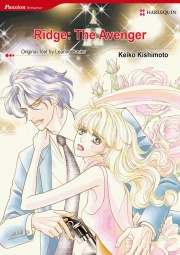
Ridge: The Avenger by Leanne Banks and Keiko Kishimoto

I tend to like Harlequin manga the most when the art is ridiculously old fashioned. If the adaptation has art that looks a little bit like a throwback to the 80s, I tend to enjoy the goofy storylines of these books even more. Kishimoto has a lush style, featuring bee-stung lips. In some scenes I was reminded a tiny bit of Yumi Tamura’s Basara, especially with the angular proportions of the hero’s face. The hero in question is bodyguard Ridge, assigned to protect the goddaughter of a presidential candidate. He thinks Dara is spoiled and silly. Ridge has an ulterior motive in being assigned as Dara’s protector. What could it be? He is out for REVENGE! Ridge’s tortured past (this must be why he seems to be pouting so much) has led him to want to destroy Dara’s godfather and his political future.

Ridge and Dara bond with each other over assassination attempts and their horrible fashion choices when rollerblading. While they fall in love, Ridge is still out for REVENGE and he might destroy Dara’s life! But he loves her! The art in this title is really much better done than most Harlequin manga. There were interesting panel layouts, perspective shifts, and the character designs were attractive in an old fashioned way. This was a fun read.

Codename: Prince by Megumi Toda and Carla Cassidy

Codename Prince is the third book in the Stanbury Crown series. Royal cousin and military man Ben is posing as his cousin Prince Nicholas in order to get himself kidnapped and collect intelligence on the group who has kidnapped the King of Edinburg. His captor is the attractive woman Megan who has been blackmailed into helping her brother with his nefarious schemes. Megan has a young daughter who the kidnappers threaten to hurt if she doesn’t help them. The story opens with Ben tied up on a bed with a teddybear placed next to him, slowly developing a hopeless crush on Megan. Codename Prince is very short, and doesn’t really contain the type of spying shenanigans I was hoping for based on the title. The art is simple and fluid, without some of the stiffness that seems to plague many of these quick romance novel adaptations.

An Officer and a Princess by Megumi Toda and Carla Cassidy
This series wraps up with the final volume, where the princess of the family decides to go undercover with her crush to unravel the mystery behind her father the king’s disappearance. Isabel had to give up her dream of serving in the military for her princessy duties, and her good friend and fellow officer Adam tends to view her only as a princess and not as a woman. When they pose as man and wife, will their love finally blossom?

By the end of the series, I think I liked the concept of linked books with overlapping characters a little more than the actual execution of it. The King certainly managed to stay kidnapped for a long time, as four royal couples managed to get married off while he was missing. A certain level of sameness started to settle in with the plots of this series, so while these manga weren’t the worst Harlequin manga ever, they ended up not being all that great either. These were still perfectly serviceable for someone wanting a quick summer read.

Access to electronic copies provided by the publisher.

Filed Under: UNSHELVED

A Certain Scientific Railgun, Vol. 1

June 6, 2011 by Katherine Dacey

Question: what do you get when you cross Sunshine Sketch with X-Men? Answer: A Certain Scientific Railgun, a story about a quartet of schoolgirl psychics who fight crime, go shopping, and eat parfaits. If that combination sounds like the manga equivalent of a peanut butter and tunafish sandwich, it is; the story see-saws between sci-fi pomposity and 4-koma cuteness, never combining these two very different flavors into an appetizing dish.

The story takes place in Academy City, a metropolis whose entire population consists of psychics and psychics-in-training. After a series of bank robberies and bombings, members of Justification, Academy City’s teen police force, make a disturbing discovery: some psychics — or “espers,” in the series’ parlance — are using an illicit drug called Level Upper to enhance their natural ability. (Level Upper is, in essence, steroids for teleporters and mind-readers.) Though the drug grants them tremendous power, that power comes with a terrible price, causing the user to slip into an irreversible coma. The girls must then track the drug to its source before it can spread through Academy City.

As promising as the plot sounds, it often feels like an afterthought, something that happens in between the principal characters’ trips to the mall, the cafe, and the gym. (There’s an entire scene devoted to one character’s efforts to find the perfect pair of pajamas. No, I’m not kidding.) The lead character, Mikoto, is the strongest and best-defined of the bunch; she’s described as a “level-five esper” capable of channeling up to one billion volts of electricity, a skill she gleefully unleashes on robbers, perverts, and her arch-nemesis, a male psychic named Toma Kamijo. Though Mikoto is an unappealing heroine, she’s the only female character who has a real personality; Mikoto is angry, unpredictable, and stubborn, but she’s also very disciplined, cultivating her skills with practice and study. Kuroko, Ruiko, and Kazari, the remaining members of the quartet, are less developed: each girl has one psychic ability that she uses in combat and one adorable tic that she exhibits while hanging out with friends. (Actually, “adorable” is up for debate; grabbing another girl’s breasts seems more predatory than cute.)

Thin as the characterizations may be, A Certain Scientific Railgun faces an even bigger problem: many important plot elements are poorly explained. Not that the series wants for exposition-dense conversation; the opening ten pages are filled with characters narrating Mikoto’s rise from level-zero nobody to level-five bad-ass. But many other details remain unexplored: who is Toma and why does Mikoto detest him? why do so many characters have supernatural abilities? why has the government created an entire city just for young psychics? Perhaps the most egregious example is Mikoto herself; though we learn a lot about her education, the fact that she’s been cloned is glossed over, as if having six genetic doppelgangers was entirely unremarkable.

Given Railgun‘s origins — it’s a side story within A Certain Magical Index, a long-running light novel series — it’s not surprising that so many of these crucial details remain unexamined; the author might reasonably expect Japanese fans to know the Magical Index universe well enough to jump into Railgun with a minimum of exposition. For a newcomer, however, the experience is frustrating; uninteresting plot points are explored in excruciating detail, while many of the things that seem more fundamental to the story (e.g. the characters’ psychic abilities) are barely addressed at all.

The final chapter suggests that future installments may feature more scenes of crime-solving and fewer scenes of tweenage girls showering, eating desserts, and horsing around. An honest-to-goodness mystery would go a long way towards giving the story some dramatic shape; right now, A Certain Scientific Railgun feels as aimless and airy as a volume of Sunshine Sketch, even if Mikoto and friends have cooler talents than the Sunshine girls.

Review copy provided by Seven Seas. Volume one will be released on June 30, 2011.

A CERTAIN SCIENTIFIC RAILGUN, VOL. 1 • STORY BY KAZUMA KAMACHI, ART BY MOTIO FUYUKAWA • SEVEN SEAS • 192 pp. • RATING: TEEN (13+)

Filed Under: Manga, Manga Critic, REVIEWS Tagged With: Certain Magical Index, Seven Seas

A Certain Scientific Railgun, Vol. 1

June 6, 2011 by Katherine Dacey 16 Comments

Question: what do you get when you cross Sunshine Sketch with X-Men? Answer: A Certain Scientific Railgun, a story about a quartet of schoolgirl psychics who fight crime, go shopping, and eat parfaits. If that combination sounds like the manga equivalent of a peanut butter and tunafish sandwich, it is; the story see-saws between sci-fi pomposity and 4-koma cuteness, never combining these two very different flavors into an appetizing dish.

The story takes place in Academy City, a metropolis whose entire population consists of psychics and psychics-in-training. After a series of bank robberies and bombings, members of Justification, Academy City’s teen police force, make a disturbing discovery: some psychics — or “espers,” in the series’ parlance — are using an illicit drug called Level Upper to enhance their natural ability. (Level Upper is, in essence, steroids for teleporters and mind-readers.) Though the drug grants them tremendous power, that power comes with a terrible price, causing the user to slip into an irreversible coma. The girls must then track the drug to its source before it can spread through Academy City.

As promising as the plot sounds, it often feels like an afterthought, something that happens in between the principal characters’ trips to the mall, the cafe, and the gym. (There’s an entire scene devoted to one character’s efforts to find the perfect pair of pajamas. No, I’m not kidding.) The lead character, Mikoto, is the strongest and best-defined of the bunch; she’s described as a “level-five esper” capable of channeling up to one billion volts of electricity, a skill she gleefully unleashes on robbers, perverts, and her arch-nemesis, a male psychic named Toma Kamijo. Though Mikoto is an unappealing heroine, she’s the only female character who has a real personality; Mikoto is angry, unpredictable, and stubborn, but she’s also very disciplined, cultivating her skills with practice and study. Kuroko, Ruiko, and Kazari, the remaining members of the quartet, are less developed: each girl has one psychic ability that she uses in combat and one adorable tic that she exhibits while hanging out with friends. (Actually, “adorable” is up for debate; grabbing another girl’s breasts seems more predatory than cute.)

Thin as the characterizations may be, A Certain Scientific Railgun faces an even bigger problem: many important plot elements are poorly explained. Not that the series wants for exposition-dense conversation; the opening ten pages are filled with characters narrating Mikoto’s rise from level-zero nobody to level-five bad-ass. But many other details remain unexplored: who is Toma and why does Mikoto detest him? why do so many characters have supernatural abilities? why has the government created an entire city just for young psychics? Perhaps the most egregious example is Mikoto herself; though we learn a lot about her education, the fact that she’s been cloned is glossed over, as if having six genetic doppelgangers was entirely unremarkable.

Given Railgun‘s origins — it’s a side story within A Certain Magical Index, a long-running light novel series — it’s not surprising that so many of these crucial details remain unexamined; the author might reasonably expect Japanese fans to know the Magical Index universe well enough to jump into Railgun with a minimum of exposition. For a newcomer, however, the experience is frustrating; uninteresting plot points are explored in excruciating detail, while many of the things that seem more fundamental to the story (e.g. the characters’ psychic abilities) are barely addressed at all.

The final chapter suggests that future installments may feature more scenes of crime-solving and fewer scenes of tweenage girls showering, eating desserts, and horsing around. An honest-to-goodness mystery would go a long way towards giving the story some dramatic shape; right now, A Certain Scientific Railgun feels as aimless and airy as a volume of Sunshine Sketch, even if Mikoto and friends have cooler talents than the Sunshine girls.

Review copy provided by Seven Seas. Volume one will be released on June 30, 2011.

A CERTAIN SCIENTIFIC RAILGUN, VOL. 1 • STORY BY KAZUMA KAMACHI, ART BY MOTIO FUYUKAWA • SEVEN SEAS • 192 pp. • RATING: TEEN (13+)

Filed Under: Manga Critic Tagged With: Certain Magical Index, Seven Seas

Pick of the Week: Spring Bounty

June 6, 2011 by Michelle Smith, MJ, David Welsh and Katherine Dacey 10 Comments

The arrivals list at Midtown Comics overflows with manga, making this week’s Pick a tough one for all. Take a look below to see what made the cut!


MICHELLE: It’s a bountiful week at Midtown Comics, with many Shonen Jump and Shojo Beat offerings from VIZ making their way onto the shelves. There’s an awful lot on this list that I am personally planning to buy, and singling out just one is pretty tough. New volumes of One Piece and Slam Dunk are serious contenders, but in the end, the fifth volume of Bakuman。 walks away with the honors. I’ve been catching up on the series this weekend, and it’s just utterly charming. The behind-the-scenes glimpses into manga production at Shueisha are fascinating, Mashiro and Takagi are finally achieving some success, and an interesting crop of friendly rivals has developed, including the endearingly weird Eiji Nizuma, who has been waiting for Mashiro and Takagi to come challenge him. Now, gee, what other Shonen Jump manga illustrated by Takeshi Obata does that remind me of?

MJ: We’re offered a wealth of choices this week, indeed. New volumes of Black Jack, Claymore, and Rasetsu call out to me in particular, but if I could only buy one volume of manga from this list, I’d have to choose the 25th installment of Fullmetal Alchemist. I doubt anybody needs me to go on and on again about why I love this series, but just in case you’ve missed it somehow, feel free to browse this tag. And for those who’ve never gotten around to starting this admittedly long series, now is the perfect time to start, with the first of Viz’s new 3-in-1 editions arriving in stores this week as well. If you’ve only watched the anime series, you don’t know what you’re missing. Time to pick up a volume and find out!

DAVID: Viz really could learn to pace itself. I’m quite eager to read the third volume of Kamisama Kiss and curious to see which way the pendulum will swing on Grand Guignol Orchestra, not to mention the previously mentioned books, but I’m going to have to cast my vote for the 14th volume of Osamu Tezuka’s Black Jack from Vertical. Much as I love Tezuka’s crazed gekiga stories, I have such a weakness for this series and its totally reliable, often absurd servings of genre fiction. I have high hopes that this volume will offer a nice side dish of creepy, creepy Pinoko.

KATE: Tempted as I am by the second volume of Blue Exorcist, I’m also going old-school with my pick and choosing the fourteenth volume of Black Jack as this week’s must-buy manga. I’d be the first to admit that the series can be repetitive, especially when read in large chunks. But if you ration yourself to just one or two stories at a time, it’s easier to appreciate Tezuka’s storytelling gift; he manages to fit a whole volume’s worth of drama into twenty pages without sacrificing clarity or emotional intensity. The hero’s dark, brooding personality is another plus; Black Jack may share Dr. Gregory House’s ability to diagnose a rare illness from looking at a character’s fingernails or smelling his breath, but Jack isn’t nearly as smug and insufferable as his TV counterpart. I’m not sure how Tezuka will ever top the story in which Black Jack operates on himself in the Australian outback while fending off wild dingoes, but I’m happy to keep reading until Tezuka does.


Readers, what looks good to you this week?

Filed Under: PICK OF THE WEEK Tagged With: bakuman, black jack, fullmetal alchemist

Bookshelf Briefs 6/6/11

June 6, 2011 by MJ, Katherine Dacey, David Welsh and Michelle Smith 4 Comments

This week, MJ, Kate, David, & Michelle take a look at a variety of manga from Viz Media, Vertical Inc., Digital Manga Publishing, and Yen Press.


Bakuman, Vol. 5 | By Tsugumi Ohba & Takeshi Obata | Viz Media – The theme for this volume may as well be “Everyone makes progress toward making their dreams come true!” Not that everything is smooth sailing. Mashiro and Takagi finally have a series in Shonen Jump, but along with that comes new editor, Miura, who is rather inexperienced. It takes him some time to gain the confidence to steer the boys in a direction that will keep their series popular with readers. Meanwhile, other friends and rivals aim for the same goal and even Miho experiences a rejuvenation in her dedication to become a voice actress. It’s a thoroughly shounen setup, which is only fitting for a story about making shounen manga. I wish we actually got to see some of this manga they’re creating, though! Maybe in due time… -Michelle Smith

Black Bird, Vol. 8 | By Kanoko Sakurakoji | Viz Media – If there’s one thing that can be said for Kanoko Sakurakoji’s Black Bird, it’s that it stays unflinchingly on message, volume after volume. “Girls, always obey what the menfolk tell you,” it says over and over, in a thousand different ways. “They’re smarter and stronger than you are, so they always know what’s best.” That’s the overwhelming message of this series, though there’s an equally consistent side note attached, “Be grateful and understanding when your man punishes you for your mistakes. After all, it’s for your own good.” Volume eight personifies these messages without fail, as always, with the added bonus of the much-anticipated consummation of Misao and Kyo’s sexual relationship, which is of course preceded by extra gratitude, humility, and expressions of flushed desperation from our heroine. Yay? -MJ

Bleach, Vol. 35 | By Tite Kubo | Viz Media – Despite its status as a hit battle manga, for a reader like me, the best of Bleach exists between battles, when Tite Kubo is able to utilize his (not insignificant) talent for writing quirky, compelling characters. Unfortunately Kubo tends to excess in this area, creating a never-ending stream of brand new characters, leaving less room and page time for those we already love. With that in mind, volume 35 reveals both the best and worst of Kubo’s habits, providing some genuinely satisfying moments with some of our favorite characters while leading us into another series of battles with an array of new foes. If I could deliver one message to Kubo, it would be that when it comes to supporting characters, sometimes less is more. 35 stacks up in the “win” column, but the future looks far less bright. – MJ

Blue Exorcist, Vol. 2 | By Kazue Kato | Viz Media – In discussion of this series’ first volume, I said, ” I’d like to see more … with Rin actually learning the craft under Yukio’s tutelage, because watching the two of them together is the most compelling aspect of the story so far.” The good news here is that we do see more of this, and it indeed remains the series’ greatest strength. The less good news is that the bulk of this volume is spent introducing the class’ other students, including hotheaded Suguro and by-the-book tsundere Izumo. Though there’s obviously a self-formed family of young exorcists being nurtured here, it’s a shame to have so much of the volume’s focus stolen away by it, when we’ve only just begun with the series’ two main characters. Still, this remains the most compelling new shounen series to travel westward this year. I look forward to seeing where it goes from here. – MJ

A Bride’s Story, Vol. 1 | By Kaoru Mori | Yen Press – This is one of those books where I’m convinced I could pass off random page scans as a review, possibly followed up with, “See? See?!” I can’t quite decide if it’s more gorgeous than Mori’s Emma (CMX), but I can say without question that it’s one of the loveliest manga you’re likely to find in current release. It’s also as quietly moving and packed with absorbing details as Emma was, so you really can’t lose. In this tale set in central Asia in the 19th century, a 20-year-old woman enters into an arranged marriage with a 12-year-old boy. We see quietly forceful Amir adapt from her nomadic lifestyle to the more settled state of affairs with her young bridegroom. There’s the whispered promise of an actual plot, but I could read dozens of volumes of nothing but Mori’s meticulously researched, breathtakingly drawn slice of life. Really, what more do you need? -David Welsh

Chi’s Sweet Home, Vol. 6 | By Konami Kanata | Vertical, Inc. – After five volumes of cute kitten antics — including Chi’s first visit to the vet, Chi’s first bath, and Chi’s first excursion beyond the safe confines of home — I thought Kanata Konami would have run out of material. I’m pleased to report that volume six of Chi’s Sweet Home is just as appealing and fresh as the previous installments, offering plenty of awwww-inducing moments as well as some genuinely funny scenes. (Don’t miss the chapter in which Chi stalks a parakeet; Chi’s reaction to the parakeet is priceless.) Konami continues to expand the scope of the story to include more animals, more people, and more settings, neatly mimicking Chi’s growing awareness of her surroundings while preventing the story from becoming too cutely claustrophobic. As in previous volumes, the illustrations are simple but effective, capturing Chi’s surprise and delight in discovering new things: vacuum cleaners, Kleenex, birthday cake. Recommended. -Katherine Dacey

Chi’s Sweet Home, Vol. 6 | By Konami Kanata | Vertical, Inc. – Whenever a new volume of Chi’s Sweet Home comes into my possession it automatically vaults to the top of the to-read pile. The first five volumes all offered colorful, cute, and (mostly) cheerful stores about Chi, an adorable tabby kitten, and the sixth is no exception. Kanata has a knack for depicting scenarios familiar to any cat owner, like massacred houseplants and the species-wide fascination with climbing into boxes, while imagining what the world must look like to a cat. Chi’s nocturnal journey to the local park is a particular standout. My one complaint is that Chi’s owners, the Yamadas, continually do frustrating things like leave cakes unattended and store breakable objects at the top of a flight of stairs, then proceed to freak out when Chi messes with them. You’ve got a cat now, folks. You either put things away or get used to the gnaw marks. -Michelle Smith

Itsuwaribito, Vol. 2 | By Yuuki Iinuma | Viz Media – In this volume, Utsuho proves himself trustworthy to the implausibly youthful Dr. Yakuma by rescuing him from the clutches of a bizarre fellow whom I shall christen “Freaky Dude.” Not only that, he correctly deduces the cause of Freaky Dude’s killing spree and helps him to see the error of his ways. The display convinces Yakuma to invite Utsuho on a journey to Nadeshiko Island, where he suspects a treasure of life-extending medicine awaits. It also happens to be the location of many exiled criminals. I’m still not enraptured by Itsuwaribito, but I found this volume a lot more entertaining than the first. For reasons I cannot quite pinpoint, it reminds me of Black Cat, in a simple shounen adventure kind of way. Plus, there’s an adorable twitchy-eared talking tanuki! I’ll definitely be checking out volume three. -Michelle Smith

Twin Spica, Vol. 7 | By Kou Yaginuma | Vertical, Inc. – In the seventh volume of Twin Spica, Kou Yaginuma explores Marika’s childhood, as well as Marika’s struggle to create her own destiny, rather than the one for which she was created. Though Marika’s story is emotionally compelling, Yaginuma strains too hard to show us that Marika, Asumi, and Fuchuya have a shared history; there’s a tidiness to the connection that feels a little false, as if the characters’ shared memory of the Lion disaster wasn’t grounds enough for bonding. The volume’s final chapters are more dramatically persuasive, giving the three female leads a chance to demonstrate just how smart, resourceful, and tough they can be under duress. N.B. Beginning with volume seven, Vertical will be releasing Twin Spica in a longer omnibus format of 300-400 pages (roughly 1.5 volumes). -Katherine Dacey

Your Story I’ve Known | By Tsuta Suzuki | Juné Manga – It’s rare that I find the sex scenes in a boys’-love title to be the most interesting, but that’s definitely the case in the title story of this book. Suzuki laces the physically intimate moments with intriguing, revealing observations. Unfortunately, those kinds of notes are largely absent in the rest of this tale of a gangster who takes up with the son of one of his ex-girlfriends. It’s drawn well, but the characters and their dynamic aren’t very engaging. The back-up stories compensate for the centerpiece, though. One’s about a young man dealing with his lover’s irritating reticence. Another is a love story between a kid and a goofy, centuries-old ghost. The last describes the awkward early courtship between two salarymen. Each has a distinct, quirky charm, making the book a worthwhile investment overall. -David Welsh

Filed Under: Bookshelf Briefs Tagged With: a bride's story, bakuman, black bird, bleach, blue exorcist, chi's sweet home, itsuwaribito, twin spica, your story I've known

Previews review June 2011

June 6, 2011 by David Welsh

All right, now that the polling is underway, let’s take a look at the sure bets in the current edition of Diamond’s Previews catalog. Will start with the exciting and/or noteworthy debuts:

Velveteen & Mandala, written and illustrated by Jiro (Freesia) Matsumoto, Vertical, item code JUN11 1294: A Vertical debut is always worth noting, and this one looks intriguingly odd. It portrays a pair of teen-age girls struggling against the zombie apocalypse when they aren’t fending off the totally worse thread of boredom. The single-volume series originally ran in Ohta Shuppan’s Manga Erotics F, an unpredictable but always promising source. I believe this is Matsumoto’s English-language debut.

Habibi, written and illustrated by Craig Thompson, Pantheon, item code JUN11 1212: Have I mentioned lately that I’ve never mustered the energy to finish Thompson’s Blankets? I found what I’ve read of it to be hopelessly mopey and overwritten, though undeniably easy on the eyes. But it’s always worth noting when Thompson releases a new brick, because it happens so rarely. This time, he “explores and celebrates the beauty and cruelty, the complexity and depths of the Islamic world.” Set your phasers on “Gush.”

Animal Land vol. 1, written and illustrated by Makoto (Zatch Bell) Raiku, Kodansha Comics, item code JUN11 1169: I’m succumbing to the adorability of the cover and the premise. An orphaned raccoon dog finds an abandoned human child and decides to raise it in a world occupied only by animals. Zatch Bell had some deeply hideous and unsettling character designs and a cripplingly annoying anime adaptation, so those are points of concern, but I’m game for a volume or two. The series originally ran in Kodansha’s Bessatsu Shônen.

Moving on to the “offered again” category:

  • Korea as Viewed by 17 Creators, by various, Fanfare/Ponent Mon, item code JUN11 1123: Curious about this Eisner-nominated anthology? This is probably one of your better shots at scoring a copy.
  • Gon vol. 1, written and illustrated by Masashi Tanaka, Kodansha Comics, item code JUN11 1172: In case you missed these insanely kinetic, wordless comics about a baby dinosaur the first couple of times they were released.
  • Carnet de Voyage, written and illustrated by Craig Thompson, Top Shelf, item code JUN11 1246: This collection of travel stories is the Thompson comic I’d enthusiastically recommend.

And, lastly, new volumes of ongoing series that particularly catch my eye:

  • Sayonara, Zetsubou-Sensei vol. 10, written and illustrated by Koji Kumeta, Kodansha Comics, item code JUN11 1176: So glad Kodansha is picking up this hilarious, unsparing satire.
  • Amelia Rules! Vol. 7, The Meaning of Life… and Other Stuff, written and illustrated by Jimmy Gownley, Simon & Schuster, item code JUN11 1239: Wonderfully observant comics about a spunky, imaginative middle-schooler and her friends.
  • Butterflies, Flowers vol. 8, written and illustrated by Yuki Yoshihara, Viz Media, item code JUN11 1275: Probably a guilty pleasure, and one I’m a bit behind on, but I always get some quality cringing chuckles out of this series.
  • Kimi ni Todoke: From Me to You vol. 10, written and illustrated by Karuho Shiina, Viz Media, item code JUN11 1278: A joyous deconstruction, subversion and celebration of shôjo tropes.
  • House of Five Leaves vol. 4, written and illustrated by Natsue Ono, Viz Media, item code JUN11 1291: The best of Ono’s works to be published in English so far, which is saying something.

What’s on your wish list?


Filed Under: DAILY CHATTER

Shônen dump

June 5, 2011 by David Welsh

Sadly, last month offered insufficient dubious manga to assemble a poll. More sadly, your choice in the first of these polls, Maid Shokun, was undone by the shuttering of Tokyopop. (I ended up ordering the runner-up and will be reviewing it in this week’s Bookshelf Briefs installment.) On the bright side, the June 2011 Previews catalog offers a number of suspect debuts that are far enough outside of my comfort zone to earn candidacy. Let’s begin!

Tales of the Abyss: Asch the Bloody, by various, Bandai: Based on Namco’s role-playing game, Tales of the Abyss! Asch is the lost prince of a country torn asunder by prophecy. Cloned and replaced by a new prince, Asch finds himself among the ranks of God-General, fighting to destroy the very prophecy for peace that his clone will fulfill. War, magic, and science clash, but at their heart stands Asch the Bloody.

I must first “thank” Sean Gaffney for pointing out this listing. “Thank” you, Sean. Based on the cover, this seems like one of those books where the creators (various as they may be) spent more time on character design than anything else. I’m not instinctively averse to properties based on games, since Monster Collection (CMX) proved that even commercial spin-offs of this nature can be delightful. Still, Tales of the Abyss seems to emit a generic fug.

Bloody Monday, written by Ryou Ryumon, illustrated by Koji Megumi, Kodansha Comics: Takagi Fujimaru may seem like a regular high school student, but behind the cheery facade lies a genius hacker by the name of Falcon. When his father is framed for a murder, Falcon uses his brilliant hacking skills to try and protect his sister and clear his father’s name. However, he finds that his father, an agent in an elite government agency, was involved with something far more complex than a simple murder. A terrorist group is plotting against the city of Tokyo and it is up to Falcon, with the help of his friends to unravel the twisted plans set in place to kill millions of people.

Does every shônen magazine need to try and come up with its own version of Death Note? No, I mean, do they really need to try that? It almost never works.

Mardock Scramble, written by Tow Ubukata, illustrated by Yoshitoki Oima, Kodansha Comics: Rune Balot is a prostitute who is nearly murdered by Ciel, an enigmatic casino manager, who suffers from a disease that forces him to remove and store his memories. A victim for most of her life, Rune faces a choice. While on the brink of death, she is given the opportunity to live. It is not a simple choice for a victim, but Rune takes it. A professor brings Rune back to life as a cyborg with the ability to control electronics and partners her up with a self-aware universal tool named Oeufcocque. Together they begin to unravel the mystery behind Ciel and Rune sheds the role of the victim, but must struggle between seeking justice and vengeance.

Putting all other things aside, “Rune Balot” is one of the most annoying protagonist’s names I’ve seen in many a moon. Also, that cover suggests to me that Rune may not be as empowered as the solicitation suggests. Also, I cannot see myself happily typing “Oeufcocque” over and over again, should circumstances demand I review it. Also, the plot sounds as familiar as familiar gets.

So, those are our candidates. If you would, please cast your vote in the comments. You can pick something because you think I might actually end up enjoying it, or you can pick something because you’re a schadenfreude addict, or you can pick something for any reason that tickles your fancy. Just pick!

Filed Under: DAILY CHATTER

The Science of Doctor Who by Paul Parsons

June 4, 2011 by Michelle Smith

From the front flap:
Almost fifty years after the Doctor first crossed the small screen, he remains a science fiction touchstone. His exploits are thrilling, his world is mind-boggling, and that time travel machine—known as the Tardis—is almost certainly an old-fashioned blue police box, once commonly found in London.

Paul Parsons’s plain-English account of the real science behind the fantastic universe portrayed in the television series answers such burning questions as whether a sonic screwdriver is any use for putting up a shelf, how Cybermen make little Cybermen, where the toilets are in the Tardis, and much more.

(Note: This is the 2010 revision of a book originally published in 2006.)

Review:
I am not a science person. In my years of schooling, I never once came up with a non-lame idea for a science project and was positively abysmal at experiments. I did pretty well on tests and homework, but if someone’s test tube was going to spontaneously erupt in a geyser of brown froth (true story!), it would be mine.

Suffice it to say, then, that while I enjoy science fiction entertainment, it’s not because of the science. Still, The Science of Doctor Who promises “a plain-English account of the real science behind the fantastic universe portrayed in the television series,” so I reckoned on being able to follow it. Alas, Paul Parsons’s definition of plain English is a bit different than mine.

I was okay with the majority of the material. Chapter topics include the Doctor’s recurring foes, regeneration, gadgets, weapons, space stations, force fields, parallel universes, and more. In general, Parsons would start by mentioning something that happened in a particular Doctor Who serial and then interview renowned scientists as to whether this is actually possible. Most of the time the answer is “no” or “only with extreme amounts of energy/effort,” but there are a few things that are not so far off. The chapters on alien worlds (Lots of planets really do have a north!) and mirror planets were particular favorites of mine.

Stupidly, however, I hadn’t counted on there being so much physics! I frequently found my eyes glazing over during these sections, which were unfortunately clustered near the beginning (making it hard to get started) and end (causing a strong urge to set the book down with only forty pages to go) of the book.

Take, for example, this quote from page 35:

M-theory’s main thrust is to generalize the one-dimensional objects of string theory into p-dimensional objects known, amusingly enough, as p-branes (where setting p = 0 gives a particle, p = 1 gives a string, p = 2 a “membrane,” and so on).

My brain’s response: asdlkjasldkfzzt!

Seriously, is that plain English? I note that Parsons did not bother to define “p-dimensional,” though that probably wouldn’t have been much help to me anyway.

In the end, I did learn some interesting things. In the chapter on Cybermen, for example, I learned that a cybernetic brain implant currently exists that can block the signals that cause Parkinson’s disease. That’s pretty awesome! I also now know that Sontarans reproduce by cloning and it takes only ten minutes for their offspring to reach adulthood. That’s less awesome.

I’m glad I didn’t give up on reading The Science of Doctor Who but now I think I’ll give my brain a rest by actually watching some.

Additional reviews of The Science of Doctor Who can be found at Triple Take.

Filed Under: Books, Nonfiction, Science, Television, Triple Take Tagged With: Doctor Who, Paul Parsons

A Spy in the House by Y. S. Lee

June 4, 2011 by Michelle Smith

From the back cover:
Mary Quinn leads a remarkable life. At twelve, an orphan and convicted thief, she was miraculously rescued from the gallows. Now, at seventeen, she has a new and astonishing chance to work undercover for the Agency.

It is May 1858, and a foul-smelling heat wave paralyzed London. Mary enters a rich merchant’s household to solve the mystery of his lost cargo ships. But as she soon learns, the house is full of deceptions, and people are not what they seem—including Mary herself.

Review:
As a convicted thief, twelve-year-old Mary Lang is about to be executed when she is saved by the ladies of Miss Scrimshaw’s Academy for Girls. There, she receives an education and by the age of seventeen is teaching other students the skills they will need to be independent. Trouble is, she’s not satisfied and the few other career options open to her gender don’t interest her much, either. When she mentions this to the two women running the school, they suggest another alternative: the Agency.

The Agency is a covert organization of female spies, operating under the assumption that because women are presumed to be flighty and empty-headed, their agents will be able to retrieve information more easily than a man might, particularly in situations of domestic servitude. Mary quickly agrees, despite the threat of danger, and soon finds herself serving as paid companion to spoiled Miss Angelica Thorold, whose merchant father is suspected of dealing in stolen Hindu goods.

Mary (now using the surname Quinn) isn’t the lead on the investigation and isn’t supposed to actually do much of anything, but she gets antsy, and in the process of snooping meets James Easton. James’s older brother desperately wants to marry Angelica, but James has heard rumors about her father’s business practices, and so is doing some sleuthing of his own to determine whether a family connection would be unwise. He and Mary form a partnership and spend most of the book poking about in warehouses and rest homes for aging Asian sailors and following people on foot or in carriages while maintaining a flirty sort of bickering banter.

Author Y. S. Lee tries to make the mystery interesting, giving us a bit of intrigue between Angelica and her father’s secretary as a distraction, but ultimately it feels very insubstantial to me. Nothing much comes as a surprise and two story elements that could’ve been highlights—Mary’s month-long intensive training and Scotland Yard’s raid on the Thorold house—occur off camera! Too, Mary is harboring a secret about her parentage which is thoroughly obvious: she’s part Asian. Only towards the end did Lee actually make clear that Mary is keeping this a secret from others because of the foreigner bias of the time, and I must wonder whether the intended young adult audience was reading this going, “What’s the big deal?”

Not that it isn’t nifty to have a part-Asian heroine, of course. Mary is competent and level-headed, though I admit I did get irritated by how often she is favorably compared to “ordinary women,” who would scream or faint in situations in which Mary is able to keep her head. When a mystery stars a male sleuth, do we need to hear over and over how much smarter he is than the ordinary fellow? I don’t think so. On the flip side, the overall theme of the book seems to be “don’t understimate women,” and Mary finds time to inspire a scullery maid to seek out Miss Scrimshaw’s and to convince Angelica to pursue a musical career.

In the end, A Spy in the House is a decent read. It’s not perfect, but I still plan to read the second book in the series in the near future.

Additional reviews of A Spy in the House can be found at Triple Take.

Filed Under: Books, Historical Fiction, Mystery, Triple Take, YA Tagged With: Y. S. Lee

Don’t Fear the Adaptation: Ristorante Paradiso

June 4, 2011 by Cathy Yan 9 Comments

Ristorante Paradiso | by Natsume Ono | Manga: Ohta Shuppan / Viz | Anime: David Production / Crunchyroll

Whenever you write a review of Ristorante Paradiso, you always have to get one thing out of the way first: which one is your favorite gentleman? When I read the manga, Luciano was mine, because I fall pretty hard for the gruff types who despite their claims of disinterest can’t help but meddle. And while the anime cemented my love of Luciano, I have to say anime Teo is exactly the handsome aniki I’d fall in love with at Casetta dell’Orso. It helps that he’s a dessert chef, mouthy, and also rides a motorcycle. (Lorenzo is disqualified from my rankings — he’s too perfect and there’s no way to avoid being in love with him and horribly, horribly jealous of Olga.)

Ristorante Paradiso is primarily about Nicoletta, a twenty-one year old determined to exact revenge on her mother Olga, who left Nicoletta behind in order to marry Lorenzo, a restaurant owner in Rome. But when she arrives in Rome, Nicoletta falls in love with Claudio, a waiter at Lorenzo’s restaurant, and ends up staying there as a kitchen apprentice. Like most of Natsume Ono’s stories, it’s a mature slice-of-life production with a slow plot and an ensemble cast filled with enigmatic men and self-assured women. The manga is short at one volume but has a three-volume prequel-sequel entitled Gente: The People of Ristorante Paradiso. The anime mixes and matches the overall Nicoletta-and-Claudio plot of Ristorante Paradiso but detours heavily into the backstories of Gente. The end product is very, very much House of Five Leaves meets Antique Bakery. Why else do you think I pleaded with MJto let me do a Natsume Ono double punch? ;)

Ristorante Paradiso the anime is a feel-good jousei version of a dating game crossed with a butler café. It falls somewhere in between the beloved reverse harem romcoms like Ouran Host Club and the “counseling session of the week” trope of Bartender (which, incidentally, was also adapted into an anime). Like Antique Bakery, Ristorante Paradiso has its moments of drama — some might even argue, melodrama — but it’s one of those series that ultimately boils down to its playful sampling of human life. It’s bursting with little stories about romance, family, growing up, and, well, more romance. There’s a particularly memorable side story about a woman whose husband keeps cheating on her. The dell’Orso staff, especially Gigi and Vito, get involved, and the episode caps off with a very serious, but touching, lesson about marriage and coincidence that even O’Henry would have been proud of. Episode eight and nine owe more to Giuseppe Tornatore than Iron Chef, and episode four, which chronicles the founding of dell’Orso, could be a movie all by itself.

All the characters, especially the gentlemen, get a boost from being animated and paired with a voice actor. Gigi and Lorenzo as twenty-somethings are heartwrenchingly adorable when animated, and Claudio as a young and awkward server trying to find off the amorous intentions of a rich patron will make you swoon. Of special note for me are the relatively unknown Mitsutaka Tachikawa as Luciano and Jin Yamanoi as Claudio. Listening to Yamanoi really makes you believe you’re in the presence of a saint, while Tachikawa’s Luciano is beyond endearing, especially when he growls.

The additional materials from Gente, on top of keeping the anime from having to stretch out one volume’s worth of material into eleven slow episodes, also gives more depth to Nicoletta and her relationship with Claudio. Nicoletta’s observation that love comes in different shapes makes more sense when you get to meet all the significant others of the dell’Orso staff. That they spend more time together and go through a lot more troubles together makes their ending in the anime far sweeter and more conclusive. An unexpected benefit of getting to know Luciano better in the anime was that Claudio, in the process, came into better focus. Their friendship and comparable statuses (Luciano as a widow and Claudio, a divorcee) meant Claudio comes off in the anime as more than just a nice guy. You struggle with him over his idealistic nature, sympathize with his inability to move past his ex-wife Gabrielle, and really, truly wish for his happiness. You feel like you understand just what it is that Nicoletta sees in him.

David Production is a smaller, newer studio compared to Madhouse, the studio responsible for Ono’s other anime adaptation House of Five Leaves. The style in Ristorante Paradiso is less obviously Ono’s this time around, but David Production still did an excellent job translating Ono’s art style. The glimpses of food in the series are mouthwatering, and the shots of the staff’s favorite enoteca, with shelves and shelves of wine bottles, make me want to follow Nicoletta’s journey and spend an extended vacation in Rome. There’s some awkward use of CG as well as a laughable moment in episode six, where if you pause the video in Olga’s office, you can see that the certificate behind her is issued to “Bob Fields”, Cambridge, and qualifies the recipient to teach English to adults. Other than that, the animation is top notch. Episode seven introduces Luciano’s daughter Margherita who is almost indistinguishable from Nicoletta, but that, I think, is more the fault of Ono herself and not the studio’s.

For fans of the manga who were frustrated with the slowness of Ristorante Paradiso‘s first few chapters, but liked Gente‘s character development, the anime is the best of both worlds. (It’s just a terrible shame that Crunchyroll took down their videos.) For those of you who have yet to read the manga, while some have complained that the anime’s flashbacks were too confusing, I would recommend watching the anime over reading the manga. The meshing of Gente with Ristorante Paradiso makes for a fuller, more fleshed out cast and also tempers the ending of Nicoletta’s storyline, which I found unsatisfactorily abrupt when reading the manga. It’s far from realistic, the initial conflict between Olga and Nicoletta is still solved too easily, and very few of the staff’s backstories cover truly original ground. But if you like food, are a people-watcher, or simply enjoy a little romanzo in your life, Ristorante Paradiso welcomes you to Casetta dell’Orso.

Filed Under: Don't Fear the Adaptation Tagged With: anime, gente, Natsume Ono, ristorante paradiso

Boys’ love blind date June 2011

June 4, 2011 by David Welsh

Gather ‘round, and help me ponder the boys’-love titles in the June 2011 edition of Diamond’s Previews catalog! How else can I separate the men from the bores?

Private Teacher! vol. 1, written and illustrated by Yuu Moegi: Not only is the schoolwork so confusing that Rintarou needs a private tutor, but the maelstrom of emotions he feels when spending time with Kaede-san is weirdly unsettling. But when Kaede-san decides to reward unsatisfactory progress with some unusual punishment, Rintarou figures out that what he is feeling is love. But what about Kaede? Does he love Rintarou or is he just a perverted sadist? Juné Manga proudly presents the first volume of the popular manga by Yuu Moegi in her English language debut!

Sounds kinky, which may mitigate the likelihood of high-school boy dullness, but it could cross over into creepy town. It originally ran in Core Magazine’s Drap.

Mr. Tiger and Mr. Wolf, written and illustrated by Ahiru Haruno: When a tsundere wolf finds an adorable kitten, he thinks he has found the perfect wife candidate to bring up. But when it reaches adulthood, it is not only male, but rather unexpectedly is a huge Bengal tiger. The wildly popular comedy fantasy story now in English for the very first time.

That description is barely coherent, which doesn’t raise my hopes very high. Also, I’m not remotely keen on anthropomorphic boys’ love or stories with a pet construct, so you would have to sell this one very, very hard. It originally ran in Houbunsha’s Hanaoto.

Only Serious about You, written and illustrated by Kai Asou: Yoshioka is a regular at Oosawa’s workplace, and always seems to be bringing in yet another boyfriend that he wants to introduce the good food to. As a single parent, Oosawa works very hard and doesn’t have time to make many close friends, or even consider dating. But when his beloved daughter Mizu falls ill and Yoshioka offers his help, Oosawa finds he must accept this frivolous seeming person’s outstretched hand. Sometimes, people are not quite what they seem, as Oosawa discovers – a tender romance story of a single father, a lonely businessman, and the child who brings them together.

Okay, I should probably disqualify this one, because the description tracks so closely with my tastes that I’m 95% likely to just order it no matter what the consensus declares. Grown-ups with jobs and complicate personal lives! It originally ran in Houbunsha’s CitaCita.

I was going to include Seven Days: Friday – Sunday, written by Venio Tachibana and illustrated by Rihito Takarai, but it’s just a sequel to Seven Days: Monday – Thursday, which I haven’t read. They have really nice covers, though. Moving on to the 801 smut!

A Fallen Saint’s Kiss, written and illustrated by You Higashino: When high school teacher Okano is molested on the train on his way to school, the last thing he wanted was for his shame to be witnessed by anyone. But one of his students not only witnessed it, but decided to use the incident to blackmail his teacher! Threatened with exposure, Okano must submit to Tokiwa’s perverted will or have his shameful secret exposed.

Well, take that, Private Teacher! I’m not entirely sure what that pink thing is that’s strapped to the teacher’s thigh, and I’m not entirely sure I want to know. On the other hand, I do like making the comic shop clerks uncomfortable. It was originally published by Taiyo Tosho.

That’s certainly a range of options, isn’t it? What say you?

Filed Under: DAILY CHATTER

Tenjo Tenge: Full Contact Edition, Vol. 1

June 3, 2011 by Katherine Dacey

When I tell people that I review manga, they often ask me, “Isn’t it all porn and ninjas?” No, I assure them, there are manga about cooking, gambling, dating, teaching, crime solving, alien fighting, computer programming, ghost busting, mind reading, wine tasting, dog training, and just about any other topic you can imagine; if there’s an audience to be served, Japanese publishers will find a way to reach them through comics. “But it seems like every manga I’ve seen has a girl in a short skirt waving a sword,” they reply. I usually offer a counter-example — say, Ouran High School Host Club or What’s Michael? — but I know the kind of manga they have in mind. It’s filled with female characters who have women’s bodies and girls’ faces; schoolgirls who wear their uniforms twenty-four hours a day; fighters who use swords, even though the story is set in the present; and supporting characters who dress like Edo-era refugees, even though their cohorts are wearing sneakers and hoodies. In short, what they’re seeing in their mind’s eye looks a lot like Tenjo Tenge.

Plot-wise, Tenjo Tenge isn’t much more complicated than “girls in skirts waving katanas.” The story takes place at Todo Academy, one of those only-in-manga institutions where students study martial arts technique to the exclusion of anything else. (If anyone attends a math class in Tenjo Tenge, I missed it.) First-year students Soichiro Nagi and Bob Makihara fully expect to rule the roost with their awesome fighting skills, but are quickly disabused of the notion when they run afoul of Todo’s Executive Council. Mindful of their greenhorn status, the boys join the Juken Club, an organization lead by Maya Natsume, a third-year student who’s handy with a sword. In so doing, however, Soichiro and Bob become targets for the Executive Council, which carries on an energetic, bloody feud with Maya and her younger sister.

Flipping through the first volume of VIZ’s “Full Contact” edition, it’s easy to see why DC Comics censored the original English print run. The story abounds in the kind of gratuitous nudity and sexual encounters that make an unadulterated version a tough sell at big chain stores like Wal-Mart and Barnes & Noble. DC Comics’ solution was an inelegant one: they re-wrote the script, drew bras and panties on naked girls, and cut some of the most offensive passages. As an advocate of free speech, I can’t condone the bowdlerization of any text, especially in the interest of a more commercially viable age-rating , but as a woman, it’s hard to celebrate the restoration of a graphic rape scene or images of naked girls throwing themselves at the heroes.

Whether those scenes are really necessary to advancing the plot is another issue. The rape, in particular, is an ugly exercise in exploitation, pitting a grown man against a teenager who has a twelve-year-old’s face and a porn star’s body. Though Oh!Great shows us the victim’s terrified expression in several panels, he lavishes far more attention on her anatomy, twisting her body into the kind of grotesque, provocative poses that were a stock-in-trade of Hustler. What makes this passage especially nasty is its underlying intent; we’re not being asked to identify with the victim, or burn with outrage over her violation, but to be aroused by her naked body. In a word: yuck.

From time to time, Oh!Great gives the Natsume sisters a chance to strut their martial arts stuff, suggesting that both girls are as tough and cunning as their male counterparts, but he can’t resist tearing off their clothes, or showing us their panties, especially when they’re in the middle of intense, hand-to-hand combat. And if the characters’ complete objectification wasn’t bad enough, Oh!Great draws such grossly misshapen bodies that it’s hard to imagine who would find them sexy; say what you will about Ryoichi Ikeda and Kazuo Koike’s Wounded Man — and yes, there’s plenty to say about the exploitation of its female characters — but Ikeda knew how to draw beautiful women. Oh!Great’s female characters, on the other hand, look like blow-up dolls, incapable of standing on their own two feet, let alone brandishing a sword or high-kicking an opponent.

Tenjo Tenge fans who were angered by the first English-language edition will be pleased with VIZ’s new translation. Many of the elements that had been eliminated or camouflaged in the first version have been restored; characters drop f-bombs and drop trou without editorial intervention. As an added enticement, VIZ has formatted the story as a series of two-in-one omnibuses, complete with glossy color plates and oversized trim. Given the care with which the new Tenjo Tenge was prepared, I wish I could say that the uncensored version convinced me that I’d unfairly dismissed the genius of Oh!Great the first time around. Alas, the answer is no; the story comes is too perilously close to the porn-and-ninjas stereotype for my taste.

Review copy provided by VIZ Media, LLC. Volume one of Tenjo Tenge will be released on June 7, 2011.

TENJO TENGE: FULL CONTACT EDITION, VOL. 1 • BY OH!GREAT • VIZ MEDIA • 386 pp. • RATING: MATURE (18+)

Filed Under: Manga, Manga Critic, REVIEWS Tagged With: Martial Arts, Oh!Great, Tenjo Tenge Full Contact Edition, VIZ

  • « Go to Previous Page
  • Page 1
  • Interim pages omitted …
  • Page 3
  • Page 4
  • Page 5
  • Page 6
  • Go to Next Page »
 | Log in
Copyright © 2010 Manga Bookshelf | Powered by WordPress & the Genesis Framework