 This week’s biggest news story: Kadokawa has purchased Anime News Network. On November 1st, publisher Christopher MacDonald posted an open letter to ANN’s readership to reassure them that the site’s “editorial independence is contractually guaranteed,” and explain that the biggest changes would be in the site itself, not the content. “KWE will be investing significantly in ANN’s software development,” he noted. “A number of new projects will be launched, and a number of projects that have been stuck in development for way too long will be prioritized.” As expected, reader reactions were mixed, with some posting congratulations, and others voicing skepticism about having a major Japanese publisher as a corporate parent. “Yeah, gonna be tough to trust reviews for Kadokawa stuff now,” opined user Albion Hero. “You can say all you want about ‘we will keep our independence’ but its [sic] been long proven that companies that own sites and magazines don’t like those reviews to be critical of their products… Seen this same song and dance plenty of times in gaming media. All the staff say how good their new corporate overlords are, and how they will keep their independence and all. Then 2 years later all the staff is gone and the site no longer has their original integrity.” They concluded: “Would love to be proven wrong but I’ve seen this story too many times.”
NEWS AND VIEWS
Earlier this week, Seven Seas unveiled a fresh crop of licenses, among them Homonculus, a horror series from the creator of Ichi the Killer; Soara and the House of Monsters, a fantasy manga; and Cat on the Hero’s Lap, a comedy about a warrior whose efforts to save his homeland from destruction are thwarted by a cute cat. [Seven Seas]
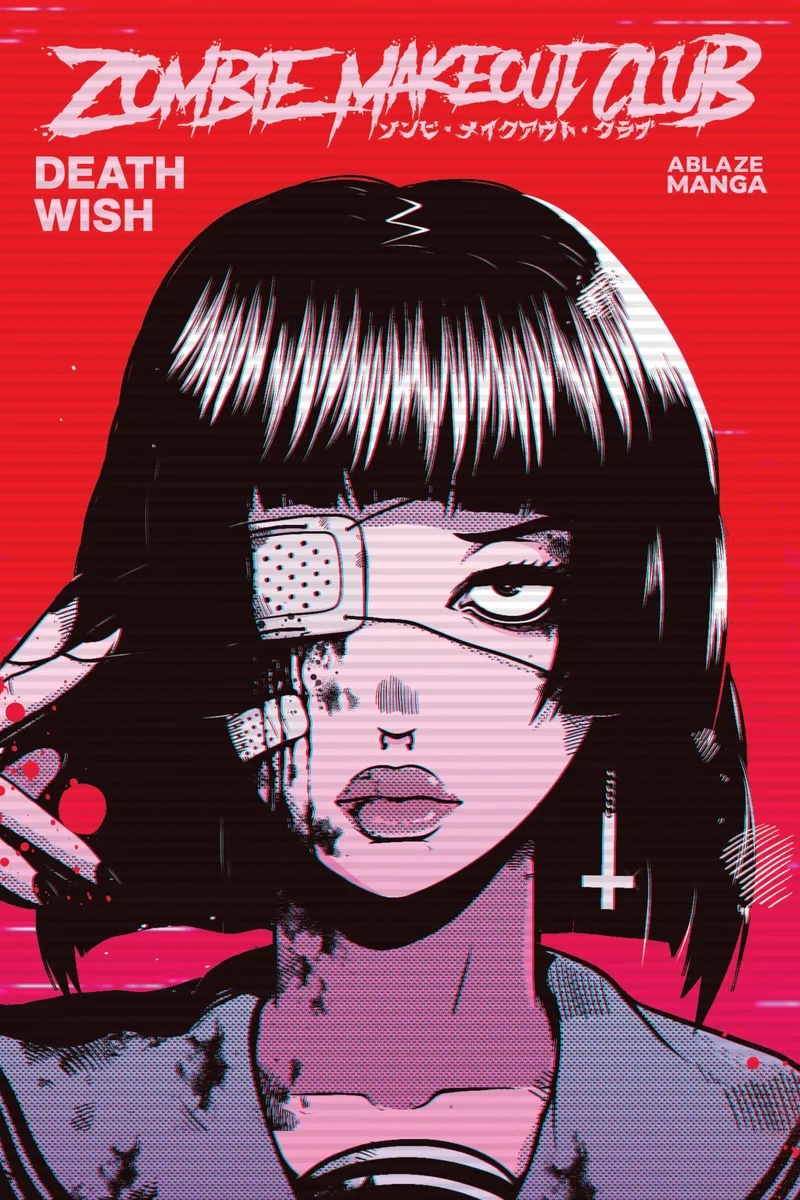
In other licensing news, Azuki announced two new acquisitions: BLITZ, a sports manga set in the world of competitive chess, and Zombie Makeout Club, a horror manga about–you guessed it–a teenage zombie. [Azuki]
The October 2022 NPD Bookscan numbers are in, and once again Spy x Family, My Hero Academia, and Chainsaw Man dominated the Top 20 Adult Graphic Novels chart. [ICv2]
Bill Curtis posts a complete list of manga and light novels scheduled for a November 2022 release. [Yatta Tachi]
If you’re an avid sports manga enthusiast, you’ll want to check out the newly launched Sports Baka substack, where you’ll find essays on Hajime no Ippo, Dive!!, Days, Ryman’s Club and more. [Sports Baka]
The Manga Mavericks dedicate their latest episode to Red Sprite, a Shonen Jump title from 2019. [Manga Mavericks]
On the latest episode of Shojo & Tell, Ashley and Asher critique Skull-Faced Bookseller Honda-san. [Shojo & Tell]
Walt Richardson and Emily Myers dissect the October 2022 issue of Shonen Jump. [Multiversity Manga Club]
In keeping with the Halloween spirit, Gee and Ray explore the highs and lows of Junji Ito‘s extensive catalog. [Read Right to Left]
Parents, teachers, and librarians interested in learning more about yokai manga will find Brigid Alverson’s latest article for the School Library Journal a helpful resource; not only does she delve into the history of the genre, she also compiles a list of age-appropriate titles for kids, tweens, and teens. [School Library Journal]
Over at TCJ, Ritesh Babu and Ari Gardner interview Juan Albarran, a Spanish artist who’s currently working with Shoji Fujimoto on Matagi Gunner, a seinen action series about “an elderly rural hunter who proves unexpectedly skilled at video game first-person shooters, and soon becomes embroiled in the colorful world of e-gaming.” [The Comics Journal]
Max explains how BL manga such as Go For It, Nakamura! offered him an alternative model of masculinity. “I could be kind, thoughtful, and cute like the boys in BL anime and manga,” he notes. “Maybe some people wouldn’t understand, but I’d always have BL to reassure me that there was nothing wrong with me, and that it was okay to be myself.” [Anime Feminist]
REVIEWS
It’s a measure of how mainstream Hayao Miyazaki’s work has become that both the New York Times and the New Yorker commissioned reviews of Shuna’s Journey, available in English for the first time this month. Writing for the Times, Susan Napier declares Shuna’s Journey “eerie, enchanting, and surpassingly strange,” while Sam Thielman observes that “Shuna’s Journey moves and surprises because of the reader’s disorientation at being dropped into a world that is both generously detailed and miserly with explanations.”
New and Noteworthy
- Atom: The Beginning, Vol. 1 (Grant Jones, Anime News Network)
- The Beginning After the End, Vol. 1 (Kevin T. Rodriguez, The Fandom Post)
- Chitose Is in the Ramune Bottle, Vol. 1 (Azario Lopez, Noisy Pixel)
- Dandadan, Vol. 1 (King Baby Duck, Boston Bastard Brigade)
- Daughter of the Emperor, Vol. 1 (Adam Symchuk, Asian Movie Pulse)
- Delicious in Dungeon World Guide: The Adventurer’s Bible (Antonio Mireles, The Fandom Post)
- Dinosaur Sanctuary, Vol. 1 (J. Caleb Mozzoco, Good Comics for Kids)
- Dinosaur Sanctuary, Vol. 1 (Danica Davidson, Otaku USA)
- Dinosaur Sanctuary, Vol. 1 (Jonathon Greenhall, CBR)
- Elden Ring: The Road to the Erdtree (Levi Winslow, Kotaku)
- The Elusive Samurai, Vols. 1-2 (Rebecca Silverman, Anime News Network)
- The Executioner and Her Way of Life, Vol. 1 (Brett Michael Orr, Honey’s Anime)
- The Girl I Saved on the Train Turned Out to Be My Childhood Friend, Vol. 1 (Adam Symchuk, Asian Movie Pulse)
- Hi, I’m a Witch and My Crush Wants Me to Make a Love Potion, Vol. 1 (Kevin T. Rodriguez, The Fandom Post)
- Romantic Killer, Vol. 1 (King Baby Duck, Boston Bastard Brigade)
- Romantic Killer, Vol. 1 (Kirsten Carey, The Mary Sue)
- She Likes to Cook, and She Likes to Eat, Vol. 1 (Sarah, Anime UK News)
- She, Her Camera, and Her Seasons, Vol. 1 (Jalil Shareef, Noisy Pixel)
- Shuna’s Journey (Danica Davidson, Otaku USA)
- Sweetness and Lightning, Vol. 1 (Sara Smith, The Graphic Library)
- Tearmoon Empire, Vols. 1-2 (Rebecca Silverman, Anime News Network)
- To Strip the Flesh (Jalil Shareef, Noisy Pixel)
- The Wrong Way to Use Healing Magic, Vol. 1 (Josh Piedra, The Outerhaven)
Complete and Ongoing Series
- The Detective Is Already Dead, Vol. 2 (Azario Lopez, Noisy Pixel)
- Fist of the North Star, Vol. 6 (Grant Jones, Anime News Network)
- Gabriel Dropout, Vol. 11 (Krystallina, The OASG)
- Kaiju No. 8, Vol. 3 (Jalil Shareef, Noisy Pixel)
- Kaiju No. 8, Vols. 3-4 (King Baby Duck, Boston Bastard Brigade)
- Solo Leveling, Vol. 5 (Sara Smith, The Graphic Library)
- Soul Eater: Perfect Edition, Vol. 8 (Krystallina, The OASG)
- A Witch’s Printing Office, Vol. 6 (Justin and Helen, The OASG)
- Zom 100: Bucket List of the Dead, Vols. 5-6 (Justin, The OASG)







 If Phoenix is Tezuka’s Ring Cycle, Wagnerian in scope, form, and seriousness, then Dororo is Tezuka’s Don Giovanni, a playful marriage of supernatural intrigue and lowbrow comedy whose deeper message is cloaked in shout-outs to fellow artists (in this case,
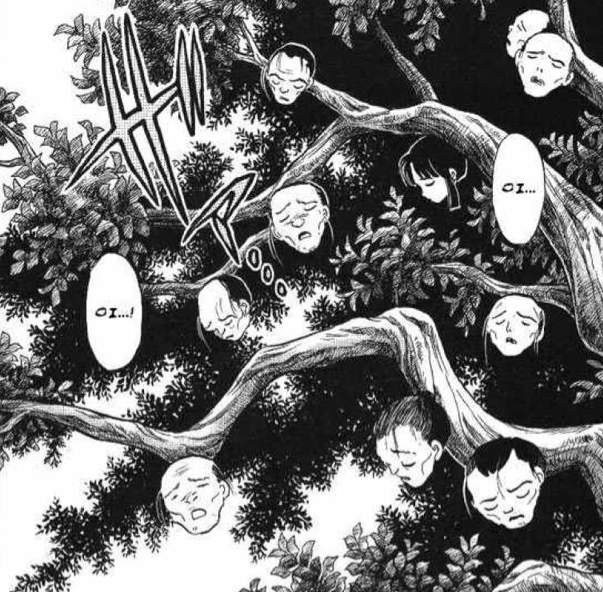
 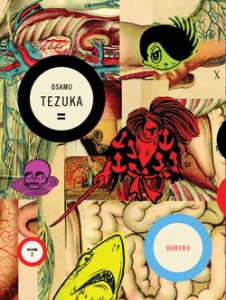 Though much of the devastation that Hyakkimaru and Dororo witness is man-made (Dororo takes placed during the Sengoku, or Warring States, Period), demons exploit the conflict for their own benefit, holding small communities in their thrall, luring desperate travelers to their doom, and feasting on the never-ending supply of human corpses. Some of these demons have obvious antecedents in Japanese folklore — a nine-tailed kitsune — while others seem to have sprung full-blown from Tezuka’s imagination — a shark who paralyzes his victims with sake breath, a demonic toad, a patch of mold possessed by an evil spirit. (As someone who’s lived in prewar buildings, I can vouch for the existence of demonic mold. Lysol is generally more effective than swordplay in eliminating it, however.) Hyakkimaru has a vested interest in killing these demons, as he spontaneously regenerates a lost body part with each monster he slays. But he also feels a strong sense of kinship with many victims — a feeling not shared by those he helps, who cast him out of their village as soon as the local demon has been vanquished.
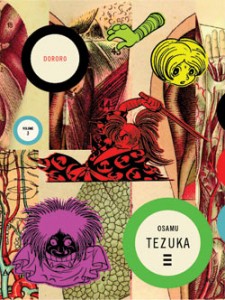 For folks who find the cartoonish aspects of Tezuka’s style difficult to reconcile with the serious themes addressed in Buddha, Phoenix, and Ode to Kirihito, Dororo may prove a more satisfying read. The cuteness of Tezuka’s heroes actually works to his advantage; they seem terribly vulnerable when contrasted with the grotesque demons, ruthless samurai, and scheming bandits they encounter. Tezuka’s jokes — which can be intrusive in other stories — also prove essential to Dororo‘s success. He shatters the fourth wall, inserts characters from his stable of “stars,” borrows characters from other manga-kas’ work, and punctuates moments of high drama with low comedy, underscoring the sheer absurdity of his conceits… like sake-breathing shark demons. Put another way, Dororo wears its allegory lightly, focusing primarily on swordfights, monster lairs, and damsels in distress while using its historical setting to make a few modest points about the corrosive influence of greed, power, and fear.