• Skip to primary navigation
  • Skip to main content
  • Skip to primary sidebar
  • Home
  • About Us
    • Privacy Policy
    • Comment Policy
    • Disclosures & Disclaimers
  • Resources
    • Links, Essays & Articles
    • Fandomology!
    • CLAMP Directory
    • BlogRoll
  • Features & Columns
    • 3 Things Thursday
    • Adventures in the Key of Shoujo
    • Bit & Blips (game reviews)
    • BL BOOKRACK
    • Bookshelf Briefs
    • Bringing the Drama
    • Comic Conversion
    • Fanservice Friday
    • Going Digital
    • It Came From the Sinosphere
    • License This!
    • Magazine no Mori
    • My Week in Manga
    • OFF THE SHELF
    • Not By Manga Alone
    • PICK OF THE WEEK
    • Subtitles & Sensibility
    • Weekly Shonen Jump Recaps
  • Manga Moveable Feast
    • MMF Full Archive
    • Yun Kouga
    • CLAMP
    • Shojo Beat
    • Osamu Tezuka
    • Sailor Moon
    • Fruits Basket
    • Takehiko Inoue
    • Wild Adapter
    • One Piece
    • After School Nightmare
    • Karakuri Odette
    • Paradise Kiss
    • The Color Trilogy
    • To Terra…
    • Sexy Voice & Robo
  • Browse by Author
    • Sean Gaffney
    • Anna Neatrour
    • Michelle Smith
    • Katherine Dacey
    • MJ
    • Brigid Alverson
    • Travis Anderson
    • Phillip Anthony
    • Derek Bown
    • Jaci Dahlvang
    • Angela Eastman
    • Erica Friedman
    • Sara K.
    • Megan Purdy
    • Emily Snodgrass
    • Nancy Thistlethwaite
    • Eva Volin
    • David Welsh
  • MB Blogs
    • A Case Suitable For Treatment
    • Experiments in Manga
    • MangaBlog
    • The Manga Critic
    • Manga Report
    • Soliloquy in Blue
    • Manga Curmudgeon (archive)

Manga Bookshelf

Discussion, Resources, Roundtables, & Reviews

viz media

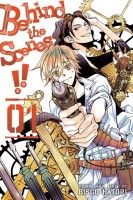
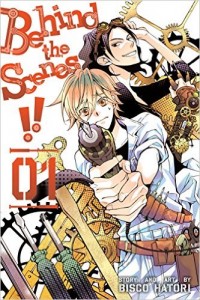
Behind the Scenes!!, Vol. 1

February 12, 2016 by Anna N

Behind the Scenes!!, Volume 1 by Bisco Hatori

I read several volumes of Ouran High School Host Club and the first couple volumes of Millenium Snow way back in the day, so I was looking forward to this new series. Behind the Scenes!! takes place in a film props and set department at an arts college.

Ranmaru Kurisu comes from a fishing village, where he has never fit in. His bad luck isn’t quite reaching Ataru Moroboshi, Ranmaru automatically assumes that everything is his fault and he seems to spend most of his time apologizing unnecessarily. One day, he accidentally finds himself on set during the filming of a zombie movie on campus, spoiling the shot. He gets a rapid-fire introduction to the Art Squad, a team of students who support all the film clubs on campus. Ryuji Goda is the leader, and he immediately tells Ranmaru to sit down and start folding paper cranes for movie props.

It turns out that Ranmaru is incredibly good at crafts, but he spends so much time putting himself down he isn’t very aware of his own abilities. One aspect of his character development that I thought was incredibly clever on Hatori’s part is that Ranmaru’s perspective allows him to both anticipate and recover from disasters when they happen, because he’s just constantly thinking of how things could go wrong. Ranmaru spots a crack in a skylight in the Art Club’s studio space, and when the window shattering results in a prop getting damaged, he’s able to forage for supplies and improvise some impressive fixes. Ryuji sees Ranmaru’s talent and proclaims him as the Art Clubs savior.

Stories featuring found families are always appealing to me. While in many ways Behind the Scenes!! is very different from Paradise Kiss, both series feature characters who were alone who get adopted by art students and end up being transformed by the power of art. Behind the Scenes!! has a large supporting cast aside from Ranmaru and Ryuji, and there wasn’t enough space in the first volume to go into depth about some of the characters, so a few of them only fixed in my mind as “girl who loves special effects horror manga” or “handsome bland dude who likes latte art”. I’m sure that the supporting characters will all get more stories as the manga develops, and I’m looking forward to finding out more. The dynamic between the art squad and the student directors is a bit antagonistic and seems to rely a bit on forced drama, but the dynamic of a team of people all with different talents coming together to create props and sets made this manga fun to read, even if it doesn’t yet approach the goofy ridiculousness of Ouran High School Host Club.
bth

Filed Under: REVIEWS Tagged With: behind the scenes!!, shojo beat, shoujo, viz media

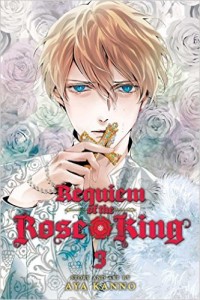
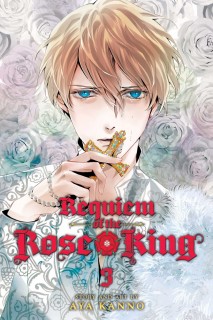
Requiem of the Rose King, Vol. 3

February 11, 2016 by Ash Brown

Requiem of the Rose King, Volume 3Creator: Aya Kanno
U.S. publisher: Viz Media
ISBN: 9781421582597
Released: January 2016
Original release: 2015

Aya Kanno’s manga series Requiem of the Rose King has quickly become one of the releases that I most look forward to from one volume to the next. I’m not particularly surprised by this, though—I’ve enjoyed many of Kanno’s past works, and she has proven to be quite versatile when it comes to genre and style. In the case of Requiem of the Rose King, Kanno has taken direct inspiration from the historical plays of William Shakespeare, more specifically the Wars of the Roses cycle consisting of Henry VI and Richard III. Even if Kanno hadn’t been involved with the manga, this would have been more than enough to catch my attention. But Kanno is involved and she brings her own touches to the story, giving it a dark fantasy-tinged atmosphere in addition to exploring gender and identity in an interesting and engaging way. With all of that and more, I have been completely taken with Requiem of the Rose King, and so was glad when the third volume of the series, originally released in Japan in 2015, was published in English by Viz Media in 2016.

The battle has been won and the House of York reigns victorious, but the struggle for the English crown continues; the war is far from being over. The deposed King Henry seems content to wander the countryside, the weight of rulership lifted from his shoulders, but the rest of the Lancasters are plotting to return their family to power and reclaim the throne. The hold that the newly established King Edward has on the England is in more peril than he realizes. In addition to the threat that the Lancasters pose, there are others among the nobility who are againt the House of York’s usurption of the throne. The widowed Elizabeth Woodville is prepared to take advantage of Edward’s womanizing ways in order to bring about his and his family’s downfall; besotted with Elizabeth, he puts his own desires before the security of the kingdom, risking the loss of the support of France. His younger brother Richard is one of the few people to recognize the danger, but Richard isn’t yet in a position to avert the potentially calamitous outcome.

Requiem of the Rose King, Volume 3, page 68I continue to be fascinated by Kanno’s interpretation of Richard, a young man who has been irrevocably harmed by the the rejection and hatred of his mother who sees him and his body as imperfect and demonic. He has a difficult time connecting with people because of the anxiety surrounding his self-identity, an issue made even worse by the recent death of his father on the battlefield. Henry is a perfect foil for Richard and is in many ways his opposite, which throws Richard’s perception of himself and of the world into confusion. Richard has resigned himself to loneliness and darkness, even while Henry seeks his company. The two men spend a fair amount of time together in Requiem of the Rose King, Volume 3, neither of them knowing who the other truly is and that their families are enemies. Much as Edward and Elizabeth’s relationship may doom the kingdom, Richard and Henry’s awkward friendship can only result in tragedy with far-reaching consequences.

Personal strife is mixed with political turmoil in Requiem of the Rose King, each feeding into the other as events unfold. With multiple people expressing interest in obtaining the crown, whether in jest or in all seriousness, the social structures and relationships among the English nobility have become extraordinarily precarious during a time of tenuous peace. This underlying chaos is also reflected in how Kanno approaches the story of Requiem of the Rose King. Many times several scenes overlap with one another, tied together thematically rather than chronologically. Pasts, presents, and possible futures all intertwine and are simultaneous revealed. This can be somewhat disconcerting at first and at times challenging to follow, but I do like the overall effect and drama that it brings to the series, emphasizing the individual characters’ experiences as memories, reality, and visions merge together. Requiem of the Rose King has an almost dreamlike quality to it and I find that I fall more deeply under its thrall with each passing volume.

Filed Under: REVIEWS Tagged With: Aya Kanno, manga, requiem of the rose king, viz media

The Manga Revue: Behind the Scenes!!

February 8, 2016 by Katherine Dacey

It’s a snowy day here in Boston, giving me the perfect excuse to tunnel under a blanket and read a goofy, light-hearted story. My escapism of choice: Bisco Hatori’s latest series, Ouran University Host Club Behind the Scenes!!

BehindTheScenes-01Behind the Scenes!!, Vol. 1
By Bisco Hatori
Rated T, for teens
VIZ Media, $9.99

Behind the Scenes!! embodies what’s good–and not so good–about Bisco Hatori’s storytelling.

In the plus column, Hatori has a knack for writing ensemble pieces in which the principal characters exhibit a genuine fondness for one another. The stars of her latest series are Shichikoku University’s Art Squad, a scrappy outfit that makes props for the Film Club–or, more accurately, clubs, as there are several students groups competing for the Art Squad’s services, each with their own aesthetic objectives. Ranmaru, the series’ protagonist, gets a crash course in film making when he stumbles into the middle of an Art Squad project: a low-budget horror flick. As penance for disrupting the shoot, Ranmaru joins the Art Squad and is quickly pressed into service painting props, folding paper cranes, and building a fake hot spring.

These scenes–in which Ranmaru and the gang tackle set-design challenges–are among the series’ most enjoyable. Not only do they give us a sneak peek at the movie-making process, they also show us how the club members’ friendly overtures embolden the timid, self-doubting Ranmaru to let go of his painful childhood and become part of a community. In one exchange, for example, Ranmaru tells a fellow squad member about a black-and-white film that made a powerful impression on him. Hatori cuts between scenes from this imaginary film and Ranmaru’s face, registering how powerfully Ranmaru identified with the film’s principal character, a toy robot who dreams of flying. The symbolism of the toy is hard to miss, but the directness and simplicity with which Hatori stages the moment leavens the breezy tone with a note of poignancy.

In the minus column, Hatori often strains for comic effect, overwhelming the reader with too many shots of characters mugging, shouting, and flapping their arms. The Art Squad’s interactions with various student directors give Hatori license to indulge this tendency; the auteurs’ snits and whims frequently force the Art Squad members to behave more like the Scooby Doo gang–or Hollywood fixers–than actual college students juggling coursework and extra-curriculars. (The Art Squad even has a goofy dog mascot.)

At the same time, however, these wannabe Spielbergs bring out the best in Hatori’s draftsmanship. Each one’s personality is firmly established in just a single panel: one looks like a refugee from Swingin’ London (or perhaps an Austin Powers film); another dresses like a Taisho-era author, swanning around campus in a yukata; and a third sports a shaggy mane, Buddy Holly glasses, and a female entourage. The efficiency with which Hatori introduces these characters, and the range of personalities they embody, demonstrate just how crisp and distinctive her artwork can be. That Hatori’s heroes are visually bland by comparison says less about her skills, I think, than it does her desire to make Ranmaru’s new “family” seem normal–well, as normal as anyone who specializes in making fake zombie guts can be.

The bottom line: Tentatively recommended. If Hatori can tone down her characters’ antic behavior, Behind the Scenes!! could be a winner.

Reviews: Sean Gaffney and Michelle Smith post a fresh crop of Bookshelf Briefs. Also new at Manga Bookshelf: Sean tackles the first volume of orange (no, that’s not a typo), Anna N. reviews Takeshi Obata’s kiddie-thriller School Judgment, and Ash Brown weighs in on Hiroaki Samura’s stylish (and bloody) manga Die Wergelder. Further afield, translator Jocelyn Allen posts her annual doujinshi round-up.

Sara Dempster on The Angel of Elhamburg (No Flying No Tights)
Matthew Warner on vol. 5 of Ani-Emo (The Fandom Post)
Michael Burns on vols. 7-8 of Barakamon (AniTAY)
Johanna Draper Carlson on vol. 12 of Chi’s Sweet Home (Comics Worth Reading)
Adam Brunell on vol. 12 of Deadman Wonderland (ComicSpectrum)
SKJAM! on Dream Fossil (SKJAM! Reviews)
Josh Begley on vol. 2 of Emma (The Fandom Post)
Patrick Moore on vol. 1 of Honey So Sweet (Bentobyte)
Sean Gaffney on vol. 1 of How to Raise a Boring Girlfriend (A Case Suitable for Treatment)
Ken H. on Junji Ito’s Cat Diary: Yon & Mu (Sequential Ink)
Kory Cerjak on vol. 13 of Magi (The Fandom Post)
Megan R. on Millennium Prime Minister (The Manga Test Drive)
Rebecca Silverman on vol. 12 of My Little Monster (Anime News Network)
Exile on vol. 1 of My Monster Secret (AniTAY)
Jocelyn Allen on Night Worker (Brain vs. Book)
Matthew Warner on vol. 2 of Puella Magi Tart Magica (The Fandom Post)
Matt on vol. 5 of A Silent Voice (AniTAY)
Terry Hong on vol. 2 of Ultraman (Book Dragon)
Nick Creamer on vol. 2 of UQ Holder! (Anime News Network)
Frank Inglese on Uzumaki Naruto: Illustrations (Snap 30)
Sheena McNeil on vol. 3 of Yo-Kai Watch (Sequential Tart)


Filed Under: MANGABLOG, REVIEWS Tagged With: Bisco Hatori, Manga Review, shojo beat, viz media

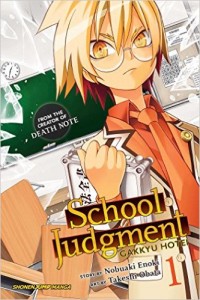
School Judgement, Vol. 1

February 1, 2016 by Anna N

School Judgement Volume 1 by by Nobuaki Enoki and Takeshi Obata

This was a series that I expected to be wildly enthusiastic about, just for the Takeshi Obata art factor alone, so I was surprised to have a more measured reaction once I read the first volume. There were aspects of the setting and execution that didn’t sit well with me, but as always Obata’s art is beyond excellent.

School Judgement is set in an elementary school where conflicts are resolved by formal classroom arbitration, along with child prosecutors and defense attorneys. Two transfer students are introduced at the start of the volume. Abaku Inugami is a defense specialist whose hobby is arguing. He establishes his skills in an epic cross examination of his new teacher that results in her lifting the ban on video games at school. Pine Hanzuki is a prosecuting attorney who enjoys dressing up in magical girl outfits and is accompanied everywhere she goes by a rotund sidekick.

The new students are put to work promptly in “The Suzuki Dismemberment and Murder Case” where the Suzuki in question is a classroom fish. Tento Nanahoshi is the hapless student accused of fish murder, and when he is acquitted, he sticks around to provide a normal sidekick counterpoint to Inugami’s intensity. School Judgement is very entertaining when it sticks to power courtroom poses and mystery unraveling. I thought it was hilarious that the judges of the cases are babies who have prematurely aged due to their judicial duties, looking like wizened old men. Obata made Go dynamic and filled with suspense, so I was fully expecting dynamic courtroom scenes. There were some unexpected artistic choices too – when an adult is unmasked as evil, she’s suddenly rendered with a greater level of detail and rictus-like facial expressions that wouldn’t be out of place in a horror manga.

sj1

It could be that I didn’t like many of the characters due to their single-minded obsession with arguing, but both Inugami and Hanzuki aren’t particularly sympathetic. Hanzuki’s a spoiled rich girl, and while it seems that Inugami’s obsession with the law is due to a tragic event in his past, he’s too abrasive to root for. Nanahoshi is around to be a counterpoint to all the lawyering, but for the most part he’s also bland and forgettable.

The aspects of School Judgment that I didn’t care for were the contrast of the lower school setting and the art, which looked more like Hikaru no Go Obata in style with some of the darker or more mature themes. In a shonen manga set in a high school, I’d not really care about random bath scenes for example, but in School Judgement when the character is 12, that creeps me out a bit. Also, another story line is an extended drug metaphor, which also seems to be a bit much with the current setting. I think I would have enjoyed this manga much more if it had either aged down and just been an all ages title with cases to solve that invoked lighter themes, or if was aged up and set in a high school with the same type of stories. As it was, I found the manga entertaining in spots, a bit unsettling here or there, and I didn’t really care about what happens to the characters at all. My quibbles are mostly with the writing, because I think any manga by Obata ends up being a master class in illustration. So I’d recommend this for the art alone, even though I didn’t enjoy the story.

Filed Under: REVIEWS Tagged With: school judgement, Shonen Jump, viz media

Requiem of the Rose King, Vol 3

January 18, 2016 by Anna N

Requiem of the Rose King Volume 3 by Aya Kanno

This manga just keeps getting better and better as Kanno adds even more royal intrigue to her unique story of Richard III and the Wars of the Roses.

The second volume closed with Richard embodying a demonic spirit of vengeance when he discovered that his father was killed. The third volume opens with Richard’s older brother Edward, the new king, making questionable decisions about women. Edward is utterly captivated by the widow Elizabeth Woodville, who secretly detests the House of York. She maintains Edward’s interest by continually refusing him until he is desperate enough to make her his queen, going against the other alliances his court is arranging for him. Richard proves to be an unenthusiastic ally in Edward’s courtship, going along with his brother on hunting trips to provide cover for Edward’s visits to Elizabeth. When Edward is staying in a hunting cabin, he again meets the wayward Lancaster King Henry. Richard and Henry are drawn to each other, without fully knowing who each other are.

Henry’s dreamy outlook on life has made him one of the few people who relates to Richard as just Richard, without the “demon child” legend that has poisoned everyone against him. But Henry’s distance from his own family ensures that when his son Edward discovers the men together, his jealousy over his father’s relationship with Richard looks like it is going to have horrible consequences.

Kanno’s art continues to be both dark and lavish, fitting the settings and themes of this tragic story excellently. I’m always in awe of her facility with facial expressions and how it contributes so well to character development. Just a couple panels of Elizabeth Woodville’s gleefully staring eyes as she contemplates her plans for Edward establish that she’s up to no good. Henry’s abstracted expression show him to not fully live in the world, while Richard’s sensitivity and hesitancy in trusting Henry is clearly portrayed. This continues to be such a standout title in Viz’s current publishing lineup.

rerok3

Filed Under: REVIEWS Tagged With: requiem of the rose king, VIZ, viz media

The Manga Revue: Idol Dreams and Monthly Girls’ Nozaki-Kun

January 15, 2016 by Katherine Dacey

Happy New Year! (Is it too late to extend that greeting to readers?) For my first column of 2016, I dove into my pile of unread books and chose two that I’d meant to review last year. The first is Arina Tanemura’s Idol Dreams, a body-swap comedy about a thirty-something office lady; the second is Izumi Tsubaki’s Monthly Girls’ Nozaki-Kun, a 4-koma series about a hunky high school manga artist who just happens to be the author of a popular girls’ comic.

idol-dreams-vol-1Idol Dreams, Vol. 1
By Arina Tanemura
Rated T, for readers 13 and up
VIZ Media, $9.99

Chikage Deguchi is at a crossroads: once a pretty, popular high school student, she’s become a sexless, thirty-something office drone who’s mocked by her co-workers. After making a fool of herself at a high school reunion, Chikage’s childhood friend Tokita stages a unique intervention, offering Chikage a drug that transforms her into a 15-year-old girl for a few hours a day. Chikage then does what any self-respecting 31-year-old would do: she pursues a (part-time) career as a teen idol.

Setting aside the question of whether anyone would voluntarily relive their teenage years, Idol Dreams has a bigger problem: tone. Arina Tanemura can’t decide if her story will revel in its absurdity or play things straight, and veers wildly between wacky show-biz hijinks and clumsy office scenes that are meant to establish just how awful Chikage’s adult life is. In the afterword to the story, Tanemura cheerfully vents her frustrations at being asked to do “a magical girl series for adults” without recourse to “too much screentone,” “gags and comedic touches,” or “super-stylish atmosphere.” Oddly enough, I don’t think these restrictions are the true source of the problem; if anything, Tanemura’s artwork is more polished and appealing in Idol Dreams than in Phantom Thief Jeanne or I.O.N. The real issue is the lead character: Tanemura never really explains why temporarily impersonating a 15-year-old would solve any of Chikage’s issues, especially since Chikage’s teenage alter ego is a wet noodle, too. The underlying message seems to be that recapturing youthful beauty is a pathway to empowerment–not a particularly novel or uplifting idea, given the developed world’s obsession with Botox, face lifts, wrinkle cream, and 17-year-old models.

The bottom line: I never thought I’d say this, but Idol Dreams is the rare Tanemura manga that would benefit from more zaniness and sparkly backgrounds.


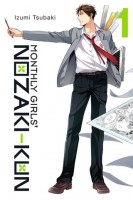
monthly_girlsMonthly Girls’ Nozaki-Kun
, Vol. 1
By Izumi Tsubaki
Rated T, for teen readers
Yen Press, $13.00

Monthly Girls’ Nozaki-Kun is a textbook example of what happens when a great idea bumps up against the limitations of a restrictive format. The set-up is comedy gold: tenth-grader Chiyo Sakura confesses her romantic feelings to hunky classmate Umetarou Nozaki, only to have him casually respond, “Do you want to come to my place right now?” Flustered, Chiyo agrees but is surprised when Nozaki doesn’t put the moves on her; instead, he puts her to work on a chapter of his hit shojo manga Let’s Fall. Chiyo’s attempts to extricate herself from Nozaki’s employ or clarify her feelings for him only make things worse, as Nozaki is both romantically inexperienced and genuinely obtuse.

So far, so good: the concept provides plenty of fodder for jokes and pratfalls. The four-panel format, however, locks each character into a holding pattern in which he or she is doomed to repeat the same behavior over and over again. The supporting cast is big enough to prevent Monthly Girls from reading like a month’s worth of Cathy or Garfield strips, but the rhythm of every gag is virtually the same, whether author Izumi Tsubaki is introducing a new character, poking fun at shojo manga cliches, or demonstrating just how socially inept Nozaki really is; long stretches of Monthly Girls read like a Henny Youngman set, albeit with stranger–and funnier–material. Take my manga… please!

The bottom line: Some of the jokes are genuinely funny, but the series already feels like it’s chasing its tail by the end of chapter three.

Odds and Ends: Organization Anti-Social Geniuses has a new look, a new name, and a new URL. You’ll now find Justin Stroman and the gang at http://www.theoasg.com/. Manga vlogger Pluto Burns took a break from reviewing books and conducted a great interview with Carolina Manga Library founder Laura Mehaffey. If you’re not familiar with the good work that Mehaffey and her staff are doing, click here to learn more about this traveling book collection.

Reviews: Sean Gaffney, Anna N. and Michelle Smith post their first Bookshelf Briefs column of 2016. On the agenda: D-Frag!, My Love Story!!, Pandora Hearts, and Saki. Elsewhere on the web, Rebecca Silverman and Kory Cerjak review the first volume of Yowamushi Pedal, my pick for Best New Manga of 2015.

Chris Kirby on vol. 1 of 7 Billion Needles (The Fandom Post)
Karen Maeda on vol. 7 of Assassination Classroom (Sequential Tart)
Matthew Warner on Ayako (The Fandom Post)
Sheena McNeil on vol. 1 of Bloody Mary (Sequential Tart)
Megan R. on CLAMP School Detectives (The Manga Test Drive)
Justin on Confession (The OASG)
Kate O’Neil on vol. 5 of Demon from Afar (The Fandom Post)
Sean Gaffney on vol. 3 of Emma (A Case Suitable for Treatment)
Sean Gaffney on vol. 1 of Honey So Sweet (A Case Suitable for Treatment)
Ash Brown on vol. 3 of JoJo’s Bizarre Adventure, Part 1: Phantom Blood (Experiments in Manga)
Sheena McNeil on vol. 19 of Kamisama Kiss (Sequential Tart)
Ken H on vol. 1 of LD♥K (Sequential Ink)
Rebecca Silverman on vol. 1 of Livingstone (Anime News Network)
Lori Henderson on vol. 1 of Monthly Girls’ Nozaki-Kun (Manga Xanadu)
Dustin Cabeal on vol. 2 of My Hero Academia (Comic Bastards)
Sean Gaffney on vol. 1 of Of the Red, the Light, and the Ayakashi (A Case Suitable for Treatment)
Kane Bugeja on vol. 3 of One-Punch Man (Snap 30)
David Brooke on vol. 4 of One-Punch Man (AiPT!)
Dustin Cabeal on vol. 4 of One-Punch Man (Comic Bastards)
SKJAM! on vol. 18 of Rin-ne (SKJAM! Reviews)
Ken H. on vol. 9 of Say I Love You (Sequential Ink)
Helen on vol. 1 of Student Council’s Discretion (The OASG)
Patrick Moore on vol. 8 of Tiger & Bunny (Bento Byte)
Che Gilson on Tokyo Ghoul (Otaku USA)
Marion Olea on vol. 2 of Tokyo Ghoul (No Flying No Tights)
Frank Inglese on vols. 8-9 of Vagabond: VIZBIG Edition (Snap 30)
Ash Brown on vol. 7 of Vinland Saga (Experiments in Manga)
SKJAM! on vol. 7 of Vinland Saga (SKJAM! Reviews)
Megan Rupe on vols. 1-2 of Yo-Kai Watch (No Flying No Tights)


Filed Under: MANGABLOG, REVIEWS Tagged With: 4-koma, Arina Tanemura, Manga Review, shojo, viz media, yen press

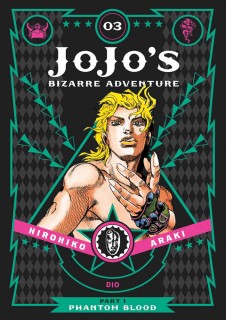
JoJo’s Bizarre Adventure, Part 1: Phantom Blood, Vol. 3

January 8, 2016 by Ash Brown

JoJo's Bizarre Adventure, Part 1: Phantom Blood, Volume 3Creator: Hirohiko Araki
U.S. publisher: Viz Media
ISBN: 9781421578804
Released: August 2015
Original release: 1988

Although I had been previously aware of the manga series for some time, my real introduction to Hirohiko Araki’s multi-generational shounen epic JoJo’s Bizarre Adventure was in 2012 through the standalone spinoff Rohan at the Louvre. I then proceeded to read the third story arc Stardust Crusaders, at the time the only other part of JoJo’s Bizarre Adventure to have been released English. It wasn’t until 2015 that Phantom Blood, the very beginning of JoJo’s Bizarre Adventure was translated, published in a beautiful hardcover edition under Viz Media’s Shonen Jump imprint. When Phantom Blood was originally collected in Japan it was released in five volumes between 1987 and 1988. However, in 2002 it was re-released in three volumes which is what Viz Media’s edition is based on. Phantom Blood, Volume 3, published in English in 2015, is largely equivalent to the fourth and fifth volumes of the original Japanese release.

Having arrived in Wind Knights Lot in pursuit of his adoptive brother Dio, Jonathan Joestar must first successfully defeat two of Dio’s strongest undead minions and then traverse a town with a population that is steadily being turned into a hoard of zombies before he even has the chance to confront his brother. The Dark Knight Blueford, who is filled with hatred for the world and loyalty to Dio, is determined to take JoJo’s life. The other knight, Tarukus, is also exceptionally skilled when it comes to dealing out death and takes great delight in it. Should JoJo and his allies manage to survive their encounter with these two undead foe, they face an even more formidable adversary in Dio. Having used an ancient stone mask to turn himself into a vampire, Dio has gained untold strength and powers. Fortunately, JoJo is a quick and talented study—under the tutelage of Baron Zeppeli he has been able to begin to master Hamon energy, the only thing other than the sun itself that can harm to Dio.

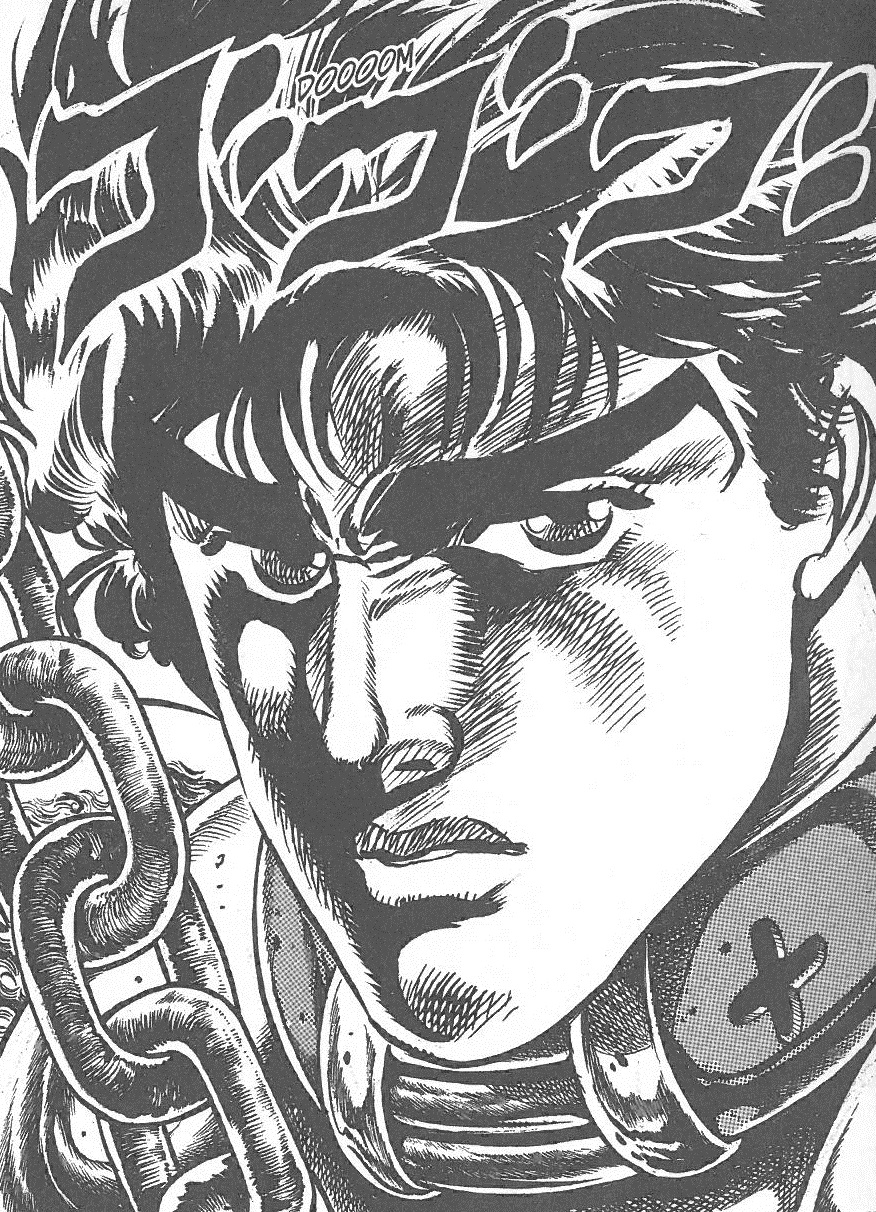
JoJo's Bizarre Adventure, Part 1: Phantom Blood, Volume 3, page 147JoJo’s Bizarre Adventure truly is a bizarre series; Phantom Blood makes this very clear from the very start. From the characters’ weird anatomy and disproportionate musculature to the story’s strange mix of melodrama, horror, and fantastic martial arts, Phantom Blood doesn’t just strain readers’ suspension of disbelief, the manga completely shatters it. Entire backstories are revealed in the time it takes for characters to tumble down cliff sides; combatants continue to live on after suffering injures that even the undead couldn’t survive; fights quickly escalate to unbelievable extremes, opponents continuously outdoing and outmaneuvering one another. Although the “why” of what’s going on is sometimes questionable, even considering Araki’s pseudo-scientific explanations, most everything is blatantly narrated by the participants and observers, so it’s fairly easy to at least follow the “what” of all of the strangeness. JoJo’s Bizarre Adventure is admittedly ridiculous and absurd, but that’s part of what makes the series so entertaining.

Phantom Blood is a relatively short series, especially when compared to the later story arcs of JoJo’s Bizarre Adventure. While Phantom Blood is a complete story in its own right, if often feels even more like a prologue to the rest of the series, laying the groundwork for all of the weirdness and machismo to come. Phantom Blood introduces the noble Joestar family—Jonathan in particular being especially gallant and large-hearted, even towards his enemies—but even more important is the introduction of Dio, an extraordinary villain. As Araki points out in the volume’s author notes, what make Dio so terrifying isn’t his impressive powers or brute strength, it’s his stunning ability to control others. Dio is arrogant but extremely charismatic, gaining many willing followers and easily manipulating those who aren’t. Phantom Blood is frequently gruesome and grotesque, with over-the-top violence, outrageous story developments, and audacious, larger-than-life characters. JoJo’s Bizarre Adventure is a peculiar work, but I’m definitely looking forward to reading the next arc, Battle Tendency.

Filed Under: REVIEWS Tagged With: Hirohiko Araki, JoJo's Bizarre Adventure, manga, Shonen Jump, viz media

The Most Anticipated Manga of 2016

January 4, 2016 by Katherine Dacey

We’re kicking off 2016 with a look at the manga titles and trends we’re most excited about. Joining me and Brigid is manga journalist and critic Deb Aoki, former guide to AboutManga.com, current host of Manga Comics Manga, and Publishers Weekly contributor.

What new manga are we looking forward to this year?

New Fruits BasketBRIGID: Fruits Basket! Natsuki Takaya’s tangled tale of a cursed family was one of the first shoujo manga I ever read, and I’m looking forward to re-reading it with a more experienced eye (and a better translation).

The other upcoming manga that everyone seems to be looking forward to is Princess Jellyfish, which Kodansha is publishing in double-sized omnibus volumes. This josei title about a bunch of nerdy girls living in their own rooming house sounds like it will be a lot of fun.

In terms of continuing series, I loved the first volume of Planetes and I’m looking forward to more. It’s a smart science fiction story with likeable characters and thoughtful storylines, and Dark Horse’s new edition is a beautiful two-volume omnibus that really feels like something special. I can’t wait to read more of Hiroya Oku’s Inuyashiki, about two humans given extreme superpowers in a freak accident—one uses them for good, one… doesn’t—and Yoshitoki Ōima’s A Silent Voice, an amazingly powerful story that’s about bullying but also about alienation and redemption. One more: Your Lie in April, which has kind of slid under the radar, a shonen romance about musicians that, like A Silent Voice, goes beyond the standard shonen romance tropes and has relatable characters experiencing real emotions.

On a general note: When I was compiling my lists of the best new and ongoing manga series of 2015, I was struck by how many really good manga debuted in 2015. From all accounts, 2016 is going to be even better.

haikyuuDEB: I’m most excited about the trend where manga publishers are taking chances on titles and genres that were once considered the third rail/extra risky to license, like sports manga. Super excited about the Summer 2016 arrival of the first volumes of Haikyu!! by Haruichi Furudate and Kuroko’s Basketball by Tadatoshi Fujimaki from Shonen Jump/VIZ Media! I love Haikyu!! a lot — been watching the first and second seasons on Crunchyroll over and over again. the characters are really wonderful — it’s delightful to see the team grow and reach new heights every time. It’s got lots of heart and humor as well as exciting sports action. It’s now one of my all-time faves!
I’ve also been enjoying the recently released Yowamushi Pedal by Wataru Watanabe, a manga about a hapless anime otaku who discovers that he has a talent for bicycle racing. Big ups to Yen Press for publishing this fairly long series in double-sized volumes.

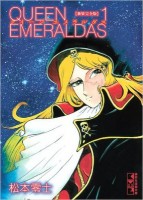
queen-emeraldas-smallAnother example of manga publishing biz in the US dipping their toes into riskier fare is the upcoming publication of three classics: Rose of Versailles by Riyoko Ikeda from Udon Entertainment, Queen Emeraldas by Leiji Matsumoto from Kodansha Comics, and Otherworld Barbara by Moto Hagio from Fantagraphics Books.  For too long, the classics that are the foundation of manga in Japan have been largely unavailable in English. I’m hoping that these titles succeed so we can someday get more.

Also super excited about having more manga by Asano Inio available in English. Solanin and What a Wonderful World! are go-to recommendations for anyone who loves indie comics and is curious about manga. Now VIZ Media is publishing the mind-bending Goodnight Pun Pun, and A Girl on the Shore, coming from Vertical Comics. Both should be on your pre-order lists, as these are beautifully drawn, thought-provoking books that everyone will be talking about in the months to come.

rose-of-versailles-udonKATE: I share Deb’s excitement about classic manga. It’s a risky undertaking for any publisher, especially when so many readers are young (under 20) and not particularly curious about the medium’s roots. It will be interesting to see if UDON can pitch Rose of Versailles to the Shojo Beat crowd; though the artwork is a little dated, the melodrama, costumes, and kick-butt female lead have obvious parallels with titles in VIZ, Kodansha, and Yen’s catalogs. Who knows? It could be a surprise hit.
Speaking of vintage titles, I’m ecstatic about Drawn & Quarterly’s new Kitaro volumes. D&Q will be releasing these previously untranslated stories in slimmer, kid-friendly editions–a departure from their 2013 Kitaro release, which screamed “prestige project!” I think that’s a smart move: adults with an interest in Shigeru Mizuki’s work will buy it in almost any format, but younger manga fans need a length and trim size that reflects their own reading habits.

Another title on my must-read list is Jiro Taniguchi’s Guardians of the Louvre, which NBM Publishing will be releasing in April. The previous installment of the Louvre series–Hirohiko Araki’s Rohan at the Louvre–was the ultimate otaku two-fer: a ghost story and a standalone chapter in the JoJo’s Bizarre Adventure saga. Taniguchi’s book will undoubtedly be a more sober affair, but one I’m anticipating with the same eagerness: I can’t wait to see how Taniguchi integrates the museum’s famous collection into his story.

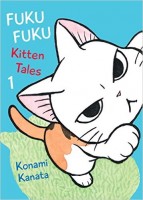
fukufukuIn the just-for-fun department, I Am a Hero, a zombie thriller from Dark Horse, is near the top of my list, as are VIZ’s Haikyu! (mentioned by Deb above), Vertical’s FukuFuku: Kitten Tales, and the final installment of DC Comics’ Batman: The Jiro Kuwata Batmanga. I’m also looking forward to Wandering Island, a story about a gutsy young woman who runs an air mail service in a remote corner of Japan. The illustrations are by Kenji Tsurata, the creator of the criminally under-appreciated Spirit of Wonder, which was published by Dark Horse in 1998.

Last but not least, I’d also make a plug for The Osamu Tezuka Story: A Life in Anime and Manga. This visual biography clocks in at a hefty 900 pages, highlighting important periods in Tezuka’s career as an illustrator and animator. Its author, Toshio Ban, worked closely with Tezuka in the 1970s and 1980s, giving Ban a unique perspective on his subject. As an added bonus for American readers, Stone Bridge Press brought in Frederick L. Schodt to do the translation.

How about conventions—does anything look particularly tempting?

DEB: I’m always curious to see what Toronto Comic Arts Festival will be bringing as their guests this May. Last year was Gurihiru and Aya Kanno, prior years brought Konami Kanata, Moyoco Anno, Akira Himekawa, Usamaru Furuya, Est Em, Natsume Ono and Yoshihiro Tatsumi to name just a few. I don’t know what they have planned, but I know it’ll be worth the trip!

As booth space and tickets get harder and harder to get at San Diego Comic-Con, Anime Expo in Los Angeles has turned into the Japanese content biz must-go show. I’ve noticed that more companies from Japan are buying booths, and see lots of meetings / business being conducted at the show.

It’s great that AX is getting bigger and bigger, but I worry that it creates a situation where the anime/manga world becomes even more segregated/separated from the general pop culture community that converges at Comic-Con and similar American shows. This is especially irksome because it seems like most of the Western comics / pop culture press corps basically ignore / don’t report on / don’t attend Anime Expo or any of the announcements that come out of this show.

This pisses me off because anime/manga matter more than ever — especially as its fandom tend to skew younger, are more active, and more interested in all kinds of entertainment from US and Japan compared to their counterparts on the superhero side of the comic shop. So much for my “be less crabby in 2016” resolution… ;-)

KATE: I had a blast attending shows like New York Comic Con and Wondercon in the late 2000s. The last time I attended NYCC, however, I felt that the show had taken a much sharper turn towards the television, film, and gaming industries, and was losing its identity as a comics convention. The manga publishers were still there, of course, but it was harder to circulate and interact with editors and sales reps because of the enormous crowds. That experience pretty much soured me on going to any more big conventions. TCAF always sounds like a blast, but the timing never works for me; I’m always knee-deep in final exams and student papers when it rolls around!

BRIGID: I echo Deb’s concern about AX, but it does seem like this year, the news was spread across a broader swath of conventions—and many of the new licenses, including Fruits Basket, were announced on Twitter. The presence of so many people from the Japanese publishers—not just creators but editorial staff as well—was very noticeable this year and shows that the publishers are taking the American audience seriously. It also enhanced the experience to see, for instance, the editor of Noragami explaining the process of how it went from sketches to finished page. I’m looking forward to more of that at the larger shows as well as the more intimate experience at the smaller shows, where the creators and their readers are not so far apart.

Any predictions about the industry?

DEB: Almost all signs point to a healthier, more robust manga publishing business in 2016, which is a great thing. I don’t see the same rush to publish anything and everything vaguely manga-ish (even crappy manga) that I saw prior to the crash of the late 2000’s — publishers seem to be making more careful choices, more calculated risks. The fact that they’re taking any risks at all — by expanding genres, offering their stories via more digital channels and doing more simulpub/same day as Japan releases, is a good sign.

I’m also intrigued/encouraged by the efforts being made by Japanese manga publishers to welcome submissions by creators from outside of Japan, like Comics Zenon’s Silent Manga Audition contests and the Japanese edition of Shonen Jump’s latest contest to get published in their online magazine, Jump Plus. It’s no secret that many up-and-coming comics creators from around the world are inspired by manga, so it’ll be very interesting to see what happens when more of these creators get exposure in Japan and guidance from Japan’s top-notch manga editors.

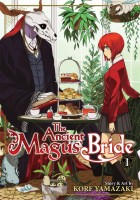
magus1KATE: I’m consistently impressed by Seven Seas’ tenacity and business acumen, but not so impressed with the actual titles they license. Last year, however, Seven Seas published The Ancient Magus’ Bride and acquired Orange, neither of which fit the profile of a typical Seven Seas manga; if anything, both seemed like the kind of titles that CMX used to license. That gamble has paid off with Bride, which recently cracked the NY Times Manga Bestseller list. My prediction: Seven Seas will continue to make bold licensing choices in 2016, even as vampire-monster girls remain their core business.
BRIGID: I see publishers taking manga more seriously as the audience expands. While the “pile ‘em high and sell ‘em cheap” attitude that made Tokyopop and Viz’s Shonen Jump lines such a success ten years ago works well with teen readers, who gobble up manga in quantity, publishers are starting to cater to older readers who want a somewhat better experience. The oversized omnibus isn’t that much more expensive than single volumes, but it allows for a more satisfying reading experience, and publishers often include extras like better quality covers and color pages. Viz’s new edition of Monster, Dark Horse’s Planetes, and Yen Press’s Emma are all examples of this, and Kodansha gets a shoutout for not only its superb editions of Vinland Saga but its deluxe Attack on Titan Colossal Edition. This seriousness goes beyond production values to the licensing of quality manga that might not have found a market in earlier years, including Inuyashiki and Naoki Urasawa’s Master Keaton.

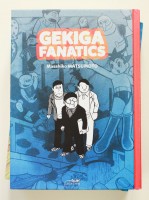
gekiga01If any publishers are reading this, I have a very specific licensing request. There’s a small French publisher called Lezard Noir that is publishing some amazing manga in French; I spoke to the publisher when I was in Angouleme two years ago and was really impressed with his line, which includes Minetaro Mochizuki’s Chiisakobé, Bonten Taro’s Sex & Fury, and Masahiko Matsumoto’s Gekiga Fanatics. I’m not the only one—every year at least one of his books is picked as an official selection by the Angouleme festival. I’d love to see some U.S. publishers pick up these titles in a similar format—I think they would have a lot of appeal to those older, more sophisticated manga readers.

Filed Under: FEATURES, MANGABLOG Tagged With: Drawn & Quarterly, fantagraphics, Kodansha Comics, Leiji Matsumoto, Most Anticipated Manga, moto hagio, NBM Publishing, Ryoko Ikeda, Seven Seas, Stone Bridge Press, Udon Entertainment, Vertical Comics, viz media, yen press

Honey So Sweet, Vol. 1

January 3, 2016 by Anna N

Honey So Sweet Volume 1 by Amu Meguro

I always look forward to checking out new Shojo Beat series, but I was wondering before I picked up this title if it would be a bit TOO sweet. Once the characters and backstory got set up, I enjoyed this volume.

The volume opens up with a flashback scene of Nao Kogure walking away from a boy recovering from a beating in the rain, saying that people might consider her helpless, but she doesn’t want to get involved with delinquents. The delinquent in question is Taiga Onise, nicknamed Oni at his school. He promptly announces to Nao that they need to talk, and when she follows him he presents her with a bouquet of roses and asks her if she’ll “date him with marriage in mind.” Nao is so intimidated by her suitor that she accepts immediately because she’s afraid of retaliation.

Nao discusses the situation at home with her guardian, her Uncle Sou. He points out that judging Onise by his outward appearance is unfair and she should get to know him first. The next day at school she sees Onise doing chores, helping teachers, and he makes an incredibly cute bento for them to share at lunch. One of the most annoying thing about this manga in the early chapters was Nao’s fear of Onise, long after the point where it should be clear to everybody that dyed hair and random piercings aside, he’s an absolute sweetheart. The other thing that has Nao hesitating about getting involved with her first boyfriend is that she’s decided she’s in love with her Uncle.

Nao and Onise continue their friendship, and one of the things I enjoyed very much about this series were cute details that showcase their personalities, like Onise’s tendency to write elaborately formal text messages when he’s nervous. Nao has her own trauma to deal with due to being an orphan, and she finds it difficult to get close to people. Much of the plot centers around some typical shoujo set pieces like a class trip, but Nao and Onise gradually start collecting a small group of misfit friends, and the series is so genuinely warm-hearted, it is hard to resist.

I found myself enjoying Meguro’s art style very much. So much shoujo manga art tends to be overly polished, but Meguro uses thin whispy lines that make the illustrations in Honey So Sweet seem delicate and not overworked. The storylines centered on friendship, combined with Nao’s psychological issues reminded me a bit of some of the old Banri Hidaka series published by CMX. This first volume was mostly set-up, so I’m curious to find out what happens next in this series.

honeysosweet1

Filed Under: REVIEWS Tagged With: honey so sweet, shoujo, viz media

Oishinbo, A la Carte: The Joy of Rice

January 1, 2016 by Ash Brown

Oishinbo, A la Carte: The Joy of RiceAuthor: Tetsu Kariya
Illustrator: Akira Hanasaki

U.S. publisher: Viz Media
ISBN: 9781421521442
Released: November 2009
Original release: 2005
Awards: Shogakukan Manga Award

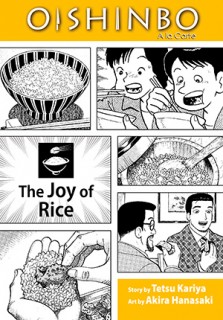
At well over one hundred volumes, Oishinbo is one of the most successful and long-running food manga in Japan, winning the Shogakukan Manga Award in 1987. Written by Tetsu Kariya and illustrated by Akira Hanasaki, Oishinbo first began serialization in 1983 and is still ongoing although currently the manga is on indefinite hiatus following a controversy of its depiction of the aftermath of the 2011 Fukushima Daiichi nuclear power plant disaster. Between 2009 and 2010, Viz Media released seven volumes of Oishinbo, A la Carte under its Signature imprint, becoming the first food manga that I ever read. Oishinbo, A la Carte is a series of thematic anthologies collecting chapters from throughout the main Oishinbo manga. Oishinbo, a la Carte: The Joy of Rice was the sixth collection to be released in English in 2009. However, The Joy of Rice was actually the thirteenth volume of Oishinbo, A la Carte to be published in Japan in 2005.

The Joy of Rice collects eight stories and one essay in which rice, an important staple of Japanese diet and cuisine, is featured. In “A Remarkable Mediocrity,” the wrath of a wealthy businessman and gourmand who made his fortune dealing in rice is able to be appeased by the simplest of dishes. “Brown Rice Versus White Rice” examines how people can be mislead even when they make an effort to eat healthily. The structure of rice and how proper storage can make a difference when it comes to cooking it are the focus of “Live Rice.” Yamaoka, Oishinbo‘s protagonist, makes a case against the importation of foreign rice into Japan in “Companions of Rice.” In “The Matsutake Rice of the Sea,” a wager between friends over a rice dish becomes more important than they realize. Kariya opines about the eating manners of Chinese, Japanese, and Koreans in his essay “The Most Delicious Way to Eat Rice.” A debate on the proper way to eat rice is central to “No Mixing” as well. Rice takes a supporting role in “The Season for Oysters,” but once again takes the spotlight in the three-part “Rice Ball Match.”

Oishinbo, A la Carte: The Joy of Rice, page 215Because Oishinbo, A la Carte compiles various stories together by theme rather than by chronology, the series can feel somewhat disjointed. Having read nearly all of the Oishinbo, A la Carte collections available in English, for the most part I’ve gotten used to and even expect this, but it seemed to be particularly glaring in The Joy of Rice. From story to story it’s often difficult to anticipate the status of the characters’ relationships with one another and those relationships are often very important to understand. For example, “A Remarkable Mediocrity” is one of the earliest episodes to be found in Oishinbo proper—it’s a little awkward to have the chapter that originally introduced several of the established recurring characters appear so late in A la Carte. Admittedly, the point of Oishinbo, Al la Carte is to highlight specific foods or themes; only a basic understanding of the underlying premise of Oishinbo and of its characters is absolutely necessary. The translation notes help greatly, but it can still make for an odd reading experience.

The Joy of Rice examines the place of rice within Japanese culture and cuisine, addressing both social and scientific aspects of the grain. Like the other volumes in Oishinbo, A la Carte, The Joy of Rice places a huge emphasis on organically and locally produced food, railing against pesticides, herbicides, and the use of antibiotics in agriculture. The series is not at all subtle about the stance it takes, and Yamaoka can frankly be a jerk about it at times. Initially I was hoping that The Joy of Rice would explore the different varieties of rice found and used in Japan, but the volume instead focuses on the significance of rice in the lives of the country’s people—the nostalgia and memories associated with it and the pure enjoyment and complete satisfaction that it can bring—which was ultimately very gratifying. However, my favorite story in The Joy of Rice, “Rice Ball Match,” uses rice to delve into Japanese culinary culture and history as a whole, which was an excellent way to round out the volume, bringing all of the manga’s themes together in one place.

Filed Under: REVIEWS Tagged With: Akira Hanasaki, manga, Oishinbo, Shogakukan Manga Award, Tetsu Kariya, viz media, VIZ Signature

The Best and Worst Manga of 2015

December 30, 2015 by Katherine Dacey

After a two-year hiatus from blogging, I donned my critic’s cap again in 2015. I’ve enjoyed writing my quasi-weekly column, but composing a year-end list reminded me why I stepped off the reviewing treadmill in 2012: mediocre books! This year yielded a veritable bumper crop of so-so manga, titles that were competently executed but otherwise unmemorable thanks to an abundance of generic characters, cliché settings, and predictable plot twists; you’d be forgiven for feeling that you’d read many of 2015’s debuts before, even if the artists were new to the US market.

Lurking among the paint-by-number romances and boy-saves-world titles, however, were a few gems. I’ve done my best to highlight the titles that made me feel something, whether that feeling was love, hate, or a mixture of both. To that end, I’ve included my nominees for the worst manga of 2015 alongside the books that made me laugh and cry.

Yowamushi-Pedal-Volume-1Best New Series: Yowamushi Pedal
By Wataru Watanabe • Yen Press
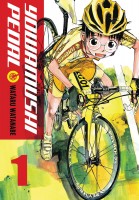
You know the rap on sports manga: American readers won’t buy it, and don’t like it. Yowamushi Pedal might just change that, however, thanks to a story that plays well across the nerd-jock divide. Onoda, the hero, is a self-professed otaku whose weekly bike rides into Akihabara have transformed him into a secret Lance Armstrong clone. Though Onoda wants to revive his school’s anime club, his amazing hill-climbing skills and stamina get noticed by more seasoned riders, all of whom convince Onoda to join the cycling team. The series’ races are nail-biting, page-turning affairs, but it’s the in-between stuff that makes Yowamushi Pedal work. Onoda doesn’t just discover a new skill; he discovers a community of people who share his passion for riding and respect his talent. In short, Yowamushi Pedal is a coming-of-age story in which a bike becomes the nerdy hero’s vehicle—pun intended—for self-actualization.

One-Punch ManBest New Shonen Series: One-Punch Man
By ONE and Yusuke Murata • VIZ Media
One-Punch Man is the ultimate have-your-cake-and-eat-it-too manga. On the surface, it’s an affectionate spoof of shonen clichés that pokes fun at goofy costumes, over-the-top training sessions, and speech-prone villains. On a deeper level, however, One-Punch Man is a great adventure series about an ordinary but strong-willed individual who sets out to rid his city of monsters, only to discover that there’s a much greater threat to mankind than the lobster-men and were-lions that roam the streets. The result is a sincere, gut-bustingly funny manga that reads like a Silver Age superhero comic, splats and all. (Reviewed at Manga Blog on 6/12/15.)

Horimiya_cover1Best New Romance Manga: Horimiya
By Hero and Daisuke Hagiwara • Yen Press
Horimiya is one of 2015’s most pleasant surprises, a teen rom-com that avoids cliché situations by focusing on the characters’ lives outside school. At first glance, its lead characters look like opposites: Kyouko is the class queen, while Izumi is a quiet loner. When they bump into each other off campus, however, they quickly realize they have more in common than their carefully constructed identities would suggest–a realization that leads to friendship and flirtation. In less imaginative hands, Kyouko and Izumi’s budding romance would be subjected to endless tests–school plays, beach trips, hot transfer students–but the authors resist the urge to trot out these over-used scenarios, relying instead on more ordinary settings for comedic (and dramatic) grist. It’s the perfect antidote to the wacky misunderstandings that drive the plots of Cactus’ Secret, Special A, and a dozen similar titles.

Cat_DiaryBest New Gag Manga: Junji Ito’s Cat Diary: Yon & Mu

By Junji Ito • Kodansha Comics
Draw a Venn diagram that shows the overlap between Junji Ito fans and cat lovers, and you’ve found the small but perfect audience for Junji Ito’s Cat Diary, a collection of anecdotes about Ito’s beloved pets Yon and Mu. Though the manga’s jokes explore familiar terrain, Ito’s exaggerated reaction shots are priceless, capturing the mixture of love and disgust that cats inspire in their owners. (Imagine Edvard Munch drawing a gag manga about cats, and you get the general idea.) Ito is refreshingly honest about the way animals change the dynamic between people, too; in some of the manga’s most memorable scenes, Ito and his fiancée compete fiercely for their cats’ affection, plying Yon and Mu with toys, treats, and cuddles. Though the prevailing tone is campy, Ito’s obvious affection for his cats helps prevents the Diary from becoming too arch. (Reviewed at Manga Blog on 12/12/15.)

ludwig_kansiBest Historic Title: Ludwig B.
By Osamu Tezuka • DMP, Inc.
Left unfinished at the time of Osamu Tezuka’s death, Ludwig B. is a fictionalized biography of Beethoven. Tezuka only completed two volumes, but oh, those two volumes! Tezuka draws evocative scenes of Beethoven at the keyboard, using striking visual metaphors to convey the sound of Beethoven’s music. Tezuka also does a good job of capturing the dynamic between Beethoven and his father, revealing the extent to which Johann’s drinking, gambling, and stage-parenting cast a long shadow over Beethoven’s adult life. Purists should note that Tezuka takes frequent liberties with the historical record, creating a mustache-twirling villain named Franz Kreuzstein to serve as a foil for the young, determined Beethoven. If you’re not offended by such creative license, however, Ludwig B. offers an interesting glimpse into Beethoven’s development as a composer, and Tezuka’s lifelong fascination with Beethoven.

planetesBest Reprint Edition: Planetes
By Makoto Yukimura • Dark Horse
Listen up, manga publishers: if you’re going to do a new edition of a fan favorite, Dark Horse’s two-volume omnibus of Planetes is a swell example of how to do it right. The story has a crisp new translation, full-color pages, and a bigger trim size that gives Makoto Yukimura’s artwork room to stretch out. Better still, the new edition collects more chapters in each volume, allowing newcomers to read far enough into Planetes for Yukimura’s episodic character studies to gel into a more coherent story about space travel and social inequality; by the time newbies reach the end of volume one, they’ll be hooked, too.

sakamotoBest Manga I Thought I’d Hate: Haven’t You Heard? I’m Sakamoto
By Nami Sano • Seven Seas
In theory, Haven’t You Heard? I’m Sakamoto is a one-note samba: the titular character is handsome, good at everything, and unfailingly logical in all situations. In practice, however, Haven’t You Heard? is the Goldberg Variations of gag manga, taking stock scenes and putting a bizarre twist on them. The secret? Sakamoto is just a little too perfect, behaving more like a well-programmed android than a flesh-and-blood person. His peculiar brand of sangfroid confounds enemies and admirers alike; no one can decide if he’s cool or crazy, or where his loyalties might lie, making it impossible to predict how he’ll respond to each new challenge. (Reviewed at The Manga Critic on 8/7/15.)

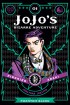
jojo_phantom_blood1Worst Manga I Thought I’d Love: JoJo’s Bizarre Adventure, Part 1: Phantom Blood

By Hirohito Araki • VIZ Media
At the risk of becoming the Armond White of manga critics, I’m nominating Hirohito Araki’s bone-crunching, chest-thumping saga for Most Exhausting New Series of 2015. That’s because Phantom Blood is a prime example of all-caps theater, the sort of manga in which every word balloon is filled with emphatic punctuation, and every plot twist seems like the brainchild of six teenage boys hopped up on Mountain Dew. In small doses, this more-is-more approach to storytelling can be amusing, but in longer installments, the cumulative effect of so much narrative excess is numb resignation; I didn’t feel entertained so much as punched in the face. (Reviewed at Manga Blog on 5/22/15.)

mizuki_hitlerMost Disappointing Manga: Shigeru Mizuki’s Hitler
By Shigeru Mizuki • Drawn & Quarterly
Shigeru Mizuki’s Hitler is one of the artist’s lesser works, uncomfortably see-sawing between character study and history lesson in its efforts to show us the man behind the Third Reich. Mizuki’s signature blend of cartoonish figures and photo-realistic backgrounds have been deployed to powerful effect in Non Non Ba and Onwards Towards Our Noble Deaths. Here, however, Shigeru’s hybrid style is a poor match with the subject; seeing Hitler reduced to a crude caricature makes it all too easy to view the book as a curiosity, rather than a serious meditation on evil. The virtual absence of the Holocaust is an even greater shortcoming; Shigeru Mizuki’s Hitler never grapples with the Fuhrer’s most disturbing legacy save for one blurry image of stacked corpses. Perhaps Mizuki felt the subject was too complex to explore in this biography, but it’s hard to imagine any dramatization of the Fuhrer’s life that fails to examine his virulent anti-Semitism.

* * * * *

So what are other folks saying about 2015’s best titles? My Manga Bookshelf colleagues just posted their Pick of the Year, with Ash Brown posting a separate, more detailed run-down of his favorite titles at Experiments in Manga. At the B&N Sci-Fi & Fantasy Blog, Brigid Alverson has posted separate lists for her favorite new and continuing series.

Filed Under: MANGABLOG, REVIEWS Tagged With: Best Manga of 2015, Dark Horse, DMP, Drawn & Quarterly, Junji Ito, Kodansha Comics, Osamu Tezuka, Seven Seas, Shigeru Mizuki, viz media, yen press

Boys Over Flowers: Season 2

December 15, 2015 by Anna N

Boys Over Flowers Season 2 by Yoko Kamio

Boys Over Flowers Season 2 is available for free on a chapter by chapter basis on the Viz Manga app, Comixology, and on the Kindle.

I was a little hesitant about starting this series, which is a bit odd, because I absolutely adore Boys Over Flowers. I’ve collected the manga, and watched many of the tv adaptations of the property. I was worried that a return to Eitoku Academy would feel a bit stale. While this series doesn’t exactly feel fresh and new, Kamino is such an assured creator, it mostly won me over.

bof2

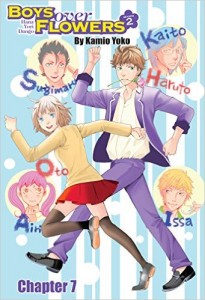
The social gap that was caused by the departure of the F4 has been filled by a new gang of students – the Correct 5. They are but a pale imitation of the F4, and they are lead by Haruto, a short boy with a penchant for superstition and ordering random quack objects out of the back of magazines. Haruto is joined in his misadventures by his right hand man Kaito, who seems reasonable and sane. There are two other male members, Sugimaru (the strong one), and Issa (mostly invisible). The Correct 5 is rounded out by Airi, a girl who you can tell is evil due to her curly pigtails.

The not-Tsukushi main female character is Oto, who is attending Eitoku while working a variety of side jobs. She used to be rich, but her family has fallen on hard times. She’s keeping up the pretense that she can actually afford to go to Eitoku, but the Correct 5 are determined to drive any poor students out of school, in order to try to better its standing. It seems like when the F4 left, much of the glamour that attracted students went too, and the school is struggling especially when compared to upstart Momonozono Academy.

Oto and Haruto meet when he isn’t able to send his butler in to the convenience store where she works to pick up his bizarre mail order packages. Haruto is worried about his secret being uncovered, and Oto isn’t afraid to try to blackmail him in order to keep her status as a student. One of the things I appreciated about Oto was her guarded personality. The first Boys Over Flowers was a bit more dynamic because Tsukushi was always so vocal, but Oto is doing her best to stay under the radar, to the point where she’s actually repressing her impulses.

bof2b

Haruto is an absolute idiot, but he’s somewhat adorable in his lavish lifestyle, slavish devotion to the memory of Tsukasa, and bumbling reactions to Oto as he begins to realize that he has a crush on her. One of the things that I didn’t like much about the chapters that have been released so far, is that the rest of the Correct 5 haven’t really had their personalities filled in yet. I thought that the first Boys Over Flowers did a better job balancing out and introducing the cast of characters and giving everyone a chance to develop. To be fair, Kamino does realize this, there’s a side story about Issa making the point that he never actually shows up in the manga, so I’m hoping that there will be more plot development later on.

Kamio’s art is great – she has a facility with facial expressions that make the funny scenes teeter on the edge of caricature while still seeming fully human. Really, my main quibble with this series is that it does suffer in comparison with the original. It was a bit telling that one of the most exciting moments in this series was when one of the original members of the F4 popped back for a very brief cameo. There are cliffhangers at the end of every chapter, and it did want to keep reading once I got going. I appreciate that Viz is experimenting with a free, digital release for Boys Over Flowers Season 2 and I hope it leads to more digital shoujo!

Filed Under: REVIEWS Tagged With: boys over flowers second season, shoujo, viz media

Black Rose Alice, Vol 6

December 13, 2015 by Anna N

Black Rose Alice Volume 6 by Setona Mizushiro

I was disappointed when I realized a couple volumes in to this series that it was on hiatus in Japan. But by that time I was thoroughly won over by Mizushiro’s surreal and unique take on vampires and the tragic tone of the manga in general. It turns out that I shouldn’t have been worried too much, because while this volume doesn’t wrap up all the possible loose ends in the series, it does provide a satisfying conclusion.

Dimitri is away, and Alice and the twins are living in the house, dealing with the aftermath of Leo’s death. The twins’ backstory is told through flashbacks, and it is just as dark as one might expect from this series. Neither twin seemed like particularly great humans, but Kai’s actions are particularly despicable, making his current more winning personalty stand out in contrast to his past actions. There’s a moment of levity injected into the household when Dimitri returns home with a human woman who he once saved from a horrible assault, promising to make her his vampire bride. Now Akari is all grown up, and determined to experience the most cliched date possible with Dimitri by her side. This prompts feelings of jealousy in Alice, and an emotional confrontation.

As far as endings go, this volume concludes with one that is about as happy as it is possible to get, considering that everyone is doomed. Black Rose Alice is such a delightfully odd series, one that doesn’t turn aside from the darkness in human (or vampire) nature. It is a more mature, and quirky addition to the Shojo Beat family. I highly recommend it. This is one of those series that I’ll take down from the bookshelf and reread every few years.

br6

Filed Under: REVIEWS Tagged With: Black Rose Alice, shojo beat, viz media

The Manga Revue: Deadman Wonderland and Livingstone

November 27, 2015 by Katherine Dacey

The November release of Jinsei Kataoka and Tomohiro Maekawa’s Livingstone provided me a nifty excuse to try Deadman Wonderland, an earlier series written and illustrated by Katoaka. Fans of Deadman Wonderland may know its complex licensing history here in the US: Tokyopop was its first publisher, releasing five volumes before going bankrupt in 2011. VIZ acquired the series in 2013, and is now just two volumes shy of the series’ grand finale, which arrives in February 2016. Whether you’re new to Kataoka’s work or have been a long-time fan, this column has something for you–so read on!

deadman_wonderland1Deadman Wonderland, Vol. 1
Story & Art by Jinsei Kataoka and Kazuma Kondou
Rated T+, for Older Teens
VIZ Media, $9.99

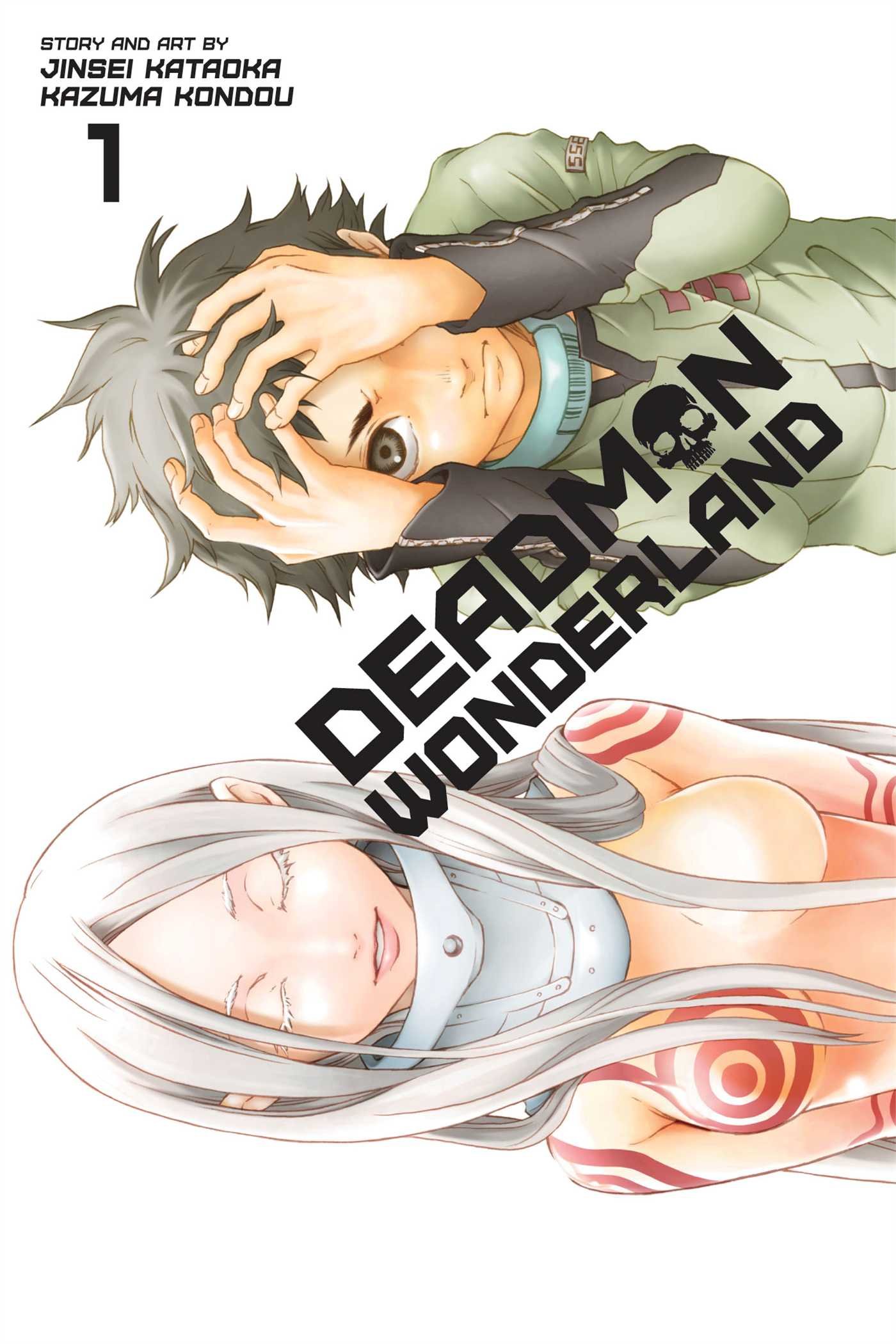
In the not-so-distant future, visitors flock to Deadman Wonderland, a prison-cum-theme park in Tokyo Bay where inmates fight to the death in front of paying crowds. Our guide to this Roman circus is newly minted prisoner Ganta Igarashi, an ordinary fourteen-year-old who’s been wrongfully convicted of murdering his classmates. Ganta’s fundamental decency is challenged at every turn; try as he might to cling to his humanity and clear his name, the prison’s arbitrary rules and roving gangs make it hard to be principled.

From my thumbnail description, you might conclude that Deadman Wonderland was cobbled together from parts of Judge Dredd, Rollerball, and Escape from New York–and you wouldn’t be wrong. What prevents Deadman Wonderland from reading like Rollerball 2: The Revenge is imaginative artwork. Jinsei Kataoka and Kazuma Kondou have created a Bizarro World Disneyland with rides, concessions, grinning animal mascots, and attractions like the Happy Dog Run, a lethal obstacle course featuring swinging blades and spike-filled pits. The characters who inhabit this landscape are a motley crew: though some telegraph their bad-guy status with tattoos and goofy haircuts, there are enough ordinary-looking prisoners that it’s impossible to judge who’s trustworthy. That uncertainty creates a strong undercurrent of tension in every scene, making Ganta’s routine activities–a conversation in the bathroom, a trip to the cafeteria–as fraught with peril as an actual contest.

The manga’s other great strength is pacing. Kataoka and Kondou resist the temptation to dole out too much information in the first volume; we’re never more than a clue or two ahead of Ganta, though perceptive readers may finish volume one with some notion of the prison’s true purpose. The authors’ expert timing also prevents us from dwelling on the story’s most shopworn elements, instead focusing our attention on how Ganta responds to new characters and new challenges.

All of which is to say: Deadman Wonderland is more fun than it has any right to be, considering the high body count and recycled plot points. Count me in for the next twelve volumes!

The verdict: Great art, smart pacing, and an appealing lead character make Deadman Wonderland a winner. (A note to parents, teachers, and librarians: this manga’s rating is justified.)

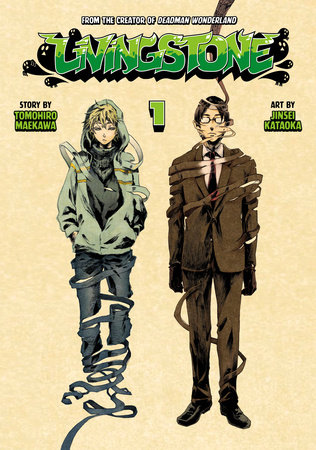
livingstoneLivingstone, Vol. 1
Story  by Tomohiro Maekawa, Art by Jinsei Kataoka
Rated 16+
Kodansha Comics, $10.99

Livingstone is a handsomely illustrated bore, the kind of manga in which the writer has dressed up a simple concept with a profusion of fussy details that don’t add depth or interest to the story. The title refers to human souls–or, more accurately, the rock-like form that human souls take after a person dies. Sakurai and Amano, the manga’s protagonists, work together to harvest livingstones, thus ensuring that a soul is properly passed from one person to the next. If a person dies before his appointed time, however, his soul curdles into a gooey blob of bad juju.

The manga has the rhythm of a cop show: in each chapter, Sakurai and Amano solve or prevent one unscheduled death, usually by negotiating with someone who’s planning to kill himself. Livingstone‘s intense fixation on suicide is off-putting; none of the would-be victims are particularly sympathetic, and Sakurai and Amano’s ministrations are so tone-deaf that it’s hard to know what message author Tomohiro Maekawa is hoping to impart to readers. Sakurai and Amano’s antagonistic bickering is supposed to inject a note of levity into the proceedings, I think, but the timing of the jokes and the staleness of the characterizations do little to offset the dour tone. By the end of volume one, I found myself feeling bummed out and irritated–never a good sign for a series that’s exploring a subject as serious as death.

The verdict: Nice art, lousy script; I liked this story better when it was called The Kurosagi Corpse Delivery Service.

Reviews: At Comics Worth Reading, Johanna Draper Carlson dives into the eleventh volume of Fumi Yoshinaga’s Ooku: The Inner Chambers, which she describes as “something like Macbeth in kimonos.” Megan R. of The Manga Test Drive offers an in-depth assessment of Oishinbo, “the longest running food manga in Japan,” while Seth Hahne, proprietor of Good OK Bad, weighs in on Yamada-Kun and the Seven Witches. Feeling crafty? Vertical Comics shares some early reviews of their latest Arnazi Aronzo book Cuter Stuff.

Connie on Alice in the Country of Hearts: Ace of Hearts (Slightly Biased Manga)
Lindsey Tomsu on The Celebration of Haruhi Suzumiya (No Flying No Tights)
Sean Gaffney on vol. 5 of A Certain Magical Index (A Case Suitable for Treatment)
Wolfen Moondaughter on vol. 27 of Claymore (Sequential Tart)
Allen Kesinger on vols. 1-2 of D-Frag (No Flying No Tights)
ebooksgirl on vol. 2 of The Devil Is a Part-Timer! High School! (Geek Lit Etc.)
Ken H. on vol. 1 of Devil Survivor (Sequential Ink)
Connie on vol. 32 of Eyeshield 21 (Slightly Biased Manga)
Kory Cerjak on vol. 50 of Fairy Tail (The Fandom Post)
Troy Nikandler on vol. 1 of Is It Wrong to Try to Pick Up Girls in a Dungeon? (Otaku Review)
Holly Saiki on Junji Ito’s Cat Diary: Yon & Mu (Examiner)
Karen Maeda on vol. 1 of Komomo Confiserie (Sequential Tart)
Sean Gaffney on vol. 1 of Log Horizon: Game’s End (A Case Suitable for Treatment)
Connie on vol. 1 of Meteor Prince (Slightly Biased Manga)
Wolfen Moondaughter on vol. 2 of My Hero Academia (Sequential Tart)
Johanna Draper Carlson on vols. 4-6 of My Love Story!! (Comics Worth Reading)
Justin Stroman on Oh! My Goddess (Organization Anti-Social Geniuses)
Kane Bugeja on vol. 6 of Seraph of the End: Vampire Reign (Snap 30)
Matthew Warner on vol. 18 of Tegami Bachi (The Fandom Post)
Wolfen Moondaughter on vol. 8 of Tiger & Bunny (Sequential Tart)
Frank Inglese on vol. 7 of World Trigger (Snap 30)
Sheena McNeil on vol. 1 of Yo-Kai Watch (Sequential Tart)
Dustin Cabeal on vols. 1-2 of Yo-Kai Watch (Comic Bastards)
Paige Sammartino on vols. 1-2 of Yo-Kai Watch (Women Write About Comics)

PS: Our Manga Bookshelf colleague Ash Brown is giving away the first volumes of four awesome shojo titles from Kodansha Comics, including LDK, Let’s Dance a Waltz, My Little Monster, and one of my personal favorites Say I Love You. Don’t dally; the contest closes on December 2nd!

Filed Under: MANGABLOG, REVIEWS Tagged With: Deadman Wonderland, Jinsei Kataoka, Kodansha Comics, Livingstone, Manga Review, viz media

The Manga Revue: Kill la Kill and Platinum End

November 20, 2015 by Katherine Dacey

File this column under I’m Not Dead Yet! November has been hectic, and it shows; my last post was over a month ago. Today’s column is an attempt to get back on track with regular updates. On the agenda are reviews of Kill la Kill, an adaptation of the wildly popular anime, and Platinum End, a new shonen series with an impeccable pedigree.

Kill_la_KillKill la Kill, Vol. 1
Comic by Ryo Akizuki; Story by TRIGGER and Kazuki Nakashima
No rating (best for readers 13+)
UDON Entertainment, $12.99

In my small and unscientific sampling of manga based on anime, I’ve read a lot of duds. Wolf’s Rain and Cowboy Bebop, for example, both fell flat in print, conveying little of the personalities or plot intricacies that made both animated series compelling. Kill la Kill is a more artful transfer of show to page, but suffers from some of the same issues as other anime-cum-manga.

Like the anime on which it’s based, the Kill la Kill manga see-saws between flamboyant parody and straight-faced action, mixing jokey conversations with bone-crunching fights. Navigating these tonal extremes in print proves challenging, however. The manga is funniest when skewering tropes that don’t need sound effects or color to make the joke stick–like equipping characters with goofy weapons or populating Honnouji Academy with students who look like extras from Mad Max: Beyond Thunderdome. 

The artists’ desire to spoof other cliches fall flat. On the page, heroine Ryuko Matoi’s barely-there power suit seems like blatant pandering to the male gaze; the artistic team lavishes considerable attention on Ryuko’s body, lovingly depicting her torso and buttocks from myriad angles. On the screen, however, the addition of sound puts a different spin on the material. The cheerful voice acting, peppy music, and snappy sound effects transform an exploitative sequence into an absurd riff on the indignities of fighting in a costume that consists of two well-placed suspenders and a dinner napkin. It isn’t deep, but it is funny, highlighting the stupidity of the “power up!” sequence that’s ubiquitous in anime, manga, and tokusatsu.

The manga suffers from the absence of color and sound in other passages, too. Without a voice actor to modulate the dialogue, almost EVERY PAGE READS LIKE THIS!!! OMG!!! ARE YOU LAUGHING YET??!!!! By the end of volume one, I felt pummeled into submission rather than amused by the affectionate send-up of Japanese pop culture’s most ubiquitous storytelling conventions.

The verdict: The manga looks like a million bucks, but the script strains too hard for effect.

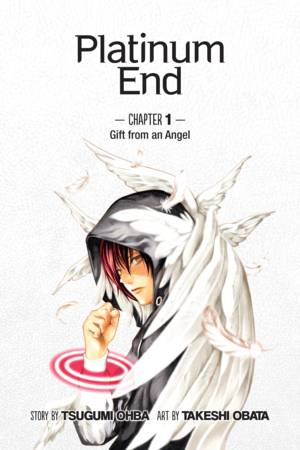
plantinum_endPlatinum End, Chapter 1
Story by Tsugumi Ohba, Art by Takeshi Obata
Rated T+, for teens over 13
VIZ Manga, $.99 (digital only)

Over the last twelve months, VIZ has been experimenting with digital-first releases, a strategy that’s worked well for high-profile shonen titles like One-Punch Man and Tokyo Ghoul. It’s not surprising, then, that VIZ is using the same roll-out for Platinum End, the latest collaboration between Death Note creators Tsugumi Ohba and Takeshi Obata. This time, however, VIZ is making the first chapter of the series available as a stand-alone option–a decision that may backfire if other readers find it as off-putting as I did.

The main issue is the story. It’s mawkish and violent, shamelessly manipulating the reader into feeling sorry for a sullen protagonist by mining familiar adolescent themes: “I was born into the wrong family!” “No one will miss me when I’m gone!” “They’ll be sorry when I’m powerful/rich/famous!” We’re first introduced to Mirai as he’s leaping to his death. As we learn through flashbacks, he was orphaned at eight, and forced to live with an aunt and uncle who treated him like a slave. Nasse, a guardian angel, foils Mirai’s suicide attempt and grants him superpowers that are supposed to make him happy.

Lest you worry that Ohba and Obata have lost their taste for violence, Mirai’s first road test of these newfound abilities results in a gruesome, sexually charged scene. Ohba and Obata have stacked the deck firmly against the victims, but the characters are so cartoonishly evil (and visually repulsive) that their punishment registers not as a justifiable act of vigilantism, but as a plot contrivance. Ohba takes other narrative shortcuts in these opening pages, saddling guardian angel Nasse with dialogue that baldly explains her reasons for helping Mirai–an amateurish and lazy way to justify her part in the drama.

Perhaps the most disappointing element of Platinum End is Obata’s artwork. Though the human characters are drawn with consummate attention to detail, Mirai’s angelic sidekick is utterly generic: she’s a wide-eyed cutie with wings, ringlets, and halo. When placed side by side with Obata’s greatest supernatural creations–Death Note‘s Ryuk and Rem–the paucity of imagination is startling. Obata’s shinigamis looked like otherworldly rock stars with their glassy eyes, Frankenstein scars, and feathery protrusions, whereas Nasse looks like something traced from How to Draw Manga (or perhaps a volume of Kobato). That’s a pity, because Obata’s artwork has carried me through rough patches in his other series; here, however, it doesn’t really do much other than emphasize how thin the story is.

The verdict: Platinum End may find its footing in later chapters, but the first 70 pages are such a let-down that I won’t be tuning in for later installments.

Reviews: At Adventures in Poor Taste, Jordan Richards posts a more positive assessment of Platinum End (though he shares some of my reservations about the lead female character). Also weighing in on the first chapter of Platinum End is Justin Stroman, who offers an in-depth, spoiler-heavy review at Organization Anti-Social Geniuses. Foodies may prefer to visit The Manga Test Drive, where Megan R. samples two culinary comics: Mixed Vegetables, a shojo rom-com about rival teen chefs, and Not Love But Delicious Foods Make Me So Happy!, an older Fumi Yoshinaga title.

Mark Pellegrini on vol. 2 of AKIRA (AiPT!)
Connie on Alice in the Country of Clover: Lizard Aide (Slightly Biased Manga)
Helen on The Ancient Magus’ Bride (Organization Anti-Social Geniuses)
Lori Henderson on Awkward (Manga Xanadu)
ebooksgirl on vol. 12 of Chi’s Sweet Home (Geek Lit Etc.)
Connie on vol. 2 of Citrus (Slightly Biased Manga)
Theron Martin on vol. 27 of Claymore (Anime News Network)
Chris Sims on COWA! (Comics Alliance)
Connie on vol. 13 of Dorohedoro (Slightly Biased Manga)
Terry Hong on Fragments of Horror (Book Dragon)
Jordan Richards on vol. 1 of JoJo’s Bizarre Adventure Part 2: Battle Tendency (AiPT!)
Christophe on Junji Ito’s Cat Diary: Yon & Mu (Anime UK News)
Ken H. on vol. 1 of Kiss Him, Not Me! (Sequential Ink)
Demeiza on vol. 1 of Livingstone (Anime UK News)
Johanna Draper Carlson on vol. 4 of Love Stage!! (Comics Worth Reading)
Wolfen Moondaughter on vols. 3-4 of Maid-Sama! (Sequential Tart)
Rebecca Silverman on vol. 1 of Monthly Girls’ Nozaki-Kun (Anime News Network)
Kane Bugeja on vols. 1-2 of One-Punch Man (Snap 30)
Al Sparrow on vol. 1 of Pandora in the Crimson Shell: Ghost Urn (Comic Spectrum)
Sean Gaffney on vols. 21-22 of Ranma 1/2 (A Case Suitable for Treatment)
Kristin on vol. 2 of Requiem of the Rose King (Comic Attack)
Alice Vernon on vol. 1 of Rose Guns Days: Season One (Girls Like Comics)
Sarah on vol. 3 of Servamp (Anime UK News)
Robert Prentice on vol. 8 of Food Wars! Shogugeki no Soma (Three If By Space)
ebooksgirl on vol. 1 of School Live! (Geek Lit Etc.)
Nick Creamer on vol. 3 of A Silent Voice (Anime News Network)
Danica Davidson on vol. 1 of So, I Can’t Play H (Otaku USA)
Jordan Richards on vol. 1 of UQ Holder (AiPT!)
Austin Lanari on issue 51 of Weekly Shonen Jump (Comic Bastards)
Ash Brown on vol. 8 of What Did You Eat Yesterday? (Experiments in Manga)
Wolfen Moondaughter on vol. 4 of Yukarism (Sequential Tart)

Filed Under: MANGABLOG, REVIEWS Tagged With: Kill la Kill, Manga Review, Platinum End, Takeshi Obata, Tsugumi Ohba, Udon Entertainment, viz media

  • « Go to Previous Page
  • Page 1
  • Interim pages omitted …
  • Page 10
  • Page 11
  • Page 12
  • Page 13
  • Page 14
  • Interim pages omitted …
  • Page 20
  • Go to Next Page »
 | Log in
Copyright © 2010 Manga Bookshelf | Powered by WordPress & the Genesis Framework