• Skip to primary navigation
  • Skip to main content
  • Skip to primary sidebar
  • Home
  • About Us
    • Privacy Policy
    • Comment Policy
    • Disclosures & Disclaimers
  • Resources
    • Links, Essays & Articles
    • Fandomology!
    • CLAMP Directory
    • BlogRoll
  • Features & Columns
    • 3 Things Thursday
    • Adventures in the Key of Shoujo
    • Bit & Blips (game reviews)
    • BL BOOKRACK
    • Bookshelf Briefs
    • Bringing the Drama
    • Comic Conversion
    • Fanservice Friday
    • Going Digital
    • It Came From the Sinosphere
    • License This!
    • Magazine no Mori
    • My Week in Manga
    • OFF THE SHELF
    • Not By Manga Alone
    • PICK OF THE WEEK
    • Subtitles & Sensibility
    • Weekly Shonen Jump Recaps
  • Manga Moveable Feast
    • MMF Full Archive
    • Yun Kouga
    • CLAMP
    • Shojo Beat
    • Osamu Tezuka
    • Sailor Moon
    • Fruits Basket
    • Takehiko Inoue
    • Wild Adapter
    • One Piece
    • After School Nightmare
    • Karakuri Odette
    • Paradise Kiss
    • The Color Trilogy
    • To Terra…
    • Sexy Voice & Robo
  • Browse by Author
    • Sean Gaffney
    • Anna Neatrour
    • Michelle Smith
    • Katherine Dacey
    • MJ
    • Brigid Alverson
    • Travis Anderson
    • Phillip Anthony
    • Derek Bown
    • Jaci Dahlvang
    • Angela Eastman
    • Erica Friedman
    • Sara K.
    • Megan Purdy
    • Emily Snodgrass
    • Nancy Thistlethwaite
    • Eva Volin
    • David Welsh
  • MB Blogs
    • A Case Suitable For Treatment
    • Experiments in Manga
    • MangaBlog
    • The Manga Critic
    • Manga Report
    • Soliloquy in Blue
    • Manga Curmudgeon (archive)

Manga Bookshelf

Discussion, Resources, Roundtables, & Reviews

manga

My Week in Manga: February 17-February 23, 2014

February 24, 2014 by Ash Brown

My News and Reviews

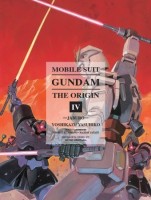
Two reviews posted last week! First up was Jeffery Angles’ Writing the Love of Boys: Origins of Bishōnen Culture in Modernist Japanese Literature. It’s a very interesting work examining the portrayal of male-male desire in Japanese literature in the early twentieth century. I discovered Writing the Love of Boys while looking for more information about Edogawa Rampo and his writing. The work even briefly addresses boys’ love manga, which I didn’t realize that it would when I first picked up the volume. The second review from last week was of Yoshikazu Yasuhiko’s Mobile Suit Gundam: The Origin, Volume 4: Jaburo. I’ll be honest, since I wasn’t already a Gundam fan, I didn’t anticipate that I would be enjoying this series as much as I am. I’ve actually been quite impressed with the manga. Yasuhiko’s artwork is fantastic and the balance between the individual characters’ struggles and the war as a whole has been excellent. And It doesn’t hurt that Vertical’s edition of The Origin is simply gorgeous.

As for interesting things online: Matt Thorn received An unambiguous response from Asano Inio regarding the use of pronouns and has some final thoughts on the whole affair. I had somehow forgotten about Ryan Holmberg’s What Was Alternative Manga? column at The Comics Journal. The latest article examines Shinohara Ushio’s Action Cartooning. In the most recent House of 1000 Manga column, Jason Thompson uses the return of two boxes of manga amounting to 64 Pounds of Porn as a jumping off point to discuss some of the history of the publication of hentai and ecchi manga in English. Manga translator Amanda Haley was interviewed over at Organization Anti-Social Geniuses. In somewhat older news, but Brigid Alverson and Publishers Weekly now have bit more information about it–Digital Manga, Inc. to Publish Tezuka Backlist.

Quick Takes
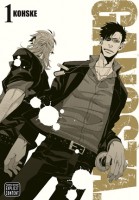
Gangsta, Volume 1Gangsta, Volume 1 by Kohske. Other than having seen some of the artwork and having a rough sense of the series’ premise, I actually didn’t know much about Gangsta going into the first volume. It turns out that the manga is Kohske’s first series and it seems to be doing fairly well for her. At the very least, I can say that I’m definitely interested in reading more of Gangsta. Worick and Nicolas are two “handymen” who are brought in to deal, often quite violently, with people and situations that for one reason or another the authorities would rather avoid. The two men have dark pasts, ties to organized crime, and a very close relationship with each other, but only one volume in the details have mostly just been hinted at. I like Nic and Worick a lot, and am particularly interested in learning more about Nic and his background. At one point a mercenary, he’s an incredibly skilled and powerful fighter. He’s also a “tag” with superhuman abilities, considered to be a monster or freak by many. Worick can hold his own, too, though. They’re both badasses with attitudes. The supporting cast is also pretty great.
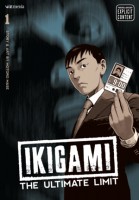
Ikigami: The Ultimate Limit, Volume 1Ikigami: The Ultimate Limit, Volumes 1-2 by Motoro Mase. In order to encourage the population to value life and increase social productivity, the National Welfare Act is passed. During inoculation, 1 out of 1,000 people are randomly injected with a nano-capsule that will kill them sometime between the age of 18 and 24. The day before they are scheduled to die, they receive death papers–Ikigami–so that they can prepare for their last hours. Ikigami follows those people and how they deal and cope with their impending deaths. It’s a grim subject matter, but handled well. The manga manages to show that even seemingly senseless deaths matter and can have a purpose–people can continue to influence others even after they are gone. At this point, Ikigami seems to be largely episodic. However, there is also an overarching framing story that ties everything together. Kengo Fujimoto is one of the government workers responsible for delivering Ikigami to those who are about to die. He struggles to come to terms with his work and the role he plays within the system as he (and therefore the readers) learn more about it.
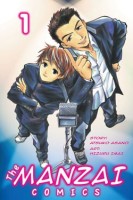
The Manzai Comics, Volume 1The Manzai Comics, Volume 1 written by Atsuko Asano and illustrated by Hizuru Imai. I discovered The Manzai Comics due to the fact that it is written by the author of No. 6. It’s a five-volume series, but only the first volume was ever released in English. I was actually quite surprised by The Manzai Comics; it’s a rather delightful and amusing manga. And touching, too, as transfer student Ayumu struggles to overcome his hikikomori tendencies and is almost forcefully befriended by his new classmates. One of the major running jokes is that almost everything that Takashi says to Ayumu when taken out of context makes it sound like he’s hitting on him. When he’s talking about “doing it” and so on, he’s talking about becoming a manzai duo, not boyfriends. (Although it may very well be that Takashi is gay; it’s left as an ambiguous possibility.) In some ways, The Manzai Comics is like a boys’ love manga without actually being a boys’ love manga. People who are at least passing familiar with manzai stand-up comedy will probably get a little more out of it than those who aren’t, but that knowledge isn’t at all necessary to enjoy the story as a whole.
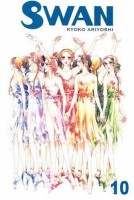
Swan, Volume 10Swan, Volumes 10-12 by Kyoko Ariyoshi. I am still absolutely loving Swan. The Second Annual Tokyo World Ballet Competition is drawing to a close, but the passion and intensity of the dancers is as strong as ever. They are all pushing themselves to the breaking point in order to give their very best performances. Ultimately the competition is too much for some of the dancers, both physically and emotionally, as they are confronted with their own limitations. These particular volumes of Swan emphasize the importance of a dancer’s personal strength and abilities, but also the importance of a dancer’s partner and their ability to work with, rely upon, and support each other. This extends beyond the realm of dance and spills over into the rest of their lives, as well. Years have passed since the story first began; it’s marvelous to see how much Masumi has changed and developed as the Swan has progressed, not just as a dancer but as a person. I like her even more now than I did the beginning. She’s gone through a lot of trials, pain, and suffering for her art, but she has also experienced great joy and satisfaction because of it.
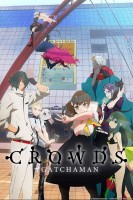
Gatchaman CrowdsGatchaman Crowds directed by Kenji Nakamura. I am only vaguely familiar with the Gatchaman franchise and so wasn’t initially intending to watch Gatchaman Crowds, but after hearing nothing but good things about the series I decided to give it a try. I’m glad that I did because I ended up quite enjoying Gatchaman Crowds. Hajime Ichinose is the most recent member of the Gatchaman team, a group of humans and aliens granted superpowers in order to protect the planet from aliens that would do it and the population harm. She’s an extraordinarily vibrant and optimistic young woman, and at first I thought she was going to be terribly annoying, but Hajime turns out to be a fantastic character and is not nearly as naive as one might expect. Her presence on the team has a huge effect on the other members and they all begin to rethink what it means to be Gatchaman and what their roles as superheros should be. Basically, it’s a series about using your skills and talents to the best of your ability no matter who you are and how even dangerous powers (and technology) can be harnessed for good.
Filed Under: FEATURES, My Week in Manga Tagged With: anime, Atsuko Asano, Gangsta, Gatchaman, Hizuru Imai, Ikigami: The Ultimate Limit, Kohske, Kyoko Ariyoshi, manga, Manzai Comics, Motoro Mase, swan

Mobile Suit Gundam: The Origin, Vol. 4: Jaburo

February 21, 2014 by Ash Brown

 Mobile Suit Gundam: The Origin, Volume 4: JaburoCreator: Yoshikazu Yasuhiko
Original story: Yoshiyuki Tomino and Hajime Yatate

U.S. publisher: Vertical
ISBN: 9781935654988
Released: December 2013
Original release: 2008

Yoshikazu Yasuhiko’s manga series Mobile Suit Gundam: The Origin was my first real introduction to the massively popular Gundam franchise. I was somewhat hesitant to enter into the fray; Gundam can appear rather daunting to a newcomer considering the sheer number of series and alternate timelines involved. However, I was already a fan of Yasuhiko’s other manga. If I was going to start anywhere with Gundam it made sense for me to start with The Origin. So far, in my admittedly limited experience with the Gundam franchise, The Origin has been my favorite rendition of the story. The manga is a retelling of the original 1979 anime series with which Yasuhiko was also involved. Jaburo is the fourth volume in the collector’s edition of The Origin, initially published in Japan in 2008 and released in English by Vertical in 2013. The guest contributor for Jaburo was Yokusaru Shibata, which I believe makes it his manga debut in English.

After a far too brief stalemate in which fighting had all but ceased, the war between the self-proclaimed Principality of Zeon and the Earth Federation has quickly begun to escalate once more. Escaping from the destruction of the Federation’s Side 7 space colony, the ship White Base is carrying with it the Federation’s best hope to regain technological superiority over Zeon–the newly developed Gundam mobile suit. Crewed by a mix of civilians and inexperienced military personnel and doggedly pursued by some of Zeon’s finest commanders, White Base has surprisingly been able to persevere. The ship is drawing closer to Jaburo, the Federation’s headquarters on Earth, but the journey will still require passing through Zeon-occupied territory. The mission’s success and the crew’s survival will not only depend on their own inherent skills and talents but the support received from what remains of the Federation military and its dwindling resources.

While the war between Zeon and the Federation continues on a grand scale, Jaburo reveals some of the very personal reasons why the individual soldiers have chosen to fight that war and why some of the civilians have joined in the battle as well. Over the last couple of volumes in The Origin, Zeon has suffered several deaths of particular significance. Garma Zabi’s death has served as a rallying point for Zeon’s forces as a whole, but Ramba Ral’s death has triggered a much more aggressive vendetta from those who knew him best. They are less concerned with Zeon’s cause than they are with their own personal revenge. But neither side of the conflict is immune to the effects of war. In Jaburo, it’s the Federation and the crew of White Base who must face some severe losses of their own. Death and destruction has not been lacking in The Origin, but growing to know the characters, what they hold important, and what they are willing to die for make their demise even more potent.

In addition to the excellent character development found in Jaburo, I was also particularly impressed by Yasuhiko’s artwork in this volume. The color work is especially effective. In general, I have largely favored Yasuhiko’s black and white illustrations in The Origin, but the color artwork in Jaburo is simply gorgeous. The lush greens and blues of the Amazon and South America are beautiful, contrasting with the reds and oranges of fires and explosions as humankind continues to destroy itself. Yasuhiko’s black and white art in the series remains very strong as well and has a fantastic “old school” feel to it. The battles are fierce and dramatic, but Yasuhiko handles the chaos in a controlled manner that still retains a sense of pandemonium. The story has moved from space to Earth and so the technology, mobile suits, and strategies have to be adjusted for the new environment. Both the characters and Yasuhiko are aware of this, and it shows in Jaburo. I’m continuing to enjoy The Origin and look forward to reading more.

Filed Under: REVIEWS Tagged With: Gundam, Hajime Yatate, manga, vertical, Yoshikazu Yasuhiko, Yoshiyuki Tomino

My Week in Manga: February 10-February 16, 2014

February 17, 2014 by Ash Brown

My News and Reviews

Not one, but two in-depth manga reviews were posted last week at Experiments in Manga. It wasn’t intentional on my part, though it did make me happy, but both manga deal with queer themes. The first review was for Takako Shimura’s Wandering Son, Volume 6. Even though it can be a somewhat difficult read for me personally since the subject matter often hits very close to home, I’m still absolutely loving this series. The seventh volume of Wandering Son is currently scheduled for release in August, which feels like a long ways off right now. As part of my “Year of Yuri” review project, last week I also took a closer look at Kiriko Nananan’s Blue, the only example of her long-form manga available in English. It’s a sweet and melancholic story of first love which follows the relationship of two young women who are classmates at an all-girls high school. The artwork in particular is very striking.

I’ve come across plenty of interesting reading and news over the last week. Brigid Alverson attended the Angoulême International Comics Festival this year and has been writing several reports on the experience. One of those explores the current state of the French manga market. In other festival news, The Guys with Pencils podcast interviewed Christ Butcher to talk about the fantastic Toronto Comics Arts Festival which he co-founded in 2003. Justin Stroman recently wrote two articles that I found to be particularly interesting: The Great Tumblr Industry Experience for Organization Anti-Social Geniuses and The Legal Manga Reading Sites You Don’t Know About for Manga Bookshelf. Finally, there has been some more movement on the licensing front. Yen press announced three new manga titles (Übel Blatt by Etorouji Shiono, Barakamon by Satsuki Yoshino, and Hiroyuki Aigamo’s adaptation of Accel World), as did Vertical (Gamon Sakurai’s Demi-Human, Ryū Mizunagi’s Witchcraft Works, and Midori Motohashi’s adaptation of The Garden of Words).

Quick Takes

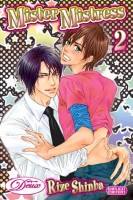
Mister Mistress, Volume 2Mister Mistress, Volume 2 by Rize Shinba. It’s been quite a while since I read the first volume of Mister Mistress, but I did enjoy it enough that I made a point to track down the now out-of-print second volume. (Happily, both volumes are now available digitally from SuBLime, though I don’t believe there are currently any plans to continue the series.) Mister Mistress works best for me when it sticks to being a comedy. Shinba introduces a somewhat tragic backstory for Rei in this volume, but fortunately it doesn’t take too long for this to be turned around and played for laughs. The series’ strength really isn’t its plot, but its humor. Fujimaru is a bit of a goofball who can’t quite decide what to do about Rei. He halfheartedly attempts to exorcise the incubus several times, but on occasion he actually appreciates having him around. Though I’m not entirely convinced by their developing feelings for each other, it can be rather convenient for a horny teenager to have a personal incubus to aid in the realization of his sexual daydreams. As such, the sex scenes in Mister Mistress tend to be a little unusual.

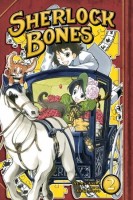
Sherlock Bones, Volume 2Sherlock Bones, Volumes 2-3 written by Yuma Ando and illustrated by Yuki Sato. I wasn’t sure after reading the first volume of Sherlock Bones, but after reading the second and third volumes it appears as though the series will be mostly episodic. Which is just fine and works pretty well. After the basic premise of the series has been established–Sherlock Holmes reincarnated as a mix-breed puppy–the mysteries tend to be fairly self-contained. I was pleasantly surprised by the first volume of Sherlock Bones and, if anything, I think these two volumes are even better than the first. Sherdog seems to always be present when a murder is taking place, so Sherlock Bones isn’t really a “whodunit.” Instead, the series focuses on outwitting the criminals and finding ways to reveal their attempts to cover up what they have done. For the most part this means relying on circumstantial evidence and pressuring the killers into confessing. Although murder seems to be the crime du jour, Sherlock Bones features some more lighthearted and silly investigations as well which take advantage of the fact that Sherdog is adorable.

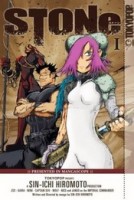
Stone, Volume 1Stone, Volumes 1-2 by Sin-ichi Hiromoto. In 2004, the editor of the English edition of Hiromoto’s short manga series Stone called it a “tribute to all of the fantastic sci-fi/action/fantasy films of the past thrity-odd years.” That seems to be a fairly accurate description of Stone. Hiromoto borrows and remixes elements from many films and franchises along with his own creations to devise something entirely his own. I was frequently reminded of Waterworld and to some extent Dune, and I definitely caught nods to Hellraiser and Star Wars. I get the feeling that there were references that I completely missed, too. Stone is a quickly paced manga with plenty of action set in a post-apocalyptic world in which the planet has been covered in a literal sea of sand. My favorite parts of Stone are the nightmarish sand creatures that Hiromoto has designed. Zizi, a fiesty young woman and the series’ lead, is also pretty great. I did prefer the series’ beginning over its end. As the manga becomes increasingly chaotic as the story progresses. The artwork remains visually interesting and engaging, but the plot makes less and less sense as it goes along.

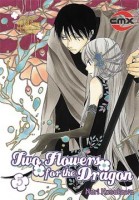
Two Flowers for the Dragon, Volume 5Two Flowers for the Dragon, Volumes 5-6 by Nari Kusakawa. I have now reached the point in this series where I must lament the fact that the final volume wasn’t able to be released in English before CMX folded. These two volumes form the climax of Two Flowers for the Dragon and include some extraordinarily significant plot developments and betrayals. The direction the story has taken was definitely foreshadowed, but that doesn’t make it any less heart-wrenching to see play out. I thought it was all very well done. One of the things that I like the best about Two Flowers for the Dragon is how well-developed and complicated the main characters are. They all have their strengths and their weaknesses, flaws as well as redeeming qualities. The supporting cast is likewise well-rounded, though at this point the series’ true villain unfortunately seems to be less so. The characters and their interactions are a highlight of Two Flowers for the Dragon, but I’m really enjoying the story as well. I like the mix of action, fantasy, romance, and intrigue. So much so, that I’m tracking down a copy of the last volume in Japanese. I want to know what happens!

Filed Under: FEATURES, My Week in Manga Tagged With: manga, Mister Mistress, Nari Kusakawa, Rize Shinba, Sherlock Bones, Sin-ichi Hiromoto, Stone, Two Flowers for the Dragon, Yuki Sato, Yuma Ando

Blue

February 14, 2014 by Ash Brown

BlueCreator: Kiriko Nananan
U.S. publisher: Fanfare/Ponent Mon
ISBN: 9788493340971
Released: 2006
Original release: 1997

I first discovered Kiriko Nananan’s work while reading Secret Comics Japan: Underground Comics Now. Two of her short manga–“Heartless Bitch” and “Painful Love”–were included in the volume. I was quite taken by the pieces and so was determined to find more of Nananan’s manga in English. Sadly, very little has been translated. Another of her short manga, “Kisses,” was collected in Sake Jock: Comics from Today’s Japanese Underground, an early English anthology of alternative Japanese manga. Nananan debuted in the avant-garde manga magazine Garo in 1993, which is one of the reasons her work is found in these “underground” collections. She is particularly well-known for her short manga; Blue is her only long-form manga to have been released in English. Originally published in Japan in 1997, Fanfare/Ponent Mon published the English edition of the manga in 2006 after releasing a Spanish-language edition in 2004. Blue has also been translated into French and German. The manga was also popular enough to receive a live-action film adaptation directed by Hiroshi Ando in 2002.

“The sky that stretches out above the dark sea. The school uniforms and our desperate awkwardness. If those adornments of our youth held any color it would have been deep blue.” Thus begins Kiriko Nananan’s Blue. Kayako Kirishima, a senior at the Hijiri all-girls high school, is fascinated by her classmate Masami Endō, the young woman who sits directly in front of her. Endō was suspended from school the previous year. Because of that and her general attitude, many of the students at Hijiri find her difficult to approach. But Kirishima eventually musters up the courage to finally talk to Endō. Her fascination becomes friendship and eventually love. But their relationship isn’t an easy one. Uncertainty, worry for the future, and past regrets all have an impact on Kirishima and Endō and how they relate to each other and to the rest of their friends. Love can be a wonderful thing, but it can also be painful. As high school draws to an end, they must face the inevitable changes in their lives either together or alone.

Nananan’s artwork in Blue is very simple, almost minimalistic, and yet it is also incredibly arresting. There is very little shading employed. In fact, the use of negative and white space is just as important to the manga’s composition as the deep black of Nananan’s ink work. It has a distancing and cooling effect. The fragility of Kirishima and Endō’s relationship is reflected in the fragility of Nananan’s lines. At times the pages are nearly empty, giving a sense of loss and contemplativeness, as if the feelings of the two young women are in danger of disappearing altogether. Body language is especially important in Blue. Hands in particular are a recurring motif and are very expressive–they reach out to grasp someone or to push them away, they hide a face in shame or frustration. Nananan shows intimacy of varying degrees in Blue through the characters’ actions and touch. It can be extremely sensual, but it can also be very chaste.

Blue has a reflective, poetic, and lyrical quality to it. The manga is a fairly simple and straightforward story of first love which is both sweet and sad. However, Nananan is adept at capturing the realistic complexities of love and all of the feelings associated with it–the jealousy and heartache as well as the happiness and joy. Kirishima is constantly thinking about Endō. Even when she isn’t immediately present on the page Endō is the focal point of the manga and always on Kirishima’s mind. The two of them obviously care deeply about each other and so it is particularly unfortunate that they seem unable to be completely open and honest with each other or with themselves. They are both young and don’t always make the best or most mature decisions. Blue is told from Kirishima’s perspective as she looks back from some point in the future to her high school days with understandable sentimentality. Although the manga is frequently melancholic and intensely emotional, it never comes across as melodramatic. Blue is a beautiful and striking work; I would love to see more of Nananan’s manga translated.

Filed Under: REVIEWS Tagged With: Fanfare/Ponent Mon, Kiriko Nananan, manga, Year of Yuri

Wandering Son, Vol. 6

February 12, 2014 by Ash Brown

Wandering Son, Volume 6Creator: Takako Shimura
U.S. publisher: Fantagraphics Books
ISBN: 9781606997079
Released: January 2014
Original release: 2007

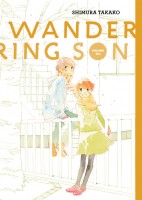
Wandering Son is currently the only manga by Takako Shimura to have been released in print in English. Although I would love to see more of her work translated and published, I am particularly grateful that it is Wandering Son that has been licensed for print release. (Fantagraphics’ large format hardcover edition is simply lovely, too.) Wandering Son is a beautiful series that explores the young protagonists’ search for personal identity and addresses issues of gender and sexuality in a very sincere, sensitive, and accessible way. Wandering Son often hits incredibly close to home for me which is one of the reasons that I personally hold the series so dear. I’m not sure how popular the series is in general, but it has been well-received by critics both inside and outside of Japan. The sixth volume of Wandering Son was initially published in Japan in 2007. Fantagraphics’ English-language edition of Wandering Son, Volume 6 was released in 2014.

As the school’s cultural festival approaches, the students are hard at work preparing for their classes’ projects. Chiba and Shuichi are trying to put the final touches on their script for a gender-swapped version of Romeo and Juliet despite some of their classmates’ well-intentioned interference. To Chiba and Shuichi the play is much more than a simple seventh-grade class production. It’s also a very personal expression of their desires: Chiba wants to see Shuichi in the role of Juliet and Shuichi wants to be seen as a girl. In some ways their version of Romeo and Juliet is a reflection of Shuichi and Takatsuki as the two of them are faced with challenging society’s established gender roles and expectations. Shuichi and Takatsuki’s bonding over the play is a source of immense frustration for Chiba. She’s in love with Shuichi, and Shuichi has feelings for Takatsuki, but Takatsuki isn’t interested in pursuing those feelings. The result is that there’s quite a bit of drama both on and off the stage.

For my part, I’m glad to see Shuichi and Takatsuki becoming close again after their relationship was disrupted by Shuichi’s confession of love. Thankfully, they were able to work through that and are once again able to lean and rely on each other as friends. This is particularly important for the two of them since they share so much in common. The additional support is something that Shuichi especially needs. At the beginning of Wandering Son, Shuichi was a very meek and hesitant person. However, as the series has progressed, Shuichi has grown, becoming much more assertive and confident and is now able to begin to express in words needs and desires. In a very touching scene with Takatsuki, Shuichi sums it up quite nicely, “It’s my wish. You as a boy…me as a girl…a happy ending for everybody.” It’s really the first time that Shuichi has been able to be so clear and forthright about the their situation. Happily, it’s not the last time that it happens, but it is a very formative and noteworthy moment.

One of the things that Shimura captures remarkably well in Wandering Son is the natural development of the characters and their relationships with one another. Wandering Son is a story about growing up and determining not only who you are as an individual but who you are in relation to other people; how people see themselves in addition to how others see them. Life itself could be said to be a performance. It’s particularly interesting then that in Wandering Son, Volume 6 so many parallels are made between Shuichi and Takatsuki’s real life and the very deliberately crafted Romeo and Juliet production. Through it they are able to reveal a part of themselves for everyone to see. It may not be a particularly subtle narrative technique on Shimura’s part, but it is a very effective one. The play echos their experiences, emphasizing specific aspects of their lives and relationships not only for the characters, but for the readers as well. Wandering Son continues to be an absolutely wonderful series. As always, I am very much looking forward to the next volume.

Filed Under: REVIEWS Tagged With: Fantagraphics Books, manga, Takako Shimura, Wandering Son

My Week in Manga: February 3-February 9, 2014

February 10, 2014 by Ash Brown

My News and Review

Last week I announced the winner of the Vinland Saga manga giveaway. The post also includes a list of the manga with memorable snowy scenes that were mentioned during the contest. (Just in case you haven’t had enough snow where you are this winter.) And speaking of Makoto Yukimura’s Vinland Saga, I also reviewed the second omnibus of the manga. I’m really loving the series and enjoyed the second volume even more than I did the first. Over the weekend I reviewed Mieko Kanai’s award-winning novel Oh, Tama! which I greatly enjoyed. I know quite a few people who find it to be a boring work, but I found it to be delightfully low-key with a quirky sense of humor.

As for news and interesting reading seen online this week: The fourth issue of the international edition of Monkey Business will be released later this month. I quite enjoy Monkey Business, so I’m looking forward to it. Seven Seas answered a question about some of the decisions that go into licensing manga for omnibus release over on its Tumblr. At Organization Anti-Social Geniuses, Justin posted a great List of Where You Can Buy Anime/Manga in 2014. Hooded Utilitarian’s Ng Suat Tong writes about some of the best online comics criticism of 2013, including some great articles on manga that I hadn’t previously come across.

Quick Takes

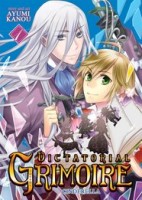
Dictatorial Grimoire, Volume 1: CinderellaDictatorial Grimoire, Volume 1: Cinderella by Ayumi Kanou. I have a feeling that Dictatorial Grimoire may very well be one of those manga that is so bad that it’s good. The story is admittedly a bit of a mess and sometimes doesn’t even make a whole lot of sense. However, I can’t deny that I had fun reading the manga. It’s all sorts of ridiculous. (I’m not sure that all of it is entirely intentional, though.) Otogi Grimm is the descendant of the Brothers Grimm which turns out to be a rather dangerous thing to be. The Brothers made a pact with demons offering up the lives of their descendants in exchange for the stories that formed the basis of their famous fairy tales. Many of those demons–such as the progenitor’s of Cinderella and Snow White–are now after Otogi in one way or another. He does seem to maintain some control over them, though it’s never explained how he learned, developed, or perhaps inherited this power. I did love that Cinderella is a complete masochist, although that fact is used mostly as a gag rather than for any meaningful characterization. I was, however, amused.

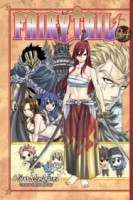
Fairy Tail, Volume 34Fairy Tail, Volume 34 by Hiro Mashima. The thirty-fourth volume of Fairy Tail gets off to a good start with the conclusion of Natsu’s confrontation with the Saber Tooth Guild. Then it’s back to the Grand Magic Games for the third day of competition. After a nice buildup to the day’s challenge event, called Pandemonium, Erza’s epic battle is largely reduced to a two-page spread. More time is spent on what basically amounts to target practice for the other teams than on what could have been a glorious combat sequence; it was extremely disappointing. Some of the other fights in this volume fare better, but others are completely rushed through. I’m more interested in the plots going on behind the scenes than I am in the tournament itself, but it seems that to some extent Mashima has given up on the Grand Magic Games. Even the event challenges, which were initially interesting because they required some actual thought and strategy to be put into them in addition to magic and martial skill, have become little more than all-out brawls in this volume. That, too, was a rather disappointing development.

Manic LoveManic Love by Satomi Yamagata. Manic Love is a prequel of sorts to Yamagata’s Fake Fur; it delves deeper into the back story of Maki Sonoda, an important side character. Yamagata jokes in the afterword that she had challenged herself to write a manga that was half nude scenes, so there’s quite a bit of sex in Manic Love. But it’s actually handled quite tastefully and the sex scenes are an important part of the manga and the themes with which Yamagata is working. As was the case with Fake Fur, Manic Love explores the relationship between romantic love and sexual desire and how they can influence each other. Sex is used as a form of communication and connection between the characters in addition to being something that they enjoy. One of the things that I particularly liked about Manic Love is that each chapter it told from a different characters’ point of view. Maki is in what is probably best described as a sort of love triangle, but it’s one without hard feelings or anger. It’s interesting to be able to see that unusual relationship from multiple perspectives, including one from someone who is outside of that triangle entirely.

Filed Under: FEATURES, My Week in Manga Tagged With: Ayumi Kanou, Dictatorial Grimoire, Fairy Tail, Hiro Mashima, manga, Satomi Yamagata

Vinland Saga, Vol. 2

February 7, 2014 by Ash Brown

Vinland Saga, Omnibus 2Creator: Makoto Yukimura
U.S. publisher: Kodansha
ISBN: 9781612624211
Released: January 2014
Original release: 2006-2007
Awards: Japan Media Arts Award, Kodansha Manga Award

The second Vinland Saga omnibus, released by Kodansha in 2014, collects the third and fourth volumes of Makoto Yukimura’s historical manga series originally published in Japan in 2006 and 2007 respectively. Vinland Saga first began serialization in 2005 and has since earned Yukimura several honors, including a Japan Media Arts Award in 2009 and a Kodansha Manga Award in 2012. Vinland Saga was a series that I had been hoping would be licensed in English for years and so I was understandably thrilled when Kodansha picked the series up. Kodansha’s edition of Vinland Saga is quite nice–hardcover omnibuses which include color pages and have a larger trim size than the publisher’s previous releases. Vinland Saga is Kodansha’s first deluxe manga; personally, I think it’s a series which deserves the special treatment. I was not at all disappointed with the first omnibus of Vinland Saga and so was eagerly awaiting the release of the second.

In the early part of the eleventh century, England was under frequent attack by Vikings. In 1013, after years of fighting, England’s King Ethelred has been driven into exile in France while King Sweyn of Denmark proceeds with his invasion of the country. The Danes aren’t entirely united though, and many of the king’s forces are more like mercenaries or bands of pirates than they are loyal followers. Some groups, such as those led by Thorkell the Tall, have actually aligned themselves with the English in the conflict. Others, such as Askeladd’s band of warriors, fight under King Sweyn simply because he currently has the more advantageous position and the chance of reward is therefore much greater. But there is some infighting among Askeladd’s ranks as well. The only reason that Thorfinn, a skilled young fighter, follows him is for the chance to seek revenge against Askeladd for the death of his father. In the meantime, Thorfinn serves both as one of Askeladd’s most valuable and most expendable assets.

I enjoyed the first omnibus of Vinland Saga a great deal, but I think that I probably enjoyed the second one even more. Yukimura has struck an ideal balance between exciting action sequences and combat and the more personal and emotional character development of the fighters who are involved. Vinland Saga is both epic and intimate in its scope. War is occurring between nations, but it is the characters’ individual struggles that make the story so visceral and compelling. Many of the warriors in Vinland Saga are bloodthirsty, seeking glory and taking pleasure from battle itself rather than from any sort of perceived noble cause. But there are exceptions. Thorfinn despises this fighting for fighting’s sake. However, while his search for revenge may arguably be more righteous, that doesn’t necessarily mean that he’s in the right. Askeladd, too, has some very legitimate justifications for fighting. But while his skills as a warrior and strategist are commendable, many of his actions are deplorable.

The depth of characterization in Vinland Saga is impressive. In this omnibus, Askeladd in particular is shown to be a much more complicated figure than he may have first appeared. Vinland Saga, Omnibus 2 delves into part of his backstory, which only begins to reveal his motivations and who he really is as a person. Yukimura’s attention to detail in Vinland Saga extends beyond the characters themselves. The amount of research he has conducted allows him to portray the time period realistically, taking into consideration major historical events but also incorporating religious issues and matters of the day-to-day lives of royalty, mercenaries, and common folk. The artwork, too, can be incredibly detailed. The landscapes and environments are beautifully rendered and each character, even the multitudes of unnamed combatants, have distinctive designs. Vinland Saga really is an excellent series. I’m enjoying it immensely and am extremely happy that it’s finally available in English.

Filed Under: REVIEWS Tagged With: Japan Media Arts Award, kodansha, Kodansha Comics, Kodansha Manga Award, Makoto Yukimura, manga, Vinland Saga

Manga Giveaway: Vinland Saga Giveaway Winner

February 5, 2014 by Ash Brown

Vinland Saga, Omnibus 2And the winner of the Vinland Saga Giveaway is…Serene!

As the winner, Serene will be receiving the second omnibus in Kodansha USA’s release of Makoto Yukimura’s Vinland Saga. For this giveaway I asked those participating to tell me about some of their favorite scenes in manga that involved snow. (The first two omnibuses of Vinland Saga have quite a bit of snow in them.) Do check out the giveaway comments for all of the details, but here is a quick list of all of the manga that was mentioned:

Aria by Kozue Amano
Fullmetal Alchemist by Hiromu Arakawa
Fruits Basket  by Natsuki Takaya
I”s Masakazu Katsura
Love Song by Keiko Nishi
Maison Ikkoku by Rumiko Takahashi
Mushishi by Yuki Urushibara
One Piece by Eiichiro Oda
Palette of 12 Secret Colors by Nari Kusakawa
The Summit of the Gods written by Baku Yumemakura, illustrated by Jiro Taniguchi
Tsubasa by CLAMP
Vinland Saga by Makoto Yukimura

And there you have it! A dozen titles with some memorable snowy scenes. Thank you to everyone who participated in this giveaway. I hope to see you again for the next one!

Filed Under: UNSHELVED Tagged With: Makoto Yukimura, manga, Vinland Saga

My Week in Manga: January 27-February 2, 2014

February 3, 2014 by Ash Brown

My News and Reviews

I only posted one review last week, but there were a couple of other posts as well. As for the review, I took a look at Haruki Murakami’s award-winning Kafka on the Shore. Of the two Murakami novels that I have so far read, this is my favorite. Still, at times I found it to be a rather frustrating reading experience, although there were parts of the novel that I absolutely loved. For the few people who are actually interested, I also posted January’s Bookshelf Overload last week. But, perhaps most importantly, my first manga giveaway of the year is currently in progress! I accidentally ended up with two copies of the second Vinland Saga omnibus, so now you have a chance to win one for your very own! The winner will be announced on Wednesday, so there’s still some time to enter the giveaway.

On to other things online! Matt Thorn has tracked down the interview with Inio Asano that sparked the whole discussion about his gender identity among fandom and offers some of his own comments. Over at All About Manga, Daniella Orihuela-Gruber writes about Hetalia’s Version of History: What Does It Offer Readers?. The fourth episode of Fujojocast has been posted, which takes a look at some award-winning and award-nominated manga. And speaking of honor-worthy manga, Wandering Son made the Rainbow List again this year and quite a few manga appear on YALSA’s 2014 list of Great Graphic Novels for Teens (which is actually a great list of graphic novels for anyone, not just teens). Finally, Seven Seas has had a week full of license announcements, including Vampire Bund doujinshi, Kokoro Connect, and it’s newest yuri acquisition Citurs.

Quick Takes

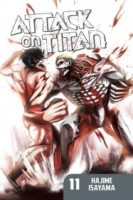
Attack on Titan, Volume 11Attack on Titan, Volume 11 by Hajime Isayama. To be honest, I’ve recently been a little worried reading Attack on Titan due to the sheer number of plot twists that seem to be included in every volume. While this does make for some exciting (and occasionally confusing) storytelling, it also makes the series feel like Isayama barely has it under his control. Fortunately, the eleventh volume of Attack on Titan is relatively the free of any “big reveals.” (At least in comparison to previous volumes.) Instead, the characters must deal with the fallout from some of the most recent developments–there are a surprising number of Titans who have come out of the 104th Corps. So, while there aren’t many dramatic plot twists in the eleventh volume, there is a major Titan battle between Eren and some of the people he once considered to be his comrades. Some nice character development comes out of it, too, as well as some more hints regarding what the Titans really are and who is behind it all. I’m still sticking with the series at this point.

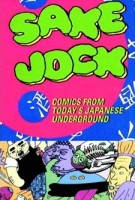
Sake JockSake Jock: Comics from Today’s Japanese Underground edited by Adam Glickman. Published in 1995, Sake Jock is described as being “the first collection of Japanese alternative artists to appear in English.” Sadly, this slim volume from Fantagraphics can be rather difficult to find nowadays. Sake Jock collects seven short manga, most if not all of which were originally published in the influential alternative manga magazine Garo. Some of the creators I was already familiar with from other underground comics anthologies while others I was encountering for the first time. I was particularly happy to see a work by Kiriko Nananan included since I love her style. Overall, I appreciated and enjoyed the manga collected in Sake Jock. I’m not sure that the collection will hold much general appeal except to those who already have an established interest in alternative manga; there have since been other anthologies published that would make a better introduction. It’s kind of a cool artifact, though, and I am glad to have it as part of my collection.

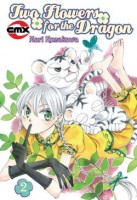
Two Flowers for the Dragon, Volume 2Two Flowers for the Dragon, Volumes 2-4 by Nari Kusakawa. It’s actually been a few years since I read the first volume of Two Flowers for the Dragon, but I remember being quite taken with it so I figured it was about time to get around to reading more of the series. I’ve rediscovered that I really enjoy the manga. It’s a wonderful mix of fantasy and romance with great character dynamics. There’s also a bit of court intrigue and some assassination plots for good measure.(And some unexpected gender-bending, too, for that matter.) Shakuya, the princess and heir of the Dragon Clan, has two fiancés vying for her affections. Kuwan is a capable but somewhat arrogant captain of the guard while Lucien is a kind-hearted young man who has lost many of his memories. The two of them obviously care for her dearly and are understandably a little antagonistic towards one another. Much to her dismay, Shakuya has developed feelings for both of them to varying degrees. But trying to figure out the workings of her own heart is only one of her many concerns.

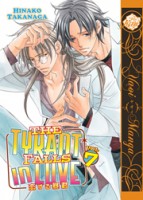
The Tyrant Falls in Love, Volume 7The Tyrant Falls in Love, Volume 7-8 by Hinako Takanaga. Volumes seven and eight of The Tyrant Falls in Love form the last story arc in the series although Takanaga does promise that she hasn’t completely abandoned the story and characters. She plans on creating more manga–side stories, epilogues, and so on–but The Tyrant Falls in Love forms a complete story on its own, even considering the fact that it was a sort of follow-up to her debut series Challengers. Throughout The Tyrant Falls in Love, Morinaga and Souchi’s communication has been absolutely terrible. Their relationship is an extraordinarily rocky and volatile one; I honestly wasn’t sure what sort of ending Takanaga was going to go for. Overall, I was very satisfied with the series’ conclusion and I think it works. The only thing I wasn’t entirely convinced by is the direction that Masaki’s relationship with Morinaga’s older brother seems to be taking. Granted, that particular development did set in motion a pretty critical realization on Morinaga’s part.

Filed Under: FEATURES, My Week in Manga Tagged With: attack on titan, Hajime Isayama, Hinako Takanaga, manga, Nari Kusakawa, Two Flowers for the Dragon, Tyrant Falls in Love

Manga Giveaway: Vinland Saga Giveaway

January 29, 2014 by Ash Brown

The end of the January is drawing near, which means it’s time for the first manga giveaway of the year! In my excitement for its release, I accidentally managed to end up with two copies of the second omnibus of Makoto Yukimura’s Vinland Saga. But my mistake is your gain–this month, you all have the opportunity two win a brand new copy of the volume! Already it’s one of my favorite manga of the year. As always, the giveaway is open worldwide.

Vinland Saga, Omnibus 2

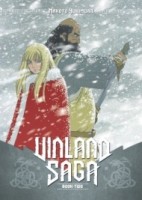
So, where I currently live in Michigan, it has been an extremely cold and snowy winter. It’s seems oddly appropriate then that Vinland Saga, Omnibus 2, with the snowstorm on its cover, was released this season. Perhaps it shouldn’t be too surprising, seeing as the series is about Vikings and all, but there’s actually quite a bit of snow in Vinland Saga. It’s not just there to look pretty or save on inking, either. Snow, and winter, has a significant impact on the story itself as battles are waged in the cold and people going about their day-to-day lives simply try to survive the elements. This got me to thinking about other manga that I’ve read in which snow plays an important role. CLAMP’s Shirahime-Syo: Snow Goddess Tales, series like Baku Yumemakura and Jiro Taniguchi’s The Summit of the Gods, and some of the stories in Yuki Urushibara’s Mushishi immediately spring to mind, but there are definitely more snowy manga out there.

So, you may be wondering, how can you win a copy of Vinland Saga, Omnibus 2?

1) In the comments below, tell me about your favorite scene in a manga that either involved or was set in snow.
2) If you’re on Twitter, you can earn a bonus entry by tweeting about the contest. Make sure to include a link to this post and @PhoenixTerran (that’s me).

It’s really that easy. For this giveaway, each person can earn up to two entries. There will be one week to submit comments. Entries may also be sent via e-mail to phoenixterran(at)gmail(dot)com and I will post them in your name. The giveaway winner will be randomly selected and announced on February 5, 2014. Best of luck to you all!

VERY IMPORTANT: Include some way that I can contact you. This can be an e-mail address, a link to your website, Twitter username, or whatever. If I can’t figure out how to get a hold of you and you win, I’ll just draw another name.

Contest winner announced–Manga Giveaway: Vinland Saga Giveaway Winner

Filed Under: FEATURES Tagged With: Makoto Yukimura, manga, Vinland Saga

My Week in Manga: January 20-January 26, 2014

January 27, 2014 by Ash Brown

My News and Reviews

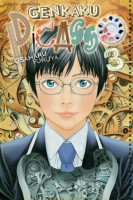
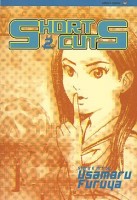
Last week I declared it to be Usamaru Furuya Week here at Experiments in Manga. Ostensibly, it was to celebrate Furuya-sensei’s birthday, but mostly it was just an excuse for me to finally get around to reviewing more of his manga. I have now written an in-depth review of all of Furuya’s manga currently available in English. As for last week’s Furuya reviews, I have for your reading pleasure Short Cuts, Volume 2 (the final volume of one of my favorite gag manga), the second and third volumes of Genkaku Picasso (probably the most accessible entry into Furuya’s English manga), and the second and third volumes of No Longer Human (an excellent adaptation of Osamu Dazai’s novel No Longer Human). I’d love to see more of Furuya’s work translated. Although there are no immediate plans, I know that Vertical has expressed interest, so I am hopeful that someday we’ll see more.

Elsewhere online, manga translator and scholar Matt Thorn has an excellent piece Regarding Inio Asano’s gender identity. (He also talks a bit about his own gender identity.) And speaking of the complexities of gender, sexuality, and translation, a few months back I attended the lecture “Out Gays” or “Shameless Gays”? What Gets Lost, and What is Gained, when U.S. Queer Theory is Translated into Japanese? and posted some random musings about queer theory, Japanese literature, and translation. Well, the video of the lecture was posted earlier this month and is freely available to view. The most recent ANNCast, Vertical Vortex, features Ed Chavez from Vertical and included a license announcement for Takuma Morishige’s comedy manga My Neighbor Seki. In other licensing news, Seven Seas has acquired Kentarō Satō’s horror manga Magical Girl Apocalypse. Also, Seven Seas will soon be announcing licenses for a new yuri manga and a doujinshi (which is very unusual in English). Finally, Shawne Kleckner, the president of Right Stuf (one of my favorite places to find manga), recently participated in a Reddit Ask Me Anything.

Quick Takes

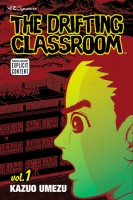
The Drifting Classroom, Volume 1The Drifting Classroom, Volumes 1-3 by Kazuo Umezu. An award-winning horror manga from the early 1970s, The Drifting Classroom is a series that I’ve been meaning to read. After a bizarre earthquake, Yamato Elementary School along with more than 860 students and staff disappear, leaving behind an enormous hole in the ground and very few clues as to what has happened. From the students’ perspective, everything outside the school has been turned into a wasteland. The situation they find themselves in may be extreme and unbelievable, but the consequences that follow are terrifyingly probable. The series’ setup allows Umezu to freely explore humanity’s darkness. The Drifting Classroom isn’t frightening because of the unknown; the true horror comes from how people react out of fear to the unexplainable. There are immediate concerns for survival, such as the lack of food and water, but even more problematic is the violence the erupts among the school’s survivors. The Drifting Classroom is an intense horror and survival manga with extremely dark psychological elements. I’ll definitely be reading more.

Missions of Love, Volume 6Missions of Love, Volume 6 by Ema Toyama. I started reading Missions of Love in the middle of the series. Although there is some background information that I am missing, I was still able to pick up on the major plot points fairly quickly. I really should go back and read the earlier volumes, though, as I’m enjoying the series much more than I anticipated. None of the characters are particularly nice people; their relationships are a twisted and tangled mess because of how they are all manipulating one another. And in the process, they’re confusing their own personal feelings as well. Missions of Love is intentionally scandalous and deliberately suggestive. However, it’s not exactly what I would call fanservice since it is meant more for the story and characters’ sakes rather than for the readers’. There are intimate moments and scenes of extreme vulnerability that challenge appropriateness but never quite cross the line, although Toyama frequently pushes the limits. I’m just waiting for something really terrible to happen. At this point, I can’t imagine that any of the characters in Missions of Love will be able to make it through the series unscathed.

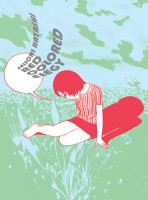
Red Colored ElegyRed Colored Elegy by Seiichi Hayashi. Another manga from the early 1970s, originally serialized in the alternative manga magazine Garo, Red Colored Elegy is only one of two volumes of Hayashi’s work available in English. The story follows Ichiro and Sachiko, two young animators in love and living together, but who are struggling to make ends meet as life slowly drives them apart. Hayashi’s artwork is deceptively simple and often free of backgrounds, placing the emphasis on the characters and their tumultuous lives and relationships. He conveys a tremendous amount of emotion through a minimalist, almost stream-of-conscious approach. Hayashi’s style in Red Colored Elegy can make it feel a bit disjointed from page to page, as though it were a collection of closely related vignettes rather than a single continuing story, but the overall melancholic mood created by the manga is consistent. Red Colored Elegy is about falling into and out of love and about pushing through life’s tragedies, both small and large. Emotionally compelling and beautifully crafted, Red Colored Elegy stands up to multiple readings.

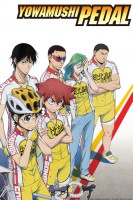
Yowamushi PedalYowamushi Pedal, Episodes 1-14 directed by Osamu Nabeshima. The Yowamushi Pedal anime series is based on an ongoing manga by Wataru Watanabe. Sakamichi Onoda is an otaku trying to revive the anime club at his new high school, but he quite unexpectedly finds himself caught up in the bicycle racing club instead. He has some natural talent at cycling–his frequent 90 km trips by bike to Akihabara probably didn’t hurt–but he has had no formal training. That’s about to change, though. The series so far has mostly focused on Onoda and the Sohoku High School racing club. The other teams that they will be facing have only been shown briefly. However, now that Onoda has started to get the basics of cycling down, the other cyclists are becoming more prominent in the story. I particularly like Yowamushi Pedal‘s casting; all of the characters have very distinctive speech patterns and voices which are very entertaining. I’m enjoying the series a great deal. Although I never was a racer and I don’t cycle as much as I used to (once upon a time, it was my primary mode of transportation), Yowamushi Pedal makes me want to get my bike out again.

Filed Under: FEATURES, My Week in Manga Tagged With: anime, Drifting Classroom, Ema Toyama, Kazuo Umezu, manga, missions of love, Seiichi Hayashi, Yowamushi Pedal

No Longer Human, Vol. 3

January 25, 2014 by Ash Brown

No Longer Human, Volume 3Creator: Usamaru Furuya
Original story: Osamu Dazai

U.S. publisher: Vertical
ISBN: 9781935654377
Released: February 2012
Original release: 2011

Osamu Dazai’s semi-autobiographical novel No Longer Human, originally published in Japan in 1948, has had a least three manga adaptations. Of those, only one is currently available in English–a three-volume series by Usamaru Furuya. I have been interested in Furuya’s work ever since I read Lychee Light Club, and so I was very happy when Vertical licensed his No Longer Human manga series. No Longer Human, Volume 3 was first published in Japan in 2011 while the English-language edition was released in 2012. The original novel was a fairly dark work. While Furuya has taken some liberties with his version of the story–using himself as a framing character and updating the setting to contemporary Japan, among other changes–the No Longer Human manga is also quite dark. Furuya argues in the afterword that his ending is somewhat more uplifting than Dazai’s, but it is still severe. Vertical describes the third volume as “the devastating finale” which is incredibly apt.

Disowned by his family and the survivor of a double suicide, Yozo Oba’s life was falling apart. Getting by on his good looks, he lived for a time as a kept man until he ran away from that situation, too. But then he met and fell in love with Yoshino, a young woman working at the cigarette shop that he frequented. Yoshino and Yozo elope and have now been married for a year. For the first time in his life Yozo is genuinely happy. He has a wonderful trusting wife who loves and accepts him for who he is, the only person with whom he can be completely open and honest. He’s gainfully employed, his manga for children is popular and selling well and with the extra income from his side job drawing erotic illustrations, he and Yoshino are able to live quite comfortably. Yozo still carries some guilt over his past, something that his supposed friend Horiki never lets him forget, but he’s now starting to look forward to his future. And then it all comes crashing down. Yozo’s perfect fantasy life is destroyed and he is destroyed along with it.

Having previously read Dazai’s orignal novel (several times, actually), I was all too aware the direction that Furuya’s No Longer Human was heading. Actually, from the beginning of the manga series alone it is known that Yozo’s story is not a happy one. But knowing what’s in store does not necessarily make it any easier to witness it happen. There is nothing that the reader can do but to watch the events unfold. Yozo is doomed from the very start. Something happens to this young man, seemingly loved by all, to cause his life to completely shatter. He should be in the prime of his youth but becomes so broken that most assume him to be more than twice his age. The third volume of Furuya’s No Longer Human outlines his final and ultimate downfall, the one from which he is never to recover. It’s made even more tragic because he has finally experienced true happiness and contentment only to have it torn from his grasp.

Throughout the No Longer Human manga the tremendous disconnect between how Yozo views himself and how others perceive him has been shown. It’s one of the driving forces behind the story. Up until the very end people insist that Yozo is a good person, but to him it has all been an act. He holds a pessimistic view of the world and recoils from humanity. What many people would consider to be a source of hope and salvation only guarantees Yozo’s undoing. Eventually he becomes a drug addict which only amplifies his fears and anxieties and further damages his precarious state of mind. His increasingly twisted and tormented psyche is reflected quite clearly in Furuya’s artwork. No Longer Human is an unrelenting and even terrifying tale. Even at his worst I can still see a little bit of myself in Yozo. It’s perhaps because of this that I find the series to be so effectively gut-wrenching. Furuya’s adaptation of Dazai’s novel is excellent, bringing his own interpretation to the story while staying true to the dark heart of the original.

Filed Under: REVIEWS Tagged With: manga, no longer human, Osamu Dazai, Usamaru Furuya, vertical

Genkaku Picasso, Vol. 3

January 24, 2014 by Ash Brown

Genkaku Picasso, Volume 3Creator: Usamaru Furuya
U.S. publisher: Viz Media
ISBN: 9781421539201
Released: May 2011
Original release: 2010

The third and final volume of Usamaru Furuya’s short manga series Genkaku Picasso was originally published in Japan in 2010. Viz Media released the English-language edition of the volume in 2011 under its Shonen Jump imprint. Genkaku Picasso was initially serialized in the manga magazine Jump SQ. Furuya mentions in the series’ afterword that he was somewhat surprised to have been approached to create a manga by one of the Jump SQ editors since he didn’t consider his previous work to have had much popular, mass appeal. (Furuya made his debut in the alternative manga magazine Garo and is particularly well-known for some of his more avant-garde work.) Genkaku Picasso was originally intended to be only two volumes long. Happily, Furuya was able to expand the series to three volumes, which allowed him to tie everything together in the way that he wanted. Although I enjoyed the first volume of Genkaku Picasso the manga starts out a little unsteady. But by the end, Furuya has created a fantastic series.

For most of his life, Hikari Hamura has been content to keep to himself and concentrate on his drawing. He’s earned himself the nickname of Picasso from his classmates (much to his dismay as he greatly prefers the work of Leonardo da Vinci), but up until recently they have mostly ignored him. Picasso is as strange and gloomy as he ever was, if not more so, but many of his classmates are beginning to feel drawn to him for some unknown reason. What they don’t realize is that Picasso has been helping to solve their personal problems. After nearly dying in a bizarre accident Picasso has gained a strange ability that allows him to see and draw the darkness that exists in another person’s heart. He can enter into those sketches, and by changing them he influences his classmates lives, hopefully for the better. This power is something that Picasso has tried to keep hidden from the others but it becomes difficult for them to disregard his increasingly odd behaviour, especially when he seems to know things that they would never reveal to someone else.

Genkaku Picasso starts out as a fairly episodic series. Generally, I found the longer stories–those lasting several chapters–to be more successful than the shorter ones as they feel less rushed and more thoroughly developed. It’s only really during the second volume that it becomes clear that there is also an overarching plot. The details of that larger story are completely reveled in the third volume of Genkaku Picasso. With a little bit of a lead in, “Hikari’s Story” takes up nearly half of Genkaku Picasso, Volume 3. It’s the longest story in Genkaku Picasso and is what pulls together the entire series. Up until this point in the manga, while Picasso has certainly been the protagonist, the stories have largely focused on his classmates and the issues that they are struggling with. But in “Hikari’s Story” their roles are reversed and it’s Picasso who needs help. It’s an extremely effective turn of events that brings the series full circle quite nicely.

The ending of Genkaku Picasso is actually a little heart-wrenching. Picasso starts the series almost a complete loner. Except for Chiaki, who hung out with him despite his protests, most of his classmates simply took no notice of him. Picasso was perfectly fine with this, or at least that’s what he told himself. As Genkaku Picasso progresses, Picasso slowly gathers people around him as he helps them with their problems. But it’s not until the third volume that he actually admits that he has friends and that he actually wants friends. Picasso has to be completely honest with himself and with the others, which in reality is a very terrifying thing to have to do. With “Hikari’s Story” the entire series becomes about Picasso and shows the tremendous amount of growth that he has gone through. I’m very glad that Furuya was able to extend Genkaku Picasso and give it a marvelous conclusion. Even considering its somewhat awkward start, Genkaku Picasso is a wonderful series. I thoroughly enjoyed its quirky humor and characters, its engaging artwork, and its somewhat peculiar but ultimately heartfelt story.

Filed Under: REVIEWS Tagged With: genkaku picasso, manga, Shonen Jump, Usamaru Furuya, viz media

Short Cuts, Vol. 2

January 23, 2014 by Ash Brown

Short Cuts, Volume 2Creator: Usamaru Furuya
U.S. publisher: Viz Media
ISBN: 9781591160694
Released: August 2003
Original release: 1999

Originally serialized in Young Sunday, Short Cuts was Usamaru Furuya’s first manga created for a major, mainstream publication. It was also his first manga to be completely released in English. His debut work, Palepoli, was serialized in the alternative manga magazine Garo and has only partially been made available in English. (Select excerpts from Palepoli are available in Japan Edge: The Insider’s Guide to Japanese Pop Subculture and Secret Comics Japan: Underground Comics Now.) Short Cuts began its serialization in 1996, two years after Furuya made his manga debut. The second collected volume of Short Cuts was initially published in Japan in 1999. The English-language edition of the volume was released by Viz Media in 2003. This was after Pulp, the magazine in which Short Cuts was being serialized in English, was canceled. I very much enjoyed the first volume of Short Cuts and so am happy that both volumes, though sadly now out of print, were released.

Short Cuts is a darkly comedic and vaguely surreal gag manga and satire. Each cut–there are exactly one hundred of them in the second volume–is a short manga only a page or two in length. As in the first volume, there are some recurring jokes, characters, and setups, but even the related cuts can generally be read on their own. Any sort of overarching plot is nearly nonexistent. Kogals and the kogal subculture, which were particularly prominent in Japan while Short Cuts was initially being serialized, remain the most common topics in the manga. However, there are plenty of other subjects that Furuya uses for his material, often the stranger the better. He draws inspiration from Japanese pop culture and celebrities, other manga creators (frequently mimicking their individual styles in the process), and even history and contemporary politics.

In the afterword to the series, Furuya mentions that Short Cuts was initially intended to be “light, pop, and sexy” but as the series progressed it became a bit stranger until “old people and weirdos stood out.” I’m pretty sure Furuya includes himself when he is talking about weirdos. Increasingly, the gags in Short Cuts refer to the trials and tribulations of manga artists and illustrators. Furuya has several personal avatars in Short Cuts who either break the fourth wall to interact with the cuts or are the stars of their very own. With the second volume the humor in Short Cuts has become even more self-aware. Furuya is not afraid to make fun of himself or his manga. Another recurring character is a kogal named Mai. (The frequency of her appearances actually becomes a joke in and of itself.) She’s a delightfully peculiar young woman with an even odder family. In some ways, Mai and Furuya together are representative of the series as a whole and the relationship between creation and creator. The ending of Short Cuts–if a series without much of a plot can be said to have an “ending”–is actually rather touching because of this.

Short Cuts is a very strange manga, which is probably one of the major reasons that I like it so well. I enjoy Furuya’s chameleon-like artwork in the series as well as his absurd, dark, and surreal humor, all of which can admittedly be rather raunchy and vulgar from time to time. Many but certainly not all of the gags in Short Cuts rely on the reader having at least passing familiarity with Japanese culture and society, but there are plenty of notes from the translator included for those who might need a bit of extra help. Overall, I think I slightly preferred the first volume of Short Cuts over the second, though I can’t seem to identify exactly why that is. I was still consistently amused by Short Cuts, Volume 2 and Furuya can still make me laugh out loud. Short Cuts remains one of my favorite gag manga, but its peculiar sense of humor and sharp social commentary definitely won’t be to everyone’s taste.

Filed Under: REVIEWS Tagged With: manga, Short Cuts, Usamaru Furuya, viz media

No Longer Human, Vol. 2

January 22, 2014 by Ash Brown

No Longer Human, Volume 2Creator: Usamaru Furuya
Original story: Osamu Dazai

U.S. publisher: Vertical
ISBN: 9781935654223
Released: December 2011
Original release: 2010

Usamaru Furuya’s manga series No Longer Human is an adaptation of Osamu Dazai’s 1948 semi-autobiographical novel No Longer Human. Furuya’s manga adaptation began serialization in Weekly Comic Bunch in 2009. The second volume of the series was published in Japan in 2010 while the English-language edition was released in 2011 by Vertical. No Longer Human was the second manga by Furuya that was published by Vertical, the first being the one-volume Lychee Light Club. Although Furuya’s No Longer Human is based on Dazai’s novel, he has taken a few liberties with his rendition, one of the most notable changes being that the story is now set in the 2000s instead of the 1920s and ’30s. Furuya has also inserted himself into the manga as a framing character. These changes, as well as others, are actually quite effective. It is not at all necessary to have read the original No Longer Human to appreciate Furuya’s interpretation of the story.

Yozo Oba attempted a double suicide with a club hostess named Ageha, but only she drowned while he survived. He’s come to the realization that although he doesn’t want to die, he doesn’t want to live, either. Yozo has long since been disowned by his family and the one person for whom he held any sort of honest feelings is now gone. He spends his days directionless and in despair, slowly recovering from a torturous situation partly of his one making. He desperately wants some meaning to his life, but has failed to discover what that might be. At one point he thinks he’s found it, only to have it snatched away from him. Yozo was once adored by all and even in his current pitiful state people are drawn to him and dare to care about him. He uses this to his advantage, putting on airs to get what he wants and needs, recognizing all the while how distasteful it is. Yozo uses people and he knows it. To him, life is still an act.

No Longer Human is a dark and troubling manga series. Yozo doesn’t treat himself well and treats those around him even worse. He is extremely manipulative and frankly can be a terrible person. And yet at the same time Yozo is a tragic figure; No Longer Human is heart-wrenching. While I don’t find his portrayal in the manga to be as sympathetic as it is in the novel, there are still points with which I can empathize. Yozo has a fear of people and their expectations of him that prevents him from being authentic. He’s repeatedly told that he is a good, sweet, and kind person, but this is the last thing he wants to hear. Yozo’s extraordinarily anxiety-ridden and conflicted over it because he see the life he is living as one big lie. He is very aware of his dishonesty and how he misleads people, but continues to do so because he is so desperate to be liked and accepted. Occasionally he manages to express some feelings of legitimate remorse and genuine caring, but more often than that it is already too late to undo any of the damage done.

No Longer Human, Volume 2 follow Yozo from the depths of despair to the heights of happiness and back again. Those glimmers of hope that Yozo will be able to turn his life around make his failure to do so even more anguished as he lets chance after chance to slip through his fingers. Furuya’s artwork in No Longer Human suits the story well, capturing Yozo’s internal and emotional turmoil and dragging the readers along for the ride. Furuya provides disconcerting glimpses into Yozo’s psyche, visually expressing his suffering through imagery of suffocation (harkening back to his near-drowning) and showing the ugliness he sees in the world. No Longer Human isn’t necessarily an easy read and it can be emotionally exhausting, but I find it to be incredibly compelling and difficult to turn away from as well. Yozo may not often be particularly likeable, but as with so many of the other characters in the series I can’t help but wish the best for him no matter how doomed he seems.

Filed Under: REVIEWS Tagged With: manga, no longer human, Osamu Dazai, Usamaru Furuya, vertical

  • « Go to Previous Page
  • Page 1
  • Interim pages omitted …
  • Page 28
  • Page 29
  • Page 30
  • Page 31
  • Page 32
  • Interim pages omitted …
  • Page 60
  • Go to Next Page »
 | Log in
Copyright © 2010 Manga Bookshelf | Powered by WordPress & the Genesis Framework