• Skip to primary navigation
  • Skip to main content
  • Skip to primary sidebar
  • Home
  • About Us
    • Privacy Policy
    • Comment Policy
    • Disclosures & Disclaimers
  • Resources
    • Links, Essays & Articles
    • Fandomology!
    • CLAMP Directory
    • BlogRoll
  • Features & Columns
    • 3 Things Thursday
    • Adventures in the Key of Shoujo
    • Bit & Blips (game reviews)
    • BL BOOKRACK
    • Bookshelf Briefs
    • Bringing the Drama
    • Comic Conversion
    • Fanservice Friday
    • Going Digital
    • It Came From the Sinosphere
    • License This!
    • Magazine no Mori
    • My Week in Manga
    • OFF THE SHELF
    • Not By Manga Alone
    • PICK OF THE WEEK
    • Subtitles & Sensibility
    • Weekly Shonen Jump Recaps
  • Manga Moveable Feast
    • MMF Full Archive
    • Yun Kouga
    • CLAMP
    • Shojo Beat
    • Osamu Tezuka
    • Sailor Moon
    • Fruits Basket
    • Takehiko Inoue
    • Wild Adapter
    • One Piece
    • After School Nightmare
    • Karakuri Odette
    • Paradise Kiss
    • The Color Trilogy
    • To Terra…
    • Sexy Voice & Robo
  • Browse by Author
    • Sean Gaffney
    • Anna Neatrour
    • Michelle Smith
    • Katherine Dacey
    • MJ
    • Brigid Alverson
    • Travis Anderson
    • Phillip Anthony
    • Derek Bown
    • Jaci Dahlvang
    • Angela Eastman
    • Erica Friedman
    • Sara K.
    • Megan Purdy
    • Emily Snodgrass
    • Nancy Thistlethwaite
    • Eva Volin
    • David Welsh
  • MB Blogs
    • A Case Suitable For Treatment
    • Experiments in Manga
    • MangaBlog
    • The Manga Critic
    • Manga Report
    • Soliloquy in Blue
    • Manga Curmudgeon (archive)

Manga Bookshelf

Discussion, Resources, Roundtables, & Reviews

kodansha

Confession

April 1, 2025 by Katherine Dacey

Confession is a tight, twisty thriller that reads like an episode of The Twilight Zone or Alfred Hitchcock Presents. Author Fukumoto Nobuyuki establishes the premise in a few quick strokes: two hikers—one gravely injured—huddle on a mountainside pummeled by a fierce winter storm. As they debate the best course of action, Ishikura—who is bleeding profusely—confesses to murdering a mutual acquaintance, telling Asai, “I killed Sayuri… with my own two hands.” Asai, however, refuses to abandon Ishikura, dragging his wounded friend to the safety of an abandoned cabin. As the two wait for a rescue team to arrive, it finally dawns on Asai that Ishikura might regret what he said.

For a two-hander like this to work, it’s not enough to know what Asai is thinking; we need to feel his growing sense of desperation. Kaiji Kawaguchi’s art is up to the task, creating a spare, claustrophobic environment that’s almost as hostile as the barren slopes that surround the cabin. The cabin itself is rendered in just enough detail for the reader to grasp the layout and size, as well as the lack of good hiding places. Equally important, Kawaguchi’s character designs emphasize the wide social gap between the conventionally handsome Asai and the squat, dour Ishikura, encouraging the reader to question how these two people ever travelled in the same circles.

The artwork is so effective, in fact, that some of Asai’s internal monologue feels superfluous, especially when he states the obvious: “If my suspicions are right, are you and I going to fight to the death?” (Signs point to yes!) Aside from a few clumsy monologues, however, the story never sags under the weight of too much exposition; Nobuyuki carefully doles out information about Asai and Ishikura’s past to reveal how fraught their relationship was before they went climbing, hinting at a long-simmering conflict between them. The final scene is a shocker in the best sense, challenging the reader’s perception of both characters without cheating or taking any narrative shortcuts to get there. Hitchcock, I think, would approve. Recommended.

CONFESSION • STORY BY NOBUYUKI FUKUMOTO • ART BY KAIJI KAWAGUCHI • TRANSLATION BY EMILY BALISTERI • PRODUCTION BY TOMOE TSUTSUMI, PEI ANN YEAP, AND HIROKO MIZUNO • KODANSHA USA • RATED 16+ (VIOLENCE) • 314 pp.

Filed Under: Manga, Manga Critic, Recommended Reading, REVIEWS Tagged With: kodansha, Thriller

Matcha Made in Heaven, Vols 7-9

September 28, 2024 by Anna N

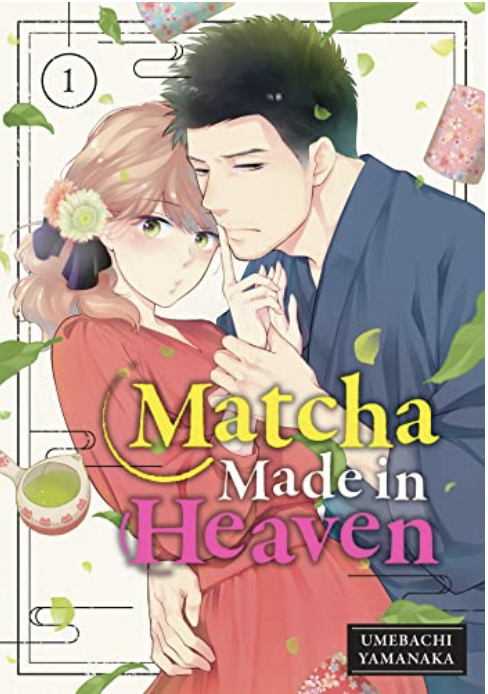
Matcha Made in Heaven Volumes 7-9 by Umebachi Yamanaka

Time to check in on this low-key extremely slow-burn josei series! Chaco and Isshin are continuing with their faux marriage of convenience, which has of course led them to develop feelings for each other. Isshin is an intense, grumpy tea-making perfectionist, while Chaco is much more free spirited. Despite growing up in a family of tea producers, she’s been away for so long that she’s not super familiar with the business, so her support of Isshin also means that she’s connecting with her roots in a new way.

Matcha Made in Heaven 9

After a separation where Isshin is working in the corporate tea business, he returns home. Chaco is excited to take their relationship to the next level, but childhood friend Jin appears with a girl named Roa, who happens to be a tea social media influencer! The traditional craft of tea-making clashes with Roa’s approach, which seems to stir up some distressing sentiments against the small business that Chaco’s family is trying to take to the next level with Isshin’s help. The trash-talking is mild, and the stakes are fairly low in this extremely relaxing manga where one can always count on respect for tea to further bond the characters and see them through any crisis. While Roa ends up not be as terrible as Chaco originally assumed, she leads Isshin into accepting a challenge at a high stakes tea blending competition. With Isshin, Jin, and Chaco’s brother who is such a non-entity it is not really worth remembering his name as the main competitors things are surely not going to go very smoothly.

For fans of the grumpy/sunshine dynamic, this series delivers. I find myself constantly rooting for Chaco and Isshin even though they cycle through excuses to not progress in their relationship. The latest barrier is Isshin’s nobility, as he doesn’t want to ask Chaco’s dead father for her hand in real marriage until he has proven himself as a tea master. As always, the illustrations are clear and dynamic. Chaco’s niece is reliable both for comic relief and expressing the readers’ point of view that Chaco and Isshin should just get together already.

Filed Under: Josei, Manga Reviews, REVIEWS Tagged With: Josei, kodansha, matcha made in heaven

Honey Lemon Soda, Vol 2

August 7, 2023 by Anna N

Honey Lemon Soda Volume 2 by Mayu Murata

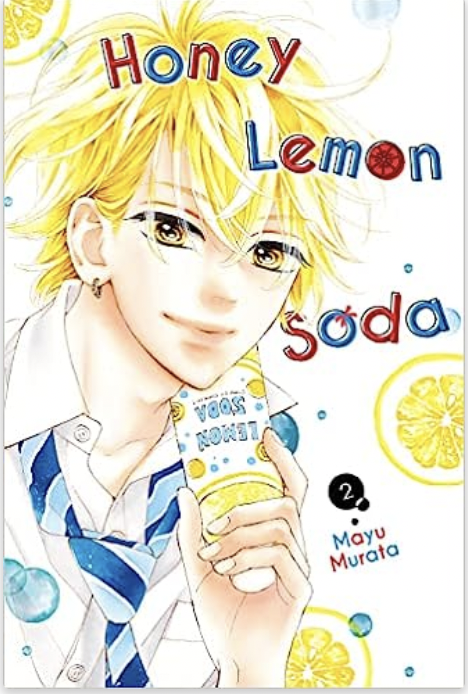
Shy girl in love with popular boy is a fairly common subgenre of shoujo manga, but with the second volume, I do think that Honey Lemon Soda is pulling it off better than most manga. Uka is still adjusting to her new school, and fighting through her instinctual reactions to situations and other kids that she developed when she was horribly bullied during middle school. Fortunately in her new environment she keeps being pleasantly surprised by her classmates, who are generally very kind. When she shows up in full hiking gear to a trip that everyone else knew was a low key walk in the woods, her classmates are perplexed, but not cruel. Kai, the object of her affections, finds her gaffe sort of adorable because Uka is showing up for events with everything she’s got.

Honey Lemon Soda 2

Uka ends up being a defacto leader of the group when they accidentally go off trail, and her giant hiking backpack has enough snacks to take care of everyone. She slowly starts trusting her classmates more, but she also starts getting a sense of Kai’s popularity. Murata’s art continues to be stylish and a little quirky. I especially liked the way she portrayed Uka and Kai’s smiles and attitudes towards each other as documented in other students’ photos of the hiking trip, it gave a little preview to how their relationship might eventually develop.

Filed Under: Manga Reviews, REVIEWS Tagged With: honey lemon soda, kodansha, shoujo

Matcha Made in Heaven, Vols 1-4

February 14, 2023 by Anna N

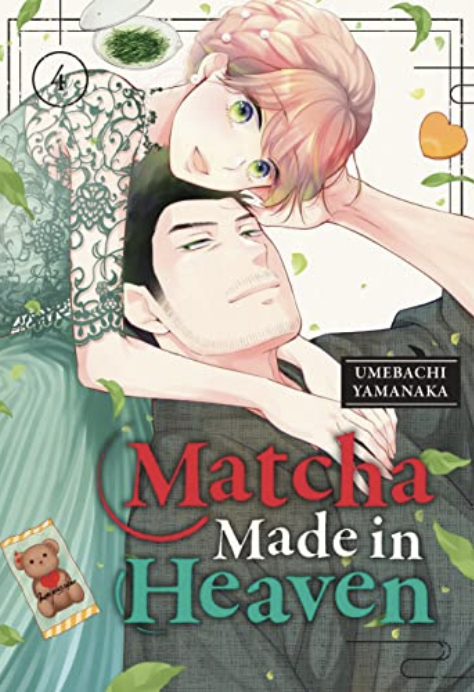
Matcha Made in Heaven, Volumes 1-4 by Umebachi Yamanaka

I need to get over my tendencies of forgetting to keep up with digital only releases, I am bad enough about unread manga when I have piles of it to remind me of my backlog, but I’m even worse when it comes to digital releases. However, sometimes a series is so charming that it sizes my attention, I overcome my usual inertia, and I end up absolutely delighted. This was the case with Matcha Made in Heaven!

Chako is a fairly typical big-city dweller, making her way through life, engaged to be married until she starts having reactions to being surrounded by sexism. When she sees her future Mother-in-Law wiping off her fiance’s feet her immediate feelings of revulsion (and the fact that her fiance is seriously creepy) has her fleeing to the countryside to her family’s traditional tea farm. Chako has been out of touch with her family for some time, so she’s a bit startled when she runs across a little girl named Futaba and a giant stern man named Isshin who demands to know what she’s doing in the house. It turns out that Isshin has taken over the family tea business while Chako’s brother works as a writer on the side to earn extra income. Being a writer apparently means abandoning all household duties, as Isshin is basically acting as Futuba’s guardian as well as working in the fields. He makes a comment about how Chako’s not going to be suited to working on her family’s farm and her instinct to rage against sexism and prove him wrong is awakened

matcha made in heaven

Chako’s mysterious yet terrible ex-fiancee shows up at the farm, and in attempt to dodge him, she leaps onto Isshin as he drives a tractor in the fields with Futaba, claiming that he’s her husband. Futuba is absolutely delighted by this development and obviously not over the death of her mother and her absentee father, so Isshin and Chako agree to go through the motions of having a fake marriage. This also has the benefit of all of the neighbors backing off a little bit from trying to set Isshin up. A fake marriage of convenience isn’t a terribly surprising story to structure a multi-volume manga around, but Yamanaka’s execution is top notch. Futuba is an amusing combination of needy 4 year-old and an old soul who is filled with delight about Chako and Isshin’s slowly developing relationship. Isshin is passionate and expressive only about tea, but Chako finds herself more and more charmed by him as she gets to know him.

matcha made in heaven

A fake marriage is nothing without additional obstacles to overcome, and they appear in Chako’s old friend Jin and Isshin’s ex-girlfriend who happens to be the heir to a tea conglomerate. The art is expressive and delicate, with Isshin’s normally stoic expressions only shifting when he’s enraptured by tea or utterly perplexed at how to react to Chako’s presence in his life. I enjoyed the slice-of-life aspect to Match Made in Heaven combined with all the details of tea farming, blending tea, going to markets and trying to salvage a struggling family business. I recommended this series for those who like uncomplicated josei romance.

Filed Under: Manga Reviews, REVIEWS Tagged With: Josei, kodansha, matcha made in heaven

Knight of the Ice, Vol 11

September 6, 2022 by Anna N

Knight of the Ice Volume 11 by Yayoi Ogawa

I often feel a little wistful at the end of a series, especially one as consistently entertaining about Knight of the Ice, but the final volume concludes in a fashion that will satisfy readers, even though the outcomes were easy to foresee at the start of the series. As Kokoro prepares to take the ice at the Sochi Olympics, the field of skaters is shaken up by a dark horse contender with multiple quads from the United States. Kokoro also has to face a major competition without Chitose by his side to support him, since she’s recovering from necessary heart surgery. It is great to see the progression in Kokoro’s personality and how he’s able to make more decisions and assert himself as a skater, instead of drifting through life in an attempt to live up to his family’s expectations.

Ogawa nails the tension of Olympic ice skating as different skaters attempt to skate their best due to a variety of reasons, sometimes succeeding and sometimes having the small mistakes and spills that happen in competition. I always appreciate the paneling and action sequences of Knight of the Ice, which really serve to heighten the When Kokoro pops his quad lutz, readers are treated to a detailed discussion of scoring system issues, making the moments of Kokoro’s next decisions to modify his program on the fly even more dramatic. Even issues with Russian judges come into play as the final scores are tallied, making this manga enjoyable for a casual or more serious skating fan. One thing I really liked about this series was the way it developed all the supporting characters as well, and many of Kokoro’s compatriots get a sense of conclusion at the end of this volume as well.

One thing I appreciated was a bonus story that takes place before the first volume, which shows how Chitose and Kokoro reconnected after being close as childhood friends. It served as a nice way to think about how far they’ve both come as they’ve evolved over this series. I’m very glad that we’ve now gotten two Yayoi Ogawa series translated into English, but I have to say after reading both Kima wa Pet and Knight of the Ice, I feel a little greedy for more.

Filed Under: Manga Reviews, REVIEWS Tagged With: Josei, knight of the ice, kodansha

Nina the Starry Bride, Vols 1 and 2 by Rikachi

July 25, 2022 by Anna N

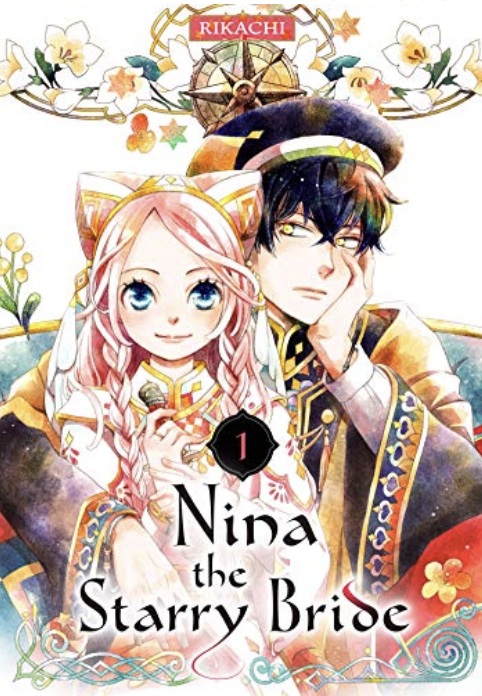
Nina the Starry Bride Volumes 1 and 2 by Rikachi

I’m really bad at buying digital volumes of manga and then totally forgetting to read them, but I got a new tablet recently so I’m hoping to start getting caught up on some digital series that have been out for awhile. Nina the Starry Bride is likely one of those series that I would have glommed onto immediately if it had a print release, but I’m coming to it a bit late.

Nina the Starry Bride Vol 1

Royal duplicate plots are fairly common in fantasy manga, but Nina the Starry Bride is a solid example of the genre, helped a great deal by charming and detailed art. Nina is an orphan with unusual blue eyes who has found a family of sorts with a couple brothers. They spend their days hiding out and stealing occasionally to support themselves. When they fall on hard times, Nina is betrayed and handed over to slavers and her unusual eye color leads to her being recruited to be a stand-in for a recently deceased princess by the amber-eyed Prince Azure.

After some initial resistance, Nina works hard to develop her knowledge of etiquette and ability to behave like a princess. As only Azure and a few trusted servants know her secret, Nina grows closer to the second prince as she learns more about the royal family. Azure has a younger brother who is the acknowledged heir, a snarky stepmother, and his mysterious father is king. Nina and Azure share a certain loneliness, and it is nice to see how they begin to open up to each other. This series is fairly fast-paced as by the second volume Nina has a strong grasp of geopolitics and decides to save Azure, even though he’s attempting to prevent Nina from being sent off to a neighboring kingdom as part of a political alliance.

Rikachi has attractive character designs, with Azure looking particularly cool with his standoffish manners and asymmetrical earrings. Nina shifts from orphan to princess, and the lush detail of her life in the palace contrasts with the sparseness of her previous life. While Nina might not have the royal background of the people surrounding her, she’s true to herself in a way that makes it easy for her to deal with the political and family issues that she she encounters. While the elements of Nina the Starry Bride aren’t used in a particularly novel way, it is overall a strong fantasy manga that should appeal to fans of Dawn of the Arcana

Filed Under: Manga Reviews, REVIEWS Tagged With: Josei, kodansha, nina the starry bride

Lovesick Ellie, Vol 1

January 31, 2022 by Anna N

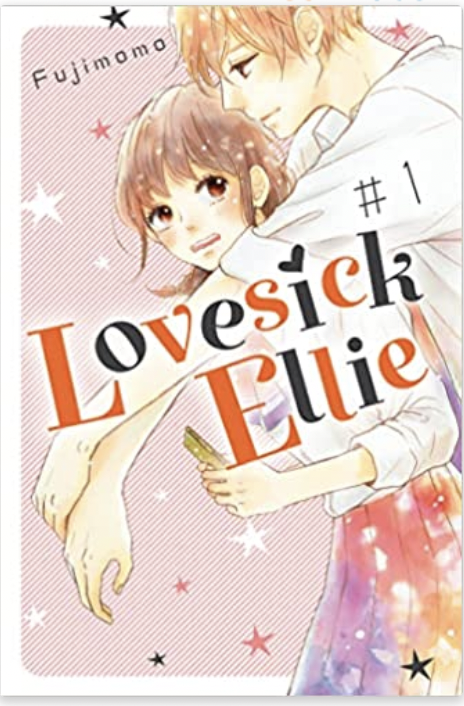
Lovesick Ellie Volume 1 by Fujimomo

I picked this up on a whim, and I knew I was in for something a little out of the ordinary when I saw the title of the first chapter, “#HoorayforPervs!” The Lovesick Ellie in question is a fantasy twitter account run by Eriko Ichimura, a girl who remains largely invisible to her classmates. She’s decided to dedicate herself to living her best life in her imagination and pretends to be secretly dating the most handsome and popular boy in school, Ohmi.

Lovesick Ellie Volume 1

One day Eriko overhears Ohmi talking in a casual way to one of their teachers, and she discovers that he’s nothing like the smiling polite facade he maintains around everyone else. He’s actually not all that happy about being singled out for so much attention. Eriko is discovered and she promptly runs away, leaving her cell phone behind! Ohmi picks it up and reads her tweets and finds them hilarious. All of this happens in the first few pages of the manga, and the rest of the volume shows Eriko and Ohmi striking up an unlikely friendship. Eriko gradually realizes that Ohmi’s actually lonely. He encourages Eriko to befriend another girl who is as obsessed with costuming as Eriko is with over the top fake date narratives. Eriko’s tweets appear here and there to contrast reality with fantasy. There’s plenty of blushing and over the top emotions in the art, but Eriko isn’t really believable as an invisible plain girl because all the character designs are generally attractive.

Eriko’s twitter asides are genuinely hilarious, as she will take a small detail like a misplaced jersey and spin it out into paragraphs of slightly perverted situations. For Ohmi, it seems like Eriko is one of the few people he can actually be himself around, and while he takes a certain delight in teasing her, he’s actually having some difficulties navigating his own emotions as their relationship develops. For a manga with such a goofy premise, it actually ends up being rather heartfelt. I found myself smiling multiple times reading Lovesick Ellie, which is a great shoujo title for anyone wanting something funny and romantic.

Filed Under: Manga Reviews, REVIEWS Tagged With: kodansha, lovesick ellie, shoujo

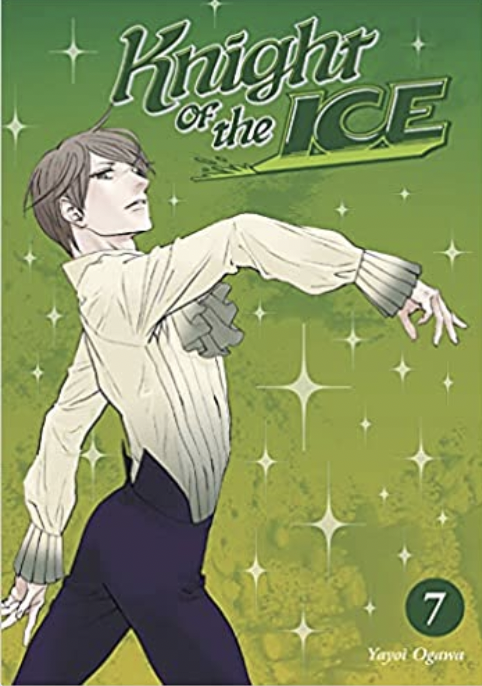
Knight of the Ice, Vol 7

November 3, 2021 by Anna N

Knight of the Ice Volume 7 by Yayoi Ogawa

We don’t get a ton of josei series translated, so I do cherish the ones that come out in print like Knight of the Ice which has a winning combination of figure skating drama combined with Ogawa’s quirky sense of humor. While many of the plot points of the series center around Kokoro’s difficulties training and winning competitions, this volume opens with Chitose dealing with her heart condition. Kokoro’s hard-nosed manager Moriyama visits Chitose in the hospital, and it is great to see how much she cares even though she goes to great lengths to hide her emotions. Chitose doesn’t want to derail Kokoro’s concentration by having him worry about her, so she decides to both postpone having surgery and wants to keep her condition a secret.

Knight of the Ice 7

For the rest of the volume, Kokoro is vaguely uneasy as he trains for his latest competitions, as he can tell that Chitose is hiding something but he isn’t sure what it is. He’s dealing with his ongoing issues of pushing his technical abilities but sometimes struggling to be artistic and expressive enough in his skating. “Yayoi Ogawa” shows up to dash off a sketch for an inspiring new costume. Ogawa’s dynamic and expressive art makes the skating competitions compelling, as all the skaters are dealing with their own struggles. Kokoro has some triumphs and setbacks, and has still not yet reached his full potential. I’m enjoying seeing the story in Knight of the Ice unfold.

Filed Under: Josei, Manga Reviews, REVIEWS Tagged With: Josei, knight of the ice, kodansha

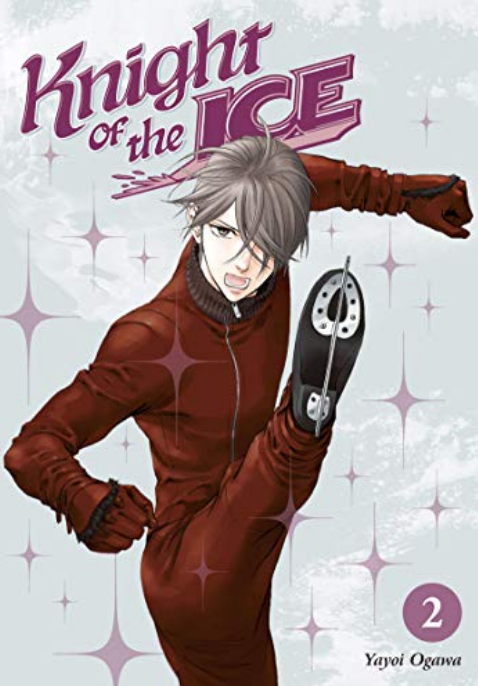
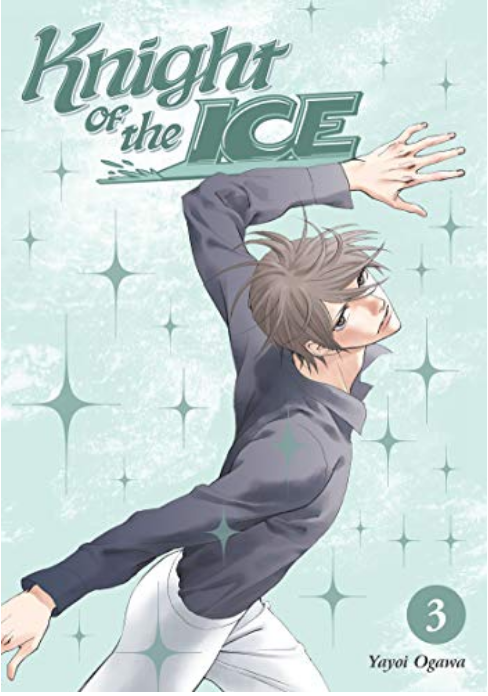
Knight of the Ice Vols 2 and 3

October 19, 2020 by Anna N

Knight of the Ice Volumes 2 and 3 by Yayoi Ogawa

This series is rapidly becoming one of my favorite pandemic distraction manga, and I started it fully enthusiastic for a new Ogawa manga. I haven’t felt disappointed so far! The first volume did a good job setting up tiny magazine editor Chitose’s secret relationship with her childhood friend renowned figure skater Kokoro. While this is certainly a josei series, Kokoro’s extreme shyness and sheltered secret otaku lifestyle makes the romance aspect of the manga as slowly developing as any series with high school protagonists. This is a comfortable pace for the reader, because after the first volume the series is able to settle in for a little bit and introduce more of the supporting cast and further explore the world of high-stakes international figure skating.

Given that Chitose’s boss Sawada seems to be taking an unusual interest in one of his junior employees, it isn’t too surprising that she gets caught sneaking off in order to cast her magical girl spell on Kokoro right before he competes. When a fan spots Chitose and Kokoro together and starts posting rumors online, Kokoro’s dynamic and scary manager Moriyama invents the cover story that Chitose is part of Kokoro’s coaching team. As Chitose spends more consistent time with Kokoro, she begins to be more aware of her feelings and it is clear that Kokoro is using his feelings for his oldest friend to motivate him to perform even better in his sport. At the same time Sawada has an uncanny knack for popping up whenever Chitose is experiencing a moment of extreme distress.

As the figure skating season unfolds, Kokoro is able to turn in some of his best performances thanks to some unorthodox motivation from Chitose, but he’s also plagued by a nagging injury. While the slowly developing romance between Chitose and Kokoro keeps moving forward (there are kisses on the cheek!), I found myself enjoying the quirky supporting cast in the series more and more. Moriyama’s blunt pronouncements about just how far Kokoro can go with his potential relationship certainly provide a contrast to the more innocent romance that’s happening. Kokoro’s twin sisters intervene when another skater is about to get taken advantage of, and if Kokoro doesn’t have enough pressure to deal with it becomes more clear that his career and public image is being controlled behind the scenes by his father. Chitose is starting to become more confident about advocating for herself and her own feelings. Between skating drama, romance, family issues, and Ogawa’s quirky humor there’s plenty to keep a reader entertained in Knight of the Ice.

Filed Under: Manga Reviews, REVIEWS Tagged With: Josei, knight of the ice, kodansha

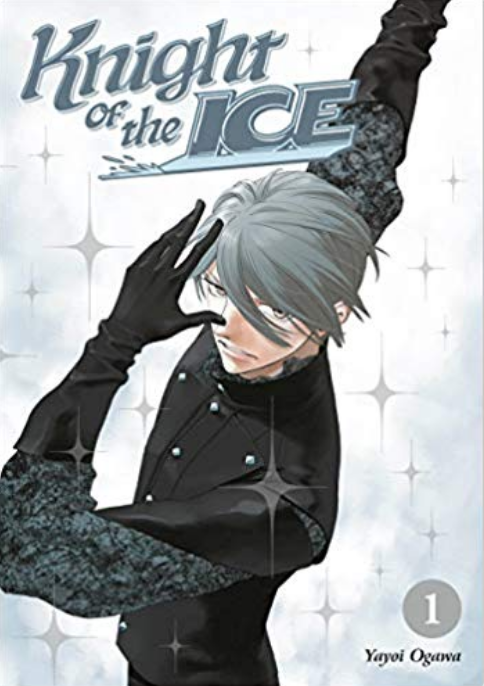
Knight of the Ice, Vol 1

March 23, 2020 by Anna N

Knight of the Ice Volume 1 by Yayoi Ogawa

I think Tramps Like Us (Kimi Wa Pet) started coming out here in the mid 2000s, and 15+ years is a long time to wait between Yayoi Ogawa series. Fortunately for anyone in the need of sports-based josei distraction in these trying times, Knight of the Ice serves up plenty of Ogawa’s off-kilter humor along with workplace romance hijinks. The heroine of this story is Chitose, who works at a magazine. She’s so incredibly tiny that she’s sometimes mistaken for a child, which causes her some problems in the workplace.

Knight of the Ice

Chitose’s childhood friend Kokoro is a champion figure skater, who is able to keep up his flawless facade on the ice only when Chitose is present to cast a magical girl spell on him by quoting the anime they were both obsessed with as children. Having to suddenly disappear right around ice skating championships also causes problems when Chitose has to duck out of work without any clear explanations. Her boss Sawada keeps making references to her tiny size by giving her a nickname that references the Moomins, but he also seems to be a little more aware of Chitose as a woman than he should be. The set-up of a figure skater with severe performance anxiety is funny by itself, but Ogawa also adds additional humor with Kokoro’s domanatrix-like manager, and the occasional appearance of “Yayoi Ogawa”, an old school friend of Chitose who occasionally appears to offer commentary and life advice. Ogawa’s art is distinctive and energetic, capturing Kokoro’s graceful poses along with plenty of emotional outbursts and quieter moments of romantic confusion. Ogawa does a good job slowly setting up the potential love triangle between Chitose, Sawada, and Kokoro. Her quirky sensibilities make this first volume extremely engaging. I’m on board for this whole series!

Filed Under: Manga Reviews, REVIEWS Tagged With: Josei, knight of the ice, kodansha

Witch Hat Atelier, Vols 1-3

September 22, 2019 by Anna N

Witch Hat Atelier Volumes 1-3 by Kamome Shirahama

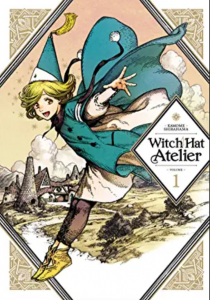
It is rare to find a series that is so fully realized in terms of both art and story that there is absolutely nothing to nitpick, but Witch Hat Atelier is one of those manga. Coco is a young girl who helps her mother who is a seamstress. Coco lives in a world where magic is practiced only by a select few, but she’s extremely curious about how it all works. Her life is changed when she sees a flying carriage land near her mother’s shop and she runs into a mysterious gentleman who wears glasses with one tinted lens. Coco ends up cutting a length of cloth for the man, and she recounts a story that ties in with her fascination for magic. When she was younger, she encountered an enchanter who wore a hat decorated with a single eye, fringed with fabric that obscured his face. He offered to sell Coco a book of magic spells and even gave her a wand. Coco soon found out that people need to be born to magic, and gave up on her dream. When the flying carriage is damaged, the mysterious man identifies himself as Qifrey the Witch, and he decides to fix it. Coco spies on him and discovers that magic isn’t something one is born with, it relies on careful drawing with a pen. She promptly decides to experiment.

witch hat atelier

Like most books that feature a child adventurer and inconvenient parents, Coco’s mother is quickly dispatched when Coco’s first spell goes awry, turning her into a statue. The only solution is for Coco to dedicate herself to learning magic in order to reverse the spell. She becomes Qifrey’s newest apprentice, and travels with him to his school where he is already teaching several other girls her age. Coco has an enthusiasm for knowledge and a unique way of looking at magic but her fellow apprentices are suspicious of her. Coco’s roommate Agott in particular has a cranky attitude which backed up with unusual expertise in magic. The world of magic can be dangerous, for example when Agott goads Coco into taking a test that she’s unprepared for. The girls later get whisked away to a labyrinth guarded by a dragon due to some machinations of the witch with the eyeball hat, and later help with a rescue. The world is filled with odd magical contraptions that take the place of technology, like a water bubble for transporting water, bricks that light up under people’s feet, and shoes that are enchanted to give the power of flight.

Shirahama has a detailed style that is reminiscent of illustrations that might be in a classic childrens’ book. Panels are occasionally decorated with botanical motifs, with a nod to art nouveau. The various costumes of the witches have elaborate decoration, and spells look intricate, causing effects that look both elegant and unnatural. The worldbuilding and illustrations are lovely, but there’s an undercurrent of menace, as the one-eyed hat magical practitioner is intervening in Coco’s life for an unknown reason. The secretiveness of the witches also causes Coco to be threatened with a memory wipe spell multiple times. Her status as an outsider gives her an innovative and instinctive feel for magic, and she often manages to improvise spells due to her unique mindset. Coco’s new found family keeps expanding as the series develops, and it seems like she’s meeting other magic practitioners that ultimately will help her if there’s a confrontation with the dark witches who seem to be far too interested in her. There’s certainly some Harry Potter parallels, but not enough to make it seem like Witch Hat Atelier isn’t original. I’m equally entertained by both the art and the story in Witch Hat Atelier, and highly recommend it if you are looking for a fantasy series that lets the reader disappear into another world for a little while.

Filed Under: Manga Reviews, REVIEWS Tagged With: kodansha, witch hat atelier

Shojo Fight, Vol. 1

October 1, 2017 by Anna N

Shojo FIGHT! Volume 1 by Yoko Nihonbashi

I’m very happy about Kodansha’s recent investment in digital manga, since it means that some titles that might be not commercial enough to get a print release are being translated. At the same time, I’ve been burned by digital manga in the past, and I only have so much budgeted for digital comics a month, so I’ve been a little picky with my purchases. I was very interested to see a girls volleyball title coming out from Kodansha, because I do enjoy a good sports manga. The first volume of Shojo FIGHT! is largely set-up for the whole series, and it packs an impressive amount of drama in one short volume.

Neri spends her time on the bench for her middle school volleyball team. She seems to be content to be incredibly unassertive and dismissed, but she has a group of friends and fans who look after her. The manga starts by showing the dynamics of Neri’s current team. Koyuki seems to be noticed as much for her looks as her volleyball talent, while Chiyo is the seemingly evil teem member who is comfortable saying horrible things to everyone. While Neri doesn’t do much in the way of athletics in the first few pages, it is clear that she has the aura of somebody special. Neri has a built in fanclub that includes Odagiri, a girl who spends her time drawing volleyball manga. There are also the brothers Shikishima. The younger blond Shikishima is a carefree volleyball player while his his older brother with the dark hair has the burden of being the heir to his family’s osteopathic clinic, having magic injury soothing fingers, and also playing volleyball.

When Neri does get off the bench, it is clear that she’s been hiding her skills as well as her single-minded intensity towards the sport of volleyball. Part of the reason why she’s been able to hide so long is because her school tends to give starting positions based on the height of the players. Neri becomes aggressive and vocal, yelling at Koyuki to get her head in the game. Neri and Koyuki end up colliding when they go after the same ball. Neri’s travails in volleyball would be enough to carry this volume, but she also has a family tragedy that she’s dealing with as well. Slowly the details are revealed as the story progresses, and while Neri’s set up for a different type of volleyball career as she enters high school, she’s still dealing with plenty of baggage. It seems like her friends are always going to be around to support her, especially Shikishima the elder.

Part of my enjoyment of Shojo FIGHT! is due to the novelty factor. Perhaps because I haven’t been able to read many female-oriented sports manga, I found Neri’s portrayal as a volleyball hero with athletic prowess and intensity that could cause situations to get out of control refreshing, just because I’m much more used to seeing this type of character as a male protagonist. If this had been the 5th female volleyball manga that I’d read instead of the 2nd, I might not find it quite as charming though. Other reviewers have noted that the art of this volume looks very similar to OEL manga, with smooth dark lines, sparse backgrounds, and lacking the delicacy that most shoujo fans might expect. I was halfway wondering if it was as I was reading it if it was OEL, but as I looked up Shojo FIGHT, it indeed came out in Japan originally in the mid 2000s. Nihonbashi’s style made me wonder if it really was that unique, or if it comes down to just the type of series that tend to get translated for a North American audience. Nihonbashi’s high contrast style gives Shojo FIGHT a more graphic, less flowery sort of look, and while she is good at facial expressions, I did find myself wondering at times if Neri had variants of her stunned and shell shocked look as she grapples with her emotions. I did enjoy all the distinctive character designs. With such a large cast, having distinct looks for the characters helps the reader greatly.

There was enough drama for two volumes in the first volume of Shojo FIGHT!, but at the same time I’m reserving judgement a bit, because I expect the narrative to settle down in the second volume. I’m hoping to see if Neri is able to fight off her inner demons a bit for the sake of volleyball.

Filed Under: Manga Reviews, REVIEWS Tagged With: kodansha, shojo, Shojo Fight!

Vinland Saga, Vol. 9

September 24, 2017 by Ash Brown

Vinland Saga, Omnibus 9Creator: Makoto Yukimura
Translator: Stephen Paul
U.S. publisher: Kodansha
ISBN: 9781632364456
Released: June 2017
Original release: 2016
Awards: Japan Media Arts Award, Kodansha Manga Award

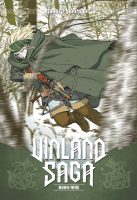
Having read and greatly enjoyed Makoto Yukimura’s near-future science fiction series Planetes, I was very curious to see how he would apply his character-driven approach to Vinland Saga, a manga with a historical setting. The resulting work is phenomenal–in addition to earning multiple awards, including a Japan Media Arts Award and a Kodansha Manga Award, Vinland Saga quickly became and remains one of my favorite manga series currently being released in English. The ninth hardcover omnibus of Vinland Saga was published in 2017 by Kodansha Comics with a translation by Stephen Paul. It collects the seventeenth and eighteenth volumes of the original Japanese series, both of which were released in 2016, in addition to the continuation of “Ask Yukimura,” a section of questions and answers providing further insight into the series and its creation which is exclusive to the English-language edition of Vinland Saga. “Ask Yukimura” was absent from the eighth omnibus, so I was very happy to see its return.

Hild, a skilled hunter, may have saved Thorfinn’s life as he and his companions were accosted by a man-eating bear, but now that she knows exactly who he is, she is determined to take that life from him. Thorfinn has killed countless people during his time employed as a mercenary in pursuit of his own revenge, drastically altering the lives of the victims’ surviving family members and loved ones. It’s a past that continues to haunt him and Hild isn’t the only person to have come to harm due to his actions or who he will have to confront once again. Thorfinn hopes to atone for the death, violence, and destruction he has helped to bring down upon others by establishing a new nation of peace away from the wars, conflict, and struggles for power that plague Europe. But it is a very difficult thing to try to put a stop to a cycle of systemic retribution condoned by society. Thorfinn has convinced others of the worthiness of his cause, but now he must convince Hild who has every right to want him dead.

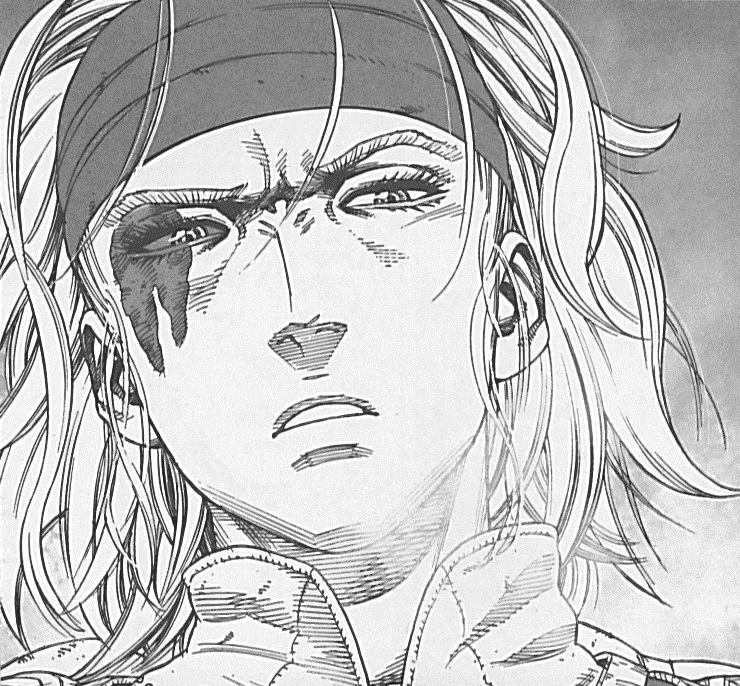
Vinland Saga, Omnibus 9, page 191All-consuming revenge is one of the major themes of Vinland Saga. Yukimura explores how such a single-minded pursuit can dramatically change a person, impacting them on a deep, psychological level, and examines how that internalized violence is reflected in and perpetuated by the world at large. Much of Vinland Saga up until this point has been devoted to Thorfinn’s private struggles and growth as he has tried to come to terms with the irrevocable damage that he has wrought not only upon others but upon himself. With the introduction of Hild, Vinalnd Saga turns its focus outward, delving into the long-lasting and increasingly far-reaching effects of Thorfinn’s past misdeeds. Although this isn’t the first time that the series has shown this sort of tragedy, never before has it been made so cuttingly personal in the manga. Hild isn’t some nameless character met passing; Yukimura shows the entirety of Hild’s story–her life before her family was killed in front of her eyes and how she grew to become the fierce opponent who Thorfinn has no option but to face.

The parallels between Hild and Thorfinn’s individual quests for revenge are numerous although there are still significant differences and Thorfinn is much further along on his personal journey–while he’s chosen a path of peace, it remains to be seen what choices Hild will ultimately make fore herself. But even though Thorfinn is pursuing pacifism, he continues to be drawn into violent confrontations. A large part of why I find Vinland Saga such a tremendous series is due to the compelling character development that it exhibits, but another reason the manga is so incredibly engaging is the result of Yukimura’s spectacular action and fight sequences. They are exciting as well as meaningful, serving not only to move the plot along but frequently to provide an external expression of the characters’ internal struggles. How they fight and what they are willing to risk goes far to reveal who they truly are and what they value most. Vinland Saga continues to greatly impress me; I’m so glad that it’s being translated and look forward to future volumes with immense anticipation.

Filed Under: REVIEWS Tagged With: Japan Media Arts Award, kodansha, Kodansha Comics, Kodansha Manga Award, Makoto Yukimura, manga, Vinland Saga

Peach Heaven Vol. 1

May 10, 2017 by Anna N

So far, I’m having a mixed experience with Kodansha’s digital line. I like Chihayafuru and The Full-Time Wife Escapist (review of that coming soon), but I am not thrilled with A Springtime With Ninjas or Peach Heaven. In a way this is good, because I’m not having to set aside funds for so many digital series!

Peach Heaven treads familiar ground as the hapless heroine Momoko is blackmailed into being a slave to an evil male model – is there any other type of model in shoujo manga? Momoko has taken over her father’s writing persona and is cranking out erotica books in order to support her sick mother and younger brother. She toils on her writing all night, only to fall asleep in school the next day. Her friends think she’s hopelessly addicted to online gaming. Through a series of events that I no longer remember, Ranmaru the male model finds out about her double life and starts blackmailing her. Momoko is forced to bring Ranmaru lunch every day at school, and he continues to berate her for her life choices and makes fun of her for being a virgin.

Of course, various situations come up when Ranmaru has to rescue or intervene in Momoko’s life, indicating that he might be not so terrible after all. There isn’t really any suspense or dramatic tension in this manga. While I generally enjoy trashy romance manga, that’s usually only in cases where there’s a bit of a sense of humor or some over the top soap opera element to the storylines, and I don’t see anyone in Peach Heaven, say, abruptly deciding to become a priest or dealing with the aftereffects of personality-changing hypnotism. I was hoping that Peach Heaven would be another fun guilty pleasure manga, but it is just not very interesting. The rote plotting isn’t really complimented by the art, which is competent but doesn’t exhibit any individual sense of style.

Filed Under: Manga Reviews, REVIEWS Tagged With: kodansha, peach heaven, shoujo

Ichi-F: A Worker’s Graphic Memoir of the Fukushima Nuclear Power Plant

March 16, 2017 by Ash Brown

Ichi-F: A Worker’s Graphic Memoir of the Fukushima Nuclear Power PlantCreator: Kazuto Tatsuta
Translator: Stephen Paul
U.S. Publisher: Kodansha
ISBN: 9781632363558
Released: March 2017
Original release: 2014-2015
Awards: Manga Open

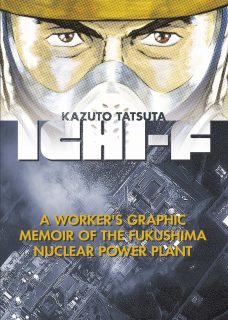
Although Ichi-F: A Worker’s Graphic Memoir of the Fukushima Nuclear Power Plant isn’t Kazuto Tatsuta’s first manga, it is very likely the one for which he will be best known. Based on his experiences as a worker at the Fukushima Daiichi Nuclear Plant, the memoir provides an important and highly personal perspective on the ongoing recovery efforts following Japan’s combined earthquake, tsunami, and nuclear disasters of March 2011. Initially submitted as an amateur work, Ichi-F won the Manga Open Grand Prize in 2013 which led to its continuation as a three-volume series published between 2014 and 2015. The English-language edition of Ichi-F was released by Kodansha Comics in March 2017. The entire series, including Tatsuta’s original one-shot, has been collected into a single, massive omnibus formatted to read left-to-right. Also included is an introduction by the journalist Karyn Nishimura-Poupée and an exclusive interview with the creator. A tremendous amount of work from the translator Stephen Paul and others at Kodansha has gone into Ichi-F in an effort to make the manga as accurate and as widely accessible as possible.

On March 11, 2011 a massive earthquake centered off of the northeast coast of Japan triggered a devastating tsunami which ultimately lead to multiple meltdowns at the Fukushima Daiichi Nuclear Power Plant. Many people in Fukushima were required to evacuate and have yet been able to return to their homes due to the radiation levels in the area. Cleanup and recovery work, including the decommissioning of the plant, continues to this day and will continue for quite some time. Most of the people directly involved in the work are from the Fukushima area but others like Tatsuta (a pen name taken from the region for purposes of anonymity) are outsiders drawn by the promise of high wages, personal curiosity, and altruism. Despite the need for workers, it took Tatsuta more than a year after the disaster to secure clearance for employment at Ichi-F, one of the local names for the Fukushima Daiichi plant. Initially he was assigned to a shelter where he helped to manage a rest area for the construction workers, but eventually he would become one of those construction workers himself, at one point even serving on a team working inside one of the plant’s reactor buildings.

Ichi-F, page 39Ichi-F is primarily about the day-to-day lives and work of those employed at the nuclear power plant but Tatsuta also addresses some of the related recovery efforts and the issues caused by them in the Fukushima region as well as the some of the complications surrounding the publication of his memoir. In part the manga was created in response to the misleading, sensationalistic, and often inaccurate way that Fukushima and the surrounding areas are portrayed in the media. This is not to say there haven’t been problems with the decommissioning and cleanup–even Tatsuta’s account reveals social conflicts and questionable employment practices, not to mention that exposure to high levels of radiation is inherently dangerous–but some of Fukushima’s poor representation is due to ignorance and fearmongering. In fact, excepting the radiation concerns, much of the work outlined in Ichi-F, while being incredibly important, is outright mundane. Tatsuta explains in detail the safety procedures and regulations intended to protect the workers at the plant, showing just how difficult, time-consuming, and challenging the cleanup efforts are. Careful vigilance, caution, and concerted effort are absolutely necessary, especially to counter desensitization to the dangers involved, and there is always room for improvement.

Tatsuta’s own personal experiences while working in Fukushima are what inform Ichi-F. As such, it cannot provide a comprehensive look at the disaster and recovery efforts as a whole, but it does offer an individual perspective critical to the larger context. Tatsuta is an insider telling a story that’s often left untold because it isn’t particularly dramatic or exciting–the manga is a thorough, informative account of the work being done to decommission the Fukushima Daiichi Nuclear Power Plant. The manga can be a bit text-heavy at times, and the way that it has been modified to read left-to-right occasionally interrupts the narrative’s visual flow, but the memoir is both fascinating and accessible. Ichi-F is also the story of the people involved in the cleanup and the close relationships that Tatsuta develops while in Fukushima. What in many ways started out as just a job ends with Tatsuta caring deeply about and for his colleagues at the plant, the locals and residents of Fukushima, and the area itself. While the lasting effects of the nuclear disaster in Fukushima are tragic and some areas remain incredibly hazardous, conditions are slowly improving and recovery and revitalization is happening partly thanks to the efforts of Tatsuta and the other workers shown in Ichi-F.

Filed Under: REVIEWS Tagged With: Ichi-F, Kazuto Tatsuta, kodansha, Kodansha Comics, manga, Manga Open, Nonfiction

  • Page 1
  • Page 2
  • Page 3
  • Interim pages omitted …
  • Page 6
  • Go to Next Page »
 | Log in
Copyright © 2010 Manga Bookshelf | Powered by WordPress & the Genesis Framework