• Skip to primary navigation
  • Skip to main content
  • Skip to primary sidebar
  • Home
  • About Us
    • Privacy Policy
    • Comment Policy
    • Disclosures & Disclaimers
  • Resources
    • Links, Essays & Articles
    • Fandomology!
    • CLAMP Directory
    • BlogRoll
  • Features & Columns
    • 3 Things Thursday
    • Adventures in the Key of Shoujo
    • Bit & Blips (game reviews)
    • BL BOOKRACK
    • Bookshelf Briefs
    • Bringing the Drama
    • Comic Conversion
    • Fanservice Friday
    • Going Digital
    • It Came From the Sinosphere
    • License This!
    • Magazine no Mori
    • My Week in Manga
    • OFF THE SHELF
    • Not By Manga Alone
    • PICK OF THE WEEK
    • Subtitles & Sensibility
    • Weekly Shonen Jump Recaps
  • Manga Moveable Feast
    • MMF Full Archive
    • Yun Kouga
    • CLAMP
    • Shojo Beat
    • Osamu Tezuka
    • Sailor Moon
    • Fruits Basket
    • Takehiko Inoue
    • Wild Adapter
    • One Piece
    • After School Nightmare
    • Karakuri Odette
    • Paradise Kiss
    • The Color Trilogy
    • To Terra…
    • Sexy Voice & Robo
  • Browse by Author
    • Sean Gaffney
    • Anna Neatrour
    • Michelle Smith
    • Katherine Dacey
    • MJ
    • Brigid Alverson
    • Travis Anderson
    • Phillip Anthony
    • Derek Bown
    • Jaci Dahlvang
    • Angela Eastman
    • Erica Friedman
    • Sara K.
    • Megan Purdy
    • Emily Snodgrass
    • Nancy Thistlethwaite
    • Eva Volin
    • David Welsh
  • MB Blogs
    • A Case Suitable For Treatment
    • Experiments in Manga
    • MangaBlog
    • The Manga Critic
    • Manga Report
    • Soliloquy in Blue
    • Manga Curmudgeon (archive)

Manga Bookshelf

Discussion, Resources, Roundtables, & Reviews

Dark Horse

7 Short Series Worth Adding to Your Manga Bookshelf

February 23, 2011 by Katherine Dacey

I like getting lost in a long, twisty story as much as the next person, but I often lose interest in a manga around the five- or ten-volume mark. As a service to other people afflicted with Manga ADHD, therefore, I’ve compiled a list of seven shorter series that enjoy pride of place on my shelves.

There were a few ground rules that guided my list-making. First, the series needed to be complete in five volumes or fewer. Second, every volume of the series needed to be readily available through a major retailer like Amazon. Third, the list needed to be diverse, covering a range of genres and demographics. Had I expanded the list to include out-of-print favorites — Antique Bakery, Apocalypse Meow, Club 9, Domu: A Child’s Dream, The Name of the Flower, Planetes — it would have been an unwieldy beast, and one sure to disappoint: why recommend a book that’s selling for $100 on eBay?

So without further ado… here are seven short series worth adding to your manga bookshelf.

A Distant Neighborhood
By Jiro Taniguchi • Fanfare/Ponent Mon • 2 volumes
A Distant Neighborhood is a wry, wistful take on a tried-and-true premise: a salaryman is transported back in time to his high school days, and must decide whether to act on his knowledge of the past or let events unfold as they did before. We’ve seen this story many times at the multiplex — Back to the Future, Peggy Sue Got Married — but Taniguchi doesn’t play the set-up for laughs; rather, he uses Hiroshi’s predicament to underscore the challenges of family life and the awkwardness of adolescence. (Hiroshi is the same chronological age as his parents, giving him special insight into the vicissitudes of marriage, as well as the confidence to cope with teenage tribulations.) Easily one of the most emotional, most intimate stories Taniguchi’s ever told. (A Distant Neighborhood was one of my picks for Best Manga of 2009; click here for the full list.)

Ichigenme: The First Class
By Fumi Yoshinaga • DMP • 2 volumes
One of the things that distinguishes Fumi Yoshinaga’s work from that of other yaoi artists is her love of dialogue. In works like Antique Bakery and Solfege, she reminds us that conversation can be an aphrodisiac, especially when two people are analyzing a favorite book or confessing a mutually-shared passion for art, cooking, or manga. True to form, the sexiest scenes in Ichigenme: The First Class Is Civil Law are conversations between law professors and their students. We feel the erotic charge of more experienced scholars engaging their proteges in intense debates over legal procedure and philosophy, even when the topics themselves are rather dry. Not that Yoshinaga skimps on the smut: there’s plenty of bedroom action as the carefree Tohdou helps his uptight, closeted classmate Tamiya explore his sexuality, but the series’ best moments are fully clothed. An entertaining manga that gets better with each reading. (Reviewed at PopCultureShock on 3/14/08.)

Ode to Kirihito
By Osamu Tezuka • Vertical, Inc. • 2 volumes
While investigating an outbreak of a mysterious disease, an earnest young doctor contracts it himself, becoming a hideous dog-man who craves raw meat. Kirihito’s search for the cause — and the cure — is the backbone of this globe-trotting adventure, but Kirihito’s quest to reclaim his humanity is its heart and soul; his travels bring him into contact with hustlers, racists, and superstitious villagers, each of whom greets him with a mixture of suspicion and fear. As its dog-man premise suggests, Ode to Kirihito is Tezuka at his bat-shit craziest: in one storyline, for example, Kirihito befriends a nymphomaniac circus performer who transforms herself into human tempura. But for all its over-the-top characters and plot developments (see “nympho human tempura,” above), Ode to Kirihito is one of Tezuka’s most moving stories, a thoughtful meditation on the the fluid boundaries between man and animal, sanity and insanity, good and evil. (Reviewed at The Manga Critic on 4/7/10.)

The Secret Notes of Lady Kanoko
By Ririko Tsujita • Tokyopop • 3 volumes
Kanoko, the sardonic heroine of The Secret Notes of Lady Kanoko, is a student of human behavior, gleefully filling her notebooks with detailed observations about her classmates. Though Kanoko would like nothing more than to remain on the sidelines, she frequently becomes embroiled in her peers’ problems; they value her independent perspective, as Kanoko isn’t the least bit interested in dating, running for student council, or currying favor with the alpha clique. Kanoko’s sharp tongue and cool demeanor might make her the mean-girl villain in another shojo manga, but Ririko Tsujita embraces her heroine’s prickly, opinionated nature and makes it fundamental to Kanoko’s appeal. It’s the perfect antidote to shojo stories about timid good girls and boy-crazy klutzes.

7 Billion Needles
By Nobuaki Tadano • Vertical, Inc. • 4 volumes
Nobuaki Tadano gives Hal Clement’s Needle a manga makeover, moving the action from a remote island in the South Seas to Japan, and replacing Clement’s wholesome, Hardy Boy protagonist with a sullen teenage girl who’s none too pleased to discover that an alien bounty hunter has taken control of her body. The decision to make Hikaru a troubled loner with a difficult past is a stroke of genius; her social isolation proves almost as formidable an obstacle for her to overcome as the monster that she and Horizon (as the bounty hunter is known) are pursuing. Her personal struggles also add a level of raw, emotional authenticity to the story — something that was largely absent from the fascinating, though clinically detached, original. Oh, and the monster? It’s a doozy. (Volumes one and two were reviewed at The Manga Critic on 11/21/10.)

To Terra
By Keiko Takemiya • Vertical, Inc. • 3 volumes
If Richard Wagner wrote space operas, he might have composed something like Keiko Takemiya’s To Terra, an inter-generational drama about a race of telepathic mutants who’ve been exiled from their home world. Under the leadership of the charismatic Jomy Marcus Shin, the Mu embark on a grueling voyage back to Terra to be reunited with their human creators. Their principle foe: an evil supercomputer named Mother. Takemiya’s richly detailed artwork makes To Terra an almost cinematic experience, suggestive of 2001: A Space Odyssey and Star Wars. But don’t be fooled by those blinking computers and blazing starships: To Terra is an unabashedly Romantic saga about two ubermensch locked in a struggle of cosmic proportions. No doubt Richard would approve. (To Terra was one of my picks for Best Manga of 2007; read the full list at PopCultureShock. For more information on To Terra‘s history, click here.)

Toto! The Wonderful Adventure
By Yuko Osada • Del Rey • 5 volumes
Shonen series often run to 10, 20, or 40 volumes, but Toto! The Wonderful Adventure proves that good stories come in shorter packages, too. Yuko Osada brazenly steals ideas from dozens of other sources — Castle in the Sky, One Piece, Last Exile, The Wizard of Oz — to produce a boisterous, fast-paced story about a tyro explorer who crosses paths with sky pirates, military warlords, and a high-kicking senjutsu expert named Dorothy. Though the jokes are hit-or-miss, Toto! boasts crisp artwork, strong female characters, and an infectious sense of bonhomie among the series’ protagonists; Kakashi and his traveling companions are impossible to dislike. (Reviewed at The Manga Critic on 9/16/10.)

HONORABLE MENTIONS

Cat-Eyed Boy (Kazuo Umezu • VIZ • 2 volumes): Readers looking for an introduction to Kazuo Umezu’s work could do a lot worse than this two-volume collection of stories about a strange little boy who’s half-human, half-demon. Umezu gives free reign to his imagination, conjuring some of the most bizarre monsters in the J-horror canon. The results aren’t always as shocking as they might be, but Cat-Eyed Boy is by turns funny, scary, and sad. (Reviewed at The Manga Critic on 10/3/10.)

Lady Snowblood (Kazuo Koike and Kazuo Kimimura • Dark Horse • 4 volumes): Now that everyone’s forgotten Kill Bill, the epic mess “inspired” by Kazuo Koike’s Lady Snowblood, it’s possible to read this series for what it is: a deliciously trashy story about a beautiful assassin who manipulates, cajoles, seduces, and stabs her way through Meiji-era Japan. Expect copious nudity, buckets of blood, and fight scenes so outrageous they have to be seen to be believed.

One Pound Gospel (Rumiko Takahashi • VIZ • 4 volumes): In this charming sports comedy, a struggling boxer is torn between his love for food and his love for a pretty young nun who wants him to lay down his fork, lose some weight, and win a few matches. The series is a little episodic (Takahashi published new chapters sporadically), but the dialogue and slapstick humor have a characteristically Takahashian zing.

For additional suggestions, see:

  • 5 Underrated Shojo Manga, which includes Setona Mizushiro’s X-Day;
  • My 10 Favorite CMX Titles, which includes such short series as Astral Project, Chikyu Misaki, Kiichi and the Magic Books, The Name of the Flower, and Presents. Note that many of these series are out of print and may be hard to find through retailers like Amazon;
  • My 10 Favorite Spooky Manga, which includes such short series as Dororo, Gyo, Mail, and School Zone.

Filed Under: Manga, Manga Critic, Recommended Reading Tagged With: Dark Horse, del rey, DMP, fumi yoshinaga, Historical Drama, Horror/Supernatural, Kazuo Koike, Kazuo Umezu, Keiko Takemiya, Osamu Tezuka, Romance/Romantic Comedy, Rumiko Takahashi, Sci-Fi, Tokyopop, Vertical Comics, VIZ

Buffy the Vampire Slayer Season Eight 6 by Jane Espenson: B-

January 24, 2011 by Michelle Smith

From the back cover:
Twilight and his gainfully employed military units are hot on Buffy’s magical trail—forcing her and Slayers across the globe into hiding. Buffy retreats into the Tibetan mountains to seek aid from the only person she knows who can suppress his true nature—Oz. Since Oz left Sunnydale he’s gained control over the magic that transforms him with the phases of the moon from man to werewolf. If Buffy, Willow, and the legion of Slayers give up their magic, Twilight might lose their scent, granting them a moment of peace, quiet, and tranquility.

Review:
Before I reread the “Retreat” arc, my memories of it went like this: Buffy and friends go see Oz in Tibet; some huge, brightly colored goddesses are involved; and Buffy discovers that she can fly. Weary of unnecessary cameos—although I genuinely do love Oz—and wary of Buffy’s new ability, I didn’t like this much the first time around.

Though it improves upon a second read, it straddles that line between “what I will agree to consider as canon” and “just somebody’s convoluted fanfic.” Obviously, I know that I am just one opinionated fan among many, but what I’m getting at is that some stuff happens that I genuinely like, and some stuff happens that I’m not crazy about.

After their castle in Scotland was destroyed by a magical bomb, courtesy of Twilight’s minions, Amy and Skinless Warren, the Slayers have been looking for new digs. Public opinion is against them, thanks to Harmony’s current popularity, so they find a secluded sort of bunker, shielded by a woodsy magical illusion. Alas, Twilight hones in on this magic and attacks again, causing them to teleport to the one person they know who has successfully divested himself of magic: Oz.

It’s good to see Oz again, don’t get me wrong, but I’d be happier about it if his return hadn’t come after lesser characters like Ethan Rayne and Dracula. He’s settled down with a “mate” and has a child, and one of the saddest things about this arc is how Buffy descends upon his peaceful life, bringing war and death along with her once Twilight tracks them down yet again.

But before that happens, there’s a peaceful lull during which the Slayers and Willow participate in various chants and physical chores designed to direct their magical powers into the Earth. This allows plenty of time for character-building moments and amusing dialogue, my favorite being the interaction between Giles and the baby. Like so:

Baby: Ga!
Giles: Yes, hello, baby.

and

Baby: (steals Giles’ glasses) Gaha!
Giles: Oh dear.

On a more serious note, Buffy finally tells her friends about her encounter with Dark Willow in the future, which prompts some interesting reactions. Willow confidently swears it couldn’t possibly have been her, but meanwhile, Giles and Andrew are suspicious—especially given Willow’s dark methods of obtaining intel—and begin watching her. Also, just as Buffy begins to ponder wanting to connect with someone, and begins to think Xander might just fit the bill, he and Dawn finally get around to smooching. I might be in the minority here, but I like this pairing, especially since they’ve been shown to have developed a very solid friendship. Given her track record, it’s hard to say whether Buffy’s feelings are genuine or if she’s just lonely.

And speaking of Buffy and decision-making, it’s her choices that have ultimately led to a terrible massacre. True, there were no good alternatives, but she’s entirely responsible for bringing ruin to Oz’s tranquil existence, first by making his home a target for Twilight and his minions, then turning its environs into a battlefield, and finally by summoning some local goddesses—those to whom all that poured-into-the-earth magic was actually going—who kill indiscriminately. As with the Xander situation, this is not out of character for Buffy at all—part of why she’s lovable is that, even though she’s special, hers is an extremely tough role that nobody would envy—but it’s pretty depressing all the same.

I also have trouble believing that anyone thought getting rid of magical defenses—which includes the Slayers’ strength—would be a good idea when they are the target of a massive military operation. I suppose there was the chance that it would keep them hidden, but it doesn’t seem like they bothered to fully investigate the ramifications. A scene in which automatic weapons and grenades are passed out is just really weird, given Whedon’s stance on guns throughout the series.

Although I have issues with it, this arc is ultimately better than I remembered. Most of the fallout from Xander and Dawn and Buffy’s superpowers will come in the next volume, which is a plus, but there will be much crack, as well.

Filed Under: REVIEWS Tagged With: Buffy the Vampire Slayer, Dark Horse

Buffy the Vampire Slayer Season Eight 5 by Jane Espenson, et al.: C+

January 15, 2011 by Michelle Smith

From the back cover:
When Buffy’s former classmate-turned-vampire Harmony Kendall lands her own reality TV show, vampires are bolstered into the mainstream. Humans fall in line; they want a piece of the glitz, glam, and eternal youth bestowed upon these mysterious creatures of the night. What’s a Slayer to do when vampires are the trendiest thing in the world? While humans donate their blood to the vampire cause, Slayers—through a series of missteps, misfortunes, and anti-Slayer propaganda driven by the mysterious Twilight—are forced into hiding.

Review:
The fifth collected volume of Buffy the Vampire Slayer Season Eight comics is comprised of five one-shots, four of which are written by writers from the show. You might think that’s a good thing, but it doesn’t always turn out to be the case.

Issue 21, “Harmonic Divergence,” is written by Jane Espenson. Captured on film one evening while snacking on Andy Dick, Harmony becomes an instant celebrity. A reality show—with Clem for a sidekick!—on MTV follows. The show portrays Harmony sympathetically, as someone who drinks from humans but doesn’t do them any harm, and when a Slayer decides to take Harmony out on-camera, it spawns a tide of anti-Slayer sentiment.

It’s true, vampires are a big craze at the moment, but I find this whole plotline—it continues for some time—to be kind of stupid. What’s worse is that George Jeanty seriously can’t draw Mercedes McNab (the actress who portrays Harmony) to save his life. He does no better with original characters, either. At one point the nameless Slayer looks like a middle-aged man in drag.

Issue 22, “Swell,” is not much better. Written by Steven S. DeKnight, it takes place in Tokyo, where Kennedy has arrived to conduct an evaluation of newly promoted Satsu. Meanwhile, Twilight, the big bad of the season, has taken over the San(to)rio Corporation and disguised a bunch of demons as “Vampy Cat” plushies with plans to ship them to Scotland, where Buffy is. Probably this is supposed to be funny, but again, it’s just kind of stupid. Kennedy does offer Satsu some advice about pining for a straight girl, though, and the issue ends with Satsu resolved to move on.

The best story of the lot is “Predators and Prey,” by Drew Z. Greenberg. Taking advantage of the current attitude towards Slayers, rogue Slayer Simone and her gang have ousted the residents of an Italian village and taken over. Feeling responsible as Simone’s former Watcher, Andrew has taken an “ends justify the means” approach to getting intel on her whereabouts, resulting in not only an amusing roadtrip with Buffy, but a lot of growth for his character. Having never earned anyone’s trust before, he’s terrified of losing it, which makes him screw up for the right reasons. Buffy tells him to get used to it, because that’s her family’s specialty. Not only does this issue have some funny lines, it’s actually quite significant for Andrew. Gold star for Greenberg!

The one story penned by someone who never wrote for the show is “Safe,” by Jim Krueger. It stars Faith and Giles, which it earns points for immediately, as they investigate a so-called Slayer Sanctuary for girls who decide they’d rather not fight. The plot is kind of lame, but there’s some good dialogue, particularly from Faith, and some insights into her deep feelings of regret for her early failings as a Slayer. This issue is drawn by Cliff Richards, who does a much better job than Jeanty at capturing the likenesses of the actors. He also seems to have a greater repertoire of facial expressions.

Lastly, issue 25 is called “Living Doll” and is written by Doug Petrie. Dawn has gone missing and Buffy and Xander follow her hoofprinty trail while Andrew tracks down Kenny, the guy responsible for casting the spell on her in the first place. Long story short, Dawn apologizes to Kenny, becomes human again, and spends some quality time with Buffy watching Veronica Mars. (Man, I miss that show.)

While the first two stories are pretty bad, the other three offer solid character moments even though the plots themselves leave something to be desired. I’ve said before that this is something a Buffy fan simply becomes used to, so it doesn’t bother me all that much. I’d probably be happier with a series full of vignettes like these than what is coming over the next couple of arcs.

Filed Under: REVIEWS Tagged With: Buffy the Vampire Slayer, Dark Horse

Buffy the Vampire Slayer Season Eight 4 by Joss Whedon: B

January 8, 2011 by Michelle Smith

From the back cover:
Buffy Summers unlocked the power of the Slayer in hundreds of young women, but in the future only one Slayer remains. Melaka Fray—introduced by Buffy creator Joss Whedon and artist Karl Moline in 2001—returns to comics in Season Eight of Buffy the Vampire Slayer.

When Buffy attempts to solve the mystery of her scythe, she’s propelled into the future, and into the path of Fray. In order to save their worlds, the two Slayers must fight against a threat more powerful than the two of them combined, while back in the twenty-first century, the Scottish Slayer base falls prey to a mystical bomb courtesy of the Biggest Bad—Twilight.

Review:
It’s been a long time since I reviewed any of the Season Eight comics. I’ve been keeping up with the individual issues, but just haven’t felt inclined to reread them when the collected editions come out. I still haven’t liked any arc as much as Brian K. Vaughan’s “No Future for You” (issues 6-10), and somewhere along the way things have gotten so ridiculous that I just refuse to admit/believe that any of these events can be considered canon. Season Eight will be ending soon—the fortieth and final issue is due on January 19 (Buffy’s birthday)—so it seems like a good time to get caught up with reviews and potentially air a few gripes.

Volume four collects issues 16-20 of the series, comprising the Whedon-penned arc “Time of Your Life” as well as Jeph Loeb’s one-shot, “After These Messages… We’ll Be Right Back!” And, actually, this arc is pretty good. Warning: spoilers ahead!

Following up on a message she received while in Japan, Willow concludes that she and Buffy need to go to New York because of some timey-wimey ripple of a future event that’s going to occur there. Once they arrive, a portal opens, sending Buffy two hundred years into the future (and leaving a slavering beastie in her place), into the path of a Slayer named Melaka Fray. Fray, some may remember, once had a comic series of her own and fans were curious how Fray’s future (where there’s only one Slayer) would tie in with the series’ continuity, in which Buffy essentially activates all the potential Slayers in the world.

Fray’s main foe is her twin brother, Harth. A vampire, he’s got tons of minions and has recently been linked to a dark-haired madwoman who speaks in riddles. One assumes this is hinting at Drusilla, but it’s actually Dark Willow, still alive and planning something unspecific with Harth. Stuff happens—my favorite bits demonstrate how the two Slayers approach their job differently—but the basic gist is that present-day Willow reopens the portal and Buffy is determined to go back to her own time, even if it means that Fray and her future will cease to exist. When Dark Willow blocks her way, Buffy stabs her with the scythe.

Now, this is pretty interesting and reads much better when collected all together than as single issues. My major problem with it, though, is that I have no idea what Willow’s motivation was. Why was she working with Harth? What was she helping him to achieve? Vampire dominion over earth? Why would she do that? If I had to guess I’d say that maybe she wanted the future to look as shitty as possible so that Buffy would be determined not to let things turn out like that. But the final page of the arc shows that Melaka and her version of the future didn’t disappear at all. It’s quite a sad end for Willow, all alone and dead on some dingy futuristic rooftop.

Coming off the end of this arc is the fluffy but fun “After These Messages,” in which Buffy has a dream in the style of the cartoon series version of the show that never panned out. It takes place during high school, so Joyce is there, and reminds Buffy of how simple her life used to be. It’s not just a throwaway piece, though, as Buffy gets some advice from Dream Angel that convinces her that she shouldn’t tell Willow about what happened in the future.

If I recall rightly, this is the last arc that I enjoyed, but we shall see. It could be that the others will also fare much better when read back-to-back instead of in monthly installments. Stay tuned!

Filed Under: REVIEWS Tagged With: Buffy the Vampire Slayer, Dark Horse

The Best Manga of 2010: The Manga Critic’s Picks

December 6, 2010 by Katherine Dacey 16 Comments

For all the upheaval within the manga industry — the demise of CMX, Del Rey, and Go! Comi, the layoffs at VIZ — 2010 proved an exceptionally good year for storytelling. True, titles like Black Butler, Naruto, and Nabari no Ou dominated sales charts, but publishers made a concerted effort to woo grown-ups with vintage manga — Black Blizzard, A Drunken Dream and Other Stories — edgy sci-fi — Biomega, 7 Billion Needles — underground comix — AX: A Collection of Alternative Manga, The Box Man — and good old-fashioned drama — All My Darling Daughters, Bunny Drop. I had a hard time limiting myself to just ten titles this year, so I’ve borrowed a few categories from my former PCS cohort Erin Finnegan, from Best New Guilty Pleasure to Best Manga You Thought You’d Hate. Please feel free to add your own thoughts: what titles did I unjustly omit? What titles did I like but you didn’t? Inquiring minds want to know!

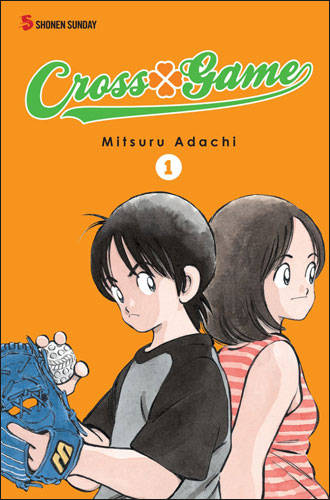
10. CROSS GAME (Mitsuri Adachi; VIZ)

In this sometimes funny, sometimes melancholy coming-of-age story, a family tragedy brings teenager Ko Kitamura closer to neighbor Aoba Tsukishima, with whom he has a fraught relationship. Though the two bicker with the antagonistic gusto of Beatrice and Benedict, their shared love of baseball helps smooth the course of their budding romance. To be sure, Cross Game can’t escape a certain amount of sports-manga cliche, but Mitsuri Adachi is more interested in showing us how the characters relate to each other than in celebrating their amazing baseball skills. (Not that he skimps on the game play; Adachi clearly knows his way around the diamond.) The result is an agreeable dramedy that has the rhythm of a good situation comedy and the emotional depth of a well-crafted YA novel, with just enough shop-talk to win over baseball enthusiasts, too.

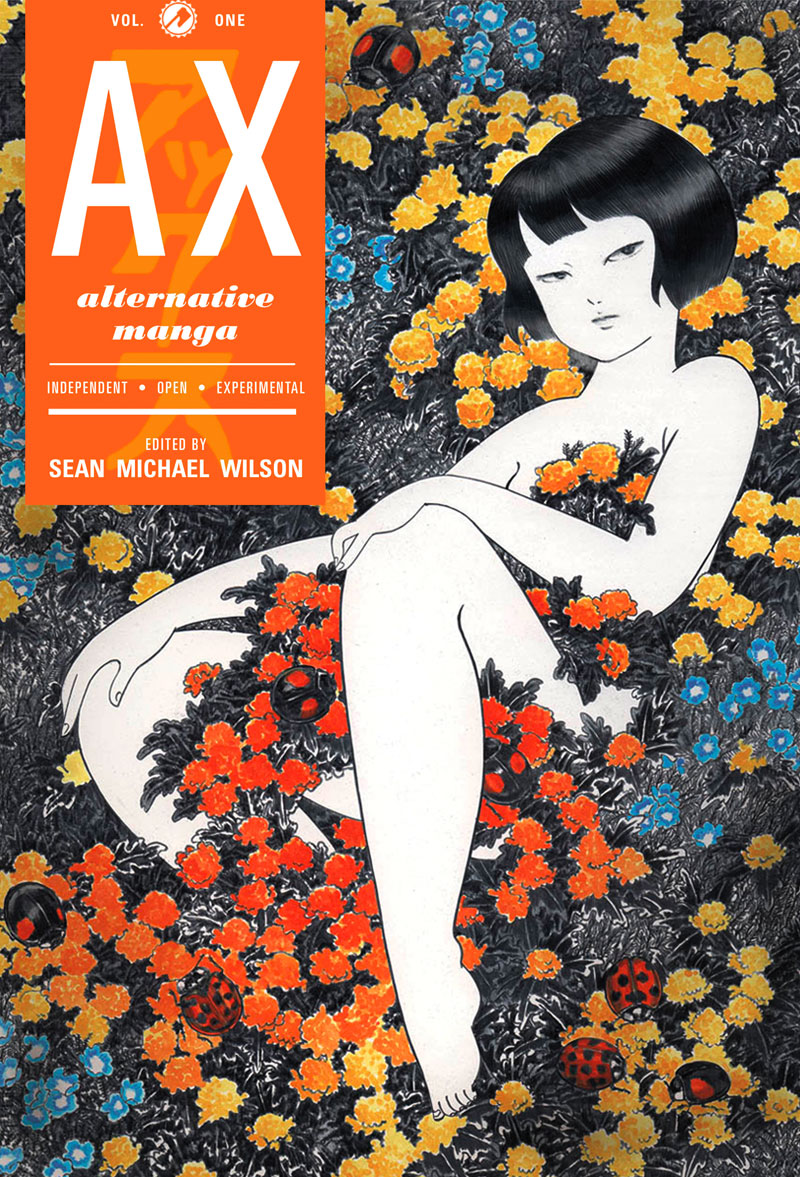
9. AX: A COLLECTION OF ALTERNATIVE MANGA (Various Artists; Top Shelf)

The next time someone dismisses manga as a “style” characterized by youthful-looking, big-eyed characters with button noses, I’m going to hand them a copy of AX, a rude, gleeful, and sometimes disturbing rebuke to the homogenized artwork and storylines found in mainstream manga publications. No one will confuse AX for Young Jump or even Big Comic Spirits; the stories in AX run the gamut from the grotesquely detailed to the playfully abstract, often flaunting their ugliness with the cheerful insistence of a ten-year-old boy waving a dead animal at squeamish classmates. Nor will anyone confuse Yoshihiro Tatsumi or Einosuke’s outlook with the humanism of Osamu Tezuka or Keiji Nakazawa; the stories in AX revel in the darker side of human nature, the part of us that’s fascinated with pain, death, sex, and bodily functions. Like all anthologies, the collection is somewhat uneven, with a few too many scatological tales for its own good, but the very best stories — “The Hare and the Tortoise,” “Push Pin Woman,” “Six Paths of Wealth,” “Puppy Love,” “Inside the Gourd” — attest to the diversity of talent contributing to this seminal manga magazine. –Reviewed at The Manga Critic on 5/21/10

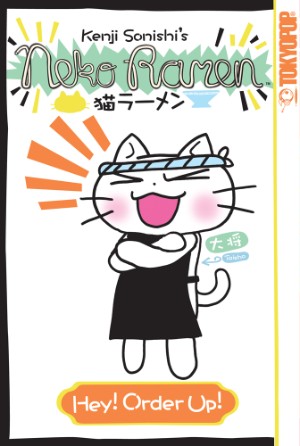
8. NEKO RAMEN (Kenji Sonishi; Tokyopop)

If you’ve ever lived with a cat or dog, you know that no meal is complete without a pet hair garnish. Now imagine that your beloved companion actually prepared your meals instead of watching you eat them: what sort of unimaginable horrors might you encounter beyond the stray hair? That’s the starting point for Neko Ramen, a 4-koma manga about a cat whose big dream is to run a noodle shop, but author Kenji Sonishi quickly moves past hair balls and litter box jokes to mine a richer vein of humor, poking fun at his cat cook’s delusions of entrepreneurial grandeur. Taisho is the Don Quixote of ramen vendors, dreaming up ludicrous giveaways and unappetizing dishes in an effort to promote his business, never realizing that he is the store’s real selling point. The loose, sketchy artwork gives the series an improvisational feel, while the script has the pleasant, absurdist zing of an Abbott and Costello routine. –Reviewed at The Manga Critic on 6/2/10

7. AYAKO (Osamu Tezuka; Vertical, Inc.)

Combining the psychological realism of Dostoevsky with the social consciousness of Tolstoy and Zola, Osamu Tezuka uses conflicts within the once-powerful Tenge clan to dramatize the social, political, and economic upheaval caused by the American occupation of post-war Japan. No subject is off-limits for Tezuka: the Tenge commit murders, spy for the Americans, join the Communist Party, imprison a family member in an underground cell, and engage in incest. It’s one of Tezuka’s most sober and damning stories, at once tremendously powerful and seriously disturbing, with none of the cartoonish excess of Ode to Kirihito or MW. The ending is perhaps too pat and loaded with symbolism for its own good, but like Tezuka’s best work, Ayako forces the reader to confront the darkest, most corruptible corners of the human soul. As with Apollo’s Song, Black Jack, and Buddha, Vertical has done a superb job of making Tezuka accessible to Western readers with flipped artwork and a fluid translation.

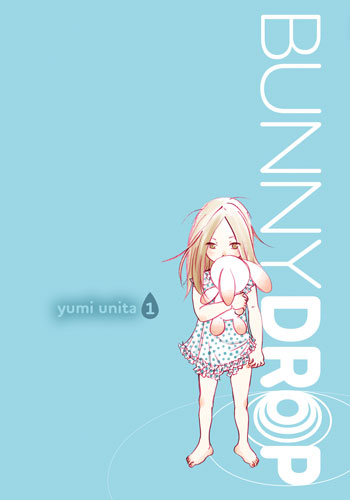
6. BUNNY DROP (Yumi Unita; Yen Press)

Stop me if you’ve heard this one before: a thirty-something bachelor unexpectedly becomes a parent to a cute little girl, leading to hijinks, misunderstandings, and heart-tugging moments. That’s a fair summary of what happens in Bunny Drop, but Yumi Unita wisely avoids the pitfalls of the single-dad genre — the cheap sentiment, the unfunny scenes of dad recoiling in horror at diapers, runny noses, and tears — instead focusing on the unique bond between Daikichi and Rin, the six-year-old whom he impetuously adopts after the rest of the family disavows her. (Rin is the product of a liaison between Daikichi’s grandfather and a much younger woman.) Though Daikichi struggles to find day care, buy clothes for Rin, and make sense of her standoffish behavior, he isn’t a buffoon or a straight man for Rin’s antics; Unita portrays him as a smart, sensitive person blessed with good instincts and common sense. Clean, expressive artwork and true-to-life dialogue further inoculate Bunny Drop against a terminal case of sitcom cuteness, making it one of the most thoughtful, moving, and adult manga of the year.

5. BLACK BLIZZARD (Yoshihiro Tatsumi; Drawn & Quarterly)

Written in just twenty days, this feverish pulp thriller plays like a mash-up of The Fugitive, The 39 Steps, and The Defiant Ones as two convicts — one a hardened criminal, the other a down-on-his luck musician — go on the lam during a blinding snowstorm. The heroes are more archetypes than characters, drawn in bold strokes, but the interaction between them crackles with antagonistic energy; they’re as much enemies as partners, roles that they constantly renegotiate during their escape. Evocative artwork — slashing lines, dramatic camera angles, images of speeding trains — infuses Black Blizzard with a raw, nervous energy that nicely mirrors the characters’ internal state. Only in the final, rushed pages does manga-ka Yoshihiro Tatsumi falter, tidily resolving the story through an all-too-convenient plot twist that hinges on coincidence. Still, that’s a minor criticism of a thoroughly entertaining story written during a crucial stage of Tatsumi’s artistic development. –Reviewed at The Manga Critic on 9/9/10

4. HOUSE OF FIVE LEAVES (Natsume Ono; VIZ)

Timid ronin Akitsu Masanosuke can’t hold a steady job, despite his formidable swordsmanship. When a businessman approaches him with work, Masanosuke readily accepts, not realizing that his new employer, Yaichi, runs a crime syndicate that specializes in kidnapping. Masanosuke’s unwitting participation in a blackmailing scheme prevents him from severing his ties to Yaichi; Masanosuke must then decide if he will join the House of Five Leaves or bide his time until he can escape. Though Toshiro Mifune and Hiroyuki Sanada have made entire careers out of playing characters like Masanosuke, Natsume Ono makes a persuasive case that you don’t need a flesh-and-blood actor to tell this kind of story with heartbreaking intensity; she can do the slow-burn on the printed page with the same skill as Masaki Kobayashi (Hara Kiri, Samurai Rebellion) and Yoji Yamada (The Twilight Samurai) did on the big screen. –Reviewed at The Manga Critic on 8/20/10

3. TWIN SPICA (Kou Yaginuma; Vertical, Inc.)

Asumi Kamogawa is a small girl with a big dream: to be an astronaut on Japan’s first manned space flight. Though she passes the entrance exam for Tokyo Space School, she faces several additional hurdles to realizing her goal, from her child-like stature — she’s thirteen going on eight — to a faculty member who blames her father for causing a fiery rocket crash that claimed hundreds of civilian lives. Yet for all the setbacks she’s experienced, Asumi proves resilient, a gentle girl who perseveres in difficult situations, offers friendship in lieu of judgment, and demonstrates a preternatural awareness of life’s fragility. Twin Spica follows Asumi through every stage of training, from physics lectures to zero-G simulations, showing us how she befriends her fellow cadets and gradually learns to rely on herself, rather than her imaginary friend, Mr. Lion. Though Twin Spica was serialized in a seinen magazine, it works surprisingly well for young adults, too, an all-too-rare example of a direct, heartfelt story that’s neither saccharine nor mawkish.  –Reviewed at The Manga Critic on 5/3/10

2. ALL MY DARLING DAUGHTERS (Fumi Yoshinaga; VIZ)

The five vignettes in All My Darling Daughters depict women negotiating difficult personal relationships: a daughter confronts her mother about mom’s new, much younger husband; a college student seduces her professor, only to dump him when he tries to court her properly; a beautiful young woman contemplates an arranged marriage. Like all of Yoshinaga’s work, the characters in All My Darling Daughters love to talk. That chattiness isn’t always an asset to Yoshinaga’s storytelling (see Gerard and Jacques), but here the dialogue is perfectly calibrated to reveal just how complex and ambivalent these relationships really are. Yoshinaga’s artwork is understated but effective, as she uses small details — how a character stands or carries her shoulders — to offer a more complete and nuanced portrait of each woman. Quite possibly my favorite work by Yoshinaga.

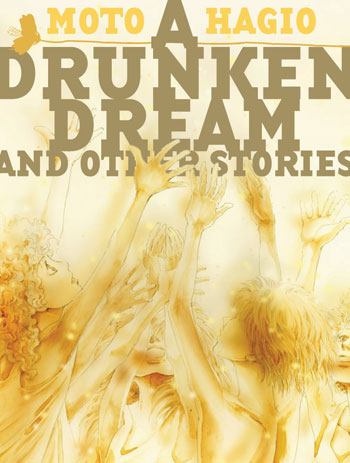
1. A DRUNKEN DREAM AND OTHER STORIES (Moto Hagio; Fantagraphics)

Not coincidentally, A Drunken Dream and Other Stories was my nomination for Best New Graphic Novel of 2010 as well. Here’s what I had to say about the title over at Flashlight Worthy Books:

Moto Hagio is to shojo manga what Will Eisner is to American comics, a seminal creator whose distinctive style and sensibility profoundly changed the medium. Though Hagio has been actively publishing stories since the late 1960s, very little of her work has been translated into English. A Drunken Dream, published by Fantagraphics, is an excellent corrective — a handsomely produced, meticulously edited collection of Hagio’s short stories that span her career from 1970 to 2007. Readers new to Hagio’s work will appreciate the inclusion of two contextual essays by manga scholar Matt Thorn, one an introduction to Hagio and her peers, the other an interview with Hagio. What emerges is a portrait of a gifted artist who draws inspiration from many sources: Osamu Tezuka and Shotaro Ishimonori, Ray Bradbury and Isaac Asimov, Frances Hodgson Burnett and L.M. Montgomery.

For the complete list — including nominations from David “Manga Curmudgeon” Welsh, Brigid “MangaBlog” Alverson, Lorena “i heart manga” Ruggero, and Matthew “Warren Peace Sings the Blues” Brady — click here. To read my full review of A Drunken Dream, click here.

HONORABLE MENTIONS

Done because there are too menny… great manga, that is, to confine myself to a traditional top ten list. With apologies to Thomas Hardy, here are some of the other titles that tickled my fancy in 2010:

  • OTHER AWESOME DEBUTS: Not Love But Delicious Foods Make Me Happy (Yen Press), Saturn Apartments (VIZ), 7 Billion Needles (Vertical, Inc.)
  • BEST CONTINUING SERIES: Itazura na Kiss (DMP), Ooku: The Inner Chambers (VIZ), Suppli (Tokyopop), 20th Century Boys (VIZ)
  • BEST NEW ALL-AGES MANGA: Chi’s Sweet Home (Vertical, Inc.)
  • BEST NEW SERIES THAT’S ALREADY ON HIATUS: Diamond Girl (CMX), Stolen Hearts (CMX)
  • BEST NEW GUILTY PLEASURE: Demon Sacred (Tokyopop), Dragon Girl (Yen Press)
  • BEST REPRINT EDITION: Cardcaptor Sakura (Dark Horse), Little Butterfly Omnibus (DMP)
  • BEST MANGA I THOUGHT I’D HATE: Higurashi When They Cry: Beyond Midnight Arc (Yen Press)
  • BEST FINALE: Pluto: Tezuka x Urasawa (VIZ)

Filed Under: Manga Critic Tagged With: cmx, Dark Horse, DMP, Drawn & Quarterly, fantagraphics, fumi yoshinaga, moto hagio, Naoki Urasawa, Osamu Tezuka, SigIKKI, Tokyopop, Top Shelf, vertical, VIZ, yen press, Yoshihiro Tatsumi

The Best Manga of 2010: The Manga Critic’s Picks

December 6, 2010 by Katherine Dacey

For all the upheaval within the manga industry — the demise of CMX, Del Rey, and Go! Comi, the layoffs at VIZ — 2010 proved an exceptionally good year for storytelling. True, titles like Black Butler, Naruto, and Nabari no Ou dominated sales charts, but publishers made a concerted effort to woo grown-ups with vintage manga — Black Blizzard, A Drunken Dream and Other Stories — edgy sci-fi — Biomega, 7 Billion Needles — underground comix — AX: A Collection of Alternative Manga, The Box Man — and good old-fashioned drama — All My Darling Daughters, Bunny Drop. I had a hard time limiting myself to just ten titles this year, so I’ve borrowed a few categories from my former PCS cohort Erin Finnegan, from Best New Guilty Pleasure to Best Manga You Thought You’d Hate. Please feel free to add your own thoughts: what titles did I unjustly omit? What titles did I like but you didn’t? Inquiring minds want to know!

10. Cross Game
By Mitsuri Adachi • VIZ Media
In this sometimes funny, sometimes melancholy coming-of-age story, a family tragedy brings teenager Ko Kitamura closer to neighbor Aoba Tsukishima, with whom he has a fraught relationship. Though the two bicker with the antagonistic gusto of Beatrice and Benedict, their shared love of baseball helps smooth the course of their budding romance. To be sure, Cross Game can’t escape a certain amount of sports-manga cliche, but Mitsuri Adachi is more interested in showing us how the characters relate to each other than in celebrating their amazing baseball skills. (Not that he skimps on the game play; Adachi clearly knows his way around the diamond.) The result is an agreeable dramedy that has the rhythm of a good situation comedy and the emotional depth of a well-crafted YA novel, with just enough shop-talk to win over baseball enthusiasts, too.

9. AX: A Collection of Alternative Manga
Edited by Sean Michael Wilson • Top Shelf
The next time someone dismisses manga as a “style” characterized by youthful-looking, big-eyed characters with button noses, I’m going to hand them a copy of AX, a rude, gleeful, and sometimes disturbing rebuke to the homogenized artwork and storylines found in mainstream manga publications. No one will confuse AX for Young Jump or even Big Comic Spirits; the stories in AX run the gamut from the grotesquely detailed to the playfully abstract, often flaunting their ugliness with the cheerful insistence of a ten-year-old boy waving a dead animal at squeamish classmates. Nor will anyone confuse Yoshihiro Tatsumi or Einosuke’s outlook with the humanism of Osamu Tezuka or Keiji Nakazawa; the stories in AX revel in the darker side of human nature, the part of us that’s fascinated with pain, death, sex, and bodily functions. Like all anthologies, the collection is somewhat uneven, with a few too many scatological tales for its own good, but the very best stories — “The Hare and the Tortoise,” “Push Pin Woman,” “Six Paths of Wealth,” “Puppy Love,” “Inside the Gourd” — attest to the diversity of talent contributing to this seminal manga magazine. —Reviewed at The Manga Critic on 5/21/10

8. Neko Ramen
By Kenji Sonishi • Tokyopop
If you’ve ever lived with a cat or dog, you know that no meal is complete without a pet hair garnish. Now imagine that your beloved companion actually prepared your meals instead of watching you eat them: what sort of unimaginable horrors might you encounter beyond the stray hair? That’s the starting point for Neko Ramen, a 4-koma manga about a cat whose big dream is to run a noodle shop, but author Kenji Sonishi quickly moves past hair balls and litter box jokes to mine a richer vein of humor, poking fun at his cat cook’s delusions of entrepreneurial grandeur. Taisho is the Don Quixote of ramen vendors, dreaming up ludicrous giveaways and unappetizing dishes in an effort to promote his business, never realizing that he is the store’s real selling point. The loose, sketchy artwork gives the series an improvisational feel, while the script has the pleasant, absurdist zing of an Abbott and Costello routine. —Reviewed at The Manga Critic on 6/2/10

7. Ayako
By Osamu Tezuka; Vertical, Inc.
Combining the psychological realism of Dostoevsky with the social consciousness of Tolstoy and Zola, Osamu Tezuka uses conflicts within the once-powerful Tenge clan to dramatize the social, political, and economic upheaval caused by the American occupation of post-war Japan. No subject is off-limits for Tezuka: the Tenge commit murders, spy for the Americans, join the Communist Party, imprison a family member in an underground cell, and engage in incest. It’s one of Tezuka’s most sober and damning stories, at once tremendously powerful and seriously disturbing, with none of the cartoonish excess of Ode to Kirihito or MW. The ending is perhaps too pat and loaded with symbolism for its own good, but like Tezuka’s best work, Ayako forces the reader to confront the darkest, most corruptible corners of the human soul. As with Apollo’s Song, Black Jack, and Buddha, Vertical has done a superb job of making Tezuka accessible to Western readers with flipped artwork and a fluid translation.

6. Bunny Drop
By Yumi Unita; Yen Press
Stop me if you’ve heard this one before: a thirty-something bachelor unexpectedly becomes a parent to a cute little girl, leading to hijinks, misunderstandings, and heart-tugging moments. That’s a fair summary of what happens in Bunny Drop, but Yumi Unita wisely avoids the pitfalls of the single-dad genre — the cheap sentiment, the unfunny scenes of dad recoiling in horror at diapers, runny noses, and tears — instead focusing on the unique bond between Daikichi and Rin, the six-year-old whom he impetuously adopts after the rest of the family disavows her. (Rin is the product of a liaison between Daikichi’s grandfather and a much younger woman.) Though Daikichi struggles to find day care, buy clothes for Rin, and make sense of her standoffish behavior, he isn’t a buffoon or a straight man for Rin’s antics; Unita portrays him as a smart, sensitive person blessed with good instincts and common sense. Clean, expressive artwork and true-to-life dialogue further inoculate Bunny Drop against a terminal case of sitcom cuteness, making it one of the most thoughtful, moving, and adult manga of the year.

5. Black Blizzard
By Yoshihiro Tatsumi • Drawn & Quarterly
Written in just twenty days, this feverish pulp thriller plays like a mash-up of The Fugitive, The 39 Steps, and The Defiant Ones as two convicts — one a hardened criminal, the other a down-on-his luck musician — go on the lam during a blinding snowstorm. The heroes are more archetypes than characters, drawn in bold strokes, but the interaction between them crackles with antagonistic energy; they’re as much enemies as partners, roles that they constantly renegotiate during their escape. Evocative artwork — slashing lines, dramatic camera angles, images of speeding trains — infuses Black Blizzard with a raw, nervous energy that nicely mirrors the characters’ internal state. Only in the final, rushed pages does manga-ka Yoshihiro Tatsumi falter, tidily resolving the story through an all-too-convenient plot twist that hinges on coincidence. Still, that’s a minor criticism of a thoroughly entertaining story written during a crucial stage of Tatsumi’s artistic development. —Reviewed at The Manga Critic on 9/9/10

4. House of Five Leaves
By Natsume Ono • VIZ Media
Timid ronin Akitsu Masanosuke can’t hold a steady job, despite his formidable swordsmanship. When a businessman approaches him with work, Masanosuke readily accepts, not realizing that his new employer, Yaichi, runs a crime syndicate that specializes in kidnapping. Masanosuke’s unwitting participation in a blackmailing scheme prevents him from severing his ties to Yaichi; Masanosuke must then decide if he will join the House of Five Leaves or bide his time until he can escape. Though Toshiro Mifune and Hiroyuki Sanada have made entire careers out of playing characters like Masanosuke, Natsume Ono makes a persuasive case that you don’t need a flesh-and-blood actor to tell this kind of story with heartbreaking intensity; she can do the slow-burn on the printed page with the same skill as Masaki Kobayashi (Hara Kiri, Samurai Rebellion) and Yoji Yamada (The Twilight Samurai) did on the big screen. —Reviewed at The Manga Critic on 8/20/10

3. Twin Spica
By Kou Yaginuma • Vertical, Inc.
Asumi Kamogawa is a small girl with a big dream: to be an astronaut on Japan’s first manned space flight. Though she passes the entrance exam for Tokyo Space School, she faces several additional hurdles to realizing her goal, from her child-like stature — she’s thirteen going on eight — to a faculty member who blames her father for causing a fiery rocket crash that claimed hundreds of civilian lives. Yet for all the setbacks she’s experienced, Asumi proves resilient, a gentle girl who perseveres in difficult situations, offers friendship in lieu of judgment, and demonstrates a preternatural awareness of life’s fragility. Twin Spica follows Asumi through every stage of training, from physics lectures to zero-G simulations, showing us how she befriends her fellow cadets and gradually learns to rely on herself, rather than her imaginary friend, Mr. Lion. Though Twin Spica was serialized in a seinen magazine, it works surprisingly well for young adults, too, an all-too-rare example of a direct, heartfelt story that’s neither saccharine nor mawkish.  —Reviewed at The Manga Critic on 5/3/10

2. All My Darling Daughters
By Fumi Yoshinaga • VIZ Media
The five vignettes in All My Darling Daughters depict women negotiating difficult personal relationships: a daughter confronts her mother about mom’s new, much younger husband; a college student seduces her professor, only to dump him when he tries to court her properly; a beautiful young woman contemplates an arranged marriage. Like all of Yoshinaga’s work, the characters in All My Darling Daughters love to talk. That chattiness isn’t always an asset to Yoshinaga’s storytelling (see Gerard and Jacques), but here the dialogue is perfectly calibrated to reveal just how complex and ambivalent these relationships really are. Yoshinaga’s artwork is understated but effective, as she uses small details — how a character stands or carries her shoulders — to offer a more complete and nuanced portrait of each woman. Quite possibly my favorite work by Yoshinaga.

1. A Drunken Dream and Other Stories
By Moto Hagio • Fantagraphics
Not coincidentally, A Drunken Dream and Other Stories was my nomination for Best New Graphic Novel of 2010 as well. Here’s what I had to say about the title over at Flashlight Worthy Books:

Moto Hagio is to shojo manga what Will Eisner is to American comics, a seminal creator whose distinctive style and sensibility profoundly changed the medium. Though Hagio has been actively publishing stories since the late 1960s, very little of her work has been translated into English. A Drunken Dream, published by Fantagraphics, is an excellent corrective — a handsomely produced, meticulously edited collection of Hagio’s short stories that span her career from 1970 to 2007. Readers new to Hagio’s work will appreciate the inclusion of two contextual essays by manga scholar Matt Thorn, one an introduction to Hagio and her peers, the other an interview with Hagio. What emerges is a portrait of a gifted artist who draws inspiration from many sources: Osamu Tezuka and Shotaro Ishimonori, Ray Bradbury and Isaac Asimov, Frances Hodgson Burnett and L.M. Montgomery.

For the complete list — including nominations from David “Manga Curmudgeon” Welsh, Brigid “MangaBlog” Alverson, Lorena “i heart manga” Ruggero, and Matthew “Warren Peace Sings the Blues” Brady — click here. To read my full review of A Drunken Dream, click here.

HONORABLE MENTIONS
Done because there are too menny… great manga, that is, to confine myself to a traditional top ten list. With apologies to Thomas Hardy, here are some of the other titles that tickled my fancy in 2010:

  • Other Awesome Debuts: Not Love But Delicious Foods Make Me Happy (Yen Press), Saturn Apartments (VIZ), 7 Billion Needles (Vertical, Inc.)
  • Best Continuing Series: Itazura na Kiss (DMP), Ooku: The Inner Chambers (VIZ), Suppli (Tokyopop), 20th Century Boys (VIZ)
  • Best New All-ages Manga: Chi’s Sweet Home (Vertical, Inc.)
  • Best New Series That’s Already on Hiatus: Diamond Girl (CMX), Stolen Hearts (CMX)
  • Best New Guilty Pleasure: Demon Sacred (Tokyopop), Dragon Girl (Yen Press)
  • Best Reprint Edition: Cardcaptor Sakura (Dark Horse), Little Butterfly Omnibus (DMP)
  • Best Manga I Thought I’d Hate: Higurashi When They Cry: Beyond Midnight Arc (Yen Press)
  • Best Finale: Pluto: Tezuka x Urasawa (VIZ)

Filed Under: Manga, Manga Critic, Recommended Reading Tagged With: cmx, Dark Horse, DMP, Drawn & Quarterly, fantagraphics, fumi yoshinaga, moto hagio, Naoki Urasawa, Osamu Tezuka, SigIKKI, Tokyopop, Top Shelf, Vertical Comics, VIZ, yen press, Yoshihiro Tatsumi

My 10 Favorite Spooky Manga

October 24, 2010 by Katherine Dacey

Whether by accident or design, the very first manga I read and liked were horror titles: “The Laughing Target,” Mermaid Saga, Uzumaki. I’m not sure why I find spooky stories so compelling in manga form; I don’t generally read horror novels, and I don’t have the constitution for gory movies. But manga about zombies? Or vampires? Or angry spirits seeking to avenge their own deaths? Well, there’s always room on my bookshelf for another one, even if the stories sometimes feel overly familiar or — in the case of artists like Kanako Inuki and Kazuo Umezu — make no sense at all. Below is a list of my ten favorite scary manga, which run the gamut from psychological horror to straight-up ick.

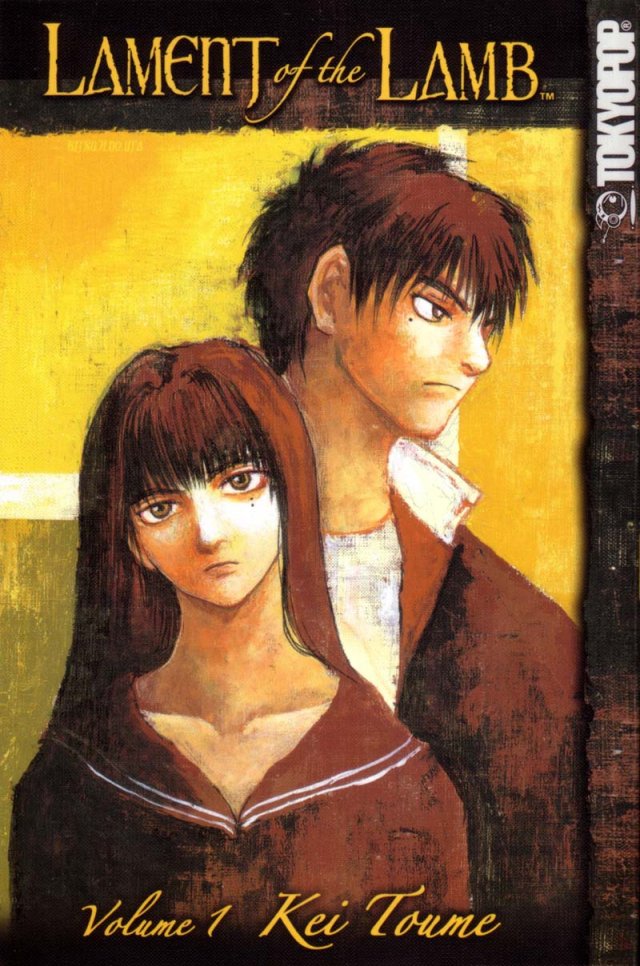
10. Lament of the Lamb
By Kei Toume • Tokyopop • 7 volumes
Kei Toume puts a novel spin on vampirism, presenting it not as a supernatural phenomenon, but as a symptom of a rare genetic disorder. His brother-and-sister protagonists, Kazuna and Chizuna, begin exhibiting the same tendencies as their deceased mother, losing control at the sight or suggestion of blood, and enduring cravings so intense they induce temporary insanity. Long on atmosphere and short on plot, Lament of the Lamb won’t be every vampire lover’s idea of a rip-snortin’ read; the manga focuses primarily on the intense, unhealthy relationship between Kazuna and Chizuna, and very little on blood-sucking. What makes Lament of the Lamb so deeply unsettling, however, is the strong current of violence and fear that flows just beneath its surface; Kazuna and Chizuna may not be predators, but we see just how much self-control it takes for them to contain their bloodlust.

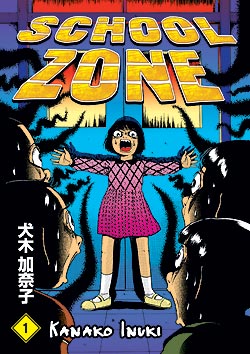
9. School Zone
By Kanako Inuki • Dark Horse • 3 volumes
In this odd, hallucinatory, and sometimes very funny series, a group of students summon the ghosts of people who died on school grounds, unleashing the spirits’ wrath on their unsuspecting classmates. School Zone is as much a meditation on childhood fears of being ridiculed or ostracized as it is a traditional ghost story; time and again, the students’ own response to the ghosts is often more horrific than the ghosts’ behavior. Inuki’s artwork isn’t as gory or imaginative as some of her peers’, though she demonstrates a genuine flair for comically gruesome thrills: one girl is dragged into a toilet, for example, while another is attacked by a scaly, long-armed creature that lives in the infirmary. Where Inuki really shines, however, is in her ability to capture the primal terror that a dark, empty building can inspire in the most rational person. Even when the story takes one its many silly detours — and yes, there are many WTF?! moments in School Zone — Inuki makes us feel her characters’ vulnerability as they explore the school grounds after hours. —Reviewed at The Manga Critic on 10/29/09

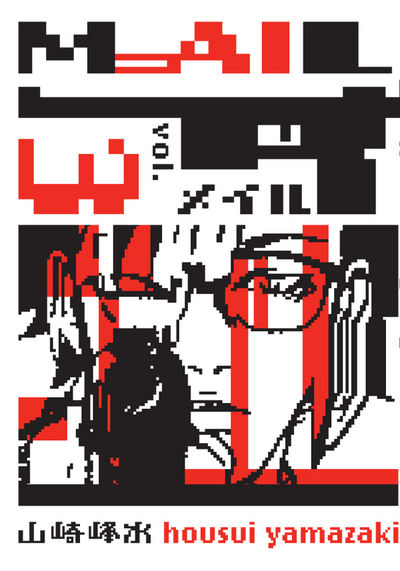
8. Mail
By Housui Yamazaki • Dark Horse • 3 volumes
If you like you horror neat with a twist, Mail might be your kind of manga: a meticulously crafted selection of short, spooky tales in which a handsome exorcist goes toe-to-toe with all sort of ghosts. The stories are a mixture of urban legend and folklore: a GPS system which directs a woman to the scene of a crime, an accident victim who haunts the elevator shaft where he died, a possessed doll. Through precise linework and superb command of light, Hosui Yamakazi transforms everyday situations — returning home from work, logging onto a computer — into extraordinary ones in which shadows and corners harbor very nasty surprises. Best of all, Mail never overstays its welcome; it’s the manga equivalent of the Goldberg Variations, offering a number of short, trenchant variations on a single theme and then wrapping things up neatly.

7. After School Nightmare
By Setona Mizushiro • Go! Comi • 10 volumes
Masahiro, a charming, popular high school student, harbors a terrible secret: though he appears to be male, the lower half of his body is female. At a nurse’s urging, he agrees to visit the school infirmary for a series of dream workshops in which he interacts with classmates who are also grappling with serious problems, from child abuse to pathological insecurity. The students’ collective dreams are vivid and strange, unfolding with the peculiar, fervid logic of a nightmare; buildings flood, stairwells lead to dead ends, and characters undergo sudden, dramatic transformations. Making the dream sequences extra creepy is the way Setona Mizushiro renders the students, choosing an avatar for each that represents their true selves: a black knight, a faceless body, a long, disembodied arm that grasps and slithers. Attentive readers will be rewarded for their patient observation with an unexpected but brilliant twist in the very final pages.

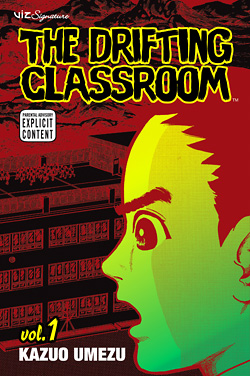
6. The Drifting Classroom
By Kazuo Umezu • VIZ Media • 11 volumes
It’s sorely tempting to compare The Drifting Classroom to The Lord of the Flies, as both stories depict school children creating their own societies in the absence of adult authority. But Kazuo Umezu’s series is more sinister than Golding’s novel, as Classroom‘s youthful survivors have been forced to band together to defend themselves from their former teachers, many of whom have become unhinged at the realization that they may never return to their own time. (Their entire elementary school has slipped through a rift in the space-time continuum, depositing everyone in the distant future.) The story is as relentless as an episode of 24: characters are maimed or killed in every chapter, and almost every line of dialogue is shouted. (Sho’s petty arguments with his mother are delivered as emphatically as his later attempts to alert classmates to the dangers of their new surroundings.) Yet for all its obvious shortcomings, Umezu creates an atmosphere of almost unbearable tension that conveys both the hopelessness of the children’s situation and their terror at being abandoned by the grown-ups. If that isn’t the ultimate ten-year-old’s nightmare, I don’t know what is. —Reviewed at PopCultureShock on 10/15/06

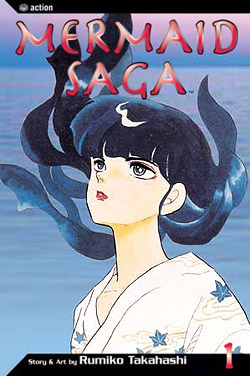
5. Mermaid Saga
By Rumiko Takahashi • VIZ Media • 4 volumes
This four-volume series ran on and off in Shonen Sunday for nearly ten years, chronicling the adventures of Yuta, a fisherman who gained immortality by eating mermaid flesh. Desperate to live an ordinary existence, Yuta spends five hundred years wandering Japan in search of a mermaid who can restore his mortality, crossing paths with criminals, immortals, and “lost souls,” people reduced to a monstrous condition by the poison in mermaid flesh. Though the stories follow a somewhat predictable pattern, Takahashi’s writing is brisk and assured, propelled by snappy dialogue and genuinely creepy scenarios. The imagery is tame by horror standards, but Takahashi doesn’t shy away from the occasional grotesque or gory image, using them to underscore the ugly consequences of seeking immortality. —Reviewed at The Manga Critic on 10/29/09.

4. Dororo
By Osamu Tezuka • Vertical, Inc. • 3 volumes
The next time you feel inclined to criticize your parents, remember Hyakkimaru’s plight: his father pledged Hyakkimaru’s body parts to forty-eight demons in exchange for political power, leaving his son blind, deaf, and limbless at birth. After being rescued and raised by a kindly doctor, Hyakkimaru embarks on a quest to reclaim his eyes and ears, wandering across a war-torn landscape where demons take advantage of the chaos to prey on humans. Some of these demons have obvious antecedents in Japanese folklore (e.g. a nine-tailed fox), while others seem to have sprung full-blown from Tezuka’s imagination (e.g. a shark who paralyzes his victims with sake breath). Though the story ostensibly unfolds during the Warring States period, Dororo wears its allegory lightly, focusing primarily on swordfights, monster lairs, and damsels in distress while using its historical setting to make a few modest points about the corrosive influence of greed, power, and fear. For my money, one of Tezuka’s best series, peroid. —Reviewed at The Manga Critic on 7/27/09

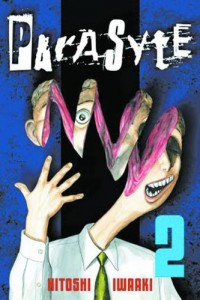
3. Parasyte
By Hitoshi Iwaaki • Del Rey • 8 volumes
Part The Defiant Ones, part Invasion of the Body Snatchers, Parasyte focuses on the symbiotic relationship between Shin, a high school student, and Migi, the alien parasite that takes up residence in his right hand after failing to take control of Shin’s brain. The two go on the lam after another parasite kills Shin’s mother — and makes Shin and Migi look like the culprits. If the human character designs are a little blank and clumsy, the parasites are not; Hitoshi Iwaaki twists the human body into some of the most sinister-looking shapes since Pablo Picasso painted Dora Maar. The violence is graphic but not sadistic, as most of the action takes place between panels, with only the grisly aftermath represented in pictorial form. The best part of Parasyte, however, is the script; Shin and Migi trade barbs with the antagonistic affection of Oscar Madison and Felix Unger, revealing Migi to be smarter and more objective than his human host. Shin and Migi’s banter adds an element of levity to the story, to be sure, but their heated debates about survival are also a sly poke at the idea that human beings’ intellect and emotional attachments place them squarely atop the food chain. —Reviewed at The Manga Critic on 7/2/10

2. The Kurosagi Corpse Delivery Service
By Eiji Otsuki and Housui Yamakazi • Dark Horse • 13+ volumes
The Kurosagi Corpse Delivery Service is comprised of five members: Karatsu, a monk-in-training; Numata, a hipster with an encyclopedic knowledge of pop culture; Yata, an odd duck who communicates primarily through a puppet that he wears on his left hand; Makino, a chatty embalmer; and Sasaki, a hacker with an entrepreneurial streak. Working as a team, the quintet helps the dead cross over, using their myriad talents to locate bodies, speak with ghosts, and resolve the spirits’ unfinished business. The set-up is pure gold, giving the episodic series some structure, while allowing Eiji Otsuka and Housui Yamakazi the flexibility to stage grisly murders and discover corpses in a variety of unexpected places. Think Scooby Doo with less wholesome protagonists and scarier spooks and you have a good idea of what makes this offbeat series tick. And yes, the gang even has their own van. —Reviewed at The Manga Critic on 6/24/09

1. Gyo
By Junji Ito • VIZ Media • 2 volumes
From the standpoint of craft, Uzumaki is a better manga, but it’s hard to top the sheer creepiness factor of Gyo, which taps into one of the most primordial of fears: being eaten! Here’s how I explained its appeal to David Welsh at The Comics Reporter:

Like many other children of the 1970s, Jaws left an indelible impression on me. I wasn’t just terrified of swimming in the ocean, I was reluctant to immerse myself in any standing body of water — swimming pools, bathtubs, ponds — that might conceivably harbor a shark. That irrational fear of encountering a great white somewhere it’s not supposed to be even led me to wonder what it might be like to bump into one on land — could I outrun it?

I’m guessing Junji Ito also suffers from icthyophobia, because Gyo looks like my worst nightmare, a world in which hideously deformed fish crawl out of the sea on mechanical legs and terrorize humans, spreading a disease that quickly jumps species. As horror stories go, many of Gyo‘s details aren’t terribly well explained — how, exactly, the fish acquired legs remains unclear despite talk of military experiments gone awry — but the imaginative artwork appeals on a visceral level. Gyo‘s highpoint comes midway through volume one, when a great white shark chases the hero and his girlfriend through a house, even scaling the stairs (no pun intended) in pursuit of its next meal. The scene is utterly ridiculous, but it works — for a few terrible, thrilling pages I learned the answer to my long-standing question, What would it be like to be chased by a shark on land? In a word: scary.

In other words, this is my worst nightmare:

So those are ten of my favorite spooky manga! What horror manga are on your top-ten list? Inquiring minds want to know!

Filed Under: Manga, Manga Critic, Recommended Reading Tagged With: Dark Horse, del rey, Eiji Otsuka, Go! Comi, Hitoshi Iwaaki, Horror/Supernatural, Junji Ito, Kanako Inuki, Kazuo Umezu, Kei Toume, Osamu Tezuka, Rumiko Takahashi, Setona Mizushiro, Tokyopop, Vertical Comics, VIZ

My 10 Favorite Spooky Manga

October 24, 2010 by Katherine Dacey 38 Comments

Whether by accident or design, the very first manga I read and liked were horror titles: “The Laughing Target,” Mermaid Saga, Uzumaki. I’m not sure why I find spooky stories so compelling in manga form; I don’t generally read horror novels, and I don’t have the constitution for gory movies. But manga about zombies? Or vampires? Or angry spirits seeking to avenge their own deaths? Well, there’s always room on my bookshelf for another one, even if the stories sometimes feel overly familiar or — in the case of artists like Kanako Inuki and Kazuo Umezu — make no sense at all. Below is a list of my ten favorite scary manga, which run the gamut from psychological horror to straight-up ick.

10. LAMENT OF THE LAMB

KEI TOUME • TOKYOPOP • 7 VOLUMES

Kei Toume puts a novel spin on vampirism, presenting it not as a supernatural phenomenon, but as a symptom of a rare genetic disorder. His brother-and-sister protagonists, Kazuna and Chizuna, begin exhibiting the same tendencies as their deceased mother, losing control at the sight or suggestion of blood, and enduring cravings so intense they induce temporary insanity. Long on atmosphere and short on plot, Lament of the Lamb won’t be every vampire lover’s idea of a rip-snortin’ read; the manga focuses primarily on the intense, unhealthy relationship between Kazuna and Chizuna, and very little on blood-sucking. What makes Lament of the Lamb so deeply unsettling, however, is the strong current of violence and fear that flows just beneath its surface; Kazuna and Chizuna may not be predators, but we see just how much self-control it takes for them to contain their bloodlust.

9. SCHOOL ZONE

KANAKO INUKI • DARK HORSE • 3 VOLUMES

In this odd, hallucinatory, and sometimes very funny series, a group of students summon the ghosts of people who died on school grounds, unleashing the spirits’ wrath on their unsuspecting classmates. School Zone is as much a meditation on childhood fears of being ridiculed or ostracized as it is a traditional ghost story; time and again, the students’ own response to the ghosts is often more horrific than the ghosts’ behavior. Inuki’s artwork isn’t as gory or imaginative as some of her peers’, though she demonstrates a genuine flair for comically gruesome thrills: one girl is dragged into a toilet, for example, while another is attacked by a scaly, long-armed creature that lives in the infirmary. Where Inuki really shines, however, is in her ability to capture the primal terror that a dark, empty building can inspire in the most rational person. Even when the story takes one its many silly detours — and yes, there are many WTF?! moments in School Zone — Inuki makes us feel her characters’ vulnerability as they explore the school grounds after hours. —Reviewed at The Manga Critic on 10/29/09

8. MAIL

HOUSUI YAMAKAZI • DARK HORSE • 3 VOLUMES

If you like you horror neat with a twist, Mail might be your kind of manga: a meticulously crafted selection of short, spooky tales in which a handsome exorcist goes toe-to-toe with all sort of ghosts. The stories are a mixture of urban legend and folklore: a GPS system which directs a woman to the scene of a crime, an accident victim who haunts the elevator shaft where he died, a possessed doll. Through precise linework and superb command of light, Hosui Yamakazi transforms everyday situations — returning home from work, logging onto a computer — into extraordinary ones in which shadows and corners harbor very nasty surprises. Best of all, Mail never overstays its welcome; it’s the manga equivalent of the Goldberg Variations, offering a number of short, trenchant variations on a single theme and then wrapping things up neatly.

7. AFTER SCHOOL NIGHTMARE

SETONA MITZUSHIRO • GO! COMI • 10 VOLUMES

Masahiro, a charming, popular high school student, harbors a terrible secret: though he appears to be male, the lower half of his body is female. At a nurse’s urging, he agrees to visit the school infirmary for a series of dream workshops in which he interacts with classmates who are also grappling with serious problems, from child abuse to pathological insecurity. The students’ collective dreams are vivid and strange, unfolding with the peculiar, fervid logic of a nightmare; buildings flood, stairwells lead to dead ends, and characters undergo sudden, dramatic transformations. Making the dream sequences extra creepy is the way Setona Mizushiro renders the students, choosing an avatar for each that represents their true selves: a black knight, a faceless body, a long, disembodied arm that grasps and slithers. Attentive readers will be rewarded for their patient observation with an unexpected but brilliant twist in the very final pages.

6. THE DRIFTING CLASSROOM

KAZUO UMEZU • VIZ • 11 VOLUMES

It’s sorely tempting to compare The Drifting Classroom to The Lord of the Flies, as both stories depict school children creating their own societies in the absence of adult authority. But Kazuo Umezu’s series is more sinister than Golding’s novel, as Classroom‘s youthful survivors have been forced to band together to defend themselves from their former teachers, many of whom have become unhinged at the realization that they may never return to their own time. (Their entire elementary school has slipped through a rift in the space-time continuum, depositing everyone in the distant future.) The story is as relentless as an episode of 24: characters are maimed or killed in every chapter, and almost every line of dialogue is shouted. (Sho’s petty arguments with his mother are delivered as emphatically as his later attempts to alert classmates to the dangers of their new surroundings.) Yet for all its obvious shortcomings, Umezu creates an atmosphere of almost unbearable tension that conveys both the hopelessness of the children’s situation and their terror at being abandoned by the grown-ups. If that isn’t the ultimate ten-year-old’s nightmare, I don’t know what is. —Reviewed at PopCultureShock on 10/15/06

5. MERMAID SAGA

RUMIKO TAKAHASHI • VIZ • 4 VOLUMES

This four-volume series ran on and off in Shonen Sunday for nearly ten years, chronicling the adventures of Yuta, a fisherman who gained immortality by eating mermaid flesh. Desperate to live an ordinary existence, Yuta spends five hundred years wandering Japan in search of a mermaid who can restore his mortality, crossing paths with criminals, immortals, and “lost souls,” people reduced to a monstrous condition by the poison in mermaid flesh. Though the stories follow a somewhat predictable pattern, Takahashi’s writing is brisk and assured, propelled by snappy dialogue and genuinely creepy scenarios. The imagery is tame by horror standards, but Takahashi doesn’t shy away from the occasional grotesque or gory image, using them to underscore the ugly consequences of seeking immortality. –Reviewed at The Manga Critic on 10/29/09.

4. DORORO

OSAMU TEZUKA • VERTICAL, INC. • 3 VOLUMES

The next time you feel inclined to criticize your parents, remember Hyakkimaru’s plight: his father pledged Hyakkimaru’s body parts to forty-eight demons in exchange for political power, leaving his son blind, deaf, and limbless at birth. After being rescued and raised by a kindly doctor, Hyakkimaru embarks on a quest to reclaim his eyes and ears, wandering across a war-torn landscape where demons take advantage of the chaos to prey on humans. Some of these demons have obvious antecedents in Japanese folklore (e.g. a nine-tailed fox), while others seem to have sprung full-blown from Tezuka’s imagination (e.g. a shark who paralyzes his victims with sake breath). Though the story ostensibly unfolds during the Warring States period, Dororo wears its allegory lightly, focusing primarily on swordfights, monster lairs, and damsels in distress while using its historical setting to make a few modest points about the corrosive influence of greed, power, and fear. For my money, one of Tezuka’s best series, peroid. —Reviewed at The Manga Critic on 7/27/09

3. PARASYTE

HITOSHI IWAAKI • DEL REY • 8 VOLUMES

Part The Defiant Ones, part Invasion of the Body Snatchers, Parasyte focuses on the symbiotic relationship between Shin, a high school student, and Migi, the alien parasite that takes up residence in his right hand after failing to take control of Shin’s brain. The two go on the lam after another parasite kills Shin’s mother — and makes Shin and Migi look like the culprits. If the human character designs are a little blank and clumsy, the parasites are not; Hitoshi Iwaaki twists the human body into some of the most sinister-looking shapes since Pablo Picasso painted Dora Maar. The violence is graphic but not sadistic, as most of the action takes place between panels, with only the grisly aftermath represented in pictorial form. The best part of Parasyte, however, is the script; Shin and Migi trade barbs with the antagonistic affection of Oscar Madison and Felix Unger, revealing Migi to be smarter and more objective than his human host. Shin and Migi’s banter adds an element of levity to the story, to be sure, but their heated debates about survival are also a sly poke at the idea that human beings’ intellect and emotional attachments place them squarely atop the food chain. –Reviewed at The Manga Critic on 7/2/10

2. THE KUROSAGI CORPSE DELIVERY SERVICE

EIJI OTSUKI AND HOUSUI YAMAKAZI • DARK HORSE • 13+ VOLUMES

The Kurosagi Corpse Delivery Service is comprised of five members: Karatsu, a monk-in-training; Numata, a hipster with an encyclopedic knowledge of pop culture; Yata, an odd duck who communicates primarily through a puppet that he wears on his left hand; Makino, a chatty embalmer; and Sasaki, a hacker with an entrepreneurial streak. Working as a team, the quintet helps the dead cross over, using their myriad talents to locate bodies, speak with ghosts, and resolve the spirits’ unfinished business. The set-up is pure gold, giving the episodic series some structure, while allowing Eiji Otsuka and Housui Yamakazi the flexibility to stage grisly murders and discover corpses in a variety of unexpected places. Think Scooby Doo with less wholesome protagonists and scarier spooks and you have a good idea of what makes this offbeat series tick. And yes, the gang even has their own van. —Reviewed at The Manga Critic on 6/24/09

1. GYO

JUNJI ITO • VIZ • 2 VOLUMES

From the standpoint of craft, Uzumaki is a better manga, but it’s hard to top the sheer creepiness factor of Gyo, which taps into one of the most primordial of fears: being eaten! Here’s how I explained its appeal to David Welsh at The Comics Reporter:

Like many other children of the 1970s, Jaws left an indelible impression on me. I wasn’t just terrified of swimming in the ocean, I was reluctant to immerse myself in any standing body of water — swimming pools, bathtubs, ponds — that might conceivably harbor a shark. That irrational fear of encountering a great white somewhere it’s not supposed to be even led me to wonder what it might be like to bump into one on land — could I outrun it?

I’m guessing Junji Ito also suffers from icthyophobia, because Gyo looks like my worst nightmare, a world in which hideously deformed fish crawl out of the sea on mechanical legs and terrorize humans, spreading a disease that quickly jumps species. As horror stories go, many of Gyo‘s details aren’t terribly well explained — how, exactly, the fish acquired legs remains unclear despite talk of military experiments gone awry — but the imaginative artwork appeals on a visceral level. Gyo‘s highpoint comes midway through volume one, when a great white shark chases the hero and his girlfriend through a house, even scaling the stairs (no pun intended) in pursuit of its next meal. The scene is utterly ridiculous, but it works — for a few terrible, thrilling pages I learned the answer to my long-standing question, What would it be like to be chased by a shark on land? In a word: scary.

In other words, this is my worst nightmare:

So those are ten of my favorite spooky manga! What horror manga are on your top-ten list? Inquiring minds want to know!

Filed Under: Manga Critic Tagged With: Dark Horse, del rey, Eiji Otsuka, Go! Comi, Hitoshi Iwaaki, Horror/Supernatural, Housui Yamakazi, Junji Ito, Kanako Inuki, Kazuo Umezu, Kei Toume, Osamu Tezuka, Rumiko Takahashi, Setona Mizushiro, Tokyopop, vertical, VIZ

The Manga Hall of Shame: Color of Rage

August 12, 2010 by Katherine Dacey

When reading historical manga, I grant the artist creative license to tell a story that evokes the spirit of an age rather than its details. What rankles my inner historian, however, are the kind of anachronisms that result from sheer laziness or paucity of imagination: modern slang, gross disregard for well-established fact. Alas, Color of Rage is filled with the kind of historical howlers that would make C. Vann Woodward or Leon Litwack gnash their teeth in despair.

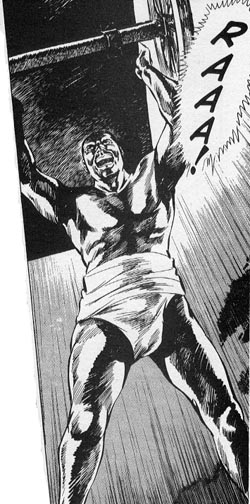
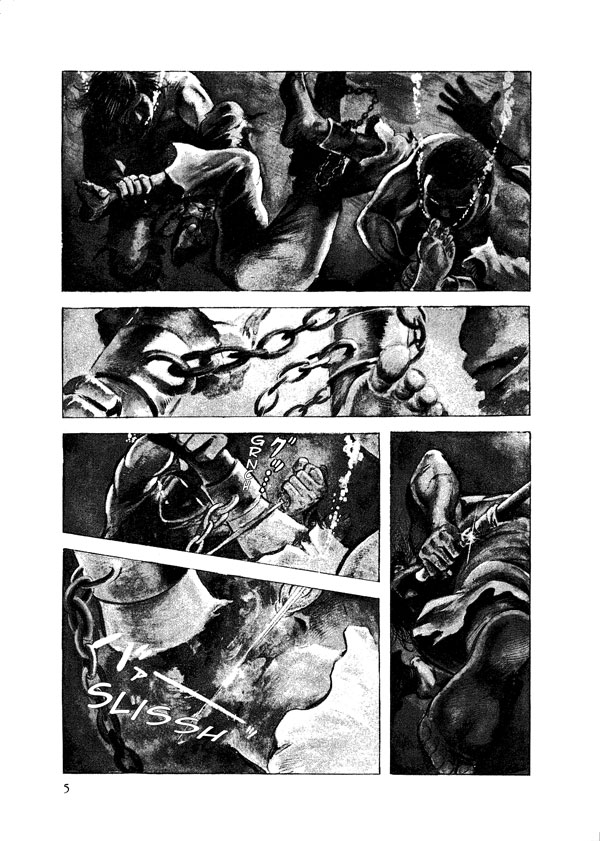
The story begins in 1783. Off the coast of Japan, a whaling ship sinks in turbulent seas, claiming the lives of all but two crew members: George, a Japanese man, and King, an African-American slave. The two wash ashore, cut away their shackles, and set out in search of a community where they can live peacefully — no small challenge, given how conspicuous King is among such a homogenous population. Of course, this being a manga by Kazuo Koike, George and King’s journey is anything but picaresque, as they bump up against the vigorous defenders of Edo-era status quo: ruthless daimyo, yakuza thugs, samurai-for-hire.

For such a far-fetched premise to work, its principal characters’ thoughts, words, and actions need to make sense in historical context, yet George and King behave like modern action heroes deposited in feudal Japan, not products of the eighteenth century. During scenes of limb-severing carnage, for example, they banter with the consummate skill of Harrison Ford and Will Smith, pausing occasionally to deliver speeches about finding a place where “color doesn’t matter” — a noble sentiment, to be sure, but one cribbed from a Civil Rights speech circa 1964, not an eighteenth century abolitionist’s tract. A similar sense of historical amnesia informs another scene in which King declares that conditions are worse for Japanese peasants than for slaves in the American South, leaving me to wonder how a slave working on a colonial plantation would have any comparative basis for making such an assertion or, frankly, any notion of the “American South,” given that the Revolutionary War was still in full swing at the time King was gang-pressed into whaling. Other historical oversights abound: how did a Japanese man end up in the galley of an American whaling ship? Where did George learn to speak fluent English? Who taught King to handle a sword? And so forth.

colorofrageinteriorThe bigger problem, however, is that King entertains notions of race, class, and gender that would have been as alien to American colonists as they were to Japanese farmers and overlords. His blind commitment to addressing inequality wherever he encounters it — on the road, at a brothel — leads him to do and say incredibly reckless things that require George’s boffo swordsmanship and insider knowledge of the culture to rectify. If anything, King’s idealism makes him seem simple-minded in comparison with George, who comes across as far more worldly, pragmatic, and clever. I’m guessing that Koike thought he’d created an honorable character in King without realizing the degree to which stereotypes, good and bad, informed the portrayal. In fairness to Koike, it’s a trap that’s ensnared plenty of American authors and screenwriters who ought to know that the saintly black character is as clichéd and potentially offensive a stereotype as the most craven fool in Uncle Tom’s Cabin. By relying on American popular entertainment for his information on slavery, however, Koike falls into the very same trap, inadvertently resurrecting some hoary racial and sexual tropes in the process.

Koike’s treatment of female characters, like his handling of racial issues, can be downright ugly. In a valiant effort to head off feminists at the pass, the editors acknowledge Koike’s propensity for writing “samurai-era yarns with a certain sense of chauvinist violence and pulpy sexiness.” Now I’m all for “pulpy sexiness” — doesn’t that sound like fun? But the casual mingling of sex and violence in Color of Rage crosses the line from mere chauvinism to outright misogyny. The nadir is a scene in which King strips a woman naked and crams dirt into her mouth until she chokes. Her crime: being turned on by the sight of King’s big, strapping body (which, I might add, artist Seisaku Kano treats as a kind of fetish-object throughout the book). Richard Wright might have known how to make the moment horrific, tragic, and peculiarly just, but someone as ill-versed in American history as Koike does not. The result is an uncomfortable mixture of kink and racism that hints at the story’s 1970s roots; one wonders what, exactly, Koike had read or seen to inspire such a florid racial fantasy.

The artwork is a hodgepodge of styles and techniques. The best pages appear to be done in charcoal or pastels, and have the soft edges and expressionist lighting I associate with fin-de-siecle modernists such as Käthe Kollwitz. The opening scene, in particular, is beautifully rendered, a harrowing sequence of wordless, slightly abstract panels that reveals how George and King survived their maritime ordeal:

corv2

Most of the art, however, looks like homage to Goseki Kojima’s work on Lone Wolf and Cub, Samurai Executioner, and Path of the Assassin — not a bad thing, given Kojima’s superb draftsmanship and penchant for drawing memorable mugs. Seisaku Kano’s character designs are fine, but his fight scenes are poorly composed, a riot of swords, guts, and bodies in motion that fail to give the reader a clear picture of what’s happening. That might be an OK artistic choice once in a while, perhaps to suggest the chaos of hand-to-hand combat, but as the dominant mode of depicting action it soon grows tiresome, leaving the reader feeling more pummeled than entertained.

Though some of these criticisms could be leveled at Koike’s other work — Lady Snowblood, Crying Freeman and, yes, Lone Wolf and Cub — Color of Rage lacks something common to the aforementioned manga: a sense of play. Koike never takes himself too seriously in these other works, even when the plot takes a dark turn or two. In Color of Rage, however, his sincerity proves his undoing, as he tries to insert a noble black character into a world of vicious overlords and amoral samurai. King’s high-minded speeches and interventions clash violently with the story’s “pulpy sexiness” (for want of a better term), producing something that’s neither dramatically compelling nor fun to read. Die-hard Koike fans may feel the completist’s urge to buy Color of Rage — especially since Dark Horse has given it such a deluxe treatment — but casual readers will find much less here to love.

This is a revised version of a review that originally appeared at PopCultureShock on 5/14/2008.

COLOR OF RAGE • BY KAZUO KOIKE AND SEISAKU KANO • DARK HORSE • 414 pp. • RATING: MATURE (18+)

Filed Under: Manga, Manga Critic, REVIEWS Tagged With: Action/Adventure, Bad Manga, Dark Horse, Historical Drama, Kazuo Koike

The Manga Hall of Shame: Color of Rage

August 12, 2010 by Katherine Dacey

RageCoverWhen reading historical manga, I grant the artist creative license to tell a story that evokes the spirit of an age rather than its details. What rankles my inner historian, however, are the kind of anachronisms that result from sheer laziness or paucity of imagination: modern slang, gross disregard for well-established fact. Alas, Color of Rage is filled with the kind of historical howlers that would make C. Vann Woodward or Leon Litwack gnash their teeth in despair.

The story begins in 1783. Off the coast of Japan, a whaling ship sinks in turbulent seas, claiming the lives of all but two crew members: George, a Japanese man, and King, an African-American slave. The two wash ashore, cut away their shackles, and set out in search of a community where they can live peacefully — no small challenge, given how conspicuous King is among such a homogenous population. Of course, this being a manga by Kazuo Koike, George and King’s journey is anything but picaresque, as they bump up against the vigorous defenders of Edo-era status quo: ruthless daimyo, yakuza thugs, samurai-for-hire.

…

Read More

Filed Under: Manga Critic Tagged With: Bad Manga, Dark Horse, Kazuo Koike, Seinen

Buffy the Vampire Slayer Omnibus 1 by Joss Whedon, et al.: B

July 13, 2010 by Michelle Smith

From the back cover:
The definitive collection of the first Buffy comics series starts here. This volume begins at the beginning—”The Origin,” a faithful adaptation of creator Joss Whedon’s original Buffy screenplay. The newly chosen Slayer’s road to Sunnydale continues by way of Vegas and a mental institution, and scenes of high school, the early Scoobies, and an English librarian lead the way into Season One—and The Goon creator Eric Powell gives a look at Spike and Drusilla causing havoc at the 1933 World’s Fair.

This omnibus series is the ultimate compilation of Dark Horse’s original Buffy comics and runs chronologically along the TV series’ timeline. A fitting companion to Whedon’s comics-based relaunch of the Buffy mythos.

Review:
Because this omnibus collects a variety of arcs from different points in the comic’s run—and created by various teams of people—I think it’ll be easiest to address each one separately.

“All’s Fair” by Christopher Golden, et al.
A short, murky story about the family of the Chinese Slayer Spike killed seeking vengeance at the 1933 World’s Fair in Chicago. The dialogue is decent, though Drusilla’s tendency to speak nonsense is overused, but the character likenesses are pretty bad and the story’s boring, to boot. Thankfully, this one’s quite short.

“Buffy: The Origin” by Joss Whedon, et al.
This purports to be “a faithful adaptation” of Whedon’s original screenplay for the Buffy movie. If so, apparently Joss originally envisioned vampires as cheesy green creatures! Still, this is much better than the movie as I remember it, doing a good job at depicting Buffy’s growing distance from her materialistic friends and setting up her conflicting desires/destinies of “normal girl” versus “chosen one.” I also liked that the scene of Buffy meeting her watcher, Merrick, for the first time seems to have been lifted wholesale from the movie script for use in season two’s “Becoming, Part 1.”

“Viva Las Buffy!” by Scott Lobdell, et al.
After Buffy gets expelled from Hemery High for burning down the gym (full of vampires), she and Pike head off to Las Vegas to investigate a casino catering to vampires. The story itself is not very exciting—despite involving time travel, half-vampire Siamese twins, and Angel doing his own poking around—but it’s narrated by Pike and provides an explanation for his absence from Buffy’s life in the series. It is rather weird to see Buffy being all proactive in her duties to vanquish vamps here, when she starts season one of the series so keen to avoid her calling.

“Dawn & Hoopy the Bear” by Paul Lee
This short story takes place while Buffy is in Vegas. In an attempt to kill Buffy, a demon imbues a teddy bear with the spirit of a djinn, but the delivery guy mistakenly gives it to Dawn instead. Instead of killing her, the bear takes a liking to her and becomes her defender. It’s a little weird to read a solo Dawn story like this, since we know it didn’t really happen, but I presume this is supposed to be one of the false memories Dawn has of her childhood. It’s actually really cute and I liked it a lot.

“Slayer, Interrupted” by Scott Lobdell, et al.
In the season six episode, “Normal Again,” Buffy reveals that she was once sent to a mental institution after telling her parents about vampires. While I don’t think that works with the continuity established in season two, in which Joyce appears to learn about Buffy’s Slayerhood for the first time, it’s still interesting to see what supposedly happened there. (Intriguingly, in this comic, it’s Dawn who’s responsible for the secret getting out. I wonder if Lobdell intended to propose a solution that would allow Joyce’s original reaction and Buffy’s memories—altered after Dawn was inserted into her life—to coexist.)

Unfortunately, it’s just too much like the season three opener, “Anne.” Buffy doesn’t want to be the Slayer; she’s stuck somewhere with a lot of helpless teens being victimized by a demon; she finally accepts who she is, and comes to everyone’s rescue. The story ends with a newly confident Buffy heading home, but again, this doesn’t really match with the Buffy we first meet in the beginning of the TV series.

While the stories are all drawn by different people, they have some artistic commonalities. First of all, many of them have problems with eye color. The earlier pieces in the collection depict vampires with red eyes, though this is corrected later. I’m more annoyed by Giles and Wesley having brown eyes and Buffy and Willow having blue ones. Eye color aside, though, Buffy in these comics looks more consistently like Sarah Michelle Gellar than she does in the Season Eight series.

Also, it’s not just Buffy whose pre-Sunnydale life we glimpse. The stories by Scott Lobdell contain scenes of the Watchers Council deciding which candidate will best serve as Buffy’s new watcher (this is where Wesley comes in), the gradual dissolution of Joyce and Hank’s marriage, and one brief sighting of a lonely Willow being sneered at by Cordelia and her cronies. Although there are a few minor inconsistencies, these arcs also flow quite well in chronological order, even though they weren’t originally published that way.

I actually own all seven of these omnibi, so expect more reviews to come!

Filed Under: Comics, Media Tie-In, Supernatural Tagged With: Buffy the Vampire Slayer, Dark Horse

The Best Manga You’re Not Reading

July 2, 2010 by Katherine Dacey

On Saturday, June 26th, Brigid Alverson, Robin Brenner, Martha Cornog, and I gave a presentation at the American Library Association’s annual conference called “The Best Manga You’re Not Reading.” The goal of our talk was to remind librarians about all the weird, wonderful, and diverse offerings for older teens and adults. Recommendations ran the gamut from Junko Mizuno’s Cinderalla (one of Martha’s picks) to ES: Eternal Sabbath (one of Brigid’s), with an emphasis placed on titles that are in-print and appealing to readers who self-identify as manga fans — and those who don’t. Below are my four picks, plus a “mulligan” (to borrow a term from Brigid).

fourimmigrantsTHE FOUR IMMIGRANTS MANGA: A JAPANESE EXPERIENCE IN SAN FRANCISCO, 1904 – 1924

Henry Yoshitaka Kiyama • Stone Bridge Press • 1 volume

In 1904, aspiring artist Henry Kiyama sailed from Japan to the United States in search of economic opportunity. After living in San Francisco for nearly twenty years, Kiyama documented his experiences in the form of 52 short comics. His memoir — one of the very first examples of a graphic novel — examines the racism and economic hardships that he and his friends encountered on a daily basis. Kiyama also addresses major events of the day, critiquing several Congressional acts designed to curtail Asian immigration, and remembering what it was like to live through the Great Earthquake of 1906, attend the Panama Pacific International Exposition of 1915, and survive the flu pandemic of 1918.

…

Read More

Filed Under: Manga Critic Tagged With: Classic, Dark Horse, del rey, Last Gasp, Osamu Tezuka, Samurai, Seinen, VIZ

The Best Manga You’re Not Reading

July 2, 2010 by Katherine Dacey

On Saturday, June 26th, Brigid Alverson, Robin Brenner, Martha Cornog, and I gave a presentation at the American Library Association’s annual conference called “The Best Manga You’re Not Reading.” The goal of our talk was to remind librarians about all the weird, wonderful, and diverse offerings for older teens and adults. Recommendations ran the gamut from Junko Mizuno’s Cinderalla (one of Martha’s picks) to ES: Eternal Sabbath (one of Brigid’s), with an emphasis placed on titles that are in-print and appealing to readers who self-identify as manga fans — and those who don’t. Below are my four picks, plus a “mulligan” (to borrow a term from Brigid).

fourimmigrantsThe Four Immigrants Manga
Henry Yoshitaka Kiyama • Stone Bridge Press • 1 volume
In 1904, aspiring artist Henry Kiyama sailed from Japan to the United States in search of economic opportunity. After living in San Francisco for nearly twenty years, Kiyama documented his experiences in the form of 52 short comics. His memoir — one of the very first examples of a graphic novel — examines the racism and economic hardships that he and his friends encountered on a daily basis. Kiyama also addresses major events of the day, critiquing several Congressional acts designed to curtail Asian immigration, and remembering what it was like to live through the Great Earthquake of 1906, attend the Panama Pacific International Exposition of 1915, and survive the flu pandemic of 1918.

What makes these autobiographical comics truly extraordinary, however, was that they were originally published in 1931 in a bilingual edition right here in America. As Frederik Schodt explains in his introductory essay, Kiyama’s work was aimed at other first-generation immigrants who, like him, were caught between two worlds, trying to make sense of their place in both. The visual style and subject matter may not strike contemporary readers as manga-esque (Schodt notes the influence of American cartoonist George McManus on Kiyama), but the intimate quality of the stories will leave as lasting an impression as graphic memoirs such as Marjane Satrapi’s Persepolis and Alison Bechdel’s Fun Home.

parasyte-v2Parasyte
Hitoshi Iwaaki • Del Rey • 8 volumes, complete
Imagine, if you can, a manga that combined elements of My Left Foot, Invasion of the Body Snatchers, and The Defiant Ones with the witty banter of a good buddy cop picture, and you have some idea of what Hitoshi Iwaaki’s Parasyte is all about. The story focuses on Shin, a high school student who wakes up one night to find a worm-like alien tunneling up his right arm towards his brain. In a moment of panic, Shin applies a tourniquet, arresting the creature’s progress but creating a brand-new problem in the process: the parasite takes up residence in his right hand, manifesting itself as a snail-like entity with googly eyes, a mouth, and the ability to transform itself into an astonishing array of shapes. Recognizing that their bodies are becoming interdependent, Shin and Migi (as he decides to call the parasite) agree to an uneasy truce. It isn’t long before other aliens are alert to Shin and Migi’s presence, forcing Shin and Migi to flee when it becomes apparent that the other parasites won’t tolerate their symbiotic existence. Shin and Migi can’t go to the human authorities, either, without risking imprisonment, quarantine, or worse.

Like a good B-movie, Parasyte uses elements of science fiction and horror to explore Big Questions about human nature while scaring the hell out of readers; the series is filled with nail-biting scenes of Shin and Migi trying to escape detection or fight other parasites. The violence is graphic but not sadistic; most of the action takes place between panels, with only the grisly aftermath represented in pictorial form. (Read: no torture scenes, no female characters being sexually assaulted before becoming an alien’s dinner.) The script is clever and funny, as Shin and Migi trade barbs with the antagonistic affection of Ernie and Bert, Oscar Madison and Felix Unger, or Detectives Mike Logan and Lenny Briscoe. Their relationship is one of Parasyte‘s greatest strengths, adding an element of novelty to a familiar story while deftly critiquing the idea that human beings’ intellect and emotional attachments place them squarely atop the food chain.

satsumaSatsuma Gishiden
Hiroshi Hirata • Dark Horse • 3 volumes, suspended
With its heady mix of social commentary, political intrigue, and battlefield action, Hiroshi Hirata’s Satsuma Gishiden reads like Kagemusha as told by Sam Peckinpah. Hirata dramatizes the plight of a powerful southern province that rebelled against the shogunate in the late eighteenth century (and would again, more famously, in the nineteenth). The story unfolds in a kaleidoscopic fashion, introducing us to the the sanpin and goshi, low-born samurai who eked out a living as farmers and laborers between military engagements; the daimyo, the leaders of Satsuma’s ruling Shimazu clan; and the administrators, spies, and chonin swept up in the violent conflict.

In the wrong hands, this material would be horribly dull; the initial showdown between Satsuma and shogunate stems from a public works project. (Makes you wonder: was Satsuma Gishiden the favorite manga of Robert Moses?) But Hirata successfully balances historical narrative and dramatic action. He explains the caste system and politics of the Edo period, the ritual of hiemontori, the concept of nise — even the type of water works found in eighteenth-century Japan — tossing in some jokey panels of winged ryo and money-grubbing donjon to illustrate the shogunate’s corruption. Some readers may find these passages didactic, but they provide an essential foundation for grasping nuances of plot and character. Lest the tone become too pedantic, Hirata liberally sprinkles the story with passages of bawdy humor and baroque violence. In one gruesomely funny scene, for example, a dying character uses his own broken rib to puncture an opponent’s skull. Top that, Mr. Peckinpah!

The chief attraction of Satsuma Gishiden, however, is its distinctive visuals. Hirata’s layouts evoke the films of mid-century masters such as Kurosawa, Kobayashi, and Ozu, blending cinematic realism with the rough-hewn aesthetic of woodblock prints. The characters, costumes, and horses are rendered in meticulous detail, yet the artwork is never static; through creative use of perspective, Hirata immerses the reader in vivid battle scenes, lively clan meetings, and ocean voyages. (Just a thought: Satsuma Gishiden would be awesome in 3-D. Maybe Dark Horse could repackage future editions with goggles to enhance the effect?) Recommended for samurai movie buffs, amateur Japanese historians, and readers who’ve exhausted the Kazuo Koike canon. (Originally reviewed at PopCultureShock on 2/16/07.)

town_coverTown of Evening Calm, Country of Cherry Blossoms
Fumiyo Kouno • Last Gasp • 1 volume
If Barefoot Gen shows readers what it was like to live through the Hiroshima bombing and its horrific aftermath, Town of Evening Calm, Country of Cherry Blossoms shows readers what it was like to live with the memories of that day ten, twenty, and forty years later. Fumiyo Kouno’s book is divided into two stories. The first, “Town of Evening Calm,” is set in 1955, and focuses on one young woman’s attempt to preserve the remnants of her family, while the second, “Country of Cherry Blossoms,” is set in the 1990s, and focuses on the strained relationship between a survivor and his adult daughter. Both stories are simply but beautifully illustrated, avoiding the kind of visual tropes (big eyes, tiny noses, super-cute deformations) that many Western readers find jarring when reading Serious Manga.

In the few panels alluding to the actual events of August 6, 1945, Kouno’s art becomes more primitive and stylized, suggesting the horrific effects of the blast by depicting the victims as stick figures with swollen faces. The child-like simplicity and directness of these images are startling yet effective, a powerful representation of the radiation’s devastating ability to rob its victims of their identities by destroying their hair, hands, and faces. These scenes are notable as well for the skillful way in which present and past co-exist within the same panels; we see the landscape as the survivors do, alive with vivid memories of the blast. None of these images are graphic, though they are an unsettling reminder of the characters’ deep emotional scars.

The book’s strong anti-war message is balanced by the story’s emphasis on quiet, everyday moments, preventing Town of Evening Calm, Country of Cherry Blossoms from succumbing to didacticism or sensationalism. Though Kouno did not grow up in Hiroshima, her meticulous research and careful reading of survivor memoirs lends her work a kind of emotional authenticity that a more dramatic story might have lacked. The result is a moving work that challenges readers to imagine how they might rebuild their lives in the aftermath of incomprehensible tragedy. (Reviewed at The Manga Critic on 1/4/10.)

phoenix7BONUS PICK: Phoenix: Civil War
Osamu Tezuka • VIZ • 2 volumes
A quick glance through Phoenix: Civil War might not suggest that this is the stuff of high art. The characters bear an uncanny resemblance to the denizens of Popeye and jokey anachronisms abound. (Although the story ostensibly takes place in twelfth-century Japan, one character receives a telephone call and chows down on a bucket of KFC.) But flip to the back pages, where VIZ has included a brief statement from the manga-ka explaining the origins and meaning of Phoenix, and you’ll learn that Tezuka claimed Igor Stravinsky’s ballet The Firebird as the inspiration for Phoenix. Tezuka saw parallels between Stravinsky’s firebird and a similar creature from Japanese legend, Hou-ou. The phoenix, Tezuka decided, was a powerful symbol of “man’s attachment to life and the complications that arise from greed.” Using the phoenix as a touchstone, Tezuka constructed an elaborate, twelve-volume series exploring Japan’s historic past and possible future. He planned a final volume set in present-day Japan (“where past and future converge”), but passed away without completing his epic.

One of the best things about Phoenix is that readers can enjoy it as a series or a collection of stand-alone stories. Though I love Sun (the series’ epic, two-volume conclusion) and Karma (the fourth volume of the English edition), I think the two-volume Civil War (the seventh and eight volumes of the English edition) make the best introduction to Tezuka’s masterpiece. Civil War is set in Heian-era Kyoto, where several powerful families vie for control of the city. We experience the conflict through myriad perspectives: a lowly woodcutter and his fiancee, a ragtag band of samurai, an apolitical sage, and two powerful clan leaders, both of whom seek the phoenix in an effort to consolidate their political victories and perpetuate their bloodlines. The story may remind readers of The Hidden Fortress as it moves between epic battles and domestic drama, romance, and earthy comedy. While Tezuka isn’t above a little flatulence humor, he never condescends to his characters, using such lowbrow moments to demonstrate the common humanity of his entire cast. The character designs may be too cartoonish for some tastes, but Tezuka’s artwork is never short of spectacular; his imaginative layouts and flair for caricature are as distinctive as Igor Stravinsky’s brilliant orchestrations, churning rhythms, and pungent octatonic harmonies. (Originally reviewed at PopCultureShock on 10/26/06.)

* * * * *

Click here to read Brigid and Martha’s recommendations; click here to read Robin’s. Have a title you’d like to suggest? Let me know in the comments — we’re hoping to do this panel again at another convention, and would welcome your feedback.

Filed Under: Manga, Manga Critic, Recommended Reading, REVIEWS Tagged With: Classic, Dark Horse, del rey, Last Gasp, Osamu Tezuka, Samurai, VIZ

10 Must-Read Manhwa

April 11, 2010 by Katherine Dacey 26 Comments

After visiting “Korean Comics: A Society Through Small Frames” last weekend, I was struck by the homogeneity of titles on the exhibit’s suggested reading list. The list isn’t bad by any means, but it places heavy emphasis on recent, teen-oriented titles such as The Antique Gift Shop, Chocolat, Click, Moon Boy, and Snow Drop while overlooking some less popular choices such as Buja’s Diary. As a supplement to my write-up of the “Korean Comics” show, therefore, I’ve compiled my own list of must-read manhwa. Though my goal is to direct readers to works in a variety of styles and genres, I freely admit that this list reflects my own tastes and biases. I’d love to hear from you about what you think belongs on a must-read manhwa list and why. And if you’d like a copy of the SFPL’s Korean Comics bibliography, let me know — I’d be happy to mail one to you.

dejavu10. DEJA-VU: SPRING, SUMMER, FALL, WINTER

YOUN IN-WAN • TOKYOPOP • 1 VOLUME

Déjà vu is a manhwa smorgasbord, pairing writer Youn In-Wan with six artists with distinctly different styles. The first four stories follow the same basic template: two lovers find themselves drawn together by mysterious forces, only to be separated by a moment of terrible violence. The settings and circumstances range from the vaguely folkloric — a warrior and a fox demon fall in love after he frees her from a hunter’s snare — to the contemporary — a blind Korean-American girl and an up-and-coming pop singer meet cute on the streets of San Francisco. The best stories, “Spring” and “Winter,” deftly interlace the fates of the warrior and the fox with the survivors of a twenty-third century apocalypse, bringing to mind Sun, the final installment of Osamu Tezuka’s Phoenix. Though the stories aren’t uniformly excellent, Deja-vu still makes a fine introduction to the contemporary Korean comics scene in general and the writing of Youn In-Wan in particular; look for his series March Story in October 2010. (Reviewed at PopCultureShock on 1/30/08.)

narration9. NARRATION OF LOVE AT 17

KYONGOK KANG • NETCOMICS • 4 VOLUMES

Seyoung, the heroine of Narration of Love at 17, is bright, but not exceptional; pretty, but not a head-turner; and talented, but not outstanding. For several years, Seyoung has been a member of the drama club, relegated to backstage roles while the beautiful Hyemi lands the plum parts. When Hyemi becomes involved with Hyunwoo, Seyoung’s friend and first crush, Seyoung faces a tough choice: will she wait for Hyunwoo to reciprocate her feelings, or will she move on? Backstage rivalries and first loves are standard manhwa fare, but Narration of Love at 17 proves deeper and more heartfelt than most coming-of-age stories in this vein, thanks to Kyongok Kang’s believable, appealing characters; their quicksilver moods, intense passions, deep insecurities, and ever-changing social allegiances make them seem like real teenagers and not an adult’s idea of what teenagers are like. Though the art is, at times, a little clumsy, Kang’s fondness for 1970s shojo is evident in her linework and character designs, and in her emotionally resilient protagonist. (Reviewed at PopCultureShock on 9/12/07. Click here to read a preview chapter at NETCOMICS.)

priest18. PRIEST

MIN-WOO HYUNG • TOKYOPOP • 16 VOLUMES

This sprawling, religio-horror epic comes saddled with enough convoluted backstory for a J.R.R. Tolkein trilogy or a George Lucas franchise, yet proves surprisingly fast-paced and fun. Skipping between the present, the Crusades, and the American West — or, more accurately, a manhwa artist’s cinematically influenced notion of the West — Priest tells the story of Ivan Isaacs, a man of the cloth who renounces his faith after evil researchers use his sister as a human sacrifice. Over the span of sixteen volumes, Ivan battles fallen angels and zombies in an effort to avenge Gena’s death, restore order, and redeem his sinner’s soul. The artwork is bold and stark, with spiky lines and attitude to spare; if you adored the over-the-top action sequences and pistol-packing clergymen of Hellsing, Min-woo Hyung’s elaborate shoot-em-up will be your cup of tea. (Click here to read the first volume at Tokyopop.)

bongsmallcov7. RUN, BONG-GU, RUN!

BYUN BYUNG-JUN • NBM/COMICS LIT • 1 VOLUME

Run, Bong-Gu, Run! tells a simple story: Bong-Gu and his mother leave their rural village to find Bong-Gu’s father, who has gone to Seoul in search of work. As they retrace his steps through the capital, a chance encounter with a beggar yields an important clue to the father’s whereabouts, offering hope that the family will be reunited. The author never explicitly states what prompted the father to leave, how long he’s been away, or why Bong-Gu’s mother waited so long to track him down. In leaving these characters’ personal histories mysterious, Byun Byung-Jun comes dangerously close to romanticizing them: Bongu-Gu’s parents and the old beggar often register as poor but dignified archetypes rather than flesh-and-blood people. But Byun’s spare, restrained artwork mitigates against the story’s sentimentality, offering readers a haunting cityscape that’s as much a character as Bong-Gu or his mother. Rendered in rough, energetic brushstrokes and muted watercolors, Byun’s street scenes are among the most beautiful images I’ve seen in any manhwa translated for English-speaking audiences. (Reviewed at PopCultureShock on 7/11/07. Click here to read a preview at NBM/Comics Lit.)

1020306. 10, 20, AND 30

MORIM KANG • NETCOMICS • 7 VOLUMES

The ten, twenty, and thirty of the title refer to Rok, a sixteen-year-old girl; Belle, her twenty-six-year old cousin; and Krumb, Rok’s mother, who at age thirty-two finds herself a widow. Through a series of interlocking vignettes, 10, 20, and 30 documents the trio’s fumbling efforts to find themselves — and Mr. Right. If the naive, cartoonish art is a take-it-or-leave-it affair, Kang’s heroines are winning, at once complex and sympathetic. They make mistakes; they overreact; they misjudge the men in their lives; they sometimes hurt loved ones with selfish behavior. To be sure, similar characters abound in Bridget Jones’ Diary and Sex and the City, but there’s a qualitative difference between Bridget and the ladies of 10, 20, and 30: Rok, Belle, and Krumb aren’t neurotic. Beneath their quirks and anxieties, all three women display genuine strength and self-determination, even if they don’t always make smart choices about the men in their lives.  (Reviewed at PopCultureShock on 5/10/07. Click here to read a preview chapter at NETCOMICS.)

goong75. GOONG: THE ROYAL PALACE

PARK SOO-HEE • ICE KUNION • 10+ VOLUMES (ongoing)

Goong: The Royal Palace focuses on commoner Chae-Kyung, a high school student who marries the next in line to the (fictional) Korean throne. Just as Diana Spence did in real life, Chae-Kyung discovers that being a princess isn’t glamorous, as her day-to-day life is filled with palace intrigue, onerous civic responsibilities, jealous classmates, and an indifferent husband who’s in love with someone else. Though the plot is an amalgam of familiar soap-opera conventions — romantic triangles! hot younger siblings! disapproving mother-in-laws! — the story has surprising depth, showing us the emotional toll that public life exacts on the young couple. Another plus is the artwork: it’s flat-out gorgeous, with considerable attention devoted to ancient ceremonial costumes and au-courant fashions. Pair those beautiful images with a compelling plot and boatloads of romantic tension, and you have a recipe for manhwa crack. (Reviewed at PopCultureShock on 8/29/08.)
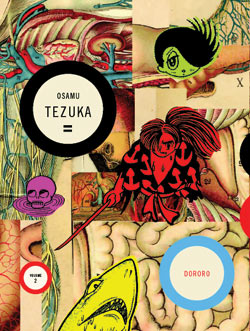
forestgray24. FOREST OF GRAY CITY

JUNG-HYUN UHM • ICE KUNION/YEN PRESS • 2 VOLUMES

Struggling artist Yun-Ook and bartender Bum-Moo decide to room together after a series of drunken misunderstandings that wouldn’t be out of place in a Meg Ryan movie. Though Yun-Ook is horrified to discover their age difference — she’s in her twenties, he’s seventeen — Bum-Moo begins courting her in a confused, low-key fashion. The story would be pure Harlequin fodder if Jung-Hyun Uhm’s heroine wasn’t such a strong, appealing character. Yun-Ook is impetuous, insecure, and quick to take offense, but she’s also focused on her career, protective of Bum-Moo, and determined not to sacrifice her sense of self just to land a husband. There’s a level of emotional authenticity about her character that will resonate with female readers in their twenties and thirties, even if her story seems more firmly rooted in romance novel convention than reality. (Reviewed at The Manga Critic on 4/27/09.)

shaman33. SHAMAN WARRIOR

PARK JOONG-KI • DARK HORSE • 9 VOLUMES

Shaman Warrior serves up generous portions of pow! splat! thmp! and gyaaaa! with heaping sides of political intrigue and supernatural hoo-ha. The story is, at heart, an inter-generational revenge fantasy about a young woman who spends her childhood preparing to confront her father’s assassin and lay bare the double-crosses and unsavory alliances that led to his demise — in short, it’s a grrrl power theme-and-variation on the Epigoni. What it lacks in complexity Shaman Warrior makes up in beauty and bravado: Park Joong-Ki is a superb draftsman, populating his story with an astonishing variety of faces and body-types. His fight scenes are artfully choreographed, if a little heavy on the speedlines, immersing readers in the action in the manner of a contemporary wuxia film. (Reviewed at PopCultureShock on 1/24/07. Click here to read a preview at Dark Horse.)

dokebi22. DOKEBI BRIDE

MARLEY • NETCOMICS • 6 VOLUMES (on hiatus in Korea)

After losing her mother to mental illness and her grandmother to old age, Sunbi’s long-absent father returns to claim her. Their reunion proves an awkward and unhappy one, however: his new wife and daughter resent Sunbi’s presence, while Sunbi’s classmates shun her for her “freakish” behavior, none of them realizing that her aloof, abrasive demeanor helps protect her from demons and spirits. Familiar as Dokebi Bride‘s “I see demons!” premise may be, Marley uses Sunbi’s affliction as a jumping-off point for exploring issues such as fitting in, blending families, and answering that most basic of questions, who am I? Sunbi is an all-too-rare character in comics, a smart, resourceful girl who’s palpably — and justifiably, I might add — angry. Long after you’ve forgotten the basic storyline, the memory of Marley’s fierce, real heroine will stay with you. N.B. Dokebi Bride has been on hiatus for over a year; NETCOMICS has released the six volumes that were published in Korea. No word on when — or if — Dokebi Bride will resume. (Click here to read a preview chapter at NETCOMICS.)

bujacovsmall1. BUJA’S DIARY

SEYOUNG O • NBM/COMICS LIT • 1 VOLUME

Among the manhwa featured in “Korean Comics: A Society Through Small Frames” was “The Picture Diary of Puja,” a short, poignant story about a rural family’s efforts to make a home in Seoul. “Puja’s Diary” (translated by NBM as “Buja’s Diary”) juxtaposes wordless scenes, illustrated in a naturalistic style, with a young girl’s description of the same events: a robbery, a shakedown, a child being injured at a construction site. The effect is simple yet devastating, a Dickensian critique of industrialization and poverty in modern-day Korea. As the other stories in Buja’s Diary attest, displacement, change, and encroaching urbanization are important themes in Seyoung O’s work, though he proves equally adept at humor (“Observe,” which tracks a vain gum-chewer through the streets of Seoul) and surrealism (“Escape,” which depicts one bored man’s nightmarish daydream about his office mates). The artwork varies according to the tone of the story; some of the more somber tales are rendered in charcoal wash and ink, while others employ more exaggerated linework reminiscent of Daumier. One of the most thought-provoking and beautiful manhwa available in English. (Click here to read a preview at NBM/Comics Lit.)

Filed Under: Manga Critic Tagged With: Dark Horse, NBM/Comics Lit, netcomics, Tokyopop, yen press

10 Great Global Manga

February 19, 2010 by Katherine Dacey 26 Comments

Among certain parts of manga fandom, global manga (or OEL manga) is viewed as the comic-book equivalent of New Coke: the packaging might be similar, but the taste is different and, as these fans would have it, not as good as the original. It’s a shame this attitude persists, because there’s a growing community of artists in Europe and the United States whose work isn’t just a slavish imitation of popular Japanese models, but a unique synthesis of Eastern and Western styles. Below, I’ve highlighted ten global manga that best embody this fusion, and throw in a few honorable mentions for good measure.

A few caveats about this list. First, I’ve focused primarily on American artists, as my readership is based in the United States. If there are Canadian, European, Australian, or South American artists who I’ve neglected, please feel free to educate me below. Second, my list does not include manhua or manhwa, as those traditions are more established, and draw on some of the same artistic and cultural traditions as manga. And third, my list does not include such YA franchises as Maximum Ride, Odd Thomas, or Warriors, as I wanted to focus on original works. Got some additional recommendations? Please share them in the comments!

dreaming10. THE DREAMING

QUEENIE CHAN • TOKYOPOP • 3 VOLUMES

Not long after identical twins Jeanie and Amber Malkin enroll at a boarding school in the Australian outback, one of their classmates disappears, triggering a series of eerie, unexplained events. Queenie Chan creates the perfect atmosphere for this Picnic at Hanging Rock meets The Orphanage ghost story; with its Gothic architecture and period furnishings, the school looks like something from a Hammer Studio film, filled with walled-off chambers, mysterious paintings, and apparitions in Victorian dress. The first two volumes are solid and smartly paced, but the third suffers from a bad case of compression; one wishes that Tokyopop had given Chan four volumes instead of three so that Chan could show more and tell less. Still, it’s impossible to deny this emerging artist’s considerable talent, and easy to see why Del Rey hired her to adapt Odd Thomas from novel to manga. (Originally reviewed at PopCultureShock on 12/6/06.)

offbeat19. OFF*BEAT

JEN LEE QUICK • TOKYOPOP • 2 VOLUMES (suspended)

Off*Beat, an ambitious mixture of science fiction, realism, and romance, focuses on Tory, a smart, lonely teen who lives with his mother in Queens. When a boy his own age moves in across the street, Tory becomes infatuated with Colin, observing and recording Colin’s behavior in a journal, and angling to become Colin’s math tutor. Midway through the story, Jen Lee Quick introduces a subplot that hints at Colin’s involvement with something called the Gaia Project — an organization that may be responsible for Colin’s mysterious blackouts. Unfortunately, Tokyopop pulled the plug on the third and final volume; we’ll never know if the Gaia conspiracy is real or a product of Tory’s vivid imagination. Either way, Off*Beat is an engrossing read that vividly evokes urban life and thoughtfully explores the boundaries between same-sex friendship and romance.

bluemonday18. BLUE MONDAY

CHYNNA CLUGSTON • ONI PRESS • 4 VOLUMES

Though Chynna Clugston’s artwork suggests a strong manga influence, her take-no-guff female characters are a welcome departure from the plain Janes and trembling wallflowers found throughout shojo mangadom. Blue Monday charts the ups and downs of Bleu Finnegan, a California teen whose enthusiasms are all over the map: Adam Ant albums, Buster Keaton flicks, vintage mod fashions. Bleu spends most of her time hanging out with a small posse of friends that include Clover, an Irish ex-pat; Alan, a sex-addled player; Victor, a reformed Goth; Erin, a scheming frenemy; and Monkeyboy, an underclassman who hides behind a curtain of hair. At times, the stories feel a little frenetic, but Clugston does a fine job of capturing this co-ed group’s dynamic, from the endless your-mama jokes to the earnest pop culture analysis. Too bad no one from Minx thought to commission a book from Clugston, as Blue Monday‘s frank, free-wheeling humor and girl-positive message would have been a welcome addition to their line.
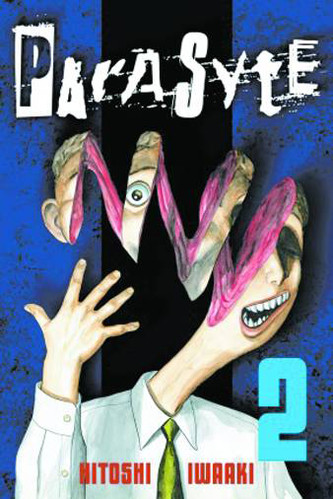
japan_ai7. JAPAN AI: A TALL GIRL’S ADVENTURES IN JAPAN

AIMEE MAJOR STEINBERGER • GO! COMI • 1 VOLUME

In ten charmingly illustrated chapters, animator and avid cosplayer Aimee Major Steinberger documents her 2007 trip to Japan, where she visited otaku hotspots from the manga shops of Akihabara to the back door of the Takarazuka Revue. Steinberger’s simple but evocative art does a beautiful job conveying both the essential strangeness of being a tall American woman in Japan and the sheer joy of being a fangirl in the otaku motherland. The only drawback to Japan-Ai is the packaging: the sparkling pink cover and bubbly font — presumably derived from Steinberger’s handwriting — may deter male readers from purchasing a book that looks suspiciously like a SnoBall. That’s a pity, because Steinberger’s narrative is funny and informative, filled with the kind of interesting digressions on kogal fashions, Takarazuka fan culture, and onsen etiquette that any budding Japanophile would find enlightening. (Originally reviewed at PopCultureShock on 12/19/07.)

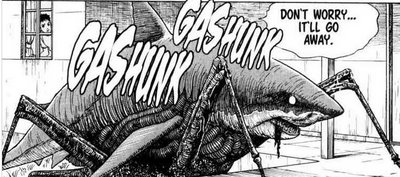
empowered16. EMPOWERED

ADAM WARREN • DARK HORSE • 6+ VOLUMES (ongoing)

Empowered is a unique crossover, a manga-influenced comic that parodies tights-and-capes conventions with raunchy gusto. Its heroine, Elissa Megan Powers, a.k.a. Empowered, is a superhero who struggles with self-esteem issues and social anxiety — two problems compounded by her utterly unreliable super-suit, which is prone to ripping and exposing her at inopportune moments. In less skillful hands, Empowered would be pure cheesecake, but Adam Warren manages the difficult trick of drawing a heroine whose costume failures do more than just titillate (if you’ll pardon the expression), they shed light on the objectification of female superheroes in mainstream American comics. Warren also has a ball satirizing manga, as Empowered’s best friend is a reformed villainess imaginatively named Ninjette. Rude, silly fun.

12days5. 12 DAYS

JUNE KIM • TOKYOPOP • 1 VOLUME

When Jackie’s ex-girlfriend Noah dies in a car accident, Jackie decides that the best strategy for coping with her grief is to consume Noah’s ashes in the form of a daily smoothie. Over the course of twelve days, Jackie punishes herself with this gruesome ritual while confronting painful memories of Noah and sparring with Noah’s brother Nick. Though the smoothie conceit is self-consciously literary — Jackie’s ash-drinking ritual has an analog in classical antiquity — June Kim’s book remains true to life, filled with lovely, quiet observations about the way we grieve, define family, express desire, and remember moments of hurt and betrayal. Kim dares to fill up pages with nothing more than realistically drawn close-ups of faces and hands, allowing us to experience the characters’ emptiness for ourselves. Some poor design choices on Tokyopop’s part — namely, a hideous font — mar, but don’t ruin, Kim’s carefully composed layouts. (Originally reviewed at PopCultureShock on 12/6/06.)

kingcity14. KING CITY

BRANDON GRAHAM • IMAGE COMICS/TOKYOPOP • 1+ VOLUME (first volume was reissued by Image Comics in shorter installments; series is ongoing)

King City was one of several titles stuck in limbo when Tokyopop restructured its global manga initiative, eventually finding a new home and a new (floppy) format at Image Comics. The larger trim size suits the material, giving Brandon Graham’s detailed cityscapes and characters a little more room to breathe. The story is an agreeable mess, chronicling the adventures of Joe, a twenty-something dude with a talent for picking locks and getting mixed up in dangerous (read: illegal) activities. Aiding him is Earthling J. J. Catterworth the Third, a cat capable of transforming into whatever tool Joe needs — a weapon, a periscope — and Joe’s geeky sidekick Pete. Though the story sometimes has a forced zaniness to it, Graham is an imaginative cartoonist capable of drawing anything from super-sexy Gothic girls to dinosaurs. His affection for manga is evident throughout the series, most notably in his use of evocative but silly sound effects, and in his fondness for extreme camera angles… just because.

yokaiden_cover23. YOKAIDEN

NINA MATSUMOTO • DEL REY • 2 VOLUMES (suspended)

Nina Matsumoto made a splash back in 2007 with a manga-fied rendition of the entire Simpsons cast. What could have been a passing moment of Internet notoriety helped open doors for her, however, leading to an offer from Del Rey to pitch an original story. The result is Yokaiden, a supernatural adventure about a young boy whose knowledge of and trust in yokai is put to the test when a vengeful kappa steals his grandmother’s soul.  Among the many pleasures of Matsumoto’s smartly paced series are the yokai themselves; her demons would be right at home in the Hokusai Manga or an eighteenth-century scroll painting. The script is a little tin-eared at times, but the humor and stylish artwork more than compensate for a few clunky passages.

nightschool-22. NIGHTSCHOOL: THE WEIRN BOOKS

SVETLANA CHMAKOVA • YEN PRESS • 4 VOLUMES

At first glance, Nightschool looks the product of a teen focus group, a mash-up of Twilight, Harry Potter, and a dozen other fantasy series starring vampires and wizards. A closer look, however, reveals that Svetlana Chmakova has fashioned an engrossing supernatural mystery from elements of domestic drama, horror, and humor: an eye-of-newt solution comes with a “may contain peanuts” warning, a beleaguered headmaster finds an ingenious solution for including vampires in the high school yearbook. (They don’t show up on film.) Chmakova doesn’t skimp on the action, either, staging scenes of nocturnal combat with great aplomb. Perhaps most exciting thing about Nightschool is seeing the degree to which her storytelling has evolved since she burst on the scene in 2005; though Chmakova’s trademark style is immediately recognizable, the layouts are looser and more dynamic than Dramacon‘s, playing a more integral role in advancing the plot.

scottpilgrim51. SCOTT PILGRIM

BRYAN LEE O’MALLEY • ONI PRESS • 6 VOLUMES

In case you’ve been living under a rock, here’s the deal with Scott Pilgrim: this goofy series documents the romantic misadventures of a twenty-three-year-old slacker who must defeat The League of Evil Ex-Boyfriends, a loose consortium of his new girlfriend’s previous lovers. Scott’s travails are an apt metaphor for the way most of us feel when we embark on a new relationship: we’d like to leave our baggage behind and make a fresh start of things, but it usually takes a whole lot of effort — and maybe some Mortal Kombat — to get there. Though the plot is fun and fast-paced, what really makes Scott Pilgrim work is the deft way Bryan Lee O’Malley pokes fun at hipster culture; everyone has something to knowingly laugh at, from classic video games to indie rock lyrics. (Originally reviewed at PopCultureShock on 11/14/07.)

HONORABLE MENTIONS

GOTHIC SPORTS (By Anike Hage • Tokyopop • 3 volumes, ongoing): This German import focuses on Anya, a transfer student desperate to join one of her new school’s top-ranked sports teams. Her efforts are frustrated both by her lack of skill and the school’s limited opportunities for female athletes. Anya refuses to be sidelined, however, and forms a co-ed soccer team notable for its inclusiveness and its stylin’ uniforms. The pacing is a little slow, and the backgrounds aren’t nearly as well rendered as the characters — or their elaborate outfits, for that matter — but Gothic Sports serves up a good mix of drama, humor, and game play. (Originally reviewed at PopCultureShock on 9/26/07.)

HOLLOW FIELDS (By Madeline Rosca • Seven Seas • 3 volumes): Nine-year-old Lucy Snow is bound for the genteel halls of Saint Galbat’s Academy for Young Ladies, but bad directions from a stranger lead her instead to Hollow Fields, a.k.a. Miss Weaver’s Academy for the Scientifically Gifted and Ethically Unfettered. Though Lucy’s gut instinct is to flee, she enrolls at Miss Weaver’s school—after all, the tuition is free and her private room has its own bath. What Lucy discovers is that Miss Weaver has been culling the student body, sending the slackers to a detention center from which no one has returned. Looking at Madeline Rosca’s crisp character designs and steampunk setting, it’s easy to see why Hollow Fields nabbed an International Manga Award in 2007: her art is the real deal. The story’s brisk pace and macabre sense of humor are pluses, too. (Originally reviewed at PopCultureShock, 7/12/07).

MANGA SHAKESPEARE: OTHELLO (By Ryuta Osada • Self-Made Hero • 1 volume): I’ll be honest: I’ve been unimpressed with many of Self-Made Hero’s Manga Shakespeare volumes, both for the unpolished artwork and for the editorial handling of the Bard’s best-known speeches. Ryuta Osada’s adaptation of Othello is a notable exception, with strong, arresting visuals, and an anthropomorphic approach to character design that puts a fresh spin on the material. Enjoyable whether you’re tackling Othello for sophomore English or revisiting it for the fifth time.

RE:PLAY (By C. Lijewski • Tokyopop • 3 volumes): Drawing on a variety of musical and manga influences — Linkin Park, Naked Ape, and Tite Kubo among them — Christy Lijewski tells the story of a struggling band whose fortunes change when they meet a stranger busking on the streets. The catch: mystery man Iszak may not be human. The supernatural element sometimes feels as if it’s been grafted onto a more conventional rock-n-roll drama, but the crisp dialogue and unique artwork more than offset a few moments of dramatic weakness. (Click here for my review of volume three at Good Comics for Kids; click here for my 2008 interview with Lijewski at PopCultureShock.)

SORCERERS & SECRETARIES (By Amy Kim Ganter • Tokyopop • 2 volumes) This two-volume romance explores the relationship between mousy Nicole Hayes, an aspiring fantasy writer, and flirtatious Josh Kim, an aspiring ladies’ man. Like many series in Tokyopop’s OEL line, Sorcerers & Secretaries feels pat, as the obstacles in the couple’s way — she wants to write, he wants to take her on a date — are really nothing more than speed bumps. Ganter pulls off the difficult balancing act between respecting her characters’ motivations and recognizing the youthful naivete of their beliefs, however, preventing this sweet, sincere story from becoming sappy. (Originally reviewed at PopCultureShock on 6/7/07.)

TALKING TO STRANGERS (Stories by Fehed Said, Art by Chloe Citrine, Sonia Leong, Nana Li, Win Yun Man, and Faye Yong • Sweatdrop Studios • 1 volume): This six-story collection runs the gamut, subject- and style-wise, from horror to comedy, making it a good introduction to the writers and artists of British manga publisher Sweatdrop Studios. (Click here for my review at The Manga Critic.)

Filed Under: Manga Critic Tagged With: Dark Horse, del rey, Go! Comi, Oni Press, Sweatdrop Studios, Tokyopop, yen press

  • « Go to Previous Page
  • Page 1
  • Page 2
  • Page 3
  • Page 4
  • Page 5
  • Page 6
  • Go to Next Page »
 | Log in
Copyright © 2010 Manga Bookshelf | Powered by WordPress & the Genesis Framework