• Skip to primary navigation
  • Skip to main content
  • Skip to primary sidebar
  • Home
  • About Us
    • Privacy Policy
    • Comment Policy
    • Disclosures & Disclaimers
  • Resources
    • Links, Essays & Articles
    • Fandomology!
    • CLAMP Directory
    • BlogRoll
  • Features & Columns
    • 3 Things Thursday
    • Adventures in the Key of Shoujo
    • Bit & Blips (game reviews)
    • BL BOOKRACK
    • Bookshelf Briefs
    • Bringing the Drama
    • Comic Conversion
    • Fanservice Friday
    • Going Digital
    • It Came From the Sinosphere
    • License This!
    • Magazine no Mori
    • My Week in Manga
    • OFF THE SHELF
    • Not By Manga Alone
    • PICK OF THE WEEK
    • Subtitles & Sensibility
    • Weekly Shonen Jump Recaps
  • Manga Moveable Feast
    • MMF Full Archive
    • Yun Kouga
    • CLAMP
    • Shojo Beat
    • Osamu Tezuka
    • Sailor Moon
    • Fruits Basket
    • Takehiko Inoue
    • Wild Adapter
    • One Piece
    • After School Nightmare
    • Karakuri Odette
    • Paradise Kiss
    • The Color Trilogy
    • To Terra…
    • Sexy Voice & Robo
  • Browse by Author
    • Sean Gaffney
    • Anna Neatrour
    • Michelle Smith
    • Katherine Dacey
    • MJ
    • Brigid Alverson
    • Travis Anderson
    • Phillip Anthony
    • Derek Bown
    • Jaci Dahlvang
    • Angela Eastman
    • Erica Friedman
    • Sara K.
    • Megan Purdy
    • Emily Snodgrass
    • Nancy Thistlethwaite
    • Eva Volin
    • David Welsh
  • MB Blogs
    • A Case Suitable For Treatment
    • Experiments in Manga
    • MangaBlog
    • The Manga Critic
    • Manga Report
    • Soliloquy in Blue
    • Manga Curmudgeon (archive)

Manga Bookshelf

Discussion, Resources, Roundtables, & Reviews

comics

My Week in Manga: May 26-June 1, 2014

June 2, 2014 by Ash Brown

My News and Reviews

Last week was a slower week at Experiments in Manga, which is just as well because I spent a long weekend with my family in Ohio for my youngest sister’s high school graduation. I was pretty busy with things there, but I was still able to post a few things here. The most recent manga giveaway, for example. There are still a couple of days left to enter for a chance to win Oishinbo, A la Carte: Japanese Cuisine, too. All you have to do is tell me a little about your favorite food manga (if you have one). May’s Bookshelf Overload was also posted. Interestingly enough, I think I actually bought more comics last month  than manga. (I largely blame TCAF for that.) As for reviews, I took a look at Yoshikazu Yasuhiko’s Mobile Suit Gundam: The Origin, Volume 5: Char & Sayla. Char happens to be one of my favorite Gundam characters, so it probably shouldn’t be too surprising that this volume is one of my favorites in the series thus far.

There were a few things that I found to read online last week that were particularly interesting, too: Manga Therapy is writing and hosting a series of posts for Mental Health Month, including Lauren Orsini’s article about Mushishi as a metaphor for mental illness. FanboyNation had an interview with Tokyopop. Brigid Alverson interviewed Akira Himekawa for Comic Book Resources. And finally, Revealing and Concealing Identities: Cross-Dressing in Anime and Manga, Part 3 was posted at The Lobster Dance. I’m sure there were plenty of other interesting articles and new to be found last week, but as I mentioned I was rather occupied with traveling, helping out at home, and visiting with family. If I missed anything major, please do let me know!

Quick Takes
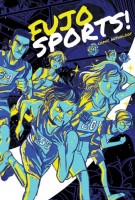
Fujosports!Fujosports! by Various. The most recent anthology from the Love Love Hill collective, Fujosports! collects six sports-themed comics with a female-gaze. These aren’t necessarily the sports you might be expecting, though: logging competitions, roller derby, free-form rollerblading, Turkish oil wrestling, field hockey, and competitive dodge-ball. All of the stories tend to be generally upbeat and optimistic, but the artists’ styles are distinct. As might be expected from the “fujo” in the title, the anthology includes a bit of bromance and boys’ love potential, but there’s some girls’ love, too, and plenty of general team bonding. Each comic is followed by a short freetalk by the creators, which is a very nice addition and makes the stories even more personable Fujosports! is a cute, sweet, and humorous collection. Every contribution in the anthology left me with I huge grin on my face, or at least a smile. Simply put, Fujosports! is a lot of fun; I’m really glad that I picked it up.
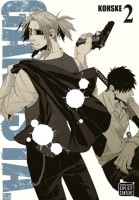
Gangsta, Volume 2Gangsta, Volume 2 by Kohske. I enjoyed the first volume of Gangsta so much that I immediately went out and preordered the second. The series is quickly becoming one of my favorite manga currently being released. Gangsta has plenty of action in addition to a wide range of interesting characters (both women and men, young and old), many of whom have dark, tragic pasts. More characters are introduced in the second volume, some of them even manage to survive to the end of it, and the larger, overarching plot continues to develop. The Three Laws binding the Twilights (should they actually choose to follow them) are directly lifted from Asimov’s Three Laws of Robotics, nearly word-for-word. While this certainly emphasizes the inhuman characteristics of the Twilights, I did find it to be an odd choice. Still, the Three Laws provide excellent narrative frameworks for robot and android stories, so I’m willing to reserve my judgement and wait to see how Kohske uses them Gangsta.
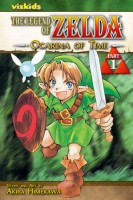
The Legend of Zelda: Ocarina of Time, Volume 1The Legend of Zelda: Ocarina of Time, Volumes 1-2 by Akira Himekawa. After meeting Akira Himekawa at TCAF, I realized that although I was familiar with some of their work, I hadn’t actually read much of their manga. Granted, only The Legend of Zelda has been licensed for print release in English so far. I actually happen to be a fan of the Zelda video games, so I wasn’t surprised that I’m enjoying the manga series, too. Ocarina of Time was the game which inspired Himekawa to pursue The Legend of Zelda manga. The Ocarina of Time manga is accessible even to those who haven’t played the game, but those who have will be able to appreciate the nods to the original more. The manga follows the same basic plot as the video game, though Himekawa adds a few touches of their own. The Ocarina of Time manga is definitely an adventure story aimed at younger readers, there’s more action than there is nuanced character or plot development, but it’s fun.
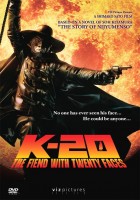
K-20: The Fiend with Twenty FacesK-20: The Fiend with Twenty Faces directed by Shimako Satō. K-20 is a live-action film based on the novels of Soh Kitamura (which sadly haven’t been translated into English) which were in turn inspired by the works and characters of Edogawa Rampo, specifically his famous detective Akechi Kogorō and his nemesis “Twenty Faces.” Akechi’s young assistant Kobayashi also has a role to play. It was because of this Rampo connection that I decided to watch the film in the first place, but even those unfamiliar with the references will be able to enjoy the movie. Packed with action and stunts, a little bit of romance, a great cast, and a large dose of humor, K-20 was extremely entertaining. The film is set in the late 1940s in an alternate history in which the Second World War was never fought but in which a strict hierarchical class structure is enforced. The story follows Endo Heikichi, an acrobat who is arrested for being the master thief K-20 after being set up, and his attempts to prove his innocence, basically by becoming as skilled as K-20 himself.

Filed Under: FEATURES, My Week in Manga Tagged With: Akira Himekawa, comics, film, Gangsta, Kohske, Legend of Zelda, manga

My Week in Manga: May 19-May 25, 2014

May 26, 2014 by Ash Brown

My News and Reviews

After a week full of random musings comes a week full of reviews. Well, that is if you consider two reviews “full.” Either way, there were two reviews posted at Experiments in Manga last week. First up was Lucy Birmingham and David McNeill’s Strong in the Rain: Surviving Japan’s Earthquake, Tsunami, and Fukushima Nuclear Disaster. Originally released in 2012 as a hardcover, it is now available as a trade paperback. The volume is very approachable and makes an excellent overview of many of the aspects of the March 2011 disaster. As promised, I also reviewed the first omnibus of Takashi Ikeda’s yuri manga series Whispered Words. So far, I’m really enjoying the series (it even has karate in it!), but One Peace Books’ edition is rather disappointing in regards to quality control. Check out the review’s comments for more specific details.

As for other interesting things online: Oishinbo has certainly made some political and social commentary in the past, but the manga recently managed to get suspended amidst nuclear furor. The latest ANNCast features the return of the super manga pals Deb Aoki and Rebecca Silverman. The Gay Manga tumblr has a great post about how language impacts the way that sexuality is thought and talked about, looking at the terms “bara” and “gei” among other things. (The discussion reminded me quite a bit about my random musings on translation and queer theory.) Another fantastic post (well, series of four posts) is Revealing and Concealing Identities: Cross-Dressing in Anime and Manga over at The Lobster Dance. So far, Part 1 and Part 2 have been posted.

Quick Takes

Bunny Drop, Volume 10Bunny Drop, Volume 10 by Yumi Unita. Oh, Bunny Drop. I love parts of the series while other aspects frankly piss me off. I personally don’t mind incest plotlines in my fiction (and technically there’s no incest in Bunny Drop), it’s just that it was handled so incredibly poorly. It’s been a while since a manga has gotten such a visceral reaction from me. But even though Bunny Drop left me seething, I was still looking forward to reading the tenth volume–a collection of short side stories as well as an extensive interview with Unita about the series and its anime adaptation. Most of the volume is devoted to when Rin and Kouki were small (including the story of how he got the scar on his forehead), which I enjoyed. I also rather liked the story that focused on Rin’s mother and the man who would become her husband. However, the final story takes place sometime after Rin and Daikichi are married–a development that I continue to be completely unconvinced by, a sentiment this final story does nothing to alleviate.

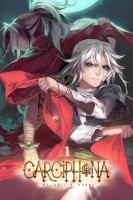
Carciphona, Volume 1Carciphona, Volumes 1-4 by Shilin Huang. Another splurge purchase from TCAF, Carciphona is a self-published manga-style series of graphic novels which are also available to read online. It was Huang’s spectacular artwork that caught my eye. (Her artbook Toccata is simply gorgeous.) Though the interior art isn’t as stunning as the series’ covers, it is still excellent. Huang considers herself more of an illustrator than an comics artist; though it was fairly strong to begin with, her storytelling improves greatly from volume to volume. Occasionally Carciphona falls prey to infodumps in order to establish the setting, especially early on in the series, but the worldbuilding and characters are interesting. Carciphona is high fantasy with magic and religion, assassins and political intrigue, and tension between races. The story follows Veloce Visrin, a young, powerful sorceress living in a world where common magic–magic which relies on demonic spirits–has been prohibited. Her life has not been an easy or happy one, so she’s a bit surly (and understandably so), but she is also very loyal and protective of those who become her friends.

Devils and Realist, Volume 1Devils and Realist, Volume 1 written by Madoka Takadono and illustrated by Utako Yukihiro. William Twining comes from a prestigious family and has done everything he can to meet, and surpass, all expectations so as not to disgrace his family’s name. He’s brilliant and at the top of his class…and recently lost most of his wealth due to his uncle’s bankruptcy. Perhaps even more problematic is that he’s somehow also responsible for selecting the next ruler of hell, despite being scientifically minded and refusing to believe in the demons right in front of him who are trying to bribe him. The artwork in Devils and Realist is attractive, though the more action-oriented sequences, while pretty, can be somewhat difficult to follow. It was amusing to see many of the demons introduced become transfer students at William’s school, but personally I’d like to see the story focus less on school antics and more on the struggle for control of hell. Then again, I actually did enjoy the sillier aspects of the manga. Devils and Realist has some potential; I’ll probably be giving it at least one more volume to see which direction it takes.

I've Moved Next Door to YouI’ve Moved Next Door to You by Fuhri Misasagi. There were two things that particularly appealed to me about I’ve Moved Next Door to You and which led me to pick up Misasagi’s boys’ love one-shot: the somewhat “reversible” nature of the characters and their polyamorous relationship. At least it’s described as being a polyamorous relationship–it’s really more of a pseudo-love triangle. Sadly, neither of those things could save this manga for me. With the aid of his secretary Kamoshida (who is in love with him), Takumi has recently moved into a rundown apartment after leaving his company. Up until now he’s led a very privileged and sheltered life and so has no idea how to live on his own. However, his new neighbor Renji is more than happy to help him out, which apparently also includes sexually harassing him any chance he gets. Even though the manga is supposed to be a comedy, tragic backstories are also added to the mess of unbelievable characters and plot. I’ve Moved Next Door to You isn’t sexy or romantic, and it’s not even very funny, though it does try very hard to be all of those things. I can’t say that I enjoyed the manga much at all.

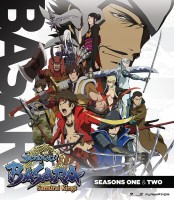
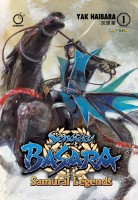
Sengoku Basara: Samurai KingsSengoku Basara: Samurai Kings, Season 1 directed by Itsuro Kawasaki. A little to my surprise, I enjoyed the Sengoku Basara: Samurai Legends manga so much that I decided to track down more of Sengoku Basara. I still haven’t gotten around to playing any of the video games, which is where the franchise started, but I have been happily watching the Samurai Kings anime. Sengoku Basara is based on the actual historic figures and events from Japan’s Warring States period, but it is delightfully irreverent and over-the-top with its portrayals. Honestly, Sengoku Basara is ridiculous and doesn’t at all take itself too seriously, but because of that it’s also a tremendous amount of fun. I mean, it has literal battle auras, impossible feats, absurd amounts of damage, nearly indestructible warriors, epic battles, and constantly shifting alliances, not to mention a healthy dose of improbable technology and anachronisms. I get a kick out of it all, though, and find Sengoku Basara to be highly entertaining. Samurai Kings might not be a series that I’ll watch over and over again, but I’ll definitely be checking out the second season.

Filed Under: FEATURES, My Week in Manga Tagged With: anime, bunny drop, Carciphona, comics, Devils and Realist, Fuhri Misasagi, Madoka Takadono, manga, Sengoku Basara, Shilin Huang, Utako Yukihiro, Yumi Unita

My Week in Manga: May 12-May 18, 2014

May 19, 2014 by Ash Brown

My News and Reviews

Well, it was my intention to review the first omnibus of Whispered Words by Takashi Ikeda last week, but then Sean reviewed it the day before I was planning to post my review. So, to avoid making the Manga Bookshelf front page look a little strange, I decided to bump my Whispered Words review to later this week. But never fear, I had other posts in reserve! First up was my Toronto Comic Arts Festival 2014 recap, which is very, very long. If you don’t feel like reading the whole thing, that’s fine, but I do want people to know that TCAF is an amazing festival. A month or so ago I had the opportunity to attend a presentation given by Natsuki Kikuya, a sake sommelier and from a centuries-old family of sake brewers in Tōhoku, about the brewing of sake, its history, and current trend in the industry, so I posted some random musings about that as well–Cultures of Japanese Sake. I was quite pleased to discover that I actually had already had a strong introduction to the subject from reading manga, specifically Oishinbo, A la Carte: Sake and Moyasimon.

Now, going back to TCAF for a moment: Heidi MacDonald has an excellent summary of the festival at Publishers Weekly; the Beat has audio for a selection of the panels available for listening; and Okazu’s Erica Friedman has a great recap of the est em panel, which she moderated. Unrelated to TCAF, but still worth reading: Marvel, Yen Caught in Amazon-Hachette Crossfire; an interview with Leyla Aker, the editor at Viz Media responsible for Kohske’s Gangsta series; and Tokyo Government Declares Imōto Paradise! 2 Manga Unhealthy. Also, Deb Aoki has started updating her site Manga Comics Manga with some interesting new material, including Japanese to Spanish Manga Translation: Readers Speak Out and What Would Make Manga More Appealing to Comics Fans? + 24 Manga for New Readers.

Quick Takes

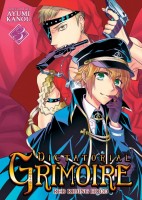
Dictatorial Grimoire, Volume 3: Red Riding HoodDictatorial Grimoire, Volume 3: Red Riding Hood by Ayumi Kanou. The first volume of Dictatorial Grimoire, as ridiculous as it was, entertained me. The second volume was no less ridiculous, and it had some great moments, but I was frustrated by how trope-based it was. Fortunately, the series’ originality largely returns in the third volume and Dictatorial Grimoire once again becomes a glorious mess. The plot actually starts to make a little more sense and even becomes somewhat interesting, but just as things start to really get going the story is quickly brought to an end. It feels very abrupt and truncated, as if the series was initially supposed to be much longer. Still, I think the third volume of Dictatorial Grimoire was actually my favorite in the series. The demon from which the story Red Riding Hood comes is thoroughly introduced and he’s pretty great–a mix of the Wolf, Hunter, and Red. (He’s actually a decent guy once he gets his werewolf problem under control.) I also get a kick out of Snow White’s animal companions. Instead of the cute woodland critters that might traditionally be expected, he always has some poisonous creatures hanging about. Dictatorial Grimoire is far from the best manga out there, but it can be fun in all of its ridiculousness.

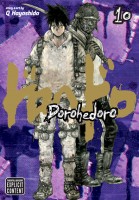
Dorohedoro, Volume 10Dorohedoro, Volumes 10-12 by Q Hayashida. I continue to enjoy Dorohedoro immensely. It’s a strange, weird manga, and one that I find difficult to coherently explain to people. Dorohedoro is bloody, violent, and grim and yet at the same time it is also incredibly endearing, charming, and funny. It can even be heartbreaking from time to time. Occasionally something feels a little bit off about Hayashida’s artwork in the series–body proportions don’t always seem to be quite right–but for the most part I really enjoy the gritty look and feel of Dorohedoro. I was particularly impressed by how effectively dizzying and disconcerting the artwork could be when Aikawa’s magic comes into play. There’s quite a bit of plot development in these volumes and several of the characters have their backstories filled out–more is learned about the pasts of Nikaido, Asu, and the various members of the Cross-Eyes. There’s plenty of action in this part of the series, too, including excellent fight sequences and brutal battles. There are some significant deaths, as well, though it’s never certain that someone will stay completely dead in Dorohedoro. There are seven more volumes to go in the series; I really hope that Viz will be able to stick with it through to the end.

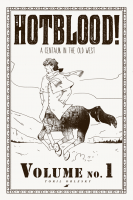
Hotblood!: A Centaur in the Old West, Volume 1Hotblood!: A Centaur in the Old West, Volume 1 by Toril Orlesky. While at TCAF, I made the point to pick up a few things that I hadn’t heard about before or was otherwise unfamiliar with. One of those random splurges was Orlesky’s Hotblood!, a webcomic that currently updates twice a week on Tuesdays and Thursdays. I am absolutely loving it–the characters, the art, everything. The first print volume collects the series’ prologue and the entirety of its first chapter, as well as an exclusive appendix and other additional bonus material. Tremendous thought and care has been put into the worldbuilding of the comic–a sort of alternative history–especially in regards to the relationships and interactions between humans and centaurs and their cultures. The story begins in Wyoming in 1873 with James Rook, the titular centaur, and Asa Langley a steel magnate on the run as wanted men. It then jumps back two years in time to when they first met. In the prologue the two are obviously very close, but at the beginning of their relationship they didn’t get along much at all. Langley is a bit of a jerk, frequently making jokes in poor taste at Rook’s expense, but Rook needs a job so he puts up with it. He has been assigned to be Langley’s secretary; neither one of them is particularly happy about it, though.

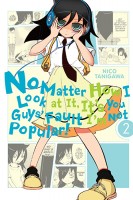
Watamote2No Matter How I Look at It, It’s You Guys’ Fault I’m Not Popular!, Volumes 2-3 by Nico Tanigawa. Overall, I do enjoy WataMote, but I will be the first to admit that it can be a harsh and uncomfortable read. (I get the feeling that the creators largely didn’t enjoy their high school years and that they don’t have many fond memories of that time in their lives.) WataMote can be very funny, but it’s not always very pleasant. So far the series has been fairly episodic, which is both an advantage and a disadvantage, but a few characters have been introduced in these volumes which may change that. I would like to see some actual character development in the series, though. Right now it seems as though Tomoko, her family, and classmates are stuck in a rut. This works in terms of the series’ premise–Tomoko is a misfit to put all other misfits to shame–but it’s a little painful and sad to not see her learn from her mistakes and experiences. Which, I suppose, is actually probably one of the points of the manga. Tomoko can be endearing in her extreme awkwardness, but that awkwardness can also be fairly alarming and embarrassing. WataMote is definitely not a series that everyone will be able to enjoy or even appreciate, but I do plan on following it further.

Filed Under: FEATURES, My Week in Manga Tagged With: Ayumi Kanou, comics, Dictatorial Grimoire, dorohedoro, Hotblood, manga, Nico Tanigawa, Q Hayashida, Toril Orlesky, Watamote

Random Musings: Toronto Comic Arts Festival 2014

May 14, 2014 by Ash Brown

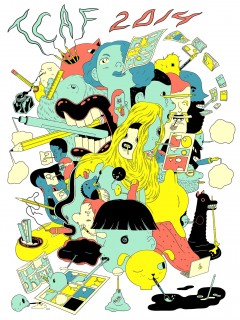
TCAF 2014 Poster

©Michael DeForge

Last year I attended the Toronto Comic Arts Festival (TCAF) for the very first time. It was an event that I had wanted to go to for years and I had such a fabulous time that I immediately began planning to return. TCAF is the only comics festival that I have ever been to so I can’t really compare it to others, but it is fantastic and I can’t recommend it enough. I certainly plan on going every that I possibly can at this point.

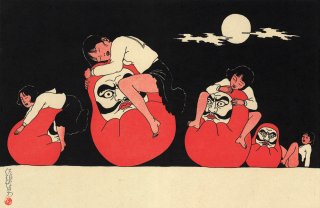
Last year I was only there for the main festival on Saturday and Sunday, but this year I pulled into Toronto on Thursday evening which gave me plenty of time to explore the city itself. After figuring out how to use Toronto’s streetcar system (I’ve never ridden a streetcar before) my “early” arrival allowed me to attend the opening reception of Toshio Saeki’s art exhibition at Narwhal Projects. Saeki is described as the “Godfather of Japanese Eroticism.” The gallery was a showing of a selection of his original drawings and silkscreen prints. They were beautiful, disconcerting, erotic, and surreal works. I’m very glad I had the opportunity to see them in person.
Friday was my “free” day in Toronto. While I was wandering all over the city, I made sure to make my way down to The Beguiling Books & Arts. Last year I got there a few minutes before it closed, so I was looking forward to spending a more reasonable amount of time exploring the store this year. The Beguiling is one of the best comic stores I’ve ever been to. It has a fantastic selection of materials and a marvelous staff. I highly recommend anyone visiting Toronto to check it out. The event that I was looking forward to on Friday was the Manga Mixer Night hosted by Sparkler Monthly at the TRANZAC Club. I sadly missed out on the gathering last year, and one of my TCAF goals for this year was to overcome some of my anxieties and to try to be a little more social, so to the mixer I went! And I’m glad that I did. I had a good time and Kuriousity‘s Lissa Pattillo and I were beautiful wallflowers together. We had a very nice conversation about manga, blogging, and TCAF.

Over the course of the festival I had the opportunity to briefly meet several other of my online friends in person: manga translator and all around awesome person Jocelyne Allen, my fellow Manga Bookshelf cohort Sean Gaffney, and the great A-run Chey who somehow managed to pick me out of a crowd. I certainly made some progress this year in the socialization department, but I still didn’t have the nerve to introduce myself to Deb Aoki and Erica Friedman, who were both kept very busy moderating various panels, or to Vertical’s Ed Chavez even though I was standing next to each of them at some point during the festival. Next time I’ll make it happen! I know there were at least a few other manga and comics bloggers at TCAF—like Brigid Alverson and Alexander Hoffman, among others—but I missed them, too.

Ureshidaruma

“Ureshidaruma” by Toshio Saeki

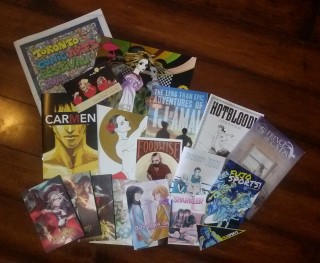
Saturday was when the main festival actually began. Last year I didn’t get to spend as much time in the exhibitor area as I would have liked, so I got up bright and early on Saturday in order to visit as many artists and publishers as I could first thing in the morning. This turned out to be a good decision, because the exhibitor area seemed to only get busier and busier throughout the day. I couldn’t see everything before the Saturday panels started, but by the end of the day I managed to visit most of the tables that I wanted. Sadly, there were a few things that I was hoping to get that were sold out by the time I was able to make my way to the artists’ respective tables. But at least that meant that the creators were doing well, and I was very glad to see their success. While I went into TCAF knowing there were certain things that I wanted to pick up, I also allowed myself the opportunity to splurge on a few random items that I hadn’t even heard of before and discovered some great comics in the process. And of course, I also managed to compile a rather lengthy list of things that I wanted to check out later, too. I continue to be very impressed by both the quality and variety of creators and art at TCAF.

I attended four panels on Saturday. “What Do Women Want? Writing Comics for a Female Audience,” was moderated by Chromatic Press’ Lianne Sentar and featured Laura Lee Gulledge, Kate Leth, Joan Reilly, and Noelle Stevenson. It was an excellent panel looking at men and women and masculinity and femininity in comics and the North American comics industry. Generally, comics readers are assumed by the industry to be both male and straight and so that audience is the one that has traditionally been catered to. There have always been female readers but recently there have been more demands for a wider variety in comics, perhaps due in part to what the panelists called the “Sailor Moon Generation.” These are the women, and men, who were exposed to female-friendly Sailor Moon when they were younger and who are now old enough to create the types of comics that they want to see or are in the position to support and encourage other upcoming creators who want something more than the industry’s default. The key to the discussion was the importance of variety in comics and that great stories will attract all sorts of readers regardless of their intended audience.

“Comics Design and History” focused on the physical design, production, and presentation of graphic novels. The panel was moderated by Chris Randle and included designers Tracy Hurren from Drawn & Quarterly, Fawn Lau from Viz Media, and Chip Kidd, who has designed books for Vertical and PictureBox among many other publishers. They each chose three book designs to discuss and talked about some of the decisions that go into the design process. For example, one of the first steps when a comic is being translated into another language is to determine whether the original cover is suited for the new demographic. Unflipped manga has the potential to be accidentally displayed with the back cover as the front, so Kidd very deliberately created a design for Bat-Manga!: The Secret History of Batman in Japan that was interesting and informative regardless of which direction the book was facing. One of the series that Lau discussed was Taiyo Matsumoto’s Sunny, talking about the choices that went into its deluxe presentation. One of the biggest challenges in book design is achieving a balance between production values and the budget, and then finding a printer that can actually produce it.

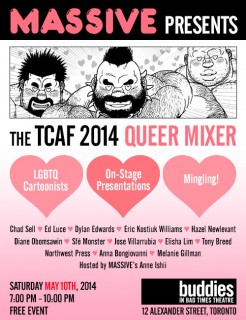
Queer Mixer presented by MASSIVE

TCAF 2014 Queer Mixer presented by MASSIVE

Considering the fantastic lineup—Jess Fink, Michael DeForge, C. Spike Trotman, HamletMachine, Graham Kolbeins, Katie Skelly, Ryan Sands—I should have known that “Contemporary Erotic Comics” was going to be a popular panel. It was held in one of the smallest venues and was completely packed, but it was absolutely worth squeezing into the crowd. Chris Randle was the moderator for this panel as well. The panelists discussed their first experiences with erotic comics (manga and doujinshi were frequently cited), the challenges of working in and making a living off of pornography, and some of the current trends in sex comics as a genre. The panel’s emphasis on the need for variety and different perspectives dovetailed nicely with parts of the “What Do Women Want?” discussion. Kolbeins, who has been critical to the efforts to bring gay manga to English-reading audiences, was able to provide fascinating insights into some of the difference between Japanese and Western porn comics industries. In Japan, pornography is often meant to exclusively be pornography; adding any sort of message or social commentary can be seen as watering it down. On the other hand, in the West sex comics often allow creators to address issues other than sex; as long as certain plot requirements are met, they are more or less free to do whatever they want with their comics.

The last panel that I attended on Saturday, moderated by Deb Aoki, was “Women in Manga!” The panel included all of this year’s mangaka who were featured guests at TCAF: Moyoco Anno, est em, and Akira Himekawa (A. Honda and S. Nagano, a two-women team). All four of them admitted that they brought their work along with them on the trip; they may be traveling, but they still had deadlines to meet. Even though they are women, they said that they are largely treated the same as their male counterparts when working in seinen. (In many cases, readers don’t even realize that they are women!) However, working in shounen used to present more hurdles, though it’s not as difficult now as it once was. In the end, readers care more about the content than the mangaka’s gender. Regardless of the genre or demographic that they are working in, the panelists normally receive respect. The exception to this would be boys’ love which is somewhat looked down upon. est em felt this was because that instead of the more usual manga contests which award the creators with a series, boys’ love mangaka often become professionals through their doujinshi and this is seen as a sneaky, backdoor way of breaking into the manga industry.

One of the heartbreaking things about TCAF is that there is so much great programming that it’s impossible to attend it all and hard decisions must be made. Sadly, “Women in Manga!” conflicted with the “Queering Comics – LGBTQ identity in comics and graphic novels” panel which I really wanted to attend. Since I couldn’t make it to the queer comics panel, I decided to show up for the TCAF Queer Mixer at Buddies in Bad Times Theatre instead. Now, I don’t generally go to things like parties and mixers, but I was enticed by the promise of on-stage presentations and interviews. And I wasn’t disappointed. Anne Ishii of MASSIVE made a fabulously entertaining host and more than a dozen of the queer creators who were at TCAF this year were spotlighted as part of the event. I was already familiar with some of them and their work, but others were new to me. And I’ll admit, it was pretty awesome to just be in the same room with a bunch of other amazing queer folk. One of the best things about TCAF is how marvelously inclusive it is, and the annual Queer Mixer is representative of that.

TCAF 2014 Haul

My 2014 TCAF haul

Then came Sunday, the last day of the main festival. Also known as “Ash’s day of manga.” I made it to three events, each one focusing on the festival’s featured mangaka. First thing in the morning was Moyoco Anno’s Spotlight with Ed Chavez. Probably not too surprisingly, Vertical’s releases of Anno’s manga—Insufficient Direction, Sakuran, and the soon to be published In Clothes Called Fat—were used as a jumping off point for the discussion. Anno talked about her approach to writing seinen, choosing to focus on what she as a woman can bring to the demographic rather than trying to compete in the same areas where men could do just as well. As for shoujo, she doesn’t feel that it has changed much over the last twenty years; it still follows the same unrealistic tropes, especially in regards to love. She feels that the large gap between real relationships and how they are portrayed in manga can sometimes be problematic for readers. When asked, she sweetly replied that her favorite character to draw was Director-kun, her husband Hideaki Anno (who also happened to be in attendance).

Those who stayed for the entire Moyoco Anno Spotlight were at a slight disadvantage when it came to the signing that immediately followed. I was the first person put in the rush line for her signing, but sadly I still didn’t get the chance to personally meet Anno. However, this did mean that I had time to walk over to Toronto’s Japan Foundation in time for Akira Himekawa in Conversation. The two women, who are best known for their Zelda manga, are celebrating their thirtieth year of collaboration and were being interviewed by Deb Aoki. They were both incredibly engaging and enthusiastic about their work. I actually haven’t read very much of Himekawa’s manga, but I’ll certainly be making a point to now. And after seeing examples of some of their current series, I really hope that more of their manga will be licensed in English in the future. I love the Zelda franchise, but Himekawa’s recent work, much of it in full-color, simply looks gorgeous. While I was at the Japan Foundation, I was also able to see the Seiji Ozawa Photography Exhibition—a showcase of archival materials focusing on the young, Japanese music director of the Toronto Symphony Orchestra from 1965 to 1969—which was great.

The Japan Foundation also sponsored an interview with Yohei Sadoshima, whose literary agency represents Moyoco Anno among many other creators, about the future of the manga industry. Unfortunately this conflicted with the est em Spotlight. As a huge fan of est em, there was no way I was going to miss her panel. Erica Friedman was the moderator and it actually ended up being one of the best interviews that I attended at TCAF this year, making it a great way to end the festival. est em got her start as a professional mangaka through boys’ love after being approached by an editor who was intrigued by her doujinshi. Interestingly enough, she hadn’t actually read much mainstream boys’ love, which may partly explain why her manga tends to be somewhat unusual. Although est em is probably best know for her atypical boys love manga, her current series—Golondrina and Ippo—are both seinen manga. I think that Viz is probably my only hope, but someone please license Golondrina for a print release! est em explains that the reason her work is quirky is because it incorporates what she personally finds to be beautiful or interesting. She especially enjoys exploring and working with themes that address the spaces in between two opposing forces. (Over at Okazu, Erica recently posted an excellent and much more thorough write-up of the est em Panel at TCAF.)

So there you have it! And that’s just scratching the surface of this year’s festival experience. In short: TCAF 2014 was phenomenal. The guests were amazing. The programming was fantastic. I hope that I’ll be able to go again next year. That’s the plan, anyway!

Filed Under: FEATURES Tagged With: Akira Himekawa, comics, est em, manga, Moyoco Anno, TCAF

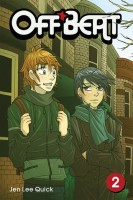
Off*Beat, Vol. 2

April 25, 2014 by Ash Brown

Off*Beat, Volume 2Creator: Jen Lee Quick
Publisher: Chromatic Press
ISBN: 9780991946617
Released: May 2013
Original release: 2006

The first two volumes of Jen Lee Quick’s graphic novel series Off*Beat were originally published by Tokyopop as part of its line of original English-language manga. A third volume was planned but never released by Tokyopop and Off*Beat sadly went out of print. I enjoyed the series and so was trilled when Chromatic Press brought Off*Beat back in a new edition with additional bonus content that previously hadn’t been released. The long-awaited third volume began serialization in Chromatic Press’ Sparkler Monthly as well. Off*Beat, Volume 2 was first released in 2006 while the Chromatic Press edition was released in 2013. By this point I have read the first two volumes of Off*Beat several times. My fondness for the series seems to only grow with each re-reading. I love the characters in all of their delightful awkwardness and I enjoy Quick’s sense of humor and the series’ drama a great deal. Off*Beat is a series that makes me happy to read and I’m even happier that it’s back in print so that more people can have a chance to enjoy it.

Tory has developed a bit of an obsession with his new next door neighbor Colin who moved in under strange circumstances. Intensely curious about the mysterious young man, Tory even managed to convince his mother to allow him to transfer to Colin’s high school so that he could learn more about him. (Of course, that wasn’t the reason that he gave her.) Colin is fairly introverted and isn’t really out to make friends but Tory did find a way to get closer to him by offering his services as a physics tutor. The extra attention that Colin receives from Tory hasn’t gone unnoticed. Although Colin has started to open up to Tory, he questions the other young man’s motives. Tory tries to pass off his always being around as a mere coincidence and says that he’s simply interested in becoming friends. But he is also interested in uncovering more information about “The Gaia Project,” a top-secret program that Colin has some sort of connection to. Unfortunately, Tory’s prying is about to get him into some trouble, just as he was beginning to figure out his relationship with Colin.

Most of Off*Beat, Volume 2 follows Tory’s perspective of events, but portions are also seen from Colin’s point of view as well as from those of Tory’s mother, their friend and neighbor Paul, and Tory’s classmate Mandy. Although I like all of the characters and enjoy the realism of their connections, one of my favorite parts of Off*Beat is the slow, natural development of Tory and Colin’s relationship. Tory’s interest may have begun out of mere curiosity, but Colin has become very important to him. Tory hasn’t quite realized it himself yet, but his friends and family (and the readers) can tell he has a crush. And it’s absolutely adorable. Quick captures perfectly the teenage awkwardness of a potential romance. Tory is almost constantly flustered and even Colin has begun to wonder confusedly why they seem to be drawn to each other. However, their relationship began under dubious circumstances at best. In addition to navigating the normal challenges of a budding romance, they will also have to deal with the fact that it all started because Tory was spying on Colin.

In part because of that, Tory is understandably under a fair amount of stress, something that exhibits itself through his dreams and his propensity for flights of fantasy. This is just one example of some of the excellent characterization in Off*Beat. Tory and Colin and all of the others have their good points and their bad, making them well-rounded characters with believable relationships. There is a fair amount of humor in their interactions and sarcasm is a common way that they communicate, which amuses me tremendously. Off*Beat also has an air of mystery about it. Both Colin an Tory have secrets that they’re keeping from each other and the enigma of Gaia Project is looming ever larger over the series. Quick has been slowly revealing more and more about the project, and about Colin, but there are still plenty of questions left to be answered. On top of that, Off*Beat, Volume 2 ends on one heck of a cliffhanger. I’m so glad that now, almost a decade after the series first began, that the conclusion will finally be revealed. I can’t wait to see how everything is resolved in the final volume. I truly love Off*Beat.

Filed Under: REVIEWS Tagged With: Chromatic Press, comics, Jen Lee Quick, off*beat

My Week in Manga: March 17-March 23, 2014

March 24, 2014 by Ash Brown

My News and Reviews

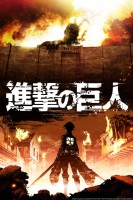
Experiments in Manga featured two manga reviews as well as something a little different last week. First up, I took a look at Saki Nakagawa’s Attack on Titan: Junior High, Omnibus 1. It’s a rather absurd and ridiculous series, but I was amused. The manga does require some familiarity with both Attack on Titan and Attack on Titan fandom to fully appreciate it, though. Not too long ago, I read Jeffrey Angles’ Writing the Love of Boys which introduced me to the work of Kaita Murayama. Not much about Murayama has been written in English, and only two of his short stories have ever been translated, but I was interested in learning more about him and his work. The result was a Spotlight on Kaita Murayama. (I’m actually very happy with how the post turned out!) Finally, as the actual March Madness begins, I posted the penultimate review in my own Manga March Madness–Real, Volume 4 by Takehiko Inoue, which delves more deeply into Togawa’s past. Real is a fantastic series, and one of my favorite manga.

And now for a few things found online! Vertical’s tumblr often has something interesting to read. Last week’s response to a question about licensing old Tokyopop titles was particularly informative. I enjoy House of 1000 Manga, but the most recent column focuses on Usamaru Furuya and his work, which I’m always happy to read more about. Sequart has a great interview with Kumar Sivasubramanian, the translator of some of my very favorite manga. Gay Manga posted an excellent article about the censorship of a billboard designed by artist Poko Murata promoting HIV awareness which also addresses some of the history of gay artwork in Japan. And in other censorship news, it looks like the manga series Barefoot Gen, after running into some trouble last year, may end up being banned again in parts of Japan.

Quick Takes

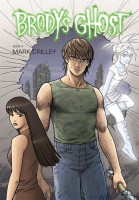
Brody's Ghost, Book 4Brody’s Ghost, Book 4 by Mark Crilley. It’s been quite a while since I’ve read any of Brody’s Ghost, but I do enjoy the series. Each installment is frustratingly thin though (each is less than a hundred pages) and only one book is released per year. Once the story is finished, I’d love to see Brody’s Ghost collected into a single omnibus. I think the series would benefit from being read in larger chunks or all at once. Which is not to say the individual books aren’t enjoyable. Each one has a great mix of action, story, and character development. I enjoy Crilley’s artwork, too. I also enjoy the bonus content that Crilley includes, outlining some of his design choices and storytelling decisions. In this particular volume of Brody’s Ghost, Brody is doing everything that he can to track down the Penny Murderer, including impersonating a detective. His ex-girlfriend, who he still cares about, may very well be the next victim and he is desperate to prevent that from happening. Things are even more complicated now that he has discovered that Talia–the ghost who pressured him into the investigation–has been lying to him.

FlutterFlutter by Momoko Tenzen. I appreciate it when a boys’ love manga includes a character who is actually openly gay, so that aspect of Flutter particularly appealed to me. Mizuki is that man–a respected and skilled project leader at his company. He presents himself as someone who is extremely well put together, but that public face is deliberately crafted to hide his weaknesses and insecurities. Asada is one of Mizuki’s coworkers. He finds himself inexplicably drawn to Mizuki. After the two of them are assigned to the same project they get to know each other, first as friends and then as something possibly more as Mizuki begins to drop his guard around Asada. Flutter is a slowly paced and relatively quiet manga, which is somewhat surprising as Mizuki’s backstory is fairly melodramatic. However, that melodrama is completely lacking from Mizuki and Asada’s somewhat awkward relationship; I enjoyed watching it develop. Asada’s personality is very kind and candid and his inability to hide what he is thinking and feeling is adorable. This open honesty is just what Mizuki needs, whether he realizes it or not.

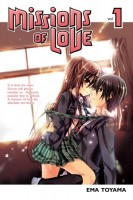
Missions of Love, Volume 1Missions of Love, Volumes 1-4 by Ema Toyama. I’ll admit it, I’m addicted to Missions of Love. I actually began reading the series with the fifth and sixth volumes, but I enjoyed them enough that I wanted to go back and read it from the beginning to learn how the whole mess between Yukina, Shigure, Akira, and Mami came to be. Missions of Love isn’t the most believable series and some of it is admittedly silly, but I don’t think I would enjoy the manga as much as I do if Toyama took a more serious or realistic approach. The story itself might be somewhat ridiculous, but the complicated relationships and emotions are real enough. Ultimately, that’s what appeals to me about Missions of Love–the intensity of the characters’ feelings paired with a plot that can be over-the-top. In the beginning, Yukina and Shigure don’t even like each other which is what allows them to resort to blackmail and manipulation. But as the series progresses, they come to care for and rely on each other in a way that is incredibly twisted. All of the relationships in Missions of Love are like that. I can’t help but want to watch the emotional chaos and turmoil unfold.

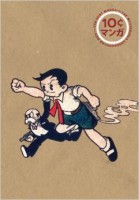
The Mysterious Underground MenThe Mysterious Underground Men by Osamu Tezuka. The Mysterious Underground Men is the second volume in Ryan Holmberg’s Ten-Cent Manga series which explores classic manga influenced by classic American comics and cartoons. Tezuka, often called the grandmaster of contemporary manga and anime, has had many of his works released in English. Granted, only a small fraction of his total output has been translated. As much as I appreciate Tezuka’s manga and his importance as a creator, I’m actually much more interested in the work of other classic mangaka who are less likely to be licensed. Initially, I wasn’t even planning on reading The Mysterious Underground Men. But because I was so impressed by the first volume of Ten-Cent Manga, I decided to give it a try after all. I’m glad that I did, not so much for the manga itself (which I did enjoy), but more for the supplementary material–Tezuka’s afterword, in which he describes The Mysterious Underground Men as his first story manga, and Holmberg’s essay which puts the manga into historical context, specifically noting its Western pop culture influences.

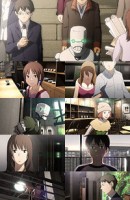
Time of EveTime of Eve directed by Yasuhiro Yoshiura. It’s not a secret that I have a fondness for stories about androids, so it probably shouldn’t be too surprising that I liked Time of Eve, a six episode anime series that was first released online. The series revolves around an unusual cafe, the titular Time of Eve, where humans and androids can interact while ignoring the laws that normally separate them. The cafe has only one rule, that there is to be no discrimination between the two groups. Rikuo discovers the cafe while looking into the unexpected behavior of “Sammy,” his household’s android. Along with his close friend Masaki, Rikuo’s assumptions about androids and how humans treat them are challenged as he gets to know the other customers at the cafe. Time of Eve doesn’t break any new ground when it comes to androids and makes good use of Asimov’s Three Laws of Robotics. I’ve read and watched so much android fiction that nothing about the series surprised me (including what were supposed to be dramatic reveals), but I still found the anime to be immensely enjoyable.

Filed Under: FEATURES, My Week in Manga Tagged With: anime, Brody's Ghost, comics, Ema Toyama, manga, Mark Crilley, missions of love, Momoko Tenzen, Osamu Tezuka, Ten-Cent Manga, Time of Eve

My Week in Manga: March 10-March 16, 2014

March 17, 2014 by Ash Brown

My News and Reviews

I managed to post three in-depth reviews last week, and two of them were for manga! First up was my review of Mieko Kanai’s delightful novel Indian Summer. Technically, it’s the third book in her Mejiro series, following Oh, Tama!, which I also recently read and enjoyed. However, Indian Summer was actually her first novel to be translated in English. As part of my Year of Yuri review project, I took a look at the omnibus edition of Milk Morinaga’s manga Kisses, Sighs, and Cherry Blossom Pink. So far it has been my favorite yuri manga by Morinaga to have been released in English. It’s very cute, sweet, and romantic. And to wrap things up, over the weekend I posted the next review in my “Manga March Madness” project which focuses on Takehiko Inoue’s wheelchair basketball series Real. It was the third week in March, so I reviewed Real, Volume 3. I still think that Real is one of the best comics currently being released in English.

Quick Takes

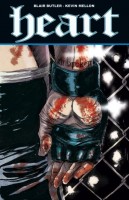
HeartHeart written by Blair Butler and illustrated by Kevin Mellon. At one point Oren “Rooster” Redmond was a run-of-the-mill office worker. Bored with his job, he decides to take control of his life. Following in the footsteps of his older brother he starts by becoming an amateur MMA fighter. After months of grueling training he finally has the opportunity to go pro, but that’s when the hard work really begins. Heart follows the rise and fall of Rooster and the sacrifices that he makes. There’s too much face punching, blood, and machismo to call Heart sentimental, but it is a very human story. Rooster’s fights both in the cage and internally with himself are also representative of anybody’s struggle to accept themselves for who they are. Sometimes, no matter how hard someone tries or how much they improve, it will simply never be enough. It’s how someone deals with that fact that really determines who they are as a person. Heart is a great comic and one that I personally found to be inspirational, and not just because I’m a martial artist.

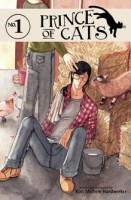
Prince of Cats, Issue 1Prince of Cats, Issues 1-4 by Kori Michele Handwerker. Prince of Cats is an ongoing webcomic that is free to read, however the print edition of the series includes some bonus content not available online. I knew going into Prince of Cats that the comic was a queer love story, but what I didn’t realize is that the series also features a transgender character, which I was rather pleased to discover. Handwerker hand paints each page of the comic and the watercolors are beautiful. The story itself is also lovely, focusing on the relationship between Lee and Frank who were once very close but who are starting to drift apart. Despite the high school drama, Prince of Cats tends to be quiet and subdued but very realistic (with the exception of talking cats, of course.) I could easily empathize with the characters and the portrayal of growing up in a conservative, rural area. It’s hard enough trying to fit in to begin with, let alone while also being a member of a minority (of any sort). I’m definitely looking forward to reading more of Prince of Cats.

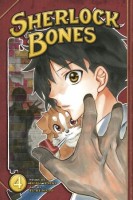
Sherlock Bones, Volume 4Sherlock Bones, Volume 4 written by Yuma Ando and illustrated by Yuki Sato. In previous volumes of Sherlock Bones the answer to the various mysteries were known from the beginning. The challenge was simply to find evidence to prove who was guilty. However, in the fourth volume Sherdog and Takeru actually have to do some legitimate investigation and sleuthing. Granted, in all but one case the readers are already aware who the culprit is. I’m still enjoying Sherlock Bones more than I expected I would. The silliness of the premise is a bit at odds with the seriousness of many of the crimes (homicide, accidental and otherwise, is the one that is most frequently encountered), but for the most part it somehow works; Sherlock Bones can be unexpectedly entertaining. I would like to say that I will be extremely disappointed if Meowriarty doesn’t make another appearance in the series. As if Sherlock Holmes as a small puppy wasn’t ridiculous enough, Moriarty as a bruiser of a cat is marvelously absurd. Also, Sherdog needs an arch-nemesis.

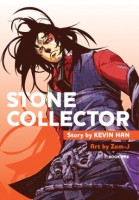
Stone Collector, Volume 1Stone Collector, Book 1 written by Kevin Han and illustrated by Zom-J. Stone Collector is Gen Manga’s first manhwa series, but it reads from right to left, which is a little odd. I was rather surprised when I saw the first volume of Stone Collector; I’m used to the smaller trim sizes used by Gen Manga and hadn’t realized that Stone Collector was going to be so much larger. The oversized format shows off Zom-J’s artwork, which is very clean and fairly dynamic with great facial expressions. Frequently, I found that I was vaguely reminded of Kohta Hirano and especially Hellsing. Some of the battle sequences in Stone Collector are a little difficult to follow, and the lack of backgrounds often made it seem more like a storyboard than a fully realized comic. More attention is given to the fights and monsters than is given to a completely comprehensible plot or well-developed characters. However, it is a quickly paced, action-packed series. I could see a film adaptation of Stone Collector actually doing quite well.

Filed Under: FEATURES, My Week in Manga Tagged With: Blair Butler, comics, Kevin Han, Kevin Mellon, Kori Michele Handwerker, manga, manhwa, Prince of Cats, Sherlock Bones, Stone Collector, Yuki Sato, Yuma Ando, Zom-J

My Week in Manga: January 6-January 12, 2014

January 13, 2014 by Ash Brown

My News and Reviews

Two reviews were posted at Experiments in Manga last week! The honor of the first in-depth manga review of the month (and of the year, for that matter) goes to Tetsu Kariya and Akira Hanasaki’s Oishinbo, A la Carte: Fish, Sushi & Sashimi. I love food, I love manga, and so I love Oishinbo, too. I happen to really like fish and sushi as well, so I particularly enjoyed this volume. I also posted a review for Edogawa Rampo’s mystery adventure The Fiend with Twenty Faces which is the first novel in his series The Boy Detectives. I’ve read some of his stories and essays written for adults, but this was his first work for younger audiences that I read. It’s a lot of fun.

As for news and other interesting things found online: The English translation of Toh EnJoe’s Self-Reference Engine (one of my most notable release of 2013) has been nominated for a Philip K. Dick Award. The University of Michigan will be hosting an international conference on Natsume Sōseki from April 18 through April 20. (If you happen to be in Michigan around then, it’s be free and open to the public!) After months of no news, it looks like those who supported the Kickstarter for Osamu Tezuka’s The Crater may actually receive their rewards. And finally, Joe McCulloch takes a look at some of Suehiro Maruo’s most recent work over at The Comics Journal. Now if only more of his manga would be licensed in English!

Quick Takes

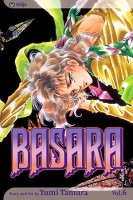
Basara, Volume 6Basara, Volumes 6-10 by Yumi Tamura. I love this series so much! It really is a shame that Basara is going out-of-print in English, but at least Viz has begun to release it digitally as well. The story is epic and engaging and the characters are complex and multi-layered. These particular volumes of Basara include the Okinawa story arc, which I especially enjoyed. It’s very interesting to see how Tamura is using events and politics from throughout Japan’s history to inform her post-apocalyptic world and culture. There are definite echos from the Warring States period, World War Two, and so on. Just as it was historically, in Basara Okinawa is a separate country from Japan that maintains its own traditions, relies heavily on trade, is largely at the mercy of foreign military influence, and is beset by natural disasters. Also, it’s the homeland of karate, which plays a part in some of the battles. (As a karateka myself, I couldn’t help but appreciate this.) I’m really looking forward to reading more of the series.

Entangled CircumstancesEntangled Circumstances by Kikuko Kikuya. I ended up enjoying Entangled Circumstances much more than I thought I would. I found the first chapter or so to actually be a little boring, but by the end of the volume Entangled Circumstances had managed to turn itself into a rather funny, and even a little sweet, boys’ love story. Actually, bonus chapters after the main story were the funniest and probably the favorite part of the manga for me because of that. Shibui and Himeko were once college classmates, but now they work at the same advertising agency. Himeko’s been in love with Shibui for a while now, but after a past awkward love confession, things have been strained between the two men. Often they seem to act like high schoolers rather than full-grown adults, so it’s difficult to take Entangled Circumstances completely seriously. It’s a lighthearted and fluffy sort of manga. The manga is nothing extraordinary, and I don’t know that I will necessarily need to read it again, but it was quite enjoyable.

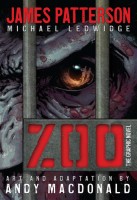
ZooZoo by Andy MacDonald. I haven’t read the original novel Zoo, a science fiction thriller written by James Patterson and Michael Ledwidge, but MacDonald’s graphic novel adaptation somehow came into my possession, so I figured I’d give it a try. Since I haven’t read the original, I can’t definitively say how the graphic novel works as an adaptation, but I get the impression that MacDonald has been very faithful to the source material. The Zoo graphic novel can be somewhat text-heavy and some of the plot lines are a little compressed (though not exactly rushed) but I was never confused as to what was going on. Even so, I may have rolled my eyes a bit at the plot’s development and some of the rather predictable “twists.” Unfortunately, Zoo just doesn’t have that original or great of a story to begin with and I had a difficult time suspending my incredulity. The ending in particular was rather disappointing. Zoo starts out as a fairly action-packed, and bloody, doomsday scenario, but its heavy-handed moral can be a bit much.

MeganebuMeganebu! directed by Soubi Yamamoto. I already knew that I enjoyed Yamamoto’s visual style from her previous work and so I wasn’t disappointed by Meganebu!‘s brightly colored and slightly eccentric animation. Even so, it took a few episodes for the series to really grow on me. There’s not really much of a plot to Meganebu!. There are the members of the Glasses Club and their continuing efforts to create a pair of glasses with X-Ray vision (with some very unexpected and explosive results) but mostly the series just follows their daily lives and the trouble they all get into. Once I got over the fact that Meganebu! is fairly pointless, I could sit back and enjoy its peculiar sense of fun. As a glasses wearer myself, I could particularly appreciate all of the humor surrounding eyeglasses. To the members of the Glasses Club, glasses are more than just a fashion accessory. Neither are they simply used to correct vision. Glasses have the power to change the world. Meganebu! is an absurd anime, but I’ll admit to enjoying it.

Filed Under: FEATURES, My Week in Manga Tagged With: Andy MacDonald, anime, basara, comics, Kikuko Kikuya, manga, Meganebu, Yumi Tamura

Random Musings: Notable in 2013

December 28, 2013 by Ash Brown

Despite having written at Experiments in Manga for over three years, I have never once attempted to create a “best of the year” list and I’m not about to start. However, I thought it would be interesting to write a post reflecting on what I have read in the past year. This isn’t a best of list. It’s not even necessarily a list of my favorite releases of the year (although, some of them certainly are). Instead, it’s a collection of manga, comics, and fiction from 2013 that, for one reason or another, were particularly notable for me.

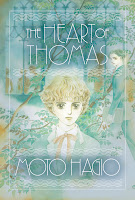
The Heart of ThomasI’ll start out with Moto Hagio’s The Heart of Thomas. Fantagraphics released the entire series in a beautiful, hardcover omnibus. Technically, I think it was published at the end of 2012, but I wasn’t able to get my hands on one until 2013. I adore Hagio’s manga and wish more of it was available in English. The Heart of Thomas in particular is a historically significant work and one of the precursors to the boys’ love genre. Plus, it’s a wonderful work in its own right.

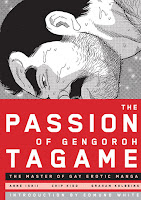
The Passion of Gengoroh TagameThe Passion of Gengoroh Tagame: The Master of Gay Erotic Manga probably couldn’t be more different from The Heart of Thomas, but I anticipated its release just as much. Tagame is an incredibly influential gay comics artist. The volume was not only the first collection of his work to be released in English, it was also the first collection of bara manga to be released in print. Happily, it won’t be the last. More of Tagame’s manga is already scheduled to be published.

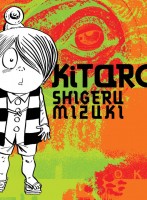
KitaroI have become increasingly interested in yokai over the last few years. And so I was thrilled when Drawn & Quarterly released Kitaro by Shigeru Mizuki. The volume collects stories from the first few volumes of Mizuki’s GeGeGe no Kitaro which is the yokai manga that started it all and which continues to influence creators to this day. I found Kitaro to be utterly delightful and can understand why it’s so well-loved. I hope more of the series will be translated.

Mobile Suit Gundam: The Origin, Volume 1I picked up Mobile Suit Gundam: The Origin for one reason–it was written and drawn by Yoshikazu Yasuhiko. I’m not at all a Gundam fan, but I am a fan of Yasuhiko’s work. Even so, I didn’t anticipate how much I would enjoy The Origin. The manga ended up being an extremely well done space opera. It doesn’t hurt that Vertical’s edition of the series is one of the highest quality manga releases available in English, either. I’m still not a Gundam fan, but I am a fan of The Origin.

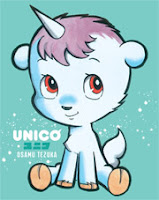
UnicoAnother manga that I was pleasantly surprised by was Osamu Tezuka’s Unico. As much as I appreciate Tezuka’s work, I will admit to have grown a little tired of it. (I wish that other classic manga received the same amount of attention in English.) I approached Unico more as a curiosity than anything else; the full-color artwork and unusual page layouts had caught my attention. It turned out to be an endearing manga that is both heartbreaking and charming.

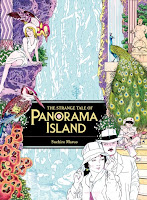
The Strange Tale of PanoramaAfter years of delay, Suehiro Maruo’s The Strange Tale of Panorama Island was finally released by Last Gasp in 2013. The manga is an adaptation of Edogawa Rampo’s novella Strange Tale of Panorama Island which, coincidentally, was also released in English in 2013. I cannot think of a more perfect artist to adapt Rampo’s work; Maruo’s exquisite, sensual, and erotically charged illustrations with hints of the macabre are an ideal fit. The Strange Tale of Panorama Island was worth the wait.

Wandering Son, Volume 4As for continuing series in 2013, Takako Shimura’s Wandering Son remains a manga that is incredibly important to me on a very personal level. I’m pretty sure that I’ve mentioned it before, but Wandering Son has quite literally been life-changing for me. In addition to that, I simply think it’s a wonderfully sensitive and sincere look at personal identity. Fantagraphics released both the fourth and fifth volumes of Wandering Son in 2013; I’m looking forward to reading more of the series great deal.

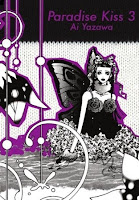
Paradise Kiss, Part 32013 also saw the release of Ai Yazawa’s Paradise Kiss, Part 3–the third and final volume in Vertical’s edition of the series. I missed out on the manga when it was originally licensed by Tokyopop and I’m very glad to have had the opportunity to read it. Over the last year, I have been extremely impressed by Yazawa’s work. I don’t have a particular interest in fashion, but the complex characters and complicated relationships in Paradise Kiss were extraordinary.

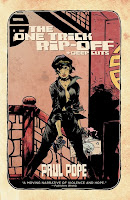
The One Trick Rip-Off + Deep CutsThe One Trick Rip-Off + Deep Cuts is a fantastic anthology which collects fifteen comics by Paul Pope, including those he created for Kodansha while in Japan. The volume makes a great introduction to Pope’s comics, exhibiting a nice range of styles and stories selected from nearly a decade of his work. The influence of manga can be seen in the collection, but Pope definitely has his own approach to comics. I’ve become very fond of his work and the quirkiness of his stories and characters.

BoxersWritten and illustrated by Gene Luen Yang with colors by Lark Pien, the Boxers & Saints duology is honestly one of the best comics that I read in the past year. It’s a powerful retelling of the Boxer Rebellion–a violent uprising in China that began in the late 1800s–from two different sides of the conflict, neither of which were entirely in the right. Yang put a tremendous amount of research into the work, making it historically accurate while still maintaining a very human element to the story.

Self-Reference EngineI already knew that I enjoyed Toh EnJoe’s short stories and essays and so I was excited for the release of Self-Reference Engine, the first book-length work of his to be translated into English. It’s not quite a novel, and it’s not quite a collection of short stories, but whatever it is it’s good stuff. I expected Self-Reference Engine to be intellectually stimulating as well as entertaining, and it was, but I wasn’t prepared for how funny and mind-bending it would be.

Filed Under: FEATURES Tagged With: comics, manga, Novels

12 Days

December 13, 2013 by Ash Brown

12 DaysCreator: June Kim
Publisher: Tokyopop
ISBN: 9781598166910
Released: November 2006

June Kim is a Korean-born comics artist and illustrator who currently lives and works in the United States. Although some of her short comics had previously been collected in various anthologies, 12 Days was her first and, as far as I know, only graphic novel to have been published. What I can say for certain is that 12 Days was my introduction to Kim and her work. 12 Days was released by Tokyopop in 2006. The book’s cover design is really quite lovely with silver foil line work and striking red accents. Tokyopop didn’t always take such care with the presentation of its releases, so this was nice to see. 12 Days is at least partially based on a true story–a sad tale that a stranger told to Kim about her ex-girlfriend. Kim herself originally developed the story of 12 Days while getting over a breakup in her sophomore year of college. However, it wasn’t until 12 Days was picked up by Tokyopop that she completed the graphic novel.

On the way back from her honeymoon, Noah was in a lethal car accident. That was a month ago. Noah’s death hits her ex-girlfriend Jackie hard. Already a wreck from their breakup, Jackie is faced with the reality that she has now completely lost the love of her life. And so she devises a way to forget and finally let go. Over the course of twelve days she will drink Noah’s ashes as part of a personal ritual. Somehow Jackie convinces Nick, Noah’s half-brother, to steal some of his sister’s ashes for her from the urn on his parents’ mantle. It’s under these strange circumstances that the two most important people in Noah’s life meet. Nick and Jackie are each struggling to accept and cope with Noah’s death in their own ways. Their shared experience becomes a source of comfort as much as it is a source of pain. They both loved Noah dearly and it will take far more than twelve days to ever change that.

Kim’s style in 12 Days is influenced by both manga and manhwa as well as by independent comics. A prominent theme in both the artwork and narrative of 12 Days is reflection. This can be seen in Kim’s use of mirrors in the graphic novel, but also in the page layouts and panel composition. Jackie and Nick’s actions and how they are captured in the artwork often parallel or echo each other, providing yet another tenuous connection between the two of them. The narrative itself isn’t linear. Much of the story is told through the flashbacks, dreams, and memories that intrude upon Nick and Jackie’s lives. It’s as if a mirror containing all of their thoughts of Noah has been shattered and they are left picking up the pieces–a fitting metaphor for the grieving process. Some of the transitions can be a little difficult to follow at first, but overall it as a remarkably effective approach.

As a whole 12 Days is a very reflective and introspective work. There is intensity and drama but it’s not overblown; the graphic novel tends to be rather intimate and quiet. Despite the realistic portrayal of the complexities of grief, family, love, and loss, 12 Days is not overwhelmingly bleak or depressing. The graphic novel can certainly be heartbreaking considering Noah’s death, the circumstances surrounding her and Jackie’s breakups, and some of society’s prevailing attitudes towards same-sex love, but there is also a fair amount of humor in 12 Days that keeps things from getting too heavy or dark. Even while dealing with the tragedies in their lives, Jackie and Nick, who are both endearingly eccentric, are still able to joke around and tease each other. Sometimes that humor can be a bittersweet reminder of what they have lost, though. 12 Days is a work that holds extraordinarily up well to multiple readings. In fact, I think I enjoyed and appreciated its subtleties even more after reading it several times.

Filed Under: REVIEWS Tagged With: comics, June Kim, Tokyopop, Year of Yuri

My Week in Manga: November 11-November 17, 2013

November 18, 2013 by Ash Brown

My News and Reviews

Last week was apparently “Blade of the Immortal Week” here at Experiments in Manga. I finally got around to reading and reviewing Blade of the Immortal: Legend of the Sword Demon, a novel written by Junichi Ohsako with illustrations by Hiroaki Samura, which is a re-imagining of the early part of the manga series. Honestly, I was disappointed with it and would only recommend the novel to fellow Blade of the Immortal completists. I also reviewed Blade of the Immortal, Volume 27: Mist on the Spider’s Web. With that review, I have now caught up with the English released of the Blade of the Immortal manga series. And so, I wrote some random musings on Wrapping Up the Blade of the Immortal Monthly Review Project.

And now for a few interesting things found online last week. SciFi Japan has a great interview with Zack Davisson, the translator for the recently released Showa: A History of Japan by Shigeru Mizuki. The School Library Journal’s Good Comics for Kids has an interesting roundtable on Gene Luen Yang’s Boxers & Saints. Takako Shimura’s Wandering Son, Volume 4 is one of the nominees for the 2014 Rainbow Book List. (As is Julie Maroh’s Blue Is the Warmest Color, for that matter.) And finally, Kodansha Comicss participated in Reddit’s Ask Me Anything. I haven’t had the chance to read through all of the comments yet, but what I’ve read so far has been interesting.

Quick Takes

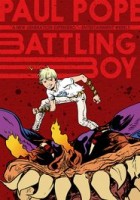
Battling BoyBattling Boy by Paul Pope. I have enjoyed Paul Pope’s work in the past and so I was very excited for the release of Battling Boy, his most recent graphic novel. What I didn’t realize was that it was the first volume in what will be at least a two-volume series, not including the recently announced prequel The Rise of Aurora West. It was a little frustrating to reach the end of Battling Boy just when things were really starting to pull together only to discover that it stops without any sort of conclusion and not even much of a cliffhanger. Still, Battling Boy is a tremendous amount of fun and I did enjoy it. I appreciate Pope’s offbeat humor and slightly surreal and absurd storytelling. The artwork’s pretty great, too. Following the eponymous demigod Battling Boy as he struggles to complete his coming-of-age ceremony and become a hero, the graphic novel is Pope’s original take on the superhero origin story. While he brings his own touch to the genre, there are plenty of influences from other comics (such as Batman and Thor to name two) that can be seen in the work.

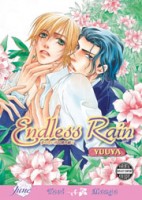
Endless RainEndless Rain by Yuuya. I’ve not had particularly good luck with the boys’ love that I’ve been reading recently and Endless Rain hasn’t changed that. I can’t say that I enjoyed this one-shot much at all. Despite having a happy ending (which I am not at all convinced would happen) the manga isn’t particularly pleasant and includes what basically amounts to forced prostitution. The plotting is sloppy, the narrative is difficult to follow and at times doesn’t make any sense, and the characterization is inconsistent. With Hyougami’s vendetta against the Kasuga family and the bad blood between Akira Kasuga and his father Endless Rain had some potential, but Yuuya doesn’t quite pull it off. Maybe if the manga was a little longer it wouldn’t have been such a mess. As it is, Yuuya tries to cram in too much and it ends up rushed. The only part of Endless Rain that I really liked was Iwao–a scarred and severe-looking yakuza who dotes on Akira’s younger brother. Contrary to his appearance, he’s actually a very sweet guy. Unfortunately, he only briefly shows up as a side character.

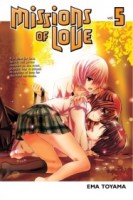
Missions of Love, Volume 5Missions of Love, Volume 5 by Ema Toyama. Although I am familiar with the basic premise of Missions of Love, I haven’t actually read any of the series until this volume. When I heard the manga described it seemed so trope-filled that I just couldn’t muster up any interest in it despite the rather provocative covers. But now I’m kind of sorry that I missed out on the earlier volumes. Yes, there are quite a few tropes being used, but the twisted romantic relationships are mesmerizing even if they aren’t particularly healthy. None of the characters are really very nice people and their interactions are a mess of lies and manipulation. Missions of Love is very suggestive and scandalous even though all that really happens in this volume (well, except for the emotional exploitation) is a bit of ear nibbling. I can see why others call Missions of Love addicting; I know that I want to read more. The only thing that really annoyed me about Missions of Love is how Yukina’s glasses are drawn (or rather how the aren’t drawn)–the lines used are so minimal that they barely seem to exist at all.

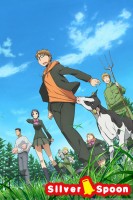
Silver SpoonSilver Spoon directed by Tomohiko Ito. Based on the award-winning manga series Silver Spoon by Hiromu Arakawa (which was in part inspired by her experiences growing up on dairy farm), the Silver Spoon anime adaptation is quite well done. The series is very forthright and honest about where food comes from, including the raising and slaughtering of animals for meat. I know that particular subject will distrub some viewers, but I think it is something that is important for people to understand and the anime does handle it very well. Many of its characters are also conflicted over it. One of the major story lines of Silver Spoon has to do with Hachiken, the protagonist, trying to come to terms with what it is he eats. However, life and the taking of it is treated with immense respect in the series. I myself grew up in a farming community among the cows, corn, and soybeans (my neighbors actually happened to be dairy farmers), and so I could appreciate Silver Spoon‘s realistic portrayal of the challenges faced by those who make their living caring for animals and crops.

Filed Under: FEATURES, My Week in Manga Tagged With: anime, Battling Boy, comics, Ema Toyama, manga, missions of love, Paul Pope, Silver Spoon, Yuuya

My Week in Manga: October 14-October 20, 2013

October 21, 2013 by Ash Brown

My News and Reviews

It was another two-review week last week. My Blade of the Immortal review project continues with Hiroaki Samura’s Blade of the Immortal, Volume 26: Blizzard. The volume includes the conclusion to the battle between Manji and Shira and it does not disappoint. The second review posted last week was for Tomoyuki Hoshino’s novel Lonely Hearts Killer. It’s not easy reading, and I didn’t like it quite as well as Hoshino’s collection of short fiction We, the Children of Cats, but I found it to be an intriguing work.

Last week I also had the opportunity to attend a fascinating lecture on queer theory, Japanese literature, and translation. I decided to share some of my random musings on the topics. So far the post seems to have been well received, which makes me pretty happy.

There were a couple of particularly interesting posts by Erica Friedman over at Yuricon last week. Her New York Comic Con report includes more information about One Peace Books’ licensing of Takashi Ikeda’s yuri manga Whispered Words. (I’m looking forward to the release of Whispered Words a great deal.) Also interesting was her post A Very Important Thing About Licensing Manga Fans Don’t Really Understand which explains a few of the complexities involved in licensing manga for English-reading audiences.

Quick Takes

Children of the Sea, Volume 5Children of the Sea, Volume 5 by Daisuke Igarashi. In Japan, the fifth and final volume of Children of the Sea was released three years after the fourth volume was published. The English-language edition of the series likewise followed suit. But the end is finally here! I was actually surprised that the fifth volume was the conclusion of the series. To me it felt as though Igarashi had much more in store for Children of the Sea. I don’t know the circumstances surrounding the series’ end, but I am a little sad that he wasn’t able to develop it further. However, almost everything is tied up satisfactorily plot-wise and the series’ sense of mystery and awe remains intact. Children of the Sea is like modern myth. There is relatively little dialogue and narration in the fifth volume; Igarashi’s artwork really carries the manga at this point. And that artwork is absolutely beautiful. The attention given to the realistic details of the water and sea-life is stunning.

Devil's InfirmaryDevil’s Infirmary by Aco Oumi. Asakura is a physician at an all boys’ school who is not above accepting sexual advances from the students. Things get a little more complicated when Higurashi walks in on Asakura getting a blow job, but Asakura has a few compromising photographs with which to blackmail Higurashi into keeping quiet about it. Supposedly Asakura is in love with Higurashi, but I’m really not convinced. Their relationship is a very inappropriate one and Asakura, though he has a few redeeming qualities, is actually kind of creepy. (But Higurashi’s pretty cute.) At the same time, there are some legitimately funny and occasionally even hilarious moments in Devil’s Infirmary, too. One of Higurashi’s closest friends has a “sparkle problem” that unfortunately brings him unwanted attention from a few of the other students. It’s rather entertaining to see Higurashi try to pose as his boyfriend to deflect some of that interest. And then there’s Asakura’s mother who bribes her gay son into buying her yaoi manga.

Eyeshield 21, Volume 24Eyeshield 21, Volumes 24-27 written by Riichiro Inagaki and illustrated by Yusuke Murata. By this point I am no longer surprised that I enjoy Eyeshield 21. I still don’t have a particular interest in American football (and I doubt I ever will even considering the number of years I spent in marching band), but the characters, comedy, and art in the series are great. These four volumes are devoted to the Kanto Tournament game between the Deimon Devil Bats and the Ojo White Knights, both teams fighting to advance one step closer to the Christmas Bowl. The Devil Bats are considered to have one of the best offenses in the tournament but the White Knights are considered to have the best defense. The White Knights also have Seijuro Shin–as perfect a player as there can be. The game ends up being very close, and therefore very exciting; Inagaki keeps the readers guessing right up to the very last second. Murata’s dynamic artwork continues to be one of the highlights of the series. His creative imagery is a little more restrained in these volumes, focusing more on the action of the game and slightly less on its psychological impact, but it’s definitely still there.

Fairy Tail, Volume 30Fairy Tail, Volume 30 by Hiro Mashima. With these volumes, Fairy Tail launches into a new story arc. The technique that Mashima uses–a time skip–isn’t all that unusual for a lengthy shounen manga series. What makes it different, and something that I personally haven’t encountered before, is that only part of the cast jumps ahead while most of the main characters are stuck in time. It makes it a little more interesting when returning after seven years that they have to come to terms with the fact that so many of their friends (and enemies) have changed and grown more powerful. The time skip also serves the purpose of “resetting” the story–Fairy Tail is once again one of the weakest guilds and has to fight its way back to the top. But instead of facing off with evil wizards and guilds, this time they’ll be competing in the Grand Magic Games. Honestly, I’m not quite as interested in this particular turn of events, but at least there should be some entertaining trials and competitions as a result.

The Spectral EngineThe Spectral Engine by Ray Fawkes. I am not especially familiar with Ray Fawkes–an award-winning and frequently award-nominated Canadian creator–and so I was unaware of the upcoming release of The Spectral Engine. Happily, a review copy unexpectedly showed up in the mail. Otherwise, I would probably have completely missed it and that would have been a shame. The Spectral Engine is a great graphic novel and I’m glad I had the opportunity to read it. The artwork in particular is excellent, using dark, dripping lines and ink spatter reminiscent of the smoke and grime of the titular engine to effectively create an unnerving atmosphere appropriate for the ghost stories being told. The Spectral Engine weaves together thirteen tragic historic events from many different time periods and locations across Canada. These retellings are paired with their related modern-day hauntings and reports of unexplained phenomena. In many cases the names and lives of the dead have been forgotten, but their stories and legends live on.

AkagiAkagi, Episodes 14-26 directed by Yuzo Sato. While the first half of Akagi had several different mahjong matches, the second half focuses on one: Akagi Shigeru versus Washizu Iwao. It also features a very special and slightly terrifying version of mahjong in which three-quarters of the tiles are transparent (which are beautifully animated). This reveals more of the players’ hands and greatly changing the dynamics of the game. (Though initially a fictional game, Washizu Mahjong sets now really do exist.) The game with Washizu also provides Akagi with something that he’s been looking for–a literal death match. Instead of money, he’s gambling with his blood and therefore his life. Akagi is a fearless and fearsome player and the game is ridiculously intense as a result. There’s skill, and there’s luck, but even more important are the psychological attacks used to provoke and manipulate the other players. Even when most of the tiles can been seen there’s still plenty of room for bluffing . I love mahjong and unsurprisingly I loved Akagi, too.

Filed Under: FEATURES, My Week in Manga Tagged With: Aco Oumi, Akagi, anime, children of the sea, comics, Daisuke Igarashi, Eyeshield 21, Fairy Tail, Hiro Mashima, manga, Ray Fawkes, Riichiro Inagaki, Yusuke Murata

My Week in Manga: October 7-October 13, 2013

October 14, 2013 by Ash Brown

My News and Reviews

I posted two in-depth reviews last week, one manga and one not. The first review was for Makoto Yukimura’s Vinland Saga, Omnibus 1. I was trying coordinate my review with the manga’s release, but unfortunately there was a delay through some distributors so not all of the books have yet arrived where they should. I’ve been hoping that Vinland Saga would be licensed in English for years. I wasn’t disappointed by the first omnibus and am looking forward the next one a great deal. The second review posted last week was for Laura Joh Rowland’s The Shogun’s Daughter. The novel is the seventeenth volume in her series of Tokugawa-era mystery and crime novels but the first one that I’ve actually read. I was annoyed by parts of the novel but the use of actual Japanese history is quite clever in The Shogun’s Daughter.

As for fun things found online, the most recent column of The Mike Toole Show, “Tiles Against Humanity,” focuses on mahjong anime and manga, particularly Akagi and Kaiji. I’ve professed my love of mahjong here at Experiments in Manga, so I’m always happy to come across others writing about the subject. This past weekend was the New York Comic Con and there were quite a few announcements to come out of it. My Manga Bookshelf cohorts have write-ups of the panels they attended: MJ’s can be found under the NYCC tag and Sean’s are listed in the NYCC/NYAF category.

Some of the licenses at NYCC that particularly caught my attention include (but are certainly not limited to) Black Rose Alice by Setona Mizushiro, Terra Formars, and the Battle Royale side story Angels’ Border from Viz (which should go nicely with Haikasoru’s recently announced Battle Royale materials); Kodansha picked up two Attack on Titan spin-offs, Before the Fall and No Regrets (yup, the shoujo one) in addition to the Attack on Titan Junior High gag manga and the guidebooks; Vertical is also getting in on the Attack on Titan action, picking up the Before the Fall light novel series, and has also licensed Moyoco Anno’s manga In the Clothes Named Fat.

Quick Takes

Nana, Volume 19Nana, Volumes 19-21 by Ai Yazawa. Wow, this is one heck of a place for Nana to leave off–the tragedy that has been alluded to for so long has finally occurred and it is absolutely devastating. More and more of the series has actually been devoted to the incident’s aftermath and how it continues to affect the characters even years later, but the twenty-first volume is all about its immediate consequences. Heartbreaking only begins to describe it. Nana is a phenomenal series with fantastic characterizations. After Shin’s arrest, both the Black Stones and Trapnest begin to fall apart and the band members’ individual problems start to spin out of control. It’s very dramatic but the progression of the story feels natural and the characters’ development, reactions, and behaviour are all believable. Even if the series is never finished, Nana is well worth reading. I continue to be extremely impressed by Yazawa’s work. I wish her all the best as she continues to recover her health.

Pretty Guardian Sailor Moon: Short Stories, Volume 1Pretty Guardian Sailor Moon: Short Stories, Volume 1 by Naoko Takeuchi. Though it is not my favorite series, I enjoy Sailor Moon and am happy to see it doing so well. Kodansha released the main series in twelve volumes and is collecting the related short stories and bonus manga into two additional volumes. That being said, the short stories don’t really stand on their own very well. Fans of Sailor Moon will definitely be interested in them, but their appeal probably won’t extend very far beyond that. The stories in the first volume all tend towards the sillier, more lighthearted side of the series, focusing more on the characters’ everyday lives and less on their monumental confrontations with those who would destroy humanity. Although, there is a some of that, too. And the Sailor Guardian’s daily lives can be pretty hectic. I found the first volume of short stories to be mostly entertaining, but I would sigh a little bit to myself every time there was a dig at someone becoming “chunky.”

Sengoku Basara: Samurai Legends, Omnibus 1Sengoku Basara: Samurai Legends, Omnibus 1 (equivalent to Volumes 1-2) by Yak Haibara. I tend to be fairly wary of video game manga and so I ended up enjoying the first omnibus of Sengoku Basara: Samurai Legends far more than I ever expected. Samurai Legends is based on Sengoku Basara 2, the second game in the Sengoku Basara series, but no prior knowledge of the franchise is needed to enjoy the manga. Inspired by prominent historical events and figures of the Warring States Period, the story begins with the death of Oda Nobunaga at the burning of Honnou Temple and then follows the resulting power struggle. With marvelously over-the-top and dynamic battles and duels, humorous anachronisms, larger-than-life characters, and attractive artwork and designs, Samurai Legends is a tremendous amount of fun. There’s even a tiny bit of legitimate history, too. Samurai Legends is pretty great; I’ll definitely be picking up the second and final omnibus.

Yuri Monogatari, Volume 3Yuri Monogatari, Volumes 3-4 by Various. Although it was the third Yuri Monogatari collection that was nominated for a Lambda Literary Award, out of these two volumes I actually much prefer the fourth. Yuri Monogatari is an anthology that collects short, lesbian-themed comics from Japan, America, and Europe. I am glad to have discovered Yuri Monogatari for no other reason than the series has introduced me to the work of Althea Keaton–whose contributions continue to be some of my favorites–but I enjoy the other comics included as well. I was particularly fond of Tomomi Nakasora’s “Kissing the Petal” which not only features an endearing lesbian couple but also their close friend Chii, a transman who’s looking for a girlfriend. Yuri Monogatari has a nice mix of speculative fiction as well as pieces that are based in reality. The artwork isn’t always the strongest, but the stories are consistently engaging. Some are sweet while others are more sorrowful, but they’re all generally positive in tone.

Attack on TitanAttack on Titan directed by Tetsurō Araki. I’m not at all surprised that Hajime Isayama’s manga Attack on Titan was selected for an anime adaptation–it almost seems to be begging for it. For people who can’t get past the varying quality of Isayama’s artwork but who are still interested in the series’ story, the anime makes a good alternative and the animation is much more consistent. Some of the events are revealed in a slightly different order–the anime tends to be more chronological and employs fewer extended flashbacks than the manga–but otherwise the anime series is a very faithful adaptation of the original. Established fans of the manga will find things to like, too. It’s very cool to see the three-dimensional maneuvering gear in action, which something that the manga can’t convey to the same extent. The music in the Attack on Titan anime is also suitably epic with sweeping orchestral and choral pieces effectively increasing the drama of the humans’ confrontations with the titans.

Filed Under: FEATURES, My Week in Manga Tagged With: Ai Yazawa, anime, attack on titan, comics, manga, nana, Naoko Takeuchi, sailor moon, Sengoku Basara, Yak Haibara, yuri monogatari

My Week in Manga: September 30-October 6, 2013

October 7, 2013 by Ash Brown

My News and Reviews

It’s the beginning of one month and the end of another, which means it’s one of the slower weeks here at Experiments in Manga. I announced the winner of the Arisa manga giveaway. The post also includes a list of some of the manga available in English that feature twins. For those of you who are interested in the absurd amount of manga and other related materials that make their way into my home, September’s Bookshelf Overload was also posted. Finally, the honor of the first in-depth manga review for October goes to Satoshi Kon’s Tropic of the Sea. I thought it was fantastic. Hopefully it does well and more of Kon’s manga will be able to be released in English.

For anyone looking for more anime and manga blogs to follow, CryMore.Net (formerly known as Whiners.Pro) has put together the most comprehensive list of active sites that I’ve seen. (And yes, Experiments in Manga is included.) If you’re interested in yokai, Matthew Meyer recently launched a Kickstarter project for his most recent artbook/guide The Hour of Meeting Evil Spirits. It’s already met its goal (and I was one of the people to support it), but it’s still worth checking out if you like yokai. I reviewed Meyer’s previous book (also funded through Kickstarter) The Night Parade of One Hundred Demons: A Field Guide to Japanese Yokai and really enjoyed it. I’m looking forward to seeing more of his work in print.

Quick Takes

Battle Angel Alita: Last Order, Volume 18Battle Angel Alita: Last Order, Volume 18 by Yukito Kishiro. I could be wrong since I haven’t read the entire series, but I believe that the eighteenth volume of Battle Angel Alita: Last Order is the first volume to prominently feature Figure Four (the burly dude on the cover). A love interest in the original Battle Angel Alita manga, up until this point in Last Order he’s been mostly relegated brief references. The eighteenth volume concludes the fallout from the ZOTT combat tournament with the series’ titular chapter “Last Order” before jumping nearly a year back in time to follow Figure for the rest of the volume. He’s hard at work training in anti-cyber martial arts when he learns that Alita may be dead and so goes searching for both her and the truth. Sechs makes a brief, but important appearance in the volume, which made me happy since Sechs is one of my favorite characters in the series. And as a side note, Kishiro designs some really creepy cyborgs.

Dengeki Daisy, Volume 9Dengeki Daisy, Volumes 9-12 by Kyousuke Motomi. It’s been a while since I’ve read any of Dengeki Daisy. I’d forgotten how much I enjoy the series. Dengeki Daisy is kind of a strange manga, mixing rather mundane school life with hackers and cyber espionage, but I am consistently and highly entertained by it. I really like the quirkiness of characters in Dengeki Daisy. Motomi calls Dengeki Daisy a love comedy, which I suppose in the end it is, but in addition to being funny and occasionally romantic, the series also has a lot of action and drama. Kurosaki’s past and his guilt over it continues to be a major driving force behind the story. His disappearance is resolved fairly quickly, which surprised me, but that fact emphasizes how much he cares for Teru and how much Teru and the others care about him. Motomi has a tendency to use stereotypical shoujo plot devices but then completely turns them on their head. The fake-outs are both effective and refreshing.

Incubus, Volume 1Incubus, Volumes 1-3 by Yayoi Neko. The mythology in Incubus is fairly complex and the comic’s exposition can be somewhat long-winded, but I overall I’m liking this yaoi series. It has humor and drama, and I’m rather fond of the two leads–a college student named Judas and the surprisingly endearing half-demon Lennial. Judas’ dream sequences are great. In them, the different sides of his psyche try to make sense of what is going on around him as he is repeatedly confronted by demonic powers. The results are often amusing, but his emotional struggles can be heartbreaking. Judas has a very troubled past and what little good there was in it has been torn from him. Not everything has been revealed about his and Lenniel’s history together, but Neko seems to have a firm grasp on the series’ direction. Incubus is currently on hiatus due to the creator’s health–the first three volumes only cover the first half or so of the story–but I look forward to reading more of it if she is ever able to continue the series.

Sickness Unto Death, Volume 1Sickness Unto Death, Volume 1 written by Hikari Asada and illustrated by Takahiro Seguchi. I didn’t know much about Sickness Unto Death before picking it up, but I’m willing to give anything released by Vertical a try. Emiru is a frail young woman suffering from despair–a sickness of the spirit that is causing her body to fail. Kazuma has recently enrolled in college to pursue a career in clinical psychology. When he meets Emiru he not only wants to do all that he can to help her, but he falls in love with her as well. I found the manga’s basic premise intriguing, but in the end I was largely disappointed with the first volume of Sickness Unto Death, though I can’t seem to quite pinpoint why. However, I am still interested in reading the second half. The big reveal as to the cause of Emiru’s despair has been set up and I am very curious about it. I’ll admit that don’t have a lot of confidence, but I am hoping that it will be worth it and that it won’t be something too absurd or overblown.
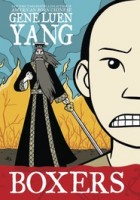
FreeFree!: Iwatobi Swim Club directed by Hiroko Utsumi. I really enjoyed Free!, finding it to be both a fun and funny series. At times it even manages to be rather touching. The anime has a lot of self-aware goofiness in addition to a decent story and great animation. The swimming in particular is beautifully animated and, for the most part, realistically portrayed. (This also means that there are plenty of muscles to appreciate.) Although it is an important part of the series, Free! is actually less about swimming than it is about the relationships between its characters and their personal struggles and doubts. They all have their own reasons for swimming, but ultimately what brings them together is their desire to connect with one another–swimming just happens to be the way they go about doing it. A second season has been hinted at for the series; I certainly wouldn’t mind seeing more of Free! I’d also love to see it licensed for a physical release.

Filed Under: FEATURES, My Week in Manga Tagged With: anime, Battle Angel Alita, comics, Dengeki Daisy, Free, Hikari Asada, Incubus, Kyousuke Motomi, manga, Sickness Unto Death, Takahiro Seguchi, Yayoi Neko, Yukito Kishiro

My Week in Manga: September 23-September 29, 2013

September 30, 2013 by Ash Brown

My News and Reviews

There were a few different things going on at Experiments in Manga last week. First off is the Arisa manga giveaway. The winner will be announced on Wednesday, so you still have a little time to enter for a chance to win the first and eleventh volumes of Natsumi Ando’s Arisa. The most recent Library Love feature was posted last week, too, which is basically a collection of quick takes of manga that I’ve borrowed from my local library. My quest to read all of Edogawa Rampo’s material available in English also continued. This time I took a look at The Edogawa Rampo Reader, which is a nice introduction to his life and work. The volume collects eighteen of his short stories and essays from over a span of thirty years.

A few interesting things found online: Brigid Alverson interviewed Charles Brownstein of the Comic Book Legal Defense Fund about its new manga guide which will be released later this year. (I reviewed Manga: Introduction, Challenges, and Best Practices not too long ago and found it to be a great resource.) And speaking of the CBLDF, Keiji Nakazawa’s Barefoot Gen was recently highlighted as part of the Using Graphic Novels in Education feature. Finally, Vertical made some licensing announcements at Anime Weekend Atlanta: Tetsuya Tsutui’s manga Prophecy (interestingly enough, Tsutui approached Vertical directly about the license) and Shinobu Hashimoto’s biographical novel Compound Cinematics: Akira Kurosawa and I.

Quick Takes

Arisa, Volume 8Arisa, Volumes 8-11 by Natsumi Ando. The true King has been revealed! As has that person’s motivations and back story, which are suitably dark and dramatic. Arisa and its characters are all pretty twisted–the King isn’t the only one with serious issues. The most stable character in Arisa is probably Tsubasa, but sometimes I wonder about her, too. It’s not just anyone who would pretend to be someone else, after all. At times Arisa can be extraordinarily over the top with its action and melodrama, but that’s probably one of the reasons I find the series so absorbing. Some of it comes across as unintentionally ridiculous, though. But for every development that’s laughable, there’s another that is effectively disturbing. Arisa is a series that’s really easy to tear through. Despite all of the twists and turns in its plot (or maybe because of them) the manga reads very quickly. With only one volume left to go in the series, I’m very curious to see how things will play out.

Black Jack, Volume 7Black Jack, Volumes 7-9 by Osamu Tezuka. Every once in a while I get the urge to read a bunch of Black Jack. Since the series is fairly episodic, it’s easy to pick up even if it’s been a while since I’ve read any of the manga. There were a couple of things that particularly struck me about these volumes. First of all, Black Jack should really stay away from cliffs as he seems to have a habit of falling off of them. Secondly, since Black Jack is an unlicensed doctor, it probably shouldn’t be too surprising that he would have a tendency to become involved with criminals. Often this works out quite well for him–he is able to demand his high prices and the other parties want to keep things quiet, too. However, on occasion Black Jack’s association with organized crime comes back to bite him and he ends up a little worse for wear. As always, I adore Black Jack as a character. I enjoy how much of a bastard he can be while still maintaining a strong sense of integrity.

Cyborg 009Cyborg 009 written by F. J. DeSanto and Bradley Cramp and illustrated by Marcus To and Ian Herring. Working closely with Ishimori Productions, Cyborg 009 is a single-volume, hardcover graphic novel adapting Shotaro Ishinomori’s Cyborg 009 manga with a Western audience in mind published by Archaia. The comic is in full-color with updated character designs closer to some of the more recent anime adaptations than the original manga. Actually, the artwork was one of my favorite things about the Cyborg 009 graphic novel. Story-wise it would have benefited from either being a little more focused or a little bit longer. As it is, the graphic novel is very compressed and not all of the plot lines introduced are adequately developed. But it is fun and quickly paced, not to mention beautifully presented; hopefully it will encourage readers to seek out the original material. Also of note: the back cover indicates that Cyborg 009 is “Ishimori Universe Book 1.” I know that I’d be very interested in seeing more collaborations between Archaia and Ishimori.

The Day I Become a ButterflyThe Day I Become a Butterfly by Sumomo Yumeka. Although The Day I Become a Butterfly was released under Digital Manga’s Juné imprint, two of the six collected stories aren’t at all boys’ love and a few of the others could be argued not to be as well. Yumeka describes the short manga in The Day I Become a Butterfly as inexplicable (she also admits to not liking them), but I think I would call them poetic. Instead of being straightforward narratives, the stories are quiet and almost impressionistic. They tend to be fairly introspective and melancholy; the desire for acceptance from others is a recurring theme throughout the volume. Yumeka’s artwork is lovely, although some of the character designs seem to be reused from one story to the next. Normally this might not be much of a problem, but because some of the stories in The Day I Become a Butterfly are interrelated it was sometimes confusing when the characters from an unrelated story looked like some of the recurring characters.

AkagiAkagi, Episodes 1-13 directed by Yuzo Sato. I love mahjong and Akagi is one of the mahjong series. I was thrilled when Crunchyroll picked up the anime for streaming. (I hold no illusions–mahjong manga and anime is very niche and unlikely to ever receive a physical release in North America.) Watching Akagi has actually improved my game a bit. It has also taught me how to cheat…not that I would. People who are at least vaguely familiar with mahjong will probably get more out of Akagi than those who aren’t, but it’s not necessary to understand the minutia of mahjong to enjoy the anime. The series can be surprisingly brutal at times and the games are intense–high stakes, crooked cops, yakuza, violence, manipulation. A huge emphasis is put on the psychological elements of the game. Akagi is a brilliant player and absolutely ruthless, both at the table and away from it. He seems to be afraid of nothing and is extremely ballsy. I’m really looking forward to watching the series’ second half.
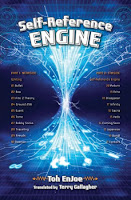
Filed Under: FEATURES, My Week in Manga Tagged With: Akagi, anime, arisa, black jack, Bradley Cramp, comics, Cyborg 009, F. J. DeSanto, Ian Herring, manga, Marcus To, Natsumi Ando, Osamu Tezuka, Sumomo Yumeka
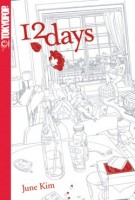
  • « Go to Previous Page
  • Page 1
  • Interim pages omitted …
  • Page 5
  • Page 6
  • Page 7
  • Page 8
  • Go to Next Page »
 | Log in
Copyright © 2010 Manga Bookshelf | Powered by WordPress & the Genesis Framework