• Skip to primary navigation
  • Skip to main content
  • Skip to primary sidebar
  • Home
  • About Us
    • Privacy Policy
    • Comment Policy
    • Disclosures & Disclaimers
  • Resources
    • Links, Essays & Articles
    • Fandomology!
    • CLAMP Directory
    • BlogRoll
  • Features & Columns
    • 3 Things Thursday
    • Adventures in the Key of Shoujo
    • Bit & Blips (game reviews)
    • BL BOOKRACK
    • Bookshelf Briefs
    • Bringing the Drama
    • Comic Conversion
    • Fanservice Friday
    • Going Digital
    • It Came From the Sinosphere
    • License This!
    • Magazine no Mori
    • My Week in Manga
    • OFF THE SHELF
    • Not By Manga Alone
    • PICK OF THE WEEK
    • Subtitles & Sensibility
    • Weekly Shonen Jump Recaps
  • Manga Moveable Feast
    • MMF Full Archive
    • Yun Kouga
    • CLAMP
    • Shojo Beat
    • Osamu Tezuka
    • Sailor Moon
    • Fruits Basket
    • Takehiko Inoue
    • Wild Adapter
    • One Piece
    • After School Nightmare
    • Karakuri Odette
    • Paradise Kiss
    • The Color Trilogy
    • To Terra…
    • Sexy Voice & Robo
  • Browse by Author
    • Sean Gaffney
    • Anna Neatrour
    • Michelle Smith
    • Katherine Dacey
    • MJ
    • Brigid Alverson
    • Travis Anderson
    • Phillip Anthony
    • Derek Bown
    • Jaci Dahlvang
    • Angela Eastman
    • Erica Friedman
    • Sara K.
    • Megan Purdy
    • Emily Snodgrass
    • Nancy Thistlethwaite
    • Eva Volin
    • David Welsh
  • MB Blogs
    • A Case Suitable For Treatment
    • Experiments in Manga
    • MangaBlog
    • The Manga Critic
    • Manga Report
    • Soliloquy in Blue
    • Manga Curmudgeon (archive)

Manga Bookshelf

Discussion, Resources, Roundtables, & Reviews

Manga

Manga Artifacts: Osamu Tezuka’s Lost World

February 23, 2012 by Katherine Dacey

Reading Osamu Tezuka’s Lost World (1948) reminded me a formative graduate school experience. I was researching George Gershwin’s Porgy and Bess (1935), when I stumbled across a blistering review of a composition I’d never heard: Blue Monday (1922), a one-act “jazz opera” that Gershwin composed for Paul Whiteman’s Scandals of 1922. After attending its premiere, Charles Darnton, critic for the New York Tribune, pronounced the project a disaster, an ill-advised attempt to transplant the conventions of verismo opera to a Harlem setting. Blue Monday, he opined, was “the most dismal, stupid, and incredible blackface sketch that has probably ever been perpetrated. In it a dusky soprano finally killed her gambling man. She should have shot all her associates the moment they appeared and then turned the pistol on herself.” (Darnton, 11)

Ouch.

The review piqued my interest, however, prompting me to track down a recording of Blue Monday. Judged against Porgy and Bess, it was an inferior work; as Gershwin biographer Charles Schwartz observed, the music was several degrees removed from jazz and ragtime, drawing its cues from Alexander’s Ragtime Band and not The Maple Leaf Rag. (Schwartz, 61) The dramaturgy, too, was weak, conveying little of the Harlem setting. Yet in this early experiment, I could hear glimmerings of Gershwin’s mature style, a conscious effort to bring African-American music to the opera stage. And that excited me.

I had a similar reaction to Lost World, an early, problematic work in the Tezuka canon. First published in 1948, Lost World focuses on a scientific expedition to the fictional planet Mamango, a large, egg-shaped rock that, five million years earlier, had been a part of the Earth. When the scientists arrive on Mamango, they discover a Jurassic landscape carpeted in monstrous ferns, populated by hungry dinosaurs, and littered with powerful “energy stones.” The financial and scientific value of their discoveries, however, soon cause a deadly rift within the expedition party.

The execution of Lost World will come as a shock to readers familiar with Tezuka’s mature style. The profusion of subplots, minor characters, and doppelgangers makes the story hard to follow on a moment-to-moment basis; without frequent narrative interventions from the characters, large stretches of Lost World would be incomprehensible. More frustrating still is Tezuka’s over-reliance on dialogue to resolve plot points and reveal motive, even when that information is readily conveyed by the pictures. (“This is payback for you throwing me into the gorge! You get me?!” one character yells as he pummels the person who pushed him off a cliff in the previous scene.) The biggest disappointment, however, is the artwork; most of the panels consist of talking heads, with a handful of dramatic, but disjointed, action scenes interrupting the steady stream of chatter.

Writing about Lost World in the 1980s, Tezuka conceded Lost World‘s shortcomings, attributing them to his age (he was 20) and the circumstances of its publication. As he explained, the work originally ran in an Osaka newspaper, Kansai Yoron, where the target audience was young adults. The two-volume version published by Fuji Shobo, however, was aimed at the children’s market, necessitating substantial changes to the the script. What had been a romance in the original version, for example, was recast as a brother-sister relationship in the Fuji Shobo edition; anything more explicit would have been “absolutely taboo in children’s comics” of the period. (Tezuka, 248)

At the same time, Tezuka touted Lost World as an important milestone in his artistic development. “I thought that at the very least, there was no other comic book like mine, which was like a novel (albeit a very crude one), and had an unhappy ending,” Tezuka explained. (Tezuka 247) A careful inspection of Lost World supports Tezuka’s claim for its significance; whatever its shortcomings, many of the characters and themes of his mature works appear in embryonic form in Lost World.

On the most basic level, Tezuka employs several of his best-known “stars” in Lost World, arranging them in contrasting pairs. Acetylene Lamp, for example, plays an unscrupulous journalist who stows away aboard the expedition’s spaceship so that he can get an exclusive scoop on Mamango — and profit from the mysterious “energy stones” scattered across its surface. Another Tezuka favorite, Shunsaku Ban (a.k.a. Higeoyaji), plays yang to Lamp’s yin; as in many of his other incarnations, Ban is a middle-aged detective whose blustery demeanor camouflages his basic decency. Both characters are motivated by curiosity, but their curiosity compels them in opposite directions: Lamp towards profit, Ban towards truth.
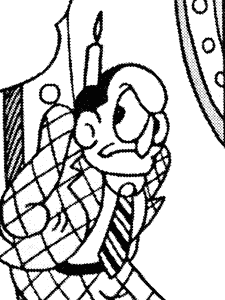
From left to right: Acetylene Lamp, Shunsaku Ban/Hygeoyaji, Kenichi Shikishima

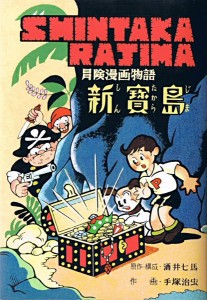
The story’s two scientists are likewise played by major “stars” from the Tezuka troupe. Kenichi Shikishima, hero of New Treasure Island, leads the Mamango expedition. Dr. Shikishima’s youthful spirit, resolve, and courage are contrasted with that of Dr. Butaru Makeru, a mustachioed villain whose cowardice and opportunism precipitate the disaster on Mamango. While Shikishima resolves to visit Mamango “for the sake of world science,” Makeru hints at his selfish motives for participating in the expedition: “If by some chance we meet with something unexpected on that planet, don’t blame me. Heh, heh, heh!” That contrast is also underscored by their terrestrial research as well: while Shikishima’s experiments are intended to help animals achieve human consciousness, Makeru’s experiments are designed for his own personal benefit, with little regard for their greater social or scientific good.

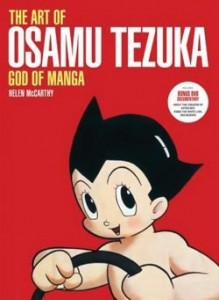
In later works, Tezuka was less schematic in his representations of good and evil, allowing characters to simultaneously embody both. Father Garai, anti-hero of MW, is a good example of this later tendency: Garai is a good man tormented by dark sexual desires, seeking grace even as he sins repeatedly. Black Jack is another, a character whose misanthropy and greed are counterbalanced by a strong reverence for life. As Helen McCarthy observes in The Art of Osamu Tezuka: God of Manga, Black Jack is “sometimes a gentle and compassionate savior, sometimes a cold and unforgiving avenger,” two opposite yet equally human responses to “the inevitability of death.” (McCarthy, 199)

Ayame

Mimio

Lost World also introduces a recurring character type found throughout Tezuka’s work: the artificial life-form. Early in the story, Tezuka introduces us to Mimio, a talking rabbit, and Ayame, a “veggie girl.” Both are the result of scientific experiments: Dr. Shikishima surgically enhanced Mimio’s brain to grant him human intelligence, while Dr. Butamo cultivated Ayame in a laboratory. (Note that Shikishima’s motives seem benevolent; he wants to help animals achieve equal status with humans, whereas Butamo is more interested in making a wife for himself.)

Mimio and Ayame’s quest for humanity is rather baldly presented. In an early chapter, for example, Mimio visits Shikishima’s lab, where a new group of surgically enhanced animals are learning how to think and act like humans. Though the animals’ struggles with language and manners are played for laughs — “Boy, all humans sure do look alike!” exclaims a dog — there’s a definite sense that these creatures’ own desires are being subordinated to Shikishima’s grander mission of animal-human detente. “You’re very being is unique,” one of Shikishima’s colleagues tells his subjects. “Therefore, you should help humans and be a guide to other animals in perpetuum.”

Unlike Mimio, Ayame looks human, even though she is composed entirely of plant material — and that makes her situation more precarious than the rabbit’s. On the one hand, Dr. Butamo wants her to become his wife, threatening to kill her if she refuses to honor his marriage proposal. On the other, some of the characters view Ayame as nothing more than a walking, talking cabbage — and thus a potential food source when the crew’s rations run out. Ayame remains committed to exploring her humanity nonetheless; late in the manga, she and Shikishima have this pointed exchange:

Shikishima: Miss Ayame, surely, you must be surprised to be having so many adventures.You see? The world of humans is full of adventure and wonder!

Ayame: I feel as if I finally understand what things bring the most pleasure and happiness to the hearts of humans!

Shikishima: Well, then, when you return to the laboratory, you should have Mr. Butamo teach you even more, shouldn’t you?

In Mimio and Ayame, it’s not hard to see the inspiration for later characters such as Dororo‘s Hyakkimaru and Black Jack‘s Pinoko, both of whom struggle to reconcile the circumstances of their “birth” with their desire to be fully human.

Perhaps the most striking thing about Lost World is the final act, in which an accident permanently strands Ayame and Shikishima on Mamango. In Tezuka’s original version, Ayame and Shikishima embrace their fate as lovers, but in the Fuji Shobo edition, Tezuka portrayed them as brother and sister. Nonetheless, Tezuka left the final words of the original intact, speculating that in five million years, “when Mamango once again approaches the Earth,” mankind might find a new race of “plant animal people” descended from Ayame and Shikishima.

Similar Adam-and-Eve motifs recur throughout Tezuka’s oeuvre, finding a more sexual and spiritual expression in such mature works as Apollo’s Song and Phoenix: Nostalgia. Nostalgia is a particularly odd and fascinating variation on the theme, as the Adam figure dies early in the story, leaving his pregnant wife alone on a remote space colony. His wife then mates with her own offspring who, in turn, mate with an extraterrestrial life form whose DNA proves essential to rescuing humanity from the brink of extinction. In short, Nostalgia — like Lost World — dares to a imagine a new future for mankind in which other forms of life — terrestrial and extraterrestrial — play an important role in our evolution.

Whether these observations will make Lost World more palatable to a casual reader is debatable; I fully admit that I struggled through its 246 pages, backtracking frequently in a futile effort to understand what was happening. But if you approach Lost World in the same spirit I approached Gershwin’s Blue Monday — as a window into a major artist’s early development — you may find, as I did, a work of astonishing vibrancy, contradiction, and interest.

Works Cited
“Bet Lost on First Opera.” New York Times. 21 July 1935: II1. Print.
Darnton, Charles. “George White’s Scandals’ Lively and Gorgeous.” New York World 29 Aug. 1922: 11. Print.
McCarthy, Helen, and Osamu Tezuka. The Art of Osamu Tezuka: God of Manga. New York: Abrams ComicArts, 2009. Print.
Schwartz, Charles. Gershwin: His Life and Music. New York: The Bobbs-Merrill Company, Inc., 1973. Print.
Tezuka, Osamu, and Kumar Sivasubramanian. Lost World. Milwaukee, OR: Dark Horse, 2003. Print.
Filed Under: Manga, Manga Critic, REVIEWS Tagged With: Lostworld, Osamu Tezuka

An Introduction to Osamu Tezuka

February 19, 2012 by Katherine Dacey

February 9, 2012 marked the twenty-third anniversary of Osamu Tezuka’s death. His career in the manga industry spanned five decades, from the early days of the akahon market to the industry’s zenith, when comics accounted for nearly 40% of all books sold in Japan. Over the course of his life, Tezuka produced more than 150,000 pages of manga; created such iconic characters as Astro Boy, Kimba the White Lion, and Black Jack; launched a manga magazine and an animation studio; and mentored such artists as Hiroshi Fujimoto and Shotaro Ishimonori. The extent of Tezuka’s influence on Japanese visual culture is hard to understate; few modern creators have had such a profound impact on the medium in which they worked.

In Dreamland Japan: Writings on Modern Manga (1996), Frederik L. Schodt argues that Tezuka’s most important legacy was the story comic, “an intricate novelistic format” that anticipated the long-running stories in Weekly Shonen Jump, Morning, and Nakayoshi (234). Tezuka’s first story comics — New Treasure Island (1947), Jungle Emperor (1950-54), Astro Boy (1952-68), Princess Knight (1953-56) — were aimed at children, but his later work demonstrated that the format was well-suited to exploring adult themes, too.

Tezuka also pioneered a new way of drawing stories. As Schodt explains, Tezuka borrowed techniques from Walt Disney films “to create a sense of motion with his page layouts” — in essence, to bring the movie-going experience to the printed page (235). Tezuka’s example proved exceptionally powerful; the dynamic, visually-driven storytelling of Astro Boy and New Treasure Island continue to influence contemporary artists, especially in the world of shonen manga.

Tezuka would have been pleased, I think, to see how widely his stories are being read today, both in Japan and throughout Asia, the Americas, and Europe. In the United States alone, eighteen of Tezuka’s manga have been adapted for English-speaking audiences, Astro Boy, Black Jack (1973-83), and Phoenix (1956-89) among them.

Through these translations, I’ve developed a complicated relationship with Tezuka’s work. I love his art: his fluid layouts, his brilliant caricatures, his tripped-out dream sequences, and Freudian sex scenes. I also love his ambition: many of his stories — especially from the later stages of his career — have the sweep and social conscience of a Tolstoy novel, but the lurid, trashy soul of a Brian DePalma thriller.

Whenever I read one of Tezuka’s books, however, I’m reminded of the social, cultural, and temporal distance between his world and mine, even when I’m engrossed in the story and invested in the characters. Reading Swallowing the Earth (1968), for example, I was confronted by images that upset me. As a feminist, I winced at Tezuka’s depiction of Polynesian women as Hottentot Venuses, libidinous monsters with enormous lips and grotesquely rounded bodies. As an American, I struggled through Earth‘s racial warfare subplot with a mixture of dismay and horror: how could someone as fundamentally humane as Tezuka unwittingly tap into white supremacist fantasy when dramatizing the injustice of segregation?

Even when it infuriates me — as passages in Apollo’s Song (1970), Ayako (1972-73), and The Book of Human Insects (1970) have done — I’m still irresistibly drawn to his work. I admire Tezuka’s willingness to wrestle with the dark side of human nature, to create heroes and villains of genuine moral complexity. I also admire Tezuka’s playful side: his tendency to break the fourth wall, write himself into stories, bestow Dickensian names on his characters, and draw elaborate crowd scenes that would have made Busby Berkeley green with envy.

In the last ten years, there’s been an explosion of English-language articles and books aimed at readers like me, fans who recognize Tezuka’s important role in shaping the modern anime and manga industries, but want to learn more about his life, career, and artistic process. Helen McCarthy’s The Art of Osamu Tezuka: God of Manga (2009) is an excellent example of this trend; though she meticulously explains Tezuka’s star system and elucidates recurring themes in his work, she argues that Tezuka was “first and foremost a maker of popular entertainment,” and should be understood as such.

The complexity and size of Tezuka’s oeuvre has inspired American scholars to write about him as well. Flip through a volume of Mechademia, or browse the Asian Studies aisle at your local bookstore, and you’ll find scholars writing about Tezuka’s artistic legacy from a variety of perspectives. Some of these works — such as Natsu Onoda Power’s God of Comics: Osamu Tezuka and the Creation of Post-WWII Manga (2009) — make a conscious effort to bridge the gap between Ivory Tower and fandom, while others are clearly intended for academic audiences.

The goal of this month’s Manga Movable Feast is to create a space where all of Tezuka’s admirers — fans, critics, and scholars — can interact, sharing their reactions to his work, assessing his artistic legacy, reviewing titles new and old, and engaging with the messier, more problematic aspects of his work. Anyone can contribute: all you need to do is send me a link to a Tezuka-themed essay, podcast, or review, and I’ll feature it in one of my daily round-ups. (Email or Twitter are the best way to submit links; Twitter submissions should be directed to @manga_critic.) Note that the feast runs from today (Sunday, February 19th) through Saturday, February 25th. For more information, please visit the Osamu Tezuka MMF archive.

This is an expanded version of an essay that appeared at The Manga Critic on 12/14/10.

Filed Under: Manga, Manga Critic Tagged With: Manga Movable Feast, Osamu Tezuka

Soulless: The Manga, Vol. 1

February 18, 2012 by Katherine Dacey

Soulless is saucy in the best possible sense of the word: it’s bold and smart, with a heroine so irrepressible you can see why author Gail Carriger couldn’t tell Alexia Tarabotti’s story in just one book.

As fans of Carriger’s Parasol Protectorate novels know, Alexia is a sharp-tongued woman living in Victorian London — or rather, a steampunk version of Victorian London in which vampires and werewolves co-exist with the “daylight” (read: “human”) world. As she would in the real nineteenth-century England, Alexia faces pressure to marry, a prospect complicated by her age — she’s twenty-six — her ethnicity — her father was Italian — and her prodigious intellect. Alexia has one additional strike against her, albeit one that doesn’t affect her marriageability: she’s soulless, a “preternatural” being who can neutralize the vampires and werewolves’ power, temporarily reducing them to mortal form.

Plot-wise, Soulless is an agreeable mishmash of Young Sherlock Holmes, Underworld, and Mansfield Park, with a dash of Jules Verne for good measure. The basic storyline is a whodunnit: Alexia becomes the prime suspect in a string of supernatural disappearances around London, and must collaborate with Lord Collan Maccon, a belligerent werewolf detective, to clear her name. What they discover in the course of their investigation is a grand conspiracy worthy of an Indiana Jones movie, complete with evil scientists, vampire “hives,” sinister-looking laboratories, and a golem; all that’s missing is the Ark of the Covenant and a few Nazi generals.

At the same time, Soulless is a romance. Alexia would make a swell Austen heroine, as she faces the kind of obstacles to marriage that would elicit sympathy from the Dashwood girls and Fanny Price. The greatest of these hurdles isn’t her name or her age, however; it’s Alexia’s firm conviction that marriage should not be a socially or financially expedient union, but a true partnership. Paging Elizabeth Bennett!

Given how many genres are present in the text — it’s a crime procedural, a thriller, an urban fantasy, a comedy of manners, and a bodice ripper — it’s astonishing how well all the tropes mesh. Some of that success can be attributed to the dialogue. The characters’ peppery exchanges are an affectionate parody of British costume dramas; substitute “soulless” for “penniless,” and Alexia could easily be a character in Sense and Sensibility. A few passages strain too hard for effect — would anyone have really chosen “comestibles” over “food” when complaining about a party? — but for the most part, Carriger finds a convincing tone that’s neither faux-archaic nor casually contemporary.

Soulless’ other great strength is its appealing cast of characters. Alexia and Maccon are clearly the stars of this imaginary universe; anyone who’s read Middlemarch or Emma will immediately recognize that Alexia and Maccon are The Main Couple, as they spend most of volume one denying their mutual attraction and trading zingers. (“I may be a werewolf and Scottish, but despite what you may have read about both, we are not cads!” Maccon declares in a fit of Darcy-esque pique.) In the spirit of the best nineteenth-century novels, however, Carriger situates her lovebirds inside a vibrant community, albeit one inhabited by grumpy werewolves and flamboyant vampires in lieu of parsons, baronets, and virtuous maidens. Though these supporting characters don’t always get the screen time they deserve, Lord Akeldama, Professor Lyall, and Ivy Hisselpenny enliven the narrative with sharp observations and sound advice for Alexia and Maccon.

Manga artist Rem, best-known for her work on Vampire Kisses, does a fine job of translating Carriger’s prose into pictures. Though Rem’s attention to period detail is evident in the characters’ sumptuous costumes and lavishly furnished parlors, her meticulousness extends to the action sequences as well. An early fight between Alexia and a vampire is expertly staged, making effective use of dramatic camera angles and overturned furniture to capture the intensity of their struggle. Rem also manages to fold many of Carriger’s steampunk flourishes — zeppelins, steam-powered carriages, “glassicals” — into the story without overwhelming the eye; if anything, I found the subtlety of the steampunk elements an improvement on the novel, where the object descriptions sometimes felt like tangents.

The only drawback to the artwork is Alexia herself. In the novels, Carriger describes her as plain and full-figured; in the manga, however, Rem depicts Alexia as a buxom, wasp-waisted babe with a pouty mouth and a pretty face. That transformation is certainly in keeping with manga aesthetics — even the plainest young characters are usually pleasing to the eye — but not with the source material; as a reader, one of the real pleasures of Soulless is watching the heroine triumph on the strength of her character and brains, not the size of her bust.

On the whole, however, Rem has succeeded in taking a justifiably popular novel and making it work in a different medium on its own terms; readers new to Carriger’s work will be as enchanted with this cheeky, fun adaptation as her hardcore fans. Recommended.

Review copy provided by Yen Press. Volume one of Soulless: The Manga will be released in March 2012.

SOULLESS: THE MANGA, VOL. 1 • STORY BY GAIL CARRIGER, ART AND ADAPTATION BY REM • YEN PRESS •  208 pp. • RATING: OLDER TEEN (VIOLENCE, SEXUAL SITUATIONS, NUDITY)

Filed Under: Manga, Manga Critic, REVIEWS Tagged With: Gail Carriger, Rem, Soulless, steampunk, Vampires, Werewolves, yen press

Drifters, Vol. 1

February 14, 2012 by Katherine Dacey

Back in the 1980s — the heyday of Dolph Lundgren, Arnold Schwarzenegger, and Sylvester Stallone — Hollywood cranked out a stream of mediocre but massively entertaining B-movies in which a man with a freakishly muscular physique and a granite jaw battled the Forces of Evil, dispatching villains with a catch-phrase and a lethal weapon. I don’t know if Kohta Hirano ever watched Predator or Red Scorpion, but Drifters reads like the first draft of a truly awesome eighties movie, complete with a trademark phrase — “Say farewell to your head!” — and a simple but effective premise that promises lots of silly, over-the-top fight scenes.

The Dolph Lundgren character — if I might be allowed to call him that — is Shimazu Toyohisa, a Satsuma warrior facing long odds at the Battle of Sekigahara (1600). Just as Shimazu’s death seems imminent, he finds himself transported to an alternate dimension, one in which mankind’s greatest warriors — Hannibal, Nobunaga Oda, Joan of Arc — have been assembled for an elaborate game. The purpose and rules of the game remain elusive, but the primary objective seems to be mass destruction: the game’s organizer unleashes hordes of ghouls and dragons on Shimazu and his allies, in the process laying waste to cities, forts, and crops.

Like all good Schwarzenegger or Stallone vehicles, Drifters makes a few token gestures towards subplot and world-building. Shimazu helps a group of elves resist their oppressors, for example, teaching them the manly art of standing up for themselves. Hirano provides so little explanation for the elves’ marginalized status, however, that the entire episode registers as a stalling tactic for the climatic battle at volume one’s end, a half-hearted effort to show us that however unhinged or deadly Shimazu may be, he knows injustice when he sees it.

Drifters’ other shortcoming is the artwork. Hirano’s clumsy character designs make the entire cast look like Picasso’s Les Demoiselles d’Avignon, with huge, sunken eyes, large, triangular noses, and blocky torsos. Though one might reasonably argue that Picasso’s bodily distortions were a deliberate aesthetic choice, it’s harder to make the same case for Hirano’s work; his characters’ mitt-like hands and poorly executed profiles suggest a poor command of perspective, rather than an artistic challenge to it.

Hirano’s action scenes suffer from an entirely different problem: they’re riotously busy, bursting at the seams with too many figures, monsters, and weapons, overwhelming the eye with visual information. One could be forgiven for thinking that Hirano was trying to out-do Peter Jackson; not since Sauron flattened the forces of Middle Earth have so many warriors and monsters been assembled in one scene to less effect. Looking at the opening chapter, however, it’s clear than Hirano can stage a credible battle scene when he wants to: he depicts the Battle of Sekigahara as a churning mass of horses, samurai, and swords, effectively capturing the confusion and claustrophobia of medieval combat. Once dragons and orcs enter the picture, however, the action scenes begin to lose their urgency and coherence, substituting the terrible immediacy of hand-to-hand fighting for larger, noisier air battles where the stakes are less clearly defined.

It’s a pity that Drifters is so relentless, as the story certainly has the potential to be a guilty pleasure; what’s not to like about a manga in which Japan’s greatest feudal warriors fight alongside Hannibal, Joan of Arc, and elves? What Hirano needs is a little restraint: when the story is cranked up to eleven from the very beginning, the cumulative effective is deafening, making it difficult for the reader to hear the endearingly cheesy dialogue above the clank of swords and explosions. And if there’s anything I learned from watching old chestnuts like Commando, it’s that even the most testosterone-fueled script needs to pause long enough for the hero to utter his catch phrase.

DRIFTERS, VOL. 1 • BY KOHTA HIRANO • DARK HORSE • 208 pp.  RATING: OLDER TEEN

Filed Under: Manga, Manga Critic, REVIEWS Tagged With: Dark Horse, Fantasy, Kohta Hirano, Seinen

GTO: 14 Days in Shonan, Vol. 1

February 6, 2012 by Katherine Dacey

GTO: 14 Days in Shonan is loud and silly, the kind of manga in which the slightest misunderstanding between characters escalates into shouting matches, bone-crunching violence, or incarceration (or all three). It’s the kind of manga in which the hero is over-confident to the point of being dumb. And it’s the kind of manga in which the author trots out the same gags two or three times per volume, repeating them with the insistence of a ten-year-old who thinks no one heard him the first time he said, “Orange you glad I didn’t say banana?”

I loved it.

14 Days in Shonan — a sequel to the wildly popular GTO: Great Teacher Onizuka — follows the same basic template as the original stories, pitting the hellraiser-cum-homeroom teacher against a posse of troubled teens. This time, however, the action unfolds in Onizuka’s hometown, where he takes up residence at a group foster home after disgracing himself on national television. (“I just tried to tell a fun little story, and see what happened,” he fumes.) Hijinks and beatdowns ensue when one of the residents wages a vicious campaign to send Onizuka back to Tokyo — a campaign that repeatedly backfires, thanks to Onizuka’s cheerful determination and  strong constitution. (No one takes a baseball bat to the head quite like Onizuka.)

Though the hijinks are amusing, what makes 14 Days in Shonan work is its sincerity. In many stories told from the teacher’s point of view, the teacher is a sardonic observer of student behavior, bemoaning his charges’ lack of knowledge, manners, or interest in the subject. 14 Days in Shonan, however, offers a rosier picture of teaching, one in which a good educator plays a decisive role in improving his students’ lives, whether they be victims of bullying or survivors of parental abuse. At the same time, however, author Toru Fujisawa pokes fun at the conventions of the To Sir With Love genre, gleefully mocking Eikichi Onizuka’s unorthodox methodology, gullibility, and exaggerated sense of importance; Onizuka may get results, but they almost always come at the expense of his dignity.

And oh! those affronts to his dignity are hilarious. Onizuka is teased by teenagers and cops alike: they insult him, remind him that he’s a virgin, and Photoshop his image, placing him in suggestive situations. Though he tries to maintain a suave facade, Onizuka can barely contain his embarrassment at the way he’s treated; not since Mr. Bean has a character been able to contort his face into so many distinctive states of disgust, arousal, or surprise.

But the most surprising thing about 14 Days in Shonan is its ability to address serious social problems without devolving into an Afterschool Special. The hand-to-hand combat and barrage of condom jokes helps mitigate against didacticism, to be sure, but Fujisawa is skillful enough to make the students’ personal troubles a meaningful — and sometimes moving — part of the story, inspiring Onizuka to new heights of creativity (and silliness) in his efforts to reach them. It’s never entirely clear when Onizuka is deliberately playing the fool, and when he’s genuinely out of his depth, but Fujisawa is always generous in giving his brash hero credit for helping students, even when Onizuka looks ridiculous.

Highly recommended.

Review copy provided by Vertical, Inc.

GTO: 14 DAYS IN SHONAN, VOL. 1 • BY TORU FUJISAWA • VERTICAL, INC. • 200 pp. • NO RATING (SUGGESTIVE SITUATIONS, LANGUAGE, VIOLENCE)

Filed Under: Manga, Manga Critic, REVIEWS Tagged With: GTO: Great Teacher Onizuka, Shonen, vertical

Yakuza Cafe

January 30, 2012 by Katherine Dacey

Yakuza Cafe is a pleasant surprise, a cheerful, smutty send-up of gangster manga that playfully mocks maid cafes, foodie manga, and yakuza culture.

The titular gangsters are the Fujimaki Clan, a once-feared crime syndicate who’ve launched a legitimate business: a yakuza-themed cafe, staffed by the clan’s former foot soldiers. Though the food is tasty, and the waitstaff comely, the cafe is all but deserted — that is, until Shinri, the clan leader’s only son, discovers the root of the problem: no one can brew a decent cup of tea! Not to worry: Shinri just happens to be an expert on the subject, thanks to his grandmother, a tea connoisseur so dedicated that she grew her own leaves.

Of course, Yakuza Cafe is yaoi, so there’s also a romantic subplot running in tandem with the shop’s rehabilitation. That storyline involves Shinri and a brooding, muscle-bound thug named Mikado, who’s famous for his fiery temper. Though others warn Shinri not to become emotionally or physically involved with Mikado, Shinri finds himself irresistibly drawn to Mikado and his elaborate dragon tattoo. (The tattoo, it should be noted, is almost a character in its own right.)

Yakuza Cafe has three things working in its favor: a cast of handsome men, a clever premise, and a deep affection for the genres it parodies. Shinano Oumi draws elegant, if generic, characters in a variety of pleasing shapes and sizes: broad-shouldered types for readers who prefer rugged men and slender, snappy dressers for those who favor metrosexuals. Oumi doesn’t just populate her story with attractive characters, she inserts them into a situation that’s ripe with comic potential: what could possibly go wrong when former hit men serve tea and pastries to teenage girls? Of course, none of these scenarios would be funny if Oumi overplayed them, but she uses a light touch throughout the story, whether she’s borrowing ideas from The Drops of God — grandma’s tea expertise could easily spawn a manga of its own — or putting a BL spin on a gangster manga cliche. (Mikado tries to slice off his own pinky in order to atone for his relationship with Shinri.)

The main drawback to Yakuza Cafe is the romance. Shinri and Mikado’s attraction is explained by means of a very tired shojo trope — The Handsome Senpai From My Childhood — and never properly developed. That’s a pity, because the other lengthy story in Yakuza Cafe, “The Crimson Seal,” achieves a much better balance between the main story and the budding relationship between a college grifter and a Fujimaki foot soldier. “Seal” also offers the manga’s only really emotional moment, culminating in a Tragic Death as sincere and silly as anything in Crying Freeman. (I say this with love.)

Whether you’ll enjoy Yakuza Cafe boils down to a simple test: do you read yaoi for the stories or the pictures? If the former, you’ll find it entertaining, with passably exciting bedroom scenes; if the latter, you may not find enough visual stimulation to hold your interest through all the maid cafe and yakuza jokes.

Digital review copy provided by Digital Manga Publishing.

YAKUZA CAFE • BY SHINANO OUMI • DMP • 168 pp. • RATING: MATURE (18+)

Filed Under: Manga, Manga Critic, REVIEWS Tagged With: DMP, Yakuza, Yaoi

Hyakusho Kizoku, Vol. 1

January 23, 2012 by Katherine Dacey

Drawn in a loose, improvisational style, Hiromu Arakawa’s Hyakusho Kizuko may remind readers of the gag strips that round out every volume of her wildly successful Fullmetal Alchemist. That’s not a knock on Hyakusho, by the way; like her fellow sister-in-shonen Yellow Tanabe, Arakawa’s omake are every bit as entertaining as her more polished stories, offering her a chance to riff on favorite characters, complain about her job, and reflect on her previous career as a dairy farmer.

In Hyakusho Kizuko, however, the focus is squarely on the joys and hardships of farm life, rather than the pressures of bringing a popular comic to press. Arakawa shares humorous anecdotes about her ongoing war with the Hokkaido squirrel, a skilled crop thief, as well as her family’s penchant for using animal medicines to cure their own ailments. She also waxes poetic about the temperament of cows — apparently, they make great pets — and celebrates Hokkaido’s important role in feeding the rest of Japan. (As she notes in chapter seven, Japan’s dependence on imported food would rise from 50% to 80% if Hokkaido stopped supplying the other islands with its agricultural products.)

Arakawa doesn’t neglect her life as an artist; throughout the stories, we see her interact with her editor, who’s decidedly skeptical about the marketability of agricultural manga. “How come you’ve written about poop two chapters in a row?” her exasperated editor asks. “In a farmer’s story, poop is your friend,” Arakawa cheerfully counters. Besides, Arakawa notes, her manga explores other topics: “I also mention cow teats,” she declares.

As these matter-of-fact exchanges suggest, Arakawa is eager to educate Japanese readers about where their food comes from. She drops facts about food consumption, discusses cow bloodlines, decries government interference in dairy production, and describes what happens to animals that don’t contribute to a farm’s bottom line. She does so with a light hand, however, interspersing the more serious discussions about sustainability with sight gags involving wild bears, foolish tourists, and barn cats.

None of these passages would be entertaining (or edifying) were it not for a solid adaptation. I’ve complained in the past about other JManga titles, which sometimes suffered from overly literal translations; witness Otaku-Type Delusional Girl, better known in English as Fujoshi Rumi. Hyakusho Kizuko, however, is a pleasant surprise; the translator has done an excellent job of rendering the text in fluid, conversational English that’s a genuine pleasure to read. In fact, the best compliment I could pay the translator is to note that I actually laughed out loud reading several passages.

I’d be the first to admit that Hyakusho Kizuko won’t be every FMA fan’s idea of a good read; folks who like Arakawa best when she’s staging magical combat may find the information-dense passages too didactic for their tastes. For curious city dwellers, however, Hyakusho Kizuko will be a revelation, offering them an entertaining look at the day-to-day operations of a working farm. Highly recommended.

HYAKUSHO KIZOKU, VOL. 1 • BY HIROMU ARAKAWA • SHINSOKAN PUBLISHING CO., LTD. • 139 pp. • NO RATING

Filed Under: Manga, Manga Critic, REVIEWS Tagged With: Agricultural Manga, Comedy, Hiromu Arakawa, JManga

A Devil and Her Love Song, Vol. 1

January 15, 2012 by Katherine Dacey

Maria Kawai, heroine of A Devil and Her Love Song, is a cool customer. Not only is she beautiful, talented, and smart, she’s also tough — so tough, in fact, that she was expelled from a hoity-toity Catholic school for beating up a teacher. Her blunt demeanor further cements her bad-girl impression; within minutes of enrolling at a new high school, she antagonizes all the girls in her class with a few sharp observations about their behavior. Only two boys — Yusuke, a cheerful, popular student who avoids conflict at all costs, and Shin, a moody outsider — try defending Maria from her peers’ nasty comments and pranks.

So far, so good: Maria is spiky and complicated, a truth-teller who lacks the ability to censor herself, even though she’s aware of the potential consequences of speaking her mind. Throughout volume one, there are some wonderful comic moments as Maria struggles to put a “lovely spin” — Yusuke’s term — on her acid comments. Alas, Maria’s sideways head-tilt and doe-eyed gaze look more sinister than cute; not since Kazuo Umezu’s Scary Book has a manga-ka made a doll-like character look so thoroughly menacing, even when superimposed atop a backdrop of flowers and sparkles.

Having created such a vivid character, however, Miyoshi Tomori isn’t sure where to go with the story. In several scenes, Maria does things that contradict what we know about her: would someone as perceptive as Maria willingly attend a party hosted by the class mean girls, especially after they’d harassed her on a daily basis? And why would someone as outspoken as Maria refrain from pointing out her teacher’s judgmental behavior — especially when it’s plainly obvious to both the characters in the story and the reader? These kind of abrupt reversals might make sense if we knew more about Maria’s past, but at this stage in the story, they feel more like authorial floundering than a conscious revelation of character.

From time to time, however, Tomori convincingly hints at Maria’s softer side. Midway through volume one, for example, Maria makes tentative overtures towards Tomoya “Nippachi” Kohsaka, a fellow bullying victim. (“Nippachi” means “twenty-eight,” and is a mean-spirited reference to Tomoya’s poor academic performance.) That scene is both sad and real; anyone who’s ever seen two ostracized kids turn their classmates’ scorn on one another will immediately appreciate the dynamic between Maria and Nippachi. Maria’s exchanges with Shin, too, reveal a different side of her personality; though the pair frequently engage in the kind of rapid, antagonistic banter that’s de rigeur for romantic comedies, their quieter conversations suggest a grudging mutual respect.

Maria’s interactions with Nippachi and Shin fill me with hope that A Devil and Her Love Song will find its footing in later chapters. If Tomori can find a way to reveal Maria’s fundamental decency without compromising her heroine’s tart, outspoken personality, A Devil and Her Love Song will be a welcome addition to the Shojo Beat catalog, an all-too-rare example of a story in which the heroine isn’t the least bit concerned with being nice or popular. If Tomori can’t, Devil runs the risk of devolving into a YA Taming of the Shrew, with Shin (or, perhaps, Yosuke) playing Petruchio to Maria’s Katherina.

Review copy provided by VIZ Media, LLC. Volume one will be released February 7, 2011.

A DEVIL AND HER LOVE SONG, VOL. 1 • BY MIYOSHI TOMORI • VIZ MEDIA • 200 pp. • RATING: TEEN (13+)

Filed Under: Manga, Manga Critic, REVIEWS Tagged With: shojo, shojo beat, VIZ

Yakuza Moon: The True Story of a Gangster’s Daughter

January 11, 2012 by Katherine Dacey

In the popular imagination, the yakuza are modern-day samurai, observing a rigid code of honor, decorating their bodies with elaborate tattoos, and meting out swift punishments to anyone who encroaches on their territory. When women appear in yakuza stories, they are usually unwitting victims of clan warfare or temptresses whose sexual allure threatens the established order; they are seldom leaders or soldiers in their own right.

Small wonder, then, that Shoko Tendo’s Yakuza Moon: Memoirs of a Gangster’s Daughter (2007) caused a mild sensation in Japan when it was first published, as Tendo gave a voice to all the women who had been relegated to the margins of yakuza stories. In direct, unembellished prose, she described the devastating impact of her father’s criminal activities on his family. She cataloged her father’s drunken rages and dalliances with hostesses; recounted his subordinates’ unwanted sexual advances; and recalled the taunts and gossip that swirled around her family after her father’s incarceration.

Tendo turned an equally unsparing eye on herself, documenting her increasingly self-destructive behavior. At twelve, she joined a gang and skipped school; by her sixteenth birthday, she’d been arrested and imprisoned for fighting, and by her nineteenth birthday, she’d become addicted to speed and enmeshed in several violent relationships with married men. Only after a string of near-death experiences was Tendo able to break the cycle of abuse and addiction that had reduced her to a eighty-seven pound skeleton with scars and false teeth.

From this blunt, vivid narrative, Sean Michael Wilson and Michiru Morikawa have fashioned a curiously flat graphic memoir, Yakuza Moon: The True Story of a Gangster’s Daughter. Wilson, the script writer, hews closely to the structure of Tendo’s book, preserving the chapters and the major events of Tendo’s narrative. Yet for all his fidelity to the original, the results are uneven. Most of Tendo’s siblings and lovers, for example, are reduced from major characters to walk-on roles. To judge from Wilson and Morikawa’s adaptation, for example, Tendo’s older sister Maki was a casual acquaintance, yet in Tendo’s memoir, Maki occupied an important place in her sister’s life: first as an idol, someone Tendo emulated, then as a cautionary tale, someone Tendo feared becoming. Tendo’s other family members fare worse than Maki; readers could be excused for wondering how many siblings Tendo has, as her older brother and younger sister are mentioned only in passing late in the book, with little discussion of how their father’s lifestyle affected them.

Equally frustrating are the layouts: Yakuza Moon looks more like an illustrated novel than comics, with words carrying the burden of the storytelling and pictures playing an ancillary role. Only in Tendo’s sexual encounters does the artwork take a more prominent role; through nuanced facial expressions and body language, Morikawa speaks volumes about Tendo’s complicated relationships with men. We immediately sense which partners were bullies, and which were kind; which used physical intimidation to control Tendo, and which used emotional manipulation; and which she feared, and which she loved. There’s a frankness to these scenes that’s missing elsewhere in the book; Morikawa never shies away from depicting ugly or uncomfortable moments, but shows us what’s happening from Tendo’s point of view, rather than her partner’s.

And that, perhaps, is this graphic novel’s greatest strength: whatever compromises Wilson and Morikawa made in translating Tendo’s prose into images, the focus of the story remains squarely on Tendo. Yakuza activities — drug dealing, loansharking, beatings — take place off camera; we only see the terrible consequences, reminding us that no matter how elaborate the yakuza code of conduct may be, there’s no real honor among thieves.

YAKUZA MOON: THE TRUE STORY OF A GANGSTER’S DAUGHTER • BASED ON THE BOOK BY SHOKO TENDO, ADAPTED BY SEAN MICHAEL WILSON, ILLUSTRATED BY MICHIRO MORIKAWA • KODANSHA USA • 192 pp. • RATING: MATURE

Filed Under: Manga, Manga Critic, REVIEWS Tagged With: Biography, Shoko Tendo, Yakuza, Yakuza Moon

Fluffy, Fluffy Cinnamoroll, Vol. 1

January 6, 2012 by Katherine Dacey

Critic proof: that’s my two-word assessment of Fluffy, Fluffy Cinnamoroll, a new all-ages manga starring one of Sanrio’s lesser-known characters. The story is a mixture of sincere sentiment and calculated product placement that’s been carefully designed to appeal to the under-ten crowd; an adult can practically hear the cha-ching of the cash register every time a new character or magical object is introduced.

The Cinnamaroll of the title is described in the introduction as a “boy puppy” with a tail like a bun. Unhappy among his litter mates — all of whom are big, puffy clouds — he finds his calling at a terrestrial bakery that specializes in breakfast treats. There he befriends an assortment of other dogs: Mocha, a “stylish chatterbox” who accessorizes with ribbons and flowers; Cappuccino, an easygoing pup who likes to nap and eat; Chiffon, a high-energy dog with ears that faintly resemble a chiffon cake; Espresso, a talented know-it-all who boasts a “distinguished Mozart hairstyle”; and Milk, a baby whose entire vocabulary consists of the all-purpose word “baboo.”

Volume one features a dozen or so stories involving picnics, treasure maps, trips to the beach, and letters to Santa Claus. Though there’s a strong element of fantasy in the gang’s adventures, there’s an even stronger whiff of didacticism: in one chapter, for example, Cinnamoroll must set aside his fear of the dark to rescue his friends, who are being held captive in a haunted house, while in another, Cinnamoroll learns to embrace the fact he’s different from the other “cloud kids.” Every conflict is neatly resolved in a few pages, with Cinnamoroll learning an important lesson about friendship, loyalty, or selflessness; only Cavity, a dark cloud with a devil’s tail, seems impervious to the other characters’ warmth and energy.

As an adult reader, it’s impossible not to feel a little jaded reading Fluffy, Fluffy Cinnamoroll. The stories have predictable scripts that have been carefully designed to stimulate the reader’s awwwww reflex at regular intervals. The artwork, too, lacks personality; though no one would deny its fundamental cuteness, the art looks prefabricated, as if each character had been assembled from interchangeable parts from the Sanrio plant. More puzzling still is that none of the pups look particularly canine; the artist could easily have described all of them as long-eared rabbits without compromising the story.

Yet for all the cynicism a project like Fluffy, Fluffy Cinnamoroll might inspire, I also understand its appeal: it looks like someone took the contents of my childhood sticker album and turned it into a story featuring puppies, unicorns, sweets, and rainbows. The stories, like the character designs, have a definite child logic to them, as the plots touch on a variety of pre-teen fantasies: being rich and famous, eating a diet of sweets, spending all your time playing with friends (no one goes to school), and learning that yes, indeed, you were born into the wrong family. If those stories aren’t executed with the grace or imagination of the best kids’ comics, they’ll still please the under-ten crowd with their whimsical settings and earnest characters. Just don’t be surprised when they ask the inevitable question: where can I get a Cinnamoroll doll?

Review copy provided by VIZ Media, LLC.

FLUFFY, FLUFFY CINNAMOROLL, VOL. 1 • STORY AND ART BY YUMI TSUKIRINO, ORIGINAL CONCEPT BY CHISATO SEKI • VIZ MEDIA • 160 pp. • RATING: ALL AGES


Filed Under: Manga, Manga Critic, REVIEWS Tagged With: All-Ages Manga, Cinnamoroll, Sanrio, VIZ, VIZ Kids

The 2011 Manga Hall of Shame Inductees

December 28, 2011 by Katherine Dacey

With TOKYOPOP’s untimely demise this year, critics lost one of their most reliable sources of shame-worthy manga. Though I won’t miss reading J-Pop Idol, Dragon Sister, Innocent W, or Zone-00 — to name just a few of the D-list titles that TOKYOPOP foisted on fans — I will miss reviewing them, as they helped me develop my voice as a critic, challenging me to expand my litany of complaints beyond “boring,” “cliche,” and “awful.” Few of the titles on this year’s Hall of Shame list inspired the same level of creative vitriol that TOKYOPOP’s worst titles did, but they do share one important trait with Qwaser of Stigmata: no one will confuse them with such recent gems as A Bride’s Story, Stargazing Dog, or A Zoo in Winter.

So without further ado, I present the 2011 Manga Hall of Shame Inductees:

5. Amnesia Labyrinth
Written by Nagaru Tanigawa • Art by Natsumi Kohane • Seven Seas

For a manga that features incest, murder, and at least one character with a split personality, Amnesia Labyrinth is shockingly dull. That dullness can be attributed to two things: the source material and the hero. As writer Nagaru Tanigawa explains in the afterword to volume one, Amnesia Labyrinth was “based on a story that, while it didn’t have enough to become a full-fledged novel, had been kicking around in my head for years” — in short, a half-baked idea. Worse still, Souji, the lead character, is so passive it’s hard to believe that he’s an athletic superstar, academic genius, and a lady killer; if anything, he seems more like a collection of cool traits than an actual person. Teenage boys may find Souji an appealing surrogate, but older readers will find the series’ main draw — the mystery — too underdeveloped to be interesting, and the characterizations too thin to inspire identification with any of the cast members. —Reviewed at The Manga Critic on 2/8/11

4. High School of the Dead
By Daisuke Sato and Shouji Sato • Yen Press
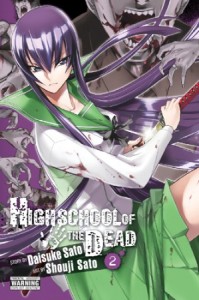
This slick, violent zombie story plays like a poor man’s Dawn of the Dead, substituting sadism and sex for the social commentary of George Romero’s classic horror flick. Popular as it may be, a quick scan of volume one reveals myriad issues, from poorly staged fight scenes to tin-eared dialogue. The biggest problem with Highschool of the Dead, however, is the endless parade of panty shots and costume failures. The Satos work fanservice into as many scenes as possible, taking full advantage of every stairwell, fight, fall, and female death to expose cleavage — and poorly drawn cleavage, at that. (Hint to aspiring manga artists: large breasts do not resemble grossly distended lemons.) And when the scariest thing about a zombie story is the way the female characters’ bosoms are drawn, it’s safe to say that the creators ought to spend a little more time watching 28 Days or I Am Legend, and a little less time watching Naughty Naked Co-Eds. —Reviewed at The Manga Critic on 12/27/10

3. Gandhi: A Manga Biography
By Kazuki Ebine • Penguin Books
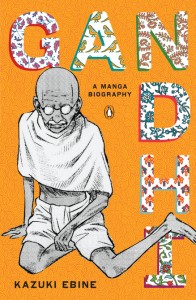
This slim volume reduces Gandhi’s life to a string of four-page vignettes that do little to reveal who he was or what he believed; important episodes in every stage of his career are drained of historical nuance, preventing the reader from fully appreciating the complexity of the political situations in South Africa or India. Adding insult to injury is the script: the dialogue abounds in awkward sentences, anachronistic sentiments, and cringe-worthy typos that consistently undercut the story’s serious message. (Makes you wonder: did anyone at Penguin Books actually proofread Gandhi?) More disappointing still is the artwork: it’s plain and lifeless, relying too heavily on computer shortcuts and pre-fab backgrounds to create a genuine sense of place or time. My suggestion: skip the manga and rent Richard Attenborough’s 1982 movie of the same name. —Reviewed at The Manga Critic on 10/6/11

2. The Beautiful Skies of Houhou High
By Arata Aki • DMP
In this unfunny comedy about sexual orientation, a gay teen’s mother enrolls her daughter in an all-boys’ boarding school — mom’s idea of a “cure” for lesbianism. A more skillful storyteller might use the set-up to critique homophobia, or the idea that homosexuality is a lifestyle choice, but Arata Aki takes the easy road, using Kei’s dilemma as a pretext for wacky hijinks. Though the theme of gender exploration is extended to include male cast members — several boys in Kei’s dorm exhibit stereotypically feminine behavior and interests — Aki doesn’t do anything particularly interesting with these supporting characters; their antics provide comic relief, not commentary on the fluidity of gender norms. Lame gags and confusing subplots remind the reader at every turn that Houou High isn’t concerned with real human sexuality, but in wringing cheap laughs out of a gay character’s humiliation. In a word: yuck. —Reviewed at The Manga Critic on 2/28/11

1. Tenjo Tenge
By Oh!Great • VIZ Media
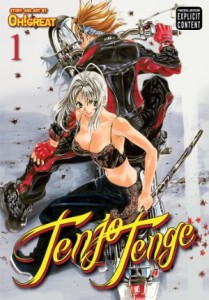
Flipping through the first volume of VIZ’s “Full Contact” edition, it’s easy to see why DC Comics censored the original English print run of Tenjo Tenge. The story abounds in the kind of gratuitous nudity and sexual encounters that make an unadulterated version a tough sell at big chain stores like Wal-Mart and Barnes & Noble. DC Comics’ solution was an inelegant one: they re-wrote the script, drew bras and panties on naked girls, and cut some of the most offensive passages. As an advocate of free speech, I can’t condone the bowdlerization of any text, especially in the interest of a more commercially viable age-rating , but as a woman, it’s hard to celebrate the restoration of a graphic rape scene or images of naked girls throwing themselves at the heroes, especially when the plot is violent and silly. —Reviewed at The Manga Critic on 6/3/11

*  *  *  *  *

So now I turn the floor over to you, readers: what titles made your Worst of 2011 list?

A tip for first-time visitors: you might want to read my Comment Policy before busting out words like “feminazi” in defense of a favorite title. Your comment is much less likely to be deleted if you’re friendly, funny, and logical, as those qualities facilitate dialogue.

Filed Under: Manga, Manga Critic Tagged With: Bad Manga

Stargazing Dog

December 23, 2011 by Katherine Dacey

Few things can reduce me to a puddle of tears as quickly as a dog story, especially if the canine subject is lost, abused, or sacrificed for the well-being of his owner. Yet for all my sentimentality, I am particular about my dog stories. Too often, authors allow extreme displays of loyalty or mischievousness to stand in for a thoughtful portrayal of the dog’s own personality; the author is so intent on showing the redemptive power of canine ownership that the ostensible subject of the book feels more like a walking metaphor than an actual presence in the narrative.

Takashi Murakami largely avoids this trap in Stargazing Dog by granting his canine protagonist a voice. In less capable hands, Happie’s narration might be precious or manipulative, prompting the reader to feel unearned sympathy for him. Murakami, however, finds just the right words for Happie, expressing his point of view with a simplicity and directness that seem appropriate for a dog.

Early in Stargazing Dog, Happie forms a strong attachment to a character identified only as “Daddy,” a father who gradually becomes estranged from his wife and teenage daughter. With the dissolution of his family, Daddy packs Happie and a few possessions in his car, and begins driving towards the sea. The outcome of their journey is never in doubt — we learn Happie and Daddy’s fate in the very opening pages of the book — yet Murakami draws the reader into the story with a nuanced depiction of the master-dog relationship.

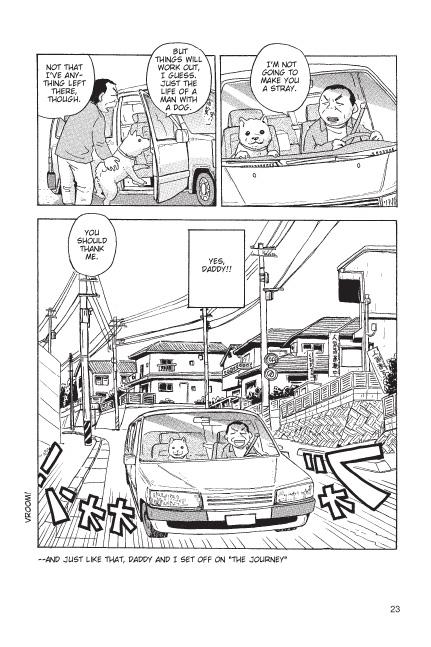
Daddy and Happie take to the road.

Murakami has two fundamental insights into that dynamic. The first is routine: Happie’s devotion to Daddy stems from many hours of walking, sitting, and eating together. These rituals consume Happie’s thoughts until the very end of the story; Happie eagerly anticipates their daily walks, adapting to changes in Daddy’s schedule with heartbreaking alacrity. (“We used to go for a walk in the evening,” Happie observes. “These days, Daddy takes me out in the daytime.”)

The second is communication: though Happie and Daddy clearly share a special emotional connection, there’s a fundamental gap between them that can’t be bridged. Happie never fully grasps what’s happening to him and his master, perceiving the changes in their routine without understanding their cause. Daddy, for his part, never acknowledges the degree to which he views Happie as an extension of himself; as his circumstances deteriorate, he continues to rely on Happie for companionship, putting his own emotional needs before the dog’s.

Murakami never romanticizes Happie and Daddy’s relationship, though he honors the sincerity and warmth of their bond. The roughness of the art — the human characters’ clumsy hands and round heads, the crude use of perspective — further inoculates the story against mawkishness, while the exaggerated facial expressions and child-like rendering of space and objects echo the naivete of Happie’s narration. Only a few poorly chosen fonts and backwards signs mar the design, reminding the reader that the artwork has been flipped for English-speaking audiences.

Perhaps the best compliment I can pay Murakami is to acknowledge just how much Stargazing Dog moved me. Not in a cheap, dog-in-peril sort of way, but in the same way that Vittorio de Sica’s Umberto D. touched me: as a beautiful meditation on the human-canine bond, one that acknowledges the complexity and inequality of that relationship, as well its enduring power. One of 2011’s best new manga.

STARGAZING DOG • BY TAKASHI MURAKAMI • NBM/COMICSLIT • 128 pp. • NO RATING

Filed Under: Manga, Manga Critic, REVIEWS Tagged With: Animals, NBM/Comics Lit, Seinen

The Drops of God, Vols. 1-2

December 16, 2011 by Katherine Dacey

Reading The Drops of God is like drinking a good table wine: the flavor may not be as complex as a finely aged varietal, but it goes down easily, leaving a pleasant aftertaste of melodrama, intrigue, and romance.

Like Oishinbo, the manga it most closely resembles, The Drops of God revolves around a slightly preposterous contest between a father and son. Kanazaki Yutaka, a revered wine critic, dies unexpectedly, leaving behind a will that’s a much a gauntlet as it is a set of instructions for his son: Shizuku will inherit Yutaka’s wine collection, but only if Shizuku can identify the thirteen different wines mentioned in his father’s will.

To complete his task, Shizuku must overcome several serious handicaps, not the least of which is his own lack of experience buying and drinking wine. (At the start of the series, Shizuku is a junior sales executive at a beer distributor, proudly eschewing wine for ale.) Adding special urgency to his quest is a rival, Tomine Issei, a handsome young wine critic who was adopted by Shizuku’s father. If Issei successfully names the “Twelve Apostles” and the “Drops of God” before Shizuku, Issei will inherit the entire collection.

No manga cliche goes unturned in the opening chapters. The brash Shizuku has never so much as drunk a glass of wine, but resolves to do his best to defeat Issei. Shizuku’s ability to win that contest is never really in doubt, however: from the very first pages of the story, Shizuku demonstrates a discerning palate, wowing oenophiles and greenhorns alike with his ability to recognize great wines. In his first showdown with Issei, for example, Shizuku correctly identifies the age, varietal, and origin of a wine even though his only exposure to that particular grape came from eating a handful of them as a child. (Top that, Robert Parker!)

Also disappointing is the portrayal of Shizuku’s partner-in-wine-tasting, Miyabi Shinohara, an aspiring sommelier. Though other characters praise Miyabi for her book knowledge of wine, she rarely has an opportunity to shine in her role as the expert on viniculture; Miyabi’s primary function is to recite each wine’s provenance in detail, allowing Shizuku the more entertaining role of waxing poetic about the wine’s flavor. Throughout volumes one and two, Shizuku frequently upstages Miyabi, even when Miyabi’s professional experience ought to afford her greater insight into an appropriate wine-food pairing, or lead her towards an inexpensive but sophisticated French import.

Yet for all the creaky plot mechanics and broad-brush characterizations, The Drops of God proves surprisingly fun, thanks to the author’s imaginative attempts to describe the flavor of particular wines. Early in volume one, for example, one character likens a a 2001 Chateau Mont-Perac to Freddie Mercury’s singing—an odd but inspired choice, as Mercury’s voice is one of the most distinctive rock-n-roll sounds of the last forty years, a piercing, operatic instrument that’s immediately recognizable, even to the untrained ear. The fact that the artist’s rendering of Mercury looks nothing like him is beside the point; the comparison alone is enough to instill in the reader a sense of how visceral and distinctive the Mont-Perac’s flavor is.

The other thing that prevents The Drops of God from sinking under the weight of hackneyed story elements are the supporting characters. Tadashi Agi (actually a pseudonym for the brother-sister writing team of Shin and Yuko Kibayashi) populates the story with mustache-twirling villains, oddball oenophiles, and opinionated co-workers, each of whom leaves a vivid impression. One of the most appealing is Chosuke Honma, a member of the Wine Division at Taiyo Beer. Though drawn in bold strokes, Chosuke seems like a real person — a wine enthusiast who firmly believes that Italy, not France, produces the world’s best wines, and who frequently bursts into song. (His tune of choice: “O sole mio,” of course!) Chosuke’s passion, temper, and obsession with Italian culture — not to mention his receding hairline — make him a great foil for the ridiculously perfect Shizuku, whose movie-star looks, charming personality, and superior ability to identify great wines make him more a fantasy figure than a real character.

Artistically, The Drops of God is a feast for the eyes. Shu Okimoto’s characters are beautifully rendered, making the numerous scenes of characters discussing wine something to savor, rather than something to be endured. Okimoto also does a terrific job of translating terroir into imagery, transporting the reader from Japan to Europe with crisp, evocative drawings of French vineyards; the reader can practically smell the soil and the ripening fruit. Most importantly, Okimoto finds creative ways to suggest the complexity of a good wine, using vivid imagery —  a field of sunflowers, a masquerade party — to suggest how the “nose” of a wine sparks strong associations with events, places, and people.

Long-time manga readers won’t be surprised to learn that The Drops of God is an entertaining way to learn about wine; as titles such as Oishinbo and Not Love But Delicious Foods Make Me So Happy! demonstrate, a skilled writer can fold a considerable amount of educational detail into a story without reducing it to a textbook. Manga newbies or readers looking for a good introduction to wine terminology will find Drops a revelation, however, as it imparts highly specialized information with the same natural ease that Law & Order illustrates the inner workings of a crime investigation, while at the same time functioning as a fun soap opera; even if the reader isn’t the least bit interested in wine, Shizuku’s quest for the “Drops of God” is an irresistible hook. Highly recommended.

THE DROPS OF GOD, VOLS. 1-2 • WRITTEN BY TADASHI AGI, ILLUSTRATED BY SHU OKIMOTO • VERTICAL, INC.

Filed Under: Manga, Manga Critic, REVIEWS Tagged With: Seinen, The Drops of God, vertical, wine

No Longer Human, Vol. 1

November 24, 2011 by Katherine Dacey

First published in 1948, Osamu Dazai’s No Longer Human became one of the most widely read books in post-war Japan. The story, modeled on Dazai’s own life, chronicles a dissolute young man’s profound estrangement from his family and peers. The protagonist’s life follows a trajectory similar to Dazai’s: convinced that his life is an empty charade, Yozo drops out of school; joins the Communist Party; enters into a suicide pact with a virtual stranger; and woos lonely women, using them for shelter, emotional comfort, and financial support after his father, a prominent politician, disowns him.

The novel is divided into three sections, or “notebooks,” each corresponding to a period in the protagonist’s life. In the first, Yozo describes his childhood: his uneasy relationship with his father, his clownish behavior at school, and his abuse at the hands of a female servant. In the second and third sections, Yozo documents his troubled adulthood, as he abandons school for a life of drinking and illicit relationships, bouncing from one woman to the next with little regard for the harm he causes them — or himself. Framing Yozo’s story is a second narrative delivered by an unnamed author who has found three photographs of Yozo: as a child of ten, “a small boy surrounded by a great many women”; as a college student, handsome but “strangely unpleasant”; and as man in his later twenties, his hair “streaked with gray,” and his face “devoid of expression.”*

Given the novel’s enduring popularity, it’s no surprise that several manga artists have adapted Dazai’s text as a graphic novel. Their approaches have ranged from reverential — the East Press edition (2007) hews closely to the original novel — to provocative — Yasunori Ninose’s version (2010) uses tentacle-porn imagery to represent the character’s extreme emotional distress. Usamaru Furuya’s 2009 adaptation falls somewhere in between, taking liberties with the setting and structure of Dazai’s work, while preserving the original tone and events of the novel.

As these myriad approaches suggest, one of the biggest challenges of translating No Longer Human into a pictorial form is its interiority: though eventful, Yozo’s story is as much about his state of mind as his behavior. Early in the novel, for example, Yozo describes his inability to understand how other people feel and think. “I have not the remotest clue what the nature or extent of my neighbor’s woes can be,” he tells the reader. “It is almost impossible for me to converse with other people.” In a desperate attempt to camouflage his bewilderment, Yozo constructs a jovial mask, winning approval from his family members and classmates with impish behavior and remarks. “I kept my melancholy and my agitation hidden, careful lest any trace should be left exposed,” he explains. “I feigned an innocent optimism; I gradually perfected myself in the role of the farcical eccentric.”

Furuya makes a game effort to find visual analogues for Yozo’s interior states. Whenever Yozo feels emotionally disoriented, for example, Furuya obscures the other characters’ expressions, rendering their faces as blurs. Furuya extends this symbolic approach to Yozo’s social paralysis as well. “I was congenitally unable to refuse anything offered to me by another person, no matter how little it might suit my tastes,” Yozo confesses. “In other words, I hadn’t the strength even to choose between two alternatives.” In these passages, Furuya draws Yozo as a marionette, violently manipulated by an unseen puppeteer; as a drowning victim, disappearing under the water’s surface; and as a man engulfed in flames, so consumed by his fear of disappointing others that he surrenders his own agency.

Though Furuya follows the basic outline of Dazai’s novel, he makes two significant changes to the text. First, he moves the story from pre-war Japan to the present day, replacing the unnamed narrator with a character named Usamaru Furuya, a manga artist who discovers Yozo’s pictures on the internet. Second, Furuya streamlines the script, all but eliminating the first notebook; instead, he depicts Yozo’s childhood through a few brief, suggestive flashbacks.

The first decision makes good sense. By moving the setting from Taisho-era Japan to the present, Furuya sheds the novel’s period trappings in favor of a milieu that readers can intuitively appreciate — a world of blogs, cell-phones, high-rise apartment buildings, and other technologies that promote social isolation.

Less successful is Furuya’s decision to focus on Yozo’s adult life to the exclusion of his childhood. In the original novel, ten-year-old Yozo crosses paths with another outsider, a young boy who immediately detects the effort and strain behind Yozo’s clowning.  Fearful that Takeichi will expose his deceit to the other students, Yozo dons “the gentle beguiling smile of the false Christian,” befriending the odd, unlikeable Takeichi in an effort to buy his silence. The episode is among the most potent and revealing in the book, an early example of Yozo’s ability to manipulate others, and a rare example of him acknowledging his own agency — something he never does in the manga.

Furuya also trims another brief but important scene from the early pages of No Longer Human, in which Yozo implies that he was molested by his wealthy family’s servants. “Already by that time I had been taught a lamentable thing by the maids and menservants; I was being corrupted,” Yozo declares. “I now think that that to perpetrate such a thing on a small child is the ugliest, vilest, cruelest crime a human being can commit.” Yozo’s indifference to others’ suffering, inability to experience romantic love, and passive-aggressive behavior, suggest a pathology rooted in this formative experience. Perhaps Furuya found this passage too neatly Freudian for his purposes, but in choosing to omit it, he makes Yozo seem like just another cad who beds and discards women, rather than a wounded soul incapable of sexual intimacy.

Yet for all its shortcomings — the omissions, the obvious symbolism — Furuya’s adaptation still captures the raw power of Dazai’s original novel. In its best passages, Furuya makes us feel as dazed and lonely as Yozo himself; we appreciate how helpless he feels, though we can see how seductive — and dangerous — he can be. Furuya also manages to document the full extent of Yozo’s debauchery without eroticizing it; we are keenly aware of the emotional distance between Yozo and his sexual conquests, making these scenes feel joyless and awkward, rather than titillating in their explicitness.

In short, Furuya has found a way to transform Dazai’s sharp critique of pre-war Japanese society into a more universal text, one that raises the question, What does it mean to be human right now?

* All quotations taken from Donald Keene’s translation (New York: Penguin Books, 1958).

Review copy provided by Vertical, Inc.

NO LONGER HUMAN, VOL. 1 • NOVEL BY OSAMU DAZAI, ADAPTATION BY USAMARU FURUYA • VERTICAL, INC. • RATING: OLDER TEEN (16+)

Filed Under: Manga, Manga Critic, REVIEWS Tagged With: no longer human, Osamu Dazai, Usamaru Furuya, Vertical Comics

Dawn of the Arcana, Vol. 1

November 19, 2011 by Katherine Dacey

“Today, I belong to the enemy” — so begins Dawn of the Arcana, a medieval fantasy in which a feisty princess marries into a neighboring country’s royal family. Nakaba characterizes herself as “a lamb,” sacrificed by her people to help two warring kingdoms maintain a fragile peace. Her husband, the handsome but insolent Prince Caesar, initially snubs his new wife; not only does she have red hair — a commoner’s color — but she also flouts palace conventions, wearing the traditional dress of her homeland, employing a male Ajin (humanoid) as her valet, and excoriating Caesar in front of his servants.

Adding fuel to this combustible situation are Caesar’s mother, a Lady Macbeth figure who urges her son to seek the throne; King Guran, her husband; Cain, Caesar’s half-brother; and Louise, Cain’s flirty fiancee. Nakaba is keenly aware of their contempt for her, and struggles to maintain her composure as they openly mock her and threaten her faithful servant Loki. Though Loki is devoted to his mistress, he, too, poses a danger to Nakaba, as he quickly antagonizes Caesar and Guran with his impulsive behavior.

As predictable as the plot may be — would you be surprised to learn that Caesar soon becomes smitten with his ginger-haired bride? — Dawn of the Arcana proves engaging nonetheless, a heady mixture of palace intrigue and romance. Nakaba, in particular, is a winning heroine: she’s tough and principled, but savvy enough to appease Caesar and his family when it suits her own agenda. (Early in volume one, for example, Nakaba slaps Loki after a tense stand-off between the prince and the valet, telling Loki, “Disciplining my husband is my duty!”) Nakaba’s enemies are two-dimensional at best, but each displays a Joan Collinesque flair for making Nakaba’s life miserable, spitting out their lines with gusto. (“You look wretched!” the queen exclaims upon seeing Nakaba in her people’s native costume. “Typical red-hair!”)

What gives Dawn of the Arcana its real dramatic juice, however, is the way in which Rei Toma draws parallels between Nakaba’s situation and everyday teenage experience. Anyone who’s ever transferred to a new school, run the gauntlet of a junior high school cafeteria, or been hassled for wearing the “wrong” clothes will immediately recognize herself in Nakaba’s shoes. Sitting at a royal banquet, for example, Nakaba squirms under the withering stares of her new subjects. “I can feel it,” she thinks. “The hatred. The curiosity. The sneers.” In an added note of realism, Toma depicts Caesar as two-faced, the sort of fair-weather friend who openly mocks Nakaba in public — where nasty comments score points with his family —while privately acknowledging her sincerity and courage.

If I had any criticism of Arcana, it’s that the artwork is unimaginative. The character designs are attractive, with careful attention to costumes and hairstyles, but lack personality; I’d have difficulty distinguishing Rei Toma’s work from other popular shojo manga artists’. The minimalist backgrounds are likewise disappointing, doing little to situate the story in a particular time or place. Perhaps that’s a deliberate decision on Toma’s part, an attempt to make Nakaba’s story seem more universal. Given the sloppiness with which the establishing shots are rendered, however, it seems more likely that architectural details and landscapes aren’t her forte.

Still, that’s a minor criticism of an engaging story — one that benefits from a terrific premise, an intelligent heroine, and a supporting cast that wouldn’t be out of place in a juicy historical soap opera like Rome or The Tudors. Recommended.

Review copy provided by VIZ Media, LLC.

DAWN OF THE ARCANA, VOL. 1 • BY REI TOMA • VIZ • 192 pp. • RATED: TEEN (13+)

Filed Under: Manga, Manga Critic, REVIEWS Tagged With: Rei Toma, shojo, shojo beat, VIZ

  • « Go to Previous Page
  • Page 1
  • Interim pages omitted …
  • Page 12
  • Page 13
  • Page 14
  • Page 15
  • Page 16
  • Interim pages omitted …
  • Page 26
  • Go to Next Page »
 | Log in
Copyright © 2010 Manga Bookshelf | Powered by WordPress & the Genesis Framework