• Skip to primary navigation
  • Skip to main content
  • Skip to primary sidebar
  • Home
  • About Us
    • Privacy Policy
    • Comment Policy
    • Disclosures & Disclaimers
  • Resources
    • Links, Essays & Articles
    • Fandomology!
    • CLAMP Directory
    • BlogRoll
  • Features & Columns
    • 3 Things Thursday
    • Adventures in the Key of Shoujo
    • Bit & Blips (game reviews)
    • BL BOOKRACK
    • Bookshelf Briefs
    • Bringing the Drama
    • Comic Conversion
    • Fanservice Friday
    • Going Digital
    • It Came From the Sinosphere
    • License This!
    • Magazine no Mori
    • My Week in Manga
    • OFF THE SHELF
    • Not By Manga Alone
    • PICK OF THE WEEK
    • Subtitles & Sensibility
    • Weekly Shonen Jump Recaps
  • Manga Moveable Feast
    • MMF Full Archive
    • Yun Kouga
    • CLAMP
    • Shojo Beat
    • Osamu Tezuka
    • Sailor Moon
    • Fruits Basket
    • Takehiko Inoue
    • Wild Adapter
    • One Piece
    • After School Nightmare
    • Karakuri Odette
    • Paradise Kiss
    • The Color Trilogy
    • To Terra…
    • Sexy Voice & Robo
  • Browse by Author
    • Sean Gaffney
    • Anna Neatrour
    • Michelle Smith
    • Katherine Dacey
    • MJ
    • Brigid Alverson
    • Travis Anderson
    • Phillip Anthony
    • Derek Bown
    • Jaci Dahlvang
    • Angela Eastman
    • Erica Friedman
    • Sara K.
    • Megan Purdy
    • Emily Snodgrass
    • Nancy Thistlethwaite
    • Eva Volin
    • David Welsh
  • MB Blogs
    • A Case Suitable For Treatment
    • Experiments in Manga
    • MangaBlog
    • The Manga Critic
    • Manga Report
    • Soliloquy in Blue
    • Manga Curmudgeon (archive)

Manga Bookshelf

Discussion, Resources, Roundtables, & Reviews

Features & Reviews

Comic Conversion: Witch & Wizard

December 9, 2011 by Angela Eastman 9 Comments

Witch & Wizard | Novel: James Patterson and Gabrielle Charbonnet / Grand Central Publishing | Manga: Svetlana Chmakova / Yen Press

One minute Whit Allgood is falling asleep in front of the TV, the next an army is breaking down his door, brandishing guns and dragging his sister Wisty out of her bed. But the biggest shock for Whit and Wisty comes when they’re accused of being a wizard and a witch by the New Order—the all new government that’s taken over the whole country—and are sentenced to death. As they struggle to survive in their jail cell, the siblings discover that they do have special powers, from telekinesis to bursting into flames. Even after they manage to break out, thanks to the help of a ghostly friend, Whit and Wisty still have to find their parents, and they might have to break back into jail to do it.

Witch & Wizard is one of the latest series to come out of the James Patterson novel mill, this time written in conjunction with Gabrielle Charbonnet. Though there was already a graphic novel adaptation from IDW, Yen Press decided to come out with their own version of the dystopian novel using artist Svetlana Chmakova, creator of Dramacon and Night School, to create Witch & Wizard: The Manga. Both versions of the story have their flaws, but one might be more worth your time than the other.

Let’s start with the novel. One good thing you can immediately say about Witch & Wizard is that it gets right into the action. The story has barely started before the New Order troops are breaking down the Allgoods’ door. It doesn’t slow down much from there, even when the siblings are locked in prison, as they deal with sadistic jailers and have to fight a pack of mad dogs for food and water. The short chapters (most only last 1 or 2 pages) help create the illusion that you are speeding through the book. But even with all the rapid action, the story can get pretty clunky at times. You’ll start the next chapter, and suddenly Whit and Wisty are somewhere else, or there’s someone new in the scene who wasn’t there before. And the short chapters, while helping you feel like the book is a fast read, hurt the overall smoothness of the longer, more dramatic scenes.

Whit and Wisty are certainly fun characters, with their wisecracks, determination, and magical powers. Wisty in particular has an entertaining, sarcastic tone. But unfortunately, it’s all surface. Though the story is in first person for both characters, you never feel like you get truly, deeply in their heads. Even when the story pauses for inner thoughts it’s pretty generic, like how awful or cool or sad something is. Then there is the villain, The One Who Is The One, who should be dark and terrifying… but for some reason, Patterson and Charbonnet have him spouting some of the weirdest lines. They range from awkward – “I can even shut your sister up!” – to just plain goofy – “TRICKS ARE FOR KIDS!” – and really diminish the fear readers should have of this all-powerful villain.

Now we come to Yen Press’s manga adaptation by Svetlana Chmakova. The visual aspect of the comic actually helps with the clunky-ness in the book. New character appearances are less sudden, and we see the transition from one place to another, so there’s no flipping back a page to see how Whit and Wisty suddenly got from point A to point B. Chmakova’s art also helps to brighten up some of the less-than-stellar character personalities. Sure, the villains are just as one-dimensional as in the novel, with their little dark beetle eyes, but other characters seem more human in her hands. Whit wears a blank look of shock when he discovers that Celia is a ghost, and Wisty’s range of expressions, from cartoonish excitement at living in a fancy department store to the dark, narrow-eyed look when she casts her angry spells, make this witch even more fun and exciting than her novel version.

Despite the pace of the original, cuts were needed to fit the whole story into a single graphic novel. We miss out on some interesting shows of magic, like when Wisty floats in her sleep, or Whit speeds himself up to handily defeat some guards. But the comic also does away with some bits I didn’t care for, most obviously The One’s horrible, cheesy lines. The One still isn’t as dark and foreboding as I would like (you can always go creepier) but at least his dialogue doesn’t make me cringe.

The Witch & Wizard novel has a lot of problems that I have a hard time overlooking. While the pacing is nice and quick, the novel persistently trips itself up with awkward breaks and sudden shifts in location. And the plot, while a decently done fight-the-power dystopian, can get repetitive, takes unnecessary turns, and ends so abruptly I’m honestly surprised Patterson and Charbonet didn’t add in a couple more chapters to smooth things out. Chmakova’s adaptation doesn’t escape the plot issues of the original, but in streamlining the plot to fit into a single graphic novel she manages to toss out some of the minor chinks, resulting in an easier flow. When you combine that with art that is much more expressive than Patterson’s prose, overall you get a more enjoyable read. It’s still not perfect, but Witch & Wizard the manga improves enough on the original to be worth your money.

Filed Under: Comic Conversion, FEATURES Tagged With: graphic novel, manga, Novel, Teen Lit, Witch & Wizard, yen press

Wonder!, Vol. 1

December 9, 2011 by Sean Gaffney

By Akira Kawa. Released in Japan by Futabasha, serialization ongoing in the magazine Women’s Comic Jour. Released in the United States by Futabasha on the JManga website.

I got blindsided by this one a bit, I will admit. The blurb and cover made it sound a lot fluffier than it actually is, and also that it would be far more about the dog. Now, rest assured that Wonder (the dog) is a large part of this manga, but it’s not a manga *about* a family getting a new dog. That’s just the starting point. What Wonder! gives us is a manga about what it means to be a family, even if it’s non-traditional, and how bonds with other members of that family can affect how we grow and learn – even if we’re adults.

The author of Wonder! is Akira Kawa, an old-school shoujo and josei artist who’s been doing manga since 1968. In the 1970s she was a mainstay at Shueisha’s Margaret magazine, and now that she’s at the age where she can do whatever she wants, she’s at Futabasha drawing manga for their josei magazine for housewives, Jour. Her wikipedia page says that her manga seem to specialize in family, and it shows; this is a well-thought out work. It’s fairly clear from reading it that it was initially conceived as a one-shot; then another chapter was added later, and finally the last two chapters were put in before it got picked up as a ‘series’. This happens a lot, especially in shoujo manga. Thankfully, unlike other examples, we don’t have to be reintroduced to the characters every single chapter.

Wonder, it must be said, starts awkwardly. Its heroine, Kaori, is not particularly likeable at first. We see her drunk on a park bench, pouring out the plot – I mean, her heart – to a stray dog, who turns out to be the titular Wonder. She’s married to Taiyo, but according to her it’s an ‘open marriage’ where both of them are free to date other people. She may think this is what she wants, but it’s fairly clear watching the two of them that this is not making either of them happy. Things are further complicated by the arrival of the dog, who follows her home, and a 9-year-old boy, who arrives when Taiyo’s sister dies. Dies? Or was she killed? It turns out that the boy, Kota, may have seen something suspicious…

For a while I wondered what genre Wonder! actually was. The first chapter combines family drama with mystery, and sees Kaori slowly warming up to Kota, who she clearly did not want living with them at first. There’s also a bit of a supernatural element to it, but it’s very mild – Wonder has a sixth sense for people that can be similar to Lassie at times, and also seems to have lived long beyond what his natural life is. But ‘family drama’ sounds about right – despite the thriller and mystery aspects, this is at heart a story about a family trying to find its footing and deal with everyday life.

Kota becomes the second protagonist starting in Chapter 2, when the series moves forward six years. He’s now in high school, and has grown up to be the star of your typical high school shoujo manga – except he has no girlfriend. He’s just a nice, pleasant, vaguely aloof sort of fellow, good at sports and good at school, but not really understanding other people. (This runs in his family, of course.) The one girl he seems to have a crush on is one that he knows isn’t going anywhere – Kaori, who by now is pregnant with her first child. (This gets brought up a few times in the volume, but I don’t think it’s meant to be squicky – it’s the typical misplaced love bonding kids get sometime). The last half of the book sees him start to make friends… but not with who we think he will. This was the better written half of the book, with some genuinely surprising twists.

Lastly, there’s an unconnected short story afterwards, which is far more serious. It deals with a family whose teenaged son commits suicide. They are stunned, as they had no idea he was anything other than happy. As the mother searches for answers, she discovers that he had been bullied at school… and that bullying in Japan is as hard to prove as ever, with the school doing its best to absolve itself of guilt and also indicate that she and her husband are to blame. There’s no easy answers in this one, just a family trying to deal with their grief, reach out, and hope that they can avoid the same thing happening to their younger daughter. It’s heavy stuff, but again it’s very well done.

There are a few drawback to this volume, of course. Kaori, as I noted, takes a while to become likeable, and in Chapter 2 seriously considers having an abortion when she finds out that she’s pregnant. (She doesn’t. This also has one of the funnier parts of the book, where she notes at work that she’s pregnant and the entire male office staff tenses up before she notes it’s her husband’s baby.) Her husband Taiyo is one of those guys who’s hard to read, typical of such manga where we’re meant to empathize with the heroine, and doesn’t develop as much as I’d like – we do see he has a silly side to him, and certainly he and Kaori love each other in their own way, but I hope future volumes flesh him out. Lastly, their are two timeskips – six years after the first chapter, and about a year and a half after the second – which can make it a bit hard to connect.

That said, I was surprised how much I really enjoyed and connected with this manga. The characters are well-written, they all have their own voice. Kaori is a fun, imperfect heroine, yet you can clearly see why guys would fall for her. And like adopted mother, like son – Kota is clearly hot high school crush material, but needs to be able to get along with other people rather than holding them at arms length. the series is still running in Japan 8 years later, and has 14 volumes out to date. A few future volumes feature Kota with what appears to be other high school children, so I suspect I will get my wish. Wonder! is a great manga for adult women who grew up reading high-school shoujo, but now want to read manga by the same writers about grown-ups as well. Definitely recommended.

Filed Under: REVIEWS

Off the Shelf: Grown-up grumbling

December 8, 2011 by MJ and Michelle Smith 5 Comments

MICHELLE: This being a grown-up thing is for the birds; I take it back.

MJ: I am so there with you. Revolt against adulthood! Irresponsibility now!

MICHELLE: Clean none of the things!

MJ: Hallelujah!

MICHELLE: Oh, but if we abjure all responsibility, Off the Shelf won’t get done.

MJ: Oh. Crap.

MICHELLE: Maybe we can clean *one* thing.

MJ: *sigh* I guess so.

MICHELLE: You go first. I’ll provide moral support.

MJ: Hmph. Fine. Well, I finally got a chance to read the latest from CLAMP, volume one of Gate 7, out recently from Dark Horse.

CLAMP is, perhaps, an acquired taste. Most people I talk with either love them dearly or roll their eyes heavily at the mention of their name. I’d classify myself in the “love them” category, though I certainly have preferences among their titles. I love Tokyo Babylon more than X. I love xxxHolic more than Tsubasa: Reservoir Chronicle. I love Legal Drug, but I’m lukewarm on Kobato. Most of the series I like best share quite a bit in common, and fortunately for me, Gate 7 falls very much in line with the titles I most enjoy.

Chikahito is a high school student with a keen interest in Japanese history and folklore. On a solo trip to Kyoto—something he’s dreamed of since he was a child—a chance encounter with three supernaturally-talented personages brings him in touch with an aspect of ancient history he definitely wasn’t looking for. There’s a lot of plot here that I won’t get into, but suffice it to say that it’s all very, very…CLAMP.

The Kyoto group features a number of CLAMP staples, including two beautiful young men with an ambiguous relationship and an adorable, androgynous youth who can’t get enough of Chikahito, whom (s)he manipulates into becoming part of their daily lives. Chikahito is eerily similar to xxxHolic‘s Watanuki, in both looks and personality, but with Watanuki’s spastic tendencies drastically dialed down. It’s as though CLAMP was simply not done with Watanuki, and found themselves embracing the opportunity to recreate him in a new and improved form. As always, there is a lot of ominous-sounding language and pretty, pretty artwork.

Frankly, this works really well for me. I’m not inclined to object to being given too much of a good thing, nor am I repelled by familiarity in such a cozy form as this. For me, Gate 7 is the sequential art equivalent of a grilled cheese sandwich with a bowl of tomato soup—unsurprising but deeply comforting and delicious.

There are definitely weaknesses in this series’ first volume. Like most of CLAMP’s supernaturally-enhanced universes, this one requires quite a lot of exposition, and the pace and plot suffer for it, especially early on. But after all this time, CLAMP’s style is undeniably solid, and it’s hard not to feel that the story is in good hands, even in its uneven first chapters. I know my kind of CLAMP when I see it, and Gate 7 is unquestionably my kind of CLAMP.

MICHELLE: I’m happy that you liked it so much! I haven’t closely read other reviews, since I still need to read it myself, but I had the distinct impression that folks were unenthused by it. It’s good to know that’s not a universal reaction.

I must ask… if there’s a Watanuki stand-in, is there someone else who functions as his Doumeki?

MJ: No, at least not yet. Interestingly, Hana (the character who clings to him from the start), latches on to him because of their similarities, not their differences. So he doesn’t yet have someone who serves as his complement in that way. I’ll be interested to see if that remains the case.

I realize I’m an easy target for a series like this, since it caters to some of my particular tastes in CLAMP, but I’m sure I’m not alone!

So what have you been reading?

MICHELLE: A couple of very different things!

First up is the debut volume of Shugo Chara Chan!, a four-koma series starring the guardian characters from Shugo Chara!. I misspoke on a recent Pick of the Week, in which I stated that this manga is by Peach-Pit, because it actually isn’t. It turns out that various other shoujo mangaka at Kodansha have contributed to it, including Ema Toyama, whose I Am Here! has been mentioned in this space before.

Like Shugo Chara! before it, Shugo Chara Chan! is rated teen (13+), which is even more inexplicable in its case because all of the material in would be fit for—and perhaps best enjoyed by—a seven-year-old. Sample plots include:

* Su discovers a secret box containing photos of Amu’s crush.
* Amu threatens to boil the guardian eggs for oversleeping.
* Ran eats all the bread at the picnic.
* Miki makes an ice statue of Amu for her birthday and then it melts in gross fashion.

Hilarious, no? Lest it seem as if I read all of this with a curmudgeonly grimace plastered on my face, there actually were a couple of things that made me smile, but they’re completely random and may appeal to only me, like, “The guardian characters meet a cute slug.” It’s certainly not brilliant fare, but it was kind of fun and I will probably keep reading it.

One thing I did want to point out is that while the main body of the volume is mostly immune from Kodansha’s questionable editing practices, the notes in the back of the book are oddly messed up. There are loads of missing letters, resulting in sentences like:

“The person in the last panel is AI O STA UST, also known simply as AI O. He is the vocalist for the rock band “B EAK .” Gee, how helpful!

MJ: My. Well. I admit I’ve been iffy on whether to spend my money on this series. I’m a huge fan of Shugo Chara! as you know, but I wasn’t sure that a 4-koma for little girls would resonate with me as well as a series for little girls apparently still does.

MICHELLE: Yeah, if you’ve got a choice between spending your money on this short little volume or, say, picking up the second volume of Princess Knight, I’d say the choice is clear.

What else have you been reading?

MJ: My second read this week was volume one of Rei Toma’s Dawn of the Arcana, the latest from Viz’s Shojo Beat imprint.

As the volume opens, red-headed Princess Nakaba is being introduced to the kingdom of her new husband, Prince Caesar, an arrogant, possessive ass, to whom she’s been married in order to maintain the tense peace between their societies. Always devalued, even amongst her own, for the color of her hair, Nakaba is pretty much resigned to an early death, finding comfort only in the company of her longtime servant, Loki, who was born to a race even more reviled than redheads. Is the devoted Loki her one true love, or can she find happiness with her hard-hearted prince?

Like Gate 7, much of this will sound familiar to even occasional fans of shoujo manga. The setup is so standard, in fact, that there is hardly any question at all that we’ll soon discover the soft side of Nakaba’s husband, who is almost undoubtedly her ultimately destined love interest. And did I mention that she’s got a secret, supernatural power? Seriously. On the surface, this thing reads like paint-by-numbers pseudo-romantic shoujo, along the lines of dubious current titles like Stepping on Roses. Fortunately, there’s some real freshness to the series that isn’t immediately apparent from a snarky plot summary.

Though the first volume’s focus on Nakaba’s “power” is not the author’s strongest choice, there are some nuances to the characterizations (particularly that of asshole prince Caesar) that keep things from sinking into pure cliché. Princess Nakaba is fearless and coldly stoic, without an ounce of typical shoujo optimism. And the political aspects of the story offer the potential for some heroine bad-assery and possibly civil war, which is always welcome in my book.

Despite its surface familiarity, there’s a real spark of life in Dawn of the Arcana. I’m looking forward to more!

MICHELLE: I always love political scheming in a fantasy series, so I look forward to seeing what Toma is able to make of it. Too, I especially look forward to a “coldly stoic” heroine. There aren’t enough of those!

MJ: Agreed! We see both spunky and ditzy in many variations, but “stoic” is rare indeed!

So what else have you got for us?

MICHELLE: An odd yet interesting one shot from One Peace Books! Breathe Deeply, by husband-and-wife manga team Yamaaki Doton, promises on its back cover to “force you to forget what you know about manga.” That’s not exactly true for the widely read manga fan, but the story does have a general-audience appeal and could help dispel the notion that manga is all big eyes and spiky hair.

Yuko Kazama is a very sick girl with two boys in love with her. To one, Sei, she has confided that, when her health fails, she doesn’t want a transplant (believing it would cause suffering to the donor) and would prefer to simply disappear. To the other, Oishi, she has revealed her desire to live and her fear that Sei will think poorly of her if she changes her mind. When Yuko passes away, Sei insures that her wishes are carried out, only to have Oishi blame him for her death.

Fast forward fifteen years, and now both men are scientists with different approaches to curing heart ailments. Sei has developed a synthetic gel that mimics heart functions while Oishi has made stem-cell discoveries. There is much talk about the validity of each approach (ethics versus progress), and quite a few shady hospital administrators who are depicted as fudging the line between “brain dead” and “could recover” in an effort to harvest organs for donation. In addition, both men have their moment as the genius in the spotlight, and we see how quickly such status can be lost due to personal conflicts.

Because of the pace of the story and the obsessive focus of the leads, it’s a bit difficult to get to know the characters and as a result the story is less emotionally affecting than it might otherwise be. Revelations that could be shocking are taken in stride, and readers never really feel the anguish in certain key moments. It’s like the story’s being told from a distance.

I do have to mention an irksome flaw in the script: it’s full of run-on sentences. When a speech bubble contains a complete thought, it’s not really noticeable that it’s lacking a period. But when two sentences collide without warning the results can be jarring. Here’s an example:

True success relies not only on intelligence, but on our humanity as well we can expect great things from you, Takano.

Ultimately, Breathe Deeply is likely to leave an impression, but not liable to leave you sniffling.

MJ: The run-on sentences sound truly irksome, but I admit the story sounds interesting. I enjoyed One Peace Books’ earlier release, Tenken, and it’s nice to see them putting out more manga, even if it’s not quite the game-changing release the back cover promises.

MICHELLE: I’d be curious to see what you’d think of it. I’m sure you could explain its appeal more eloquently than I can. :)

Filed Under: OFF THE SHELF Tagged With: breathe deeply, dawn of the arcana, Gate 7, shugo chara chan

Game Review: Tanto Cuore

December 8, 2011 by Paul Beasi 8 Comments

Do you have what it takes to be crowned “King of Maids”?
Bits & Blips: Manga Bookshelf Edition

Tanto Cuore (Italian for “Much Heart”) is a deck building game originally released in Japan by Arclight Games with the English edition published by Japanime Games in the US. The players play the “masters of the house” and will employ maids and use their services to help them expand their mansion to ultimately win the game and become the “greatest master”, the proclaimed “King of Maids”. While I was admittedly uncertain that the theme was something that I would be interested in, after playing it I discovered that with only one minor exception the fan-service is minimal, the cards are tasteful, and on the surface the theme is rather innocent. But is it a good game? Yes!

Deck building games came into popularity with the creation of a game called “Dominion” by Donald X. Vaccarino in 2008. Since then, the genre has exploded with many other titles using this mechanism. Personally, I was not very fond of Dominion. There is little player interaction (although later expansions addressed this somewhat), the art is not particularly to my tastes, and the game play feels very mechanical and dry with few paths to victory. Tanto Cuore addresses all of these issues.

But first, a primer on the mechanics of a deck building game.

Deck building is something that players of collectible card games (CCG) and trading card games (TCG)—such as Magic, The Gathering and Pokémon—are very familiar with. However in a deck building game, constructing the deck is actually part of the game as opposed to the precursor to the game. Everyone starts out with the same cards in their deck; generally weaker cards that will be used to gain more powerful cards. Each turn you start with a hand of cards drawn from your deck, play some cards from your hand, perform actions based on what you play, and then move the used and unused cards to your discard pile and draw a new hand of cards. Each player then repeats these steps in succession.

I ♥ you!

When you need to draw a card and your deck is depleted, you shuffle the discards. Thus, you know which cards are in your deck but not where they are or what order they will come up in. The strategy is building a deck that contains cards that will help you achieve your goal of getting victory points. If your deck gets too big, it might take you too long to get the cards you need and the chances of getting all of the ones you want in one draw get worse. Therefore, another important goal is getting the weaker cards out of your hand or upgrading them to better cards. The mechanisms for this vary by game, but in the end the idea is usually the same: build an efficient yet powerful deck that will yield you the most Victory Points (VP) at the end of the game.

Gameplay:

In Tanto Cuore, there are three categories of cards available in the “town” (play area): Maid cards, Love cards, and Event cards. The Maid cards include maid chiefs, general maids, and private maids. The Love cards have a value of 1, 2, or 3 “love”. The Event cards include Bad Habit and Illness cards. Every player’s initial hand has 7 “1 love” cards and 3 “Colette” maid chief cards which do little but are worth 1 Victory Point (VP) at the end of the game. A turn is divided into four phases: the Starting phase, the Serving phase, the Employ phase, and the Dismiss phase.

On each turn, a player is allotted one “serving” (which means playing one maid card) and one “employ” (which means buying a new card with “love” cards). Certain cards you purchase may grant you additional bonuses, such as additional servings, additional employs, the ability to draw cards, or extra love. Some cards are also worth victory points simply for having them. It’s beyond the scope of this review to detail what all of the cards do, but learning how they interact with each other is crucial to winning the game. For example, playing a maid card that gives you +1 serving means that you’ll be able to play another maid card on this turn. If you chain several of these together you can do even more. Playing cards in the proper order to maximize their potential is therefore very important.

Sample Maid card

The private maids are special. They each have an ability that occurs during the start phase of your turn and are worth positive or negative VP. The deck has 10 unique private maids, two of which are visible at a given time and only one of which may be employed on your turn even if you have gained extra employment capabilities from other maids. These maids are placed in your “private quarters”. These are cards that are no longer in your deck but still count at the end of the game for scoring purposes. When you employ a private maid, you may place her in your private quarters or in the private quarters of one of your opponents. Each player may only have one active private maid at a time, so employing a new one will replace any previous one, eliminating that maid’s special ability (but not the VP—positive or negative, those will be scored at the end of the game).

The game comes with 16 different types of general maids. 10 of these will be selected for use in the game. There is a recommended starter setup in the manual for beginners, but you can choose the 10 maids to be used randomly, by a draft, or whatever way your group decides. In this way, the game will be different every time you play. You’ll have to adjust your strategy appropriately based on the cards that are (or aren’t) available.

Tanto Cuore offers alternate paths to victory which is one of the things I really like about the game. Purchasing the high end Chief Maid will earn you 6 VP and is a significant way to gain points. However, the private maids are worth varying amounts of VP and some of the general maids are as well. Also, some of the maids are “chamber maids”. These maids can moved to your private quarters by using one or two servings, depending on the maid. Doing this not only gets them out of your deck—which as you’ll remember from above can be quite useful—but there is also a “set collection” mechanic introduced in this game where having either a certain quantity or a certain variety of maids in your quarters will earn you extra points at the end of the game. This, however, leads me to the other method of player interaction in the game: Events.

Bad habits involve frogs?

Illness cards may be played by your opponents on any of the maids in your private chamber. If a maid is still ill at the end of the game, she will be removed from play and her VPs will be lost. Also, she will not count in any of the sets she may have been a part of. Finally, if your private maid becomes ill, her special ability will not occur during your start phase. There are several ways to remove illness cards from your maids depending on the cards that are in play. Also, you can always choose to discard a “3 love” card to cure a maid, but this is a very painful choice since “3 love” cards cost 7 love to employ. Still, it might be worth it. Interestingly, you may also play an illness card on one of your own private maids if you don’t want the negative victory points or effects this maid has.

Finally, your maids may acquire “Bad Habits” from your opponents. Bad habits are worth -1 VP each at the end of the game unless you have four or more of them, in which case they are worth -2 VP each. Like illnesses, there are various ways to remove the Bad Habits from your private quarters.

The games ends when two of the maid piles have been depleted. Once this happens, the player who caused the game ending condition will finish her turn and the game is over. Sick maids are removed from the game and then victory points and bonuses are added up. Finally, the negative points for Bad Habits are applied. Whoever has the highest VP total is the “King of Maids”!

Artwork:

The cards in this game have extremely lovely artwork by 25 Japanese illustrators. Therefore, each card has a very unique look and style. While normally I would find this jarring in a game, I think it works very well here. In a way, it showcases the many different styles of drawing used in Japanese media. Who knew there were so many ways to draw a French maid?

My biggest concern was that the artwork was going to be too ecchi for me. While I don’t always have issues with ecchi, it’s not what I would be looking for in a game and it would make it difficult for me to introduce the game to my generally non-Otaku gaming group. Thankfully, most of the cards tend to be moe rather than ecchi. The maids all feel like real characters, even the more unusual ones like the “napping maid”. The love cards are a little suggestive and one of the private maids has a panty shot with a little more, ah, personal detail than I’d like, but I’ll give that a pass because the Esquine Forét card’s awesomeness totally makes up for it.

The recommended age on the box says 12 and up. I would say, like with anything, check it out first and then decide what’s best for your children.

Was that really necessary?

Tiny moe maid with extremely large weaponry! Yeah!

Drawbacks:

Like all deck building games, if you randomly select your cards you could end up with a combination that doesn’t work very well together. Conceivably, everyone’s final score could be negative. Generally this is not going to happen but it is something to consider.

Also, illnesses and bad habits are relatively cheap to inflict on other players, but very expensive (or impossible) to remove if the right cards are not in play. I don’t see this being a big problem, but it could frustrate some players. This wasn’t an issue in any of the games I played, but I could envision scenarios where it would be.

The only downside to the artwork is that the text is extremely small. You’ll definitely need to get your reading glasses out for this game.

Finally, the price. At $50 MSRP, it’s fairly expensive for what amounts to a large deck of cards. However, the street price at online shops is around $40 and when you consider that unlike CCGs and TCGs there are no booster packs and “rares” to be chasing after and thus no secondary market price inflation, it’s still a pretty good deal. Everything you need to play is in the box.

Conclusions:

Should you get this game? Yes! If you are fan of manga or anime (or a maid fetishist) and have not played games like this before, you might have a slightly steeper learning curve than your average hobby gamer but once you play through it a couple of times you should pick it up fairly easily. If you are a gamer and aren’t put off by the theme then I strongly suggest giving this game a try even if, like me, you aren’t a fan of Dominion. Tanto Cuore improves upon the core mechanics of a deck building game by adding alternate paths to victory and player interaction. The art is fantastic and the theme surprisingly works well even outside of Japan.

There are two expansions for the game which can be played alone or in addition to the cards in this game, but currently they are only available in Japan. The first expansion, Expanding the House, will be available from Japanime Games in early 2012.

Age: 12+
Length: 30-60 mins
# of players: 2 to 4

Designer: Masayuki Kudou
Pubisher: Arclight Games (Japan), Japanime Games (US)
Artists:

Tohru Adumi
CARNELIAN
COMTA
Takahito Ekuchi
Takuya Fujima
Takehito Harada
Akira Hayase
Kira Inugami
Ishigaa
kawaku
KEI
Souji Kusaka
Misa Matoki
Rin Minase
Miki Miyashita
Misoka Nagatsuki
Nana
Aoi Nanase
Hiroki Ozaki
Poyoyon Rock
Ruchie
Satoru Satou
Mushimaro Tachikawa
Yuiko Tokui
Ofuu Yamadori

Filed Under: Bits & Blips, Game reviews, REVIEWS Tagged With: board games, card games, games, tanto cuore

Manga Bestsellers: 2011, Week Ending 20 November

December 8, 2011 by Matt Blind 1 Comment

Comparative Rankings Based on Consolidated Online Sales

last week’s charts
about the charts

##

Manga Bestsellers

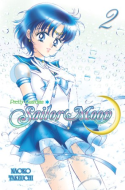
1. ↑3 (4) : Sailor Moon Codename: Sailor V 2 – Kodansha Comics, Nov 2011 [464.5] ::
2. ↓-1 (1) : Sailor Moon 2 – Kodansha Comics, Nov 2011 [461.5] ::
3. ↓-1 (2) : Sailor Moon 1 – Kodansha Comics, Sep 2011 [451.0] ::
4. ↓-1 (3) : Yotsuba&! 10 – Yen Press, Oct 2011 [403.3] ::
5. ↔0 (5) : Black Butler 7 – Yen Press, Oct 2011 [399.0] ::
6. ↑2 (8) : Black Bird 11 – Viz Shojo Beat, Nov 2011 [380.0] ::
7. ↓-1 (6) : Vampire Knight 13 – Viz Shojo Beat, Oct 2011 [376.5] ::
8. ↑6 (14) : Sailor Moon 3 – Kodansha Comics, Jan 2012 [343.5] ::
9. ↑11 (20) : Maximum Ride 5 – Yen Press, Dec 2011 [337.1] ::
10. ↔0 (10) : Maximum Ride 1 – Yen Press, Jan 2009 [330.4] ::

[more]

Top Imprints
Number of volumes ranking in the Top 500:

Viz Shonen Jump 76
Yen Press 75
Viz Shojo Beat 69
Kodansha Comics 43
Viz Shonen Jump Advanced 37
Vizkids 32
DMP Juné 20
Tokyopop 20
HC/Tokyopop 17
Dark Horse 16

[more]

Series/Property

1. ↔0 (1) : Sailor Moon – Kodansha Comics [1,111.9] ::
2. ↔0 (2) : Black Butler – Yen Press [815.5] ::
3. ↑1 (4) : Maximum Ride – Yen Press [750.7] ::
4. ↓-1 (3) : Vampire Knight – Viz Shojo Beat [674.7] ::
5. ↑2 (7) : Pokemon – Vizkids [651.8] ::
6. ↔0 (6) : Black Bird – Viz Shojo Beat [648.6] ::
7. ↓-2 (5) : Naruto – Viz Shonen Jump [600.3] ::
8. ↑5 (13) : Warriors – HC/Tokyopop [538.5] ::
9. ↓-1 (8) : Highschool of the Dead – Yen Press [522.0] ::
10. ↔0 (10) : Negima! – Del Rey/Kodansha Comics [505.8] ::

[more]

New Releases
(Titles releasing/released This Month & Last)

1. ↑3 (4) : Sailor Moon Codename: Sailor V 2 – Kodansha Comics, Nov 2011 [464.5] ::
2. ↓-1 (1) : Sailor Moon 2 – Kodansha Comics, Nov 2011 [461.5] ::
4. ↓-1 (3) : Yotsuba&! 10 – Yen Press, Oct 2011 [403.3] ::
5. ↔0 (5) : Black Butler 7 – Yen Press, Oct 2011 [399.0] ::
6. ↑2 (8) : Black Bird 11 – Viz Shojo Beat, Nov 2011 [380.0] ::
7. ↓-1 (6) : Vampire Knight 13 – Viz Shojo Beat, Oct 2011 [376.5] ::
12. ↓-1 (11) : Dengeki Daisy 7 – Viz Shojo Beat, Nov 2011 [304.1] ::
17. ↓-5 (12) : Highschool of the Dead 4 – Yen Press, Oct 2011 [281.4] ::
19. ↑15 (34) : Pokemon Black & White 4 – Vizkids, Nov 2011 [278.5] ::
26. ↓-13 (13) : Pandora Hearts 7 – Yen Press, Oct 2011 [241.6] ::

[more]

Preorders

8. ↑6 (14) : Sailor Moon 3 – Kodansha Comics, Jan 2012 [343.5] ::
9. ↑11 (20) : Maximum Ride 5 – Yen Press, Dec 2011 [337.1] ::
13. ↑15 (28) : Sailor Moon 4 – Kodansha Comics, Mar 2012 [299.4] ::
14. ↑12 (26) : Sailor Moon 5 – Kodansha Comics, Apr 2012 [297.2] ::
38. ↑8 (46) : Naruto 53 – Viz Shonen Jump, Dec 2011 [202.1] ::
62. ↑3 (65) : Sailor Moon 6 – Kodansha Comics, Jun 2012 [158.3] ::
63. ↑42 (105) : Finder Series 5 Truth in the View Finder – DMP Juné, Dec 2011 [158.1] ::
73. ↑11 (84) : Ouran High School Host Club 17 – Viz Shojo Beat, Dec 2011 [141.5] ::
81. ↑12 (93) : Fullmetal Alchemist 27 – Viz, Dec 2011 [129.8] ::
84. ↓-3 (81) : xxxHolic 18 – Kodansha Comics, Dec 2011 [123.9] ::

[more]

Manhwa

250. ↑455 (705) : Sarasah 4 – Yen Press, May 2010 [42.4] ::
266. ↓-130 (136) : Bride of the Water God 9 – Dark Horse, Oct 2011 [40.4] ::
272. ↑47 (319) : JTF-3 Counter Ops (ebook) – RealinterfaceStudios.com, Mar 2011 [39.9] ::
287. ↓-96 (191) : March Story 3 – Viz Signature, Oct 2011 [37.8] ::
463. ↑ (last ranked 9 Oct 11) : Legend 3 – Yen Press, Aug 2008 [21.8] ::
517. ↑128 (645) : March Story 2 – Viz Signature, Apr 2011 [18.2] ::
542. ↑71 (613) : Bride of the Water God 8 – Dark Horse, May 2011 [17.1] ::
601. ↓-245 (356) : Bride of the Water God 1 – Dark Horse, Oct 2007 [14.8] ::
647. ↑129 (776) : Laon 2 – Yen Press, May 2010 [13.2] ::
666. ↑ (last ranked 25 Sep 11) : Legend 4 – Yen Press, Dec 2008 [12.4] ::

[more]

BL/Yaoi

63. ↑42 (105) : Finder Series 5 Truth in the View Finder – DMP Juné, Dec 2011 [158.1] ::
66. ↓-19 (47) : Finder Series 4 Prisoner in the View Finder – DMP Juné, Aug 2011 [154.9] ::
68. ↑2 (70) : Seven Days Friday-Sunday – DMP Juné, Sep 2011 [150.9] ::
96. ↑41 (137) : Black Sun 2 – 801 Media, Dec 2011 [112.9] ::
106. ↓-2 (104) : Maelstrom (ebook) 1 – Yaoi Press, Jun 2011 [101.9] ::
132. ↑85 (217) : The Tyrant Falls in Love 1 – DMP Juné, Aug 2010 [83.3] ::
146. ↓-22 (124) : Private Teacher 1 – DMP Juné, Jan 2012 [76.7] ::
148. ↑21 (169) : Secrecy of the Shivering Night – DMP Juné, Dec 2011 [75.5] ::
152. ↑13 (165) : Private Teacher 2 – DMP Juné, Jan 2012 [74.3] ::
153. ↓-22 (131) : The Tyrant Falls in Love 4 – DMP Juné, Sep 2011 [74.0] ::

[more]

Ebooks

106. ↓-2 (104) : Maelstrom (ebook) 1 – Yaoi Press, Jun 2011 [101.9] ::
140. ↑41 (181) : Manga Cookbook – Japanime’s Manga University, Aug 2007 [80.3] ::
166. ↑78 (244) : Vampire Cheerleaders 1 – Seven Seas, Mar 2011 [65.7] ::
182. ↑81 (263) : Attacked on a Tiger’s Whim (ebook) – DMP Digital Manga Guild, Oct 2011 [57.4] ::
206. ↓-9 (197) : Aphrodisiac Kiss (ebook) – Animate/Libre, Sep 2011 [50.8] ::
272. ↑47 (319) : JTF-3 Counter Ops (ebook) – RealinterfaceStudios.com, Mar 2011 [39.9] ::
294. ↓-47 (247) : The Outcast 1 – Seven Seas, Sep 2007 [37.3] ::
386. ↓-50 (336) : Kanji de Manga 1 – Japanime’s Manga University, Jan 2005 [27.7] ::
395. ↑ (last ranked 4 Sep 11) : Amazing Agent Luna 1 – Seven Seas, Mar 2005 [26.8] ::
452. ↑34 (486) : Maelstrom (ebook) 3 – Yaoi Press, Jul 2011 [22.3] ::

[more]

Filed Under: Manga Bestsellers Tagged With: Manga Bestsellers

Tales of the Gilbreth Family

December 8, 2011 by Michelle Smith

Mention the title Cheaper by the Dozen and most folks know it refers to a story about a family with twelve children. Before there were completely unrelated movies starring Steve Martin, however, there was the original book about the unique Gilbreth family, written by two of the children. This was followed by Belles on Their Toes, set after the death of the family patriarch, and later by several others, including Time Out for Happiness, a more serious family biography, and Rings Around Us, in which Ernestine writes about her own married life. Three out of the four are quite charming, and those aren’t bad odds!

Cheaper by the Dozen by Frank B. Gilbreth, Jr. and Ernestine Gilbreth Carey
When I embarked upon reading Cheaper by the Dozen, I figured I was in for a warm-hearted memoir about the clever antics of twelve mischievous kids living in the early 20th century. And I did get that. There are stories here about playing pranks on the psychologist evaluating their intelligence and about young boys saying impertinent things to guests at dinner, about rousting a peeping tom from a tree and manipulating the family council system in order to get a dog.

What I didn’t anticipate, however, was that the real purpose of the book is to lovingly depict the Gilbreth parents, Frank and Lillian. I am a sucker for awesome dads, and have loved quite a few, but Mr. Gilbreth might just take the cake. He’s voluble, loud, and charming, with a zest for life and learning that leads him to devote his career to developing time-saving measures for various industries. He teaches his kids all manner of things, from languages to Morse code to nifty multiplication tricks, and at first it seems like he’s doing this just to satisfy his own curiosity—and, yes, that’s part of it—but in reality, it’s so that they’ll be able to get along without him and not be a burden to their mother when he is gone. For, you see, he hasn’t told them that he’s got a bad heart.

There is much to smile and laugh at in this book, but the end had me sobbing. In a good way. In the way that makes you want to read the book again so that you can love it even more intensely. I feel like fans of this book could meet each other and exchange a single word—mumblety-peg—and understand each other perfectly.

Belles on Their Toes by Frank B. Gilbreth, Jr. and Ernestine Gilbreth Carey
Where Cheaper by the Dozen serves as loving tribute to Frank B. Gilbreth, Sr., Belles on Their Toes is “primarily the story of Mother.” Overshadowed somewhat by her charismatic husband in the previous book, Lillian shines here as a strong and capable mother defying social conventions and attitudes by taking up the reins of her husband’s business in order to secure sufficient income to not only keep the family together but send each child to college, as Frank wanted. There’s a marvelous passage early on that explains how Lillian overcame her timidity that left me sniffling.

There was a time when Mother wept easily, when she was afraid of walking alone at night, when a lightning storm would send her shuddering into a dark closet.

All that ended the day Dad died. It ended because it had to end. It ended because of the realization that what she really feared was that something would separate them.

Well, what she feared had happened, and tears would not wash out a word of it. So she gave his speech in London and presided for him in Prague. And she was not afraid any more.

I get a bit verklempt now, just typing that.

Belles on Their Toes also focuses a lot on the oldest daughters, as they develop into women and eventually bring beaus home to meet the family. I’m particularly fond of sensible Martha, who has no idea she’s become shapely and sought-after and devotes herself to principles of frugality. That’s not to say that pranks and mischief are entirely absent, however! Near the end, the pace of the story picks up a great deal, skipping over some of the middle children to cover the high school graduation of the youngest (Jane), followed by a family reunion in which three of Lillian’s grandchildren are christened in the same church as their parents.

It’s a very satisfying conclusion and most people would probably feel content to stop here. With a little research and a couple of interlibrary loans, however, I’ve unearthed a couple of other books about the family that are less well known.

Time Out for Happiness by Frank B. Gilbreth, Jr.
Whereas the first two books “stressed the comical aspects of raising a big family by Motion Study methods,” Time Out for Happiness puts the emphasis on Frank and Lillian’s work in the field of “scientific management.” You might think this sounds dull, but actually there are enough amusing anecdotes and big personalities (like “plump and boisterous” Frank) to make for quite an absorbing read.

Time Out for Happiness also dwells more on the family backgrounds for Frank and Lillian, as well as the early days of their courtship and marriage. Some of the material is familiar, but most of it is new. (Interestingly, a few small details are different here, like which child made what remark or what handyman Tom named his cats. Were those embellished the first time around?) I welcomed the insight into what Frank and Lillian were hoping to accomplish with Motion Study, especially the fact that Lillian was very much an equal partner.

Indeed, while gregarious Frank initially captures one’s heart, by the end one realizes how truly remarkable Lillie was. For a woman to get a Master’s degree in 1902 (followed by a PhD in 1914) was no small feat, and she was the first woman to receive honorary membership in several influential engineering societies. After Frank’s death in 1924, Lillie continued to espouse the Gilbreth method for over 40 years, eventually earning the public recognition of their endeavors that she’d long been seeking.

The one drawback to reading this book is that it makes one feel a serious underachiever. There were so many opportunities to think and do new things in the early 20th century that I don’t know now whether such chances simply don’t exist anymore or if I am just not personally bright enough to see them.

At any rate, this may be a more factual account of the family history, but it’s no less entertaining.

Rings Around Us by Ernestine Gilbreth Carey
Out of the four books on the Gilbreth family that I read, I liked Rings Around Us—the story of Ernestine’s married life—the least. I found it to be lacking the warmth of the earlier books, and I’m not sure whether to attribute that to the lack of Lillian or to the lack of Frank, Jr. as writing partner. Probably it’s a combination of both.

In September 1929, when she is a 21-year-old working girl in New York City, Ernestine Gilbreth meets Charles Carey. They hit it off immediately and are married in 1930. The book recounts their many apartments in the city, the many nurses they hire to take care of their daughter while Ernestine works, and the eventual decision to move to Long Island, where the kids have plenty of friends and room to roam and where the Carey parents experience the joy of tending a garden and the sorrows of home maintenance.

The problem is… Charles (called “Chick” by Ernestine) is a product of his time, in that he is a sexist git. He frequently makes comments about women and though he occasionally condescends to help Ernestine with meals and dishes, his attitudes eventually begin to wear off on his son. Ernestine chafes at his notions, but doesn’t get her dander up as much as I would’ve liked. But no matter, because she herself is sizeist. Many, many times she describes a person by their weight, be it the nurse whose bosoms she compares to watermelons or the dance teacher her daughter adores, “all two hundred pounds of her.” This attitude, too, wears off on the kids, as a later chapter dwells upon a game they invent wherein you score points for spotting fat people on the beach. The game is called “Whale.”

Nice. Really nice. Thanks for leaving me with a sour taste in my mouth, Ernestine.

Filed Under: Books Tagged With: Ernestine Gilbreth Carey, Frank B. Gilbreth Jr.

Guest Feature: Mary Stayed Out All Night

December 7, 2011 by Sara K. 5 Comments

Guest Feature: Mary Stayed Out All Night

Mary Stayed Out All Night is the manhwa that Sooyeon Won, the artist responsible for Let Dai, Full House, and The Devil’s Trill, is currently producing. Considering how much of Sooyeon Won’s work has been published by NETCOMICS, is it quite possible that they will license Mary Stayed Out All Night too.

The Story

Our heroine is an ordinary young woman. She makes the ‘mistake’ of getting involved with a young man who is both handsome and a movie star, a popular singer, rich, a prince, or some other glorious thing. When they first meet, they do not get along. And somehow, another handsome, popular, wealthy, or high-class young man gets involved.

Of course, these young men are not equal. One of them has a higher social status than the other. I will henceforth refer to the higher-status one as ‘overdog’ and the lower-status one as ‘underdog’.

Polyandry is awkward

Through a contrived set of circumstances, the heroine has to move in with and/or get married to at least one of these young men. Perhaps it is because she has financial problems, or perhaps because her family made her do it. While many people would love to live with/marry handsome, popular/wealthy/high-class young men, because the heroine was forced into this situation, her plight is sorrowful.

a picture of Jung-In and his girlfriend

Overdog is not interested in the heroine at first. He even has a girlfriend that he has real feelings for. But he falls in love with our heroine, and covers up the fact that he is in love with her, saying that he only agreed to the arrangement for convenience or some social reason.

A picture of Kang Moo-Kyul with a microphone

Underdog, on the other hand, is much more open about his feelings for our heroine. Our heroine is his first love. Whereas overdog is about as supportive as a block of ice, underdog is always there to offer our heroine a shoulder to cry on. Of course, even though underdog is not as popular/wealthy/high-class as overdog, he is still sufficiently so to attract the attention of other girls.

Sometimes comedic, sometimes dramatic, sometimes tragic, the heroine and the young men cry, tease, yell, whisper, argue, run, chase, kiss, cuddle, flirt, woo, manipulate, beg, lie, confess, etc. all for the reader’s entertainment.

That is an accurate plot description of Mary Stayed Out All Night. This also happens to be an accurate plot description of Goong. And there are a lot of sunjeong manhwa for which this plot description would be at least 75% accurate.

If you like other manhwa of this type, you would probably like Mary Stayed Out All Night. If you dislike this type of manhwa, Mary Stayed Out All Night probably would not change your opinion. There are two things which make Mary Stayed Out All Night stand out from other manhwa of this type.

Kang Moo-Kyul

A picture of Kang Moo-Kyul

I generally find the characters in Mary Stayed Out All Night uninteresting, with a major exception: Kang Moo-Kyul.

Kang Moo-Kyul is like a patch of grass which, after being stomped upon, straightens right back up. It is hard to put him in a bad mood, and even harder to keep him in a bad mood. Under circumstances which would have the leading males of most shojo/sunjeong comics convulsing with angst, he thinks about the situation, fixes what he can and stays calm. While he might not go back to his usual cheer right away, he recovers faster than most of his sunjeong/shoujo-male-character peers would. Of course, being about as mature as a typical 25-year old, he is more mature than most of those peers.

The word which best summaries Kang Moo-Kyul’s personality is ‘free’. He is not a conformist; he feels no obligation to do things the conventional way. He is also not a rebel; he is perfectly happy to do things the conventional way when it happens to be what he wants to do anyway. According to him, the best way to go to a wedding is to arrive on a kindergarten school bus – with the kindergarten students on board. And this freedom is what attracts other people – both his fans (his band – “Strawberry Corpse” renders death metal music in a cheerful and silly way) – and Mary herself.

Of course, while grass springs back quickly after being stomped upon once, it does not spring back quite as high the second time. After being stomped upon too many times, it does not spring back up at all. Kang Moo-Kyul gets stomped on a lot in the story. Furthermore, it is hinted that Mary’s father was a lot like Kang Moo-Kyul as a young man, so he presents of a vision of what Kang Moo-Kyul might become in the future – an unhappy future. While Kang Moo-Kyul’s spirits are still high, they are slowly sinking.

The Artwork

This is what I truly love about this manhwa. The Taiwanese edition shows off the artwork very well, with its enlarged page size. In fact, Sooyeon Won fans, even those who cannot read Chinese, should seriously consider buying the Taiwanese edition, or the Korean/Japanese editions if the production values are equally high.

First of all, the artwork is extremely expressive. It is the equivalent of casting top-notch actors to bring the story to life. Look at these examples:

Mary is not exactly happy

Kang Moo-Kyul is looking at something

Kang Moo-Kyul is looking at something else

Mary looks content

Jung-In is distressed

Jung-in is having a bad day

Mary weeps

A couple of minor characters are not getting along at this moment

Mary is happy

Kang Moo-Kyul bites his nails

Mary puts her hand over her nose and mouth

The shading, color, and layout are the equivalent of hiring a top-notch director and top-notch designers to bring the story to life.

Kang Moo-Kyul is woken up by one of his band mates.

Notice the following things:

1. The way the band-mate is standing over Kang Moo-Kyul as he is lying down.
2. The way the top-right and bottom-left panels are boxed, whereas the top-left and bottom-right left panels are not boxed.
3. The way that Kang Moo-Kyul rises in the bottom-right panel – as if he were swinging on a pivot located at the bottom-right corner of the page.

These elements individually provoke visual interest – the perspective of standing versus lying down, the mix of boxed and un-boxed panels, and the movement as Kang Moo-Kyul rises. However, they combine together to lead the readers’ eyes in a diagonal line of sight from the top left to the bottom right – and diagonal lines of sight are almost always more dynamic than horizontal or vertical lines of sight.

There is also sporadic use of color. The rarity makes the moments where color is used special. My favorite use of color is this page.

Mary and Kang Moo-Kyul kiss on Cheju island

Individually, both of these colors would read as ‘black’, but used together they are clearly distinguishable. It is a lot more subtle than using two pigments which would never be read as ‘black’, and really highlights how this moment is different from other moments in this manhwa, yet is very much in the flow of the story.

This was too subtle for my camera, so I had to tweak the image into order to make the effect visible, and my tweaks are quite crude. Nonetheless, it is at least possible to see what I am writing about.

And there is a moment which displays Sooyeon Won’s skill particularly well.

If, on a street, a woman was running in tears, a man was chasing the woman, and a second man was staring blankly, most bystanders would pay attention to the woman and the man chasing her. They would not even notice the man blankly staring. Look at this:

Jung-In sees Kang Moo-Kyul chasing Mary

Sooyeon Won directs the readers attention to Jung-In and away from Mary and Kang Moo-Kyul. She does this by:

1. Only showing Jung-In’s eyes, and not showing Mary’s face (the tears would grab too much attention).
2. Putting Jung-In in the center.
3. Shading Mary and Kang Moo-Kyul while keeping Jung-In looking bright. The human eye tends to move away from dark things and towards bright things.

This moment is not about Mary or Kang Moo-Kyul – it is about Jung-In, and Sooyeon Won makes sure that the reader knows that. And having a very compelling subject (a man chasing a woman in tears) yet managing to pull all of the attention to a different subject is in itself very dynamic.

Conclusion

While I am most impressed by the artwork, the story is solid, the jokes are funny, and Kang Moo-Kyul more than compensates for the blandness of the other characters. I sincerely hope that NETCOMICS or another publisher will put this out in English, and sooner rather than later.


Sara K. has previously written the following guest posts for Manga Bookshelf: Why You Should Read (and Want More) Evyione:Ocean Fantasy part 1 and part 2. In order to have something to read on the train, she brought her copies of volume 3 and 4 of Mary Stayed Out All Night to the peak of Filial Son Mountain (yes, she even brought them up the ladder).

Filed Under: FEATURES Tagged With: manhwa, mary stayed out all night

Manga the Week of 12/14

December 7, 2011 by Sean Gaffney

‘Tis Christmas, and still no offers of pantomime! No worries, though. We may not have Aladdin’s Wonderful Lamp, but there’s a nice healthy chunk of manga there. So what’s in store, Widow Twankey?

Kodansha features the 3rd volume of the re-release of Gon. If you haven’t read the adventures of the tiny dinosaur scrapper, now’s the time to catch up.

It’s the second week of the month, so Manga must be Starting On Sundays again. From Shonen Sunday this time around we get Vol. 8 of Arata: The Legend, Vol. 4 of Itsuwaribito, the 29th volume of Kekkaishi (that’s quite an accomplishment for a Sunday series!), and the 8th volume of Maoh: Juvenile Remix, pictured above doing their best anti-censorship pose, and with this volume’s remix by The Art of Noise. Meanwhile, from the seinen end of things, we get a new 20th Century Boys, which at Vol. 18 is almost nearing its climax at last. And Vol. 5 of House of Five Leaves, which will continue to feature people talking to each other a lot and people staring while not talking to each other at all. Sometimes at the same time! And for those who did not get it this week like the rest of us did, Naruto 53 is on Midtown’s list as well.

Lastly, presumably not arriving with the pile of Yen that came in this week, we have Vol. 2 of The Betrayal Knows My Name, which has mysterious men with mysterious powers hiding mysterious pasts. Mysterious!

Clap if you’re going to buy manga this week! Oh come on, that wasn’t loud enough! Clap harder!

Filed Under: FEATURES

The Documents in the Case by Dorothy L. Sayers (with Robert Eustace)

December 7, 2011 by Michelle Smith

From the back cover:
The grotesquely grinning corpse in the Devonshire shack was of a man who had died horribly—with a dish of mushrooms at his side. His body contained enough death-dealing muscarine to kill thirty people. Why would an expert on fungi feast on a large quantity of this particularly poisonous species? A clue to the brilliant murderer, who had baffled the best minds in London, was hidden in a series of letters and documents that no one seemed to care about, except the dead man’s son.

Review:
The Documents in the Case is the one full-length mystery novel penned by Dorothy L. Sayers that doesn’t star Lord Peter Wimsey. Before I’d read it, I knew of it merely as “the one with the mushrooms.” Now I’ll know it as “the really boring one with the mushrooms.”

For the most part, this is an epistolary novel in which letters written by the residents of a particular Bayswater address depict the state of family life before the death of patriarch and mushroom enthusiast, George Harrison (yes, really). Sayers expertly and efficiently depicts the character of each correspondent through their writing, including George himself; the young, flighty, and discontented lady of the house (Margaret); her deluded-to-the-point-of-insanity companion (Miss Milsom); the dashing artist tenant (Harwood Lathom); the deep-thought-having novelist tenant (John Munting); and George’s son from an earlier marriage (Paul), who has gathered the documents together in a bid to prove that his father was too much of an expert on mushrooms to have died from accidentally ingesting a poisonous variety.

Some of this is fairly interesting, some is irritating—seriously, although one can sympathize with Margaret for her repressive husband, she is still frequently too insincere and manipulative to bear—and some is downright tedious. Munting’s letters to his fiancée often lapse into pseudo-philosophizing, but the cake is taken by an extremely long and self-indulgent scene near the end in which Sayers uses a bunch of random professorial types as mouthpieces through which to espouse some theories on the origins of life. If I had a paper copy instead of an audiobook I would quote some of the dialogue from this section, but it will have to suffice it to say that my impatience caused me to hurl profanities at my innocent cassette player.

Eventually, this rambling conversation produces the means of proving the death was no accident, and then there’s a very brief postscript about how the culprit was hanged. The end.

Ultimately, I conclude that this one is only for completists. Completists, I wish I could say this was better, but perhaps it will be some small comfort to know that it is at least quite short.

Filed Under: Books, Mystery Tagged With: Dorothy L. Sayers

The Wallflower, Vol. 27

December 7, 2011 by Sean Gaffney

By Tomoko Hayakawa. Released in Japan as “Yamato Nadeshiko Shichihenge” by Kodansha, serialization ongoing in the magazine Bessatsu Friend (“Betsufure”). Released in North America by Kodansha Comics.

Every time I review a volume of this manga, I feel the need to explain my continued enjoyment of it. I enjoy the romance, while acknowledging it will likely never be satisfactorily resolved. I enjoy the comedy, which admitting that a lot of it is the exact same situation written over and over with variations. And I like the art, despite the author’s complete lack of attention to backgrounds and Sunako still being superdeformed much of the time. Despite all these flaws, I enjoy this manga as it’s a classic example of an artist knowing she has a narrow range and using that narrow range to her best advantage.

Since about Vol. 15 or so, the series has gotten into a pattern. The majority of the stories feature the stormy friendship/something more between grumpy Kyohei and twitchy Sunako, and yes, after 27 volumes, she’s still occasionally freaking out about his “brightness” and wanting to be a creature of darkness. Generally once every two volumes or so she will throw in a chapter about the stoic Takenaga and his gorgeous yet lacking in self confidence girlfriend Noi; or playboy Ranmaru and his far too tolerant fiancee Tamao. Once every 5-6 volumes we may see a chapter devoted to cute and sweet Yuki, who’s the guy on the cover of this volume, but generally not; the author doesn’t know what to do with him, really, as he’s far too normal. His own girlfriend is notably also very normal.

No one reads Wallflower stuff for normal. You read it for things like Sunako deciding that after the events of last volume she’s leaving the mansion again and working at a maid cafe… with the creepy otaku therein. (Word of warning: otaku are portrayed entirely negatively here.) Or Sunako getting possessed by a ghost – again, the others note – who wants to satisfy her desire to pick flowers with an incredibly handsome man (read: Kyohei). Or Sunako getting the flu and Kyohei being forced to take care of her, in what might be the most fanservicey chapter this story has had to date. Or even for the token Ranmaru story, where he is kidnapped by an S&M club and held for ransom.

The little things in each volume are what keep bringing me back. We actually see Sunako transform from superdeformed to her normal self (in three poses) in the first chapter, which once again makes us wonder about how this works in the ‘real world’. The chapter with the ghost shows off Kyohei’s reluctant caring side, as this particular possessive spirit isn’t as selfish as prior ones have been, and he can’t simply tell her to get out and give Sunako back. The chapter with Ranmaru is fun and horrible at the same time, as he blows off his fiancee, who is there to learn from Sunako how to make him delicious food, to date more cheating wives. Tamao is clearly ready to sacrifice a pile of money for his well-being, and though he is grateful, and seems to have some feelings for her (note she’s probably the only woman he won’t actually sleep with, and we all know what that means with playboys), we still question why she puts up with his assholish tendencies. (Luckily, Sunako is there throughout to make these points, as she gets kidnapped as well.)

Then there’s the flu chapter. I’m not the audience for this shoujo material. 18-19 year old girls are. And boy howdy, does this chapter deliver. Kyohei’s half-naked throughout, but that’s not the type of service we’re talking about, for once. No, this is all about the torrid sexual tension between these two epically stubborn people. Sunako’s flu-ridden fever dreams are about Kyohei kissing her, and it’s driving her insane. Kyohei, meanwhile, just wants her to change and get better, but she refuses to do anything she tells him and is generally a horrible patient. This culminates in his blindfolding himself and stripping her naked so he can change her sweaty clothes, which she finally acquiesces to. (It’s very noticeable that for almost 25 pages or so, she’s not superdeformed in the least). And then she runs out into the rain, and he’s going after her screaming that she’ll get more sick, and then they trip and fall on top of each other…

…and then a lightning bolt comes down from the sky and strikes the both of them, ending the chapter. It’s like the hand of God, but more accurately it’s the hand of the author, reminding us all that the manga is still running in Japan and she really does not want to resolve it at all. Sigh. Oh well, in this manga filled with frustrating characters and situations she has now rewritten at least five times each, we still find little oases of awesome. That’s why we keep coming back to this even after 27 volumes.

Filed Under: REVIEWS

Bookshelf Briefs 12/5/11

December 5, 2011 by MJ, Michelle Smith and Katherine Dacey 2 Comments

This week, MJ, Michelle, & Kate look at new releases from Viz Media, Digital Manga Publishing, and Vertical, Inc.


About Love | By Narise Konohara and Tomo Ootake | Digital Manga Publishing – The unconventional cover on this one led me to expect a quirky story, but About Love is calm and melancholy as it depicts the friendship and romance between Asaka, a wedding planner, and Sasagawa, one of his first clients. What I found striking about this story was the lack of optimism from its protagonists—Sasagawa is convinced that Asaka only wants to be friends while Asaka is in love but has no intentions of ever revealing the relationship to his friends and family. Misunderstandings and work obligations conspire to keep the two apart and… I don’t know… usually one assumes a BL couple will ride happily off into the sunset, but I honestly am not sure that’ll happen here. Which is probably a good thing, right? Bucking convention and all that. In any case, it was an interesting read and I recommend it if you’re in the mood for something different. – Michelle Smith

Bakuman, Vol. 8 | By Tsugumi Ohba and Takeshi Obata | Viz Media – Bakuman‘s romantic entanglements have never been its strength, and unfortunately this volume is saddled with more than its fair share. Even more unfortunate is the authors’ portrayal of young novelist Aiko Iwase, a brilliant former schoolmate of our heroes, whose ambition is apparently driven entirely by romantic feelings for Takagi, but is presented without any of the genuine insight or sympathy granted to similarly love-obsessed artist Nakai. And while it’s admittedly pretty satisfying to see Nakai finally get smacked in the face (twice!) later in this volume, it’s even more of a relief to see Ohba and Obata turn the plot back to the craft and politics of the manga publishing biz, which is what really makes this series work. I’ll cross my fingers in hopes that we see more of this in the next volume. Still cautiously recommended. – MJ

Black Jack, Vol. 17 | By Osamu Tezuka | Vertical, Inc. – The final installment of Black Jack includes a mixture of good, great, and outstanding stories, the best of which feature Pinoko. I’d be the first to admit that Pinoko is my least favorite character of the series, as she’s always struck me as a nasty caricature of the Japanese housewife. In volume 17, however, Pinoko is forced to confront her liminal status as an adult — first when Black Jack tries to give her to a childless couple, then when her sister enters Black Jack’s life again. Both stories are an appealing mixture of humor, suspense, and pathos that cast this problematic character in a more sympathetic light; we feel Pinoko’s pain as she struggles to reconcile her eternally youthful appearance with her more mature feelings for Black Jack. As an added bonus, Tezuka stuffs these last stories with cameos from Phoenix, Ode to Kirihito, and Swallowing the Earth (to name a few), a lovely reward for his most devoted fans. – Katherine Dacey

I’ll Give It My All… Tomorrow, Vol. 4 | By Shunju Aono | Viz Media – After the crushing resignation of the editor who believed in him, Shizuo’s new editor—the embittered, no-nonsense daughter of a failed novelist—cuts him no slack, describing his work as self-indulgent justification for his own lifestyle. Surprisingly, Shizuo actually seems to listen, at least by the end of the volume, providing hope that the promised “Tomorrow” might actually be at hand. I’ve become frustrated with this series from time-to-time, as it vacillates between latching on to a real narrative and settling into the perpetual sitcom feel so common in comedic manga. But I do have some hope of it finally leaning towards the former, especially after this very strong volume. As usual, the series’ side characters are more interesting than its protagonist, but finally it seems like that protagonist might actually care. It’s fascinating to watch this series evolve in a way not dissimilar to our hero’s own journey, which may simply prove how brilliant it’s been from the start. Recommended. – MJ

The Innocent | By Avi Arad, Junichi Fujisaku, and Yasung Ko | Yen Press – I was initially baffled by the presence of quotes from Stan Lee and Sam Raimi on the back cover of The Innocent until a little research revealed that Arad is actually some kind of Marvel bigwig. Apparently, this is why he has the likes of Nicolas Cage proclaiming that his work “shows like an esoteric haiku by way of anime and Lichtenstein and achieves comic book poetry.” To which I say, “Um, what?” And also, “Were we reading the same book?” I found The Innocent to be uninspired, with unsympathetic characters, incredibly paper-thin villains, and incoherent action scenes. It’s possible that this could have been a cool story—it does feature a wrongly executed guy who comes back to life with a body made of ash, which he can manipulate in various nifty ways—but the flaws listed above prevented me from giving a hoot about any of it. – Michelle Smith

Real, Vol. 10 | By Takehiko Inoue | Viz Media – It’s been a long wait for the tenth volume of Real, but I am happy to report that the wait is well worthwhile! This volume maintains the sort of shounen-esque feel of volume nine, with a mixture of grand declarations, gritty determination, and talk of achieving one’s dreams, but without losing any of the realism that makes this series so compelling. It’s gratifying, really, to see a character like Takahashi discover a glimmer of aspiration at long last, and it’s surprising how possible Noyima’s seemingly unrealistic dream suddenly appears, now that his moment of trial has arrived. Inoue’s craftsmanship is as stunning as ever, and I’m constantly impressed by his ability to shift focus from character to character without ever losing the tension in even one of his delicately-overlapping storylines. Heavy as it can be, this series is always a pleasure to read, which is a true feat for any writer. It seems clear that this series will always be worth waiting for. Highly recommended. – MJ

Filed Under: Bookshelf Briefs

Negima! Magister Negi Magi, Vol. 32

December 5, 2011 by Sean Gaffney

By Ken Akamatsu. Released in Japan as “Mahou Sensei Negima!” by Kodansha, serialization ongoing in the magazine Weekly Shonen Magazine. Released in North America by Kodansha Comics.

After two or three volumes of a giant fight/massacre, a break is much needed. You can’t simply have nonstop fighting in every chapter. And so this Negima is devoted to Negi attempting to gain more power and learn what he really wants from the fight, and for several of the others to get powers of their own. There’s lots of plot and character development to enjoy here.

First off, a great deal of time is dedicated to the four ‘sports girls’ who stowed away to the Magical World and are now having to deal with the consequences. We’ve followed Ako’s arc more than the others, so it’s good to see the other three getting equal time. This is not to say that Ako gets nothing to do – her pactio is quite sweet, and I liked the fact that she’s aware of her feelings for Negi and is stamping them down as being wrong – this is a constant theme in this manga, given Negi’s age, and it helps to remind fans that in reality, it *is* squicky. She’s also still crushing on Nagi, even now that she knows he doesn’t exist, and this is a reason why she refuses to pactio with an ‘aged-up’ Negi. Her Pactio is also hilarious, though we don’t know what it does yet.

The other big revelatoin is regarding Yuna. We’ve known for some time that her father and mother were mages, and that Yuna had been kept in the dark about it. Now Takane feels they’re in a situation where it’s too dangerous not to know, and reveal the truth to her. Yuna, being of the ‘spunky take life as it comes’ variety, is seemingly okay with this, and notes she’d worked most of it out beforehand. She’s also reasoned this through to the end, and asks Takane if her mother’s death was really an accident like she’d been told. Takane’s response, and Yuna’s reaction, shows how well Akamatsu has mastered subtlety when the situation calls for it. We don’t see Yuna’s face when she reacts to the news, and that makes it all the more sad.

As for Makie and Akira, they aren’t quite as heartwarming, but still well done. Akira is first and foremost concerned for her friends, and tries to help Negi realize the situations he’s gotten himself into while not overwhelming him. Makie, who gets one of the best lines of the volume “I don’t understand men or women…” is as always a fairly simple girl, in a good way. She admires Negi and is happy to pactio with him, and that’s all that matters. So now three of the four girls have magical abilities (Akira is too shy/nervous to try), some of which, as Ako quickly notes, are more badass than others. (Yuna’s guns are implied to be special in particular – I have a feeling they may have been her mother’s.)

Negi, meanwhile, has finally broken free of the mental wall that’s been keeping him from using his full abilities – he realizes that he’s basically becoming something that isn’t human, and is okay with it if it’s to protect his friends. And what’s more, he’s leveled up in his thoughts on Fate as well – it used to be “I want to beat him”, now it’s “I want to be friends with him”. Well done, Negi, you’ve recognized you’re in a shonen manga. Now if we can just get Fate, who’s acting like an impatient boyfriend waiting for his date, to realize the same.

Speaking of which, I would be remiss if I did not mention Tsukuyomi. She made the transition from goofy villain to terrifyingly insane villain some time ago, but she really shows off her chops here. She goes toe to toe with Fate for a while, apparently because she’s bored, and forces him to actually have to get serious briefly. Then, bored again, she goes off to kill a few of Negi’s friends, starting with Colette, who is another ‘wooden doll’ in this world. Luckily Negi is there to stop her, but then we get her reaction to his newfound magical strength. I’m sorry, but it’s really hard to say anything other than “she sees his power and has an orgasm”. It’s that blatant. Then when Negi suggests that, as a hired mercenary, he could buy her off, she comes out with the chilling “There is no meaning in this world. All I want is blood and battle.” Something tells me we will not be befriending her like we will Fate.

Finally, we get everyone in position. Things are moving more rapidly than anticipated due to Tsukuyomi leaving behind a horde of demons to attack them, but Negi’s party gets to the Gravekeeper’s Palace with minimal fuss and is ready to go. And then they’re stopped. By… well, I’ll say who it is when I review Volume 33. I’ll just note that when this chapter came out in Japanese, it was generally regarded as the biggest surprise of the entire series to date. No one guessed this.

(I will note briefly that Kodansha’s lack of editors has done it again – the character bio and cover design is missing from this volume. The Nibleys said they did translate it, so it’s all on the editors. Sigh.)

There’s actually minimal fanservice in this volume as well. It’s straight ahead storytelling, with no detours in hot springs, and the pactios we get are mostly serious business. Could this be the manga’s final endgame we’re heading into? Will we ever get an entire chapter of Negi sneezing everyone’s clothes off again? Tune in next time!

Filed Under: REVIEWS

Let’s Get Visual: The Jibblies

December 3, 2011 by Michelle Smith

MICHELLE: So, in our last installment of Let’s Get Visual we celebrated the pretty, so it seems only fitting that this time we devote our attentions to images that make us shudder with a feeling I like to call “the jibblies.” Just like beauty, creepy is a subjective thing, so we’ve each chosen a variety of images that get our personal hackles rising.

MJ, you want to go first this time?

MJ: Sure!

So, as I was perusing my manga collection for things that creep me out, it became increasingly clear to me that I’m very simple when it comes to what scares me. All it takes to really get to me is a single disturbing image–especially one that distorts something human into something sinister. I’m apparently not scared of monsters so much as I am of monsters in human clothing.

My first example comes from Setona Mizushiro’s After School Nightmare. In this series, a group of teenagers is regularly drawn into a shared dreamworld in which they each appear as physical manifestations of their own worst fears. Some of these are visually more disturbing than others. The series’ main character, Ichijo, for instance, most fears his own confusion about gender, so his skirt-wearing dream self is really horrifying only to him. Some of the other students, however, wear their fears in a much more visually distorted manner. This short spread features two of those students.

After School Nightmare, Vol. 1 (Go! Comi)

First, you’ll see a student who appears only as an arm and hand, twisting itself around Ichijo. Second, a girl appears with giant cavities replacing her face and chest. While the second of these has the most stunning, immediate affect on my psyche, the first creeps up on me as I try to move away from the page. Both images stick with me long after I’ve put the book down, and this seems to be the real key to scaring the bejeezus out of me. If I can’t get the image out of my mind, it easily haunts me for days. That’s the power of a single, shocking image.

MICHELLE: My first thought upon hearing of your aversion to “a single disturbing image” is that you shouldn’t read Junji Ito’s Uzumaki, followed by the thought that you should read it.

My reaction to the image above differs from yours, though, in that while these images certainly provoke in me an “ew” reaction, they aren’t the type that haunt me. I definitely think that the slinky arm creature is the more creepy in the image you displayed. For me, it’s because the gaping images of emptiness are immediately recognizable as symbols for what that character is feeling, but what on earth is causing that other student to appear like a grasping, creeping arm?! I feel like their circumstances in life might ultimately be the more disturbing! (This comes from someone who’s read only one volume of After School Nightmare, so I don’t know if this turns out to be the case.)

MJ: I think part of what makes the gaping holes in the second student so horrifying for me, is that (for whatever reason) I’m strongly affected by a lack of face. I have the same reaction to images of people with blank faces. It creeps the hell out of me when I can’t assess a person’s feelings/personality from their expression. It feels very threatening to me.

Perhaps it’s further evidence of how much a face means to me, actually, that both of my follow-up images are pretty much face-only. First, from CLAMP’s Tokyo Babylon, we have the face of a dead child who pleads with her mother to avenge her, and secondly, from Jun Mochizuki’s Pandora Hearts, the face of a girl that reveals itself to be a monster underneath.

Tokyo Babylon, Vol. 4 (TOKYOPOP)

Pandora Hearts, Vol. 1 (Yen Press)

I actually find both of these to be creepier than the images from After School Nightmare, though they are much simpler. Something they have in common is that they are presented against a stark, black background, giving the distorted expressions full focus. After that, though, they are nearly opposites of each other. The face of the girl in Tokyo Babylon is all too real, distorted by the power of raw emotion, while the character in Pandora Hearts is revealed to have no emotion at all, or at least none that matched what was on her false human face. Yet in the end, which is more monstrous?

MICHELLE: It’s interesting how much the things that creep us out reveal about us, isn’t it? I’d wager you get the same threatening feeling from the girl who is revealed to be a monster underneath as you do the girl with no face at all. People pretending to be what they’re not, hiding their real selves, etc. That’s definitely something all of us have experienced at one time or another.

Getting back to actual attempts at visual analysis, those deep black backgrounds really do focus the reader’s eye on what the mangaka wants them to see. It’s as if they’re saying, “I don’t want you to be distracted by anything else.”

MJ: Your analysis of me is spot-on, that’s for sure!

And yes, I think the black backgrounds achieve exactly that, while also evoking our natural fear of the dark, or what we can’t see. It’s a powerful tool for both showing us something and not showing us something, if that makes sense.

MICHELLE: It definitely does.

Now I’m reflecting on what the images I’ve chosen say about me. There’s hardly a face among them, for one thing, because I am less creeped out by shocking images than I am by imagining an experience, specifically an experience during which one is forced to endure something horrible for a really, really long period of time with no means of escape. Ugh, just thinking about the short story my images come from—”The Enigma of Amigara Fault” by Junji Ito—has given me the jibblies while typing this paragraph!

Gyo, Volume 2, “The Enigma of Amigara Fault” (VIZ Media)

Page 178

Page 185

Page 198

Page 203

Page 204

I’ve chosen this particular sequence of images from this short story because they illustrate the entire plot without me needing to introduce it beforehand. By now you probably don’t need me to explain that when the TV news reports on a mountainside full of people-shaped holes revealed by a recent earthquake, people flock to the site and can’t be dissuaded from climbing into their personal holes, where long, icky agony awaits them. At first the site seems innocent enough, if a bit strange, but soon people are walking into holes, having nightmares about what happens to you in a hole, and eventually discovering the exit and…. Holy crap, it’s terrifying. This is the kind of thing that will haunt me for ages.

I’m honestly trying to analyze Ito’s artistic techniques dispassionately here, but I find that the disturbing power of the images is so great that it is affecting my ability to reason even now!

MJ: Hmmm, I’m wondering if what it’s saying is that while I’m terrified of people betraying me, you’re terrified of your environment betraying you. Or something like that.

In any case, these panels are undeniably creepy. Even if they creep me out in a less personal way, I can certainly see what’s giving you the jibblies! Interestingly, we again see the human form distorted, though in this case it’s happening sort of *to* the character we’re relating to rather than in front of him. (Maybe I’m afraid of the people I trust being compromised, and you’re afraid of yourself being compromised?)

This has a Twilight Zone feel to me, where some unexplained supernatural phenomenon is turning the lives of ordinary people into a nightmare. The artist does a great job of evoking the real terror of what’s happening, too. The texture of the stone walls around the man gives the images a three-dimensional look that makes it feel more real than a lot of what we see in manga. It’s the only thing that has that kind of thick texture, too, so it really stands out.

MICHELLE: More like I’m terrified of taking a step that can’t be undone and ending up in eternal torment because of it!

And yes, now that I’ve regained my senses, I agree that it’s the realistic three-dimensional detail that really makes it so disturbing. The details of the setting itself establish it firmly in the here and now, and then we’re shown that within the here and now exists something completely alien and unexplainable! Regarding the texture of the stone walls… it’s that bit of dialogue about how they’re carved to prevent backtracking that really gets to me. It’s mute, immobile stone, and it’s going to be your tormentor for the next several months, slowly inflicting more gruesome horrors upon you than something living could ever do. Uh-oh… jibblies.

MJ: There, there!

MICHELLE: Thanks. I also really love the bottom left panel on page 185, when you see the outside world from inside the tunnel. Interestingly, this is an angle from which the guy who just entered the hole could never have seen the characters. He’s got his back turned to this world, and is resolutely leaving it behind. And, too, I love the “less is more” approach here. We don’t see the distorted figure actually emerge from the mountain and thrash around terrorizing people. One glimpse is enough to confirm what has happened. It’s almost kind of elegant in its structure.

MJ: Yeah, I agree, the threat of what is about to happen is actually scarier by itself than it might be if we actually saw it happen. Or at least it’s creepier that way.

MICHELLE: Well, I fear this column has actually been more about us than the art, but it’s been the art that made us feel that way, and that’s something, isn’t it?

MJ: It is!

MICHELLE: So, that’s it for us this month. What gives you the jibblies?

Filed Under: FEATURES, Let's Get Visual Tagged With: Junji Ito, VIZ, VIZ Signature

Manga the Week of 12/7

November 30, 2011 by Sean Gaffney

You may recall that the past few weeks the Manga Bookshelf teams has had some trouble picking out picks of the week, frequently having to dip into the well of non-manga or simply dropping out. Let’s just say… that won’t be an issue this coming week. Jeepers, there’s a lot of manga.

First off, next week as always brings us this week’s Kodansha releases, as Diamond feels there’s nothing worth doing that can’t wait a week. There’s the debut of the sequel to Until the Full Moon, which is called @Full Moon. It runs in Kodansha’s obscure yet intriguing magazine MiChao!, and still features vampires and werewolves being vaguely gay at each other. Oh, and did I mention it now adds genderbending? In other titles, we see the debut of Shugo-chara Chan!, the adorable 4-koma adventures of the original Shugo Chara cast. (Trust me when I say cute 4-koma adaptations are a hot industry in Japan.) There’s also new volumes of Deltora Quest and Ghost in the Shell: Stand-Alone Complex.

Vertical has the final volume of the iconic Black Jack series, and I am so happy that they finished it. The series may be of highly varying quality, but its inventiveness has always been first rate. And if nothing else, it introduced Western fandom to Pinoko, who shows Chibi-Usa has a ways to go before she hits the big time of controversy.

Viz. Right. (rolls up sleeves) On the Weekly Shonen Jump side, we have a one-two-three-four-five combo punch that would kill any manga reader – new Naruto, Bleach, One Piece, Toriko and Bakuman ALL AT THE SAME TIME. (Naruto is strangely not on Midtown’s list, but my shop says it’s getting it.) There is also Nura and Slam Dunk, which never quite hit the dizzying sales heights of the former but this does not make them unworthy. And from its sister magazine Jump Square, there’s Blue Exorcist, which may soon pass Rosario + Vampire and Claymore to become that magazine’s flagship title.

On the shoujo end, we see the debut of Dawn of the Arcana, a new fantasy romance that runs in Shogakukan’s shoujo for college kids (except it’s actually read by teens who want to be grownups) Cheese! magazine. Shueisha, not wanting to be left out, gives us a new Sakura Hime from everyone’s favorite artist Arina Tanemura. And our friends at Hakusensha remind North America they still exist despite being down to only one venue for their titles, and give us new Grand Guignol Orchestra (the final volume), Kamisama Kiss, Natsume’s Book of Friends, and the penultimate volume of Ouran High School Host Club. I think anyone will be able to find something they’ll like there.

Lastly, and strangely out of place this week (I think it got shoved back from a Week 3, which is where Viz normally releases their Ikki titles), as have a new volume of the slacker artist manga I’ll Give It My All… Tomorrow. Quick, name some other manga titles out over here with ellipses in them. It’s OK, I’ll wait.

And great, now Yen is shipping the first week of the month? That RUINS EVERYTHING! They have to ship second week so as to not CRUSH US ALL! Whine. Flail. Anyway, what have we here? New volumes of Bamboo Blade, still one of my favorites. The second of four Higurashi volumes devoted to its poster child, Rena. A new volume of the CLAMP manga Kobato, which honestly seems strangely forgotten now that Gate 7 is out. The final volume of My Girlfriend’s A Geek, a title for female otaku that I found myself quite enjoying anyway. And the “final” volume of 4-koma sensation K-On!. It’s the final volume of the original series, but as there are now 2 separate sequels going in Japan, I suspect we’ll be seeing a 5th before long. Till then, enjoy Romio and Juritsu.

Exhausted yet? I know I am.

Filed Under: FEATURES

Codename Sailor V, Vol. 2

November 30, 2011 by Sean Gaffney

By Naoko Takeuchi. Released in Japan by Kodansha, serialized in the magazine Run Run. Released in North America by Kodansha Comics.

(This review contains spoilers for this volume, as well as Volume 2 of Sailor Moon.)

It is possible that I implied in the review of the first volume of Sailor V that the second volume would be a lot more serious and dramatic. Which it is… in about the last 30 pages. I was going by hazy memories of reading the series years ago using raws and online text translations. But no, 85% of this manga is just as fast paced, wacky and fluffy as the earlier one, and Minako goes to even more over the top heights.

This is the final volume, and the reissue is almost 300 pages, so there’s a lot to take in. One thing I noticed right away is that Minako’s secret is exposed, something that the Sailor Moon anime experimented with quite a bit, but usually it was villains discovering their identities only to be killed off before they could tell anyone else. Here it’s the Inspector General of the police department, who happens to be a giant Sailor V otaku, and she manages to put two and two together by simply being in the right place – she sees V disappear behind a corner, and Minako reemerge two seconds later. The senshi’s ‘disguise magic’ has never really been gone into in great depth, and this is the closest we’ll get to it. Of course, everything ends up working out for Minako in the end.

There’s also Artemis, who gets a bit more focus here. As most of these chapters were written during or after Sailor Moon proper, there’s a lot more crossover and references to the other series. As a result, we can not only contrast Usagi and Minako, but also their animal guardians. For all that he desperately tries to get Minako to grow up and respect her duties as a senshi, Artemis can be just as impetuous and overreacting as his charge. At one point he feels so unappreciated by Minako (who really is callous in the chapter, the closest she gets to being a jerk in this series) that he runs away – then is stunned Minako never even noticed. More to the point, the chapter where he falls for the ‘puppy’ Luna is entertaining but also enlightening. We see that his memories are NOT as hazy as Minako’s, and that he definitely does remember Luna – and misses her a lot more than he lets on. Again, some nice detail that we can get now that the other series has been planned out.

(Speaking of which, one way you can tell that these chapters are written well after the Moon manga is the shot of the fictional manga artists’ 10 heroines – it’s clearly a silhouette of all 10 senshi, complete with the Outers and Chibi-Usa.)

For those who enjoyed the humor in the first volume, there’s some hysterical stuff here. Minako’s speeches to the enemy alone are worth the price. And fans of the best Minako anime episode (and one of the top 5 episodes of Sailor Moon period) will be delighted to here of the chapter where she gives blood – including using the disguise pen to age herself up and lie about her age! There’s a ton of side comments by the author in the dialogue boxes or in narrative form, which is highly cute but can also be a bit messy – I think this manga shows Takeuchi sort of unfettered, and we see a lot of chatter that the Moon manga didn’t have. (Josei manga Codename Sailor V!)

And of course there’s the finale. Minako has spent two volumes crushing on (and then abandoning or getting rejected by) any number of hot guys, and the start of this volume shows the up and coming young actor and possible ally, Phantom Ace! Of course, readers of Sailor Moon will see the word ‘Phantom’ and raise an eyebrow. Not that it’s meant to be a big secret, but surprise, Ace is actually the villain of the piece. His final battle with V involves more property damage than we’ve ever seen before (and V has had a LOT of property damage!), and it’s in the midst of this that she regains her memories of the Moon Kingdom, and her past life as Venus. It’s a radical shift in tone – Minako’s regaining her memories looks horribly painful, and it’s not clear if it’s due to the sudden inrush or simply having to relive her failure to save Princess Serenity.

The most fascinating part of the manga for me is the final pages after Minako has defeated Phantom Ace (or ‘Danburite’, as he is actually known). He’s occasionally told love fortunes with a pack of playing cards in previous chapters, and now he really hits Minako hard with his final one – she will never find love, and will always choose duty over it. Given Venus is the senshi of love, and Minako’s basic vivaciousness, this is quite a blow… or so one might think. I am recalling that this guy also professed to be madly in love with her in their past life. Minako’s issue throughout the 2 volumes has been focus – Artemis can’t get her to take her V duties seriously because she keeps running off after guys. Now she’s basically told, Venus is what you do as well as who you are. You never have to worry about having to make a difficult choice. It’s sort of heartwarming in its callousness, and will also be touched upon towards the end of the Sailor Moon series, where we see that Minako has come to terms with and accepted that being a Senshi and protecting her princess is her highest priority.

And so we come to the end of Sailor V, as Takeuchi briefly ties in with Minako’s appearance in Sailor Moon by implying she’ll be working with the Inspector General to fight crime for a bit (which the other manga noted she did before joining the others.) You don’t have to read Sailor Moon to understand Sailor V, but there are lots of cute references and in-jokes you’ll appreciate if you do – I liked Ami’s appearance towards the end, as if Takeuchi realized she was the only Inner she hadn’t written in yet. But really, Sailor V is much like its heroine, Minako Aino. A bit hyperactive, dizzy, gets off the point a lot, and talks constantly, but is filled with energy and life. I thank Kodansha Comics for picking it up after so many years. And now we can read Minako’s further adventures in future volumes of Sailor Moon.

(Hey, who was their boss anyway? It can’t have been Luna… Queen Serenity’s sentient recording again?)

Filed Under: REVIEWS

  • « Go to Previous Page
  • Page 1
  • Interim pages omitted …
  • Page 425
  • Page 426
  • Page 427
  • Page 428
  • Page 429
  • Interim pages omitted …
  • Page 538
  • Go to Next Page »
 | Log in
Copyright © 2010 Manga Bookshelf | Powered by WordPress & the Genesis Framework