• Skip to primary navigation
  • Skip to main content
  • Skip to primary sidebar
  • Home
  • About Us
    • Privacy Policy
    • Comment Policy
    • Disclosures & Disclaimers
  • Resources
    • Links, Essays & Articles
    • Fandomology!
    • CLAMP Directory
    • BlogRoll
  • Features & Columns
    • 3 Things Thursday
    • Adventures in the Key of Shoujo
    • Bit & Blips (game reviews)
    • BL BOOKRACK
    • Bookshelf Briefs
    • Bringing the Drama
    • Comic Conversion
    • Fanservice Friday
    • Going Digital
    • It Came From the Sinosphere
    • License This!
    • Magazine no Mori
    • My Week in Manga
    • OFF THE SHELF
    • Not By Manga Alone
    • PICK OF THE WEEK
    • Subtitles & Sensibility
    • Weekly Shonen Jump Recaps
  • Manga Moveable Feast
    • MMF Full Archive
    • Yun Kouga
    • CLAMP
    • Shojo Beat
    • Osamu Tezuka
    • Sailor Moon
    • Fruits Basket
    • Takehiko Inoue
    • Wild Adapter
    • One Piece
    • After School Nightmare
    • Karakuri Odette
    • Paradise Kiss
    • The Color Trilogy
    • To Terra…
    • Sexy Voice & Robo
  • Browse by Author
    • Sean Gaffney
    • Anna Neatrour
    • Michelle Smith
    • Katherine Dacey
    • MJ
    • Brigid Alverson
    • Travis Anderson
    • Phillip Anthony
    • Derek Bown
    • Jaci Dahlvang
    • Angela Eastman
    • Erica Friedman
    • Sara K.
    • Megan Purdy
    • Emily Snodgrass
    • Nancy Thistlethwaite
    • Eva Volin
    • David Welsh
  • MB Blogs
    • A Case Suitable For Treatment
    • Experiments in Manga
    • MangaBlog
    • The Manga Critic
    • Manga Report
    • Soliloquy in Blue
    • Manga Curmudgeon (archive)

Manga Bookshelf

Discussion, Resources, Roundtables, & Reviews

Features & Reviews

Umineko: When They Cry, Vol. 1

November 25, 2012 by Sean Gaffney

Story by Ryukishi07; Art by Kei Natsumi. Released in Japan in two separate volumes as “Umineko no Naku Koro ni: Legend of the Golden Witch” by Square Enix, serialized in the magazine Gangan Powered. Released in North America by Yen Press.

The story of Higurashi: When They Cry may not be finished here in North America, but that doesn’t mean we haven’t seen people clamoring for its sequel. And so Yen has decided to bring it out even as Higurashi reaches its climax, in the more economical but deluxe-looking omnibus format. Not to worry, though: it’s a spiritual sequel rather than an actual one. Only one minor character from Higurashi shows up in Umineko, and we don’t meet her in this particular volume. But Umineko certainly has a lot of what drew people to Higurashi. Cute moe-style girls (who later turn out to have terrifying sides), heroes who use over the top perverse antics to hide a darker side, and of course giant piles of corpses drawn in gruesome detail.

It can be a little hard for me not to try to compare the protagonists of Umineko with their predecessors, especially since some of them don’t quite live up to those heights. Maria in particular is meant to have a certain Rika-esque aspect to her, but comes across as more bipolar than anything else. I must also agree with her mother: the uuu-uuu thing is really annoying, I’ll take nipah any day. As for Battler, I am reminded that I really disliked Keiichi at first, then grew to like him quite a bit, and I hope the same thing happens here. I also hope that, like Higurashi, the boob jokes and fetishes get less important as the volumes continue. I realize they’re there to provide contrast and relief before the main events, but let’s face it: they’re there for an otaku audience which isn’t me.

As for the story itself, I’m intrigued. Ryukishi07 has already stated that the goal here is not Higurashi’s (figure out who was behind the killings), leading me to think that the chances of everyone eventually living happily ever after are far less likely. The goal seems to be ‘is this a fantasy world or not?’, with its discussion of witches and black magic being countered by Battler (and Eva’s) staunch common sense and realistic view. I admit I’m inclined to believe there’s a human element as well, but then we’ve barely started this series, and still haven’t properly met ‘Beatrice’, the witch whose message is behind the whole thing. In addition, this series is about an extended family rather than a group of friends. It’s easy to bond with a group of close friends, who you can choose. Family’s harder, as you’re born with them. Notably, the parents in Umineko seem to be playing a much larger role than they did in Higurashi, and I’m not entirely sure if the children are supposed to be the heroes here, Battler’s POV or no.

Higurashi was never particularly subtle and somber, but it seems to me that Umineko takes things even further into a theatricality that almost embraces the grand guignol. Battler’s expansive gestures, the parents’ florid arguments regarding the inheritance, and of course the over-the-top mutilation of the corpses, all seem to be something that would be more appropriate for an opera house than a manga volume. That’s not to say I didn’t like it, though. Once you get used to the fact that everything is over the top, it becomes a much more readable series – even Maria’s supposed terrifying faces cause a grin and a ‘here we go again’.

In the end, this is a series with the same positives and negatives as Higurashi. If you can get past the groping fanservice and the grotesque murders, at its heart this is a mystery that will play out over the course of many volumes, and this is most likely merely meant as a taster introduction. Hopefully next volume we’ll meet the witch and get a few more answers. Then again, the first 2 volumes of Higurashi gave us no answers whatsoever…

Filed Under: REVIEWS

Off the Shelf: Strobe Edge, Umineko, Apple Blossoms

November 24, 2012 by MJ and Michelle Smith 7 Comments

MJ: Well, hello, Michelle! Happy Thanksgiving! And other expressions of holiday cheer!

MICHELLE: And the same to you! At this present moment, I am looking forward to a turkey sandwich in my future!

MJ: That sounds delicious! Have any manga to talk about while you munch away?

MICHELLE: Mochiron desu! I’ll start with the debut of Umineko: When They Cry, the latest license from Ryukishi07, who also created Higurashi: When They Cry.

Although I have read a couple of Higurashi side arcs, I still have yet to read the main series. When initial reviews for the first volume were positive, I actually checked it out in the store, but was turned off by the “byoing” sound effects accompanying a female character’s bosoms and returned the book to the shelf. After enjoying the side arcs, I did go back and collect a few volumes but I missed my chance to follow it from the beginning, which was why I wanted to give Umineko a chance. I almost didn’t make it, because the title is front-loaded with even more boob-centric shenanigans.

The story begins in October 1986. Members of the Ushiromiya family are gathering at Rokkenjima island for their annual reunion. Our protagonist is 18-year-old Battler, who has been estranged from the family for six years, so he’s seeing some of his cousins for the first time in while. In short order, he proposes performing an exam on a cousin his own age to see how much she’s grown, coerces a nine-year-old cousin to promise that she’ll grow up to “be a graceful lady and let me touch your boobs whenever I want,” and very nearly goes through with groping a ridiculously well-endowed servant who’s in no position to fend him off. He claims that he is joking around and just trying to provoke a reaction, but not surprisingly, none of the girls is amused.

Though Battler’s boob fixation pops up a few more times, the story thankfully begins to focus on the weird behavior of the family patriarch and the legend of a witch who is reportedly the source of the family fortune. While Battler’s parents squabble over their inheritance, his grandfather concludes his contract with the witch, freeing her to select members of the family as sacrifices, which she does in grisly fashion. Meanwhile, an epitaph accompanying a portrait of the witch provides instructions by which the deaths may be reserved. By the end of the volume, a nicely creepy atmosphere has been achieved.

All in all, though, the mystery is just intriguing enough to bring me back a second time. I don’t like the art. I don’t like Battler. I don’t like the nine-year-old cousin, Maria, who has a verbal tic that causes her to say “uuu” all the time. (Seriously, there’s one panel where her dialogue reads, “Uuu, uuu, uuu!! Uuu, uuu!! Uuu, uuu!! Uuu, uuu, uuu!!”) I don’t mean to insult readers who enjoy moe and fanservice, but it’s personally really difficult for me to endure them.

MJ: Wow… you know, I just don’t know if I have it in me to put up with the fanservice and the moe “uuu”-ing, even for a good mystery. Have I just become old and jaded?

MICHELLE: I don’t think so. It’s probably more a matter of “Life’s too short to read things I don’t like!” And honestly, I’m not sure this is even going to be a good mystery. I just kind of want to see what happens next. It’s entirely possible I’ll give up on it before the end.

Anyway, what have you been reading this week?

MJ: Well, after all the fantastic comments and feedback we received on last week’s BL Bookrack: Best of 2012, I found myself with a growing list of titles I felt I should try—particularly from SuBLime, which has been a tough imprint for me so far in terms of finding books I like. I decided to check out the first of these, Toko Kawai’s The Scent of Apple Blossoms, and this turned out to be a very good choice for me. As soon as I finished the first volume, I purchased the other two and gobbled them up whole.

You covered the series’ premise nicely in your review earlier this year, so I won’t go over it too thoroughly here. In short, Japanese-American Haruna works for a liquor seller in Japan. Part of his job includes trying to persuade local brewers to sell their products to his company to be sold in their shops and restaurants. While visiting an especially cranky brewer, he falls in love at first site with the master brewer’s grandson, Nakagawa. The first volume mainly consists of Haruna trying to wear down the master brewer while also pursuing his seemingly unrequited feelings for Nakagawa, but this is BL, so you know he’s going to succeed in his romantic adventures by the end.

The plot here is hardly the point, however. This story is incredibly, incredibly sweet, yet somehow never fluffy, and the relationships—even the protagonist’s generally unbelievable seduction of a straight man—feel natural and never rushed. Haruna’s American forthrightness is genuinely charming, and it’s easy to see why reserved Nakagawa would be both confounded and fascinated by it. Situations that might normally read as relentless non-con are magically saved by a combination of Nakagawa’s badass demeanor and Haruna’s straightforwardness and unwillingness to make a move without permission. And even the loathed (by me anyway) seme/uke thing is written in a way that feels weirdly natural.

The first volume brings the couple together just as expected, and at this point many writers would have to fabricate unbelievable conflicts just to keep the story going. But Haruna and Nakagawa’s vastly different personalities lend themselves to frequent bumps in the road that actually read as genuine. A favorite section of mine involves an ex-boyfriend of Haruna’s coming to town. This causes some of the conflict you might imagine—serious Nakagawa isn’t happy about the way easygoing Haruna keeps in touch with his exes, which leaves Haruna to figure out how to handle it all without lying to anyone—but Kawai refuses to make these characters into rigid stereotypes, so everything plays out with the kind of real emotional give-and-take you would expect to see in actual life. As a result, what could easily have read as pure melodrama is instead a thoughtful take on the nuances of friendships and romantic relationships, and learning to communicate honestly with one’s partner—only a lot more charming and fun than that sounds!

As a bonus, I also learned a lot about sake, and it really made me want to buy some. Is that a good thing? I’m going to decide that it is.

MICHELLE: I’m so glad that you liked this! I actually haven’t read the other two volumes yet, so you’ve inspired me to check them out.

If you’re interested in more Toko Kawai, I really liked CUT, Café Latte Rhapsody, and In the Walnut. I’m also really intrigued by Just Around the Corner, but I haven’t managed to read it yet.

I guess this amount of gushing means I’m a Toko Kawai fangirl!

MJ: I suspect I will be soon as well!

So, our mutual read comes from VIZ this week. Want to do the introductory honors?

MICHELLE: Sure!

Strobe Edge is a shoujo series from Shueisha—ten volumes total, originally serialized in Betsuma—that covers the well-trod terrain of a high school girl experiencing first love. Ninako Kinoshita is earnest and innocent, and though she joins her friends in admiring school heartthrob Ren Ichinose, she mostly thinks of it as a way to pass the time. When she actually has a chance to talk to Ren, however, and realizes how sweet and awkward he is in his effort to replace a cell phone charm he accidentally stepped on, she begins to feel closer to him. Up to this point, Ninako’s been content to accept the opinions of others as true—a shopkeeper says an apple is delicious, so it must be; my friends tell me what I feel for my friend Daiki is love, so it must be—but now she’s beginning to think for herself. What is it that she’s feeling for Ren?

It would be easy to label this as generic shoujo, and I really can’t claim that it’s forging new territory, but I found the characters to be likable and sympathetic. It’s total comfort-read material, more in the vein of a Kimi ni Todoke than a Black Bird (for which I am profoundly grateful!).

MJ: My experience with this book was fairly mixed, I’ll admit. About twenty pages in or so, I remember thinking (and actually saying out loud to the others in the room), “I’m so bored.” That was my initial reaction to Strobe Edge. “I’m so bored.” Yet, weirdly, even though that impression did not honestly change much over the course of the volume, by the time I reached its romantic cliffhanger ending, I felt extremely anxious to know what happens next.

And I think this may all come down to the likeableness of the story’s characters, as you mention. Despite the fact that I had difficulty getting invested in yet another high school crush, there were some characters I really felt for, and eventually this even included the story’s heroine, Ninako, though I’d had trouble connecting with her in the beginning. In particular, though, I felt immense sympathy for Daiki, who doesn’t have any confusion over what he feels for Ninako, yet is the one most being left out in the cold. And while I generally found Ninako’s endless waffling and naiveté over what “love” is—not that this isn’t a question all humans wrestle with, but man, how does a girl get to be in high school without having been saturated in the concept through books, TV, even advertisements, for heaven’s sake—she at least knows enough to stop stringing Daiki along after figuring it out.

MICHELLE: Yes, I really liked that about her, too. I guess it’s more of the “making up her own mind” progress, wherein she just instinctively knows that going out with Daiki while continuing to like Ren would be completely unfair. Speaking of unfair, I think Ren’s somewhat in the wrong for showing excessive kindness to Ninako while he already had a girlfriend, but he probably liked having the chance to connect with someone instead of remaining merely an object of distant adoration, so it’s hard to fault him, either.

Suffice it to say, I join you in your anxiety to know what happens next. There are a few wrinkles by the end that at least suggest the series will not tread the predictable path, but even if it does do that, I’d probably still enjoy it.

MJ: I suppose I probably will, too! Despite my early ambivalence, I clearly care at this point. Such is the nature of shoujo addiction.

Filed Under: OFF THE SHELF Tagged With: Strobe Edge, the scent of apple blossoms, umineko: when they cry, yaoi/boys' love

Bunny Drop, Vol. 7

November 24, 2012 by Sean Gaffney

By Yumi Unita. Released in Japan as “Usagi Drop” by Shodensha, serialized in the magazine Feel Young. Released in North America by Yen Press.

Please do not discuss Bunny Drop in the comments beyond Volume 7.

Everyone thinks a lot in Bunny Drop. I don’t just mean that we see their thoughts in addition to their dialogue, which we do, but that they think deeply all the time. Weighing decisions – and then wondering if they’re the correct ones – is something that Daikichi and Rin have done since this series began, and now that Rin is getting near graduating from school, she’s starting to think about her future. Which will involve having to resolve her past, and that means that she is finally going to have to meet Masako.

Yumi Unita knows that the best way to write a lovable, heartwarming manga is to make sure everything is as awkward as possible, so I was relieved to see that when Rin and Masako finally do meet, it wasn’t all hugs and tears and resolve to see each other every 2nd Saturday from now on. Rin still barely remembers Masako, even now – though we find out a reason for that here – and Masako may be moving on with her life and trying to be a better person, but she still acts like she regards Rin as a failed time in her life that makes her think lots of things she doesn’t want to. Masako’s childish qualities haven’t gone away, and it’s still very hard to sympathize with her. But we’re meant to be on Rin’s side here anyway.

Rin does a lot of soul searching here, spurred on partly by what happened with Kouki in Vol. 6 and partly through hearing about Reina getting a boyfriend (and then later watching it fall apart). She’s spent her last ten years growing up in an unconventional family, and realizes that she has a rather small pool of friends as well, mostly as she’s not doing clubs or sports, but going home to take care of Daikichi. I don’t think this is meant to be a dig on Daikichi himself – the general sense is that Rin really wants to do these things, and is likely better at cooking, etc., so has just stepped into this role at home.

Daikichi, meanwhile, is also growing older, and is having to deal with a serious injury for the first time – he puts his back out catching Rin when she falls off a stool. Given that he works in the shipping industry, this could be a big problem if it lingers. I was amused to see his co-workers coming over and reminiscing about their own back pains of the past, as well as Kouki’s mother telling Rin she had a back injury when she was in her twenties. But all this does is remind us how insular Daikichi’s own life has become as well. He doesn’t really hang out with co-workers anymore – his closest friend, in fact, may be Kouki.

So Rin is wondering about what it means to be a mother, and what it means to be a daughter. And realizing that the time may come when her life takes her away from Daikichi. And, unsurprisingly given how she’s grown up, she is not particularly fond of that day coming at all. That said, it’s not clear that day is coming soon in the manga either. The romantic drama we saw in Vol. 6 gets a brief mention here, but for the most part still appears to be over. So where does Rin go from here? Stay tuned for Vol. 8, coming out in April. Which may have a certain elephant that’s been lurking around the room. In the meantime, Vol. 7 gives us more of what we like about this series – thoughtful moments in the life of a kid who’s far too smart (but naive) for her own good.

Filed Under: REVIEWS

Give My Regards to Black Jack, Vols. 1-4

November 24, 2012 by Anna N

Give My Regards to Black Jack Volumes 1-4 by Shuho Sato

I’m not sure if many people in the English language manga blogosphere have reviewed Give My Regards to Black Jack. I know Kate at Manga Critic covered the first couple volumes. Give My Regards to Black Jack is an interesting example of digital manga, as it is released directly in Kindle format. It is only $2.99 per volume, so it it is also one of the better bargains out there for digital manga. It is a bit ballsy to reference Osamu Tezuka’s Black Jack in a modern medical procedural manga, and while there were aspects of the manga that I found very gripping, a story that took up volumes 3-4 made me question if I wanted to continue reading the series.

Saito is a just graduated medical intern, training to be a full-fledged doctor. He has a certain type of relentless optimism and a “can do” attitude that will be very familiar to anyone who has read manga before. Saito’s salary as an intern is so insignificant, he has to take on a night shift in the emergency room at a nearby hospital. Saito is entirely unprepared for the next phase of his life. He finds himself paired with an emergency room veteran for his first shift, and Dr. Ushida doesn’t have the time to babysit the new doctor when car accident victims start rolling in the hospital. Saito romantically assumes that the hospital is providing the best medical care for accident victims, but Ushida quickly disabuses him of the notion that altruism plays any part in what goes on in the hospital. They can bill more for traffic accident victims, so every patient experiencing severe trauma is actually a moneymaker. Saito is wondering if it is morally right to take the higher salary at his part-time job, but when he’s left alone to cover the emergency room he freezes instead of providing treatment because he has no experience doing major surgery. The head nurse has to call in the supervising physician.

The art in Give My Regards to Black Jack is workmanlike, but it doesn’t have that extra flair that would cause me to read the manga more for the art than the story. The accident victims and surgeries are quite detailed. Saito is portrayed as a wide-eyed innocent, while the other doctors sometimes look like detailed caricatures. Ushida looks rather horse-like, for example.

Give My Regards to Black Jack is a very didactic manga, as Saito’s adventures provide the author with plenty of opportunities to expound upon the problems with the Japanese National Health Care system, issues with medical billing, and problems with the hierarchical nature of intern training and hiring. These elements actually appealed to me a little more than Saito’s emotional struggles with becoming a new doctor, because I’m always a little fascinated at the way manga of this type will work random factoids into a larger story.

The second volume shows Saito rotating on to the cardiac care unit and struggling with a patient named Mr Miyamura whose physical condition makes it almost certain that he will not survive his scheduled surgery. The other doctors don’t believe in really giving the patient the full picture of what is going on, but Saito decides that he’s going to try to find a more qualified heart surgeon to treat his patient from outside his hospital, even if the result is political and professional suicide for himself. Saito is helped out by Ms Akagi, a cynical and world-weary nurse who just happens to know one of the best heart surgeons in Japan. Dr Kita is having his own crisis of faith as a surgeon, but meeting Saito causes him to take up the scalpel again.

The third volume opens with Saito dealing with political fallout from his actions, but he still has the time to check up on one of his colleagues who is thinking of dropping out of the program. Michiba’s grandfather is a neighborhood doctor, diagnosing colds and making a pittance of a salary. Michiba doesn’t want to end up like him. But Saito and Michiba see the impact an old-fashioned doctor can have when they go along on a house call to a live-long patient who is dying of terminal cancer.

The next story in this volume featured a situation that I had a great deal of difficulty connecting to as a reader. Saito is rotated on to neonatology, a placement that every intern before him has avoided. He’s assigned to care for premie twins whose parents refuse to bond with them over their fear that they will end up disabled. The father in particular just wants his sons to die, and since he’s a lawyer he is prepared to file suit if the hospital doesn’t withhold treatment from the babies. Give My Regards to Black Jack doesn’t hesitate to wallow in sentimentality but this was one situation where I thought the motivations of the parents wasn’t fully explored, and Saito’s reactions in pushing for the treatment of the infant to the extent where he was exploring parental rights and offering to raise the baby himself were so farfetched that they were unrealistic even for an overly sentimental medical procedural manga. While the reasons for the parents’ reactions were explored, it was really difficult for me to feel any sympathy for them whatsoever, so when the story wrapped up with a somewhat happy ending, it felt both unnecessary and in some ways unearned by the narrative.

This was my first experience buying manga for the Kindle app in my iPad, and it was a smooth reading experience. The pages turn with the orientation of a western book, but the manga itself was unflipped. $2.99 is a bargain for digital manga, and the medical procedural aspects of Give My Regards to Black Jack did appeal to me. I might give another couple volumes a try once Saito has rotated beyond neonatology to see if the rest of the series has more appeal than that particular storyline.

Filed Under: MANGA REVIEWS, REVIEWS Tagged With: give my regards to black jack

JManga the Week of 11/29

November 23, 2012 by MJ, Michelle Smith and Sean Gaffney 6 Comments

SEAN: JManga is not taking the holidays off this week, and next week promises even more new content. Let’s see what we’ve got.

I had written before about manga JManga could pick up, and suspected they already had Teekyu, which had an anime air this fall. Sure enough, they announced it at NYCC, and here it is. It’s from the increasingly omnipresent Earth Star Entertainment, and seems to be a cute tennis comedy.

MICHELLE: I like sports manga, but I’m wary of the moe factor.

MJ: I only *sort* of like sports manga, so I’m probably feeling even more wary than Michelle.

SEAN: Kemonogumi is also an Earth Star title, and I know absolutely nothing about it except it’s by ESE, who also does the Wanna Be Strongest In The World! wrestling manga on JManga’s site. Given that title’s over the top fanservice, and the fact that the cover to Kemonogumi features what seems to be a poodle with large breasts next to a bunny girl, I suspect I am not the audience for this series.

MICHELLE: … Wow.

MJ: Um. Yeah.

SEAN: Gokujyo Drops is the smutty yuri title of this week, a manga from Ichijinsha’s Yuri Hime that was actually released initially as a cellphone manga. It seems to be in that genre of yuri that thinks that sexual harassment is incredibly erotic. That’s not me, so I think I’ll move on.

MICHELLE: So far, this list isn’t looking too promising.

MJ: I was okay with “smutty yuri” until it got to the part about sexual harassment. That’s disappointing.

SEAN: I met the creator of Soredemo Machi wa Mawatteiru at New York Comic Con, and he was very nice and easy to talk to. I need to catch up to his low-key but funny maid cafe manga, which has reached Vol. 9. It’s not belly laughs, but it does put a smile on your face.

MJ: I really should read this. It doesn’t really look like my kind of thing, but I heard great things all-around about the mangaka from those who met him at NYCC, and I’ll admit that goes a long way.

SEAN: Peacemaker Kurogane is at Vol. 3. That’s not the final volume, so I assume that peace is not made.

MICHELLE: *snerk*

SEAN: Lastly, and for me the big release this week, we have Vol. 1 of Sweet Blue Flowers (Aoi Hana), a slice-of-life yuri series from the creator of Wandering Son. This is still running in Ohta Shuppan’s Manga Erotics F (Shimura is also still doing Wandering Son for Enterbrain’s Comic Beam – she’s incredibly prolific), and is simply one of the best manga titles out there, yuri or otherwise. I absolutely cannot wait for this!

Saved the best for last.

MICHELLE: You certainly did! I am really, really excited for Sweet Blue Flowers! (It feels weird to type that after calling the series Aoi Hana for so long.) I actually bought the first six volumes in Japanese just so I could look at them, so I am thrilled to actually have the chance to read the series.

Even after a largely disappointing list, JManga redeems themselves in the end with this one!

MJ: Yes! I was so excited when JManga announced this license, and I hadn’t realized it was due out so soon! This really does turn the entire list around.

SEAN: What intrigues you this week?

Filed Under: FEATURES, manga the week of

License This! Aozora Yell by Kazune Kawahara

November 23, 2012 by Travis Anderson 7 Comments

Hi! I guess I should introduce myself. My name’s Travis and I’ve been reading Manga Bookshelf since it was just MJ’s blog, and have known her for even longer. I’ve never thought of writing here, since I don’t read manga in English, but then when MJput out her most recent call for contributors, I thought, well, maybe I could write about stuff I really love that I wish were published in English so that more people could enjoy them, and so License This! was born. For right now, I’m going to aim for a monthly column, because I don’t want to overcommit (a bad habit of mine), but I could also see possibly doing twice a month, so we’ll see where that goes.

As for what type of manga I’ll be writing about, the answer to that is pretty much “everything.” If pressed, I’d probably choose shoujo as my favorite genre, but I read very, very widely. And while I’ve chosen a currently running series for my first post (mainly because I didn’t have that much time to prepare and thus wanted something fresh in my mind, rather than an old favorite I haven’t read for years and may have to reread in order to remember it well enough to write about), I’ve been reading manga for almost twenty years, so I have a lot of favorites that are long since over.

Cover of Aozora Yell 10 And now with that out of the way, on to the first title! I’m sure a lot of you are familiar with Kazune Kawahara from her series High School Debut (also one of my favorites), but I am sad to see that nothing besides that one series has been published in the US. Admittedly, she only has two other long series, and the rest of her stuff is one-shots or single-volume series, but it’s all really great. I know that her art style is not to everyone’s tastes (especially anything that came before High School Debut), but the stories more than make up for it.

Kawahara is one of my favorite shoujo authors, but I think her sweet/innocent style may not be what US readers want to see (or at least what publishers think they want to see). It seems like a lot of what’s published in English is more edgy/gritty or else has fantasy elements (or both), but I really like this sort of heartwarming slice-of-life stuff. It’s just cute! Another thing Kawahara does well that I like in my shoujo romance is female friendships. So many romances (not just in manga, but western media as well) are all about girls fighting over guys, and while my favorite authors may include a rival sometimes, they also make sure to give their heroines good friends as well.

Aozora Yell (aka Yell for the Blue Sky) is Kawahara’s current series. With volume eleven just released yesterday in Japan, it’s looking to be quite a bit longer than High School Debut, maybe even as long as her first big hit, Sensei! (also a favorite of mine), which clocks in at twenty volumes total.

Our protagonist is Tsubasa, a first-year high school student who has enrolled in Shirato High because of their brass band. After seeing the brass band play on TV during a Koushien game (the high school baseball championship), she decided that’s what she wants to do…the only problem being she’s never played an instrument before. When she joins the band, she finds that everyone else has way more experience than her, having been playing since middle school or even longer.

Unlike many stories that start off this way, Tsubasa does not turn out to be a genius at the trumpet. In fact, as of the most recent volumes (which have reached the beginning of her second year), she is still the worst player in the band. However, she is working hard and slowly getting better. One of the things that keeps her going is that her dream has become more personal. It’s not just the idea of playing for a generic baseball team anymore, or even for her school. It’s a specific person she wants to cheer on, a boy on the team named Daisuke whom she has become good friends with. More than friends, in fact, but although she told him how she feels, he rejected her, saying he wants to focus on baseball for now. They’re still good friends, though, and encourage each other to practice hard and get better.

While I would definitely categorize this series as romance, the focus is just as much, if not more, on the band (and if you’re tired of school stories that focus on the same old annual events, at least band competitions are not something that’s been done to death) and on relationships in general (with friends, and with bandmates both friendly and not). You can’t help but root for Tsubasa as she struggles to be, not even great, but just good enough to be allowed to play with the rest of the band rather than sitting out a competition.

As I mentioned above, this doesn’t seem to be a genre that US publishers are all that interested in, but I think High School Debut did fairly well (certainly it seems like I know a ton of people who liked it), and I know that Kimi ni Todoke is quite popular, so I’m hoping that maybe this one has a chance.

Filed Under: FEATURES, License This! Tagged With: Aozora Yell, Kazune Kawahara, shoujo

Manga the Week of 11/28

November 22, 2012 by MJ, Michelle Smith and Sean Gaffney 3 Comments

SEAN: After three weeks that absolutely buried us in manga, it’s a relief to find that the last week of November is reasonably small. If only as I’m so far behind I may never catch up. Let’s see what we’ve got…

First off, I’m pleased to see that Dark Horse has reached Lucky Vol. 13 of Kurosagi Corpse Delivery Service. It comes out so infrequently but that makes us love it all the more, especially Carl Horn’s expert liner notes, which get more glib with every passing volume. Last time we heard that Karatsu and Sasaki were in Hawaii on a case, so I’m hoping that we see said case here.

MJ: I know I’m late to the party here, but I’ve finally started reading this series, and of course it’s just as good as you’ve been telling me all this time. I expect I’ll make it to volume 13 before the next one comes out, from the sound of it!

MICHELLE: I read volume one a long time and liked the characters a lot, but got really grossed out by one page in particular. I’ve never gone back to it, even though I own through volume eleven or so. One of these days!

SEAN: Kodansha has a few new things as well. Deltora Quest hits its penultimate volume, and is one of the few manga released here under the ‘kodomo’ genre – i.e. it’s for little kids in Japan.

Fairy Tail is in the middle of its big alternate world with personality-swapped heroes arc, and Vol. 22 will feature lots of fighting, I’m going to guess.

MICHELLE: I generally read Fairy Tail courtesy of my local library, but I’m glad to see it’s still going strong. It seems popular amongst the young adult patrons, as well.

SEAN: Finally, for those of you who may have missed out on Sailor Moon 1-6 when they were first released, there’s now a big box set. It has stickers! (But no new content.)

MJ: It’s a great time for them to release something like this, too. It’s a natural choice for probably every manga gift guide that’ll come out this year.

SEAN: From Vertical, we have GTO Shonan 14 Days Vol. 6. I’m not sure if these twins are going to be the final Big Bad, but they’re proving to be very difficult for Onizuka. Not that this is going to stop him at all, of course. It’s Onizuka, we know what’s coming. DETERMINATION (and some perversion).

MJ: Have I mentioned how much I love this series? I really love this series. It was one of my biggest surprises of the year, really. I wouldn’t have thought it’d be my thing, but it is—very much so. Can’t wait to read this!

MICHELLE: I echo your sentiments, but must point out once again how much Sean’s commentary amuses me. :)

SEAN: There’s also Vol. 2 of Limit, where I’m going to take a wild guess things are going to go from bad to worse.

MJ: I’m looking forward to this as well! Vertical’s been on a roll for me lately.

MICHELLE: Me, too!

SEAN: Lastly, it’s not on the list, but Yen also apparently released Is This A Zombie? Vol. 3 two weeks back, and since it hasn’t shown up via Diamond yet I’ll give it a mention here. There is much debate about whether it’s a parody of magical girls/harems/zombie manga or just a mulched-up pastiche. I’ll let others keep reading it to make that choice for themselves.

MJ: I… Ugh. I have nothing more to say, really.

MICHELLE: I was totally going to write “Ugh.”

SEAN: All this plus the debut of the My Little Pony comic from IDW! What appeals to you turkey-stuffed individuals?

Filed Under: FEATURES, manga the week of

Shoulder-a-Coffin Kuro, Vol. 3

November 22, 2012 by Sean Gaffney

By Satoko Kiyuduki. Released in Japan as “Hitsugi Katsugi no Kuro – Kaichu Tabi no Wa” by Houbunsha, serialization ongoing in the magazine Manga Time Kirara. Released in North America by Yen Press.

I never reviewed the first two volumes of Shoulder-a-Coffin Kuro, the main reason being that I didn’t have a blog when they were both released. It’s been four long years (and 4 volumes of GA Art Design Class, the cute 4-koma series by the same author that many fans blame for Kuro’s hiatus) since we last saw the adventures of the stoic girl and her coffin. Indeed, the author apologizes profusely at the end of Vol. 3 for the delay, and hopes that we’ll keep reading regardless. Luckily, that should not be an issue. Not only is there a particularly vicious cliffhanger to keep us hungry for Vol. 4, but picking up this series again is like revisiting an old friend – after a few pages it’s like they never went away.

A lot of people note that this series often has a downbeat and melancholy tone, which is true and certainly doesn’t go away here. It’s just as important, though, that it manages to keep a light touch, mostly in its portrayal of Nijuku and Sanju. TV Tropes has a page called ‘Morality Chain’ which discusses characters whose basic existence is what keeps our heroes on the straight and narrow. While Kuro isn’t close to becoming a supervillain, there is a certain sense that the two mysterious children/scientific experiments function that way to this series as a whole. They have the childlike wonder of a Yotsuba, while also being able to sustain a level of creepy due to their supernatural origins. It makes for a good balance.

As for the manga itself, much of it is the same as the previous two volumes – Kuro, Sen and the two kids roaming the countryside of ‘generic pre-industrial world’ and trying to find information about the witch who cursed Kuro. And while there are stand-alone plots throughout that have nothing whatsoever to do with Kuro’s past, we are starting to see events come together into a coherent whole. We meet a strange young woman who is called a witch, and who ‘is searching for the person searching for her’ – an obvious connection to Kuro. Kuro, meanwhile, not only deals with her mirror opposite, but also her possible evil twin… though given what we know of Kuro before her curse, there may be far less difference between them than we’d like.

And much as I enjoyed the fluffy slice-of-life chapters and the twins, they are outnumbered by the melancholy in the end. We meet wind-up dolls waiting forever for their long-dead owners, and fairy-tale legends built around not-so-great men. But most of all, we get Kuro, who walks on her journey with an air of stoic suffering that is absolutely necessary. She is not stoic by choice, but by pure force of will. And when that will is shattered – as it is at the end of this volume when she encounters a war veteran searching for his wife and daughter – we are reminded that Kuro is CURSED, and there’s a very good reason why she carries that coffin all the time.

As I said, Kiyuduki urges us all to forgive her hiatus and watch over Kuro for a little longer. And she couldn’t have chosen a better volume to get us to do it. I *need* to find out what happens next. Unfortunately, while Kuro may no longer be on hiatus, it’s still not the fastest series in the world, so I may have to stoically suffer until the next volume. Get this book at once, and go back and get 1 and 2 as well if you didn’t already.

Filed Under: REVIEWS

Haganai: I Don’t Have Many Friends, Vol. 1

November 21, 2012 by Sean Gaffney

By Yomi Hirasaka and Itachi. Released in Japan as “Boku wa Tomodachi ga Sukunai” by Media Factory, serialization ongoing in the magazine Comic Alive. Released in North America by Seven Seas.

It can sometimes be very difficult to practice what I preach. It’s all very well and good for me to offer advice to others, but sometimes a situation comes up where I have to take it. And so it goes with this first volume of Haganai, where I can’t help but hear the voice in the back of my head reminding me of Teru Teru x Shonen, where I urged bloggers who read Vol. 1 and then stopped to not judge an ongoing character arc by its first volume. And so it goes with Haganai, where I feel obliged to note that the plot is likely meant to be ‘this characters grow better and learn to be nice as the series goes on’. Or at least I hope so, as Haganai has some of the most irritating leads you’ll ever meet.

As if you had not been able to guess by the title and cover, Haganai is based on a series of light novels. The basic premise seems like some odd fusion of Haruhi Suzumiya and Toradora: a young man who has trouble making friends due to his natural blond hair and his squinty eyes meets an antisocial young woman who has trouble making friends with anyone. After a brief discussion, she gets the idea to form a club, supposedly devoted to learning how to make friends but in reality most likely just an excuse to hang out. Of course, she doesn’t count on the club actually gaining new members, all of whom are just as socially maladjusted as she is.

One thing the manga does that I enjoyed was have a ‘Chapter 0’ which takes place several months after the events of the rest of the book, a flash-forward of sorts showing us what the club will eventually be like. It helps to introduce the major players (including several who then don’t show up again for the rest of the volume) and shows off the basic plot and how it leads to cringe-inducing humor. Seeing it, I felt a bit more prepared for the rest of the volume.

Unfortunately, Haganai is also part of a brand of ‘moe’ that I’ve never really come to love. The old ‘harem genre’ of shonen manga used to have the nebbish hero choosing between nice girls, tsundere girls and the occasional bottle fairy, but there was never any indication that the girls weren’t able to function in society as a whole. But manga lately, mostly due to the related boom in light novels, has seen a huge increase in socially maladjusted high schoolers who simply can’t interact properly with anyone (except of course our hero… and even then). And you’re left exhausted as you see them blackmailing people gleefully as it would be fun to abuse them (as Yozora does here) or getting offended that the male lead refuses to act as her slave/footstool (as Sena does). It’s a love triangle of two girls who re all tsun and no dere. And what that leaves is basically a somewhat nondescript hero listening to two loud and obnoxious women yell for 200 pages.

That said, as I noted, clearly the premise will be (besides which girl gets the guy) about seeing the nice and sweet side of these girls. But it’s getting harder to justify digging for it. Even Haruhi Suzumiya eventually mellows out. Can I expect the same for Yozora and Sena?

Filed Under: REVIEWS

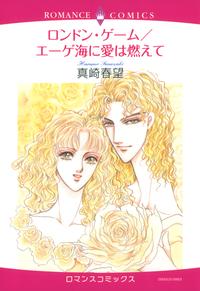
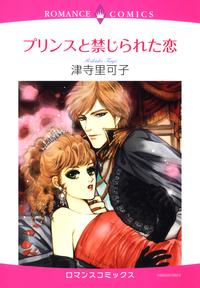
Romance Manga from jmanga.com: The London Game and Forbidden Love With a Prince

November 21, 2012 by Anna N

I was hoping to kick off the new incarnation of Manga Report with a triumphant series of reviews this week. Unfortunately I have a horrible cold and am really only capable of communing with my roku box and knitting scarves. But! There is a certain type of manga that I can enjoy when I am too incoherent to actually follow a plot very well, and that is romance manga! Because the plots are so predictable that even someone loopy on cold medication can follow everything without getting lost and the art is often pretty enough to distract me from my kleenex-riddled misery. Romance manga from Ohzora are usually amusing, because they are very similar to Harlequin manga adaptations, but usually the art is much more consistent and well-executed. Both of these titles are available from jmanga.com.

The London Game by Harumo Sanazaki

The London Game

This is the story of Maximilian Rochefort, a commoner with an impressive fortune and equally impressive eyebrows, and Eleanor, the unmarried only princess of a tiny European country that has fallen on hard times. He proposes a game to her – she’ll convince him that the royal family is worth saving and he’ll rescue her. Maximilian and Eleanor knew each other briefly several years ago, and a party at a country house provides an opportunity for them to spend some more time together despite Maximilian’s antagonistic attitude. Unfortunately there are groups of other rich social climbers hanging around. Maximilian quickly determines that Eleanor’s country is basically auctioning her off to the highest bidder, and she’s utterly unaware of what is happening around her. Maximilian asks if she’s ever watched the news or read a tabloid and Eleanor says that her only reading material is “the front page of the Financial Times” because her father has always encouraged her to make appearances at charity functions instead of learning about current events. Maximilian yells “Are you an idiot?! It should be a crime to grow up this naive and unsullied! Think a little bit about who you are!” I found this scene very amusing, because all too often heroines in romance manga are idiots and no one calls them on it. Eleanor grows up a little bit and Maximilian stops acting aggressively petulant. Sanazaki’s art is detailed, lush, and a little bit stylized which is exactly the type of illustration I tend to look for from romance manga. I enjoyed the backup story about a vengeful ex-boyfriend “Flames of Love in the Aegean Sea” much less because it was a bit too rapey (in the old 1980s romance novel sort of way) for me.

Forbidden Love With a Prince by Rikako Tsuji

Forbidden Love With a Prince

This was a fun single volume story about an aspiring actress named Sherry who is studying in a tiny European country (there are so many of those in romance manga) when she has an encounter with a handsome yet slightly weird young man named Ernest at her part-time job working in a cafe. He tries a slightly cheesy pickup line on her and she dismisses him. They meet in a park and Ernest woos Sherry in the undercover way commonly practiced by princes of tiny European countries who don’t wish to reveal their royal natures to their crush objects. Ernest and Sherry’s dating activities include foiling bank robberies and accidentally getting handcuffed together. Sherry’s career begins to take off and Ernest vanishes from her life. When Prince Ernest attends Sherry’s new play, she finally realizes who he is. Sherry then has to make a decision – should she continue with her career or become a queen? Tsuji is very good at portraying facial expressions and body language, and it was particularly interesting to see the way Ernest is open and enthusiastic when he’s undercover and then turns much more stiff and formal when he’s in his role as a Prince. The story took up the whole volume of the manga, and I was amused to see that there were little touches with character introductions which highlighted the possibility of a number of spin-off stories featuring Ernest’s friends and relatives.

Romance manga might not be great literature, but it is the perfect thing sometimes when one wants to be diverted and distracted by the spectacle of pretty people falling in love. Both of these volumes are good examples of the genre, and I’m glad that Jmanga.com has stepped up to translate so much romance manga in recent months.

Electronic access provided by the publisher.

Filed Under: MANGA REVIEWS, REVIEWS Tagged With: jmanga.com, ohzora

It Came from the Sinosphere: You Are the Apple of My Eye (film)

November 20, 2012 by Sara K. 3 Comments

A bunch of high school boys are looking at the same thing

The Shen Chia-yi fan club

You Are the Apple of My Eye is one of the most popular novels and, more recently, one of the most popular Taiwanese movies of the last ten years. The Mandarin title ‘Nà​ Xiē Nián,​ Wǒ​men Yī​qǐ Zhuī​ de Nǚ​hái’ ​​​​(那些年,我們一起追的女孩) roughly means “Those Years, The Girl We Pursued Together,” and I think that’s a more accurate description of this story.

The Story

The story starts with a senior high school student, Ko Ching-teng, in Changhua. Changhua is to Taiwan as Indiana is to the United States, in other words, a place generally not known to people outside of Taiwan that is noted for … not being very interesting (the tourist town of Lukang nonwithstanding).

Ko Ching-teng head is lying on his desk at home

Ko Ching-teng and all his buddies have a crush on the same girl, Shen Chia-yi. The story is basically about the progression of Ko Ching-teng’s relationship with Shen Chia-yi in senior high school, college, and afterwards.

About Giddens Ko

So, I’ve talked about Giddens before, but considering that this is one the most popular novels he ever wrote *and* he is the director of this movie, I think it’s time to talk more about him.

A bunch of ... monks? ... collapsing in front of a Buddha at night

This is what a Giddens high school romance looks like

Last time, I talked about one of Giddens’ quasi-wuxia stories. Well, in addition to writing quasi-wuxia, he also writes high school romance. That in itself is rather admirable.

Notice the “Ko” in “Giddens Ko.” It’s the same as the “Ko” in “Ko Ching-teng.” “Giddens” of course is a pen name; his name in real life is … Ko Ching-teng. That’s right. Though this is labelled as fiction, the novel is basically a memoir (though I don’t know to what extent it is accurate and to what extent Giddens has changed things for entertainment purposes).

This is not going to be the last time I talk about Giddens, so I think that’s enough for now.

Novel vs. Movie

It’s striking just how different the novel is from the movie. I think this is actually a good thing. I can’t really imagine the novel working well as a movie, and most of the changes do make the story more cinematic.

First of all, the time frame of the movie is shorter than the novel. The novel starts when Ko Ching-teng is 12 years old, the movie … I’m not clear, but at the earliest the movie starts when Ko Ching-teng is 15 years old.

The movie focuses a lot on juvenile humor, and depicts Ko Ching-teng as your everyday class clown. The novel is much more centered on nostalgia, and the force of Ko Ching-teng’s thoroughly geeky personality is much more apparent. For example, the novel drops references to Windows 3.1 and TV shows which were popular in Taiwan in the early 1990s, all absent from the movie.

Somebody is reading the Taiwanese Edition of Dragonball

In the movie, Shen Chia-yi tutors Ko Ching-teng in English (well, not just English, but the movie focuses on the English). In the novel, IIRC, it says that that Chinese and English were the only subjects in school that Ko Ching-teng actually got good grades in because he was destined to become a novelist. Shen Chia-yi had to prod him into studying other subjects.

In fact, there are lots of changes between the novel and the movie. What doesn’t change is the main idea. And that’s the point. Anybody (who can read Chinese) who wants the novel can read the bloody novel. If communicating the main idea—that first love is valuable even if it doesn’t last—is what’s important, then the movie is actually rather faithful.

Look! It’s a Pingxi Sky Lantern!

The three main towns in the Pingxi District—Shifen, Pingxi, and Jingtong—are some of the most touristy towns in Taiwan. They are supposed to represent an idyllic rustic Taiwanese town (if you want to visit the area but without the hordes of tourists, I suggest visiting the little village of Lingjiao, between Shifen and Pingxi, which has some nice stuff, and is much quieter). Of course, my favorite town in the Keelung valley is Houtong, which is finally getting discovered (I don’t know whether to be happy or sad about that).

Ko Ching-teng and Shen Chia-yi walk the train tracks of Jingtong

These are the train tracks right outside Jingtong’s quaint Japanese-era train station. If you’re seen the idol drama Devil Beside You (adapted from the manga The Devil Does Exist), then you might have noticed that the main characters also spend some time in Jingtong.

One of the most famous things about the Pingxi District is their custom of launching sky lanterns, in particular during the Lantern Festival (an island-wide celebration). Many tourists choose to launch their own sky lantern when they visit.

Ko Ching-teng and Shen Chia-yi launch a sky lantern

Now, I have been to the sky lantern festival in Shifen, and to be honest, I think it’s overrated. But my main objection to the sky lanterns is the environmental toll. The Pingxi district is a great place to go hiking—both for people who like easy strolls and people who like strenuous treks on knife-edge ridges—and the woods are filled with fallen lanterns. Made out of plastic. I think they should, at the very least, use some compostable material to make the lanterns, and if that makes it a lot more expensive, so be it. If the tourists don’t want to pay for it, then they can pass.

Of course, when I see this, I think about how kitchy this tradition has become, as well as the woods filled with discarded plastic. But in the context of the movie, it’s actually a nice symbol of the characters’ hopes.

About that Juvenile Humor

Two high school boys masturbate in class.

The boys are having fun in class (notice where their left hands are).

I have a confession to make.

I actually like the humor in this movie. Yes, even though much of it revolves around masturbation and erections and other sexual subjects.

But it works.

It works because it’s authentic. Giddens isn’t using the humor just to score lafs. This is a movie about the transition from adolescence to adulthood, and 1) many adolescents and young adults spend a lot of time masturbating and thinking about sex and b) it’s really awkward, and sometimes humor is the best way to talk about something awkward.

Why I Have Trouble Relating to the Movie

Shen Chia-yi is mad at Ko Ching-teng

I didn’t have a “Shen Chia-yi” in my teenage years. There was nobody who I waxed romantically about even 10% as much Ko Ching-teng does about Shen Chia-yi. If I made a list of the things that I was most preoccupied with during my teenage years, “romance” would not make it to the top ten (likewise, the things that would appear in my top five don’t seem to be so important to Ko Ching-teng, at least not in this story). There is such a disconnect between my experience as a teenager and Ko Ching-teng’s experience as shown in both the novel and the movie, that I get the feeling that this story is not for me.

But that’s okay. Not all stories have to be about me. And the popularity of both the novel and the movie prove that it does resonate with a lot of people.

Availability in English

This movie is available on DVD with English subtitles.

Conclusion

Everybody I have asked says that the novel is better than the movie. I cannot argue with them. The novel gives a much deeper and more thorough description of Ko Ching-teng’s feelings, makes it easier to understand why Ko Ching-teng and Shen Chia-yi are attracted to each other, makes Ko Ching-teng seem more like a unique person, and makes it clearer why Ko Ching-teng and Shen Chia-yi are not actually a good match. I think MJ would like the novel more that the movie too.

Yet I happen to like the movie more than the novel.

I respect the novel. But as I said earlier, it is not easy for me to relate to this … and there is page after page after page about Ko Ching-teng’s feelings.

The movie puts more emphasis on humorous hijinks. It’s more entertaining, and it’s much faster. And the movie still manages to get the main point across. Whee!

Next Time: North City, Book of a Hundred Drawings (manhua)


Sara K. thinks that the popularity of Giddens is evidence that Taiwan is a society of geeks. It’s probably more accurate to say the subset of the population that actually reads novels is extremely geeky, but even so, Giddens’ works have a much higher geek factor than the vast majority of bestsellers in the United States.

Filed Under: It Came From the Sinosphere Tagged With: Giddens, You Are the Apple of My Eye

Young Miss Holmes, Casebook 3-4

November 20, 2012 by Sean Gaffney

By Kaoru Shintani. Released in Japan as “Christie High Tension” by Media Factory, serialized in the magazine Comic Flapper. Released in North America by Seven Seas.

The second omnibus volume of Young Miss Holmes, I will admit, did not thrill me quite as much as the first. Shintani is starting to have more difficulty inserting Christie and company into the Holmes stories, and I suspect, given there’s 3 volumes (one omnibus) to go after this that he might veer off the canonical road soon. He also has that odd habit that most manga writers who started in the 70s and 80s do of inserting humor – usually quite low humor – at the oddest points, something he no doubt got from Tezuka (you can see traces of this in Adachi and Takahashi’s writing as well). That said, this is still a lot of fun, with Christie being incredibly precocious while avoiding cloying qualities, and some much needed backstory for her two maids.

The first half of the book is taken up with The Hound of the Baskervilles, quite possibly the most famous of the Holmes stories. There are no attempts to alter the outcome of the story such as we saw before, and it spins out (with much compression) as expected. As I noted above, we get lots of opportunities to see Christie be brilliant, making deductions and logical leaps. At the same time, though, she has the patience and drive of a 10-year-old girl, and her maids realize this – though they’re still not able to corral her very well. And, as Shintani knows what’s popular and what isn’t, we get some nice opportunities of seeing Nora using her whip, including a battle with the Hound (which doesn’t go well, but luckily she has an unseen rescuer.) And again, thankfully, Holmes arrives at the solution faster than anyone else, including Christie.

The second story adapted here is The Adventure Of The Six Napoleons, which has a solution that is obvious enough that Shintani can easily write Holmes out of the tale and have Christie solving everything. This also reintroduces Detective Dexter of Scotland Yard, who we briefly saw in Hound, and who pops up every now and then from now on. He has an immediate attraction to head maid Ann Marie, something Christie notes and is quick to take advantage of. Again, the case plays out much like the original, but makes for a nicely entertaining adaptation.

A brief short story, The Memories of Nora, follows, and is what it sounds like: an original story by Shintani showing Nora’s life to date and how she became a maid at the Hope Estate. It’s not a pleasant childhood to say the least (and has some annoying ‘evil gypsies’ stereotypes to boot), but lets us see that Nora has no regrets as to where she’s ended up.

The final Holmes story adapted for Christie is The Five Orange Pips. Wisely, Shintani leaves the main mystery to Holmes, if only so that Christie doesn’t have to feel responsible for the fallout. Christie’s plot rests with Ann Marie, who has a complete freakout when she hears about the pips. As with most modern North American readers, the solution is far more obvious these days – we know what KKK stands for – so the storyline concentrates on Ann Marie’s own tragic childhood, and her change from a sweet little child to an instrument of God’s vengeance (as Holmes rather awkwardly puts it).

I must note once again that Seven Seas’ All Ages rating for the book is entirely inappropriate, in my opinion. Leaving aside the brief non-sexual shots of underage nudity, there’s simply a giant pile of violence here, including lingering shots of corpses with their throats slit, as well as a young girl killing an entire mansion full of people. I get that ratings can sometimes drive sales, and that it’s very hard to sell books starring 10-year-old cuties to adults. But come on.

That said, I am very grateful to Seven Seas for bringing out this series, which is a fast-paced and fun mystery series with a cute and sharp as a whip protagonist, and can’t wait (though I will have to, as it’s not out till September 2013) for the conclusion. And note with amusement that even Christie herself has started to call her maids ‘Herculean’.

Filed Under: REVIEWS

Bookshelf Briefs 11/19/12

November 19, 2012 by Sean Gaffney, MJ and Michelle Smith 7 Comments

This week, Sean, MJ, & Michelle look at recent releases from VIZ Media and Yen Press.


Blue Exorcist, Vol. 8 | By Kazue Kato | VIZ Media – For the most part this is a typical Jump battle volume, meaning there’s lots of fighting and enemies vanquished, but not as much to really mention in a review. There’s enough to really enjoy, though. Shiemi showing her gumption in commanding her familiar to help her save Izumo; Renzo having to face up to the fact that doing the right thing is really annoying and hard; and all of Rin and Bon’s fight against the Impure King (who is truly disgusting adn foul, as you would expect from a giant demonic fungus). But it’s Yukio who gets the most attention here, as he’s dealing with the traitor Saburota, who knows just how to get under his skin and hit his weaknesses. Just as Rin feels his brother outshines him, Yukio feels the same. Hopefully it won’t prove to be a problem in future, but the foreshadowing isn’t looking good. -Sean Gaffney

Kamisama Kiss, Vol. 11 | By Julietta Suzuki | VIZ Media – Volumes like this remind me why I keep reading Kamisama Kiss even when it seems that the plot is content to coast along without resolving much. There’s just strong characterization, particularly of the heroine, Nanami. We already knew her father was a scumball from the opening chapter, but the flashbacks we get here show a truly tragic childhood, with the love of her mother (who dies early, in what is hinted to be part of a kamisama’s curse) being one of the few bright spots… and these days Nanami can’t even remember her face. It’s a sign of her strong will that she’s grown up to be the determined young woman she is today, and we see that determination in the second half, where she goes toe to toe with some nameless demons. Cute, intelligent, plucky heroines. What’s not to like? -Sean Gaffney

Kimi ni Todoke: From Me to You, Vol. 15 | By Karuho Shiina | VIZ Media – Although the friendship between Sawako, Chizu, and Ayane has been a central focus of the series since the beginning, at this point in the story it seems like the three of them have truly become co-leads, as they each face their own romantic problems in this volume. Sawako is troubled by a new distance in her relationship with Kazehaya; Ayane is possibly beginning to feel something for Kent, though she insists she’s not as great as he thinks she is; and Chizu is panicking because Ryu’s confession of love means the end of the sibling-like relationship they’ve shared since childhood. There’s a long and wonderful flashback to the two of them as kids, proving that she’s always been the one who understood him best, culminating in a surprising display of feeling from Ryu. Honestly, it’s giving me goosebumps just typing about it. How can I possibly wait until April for the next installment?! – Michelle Smith

March Story, Vol. 4 | By Kim Hung-Min and Yan Kyung-Il | VIZ Media – After a very exciting and beautifully-crafted third volume, volume four of March Story focuses on March’s secret gender. On the upside, this plays out much differently than in the all-too-common gender-bending comedy. On the downside, it seems to be part of some kind of grand, coordinated effort to boost the series’ volume of fanservice, which is suddenly in full bloom. The artists pull out all the usual tricks in this volume, including ill-fitting clothing that can’t quite keep from falling off and strategically timed gusts of wind. From this reader’s perspective, it reads as distracting and unnecessary pandering that is below these artists’ abilities, but perhaps it’s just a stern reminder that I’m not the series’ demographic after all. There’s enough genuine substance still in this volume to keep my attention, but I can’t deny that I found it disappointing. – MJ

The Melancholy of Suzumiya Haruhi-chan, Vol. 6 | By Puyo and Nagaru Tanigawa | Yen Press – The goal of this series is to be as silly as possible. And as logn as that goal is in sight, it doesn’t matter how it achieves it. This time around, we get a discussion of fanservice, the continued humiliation of Mori-san, a far larger role for Kunikida than he ever gets in the main series (though he may not be too happy with why that is), and Ryoko and Kimidori-san teaming up to throw Yuki a school festival in the privacy of their own apartment. But the best chapters, in my opinion, are the two that mock the cliched Japanese over-dramatic plotlines, as we see Haruhi discovering she has to transfer and saying goodbye to everyone, followed by a life-or-death struggle to see who’s strongest on Children’s Day. Neither story has an ending, but endings don’t matter. Are they silly. Yes indeed. -Sean Gaffney

Pandora Hearts, Vol. 12 | By Jun Mochizuki | Yen Press – Pandora Hearts doesn’t have the most coherent plotting at the best of times, but volume twelve is more disjointed than most. There’s a lot of exposition here, as the focus shifts towards finding the seals (and their keys) that bind villainous Glen Baskerville and investigating a mysterious, murderous contractor known as “the headhunter.” We go from scenes of Vincent Nightray scheming to seduce Oz’s sister, to Oz’s uncle seeking to dispel the gloomy atmosphere at Pandora by hosting an outdoor tea party, to the group doing some snooping in disguise (with Oz in drag), to everyone attending a fancy dress banquet at the home of a creepy cult leader. This makes for some nice moments—I’m especially fond of the contrast between the female-filtered view of gussied-up Gilbert and the reality—but on the whole, the volume feels rather scattered. That’s not enough to keep me from recommending it, though! – Michelle Smith

Filed Under: Bookshelf Briefs

Cross Game, Vol. 8

November 19, 2012 by Sean Gaffney

By Mitsuru Adachi. Released in Japan in 2 separate volumes by Shogakukan, serialized in the magazine Shonen Sunday. Released in North America by Viz.

And so, at last, after two delays (this was supposed to be out in July), we have the final volume of Cross Game. And perhaps the final Adachi in North America or a while, though I hope I’m wrong. If it is the last, though, at least we got this, a terrific story which both encompasses exactly what Adachi does best and also plays with his own cliches. Plus it’s one hell of a final game.

There’s a lot of flashbacks and flashforwards throughout the entire volume, as despite this being the big winner goes to the Koshien game, there’s a lot on everyone’s mind. Wakaba, her dream for Ko and Akaichi, and Akane’s surgery, all of which we are aware of. And Ko and Aoba’s conversation before the game, which we only get half of. Though I think we might be able to guess, especially given that Ko prefaces it by asking if he can lie. The flashbacks are all revelatory even as we reach the final volume. The old man who remembers Ko throwing baseballs against his wall with tears in his eyes is touching and sad, then we get Aoba’s own memories, as she catches him doing it. The manga has made it seem at times as if Ko coasts and doesn’t put in the work – this shows that he’s been doing it all along, but it’s a secret. Or a lie. Take your pick.

Some folks have noted they felt that the Akane plot was superfluous, but as I’ve stated before, I think that Adachi did that deliberately to contrast Aoba, so unlike his usual heroines, with Akane, who’s a carbon copy of the type he normally writes. Akane’s quite never-give-up attitude towards her surgery, her waking up to the satisfaction of seeing Akaishi hit an RBI for the first run of the game, and just generally being sweet. This is probably another reason why Cross Game was the perfect license for North America – we are a land which favors the Aobas of the world.

The game itself is a pitcher’s duel, of course, and Ko gets to show off both his batting and pitching chops. It’s the perfect game for a manga narrative (despite Aoba literally walking over to Adachi to suggest a plot at one point – it’s nice to see the 4th wall being broken right to the end), and the outcome is satisfying on both sides, even if one finds it bittersweet. And all that’s left is the realizations – not just Junpei and his marriage proposal/bet, but also Aoba, who understands as Ko walks towards her that Ko and Aoba were able to satisfy Wakaba’s dream. It’s a very emotional moment, and played as one.

But life goes on, and the final chapter is a scene of everyone getting ready for another trip – even if things have changed between the leads. Ko has always described himself as a liar, but it’s Aoba who gets the last word, with the biggest lie she’s ever told Even after she wonders to herself why she and Ko have to be so alike. A fitting end to a terrific series.

Filed Under: REVIEWS

Strobe Edge Volume 1 by Io Sakisaka

November 18, 2012 by Anna N

Strobe Edge Volume 1 by Io Sakisaka

I’m always curious when Shojo Beat announces a new title, and from the brief description I’d read of it Strobe Edge sounded appealing. While some of Shojo Beat’s recent offerings (Jiu Jiu and Devil and Her Love Song) have a bit of an edgy take on the genre, Strobe Edge is more of a straightforward high school love story.

Ninako is the heroine of Strobe Edge, and she is almost painfully naive. She blindly believes whatever salespeople tell her, and when she consults with her friends at school she allows their opinions to override her own feelings. She has a perpetually surprised look in the first chapter of the manga. As Ninako deals with her first romance, she begins to grow in awareness. All of Ninako’s friends expect that she’ll be going out with her childhood friend Daiki any day now. Daiki seems like a nice, boy-next door type who constantly finds excuses to check up on Ninako at school, unaware of the torrent of feminine gossip that he’ll unleash as soon as he disappears. Ninako cares for Daiki deeply, but she doesn’t even contemplate having any romantic feelings for Daiki until her friends tell her that she likes him. Ninako’s credulity is a bit hard to take, but Sakisaka manages to portray her personality as so fresh and innocent, I was willing to give it a pass in this first volume.

Ninako’s friend-determined destiny with Daiki is derailed when she keeps noticing the main crush object for all the girls, Ren Ichinose. Ren is cool and detached, so of course he’s the most popular boy in school. Ninako manages to have a conversation with Ren when he accidentally breaks her cellphone charm and then brings her a girly butterfly one as a replacement. She treasures it even though she’s not usually into super-feminine things. Daiki notices Ninako’s heightened interest in Ren and asks her if she’s a big fan of his, and she explains it by saying that she views him as if he was a model in a magazine, not someone she likes. But as Ninako keeps encountering Ren randomly on the subway back from school, she begins to see that he’s actually a very kind person instead of the aloof idol she envisioned. When she has a sprained ankle, he pretends to be asleep and deliberately misses his stop so he can walk her home. This is shoujo manga though, so of course there are plenty of additional complications for Ninako to deal with as she discovers her first love.

Sakisaka’s art is expressive and assured, and while I sometimes got a little tired of Ninako’s surprised face, she does certainly look like a sympathetic shoujo heroine. The character designes for the main and supporting cast are varied, making it easy to distinguish between all the characters. Sakisaka wrote at the begining of the volume that her goal in this manga was to capture “the sensation you feel in the window of time between one event and another,” and I think that Strobe Edge pulls it off. Ninako’s inner thoughts gradually become more self aware, and Sakisaka is very good at portraying the excitement and agony of accidentally sitting close to one’s crush object. One thing that I appreciated in Strobe Edge was that it was relatively angst free in terms of having evil protagonists. Daiki starts acting a bit erratic, but both he and Ren seem like basically good people. Even though Ninako’s friends have been pushing their own ideas of what her first relationship should be, when she makes a decision they are generally supportive. Reading a manga with basically nice characters just seems relaxing and refreshing at this point. Of course this is a 10 volume series, so I’m expecting an evil male model or an evil secret fiance to show up at some point. For now though, I’m going to be checking out this series with the hope that Ninako’s journey to self-awareness continues.

Review copy provided by the publisher.

Filed Under: MANGA REVIEWS Tagged With: Strobe Edge

  • « Go to Previous Page
  • Page 1
  • Interim pages omitted …
  • Page 408
  • Page 409
  • Page 410
  • Page 411
  • Page 412
  • Interim pages omitted …
  • Page 554
  • Go to Next Page »
 | Log in
Copyright © 2010 Manga Bookshelf | Powered by WordPress & the Genesis Framework