• Skip to primary navigation
  • Skip to main content
  • Skip to primary sidebar
  • Home
  • About Us
    • Privacy Policy
    • Comment Policy
    • Disclosures & Disclaimers
  • Resources
    • Links, Essays & Articles
    • Fandomology!
    • CLAMP Directory
    • BlogRoll
  • Features & Columns
    • 3 Things Thursday
    • Adventures in the Key of Shoujo
    • Bit & Blips (game reviews)
    • BL BOOKRACK
    • Bookshelf Briefs
    • Bringing the Drama
    • Comic Conversion
    • Fanservice Friday
    • Going Digital
    • It Came From the Sinosphere
    • License This!
    • Magazine no Mori
    • My Week in Manga
    • OFF THE SHELF
    • Not By Manga Alone
    • PICK OF THE WEEK
    • Subtitles & Sensibility
    • Weekly Shonen Jump Recaps
  • Manga Moveable Feast
    • MMF Full Archive
    • Yun Kouga
    • CLAMP
    • Shojo Beat
    • Osamu Tezuka
    • Sailor Moon
    • Fruits Basket
    • Takehiko Inoue
    • Wild Adapter
    • One Piece
    • After School Nightmare
    • Karakuri Odette
    • Paradise Kiss
    • The Color Trilogy
    • To Terra…
    • Sexy Voice & Robo
  • Browse by Author
    • Sean Gaffney
    • Anna Neatrour
    • Michelle Smith
    • Katherine Dacey
    • MJ
    • Brigid Alverson
    • Travis Anderson
    • Phillip Anthony
    • Derek Bown
    • Jaci Dahlvang
    • Angela Eastman
    • Erica Friedman
    • Sara K.
    • Megan Purdy
    • Emily Snodgrass
    • Nancy Thistlethwaite
    • Eva Volin
    • David Welsh
  • MB Blogs
    • A Case Suitable For Treatment
    • Experiments in Manga
    • MangaBlog
    • The Manga Critic
    • Manga Report
    • Soliloquy in Blue
    • Manga Curmudgeon (archive)

Manga Bookshelf

Discussion, Resources, Roundtables, & Reviews

Features & Reviews

Dorohedoro, Vol. 13

August 21, 2014 by Sean Gaffney

By Q Hayashida. Released in Japan by Shogakukan, serialization ongoing in a Shogakukan magazine to be named later. Released in North America by Viz.

Most of the recent volumes of Dorohedoro have consisted of a lot of what readers are looking for with the series (gore, comedy, the odd gyoza mention) along with small dabs of plot and one big thing that everyone will remember after they finish the book. Last time it was Nikaido’s flashback, which was showing us how traumatized she was as a child and the circumstances that led to her use (and misuse) of her time magic. And I’m pretty sure that after Volume 13, everyone will be discussing what happens in the final moments with Kai and Natsuki. But let’s try to mention a few other things first.

dorohedoro13

Given the traumatic nature of what happens at the end of this volume, I knew we would have some humor in here somewhere, and a lot of it comes from seeing genderbent Nikaido, who has to disguise herself using magic to enter En’s mansion, now taken over by the Cross-Eyes. In her male body, she’s still her regular self, and is I believe what anime fans describe as a “keet”. This leads to more fun when she runs into Kai/Caiman, who is still having memory issues and has difficulty dealing with Nikaido being so informal. Particularly when the spell wears off and she transforms back into her buff, stacked, naked body in front of him. (This is a strong volume for fans of Dorohedoro’s fanservice – Nikaido fights as a man bare-chested for a while, and we also see Noi naked after her recovery.

Yes, Noi and Shin have been rescued from being mushroom’d at the end of the last volume. The fact that there’s yet another mysterious En family member with tremendous powers is played for laughs here – this man is able to become invisible, but does too good a job, so people forget he’s there after a while. She’s able to use smoke to heal Shin (via a full-on kiss, which I think startles Shin more than anything else) and they’re back in action. Actually, a great deal of this volume is the En family regrouping, and trying to resurrect their leader. Hasn’t happened yet, though.

And now let’s talk Natsuki. She’s been one of the most optimistic, hopeful and fun characters in the last few volumes, more of a mascot than a real threat. That changes here when a crisis shows off her repressed magic, which has almost godlike defensive capabilities. She’s delighted, but the rest of the cross-eyes are terrified – they know what Kai does to people with strong magic, and immediately plot to get her away from him. But in the end this is *not* particularly an optimistic, hopeful manga, and Natsuki is not one of the main characters. And thus, right before she leaves she runs into Kai, and gets brutally torn apart, in one of the goriest bits of the entire volume. And unlike En, I’m pretty sure she won’t be coming back. Kai is scary. I miss Caiman.

I expect the fallout from this will take up a chunk of Vol. 14, along with Nikaido’s continued practice of her magic and the search for En’s devil-shaped tumor. In the meantime, another fun yet brutal volume of Dorohedoro, which even in its most confusing moments still manages to be exhilarating through sheer verve.

Filed Under: REVIEWS

The World of the Shining Prince: Court Life in Ancient Japan

August 20, 2014 by Ash Brown

The World of the Shining PrinceAuthor: Ivan Morris
Publisher: Kodansha
ISBN: 9781568360294
Released: June 1994
Original release: 1964

Several years ago I read the entirety of The Tale of Genji, a novel written by Murasaki Shikibu in the eleventh century. It was a pretty big undertaking, but absolutely worth it. I love the novel. Ever since finishing The Tale of Genji for the first time, I’ve been meaning to read Ivan Morris’ The World of the Shining Prince: Court Life in Ancient Japan. The volume takes its title from the hero of The Tale of Genji who is referred to as the shining prince due to his exquisite visage and exceptional character. In many ways, The World of the Shining Prince serves as a companion to The Tale of Genji as Morris explores the historical reality of the aristocracy of Heian-era Japan. The World of the Shining Prince was originally published in 1964. Beginning in 1994, later editions of the work also include an introduction by Barbara Ruch. I recently read and was rather impressed by another of Morris’ works, The Nobility of Failure: Tragic Heroes in the History of Japan, and so was looking forward to reading The World of the Shining Prince even more.

In addition to the introductions, preface, appendices, bibliography, and topical index, The World of the Shining Prince examines a number of different aspects of tenth-century Japan, Heian court society, and The Tale of Genji within it ten chapters. Morris begins with a broad overview of the era in the first chapter, “The Heian Period.” Though the Heian Period lasted from 782 to 1167, The World of the Shining Prince largely, but not exclusively, focuses on the 900s. The next chapter, “The Setting” looks at Heian architecture, city planning, and geography. From there Morris delves into more detailed analysis of Heian culture in the chapters “Politics and Society,” “Religions,” and “Superstitions.” Next, attention is specifically turned to the Heian nobility and aristocracy. “The Good People and Their Lives” details day-to-day activities, amusements, and ceremonies while “The Cult of Beauty” looks at the particular aesthetics of the era. The eighth chapter, “The Women of Heian and their Relations with Men” outlines household and family structures as well as the place of romantic liaisons. The World of the Shining Prince concludes with chapters devoted to Murasaki Shikibu and to The Tale of Genji itself.

Although written more than five decades ago, The World of the Shining Prince has held up remarkably well. Admittedly, it is nearly impossible to write a completely objective cultural study–Morris’ analysis is informed and influenced by his own cultural subjectivity. In the half-century since The World of the Shining Prince was written, Western thought and scholarly approaches to cultural analysis have also changed. (For example, as Ruch mentions in her introduction, views on gender politics and the relationship between religion and superstition has shifted over the years.) The World of the Shining Prince is a product of its time, but that doesn’t at all diminish its value as a resource on Heian-era Japan, and more specifically on Japanese court life in the tenth century. Additionally, the volume is written with a general audience in mind. It is quite approachable, even for the average reader, and is engagingly written. Granted, the subject mater of The World of the Shining Prince is fascinating to being with.

Although Morris does provide some important general context within which he situates The World of the Shining Prince, the volume’s scope is relatively narrow, concentrating on a very specific part of Heian society. However, this specificity also allows him to explore that subject from several different perspectives. Information about the Heian Period is somewhat limited, especially in regards to the lower classes, which is another reason that The World of the Shining Prince is so focused on the era’s nobility. The Tale of Genji is a major source for Morris’ study of the Heian-era Japan, as are other works of contemporary literature–The Pillow Book of Sei Shōnagon especially features prominently–as well as diaries and court records from the time period. The World of the Shining Prince is an extremely informative and absorbing work. It’s more than just a companion to The Tale of Genji and reaches beyond its literary connections. The volume should appeal to anyone interested in learning more about classical  Japanese history.

Filed Under: REVIEWS Tagged With: Ivan Morris, kodansha, Kodansha International, Murasaki Shikibu, Nonfiction, Tale of Genji

Bookshelf Briefs 8/18/14

August 18, 2014 by Anna N, Sean Gaffney and Michelle Smith 1 Comment

This week, Sean, Anna, & Michelle look at recent releases from Viz Media and Seven Seas.

alice-nightmareAlice in the Country of Clover: Nightmare Trilogy, Vol. 1 | By QuinRose and Job | Seven Seas – Another month, another Alice book. This one has, as you may imagine, Nightmare as the love interest, and mostly delves into Alice being upset and angry that people are afraid of him, and trying to find ways to get them to see the real man. Who is still a giant loser at times, so he’s not helping. Also not helping is the art in this book, which is some of the weakest I’ve seen in the entire series. That does not bode well given this is the first of three. On the bright side, Joker shows up, continuing to force Alice to truly examine her heart and feelings (big sister doesn’t come into play here). There’s also some amusing humor, mostly at Nightmare’s expense. Still, in the end this is one of the weaker entries in the Alice books. – Sean Gaffney

blackrosealiceBlack Rose Alice, Vol. 1 | By Setona Mizushiro | Viz Media – If I were to tell you that this is a shoujo series about vampires, you might think that you’d know what to expect. It’s not, after all, a unique premise. Except that’s exactly what Black Rose Alice is: unique. Dimitri Lewandoski is an ambitious tenor in Vienna in 1908 when he is killed in an accident and ultimately brought back to life by a vampire master who has entrusted him with the procreation of the species. The horror and the “colonization” spur a personality shift in Dimitri, and by the end of the volume he’s striking a bargain that might reanimate the body of his true love, lifeless for a hundred years. That’s pretty strange stuff, and I haven’t even mentioned the bugs! Happily, it’s not too strange and when I finished the volume I was left with a profound sense of “What? That’s it?! I want more!” And that is perhaps the highest recommendation I can give. – Michelle Smith

nura22Nura: Rise of the Yokai Clan, Vol. 22 | By Hiroshi Shiibashi | Viz Media – We’ve just finished a major fight arc, and are about to head into what will be the final arc, so in a sense this is the last breather volume in the series. Like many breather volumes in shonen fighting series, it feels a bit out of place at times, with both heroes and villains putting all their ducks in a row. We do get to see an extensive battle between Nura and a priest who is upset at a forced sword going to an evil Ayakashi (it’s OK, Nura’s one of the GOOD evil Ayakashi), and an attempt on both sides to unite previously fractured clans. That said, Kana and the rest of the class’s presence has become token, and even Tsurara looks to be left behind for the big fight. Nura is starting to overstay its welcome, so it’s good it will be ending soon. – Sean Gaffney

oresamateacher16Oresama Teacher, Vol 16 | By Izumi Tsubaki | Viz Media – The evil student council in Oresama Teacher is generally surprisingly ineffective, sending agents one by one to take down the public morals club, only to find that the dimwitted delinquents in the public morals club end up befriending their enemy. Here we have more of an orchestrated campaign, as blackmail letters start arriving and picking off the public morals club one by one. Soon only Mafuyu and Hayasaka are left to battle things out with the return of their fiendish faculty mentor Saeki. I see troubled times ahead for Yui, as the wanna be ninja has joined his former masters. Oresama Teacher is always silly diverting fun that pays off for the reader. I was happy to see bancho and his pigeon make an appearance in this volume as well. This is the only long-running comedy series that has managed to hang on to my full attention, and I enjoy the ridiculous situations and occasional bursts of violence featured in each volume. – Anna N

toriko23Toriko, Vol. 23 | By Mitsutoshi Shimabukuro| Viz Media – It’s impressive how even in the middle of what is basically a fight between two opposing sides firing power attacks, Toriko can continue to be all about food. The one thing that gets our heroes to work together and take out the monster this time is hearing that the more damage it takes, the more delicious its flesh will taste. And of course there’s Komatsu, who was given ten minutes to make an antidote simpler to cook, took five minutes, then spent the rest of the time figuring out how to make it tastier. It’s no wonder he seems to have picked up another harem member, this one a nameless cook arriving with Setsuno. The way it deals with food makes Toriko a consistent fun title to read. – Sean Gaffney

Filed Under: Bookshelf Briefs

My Week in Manga: August 11-August 17, 2014

August 18, 2014 by Ash Brown

My News and Reviews

So, as I briefly mentioned in my anniversary post this morning, my partners and I very recently became parents. We all ended up spending most of last week at the hospital; needless to say I was a bit preoccupied. But everyone is happy, healthy, and at home now, so everything’s good. Thankfully, I already had a couple of posts typed up and ready to go. Otherwise, it would have been a very quiet week here at Experiments in Manga since I didn’t get much reading or writing done at all. (For some reason.)

Anyway, I did somehow manage to post two reviews last week! First up was Denise Schroeder’s wonderful, delightful, and charming short comic Before You Go. The review is the latest installment in my Year of Yuri monthly manga review project, which focuses on manga and other comics with lesbian and yuri elements. Also reviewed last week was Jamie Lynn Lano’s memoir The Princess of Tennis: My Year Working in Japan As an Assistant Manga Artist. It’s a very interesting and informative book about the manga industry and Japan. The book can currently be purchased through Sparkler Monthly’s Distro program.

Despite being rather busy last week, I did come across a few things online that made for interesting reading. At Manga Connection, Manjiorin wraps up her Swan review project. The fourth Manga Studies column at Comics forum has been posted, focusing on Ishiko Junzō and gekiga. Joe McCulloch has a piece on the early work of Ryōichi Ikegami at The Comics Journal. Mangabrog has a translation of a conversation between Usamaru Furuya and Inio Asano. Also highly recommended is Comics Alliance’s interview with Vertical’s Ed Chavez.

Quick Takes

Gangsta3Gangsta, Volume 3 by Kohske. As can probably be inferred from the cover, much of the third volume of Gangsta delves into the pasts of Nic and Worick, how they met, and their somewhat complicated relationship with each other. In the process more is revealed about the history of Ergastulum and the Twilights, too. Gangsta is a very violent series. Even when Nic and Worick were young they found themselves surrounded by death in a harsh environment of political turmoil. In the case of Nic, he was being kept by a mercenary group hired to act as bodyguards to Worick’s family; he’s done plenty of killing of his own. He apparently has always been somewhat terrifying. The beginnings of Nic and Worick’s exceptionally close connection are seen in this volume. Neither of them come from a good family situation, both of them are seen as socially unacceptable (Nic because he’s a Twilight, Worick because he’s a bastard son), and both of them are physically abused by those who should care about them. Though they get off to a rough start, the two broken young men are able to find some solace in each other’s company. Nic and Worick fascinate me; I’m glad to have gotten more of their backstory in the third volume. I’ve enjoyed Gangsta from the very beginning and continue to do so.

Love Full of ScarsLove Full of Scars by Psyche Delico. Okay. So, Love Full of Scars is a collection of utterly ridiculous and absurd boys’ love stories. The over-the-top humor certainly won’t be to every reader’s taste, but I loved the volume. Though I largely enjoyed all of the short manga included in Love Full of Scars, my favorite was probably the titular story. (It also happens to be the longest, with several chapters devoted to it and side stories of its own.) Kanda is a high school punk who has a crush on Uesaka, the school’s biggest badass. The problem is that every time Kanda tries to confess his feelings, he ends up picking a fight instead. Fortunately, Uesaka is able to see through all of Kanda’s posing. They’re both delinquents so more often than not communicating with their fists and punching each other in the face helps them to solve their differences. The sex in Love Full of Scars, when and if it actually happens, usually ends up being rather awkward and incredibly earnest at the same time. The stories in the collection generally avoid the stereotypical seme/uke dynamics of the boys’ love genre. There is also a bit of a fixation on facial and body hair. And, well, pubic hair, too, for that matter. (Granted, that’s mostly for the sake of gag.) The manga is rough, rude, and raunchy, but I found it to be highly amusing and entertaining.

Tonari no Seki-kunTonari no Seki-kun: The Master of Killing Time directed by Yūji Mutoh. The anime adaptation of Takuma Morishige’s manga series My Neighbor Seki had completely slipped under my radar until Vertical announced that it had licensed the manga. My curiosity was piqued, so I decided to watch the anime while waiting for the manga to be released. The anime was an absolute delight; I wish there was more! I’m definitely looking forward to reading the manga next year. The premise of the series is disarmingly simple. Yokoi and Seki sit next to each other in the back of their high school classroom. But instead of studying, Seki occupies himself at his desk in all sorts of ways, messing around with erasers, shogi pieces, knitting, and so on. The scenarios are actually all very imaginative, creative, and elaborate. Try as she might, Yokoi can’t help but be caught up whatever it is Seki is doing, so she doesn’t get much studying done, either. The anime is much more entertaining than I’ve probably made it sound. Each episode is under eight minutes and they are all very funny. There is very little dialogue in the series. Instead, the narrative relies very heavily on Yokoi’s internal monologue. Yokoi’s voice actress, Kana Hanazawa, does a fantastic job with the role–she is exceptionally dynamic and expressive.

Filed Under: FEATURES, My Week in Manga Tagged With: anime, Gangsta, Kohske, manga, My Neighbor Seki, Psyche Delico

Kaze Hikaru Vol 22 and Happy Marriage?! Vol 7

August 16, 2014 by Anna N

Kaze Hikaru Volume 22 by Taeko Watanabe

So much of Kaze Hikaru deals with repressing emotions, since Sei has disguised herself as a boy in order to join the Shinsengumi and Soji has agreed to keep her secret. While Sei and Soji are clearly in love with each other, there’s a long way to go until any actual romance occurs. This volume revolved around so many feelings, as Sei has been newly assigned to Saito’s troop and Saito harbors some suspicions of Sei based on his past friendship with Sei’s brother. Saito has disturbing dreams and isn’t sure what is happening with his involuntary reactions to Sei. Saito finally figures out that Sei is a girl, and his reaction is that he’ll simply maker her quit the Shinsengumi and marry her. When Saito goes to Soji to discuss his plans, Soji encourages the marriage, telling Saito to “Make her happy.” It is interesting how effectively Watanabe explores the points of view of the characters, while Soji cares for Sei the idea of pursuing marriage with her isn’t in his worldview. He’s just going to support her while thinking of her as the man she pretends to be.

Saito’s plan begins to evolve as he sees Sei protect Soji in battle and he realizes that she’s more courageous than most of the men she knows. At the end of this volume, Sei is transferred back to Soji’s troop, where I’m sure Soji’s general feelings of uneasiness and his tendencies to lie to himself will grow even stronger. Kaze Hikaru’s detailed historical setting, clear and attractive art, and compelling story make it one of my favorite Shojo Beat titles. I wish the new volumes came out at a greater rate than once a year, because I think the deliberate pace of the story would reward readers who like to stockpile volumes and read a bunch at a time. I read every volume almost as soon as I get it though!

Happy Marriage?! By Maki Enjoiji

I enjoy reading Happy Marriage?! just because romances set in offices give me a break from all the romances set in high schools that I tend to read just because I am such a shojo manga aficionado. Chiwa continues to work in her new job, but has to deal with one of her former friends still having a crush on her. Hokuto continues to be both busy and remote, and his father is still in the hospital. Chiwa attempts to intervene to bring Hokuto closer to his family, without the results she was expecting. One sour note for me in this volume was Hokuto slapping Chiwa in the middle of an argument. While they fight and work through their issues as always, I’m starting to get a little weary of the relationship dynamic in the book. I’m also a bit more interested in some of the newer Shojo Beat series like Spell of Desire or Black Rose Alice. I’m hoping that the next volume of Happy Marriage is a bit better.

Filed Under: REVIEWS Tagged With: happy marriage, kaze hikaru

The Princess of Tennis

August 15, 2014 by Ash Brown

The Princess of TennisAuthor: Jamie Lynn Lano
Publisher: Jamie Lynn Lano
ISBN: 9781499797527
Released: July 2014

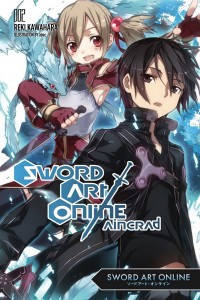
The Princess of Tennis: The True Story of Working As a Mangaka’s Assistant in Japan by Jamie Lynn Lano is just that–a memoir written by someone fortunate enough to live the dream of so many aspiring artists. Very few non-Japanese creators have had the opportunity to work within the manga industry as an assistant or as a lead mangaka. Fewer still have written about their experiences to any great extent. In addition to working as an assistant to Takeshi Konomi (the creator of the exceptionally popular The Prince of Tennis), during her time in Japan Lano was also freelance writer, a columnist for Asahi Weekly, a host for a Japanese children’s television program, and an avid blogger. The Princess of Tennis is based on “Working As an Assistant on The Prince of Tennis,” a series of posts which can be found on her blog Living Tall in Japan. (Lano is over six feet tall, so the site is aptly named.) I had previously read some of Lano’s story online, but was happy to see it collected and expanded upon in book form with The Princess of Tennis.

After graduating with a degree in media arts and animation, Lano moved to Japan where she taught English for a few years. In 2008, Konomi Takeshi put out a call looking for assistants for a new manga series. Unlike many other mangaka, he was also considering applications from artists who had little or no experience in the industry. Lano was a huge fan of his series The Prince of Tennis and considered Konomi to be one of her idols. And so, after some encouragement from her friends, she applied for the position, never thinking that she would actually be hired. But she was. And she ended up working with Konomi, his editors, and a small group of other assistants for more than a year. (And on the sequel to The Prince of Tennis, no less!) It was a dream come true for Lano, but as enthusiastic as she was the job wasn’t always a easy. Working as an assistant on a series that she loved certainly had its perks, but it was also a challenging and exhausting experience that required long, grueling hours.

The Princess of Tennis is a personal story that is told with heart and honesty. Lano’s style is very informal, almost diary-like. Although there is some self-reflection from the very beginning of the memoir, she generally focuses on what she was feeling at the time she is describing rather than providing a detailed analysis of the situation after the fact. Lano is a self-proclaimed fangirl, something comes through in the bubbly way she writes. She makes liberal use of exclamations points (and other punctuation), employs all-caps to indicate excitement or for emphasis, and the occasional emoticon even makes an appearance in the text. She also includes very cute illustrations at the beginning of each chapter, a few delightful bonus comics towards the end of the volume, and photographs throughout the book. Lano’s enthusiasm and gratitude for the opportunity to work as a manga assistant is obvious even when things, and people, become rather difficult to deal with. The Princess of Tennis is friendly and approachable in tone, making for an entertaining as well as informative read.

In The Princess of Tennis, Lano offers an insider’s look into the Japanese manga industry and into the creative process of making manga. At first she is so excited about working as an assistant for Konomi (and understandably so) that Lano tends to overlook the downfalls of the position. The Princess of Tennis almost seems like an account that couldn’t possibly be true. Initially more time is spent participating in media events and festivals than slaving away at the drawing table. But as the volume progresses and reality and frustrations set in, The Princess of Tennis becomes much more like what I’ve come to expect based on the stories from other creators in the trade. The Princess of Tennis also offers a glimpse into what it is like to live in Japan as a foreigner and the challenges associated with that. And because Lano is revealing the details of her personal life in The Princess of Tennis there is also the drama of interpersonal relationships, romantic and otherwise, to take into consideration. While she has held onto some secrets for the privacy and sake of the other people involved, Lano is very open and forthcoming in The Princess of Tennis, providing a unique perspective on the manga industry and on Japan.
Filed Under: REVIEWS Tagged With: Jamie Lynn Lano, manga, Nonfiction, Prince of Tennis

Manga the Week of 8/20

August 14, 2014 by Sean Gaffney, Ash Brown, Anna N, MJ and Michelle Smith 1 Comment

SEAN: There’s a little something for everyone in the third week of August, so let’s see what demographics we can scrounge up.

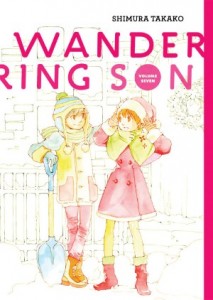
First off, it’s not out in bookstores yet, but Fantagraphics has shipped its 7th volume of Wandering Son to its Kickstarter backers. It’s still a must-read for anyone who likes good manga about real characters, as well as being a top-notch coming of age story.

ASH: I love this series so much. I can’t wait to read my copy.

ANNA: I need to get caught up on this! I really liked the first couple volumes.

MJ: I love this series with the fire of a thousand suns. I honestly can’t wait.

SEAN: Kodansha brings us the second volume of Attack on Titan: Before the Fall, the adaptation of the light novel about times way back when there was still quite a bit of defense separating humanity from its Titan opponents. Not that humanity really comes off well here, at least in Vol. 1.

ASH: Before the Fall has its own brand of Attack on Titan darkness. I’m looking forward to reading the original novel later this year, too.

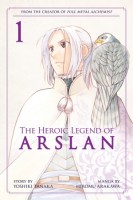
arslan1

SEAN: Kodansha is also debuting The Heroic Legend of Arslan, a manga adaptation by Hiromu Arakawa of the novel series by Yoshiki Tanaka. From what I understand, it’s not so much high fantasy as low to medium fantasy, but it’s being drawn by Arakawa, so I’m totally on board.

MICHELLE: Me, too!

ASH: As am I!

ANNA: This sounds intriguing! More Arakawa can only be a good thing!

MJ: Count me in!

SEAN: There’s also the first omnibus release of Tsubasa: Reservoir Chronicle. I’ve made my opinion of the last half of this series quite clear in the past, so I will simply note that the FIRST half of this series is quite good indeed, and that fans who don’t mind manga that end in car crashes should absolutely check it out, if only for Kurogane and Fai.

MJ: I’m happy to see this getting a re-release!

SEAN: Seven Seas has a trio of releases geared towards the fanboy end of the spectrum. The one I’m interested in is the eighth volume of Haganai. If you were to ask me if there was a reason to get it, I would have to say: nun. (whack) Ow.

There’s also the 4th volume of monster hit Monster Musume, showing why I do not run manga companies.

ASH: Seven Seas recently announced the licensing of another manga by the creator of Monster Musume, so the series has apparently been doing quite well.

SEAN: And Strike Witches debuts a new miniseries with Vol. 1 of the 1937 Fuso Sea Incident. This incident appears, as far as I can tell, to be fictional, and should have more combat sequences than we’ve seen in prior volumes.

Vertical has the 11th volume of Chi’s Sweet Home, star of manga, anime, and TV commercials. I hope Chi isn’t letting it go to her head.

MICHELLE: Yay, Chi! I have my coworker’s young daughter addicted to this one.

ASH: A new volume of Chi is always a good reason to celebrate.

MJ: You really can’t have too much Chi.

dorohedoro13

SEAN: Ikki may have stopped publication, but SigIkki lives on (I think – it may get rebranded) with the 13th volume of Dorohedoro. Dorohedoro easily wins the longest running Ikki series published over here, and I am infinitely grateful to Viz for its release.

ASH: I would like to join you in expressing my gratitude. Dorohedoro is such a marvelously weird manga and I love it.

SEAN: There’s also the 3rd volume of Gangsta, which still makes me think of Black Lagoon too much but is starting to carve out its own niche in the ‘cool people attack each other by leaping into the air’ genre.

ASH: I’ve really been enjoying this series and am looking forward to the next installment.

ANNA: I enjoy this series very much too. Artsy seinen fighting and angst is fun.

SEAN: Lastly, the Kaze Hikaru of seinen, it’s Vol. 10 of Ikigami: The Ultimate Limit! This is the final volume, so we won’t be seeing its once a year likes again. With this and Bokurano: Ours ending next month, the genre of ‘incredibly depressing manga about optimism in humanity’ needs a new standard bearer. Who’ll take it up?

MICHELLE: I’ve been wondering when Ikigami would end, and whether, with that obligation finishing up, VIZ might give that yearly slot to another volume of Kaze Hikaru. That would rock so much. I do intend to finish Bokurano: Ours sometime, but I have to muster the mental fortitude.

SEAN: Does something here appeal to you? If not, why not?

Filed Under: FEATURES, manga the week of

Oh My Goddess!, Vol. 46

August 14, 2014 by Sean Gaffney

By Kosuke Fujishima. Released in Japan by Kodansha, serialized in the magazine Afternoon. Released in North America by Dark Horse.

Since my last review of Oh My Goddess back in December, the manga has finally ended in Japan after 26 years, and will be 48 volumes total. For those who were reading this entire arc and noting it felt like a grand finale, congratulations, you are correct. There’s still some stuff to do before we get to what will no doubt be a final chapter with a wedding, not least of which is that Keiichi and Belldandy have to be reminded of something really obvious: she is a goddess and he is mortal. In fact, this is something that has happened to lovers in the past, as we see in the first have of this volume.

omg46

The flashback is painful, as you’d expect, but is also suffused with the selfless love we’ve come to expect from Keiichi and Belldandy, to the point where once the bard dies, the goddess is determined to see what he sang about even if it means her life. Unfortunately, due to the nature of contractual promises, she can’t even get peace in death. They’re being shown this to remind them that love is not worth all this pain that you’ll see in the end, but Oh My Goddess has spent 46 volumes so far showing us that yes, it absolutely is, so this argument doesn’t really hold up.

After last volume’s rewrite of its continuity, where we see that Keiichi was being repressed by heavenly forces to stop him getting it on with Belldandy, we get even more discussion of the original wish that began everything back in Volume 1. The wish: “I want a goddess like you to be with me always” – was said without being serious, but here we see a devastated Keiichi realizing what the burden of such a wish was on Belldandy, and cursing his past self for not being serious enough. Meanwhile, Belldandy confesses to Keiichi that, far from being surprised to see him when she descended to grant his wish, she’d actually been watching him from heaven for some time, and had fallen in love with him before they’d even met.

Fans of the anime won’t be surprised at this, as it also did a ‘we were destined to be together long before that wish’ plotline. It is nice, though, that Fujishima actually goes back to draw Belldandy somewhat like he did at the beginning – a larger marking on her head and her hair darker – to show us how she’s changed since then. (Keiichi, notably, does NOT get seen as his Vol. 1 self, which is fine, as that was more ‘the artist still needs work’.) And so finally Keiichi and Belldandy have pretty much taken every test of their love that can be thrown at them. We’ve even met her mother. And, as it turns out, her father – Gate turns out to be Tyr, Belldandy’s father and the ruler of Heaven.

Needless to say, he decides on one more test for Keiichi to be worthy of his daughter’s love, and even cheerfully frames it as ‘because a dad has to be a jerk to his daughter’s boyfriend’. Any reader of Oh My Goddess will be unsurprised at what happens next – the final battle involves a motorcycle race over an incredibly dangerous path, with K1 even driving a recreation of his regular bike. He also has to do it by himself, without Belldandy in the sidecar. Can he manage it? We’ll find out in March.

Filed Under: REVIEWS

Before You Go

August 13, 2014 by Ash Brown

Before You GoCreator: Denise Schroeder
Publisher: Chromatic Press
Released: May 2014
Original release: March 2014

Before You Go is a short, thirty-three paged comic written and illustrated by Denise Schroeder. Originally published in the March 2014 issue of Chromatic Press’ online multimedia magazine Sparkler Monthly (which, by the way, is marvelous), a small print run of Before You Go was released in time to debut at the 2014 Toronto Comic Arts Festival. Schroeder is an American artist currently living in Colorado. Before reading Before You Go I wasn’t familiar with her work, but in addition to various other things she is also the creator of three webcomics: Conquest, The Good Prince, and Paradox. I actually briefly met Schroeder while at TCAF, which was a delight. She very openly and happily proclaims manga and anime as major influences on her work, Sailor Moon being the series that ignited her passion. I follow the work of Chromatic Press very closely which is how I came to discover Schroeder and Before You Go. I am very glad to have been exposed to her comics.

One rainy day Sadie misses catching her train home after work, but then her luck changes for the better. Because of the mishap she meets Robin. The two young women hit it off and suddenly Sadie’s daily commute becomes something she looks forward to because it means she gets to spend more time with Robin. Eventually Robin begins to walk Sadie the rest of the way home even though it’s out of her way. Sadie and Robin’s initial chance encounter quickly blossoms into friendship with the possibility for their relationship to become something even more. They enjoy each other’s company and have become quite close. At least that’s what Sadie would like to think. The problem is that Robin is hesitant to open up; while she definitely shows interest in Sadie, she doesn’t seem to want to share anything about herself. Trust and communication are extremely important in any relationship, but they can also be some of the scariest parts, too.

Most of Before You Go either takes place on the train or on the way to and from the station as Sadie and Robin get to know each other. Their flirting and blushing is absolutely adorable. Even though Before You Go is a short comic, both Robin and Sadie are fully realized characters with distinctive personalities. They have hopes and dreams, and they have fears and regrets, too. Of the two, Sadie is the more dynamic and exuberant, evidence of her passion for the theater and performance. Robin tends to be more reserved, content to quietly observe. As Sadie points out in Before You Go, closely watching someone else can be valuable, but even that can’t reveal everything about who that person is. Because Before You Go is a comic, the act of looking and the visual storytelling elements are important for the reader’s understanding, too. The surprise, love, and concern between Sadie and Robin can be seen in Schroeder’s artwork even when the two women aren’t saying, or can’t say, anything at all.

Before You Go is a wonderful and utterly charming comic. I particularly appreciate the realism of the story as well as the realism of the characters and their relationship and interactions with each other. The comic has a quirky sense of humor to it which balances perfectly with the more serious and contemplative aspects of Before You Go. It’s also nice to see a love story between two adult women that recognizes the problems that someone who is queer might encounter in life without dwelling on the sadness that that so often entails. Before You Go is a quiet drama with honest heart and feeling behind it. The comic may be brief, but it is also marvelously complete–both the characters and the story are well thought out and developed with more maturity and depth than might appear at first glance. In the end, Before You Go is simply a comic that makes me happy to read. I look forward to seeing more of Schroeder’s work in the future.

Filed Under: REVIEWS Tagged With: Chromatic Press, comics, Denise Schroeder, Year of Yuri

Black Rose Alice, Vol. 1

August 12, 2014 by Sean Gaffney

By Setona Mizushiro. Released in Japan by Akita Shoten, serialized in the magazine Princess. Released in North America by Viz.

I’m usually quite fond of series that try to get by on pure mood, even if the plot is not one that reaches out and grabs me. This odd shoujo series definitely falls into that category. It’s not exactly something I would read to see what happens next – the entire time I was reading the first volume, my thoughts were “Didn’t I read this in a Kaoru Yuki title 5 years back?” – but the aesthetic is glorious and gruesome, with the corpses stacking up and anguish present on every face. It’s dark, gothic grand guignol shoujo, and marks a welcome return of Akita Shoten’s titles to out shores (as well as the author of After School Nightmare).

blackrosealice

Most of the first volume is prologue to what we’ll be seeing from now on. One hundred years earlier, we meet Dimitri, who is not of noble blood but is possessed of a remarkable singing voice. He loves Agnieszka, a young and innocent noblewoman, but she’s betrothed to his friend Theodor, who, while he has been doing his best to advance Dimitri’s vocal career, will only go so far. It’s the sort of storyline that makes you await the inevitable tragedy, and sure enough, a runaway horse seems to kill our hero. But he’s not really dead, as it turns out that his body is now being used by Bradley, a vampire! If the plot sounds melodramatic, well, I hope you knew that when you purchased it.

This is a horror title, by the way, in case my use of the words ‘gothic’ and ‘vampire’ did not clue you in. There are many, many mass suicides about halfway through, and some grotesque shots of blood. Oh yes, and there’s the spiders, which is the way that Dimitri acquires blood after his victims have obligingly offered themselves to him. They’re supremely creepy, but also very effective at showing the horror of what Dimitri is becoming. There’s also a sexual assault, as a desperate Dimitri, who wants nothing more than to die when he hears what he has become, rapes Agnieska to try to achieve this. It doesn’t work.

The main part of the book looks like it’s set in present day Japan, and features a more prosaic teacher-student romance, which is no less forbidden and yet intoxicating than the previous one. Koya is trying to convince his teacher Azusa that she is not merely a schoolboy crush to him, and she’s trying to push him away but desperately unable to. This leads to her making quite a nasty bargain, whose effects we don’t quite see in this volume but I’ve no doubt will prove to resonate down the line. Also, Dimitri, who was so horrified at the prospect of turning evil in Vienna, seems to have warmed up to it now that he’s in Japan. Ah well.

I’m not sure that I’m the audience for this book, really. But I’m sure that there is a huge audience for it. Those who enjoyed the darker, more sensual side of Shojo Beat’s titles, and want another supernatural romance with vampires who are likely quite bad for you, won’t be able to put it down. The spiders may be horrible, but it’s the doomed yet overpowering love that will draw them in.

Filed Under: REVIEWS

My Week in Manga: August 4-August 10, 2014

August 11, 2014 by Ash Brown

My News and Reviews

There were two reviews at Experiments in Manga last week in addition to the announcement of the Mecha Manga Giveaway Winner, which also includes a list of some of the mecha manga that has been licensed in English at one point or another. (Considering how many have been released in English, it’s not a comprehensive list. Instead it focuses on some favorites.) As for the reviews, I recently read Fuyumi Ono’s The Twelve Kingdoms, Volume 4: Skies of Dawn. Sadly, this was the last volume in the series to be translated into English. The Twelve Kingdoms is a great series of fantasy novels, all of which are worth tracking down. Keeping with last week’s unintentional theme of reviewing fourth volumes of epic series, I also took a look at Vinland Saga, Omnibus 4 by Makoto Yukimura. Vinland Saga is one of my favorite manga series currently being released and this volume hasn’t changed that.

The phenomenal Sparkler Monthly is currently running a membership drive for its second year, and there are some fantastic incentives. I highly recommend checking the project out and contributing if you’re able. Lori at Manga Xanadu has a nice post looking back at the first year of Sparkler Monthly and looking forward to Sparkler Monthly Year Two. For some of my own reviews and random musings on the excellent content being released by Sparkler Monthly, check out the Chromatic Press tag. (Actually, I’ll be posting a review of Denise Schroeder’s Before You Go later this week, too.)

Elsewhere online, ICv2 has a two-part interview with Viz Media’s Leyla Aker and Kevin Hamric looking at What’s Selling, Where, and Why as well as focusing On Specific Products and Programs. Justin at Organization Anti-Social Geniuses has a fun post about The Curious Case of Last Pages For US Manga Editions. Also, Mangabrog has translated some of Takehiko Inoue’s interviews from back when Vagabond was on hiatus.

Quick Takes

Black Rose Alice, Volume 1Black Rose Alice, Volume 1 by Setona Mizushiro. I’ll admit, even though I have enjoyed the other manga by Mizushiro that I have read and despite the very good things that I’ve heard about Black Rose Alice, I was still a little hesitant to read the series. Mostly because I’ve become a little weary, and therefore wary, of vampire stories. But the vampires in Black Rose Alice are so different that I’m actually hesitant to even call them vampires. Either way, the first volume was phenomenal. It’s creepy and disconcerting, tragic and chilling. Dimitri is a rising star, an operatic tenor with a beautiful voice and a handsome face who is astounded when a stranger tells him he is to blame for a sudden wave of suicides. The deaths in the story have tremendous emotional impact, which is particularly impressive since the characters have just been introduced. The characterization in Black Rose Alice is excellent, especially that of Dimitri, and the artwork is lovely and atmospheric. I am a little sad to see early 20th-century Vienna already left behind as a setting in exchange for modern-day Tokyo, but I’m very curious to see where the story goes from here. I’ll definitely be picking up more of Black Rose Alice.

Blank Slate, Volume 1Blank Slate, Volumes 1-2 by Aya Kanno. I first read Blank Slate several years ago and recall really liking it. Upon rereading, it’s honestly not as good as I remember it being, though the art is pretty great. Even considering the flaws in its execution, I actually still really like the series. Apparently the story that Kanno originally planned was much longer and more complicated. Quite a few things changed plot-wise as well as character-wise when she shortened the series; the transition isn’t as smooth as it could have been. Blank Slate would have benefited from at least another volume or two so that all of the backstory that’s crammed into the second volume could have been more fully developed. Though in its way it is thrilling, there are so many plot twists and major reveals towards the series’ end that it’s almost absurd. Some of the characters are shown to be so different from who they were when they were first introduced that it’s almost difficult to believe the changes, but that does make their betrayals rather effective. And I do like that the completely amoral and nearly emotionless Zen, the series lead, remains a villain throughout despite a tragic past that is supposed to make him more sympathetic.

How to Be HappyHow to Be Happy by Eleanor Davis. I wasn’t previously familiar with Davis’ work, but after experiencing How to Be Happy I certainly want to read more of it. How to Be Happy is a collection of her short comics, some no longer than a page. Though her black and white illustrations are effective, Davis’ color work is especially striking. She exhibits a wide variety of styles in How to Be Happy, evoking a number of different moods. However, all of the comics come across as being at least a little surreal. Many, perhaps most, of the stories tend towards the melancholy and somber, but others have an underlying and almost hidden sense of humor and joy. As Davis points out in her author’s note, the book actually isn’t about how to be happy. And yet, I found reading the volume to be a wonderfully cathartic and thought-provoking experience. I would even go as far as to call it inspiring. Though she often employees fantastical elements, what Davis really seems to be doing in How to Be Happy is exploring the nature of life and reality through her short narratives. How to Be Happy is a beautiful, strange, and wondrous collection and one that I can definitely see myself returning to again.

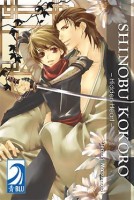
Midaresomenishi: A Tale of Samurai LoveMidaresomenishi: A Tale of Samurai Love by Kazuma Kodaka. Although Midaresomenishi is self-described as a romantic epic, there’s not very much at all that is romantic about this boys’ love manga. Instead it’s an extremely dark tale with a focus on violence, sexual and otherwise. Truly terrible things happen in it. Blood, death, and sadism take precedence over affection and love. There is very little happiness to be found in Midaresomenishi, and what little there is is fleeting. Shirou is a young samurai who takes great pleasure in killing, but that is nothing in comparison to the joy that Sougetsu, a powerful and decadent master of bandits, takes in sexually dominating others. In order to protect the life of his younger brother Fujimura, Shirou allows himself to be subjugated by Sougetsu. What he doesn’t realize is that while Fujimura is alive, he has become a sexual plaything for Sougetsu’s underlings. There actually is some doomed love and strong familial bonds in Midaresomenishi, but for the most part the manga’s focus is on the more unpleasant relationships. Midaresomenishi doesn’t work for me as a love story, there’s simply too much force and coercion, but as a violent tragedy it is fairly successful.

Filed Under: FEATURES, My Week in Manga Tagged With: Aya Kanno, Black Rose Alice, Blank Slate, comics, Eleanor Davis, Kazuma Kodaka, manga, Setona Mizushiro

Kokoro Connect, Vol. 1

August 10, 2014 by Sean Gaffney

By Sadanatsu Anda and CUTEG. Released in Japan by Enterbrain, serialized in the magazine Famitsu Comic Clear. Released in North America by Seven Seas.

Generally speaking, if you’re going to be releasing a manga series based on a light novel that stars a group of high school students in a strange club, you’d better have something extra to bring to the table in order to distinguish yourself from packs of similar series. And Kokoro Connect does have a premise that shows promise, particularly if it goes the dramatic direction that it seems to be hinting at. Three girls and two boys are friends in a club, till one day they discover that the five of them have begun to randomly switch bodies, without warning and for unknown periods. After having the reason explained to them by an exposition who happened to be walking by, they have to figure out how to deal with this, particularly as they are all rather fragile teens, and many have hidden secrets.

kokoro1

The leads are all likeable but flawed. In fact, in possibly the most annoying part of the volume, we have the flaws explained by Himeko, the ‘serious student’ of the club. Our hero is told how he tends to put the needs of others before himself, and in fact is directly called a “self-sacrificing bastard”. The trouble is we’ve only known him for about 90 pages before this, and the only evidence we see is that he volunteered for cleanup duty because no one else wanted to. Likewise, one somewhat insecure, thought-provoking monologue does not really measure up against the previous scenes of a girl being happy and outgoing, so hearing that Iori is “the most likely to crack” seems a bit out of nowhere. Kokoro Connect has a “tell rather than show” problem.

This is a bodyswap manga, and so it can sometimes be difficult to recall who is in which body at the time. The usual manga shorthand is to see either a ghostly presence of the real person behind the swapped one, or to show a SD-caricature of the real person in the speech balloon. This volume does both, and I think the latter works better, as the doubling can look confusing. Other than that, though, the artwork is appealing and cute. There’s also a healthy dose of humor scattered throughout. I could have done without the ‘oh my god teenage boys are perverts’ stuff, but if I wanted to avoid that I’d have to drop manga altogether. And the “solution” to Yui’s issues with men did make me laugh, I will admit. As for romance, it seems to be a ‘one guy and two girls who kind of like him’ story, with a ‘backup couple’ thrown in. The backup couple get the most development here, which tells me that the majority of what’s to come will likely focus on Iori and Himeko.

Mostly, though, I think this first volume made me hope that things improve in the next four (It’s a 5-volume series). It’s an intriguing premise, and I think it does show promise that it could take advantage of that, but right now it feels like it’s trying too hard. Let’s hope it finds its feet in the next volume.

Filed Under: REVIEWS

Vinland Saga, Vol. 4

August 9, 2014 by Ash Brown

Vinland Saga, Omnibus 4Creator: Makoto Yukimura
U.S. publisher: Kodansha
ISBN: 9781612624235
Released: July 2014
Original release: 2009
Awards: Japan Media Arts Award, Kodansha Manga Award

Makoto Yukimura’s award-winning Vinland Saga has quickly become one of the manga releases that I most look forward to each time a new volume is published every few months. The series is thoroughly researched historical fiction with fantastic artwork and incredibly engaging story and characters. I was happy when Kodansha Comics picked up the license, but as the series gets better and better with each passing volume my excitement for the manga grows along with it. Kodansha’s edition of Vinland Saga was the publisher’s first foray into a deluxe release. Each omnibus collects two of the original volumes, retaining the color pages, in a nice hardcover format. Vinland Saga, Omnibus 4, published by Kodansha in 2014, contains the seventh and eighth volumes of the Japanese edition of the series, both of which were released in 2009. The fourth omnibus, like the third, also includes an exclusive question and answer segment with Yukimura about the series which I’ve really been enjoying.

Defying all expectations, Prince Canute has survived his father’s attempt to have him killed in battle and has taken his destiny into his own hands. At one point a gentle young man considered weak by the Viking mercenaries and soldiers, Canute is now resolved to wrest the crown from his father, King Sweyn. He is prepared to use force and any other means necessary in order to gain control of the realm. This change of heart has earned Canute an impressive array of followers who are willing to fight and die for him as he challenges Denmark’s king. Thorkell and his men are known and respected as great warriors to be feared on the battlefield. Most of Askeladd’s troop has been slain, but Askeladd himself is a skilled fighter with an even greater talent for strategy and manipulation. The aid of both men will give Canute distinct advantages in the approaching confrontation, but its conclusion is far from certain. Sweyn  has strong men who are loyal to him as well in addition to the recognized power to rule over the masses. He isn’t about to let the throne slip away so easily.

I continue to be extremely impressed by the characterization in Vinland Saga. The main characters and even the supporting cast all have a tremendous amount of depth. They are complex, with both human failings and strengths, well-developed personalities, and believable motivations. Nothing is as simple as good or bad. Instead the characters are portrayed as real people with complicated pasts that have made them who they are. Up until this point Sweyn has been somewhat of an enigma, a dark shadow hanging over Canute and the territories which he has conquered. But in Vinland Saga, Omnibus 4 he, too, is revealed to be much more nuanced of a character than when he was first introduced. Much like Canute, Sweyn’s actions are informed and driven by his beliefs and his desire to create a prosperous realm. He is a formidable ruler with significant influence, but he is also a man and a tired one at that. Kingship has taken its toll. Sweyn also serves as an example showing that even a person with righteous intentions can become corrupt, a lesson that Canute would do well to take to heart.
Compared to previous installments of Vinland Saga, the fourth omnibus in the series focuses less on all-out battle and more on the political strategies and maneuverings going on behind the scenes. However, the intensity of the series remains and when fights do break out they make an impact. They are incredibly bold and dynamic. Yukimura’s action scenes are epic and extremely well choreographed, but what makes them so effective is the emotional investment of the characters. Askeladd in particular is especially compelling. He has been able to channel his hatred and desire for revenge, controlling those around him with immense skill, but it hasn’t been without personal sacrifice. Askeladd himself is also the target of revenge–Thorfinn holds him responsible for the death of his father. Thorfinn and Askeladd’s relationship is extraordinarily complex. Askeladd doesn’t blame the younger man for seeking his demise. In his own way he actually tries to teach Thorfinn, drawing from his own past experiences. But this omnibus makes it tragically clear that Thorfinn is so obsessed with his quest for revenge that he has thought very little beyond it.

Filed Under: REVIEWS Tagged With: Japan Media Arts Award, kodansha, Kodansha Comics, Kodansha Manga Award, Makoto Yukimura, manga, Vinland Saga

The Twelve Kingdoms, Vol. 4: Skies of Dawn

August 8, 2014 by Ash Brown

The Twelve Kingdoms, Volume 4: Skies of DawnAuthor: Fuyumi Ono
Illustrator: Akihiro Yamada

Translator: Alexander O. Smith
U.S. Publisher: Tokyopop
ISBN: 9781427802606
Released: November 2010
Original release: 1994

Skies of Dawn is the fourth and sadly final volume of Fuyumi Ono’s eight-volume fantasy novel series The Twelve Kingdoms, illustrated by Akihiro Yamada, to have been released in English. Published in Japan in two volumes in 1994, the novel was released in its entirety in 2010 by Tokyopop under its Pop Fiction imprint, first as a hardcover and then later in a paperback edition. As with the previous volumes of The Twelve Kingdoms, Skies of Dawn was translated by Alexander O. Smith. Interestingly enough, Elye J. Alexander, who frequently collaborates with Smith on translations and who worked with him on the first three volumes of The Twelve Kingdoms, does not appear to have been involved with Skies of Dawn. Though I discovered the series relatively late, I have been thoroughly enjoying The Twelve Kingdoms and Ono’s exceptionally well-developed world and characters. Skies of Dawn is easily the longest of the translated volumes, but that didn’t at all diminish my enthusiasm.

Yoko has become the king of Kei after being chosen by Keiki, the kingdom’s kirin. It’s still early in Yoko’s reign, but it hasn’t been easy for her. Many of the ministers of her court are corrupt and the others have very little trust in Yoko–Kei has had a bad history with lady-kings. Yoko lacks confidence in her rule as well. Having grown up in Japan before being suddenly swept away to the Twelve Kingdoms, her understanding of the world in which she now finds herself is limited and her knowledge of what it means to be king is even more so. Yoko isn’t the only young woman who is struggling with great changes in her life. Like Kei, the kingdom of Hou has also recently lost its ruler and those circumstances have forced its princess Shoukei into exile. Suzu, another girl who was originally from Japan, is unhappy with her lot in life in the Twelve Kingdoms. Though they don’t know each other, the destinies of these three young women will become closely intertwined, changing the direction and fate of Kei, a kingdom still struggling to restore itself after years of turmoil and calamity.

Although Skies of Dawn is technically the fourth volume in The Twelve Kingdoms, chronologically its story follows immediately after the events of the first volume, Sea of Shadow. The two intervening novels–Sea of Wind and The Vast Spread of the Seas–serve as prequels to the series, providing more context as well as back stories for The Twelve Kingdoms as a whole and for its major characters. As with the other volumes in The Twelve Kingdoms, Skies of Dawn actually stands very well on its own as a novel. Though they provide more background, it’s not absolutely necessary to have read the previous volumes in the series to understand what’s happening in Skies of Dawn. Actually, Skies of Dawn is almost like reading three novels contained in one, especially towards its beginning. It takes quite some time for Yoko, Shoukei, and Suzu’s individual stories to come together into a single narrative, but it is very satisfying when they do, especially because it happens in a way that is somewhat unexpected.

Worldbuilding has always been a major component of The Twelve Kingdoms and that hasn’t changed with Skies of Dawn. I do appreciate all of the thought and detail that Ono has put into every aspect of the series. Granted, while it is all very interesting, the worldbuilding does slow down the pacing of the plot a great deal. Much of the first half of Skies of Dawn is devoted to things like rules of governance, taxes, and marriage laws as Yoko learns more about her kingdom and the kingdoms surrounding it. It’s not until the second half of Skies of Dawn when Yoko, Shoukei, and Suzu’s stories begin to converge that events start to quickly escalate as the people of Kei come closer and closer to rebellion. The Twelve Kingdoms is an epic tale of fantasy in which the characters are required to grow and evolve, taking responsibility for themselves and for the changes in the world in which they live. Although it is unlikely that the rest of the series will be translated, Skies of Dawn and the previous volumes are still well worth seeking out.

Filed Under: REVIEWS Tagged With: Akihiro Yamada, Fuyumi Ono, Light Novels, Novels, Tokyopop, Twelve Kingdoms

Manga the Week of 8/13

August 7, 2014 by Sean Gaffney, Ash Brown, Michelle Smith, Anna N and MJ Leave a Comment

SEAN: If there was a quiet week in August, next week would be it, with a mere nine titles.

samurai2

Dark Horse has the 2nd of its Samurai Executioner omnibii, for those who can’t get enough of samurai, manliness, and manly samurai.

ASH: Surprisingly enough, I haven’t actually read any of Samurai Executioner. This would probably be a good time to change that.

SEAN: Kodansha gives us a double shot of Hiro Mashima, with the 41st volume of Fairy Tail (which starts a new arc) and the 2nd volume of Monster Soul (which wraps up).

SubLime has an entry, as the 5th volume of Crimson Spell is out. Listen to them. Crimson. Pff. It’s f**king Red. (Sorry, got caught up in the meme there.)

ASH: Speaking of getting caught up, I believe the fifth volume means we’ve caught up with Japan, too.

SEAN: Vertical has the 5th volume of Wolfsmund, whose cover may not be red but whose contents I expect will at least have a bit of blood.

ASH: I suspect that you’re right.

SEAN: Viz has recently said that Deadman Wonderland is its breakout hit of the last year, so it will please people no end that Vol. 4 is out. Also, clearly this means we need more license rescues. (Kidding, kidding…)

MICHELLE: I never kid about license rescues! Of course, whatever momentum the TOKYOPOP series that I most love(d) had is probably long-dissipated by now, but I can continue to hope that one day, I’ll get to read Silver Diamond in English in its entirety.

loveless12

ANNA: I am pausing a moment to contemplate the lack of an ending in English for Shinobi Life, Demon Sacred, and Sky Blue Shore.

SEAN: We also have the 12th volume of Itsuwaribito, which I still haven’t really read. Anyone?

The 12th volume of Loveless will no doubt generate a bit more excitement from my other Manga Bookshelf colleagues.

ASH: I’m looking forward to it!

MICHELLE: I am positively asquee!

MJ: Okay, yeah, I’m in the middle of production week, but I have to take at least a moment here to say: LOVELESS!!! <3 Oh, happy day.

SEAN: Lastly, we get a 7th volume of the Arabian Nights series Magi, which I enjoy quite a bit.

MICHELLE: I vow that I will finally get caught back up with Magi!

SEAN: Getting something here? Or catching up with the week before?

Filed Under: FEATURES, manga the week of

  • « Go to Previous Page
  • Page 1
  • Interim pages omitted …
  • Page 348
  • Page 349
  • Page 350
  • Page 351
  • Page 352
  • Interim pages omitted …
  • Page 551
  • Go to Next Page »
 | Log in
Copyright © 2010 Manga Bookshelf | Powered by WordPress & the Genesis Framework