• Skip to primary navigation
  • Skip to main content
  • Skip to primary sidebar
  • Home
  • About Us
    • Privacy Policy
    • Comment Policy
    • Disclosures & Disclaimers
  • Resources
    • Links, Essays & Articles
    • Fandomology!
    • CLAMP Directory
    • BlogRoll
  • Features & Columns
    • 3 Things Thursday
    • Adventures in the Key of Shoujo
    • Bit & Blips (game reviews)
    • BL BOOKRACK
    • Bookshelf Briefs
    • Bringing the Drama
    • Comic Conversion
    • Fanservice Friday
    • Going Digital
    • It Came From the Sinosphere
    • License This!
    • Magazine no Mori
    • My Week in Manga
    • OFF THE SHELF
    • Not By Manga Alone
    • PICK OF THE WEEK
    • Subtitles & Sensibility
    • Weekly Shonen Jump Recaps
  • Manga Moveable Feast
    • MMF Full Archive
    • Yun Kouga
    • CLAMP
    • Shojo Beat
    • Osamu Tezuka
    • Sailor Moon
    • Fruits Basket
    • Takehiko Inoue
    • Wild Adapter
    • One Piece
    • After School Nightmare
    • Karakuri Odette
    • Paradise Kiss
    • The Color Trilogy
    • To Terra…
    • Sexy Voice & Robo
  • Browse by Author
    • Sean Gaffney
    • Anna Neatrour
    • Michelle Smith
    • Katherine Dacey
    • MJ
    • Brigid Alverson
    • Travis Anderson
    • Phillip Anthony
    • Derek Bown
    • Jaci Dahlvang
    • Angela Eastman
    • Erica Friedman
    • Sara K.
    • Megan Purdy
    • Emily Snodgrass
    • Nancy Thistlethwaite
    • Eva Volin
    • David Welsh
  • MB Blogs
    • A Case Suitable For Treatment
    • Experiments in Manga
    • MangaBlog
    • The Manga Critic
    • Manga Report
    • Soliloquy in Blue
    • Manga Curmudgeon (archive)

Manga Bookshelf

Discussion, Resources, Roundtables, & Reviews

Features & Reviews

Attack on Titan, Vol. 16

September 6, 2015 by Sean Gaffney

By Hajime Isayama. Released in Japan by Kodansha, serialization ongoing in the magazine Bessatsu Shonen Magazine. Released in North America by Kodansha Comics.

There is a term that has become popular, particularly with the rise of TV tropes, called ‘The Woobie’. It is a character who you are meant to feel sad and sorry for, sometimes to the breaking point of plot and characterization. While the entire cast of Attack on Titan has, at times, fallen into this category, I’d argue the two biggest woobies in the series are Eren, who got the cover of the last volume staring in dull surprise and Historia, who gets the cover of this volume staring in dull surprise. (It is possible that the reader who still has to keep up with Isayama’s art qualifies as a woobie as well.) The suffering the two of them go through is meant to be complementary, and most of this volume discusses what might happen if Historia takes over Eren’s role in the story, by literally eating him.

attack16

There’s a lot of backstory questions answered here (though the story posits new ones as well), with Historia’s family, Kenny Ackerman, and Eren’s father all getting closer and more disturbing looks. Kenny in particular gets more depth, though he’s still really unlikeable no matter what he’s gone through in the past. That said, though, only Historia can make the final decision, a decision that her family has made over and over again. She correctly wonders why her family has simply let the Titans roll right along, and realizes that just having this godlike power does not necessarily mean she will keep the compassion to use it.

And so she rebels, and it’s wonderful, as she tells everyone who’s attempting to show her how to live her life to get lost and saves Eren, even if he’s not particularly wanting to be saved at the moment. (Notably, it’s Ymir’s advice in a flashback that’s the tipping point.) Luckily for her, the struggle she just went through has been juxtaposed with the rest of the cast attacking the secret underground cavern, showing off how unstoppable they are in battle (well, OK, Hange gets hurt, but I’m sure she’s fine), and showing up in time to allow Historia’s choice not to be in vain, and to allow Eren to finally stop feeling pathetic and make his own choice to protect everyone.

This is not a perfect volume. There’s more torture, which I still loathe, even if it doesn’t actually succeed in getting information this time. The flashbacks are very dispassionate, not carrying the emotional load of the main storyline, even when they should. And I’ve already bashed the art, but I can’t help it – sometimes the desperate, tormented faces we’re supposed to see, particularly Grisha and Kenny, merely look hilarious, and distract from the tragedy we’re supposed to be witnessing. Still, overall more good than bad, and we’ll see if Historia et al. can escape from here and try to take on a giant Titan. Wow, fighting Titans, it seems like forever since we’ve done that.

Filed Under: REVIEWS

The Manga Revue: Inuyashiki, Kurosagi Corpse Delivery Service and Tokyo Ghoul

September 4, 2015 by Katherine Dacey

I’m fresh out of snappy intros, so I’ll cut to the chase: this week’s column looks at Inuyashiki, The Kurosagi Corpse Delivery Service Omnibus Edition, and Tokyo Ghoul.

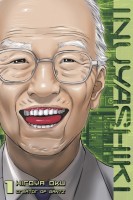
inuyashikiInuyashiki, Vol. 1
By Hiroya Oku
Rated OT, for older teens (16+)
Kodansha Comics, $12.99

Bette Davis famously declared that “Old age is no place for sissies,” a statement borne out by the first chapters of Hiroya Oku’s grimly compelling Inuyashiki. Its hero, a 58-year-old salaryman, is a picture of despair: his family loathes him, his co-workers ignore him, and his health is failing. In a blinding flash of light, however, his life changes. He wakes up to discover that his memories are intact but his body has changed; his once-frail limbs and failing eyes are now military-grade weapons, capable of withstanding lethal force. What to do with this gift? That question animates the final pages of volume one, as Ichiro tests his new body’s limits for the first time.

This final scene is a neat illustration of what’s good — and not so good — about Inuyashiki. Oku stages a suspenseful confrontation between Ichiro and a gang of teenage thugs; though we sense that Ichiro will prevail, how he gains the upper hand is a nifty surprise made more effective by Oku’s meticulously detailed illustrations. The incident that precipitates the showdown, however, is saddled with a heavy-handed script; Oku stokes the reader’s sense of righteous indignation by revealing that the thugs’ intended victim is a good but vulnerable man. By overemphasizing the victim’s inherent decency, Oku reduces him to a saintly caricature, a problem that also mars Ichiro’s early interactions with his family. (His kids are such ungrateful jerks you may root for Ichiro to use his powers on them.)

Even if Ichiro’s catharsis is less earned than contrived, watching him transform from terminal sad-sack to indestructible bad-ass is a deeply satisfying experience. He’s found his purpose and his spine, even if it’s taken him 58 years to do so. Now that’s a fantasy that any middle-aged reader can get behind.

The verdict: Pour yourself a scotch before reading; you’ll need the emotional fortification to navigate the early chapters.

kurosagi_omnibus1The Kurosagi Corpse Delivery Service Omnibus Edition, Book One
By Eiji Ōtsuka and Housui Yamazaki
Rated OT, for older teens (16+)
Dark Horse, $19.99

Scooby Doo for grown-ups — that’s how I’d describe The Kurosagi Corpse Delivery Service, a macabre comedy about five cash-strapped college students who drive around in a van solving supernatural mysteries. The Kurosagi gang’s bread-and-butter are mysterious (and often violent) deaths. Through dowsing and channeling, they discover how and why their “clients” died, enabling the victims’ spirits to cross over to the other side.

The new omnibus edition — which collects the first three volumes of KCDS —  includes two of the series’ best stories: “Lonely People,” in which the gang stumbles across a portable altar with a mummy inside, and “Crossing Over,” in which the gang searches for the victim of an organ harvesting ring. Though the denouement of both “deliveries” include a few gruesome panels, the deadpan dialogue, expressive character designs, and snappy pacing prevent KCDS from sinking to the level of torture porn; the horrific imagery functions as a rim shot or an exclamation mark, not the main attraction. The self-contained nature of the stories is another plus: you can begin your KCDS odyssey almost anywhere in the series and still grasp what’s happening, though the crew’s origin story (“Less Than Happy,” the very first chapter) offers an interesting window into Buddhist university culture in Japan.

The verdict: If you haven’t tagged along on one of the Kurosagi crew’s “deliveries,” the omnibus edition gives you an economical way to do so.

Review copy provided by Dark Horse.

tokyo_ghoul2Tokyo Ghoul, Vol. 2
By Sui Ishida
Rated OT, for older teens (16+)
VIZ Media, $12.99

The first volume of Tokyo Ghoul reads like an urban legend: Ken Kaneki, earnest college student, goes out for dinner with a pretty girl, but wakes up in the hospital with a brand-new set of organs… that used to belong to his date. Within a few days of his release, Kaneki begins turning into a flesh-eating monster, a side effect of the transplant surgery. Volume two picks up where volume one left off: now caught between the human and demon worlds, Kaneki casts his lot with the demons of cafe Anteiku. They teach him tricks for passing as a human, and warn him about the deep divide between the ghouls who embrace their predator status and those who feel some kinship with humanity.

Although volume two introduces several new and potentially interesting characters, Kaneki’s wet-blanket personality continues to put a damper on the story: he whines and frets and refuses to do anything that might compromise the reader’s good opinion of him. As anyone who’s read Death Note knows, however, a charismatic, intelligent protagonist doesn’t have to be good or right to command the audience’s sympathy. Someone who’s flawed, misguided, or tempted to abuse a new-found power might actually invite more self-identification than a goody two-shoes lead.

The verdict: Tokyo Ghoul isn’t bad, just a little too obvious to sustain my interest.

Review copy provided by VIZ Media.

Reviews: Joe McCulloch looks at the new English-language version of Comics Zenon, Michelle Smith and Anna N. post a fresh set of Bookshelf Briefs, and Vernieda Vergara asks if Bleach has overstayed its welcome.

Connie on vol. 19 of Bakuman (Slightly Biased Manga)
Julie on The Desert Lord’s Bride (Manga Maniac Cafe)
Ash Brown on Dr. Makumakuran and Other Stories (Experiments in Manga)
Connie on vol. 3 of Earthian (Slightly Biased Manga)
Kory Cerjak on vol. 47 of Fairy Tail (The Fandom Post)
James Ristig on Full Metal Alchemist (How to Love Comics)
Matthew Alexander on vol. 1 of Hayate Cross Blade (The Fandom Post)
Connie on vol. 11 of Kamisama Kiss (Slightly Biased Manga)
Rebecca Silverman on vol. 23 of Kaze Hikaru (Anime News Network)
Lesley Aeschliman on vol. 1 of Komomo Confisere (WatchPlayRead)
Jordan Richards on vol. 1 of Komomo Confiserie (AiPT!)
Connie on vol. 14 of The Kurosagi Corpse Delivery Service (Slightly Biased Manga)
Angel Cruz on vols. 1-2 of Love at Fourteen (Women Write About Comics)
Lori Henderson on vols. 1-3 of Neon Genesis Evangelion (Manga Xanadu)
Ken H. on vol. 1 of Ninja Slayer Kills! (Sequential Ink)
Matthew Warner on vol. 10 of Nisekoi: False Love (The Fandom Post)
Connie on vol. 4 of No. 6 (Slightly Biased Manga)
Jocelyn Allen on Nobara (Brain vs. Book)
David Brooke on vol. 1 of Noragami: Stray God (AiPT!)
Lesley Aeschliman on vol. 1 of One-Punch Man (WatchPlayRead)
Kristin on vols. 1-2 of One-Punch Man (Comic Attack)
Jordan Richards on vol. 2 of One-Punch Man (AiPT!)
Matthew Warner on vol. 18 of Rin-ne (The Fandom Post)
Sarah on vol. 1 of The Royal Tutor (Anime UK News)
Al Sparrow on vol. 1 of So I Can’t Play H (Comic Spectrum)
Helen on Sweetness and Lightning (Organization Anti-Social Geniuses)
Dustin Cabeal on vol. 1 of Tokyo Ghoul (Comic Bastards)
Matthew Warner on vol. 1 of Tokyo Ghoul (The Fandom Post)
Connie on vol. 6 of Toradora! (Slightly Biased Manga)
Sheena McNeil on vol. 29 of Toriko (Sequential Tart)
Adam Capps on vol. 1 of Ultraman (BentoByte)
Michael Burns on vol. 3 of Yamada-Kun and the Seven Witches (AniTAY)

Filed Under: MANGABLOG, REVIEWS Tagged With: Dark Horse, Horror/Supernatural, Inuyashiki, Kodansha Comics, kurosagi corpse delivery service, Manga Review, Tokyo Ghoul, viz media

Dr. Makumakuran and Other Stories

September 4, 2015 by Ash Brown

Dr. Makumakuran and Other StoriesCreator: Takeshi Matsu
Publisher: Bruno Gmünder
ISBN: 9783867878432
Released: August 2015

Dr. Makumakuran and Other Stories is the second collection of erotic gay manga by Takeshi Matsu to be released in English. Matsu was one of the nine mangaka to be featured in the landmark anthology Massive: Gay Erotic Manga and the Men Who Make It which is where I initially encountered his work. Matsu can be counted among the few mangaka who have been able to make a career out of creating gay manga, his stories appealing to readers of multiple genders and sexualities. I thoroughly enjoyed “Kannai’s Dilemma”—the story of his collected in Massive—as well as his first English anthology More and More of You and Other Stories (which had the added bonus of in part being a food manga), so I was looking forward to Dr. Makumakuran and Other Stories a great deal. The volume, published by the Germany-based Bruno Gmünder in 2015, collects several of Matsu’s short manga, many of which had previously only been available digitally. So, not only are the stories being translated into English for the first time, most of them are being released in print for the first time as well.

Dr. Makumakuran and Other Stories collects five of the Matsu’s short erotic manga. The volume opens with the first two episodes of The Dangerous Games of Dr. Makumakuran, a ongoing series featuring the titular Dr. Makumakuran. Both a genius scientist and a total slacker, he spends much of his time working on side projects and annoying his assistants rather than focusing on more commercially productive research. More than once the lead assistant Tachibana becomes the test subject for Makumakuran’s seemingly innocent inventions, including a virtual reality workplace training system which allows for a variety of simulations and a diet formula that shrinks more than just fat cells. The next story, “Yashio and Shibayama,” is about a comedian whose career is struggling after he undergoes a celebrity makeover as well as the lengths he and his manager are willing to go to save it. In “Big Man, Tiny Boss” a strapping underling approaches his superior for some hands-on advice on satisfying a partner, except that he’s straight and his boss is gay. Finally, things unintentionally get a little out of hand in the changing room between a designer and his stand-in model in “Wolf Mask.”

Dr. Makumakuran and Other Stories, page 131Although I enjoyed More and More of You and Other Stories immensely, overall I think that Dr. Makumakuran and Other Stories may actually be the stronger collection out of the two, or at least the one that will be more immediately accessible to a wider audience as a whole. But either way, both anthologies are great. I’ve come to expect Matsu’s work to have a sense of humor and playfulness to it, and Dr. Makumakuran and Other Stories doesn’t disappoint. The stories, as well as the plentiful no-holds-barred sex scenes to be found within them, can actually be surprisingly sweet and charming. Even the scenarios with more dubious beginnings end up being rather romantic. One of the things that I particularly enjoy about Matsu’s erotic manga in Dr. Makumakuran and Other Stories is that while the works aren’t overly serious and at times can be quite comedic, there is still some relationship drama and honest emotional connections between the characters; the sex is only one aspect of that greater whole.

Except for the first two manga collected in Dr. Makumakuran and Other Stories which are part of the same series, none of the works in the volume are directly related to one another. However, there are a few themes that occur repeatedly. Many of the stories feature a transformation of some sort, whether it be physical or psychological. Matsu plays with size and power dynamics a fair bit in Dr. Makumakuran and Other Stories as well. Both “Big Man, Tiny Boss” and “Yashio and Shibayama” deal with pushing the boundaries of professional relationships between men with different body types. The changes in size and dynamics in the two The Dangerous Games of Dr. Makumakuran stories are more fantastic and dramatic in nature and the sex ends up having to be fairly creative as a result. “Wolf Mask” turns out to be intense and kinky, too, but ultimately the relationship between the men is kind of adorable. Dr. Makumakuran and Other Stories is a great collection of erotic gay manga, Matsu exhibiting his skills as a creator whose work can be hot and heavy and still have heart. I hope to see more of his manga translated in the future.

Filed Under: REVIEWS Tagged With: Bruno Gmünder, Gay Manga, manga, Takeshi Matsu

Manga the Week of 9/9

September 3, 2015 by Sean Gaffney, Ash Brown, MJ, Michelle Smith and Anna N 1 Comment

SEAN: The second week of the month is always the oddest, in my opinion. Not drenched in Shonen Jump, Shojo Beat or Yen titles, it tends towards Viz’s Shonen Sunday, Seven Seas, and a few oddities. Let’s see what’s out next week.

d-frag6

xxxHOLIC gets its 7th and final omnibus, as the series grinds to a halt, crushing the reader within its mandibles and slowly killing them over the course of a hundred years time. I think MJfeels differently.

ASH: This will be my first time reading the ending, so I’m not sure exactly how I’ll feel about it yet.

MJ: MJfeels differently, indeed.

SEAN: Seven Seas gives us a 6th volume of comedy and not-quite-harem series D-Frag!, which will continue to make fun of bald heads, large breasts, and its supposed hero.

There’s also an omnibus of the series Dictatorial Grimoire, containing all three volumes. I remember enjoying it more than it possibly merited, mostly due to a side character I really liked.

ASH: Dictatorial Grimoire was a mess, albeit an entertaining one.

SEAN: A third volume of Love Stage!! tells us that in the future, sunglasses will be edible.

MICHELLE: *snerk*

SEAN: Viz has a 23rd volume of Arata the Legend, which is turning into Shogakukan’s answer to Hunter x Hunter in Japan, as it’s on another hiatus.

Yay, it’s time for the twice-a-year release of Hayate the Combat Butler! Vol. 26 is back to all comedy all the time, but it also deals with the fallout from the End of the World arc, namely Nagi not being able to live in the mansion anymore.

roseking2

The 10th Ranma 1/2 omnibus does not advance the plot (nothing does, really), but it has Ryouga’s depression and Ranma’s confidence finally meet head on and become legitimate attacks, which should not surprise anyone.

Lastly, we get a 2nd volume of Aya Kanno’s Requiem of the Rose King, where Richard III and Henry VI meet and are both really pretty at each other. (It’s much better than that sounds, I’m sorry, I just can’t help it.) The 3rd volume should involve less of a wait than this one did.

ASH: Kanno does pretty so well. And oh, the drama! Really looking forward to more of this series.

MICHELLE: Volume one was really interesting and I’ve been looking forward to continuing!

ANNA: I enjoyed the first volume greatly, and this is by far what I’m most looking forward too this week.

MJ: i really need to get into this!

So what’s appealing to you this week?

Filed Under: FEATURES, manga the week of

The Devil Is A Part-Timer!, Vol. 2

September 3, 2015 by Sean Gaffney

By Satoshi Wagahara and 029. Released in Japan by ASCII Mediaworks. Released in North America by Yen Press.

The second volume of this series does what is expected of it. It expands on the themes and characters of the first book, adds a new villain and a new sort-of heroine, and relies on its comedy and its action scenes to carry it through. Luckily, the writing style is excellent, so this works pretty well. Out of all of Yen’s recent releases, this is one of the most smoothly translated. It also flies by, even though it’s easily the longest book to come out in August by a good 40-50 pages. We’re dealing with fallout from the first book, as back in Enta Isla, the fantasy world our hero and heroine came from, political machinations war with religious purpose in order to find out how to deal with what’s happened. This results in a literal Inquisitor being sent to deal with Maou.

diapt2

As with A Certain Magical Index, those of a religious inclination might take offense at some of the things this series has to say about the Church, which is portrayed as rather Machiavellian in nature. Suzuno is meant to be of a purer, more moral type, but that doesn’t mean she has not killed people in order to properly serve the church. And, like Emi in the first book, she’s disturbed and distrusting whenever she sees Maou not being evil. In fact, Emi continues to be disturbed by this, and her pursuit of Maou has drizzled down into a sort of “OK, I guess I’ll go stalk him now” duty. Again, I really wonder what sort of horrible things Maou personally did (as opposed to having other evil people doing things for him) in Enta Isla – Chiho speaks for the reader when she says that she can’t judge him based on things she hasn’t experienced.

The main reason to read the series continues to be the comedy, which remains excellent. The narrative voice gets in several cutting remarks as well, without sounding intrusive. There are the standard anime gags – both Emi and Suzuno are annoyed at being flat-chested in comparison to Chiho, and it comes up several times – but there’s also genuine character-based humor. I was especially amused at everyone’s treatment of Urushihara, whose tendency to have everyone think the worst of him is matched only by actually being the worst most of the time. Chiho’s straightforwardness is also refreshing, as she’s straight up admitted she’s in love with Maou, and said so to his face. This does not resolve anything, really – for all the sexual desire he’s shown in the series so far, Maou could be asexual – but it’s still nice to see.

There were a few things that annoyed me towards the end. Sariel is meant to be a gross villain, but the series really goes above and beyond, making him a wannabe rapist who sexually assaults Emi and has delusions of taking Chiho back to Enta Isla as his bride. Maou seems to imply these tendencies were known about Sariel even back in Enta Isla, which is also horrible. The fact that he’s allowed to stay as comic relief (rather than. say, end up in prison, as Olba did) irks me. Still, overall this was another very strong addition to the series, which manages to combine fantasy, humor, and slice-of-life in ways that make the pages fly by.

Filed Under: REVIEWS

Bookshelf Briefs 9/1/15

September 1, 2015 by Michelle Smith and Anna N 1 Comment

Michelle and Anna are holding down the fort this week and, surprisingly, it’s not all shoujo!

black_rose5Black Rose Alice, Vol. 5 | By Setona Mizushiro | VIZ Media – I’m usually a bit hesitant to recommend series that are on hiatus, but Black Rose Alice is the rare exception, just because it is so quirky, unsettling, and well-executed. The emotional stakes go even higher as Alice meets up with Koya, the student who Azuza saved when she gave up her life and joined the vampires. Mizushiro never goes for tidy resolution, and the encounter between Alice and Koya will continue to affect the rest of the group. I’m sad that there’s only one more volume left, but I’ll take whatever I can get of this fascinating series. – Anna N

foodwars7Food Wars!: Shokugeki no Soma, Vol. 7 | By Yuto Tsukuda and Shun Saeki | VIZ Media – Sometimes, Food Wars! makes me feel bad for liking it. In this volume, the preliminary round of the Fall Classic gets underway, and I appreciate that quite a few female students—including unassuming Megumi, from whom the audience does not expect much—make an impression. One of these girls, Miyoko Hojo, is driven by the desire to achieve culinary prestige that the sexist all-male kitchen staff at her family restaurant will have to respect when she returns to lead them one day. Again, I appreciate that! What I don’t appreciate is that Hojo’s introduction features an extreme boob closeup and “bwoing” and “jiggle” sound effects. Siiiiiigh. I thought I had become inured to the fanservice in this series, but I guess not. Otherwise, it’s an enjoyable volume and features some tasty-looking curries. I look forward to seeing what Soma has come up with. – Michelle Smith

magi13Magi: The Labyrinth of Magic, Vol. 13 | By Shinobu Ohtaka | VIZ Media – By Magi standards, volume thirteen is merely pretty good, but that certainly doesn’t mean that it is bad. Rather, it’s transitional. Aladdin, Morgiana, and Hakuryu (the latter of whom gets to be significantly useful on several occasions!) all have individual quests they want to pursue, so they set sail from Sindria, ostensibly leaving a sulky Alibaba behind. Only, he has stowed away and has seemingly abandoned his petulance in favor of a goal of his own. And, indeed, when the group encounters some pirates who are abducting children, it’s a return to the clear-eyed, doing-the-right-thing Alibaba of the past as he declares he and his friends will save the day. And that’s great to see! It’s just all so introductory. I’m sure the next volume will be much more satisfying. – Michelle Smith

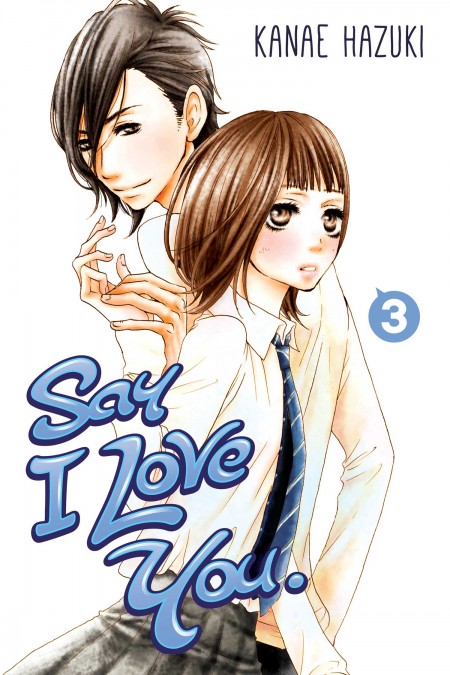
sayiloveyou9Say I Love You., Vol. 9 | By Kanae Hazuki | Kodansha Comics – It’s a rare thing that I feel bad for a romantic rival in a shoujo manga, particularly one with a track record of nastiness like Megumi’s, but when her contest-winning “date” with Yamato makes inescapably clear there’s no room for her in his heart, she earns my sympathies. Despite trading on her cute looks, she wants someone who looks past her appearance to really see her, and that’s something the Kurosawa boys seem genetically disposed to do, as the rest of the volume tells the story of Yamato’s brother, Daichi, and the love he once had, then lost, and is now struggling to move on from. In a way, this reminds me of Hatori’s story in Fruits Basket, and I wonder if we’ll check in with him from time to time, as he lets down his walls and achieves happiness once more. I really enjoy this series. – Michelle Smith

skipbeat35Skip Beat!, Vol. 35 | By Yoshiki Nakamura | VIZ Media – Much as I love Skip Beat!, I have mixed feelings about this volume. On the one hand, Ren talking to Kyoko in the guise of Corn the fairy allows him to admit his feelings freely and also to make progress toward accepting that his terrible past experiences were necessary to get him where he is today, where he was able to meet Kyoko. On the other, Ren is tricking Kyoko, using her unquestioning belief in fairies to explain away his appearance and manufacturing a story about a curse in order to manipulate her into kissing him. When she is exceedingly reluctant, this grown man literally says to a teenage girl, “Liar. You said you’d do anything to help me but you didn’t mean it.” Of course, he instantly feels bad about it, but ugh. I hope she is righteously pissed off when she eventually learns the truth. – Michelle Smith

Filed Under: Bookshelf Briefs

Sword Art Online, Vol. 5: Phantom Bullet

September 1, 2015 by Sean Gaffney

By Reki Kawahara and abec. Released in Japan by ASCII Mediaworks. Released in North America by Yen Press.

I had wondered at the end of Fairy Dance how the series would justify there being more MMORPGs and not just having the entire virtual genre banned due to massive deaths. Well, Phantom Bullet answers that – the Seed that Kirito got from SAO’s creator is now all over the world, and basically the genre has ballooned to the point where it’s impossible to legislate – much like the internet, actually. As a result, more and more people are doing different types of games, including Gun Gale Online, the FPS that’s featured in this next arc. It’s not really Kirito’s genre, but he’s become a sort of government gun-for-hire (he feels he owes them due to the help he got rescuing Asuna), and he has to go into GGO to find out who might be, once again, killing players in real life. The answer turns out to be something a lot closer to the old SAO game than Kirito expected.

sao5

Once again, anime fans may be well ahead of light novel readers. In the LN continuity, this is the first we’ve heard of Laughing Coffin, the guild in SAO made up of players who kill for the thrill of it. The anime needed to pad out its episode count, and to be fair it’s a great way to do it, so added the guild to its ongoing story. Even SAO Progressive’s novels have introduced what may be a precursor to the guild in the volume out this June. So seeing it here is not as much of a surprise as it is seeing how they’re once again succeeding in remotely killing people, and we’re not even sure how yet. It also triggers a bit of PTSD in Kirito, who is still having issues coping with the fact that he had to kill several times over the course of SAO. Which leads nicely into his heroine this time around.

Asuna and Kirito complement each other well, but only share a few similarities. The same could be said of Kirito and his sister suguha. Shino Asada, though, aka Sinon, is a lot closer to Kirito. Like him, she’s naturally quiet and introverted except when in the confines of a game. Also, like his current self, she’s coping with PTSD, this one stemming from a real world incident when she shot a bank robber to death in order to stop him killing her mother, and found that Japan now regarded her as a monster. That said, like Asuna, she reacts poorly to embarrassment and the author attempting to be funny. I don’t blame her for that, really. And like Suguha, she has a ‘nice guy’ real-life wannabe boyfriend who I suspect will, also like Suguha, come second place to Kirito.

My experience of FPS games is next to nothing, so I’ve no idea how well the Gun Gale Online concept works as a system. It does make for exciting action scenes, including the final duel between Kirito and Sinon, framed as a bit of a wild west duel. The novel does not so much end as stop, and it’s clearly another two-volume arc which we’ll need to resolve in December. Still, there was no nasty cliffhanger. And no threats of rape, always a good thing. I’m sure we can keep that up for next volume. (Yes, I’m being sarcastic, do not reply in the comments.) If you like SAO and were irritated by Fairy Dance, you might want to give Phantom Bullet a try – Sinon is another in a line of very different heroines. I wish she got the cover, though, even if she is wearing a battle bikini with bulletproof vest combo.

Filed Under: REVIEWS

My Week in Manga: August 24-August 30, 2015

August 31, 2015 by Ash Brown

My News and Reviews

Last week was a bit slow at Experiments in Manga as I decided to take it a little easy on myself, but I did still post a couple of things in addition to the usual My Week in Manga feature. The most recent manga giveaway was posted, for one, and there’s still time to enter for a chance to win a complete set of Yumi Tamura’s shoujo action thriller Chicago. I also posted an in-depth review of Minae Mizumura’s award-winning A True Novel which I absolutely loved. In part it’s a reimagining of Emily Brontë’s Wuthering Heights set in postwar Japan, but it’s not at all necessary to have read Brontë’s novel to appreciate Mizumura’s work.

Elsewhere online, Mangabrog has posted a translation of an interview of Parasyate‘s Hitoshi Iwaaki from 2005. Justin interviewed Sekai Project for Manga Bookshelf about the company entering the manga market. In licensing news, Kodansha Comics has picked up some Fairy Tail and Noragami side stories and Vertical Comics confirmed its acquisition of Maybe’s The Abandoned Sacred Beasts. Also of note, Humanoids will be releasing an anthology in 2016 called The Tipping Point which will include contributions from mangaka Katsuya Terada, Naoki Urasawa, Taiyo Matsumoto, and Atsushi Kaneko in addition to other comics creators from Europe and the United States.

Quick Takes

Dorohedoro, Volume 13Dorohedoro, Volumes 13-16 by Q Hayashida. Even though I love Dorohedoro, it’s been a while since I’ve read the series; I like to save up a few volumes to read all at once. The manga is now entering what I believe will be its final story arc. Granted, Dorohedoro tends to be all over the place with all sort of plot lines weaving in and out, so its difficult to identify distinct story arcs, but Hayashida is now bringing it all back together again. She’s even tying in what initially seemed to be extraneous side stories from earlier in the series more cohesively. Dorohedoro is such a bizarre manga, somehow managing to be sweet and charming at the same time it is disgusting and grotesque. Hayashida’s artwork is marvelous, creating horrific, nightmare-inducing images and an atmosphere that’s dank, dirty, and dingy. But the series is also fun and funny, with a quirky sense of humor and a peculiar fixation on food. At this point, though there is still comedy, Dorohedoro is actually getting pretty serious and dramatic. En’s dead and the rest of the family is currently homeless and on the run; the Cross-Eyes have taken over, but they seem to be losing control of the extremely deadly situation.

Evyione: Ocean Fantasy, Volume 1Evyione: Ocean Fantasy, Volume 1 by Young-Hee Kim. Back in the day, Udon Entertainment had a line of manwha which, sadly, didn’t end up going very far. Tragically, only the first volume of Kim’s twelve-volume series Evyione: Ocean Fantasy was translated and released. It’s admittedly disappointing that there isn’t more, but the first volume of Evyione serves as a sort of prologue and is well worth checking out even though the rest of the story will likely never be translated. The manhwa is in part inspired by Hans Christian Andersen’s The Little Mermaid except that in the case of Evyione, it’s the king of the sea who has fallen in love with a human princess. The artwork in the series is stunningly gorgeous. The ocean scenes and merfolk are beautiful, sensuous, and slightly disconcerting. There’s a touch of horror to the king’s transformation into a human, keeping with the darker aspects of the original story. On land, Kim pays particular attention to the characters’ clothing and attire, the dresses especially are intricately detailed. Although Evyione is obviously based on The Little Mermaid, it’s not a simple retelling and incorporates political and court intrigue as well as additional plot elements.

Say I Love You, Volume 9Say I Love You, Volume 8 by Kanae Hazuki. I continue to really enjoy Say I Love You. Hazuki’s forthright portrayal of teenage sexuality in particular tends to be handled quite well. After focusing on some of the series’ supporting characters, the eighth volume of Say I Love You largely turns its attention back to Mei. Most of the volume is dealing with a popularity contest being held as part of the school festival that thrusts Mei into the spotlight when she becomes a finalist—some students voting for her because they like her, and some students voting for her in hopes that she will utterly embarrass herself. Yamato is a participant in the contest as well and out of all of the boys he’s expected to win, meaning he’ll be going on an arranged date with whichever girl receives the most votes. All together, this is a very challenging situation for Mei. She doesn’t really want all of the attention and yet she feels compelled to try to win. Hazuki avoids the pitfall of a makeover suddenly changing a person into someone completely unrecognizable. It’s not so much that Mei’s outward appearance is drastically altered, it’s that she’s starting to overcome some of her insecurities and reclaim her femininity for herself.

Filed Under: FEATURES, My Week in Manga Tagged With: dorohedoro, evyione, Kanae Hazuki, manga, manhwa, Q Hayashida, Say I Love You, Young-Hee Kim

A True Novel

August 28, 2015 by Ash Brown

A True NovelAuthor: Minae Mizumura
Photographer: Toyota Horiguchi

Translator: Juliet Winters Carpenter
U.S. publisher: Other Press
ISBN: 9781590512036
Released: November 2013
Original release: 2001
Awards: Yomiuri Prize for Literature

So far, only two works by Minae Mizumura have been translated into English. The first was the Yomiuri Prize-winning A True Novel. Originally published in Japan in 2002, A True Novel was selected for translation as part of the Japanese Literature Publishing Project. The novel was ultimately released by Other Press in 2013 with an English translation by Juliet Winters Carpenter. Other Press’ edition of A True Novel is a lovely two-volume box set retaining the black-and-white images taken by Kyoto-based photographer Toyota Horiguchi scattered throughout the pages. Mizumura’s second work to be translated, her treatise The Fall of Language in the Age of English, was published in early 2015. It was the release of The Fall of Language in the Age of English that reminded me that A True Novel had been sitting on my shelf waiting to be read for quite some time. My excuse was that I wanted to make sure that I had the time to devote to the novel that it deserved—A True Novel is a massive work well over eight hundred pages in length.

Taro Azuma immigrated to New York from Japan in the 1960s, finding a position as a personal chauffeur. Not much was known about the enigmatic young man and he was reluctant to talk about his past, but he did very well for himself in America, eventually becoming an extremely successful, wealthy, and respected businessman. It’s only after he made a name and a fortune for himself that he began to return to Japan on occasion. Growing up Taro was an orphan raised in a poor and abusive household. His fate was changed when he was taken in as a helper by the well-off Utagawa family, becoming remarkably close with their youngest daughter Yoko. But as time passed, the differences between Taro and Yoko’s social classes became more pronounced and more problematic for the Saegusas—Yoko’s high-society relatives—especially after a series of “indiscretions.” This was what prompted Taro to initially leave the country, but his destiny had already become intrinsically connected to those of Yoko and her family.

In part, A True Novel is a retelling of Emily Brontë’s Wuthering Heights, Mizumura moving the setting of the story from nineteenth-century England to postwar Japan. While someone who has read Wuthering Heights will be able to appreciate the parallels between the two narratives, A True Novel stands completely on its own as a separate work. It’s been a long while since I’ve read Wuthering Heights, but I must say I think I actually prefer A True Novel. The structure of the novel has several layers that build upon one another. The story opens with an autobiographically-influenced prologue long enough to be its own novel which outlines Mizumura’s life growing up in America and her impression of Taro when she meets him there. A True Novel continues with a young editor named Yuske Kato relating to Mizumura his later encounter with Taro in Japan and the story told to him by Fumiko Tsuchiya who at one point in her life was a maid to the Utagawas. It is these two stories that Mizumura weaves together to form the main narrative of A True Novel.

Each of the three nested stories—Mizumura’s, Yusuke’s, and Fumiko’s—draws the reader closer and closer to the heart of A True Novel. The work is tragically romantic, Yoko and Taro born into circumstances where their love for each other is all but impossible to realize, their hopes for happiness dashed by the expectations of society and matters of privilege and class. The characters and their relationships in A True Novel are marvelously complex with love and hate, redemption and revenge all playing a role. At times they can actually be infuriating, but that’s part of the reason A True Novel is so compelling and engaging—the characters are believably flawed individuals navigating (not always successfully) a world that is inherently unfair. A True Novel is a tremendous work, the story tracing decades of family history and drama and the dynamics of complicated and shifting relationships. The novel may be lengthy, but it never felt overly long. If anything, while I was immensely satisfied I was still sad to see it end. A True Novel may very well be one of the best works of literature that I’ve read.

Filed Under: REVIEWS Tagged With: Minae Mizumura, Novels, Yomiuri Prize for Literature

Manga the Week of 9/2

August 26, 2015 by Sean Gaffney, Ash Brown, Anna N, MJ and Michelle Smith Leave a Comment

SEAN: School’s back in session. Do you have all your manga supplies? The old favorites? The new series? The zipatone? Let’s see what you might want to pick up.

Dark Horse still knows we like our samurai manga with the 6th New Lone Wolf & Cub.

ASH: I’m still catching up with the old school Lone Wolf & Cub, but I’m picking up this series, too.

nsk1

SEAN: Kodansha debuts a new series called Ninja Slayer Kills, based off of a concept by two Americans who I suspect are imaginary. It also has a novel series later this year from Vertical, and seems to be very much in the ‘flashy action sequences’ genre.

ASH: Actually, I think Vertical has one of the other manga adaptations. But, yes, lots of action.

SEAN: Kodansha also has the fourth volume of Yamada-kun and the Seven Witches. We’re still running a few witches short.

ASH: This series has been a lot of fun so far.

SEAN: Slightly creepy power imbalance aside, I really enjoyed the first volume of The Ancient Magus’ Bride from Seven Seas, so the 2nd volume coming out pleases me greatly.

ANNA: I enjoyed the first one too. I like these low-key fantasy series, they remind me of the type of thing CMX used to put out (RIP).

ASH: The first volume was one of my favorite debuts this year, so I’m definitely looking forward to the second!

MJ: I will have to catch up with this one for sure!

SEAN: And a 6th omnibus of Dance in the Vampire Bund, which combines lolis and vampires to devastating effect, or so I hear.

Now it’s time for our slate of Viz. There’s new 3-in-1s of Dragon Ball (the 10th), Naruto (the 12th, and One Piece (the 13th). Good buys if you want to save shelf space.

Kimi ni Todoke has a 22nd volume, and I really hope that a plot point suggested by the cliffhanger happens, for the sake of my own sanity.

MICHELLE: Volume 21 was great, if painful, so I am very much looking forward to another installment.

ANNA: I have around 3 volumes now I need to read to catch up. I think I was staying away from the emotional trauma. I do love this series.

MJ: I live for this kind of pain.

SEAN: Kiss of the Rose Princess 6… I admit I’ve lost track of this series. Anna?

ANNA: What’s going to happen with the Junk Rose Princess and her Four Fake Rose Knights? Now that some of Anise’s Rose Knights are powered up even more, will this throw off the dynamics in this fun and frothy reverse harem manga? Is Anise’s father really as evil as he seems? How does one engineer Rose people? How many cards can Anise collect? I don’t know but I want to find out!!!!!

SEAN: Komomo Confiserie is the new series from Maki Minami, author of Special A and Voice Over. Given that title, I’d expect food to be involved. Always love stuff from this author.

MICHELLE: I loved Voice Over! way more an I expected to, and am looking forward to Komomo Confiserie quite a lot!

ANNA: I liked Voice Over, but not enough to complete the series. On the other hand I love food manga so I will be checking this out.

ASH: Food! Pastries! Cakes!

SEAN: Nisekoi barrels along with an 11th volume, being the rare Jump romantic comedy that doesn’t die in North America (see Strawberry 100% for the fate of prior comedies of that sort).

onepunch1

After getting a few volumes out digital-only, print readers are now able to experience the gloriousness that is One-Punch Man, with its first two volumes coming out together.

ANNA: One-Punch Man is the best. It totally deserves the print edition and I hope more readers discover it because it is hilarious.

ASH: I’ve been holding out for the print edition; can’t wait to finally read it!

MJ: Same here!

SEAN: Seraph of the End gets a 6th volume. Vampires? Still? Dunno.

ANNA: Not surprisingly, I enjoy this a bunch. It has more world building than most vampire manga. Looking forward to this volume.

SEAN: Skip Beat! has a 35th volume, edging closer to the longest shoujo series in North America (Boys Over Flowers still tops it right now, I think).

MICHELLE: You are right; if you include Jewelry Box, Boys Over Flowers has 37 volumes. Also, yay Skip Beat!.

ANNA: Skip Beat! is so great. May it go on for 35 volumes more!

MICHELLE: Hear, hear!

SEAN: There’s also an 18th volume of Tegami Bachi.

Lastly, you thought there would be no Yu-Gi-Oh? Foolish mortal! Here’s Vol. 7 of Zexal.

What manga makes you want to learn logarithm tables? (None of them, I imagine, unless you have the old Math Girls manga volume.)

ASH: I in fact DO have the old Math Girls volume!

MJ: Same! :D

Filed Under: FEATURES, manga the week of

Manga Giveaway: Yumi Tamura Giveaway

August 26, 2015 by Ash Brown

It’s almost the end of the month which means it’s yet again time for another giveaway at Experiments in Manga. This month I’m offering up an entire series: Yumi Tamura’s two-volume shoujo action thriller Chicago! The series was released in English by Viz Media a decade or so ago, but is now out of print. This month’s giveaway will give you a chance to snag a complete set of the manga. And, as always, the giveaway is open worldwide!

Chicago, Volume 1: The Book of SelfChicago, Volume 2: The Book of Justice

Chicago probably wouldn’t have come across my radar if it wasn’t for the fact that it was created by Yumi Tamura. Tamura is also the mangaka of Basara, a series that I absolutely love. Back when I was trying to track down some of the harder-to-find print volumes of Basara (the print edition is going out of print, but a digital version is now available), I discovered that Tamura’s Chicago and Wild Com. had also been translated. And so, simply because I enjoyed Tamura’s work so much on Basara, I picked them up. There are other mangaka whose work I will read no matter what it is, too, including but certainly not limited to Moyoco Anno, Usamaru Furuya, Fumi Yoshinaga, and Takeshi Obata. It can be interesting to see both the similarities and differences among the manga created by the same person; some mangaka have an incredible range.

So, you may be wondering, how can you win Yumi Tamura’s Chicago?

1) Are there any mangaka whose work you enjoy so much that you make a point to read anything they create? If so, tell me a little about them and what you like about their manga in the comments below. (If not, you can simply mention that.)
2) If you’re on Twitter, you can earn a bonus entry by tweeting, or retweeting, about the contest. Make sure to include a link to this post and @PhoenixTerran (that’s me).

There you go! It’s as easy as that. You all have one week to submit comments and each person can earn up to two entries for this giveaway. If you have trouble with the comment form, or if you would prefer, entries can also be sent directly to me at phoenixterran(at)gmail(dot)com. I will then post the comments here in your name. The giveaway winner will be randomly selected and announced on September 2, 2015. Good luck to you all!

VERY IMPORTANT: Include some way that I can contact you. This can be an e-mail address in the comment form, a link to your website, Twitter username, or whatever. If I can’t figure out how to get a hold of you and you win, I’ll just draw another name.

Contest winner announced–Manga Giveaway: Yumi Tamura Giveaway Winner

Filed Under: FEATURES, Giveaways Tagged With: Chicago, manga, Yumi Tamura

Is It Wrong To Try To Pick Up Girls In A Dungeon?, Vol. 3

August 26, 2015 by Sean Gaffney

By Fujino Omori and Suzuhito Yasuda. Released in Japan as “Dungeon ni Deai o Motomeru no wa Machigatte Iru Darou ka?” by Softbank Creative. Released in North America by Yen On.

The thing that struck me most about the third volume of this light novel series was how tightly paced the whole thing is. The second book followed directly from the first, and this one follows on right from the second, with Bell and Lily discussing the fallout of her leaving the Soma family, and introducing her to Hestia. The narrow focus allows us to really get a handle on Bell, his desire to be the best, and his frustration at being unable to progress as fast as he’d like – this despite the fact that he is making the fastest progress in the history of this world. Many overpowered light novel protagonists try to balance their perfect heroes with a massively low self-image, and Bell is no exception. He’s getting there, though – his goal isn’t to get a harem anymore, it’s to be a hero.

danmachi3

Of course he’s getting the harem anyway, though he’s totally unaware of this. Hestia and Lily jealously jockeying for position is highly amusing, though once again Hestia is very much a minor character in the book. This is surprising given how much her popularity has exploded in Japan – you’d think she were the only character. Instead, this time around we get a closer look at the mind of Aiz Wallenstein. While she’s not exactly knocked off the pedestal that Bell has put her on yet, he is at least starting to realize that Aiz is quite eccentric in her emotionally stunted way. Another comedy highlight is seeing Aiz beat the tar out of Bell over and over, and his waking up with his head in her lap then freaking out. It’s also a good plot moment, as Aiz really wants to find out how Bell is getting so good so fast – he learns from her teachings (which are mostly “I beat you up a lot”) astonishingly well.

Then there’s the minotaur. The series began with Bell about to die from having a run-in with one of these, and Freya’s underling Ottar is convinced that it’s his fear of that incident that is stopping him from progressing even faster. So, the decision is simple. Have him face off against another one. If he dies, oh well, he wasn’t worthy of Freya. Of course bell does not die. The sequence is utterly badass, even more so that it happens in front of the high-level adventurers of Loki’s family, who offer a running commentary. I will admit that the book pretty much stops right after the fight, as if the author is working to a set page count. But it’s a great fight to go out on. Oh, and I have a suspicion about Bell’s grandfather. Let’s just say I think I know his name, and I bet he’s gotten a harem by appearing as a bull or swan.

Again, I remain very surprised at how good this series has gotten, particularly with that cliched light novel title. Which was apparently by editorial fiat, I’ve found out. If you love fantasy series, absolutely give this a try.

Filed Under: REVIEWS

Why Sekai Project Is Entering The Manga Industry

August 25, 2015 by Justin Stroman Leave a Comment

Gate 1 Gate 2

A lot of announcements happened at Anime Expo, San Diego Comic Con, and Otakon. Arguably the biggest announcement (not to actually shortchange what WAS announced) was the revelation of a new player in the manga industry. If you’ve heard of Sekai Project, you may be a bit more familiar with them bringing over visual novels, but at Otakon, they announced they will be dipping their toes into the market by licensing GATE, which just so happens to be streaming on Crunchyroll.

So…why is Sekai Project entering the manga industry? What is GATE all about? And when’s it going to come out? Well, I got in touch through email with publishing director Evan Mapoy, and the former Digital Manga marketing manager answers these questions and a few more.

…

Read More

Filed Under: FEATURES Tagged With: Alpha Polis, GATE, gate jieitai kanochi nite kaku tatakaeri, It's based off a novel series everybody, Sekai Project, Sekai Project interview, Why Sekai Project Is Entering The Manga Industry

My Week in Manga: August 17-August 23, 2015

August 24, 2015 by Ash Brown

My News and Reviews

Last week Experiments in Manga reached its fifth anniversary, so I wrote a somewhat lengthy post about what I’ve been up to online and offline over the last year. Thank you again to everyone who has shown support and encouragement for Experiments in Manga over the years. Apparently, people actually want to see another five years, so I guess I better get to work on that. With that in mind, have two more in-depth reviews! Last week I took a look at Rikao Yanagita’s surprisingly entertaining The Science of Attack on Titan, one of the two non-manga books that Kodansha Comics has released so far. (The other one was related to Attack on Titan, as well.) I also reviewed Baku Yumemakura and Jiro Taniguchi’s The Summit of the Gods, Volume 5, which is the final volume in one of my favorite series. The writing and artwork in The Summit of the Gods is superb; I’m so glad that the entire manga is now available in English.

A few other things caught my eye online last week. Mangabrog has translated an article from 2013 that provides a tour through Inio Asano’s workspace. More information has been revealed about Kodansha’s digital efforts and the publisher is aiming high: digital editions of two thousand volumes translated into English by the end of 2017. Occasionally manga makes its way to NPR (which I believe is how I actually first learned about and became interested in Death Note). Most recently, one of NPR’s contributors featured a few great romantic manga: Kaoru Mori’s Emma, Ichigo Takano’s Orange, and Ai Yazawa’s Nana. I haven’t had a chance to read Orange yet, but considering the quality of Emma and Nana, I’m now looking forward to Seven Sea’s upcoming print release of the series even more. The game of manga tag continues to make it rounds, this time Narrative Investigations’ Helen tackles the questions.

Quick Takes

Castle Mango, Volume 2Castle Mango, Volume 2 written by Narise Konohara and illustrated by Muku Ogura. While I liked the first volume of Castle Mango, I really enjoyed the second and final volume of the series. Castle Mango is an unusual boys’ love manga; most of it doesn’t have anything to do with romance. The close relationship between Yorozu and Togame begins with a terribly manipulative lie, but it eventually develops into something real for both of them. In the first volume, the two men frequently seemed to have an almost father-son sort of vibe, but by the end of the series I was slightly more convinced by their intimacy as boyfriends. It does take a little while to get there though; they spend a large portion of the second volume apart. Togame is trying to give Yorozu space, feeling that it’s in the younger man’s best interest, but he doesn’t really go about it in the best way. Unfortunately, this is happening at the same time that Yorozu is struggling to take care of his little brother and his family’s business (a love hotel) when his mother is hospitalized. Yorozu is in the process of shedding the last of his immaturity and makes some terrible decisions in the process. In many ways, Castle Mango is more about Yorozu’s growth as a person than anything else.

Give to the Heart, Volume 1Give to the Heart, Volumes 1-4 by Wann. After a long period of silence, about a year ago Netcomics quietly began publishing books in print again. Give to the Heart was the first manhwa to be released after the publisher’s hiatus. I was interested in reading the series because I wanted to support Netcomics, but also because it was created by Wann. (I had previously read and thoroughly enjoyed Wann’s collection of short manhwa 9 Faces of Love.) At first Give to the Heart seemed like it was going to largely be fantasy fiction, but as the series progresses, more and more science fictional elements are introduced. The ongoing story is about Sooyi, a young woman who became the wife of Ganok, the demon king who controls all water, but who is now attempting to escape him. Not only that, she is trying to find a way to kill him as well, or at least cause him as much pain as possible even if that means sacrificing her own life in the process. Though it is implied that Sooyi and Ganok were at one point content and happy as a pair, their current relationship obviously has its problems. Actually, considering the extreme imbalance of power between them—Ganok being a cruel god and Sooyi being a human with a strong will—that’s been true from the very beginning.

My Little Monster, Volume 9My Little Monster, Volume 9 by Robico. So, Haru and Shizuku are now officially a couple, although not much has actually changed in their relationship. But now that that has been settled, the other romantically interested parties are more or less able to move on with their lives. As a result, the plot of My Little Monster is now able to move along as well. This particular volume includes summer vacations and festivals, which is fairly standard for a high school romance, but Haru’s family drama is starting to come to the forefront of the story again. Underneath the humor of My Little Monster there seems to have been something ominous lurking waiting to be revealed. Haru’s brother Yuzan isn’t as terrifying as he once was, but there is definitely something going on between him and Haru and with Haru’s reluctance to interact with the rest of his family. Haru is trying to keep Shizuku from finding out the details, though eventually he’s really going to need to come clean with her and explain his situation. But, while Shizuku is still in the dark, at least readers get to learn a bit more. I continue to enjoy My Little Monster, especially the series’ quirky characters, and I’m happy to see the manga continue to gain some forward momentum.

Filed Under: FEATURES, My Week in Manga Tagged With: Castle Mango, Give to the Heart, manga, manhwa, Muku Ogura, My Little Monster, Narise Konohara, Robico, Wann

Cosplay Basics

August 23, 2015 by Anna N

Cosplay Basics by by Yuki Takasou, Rumine, and Kashiko Kurobuchi

This is an English translation of a Japanese book that provides an introduction to cosplay with chapters on tips, shopping, and costume construction, interspersed with short manga chapters showing a seasoned cosplayer showing a newbie the ropes. A magical girl character is used as the focus for the whole book, so this will be most useful for folks who are interested in feminine cosplay.

I don’t think anyone would really be able to construct a costume from start to finish with only the information given in this book, as there’s not enough detailed information given about measuring yourself, making patterns, adjusting fit, etc. There are several sections with step-by-step instructions, but I think someone making pattern pieces based on the information in the book would need to do a bit of experimenting on their own to come up with something usable. But like the title suggests, it does provide a basic overview of the topic, and a reader would be able to take the terminology in the book and then look up a more detailed youtube tutorial about placing darts, for example. There are sections dedicated to cosplay specific topics like wig styling, photographing etiquette, posing like your character, and now to retouch your own photos of your cosplay before you post them online.

Cosplay Basics would be a good addition to library collections for libraries that have active anime clubs or other similar programming like ToshoCons. If I had a young teen newbie cosplayer to hand a book to, I would probably combine this volume with another book that had more of a general focus on sewing and construction principles. The short chapters combined with manga make it easy to dip in and out of the book while exploring different aspects of cosplay.

Filed Under: REVIEWS Tagged With: One Peace Books

  • « Go to Previous Page
  • Page 1
  • Interim pages omitted …
  • Page 304
  • Page 305
  • Page 306
  • Page 307
  • Page 308
  • Interim pages omitted …
  • Page 538
  • Go to Next Page »
 | Log in
Copyright © 2010 Manga Bookshelf | Powered by WordPress & the Genesis Framework