• Skip to primary navigation
  • Skip to main content
  • Skip to primary sidebar
  • Home
  • About Us
    • Privacy Policy
    • Comment Policy
    • Disclosures & Disclaimers
  • Resources
    • Links, Essays & Articles
    • Fandomology!
    • CLAMP Directory
    • BlogRoll
  • Features & Columns
    • 3 Things Thursday
    • Adventures in the Key of Shoujo
    • Bit & Blips (game reviews)
    • BL BOOKRACK
    • Bookshelf Briefs
    • Bringing the Drama
    • Comic Conversion
    • Fanservice Friday
    • Going Digital
    • It Came From the Sinosphere
    • License This!
    • Magazine no Mori
    • My Week in Manga
    • OFF THE SHELF
    • Not By Manga Alone
    • PICK OF THE WEEK
    • Subtitles & Sensibility
    • Weekly Shonen Jump Recaps
  • Manga Moveable Feast
    • MMF Full Archive
    • Yun Kouga
    • CLAMP
    • Shojo Beat
    • Osamu Tezuka
    • Sailor Moon
    • Fruits Basket
    • Takehiko Inoue
    • Wild Adapter
    • One Piece
    • After School Nightmare
    • Karakuri Odette
    • Paradise Kiss
    • The Color Trilogy
    • To Terra…
    • Sexy Voice & Robo
  • Browse by Author
    • Sean Gaffney
    • Anna Neatrour
    • Michelle Smith
    • Katherine Dacey
    • MJ
    • Brigid Alverson
    • Travis Anderson
    • Phillip Anthony
    • Derek Bown
    • Jaci Dahlvang
    • Angela Eastman
    • Erica Friedman
    • Sara K.
    • Megan Purdy
    • Emily Snodgrass
    • Nancy Thistlethwaite
    • Eva Volin
    • David Welsh
  • MB Blogs
    • A Case Suitable For Treatment
    • Experiments in Manga
    • MangaBlog
    • The Manga Critic
    • Manga Report
    • Soliloquy in Blue
    • Manga Curmudgeon (archive)

Manga Bookshelf

Discussion, Resources, Roundtables, & Reviews

Features & Reviews

How To Raise A Boring Girlfriend, Vol. 1

February 7, 2016 by Sean Gaffney

By Fumiaki Maruto and Takeshi Moriki. Released in Japan as “Saenai Kanojo no Sodatekata” by Kadokawa Shoten, serialization ongoing in the magazine Dragon Age. Released in North America by Yen Press.

I think you have to be very careful when part of your work has “boring” in the title. I’m not sure if the original Japanese conveys quite the same meaning, but if the core of the work is that you feature a heroine who is meant to be uninteresting, then you’re already climbing up a larger hill than normal. Now, of course, this is something of a comedy, and the point of the whole exercise is that we have a hero who is surrounded by stereotypes of the standard light novel girl, and yet he decides to take the average, nebbish girl and turn her into heroine material. Unfortunately, at least by the end of this first volume, most of what I get from it is that the other two girls really *are” more interesting.

saekano1

That is not, of course, the boring girl in the foreground – it’s Eriri, the hero’s tsundere childhood friend who’s a famous doujinshi artist who has at least four different traits for a harem romance. The actual boring girl is sitting in the seat at the back. Our hero’s other close friend is Utaha, who is a bestselling novelist and fills the ‘cool yet snarky’ part of the otaku equation. Naturally, they dislike each other hovering over our hero Tomoya, who is something of an otaku who has grand ideals for a dating sim, but no actual talent to turn them into anything beyond cliches. He needs his two friends to actually do the work and make it good… particularly since his heroine in this dating sim is based on Megumi, who is simply there.

This is one of those series where Yen On did not pick up the light novel it’s based on, and I suspect that it would do better without the manga format. The writer of the original story jokes about the fact that the titular heroine “will never be in the center of the panel frame”, but even a cursory glance can tell you that’s not true – Megumi is present and paid attention to throughout, she’s just dull. This is the sort of series that cries out for exaggeration, and I could see her being drawn in a way like Sunako from The Wallflower, who only appears out of “superdeformed” mode in cool moments. Instead, Megumi’s presence and the delivery of the lines feel like the author explaining a joke that isn’t as good as they think it is. The premise is that we’re meant to wonder why this obvious visual novel hero is pulling away from the two cliched girls to find the ordinary one. But as a reader, I know why – cliched or not, Eriri and Utaha are far more interesting than Megumi is, and I’d like to actually know about *them*. Saekano (not to be confused with apocalyptic romance Saikano) sells its tedium a bit too well.

Filed Under: REVIEWS

Tokyo Decadence: 15 Stories

February 5, 2016 by Ash Brown

Tokyo Decadence: 15 StoriesAuthor: Ryu Murakami
Translator: Ralph McCarthy
U.S. publisher: Kurodahan Press
ISBN: 9784902075786
Released: March 2016
Original release: 1986-2003

Ryu Murakami is a fairly prolific and multi-talented creator. In addition to being an author, he is also a filmmaker and has been involved in the music industry as well. Several of Murakami’s novels have been translated into English, many of them by Ralph McCarthy, including Audition and Popular Hits of the Showa Era which were my introduction to Murakami’s work. McCarthy is also responsible for compiling and translating Tokyo Decadence: 15 Stories, a sort of best-of collection bringing together fifteen of Murakami’s short stories originally published in Japan between 1986 and 2003. Nine of the stories had previously been translated and released in a variety of different periodicals, but the translations have been revised for their inclusion in Tokyo Decadence. The remaining six are being published in English for the first time. Published by Kurodahan Press in 2016, I was fortunate enough to be selected to receive an advanced copy through LibraryThing’s Early Reviewers program.

The fifteen stories included in Tokyo Decadence are selected from five of Murakami’s short story collections and are presented chronologically. “Whenever I Sit At a Bar Drinking Like This,” “I Am a Novelist,” “It All Started Just About a Year and a Half Ago,” and “Each Time I read Your Confession” are from Run, Takahashi! and are all at least tangentially related to the baseball player Takahashi Yoshihiko. (It was this collection that seems to have ignited McCarthy’s passion for Murakami’s work.) The stories from Topaz—”Topaz,” “Lullaby,” and “Penlight”—are about call girls while the stories from Ryumiko’s Cinematheque—”The Last Picture Show,” “The Wild Animals” and “La Dolce Vita”—would appear to be at least semi-autobiographical. “Swans,” “Historia de un Amor.” “Se Fué,” and “All of Me” are taken from Swan, and most have something to do with Cuban dance and music and even share a few characters. Tokyo Decadence closes with the titular story from the collection At the Airport.

Having previously read some of Murakami’s work, I was rightfully prepared for Tokyo Decadence to be engaging while revealing a viciously dark sense of humor and dealing in gut-churning blood and gore. What I didn’t expect was that some of the stories, or at least parts of those stories, would be legitimately charming, compelling, and even occasionally heartwarming. Among the tales of gruesome murder, insanity, lust, obsession, and a myriad types of abuse are moments of love and humanity. That being said, Tokyo Decadence is very much a graphic and explicit collection of mature short stories, often disturbing and dark with very few characters who are anything but self-absorbed or self-indulgent. The stories are well-written, but the warped depravity and intensely twisted psychology exhibited will certainly not be to every reader’s taste and will likely offend or be found off-putting by many.

Surprisingly, Tokyo Decadence starts in a fairly lighthearted vein before delving into its more devastating and grotesque aspects. The portrayals of the various characters in the collection aren’t particularly flattering. Many of them are rather disturbed individuals, making Murakami’s use of first-person narration especially discomfiting. Interestingly, quite a few of the stories are actually seen from a woman’s perspective. This of course doesn’t soften the seedier nature of Tokyo Decadence which is quite frank in its exploration of sex and violence, the two subjects often closely intertwined with each other. Although some of the stories arguably lose some of their impact out of context from their original collections, overall I found Tokyo Decadence to be an interesting, engaging, and varied anthology; I would be very curious to read more of Murakami’s short fiction in translation.

Thank you to Kurodahan Press for providing a copy of Tokyo Decadence for review.

Filed Under: REVIEWS Tagged With: Kurodahan Press, Ryu Murakami

Manga the Week of 2/10

February 4, 2016 by Sean Gaffney, Ash Brown, Michelle Smith, MJ and Anna N 1 Comment

SEAN: Next week and the week after are blissfully small, allowing most of us to recover from the hideous amount of manga that we still have to read. This does not mean there are not some interesting things coming out, however.

Fans of Berserk might be interested in the new science fiction manga by its creator, called Giganto Maxia. Kate Dacey already gave it a review here.

ASH: As a fan of Berserk, I’m definitely interested in this, but Miura’s other manga have been pretty hit-or-miss for me.

SEAN: Seven Seas has a third volume of fantasy parody-ish manga 12 Beast.

angelbeats

Their new title this week is Angel Beats! Heaven’s Door, based on the visual novel by Key. Whenever I see the words ‘visual novel’ and ‘Key’ together, I know I’m in for some tear-jerking, heartwarming tragedy, and I suspect that will be the case here as well.

There’s a 2nd volume of fantasy Mushoku Tensei.

SubLime, which has been awfully quiet recently, has a 5th volume of Awkward Silence, which is what happens when I ask out loud why they’ve been so quiet recently.

ASH: Not my favorite Takanaga manga, but it does have it’s charm.

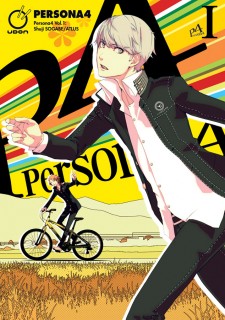
SEAN: Udon gives us the debut of the Persona 4 manga in North America, and get ready for me to be saying ‘Persona’ quite a bit this year, as other companies are also dipping their toe into those waters.

ASH: I know quite a few Persona fans, so I’m actually rather curious about this release despite never having played the game myself.

SEAN: Viz time. We have reached the end of Deadman Wonderland with the 13th volume, and I can only assume they’re out of prison at last?

Hayate the Combat Butler continues to not sell well enough to have more than 2 volumes a year, but well enough not to be cancelled. Here’s a 27th volume.

Lastly, there’s a 16th volume of one of my favorites, Magi.

MICHELLE: I guess this is the only thing I’m buying this week. This’ll make my pick of the week easy!

MJ: And I guess I’ll just have to live vicariously through you. Wow.

ANNA: Magi is also the only thing I’m enthusiastic about this week. I’ve even started reading through some of my stockpiled volumes, although I have a long way to go before I get to the 16th volume.

SEAN: What’s your manga valentine?

Filed Under: FEATURES, manga the week of

The Isolator, Vol. 2

February 4, 2016 by Sean Gaffney

By Reki Kawahara and Shimeji. Released in Japan by ASCII Mediaworks. Released in North America by Yen On.

The first volume of this series introduced us to Minoru, a broken young man who wishes to live his live with minimal emotional contact with anyone – and has secret suicidal thoughts. In this second book, he seems much better, even if the reason for that is because he hopes to achieve his goal, which is to erase the memory of him from everyone who knows him. Of course, as he finds out, this is not going to be as easy as he thought. Even those who already had their memories erased, such as last volume’s victim Tomomi, still feel drawn to him for reasons other than memory. And, as he grows closer and bonds with the new Superhero Organization he’s a part of, he finds that new emotional experiences are just impossible to avoid.

isolator2

It’s rather surprising how serious-minded this book is. Sword Art Online has lots of amusing comedy bits sprinkled throughout, and even Accel World throws in some light relief from Haru’s worrying and low self-esteem. The Isolator is grim, though, and even the odd joke or two (such as Olivier’s otaku-ish jokes) highlights how depressing everything here is. We meet the team leader of the troop, and she’s… a fourth-grader whose black gem gave her super analysis powers, so she’s now a scientific genius. Bored as I am of the ‘loli genius with an adult’s mindset’ type in this sort of series, the book does not let you forget that this was still an elementary school girl, and due to the nature of how gem powers work my guess is she was doing badly in school as well. I suspect she’s not a happy camper.

But the winner of the bleakest past here goes to Yumiko, who I had mentioned last time looked like she had hidden depths. Indeed, I think Kawahara overeggs the pudding here, as we get not one but *two* tragic backstories. It does serve to show Minoru, though, that he is not a special tragedy snowflake, and remind him that there are other ways to cope with grief and loss besides isolation. As with the first volume, the villain also gets a well-thought out backstory. Sadly, though, his personality is identical to all of Kawahara’s other psychopaths – you can give depth and tragic history all you want, but when the villain in the end is still laughing madly and going on about fools and his grand plan to destroy the world, it’s still not working.

The best reason to read this series is still the action scenes, which cry out to be animated at some point in the future. I’m not sure where the series is going from here – the book ends very abruptly, as if the author was working to a set page count. But I do know that while it’s gripping and a quick read, I wish it were more fun. I feel like isolating myself after reading it.

Filed Under: REVIEWS

Log Horizon: The West Wind Brigade, Vol. 1

February 2, 2016 by Sean Gaffney

By Mamare Touno and Koyuki. Released in Japan by Fujimi Shobo, serialization ongoing in the magazine Dragon Age. Released in North America by Yen Press.

Given that Log Horizon contains a huge cast with at least a dozen named guilds, set over a wide area, it is not particularly surprising that we’re seeing spinoffs about some of those guilds. This also allows the series to show the same events, such as the moment when everyone realized they were in the game, with different viewpoints, and see how crises are solved when the lead is not Shiroe. Most importantly, it also allows us to try out a different genre, as Shiroe, as a harem protagonist, fails miserably. Soujiro, meanwhile, is not only an excellent oblivious harem protagonist, but he even has a guild that has become famous as a “harem guild”.

wwb1

In many ways this is played absolutely straight. The guild is almost entirely female, with the one non-Soujiro exception appearing to be a gay man (or is he trans? it’s unclear, and I doubt the manga will bother to get into that sort of thing anyway). The girls all have various feelings of love for Soujiro, none of which he acknowledges in the slightest, at least romantically – he’s the sort to charge in, say he will protect everyone, etc. the polar opposite of someone like Shirou, in fact. When they first discover they’re trapped in the game, we see his reaction, and it’s one of complete and total delight, contrasting with almost everyone else. As for the girls, the two that get the most attention are Isami, who is the cute girl with no confidence type, and Nazuna, who is the cool big sis type.

But I doubt readers are reading this for harem antics – or if they are, they’ll be disappointed. Where the series succeeds is in showing off new aspects of Elder Tales, or in giving us different perspectives on the same events. Sometimes this can be chilling – we see Touya and Minori getting taken into the Hamelin guild, with none of our heroes really seeming to notice the danger yet. There’s also a moment when Soujiro, defending his teammate against a guard who’s trying to dole out justice, is killed, and everyone has to frantically rush to the temple to see if they can be revived like they were before.

Mostly it’s what you’d want to see – a band of adventurers bonding like a family and looking out for each other. One of the maid NPCs, Sara, is fleshed out as well, and we see her perspective on things – these adventurers, who used to barely give them the time of day, are suddenly opening up and being friendly and rescuing them from attempted rape. (I am starting to get weary of the hints that attempted rape is rather common in this world, though I agree that this would be depressingly realistic. Thankfully, it is averted here.) If you enjoy Log Horizon and want to see a simpler, more shonen take on the world, this is a very good place to start.

Filed Under: REVIEWS

Bookshelf Briefs 2/1/16

February 1, 2016 by Sean Gaffney and Michelle Smith Leave a Comment

Behold: briefs!

akuma2Akuma no Riddle, Vol. 2 | By Yun Kouga and Sunao Minakata | Seven Seas – Now that we’ve set up the And Then There Were None-style premise, it’s time to start firing off the assassins one by one to see how they will fail at taking out Haru. This volume comes in both evil and good flavors; the evil is a truly insane modern-day Jack the Ripper girl who simply loves killing; she’s actually taken out pretty easily by Haru, who is a lot better at avoiding death than Tokaku had expected. The other is more skilled, and has grown up being a scapegoat, but fails just the same. Given that next volume involves a production of Romeo and Juliet, I expect the Takarazuka assassins will get taken out then. Not as good as the first volume, but still readable. – Sean Gaffney

golden2Golden Time, Vol. 2 | By Yuyuko Takemiya and Umechazuke | Seven Seas – Say what you will about Taiga in Toradora!, but she proved to be very likable and understandable right off the bat, despite her anger issues. Kouko is a much tougher nut to crack, and a lot of Golden Time‘s second volume might be spent with the reader wondering why we’re supposed to root for this couple in the first place. Luckily Banri is a far more fascinating protagonist, with his amnesia and honest attempts to show Kouko where she’s going wrong. I have a sneaking suspicion that he’s going to regain those memories before long, and it won’t be good for anyone involved. In the meantime, enjoy Kouko’s desperate flailing attempts to hold onto the past, and how it all crumbles around her. – Sean Gaffney

horimiya2Horimiya, Vol. 2 | By Hero and Daisuke Hagiwara | Yen Press – I suspect the resemblance to Kare Kano is not going to be going away anytime soon, so accepting that, this is another cute and likable volume of romantic goodness. Hori deals with being ‘the capable one,’ meaning everything is foisted onto her, as well as a new somewhat immature rival. Miyamura is simply having difficulty understanding the concept of friendship at all. As a result, while the two have clearly fallen for each other hard, neither one is in a position to actually admit it, even to themselves. As for Yoshikawa and Ishikawa, they make the cover, and Ishikawa gets a lot to do, but I suspect their subplot hasn’t really started yet. I am really enjoying this series. – Sean Gaffney

roseprincess8Kiss of the Rose Princess, Vol. 8 | By Aya Shouoto | VIZ Media – Series-ending battles don’t get much more shoujo than this! Kaede gets not one but two “awakenings” due to his feelings for Anise, which she rather awesomely does not have time to deal with right now, then two villains are dealt with through the power of love and general shoujo empathy. Anise’s knights fight their hardest on her behalf, while she hurries on to the solo showdown with her villainous dad that we’ll have to wait until the final volume for. Anyone want to bet she wins him over with love and understanding? This is far from the best series I’ve ever read, and I doubt I’ll read it again, but I’m at least looking forward to seeing it through to its conclusion. – Michelle Smith

seki6My Neighbor Seki, Vol. 6 | By Takuma Morishige | Vertical Comics – There’s never going to be much plot progression in a series like this—the closest this volume gets is a chapter where, due to various circumstances, Seki’s sister sits in with that day’s class. That said, the draw of this manga is as always Seki’s flights of fancy and Yokoi’s reactions to them, and there are some excellent ones here. Some might be funnier with knowledge of Japanese period art, I admit, but others are universal, like the foosball table, or the paper airplanes. Yokoi is less invested in studying than ever, and I fear for her future, but it can’t be denied that her reactions are what makes everyone want to come back to this series. – Sean Gaffney

roseking3Requiem of the Rose King, Vol. 3 | By Aya Kanno | Viz Media – If we’re still reasonably sticking to the basic plot of Shakespeare, then it makes sense that there’s so much of Henry and Richard in this volume; it may be the last of it that we ever see. It’s good, showing off both characters’ good and weak points, as well as the bond that they both feel (a bond that immensely frustrates Henry’s son, who is losing both in regal and romantic power). Meanwhile, the political part of this manga still excites, with Margaret’s rage knowing no bounds, and Elizabeth raising the stakes with several lovely insane grins. It may be turning into a bit of a bizarre harem manga, but make no mistake about it, tragedy is never going to be very far away from Richard. – Sean Gaffney

Requiem of the Rose King, Vol. 3 | By Aya Kanno | VIZ Media – I think this is my favorite volume of the series yet! Richard has been trying to convince himself that he needs neither love nor light in his life, seeking the clarity of the battlefield, but when he miraculously meets up with Henry once more, he begins to think “perhaps with him.” And, indeed, there are several tantalizing near-kisses here. Alas, their time together is short, and Richard tries to forget it when back at court, where Edward’s impromptu marriage has alienated his most ardent supporter and ticked off France, to boot. The blend of history and emotion is nicely balanced in this volume, and there’s a heck of a cliffhanger. Oh so ardently recommended! – Michelle Smith

saogirls2Sword Art Online: Girls’ Ops, Vol. 2 | By Neko Nekobyou and Reki Kawahara | Yen Press – Having tried to balance action, fanservice, and some touching analysis of post-Sword Art Online syndrome, the second volume leans a bit harder towards the comedy and fanservice, with a beach setting providing lots of opportunities for bikinis, and the monster that needs to be vanquished being of the tentacle variety. Much of the interesting parts of this otherwise slight volume involve the new original character, Lux, and her self-esteem issues, something the other three girls mostly have no issue with. The last chapter brings Sinon into the group, which makes sense, as the main books still stick to Kirito, sometimes Asuna, and not much else. Forgotten heroines welcome here. – Sean Gaffney

Filed Under: Bookshelf Briefs

School Judgement, Vol. 1

February 1, 2016 by Anna N

School Judgement Volume 1 by by Nobuaki Enoki and Takeshi Obata

This was a series that I expected to be wildly enthusiastic about, just for the Takeshi Obata art factor alone, so I was surprised to have a more measured reaction once I read the first volume. There were aspects of the setting and execution that didn’t sit well with me, but as always Obata’s art is beyond excellent.

School Judgement is set in an elementary school where conflicts are resolved by formal classroom arbitration, along with child prosecutors and defense attorneys. Two transfer students are introduced at the start of the volume. Abaku Inugami is a defense specialist whose hobby is arguing. He establishes his skills in an epic cross examination of his new teacher that results in her lifting the ban on video games at school. Pine Hanzuki is a prosecuting attorney who enjoys dressing up in magical girl outfits and is accompanied everywhere she goes by a rotund sidekick.

The new students are put to work promptly in “The Suzuki Dismemberment and Murder Case” where the Suzuki in question is a classroom fish. Tento Nanahoshi is the hapless student accused of fish murder, and when he is acquitted, he sticks around to provide a normal sidekick counterpoint to Inugami’s intensity. School Judgement is very entertaining when it sticks to power courtroom poses and mystery unraveling. I thought it was hilarious that the judges of the cases are babies who have prematurely aged due to their judicial duties, looking like wizened old men. Obata made Go dynamic and filled with suspense, so I was fully expecting dynamic courtroom scenes. There were some unexpected artistic choices too – when an adult is unmasked as evil, she’s suddenly rendered with a greater level of detail and rictus-like facial expressions that wouldn’t be out of place in a horror manga.

sj1

It could be that I didn’t like many of the characters due to their single-minded obsession with arguing, but both Inugami and Hanzuki aren’t particularly sympathetic. Hanzuki’s a spoiled rich girl, and while it seems that Inugami’s obsession with the law is due to a tragic event in his past, he’s too abrasive to root for. Nanahoshi is around to be a counterpoint to all the lawyering, but for the most part he’s also bland and forgettable.

The aspects of School Judgment that I didn’t care for were the contrast of the lower school setting and the art, which looked more like Hikaru no Go Obata in style with some of the darker or more mature themes. In a shonen manga set in a high school, I’d not really care about random bath scenes for example, but in School Judgement when the character is 12, that creeps me out a bit. Also, another story line is an extended drug metaphor, which also seems to be a bit much with the current setting. I think I would have enjoyed this manga much more if it had either aged down and just been an all ages title with cases to solve that invoked lighter themes, or if was aged up and set in a high school with the same type of stories. As it was, I found the manga entertaining in spots, a bit unsettling here or there, and I didn’t really care about what happens to the characters at all. My quibbles are mostly with the writing, because I think any manga by Obata ends up being a master class in illustration. So I’d recommend this for the art alone, even though I didn’t enjoy the story.

Filed Under: REVIEWS Tagged With: school judgement, Shonen Jump, viz media

My Week in Manga: January 25-January 31, 2016

February 1, 2016 by Ash Brown

My News and Reviews

A couple of different things were posted at Experiments in Manga last week in addition to the usual My Week in Manga feature. First up was the first manga giveaway of the year, and there’s still time to enter for a chance to win Fuka Mizutani’s Love at Fourteen, Volume 1. Last week I also reviewed the first omnibus of Hiroaki Samura’s Die Wergelder, which is brutal and intense to say the least. The manga is greatly influenced by violent, erotic Japanese films from the 1970s and it shows. And speaking of explicit manga, Digital Manga’s Project-H imprint is currently running a Kickstarter campaign to publish Yamatogawa’s Vanilla Essence hentai collection. It seems like Digital Manga is now relying on Kickstarter projects for just about everything, and I have no idea how long the publisher will be able to last like that; it’s a bit concerning.

Quick Takes

The Ancient Magus' Bride, Volume 3The Ancient Magus’ Bride, Volume 3 by Kore Yamazaki. I continue to love The Ancient Magus’ Bride and look forward to future volumes a great deal. The series has this sort of atmospheric melancholy to it that I really like along with touches of horror and darkness that have yet to become overwhelmingly bleak. In large part, The Ancient Magus’ Bride seems to be dealing with loneliness and the intense longing and need to belong somewhere. It’s only after being purchased by Elias that Chise feels as though she’s actually wanted and that is a dangerously enticing feeling to have. Their relationship is a peculiar one, but it is also compelling. For better or for worse, Chise still knows very little about Elias. He seems very reluctant to reveal his true nature to her, whether out of fear that he will be rejected or for some other reason entirely. What is clear is that Elias is very powerful, very dangerous, and not entirely honest. Despite this and despite the warnings of others, Chise remains devoted to him. She, too, is powerful and dangerous, though she has yet to learn how to completely control and claim that power for her own.

Dog X Cat, Volume 4Dog X Cat, Volume 4 by Yoshimi Amasaki. I believe Dog X Cat is up to six volumes or so and still ongoing in Japan, but it seems unlikely that more of the series will be released in English any time soon if ever. It’s been a few years since I read the first three volumes of the boys’ love series, but it didn’t take very long to get reoriented with the manga. The fourth volume is actually a fairly self-contained story, too. Atsu and Junya used to only be best friends but now they’re also well-established lovers. Junya is the more adventurous and demanding when it comes to sex to the point of ignoring Atsu’s needs and desires which is unfortunate; otherwise their relationship is quite good and they obviously love each other. Keeping with the rest of the series, Amasaki finds plenty of opportunities to include sex scenes. However, their vacation-cum-research trip to the mountains takes an extremely unfortunate turn when an earthquake traps them under a burning building. Though there are sweet moments, most of the forth volume of Dog X Cat deals with this traumatizing event and its lasting aftermath.

Library Wars: Love & War, Volume 11Library Wars: Love & War, Volumes 11-14 by Kiiro Yumi. I’ll readily admit to enjoying Library Wars and its dramatic and fantastical portrayal of librarianship. I don’t think that librarians will militarize themselves any time soon in the fight for freedom of expression and information, but it does make for an interesting story that does actually explore some of the complexities of the debates surrounding censorship. Library Wars has two sides to it that don’t always mesh with each other very well, but I do like them both. There’s the romantic and comedic side of things as many of the characters come to terms with their evolving feelings for their colleagues and then there’s the more action-oriented part of the story, complete with shootouts and attempted kidnappings. These particular volumes have some pretty exciting developments on both fronts. Although Iku’s ineptitude is often emphasized, which is something that I dislike about the series, she continues to prove her reliability in dangerous situations when it really counts. I didn’t realize that there is only one more volume left in this series, but I’m really looking forward to it; it should be a good one.

Filed Under: FEATURES, My Week in Manga Tagged With: Ancient Magus' Bride, Dog X Cat, Kiiro Yumi, Kore Yamazaki, library wars, manga, Yoshimi Amasaki

orange: The Complete Collection, Vol. 1

January 31, 2016 by Sean Gaffney

By Ichigo Takano. Released in Japan by Shueisha and then Futabasha, serialized in the magazines Bessatsu Margaret and Manga Action. Released in North America by Seven Seas.

I always feel a certain need to geek out when reviewing titles like these, such as explaining that it’s not a typo in the header, orange really is meant to be spelled with a small O. Or talking about the odd move from a shoujo magazine (Betsuma) to a seinen one (Manga Action) when the author switched publishers. Or that the complete series is out digitally via Crunchyroll (though I haven’t spoiled myself). But honestly, there’s enough to talk about in this title so that I don’t need to go into that at all. (cough) This is three volumes in one, and tells us the bittersweet story of a group of friends, struck by a tragedy from their youth, who unite in order to stop it happening. It’s a chunky book, but is absolutely worth the time.

orange

orange, for the most part, reads like a shoujo romance, as you’d expect for a series begin in Betsuma. Naho, our heroine is cute but shy, and Kakeru is cute but troubled, in the best manga tradition. There’s a guy with an obvious crush who suppresses it in order to support his crush’s true love, and those two girls who exist to contrast with the heroine; one spunky, one grumpy. It honestly reads a lot like Kimi ni Todoke in many ways, but there’s a twist: Naho has a letter from herself ten years in the future, telling her she has to prevent a tragedy; the fact that Kakeru killed himself when he was just seventeen. It’s the science-fiction premise that’s what really drives this book.

The doubts and self-awareness that comes from teenage love meshes well with the doubts and self-awareness that comes from changing the timeline. It’s all the more poignant when we see flashes forward to the future, the one without Kakeru, and see that Naho and Suwa are married with a child. It weighs so heavily on the two of them that they’re willing to sacrifice everything in order to save their friend. Of course, it’s not all angsty drama, there’s a lot of fluffy humor and fun here. Everyone’s basically a good kid. The issue is Kakeru has a huge amount of stress in his life – he’s moved from the city, his mother just killed herself and he takes the blame for it, and of course he’s also falling for Naho, even as he tries dating someone else.

We get the first three volumes here, and by the end you realize that Naho is not the only one who got a letter from her future self. This of course makes you want to go back and reread what you’d just seen, to see if it’s now more obvious that everyone was acting based off of future knowledge. And there still remain the question of whether or not they’ll succeed – these sorts of series can also be tragic, and it would not surprise me if things ended with Kakeru dying in any case. I certainly hope not, though, as I want to see everyone here happy. In the meantime, fans of shoujo should absolutely make orange a must buy.

Filed Under: REVIEWS

Die Wergelder, Omnibus 1

January 29, 2016 by Ash Brown

Die Wergelder, Omnibus 1Creator: Hiroaki Samura
U.S. publisher: Kodansha
ISBN: 9781632361950
Released: December 2015
Original release: 2013-2015

I was very excited when Kodansha Comics announced that it would be releasing Die Wergelder in English. At the time, I actually didn’t know much about the manga series beyond the fact that it was created by Hiroaki Samura, but that was more than enough to capture my attention—Samura’s long-running, award-winning series Blade of the Immortal was one of the first manga that I ever read and it remains a personal favorite. I’ve also throughly enjoyed Samura’s two short manga collections that have been translated, Ohikkoshi and Emerald and Other Stories. As Blade of the Immortal was drawing to a close in Japan, Die Wergelder was just beginning, the first volume being published in 2013. The second volume was released two years later in Japan in 2015. The first installment of Kodansha’s English-language edition of Die Wergelder, also published in 2015, collects both of those volumes.

Shinobu has made a mistake that may very well cost her life. After attempting to run way with a low-ranking yakuza member, along with a rather large sum of his syndicate’s money, the two of them are caught and Ro’s boss isn’t particularly happy with them. Normally Shinbou would likely have been killed without a second thought, but her background happens to make her uniquely qualified for a job that Ro’s boss needs done. She’s more or less forced into accepting and so suddenly finds herself embroiled in the schemes and rivalries of multiple groups. The world of organized crime is fraught with danger and made even more so with the appearance of Träne, an assassin hellbent on revenge against those who have done her tremendous wrong. And then there’s Jie Mao, an opposing bodyguard whose deadly combat skills make her a formidable foe. Shinobu does have the guts and brash attituded needed to survive, but that’s also a large part of why she’s in such trouble to being with.

Die Wergelder, Omnibus 1, page 64Die Wergelder is heavily inspired by or at least influenced by 1970s Japanese pink films—theatrical releases steeped with eroticism, nudity, and sex. More specifically, Samura is taking cues from Toei’s Pinky Violence series of films. (Träne’s dark long coat, wide-brimmed hat, and tale of vengeance would appear to be a direct reference to the Female Convict Scorpion films in particular.) Likewise, Die Wergelder contains fairly extreme content, including gratuitous sex and explicit violence. Women and men, although to a somewhat lesser extent, are brutalized and degraded both sexually and physically throughout the story. Die Wergleder is true to its lurid and exploitative roots and the series seems to be self-aware of that. With an additional heavy dose of sadism, it’s certainly not a manga to be lightly recommended to just anyone, though what it does it does well.

By far the most interesting and compelling characters in Die Wergelder are the women. They are easily the most sexualized and objectified as well, but they’re also powerful and terrifying forces to be reckoned with. In comparison, the men of Die Wergelder aren’t particularly memorable, even when they are impressively powerful their own right. Träne and Jie Mao are stunning to watch as they fight. As I’ve come to expect, Samura’s action sequences are dramatic and dynamic. The martial skills shown may frequently be unbelievable, but they are devastatingly effective. With all its brutality and torture, Die Wergelder can be exceptionally violent and gruesome even while being beautifully drawn. It’s a deliberately uncomfortable series, Samura pushing the boundaries of acceptability. Rape, murder, abuse, and unethical medical experimentation are all regular occurrences, and that’s just scraping the surface of the despicable, thrilling, disturbing, titillating, and vicious world that Samura explores in Die Wergelder.

Filed Under: REVIEWS Tagged With: Die Wergelder, Hiroaki Samura, kodansha, Kodansha Comics, manga

The Manga Revue: Giganto Maxia

January 29, 2016 by Katherine Dacey

Kentaro Miura’s Berserk is a rite of passage for manga readers: you may not have soldiered past the second volume, but you tried because a Real Manga Fan told you that it was The Most Amazing Manga Ever. I freely admit that I didn’t finish Berserk–too violent for me, I’m afraid–but I marveled at its intricate plotting, feverish pace, and deadly seriousness. (Also: Miura’s penchant for awful names.) When Dark Horse announced that it had acquired Giganto Maxia, I decided to treat this new series as a second “date” with Miura–a chance to decide if I’d judged his work unfairly the first time around. Here’s how that date went.

giganto_maxiaGiganto Maxia
By Kentaro Miura
Rated 16+, for older teens
Dark Horse, $13.99

Let’s start with the good: Giganto Maxia is a visual feast that’s every bit as imaginative as Hayao Mizayaki’s Nausicaa of the Valley of the Wind. Kentaro Miura’s pages abound in war-ravaged landscapes, fantastic fighting machines, and bizarre creatures that straddle the fence between human and animal. The specificity of his vision, and the care with which he stages battle scenes, obviates the need for dialogue; we can almost hear and feel what the characters are experiencing on every page.

Miura’s script, however, is as tin-eared and self-serious as a high school literary rag. The two leads–Prome, a pale mystic who looks like a young girl, and Delos, a warrior slave–spend an inordinate amount of time describing what’s happening around them, even when the pictures make it abundantly clear. Yet for all their chatter, neither character provides much useful information about the post-apocalyptic world in which Giganto Maxia takes place: who are the Olympians? Why are they so intent on annihilating other tribes? And what, exactly, are the Giganto? The absence of these details leaves a big hole in the story: the characters’ motivation for fighting the Giganto. At the end of the volume, we’re not really sure what Prome and Delos stand for, or what’s at stake if they fail–two fatal flaws in a series that desperately wants the reader to get swept up in their quest.

The bottom line: A talky script and barely-there characters sink this smart-looking fantasy series.

The publisher provided a review copy.

Reviews: Sean Gaffney and Michelle Smith round up the latest volumes of Arpeggio of Blue Steel, Kimi ni Todoke, and Non Non Biyori at Manga Bookshelf; Sean also reads The Testament of New Sister Devil so that you don’t have to. Over at Women Write About Comics, Amanda Vail and Paige Sammartino offer “short & sweet” reviews of Barakamon, Are You Alice?, and My Hero Academia.

Nick Creamer on vol. 3 of The Ancient Magus’ Bride (Anime News Network)
Gary Thompson on vol. 10 of Black Jack (The Fandom Post)
Demelza on Fairy Tail (Anime UK News)
Megan R. on Gate 7 (The Manga Test Drive)
Nick Creamer on vol. 7 of Genshiken: Second Season (Anime News Network)
Sean Rogers on A Girl on the Shore (The Globe and Mail)
Sheena McNeil on vol. 1 of Honey So Sweet (Sequential Tart)
Rebecca Silverman on vol. 1 of Honey So Sweet (Anime News Network)
Matt on vol. 2 of Inuyashiki (AniTAY)
Sean Gaffney on Kagerou Daze III: The Children Reason (A Case Suitable for Treatment)
Claire Napier on Memoirs of Amorous Gentlemen (Comics Alliance)
Michael Burns on vol. 13 of Nisekoi (AniTAY)
Matthew Warner on vol. 76 of One Piece (The Fandom Post)
Matthew Warner on vol. 3 of One-Punch Man (The Fandom Post)
Rebecca Silverman on vol. 4 of One-Punch Man (Anime News Network)
Matthew Warner on vol. 3 of Peepo Choo (The Fandom Post)
Sheena McNeil on vol. 5 of Pokemon X.Y. (Sequential Tart)
Helen on vol. 1 of ReLife (The OASG)
Matt on vol. 4 of A Silent Voice (AniTAY)
Saeyong Kim on vol. 3 of Thermae Romae (No Flying No Tights)
Sarah on Tsubasa WoRLD CHRoNiCLE: Niraikani (Anime UK News)
Charlotte Finn on Wandering Son (Comics Alliance)


Filed Under: MANGABLOG, REVIEWS Tagged With: Dark Horse, Kentaro Miura, Manga Review

Manga the Week of 2/3

January 28, 2016 by Sean Gaffney, Ash Brown, Anna N, MJ and Michelle Smith Leave a Comment

SEAN: It’s a busy February, so let’s jump right into next week’s releases.

kuroneko4

Dark Horse has a 4th volume of Oreimo spinoff Kuroneko.

Kodansha has a 3rd volume of the reluctant reverse harem manga Kiss Him, Not Me!.

ASH: I largely enjoyed the first volume of Kiss Him, Not Me!, but I’ve somehow already managed to fall behind in the series!

SEAN: Seven Seas has a couple of releases. Magika Swordsman and Summoner has reached Vol. 3, which means, given I think the hero is supposed to get a harem of 72 women, it has a ways to go.

And Monster Musume has reached Volume 8, but has not even begun to run out of Monster Girls.

I apologize for leaving out a book last week. Vertical has the first novel of Seraph of the End, whose manga has been coming out via Viz. I think Anna will be interested in this title.

ANNA: I think you are right! Thanks for the heads-up! I am interested in this light novel series, because it features Guren Ichinose, who people have seen in the manga as a more established authority figure. I think the light novel series focuses more on a prequel to the story that’s established in the manga, so it should be really interesting to existing fans of this franchise.

MJ: I’m definitely more interested in this than the manga, so count me in for that, too.

SEAN: There’s also a 3rd omnibus of Tokyo ESP.

MICHELLE: Yay!

MJ: And this!

SEAN: And Viz has its traditional giant pile. There’s an 8th Assassination Classroom, with more wacky death shenanigans. Not that the teacher has ever been killed.

behind1

Behind the Scenes!! is the new manga by the creator of Ouran High School Host Club, and it also runs in LaLa. It’s about a shy guy who ends up pulled into a wacky drama club.

MICHELLE: I’m looking forward to this one! Or perhaps I should use two!!

ANNA: Me too!!!!!!

MJ: This is *so* on my list!

SEAN: Bleach has a 14th 3-in-1, which if I recall correctly has some of the best scenes in the entire series for IchiHime shippers like me.

Food Wars! has hit double digits, but the food battle carries on regardless.

MICHELLE: I will always rejoice over more Food Wars.

ASH: I enjoy it as well.

SEAN: JoJo’s Bizarre Adventure has a 2nd volume of its 2nd arc, Battle Tendency. Expect great faces.

ANNA: I really have not much to say about this other than JOJO!!!!

ASH: JooooooJoooooo!!!

SEAN: And Kamisama Kiss is at Volume 20! I really hadn’t expected it to last this long. It’s still great, though.

ANNA: It is a rare series that manages to be so consistently great for so long.

SEAN: Maid-sama! has a 3rd omnibus, and is as problematic yet readable as ever. Hope you like lots of words.

MICHELLE: And yet I like it enough to keep reading.

ANNA: It has moments of charm despite being problematic.

SEAN: And superhero school manga My Hero Academia has a 3rd volume.

Naruto has another of those epilogue light novels, this one called Shikamaru’s Story. My guess is it stars Shikamaru.

One Piece is up to Volume 77, and yes, it’s still in Dressrosa. But who cares, it’s One Piece, it will be awesome.

MICHELLE: I actually never read 76. Must rectify.

qqsweeper2

SEAN: QQ Sweeper finally gets a 2nd volume. I had wondered where it was.

MICHELLE: I’m looking forward to more of this!

ANNA: Super excited for this!

ASH: Same!

MJ: Yes, yes!! So much yes!

SEAN: School Judgement is a new Weekly Shonen Jump series by the artist who did Bakuman and Death Note, this time paired with a new writer. It’s Ace Attorney meets Jump, I hear?

MICHELLE: And to this!

ANNA: I’m going to check this out for sure.

ASH: I somehow completely missed hearing about this until now.

MJ: I was so surprised to see this, considering the intensity of my Takeshi Obata fandom. I’m so on this.

SEAN: So Cute It Hurts!!!!! now gets 5 punctuation marks for its 5th volume.

MICHELLE: But not so much this.

ANNA: I like it, but it is a middle of the road title. Fun disposable reading though.

SEAN: Toriko has no punctuation parks after its title, and thank God, as it’s Vol. 32.

Lastly, the original Yu-Gi-Oh has a 5th 3-in-1.

What are you going to get from this list?

Filed Under: FEATURES, manga the week of

Kagerou Daze III: The Children Reason

January 28, 2016 by Sean Gaffney

By Jin (Shinzen no Teki-P) and Sidu. Released in Japan by Enterbrain. Released in North America by Yen On.

After two volumes of being very confused, I think I am finally starting to get a handle on Kagerou Daze, and elements of the plot are now coming together in ways they hadn’t before. As with the second volume, this book is divided into two parts, which interlock in alternating chapters. One details the struggle of a young boy in the city and his hopeless crush on a girl his age who seems to be using him as a baggage holder. The other continues to show us Shintaro and Momo getting involved with the Mekakushi-Dan, and dealing with the eye powers – which now have one more member, as the boy from the first story shows up with red eyes and a desperate need to save the girl he loves.

kagerou3

I’ll be honest, I found the Shintaro plot a lot more interesting – almost the reverse of the second book, where it was Takane who held my attention. Part of the problem is that Hibiya and Hiyori are both not very likeable kids – Hiyori deliberately, as she’s written as very much a stereotypical arrogant rich girl (complete with a “Mean Girls” sort of accent, with lots of ‘likes’ interspersed), but I suspect we’re meant to sympathize with Hibiya’s somewhat stalker-ish obsession with her more than we do, and the doll he creates that can speak n her voice is just icing on the cake of creepy. That said, he fares much better in the second story, where he’s allowed to be what he actually is away from his crush, a confused and emotional young kid.

Shintaro and Momo also grow over the course of this volume, although I have a sneaking suspicion that Shintaro may regress soon. The scene between him and Kano is the most powerful in the book, both to show the pain and despair that Ayano’s death sent Shintaro spiraling into, and also to show the reader that Ayano is somehow connected with this group as well, and not just Shintaro’s dead friend. It also shows us a cruel and vicious side to Kano, which I had suspected was there but hadn’t seen till now. As for Momo, she and Hibiya get off on the wrong foot (he calls her “Gran”, which I suspect is Oba-san in the original, and she understandably freaks given she’s still in high school), but quickly develop a sibling-like relationship. He seems to have seen her teacher before, too…

The writing here is quite interesting. It’s rare to see a Japanese book with English wordplay – the title of the book, The Children Reason, and one story within, The Children Record, could have multiple meanings, and the original Japanese used the English words. (The author does need to get better at remembering how he’s numbering, though – going from 01 to 02 to 03 to IV was jarring, and that was also in the original Japanese.) There’s also some subtle callbacks, such as Ene having a complete freakout when she sees Konoha, which sounds so much like her old self that Shintaro almost figures it out before she distracts him. Overall, I remain interested, despite a majority of the characters having serious character flaws, and will definitely pick up the next volume.

Filed Under: REVIEWS

Manga Giveaway: Love at Fourteen Giveaway

January 27, 2016 by Ash Brown

January is almost over so here it is, Experiments in Manga’s first manga giveaway of the year! Let’s get right to it: For this giveaway you will all have the opportunity to enter for a chance to win Love at Fourteen, Volume 1 created by Fuka Mizutani and published in English by Yen Press. And, as always, the giveaway is open worldwide!

Love at Fourteen, Volume 1

Had I been thinking about it thematically, a giveaway for Love at Fourteen—a sweet and somewhat nostalgic story of first love—would have been nicely suited for a February or March giveaway because of Valentine’s Day or White Day, respectively. Then again, my love of manga and my love of spreading that love cannot be contained or limited to a single month! Looking at it that way, and following a peculiar train of logic, a manga giveaway featuring a love story would be more than appropriate any time of the year. Thus, Love at Fourteen! Because, why not?

So, you may be wondering, how can you win Love at Fourteen, Volume 1?

1) In the comments below, tell me a little about your favorite manga love story. (If you don’t have one, simply mention that!)
2) If you’re on Twitter, you can earn a bonus entry by tweeting, or retweeting, about the contest. Make sure to include a link to this post and @PhoenixTerran (that’s me).

And there you have it! Each giveaway participant can earn up to two entries and has one week to submit comments. Entries can also be emailed directly to me at phoenixterran(at)gmail(dot)com if needed or preferred. I will then post the comments here in your name. The giveaway winner will be randomly selected and announced on February 3, 2016. Best of luck to you all!

VERY IMPORTANT: Include some way that I can contact you. This can be an e-mail address in the comment form, a link to your website, Twitter username, or whatever. If I can’t figure out how to get a hold of you and you win, I’ll just draw another name.

Contest winner announced–Manga Giveaway: Love at Fourteen Giveaway Winner

Filed Under: FEATURES, Giveaways Tagged With: Fuka Mizutani, Love at Fourteen, manga

Bookshelf Briefs 1/26/16

January 26, 2016 by Sean Gaffney and Michelle Smith Leave a Comment

arpeggio6Arpeggio of Blue steel, Vol. 6 | By Ark Performance | Seven Seas – Much of this volume involves seeing how our heroes will escape from the Japanese military, who have orders to execute everyone involved. Luckily, they’ve made friends in high places, so have the perfect solution, albeit one that delivers quite a bit of blood and gore. That turns out, however, to be the lead-in to a much bigger plot revelation, one that is fascinating and could spin out over the next several volumes. In the meantime, there’s lots of political wrangling and cool submarine battles to be had. If you’re avoiding this series because it’s cute girls are secretly big boats, you’re missing out—this is “What if cute anime boats were written by Tom Clancy?” – Sean Gaffney

blueexor14Blue Exorcist, Vol. 14 | By Kazue Kato | Viz Media – Japan has always, in all genre types, been big on having the strength to save yourself rather than relying on others to save you. This has, of course, led to a giant bullying culture that doesn’t get fixed. But in manga the others are going to save you anyway, of course. Izumo has had it rough, and has spent most of her school life brutally pushing everyone away with her sharp tongue. Now, of course, as she realizes that she cannot actually deal with the nine-tailed fox on her own, she realizes what she had was true friends, and finally knows she actually loved them. It’s a standard epiphany, but done very well, and there’s lots of cool action as well. – Sean Gaffney

knt23Kimi ni Todoke: From Me to You, Vol. 23 | By Karuho Shiina | Viz Media – I have been waiting for this plot point to come to fruition for what seems like years, possibly as it has actually been years. Kento and Ayane have always been the most uncomfortable of the three main couples, to the point where you realize she has more chemistry with her own teacher than she does with her boyfriend. But Ayane is also bottling a ton of self-hatred, and it finally comes out here and allows her to do what she probably should have done a while ago—break up with Kento, and try to get into the women’s college in Tokyo. Kento has always been one of my least favorite characters, but he takes it well here, even with his desperation showing on his face. The whole volume just sings. Highly recommended. – Sean Gaffney

Kimi ni Todoke: From Me to You, Vol. 23 | By Karuho Shiina | VIZ Media – Most of the time, I am able to imagine what it’s like to be this or that character in a shoujo manga series, but Ayane Yano is the exception. She’s unique and fascinating, coming across as more mature and aloof than her peers, but is crippled by self-hatred for her inability to truly be serious about anything, including her boyfriend. Volume 23 is all about her, as she must decide whether to pursue her dream of attending university in Tokyo while contending with how much she has hurt Kento by not factoring their relationship into her decision. I would’ve been really peeved if things hadn’t ultimately turned out the way they did, but man, it’s hard to watch Ayane hate herself this much. Still, I am already greatly looking forward to her eventual triumph, which makes me wonder how long this series will continue. – Michelle Smith

mylovestory7My Love Story!!, Vol. 7 | By Kazune Kawahara and Aruko | VIZ Media – Much like Kimi ni Todoke above, this volume of My Love Story!! revolves around the main character’s reserved friend trying to return the feelings of someone who loves them. In this case, Yukika Amami has loved Sunakawa since preschool, and he follows through with his pledge to get to know her before responding to her confession. I love that Sunakawa is kind without being condescending and that there are no misunderstandings between Takeo and Yamato as to why he’s been hanging out with this other girl, but most of all I love the emphasis on how his friendship with Takeo makes Sunakawa happier than anything else in his life, and that he basically affirms his love for his good-hearted friend. Amami may be a little hard to like, but if she highlights Sunakawa’s present contentment, then I’m glad she came around. – Michelle Smith

natsume19Natsume’s Book of Friends, Vol. 19 | By Yuki Midorikawa | VIZ Media – Normally, I am not very big on episodic stories, but I’m always charmed by those in Natsume’s Book of Friends. For the most part, this is a quiet, restful sort of volume, in which Natsume reconnects with an old school friend and deals with some cursed dolls, helps a rock-washer locate his missing apprentice, and learns about an incident in which his grandmother actually helped some yokai. Some angst does arise in the final chapter, however, when Natsume is invited back to the Hakozaki estate to deal with a yokai and runs into exorcists from the Matoba clan, with whom he simply cannot relate. Too, Natsume hopes to follow up on a clue about his grandfather, but nothing comes of it so far. Part of me looks forward to following this plot thread, but honestly, I’d be just as happy with more melancholy episodes like these. – Michelle Smith

nisekoi13Nisekoi, Vol. 13 | By Naoshi Komi | Viz Media – Incremental developments are part of what make good harem series work—knowing when to stick with the status quo and when things have to move forward. It doesn’t even need to involve the main characters—in this volume, Haru finally realizes the “false” relationship between Raku and Chitoge means that he’s not actually being a giant two-timer, and that it’s OK for Kosaki to like him—and Haru as well, of course, though she mostly sublimates this into “help my sister get together with him.” Meanwhile, Ruri gets the more dramatic plot, as she has to deal with her goofy grandfather and that fact that she’s dying—and wants to see her in a happy relationship. I still really enjoy this series. – Sean Gaffney

nnb3Non Non Biyori, Vol. 3 | By Atto | Seven Seas – Slice-of-life series can be hard to balance, and I feel that the third volume of this particular one is running into difficulties. Part of it is that the charm of life in a town that’s in the middle of nowhere runs out fast when you realize how few people are actually in this town, or how little there is to do. Another part is that Natsumi, the high-spirited but annoying girl who drives much of the plot, is more annoying than sympathetic, and this leads to things like the world’s worst culture festival, whose humor relies on how painfully awful it is. Obviously asking for better plotting and characterization runs counter to the spirit of slice-of-life, but asking for slightly better writing does not. I hope the next volume works better.-Sean Gaffney

pcs3Pandora in the Crimson Shell: Ghost Urn, Vol. 3 | By Shirow Masamune and Rikudou Koushi | Seven Seas – There’s still an arguably interesting story here under all the lolicon crap. Nene is reluctant to use the amazing superpower device, as she wants to get by on her own without relying on it like a crutch. But given that she CAN use the device to save the day, when the day needs saving, why not use it? The trouble is that this moral is still wrapped around fingering vaginal ‘ports’ to gain that power, hence the lolicon crap tag. Ah well, at least Excel Saga fans will get to see an amusing cameo of Kabapu… or rather, of a Kabapu-head costume, which is as horrifying as it sounds. For hardcore Shirow/Koshi fans only. – Sean Gaffney

Filed Under: Bookshelf Briefs

  • « Go to Previous Page
  • Page 1
  • Interim pages omitted …
  • Page 304
  • Page 305
  • Page 306
  • Page 307
  • Page 308
  • Interim pages omitted …
  • Page 551
  • Go to Next Page »
 | Log in
Copyright © 2010 Manga Bookshelf | Powered by WordPress & the Genesis Framework