• Skip to primary navigation
  • Skip to main content
  • Skip to primary sidebar
  • Home
  • About Us
    • Privacy Policy
    • Comment Policy
    • Disclosures & Disclaimers
  • Resources
    • Links, Essays & Articles
    • Fandomology!
    • CLAMP Directory
    • BlogRoll
  • Features & Columns
    • 3 Things Thursday
    • Adventures in the Key of Shoujo
    • Bit & Blips (game reviews)
    • BL BOOKRACK
    • Bookshelf Briefs
    • Bringing the Drama
    • Comic Conversion
    • Fanservice Friday
    • Going Digital
    • It Came From the Sinosphere
    • License This!
    • Magazine no Mori
    • My Week in Manga
    • OFF THE SHELF
    • Not By Manga Alone
    • PICK OF THE WEEK
    • Subtitles & Sensibility
    • Weekly Shonen Jump Recaps
  • Manga Moveable Feast
    • MMF Full Archive
    • Yun Kouga
    • CLAMP
    • Shojo Beat
    • Osamu Tezuka
    • Sailor Moon
    • Fruits Basket
    • Takehiko Inoue
    • Wild Adapter
    • One Piece
    • After School Nightmare
    • Karakuri Odette
    • Paradise Kiss
    • The Color Trilogy
    • To Terra…
    • Sexy Voice & Robo
  • Browse by Author
    • Sean Gaffney
    • Anna Neatrour
    • Michelle Smith
    • Katherine Dacey
    • MJ
    • Brigid Alverson
    • Travis Anderson
    • Phillip Anthony
    • Derek Bown
    • Jaci Dahlvang
    • Angela Eastman
    • Erica Friedman
    • Sara K.
    • Megan Purdy
    • Emily Snodgrass
    • Nancy Thistlethwaite
    • Eva Volin
    • David Welsh
  • MB Blogs
    • A Case Suitable For Treatment
    • Experiments in Manga
    • MangaBlog
    • The Manga Critic
    • Manga Report
    • Soliloquy in Blue
    • Manga Curmudgeon (archive)

Manga Bookshelf

Discussion, Resources, Roundtables, & Reviews

Features & Reviews

Requiem of the Rose King Vol 2

September 29, 2015 by Anna N

Requiem of the Rose King Volume 2 by Aya Kanno

This has been one of the manga series that I’ve been anticipating very impatiently, I enjoyed the first volume very much, and was eager to see how the story would develop in the second volume. Kanno is still in the initial stages of developing the story, but this volume provides more insight into the psychological pressures afflicting the people who rule during the Wars of the Roses.

If Richard didn’t have enough to deal with in the first volume, his situation grows even more unbearable when his beloved father is captured by the House of Lancaster and tortured horribly. Richard is left behind by his family’s army, left alone to deal with the torment of knowing his father has been captured. He crosses a line when he realizes that murder is the only way for him to gain the disguise and weapons he needs to journey behind enemy lines. Richard encounters Henry again when he’s struggling with the emotional aftermath of his actions. While Richard deals with his problems by enduring horrible visions and taking violent action, Henry’s passivity and desire to escape his responsibilities serves as a strong contrast to Richard’s more decisive nature. While Richard is clearly heading down a path of madness and despair, it also seems like his actions are going to have a strong impact on the world around him. Henry just wants to withdraw and allow his insane wife Margaret to make all his decisions for him.

roseking2

When Richard discovers his father’s fate, Kanno’s paneling decisions underscore the emotional impact. Richard’s face is shown with a blank expression with his eyes hidden to underscore the shock he initially feels, followed by single panels showing his whole face, zooming in on his surprised eyes and clenched mouth as he confronts his father’s death. Richard begins a transformation into the monster that people have labeled him as before, as he’s absolutely consumed by the need for vengeance. As the events later in the volume unfold, Richard is portrayed in a more and more stylized fashion, becoming a living embodiment of a curse and less like the tortured human the reader encountered in the first volume.

The emotional stakes have certainly been raised in this volume, and Kanno’s illustration style is really stretched way beyond what I expected from the author of Otomen. There’s certainly more and more tragedy ahead, but Kanno’s take on the story of Richard the Third is a fresh and incredibly interesting adaptation. The tragedy and emotional trauma feels entirely justified and in service to the plot Kanno is developing. If you haven’t checked out this series yet, now is a great time to jump on and read two volumes with no waiting.

Filed Under: REVIEWS Tagged With: a devil and her love song, Aya Kanno, requiem of the rose king

Rose Guns Days Season 1, Vol. 1

September 29, 2015 by Sean Gaffney

Story by Ryukishi07; Art by Soichiro. Released in Japan by Square Enix, serialized in the magazine Gangan Joker. Released in North America by Yen Press.

Fans of Ryukishi07’s work know that he is very fond of moments of what can best be termed ‘shonen drama’, which features all the characters being as cool as possible. The difficulty is that he’s rarely able to take full advantage of that, as his stories have involved murder mysteries and psychological horror first and foremost, so the cool moments have had to be undercut. Now, with his first series that isn’t a mystery and isn’t part of the When They Cry style, he can allow himself to open the throttle and just do a straight up action adventure which consists, seemingly, of nothing *but* cool people being cool. The result is highly variable, but it certainly has style.

roseguns1

The premise of this book is that, due to a natural disaster during WWII, Japan has been taken over by America and China, with the Japanese still living in cities second-class citizens who mostly join yakuza groups in order to avoid starvation. Our hero, Leo, is a former soldier who’s arrived back in Japan after a long exile. He finds himself saving the madam of a high-class brothel, Primavera, and after a few more adventures she takes him on as a bodyguard. The rest of the book is about Primavera’s attempts to avoid getting taken over by the mob, and various fighting sequences. Oh yes, and like Tezuka’s ‘star system’, Ryukishi is reusing characters again – Meryl will remind many people of Satoko/Lambdadelta, and Stella might be a lot taller and bustier than Rika will ever be, but she makes it clear when she starts rubbing heads and pitying people where her origins really lie.

It’s refreshing reading a Ryukishi07 book where you don’t have to pay close attention to try to figure out little bits of the mystery, a la Umineko. Rose Guns Days is very straightforward, sometimes to a fault. Yen Press decided not to omnibus this series, so we only have the one normal volume to go on, and so we haven’t quite hit the ‘character depth’ point of the series yet. Leo and Rose particularly suffer from this – Leo is cool and smug, and can back up that smugness with his fists, but his tragic past that was hinted at in the visual novel hasn’t shown up here yet. As for Rose, what a girl as innocent as her is doing as the head of a group o prostitutes is baffling, given she’s so shiny and pure it’s possible she can be seen from space. Soichiro’s art also doesn’t help – this time around the character designs for the VN were by the manga artist, rather than Ryukishi07 himself, but that means that the manga itself tends to get stuck in a lot of ‘default sprite expression’ poses.

I suspect this is the sort of series where we won’t really have a feel of how it’s going to go till a few books in. Still, if you like fistfights and cool posing, and enjoy Ryukishi’s writing with the ‘irony’ filter turned off, Rose Guns Days is a lot of fun.

Filed Under: REVIEWS

My Week in Manga: September 21-September 27, 2015

September 28, 2015 by Ash Brown

My News and Reviews

Apparently, considering the two in-depth reviews that I posted, Experiments in Manga was all about dynastic struggles and warfare last week. Ken Liu is an author that I’ve started to follow since reading one of his short stories in The Future is Japanese. His debut novel, Grace of Kings, was released this year and I absolutely loved it. It’s the first book in The Dandelion Dynasty, a fantasy epic which is inspired by and reimagines Chinese history and legends, such as Romance of the Three Kingdoms (which I really need to get around to finishing). I also reviewed Aya Kanno’s Requiem of the Rose King, Volume 2. So far, I’m really liking the series which takes its inspiration from William Shakespeare’s plays dealing with the Wars of the Roses. I think the second volume of Requiem of the Rose King improves on the first and is generally a little easier to follow as well. I continue to love the manga’s dark atmosphere and theatrical nature. Fortunately, the wait won’t be quite as long for the release of the next volume.

Quick Takes

Gangsta, Volume 4Gangsta, Volumes 4-6 by Kohske. I intentionally saved up a few volumes of Gangsta to read all at once, but somehow during that time I’d forgotten how much I enjoy the series. I love the diverse cast of characters, the gritty setting, and the action and intrigue of the story. In addition to an escalation in the conflicts between “normals” and Twilights, these particular volumes of Gangsta include significant plot developments as well as more character development. For one, Alex’s memories are slowly returning, revealing small fragments of her past which should have major implications as the series progresses. Her younger brother even enters the scene. While Gangsta can be an extremely violent, brutal, and cruel manga, Kohske remembers to include quieter and more lighthearted moments to provide a contrast to the series’ intensity. Granted, they also serve to emphasize the manga’s tragic turns. Kohske isn’t afraid of killing off characters, either. With all of the battles going on between exceptionally skilled and powerful fighters, it’s probably not too surprising that there will be death, severe injury, and tremendous suffering involved.

Hard RockHard Rock by Akane Abe. Because of my interest in and love of music, I have a tendency to seek out related manga (no matter how tangential), which is how I initially came across the boys’ love one shot Hard Rock. The manga follows four young men who started a band together. However, the volume actually begins with the band’s breakup and not much time is spent on music at all. Instead, Hard Rock focuses on the former bandmates’ changing friendships and relationships. There’s an underlying tangle of crushes, angst, and unrequited love, but relatively little romance, most of the major developments occurring off panel between chapters. With the exception of one page in the epilogue manga, close physical intimacy in Hard Rock is almost nonexistent beyond an occasional kiss or even rarer groping. The young men are just as likely to punch one another as they are to hug. Thus, readers looking for steamy bedroom scenes will probably be disappointed. Personally, I actually liked and appreciated the understated romance; Abe makes it work. Although Hard Rock ended up having very little to do with music, I still enjoyed it quite a bit.

Ultraman, Volume 1Ultraman, Volume 1 by Eiichi Shimizu and Tomohiro Shimoguchi. I’ve watched and enjoyed a little over a dozen episodes of the live-action Ultraman series from the 1960s and so was curious about Shimizu and Tomohiro’s addition to the incredibly successful franchise. Readers who aren’t familiar with the original needn’t fear—the first chapter of the sequel has a tremendous amount of exposition crammed into it. While this does quickly establish the premise of the manga, it’s not the most effective or enjoyable introduction. However, the narrative of the following chapters quickly improves and the volume ends with a great hook. The manga takes place a generation after the end of the Ultraman television series and focuses on Shinjiro Hayata who, as the son of the original Ultraman, has inherited superhuman powers. He becomes the target of an alien attack which leads him to accept the role of the new Ultraman. However, instead of transforming into a powerful giant, Shinjiro uses an exo-suit to enhance his abilities. So far, the Ultraman manga is shaping up to be more serious and a fair amount darker than the original series.

Filed Under: FEATURES, My Week in Manga Tagged With: Akane Abe, Eiichi Shimizu, Gangsta, Kohske, manga, Tomohiro SHimoguchi, Ultraman

Bookshelf Briefs 9/28/15

September 28, 2015 by Sean Gaffney and Michelle Smith Leave a Comment

Sean tackles a big pile of briefs and Michelle… doesn’t.

chocolatecosmosChocolate Cosmos, Vol. 1 | By Nana Haruta | VIZ Media (digital only) – Judging by the title, you might assume that Chocolate Cosmos has something to do with desserts, but so far, that does not appear to be the case. Instead, readers are introduced to high school first year Sayuki Sakurai, an academic slacker with an unfortunate case of resting bitch face, who just wants to experience a “heartwarming” kind of love, like she’s read about. It would seem luck is on her side when she meets a cute, sweet guy at the beach, but alas, he turns out to be a teacher at her school, Katsuya Hagiwara. The entire second half of the volume is Sayuki and friends trying to establish a club with Hagiwara as their advisor. As much as I generally don’t care for student-teacher romances, this one is chaste enough—and more of an ensemble piece—to be appealing in a comfort-food shoujo kind of way. I will probably keep reading it. – Michelle Smith

haganai12Haganai: I Don’t Have Many Friends, Vol. 12 | By Yomi Hirasaka and Itachi | Seven Seas – Once again I am impressed by how far this series will go to remind us how screwed up its main cast is, particularly Yozora, who undercuts what should be a really awesome moment with unrepentant theft. Even when a character is shown to be better off than we expect, such as Kobato being admired and respected by her classmates, it’s something that Kobato herself can’t accept, preferring to drench herself in fantasy and attacks on Maria, who is fast becoming her best friend. Oh yes, and Sena and Kadota are engaged, in a scene in a church so drenched with awkward sexual tension that even Christ himself tells them off. Still a hilarious comedy with dark undertones. – Sean Gaffney

onlyvampire4He’s My Only Vampire, Vol. 4 | By Aya Shouoto | Yen Press – I will give the author credit for at last attempting to keep the ‘they still have to go to school everyday’ aspect of this increasingly dark and twisted manga going, and there are some standard ‘manga’ plots such as Kana having to stand in for the drama club when one of their members goes missing. That said, it’s the aforementioned dark, twisted bits that make this volume more interesting to me—said missing girl ends up as part of a surprisingly high body count, the Angels who oppose Aki are, unsurprisingly for Japanese manga, rather unholy, and the stigma of Lust carries a whole barrel of unhealthy implications in its story. Don’t let the fluffy cover fool you—this is pretty dark vampire action stuff. – Sean Gaffney

todoke22Kimi Ni Todoke: From Me to You, Vol. 22 | By Karuho Shiina | Viz Media – Shiina’s series began by discussing how difficult it was to make your feelings known to a person that you love—or even a close friend—and even now twenty-two volumes later, with half the cast finally hooking up, communication troubles still drive the majority of the plot. Kento has now been told what Ayano wants to do, and realizes he’s been selfish, but that doesn’t necessarily translate into a full reversal. Likewise, Chizu and Kazehaya are facing a separation from the person they love that is devastating each of them in its own way. Add to this some wonderful scenes with Sawako and Kurumi inspiring each other, and a Big Damn Kiss, and this ends up being another fantastic volume. – Sean Gaffney

seki4My Neighbor Seki, Vol. 4 | By Takuma Morishige | Vertical Comics – As this series goes on, it is starting to slowly expand its universe, although the majority of the volume is still ‘what is Seki doing in class and what is Yokoi’s reaction.’ Yokoi’s impulsive actions end up inadvertently causing her to end up in Seki’s bedroom, and we get to see more of his sister. We also once again see that to the rest of the class, it’s Yokoi who’s the weird one—a reputation not exactly helped by Goto’s somewhat obsessive artwork depicting the many faces of Yokoi. As for Seki himself, what amuses me most is just how often his flights of fancy end up coming back to bite him in the end—it’s not just Yokoi, though she helps. Sometimes it’s his own karma. – Sean Gaffney

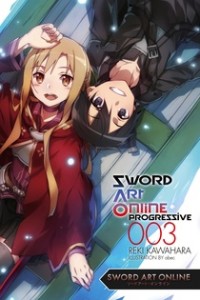
swordart3Sword Art Online: Progressive (manga), Vol. 3 | By Reki Kawahara and Kiseki Himura | Yen Press – The pointless fanservice that is a mild part of the novels is given a tremendous amount of focus in the manga, leading to Kirito being out of character (the underwear gag) or just pure otaku pandering (the cream-bun bukkake scene). This is irritating, because when the manga decides to use the novel as a stepping stone to tell its own story, it does a very good job. Argo continues to be a major part of this story, which is good as I love her character, and I also like how it fits in the side story ‘The Reason for the Whiskers’ in its own continuity. Still, overall the fanservice left such a bad taste in my mouth that I’d recommend the novel unless you enjoy service for service’s sake. – Sean Gaffney

Filed Under: Bookshelf Briefs

Kagerou Daze II: A Headphone Actor

September 27, 2015 by Sean Gaffney

By Jin (Shinzen no Teki-P) and Sidu. Released in Japan by Enterbrain. Released in North America by Yen On.

I had talked a bit last time about trying to balance a series based on something else – be it a game, visual novel, or in this case a series of music videos – between fans who already had a grasp of the story and new readers who didn’t really know what was going on. After reading this second volume, I feel it safe to say that the Kagerou Daze series is very much biased in favor of the former. I was confused after the first novel, and so decided to spoil myself a bit on what’s actually going on. (Those who know me will be surprised I waited that long.) It definitely helped, and I was able to make a few connections I might not have, but it’s still a fact that the Kagerou Daze light novels will appeal most to hardcore Kagerou Daze fans.

kagerou2

Honestly, I think the biggest problem I have with the second book is the story order. After the last volume ends on a vague cliffhanger, we get 120 pages of what appears at first to be a completely different story, involving a grumpy, introverted girl and the guy that she can’t really admit she likes making a homebrew video game for the school festival. It’s only when Kido and Kano show up to play and Kido uses her “out of sight, out of mind” cheat that we realize this is actually taking place a year or two before the first book. This is helped further when we see Shintaro, the supposed hero, show up… and he’s a horrible jerk, even worse than the histrionic but basically harmless shut in we’re used to. We now want to see what led to him shutting himself away.

The most interesting parts of the book are Ayano, Shintaro’s scarf-wearing not-girlfriend who appears to have no self-worth at all, and of course Takane Enomoto, who actually does turn out to have been in the first book after all. This is what I was talking about when I said that it felt like this book came out in the wrong order. I think it would have a much stronger, more devastating ending if the amusement park fluff had come first and then we’d seen Ene’s backstory. After 3/4 of a book where nothing really happens, there’s a series of horrible events starting with Haruka’s collapse that take the reader down a well-earned path of ‘what the hell? No seriously, what the hell???’.

Aside from the devastating bits, there really isn’t much happening here beyond character development, but that is what these novels are for. They’re taking the characters from the music videos and showing us what their hopes, dreams, and motivations are. And, of course, spelling out what’s hard to say in a video. The “Headphone Actor” in the original video was Takane, but in the novel it appears to be Haruka as well, and I have a sneaking suspicion his fate is going to be as dark as hers is. I’m still pretty confused, but I’ll definitely be reading the third volume early next year.

Filed Under: REVIEWS

The Manga Revue: Rose Guns Days Season One

September 25, 2015 by Katherine Dacey

In principal, a video game or visual novel ought to be a solid foundation on which to build a manga: the designers have already done the hard work of creating characters, endowing them with powers (or weapons), and setting them loose in a richly detailed environment. In practice, however, many game-franchises-cum-manga are a dreary affair, with thin plots and two-dimensional characters. I’ve largely sworn off the genre, but when my Manga Bookshelf colleague Sean Gaffney sang the praises of Rose Guns Days Season One, I thought I’d take it for a test drive.

Ryukishi07_RoseGunDays_1Rose Guns Days Season One, Vol. 1
Story by Ryukishi07, Art by Soichiro
Rated OT, for older teens
Yen Press, $13.00

Rose Guns Days has an intriguing premise: what if Japan had surrendered to the Allied Forces in 1944 instead of fighting until the bitter end? In Ryukishi07’s scenario, American and Chinese troops occupy Japan, carving out distinct spheres of influence while rebuilding the country in their respective images. Japanese citizens, meanwhile, are struggling to get by: work and food are scarce, creating an environment in which smuggling and prostitution flourishes.

Sounds interesting, no? If only the story was as compelling as the universe in which it unfolds! A close examination of Leo Shisigami, the principal character, offers insight into why Rose Guns Days reads like a pale imitation of better series. Shisigami’s got the skinny suit, tousled hair, and dangling cigarette made famous by Cowboy Bebop‘s Spike Spiegel, but their resemblance is pure surface; Leo is a cheerful blank whose only quirk–if it can be called that–is a fondness for pasta. After a meet-cute that’s shown not once but twice, Leo becomes a bodyguard for Rose Haibana, a pretty madam whose establishment caters to foreigners. The next 100 pages are a riot of kidnappings, fisticuffs, and golden-hearted hookers–no cliche goes unturned.

The artwork is similarly pedestrian. Though the supporting characters are rendered with loving attention to costumes, facial features, and body types, Rose looks like something pilfered from a twelve-year-old’s Deviant Art account: she barely has a nose or mouth, and her face is framed by two immobile locks of hair. The backgrounds, too, run the gamut from meticulously rendered to barely-there. Only a few panels capture the disruption and poverty caused by the occupying forces; most scenes appear to be taking place in a no man’s land of Photoshop fills and traced elements. What’s most disappointing, however, is that the artwork does nothing to bring depth or nuance to the original visual novel concept. Each scene feels like a collection of artful poses, rather than a dynamic presentation of a story with fistfights and car chases. With so little effort to adapt the material for a different medium, it begs the question, Why bother?

The verdict: Unless you’re a devotee of the visual novel series on which Rose Guns Days is based, skip it.

Reviews: Seth Hahne posts an in-depth assessment of Ikigami: The Ultimate Limit, while Erica Friedman reviews the Japanese edition of Rose of Versailles. Over at Snap30, Frank Inglese test drives the new Weekly Shonen Jump series Samon the Summoner, which debuted on September 21st.

Mark Pelligrini on vol. 1 of AKIRA (AiPT!)
Tyler Sewell on Bat-Manga! The Secret History of Batman in Japan (AiPT!)
Michael Burns on vol. 1 of Black Bullet (AniTAY)
Connie on vol. 31 of Blade of the Immortal (Slightly Biased Manga)
Rebecca Silverman on vol. 1 of Chiro: The Star Project (Anime News Network)
Lori Henderson on vol. 1 of The Complete Chi’s Sweet Home (Good Comics for Kids)
ebooksgirl on Cromartie High School (Geek Lit Etc.)
Vernieda Vergara on Gangsta (Women Write About Comics)
Patrick Moore on Fragments of Horror (Bento Byte)
Erica Friedman on vol. 2 of Iono The Fanatics, Special Edition (Okazu)
Helen on King’s Game: Origin (Organization Anti-Social Geniuses)
Jennifer Wharton on vol. 1 of Kiss of the Rose Princess (No Flying No Tights)
Kristin on vol. 1 of Komomo Confiserie (Comic Attack)
Megan R. on La Esperanca (The Manga Test Drive)
Thomas Maluck on The Legend of Zelda: A Link to the Past (No Flying No Tights)
Nic Wilcox on vol. 1 of Log Horizon (No Flying No Tights)
Amy McNulty on vol. 71 of Naruto (Anime News Network)
Sean Gaffney on vols. 1-2 of One-Punch Man (A Case Suitable for Treatment)
Connie on vol. 5 of Phantom Thief Jeanne (Slightly Biased Manga)
Ian Wolf on vol. 2 of Requiem for the Rose King (Anime UK News)
Jordan Richards on vol. 1 of Rose Guns Days Season One (AiPT!)
Karen Maeda on vol. 1 of Ultraman (Sequential Tart)
Austin Lanari on issue #43 of Weekly Shonen Jump (Comic Bastards)
Adam Capps on vol. 6 of Witchcraft Works (Bento Byte)
Connie on vol. 4 of X: 3-in-1 Edition (Slightly Biased Manga)
Lori Henderson on vol. 1 of Yu-Gi-Oh: 3-in-1 Edition (Good Comics for Kids)

Filed Under: MANGABLOG, REVIEWS Tagged With: Manga Review, Rose Gun Days, yen press

Requiem of the Rose King, Vol. 2

September 25, 2015 by Ash Brown

Requiem of the Rose King, Volume 2Creator: Aya Kanno
U.S. publisher: Viz Media
ISBN: 9781421580906
Released: September 2015
Original release: 2014

Aya Kanno has had several of her manga series released in English in the past—Soul Rescue, Blank Slate, and Otomen—all of which were quite different from one another. One of the things that I appreciate most about Kanno is the versatility apparent in the range of her work. I was especially looking forward to her most recent series Requiem of the Rose King and was thrilled when Viz Media licensed for an English-language release. The manga is loosely inspired by William Shakespeare’s historical plays Henry VI (in its various parts) and Richard III which are in turn a dramatization of England’s Wars of the Roses. As a fan of Shakespeare and as a fan of Kanno, I was very interested in seeing her interpretation. Although upon initial reading the first volume of Requiem of the Rose King could occasionally be somewhat confusing—visions, nightmares, and reality all bleeding into one another—I loved its dark atmosphere, theatrics, and dramatic nature. I was very glad when Requiem of the Rose King, Volume 2, initially published in Japan in 2014, was translated into English in 2015.

The bloody struggle for England’s throne continues. The Lancasters executed King Richard II for treason and has now ruled the country for three generations. However, there are many who still view the Lancasters as usurpers and who support the House of York’s claim to the throne. Richard, the Duke of York, is poised to become the next monarch after King Henry VI is captured and coerced into relinquishing the crown in order to end the bloodshed. But then Queen Margaret takes command of the King’s military forces, unwilling to let power to slip from her and her family’s hands. The resulting conflict does not go well for the Duke and with this turn of events the dynastic war escalates. During this time, both Henry and the Duke’s youngest son Richard are imprisoned in a tower, unaware of the battle’s progress and the changing tides of war. Richard is utterly devoted to his father and wants to see him crowned as England’s king. Thus, the Duke’s death on the battlefield will set into motion a tragic series of events for his son and for the entire kingdom as the darkness that resides within Richard is unleashed.

Requiem of the Rose King, Volume 2, page 96In part, the first two volumes of Requiem of the Rose King have been a prologue to the rest of the series. The stage, characters, and mood have now been fully set for the unfolding drama and tragedy. There is a huge psychological element to Requiem of the Rose King. Kanno draws parallels between Henry and Richard which emphasize that, especially in regards to their mental states. Both men are touched by madness, but it manifests in vastly different ways. Henry’s insanity seems to be fairly benign although it does cause significant political turmoil. It also provides a way for him to escape from his responsibilities as a ruler and to avoid a very violent reality. Richard’s madness, on the other hand, is the result of facing that same reality head on. He becomes utterly consumed by rage and a desire for vengeance. Compared to Henry’s passivity and what could be described as harmlessness, Richard takes on a much more active and venomous role. The contrast between Henry and Richard and light and dark extends beyond their characterizations and is captured visually as well; Richard’s black hair and clothing consistently set him apart from everything else.

Anno’s Richard is both a tragic and terrifying figure. The beginning of Requiem of the Rose King shows the creation of a monster—a young man who is forcefully taking ownership of his own destiny after being irrevocably scarred emotionally and psychologically. Since his birth, Richard has been labeled as a demon child and a harbinger of death. He initially struggles against this stigma, but has now begun to embrace his own darkness. His father, the one person he loved and admired the most is dead; his mother has abandoned him multiple times; Richard sees very little incentive to retain his humanity if everything he truly cares about will be torn from him and he is already viewed as an abomination. The second volume of Requiem of the Rose King is defining for Richard. Among the chaos, violence, and death of war, he loses what little innocence and hope that he might have had. Although many of the surrounding circumstances were beyond his control, ultimately the choice to become a villain is his own. He is driven by despair, madness, and rage, willing to do anything to ensure his own future and the downfall of the Lancasters and anyone else who would stand in his way.

Filed Under: REVIEWS Tagged With: Aya Kanno, manga, requiem of the rose king, viz media

Manga the Week of 9/30

September 24, 2015 by Sean Gaffney, Ash Brown, Michelle Smith, Anna N and MJ 1 Comment

SEAN: It’s a somewhat busy 5th week this time around, with a lot of stuff from Kodansha.

showa1989

After a brief delay, I believe we now are getting the final volume of Shigeru Mizuki’s epic biography/history Showa next week from Drawn & Quarterly, covering 1953-1989.

ASH: I am so glad this series was translated.

SEAN: Speaking of giant omnibuses, the second COLOSSAL EDITION of Attack on Titan comes out next week. Use it to beat titans to death!

My Little Monster is now in double digits with the 10th volume. I think it’s actually near an ending as well, so things might be slowly trudging towards resolution.

ASH: I still love that there’s a pet chicken. Nagoya should get a series.

MICHELLE: I would read it! But yes, this series sadly only has twelve volumes.

SEAN: The Seven Deadly Sins, which I admit I lost track of, has also reached double digits.

And there’s a third volume of A Silent Voice, which I think could go in any number of directions right now, all interesting.

ASH: A Silent Voice has been very well written so far. I’m curious to see where it goes.

SEAN: Vinland Saga puts out its 6th omnibus, and they have openly said that this is sales-dependent in order to continue. Go buy it.

ASH: Yes, please do! Vinland Saga is such a great series!

mistress2

ANNA: I am going to buy it, and if I could clone myself and buy it again I would!

SEAN: Seven Seas gives us a 2nd omnibus of Freezing, which is a very very VERY Seven Seas title, for what it’s worth. Fans of those other Seven Seas titles should go buy it right now.

Vertical has another Attack on Titan light novel, with the 2nd volume of Harsh Mistress in the City.

And lastly, Vertical Comics has the 14th volume of Knights of Sidonia. It’s announced it’s ending in Japan soon, will we get a happy ending? Is that even possible for a title like this?

MICHELLE: *makes grabbyhands* Also, it’s ending?! Granted, I’ve not read anything since volume 12, but it didn’t seem like it was winding down at all. Now I am very fretful that everyone is suddenly going to die.

ANNA: That seems like a reasonable fear.

MJ: Oh, this series, this series… seconding Michelle’s grabbyhands.

SEAN: So what appeals to you as the leaves turn to brown?

Filed Under: FEATURES, manga the week of

Strike the Blood, Vol. 1

September 24, 2015 by Sean Gaffney

By Gakuto Mikumo and Manyako. Released in Japan by ASCII Mediaworks. Released in North America by Yen Press.

The author of Strike the Blood has been doing this sort of thing for a while. He started off with a series called Asura Cryin’ that spawned two anime series, and another, Dantalion no Shoka, that also was made into an anime. And indeed Strike the Blood has met the same fate. This is not particularly surprising after reading the first novel – it’s a book that seems tailor made to be turned into a manga and anime. The heavy supernatural element, cool hero and heroine with vampiric powers and big honking magic spear respectively, cute younger sisters who are more than they seem, aloof best friends who secretly are in love, and even a genki younger sister with a secret to hide. Everything you read here will make you think of how it will play out on the the screen. Which is a problem in some ways.

strikeblood1

To be fair to the book, it handles everything well, as you’d expect from a seasoned writer with a large number of books under his belt. The hero and heroine are both very likeable, and while they have a few standard anime traits, they’re both subdued enough so that you don’t really get irritated by it. Yukina in particular is intriguing – she seems like your standard tsundere who would get mad at the hero constantly, but this is warring with her aloof, stoic, and overly serious personality, making her far more interesting. She also makes a fairly fast judgement about Kojou, the vampire she’s been sent to watch/deal with, realizing that he’s really not out to rule the world, but just to have a normal high school life. Indeed, Kojou just gaining his immortal vampire powers a few months ago is the backstory here, and I’m sure we’ll hear more about it later on.

This being a light novel, there’s some fanservice, but it’s the kind that actually flows out of the text and the genre (there is a harem element here). I could have done without the standard ‘note what color her panties are’ gag, though, especially as, also typical with recent light novels, our heroine is about 3-4 years younger than she should be. The hero does suffer some physical and psychological abuse from girls thinking he’s a pervert (he’s not), but if this bothers you, remind me why you read Japanese light novels or manga at all?

So in the end I read a solid novel with decent characterization and good action scenes, yet still came away from it feeling unsatisfied. And I think the reason is that it all felt far too calculated. There is not one thing in this first volume that I didn’t guess or suspect would happen, not one honest element of surprise. I’ve been reading a lot of unoriginal light novels lately, but most of those have at least been allowed to have ambition or a purpose to their prose, a sense that the author has something he needs to share with you. With Strike the Blood that purpose seems to be ‘here’s my new series, go buy the manga and anime as well’, and that saddens me. I’m hoping a second volume will prove me wrong.

Filed Under: REVIEWS

The Dandelion Dynasty, Book 1: The Grace of Kings

September 23, 2015 by Ash Brown

The Grace of KingsAuthor: Ken Liu
Publisher: Simon & Schuster
ISBN: 9781481424271
Released: April 2015

Ken Liu is a multi-award-winning author and translator (in addition to being a lawyer and software programmer), probably best known for his short fiction. I was aware of Liu’s work for quite some time before I actually read any of it. His award-winning short story “Mono no Aware”—one of my favorite contributions in the anthology The Future Is Japanese—was my introduction to his fiction and Liu quickly became an author who I made a point to follow. And so I was very interested to learn about his debut novel The Grace of Kings. Published in 2015 by Simon & Schuster’s new speculative fiction imprint Saga Press, the novel is the first of three books planned for Liu’s series The Dandelion Dynasty. Often described as a silkpunk fantasy epic, the novels are heavily inspired by Chinese history and the historical legends surrounding the Han dynasty, such as the extremely influential Romance of the Three Kingdoms.

The islands of Dara were once made up of seven independent kingdoms which were constantly at war with one another. Generations passed before one of the kings was finally able to conquer the others, for the first time uniting the lands to form a single empire. The newly-coronated emperor intended to establish a lasting peace among the lands of Dara, but power has a way of corrupting its wielder and his vision was ultimately overshadowed by his ruthlessness. There were great undertakings made for the good of the empire, but there was also great suffering. As the emperor ages and approaches the end of his life, the stirrings of rebellion begin. Two very different men will be caught up in the resulting wars, becoming leaders in the conflicts as the empire disintegrates: Kuni Garu, a seemingly carefree, small-time gangster, and Mata Zyndu, the last in a long line of legendary warriors and generals. Whether through fate, luck, or the will of the gods, together the two of them are destined to help shape and reshape Dara as it enters into a new era.

Over the course of The Grace of Kings, Kuni Garu and Mata Zyndu emerge as two of the most pivotal characters in the unfolding epic, but they are really only a small part of a much greater whole. Much like the historical legends that influence the novel, there are dozens upon dozens of named characters who play a significant role and whose actions, even those that seem inconsequential, will have a tremendous impact on the way events develop. Liu has established a complex world filled with differing cultures and traditions which are in conflict with one another. Government administration, politics, economics, commerce, social structures, history, religion, mythology, geography, agriculture, philosophy, education, innovation, technology and so much more have all been taken into consideration in the creation of The Dandelion Dynasty. And none of it exists in a vacuum. The interplay and intricate connections among all of these different aspects of Dara has been captured remarkably well; a simple change in one that may initially appear to be insignificant can trigger a chain reaction which has unexpected and far-reaching ramifications in the others.

The Grace of Kings recounts over two decades of Dara’s history and legends, following the people involved in the wars resulting from the collapse of the empire and the attempts made to establish a new order among the chaos. The story is told in short chapters, many of which at first don’t seem to be directly related, but they slowly build upon each other as more and more connections form. The Grace of Kings becomes increasingly complex as it progresses but the novel is still easy to read and follow, showing how the actions of a single person can dramatically change the course of history. The world of The Grace of Kings is so incredibly well-realized that it can be imagined how events would have turned out if any particular person’s decisions were made differently. Very few of the characters act maliciously without good reason and none could be described as evil for evil’s sake; what they do they do because they believe it to be right. But even so, sometimes the consequences are heartbreakingly tragic. The Grace of Kings is the beginning of a spectacular epic; the magnificent worldbuilding and diverse cast of believably flawed characters greatly impressed me.

Filed Under: REVIEWS Tagged With: Dandelion Dynasty, Ken Liu, Novels

My Week in Manga: September 14-September 20, 2015

September 21, 2015 by Ash Brown

My News and Reviews

Two in-depth manga reviews were posted last week! As part of my monthly horror manga review project, I took a look at Yuki Urushibara’s Mushishi, Volume 5. I still love this series tremendously and wish it wasn’t out-of-print, but at least it’s available digitally from Kodansha Comics now. The second review last week was of Masayuki Ishikawa’s Maria the Virgin Witch: Exhibition, which is a collection of side stories, both prequels and sequels, focusing on the characters of Maria the Virgin Witch. For fans of the original series, it’s a very nice addition. The volume probably won’t appeal to or make much sense to anyone who hasn’t read the main manga, though.

There were a ton of interesting articles, reviews, and news announcements that I saw last week. Deb Aoki has been busy at Anime News Network with a two part interview with various Kodansha folk, mostly focusing on the Kodansha Advanced Media digital manga efforts, as well as an interview with those involved with the new Ultraman manga series, including the creators Eiichi Shimizu and Tomohiro Shimoguchi and Mike Montesa from Viz Media and Ai Shimizu from Hero’s Magazine. Over at Publishers Weekly, she takes a closer look at Tokyopop’s most recent efforts. Elsewhere, Kristin of Comic Attack interviewed Arina Tanemura at Anime Fest; AM Cosmos writes about the different perspectives of bullying found in A Silent Voice and Haven’t You Heard? I’m Sakamoto; and Organization Anti-Social Geniuses concludes its Advice on Manga series with advice on manga editing from manga editors.

In licensing news, the fine folk of MASSIVE will be working with Koyama Press to translate What Is Obscenity?, the comic memoir of sculptor and mangaka Megumi Igarashi (aka Rokudenashiko). In addition to the three original short manga, the English-language edition will have additional content, such as a new introduction by the artist and an interview between Rokudenashiko and Sion Sono. Yaoi Con was held over the weekend and there were some other licensing announcements made. SuBLime Manga picked up Rihito Takarai’s Ten Count, Bohra Naono’s Midnight Stranger, and Yonezou Nekota’s Don’t Be Cruel. (I’m especially looking forward to Ten Count, but am always happy to see more of Naono’s work translated.) As for Digital Manga, the Juné imprint is adding twenty-four new titles… except that they’re all digital, no print. (Interestingly, Project H’s recent license announcements were all digital-only as well, which really makes me wonder about DMP, especially as it’s starting to gear up for its next Tezuka Kickstarter.) And speaking of yaoi and BL, Kathryn Hemmann’s academic article “Queering the Media Mix: The Female Gaze in Japanese Fan Comics” takes a look at BL doujinshi based on CLAMP’s works.

Quick Takes

Devils and Realist, Volume 3Devils and Realist, Volumes 3-4 written by Madoka Takadono and illustrated by Utako Yukihiro. Sometimes the two major aspects of Devils and Realist (it’s humor and it’s drama) mesh well and sometimes they make the manga seem like it’s trying to be two entirely different series. Despite the demons that have become students in order to be closer to him, William’s school life remains fairly mundane, though humorous. That part of the story isn’t so different from any other school-based manga. What makes the series more interesting is the drama, politics, and intrigue surrounding the selection of the next ruler of hell. Heaven is getting involved now, too. Not only does William have to deal with demons vying for his attention, and in some cases his life, angels are beginning to make their presence known, causing even more problems for him. Also, angels can be just as big of jerks as their fallen brethren. Although I’m not in a rush to find out what happens next, I am still enjoying Devils and Realist; the art and character designs are pretty and I generally find the series to be entertaining.

King CityKing City by Brandon Graham. The first half of King City was initially published by Tokyopop but the series, like so many of the publisher’s other original English comics, was left unfinished. However, unlike all but a very select few of the series that met that particular fate, King City found a new home and was able to be completed, in this case thanks to Image Comics. Although there are some dramatic battles and rescues in King City, there really isn’t much in the way of a plot. What there is a bizarre futuristic city filled with some very strange residents. The comic focuses on Joe, his friends and acquaintances, and Earthling, his extremely intelligent and multi-talented cat. Joe is a Catmaster—with a little help from an injection, Earthling can turn into or do anything. What I love most about King City, besides Earthling and the rest of the cats, is that it is absolutely crammed with wordplay and visual puns. It’s worth taking time to thoroughly examine every page because Graham has incorporated so much humor in the small, seemingly inconsequential details. King City is very strange, but it’s the kind of strange that I tend to enjoy.

Pandora Hearts, Volume 1Pandora Hearts, Volumes 1-3 by Jun Mochizuki. I know so many people who absolutely adore Pandora Hearts that I’ve been meaning to try the series for a while now. To be honest, After reading the first volume, I wasn’t so sure about the manga—I found it to be extremely chaotic and confusing, and almost nonsensical (maybe I just wasn’t reading closely enough)—but after the second volume it started to click for me and by the third I was completely hooked on the series. Mochizuki’s artwork is pretty great, too. I definitely plan on reading more of Pandora Hearts. I’ll admit, I’m still not entirely sure what’s going on yet, but that mystery is part of the point. Most of the characters don’t understand everything, either, and those who do know at least part of the truth aren’t necessarily sharing that information anyone else unless it serves their own purpose. Tragedy and psychological trauma are major components of Pandora Hearts. There is violence and horror, betrayals and lies, but also obsessive loyalty and kindness. The characters are struggling with loneliness and the intense desire and need to belong and feel wanted.

Filed Under: FEATURES, My Week in Manga Tagged With: Brandon Graham, comics, Devils and Realist, Jun Mochizuki, King City, Madoka Takadono, manga, pandora hearts, Utako Yukihiro

One-Punch Man, Vols. 1-2

September 20, 2015 by Sean Gaffney

By ONE and Yusuke Murata. Released in Japan by Shueisha, serialization ongoing online at Tonari no Young Jump. Released in North America by Viz.

It’s always very tricky to do a satire of something in Japanese manga, but I’ll give credit to Shueisha, they’re not afraid to let people try. Gintama’s popularity speaks for itself, and Medaka Box’s deconstruction of nearly everything ran far longer than folks expected. Now we have One-Punch Man, based on ONE’s webcomic of the same name. This time it’s superhero tropes, both Western style and Japanese, that are under the microscope. I am amused that this series, which has been running digitally for Viz for some time, is coming out in print right as My Hero Academia, a straighter take on the same sort of genre, is being released in Weekly Jump itself. ONE is not the greatest artist in the world – though you could argue that’s exactly what makes his webcomic work so well – and so they brought in Eyeshield 21’s Murata to do the art. The result is strong, mostly due to the dissonance between that ultra-serious art and ONE’s bald blob of a hero.

OPM1

The cover is a bit of a joke in and of itself, showing our hero in a dramatic pose and looking exactly like the Dragonball-esque hero he’s meant to be making fun of. Luckily, once we start the manga proper, Saitama is rendered mostly as ONE did in the original webcomic, as a simply-drawn man who looks almost like a stick figure compared to those around him. The flashbacks we see of him as a wannabe salaryman with hair just aren’t as effective – he looks far too normal, like one of Eyeshield’s high school football guys. He also has a personality to go with his art style, as his flat, deadpan delivery of many lines stems from training himself to be the overpowered nightmare that he is now, unable to find a decent fight as he beats everyone – you guessed it – in one punch.

Saitama is also rooted heavily in the real world – hence his despair at missing bargain day at the supermarket. The rest of the cast we see are far more traditional, the better to contrast with our hero. Genos, a cyborg with a tragic past, is pure straight man, and the best joke he has involves his long, text-heavy backstory almost crushing Saitama with the sheer weight of boring words we’ll never remember. In the second volume, we see Sonic, a hero who uses speed to overwhelm his opponents, is a pretty bishonen, and has a bloodthirsty desire for a good fight – again, all played out very straight. So of course Saitama wins by accidentally punching him in the balls. We end by seeing that Saitama, who is a superhero for fun, doesn’t even realize that you need to be registered in order for anyone to know who the hell you are.

Without Saitama, this series is another standard superheroes and punching title. *With* Saitama, you get the humor that makes One-Punch Man a cut above. I look forward to seeing the authors ride that dissonance in future volumes.

Filed Under: REVIEWS

The Manga Revue: Komomo Confiserie

September 18, 2015 by Katherine Dacey

Apologies for missing last week’s deadline – the first week of the semester is always chaotic, and manga reviewing took a back seat to lesson prep. Now that school is underway again, however, the Manga Revue will run weekly on Fridays, as it did this summer.

komomo_confiserieKomomo Confiserie, Vol. 1
By Maki Minami
Rated T, for teens
VIZ Manga, $6.99 (digital)

Flip through The Big Book of Shojo Plotlines, and there – between “I’m Having an Affair with My Homeroom Teacher” and “I’m a Spazz Who’s Inexplicably Irresistible” – you’ll find another time-honored trope: “I Was Mean to My Childhood Friend, and Now He’s Hot!” Komomo Confiserie embodies this plot to a tee: its wealthy heroine, Komomo, was spoiled rotten as a child, with an army of servants at her disposal. It was her special delight to order fellow six-year-old Natsu to make her sweets–he was the pastry’s chef son, after all–and terrorize him when he didn’t comply. When Komomo turns fifteen, however, her family loses everything, forcing her to get a job and attend public school. Natsu–now a successful baker in his own right–makes a seemingly chivalrous offer of employment to Komomo, who’s too guileless to realize that she’s walking into a trap.

You can guess the rest: Natsu revels in his new-found position of power, directing Komomo to perform menial tasks and scolding her for lacking the common sense to sweep floors or boil water. The fact that he’s cute only adds salt to the wound; Komomo vacillates between plotting her escape and speculating that Natsu bullies her out of love.

Whatever pleasure might come from witnessing Komomo’s comeuppance is undermined by the author’s frequent capitulations to shojo formula. Though Natsu frequently declares that bullying Komomo is his privilege – and his alone – he routinely helps her out of jams, bakes her sweets, and behaves a lot like someone who’s harboring a crush on her. Komomo, for her part, behaves like such a twit that it’s hard to root for her; even when she has an epiphany about friendship or hard work, her insights are as shallow as the proverbial cake pan.

The series’ redeeming strength is the artwork. Though Maki Minami frequently resorts to pre-fab backgrounds and Photoshopped elements, she does a fine job of representing the emotional rush that a sugary treat can elicit in even the most jaded adult. Komomo’s food reveries are a swirl of flowers, tears, and lacy doilies that neatly suggest the mixture of joy and sadness she experiences whenever a macaroon or a petit-four stirs up childhood memories. Too bad the rest of the story isn’t as sharply observed.

The verdict: Saccharine plotting and unsympathetic leads spoil this confection.

Reviews: Sean Gaffney and Michelle Smith post a fresh crop of Bookshelf Briefs, while Claire Napier kicks the tires on Ichigo Takano’s ReCollection and Kate O’Neil reminds us why a new installment of Kaze Hikaru is worth the wait. At Contemporary Japanese Literature, Kathryn Hermann posts a glowing review of Yurei: The Japanese Ghost, a collection of essays by manga scholar and translator Zack Davisson.

Erica Friedman on 2DK, G Pen, Mezamashidokei (Okazu)
Matthew Warner on vol. 5 of Ajin: Demi-Human (The Fandom Post)
Rebecca Silverman on vol. 1 of Alice in Murderland (Anime News Network)
Jordan Richards on vol. 1 of Attack on Titan: Colossal Edition (AiPT!)
Sean Gaffney on vol. 16 of Dorohedoro (A Case Suitable for Treatment)
Jordan Richards on vol. 1 of Inuyashiki (AiPT!)
Justin Stroman on vol. 1 of Inuyashiki (Organization Anti-Social Geniuses)
Megan R. on Here Is Greenwood (The Manga Test Drive)
Saeyoung Kim on K-On! High School (No Flying No Tights)
Sheena McNeil on vol. 2 of Love Stage!! (Sequential Tart)
Johanna Draper Carlson on vol. 3 of Love Stage!! (Comics Worth Reading)
Anna N. on vols. 1-2 of Maid-sama! (The Manga Report)
Ash Brown on Maria the Virgin Witch: Exhibition (Experiments in Manga)
Lesley Aeschliman on vol. 4 of Master Keaton (Watch Play Read)
Matthew Warner on vol. 3 of My Neighbor Seki (The Fandom Post)
Ash Brown on vol. 5 of Mushishi (Experiments in Manga)
Al Sparrow on vol. 1 of Nurse Hitomi’s Monster Infirmary (ComicSpectrum)
Joseph Luster on One-Punch Man (Otaku USA)
Sheena McNeil on vol. 4 of Pokemon X.Y. (Sequential Tart)
Sean Gaffney on vols. 19-20 of Ranma 1/2 (A Case Suitable for Treatment)
Matt on vol. 1 of Rose Guns Days: Season One (AniTAY)
Vernieda Vergara on The Science of Attack on Titan (Women Write About Comics)
Ken H. on vol. 2 of A Silent Voice (Sequential Ink)
Matt on vol. 3 of Sword Art Online Progressive (AniTAY)
Frank Inglese on vol. 7 of Terraformars (Snap30)
David Brooke on vol. 1 of Vinland Saga (AiPT!)
Frank Inglese on vol. 6 of World Trigger (Snap30)

Filed Under: MANGABLOG, REVIEWS Tagged With: komomo confiserie, Maki Minami, Manga Review, Pastry, shojo beat, viz media

Maria the Virgin Witch: Exhibition

September 18, 2015 by Ash Brown

Maria the Virgin Witch: ExhibitionCreator: Masayuki Ishikawa
U.S. publisher: Kodansha
ISBN: 9781632361905
Released: August 2015
Original release: 2015

I rather enjoyed Masayuki Ishikawa’s short, three-volume manga series Maria the Virgin Witch. Although it was a bit uneven in places, possibly because the series ended sooner than was initially planned (granted, that is my own speculation rather than something that I know for a fact), I liked the series’ quirky characters, historical fantasy, and peculiar mix of humor and more serious philosophical and theological musings. Because Maria the Virgin Witch wrapped up so quickly and left many questions unanswered, I was happy to learn that Maria the Virgin Witch: Exhibition had also been licensed for an English-language release. Originally published in Japan in 2015, Exhibition is a collection of sides stories, a mix of prequels and sequels to the main series. Kodansha Comics released the English-language edition in 2015 as well. It is a relatively slim volume, but I was looking forward to spending a little more time with Maria the Virgin Witch and its characters.

Each of the short manga in Exhibition focuses on a different character of Maria the Virgin Witch: Viv, Maria, Joseph, and Ezekiel. Viv’s story is the only multi-chapter manga in the volume. It follows the English witch from when she first arrived on France’s shores, traveling on a ship filled with soldiers and other witches sent to reinforce England’ armies in the Hundred Years War. This is long before she befriends Maria, but Viv’s enthusiastic and reckless approach to battle, in addition to wreaking havoc, becomes a source of inspiration for Maria’s own efforts. The next story is just as much about Maria’s familiars as it is about Maria herself, taking place during the main series and showing a typical day away from the battlefield after Ezekiel joins their small group. Josephs’ story, like Viv’s, is a prequel to Maria the Virgin Witch, recounting Joseph and Maria’s first adorably awkward meeting as he seeks her aid for France’s war efforts. The volume ends with a story about Ezekiel, not as an angel, but as the human child of Maria and Joseph, providing a nice epilogue for the series as a whole.

Maria the Virgin Witch: Exhibition, page 44The stories in Exhibition are obviously intended for readers who are already familiar with Maria the Virgin Witch and who have already read the entire series. Although the short manga in Exhibition aren’t necessarily directly connected to the main narrative of Maria the Virgin Witch, by their very nature there are some spoilers involved and the collection relies on the reader having previous knowledge of the series’ characters. Exhibition is less devoted to expanding the world and plot of Maria the Virgin Witch and more focused on further developing the manga’s characters and their personal stories. And by telling the stories of the individual characters in Exhibition, more about Maria herself is revealed. Even when she isn’t immediately involved or present, Maria plays an important role in all of the short manga. Exhibition shows many of her different sides: Maria the friend, Maria the master, Maria the lover, Maria the mother, and so on.

Whereas the main Maria the Virgin Witch series had a rather serious story that was accompanied and punctuated with humor, overall Exhibition consistently tends to be much more lighthearted and comedic in nature. It’s a fun collection for fans of the series even if the stories are generally fairly inconsequential. None of the hard questions raised by the main series or the lingering plot threads are really addressed. Maria’s lineage and backstory still remain obscure. (If anything, I’m left wondering even more about her origins and who she really is.) Not much in the way of additional worldbulding is present in the volume either. Instead, Exhibition offers readers the opportunity to enjoy a collection of stories that are charming, funny, and even a little touching as they celebrate the characters of Maria the Virgin Witch. And because the characters are such a large part of what makes Maria the Virgin Witch so appealing, Exhibition is a perfect send-off for the series.

Filed Under: REVIEWS Tagged With: kodansha, Kodansha Comics, manga, Maria the Virgin Witch, Masayuki Ishikawa

Manga the Week of 9/23

September 18, 2015 by Sean Gaffney, Anna N, Ash Brown, Michelle Smith and MJ 1 Comment

SEAN: Did I mention Yen’s digital rollout makes next week even longer? 30 titles. 30. Let that roll around your head for a while.

devilsur1

Before we get to Yen, let’s talk Devil Survivor, a new Kodansha series based off of an RPG that’s apparently quite popular. Lots of demons here.

Seven Seas has a 12th volume of Haganai: I Don’t Have Many Friends, whose fandom I’ve heard has completely imploded with the latest LN revelations. Luckily, this is the manga, and we’re a number of volumes from that.

Vertical Comics has the penultimate 11th volume of Mobile Suit Gundam: The Origin. So happy this series came out over here.

ANNA: Yay for Gundam: The Origin! I need to go on a reading binge and get caught up on this series.

SEAN: And Vertical also has My Neighbor Seki 4, which is nothing like Gundam but also delights me.

ASH: As it should! My Neighbor Seki is wonderful.

SEAN: Viz Digital has a debut that I believe is another JManga rescue, though I’m not sure about that. Chocolate Cosmos is a Ribon series about a young girl looking for love, so it’s definitely for Beat fans. I think there was a translation competition that centered around it.

MICHELLE: Ooh, I didn’t know about this one! It’s by Nana Haruta, mangaka of Cactus’s Secret, which came out a few years ago.

ANNA: That sounds really interesting, I will have to check it out!

MJ: Same here!

SEAN: And now on to Yen Press. We’ll start with the Yen On line. Kagerou Daze’s first novel was rather diffuse and obtuse – somewhat deliberately – and I am both interested in the 2nd volume and hoping I get more of a handle on it.

Kingdom Hearts has a new novel as well, Chain of Memories. Are Mickey Mouse and company still in this series?

I don’t know if MJhas had the time to read Pandora Hearts: Caucus Race yet, but if not, she’s now even more behind, as the 2nd novel is out next week.

MJ: MJhas not, and she’s a little bit wary of a Pandora Hearts novel series, but she’ll most likely succumb.

strikeblood1

SEAN: The debut novel this month is Strike the Blood, which is an action fantasy series with vampires, and thus perfect for Yen, really.

Yen Digital rolls out more debuts, most comedic. Demon King Ena-sama Goes to a Manga School seems a bit self-explanatory.

If the creepy humiliation vibe of Kakegurui – Compulsive Gambler didn’t put you off, a 3rd volume is here for you.

My Monster Girl’s Too Cool For You seeks to hit on a popular recent trend, and for once seems to begin with a rejection rather than a sudden love confession.

The Royal Tutor was slighter than I was expecting, but decent enough, and a 3rd volume of that is here as well.

ASH: Wow, I’m behind. I didn’t realize we were already up to volume three!

SEAN: And we get complete in 3 separate volumes a series called Shut-in Shoutarou Koninami Takes On The World, whose name alone makes one think of Scott Pilgrim.

Finally, we get Yen’s copious print volumes. A 2nd Big Hero 6, based on the American movie. (I always love seeing Japanese adaptations of Western media.)

Black Bullet gets a manga series to go with the light novel we saw last month. I expect the lolicon tendencies I saw in the novel would bother me more in the manga.

Bloody Cross has an 8th volume.

And there’s a 2nd volume of possibly too cliched for its own good fantasy series Chaika the Coffin Princess.

Demon From Afar is up to Volume 4, which means by now the entire cast must have all died at least three times, right?

After a couple of Final Fantasy Type-0 side stories, we now have the Type-0 manga proper.

Surprise hit (at least with me) He’s My Only Vampire gets a 4th volume.

And a 4th Love at Fourteen will continue to alternate between “they’re so adorable!” and “…are you really going there?”

MICHELLE: I’m going to be catching up on this series soon!

ASH: I need to catch up, too, but I did enjoy the first couple of volumes.

SEAN: Not everything is about Madoka Magica, but the new spinoff certainly is: Suzuna Magica begins next week.

roseguns1

After the relative popularity of Higurashi and Umineko, it’s time for another Ryukishi07 sound novel getting an adaptation, this one somewhat lighter in tone – at least at first. Rose Guns Days is an alternate universe action thriller with lots of fistfights and “ladies of the evening”, and should be a ton of fun.

Spice & Wolf gives us an 11th manga volume. Don’t get it mixed up with the light novels.

Sword Art Online Progressive’s manga also has a third volume, though it’s still adapting the first light novel. Expect underwear. Lots of underwear.

MJ: I wish I liked these manga adaptations better. Alas.

SEAN: Triage X has hit double digits, a feat that makes me want to cry blood, but hey.

And a third (fourth) omnibus of Ubel Blatt, whose Volume Zero still haunts the list-obsessed.

Umineko: When They Cry has a 2nd omnibus for its 5th arc. Dlanor A. Knox is on the cover. I love Dlanor. So much better than Erika, whose presence sadly continues to permeate this arc, infecting it with her detective skills.

Lastly (at long last), a 10th omnibus of Until Death Do Us Part. Still not quite caught up with Japan, in case you were wondering.

Does anything in this huge pile appeal to your inner soul?

Filed Under: FEATURES, manga the week of

  • « Go to Previous Page
  • Page 1
  • Interim pages omitted …
  • Page 302
  • Page 303
  • Page 304
  • Page 305
  • Page 306
  • Interim pages omitted …
  • Page 538
  • Go to Next Page »
 | Log in
Copyright © 2010 Manga Bookshelf | Powered by WordPress & the Genesis Framework