• Skip to primary navigation
  • Skip to main content
  • Skip to primary sidebar
  • Home
  • About Us
    • Privacy Policy
    • Comment Policy
    • Disclosures & Disclaimers
  • Resources
    • Links, Essays & Articles
    • Fandomology!
    • CLAMP Directory
    • BlogRoll
  • Features & Columns
    • 3 Things Thursday
    • Adventures in the Key of Shoujo
    • Bit & Blips (game reviews)
    • BL BOOKRACK
    • Bookshelf Briefs
    • Bringing the Drama
    • Comic Conversion
    • Fanservice Friday
    • Going Digital
    • It Came From the Sinosphere
    • License This!
    • Magazine no Mori
    • My Week in Manga
    • OFF THE SHELF
    • Not By Manga Alone
    • PICK OF THE WEEK
    • Subtitles & Sensibility
    • Weekly Shonen Jump Recaps
  • Manga Moveable Feast
    • MMF Full Archive
    • Yun Kouga
    • CLAMP
    • Shojo Beat
    • Osamu Tezuka
    • Sailor Moon
    • Fruits Basket
    • Takehiko Inoue
    • Wild Adapter
    • One Piece
    • After School Nightmare
    • Karakuri Odette
    • Paradise Kiss
    • The Color Trilogy
    • To Terra…
    • Sexy Voice & Robo
  • Browse by Author
    • Sean Gaffney
    • Anna Neatrour
    • Michelle Smith
    • Katherine Dacey
    • MJ
    • Brigid Alverson
    • Travis Anderson
    • Phillip Anthony
    • Derek Bown
    • Jaci Dahlvang
    • Angela Eastman
    • Erica Friedman
    • Sara K.
    • Megan Purdy
    • Emily Snodgrass
    • Nancy Thistlethwaite
    • Eva Volin
    • David Welsh
  • MB Blogs
    • A Case Suitable For Treatment
    • Experiments in Manga
    • MangaBlog
    • The Manga Critic
    • Manga Report
    • Soliloquy in Blue
    • Manga Curmudgeon (archive)

Manga Bookshelf

Discussion, Resources, Roundtables, & Reviews

Features & Reviews

Bookshelf Briefs 3/28/16

March 28, 2016 by Sean Gaffney, Michelle Smith and Anna N Leave a Comment

bloody2Bloody Mary, Vol. 2 | By Akaza Samamiya | Viz Media – Bloody Mary continues to be a tad incoherent in its narrative, but it does it with an almost unending line of extremely pretty anguished male characters, while being so gothic I almost don’t care very much about the finer points of the plot. This volume starts filling in a tiny bit more backstory about Maria’s ancestors (one of whom is suspiciously immortal) and Mary’s past. A flashback gives a glimpse of Maria as a boy, and starts showing the reader just how messed up his family is. In the meantime, student council president Takumi continues to be up to no good. This manga might be mainly for vampire manga fans, but there are plenty of those out there! – Anna N

disappearance9The Disappearance of Nagato Yuki-chan, Vol. 9 | By Puyo and Nagaru Tanigawa | Yen Press – Kyon and Yuki got together in the last volume, and this one is sort of a victory lap, as Puyo begins to wrap things up and resolve some plot and character points. And so Haruhi accepts that she and Kyon are not going to happen, Tsuruya and Mikuru actually graduate and leave the school, and Kyon and Yuki go out on a very normal, fun and heartwarming date—despite an overenthusiastic Kimidori and trying to avoid Taniguchi and Kuyou. The most intriguing loose end as we head into what I suspect is the final volume is Ryouko, who is realizing that she needs to break away from Yuki for her own good, even if that means—in-joke incoming—moving to Canada. Sweet as always. – Sean Gaffney

honeysweet2Honey So Sweet, Vol. 2 | by Amu Meguro | Viz Media – This slice-of-life romance about a traumatized girl and her secretly sweet juvenile delinquent boyfriend strikes the right balance between sincerity and humor. As Nao and Taiga become closer, she has to learn to recognize her own feelings for the first time. They’re supported by friends at school, and Taiga begins to come out of his shell a little bit. However, I feel slightly suspicious of his new friend Futami, and I hope it doesn’t mean a convoluted plot that keeps Nao and Taiga apart is coming up in the next volume. Meguro’s delicate art is as cute as the sentiments in Honey So Sweet. This series is well worth picking up for shoujo fans. – Anna N

libwars15Library Wars: Love & War, Vol. 15 | By Kiiro Yumi and Hiro Arakawa| Viz Media – This is an almost perfect final volume. We see Iku’s growth as a Library Force soldier, we see some truly ridiculous solutions to the problem of how to create a distraction, and of course we see the resolution of the main pairing. My favorite beta pairing is unresolved, but given the personalities of the two people involved, that’s not a surprise. Best of all, the whole cast is shown to have made a difference—the Library Forces in the future don’t need to use weapons, and censorship is gradually weakening its hold. Despite occasionally feeling a bit ludicrous in terms of its plotting, I have loved most of this shoujo manga to bits, and wish Iku and Dojo all the best. Also, license the side-story volumes, Viz? – Sean Gaffney

pj1Princess Jellyfish, Vol. 1 | By Akiko Higashimura | Kodansha Comics – As excited as I was to read this, I also avoided reading too much about it beforehand. I knew it would involve otaku women living together, but I didn’t anticipate the dilemma the jellyfish-loving protagonist, Tsukimi, would find herself in. With the help of style expert Kuranosuke, Tsukimi periodically transforms into a cute girl, and in that guise strikes up a sweet attraction to Kuranosuke’s virginal older brother, Shu. Opening herself up to the possibility of love brings excitement as well as pain, and I wonder whether Tsukimi will stick it out or retreat to the cozy familiarity of her fujoshi lifestyle. But how long will that even last, with the boarding house scheduled to be demolished? Though this version collects the first two volume of the Japanese release, I still wanted more. I’m relieved to report Princess Jellyfish is every bit as great as I hoped it would be! – Michelle Smith

real14Real, Vol. 14 | By Takehiko Inoue | VIZ Media – Reading Real as it is released has its drawbacks—since it only comes out once a year and the last volume was mostly about a wrestler, I haven’t seen some of the characters at the forefront of volume fourteen for over two years! Consequently, it was a little hard to get back into their lives, but as always, Inoue made me care very deeply indeed by the end of the volume. While Nomiya’s search for direction after his dream of turning pro doesn’t work out is certainly compelling, it’s the promise of a matchup between the Tigers and the Dreams (and our respective protagonists working hard on both teams) in a forthcoming tournament that makes me the most excited. Add in some encouragement by Yama, and I’m seriously verklempt (and waiting desperately for the next volume, naturally.) – Michelle Smith

shuriken1Shuriken and Pleats, Vol. 1 | By Matsuri Hino | Viz Media – I was unaware that this was only a two-volume series ’til I finished it, but looking back, it should not come as a surprise. Things move much faster than I’d expect from a LaLa manga, particularly towards the second half. Hino describes Mikage as “quirky,” but those who read Vampire Knight won’t be surprised to see she’s mostly calm, action-driven, and tortured by her horrible past, some of which we actually get to see. I enjoyed this while I was reading it, but it feels even slighter than her last series, and that’s saying something. If you wish that there were more shoujo ninja manga, or are a huge Hino fan, I’d give it a shot. And even if you’re meh about it, hey, it’s only two volumes long. – Sean Gaffney

saoprogressive4Sword Art Online: Progressive, Vol. 4 | By Kiseki Himura and Reki Kawahara | Yen Press – The last volume of the manga diverged from the novel it was adapting, showing a fight between our heroes that separated them right before the big battle. This allows Asuna to get a little more cool things to do, allowed Argo’s tiny subplot to be slightly expanded, and of course gave us a bit more ship tease and amusing faces. Of course, most of this is the same as the novel in the end, and I do believe that the original is better. But this is quite nice as well, and it will be interesting to see how it handles the second floor and the introduction of the elves. Also, it should keep Argo around, as it’s been doing. More Argo hijinks are always welcome. – Sean Gaffney

Filed Under: Bookshelf Briefs

My Week in Manga: March 21-March 27, 2016

March 28, 2016 by Ash Brown

My News and Reviews

I only posted one in-depth manga review at Experiments in Manga last week, taking a look at Of the Red, the Light, and the Ayakashi, Volume 1 by Nanao, which is an adaptation of a visual novel by the doujin group HaccaWorks*. I was actually a little surprised by how much I enjoyed the manga. Though I can imagine the series getting tiresome if at least some answers to story’s many mysteries aren’t given soon, at the moment I’m intensely intrigued. I think I’m finally starting to come to terms with the fact that much of the time I can only manage one review per week right now, though I’d honestly love to do more reading and writing. I also want to quickly follow-up on a statement that I made in the Bookshelf Overload for February—I mentioned that I wasn’t sure if Keigo Higashino’s novel Under the Midnight Sun would be released in the United States or not, but it turns out that it will be! The United Kingdom simply got it first, which is sometimes what happens with works in translation.

In other licensing news, several manga publishers made announcements over the course of last week and the weekend. Kodansha Comics will be releasing twelve new titles in print, some of which I find to be particularly exciting or intriguing (the Parasyte shoujo anthology, shounen ballroom dancing, single fathers learning to cook, and more!). Among other things Viz Media will be publishing a new deluxe edition of Junji Ito’s Tomie (which has gone out of print at least twice before from two other publishers) and will continue releasing more of the fancy JoJo’s Bizarre Adventure hardcovers. Yen Press announce seven print manga licenses, two of which were previously part of its digital manga catalog. (This gives me hope that one day, however unlikely, it could be possible to see Saki in print.) Finally, Sekai Project, is expanding its manga efforts by licensing Suzunone Rena’s Sakura Spirit manga adaptation. (Also, the first two volumes of the publisher’s debut manga, Gate, are now available for preorder.) I also came across a couple of interviews last week that were interesting: the Shojo Beat tumblr posted the second part of its interview with Arina Tanemura and Anime News Network has an interview with Inio Asano.

Quick Takes

Alice in the Country of Clover: Cheshire Cat Waltz, Volume 5Alice in the Country of Clover: Cheshire Cat Waltz, Volumes 5-7 by Mamenosuke Fujimaru. Overall, I must say that I rather enjoyed Cheshire Cat Waltz. It’s only the second followup to the original Alice in the Country of Hearts manga that I’ve read, but I liked how it expanded the story, characters, and world of the franchise. Cheshire Cat Waltz features two tangentially related storylines. The first is the romance between Alice and Boris which by now is well established even though she’s still working through some self-doubt. Their relationship actually ends up being rather sweet. One of the running themes in the various Alice in the Country of manga is that Alice’s very presence changes the others in Wonderland; Boris certainly has become a better person over time. The second major storyline in Cheshire Cat Waltz has to do with the mob war in which Alice unwittingly becomes embroiled in due to her association with the Hatter’s mafia family. These last few volumes of Cheshire Cat Waltz also include an Alice in the Country of Hearts story which features Boris as Alice’s romantic interest as well.

Ichigenme... The First Class is Civil Law, Volume 1Ichigenme… The First Class is Civil Law, Volumes 1-2 by Fumi Yoshinaga. Out of all of Yoshinaga’s boys’ love manga that have been released in English, I believe that Ichigenme may very well be one of the most explicit. Like many of her other two-volume series, it does take its time getting there, though. The first volume of Ichigenme is mostly focused on introducing the various characters and their evolving relationships. The leads of the manga are two law students who happen to join the same seminar—the particularly bright and honest Tamiya, who’s in the process of coming to terms with his homosexuality, and the openly gay Tohdou, a seemingly carefree son of a politician. The second volume, which is actually set seven years later after the first, more fully explores the developments in their physical relationship. What I particularly appreciate about all of the sex in Ichigenme is that it isn’t just sex for sex’s sake—Yoshinaga uses it to delve into the character’s themselves, revealing parts of their thoughts, feelings, and personalities through their intimacy with each other.

Tomodachi x Monster, Volume 1Tomodachi x Monster, Volume 1 by Yoshihiko Inui. I’ve heard Tomodachi x Monster described as a dark parody, but after reading the first volume, I’m not sure how accurate that really is. The humor that I would expect seems to be missing (granted, parody doesn’t necessarily mean comedy), but the darkness is certainly there—Tomodachi x Monster is what you get when you take a series like Pokémon and turn it into a bizarre horror manga accompanied by heavy doses of violence and gore. Confrontations between middle school students become much more dangerous and deadly when their little monster pals inflict extraordinary amounts of damage and pain. Characters start dying off surprisingly quickly in Tomodachi x Monster, generally in some sort of gruesome fashion. The series can be pretty ridiculous and over-the-top with its violence. While the art style tends towards creepy-cute designs, some of the most effective imagery in the manga is legitimately disturbing. The mental states of most of the characters are perhaps even more terrifying, though.

Filed Under: FEATURES, My Week in Manga Tagged With: Alice in the Country of, fumi yoshinaga, Ichigenme, Mamenosuke Fujimaru, manga, Tomodachi x Monster, Yoshihiko Inui

Accel World: Shrine Maiden of the Sacred Fire

March 27, 2016 by Sean Gaffney

By Reki Kawahara and Hima. Released in Japan by ASCII Mediaworks. Released in North America by Yen On.

One of Accel World’s strongest points is its ability to built on plot and themes from prior books without overwhelming the reader too much. The last book showed us that the Disaster Armor had not entirely left Silver Crow, and much of this volume is about the fallout from that. We worry about what such a thing would do to the game itself, and then later on find that crude copies of it may be racing out of control via other people, making the question moot. Or it would be moot if this wasn’t in may ways a desire for the others to punish Kuroyukihime through Haruyuki, as by now everyone can see their bond. We’re also asked to see one of the core tents of her past in a different light, as it’s hinted that there’s more to her killing off the Red King than just wanting to get to Level 10.

aw6

As for Haruyuki’s self-loathing, it’s gotten slightly better. We get a minimum of school here, and I was a bit faked out when we were introduced to two fellow classmates who I thought Haru would either bond with or get bullied by, but who ended up being mostly irrelevant, another way of showing that Haruyuki is not like the normal “cool” kids, who skive off their club work the first time we see them. Of course, this determination to get better and discover new things is what makes him such a success in the game world, as is pointed out by Chiyuri. One reason that Kuroyukihime, Fuko, and even Ash Roller like him to much is that he’s always seeking ways to get better, ways to play the game that are more than just “get strong and then stop”.

We also get a new character, the titular shrine maiden of the title. She’s around 9 years old, and half of the somewhat tossed off fanservice in the volume is dedicated to accidentally getting her wet with a garden hose (the other half being Kuroyukihime changing in front of Haru – and the cover, if we’re going to be honest). For once, though, it looks like the lolicon is not meant to be the primary driving force. Utai is interesting, from her game persona’s Sailor Mars-style powers, to the Incarnate she unleashed somehow being related to Noh Theater, or simply because she can’t speak – something prevents her from getting the words out, so she types all her dialogue in ways that would be very difficult if people in this universe didn’t already have neurolinkers. And, of course, by definition of the fact that she’s playing Brain burst, her home life is somewhat broken, though we get few details.

And, of course, there’s still the best reason to read Accel World: Kawahara writes excellent battle scenes. They’re understandable, easily visualized, and emotionally raw. They may also make you scream at the ending, as yes, this is a cliffhanger that will hopefully get resolved in the next book. It’s not as popular as Sword Art Online, but Kawahara’s other series quietly goes about telling its story well, and if you can get past Haru’s beating himself up narrations, well worth your time.

Filed Under: REVIEWS

Analyzing the Best-Seller Lists – Light Novels

March 26, 2016 by Sean Gaffney

I used to do posts where I looked at the most recent manga bestseller list in Japan and imagined which was most and least likely to be licensed. With Yen leaping into the light novel pool, and some others dipping a toe into it, I wanted to see what would happen if I looked at the light novel 2015 bestseller list and saw what was licensed, what was likely, and what wasn’t that likely.

danmachi5

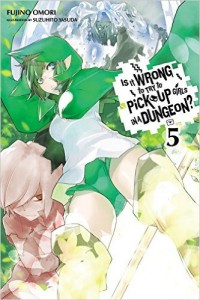
1) Is It Wrong To try To Pick Up Girls In A Dungeon? Licensed by Yen On, 5th volume out in April.

2) The Irregular at Magic High School. Licensed by Yen On, first volume out in April.

3) My Youth Romantic Comedy Is Wrong As I Expected. Licensed by Yen On, first volume out in June.

4) Overlord. Licensed by Yen On, first volume out in May.

5) Naruto Secret Chronicles. Licensed by Viz, 3rd volume out in May.

6) Sword Art Online. Licensed by Yen On, 7th volume out in April.

7) Kagerou Daze. Licensed by Yen On, 4th volume out in May.

8) Confession Rehearsal. One volume, part of the Vocaloid franchise. Kadokawa Shoten. It’s possible this could be picked up, but one volume? Not unless Kagerou Daze really takes off.

9) A Certain Magical Index: New Testament. Theoretically will be licensed by Yen On after all 22 volumes and 2 short story compilations of the first Index have come out. A ha. A ha ha ha.

10) Sword Art Online: Progressive. Licensed by Yen On, 4th volume out in October. Has “caught up” with Japan.

forgetful

11) Forgetful Detective. 5 volumes to date, Kodansha. This is by Nisioisin, and is a straight-up detective series. I find it incredibly unlikely it will be licensed, much as I’d like it to be. We’re already lucky to have Bakemonogatari.

12) Is It Wrong To Try To Pick Up Girls In A Dungeon?: Sword Oratorio. Licensed by Yen On, first volume out in October.

13) Haikyuu!! Shousetsu-ban!. 6 volumes to date. Based on the Shonen Jump manga, I’d expect if it gets super super popular Viz might grab it. But I mean, like, Naruto popular.

14) No Game No Life. Licensed by Yen On, 5th volume out in July.

15) Sword Art Online Alternative: Gun Gale Online. 4 volumes to date, Kadokawa. A spinoff written by someone else under Kawahara’s supervision. It seems the most obvious license here, but we are somewhat glutted with SAO recently, it’s not by the main author, and it doesn’t star Kirito (or even have him in it at all), so I’m not sure if Yen will grab this.

You see the problem here. There’s barely anything to analyze: Yen Press has been here and gone. If nothing else, it tells you what drives the market. Titles with anime out and manga tie-ins as well, long-runners, fantasy series with harem elements. There’s some Vocaloid outliers, and the Nisio title seems to be based mostly on his popularity as an author in and of itself, though it does have a live-action series.

To sum up, if you’re asking when someone will license that popular light novel series? They’ve done it. Go to your local bookseller and pick it up today.

Filed Under: LICENSE REQUESTS, UNSHELVED

Durarara!!, Vol. 3

March 25, 2016 by Sean Gaffney

By Ryohgo Narita and Suzuhito Yasuda. Released in Japan by ASCII Mediaworks. Released in North America by Yen On.

Anyone who reads any of Narita’s two main series, Baccano! and Durarara!!, knows how much he likes his gangs and gangsters. Be it yakuza, mafia, camorra, or just kids wearing colors and yelling about territory, it’s a huge theme in his books. And with the teenage gangs he does a very good job showing off how much the desire for control and power is motivated by simple fear, and how easy it can be to let situations spiral out of control. We learned at the end of the last volume about who Masaomi Kida really is, but this third volume shows us that, of the three teens who have been our protagonists so far, he may be the weakest… which of course makes his comeback and true strength just that much more satisfying.

drrr3

I think Narita’s habit of creating a bunch of divergent situations and then arranging them so that they all crash into each other at the end is something that might work better in a novel than in an anime – a lot of people have complained about the episodes of DRRR!! where nothing happens, but of course it’s all just required setup. the book doesn’t really have this problem, and so you enjoy seeing more and more information get revealed as time goes on. Both to the reader AND to the characters – the reader has been aware of the true identities of Mikado, Anri and Masaomi for some time, but it’s not till the climactic battle that each of them sees the truth.

We also meet Saki, Masaomi’s not-quite-girlfriend and the target of much hatred among the fan pairing community, mostly for existing. I like her, while acknowledging that we aren’t supposed to at first. She’s almost Izaya’s thrall, and as with everything Izaya touches, we’re automatically leery of her. Her constant smile is also not helping. It’s only towards the end of the book that we see the other side of her, the one that genuinely did fall in love with Masaomi, and see her crying and showing emotions. Honestly, it’s easier to blame Izaya here, who loves emotionally manipulating people just to see what happens and because it amuses him. He remains the most punchable person in the entire cast, and given this cast also has Namie, Seiji and Mika that’s saying something. Except wait, there’s someone more punchable.

Yes, this is the volume where we meet Shingen, Shinra’s even-more-eccentric-than-the-son father, who immediately establishes himself as an impulsive freak designed to give Celty migraines (except, of course, she does not have a head, but I suspect Shingen gives them to her anyway). As with Shinra, it’s never really clear when he’s decided to turn serious or not – or how much of his goofing was done to deliberately throw Celty off her game. In any case, a word to the wise, he can be teeth-grindingly annoying, and I know a few people who skip past him in the anime.

This is the longest book in the series to date, and the extra words work well. We get someone of the other minor characters fleshed out a bit, such as Kadota, Erika and Walker. The translation is smooth, only faltering a bit when it has to deal with the Japanese prose habit of never identifying who is speaking, so you have to make more contextual judgments than is strictly necessary. And the art is finally starting to mature a bit and be less flat-faced, with a bold, striking cover. If you enjoy DRRR!!, and can put up with Shingen, then this is definitely an excellent purchase.

Filed Under: REVIEWS

Of the Red, the Light, and the Ayakashi, Vol. 1

March 24, 2016 by Ash Brown

Of the Red, the Light, and the Ayakashi, Volume 1Creator: Nanao
Original story: HaccaWorks*

U.S. publisher: Yen Press
ISBN: 9780316351966
Released: December 2015
Original release: 2012

Of the Red, the Light, and the Ayakashi was originally a visual novel developed and created by the doujin group HaccaWorks* that was released in 2011. The manga adaptation by another doujin creator, Nanao, began serialization in Japan in 2012. The first volume of the manga was also collected and released later that year. In English, the Of the Red, the Light, and the Ayakashi manga is being released by Yen Press and debuted in late 2015. I haven’t actually played the original Of the Red, the Light, and the Ayakashi, though I’m fairly certain it would be something that I would enjoy. In fact, I didn’t even known that the manga was based on a game when I first picked it up. Nor was I previously familiar with any of the creators involved which probably isn’t too surprising—I believe that Of the Red, the Light, and the Ayakashi may very well be Nanao’s first professional work as a mangaka. But, due to the evocative and vaguely ominous cover art and title as well as the promise of the involvement of yokai, the series still caught my attention.

For as long as he can remember, Yue has lived at the mountain shrine associated with the town of Utsuwa where he has been taken care of by the local fox spirits and their attendants. Despite being told not to leave the mountain, Yue and Kurogitsune, one of his fox companions, sneak out of the shrine to attend the town’s festival. The new experience, although exciting, is somewhat overwhelming for Yue. But while at the festival, he encounters two young men who stand out to him more than anyone else—whereas most people appear as shadowy, indistinguishable figures to Yue, Tsubaki and Akiyoshi are distinctive and unique presences. Upon his return to the shrine Yue is duly scolded for breaking the rules but when the master learns about Akiyoshi and Tsubaki she encourages him to meet them again. The fate of all three boys are now intertwined. Because Yue finds himself so irresistibly drawn to Tsubaki and Akiyoshi, he is told that he will one day have to choose one of them to become his “meal,” necessary for sustaining his very existence.

Of the Red, the Light, and the Ayakashi, Volume 1, page 39I was pleasantly surprised by how much I enjoyed the first volume of Of the Red, the Light, and the Ayakashi. The manga combines elements of folklore, horror, and mystery in a very satisfying way. Granted, after the first volume, readers are left with more questions than answers. Much about the series’ story, setting, and characters remain unclear at this point, but what is possibly implied is tantalizing. At times Of the Red, the Light, and the Ayakashi can be unnecessarily cryptic—entire conversations are held in which the characters obviously know what they are talking about but readers aren’t given enough information or context to really understand or follow—which is more frustrating than mysterious, but this still sparks curiosity. I am genuinely intrigued by the series; I want to know more about the ominous events and strange disappearances occurring in Utsuwa, a place inhabited by both humans and spirits which seems to be some sort of threshold between worlds.

Utsuwa isn’t the only thing peculiar that’s peculiar in Of the Red, the Light, and the Ayakashi. The characters, too, are all a bit odd. Yue goes through life in an almost dreamlike, innocent state, his real identity not only obscured to readers but to himself as well. Akiyoshi, with his eccentric behavior and flair for the dramatic, comes across as conspiracy theorist except that he actually has evidence and legitimate reasons to be concerned. Tsubaki would initially appear to be a fairly normal if somewhat moody young man if it wasn’t for the fact that humans and spirits alike frequently find themselves obsessed or enamored with him. The three form an curious bond as they begin to investigate the unusual happenings in Utsuwa. They’re not exactly friends but are far more than mere acquaintances. Supported by Nanao’s attractive (if occasionally cluttered) artwork, intriguing characters, and an effective sense of mystery and impending misfortune, Of the Red, the Light, and the Ayakashi has a dark, otherworldly atmosphere which I’m really enjoying.

Filed Under: REVIEWS Tagged With: HaccaWorks, manga, Nanao, Of the Red the Light and the Ayakashi, yen press

Manga the Week of 3/30

March 24, 2016 by Sean Gaffney Leave a Comment

SEAN: For a 5th week of the month, there’s a surprising amount of stuff coming out, though it’s nothing compared to April, which features 895,623 new and ongoing series. But it’s still March, so what’s happening next week?

tagame

The Passion of Gengoroh Tagame is getting a re-release from the Bruno Gmuender publisher, giving you more of the famous gay manga author. I know a lot of people who are eagerly awaiting this.

ASH: I’m so glad to seeing this coming back into print, and with additional content, even!

ANNA: I’m not likely to read this manga, but I think it is great that the market now supports publishing titles like this. I can’t imagine this being published 10 years ago.

SEAN: Kodansha has the 13th and final volume of My Little Monster, a bumper volume not only featuring various sequels and side stories to the main plot, but also selected highlights from the fan book! A must buy.

MICHELLE: And buy it I shall!

SEAN: And The Seven Deadly Sins is also at Volume 13, but is nowhere near its final volume.

UQ Holder reaches Vol. 7, and by now has given up any pretense of being anything but a sequel to Negima.

And there’s a 6th volume of shonen romance Your Lie In April.

Seven Seas gives us an 8th volume of always interesting if sometimes a bit uncomfortable series A Centaur’s Life.

They also have the debut of Not Lives, yet ANOTHER survival game manga (2013: Alice in the Country of Hearts, 2014: Vampires, 2015: Zombies, 2016: Survival Game, 2017: ???), which also has gender bending to shake things up.

MICHELLE: I don’t suppose we could parlay the survival game trend into a license for Yumi Tamura’s 7SEEDS, eh?

nichijou1

SEAN: Speaking of familiar genres, Vertical debuts Nichijou, a humorous slice-of-life high school comedy – NO WAIT COME BACK! Nichijou is fantastic! It’s very weird and quirky (as the cover might indicate), and has some great characters. I’ve been eagerly awaiting it. For fans of Seki and Sakamoto.

ASH: I have heard good things, and I’m a fan of Seki and Sakamoto, so I should probably pick this up.

MICHELLE: It definitely looks intriguing.

ANNA: That sounds interesting.

MJ: Hm, okay, I’m in.

SEAN: The rest is all digital, but there’s a lot of it. Viz has a 2nd volume of the Boys Over Flowers sequel, appropriately named Boys Over Flowers Season Two.

MICHELLE: I read a chapter or two of this, but should try to get back into it.

ANNA: Yay! I enjoy this series.

SEAN: And Yen’s digital-only titles give us new volumes of Aphorism, Crimson Prince, Renaissance Eve, Scarlet Empire, and Sekirei.

ANNA: I need to catch up on Scarlet Empire – I think I bought the first volume and it disappeared into the mass of titles on my kindle.

SEAN: Is there a title here that cries out to your heart?

Filed Under: FEATURES, manga the week of

Danganronpa: The Animation, Vol. 1

March 22, 2016 by Sean Gaffney

By Spike Chunsoft and Takashi Tsukimi. Released in Japan by Kadokawa Shoten, serialized in the magazine Shonen Ace. Released in North America by Dark Horse.

I have made my opinions on the glut of ‘survival game’ manga well known by now, I hope. In general, if you’re writing a survival game manga, you need a lot to keep me interested, as teens locked in a school and killed off one by one has zoomed WAY past vampires and sadistic shoujo boyfriends in the things I avoid sweepstakes. And yet sometimes I do hear so much about a title that I feel the need to check it out anyway. Such a title is Danganronpa, which was originally a game and then got adapted to an anime. The manga wears on its sleeve that it’s adapting the anime and not the game, which is likely why it’s only 4 volumes instead of the 9-10 I’d expect otherwise. That said, what makes Danganronpa stand out?

dangan1

Well, for starters it’s far more overdramatic than the usual glumness I’ve seen from survival game manga before. Monokuma, the bear lurking in the background on the cover, seems to be both the manga’s mascot and its villain. He’s a ludicrously cruel and over the top figure, making bear puns as he gleefully executes people. He’s just a lot of fun, and stands out in particular because the rest of the cast of students are stereotypes, many deliberately so. Our hero is the average “player character” type, we get the jock, the idol, the fashion plate, the overweight otaku, etc. With a cast like this, that sort of shorthand is necessary as you’ll know at a glance what they’re like and how they’ll react. Plus, of course, the cast starts getting killed off fairly quickly, so you don’t have to remember all of them.

The other interesting aspect of this title is the trial sequence. Basically the kids are told they can escape the school if they kill someone – but they have to get away with it. There’s a trial, and if the killer isn’t found, the rest of the cast will get punished. Of course, the killer is found, as our hero is very good at deductions, and is helped out by a stoic girl who seems to be a detective, and I suspect may be a love interest except this is one of those series where everyone tends to die, so I won’t commit to that just yet. And the kids aren’t complete sociopaths either, mostly killing out of terror and fear of blackmail. I was also amused at how easy it was to solve the first murder’s ‘written in blood’ clue, and the manga must have agreed with me, as the cast also figures it out immediately.

This is a title that’s pretty much marketed to fans of the gmae or anime, and they should find it quite enjoyable. If you haven’t seen either, it’s still pretty good, keeping in mind the usual irritations of the genre. The comedy and dramatics help make that less of a poison pill this time around, though.

Filed Under: REVIEWS

Shuriken and Pleats Vol. 1

March 21, 2016 by Anna N

Shuriken and Pleats Volume 1 by Matsuri Hino

Matsuri Hino is one of those shoujo authors who I like, but I haven’t been pulled into the time of deep admiration that I feel towards an Arina Tanemura or a Chika Shiomi. One of the main reasons for this is that I never really connected with Hino’s major series Vampire Knight. I have some volumes stockpiled and I intend to give that series another chance one day. I do enjoy Hino’s delicate art. I was curious about a non-vampire series from Hino.

Shuriken and Pleats is a short two-volume series about a ninja girl in the modern age, with all of the angst one might expect from a Matsuri Hino title with the added bonus of some fish out of water humor. The tragedy is introduced in the first chapter, as Mikage Kirio is assigned to protect an idealistic man whose wife and daughter have passed away, possibly as the result of some of his research into a way to end world hunger. Mikage’s master James goes out of the way to exhibit a personal interest in the young ninja, wanting her to have a normal life. When James dies, his will sets Mikage up with an option for an independent life for the first time, and he requests that she take the time to go to school like a regular girl. Mikage moves back to Japan and makes an attempt to fit in as a schoolgirl, while being haunted by her past. She also finds a final person to protect along the way.

“Girl who doesn’t understand her feelings” is almost as much of a shoujo cliche as the inexplicably alluring klutzy heroine, but Mikage is a more interesting than usual example of this particular type of heroine. Being part of a secret ninja clan in the modern world is a legitimate reason to have a closed-off personality, and while she fails sometimes she does have some serious ninja skills. One thing that does make Shuriken and Pleats stand out are some fine points of character development that manage to be both humorous and tragic at the same time, like Mikage’s shrine of cute erasers that her former master gave her. Mikage’s reaction to having papers passed to her at school from behind her back is a dramatic flip and the stern command for her classmate to “State your intention.”

Mikage’s ninja nature is signaled by the flowing black scarf she wears at all times, even when in her school uniform. Hino’s art has her trademark extremely pretty character designs mixed with dynamic ninja action scenes. I found myself intrigued by Mikage’s journey as she gradually loosens up on her ninja training and starts dealing with her emotions for the first time. I was less interested in some of the aspects of the plot, like the conspiracy at work that Mikage has to unravel. There’s a great deal of plot development packed into just one volume, which perhaps speaks to the benefit of planned short manga series as opposed to short series that are the result of an abrupt cancellation. I enjoyed this manga, and I’ll look forward to the concluding volume. Shuriken and Pleats seems like it will be an entertaining diversion if someone is looking for a short series to enjoy.

sp1

Filed Under: REVIEWS Tagged With: shojo beat, shoujo, Shuriken and Pleats, viz media

Bookshelf Briefs 3/21/16

March 21, 2016 by Sean Gaffney and Michelle Smith Leave a Comment

idol2Idol Dreams, Vol. 2 | By Arina Tanemura | VIZ Media – There are still certain aspects of Idol Dreams that strike me as incredibly creepy, given that the main character is 31 on the inside even if she’s temporarily in the body of her 15-year-old self. In this volume, for example, Chikage finds out that 15-year-old idol Hibiki might have a girlfriend, so she stalks him and ends up following him home to find out what the deal is. Lame! On the other hand, I enjoyed getting a look of her and Tokita together as middle-school students, and am now a bit more curious to see how she ended up becoming such a restrained and clueless adult. So, I guess I care a little bit now and that’s gotta count as progress. – Michelle Smith

roseprin9Kiss of the Rose Princess, Vol. 9 | By Aya Shouoto | VIZ Media – I wish I could say that Kiss of the Rose Princess has a strong ending that really rewards those who stuck with it, but, alas, I cannot do so. Great swaths of it made no sense to me whatsoever, and I can’t tell if that’s because the writing is genuinely incoherent or if I just never paid enough attention to details along the way. If one overlooks one’s puzzlement, it’s kind of a paint-by-numbers shoujo conclusion in which bad guys are revealed to be sympathetic, the power of shoujo heroine optimism keeps someone from doing something they’ll regret, and the big bad (another secret evil society—Shouoto’s got one of those in He’s My Only Vampire too, I believe) is defeated with ease. I mean, it’s not a horrible series, but it remains my least favorite of the three Shouoto series currently in print in English. – Michelle Smith

komomo3Komomo Confiserie, Vol. 3 | By Maki Minami | Viz Media – In general, I tend to like Maki Minami titles more than most bloggers—Special A is still a favorite of mine—but I’m just not feeling the love for this new series, possibly as the heroine, Komomo herself, is just too different from her previous titles. There’s still the core of denseness and not understand what this thing called love is, but there doesn’t seem to be much else. And Natsu, the obvious love interest, is not nearly as well characterized as either Kei or Senri. The food still looks delicious, though, and I like the best friend who has very little idea how to behave properly. But, especially as this is a relatively short series, I sort of want a little more from it than I’m getting. – Sean Gaffney

Komomo Confiserie, Vol. 3 | By Maki Minami | VIZ Media – Komomo’s been blushing up a storm and having heart palpitations whenever she’s around handsome cobbler Seto, but she can’t figure out what’s up. Her utter obliviousness is pretty dumb, and though the entire premise of this manga is unrealistic, it’s this that bothers me most of all. Still, I did like how Komomo instantly sets her own feelings aside when it comes to ensuring Seto’s happiness with his girlfriend, realizing that she’s not the one who can bring out the best in him. Plus, Rise trying to cheer her up by singing (terribly) was kind of amusing, too. In the end, my heart has warmed to this series a little, but I still don’t love it like I did Voice Over!. Maybe it needs some cats. – Michelle Smith

seki7My Neighbor Seki, Vol. 7 | By Takuma Morishige | Vertical Comics – For all that this manga is still at its best when it’s showing us Yokoi’s reactions to whatever Seki happens to be doing, it can’t be denied that Seki’s faces are getting just as good, especially now that Yokoi is able to stand up to him more often. We also have enough continuity now that we can see the return of old favorites, such as the robot family, now cursed with an Aibo that’s far too big compared to them, and the phantom art thief, who’s moved on to Western works as well. And Yokoi also joins in, of course, which works for good and ill—she just doesn’t have Seki’s sense of imagination. Luckily, Seki makes up for it on his own, which is good, as I think Vol. 8 is a few months away. – Sean Gaffney

nisekoi14Nisekoi, Vol. 14 | By Naoshi Komi | Viz Media – I can only imagine that Nisekoi‘s Western fans were not delighted with this new volume. Late additions to a harem manga always tend to get a hard time, even more so given that Yui is not only ANOTHER childhood friend, but also a prodigy, which means she’s completed enough schooling to be teaching Raku and company’s class. Oh yes, and she’s also the head of a Chinese Mafia family, complete with her own loyal bodyguard. One could be forgiven for assuming she’s there by editorial fiat to keep the story running as it’s still popular. That said, she’s amusing and intelligent, and enjoys teasing Raku without going too far with it, so we’ll see how long she sticks around. – Sean Gaffney

persona4Persona 4, Vols. 1 & 2 | By Shuji Sogabe and ATLUS | Udon Entertainment – This is a manga based on a game I haven’t played, and there’s apparently an anime as well. The hero in the game has the player’s name, so here one is invented. The story itself is half horror, half psychological action series, as our nameless hero and his three friends get sucked into another world where they must battle the negative sides they try to hide from others—battles which have killed other people. I found the second volume more interesting than the first, possibly due to the heavy yuri tease that I suspect will go nowhere. Oh, and which annoying bear pun creature came first, this or Dangan Ronpa? Recommended for Persona 4 fans, others won’t miss much. – Sean Gaffney

Filed Under: Bookshelf Briefs

My Week in Manga: March 14-March 20, 2016

March 21, 2016 by Ash Brown

My News and Reviews

I managed to post two in-depth manga reviews at Experiments in Manga last week, though it looks like I’ll only be posting one this coming week since taiko will be keeping me pretty busy with a number of different performances and related events. Inio Asano’s A Girl on the Shore was the first manga that I reviewed last week. Like the rest of Asano’s work that I’ve read, it can be emotionally intense and hard-hitting at times, but it’s very well done. As part of my monthly horror manga review project, last week I also took a look Mushishi, Volumes 8, 9, and 10, the final installment in the English-language release of Yuki Urushibara’s award-winning debut. Although I’ve reached the end of the series proper, I’m planning on at least more Mushishi-related post before I’m through.

Elsewhere online: The BBC has an interesting piece on Keiko Takemiya—The godmother of manga sex in Japan. Rokudenashiko was interviewed by the Anne Ishii of MASSIVE about controversial art and free speech. Otaku USA posted an interview with translator and scholar Frederik L. Schodt about his work and Osamu Tezuka. An interview with Steve Oliff, the colorist who worked on Marvel’s release of Katsuhiro Otomo’s Akira, was posted at Anime News Network. In licensing news, Dark Horse has picked up the Psycho-Pass: Inspector Shinya Kogami manga written by Midori Goto and illustrated by Natsuo Sai. Finally, the Skip Beat! crowdfunding effort that I mentioned a couple weeks ago has moved from Indiegogo to Kickstarter.

Quick Takes

Dream Fossil: The Complete Stories of Satoshi KonDream Fossil: The Complete Stories of Satoshi Kon by Satoshi Kon. Compiling fifteen of Kon’s short manga from between 1984 and 1989, as well as an essay by Susumu Hirasawa (which was a pleasant surprise), Dream Fossil is a somewhat peculiar volume which will probably be of most interest to Kon enthusiasts although other readers may find parts of it appealing as well. As is the case with so many collections, some stories are much stronger than others. Some of the unevenness can likely be attributed to the fact that Dream Fossil consists of Kon’s early works in which his narrative techniques were still being refined and developed. I actually found myself frustrated with some of the stories because they read less like manga and more like a storyboard or broad outline for a more involved work; some of the stories and ideas seem like they would have been better conveyed through animation rather than sequential art. Even so, as a whole I did enjoy Dream Fossil. While the storytelling itself was sometimes weak, the underlying concepts and imagery were great.

Master Keaton, Volume 2Master Keaton, Volumes 2-4 written by Hokusei Katsushika and Takashi Nagasaki and illustrated by Naoki Urasawa. It’s been some time since I read the first volume of Master Keaton, but being a fairly episodic series without much of an overarching story it wasn’t at all difficult to fall right back into the manga. I first picked up Master Keaton because of Urasawa’s involvement with the manga. This is still a major draw for me, but I continue to read the series because I genuinely enjoy the stories and characters. Keaton is sent all over the world to investigate a wide range of cases, so there’s plenty of variety in the manga’s stories as well. Although the series’ drama, action and adventure is certainly engaging, I especially like the chapters that take advantage of Keaton’s archaeological and academic interests.  Master Keaton, while fictionalized, makes use of actual people, places, and events, which I like. (I’ve even learned a few factual tidbits from the manga.) Occasionally the series does get bogged down in historical details that don’t necessarily further the story, though.

The Tipping PointThe Tipping Point edited by Alex Donoghue and Tim Pilcher. Published as part of the fortieth anniversary celebrations of the comics publisher Humanoids, The Tipping Point collects thirteen short works from creators influenced by Japanese, Franco-Belgian, and American comics traditions. The anthology specifically caught my attention due to the mangaka involved—Taiyo Matsumoto, Atsushi Kaneko, Naoki Urasawa, Keiichi Koike, and Katsuya Terada—although the European and American creators are notable in their own right. (Sadly, though the collection touts its own innovation and diversity, only male creators are represented, something that is quickly glossed over in the introduction.) I greatly enjoyed the individual comics which range in subject, genre, and tone, but as a collection The Tipping Point seems to be missing a sense of cohesiveness and context. In the end, I was left wondering why these particular creators and why these particular works were selected to be brought together. Perhaps the theme of a “tipping point” was simply too vague or broad.

Filed Under: FEATURES, My Week in Manga Tagged With: comics, Hokusei Katsushika, manga, Master Keaton, Naoki Urasawa, Satoshi Kon, Takashi Nagasaki

Paradise Residence, Vol. 1

March 20, 2016 by Sean Gaffney

By Kosuke Fujishima. Released in Japan by Kodansha, serialized in the magazine Afternoon. Released in North America by Kodansha Comics.

For all that Fujishima’s Oh My Goddess! was a series with angels, devils, and everything in between (that is when it wasn’t just about vehicles and those who love them), there was an awful lot of what is generally termed ‘slice-of-life’ in the series. And before that we had You’re Under Arrest, which also took a basic premise (female cop buddy movie) and used it as a springboard for everyday amusing situations. As a result, it should not come as a surprise that his new series details the rather everyday, slice-of-life adventures of a girls’ dormitory way up a hill, and the eccentric characters therein. Of course, the problem with this is that the series needs to rise and fall on said eccentric characters, and so far we don’t really get a good handle on any except one or two.

parares1

Our two heroines are on the front cover posing for us, and they are very much of the Miyuki and Natsumi school of personalities. Takanashi is brash, sleeps late, loves to eat, is not very good at school but makes up for it with energy and heart. Misawa is her best friend, the straight man of the group who exists mostly to react to Takanashi’s antics and sometimes sigh. The dorm they’re in is old and tends to fall apart easily, but its residents all love it, particularly when defending it against their all-girls’ school’s other dorm, which is modern and state of the art. We get the overly sadistic sempai, the elementary schoolgirl who acts as a dorm mother (she’s the daughter of the REAL, almost never seen, dorm mother), the overseas student, the otaku, the eccentric artist, etcetera.

The volume begins pretty much in media res, showing off the group’s everyday school and dorm life. We see how Takanashi deals with dogs, heat, and typhoons, as well as what appears to be a rivalry with a stuck-up girl from the otehr dorm. After this volume, we get as an extra “Volume 0”, a collection of the initial chapters that ran as one-offs in the spinoff good!Afternoon while Fujishima was still working on Oh My Goddess!. I can see why it was put later, as the characters are not quite in character yet, but it does give a better introduction to everyone than the initial first volume does. There’s also a short story featuring Takanashi’s parents, about the springtime of youth, etc.

This is light and fluffy fun. If there’s a flaw it’s that that’s all it is. There’s not as big a hook to draw people in as there is with Oh My Goddess!, and I doubt we’ll get serious plotlines here. The pacing can be slow, as you’d expect with this genre. And sometimes there’s a gag thrown in that just doesn’t work, such as one girl comedically falling into another girl’s breasts during a blackout, as if Fujishima is reminded that fanservice has moved on since 1985 and tried to imitate it. But if you like Fujishima, and his art is very nice here, this should appeal to you. It’s also over in Japan, so should wrap up pretty soon.

Filed Under: REVIEWS

Mushishi, Vol. 8, 9, and 10

March 18, 2016 by Ash Brown

Mushishi, Volumes 8-10Creator: Yuki Urushibara
U.S. publisher: Del Rey
ISBN: 9780345505606
Released: July 2010
Original release: 2007-2008
Awards: Japan Media Arts Award, Kodansha Manga Award

Every once in a while I come across a work that stays with me long after I first finish reading it and that I find myself revisiting time and again. Yuki Urushibara’s ten-volume debut manga series Mushishi is one such work. Heavily influenced by traditional Japanese folklore but retaining modern sensibilities, Mushishi is a nuanced and layered manga which can either be simply enjoyed as a collection of atmospheric and subtly unsettling stories or more deeply appreciated for its complex underlying themes and philosophies. Mushishi quickly became and remains one of my favorite manga. The series has been received positively by fans and critics alike, earning Urushibara several awards and recognitions including a Japan Media Arts Award and a Kodansha Manga Award. Mushishi has also been the basis for multiple anime among other media adaptations. In English, the series was first published in print by Del Rey Manga and was later released digitally by Kodansha Comics.

The final volume of the English-langauge edition of Mushishi, first printed in 2010 and released digitally in 2014, is equivalent to the eighth, ninth, and tenth volumes of the series’ original Japanese release published between 2007 and 2008. Keeping with the episodic nature of Mushishi, the volume collects fourteen stories that for the most part aren’t directly tied to one another or to earlier chapters, but which share similar ideas and themes with the rest of the series. Family relationships are very important in Mushishi as a whole, but stories like “The Milk of the Valley,” “The Hidden Channel,” “Aquamarine,” and “The Thread of Life” in particular explore the deep bonds between mothers, including surrogate mothers, and their children. Other stories, like “The Final Bit of Crimson,” “Stars in the Jar of the Sky,” and “The Scented Darkness,” are about other realities and worlds, or at least about aspects of the natural world that aren’t fully understood by humankind. On the other hand, “Sunshowers,” “The Mud Weeds,” “The Whirlwind,” and “The Eternal Tree” are stories which show that when dealing with possession by or control of mushi, greater understanding can be both a curse and a blessing.

Mushishi, Volume 10, page 155The remaining three stories collected in the volume, including the series’ two-part finale, specifically involve Ginko (the manga’s protagonist and linking character), his personal relationship to mushi (primordial creatures that are closest to the original form of life), and what are known as “masters” in the world of Mushishi. Each master is associated with a specific geographic area and are responsible for maintaining the connection and balance between the natural world and all of the beings found within it. They are described as the living embodiment of the promise and rule of life. Although each of the three stories are technically found in different volumes of the series, taken together they form a particularly interesting narrative and are very illuminating when it comes to Ginko’s character. “The Bed of Grass” returns to Ginko’s past, firmly establishing why he is who he is and revealing the origin of his deep connection to and somewhat unusual attitude towards mushi. That connection is extremely critical to and further developed in “The Bottom of Winter” and in the series’ conclusion “Drops of Bells.”

Ginko’s devotion to life, whether it be human, mushi, or some other form, is perhaps the most prominent narrative driving force behind the entirety of Mushishi. At the same time, Ginko is also very aware that sometimes life cannot and should not always be preserved and that coexistence isn’t always an option. The intent is to find an appropriate balance, but what that balance should be is often debatable and mistakes are made. Ginko frequently acts in a role akin to that of a master and on several occasions throughout the series even considers taking the responsibilities of master upon himself. The decisions that he makes as he considers all of this in the final volumes of Mushishi are especially poignant. Mushishi is a manga series about many things, but at its very heart it’s an exploration of relationships, not only between humans and the natural world of which they are only one, inextricable part, but between people as individuals and as members of larger social groups. Mushi provide a seemingly supernatural element to the series, but ultimately the focus of Mushishi is on the very real, varied, and changing struggles of individuals living in an evolving world that they cannot completely control or understand.

Filed Under: REVIEWS Tagged With: del rey, Japan Media Arts Award, Kodansha Manga Award, manga, mushishi, Yuki Urushibara

Ranma 1/2, Vols. 25-26

March 18, 2016 by Sean Gaffney

By Rumiko Takahashi. Released in Japan by Shogakukan, serialized in the magazine Shonen Sunday. Released in North America by Viz.

It’s not an ironclad rule, but in general, the longer the story arc in Ranma the better it ends up being. And this is good news for this volume, which wraps up the Herb arc from the previous omnibus, introduces a new character who brings a lot of silliness to the table, and has what may be the strongest arc in the entire series, where Takahashi learns that even though her series desperately need to be static and unchanging, sometimes you have to have the occasional character development. (Admittedly, we haven’t seen her learn that lesson with Rin-Ne just yet, but hey.) The Shinnosuke arc also manages to be strong simply by reversing the usual plotline of many a Ranma story, as this time it’s Akane who meets the stranger with a mysterious connection to her past.

ranma25-26

Indeed, Akane is comparatively calm and peaceful compared to previous situations, possibly as, instead of dealing with a supposed errant fiancee for Ranma, she now has her own love troubles to deal with. Shinnosuke saved her when she was a child, at great cost to his own self, and has grown up to be a handsome young man who looks a bit like Ryouga. (Too much, IMO – especially when the actual Ryouga shows up, it can be difficult to tell them apart.) The trouble is that Akane loves Ranma, and even though she’ll never say it or think it she knows it as well. Thus on her end she feels an obligation to stay and help because of a life debt. Ranma, who is playing the Akane role this time around, can only see her getting cozy with this new guy. He goes through various stages of jealousy, and as ever with Ranma, the worst argument, where you know things are really bad, comes from when Ranma and Akane STOP hitting each other.

There is another half to this volume, of course. We wrap up Herb in a quick but satisfying way, and Ranma once again proves unable to sacrifice even one of his worst villains. We also meet Hinako, who is another character who transforms from one form to another, though for once it’s not due to a cursed spring but rather due to a failed attempt at a good deed by Happosai, of all people. The Hinako storyline is not going to give you the depth and romance that you see in the Shinnosuke arc. Instead we get pure comedy, as Ranma, in order to defeat the teacher, has to essentially grope her pressure points – which are exactly where you’d think they are. Oh yes, and Hinako’s transformation from bratty immature kid to statuesque stunner makes no sense except as comedy. But that’s Ranma for ya.

In short, Ranma has now turned the corner and is entering its twilight years, but can still turn out some classics, and this volume is overall excellent, provided you don’t mind some fanservice. There’s even actual romantic progress at the very end, which I won’t spoil except to again say that the real tsundere in this series is Ranma, not Akane.

Filed Under: REVIEWS

Manga the Week of 3/23

March 17, 2016 by Sean Gaffney, Michelle Smith, Ash Brown, MJ and Anna N Leave a Comment

SEAN: It is somewhat sad that with the huge number of manga out towards the end of every month, I can be relieved that there are “only” 33 titles out next week. Let’s plow through them.

Dark Horse has a 3rd Astro Boy omnibus.

Kodansha has an awful lot of stuff. There’s a 4th volume of that pesky Devil Survivor.

And Noragami is still sped up with its 12th release.

If you prefer 4 to 3, then the debut of Persona Q: Shadow of the Labyrinth Side P4 will delight you. I’ll be in the corner looking baffled.

pj1

At long last, North America sees the debut of possibly the most anticipated josei title ever: Princess Jellyfish, which runs in Kiss magazine, gets an omnibus release, and it is fantastic. The Manga Bookshelf team would normally all pick it as Pick of the Week automatically, but see below. (FYI: PJ’s creator, Akiko Higashimura, has a younger brother, who happens to draw My Neighbor Seki.)

MICHELLE: I feel like I have been waiting for this for ages and ages. So excited!

ASH: Same here! (Also, I had no idea Akiko Higashimura and Takuma Morishige were related!)

MJ: So ready for this!

ANNA: I feel like I’ve been waiting for this FOREVER! Very much looking forward to reading this.

SEAN: Also debuting is Real Account, which is a survival game manga, and zzzzzzzzzzzzzzzzzzsnooooore – sorry, fell asleep there. Moving on.

MICHELLE: It can’t be worse than BTOOOM!, can it?

MJ: We shouldn’t underestimate it, Michelle. We should give it a chance to prove that it’s worse. It’s only fair.

SEAN: And a 7th volume of Yamada-kun and the Seven Witches. One volume per witch!

Seven Seas gives us a 5th volume of Servamp, which I believe still has vampires.

And Vertical has a 7th volume of Ajin, a series I know many people are excited about.

ASH: Especially now that there’s an anime series.

SEAN: Viz finally debuts the new shoujo title from the Vampire Knight creator, who has switched from Vampires to Ninjas with Shuriken and Pleats.

MICHELLE: I didn’t love Vampire Knight, but I’m still looking forward to checking this out.

MJ: Same.

ANNA: I will read this!

SEAN: And now it’s Yen time, starting with the Yen On light novel imprint. Accel World gets a 6th volume, as we try to figure out if our hero is going to turn possessed and evil or not.

The third Durarara!!, meanwhile, focuses on Masaomi, the third member of our high school power trio.

Log Horizon has a 4th volume, resolving the cliffhanger from the third, and possibly featuring Shiroe pushing his glasses up his face a few more times.

And there’s a 4th No Game No Life, which I wasn’t as pleased with as usual. I reviewed it here.

agkz1

Akame Ga KILL! ZERO is the new spinoff series of the week, a prequel taking place a few years before the main series and focusing, appropriately enough, on Akame.

There’s a third Black Bullet manga, with plenty of disturbing yet well choreographed loli assassin action for you.

Bloody Cross nears its end, but isn’t there yet, even as we hit double digits with Volume 10.

And we get the 2nd to last volume of Chaika the Coffin Princess as well, which is sadly far below the most important coffin carrying manga this week. More later.

Demon from Afar must have run out of cast members, as the 6th volume is its last.

So The Disappearance of Nagato Yuki-chan has resolved its main romance, and has finished promoting its anime. It has to wrap up soon. Right? Right?

He’s My Only Vampire is only half finished, but I’m enjoying it more than Shouoto’s other titles, and so I look forward to Vol. 6.

MICHELLE: Same here, though Demon Prince of Momochi House is pretty pleasant, too.

SEAN: The second The Honor Student at Magic High School continues to tell an alternate viewpoint of the novel we haven’t quite gotten to yet.

There’s also a 4th omnibus of Karneval’s circus mysteries.

And if you enjoy seeing a girl attempt to do life correctly and fail constantly, you no doubt are already aware that No Matter How You Look At It, It’s You Guys’ Fault That I’m Not Popular!! has an 8th volume next week.

And if you enjoy pretty supernatural people, have a 2nd Of The Red, the Light, and the Ayakashi.

MICHELLE: Yay! Volume one was a surprise delight!

ASH: I actually just finished reading the first volume; I’m intrigued and look forward to more.

MJ: Hm, I guess I should check out that first volume!

ph24

SEAN: Poor Princess Jellyfish! An obvious Pick of the Week… except oh look, here’s the final Pandora Hearts volume! Michelle, MJ, you aren’t allowed to pick both this time. (evil grin)

MICHELLE: Oh, man. Well, I’m pretty sure where MJ’s heart lies, but I am less committed.

MJ: Oh, the final one. Oh. Oh.

SEAN: And a third Prison School volume, which I think will give readers all the excess bodily fluids they could possibly want.

ASH: And then some, most likely.

SEAN: Rose Guns Days has a third volume of its Season 1 arc.

The only coffin manga that matters next week, we finally see a 5th volume of Shoulder-a-Coffin Kuro. Yay!

Spice & Wolf has a 12th manga volume, and for those who want to catch up with the series, 1-12 will also now be available digitally starting next week.

Sword Art Online begins the Mother’s Rosary arc, despite having just started the Phantom Bullet arc as well. The series ran at the same time in Japan, and will do so here as well.

Lastly, there’s a 4th volume of Sword Art Online Progressive’s manga, featuring Argo!, and also those other two I guess.

Even if you don’t get a lot of manga, there’s STILL a lot to get next week. Can you keep up?

MICHELLE: Not really, no!

Filed Under: FEATURES, manga the week of

  • « Go to Previous Page
  • Page 1
  • Interim pages omitted …
  • Page 300
  • Page 301
  • Page 302
  • Page 303
  • Page 304
  • Interim pages omitted …
  • Page 551
  • Go to Next Page »
 | Log in
Copyright © 2010 Manga Bookshelf | Powered by WordPress & the Genesis Framework