• Skip to primary navigation
  • Skip to main content
  • Skip to primary sidebar
  • Home
  • About Us
    • Privacy Policy
    • Comment Policy
    • Disclosures & Disclaimers
  • Resources
    • Links, Essays & Articles
    • Fandomology!
    • CLAMP Directory
    • BlogRoll
  • Features & Columns
    • 3 Things Thursday
    • Adventures in the Key of Shoujo
    • Bit & Blips (game reviews)
    • BL BOOKRACK
    • Bookshelf Briefs
    • Bringing the Drama
    • Comic Conversion
    • Fanservice Friday
    • Going Digital
    • It Came From the Sinosphere
    • License This!
    • Magazine no Mori
    • My Week in Manga
    • OFF THE SHELF
    • Not By Manga Alone
    • PICK OF THE WEEK
    • Subtitles & Sensibility
    • Weekly Shonen Jump Recaps
  • Manga Moveable Feast
    • MMF Full Archive
    • Yun Kouga
    • CLAMP
    • Shojo Beat
    • Osamu Tezuka
    • Sailor Moon
    • Fruits Basket
    • Takehiko Inoue
    • Wild Adapter
    • One Piece
    • After School Nightmare
    • Karakuri Odette
    • Paradise Kiss
    • The Color Trilogy
    • To Terra…
    • Sexy Voice & Robo
  • Browse by Author
    • Sean Gaffney
    • Anna Neatrour
    • Michelle Smith
    • Katherine Dacey
    • MJ
    • Brigid Alverson
    • Travis Anderson
    • Phillip Anthony
    • Derek Bown
    • Jaci Dahlvang
    • Angela Eastman
    • Erica Friedman
    • Sara K.
    • Megan Purdy
    • Emily Snodgrass
    • Nancy Thistlethwaite
    • Eva Volin
    • David Welsh
  • MB Blogs
    • A Case Suitable For Treatment
    • Experiments in Manga
    • MangaBlog
    • The Manga Critic
    • Manga Report
    • Soliloquy in Blue
    • Manga Curmudgeon (archive)

Manga Bookshelf

Discussion, Resources, Roundtables, & Reviews

Features & Reviews

Manga the Week of 4/12

April 6, 2017 by Sean Gaffney, Ash Brown, Anna N, MJ and Michelle Smith 1 Comment

SEAN: Unlike Viz and Yen, Kodansha doesn’t usually pile it all on in one week. That said, hope you like Kodansha this week.

But first, J-Novel Club has a 2nd volume of Playing to Win in a VRMMO, the bulk of which is apparently a flashback to the time gap in the first book.

Kodansha continues to pump out digital-only series, both new and old Del Rey castoffs. For the former, we have the 2nd Ace of the Diamond, another Museum, and the second Tokyo Tarareba Girls. For the latter, new volumes of Gakuen Price, School Rumble, Yagyu Ninja Scrolls and the omnipresent Pumpkin Scissors.

MICHELLE: I kind of fell behind on keeping up with these, alas.

ANNA: I bought the first volume of Tokyo Tarareba Girls but haven’t read it yet, so far behind already.

ASH: I don’t know how much it really means, and I’m trying not to get my hopes up lest they be dashed, but Kodansha actually called some of these titles digital-first recently. I’d love to see more print editions!

SEAN: And there’s lots of print as well. Attack on Titan is so popular it’s not getting a Choose Your Own Adven… (cough) sorry, Choose Your Own Path Adventure, a totally not-litigious title, called Year 850: Last Stand at Wall Rose.

ASH: I’m really curious about this one; I loved gamebooks growing up. (And I have to admit, I still do.)

SEAN: Fairy Tail is up to Vol. 59, but I believe that this may be the final arc.

The Prince in His Dark Days is at Vol. 4. Are the days still dark?

MICHELLE: I believe this is the final volume, too.

SEAN: Princess Jellyfish’s 4th volume is probably the release I’m most excited about in this bunch.

MICHELLE: Me too.

ANNA: Indeed.

ASH: Still incredibly happy this series is being released!

MJ: Ack! I’m behind!

SEAN: But there’s also the debut of a new Kosuke Fujishima series. Toppu GP is the somewhat awkward title, and after combining fast bikes/cars with policewomen, goddesses and college kids, Kodansha is finally letting him actually do a racing manga. Should be fun.

MICHELLE: Huh. I suppose I should check it out.

SEAN: Seven Seas has a 5th volume of Not Lives, which I have Not Read in some time.

And a 7th volume of my “favorite” guilty pleasure (and by favorite I mean it makes me cringe so much but I read it anyway) Pandora in the Crimson Shell: Ghost Urn.

SuBLime has a 6th volume of The World’s Greatest First Love. (Spoil me, is it really that great?)

MICHELLE: No clue.

ASH: I find the series’ supposed romance much less compelling than its behind-the-scenes portrayal of the shoujo manga publishing industry.

SEAN: And Vertical gives us a 6th volume of Devil’s Line.

Lastly, there’s some more Viz. We have a 62nd volume of Case Closed. Catch up before you’re 63 volumes behind!

And a 20th Itsuwaribito, which I think may be nearing its end soon.

Magi reaches Vol. 23, and always makes me happy.

ANNA: So, so far behind on this title as well.

SEAN: And a 7th volume of Monster Hunter: Flash Hunter.

Lastly, the Revolutionary Girl Utena box set which got delayed at the last minute is now out in stores (unless Diamond shipped it to you early, like they did me). It’s the shoujo manga version of Utena, and I will leave it at that.

ASH: I actually haven’t read the series, but I have read the standalone manga The Adolescence of Utena which I loved and which is also included in this absolutely gorgeous box set.

SEAN: There’s a lot of variety this week. What appeals to you?

Filed Under: FEATURES, manga the week of

Flying Witch, Vol. 1

April 5, 2017 by Sean Gaffney

By Chihiro Ishizuka. Released in Japan by Kodansha, serialization ongoing in the magazine Bessatsu Shonen Magazine. Released in North America by Vertical Comics. Translated by Melissa Tanaka.

Relaxed and easygoing titles have always been a thing in Japanese manga to some extent, but over the last ten years or so it really seems to look like they’re coming into their own, or at least coming to North America more often. Whether it’s school life, village life, or workplace life, there is a growing need for watching a cast of mild to strong eccentrics go about life at their own pace, usually with at last one “straight man” to boggle at their antics. And as you may have gathered, Flying Witch continues in this genre, showing us a young witch who moves out into the sticks in order to train, and her laidback adventures with a group of (mostly) normal villagers.

Makoto is the witch, and she’s a bit of an airhead, although not to the extremes that some of these series try to go. She wants to do her best to be a better witch, but is easily distracted, has a Ryouga Hibiki-like sense of direction, and also has absolutely no idea how to hide her identity as a witch, which is supposed to be a secret, from anyone at all. She’s moved in with her cousins, and on the very first day she’s trying out a new broom in front of the youngest one, not particularly noticing that she isn’t supposed to be floating in the air. The cousin, Chinatsu, is probably my favorite character in the book; at first shy and a little reluctant to like this new girl, she gradually warms up once she realizes Makoto is a witch, and is a nicely realistic young girl.

Less successful is Kei, the main male lead, who unfortunately is not straight-laced enough to be the main “tsukkomi” that this series needs. (That falls to his classmate Nao, who holds up her end of the bargain admirably, and is the recipient of the manga’s funniest and also possibly creepiest moment.) Kei is simply too laid back and relaxed, and as a result has a tendency to have no personality. He seems to be a ‘minder’ sort, like Yotsuba’s dad, but these girls are too old to really need to take charge of, so mostly he exists so that the series isn’t made up entirely of girls. I was pleased to see that the witch aspect was not forgotten – this felt like one of those series that would settle into slice-of-life and forget its roots, but each chapter does have a small element of the supernatural in it, from the terrifying mandrake root to the Harbinger of Spring (whose matter-of-fact introduction reminded me of some of the better Zetsubou-sensei chapters) to Makoto’s older and more accomplished sister, who arrives, makes chaos, and then leaves.

There’s not much to grab a hold of here, and I doubt a “real” plot will form. But who wants a real plot to form anyway? Flying Witch is filled with cute, nice, slightly weird girls living their everyday life and doing witchcraft. If you enjoy slice-of-life eccentricity, it’s right in your strike zone.

Filed Under: flying witch, REVIEWS

Altair: A Record of Battles, Vol. 1

April 4, 2017 by Katherine Dacey

Altair: A Record of Battles seems tailor-made for fanfic: it’s got a cast of achingly pretty men, a labyrinthine plot, and an exotic setting that freely mixes elements of Turkish, Austrian, and Bedouin cultures. Like other series that inspire such fan-ish activity — Hetalia: Axis Powers comes to mind — Altair is more interesting to talk about than to read, thanks to an exposition-heavy script and an abundance of second- and third-string characters; you’ll need a flowchart to keep track of who’s who.

The first volume begins promisingly enough. While visiting the Türkiye capitol, a diplomat from the neighboring Balt-Rhein Empire is assassinated in the streets, an arrow lodged in his back. Though the murder weapon suggests that someone in the Balt-Rhein military engineered the hit, Emperor Goldbalt’s mustache-twirling subordinate Louis Virgilio points the finger at Türkiye, insisting they produce the killer or face the ultimate consequence: war. Mahmut, the youngest member of the Türkiye generals’ council, impulsively decides to visit Goldblat’s court in an effort to prevent bloodshed and reveal the true culprit in Minister Franz’s death.

No matter how intensely the characters ball their fists or glower at each other, however, their drawn-out arguments over troop mobilization, international diplomacy, and rules of order are only moderately more entertaining than an afternoon of watching C-SPAN. Author Kotono Kato further burdens the script with text boxes indicating characters’ rank and title, and diagrams showing the distribution of power under the Türkiye “stratocracy,” details that add little to the reader’s understanding of why Balt-Rhein and Türkiye are teetering on the brink of war. Only a nighttime ambush stands out for its dynamic execution; it’s one of the few scenes in which Kato allows the pictures to speak for themselves, effectively conveying the ruthlessness of Mahmut’s enemies without the intrusion of voice-overs or pointed dialogue.

The characters are just as flat as the storytelling. Kato’s flair for costume design is symptomatic of this problem: she’s confused surface detail — sumptuous fabrics, towering hats, sparkling jewels — with character development. With the exception of Mahmut, whose passionate intensity and youthful arrogance are evident from the very first scene, the other characters are walking, talking plot devices whose personalities can be summed up in a word or two: “brash,” “devious,” “enthusiastic,” “mean.” (Also “hot” and “well dressed,” for anyone who’s keeping score.) The shallowness of the characterizations robs the Türkiye/Balt-Rhein conflict of urgency, a problem compounded by Kato’s tendency to wrap things up with epilogues that are as baldly worded as a textbook study guide. At least you’ll be prepared for the quiz.

The bottom line: History buffs will enjoy drawing parallels between the Türkiye and Balt-Rhein Empires and their real-life inspirations, but most readers will find Altair too labored to be compelling — unless, of course, they’re looking for fresh opportunities to ‘ship some handsome characters.

ALTAIR: A RECORD OF BATTLES, VOL. 1 • BY KOTONO KATO • KODANSHA COMICS • RATED T, FOR TEENS • DIGITAL ONLY

Filed Under: Manga, Manga Critic, REVIEWS Tagged With: Fantasy, Kodansha Comics, Kotono Kato

Bookshelf Briefs 4/3/17

April 3, 2017 by Michelle Smith and Sean Gaffney Leave a Comment

Cells at Work!, Vol. 3 | By Akane Shimizu | Kodansha Comics – Much to my surprise, Red Blood Cell takes a back seat in this volume, though she gets the entire first story to herself, in an amusing but predictable variation on “I protect her journey without her ever seeing me.” White Blood Cell is front and center, though, dealing with pranking cold germs, and a community of hair that has been beset by acne. There’s also Memory Cell, whose memory proves to be less amusing than his tendency to panic and overthink things, and Killer and Helper T Cell, who are vitriolic best buds who were once in Killer T boot camp together. The plots are the opposite of original, but the fun in Cells at Work! is seeing how the author meshes the cliches with genuine information. Great fun. – Sean Gaffney

Danganronpa: The Animation, Vol. 4 | By Spike Chunsoft and Takashi Tsukimi | Dark Horse – I’ve had issues with the rushed pacing during this entire adaptation, and it reaches a climax in this final volume, which is SO rushed it becomes almost a liability. And of course it’s compressing an anime that was already compressing a visual novel. That said, there are some striking visuals as you’d expect, particularly the revelation of the real villain and their final fate. Dark Horse hints at the end of the volume they may license more, and I’m vaguely interested, but honestly, this manga works better as an ad to get you to buy the game rather than as a story in itself. And as a vehicle for some truly wretched bear puns. – Sean Gaffney

Food Wars: Shokugeki no Soma, Vol. 17 | By Yuto Tsukuda and Shun Saeki | VIZ Media – This is not your usual volume of Food Wars!. In fact, most of it is fairly frustrating, as the restrictive regime of Erina’s father must be established before Yukihira presumably succeeds in triumphing over it. Azami Nakiri swiftly disbands all research societies and essentially outlaws creativity, mandating that all students be allowed to cook only approved recipes decided on by an elite group. Of course Yukihira rails against this, but when Polaris dormitory is threatened, he decides to challenge corrupt Eizan from the Council of Ten, even knowing that the judges are in his pocket. Alas, the reveal of Yukihira’s cooking waits until next time. The best part of the volume is runaway Erina being welcomed by the Polaris crew, but otherwise volume seventeen provides setup for a satisfying installment without really being one itself. – Michelle Smith

He’s My Only Vampire, Vol. 10 | By Aya Shouoto | Yen Press – With this volume, He’s My Only Vampire comes to an end. The details of Kana’s true origins are not belabored, but we do get some background on the origin of the stigmas and why Eriya is the way he is. As I expected (having previously read Shouoto’s Kiss of the Rose Princess, with its somewhat baffling finale), it doesn’t entirely make sense, but it makes enough sense for a reader like me, who doesn’t care enough anymore to quibble. The final confrontation is a bit rushed, but there’s a five-years-after epilogue that caps things off decently. In the end, this was an okay series—better than Kiss of the Rose Princess but not as good as The Demon Prince of Momochi House—but not one that I am likely to reread. – Michelle Smith

The Honor Student at Magic High School, Vol. 6 | By Tsutomu Sato and Yu Mori | Yen Press – Honoka’s status as girl with a crush who frets a lot is so ingrained that I was actually very surprised at seeing her crush her competition in her event that starts the fourth volume. It’s always nice to see characters like her succeed after all their hard work. The same cannot be said for Subaru and Nanami, two minor characters whose job is to show off how good the other school’s candidates are. And Honoka may be in trouble in future events, as she seems to have given away a secret to a new friend/spy. There’s also some amusing side stories, including showing that the two girls who kidnapped Honoka and Shizuku at the start of the series are in fact dating each other. Good stuff for Mahouka fans. – Sean Gaffney

UQ Holder, Vol. 10 | By Ken Akamatsu | Kodansha Comics – Last time we saw lots of unexplained Negima references, and this time we’re going back even further, as the start of this volume is nothing more than an extended riff on Love Hina—unsurprising given they’re all running an inn with an onsen at this point, but still, you can’t help but laugh. Kirie gets more focus and depth, and reminds me that Akamatsu loved to use Chisame more than the others as well. As for Kuromaru, she’s pretty much come down on the ‘she’ end of the equation with her growing chest, but her feelings for Tota are still causing her great difficulty. Oh well, it wouldn’t be Akamatsu without harem romance not going anywhere. Coming out slower, but still for for those who like Akamatsu. – Sean Gaffney

Filed Under: Bookshelf Briefs

My Week in Manga: March 27-April 2, 2017

April 3, 2017 by Ash Brown

My News and Reviews

As regular readers of Experiments in Manga know, on the last Wednesday of every month I host a giveaway of some sort (usually manga-related) for which participants have a week to submit their entries. This time around the monthly giveaway is for the first volume of Coolkyousinnjya’s surprisingly delightful Miss Kobayashi’s Dragon Maid. The winner will be announced this coming Wednesday, so you can still enter for a chance to win if you haven’t already. Also later this week, look for another guest review by my friend and fellow yuri manga fan Jocilyn. Elsewhere in the Manga Bookshelf sphere of blogs, The Manga Critic has started a monthly manga review index. There have been similar features in the past, perhaps most notably at MangaBlog, and I’ve always found them incredibly useful and valuable, so I’m glad to see Kate Dacey taking it on. Also in general, I highly recommend the content at The Manga Critic–Kate’s actually one of my major inspirations when it comes to manga blogging.

As for other interesting things I’ve come across recently: Chic Pixel’s Anne Lee has posted a really fantastic list of bibliographic resources for those curious about the academic study of boys’ love. (I’ve read quite a few books and articles myself, and even reviewed Jeffery Angles’ Writing the Love of Boys: Origins of Bishōnen Culture in Modernist Japanese Literature at Experiments in Manga a few years ago.) And if that’s not enough of BL studies for you, J. R. Brown has posted the slides from her Anime Boston panel “Boys’ Love, Otome Culture, and Gender” which covers everything from the origin of shoujo manga to gay comics and more. On their own the slides are fairly informative, but I’m looking forward to seeing the annotated version, too.

Also at Anime Boston, Viz Media made quite a few licensing announcements. Some were digital-only while others were digital-first or print-only. Here’s a quick list of the books that will eventually make their way into print: Kenta Shinohara’s Astra Lost in Space, Abi Umeda’s Children of Whales (I’m particularly curious about this series), an omnibus edition of Tsugumi Ohba and Takeshi Obata’s Death Note collecting the entire series and a bonus epilogue in a single volume, Nisioisin’s Hikaru Nakamura’s novel Juni Taisen: Zodiac Warriors (I’m not familiar with the novel, but the creators involved have certainly caught my attention), Kenji Taira’s Naruto: Chibi Sasuke’s Sharingan Legend, Kaiu Shirai and Posuka Demizu’s The Promised Neverland (which is supposed to be fantastic), a collection of nine Junji Ito stories and accompanying material selected by Ito himself called Shiver (always glad to see more Ito being released in English), Maki Enjoji’s SP Baby, and Sui Ishida’s artbook Tokyo Ghoul Illustrations.

A couple of Kickstarter projects recently launched which may be of interest as well: All the Anime/Anime Limited is joining forces with Studio 4°C to create a home video release of Masaaki Yuasa’s directorial debut Mind Game. Digital Manga has entered the fray again with a campaign to release more of Osamu Tezuka’s manga in print: Ambassador Magma, Dust 8, The Euphrates Tree, Metamorphose, Say Hello to Bookila, The Thief Inoue Akikazu, Wonder 3, and Yakeppachi’s Maria. It looks as though the print runs will be very limited and Kickstarter may be the only way to get a hold of some of the titles. (I have to admit, I certainly have my qualms about Digital Manga’s business practices in general and over-reliance on crowdfunding specifically. The quality of Digital Manga’s releases has really gone downhill over the last few years, too. Honestly, I’ve lost most of my confidence in the company as a publisher, but it’s managed not to completely go under yet.)

Quick Takes

Dawn of the Arcana, Volume 1Dawn of the Arcana, Volumes 1-6 by Rei Toma. I generally enjoy epic fantasy of the shoujo variety, so I’m not entirely sure why it’s taken me so long to finally get around to reading Dawn of the Arcana. So far, I’m enjoying the manga tremendously. Nakaba is a princess who has been married off to a prince of the neighboring kingdom despite her questionable ancestry in a half-hearted attempt to secure peace between the two countries. But instead, gifted with the ability to see both into the past and into the future, Nakaba may find herself in the unlikely position of leading a revolution. Dawn of the Arcana does come across as a rather typical example of high fantasy–all the way down to the heroine’s fiery red hair–but even though it hasn’t really made itself stand out yet, the manga is a solid series. I greatly enjoyed the manga’s mix of court and political intrigue, action, and complicated interpersonal relationships. Much like the story, the artwork tends to be somewhat standard although attractive. Toma’s backgrounds are generally fairly sparse, but the details put into things like the characters’ clothing is lovely. I definitely look forward to reading more of Dawn of the Arcana in the very near future.

Hana & Hina After School, Volume 1Hana & Hina After School, Volume 1 by Milk Morinaga. I believe that Morinaga is currently the most well-represented yuri manga creator available in English. So far, five of Morinaga’s manga have been translated, the most recent being Hana & Hina After School. Interestingly, in Japan the manga was serialized in a magazine aimed at a general audience rather than one specifically catering to yuri fans. The titular Hana and Hina are two young women working part time at a store specializing in cute character goods even though their high school forbids its students from holding jobs. The story follows their relationship as they become friends and slowly realize that their feelings may evolve into something else. Like most of Morinaga’s other manga that I’ve read, Hana & Hina After School tends to be rather cute and sweet. The series is enjoyable and pleasant even if it is at times a little silly and somewhat unbelievable. However, the end of the first volume does introduce some sobering concerns when Hina is confronted by a few of her classmates homophobia, an unfortunate reality that many yuri manga tend to gloss over or ignore entirely in favor of pure fantasy. (Granted, that fantasy is important to have, too.)

Scum's Wish, Volume 1Scum’s Wish, Volumes 1-2 by Mengo Yokoyari. I wasn’t initially planning to pick up Scum’s Wish, but after reading a few positive reviews of the series I decided to give it a try after all. The cover art of the first volume is deliberately provocative, but the manga isn’t nearly as salacious as it might imply. In fact, the series can actually be surprisingly contemplative. Scum’s Wish is a manga about unrequited love. Almost every character in the series is pining for someone with whom an involved romance would seem to be impossible or at least inadvisable, resulting in a complex web of personal relationships fraught with loneliness and anguish. (There is one heck of a love polygon going on in Scum’s Wish and nearly everyone who is introduced is connected to it somehow.) Hanabi is in love with Narumi, her childhood friend who now also happens to be her homeroom teacher. Mugi is in love with Akane, a music instructor who used to be his tutor. Recognizing that they are suffering under very similar circumstances and hoping to ease some of the pain, Hanabi and Mugi agree to find comfort in a relationship together. Neither one of them is in love with the other, but they are both aware of and take advantage of that fact.

Deep RedDeep Red by Hisashi Nozawa. Although perhaps best known as a screenwriter, Nozawa was also recognized as an accomplished novelist. Deep Red, which earned Nozawa an Eiji Yoshikawa Prize in 2001, is his first novel to be released in English. Kanako is the only survivor of the mass murder of her family, simply because she happened to be away on a school trip when her parents and two younger brothers were killed. Understandably, their deaths have left a great wound, but Kanako isn’t the only one left troubled and hurt–the life of Miho, the daughter of the murderer, has also been irrevocably changed. At times, Deep Red is uncomfortably voyeuristic and there’s a peculiar fixation on Kanako’s body and sex life with her boyfriend. I was never entirely convinced by Kanako as a character, either. However, Deep Red does provide an interesting psychological exploration of hate, anger, and misplaced revenge. The novel is instantly engaging. However, the middle portion of the narrative is repetitive and does drag a fair bit; I admittedly started to lose my interest and patience with the story. But once Kanako becomes obsessed with and decides to pursue Miho, Deep Red picks up speed again and the novel’s ending is very satisfying.

Filed Under: FEATURES, My Week in Manga Tagged With: dawn of the arcana, Hana and Hina After School, Hisashi Nozawa, manga, Mengo Yokoyari, milk morinaga, Novels, Rei Toma, Scum's Wish

Blood Lad, Vol. 8

April 3, 2017 by Sean Gaffney

By Yuuki Kodama. Released in Japan by Kadokawa Shoten, serialized in the magazine Young Ace. Released in North America by Yen Press. Translated by Melissa Tanaka.

It’s been over a year since we last looked at the world of Blood Lad. Such is life when you’ve caught up to a series’ Japanese releases, even more so when Yen puts this out as an omnibus. But the manga has now finished in Japan, so we shouldn’t have quite as long to wait for the final volume. In the meantime, we get this new omnibus, which does exactly what I suspected it would, which is get taken up by a huge fight between the villain and everyone else, showing off all the minor and secondary characters to a decent degree, but putting the emphasis squarely where it’s been (more or less) since Day One: on the odd relationship between vampire leader Staz and busty newly dead ghost Fuyumi. It even gives Fuyumi something to do!… though that’s somewhat problematic as well.

If you look at my past reviews of Blood Lad, you’ll see that Fuyumi’s lack of character development has been a bit of a bugaboo for me. She’s improved, but still tends to be reactive rather than proactive. That doesn’t change here, much as I’d like it to. The solution to how to defeat the bad guy involves Staz fusing with Fuyumi’s body, effectively making her the action heroine, but since it’s really Staz in the driver’s seat, the effect is lost, no matter how often we hear ‘Super Fuyumi Kick!’. Her best moment in this volume may come in a ‘dreamscape’, as she yells at him for being tactless and not understanding her feelings while literally dressed up as a giant 50-foot bride. Fuyumi is ‘the love interest’, and sadly Blood Lad’s biggest lost opportunity.

Thankfully, we’ve got something that makes up for that: humor. A good deal of this volume is hilarious, especially towards the end. Much as I disliked the Staz/Fuyumi fusion as character development, as an homage to giant robots it’s wonderful, especially as more and more people end up getting added and Staz’s Fuyumi Gundam rapidly turns into a Fuyumi Yamato. And, let’s be honest, the sight of Fuyumi with Staz’s teeth and attitude is also highly amusing. It helps to distract a bit from the brutality of the villain, who I think we abandon all hope of ever turning back to the other villain he used to be here. He’s a good villain, but also a bit one-note. Still, he provides tension.

Blood Lad in the end works best if you view it as one of those summer action blockbusters you see in the theater. While you’re watching it you’re captivated by the cool fight scenes and great quips, but it tends to fall apart when you go home and think about the plot afterwards. So don’t think about it too hard. Just sit back and enjoy a manga written by an artist who is clearly enjoying the hell out of himself, and grin along with Staz as you pilot a giant robot version of the girl you like in order to defeat a madman.

Filed Under: blood lad, REVIEWS

Yona of the Dawn Vol. 5

April 2, 2017 by Anna N

Yona of the Dawn Volume 5 by Mizuho Kusanagi

Yona of the Dawn continues to be an absolutely delightful manga. Every time I finish a volume I feel extremely satisfied as a reader, having gotten just the right amount of plot, character development, humor, and action. The fourth volume was much more somber in tone as the intrepid adventurers led by Yona find the Blue Dragon in his mountain village. Entirely isolated due to his special abilities from a young age, the Blue Dragon seems a bit intrigued by the visitors, but still lost and on his own. A cave-in prompts some dramatic action, and when Yona invites him to join her again, he agrees. The first chapter ends on a wistful note as the Blue Dragon’s internal thoughts turn to the previous Dragon who trained him, reflecting that he doesn’t remember the face of the man who used to be his only family.

Yona of the Dawn doesn’t stay moody for long, as Gija attempts to sense the location of the next dragon, only to collapse. This gives Hak an excuse to intone “Rest in Peace”, but Gija is temporarily indisposed. The group heads to a seaside village next, where the Green Dragon is a sardonic pirate, determined to maintain his independence despite his destiny. Hak and the Green Dragon keep running into each other randomly as they save villagers from being oppressed.

This volume had some of my favorite character-driven moments so far, as Yona permits all of her entourage to call her by her fist name except for Hak. He’s horrified that she’s allowing herself to be addressed so casually, and when they are talking together separately, she asks him to always be sure to call her “your highness”, because she can’t forget where she came from, to preserve the memory of her former family. The scene shows Hak’s unwavering devotion, the closeness between Hak and Yona, and at the same time the distance that rank puts between them. Yona has come a long way from the frightened princess n the first volume, and she’s still determined to keep improving herself. I’m enjoying the pace of this manga as well. With three of the dragon guardians identified, I’m looking forward to seeing the fourth one tracked down and then seeing how the story unfolds once Yona has her mini army all gathered together.

Filed Under: Manga Reviews, REVIEWS Tagged With: shojo beat, shoujo, viz media, yona of the dawn

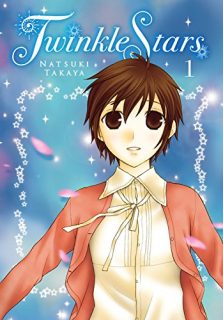
Twinkle Stars, Vol. 2

April 1, 2017 by Sean Gaffney

By Natsuki Takaya. Released in Japan as two separate volumes by Hakusensha, serialized in the magazine Hana to Yume. Released in North America by Yen Press. Translated by Sheldon Drzka.

One of Takaya’s stronger points is her ability to depict a character hiding their own emotional pain and despair, usually because they don’t want to make others worry or because it’s simply not the done thing to admit your feelings. We see more of that in this new omnibus, as we get more details on Sakuya’s depression and what led to her living away from her family with Kanade. Now to be fair, we’ve covered a lot of these sorts of situations in Fruits Basket – I mean, if you guessed emotional abuse from a parental figure, give yourself a nickel – but it can be argued that this sort of thing needs to be brought into the open as much as Takaya does. Sakuya’s repressed feelings – which she isn’t suite sure about, possibly as her new stepmother is pushing at her to hate her – are one of the highlights of the volume.

Of course, what makes Sakuya such a strong character is that it really isn’t entirely a mask to hide her emotional pain. Sakuya’s joy at being with her friends and seeing the stars is very real too, and so are her budding feelings for Chihiro, even if she finds them a bit terrifying. Chihiro is slightly less interesting in this second volume, mostly as he’s far less mercurial – he seems to have accepted Sakuya as a new friend, and therefore there’s not as much pushing back, though I suspect we’ll get that from a different angle in future volumes. Yuuri and Hijiri get the cover art, and Yuuri also gets a bit more backstory, which develops the reasons he’s fallen for Sakuya while also showing that he absolutely is not going to be the winner.

And then there’s Hijiri, who is perfect. I would like to say it’s rare I fall for a character so fast, but that’s not true, this happens all the time. But it’s always a pleasure when it does. Hijiri has a sharp tongue, but is looking out for her friends, and I am pleased to see that the very first page of this omnibus shows that she and Yuuri will not be set up into a ‘pair the spares’ romance. Of course, this also seems to be because she has a crush on her teacher, which makes me wary. Better is the amusing relationship she has with her masochistic manservant Saki, who is 100% devoted to her and has no trouble showing this in front of others, much to her dismay. Takaya’s comedy can be forced at times, but when she’s on a roll you will laugh your head off.

The preview for the next omnibus seems to show that we’ll be getting Chihiro’s backstory next – I keep thinking things are movign a bit fast, but then I recall that this series was less than half the number of volumes that fruits Basket had. That doesn’t make it any less good, though, and I look forward to intense emotional pain as only Takaya can give to readers next time around.

Filed Under: REVIEWS, twinkle stars

Manga the Week of 4/5/17

March 30, 2017 by Sean Gaffney, Ash Brown, Anna N, Michelle Smith and MJ Leave a Comment

SEAN: We’re near April Fools’ Day, and while I normally tend to shun it, I will make one overture to the holiday by doing next week’s manga list in reverse order.

So let’s start with Viz Media and Yu-Gi-Oh!. The seemingly endless franchise is starting a new series, this one called Arc V.

Yona of the Dawn gets a 5th volume, and is always near the top of my must-read list.

MICHELLE: And mine, as well.

ASH: I’ll be reading it soon, too!

ANNA: It is so consistently good.

SEAN: World Trigger has a 15th volume for Shonen Jump fans.

The big debut this week is The Water Dragon’s Bride, which is by Rei Toma, author of Dawn of the Arcana, and runs in Shogakukan’s shoujo/josei crossover magazine Cheese!. Expect fantasy and spunky female leads.

MICHELLE: Having enjoyed Dawn of the Arcana quite a lot, I’m really looking forward to this one!

ASH: I actually just started reading Dawn of the Arcana for the first time. I’m really enjoying the series, so I may need to make a point to pick up The Water Dragon’s Bride, too.

ANNA: It is great, but the first volume is actually much darker than most shoujo manga I’ve read recently, so it is an interesting change of pace.

MJ: I’m actually even more interested after Anna’s “much darker” comment. So count me in!

SEAN: There’s an 8th Twin Star Exorcists.

So Cute It Hurts!! has hit 12 volumes, which frankly surprises me. And there are more to come.

MICHELLE: Ugh.

ANNA: I need to get caught up on this.

SEAN: The Rurouni Kenshin series gets a 2nd 3-in-1 volume.

ASH: Glad to see Viz keeping this series in print. (The VizBig editions were nicer, though.)

ANNA: It is one of those series that should be in print!

SEAN: And Naruto gets its 18th 3-in-1, which means it can now legally vote.

Kuroko’s Basketball has another omnibus, covering Volumes 9 and 10. Spoiler: basketball is played.

Honey So Sweet has a sweet 6th volume.

ANNA: It is so super-cute and adorable.

MJ: I haven’t been reading this, and maybe I should be.

MICHELLE: I think you’d like it!

SEAN: And Haikyu!! has hit double-digits. (Technically, so has Kuroko.)

ASH: Haikyu!!!! I’m still loving the series, by the way.

ANNA: It is a favorite series in my house, my kids devour each volume.

SEAN: Food Wars! gives us a 17th volume, and promises to make life difficult for our favorite haughty blonde heroine.

ASH: I really need to catch up with Food Wars! one of these days.

SEAN: The Demon Prince of Momochi House has defeated the other Aya Shouoto manga titles to become the Last One Standing, and here is its 8th volume.

MICHELLE: All of the last five titles are on my list, though it’s Haikyu!! and Food Wars! that I love the most. Well, Honey So Sweet is right up there, too.

ASH: The Demon Prince of Momochi House is my favorite of Shouoto’s manga currently in English, so I’m glad we’ll be getting more.

ANNA: I like it too!

SEAN: Viz debuts its Naruto spinoff Boruto, which is about the next generation of ninja children, and perfect for the three or four people who weren’t upset with the ending pairings.

MJ: Heh.

SEAN: Black Clover has a 6th volume, and we will see how much it apes other series and how much it tries to do its own thing.

As for Assassination Classroom 15: if you wondered if Kaede Kayano would ever do anything other than make flan and have a crush on the hero, this is the volume for you.

Lastly (for Viz), we have a 4th volume of 7th Garden, shipping on the 5th, just to keep things confusing.

Vertical has a Ghost in the Shell story collection out next week, imaginatively called Ghost in the Shell: 5 New Short Stories.

ASH: I’m actually really looking forward to this collection if for no other reason than the volume has a story by Toh EnJoe in it.

SEAN: There’s also a 9th Ajin.

Kodansha gives us a 13th volume of Yamada-kun and the Seven Witches, well into its second round of witch shenanigans.

For fans of old Del Rey titles being restarted digitally, there’s new volumes of Alive, Princess Resurrection and Pumpkin Scissors out next week.

Back to print, with the 3rd volume of Fire Force, combining firefighters and the supernatural deftly.

And there’s a second volume of All-Rounder Meguru for more digital fun.

MICHELLE: Woot. Not that I’ve managed to keep up sufficiently to have read the first one yet.

SEAN: J-Novel Club has a third volume of ridiculous but fun series My Big Sister Lives In A Fantasy World, which may be the beach episode readers have dreamed of.

Dark Horse is reminding us they do manga by having a pile at once. We get a 3rd I Am A Hero omnibus, for all your zombie apocalypse needs.

Hatsune Miku: Rin-chan Now! is another in the endless Vocaloid franchise.

Blade of the Immortal has a 2nd omnibus, for those who missed its previous re-releases.

Lastly, there’s a 7th Astro Boy omnibus, for those who missed ITS previous re-releases.

Perceptive readers might think I did this backwards just to get the images to fit properly. LIES. It was totally due to April Fools. So what are you getting?

Filed Under: FEATURES, manga the week of

Re: ZERO ~Starting Life in Another World~, Vol. 3

March 30, 2017 by Sean Gaffney

By Tappei Nagatsuki and Shinichirou Otsuka. Released in Japan by Media Factory. Released in North America by Yen On. Translated by ZephyrRz.

I was actually rather surprised to see that we don’t get another loop in the middle of this book. Subaru has managed to slowly figure out what’s going on, and is able to finally fix it, though not without great cost to life and limb. As I expected, this volume focused more on the fan-favorite maid Rem, and showed off her tremendous powers, her truly top-tier hatred and loathing of herself, and her realization that Subaru is not a bad guy – which he isn’t, though he can be rather frustrating, as always. Given that we know that Subaru snarks and makes comebacks in order to cover up his true feelings, I suppose I’d better get used to it, though I still say that he’s at his best when the mask comes off. His manic desperation, and subsequent sobbing breakdown, may be the highlight of the book.

Beatrice is on the cover this time, and I like her the more I see of her, though I do sort of wish she’d yell “YOU ARE INCOMPETENT” to Subaru just once. She’s the classic reluctant mentor who acts grumpy but helps you far more than is necessary. Emilia does not get much to do here, but makes her scenes count, realizing that Subaru is losing his mind a bit at the beginning, and towards the end giving him an epic dressing down (the revelation of how Beatrice and Puck stopped her chasing after him is the best gag in the book). As for Ram and Rem, the Higurashi fan in me could not help but see similarities between their background and that of Mion and Shion Sonozaki, with one twin forced to take up the mantle of the other due to circumstances, and feeling horrible about it. Rem falls for Subaru hard here, and I look forward to seeing how this is handled in the next book, particularly as Subaru is still A. A. E. (All About Emilia).

Beneath his wisecracking, tendency to kill himself to solve things, and sheer bullheadedness, Subaru is actually rather clever, and uses the loops to find just the right questions to ask his loli Wikipedia. The revelation of the mastermind is not one I’ll spoil here, but it should make TV Tropes happy if nothing else. And then there’s Roswaal, who again seems to be secretly evil, particularly given the final scene. Ram is over the moon for him, and seems totally fine with being a pawn, which is never good. Here’s hoping Subaru can figure out what’s going on with him. In the meantime, there are a few teasers for what may happen next. Emilia is still one of the candidates for ruler, and Subaru actually looks back at the first volume and tries to figure out why on Earth she’d use the name Satella given he now knows who that is and the stigma it carries. I am hoping that we get Emilia’s tragic backstory (she must have one) soon.

Re: Zero continues to improve with each volume, though this one was helped along by the back half being one massive battle. That said, I’ve no doubt the next book will feature Subaru being an idiot, and probably dying. Definitely recommended for those who enjoy fantasy thrillers with wisecracking leads.

Filed Under: re: zero, REVIEWS

Random Reads 3/29/17

March 29, 2017 by Michelle Smith

All hail the debut of a new recurring column of sorts, collecting reasonably short reviews of disparate books.

banquetA Banquet of Consequences by Elizabeth George
While A Banquet of Consequences is not the best Lynley and Havers mystery I have read, it’s still great heaping loads better than the last one (Just One Evil Act). In fact, in my review of the latter, I wrote “I wanted a book with Havers triumphant. A Havers showing that, despite her problems with professionalism and authority, she really has something amazing to offer.” And that’s pretty much what we did get this time around.

When Claire Abbott, respected feminist author, is found dead in a hotel room while on a book tour, her death is first ruled a heart attack. After her persistent friend and editor insists on a second opinion, a more thorough toxicology screening reveals the presence of poison. Having met the author and her truly odious personal assistant (and chief suspect), Caroline Goldacre, Havers begs Lynley to pull strings for her so that she can investigate, which doesn’t go over very well with Superintendent Ardery. Happily, Havers does do a competent job, though this doesn’t go very far in improving Ardery’s opinion of her.

Mystery-wise, there were elements that I guessed, but I did still enjoy the element of ambiguity that remained at the end. Too, I liked that in the next volume, the Italian detective from Just One Evil Act (probably the best thing about that dreadful book) is going to be visiting England. He was quite sweet on Havers, as I recall! My one real complaint is that Lynley had hardly anything to do, except intercede on Havers’ behalf, contemplate his relationship with Dairdre, and look after an admittedly adorable dog.

Still, it’s good to have my faith in this series somewhat restored!

endofeverythingThe End of Everything by Megan Abbott
Lizzie Hood and Evie Verver are thirteen years old and have been BFFs and next-door neighbors for as long as they can remember. Lately, though, Lizzie has begun to realize that Evie is no longer the open book she once was. (“I know her so well that I know when I no longer know everything.”) When Evie goes missing, Lizzie does all that she can to help bring her home, while being forced to acknowledge that maybe there had always been a darkness hidden within her dearest friend that she had never noticed.

In addition to the mystery of what’s happened to Evie, this book deals a lot with Lizzie’s burgeoning sexual feelings. Though she has some contact with boys near her age, she’s really smitten with Evie’s gregarious father. She longs to be close to him, to provide clues that give him hope, to take his mind off what’s happening. She exults in her ability to affect him. In the process, she somewhat usurps the place that his eldest daughter, Dusty, has filled. What I actually liked best about the book is that Abbott leaves it up to the reader to decide—is Mr. Verver’s relationship with these girls crossing a line? Perhaps his intentions are utterly pure (and, indeed, it seems like he might be crushed to hear someone thought otherwise), but there are some things he does and says that just seem so inappropriate.

Ultimately, I liked this book quite a lot (though I feel I should warn others that some parts are disturbing). Abbott offers several intriguing parallels between relationships to consider, and I think it’s a story I will ruminate over for a long time to come.

ex_burkeThe Ex by Alafair Burke
Twenty years ago, Olivia Randall sabotaged her relationship with her fiancé, Jack Harris. Now he’s the chief suspect in a triple homicide and Olivia, a defense attorney, is hired by his teenage daughter to represent him. Initially, Olivia has absolute faith in Jack’s innocence (and feels like she owes him because of how she treated him) but mounting evidence eventually makes her doubt whether she ever really knew him at all.

In synopsis form, The Ex sounds pretty interesting, but the reality is something different. Olivia herself is not particularly likeable. Setting aside how she treated Jack in the past, in the present she drinks too much and is having a casual relationship with a married man. I think we’re supposed to come away believing that this whole experience enables her to grow past some parental issues inhibiting her ability to find real love, but it’s glossed over in just about the most cursory way imaginable. And because the narration is in the first person, other characters who might have been interesting—namely a couple of other employees of the defense firm helping with the case—are exceedingly undeveloped.

The mystery plot itself is average. The final twist wasn’t something I predicted from the outset, but once a certain piece of evidence was revealed, it turned out to be very similar to another mystery I’d just read so it was a bit of a slow slog to the inevitable conclusion. The writing is also repetitive, with the significance of various clues being reiterated over and over. One genuinely unique aspect of the book is that because Olivia is a defense attorney and not law enforcement, she wasn’t overly concerned with actually solving the case, so much as finding plausible alternate suspects to establish reasonable doubt. Perhaps that is why some things the culprit did were left unexplained and some evidence unaccounted for, though it could have just been sloppy writing.

I don’t think I shall be reading anything else by this author.

girldarkGirl in the Dark by Marion Pauw
Set in The Netherlands, Girl in the Dark is told in alternating first-person chapters between Ray, a man with autism who has spent eight years in jail for the murders of his neighbor and her daughter, and Iris, a lawyer and single mother who discovers by chance that Ray is the elder brother she never knew she had. She is convinced of his innocence, despite evidence that he is capable of destructive rage, and begins investigating the case and pursuing an appeal, while trying to get her icy mother to talk about her past.

Although the book is advertised as a thriller, most of the time I was more infuriated than thrilled. Leaving aside the question of Ray’s guilt or innocence, the way he was/is treated by others—including Rosita, the opportunistic neighbor who used and then rejected him, as well as one of the employees of the institution he’s been transferred to, who seemingly frames Ray for smuggling drugs into the facility (there’s no resolution to this minor plot point)—generates a great deal of empathy. In particular, there is an especially cruel scene near the end of the book that made me literally exclaim, “Jesus Christ!” Although he occasionally exhibits frustrated fury, Ray is also shown to be sweet and thoughtful, at one time a skilled baker (thriving in an environment that prioritized both routine and precision) and obsessed with the welfare of his tropical fish (currently in his mother’s care).

I didn’t come away with as vivid a sense of Iris as I did Ray. The scenes involving her job and clients were, in a way, mental palate cleansers from the stress of Ray’s situation, largely bland and unmemorable. When she finally gets her hands on Ray’s case files, her end of the story improves, but there are aspects of the final resolution that are kind of ridiculous. That said, I thought the ultimate ending was satisfying and I doubt I’ll forget the book any time soon.

kiss_and_tellMr. Kiss and Tell by Rob Thomas and Jennifer Graham
Mr. Kiss and Tell came out in January 2015. I had pre-ordered it the previous May, but when it arrived I just couldn’t get into it, despite a few attempts. A couple of months later, iZombie debuted. It had all the hallmarks of a Rob Thomas show and, lo, I love it. So much so, in fact, that I started to feel like I’d be okay without further adventures in Veronica’s world. Mr. Kiss and Tell spent the next two years occupying various spots in my living room. Then, finally, I read it. And I remembered how deeply I love these characters and now I am totally sad that there aren’t any more books beyond this one. Yet.

I was somewhat disappointed that the first Veronica book, The Thousand Dollar Tan Line, did not follow up on the movie storyline about police corruption in Neptune. Happily, that plotline gets some attention in this book. Weevil is acquitted of the charges against him, but his reputation and business has taken a hit, so he agrees to a civil suit against the county. Keith works to find others who’ll testify about evidence-planting, and meanwhile a candidate enters the race against Lamb, who’d been running for reelection unopposed. There’s some closure on this by the end of the book, but still plenty of room for more going forward.

Veronica, meanwhile, is hired by the Neptune Grand to investigate a rape that took place in their hotel. The case has quite a few twists and turns, although it surprised me some by not twisting as much as I expected. (So is that, therefore, a twist?) By far, however, the best parts of the book are the conversations between the characters. Veronica and Logan, Veronica and Keith, Veronica and Weevil… I could vividly imagine each being performed by the cast, which is almost as good as not having to imagine. I especially liked that things still aren’t 100% perfect in Veronica’s world, and Logan is only home for a few months before the accidental death of one of his friends means that his shipmates are a man down. Veronica struggles to understand why he feels so strongly that he must return early, leading to my favorite scene, in which Logan reveals what his life was like in the years she was gone, and how he ended up in Officer Candidate School. It’s a bit implausible that they hadn’t had this conversation before, but it’s riveting nonetheless.

In fact, my only quibble is a bit of timeline fluffery near the beginning. On the whole, this was immensely satisfying and I will continue to hope for more books in the future. After all, never giving up hope has worked out for Veronica Mars fans in the past!

stylesThe Mysterious Affair at Styles by Agatha Christie
This was a reread for me, but one I hadn’t yet reviewed, since I read it shortly before creating this blog. (I did review Christie’s second and third books before getting sidetracked. This time I shall persevere and read them all!)

A soldier named Hastings, invalided home from the front, runs into John Cavendish, an acquaintance who invites him to recuperate at Styles Court, where Hastings had often visited as a boy. It is Hastings who narrates the story of what happens there. In brief, instead of John inheriting Styles Court upon the death of his father, the property was bequeathed to his stepmother, Emily, upon whom he is presently dependent for funds. When Emily is poisoned, suspicion initially turns to her strange (and substantially younger) new husband, Alfred Inglethorp, and then ultimately onto John himself. The cast of suspects is rounded out by siblings, spouses, friends, and servants. Hastings suggests bringing his old friend Hercule Poirot in to investigate.

I did remember “whodunit,” along with the explanation for one perplexing aspect of the case, but otherwise, most of this felt new to me. In fact, I think I enjoyed it even more than the first time. Oh, I still find Hastings annoying, but Christie’s depiction of Poirot’s appearance and mannerisms struck me as especially vivid this time around, and I was left with a more distinct impression of him than I’d held previously. (I had somehow acquired a mental picture of Poirot that had him looking like Alfred Hitchcock!) Although some of the clues are a bit convoluted and/or improbable, the overall solution is satisfying and makes sense. What’s more, my enthusiasm for tackling the rest of Christie’s oeuvre has been rekindled!

outpostThe Outpost by Mike Resnick
In an effort to broaden my horizons and read more science fiction, I went looking for books that might appeal to fans of Firefly. In the course of that search, I came across The Outpost. The notion of a bunch of space-faring outlaw types gathering at a bar on the edge of the galaxy, swapping stories, then banding together to fight off some aliens sounded appealing. Don’t be fooled like I was.

While it is indeed true that a bunch of space-facing outlaw types do gather to swap their stories, these recitations are actually highly embellished tall tales, and they seem to go on for an interminable amount of time. Finally, during a brief middle section of the book, the bar’s patrons go off and fight some aliens, and getting a glimpse of reality, including several pointless and unheroic deaths, was the best part of the novel. All too soon, they’re back at the Outpost, telling their war adventures with varying degrees of embellishment. It’s at this point that several very boring arguments on the ethics of “improving” history ensue.

It’s true that sometimes, I did smile or laugh at something, but on the whole this book just riled me up. None of the characters has any depth whatsoever, and several are positively odious. Many of the stories told by the guys involve busty and lusty women, and it’s fine if the characters themselves are sexist (to be fair, one of the female characters does call them out on this eventually), but most of the female characters created by Resnick are also vampy vixens whose stories are sex-oriented and whose bodily proportions are repeatedly emphasized.

I listened to the unabridged audio version read by Bob Dunsworth, and I cannot recommend it. He frequently misreads and mispronounces words, so that at one point someone is wearing “flowering” robes instead of “flowing” ones, “defenestrating” loses a syllable, “etiquette” gets a “kw” sound, et cetera. Making it through the book was a tremendous slog, and more than once I cursed my completist nature.

theseviciousmasksThese Vicious Masks by Tarun Shanker and Kelly Zekas
I can’t for the life of me remember how I heard about this book. I immediately put in a materials request with my library, but when it arrived I didn’t remember it at all. It does have hallmarks of something that would appeal to me, though: a setting of England in 1882, superpowers, romance, one of the authors mentioning Buffy in the dedication… It boded well.

I found it a bit disappointing at first, however, despite an independent and snarky heroine (Evelyn Wyndham, and is that a Buffy/Angel reference?) and dialogue that made me snicker right from the start. It just seemed so like “Pride and Prejudice with superpowers” that I began to wonder who was meant to be who. (“That charming fellow Mr. Kent, set up as a romantic rival to surly and brooding Sebastian Braddock, must be the Wickham surrogate!”) Too, the constant bickering between Evelyn and Sebastian, as they work together to rescue her sister the healer from a scientist who wants to experiment on her, did grate after a while.

However, in the end the book surprised me. Not just by deviating from the Pride and Prejudice mold or by imbuing people with unsuspected powers, but by taking the plot in a direction that absolutely made sense and which I absolutely did not see coming. A sequel (These Ruthless Deeds) has just been released and verily, I shall read it.

Filed Under: Books, Mystery, Random Reads, Romance, Sci-Fi, Suspense, YA Tagged With: Agatha Christie, Alafair Burke, Elizabeth George, Marion Pauw, Megan Abbott, Mike Resnick, Rob Thomas and Jennifer Graham, Tarun Shanker and Kelly Zekas, Veronica Mars

Manga Giveaway: Miss Kobayashi’s Dragon Maid Giveaway

March 29, 2017 by Ash Brown

It’s the last Wednesday of March and you know what that means! It’s once again time for a giveaway at Experiments in Manga! This month you all have the opportunity to win the first volume in Coolkyousinnjya’s surprisingly sweet and charming manga series Miss Kobayashi’s Dragon Maid as published in English by Seven Seas. And as usual, the giveaway is open worldwide.

Miss Kobayashi's Dragon Maid, Volume 1

Ever since I was little, I’ve loved dragons. While I’m not quite as obsessed with them as I once was, I’ve never grown out of my affection for dragons. And so when there’s a manga series that features dragons in some way–like Miss Kobayashi’s Dragon Maid–I can’t help but give it a try. I’ll admit, despite my established interest in dragons, I was initially a little wary of Miss Kobayashi’s Dragon Maid and was surprised by how much I enjoyed the first volume. The series has a few missteps, but overall it’s great fun and has some fantastic characters. And with the anime adaptation that’s currently airing, even more people are now aware of the charms of Miss Kobayashi’s Dragon Maid. Hopefully as a result they’ll be encouraged to seek out the original, too!

So, you may be wondering, how can you a copy of the Miss Kobayashi’s Dragon Maid, Volume 1?

1) In the comments below, tell me a little about one of your favorite dragons from a manga. (If you don’t have a favorite or don’t know of any, simply mention that.)
2) If you’re on Twitter, you can earn a bonus entry by tweeting, or retweeting, about the contest. Make sure to include a link to this post and @PhoenixTerran (that’s me).

It’s as easy as that! Participants in the giveaway have one week to submit comments and can earn up to two entries. If you have trouble with the comment form, or if preferred, entries can also be sent directly to phoenixterran(at)gmail(dot)com. I will then post those comments here in your name. The giveaway winner will be randomly selected and announced on April 5, 2017. Best of luck to you all!

VERY IMPORTANT: Include some way that I can contact you. This can be an e-mail address in the comment form, a link to your website, Twitter username, or whatever. If I can’t figure out how to get a hold of you and you win, I’ll just draw another name.

Contest winner announced–Manga Giveaway: Miss Kobayashi’s Dragon Maid Giveaway Winner

Filed Under: FEATURES, Giveaways Tagged With: Coolkyousinnjya, manga, Miss Kobayashi's Dragon Maid

Clockwork Planet, Vol. 1

March 29, 2017 by Sean Gaffney

By Yuu Kamiya, Tsubaki Himana, and Kuro. Released in Japan by Kodansha, serialization ongoing in the magazine Shonen Sirius. Released in North America by Kodansha Comics. Translated by Daniel Komen.

I came into this series knowing next to nothing about it, except that, judging by the cover, it seemed to be sci-fi of some sort. It’s based on a series of novels co-created by the guy who writes No Game No Life, but thankfully seems to mostly lack the overly perverse aspects of that series. The premise is that a young, bullied teenager who lives on his own in a decaying apartment is actually an engineer savant, able to fix anything provided he can “hear” where the problem is. This is made easier by the fact that things in this world run on gears and clockwork (hence the title), though the aesthetic seems to be more Blade Runner than steampunk. The story starts when a broken robot girl comes crashing into his apartment, and after he fixes her takes over much of his life. Oh yes, and everyone in the city is about to be destroyed by an evil conspiracy.

The manga adaptation of the series is mostly functional, but there are several very nice pictures of the city itself and its gears, showing that the artist is quite capable when she sets her mind to it. The male lead is OK, I guess, suffering at the moment from being a bullied kid who sort of assumes he’s a loser, as he has no idea how rare his engineering talent is. The main reason to get this series, though, is the robot girl, Ryuzu, who is amazingly rude in regards to humanity as a whole and says so frequently. Once she discovers what Naoto is capable of, she’s prepared to do anything for him, leading to the funniest scene in the book, as she tries to get him to have a wonderful school life without bothering to take into account the other students around her at all. Every time you turn the page you can expect her to say new horrible things, and it’s a major selling point.

I was less enthused by the other main characters, who are introduced halfway through. Marie is an engineering prodigy from a well-known family, already with a doctorate despite still being a teenager. She’s also rude, but in a typical “I am arrogant and don’t have time for you” way, so it’s not as amusing. Admittedly, it isn’t supposed to be – it quickly becomes apparent that Marie and her bodyguard are dealing with the evil conspiracy I mentioned above, which is the sort of evil conspiracy that deems 20 million lives as acceptable losses. I think this simply suffers from being less interesting than the first half rather than any major character faults, and I think I will like Marie better when she interacts with other people, but it does leave the book a bit unbalanced.

But overall, a very good start. I want to see more of the world itself, and flesh out Marie and her bodyguard, but I definitely want to keep reading more. And I definitely want to hear more of Ryuzu’s sharp-tongued dialogue, which is the main selling point of this series so far.

Filed Under: clockwork planet, REVIEWS

Boruto: Naruto Next Generations, Vol. 1

March 28, 2017 by Katherine Dacey

Since its 1999 debut, Masashi Kishimoto’s Naruto has sold more than 220 million volumes in 35 countries and spawned a cottage industry of anime adaptations, costumes, trading cards, video games, figurines, and stage plays. VIZ published the final English-language volume in 2015, but the series’ popularity endures; walk through any American comic-con, and you’ll find small gangs of Narutos and Sasukes roaming the floor alongside Superman, Batman, and Sailor Moon.

In the post-Naruto era, VIZ has supplied hardcore fans with a steady stream of spin-off products, from light novels to coffee-table books. The company’s latest offering is Boruto: Naruto Next Generations, a manga written and illustrated by Ukyo Kodachi and Mikio Ikemoto under Kishimoto’s supervision. The story focuses on three new characters: Boruto (Naruto and Hinata’s son), Sarada (Sasuke and Sakura’s daughter), and Mitsuki (a young ninja of uncertain origins), all of whom enter the Chunin Exam, a tournament for aspiring ninjas. Running in tandem with the trio’s quest for victory are two subplots, the first centering on the return of the Otsutsuki clan and the second on a cloning scheme orchestrated by one of Naruto’s old nemeses.

While it’s obvious that Next Generations is aimed at ride-or-die fans, Kodachi deserves a medal for his efforts to make the story accessible to the uninitiated as well. Some of these expository passages are a little clumsy, but the pacing is brisk enough to smooth over the less graceful exchanges. The artwork, too, is competently executed; Ikemoto’s character designs create a strong visual continuity with the original series, making it easier for readers to grasp who’s related to whom.

On the minus side, Next Generations straddles the fence between remake and sequel, never fully settling on one approach. In an effort to show us that Boruto is just like his dad, for example, Kodachi portrays Boruto as impatient, brash, and… well, that’s about it. Reduced to a third-generation photocopy of his father, Boruto lacks a real identity or purpose of his own, despite Kodachi’s efforts to manufacture father-son drama. The decision to enter Boruto in the Chunin Exam is further evidence of the creators’ unwillingness to take risks. Boruto’s experiences may be a little different than his dad’s, but the tasks and outcomes tack so closely to the original that they, too, register as bad facsimiles, rather than an organic continuation of the Uzumakis’ saga.

The other problem with Next Generations is that the bad guys are cooler than the good guys. To be sure, this is a frequent issue in shonen manga; villains often get the snappiest lines and deadliest weapons while heroes are reduced to blustering about courage, teamwork, and loyalty. This problem nearly sinks the first volume of Next Generations, however, as Orochimaru — one of the most memorable villains in the original series — oozes sinister purpose in his cameo appearance, making a more immediate impression than any of Konoha’s do-gooder teens; he’s compulsively “watchable,” whether he’s browbeating one of his minions or playing at fatherhood.

Whether Orochimaru will be Next Generations’ principal baddie is unclear, as volume one introduces yet another flamboyant villain: Kawaki. If I had to hazard a guess about who Kawaki is, I’d say he was a refugee from JoJo’s Bizarre Adventure, as his two-tone hairdo and dramatic tattoos are just a little too fabulous for the Naruto universe. I’m not sure if he’s a portent of what’s to come in volume two or a hint of what Kodachi and Ikemoto might have created if they’d been given more latitude by Kishimoto; either way, finding out who Kawaki is the only reason I’d continue reading Next Generations.

The bottom line: If you’re a self-professed Naruto fan, Next Generations will offer just enough fresh material to affirm your love of all things Kishimoto; if not, you may find Next Generations a tedious slog.

Review copy provided by VIZ Media.

BORUTO: NARUTO NEXT GENERATIONS, VOL. 1 • CREATED BY MASASHI KISHIMOTO, ILLUSTRATED BY MIKIO IKEMOTO, AND WRITTEN BY UKYO KODACHI • VIZ MEDIA • RATED T (FOR TEENS)

Filed Under: Manga, Manga Critic, REVIEWS Tagged With: Boruto, Masashi Kishimoto, naruto, Ninja, Shonen, Shonen Jump, VIZ

Log Horizon: The Gold of the Kunie

March 28, 2017 by Sean Gaffney

By Mamare Touno and Kazuhiro Hara. Released in Japan by Enterbrain. Released in North America by Yen On. Translated by Taylor Engel.

Confession to make: I’m an extrovert. It’s actually been difficult for me to accept this, as most of my close friends are introverts, as are most of the people I interact with on Tumblr and the like. But much as I whine “but sometimes I don’t like interacting with others either”, there’s no getting around my extroverted nature. As such, I find Shiroe very frustrating and hard to take at times, and I empathized very much with Naotsugu in this book, who knows there’s not much he can do but be there for Shiroe and let him work things out at his own pace. Of course, Shirou is trying to pull off an even bigger scheme than usual – this is essentially the Log Horizon equivalent of a heist movie, only with the true objective not being piles and piles of money – well, not DIRECTLY. The true goal is freedom and security.

The majority of this book is a raid, and once again I am painfully reminded that I don’t game. More than any other light novel that details game-like aspects of a world, Log Horizon depends on its readers being gamers. This means there’s lots of discussions of balanced parties and of HP and MP and the like, to the point where we need extended appendixes just to discuss MORE of it. Thankfully, it’s not completely incomprehensible, and enough of it is written in standard action movie terms that I was never lost. But we’re not allowed to forget that the people trapped in this world are all hardcore gamers. This goes double for William Massachusetts (I will never get used to that name) and his guild Silver Sword, whose close bonds are a reflection of a group of people who found real-life interaction difficult but were able to find true bonds online – and also learn more about how to interact offline. His speech of anguished frustration is a highlight of the book.

There’s a new regular introduced here, and I’m not sure how I feel about them. Tetora is a self-proclaimed “idol” who also happens to be a Level 93 cleric, and for a while you suspect has been added to the book in order to replace Akatsuki as someone to bounce off Naotsugu properly. The gender reveal – that Tetora is actually a boy, though it’s not clear if they just dress as a girl or have a female game body – seems rather odd and last-minute, and I assume that we will get a bit more of this later beyond “I just like acting overly cutesy and annoying”. Interestingly, Taylor Engel uses female pronouns the entire book till the reveal, then has Shiroe switch to male ones. How does Tetora see her/his gender? To be honest, I found Tetora a bit grating, but that’s possibly as I’m a massive Naotsugu/Marielle shipper, and don’t want someone horning in on their slowly developing couplehood. Luckily, we see a bit of that relationship here as well.

There’s a bit more going on here that will impact future books – Krusty has vanished, and his lieutenant seems to have permanently lost her right arm. This likely ties into the “flavor text” from the previous volumes. But the majority of this volume had the same goal as the 6th did for Akatsuki – get Shiroe to open up, explain things, and stop trying to take the entire world on his shoulders. Whether that will stick is something we’ll have to see about in future books. In the meantime, next book we’ll focus on the younger members of Log Horizon again. This is a good, solid light novel series that may appeal to the reader who finds Sword Art Online a bit too outgoing.

Filed Under: log horizon, REVIEWS

  • « Go to Previous Page
  • Page 1
  • Interim pages omitted …
  • Page 268
  • Page 269
  • Page 270
  • Page 271
  • Page 272
  • Interim pages omitted …
  • Page 551
  • Go to Next Page »
 | Log in
Copyright © 2010 Manga Bookshelf | Powered by WordPress & the Genesis Framework