• Skip to primary navigation
  • Skip to main content
  • Skip to primary sidebar
  • Home
  • About Us
    • Privacy Policy
    • Comment Policy
    • Disclosures & Disclaimers
  • Resources
    • Links, Essays & Articles
    • Fandomology!
    • CLAMP Directory
    • BlogRoll
  • Features & Columns
    • 3 Things Thursday
    • Adventures in the Key of Shoujo
    • Bit & Blips (game reviews)
    • BL BOOKRACK
    • Bookshelf Briefs
    • Bringing the Drama
    • Comic Conversion
    • Fanservice Friday
    • Going Digital
    • It Came From the Sinosphere
    • License This!
    • Magazine no Mori
    • My Week in Manga
    • OFF THE SHELF
    • Not By Manga Alone
    • PICK OF THE WEEK
    • Subtitles & Sensibility
    • Weekly Shonen Jump Recaps
  • Manga Moveable Feast
    • MMF Full Archive
    • Yun Kouga
    • CLAMP
    • Shojo Beat
    • Osamu Tezuka
    • Sailor Moon
    • Fruits Basket
    • Takehiko Inoue
    • Wild Adapter
    • One Piece
    • After School Nightmare
    • Karakuri Odette
    • Paradise Kiss
    • The Color Trilogy
    • To Terra…
    • Sexy Voice & Robo
  • Browse by Author
    • Sean Gaffney
    • Anna Neatrour
    • Michelle Smith
    • Katherine Dacey
    • MJ
    • Brigid Alverson
    • Travis Anderson
    • Phillip Anthony
    • Derek Bown
    • Jaci Dahlvang
    • Angela Eastman
    • Erica Friedman
    • Sara K.
    • Megan Purdy
    • Emily Snodgrass
    • Nancy Thistlethwaite
    • Eva Volin
    • David Welsh
  • MB Blogs
    • A Case Suitable For Treatment
    • Experiments in Manga
    • MangaBlog
    • The Manga Critic
    • Manga Report
    • Soliloquy in Blue
    • Manga Curmudgeon (archive)

Manga Bookshelf

Discussion, Resources, Roundtables, & Reviews

Features & Reviews

My Week in Manga: March 6-March 12, 2017

March 13, 2017 by Ash Brown

My News and Reviews

Every month I post a Bookshelf Overload feature which takes a quick look at some of the manga and other media that make their way onto my shelves at home. And so last week I published February’s Bookshelf Overload. As I mentioned in that post, I’m currently working on an in-depth review of Kazuto Tatsuta’s Ichi-F: A Worker’s Graphic Memoir of the Fukushima Nuclear Power Plant. I expect that it should be ready to post later this week (that’s my intention anyway), but I’m also incredibly busy right now getting ready to change jobs. Taiko performance season is also steadily ramping up, and the Lion Dance troupe is still getting regular performance requests, so I’ve had a bunch of extra rehearsals and less downtime in general, too. Still, the writing is slowly but surely happening!

Despite being so busy and not being online as much as usual, I did come across a few interesting reads last week. Jennifer Robertson (who I’ve actually briefly met before) recently wrote for Salon about Japan’s long history of blurred sexualities and gender-bending. Brian Hibbs takes his annual look at the BookScan numbers for comics and graphic novels for The Beat. The analysis includes a section specifically devoted to the manga being released in English. Finally, in what I think is terrific news, more of Yen Press’ digital-only titles will now be getting print editions, too! Look out later this year for Homura Kawamoto and Toru Naomura’s Kakegurui: Compulsive Gambler, Higasa Akai’s The Royal Tutor, and Sakurako Gokurakuin’s Sekirei. Finally, a Kickstarter campaign was launched to publish anime director Yasuhiro Irie’s manga Halloween Pajama in English.

Quick Takes

Ghost in the Shell, Volume 1The Ghost in the Shell, Volume 1 by Masamune Shirow. It’s been a long time since I’ve read Shirow’s The Ghost in the Shell. The series was actually among one of the first manga that I encountered. My introduction to the franchise was through Mamorou Oshii’s animated film Ghost in the Shell which probably remains my favorite interpretation of the story and characters. I actually often find the manga to be very difficult to follow. Shirow has some great, thought-provoking and intriguing ideas, but the flow of the story can be extremely disjointed at times. A live-action American Ghost in the Shell film will soon be hitting theaters, so it makes sense that Kodansha Comics would take advantage of the opportunity to re-release the original The Ghost in the Shell manga in a beautifully-produced deluxe hardcover edition. This “definitive” version is being presented in right-to-left format with Japanese sound effects for the first time. I’m fairly certain there are more color pages included, too, but the volume does lack some of the additional textual content found in previous English editions. The controversial lesbian sex scene has also been excluded at the creator’s request which does cause some slight narrative confusion.

Monthly Girls' Nozaki-kun, Volume 5Monthly Girls’ Nozaki-kun, Volumes 5-6 by Izumi Tsubaki. I love Monthly Girls’ Nozaki-kun so incredibly much. This series, along with My Love Story!!, is something that I can always count on to make me happy. I find myself constantly smiling while reading Monthly Girls’ Nozaki-kun and on more than one occasion have even caught myself laughing out loud. At this point the manga series is far enough along that almost all of the content is new to me. (My introduction to Monthly Girls’ Nozaki-kun was through the anime adaptation which is likewise an absolutely wonderful series.) There are new scenarios and even new characters–Nozaki’s younger brother and his judo teammates have become more prominent as one example–but those that were previously established are never forgotten. The good-natured humor in Monthly Girls’ Nozaki-kun remains consistent throughout the manga. Most of the hilarity is the result of the fact that none of the characters quite manage to be on the same page as any of the others and the ridiculousness that ensues because of it. The quirky characters themselves are incredibly endearing, too, even if they’re not particularly nuanced.

Ten Count, Volume 2Ten Count, Volume 2-3 by Rihito Takarai. Well now, that escalated quickly. From the very first volume Ten Count presented itself as a dark psychological drama, but if anything its intensity only increases as the series progresses. The relationship between Shirotani and Kurose is an incredibly unhealthy one which only becomes more troubling as sexual elements are introduced to it. Kurose, whether or not he realizes it or intends to be, is abusive, manipulative, and controlling. He pushes Shirotani, often without consent or consideration, to his limits and beyond. Shirotani does have some personal breakthroughs but heartbreaking glimpses into his past and into his current emotional and mental states reveal a man who is conflicted and struggling with his own self-worth. Frankly, I find Ten Count to be disturbing and unsettling, verging on psychological horror rather than romance. At this point I can’t really envision things turning out well. (Honestly, I’d probably feel disappointed or even somewhat betrayed if Takarai manages some sort of romanticized happy ending.) To me Ten Count is still immensely engrossing, but I certainly can’t blame anyone who would want to avoid the series.

Dragnet GirlDragnet Girl by Yasujiro Ozu. I recently had the opportunity to see Ozu’s silent film Dragnet Girl in a theater narrated by a professional benshi and accompanied by music cued by a prominent local DJ. There was even a brief lecture beforehand which I wasn’t expecting but found interesting. I enjoyed the production as a whole immensely–it was one of those once-in-a-lifetime events–but I also specifically enjoyed the film itself. (I really ought to seek out more of Ozu’s work.) Dragnet Girl is a gangster film which largely follows Tokiko and her boyfriend Joji, a retired boxing champion and current small-time crime boss. Hiroshi, a promising young hoodlum, joins the boxing gym and their gang. His older sister Kazuko worries about him and so tries to convince Joji to make her brother leave. Some romantic entanglements and turmoil ensue, but eventually Tokiko and Joji decide to leave their life of crime together but only after they pull off one last heist for the sake of Kazuko. Dragnet Girl is available from Criterion, collected together with two more of Ozu’s silent crime films, Walk Cheerfully and That Night’s Wife. It won’t quite be the same as watching it “live,” but it’s wonderful that there’s a home release readily available at all.

Filed Under: FEATURES, My Week in Manga Tagged With: film, Ghost in the Shell, Izumi Tsubaki, manga, Masamune Shirow, Monthly Girls' Nozaki-kun, Rihito Takarai, Ten Count

Kase-san and Morning Glories

March 10, 2017 by Sean Gaffney

By Hiromi Takashima. Released in Japan “Asagao to Kase-san” by Shinshokan, serialization ongoing in the magazine Hirari. Released in North America by Seven Seas. Translated by Jocelyne Allen, Adapted by Jenn Grunigen.

I’ve always said (perhaps a bit too often) that as long as something is well-written and enjoyable, it doesn’t matter that it’s a hoary old cliche. And likewise, with the yuri genre, just because something is as Story A as it gets does not mean its sweetness and cuteness are in any way diminished. This series is no exception, being light as air but ever so tasty. The girls are nice, their incipient romance is nice, and there is a shot of someone silhouetted against the setting sun, because if you’re going to throw in romantic tropes, you may as well use the kitchen sink as well. All of this adds up to a fun series that will make you smile.

As the author notes in the afterword, the magazine this series runs in is generally about yuri one-shots, and its very easy to tell this is a series of shorts about the same two people. (In fact, future volumes will be “Kase-san and _______” rather than a Vol. 2 or 3.) Kase-san is the tall sporty girl on the cover, a track star and school idol who also has some odd rumors hanging around her. The other girl is Yamada, who is shy and fretful and has a very low self-opinion of herself. You know the sort – there’s no way they could ever be interested in little old me. They bond over flowers, which Yamada is planting at the school, and then there are bike rides and shopping for shoes and blushing. So much blushing. Because, of course, these two girls are really into each other.

Most of the drama, such as it is, revolves around Yamada’s low self-esteem and how it leads her to almost sabotage her own friendship. Luckily, Kase-san is not as clueless as some of these archetypes can get, and so is able to, if not realize what is going on, at least rescue Yamada from being desperately sad. I liked the idea of the marathon, as it allows Yamada to work to improve herself, even though that gets torpedoed by a bunch of jerks running over first her flowers and then her. The volume is done from Yamada’s perspective, though I’m hoping a future volume may have a flasghback showing Kase’s own thoughts on their relationship. It all builts up to a confession and kiss in the nurse’s office, with Kase uncharacteristically unapologetic and Yamada crying in relief.

It’s safe to say that not much happens here – honestly, I’m having trouble filling out my word count. But I’m just so pleased to see Seven Seas putting out stories like these and Kindred Spirits on the Roof rather than “yuri for guys” like Netsuzou Trap. Cute girls meet and like each other. In the end, they kiss. Thankfully, this is not the end, as we’ll see Kase-san and Bento soon. for now, just revel in the adorable.

Filed Under: kase-san and, REVIEWS

Manga the Week of 3/15/17

March 9, 2017 by Sean Gaffney, Ash Brown, Anna N, Michelle Smith and MJ Leave a Comment

SEAN: A relatively light week next week, relatively being the operative term. But first, let’s double back and look at titles out THIS week that weren’t announced till the weekend.

Remember how we used to say you couldn’t sell sports manga over here? Or 40+-volume series? Clearly digital-only is a good way to test the waters on flouting that rule. Case in point: The debut of Ace of the Diamond, a baseball manga that ran in Shonen Magazine from 2016-2015, and then, like many baseball manga, started up again with Season 2. It will be interesting reading a non-Adachi baseball series.

MICHELLE: !!!!!!!!!!!!! Yay!

ANNA: Interesting. I don’t know if I’m up for 40+ volumes but I will check it out.

SEAN: All-Rounder Meguru is a mixed martial arts manga from the creator of Eden: It’s An Endless World, though hopefully a bit less bleak. It ran for 19 volumes in Evening magazine.

And Giant Killing is another 40+ volume manga, this time about soccer, that runs in Weekly Morning. Naturally, being long-running sports manga, the primary audience in the West for these titles will be female BL fans.

MICHELLE: !!!!!!!!!!!!! Yay! I might even try All-Rounder Meguru, while I’m at it.

ASH: Wow! Kodansha is really killing it (sorry, I couldn’t help myself) with the recent digital releases! I’m very excited to see Giant Killing and All-Rounder Meguru being added to the mix.

MJ: I doubt I have the patience for either of the epic sports manga on this list, but I like watching Michelle’s squee.

MICHELLE: I will likely always have an abundance of squee for sports manga.

SEAN: Also, Persona 3’s 3rd volume from Udon moved up a week without me noticing. Whoops.

ASH: Can’t really blame you for that; sometimes I wonder if Udon even knows when it will be releasing something…

SEAN: Now onto titles actually out next week. J-Novel Club has some more volume twos, as we get another I Saved Too Many Girls and Caused the Apocalypse, which presumably adds more girls.

We also get the 2nd Mixed Bathing in Another Dimension, which is probably the biggest surprise of all J-Novel’s titles for me as I really enjoyed it.

Kodansha has a 4th Complex Age, which mixes cosplay and drama quite well.

ASH: I’ve been fairly consistently surprised and impressed by Complex Age.

SEAN: They also have the 2nd digital volume of House of the Sun, which seems to be on a much faster publishing schedule than the other new digital volumes.

MICHELLE: Ooh! I’ll definitely be checking out these two.

SEAN: One Peace has a 9th volume of not-really-yuri series Maria Holic.

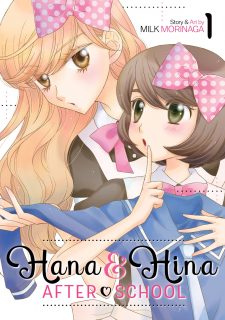
Seven Seas has the debut of Hana & Hina After School, which is really yuri. It’s by Milk Morinaga, probably the most prolific yuri manga artist in terms of North American licenses.

They also have a 2nd Seven Princes of the Thousand Year Labyrinth, which hopefully continues to be, as I called it, “the most Comic Zero-Sum series ever”.

ASH: That really does seem to be an apt description.

SEAN: SuBLime gives us a new side story for Don’t Be Cruel, subtitled Akira Takanashi’s Story, though it’s unclear who this volume will focus on. (How’s my deadpan?)

MICHELLE: Heh.

SEAN: And they have the 8th volume of the Finder Deluxe Edition.

ASH: While this is the eighth volume, it’s the first one to be released since SuBLime took over the series. (Previously, it was released by Digital Manga.) The actually first volume in this edition will be released later this year; it’s nice that SuBLime isn’t making readers wait for the most recent content.

SEAN: Vertical has a 5th volume of Mysterious Girlfriend X, which I think is approaching its climax.

Viz not only has the 3rd Legendary Edition of The Legend of Zelda, which has both Majora’s Mask and A Link to the Past, but also the first volume of the latest in the series, Twilight Princess.

ASH: Unlike some of the other games (I’m a bad Zelda fan), I’ve actually played Twilight Princess. I’m looking forward to its adaptation.

SEAN: At last, the final omnibus of Viz’s re-release of Ranma 1/2! It even ends with a wedding! Don’t let that fool you, though, this is still Takahashi at her most Takahashi. Still well worth reading.

ASH: I’m still very happy that Viz found a way to keep Ranma 1/2 in print.

SEAN: And there’s a 23rd volume of Rin-Ne, which apparently will have a surprise announcement in Japan soon. New anime season? Spinoff? They found Sakura’s repressed rage?

As I said, light week is relative. What’ll you be getting next week?

Filed Under: FEATURES, manga the week of

Anonymous Noise Vol. 1

March 8, 2017 by Anna N

Anonymous Noise Volume 1 by Ryoko Fukuyama

I read Anonymous Noise a few days ago, and I’ve had a hard time writing about it, I think because I ended up feeling very conflicted about whether or not I actually enjoyed reading it. It was stylish looking, which I appreciated. The author deployed a great deal of typical shoujo manga plot elements, which I was less than enthusiastic about. Finally, there was a level of angst involved in the relationships between the characters that I actually found intriguing, and will likely keep me hanging on to reading this series in the hopes that it gets a bit better in the second volume.

Childhood friends who are separated and meet again only to fall in love is such a shoujo staple plot element, that I get weary of it if it isn’t executed well. Nino Arisugawa has a habit of developing close childhood friendships with boys only for them to utterly disappear, which will make it very handy for her to have a love triangle as a teenager. Her first friend is Momo, a next door neighbor boy with a habit of making terrible puns. They’re in the habit of singing together. Momo abruptly moves away with his family and while Nino is visiting the sea to scream her agony into it, she stumbles across Yuzu, a kid composer who likes to write musical compositions in the sand. Yuzu is also a very familiar character type seen in manga, the short kid who drinks a ton of milk in hopes of triggering a growth spurt. Nino finds a bit of peace when singing Yuzu’s compositions, but she still longs for her lost friend Momo.

Switching gears to the future, Nino starts attending a school where Yuzu is a student. He’s very busy, because he also has the time to be in a rock band called In No Hurry, which performs wearing face masks and eyepatches. Nino and Yuzu reconnect, but it is clear that she’s still nurturing her feelings for Momo. The part of this manga that I found most interesting, and I’m not sure if it was intentional on the part of the author, is that Yuzu’s obsession with Nino as a muse is so clearly unhealthy. He has a girl singer in his band called Alice who is designed with his memories of Nino in mind, and he likens his feelings for Nino as being trapped under the spell of a canary. Yuzu ends up being the most compelling character in this manga, just because he wears his emotional agony on his sleeve. No surprise, Momo is attending the same high school, and shows up around Yuzu to make a few bad puns and then disappear in an enigmatic fashion.

The art is stylish, if a bit generic. I enjoyed the edgy costumes for Yuzu’s band. A couple moments in the manga that stood out to be as being particularly well-executed were a scene of Nino and Yuzu reconnecting through music in a practice room, and an encounter with Yuzu’s band mates that hints at a whole different story of unrequited love. I often feel like some manga series need at least two volumes before passing judgement on them, and I’m hoping that the second volume of Anonymous Noise has less shoujo cliches and more teen angst because the potential is there for an entertaining music infused teen soap opera, but I’m not quite seeing that yet.

Filed Under: Manga Reviews, REVIEWS Tagged With: Anonymous Noise, shojo beat, shoujo, viz media

Tokyo Tarareba Girls, Vol. 1

March 8, 2017 by Michelle Smith

By Akiko Higashimura | Published digitally by Kodansha Comics

I spent all my time wondering “what if,” then one day I woke up and I was 33.

Thirty-something Rinko Kamata and her two best friends from high school, Kaori and Koyuki, are still single. They’ve happily spent the last decade getting together regularly for girls’ nights out, during which they get sloshed and speculate on what might’ve happened with past romances or how they might meet Mr. Right in the future. When it’s announced that Tokyo will be hosting the Olympics in 2020 and it dawns on the trio that they might still be single amidst all the celebrating, they abruptly realize that they might have missed their chance to snag husbands.

Ten years ago, Rinko had a chance with Mr. Hayasaka, a dull but sweet coworker, but rejected him. Their work—she’s a scriptwriter and he’s a producer for a television production company—still brings them together, however, and when she seemingly has a second chance, she considers accepting this time, wondering if women must choose being loved over being in love once they’re over thirty. Of course, she’s drunk at the time, so her thoughts are whimsically presented in the form of conversation with her snacks! Specifically, tara (milt) and reba (liver), whose names combine to mean “what if” and thus supply the pun of the series title. They’re cute little creatures, and tara especially gives me some Little Fluffy Gigolo PELU flashbacks (in the best way).

Of course, we wouldn’t have a series if things worked out with Mr. Hayasaka, and losing out to younger women in romance, work, and at a courtship party, where the “tarareba girls” discover that even schlubby guys their age have pretty young things competing for them (because the younger guys are all under- or unemployed), sends her somewhat off the rails, hopping in a taxi to capture some blackmail evidence and winding up at a hot springs resort, drinking alone and feeling unwanted until Key, a snarky male model who’s observed the rowdy trio at their favorite pub and was critical of Rinko’s writing—essentially unrealistic wish-fulfillment fare for daydreaming middle-aged women—shows up to forestall disaster and ends up proving himself to be the ultimate “what if” scenario that Rinko hadn’t even considered. Plus, he encourages her to see her recent failures as a chance instead of a setback, and I hope this means we’ll see her write what she claims she really wants to write and achieve success after all.

This is quite a madcap volume, what with the talking food, and there are also several quick cuts to Rinko guzzling alcohol that make me think this would be extremely amusing in either animated or live-action format. I also really like the way we her conversations with friends via text are depicted. Ordinarily, I might be bothered that these ladies are so fixated on husbands, but Higashimura-sensei has some author’s notes at the back wherein she makes it absolutely clear that she does not think that marriage is the key to happiness or that it’s a requirement for women. It’s just that she had some friends who were beginning to experience some of these things, and she decided to write about them.

Before Kodansha’s announcement, this series hadn’t even been on my radar, so in addition to being grateful for more josei in any format, I’m especially glad to be introduced to this fun story. I’m looking forward to volume two!

Tokyo Tarareba Girls is ongoing in Japan where it is up to seven volumes.

Review copy provided by the publisher.

Filed Under: Josei, Manga, REVIEWS

Chihayafuru, Vol. 1

March 8, 2017 by Michelle Smith

By Yuki Suetsugi | Published digitally by Kodansha Comics

Chihayafuru is a long-running josei sports manga series about a girl who discovers a passion for the Japanese card game, karuta. The very factors that made me sure I’d love the series also made it an unlikely licensing prospect. Happily, Kodansha Comics has started releasing it digitally! I still can’t quite believe that it’s really happened.

In the opening pages, we get a glimpse of a teenage Chihaya Amase during an intense match, then promptly travel six years into the past. At twelve, Chihaya had no dream other than seeing her older pageant-entering sister, Chitose, become “number one in Japan.” When she befriends transfer student Arata Wataya, who’s been shunned by classmates for his poverty and regional dialect, he tells her that her dreams should be about herself. Fired up by Wataya’s speed and intensity at karuta, Chihaya can’t help but attempt to score at least one card off of him, and the delight on Wataya’s face as he finally makes a friend who shares his passion is poignant.

As Chihaya (and the audience) learns more about karuta, Wataya eventually gains the respect of his classmates for his skill, prompting Taichi Mashima, the ringleader of the bullies, to cheat against him in a school tournament. I quite liked that we see Mashima’s motivations—his horrid mother flat out tells him that if you don’t think you can win at something, you shouldn’t even try—and that, afterwards, he makes his own decisions about what is right and what is important to him. The three kids become friends and, after joining a karuta club in their neighborhood, conclude the first volume by entering an elementary tournament as a team.

In several ways, Chihayafuru reminds me of Hikaru no Go. You’ve got the sixth-grade protagonist discovering enthusiasm for a traditional game. She makes a small group of friends who share a deep love of the game, and they compete together as a team. And yet, there is the inescapable fact that they won’t be able to stay together forever. Mashima’s path will take him to a prestigious middle school while the ill health of Wataya’s grandfather compels him to return to his hometown. Will Chihaya continue on her own? Presumably, like Hikaru, she will make new friends at each stage of her journey, and potentially face Wataya again as a rival in future.

As usual, what I really loved most was Chihaya finding the place she belonged, and the outlet in which her specific skills—quick reaction time, acute vision, and an extremely keen sense of hearing—are recognized and appreciated. Her sister becomes positively odious as she realizes Chihaya now has something in her life to work towards besides Chitose’s fame—“All Chihaya needs to do is look at me and tell me how amazing I am”—and I wonder how far she’ll go to sabotage her little sister’s ambitions, but the opening pages show us a Chihaya still deeply dedicated to the game, so I’m sure she’ll remain undeterred.

I really, really loved this debut volume and eagerly look forward to more!

Chihayafuru is ongoing in Japan, where the 34th volume will be published next week.

Review copy provided by the publisher.

Filed Under: Josei, Manga, REVIEWS

Bakemonogatari: Monster Tale, Part 2

March 8, 2017 by Sean Gaffney

By NISIOISIN. Released in Japan by Kodansha. Released in North America by Vertical, Inc. Translated by Ko Ransom.

One of the things I enjoy about the first few volumes of the Monogatari books is that each new story begins with the girl from the previous story having a long conversation with Araragi where they basically take on the role they’ll play in the books from this point forward. In the previous volume’s Mayoi Snail, Senjogahara showers Araragi with abuse and teasing affection. And here we have Suruga Money, in which Mayoi reappears and begins to function as Araragi’s sounding board and life advice coach, and Nadeko Snake, in which Kanbaru shows off that she was actually holding back in her own story, and becomes the only person in the cast who can be more perverse than he can. (This works in Japanese publication order, by the way, and continues at least through Nekomonogatari Black, which starts with a long scene with Araragi and his sister Tsukihi.) The first two books introduced Araragi and began to give him a “harem”, so to speak – this second book expands on that.

The stories in Bakemonogatari were originally written as short stories for a magazine, and it shows – each story has the introduction at some point of Araragi, Shinobu and Meme Oshino and explains his nature, for readers who had not read the previous stories. Not that Shinobu plays a part in this book – she’s still silent, apparently sulking as Oshino is stealing her Mister Donuts stash, and functions mostly as a maguffin to power up Araragi so he can battle oddities. For the most part, each story in this is devoted to showing us the new girl. This works quite well in Kanbaru’s case. Her overly solicitous politeness is perfectly translated, and you also see the frustration and rage she normally keeps well-hidden. She’s a good kid. She’s also a “pervert”, i.e. happy to talk about sexual matters with Araragi till she’s blue in the face. And she’s a lesbian, something she admits herself, though the text goes on to use the alternate term “sapphist”, which, as Araragi points out, is the same thing. (One could argue she flirts incessantly with Araragi in the following story, but I maintain that she mostly does this for appearance – much like many other characters in Monogatari, especially Araragi himself.) Her story is the strongest, flagging only when we have to read a very long battle scene from Araragi’s narrative POV – it gets tedious, and makes you realize why Nisioisin does so much dialogue – he’s better at it.

As for Nadeko… without spoiling anything about future volumes, we’re left with an okay story that works best when Nadeko isn’t in it. Araragi and Kanbaru’s banter at the start is probably the high point of the book. Nadeko herself is painted entirely as a shy, innocent victim, forever looking down or away from the two of them. Her “monster” problem is quite sexualized, which is uncomfortable given she’s only in junior high, but if that really makes you uncomfortable you’d better jump off now before we get to Nisemonogatari, as it will only get worse. In the context of future volumes, there’s lots of subtle clues and hints in here, a few of which I think are deliberate. But without that context, this story sometimes just lies there. It’s the weak link of the five.

The third volume will contain only one story, Tsubasa Cat, and you can probably guess who stars, though if you read these two volumes and think we’re finally getting a flashback to what happened during Golden Week, you’d be wrong. It also doesn’t have quite as much Kanbaru, which is a relief even though I love her. The translation is, on the whole, excellent throughout, but Vertical has decided not to have honorifics, and as such Kanbaru’s constant “Araragi-sempai” is turned into “My senior Araragi”, which is fine initially, but after the first hundred or so times you realize how OFTEN she uses his name, and it begins to wear. (Mayoi’s “Mister Araragi” works better.) I understand why they chose not to have the honorifics, but I suspect I might find it a bit more comfortable if Kanbaru’s use of -sempai was removed rather than adapted, even if that affected the politeness level. Other than that, though, this is good volume of Monogatari, if not quite as good as the other two.

Filed Under: monogatari series, REVIEWS

Anonymous Noise, Vol. 1

March 7, 2017 by Katherine Dacey

Anonymous Noise is to manga what “Talk Dirty to Me” is to contemporary hit radio: both have a killer hook — that plot! that sax! — and inane lyrics.

The story begins with a vorspiel of sorts. Nino, a tot with a golden voice, bonds with her next-door neighbor Momo, who shares her enthusiasm for singing, if not her sense of pitch. The two are inseparable until Momo’s family abruptly moves away. While pining for her lost friend, Nino crosses paths with Yuzu, a short, feisty songwriter whose tunes help Nino discover her true potential as a vocalist. He, too, unexpectedly skips town, leaving Nino despondent once again — so despondent, in fact, that she begins wearing a surgical mask to prevent herself from screaming. (No, I’m not making that up.)

Flash forward to the present: Nino is now in middle school, roaming the halls in a mask and obsessing about Momo. A chance encounter reunites her with Yuzu, who’s penning tunes for the school’s struggling Popular Music Club. What Nino doesn’t realize is that Yuzu’s bandmates are, in fact, members of In No Hurry to Shout, a pop act as famous for their identity-concealing costumes as their chart-topping songs. (Apparently no one else has put two and two together, either, as the snotty school council president regularly threatens the club with termination.) Nino agrees to sit in for the club’s vocalist, unwittingly auditioning for In No Hurry to Shout in the process.

Despite its soap-opera plotting, Anonymous Noise never gels into a compelling story. One contributing factor is the characters, who are barely fleshed out. Nino, for example, is defined almost exclusively by her capacity for self-pity; she mopes incessantly, mooning over Momo as if he’d just moved away. (Six years have elapsed since Momo’s family skipped town.) Her romantic prospects are also one-note characters: Yuzu is a blustery jerk who yells, cajoles, and insults Nino, while Momo is sweetly chivalrous, the perfect boyfriend-in-training.

Another contributing factor is the lackluster artwork. Though other characters gush about Nino’s voice, Ryoko Fukuyama never *shows* us that Nino has the goods. We see close-ups of Nino’s gaping mouth and a smattering of musical notes whenever she warbles a tune, but we could just as easily infer that she was shouting, yodeling, or yawning from the lifeless, unimaginative way in which she’s drawn. A quick glance at Nodame Cantabile, Your Lie in April, Ludwig B., solanin, or Nana, demonstrates that it *is* possible to show how much physical effort it takes to produce a good sound, and what effect that sound is having on the audience. While such gestures don’t replicate the full experience of hearing a great band in person, they suggest what it might be like — something that Anonymous Noise fails to do on any level.

The bottom line: Anonymous Noise is too bland to be memorable, and too earnest to be fun. Not recommended.

ANONYMOUS NOISE, VOL. 1 • BY RYOKO FUKUYAMA • VIZ MEDIA • RATED T, FOR TEEN

Filed Under: Manga, Manga Critic, REVIEWS Tagged With: Anonymous Noise, Romance/Romantic Comedy, Ryoko Fukuyama, shojo, VIZ

Fate/Complete Material, Vol. 2: Character Material

March 7, 2017 by Sean Gaffney

By Type Moon. Released in Japan by Enterbrain. Released in North America by Udon Entertainment. Translated by M. Kirie Hayashi.

I didn’t review the first of these artbooks when it came out three years ago for several good reasons. I wasn’t really into Fate then, I almost never buy artbooks in general, and I’m not sure exactly how I’d have reviewed it, except to point at it and say “Oooooh, pretty!”. The first volume is subtitled “Art Material”, and is what it says, showing off the big cutscenes and promotional materials for the visual novel. It’s gorgeous, and I recommend it, but you can’t talk about it for 500 words. That’s not a problem with the second artbook just released by Udon. This gets deeper into each of the characters in the original game, showing all their sprites, discussing their character with the writer and illustrator in great detail, talking about the weapons used in the VN, and also showing off the original character sketches and commenting on them. There’s a lot more text here.

For the most part, this book limits itself to the characters from the original Fate, though it does assume that the reader is at least aware of its sequel, Fate/Hollow Ataraxia, as Bazett comes up in the ‘character relationship’ charts and is mentioned once or twice. We get long sections devoted to each of the three heroines, reminding you just how many sprites there are of each of them. Shirou, obviously, gets far less page time, as being the player character his sprites were rarely seen. We discuss why everyone loves Saber and how on earth she does her hair up like that (they agree she uses magic to achieve it), how much the strength of Rin as a complete character took the creators by surprise, and also how difficult they found it to distinguish Sakura and not make her main design “too boring” (the dangers of being the good, sweet girl).

Other surprises that I found within were the fact that Taiga, one of the most comedic characters in the game, was originally going to be a mature “big sister” type – and also get killed off, potentially. Needless to say, when the Taiga we know came into being the death got deep-sixed, and instead we get things like the Tiger Dojo. If you look at the character sketch section, you can see Taiga’s original design, and in fact it’s Ayako – something the authors readily admit, the illustrator just repurposed the old Taiga sketches for Rin’s friend. I was also amused at the discussion of Rin’s other friends, who only appear in the opening prologue. You wonder why they bothered to have sprites at all, and the creators explain they were told to add some as it was felt there just weren’t enough characters.

There’s three more artbooks after this, though I don’t know if Udon has licensed them all. The third shows us backgrounds, Tiger Dojo stuff, and the new CG and sprites added for the PS2 version; the fourth goes into all the other Fate spinoffs that aren’t Ataraxia (at least, spinoffs at the time the book came out, which was six years ago), and the 5th is the Ataraxia-focused book. If they’re anything like the job Udon has done with this artbook, they’ll be a treat. Essential for Fate fans.

Filed Under: fate stay night, REVIEWS

Bookshelf Briefs 3/6/17

March 6, 2017 by Michelle Smith and Sean Gaffney Leave a Comment

A Certain Scientific Accelerator, Vol. 5 | By Kazuma Kamachi and Arata Yamachi| Seven Seas – A lot of the Science side of the Index series involves trying to break past impossibilities, and death is always one of the biggest of those. We get some villain motive here with Hishigata, who is doing all this to make sure his dead little sister can return to life. Of course, as Estelle tries and fails to get across, that is NOT his dead sister but an evil force possessing her corpse (the reader knows this as she grins evilly when he’s not looking). As for Accelerator himself, he finally manages to save Misaka 10046 with only massive property damage in his wake, but we still have the final fight. Which Estelle will be joining as well. Excitement and adventure and really wild things, as always. – Sean Gaffney

Masamune-kun’s Revenge, Vol. 4 | By Hazuki Takeoka and Tiv | Seven Seas – Masamune makes great strides here, but a lot of it is by accident, and he’s got absolutely nothing on Neko when it comes to manipulation, mostly as despite his professed motive of horrible revenge on Aki, he’s still a nice guy for the most part who you know is never going to be able to go through with it. Indeed, he’s poking at Aki’s memories trying to see if she recalls “Pig-Legs,” though the cliffhanger suggests that will backfire on him spectacularly. The scene in Neko’s bedroom between her and Masamune is the best in the manga so far, and shows off the hero at his best. As for humor, there’s Aki’s foul-mouthed secretary and a hysterical test of courage gone wrong. Better than it looks. – Sean Gaffney

Miss Kobayashi’s Dragon Maid, Vol. 2 | By coolkyousinnjya | Seven Seas – It’s honestly hard to find much to say about this even in brief format, as it’s light as air. That’s not to say it’s not good—I actually enjoyed it quite a bit—but it wears its slice-of-life monster series agenda on its sleeve. We do get to hear a bit about how, even if this series does end up with a yuri relationship between Kobayashi and her dragon, it’s still only transitory, owing to the lifespan of dragons and humans. We’re also reminded that Tohru is not the typical dragon by the appearance of her father, which allows Kobayashi to actually take a stand and show some real emotion for a change. But for the most part we get equal amount of comedy, heartwarming, cute monsters, and yuri tease. For fans of those. – Sean Gaffney

Natsume’s Book of Friends, Vol. 20 | By Yuki Midorikawa | VIZ Media – I hope describing a manga as “lovely” doesn’t suggest that it is also dull, because this volume of Natsume’s Book of Friends is very much the former and not at all the latter. In this installment, Natsume and Nyanko-sensei (who is looking especially adorable!) help a yokai with a jar stuck on his head, find a lost hairpin for a heartbroken mountain god, protect a house from scarecrow yokai who want to make it their own, and beautify a tiny shrine to entice a traveling god to visit. I continue to love how sympathetic Natsume is to the plight of yokai—a trait that earns him the notice of a mysterious man Natori consults on the scarecrow case—as well as how he’s still so grateful to have friends who know his secret and help him out. I hope we don’t have to wait another year for the next volume! – Michelle Smith

The Prince in His Dark Days, Vol. 3 | By Hico Yamanaka | Kodansha Comics – After spending some time with Itaru in volume two, volume three brings us back to Atsuko’s point of view. After learning her secret, a rich guy named Daigo demands that Ryo let him have her for the night. Ryo agrees, but luckily Daigo is only trying to be a rich jerk, and is utterly undone by Atsuko’s tears. Ryo, meanwhile, is obviously being changed by his association with Atsuko, for even though he still puts Itaru first and foremost—as demonstrated by his zeal in tracking down the parties responsible for spreading vicious rumors about Itaru online—he still feels an impulsive need to rescue her that he ultimately heeds. I can only assume they will end up a couple, since the next volume is also the last, but covering that much ground in one volume will probably be tricky. We shall see! – Michelle Smith

Rose Guns Days Season Two, Vol. 2 | By Ryukishi07 and Nana Natsunishi | Yen Press – We continue to deal with the fallout from Season One, as it becomes clear that the Chinese are moving in on Rose and company, even if it means going against Lee. And what’s more, they have a pawn in Rapunzel, who has regained her memories after a traumatic incident, though she’s keeping that from the rest of our gang of Roaming Wolves. Of course, that doesn’t mean that she’s suddenly turned evil, and in any case Rose’s empathy means that any attempted assassinations are not going to be happening regardless. I suspect the next volume will involve a lot more violence and more things going wrong, and it’s questionable if our new protagonists will even survive. Gripping at times, but very variable. – Sean Gaffney

Sweetness & Lightning, Vol. 4 | By Gido Amagakure | Kodansha Comics – The approachable-yet-delicious fare featured in this volume includes pork shougayaki (which looks amazing), sweet potato crepes, kinpira gobou, okonomiyaki, and beef stew. I like how, almost in the background, we see Kotori making friends at school, as they’ve noticed her love of food and ask her to help with their festival booth. Tsumugi, too, navigates some pre-school friendship drama, and I predict that one grumpy-looking little boy will be cheered by food in the next volume. What I love best, though, is how conscientiously Inuzuka-sensei takes his role as father, carefully demonstrating for Tsumugi that you don’t give up when things are hard, and always explaining why she’s being scolded. Another lovely title for me this week! – Michelle Smith

Filed Under: Bookshelf Briefs

My Week in Manga: February 27-March 5, 2017

March 6, 2017 by Ash Brown

My News and Reviews

Last week at Experiments in Manga the winner of the Tokyo ESP manga giveaway was announced. The post also includes a list of some of the manga available in English about psychics and/or espers. That was it for the blog, but as I previously mentioned, I had an all-day job interview last week which took up a fair amount of my time and attentions. Well, it turns out that they liked me, and I liked them, so it looks like I’ll be starting in a new position at a different library in May. It’s both very exciting and very nerve-wracking, but I think (hope!) it’s a good move for me. My day job will still have absolutely nothing to do with manga, though.

Elsewhere online last week there was ICv2’s annual Manga Week. A number of interesting manga-focused articles and interviews were posted, including a mention of some of Vertical Comics’ most recent licensing announcements: Arakawa Under the Bridge by Hikari Nakamura (the one I’m most excited for), Gundam Wing: The Glory of Losers by Tomofumi Ogasawara, Helvetica Standard by Keiichi Arawi, and Voices of a Distant Star by Makoto Shinkai and Mizu Sahara (technically a rescue as the manga was originally published in English by TokyoPop back in the day). Kodansha Comics recently made some announcements at ECCC. In addition to adding even more fantastic series to its digital initiative, Kodansha Comics is working on a Ghost in the Shell anthology similar to the Attack on Titan Anthology released last year. Should be interesting!

Quick Takes

Anonymous Noise, Volume 1Anonymous Noise, Volume 1 by Ryoko Fukuyama. I will pretty much give any manga a try if it’s even tangentially related to music, so it shouldn’t be too much of a surprise that I would be interested in Anonymous Noise. The series follows Nino Arisugawa (called Alice, by some) who loves to sing. Expressing herself through music is an important part of who she is, but perhaps more importantly it’s how she connects to the people who mean the most to her. First there was Momo, Nino’s close childhood friend with a proclivity for making bad puns, and then there was Yuzu, who helped soothe Nino’s heartbreak with his own music when Momo’s family unexpectedly moves away. But after developing feelings for Nino, Yuzu suddenly disappears from her life, too. Fast forward a few years and the three of them are attending the same high school, although initially they don’t realize it. Most of the first volume feels like a prologue more than anything else, so I’m curious to see the direction the story proper will take from here. In addition to music, it seems that unrequited love will also be a major theme of Anonymous Noise. Complicated feelings of love, longing, loss, and loneliness set the tone for the series.

Big KidsBig Kids by Michael DeForge. Due to my interest in alternative and independent comics, I’ve been aware of DeForge’s work for quite some time. However, I’ve never actually read any of DeForge’s comics until picking up Big Kids. To be honest, I think I was probably a little intimidated since DeForge is such a highly acclaimed and well-regarded artist. I recently came across Big Kids on display at my local comic book shop where flipped through a few pages before putting it back. But I couldn’t stop thinking about it and so ultimately brought a copy home with me. The small volume’s bright yellow cover burned itself onto my retinas, and it’s content has burned itself onto my soul. I’ve read through the comic several times now and I still can’t stop thinking about it. I don’t know that I completely understand everything about it, but Big Kids is a work that is both surreal, verging on abstract, and powerful. In part, the comic about growing up. After being dumped by his boyfriend, Adam wakes up one day to discover that he has become a tree. The world itself is still the same, it’s just that Adam now views it from a vastly different perspective. But while being a tree has its benefits, there’s also a sense of sadness and loss associated with it.

Haikyu!!, Volume 6Haikyu!!, Volumes 6-9 by Haruichi Furudate. Out of all of the sports manga currently being released in print in English, Haikyu!! is definitely one of my favorites. Admittedly, I was a little worried that as the series entered its first tournament arc and became more focused on the games themselves I would lose some of my enthusiasm (I’m not especially interested in volleyball), but my fears appear to have been mostly unfounded. Occasionally Haikyu!! will get a little bogged down in the particulars of volleyball, but this is usually completely offset by the series’ incredibly engaging characters. I’m immensely enjoying seeing them grow and evolve not just as players, but as people. I absolutely love the manga’s approach to and emphasis on teamwork. Some of the characters are prodigies, but it is made very clear that a single person cannot win on their own. Often it’s the unassuming, “ordinary” players who dramatically shift the course and tone of a game. Everyone has their own talents and abilities and everyone has an important role to play. Haikyu!! may be a series about volleyball, but its themes and message are much more universal than that. The manga has great positivity and energy which makes it fun to read, too.

Filed Under: FEATURES, My Week in Manga Tagged With: Anonymous Noise, comics, Haikyu!!, Haruichi Furudate, manga, Michael DeForge, Ryoko Fukuyama

How a Realist Hero Rebuilt the Kingdom, Vol. 1

March 6, 2017 by Sean Gaffney

By Dojyomaru and Fuyuyuki. Released in Japan by Overlap, Inc. Released in North America digitally by J-Novel Club. Translated by Sean McCann.

There is a certain variety of story that has been seen more and more often lately. It usually is fanfiction, but as we’ll see, doesn’t always have to be. It usually involves the author (almost always a young male in their late teens or early 20s) reading a work and liking the general idea, but feeling the execution just wasn’t… badass enough. Or the main character was friends with the wrong people. Or the world was run in a nonsensical way, and things would be far better if everyone just had more common sense and thought things through. (These stories also usually involves a large number of heroines deciding they’re OK with sharing the love of the hero in happy polyamory, possibly as they were mostly written by late teen-early 20s boys.) The most famous example is probably Harry Potter and the Methods of Rationality, but if you’re looking for something along those lines but in an original work, Realist Hero may be right up your alley.

“But wait,” you say, “I thought you said this wasn’t fanfiction!” Indeed, it’s an original story in the isekai genre, of a young man summoned to another world to defeat a demon king, but who instead puts his college learning to good use teaching modern politics, economic theory, and the essentials of running a city to good use, becoming the king and ending up engaged to the crown princess seen in the cover. “But… that’s Saber, right? Saber Red, to be precise.” Don’t be silly, that is not Saber Red. It merely looks just like her. Not a surprise, as the illustrator’s pixiv page basically contains the cover for Realist Hero 1 and a ton of Fate/GO art. That is Princess Liscia, who warms to our hero over the course of the book, acts as a student for all the modern ways he’s teaching them, and in return teaches him about the little known facts of their fantasy kingdom, like the polyamory. Which is probably fortunate as he also gets a hot elf bodyguard and singer/temptress/big sister figure to fall for him (I’m ignoring the loli for the moment), and seems to be adding a feisty young dragonet noble, manipulative princess of the country next door, and tsundere thief to the mix in future books.

I’ve been fairly glib in this review, but I will happily admit the book is something of a hoot to read. It wears its heart on its sleeve, and while I wish it would tone down the Machiavelli (using The Prince as a guidebook on how to run a country is never, IMO, a good idea, especially as some scholars think The Prince was meant to be satire), the lead is actually likeable and not the massive jerk you sometimes see in these sorts of stories. His suggestions are sensible, but don’t always work out perfectly, and I like the fact that we move forward over several months as the book progresses. (There’s also a narrative device where sometimes we hear “little did they know that in thirty years time, this would become etcetcetc.”, which I also liked.) If you’re looking for an isekai that’s light, breezy fun (though the second volume implies there may be war on the horizon), this should fit the bill nicely.

Filed Under: how a realist hero rebuilt the kingdom, REVIEWS

Erased, Vol. 1

March 5, 2017 by Sean Gaffney

By Kei Sanbe. Released in Japan in two separate volumes as “Boku Dake ga Inai Machi” by Kadokawa Shoten, serialized in the magazine Young Ace. Released in North America by Yen Press. Translated by Sheldon Drzka.

I didn’t really know much about this going into it at all. The author is known for dark psychological stuff, and this title certainly qualifies. It also had an anime, which I also haven’t seen. I was thus unprepared for what a good, solid mystery series this would be, with several surprising fake-outs, both plot and character based, and a likeable but very flawed lead hero. It also seems to be examining child abuse, something I’m always pleased to see in Japanese manga, though sometimes I feel it only glosses over the root issues. That doesn’t seem to be the case here, though, and Erased is not only well-written but emotionally raw – it took me a while to finish the volume as it was hard to read in one sitting.

Our hero is Satoru, a wannabe manga artist who unfortunately is somewhat withdrawn and reserved – his manga fails because he doesn’t put enough of himself into his work. We gradually discover this is partly due to a tragedy that happened to him as a child, which he has been repressing memories of. His non-manga job is pizza delivery boy, where he has somewhat stilted conversations with his cute co-worker, who he feels is too young for him and in any case isn’t interested in him anyway. He also has a strange ability to “fix” things that are about to happen, which may or may not be tied into the past tragedy he had. When a tragedy is about to occur, he times loops for a few minutes till he can identify and fix what’s going to happen. Of course, sometimes he’s not there to fix things. And when his mother is murdered, partly as a result of something he thought he’d fixed, he collapses and finds himself back in elementary school, reliving his childhood to try to erase the original tragedy.

Satoru is not all that likeable a hero, but in a character development sort of way rather than an aggravating way. He’s our POV character, so for a time we tend to agree with him – in the early pages, his mother comes across as rather pushy and annoying, and it’s only as the series goes on that we see how smart and together she really is. As a kid he still has the memories of his 29-year-old self, but manages to act like a child most of the time anyway – I particularly liked his thinking something blunt and saying it aloud without realizing it at the same time. We also meet the truculent and reserved Kayo, who was the girl whose murder was the start of the tragedy he’s now trying to prevent. His attempts to stop the murder, save her from an abusive household and bring her out of her shell are awkward yet heartfelt, and seem true to life – or at least as true to life as a Peggy Sue time travel mystery can be.

This is being released here, I believe, in four omnibuses, and I’ll definitely be picking up the second one. It makes for unnerving and difficult reading at times, but it does what you want a new series to do – it makes me want to read on to find out what’s happening next.

Filed Under: erased, REVIEWS

Harry Potter and the Cursed Child, Parts One and Two by J. K. Rowling, John Tiffany, and Jack Thorne

March 5, 2017 by Michelle Smith

Note: This is the rehearsal script edition. A definitive collectors’ edition will be released at a later date.

hp8Harry Potter and the Cursed Child joins Buffy the Vampire Slayer Season Eight in the category of “ostensibly canon series continuations that I shall henceforth pretend do not exist.”

The play begins with an abbreviated version of the Deathly Hallows epilogue. Albus Potter, Rose Granger-Weasley, and Scorpius Malfoy head off for their first year at Hogwarts, where Albus and Scorpius are soon sorted into Slytherin. That’s an interesting development and I was still rather optimistic at this point, but sadly there’s hardly any exploration of this event before Albus is in his second year. Then third. Along the way there are brief episodes of scorn and failure and glimpses of his strong friendship with Scorpius—along with lines like “he’s all I need” that make me want to see them fall in love—but it’s all very cursory.

On the eve of his fourth year, Albus happens to overhear Cedric Diggory’s family asking Harry (now head of Magical Law Enforcement) to use a recently confiscated time-turner to go back and save Cedric. Harry declines, and Albus—who has become a surly teen full of angst and bitterness—decides that he and Scorpius are going to show up his uncaring father by saving the day themselves. Of course, they end up screwing up the timeline (though not before successfully accomplishing some things that really ought to have been made more difficult) and the adult characters must help them set things right. Meanwhile, Harry’s scar has started hurting again and he’s hearing whispers of parseltongue.

I would’ve liked this a lot more if it was a book about the boys and their time at school. As it is now, the plot’s too accelerated and simplistic, and there are some scenes with the adult characters that I really could have done without (though I did like seeing Harry and Draco work together to save their sons). That said, probably the best thing about Harry Potter and the Cursed Child is its treatment of Slytherins. Not only does Draco show himself to be a decent, wounded person, but he’s raised a truly adorable, geeky son who has his share of heroic moments. Too, one of the timeline variants allows us another glimpse at Snape, still honoring Lily by fighting for the cause she believed in even when all seems lost.

Ultimately, I’m glad I read it, because I do really, truly love Scorpius. I’d love a whole book about Scorpius, in fact, provided it was a proper book written by Rowling and not more of this.

Filed Under: Books, Children's Fiction, Fantasy, Plays, REVIEWS Tagged With: J. K. Rowling

Grimgar of Fantasy and Ash, Vol. 2

March 4, 2017 by Sean Gaffney

By Ao Jyumonji and Eiri Shirai. Released in Japan by Overlap, Inc. Released in North America digitally by J-Novel Club. Translated by Sean McCann.

As I have observed many times in the past in my reviews, I am not all that much of a gamer. Sometimes this makes it hard to follow various aspects of Japanese light novels, many of which depend on knowledge of how RPG systems work. But it also means that I may not have the patience for the sort of level-raising behavior that these games, and subsequently these light novels, involve. This second volume does a lot of character building work, and by “a lot” I mean that Haruhiro, Ranta, and to a lesser extent Merry get more development. It’s good development too, as this series has a lot of reflection on the best way to act like a leader or a team player. This does not obscure the fact, however, that the plot of this second volume involves “kill things” for the entire length of the book.

For all that I complain about Ranta, sometimes Haruhiro can also be annoying fro different reasons. He’s never really had to lead before, and has no idea how the mindset of a leader works, and so is constantly doubting himself and criticizing his decisions when things go wrong. He seems to think that this is just him rather than the norm, but I think the problem may simply be that “leader” types never get the inner monologue that we get from him here, and in fact also think about these things all the time. Stepping back and looking at things from an outside perspective, we see he is getting better at making decisions, takes responsibility, and his battle skills are also improving. I think Merry can see this best (I don’t see this series as having much romance, but if it did, they’re the obvious pair).

Speaking of Merry, she’s able to put a few of her own demons to rest in this book, though she notably does not get an inner monologue. Ranta does, though, which confirms a lot of what we already know about him. He’s hotheaded and stubborn, but also tends to act this way as a pose half the time, and is frustrated that the rest of the group doesn’t understand him better – especially as Haruhiro seems to understand the other party members fine. But Haruhiro and Ranta have a complex relationship, more than just boke and tsukkomi, and only time is going to fix that. Luckily, the near loss of Ranta at the climax of the book seems to have united them a bit more closely (if he gets paired with anyone, it’ll be Yume, who’s already sparring with him in best Ranma and Akane tradition).

So good characterization, and the fights are pretty good. That said, if we don’t get something actually happening in the third book besides “kill things, level up”, I may let this series go. It’s a good examination of how “trapped in an RPG world” would go if it were realistic, but it’s sometimes simply too realistic, i.e. it’s a slog.

Filed Under: grimgar of fantasy and ash, REVIEWS

  • « Go to Previous Page
  • Page 1
  • Interim pages omitted …
  • Page 258
  • Page 259
  • Page 260
  • Page 261
  • Page 262
  • Interim pages omitted …
  • Page 538
  • Go to Next Page »
 | Log in
Copyright © 2010 Manga Bookshelf | Powered by WordPress & the Genesis Framework