• Skip to primary navigation
  • Skip to main content
  • Skip to primary sidebar
  • Home
  • About Us
    • Privacy Policy
    • Comment Policy
    • Disclosures & Disclaimers
  • Resources
    • Links, Essays & Articles
    • Fandomology!
    • CLAMP Directory
    • BlogRoll
  • Features & Columns
    • 3 Things Thursday
    • Adventures in the Key of Shoujo
    • Bit & Blips (game reviews)
    • BL BOOKRACK
    • Bookshelf Briefs
    • Bringing the Drama
    • Comic Conversion
    • Fanservice Friday
    • Going Digital
    • It Came From the Sinosphere
    • License This!
    • Magazine no Mori
    • My Week in Manga
    • OFF THE SHELF
    • Not By Manga Alone
    • PICK OF THE WEEK
    • Subtitles & Sensibility
    • Weekly Shonen Jump Recaps
  • Manga Moveable Feast
    • MMF Full Archive
    • Yun Kouga
    • CLAMP
    • Shojo Beat
    • Osamu Tezuka
    • Sailor Moon
    • Fruits Basket
    • Takehiko Inoue
    • Wild Adapter
    • One Piece
    • After School Nightmare
    • Karakuri Odette
    • Paradise Kiss
    • The Color Trilogy
    • To Terra…
    • Sexy Voice & Robo
  • Browse by Author
    • Sean Gaffney
    • Anna Neatrour
    • Michelle Smith
    • Katherine Dacey
    • MJ
    • Brigid Alverson
    • Travis Anderson
    • Phillip Anthony
    • Derek Bown
    • Jaci Dahlvang
    • Angela Eastman
    • Erica Friedman
    • Sara K.
    • Megan Purdy
    • Emily Snodgrass
    • Nancy Thistlethwaite
    • Eva Volin
    • David Welsh
  • MB Blogs
    • A Case Suitable For Treatment
    • Experiments in Manga
    • MangaBlog
    • The Manga Critic
    • Manga Report
    • Soliloquy in Blue
    • Manga Curmudgeon (archive)

Manga Bookshelf

Discussion, Resources, Roundtables, & Reviews

Features & Reviews

The Best Manga You’re Not Reading: Star Wars

December 29, 2017 by Katherine Dacey

I was five years old when Star Wars: A New Hope blasted its way into movie theaters. Like most members of Generation X, the film cast a long shadow over my childhood, dictating my Halloween costumes, afterschool play, Happy Meal purchases, toy collections, and clothing; I had Princess Leia action figures, Star Wars drinking glasses, Star Wars t-shirts, and a Star Wars beach towel. One of the few tie-in products I didn’t own, however, was a comic book adaptation of the movie. I’d purchased The Star Wars Storybook at a Scholastic book fair in 1978, but never knew that Marvel Comics or manga publishers were peddling something similar.

That’s a pity, because Star Wars has a long and fascinating history in print. Marvel’s six-issue adaptation of A New Hope, for example, was cooked up by a Lucasfilm executive to drum up business for the film — in essence, it was a trailer for comic geeks, arriving on newsstands a month before the movie opened. Though Marvel executives had been reluctant to license Star Wars — according to former editor Jim Shooter the “Prevailing Wisdom” at Marvel was that “science fiction doesn’t sell”  — it proved one of the company’s best business decisions of the 1970s. “The first two issues of our six issue adaptation came out in advance of the movie,” Shooter observed:

Driven by the advance marketing for the movie, sales were very good. Then about the time the third issue shipped, the movie was released. Sales made the jump to hyperspace. Star Wars the movie stayed in theaters forever, it seemed. Not since the Beatles had I seen a cultural phenomenon of such power. The comics sold and sold and sold. We reprinted the adaptation in every possible format. They all sold and sold and sold.

By contemporary standards, Roy Thomas and Howard Chaykin’s version is skillful but a little stodgy, relying on voice-overs to introduce key characters and explain plot points, rather than allowing the art to shoulder the responsibility of telling the story. Nonetheless, as Star Wars fever crossed the Pacific, Weekly Shonen Magazine republished Thomas and Chaykin’s comic, touching off a Star Wars manga blitz in Japan.

Japan caught Star Wars fever again in 1997, when the Special Edition trilogy hit theaters across the globe. Kadokowa’s MediaWorks division churned out a new set of Star Wars manga, hiring Hisao Tamaki (A New Hope), Toshiki Kudo (The Empire Strikes Back), and Shin-Ichi Hiromoto (Return of the Jedi) to handle the adaptations. And while all three are good, faithfully reproducing the main beats from each film, Tamaki’s version of A New Hope is that rarest of tie-in products: it captures the look and feel of the movie without slavishly copying it, offering both a fresh perspective on a canonical text and a point of entry for someone wholly unfamiliar with Star Wars. 

Part of what makes Tamaki’s version so fascinating is how he compensates for the absence of a soundtrack — no mean feat, given how noisy the Star Wars universe is. While Tamaki uses plenty of hand-lettered sound effects, he never uses them as a crutch, instead finding nifty ways to help us imagine the sound of a landspeeder skimming the desert floor or a Stormtrooper firing his blaster. Tamaki’s most effective tactic is careful attention to the velocity and direction of moving objects; through deft placement of speedlines and artful manipulation of the panels’ shape and size, he conveys the same information that a well engineered roar, squeak, thud, or electronic rumble might.

Then there’s the film’s lush, Wagnerian score, the kind of movie music that had been fashionable in the era of Ben Hur and Lawrence of Arabia but was considered unhip in the gritty, naturalistic world of early 70s cinema. The opening fanfare and dense web of leitmotifs are unquestionably part of A New Hope‘s appeal, goosing fight scenes and capturing the melancholy of a young Luke Skywalker as he gazes at a Tatooine sunset. Absent those musical prompts, however, Tamaki is forced to think about how to elicit the same emotions in words and pictures. One of the most dramatically successful attempts to bridge sound and silence occurs in volume one of Tamaki’s adaptation, right after R2D2 and C3PO land on Tatooine:

In the film, John Williams accompanies C3PO’s trek with music cribbed from The Rite of Spring — a decent choice, as Stravinsky’s dour ostinati and octatonic harmonies imbue the harsh landscape with an otherworldly quality. Tamaki, however, distills this two-minute scene to an evocative two-page spread in which a wide-angle view of the Tatooine desert unfolds beneath the individual panels, reminding us just how small and vulnerable both droids are. These images track closely with Lucas’ own vision, but the implied silence of the first and final panels in this sequence more powerfully conveys C3PO’s isolation than any musical gesture could:

The absence of sound has another unexpected benefit: minus the actors’ desperate attempts to make George Lucas’ dialogue sound… well, like conversation, the script has more room to breathe. Tamaki plays the earnest stuff straight and ramps up the comedy whenever someone is surprised or indignant. Luke, in particular, benefits from such an approach, given his age and naivete; in Tamaki’s hands, he’s Monkey D. Luffy with a lightsaber, freaking out over chores, the Millennium Falcon’s shabby appearance, Obi-Wan Kenobi’s death, a kiss from Princess Leia… you get the idea. Tamaki’s elastic deformations of Luke’s face transform him from blandly handsome farm boy to Shonen Jump hero, equal parts brave and ridiculous:

One of the manga’s other great virtues is its ability to expand and contract time in ways that a purely temporal medium like film can’t. The ability to speed up and slow down the unfolding the plot isn’t unique to comics, of course; filmmakers can use slow motion imagery or cross-cutting to manipulate the viewer’s perception of time, but a good manga artist takes advantage of the fact the reader can, in fact, stop time by poring over an image or a scene for minutes, savoring small but telling details that would otherwise get lost in the cinematic flow. Writing for Animerica in 2004, Patrick Macias offered a thoughtful explanation of how this kind of creative expansion of time adds new layers of meaning to Tamaki’s story:

It is in Tamaki’s take on destruction of the planet Alderaan that he really shows off his stuff. A scene that took mere moments to depict on-screen is drawn out to fill half a dozen pages. He inserts images of the Alderaan populace looking up to the heavens, and you can almost hear those “millions of voices suddenly crying out in terror” with more dramatic impact in the manga than in the film.

Of course, none of this would matter if Tamaki lacked the precision to bring Lucas’ vision to life on page. Again and again, Tamaki delivers amazingly detailed drawings of space ships, aliens, and weapons that pulse with the same life as Katsuhiro Otomo’s AKIRA and Shirow Masamune’s Ghost in the Shell; if you’d never seen or heard of Star Wars, you might reasonably infer that Tamaki dreamt up this world on his own. Tamaki proves equally adept at staging deep space dogfights, too, conveying both the dizzying speed with which the ships are moving and the maze-like surface of the Death Star:


For readers coming to the manga from the films, the biggest stumbling block will be the character designs: did Tamaki get them right? The short answer is yes, if you can tolerate a little artistic license with hairdos and body types. Not surprisingly, R2D2 and C3PO look most like their big-screen counterparts — no pesky noses or mouths to draw — but the rest of the cast bear a passing-to-strong resemblance to the actors who portrayed them, though Obi-Wan Kenobi looks and moves more like Chuck Norris than Sir Alec Guiness. Tamaki does an even better job of bringing Darth Vader and his Stormtroopers to life on the page, adding an extra touch of menace in the way he draws their helmets; you can almost see the soldiers grimacing under their plastic armor from the way he draws their browlines.

If I’ve sold you on manga Star Wars, you’ll be happy to know it’s a relatively inexpensive way to relive the original trilogy. The digital versions — currently available through Amazon and ComiXology — retail for $1.99 per volume. There’s also a Phantom Menace manga for the morbidly curious; Kia Asamiya is the author, and he’s been given the truly thankless task of condensing that stinker into two volumes. At least it won’t be as interminable as the movie.

WORKS CONSULTED

Macias, Patrick. “Star Wars, The Manga.” Animerica, VIZ LLC, 7 Apr. 2004, https://web.archive.org/web/20040407180902/http://www.animerica-mag.com/features/starwars.html. Accessed 27 Dec. 2017.

Rickard, Ron. “Retro Foreign: Japanese Weekly Shōnen Magazine #18 – 23 (1978).” Star Wars Comic Collector, 20 May 2016, http://swcomiccollector.blogspot.com/2016/05/retro-foreign-japanese-weekly-shonen.html. Accessed 27 Dec. 2017.

Shooter, Jim. “Roy Thomas Saved Marvel.” Jim Shooter, 5 July 2011, https://web.archive.org/web/20150912134444/http://www.jimshooter.com/2011/07/roy-thomas-saved-marvel.html. Accessed on 28 Dec. 2017.

Spellman, Ron. “A Long Time Ago: The Strange History of Marvel’s Original Star Wars Universe.” Comics Alliance, Townsquare Media, 28 Jan. 2016, http://comicsalliance.com/original-marvel-star-wars-comics-history/. Accessed 28 Dec. 2017.

Tamaki, Hisao. Star Wars: A New Hope, adapted from an original script by George Lucas, Marvel Comics, 1998. 4 vols.

Filed Under: Manga, Manga Critic, Recommended Reading, REVIEWS Tagged With: Dark Horse, Hisao Tamaki, Kadokawa, Marvel Comics, star wars

The Devil Is a Part-Timer!, Vol. 9

December 29, 2017 by Sean Gaffney

By Satoshi Wagahara and 029. Released in Japan by ASCII Mediaworks. Released in North America by Yen Press. Translated by Kevin Gifford.

Sometimes there’s one scene or chpater of a book that has more impact than the rest of the volume. This is not uncommon, and does not mean that the rest of the book is lacking in any way. It just means that the chapter or scene in question is JUST THAT GOOD. In Vol. 9 of this series, we get that in a chapter entitled “The Hero Discovers That She Can’t Go Home Again”, which flashes back to show us Emi arriving back on Enta Isla and how she ended up in the position we saw her in at the end of Vol. 8, captured by Olba and being blackmailed. We see her being a detective, we see her learning more about her parents (indeed, possibly far more than she’d have liked), and we see that the bond she has with Alas Ramus may not be as direct as she’d though,. though to her credit she doesn’t reject Alas Ramus in any way because of this. And we see her longing for Japan, and modern times. If this light novel series ends up with the main cast back in Enta Isla, they’re going to need to modernize.

As for the rest of the cast, well, they’re back in Japan, getting ready for a rescue mission. This is not as easy as it seems – Maou has to get people to cover his shifts for a week, so that he doesn’t get fired from his McRonald’s job (the way I suspect Emi is going to be fired from her call center one). He and Suzuno need to buy supplies, which leads to them clashing over everything, as he’s a penny-pinching scrounger, and she has enough cash that “just buy the best thing” is always the first option. And they also have to deal with Rika, who after the events in Vol. 8 now knows their secrets. Do they erase her memory or let her in on the full story, which might put her in danger? The answer is not surprising, but it’s nice to see them asking the right questions. It’s also nice to see Chiho has come so far in nine books, and even though she can’t come along on the rescue mission her intelligence and calm is a great help.

Of course, Chiho is in love with Maou, and we see some jealousy flare up here, mostly as Acieth has the appearance of a clingy 14-year-old who keeps going on about being inside Maou. More seriously, though, Suzuno begins to realize that she may also be developing feelings for Maou. This is something of a surprise, as the ‘harem’ aspect of this series has really mostly been a love triangle before now, with Emi and Chiho – not that Emi will admit it, but she’s still the clear favorite. But when Suzuno hears the backstory explaining why Maou raised up a demon army to invade Enta Isla, she begins to realize that he’s not the demon she’d thought. Combine this with the ongoing revelations that the Angels may be the actual villains of this story, and she has the classic example of a maiden’s trembling heart. The sleeping bag helps take the edge off that, though.

Unsurprisingly, things end in a cliffhanger here, with every single character in Enta Isla about to get involved in something nasty. I’m not sure how long this arc will be, but I am sure that if you’ve been reading Devil Is a Part-Timer, you absolutely will not be disappointed with this book.

Filed Under: devil is a part-timer!, REVIEWS

Manga the Week of 1/3/18

December 28, 2017 by Sean Gaffney, Michelle Smith, Ash Brown and Anna N Leave a Comment

SEAN: A new year, new manga, and new series to get way behind on.

MICHELLE: Truth.

ASH: Woo!

SEAN: Ghost Ship has a debut, Yokai Girls, perhaps the most unsurprising license ever given ecchi yokai series are the new zombies. This ran in Weekly Young Jump, and is about ghosts and fanservice, not in that order.

ASH: I’ll usually give anything having to do with yokai at chance, but it may take a while for me to actually get around to trying this series.

SEAN: J-Novel Club has quite a few releases, starting with Ao Oni, a horror series that’s based on a video game, and very much in the “kill the cast off over and over” genre.

In Another World with My Smartphone has a 6th volume, this one focusing on Touya’s youngest love interest, Sue, and her attempts to not be married off.

And Invaders of the Rokujouma!? goes back to finish its side story with Vol. 8.5.

Kodansha has a lot, as you’d expect, mostly digital. Actually, entirely digital. On the Del Rey rescue end, we have a 17th Pumpkin Scissors. Newer titles include Ace of the Diamond 7, Ayanashi 2, Drifting Dragons 2, Real Girl 10, and Space Brothers 31.

MICHELLE: Ace of the Diamond is a lot of fun.

ASH: As usual, I’m glad that so much manga is being translated, but I really hope more of Kodansha’s digital-only titles turn out to be digital-first.

SEAN: Seven Seas gives us a 5th Dreamin’ Sun and a 7th Not Lives.

Their debut is a spinoff of Miss Kobayashi’s Dragon Maid, entitled Kanna’s Daily Life. Given Dragon Maid doesn’t have much of a plot, I can’t imagine how much more slice of life it can get, but…

Viz time. No debuts this time around, but Nisekoi is coming to an end with its 25th volume. Given how poorly romantic-oriented Jump titles have done over here before (looking at you, Strawberry 100%), it’s impressive to see how popular Nisekoi was… at least until fans knew which girl one, at which point the knives came out, as always. Oh well.

MICHELLE: Haikyu!! is ever a favorite.

ASH: I’ve fallen a bit behind, but I enjoy Haikyu!! immensely.

SEAN: Shonen titles include a 7th 7th Garden (No, not a typo), an 18th Blue Exorcist, Haikyu!! 19, Naruto’s 21st 3-in-1, as well as a 2nd volume of Chibi Sasuke’s Sharingan Legend, Naruto’s comedy spoof.

There’s also a 5th 3-in-1 of Rurouni Kenshin (still not cancelled, though Japan cancelled the sequel series), an 11th Twin Star Exorcists, and an 18th World Trigger, which was the last volume out before its current hiatus.

On the shoujo side, there’s a 6th Anonymous Noise, a 28th Kimi ni Todoke (which just ended in Japan, I believe), a 21st Natsume’s Book of Friends (yay!), and the 4th Water Dragon’s Bride.

MICHELLE: I will be reading all four of those, though I am also most “yay!” about Natsume’s Book of Friends.

ASH: It appears I will be echoing Michelle, again. Yay, Natsume! I need to get caught up on Water Dragon’s Bride, too.

ANNA: I’m most excited about Water Dragon’s Bride. It is such a consistently great series.

SEAN: Do you have something you want here?

Filed Under: FEATURES, manga the week of

Graineliers, Vol. 1

December 28, 2017 by Sean Gaffney

By Rihito Takarai. Released in Japan as “Grainerie” by Square Enix, serialization ongoing in the magazine GFantasy. Released in North America by Yen Press. Translated by Jocelyne Allen.

There are some series with a complex plot and deep, developing characterization, and then there are those series that want to get along just by style or mood. Graineliers definitely feels like one of the latter, and fortunately it’s very good at portraying the style and mood to keep a reader turning the pages. The author has mostly done BL series before, and in fact is well known here for the series Ten Count and Only the Flower Knows, but this is not a romance work. Instead it’s (I know, try to contain your surprise) something of a supernatural thriller (GASP!)set in a world where plant seeds can given superpowers of a sort… well, honestly, it seems more like a curse than anything else. In this world we have our handsome and tortured hero, who is seen on the cover baring his chest to show off that instead of manly, virile chest hair he has manly, virile plant roots growing there.

The cast is pretty likable. Luca is our cover boy, who actually becomes a cover man after escaping from the coma being exposed to a seed puts him in. He’s curious but sensible, and it’s actually his father’s experiments that lead to the plot going forward. His friend Abel (the traditional handsome blond to be the best friend of the hero brunet, though there’s no shoujo heroine here, and in fact GFantasy straddles the line between the two genres) rescues and hides him, and finds after he awakens that he now has some characteristics of plant life, including apparently just needing water. Unfortunately, the vaguely evil government is not likely to look kindly on this, so Luca has to hide his features. He’s also not alone, as a cute young girl trying to help her beloved grandfather turns out to share a similar fate, in what’s probably the big “startle” panel of the volume.

It’s always hard for me to review books like these, where nothing really wowed me but there are no crippling flaws either. It’s a solid, readable manga that knows what its fans want to read and gives it to them. Luca and Abel are close and slashable, but can also be read as regular old best friends. For the most part the book is fairly serious, though there was an amusing joke at the end that surprised me, mostly as I wasn’t expecting anything of the sort. There’s also a fair bit on the seeds that this world contains, and why the government might be trying to suppress knowledge of them. Basically, it’s the first fifty pages of a mystery, setting things up but hard to read on its own.

But the setup is good, and leaves you wanting to see what happens next. That said, we’re almost caught up with Japan already, and after Vol. 2 drops early next year there may be a bit of a wait. Definitely a series to grab if you like mystery with a dash of fantasy and a heaping teaspoon of pretty boys.

Filed Under: graineliers, REVIEWS

Manga Giveaway: Winner’s Choice!

December 27, 2017 by Ash Brown

The end of the year is almost here and I’ll soon be entering semi-retirement as a manga blogger, but there’s still time for one last giveaway here at Experiments in Manga. The winner of this final contest will have the opportunity to choose any single volume of manga released in 2017 as a prize. (Basically, no boxsets. Omnibuses are still fair game. The volume will likely still need to be in print.) And as usual, the giveaway is open worldwide!

WINNER’S CHOICE!

2017 was a great year for manga. Publishers continued to expand their print and digital offerings. Genres and titles that at one point seemed untouchable in the past were licensed and released. There were deluxe editions, rescues and reissues, and so much more. I recently wrote about some of the debut manga published within the last year that to me were notable for one reason or another, but that post featured only a very small tip of a very large iceberg. This is a great time to be a manga fan.

So, you may be wondering, how can you win your choice of a manga released in 2017?

1) In the comments below, tell me which volume of manga released in 2017 you would like to win and why. (Need some help figuring out what was published? Check out non-preorders from pages 4-15 of RightStuf’s online manga catalog for some ideas.)
2) For a second entry, tell me a little about something that you read in 2017, manga or otherwise, that you particularly enjoyed. (It can be a release from any year.)
3) If you’re on Twitter, you can earn a bonus entry by tweeting, or retweeting, about the contest. Make sure to include a link to this post and @PhoenixTerran (that’s me).

And there you have it! Participants have one week to submit comments and can earn up to three entries for this giveaway. Comments can also be sent directly to phoenixterran(at)gmail(dot)com if needed or preferred. I will then post the comments here in your name. The giveaway winner will be randomly selected and contacted on January 3, 2018.

VERY IMPORTANT: Include some way that I can contact you. This can be an e-mail address in the comment form, a link to your website, Twitter username, or whatever. If I can’t figure out how to get a hold of you and you win, I’ll just draw another name.

Contest winner announced–Congratulations, Nate E.!

Filed Under: FEATURES, Giveaways Tagged With: manga

Konosuba: God’s Blessing on This Wonderful World!: You Good-for-Nothing Quartet!

December 27, 2017 by Sean Gaffney

By Natsume Akatsuki and Kurone Mishima. Released in Japan as “Kono Subarashii Sekai ni Shukufuku o!: Chūnibyō demo Majo ga Shitai!” by Kadokawa Sneaker Bunko. Released in North America by Yen On. Translated by Kevin Steinbach.

KonoSuba returns with its fourth light novel, though unusually there’s plenty of manga in this volume, which adds an extended ‘what you will see in this book’ manga chapter (none of it is seen), as well as a two-page spread in the middle. This is perhaps not surprising given that our heroes spend much of their time at a town devoted to hot springs. The subtitle this time around is a parody of the manga Yozakura Quartet, started by Del Rey and finished by Kodansha Comics digitally in North America, from the artist behind DRRR!!. You would think, given Wiz’s presence on the front cover, that she is the fourth member of the group to merit the title, but no, Wiz is sensible (and quite powerful) throughout, except for her horrible shopkeeping skills. No, Kazuma is just as bad as the rest of his crew, and this volume is happy to emphasize that.

We’re on a vacation this time around, ending up, as I indicated, at a city renowned for their hot springs. Sadly, Aqua keeps turning their springs into plain old hot water whenever she uses them, so things aren’t going well. You’d think she’d be happy, given that the town is filled with Axis Church followers – i.e. HER followers – but she’s as whiny and put upon as ever. Darkness, meanwhile, is having a ball – as a follower of Eris, she’s treated like absolute dirt, which makes her incredibly happy (and by happy I mean aroused). She’s a bit less happy with the fact that the group is now perfectly willing to use her family name to get their way, something she’s really rather avoid. As for Megumin, aside from a few stray moments, she’s the sensible one this time around. Kazuma may seem a better candidate, but not only does he die AGAIN, but he also gets everyone in trouble by not realizing that this ISN’T a transported-to-a-game world and that some “easy-level” monsters are in fact not so easy.

No one really reads KonoSuba for the plot, which is good as there isn’t much. Our villain is seen meeting with a busty woman who is never seen again, so I imagine she’ll pop up as an antagonist in future books. No, KonoSuba is read for the humor, and there are many, many wonderful jokes here – the dog food and “Legendary Sword Excalibur” being two of my favorites. (Let’s take a moment to realize that Kazuma, who is on the verge of being allowed to reincarnate into a nice life on Earth, is literally annoyed into returning to the KonoSuba world.) The cast are all terrible, with the exception of Wiz, and possibly Yunyun, who shows up at the end to deliver the ridiculous cliffhanger. We’re now caught up with the anime, meaning Book 5 should be new to most readers. (I’m going to take a wild guess and say the anime did NOT end with Yunyun’s request.) If you like tremendously silly light novels, KonoSuba is exactly what you’re looking for.

Filed Under: konosuba, REVIEWS

Bookshelf Briefs 12/26/17

December 26, 2017 by Michelle Smith and Sean Gaffney Leave a Comment

Absolute Duo, Vol. 2 | By Shinichirou Nariie, Takumi Hiragiboshi, and You Asaba | Seven Seas – I gave this one more volume, but last time I said that if you didn’t realize there was another released you’d barely care, and if anything I was understating it. Most of the volume consists of the class fighting against each other, showing off their various cool moves. Of course, it all ends up with the characters we’re familiar with facing each other, and the introverted busty girl turns out to have a sword as large as her chest. The trouble is that there are so many other series coming out with magical schools, including many with only one major male character, and this does not have anything that lets it stand out above the pack. The definition of ‘meh.’ – Sean Gaffney

Arpeggio of Blue Steel, Vol. 12 | By Ark Performance | Seven Seas – Most of this volume is dedicated to trying to take out Kongou, the arrogant blonde warship on the cover who sees herself as invincible and whose fate is therefore almost pre-determined. Again, we see the value in not only treating the mental models as real beings with values and feelings, but also trusting others—Iona wins as she trusts the humans on her crew to do things for her so that she can concentrate on this. Even the two chibis who were captured last time, whose names I still can’t really remember, are able to see this and compare it to their own side. That said, Iona does make them wear tracksuits as punishment, so it’s clear that the good guys torture too. An excellent mecha series. – Sean Gaffney

Flying Witch, Vol. 4 | By Chihiro Ishizuka | Vertical Comics – Um… cute! Fluffy! More cute! Seriously, some series I don’t have enough to say about for full reviews, but Flying Witch may be the first series that I genuinely enjoy but don’t even have enough to say for a Bookshelf Brief. Sometimes the focus is magical, as when Makoto meets up with her bike-riding senpai for a status report, or befriends a pokemon-like creature on the beach. And sometimes it’s pure high school slice-of-life, as when they all make lunch in home ec class… and forget to cook the rice. My favorite chapter may have been the apple-picking, which was filled with amusing sight gags and lots of cuteness. There is no plot and no character development, but Flying Witch remains light fun. Very light. – Sean Gaffney

Golden Kamuy, Vol. 3| By Satoru Noda | Viz Media – Everything I said about the second volume applies here. There’s quite a bit of nasty gore, including intestines being used in ways they probably shouldn’t be, much killing of animals, a whole lot of urine and feces, etc. There is also a large amount of what amounts to early 20th century Ainu recipes, as we learn the finer arts of how to kill and eat various animals in the wild. Fortunately, there is also some light relief this time around, coming from some very eccentric side characters, as well as our heroes getting drunk on sake, with all that that entails. I’m still not sure where Golden Kamuy is going with its treasure map, but as long as it has fun characters and delicious (if sometimes gross) food, I’ll keep reading. – Sean Gaffney

Magi: The Labyrinth of Magic, Vol. 27 | By Shinobu Ohtaka | Viz Media – So for about two-thirds of the volume, I wondered if Ohtaka was really going to pretend that she had killed off Alibaba after all, as well as sent Judar! Into! Spaaaaaaaace! But not quite, as we now have the separate adventures of Judar and a sort of… Alibaba toy… fighting aliens on another planet. Which is probably for the best, as it puts them away from the war that begins in this volume. The best part of the book is the growth, painful though it is, of Aladdin, who has to come to terms with the fact that Hakuryu is likely correct. “I may be unhappy… but I don’t want YOU to decide how I live.” The fact that it’s done sympathetically makes it even worse, and Aladdin has a lot to think about. Next time: war! – Sean Gaffney

Magi: The Labyrinth of Magic, Vol. 27 | By Shinobu Ohtaka | VIZ Media – Despite appearances from last volume’s cliffhanger, Hakuryu actually won his duel with Alibaba, as the latter has had his soul banished to another dimension by Hakuryu’s new djinn. That’s certainly dramatic enough, but Aladdin’s victory over Judar is even more chilling—he casts a permanent spell on him that causes him to continue moving in the same direction forever, “no matter what objects he strikes or what damage he takes.” Cool! Part of me sincerely wishes both of these deeds were allowed to stick, but oh well. I can’t say I am sad to see Alibaba’s spirit and Judar reunited on an alien world. Meanwhile, war is brewing and it’s looking mighty intense. I am already looking forward to one day undertaking a marathon reread of Magi. I suspect it’ll be even more potent when consumed without interruption. – Michelle Smith

Re:Monster, Vol. 3 | By Kogitsune Kanekiru and Haruyoshi Kobayakawa| Seven Seas – I suspect that the readers of Re: Monster fall into two categories: young teenage boys who want masturbation fodder, and older boys (at least at heart) who want to laugh out loud at the pure ridiculousness of this power fantasy. Everything in this volume is the same as the last two, only MORE. Mi becomes a hot dhampir (complete with spectacles, to make her even more of a Rider ripoff), Kichi and E hook up in the most muscley romance ever, the redheaded swordsman eats monster meat and thus also starts gaining weird abilities (and oral skills), and this remains the most hilariously NOT T-for-Teen series Seven Seas has ever released. Recommended if you’re shameless or a young teenage boy. – Sean Gaffney

Say “I Love You,” Vol. 18 | By Kanae Hazuki | Kodansha Comics – Sometimes shoujo series end by simply connecting all the dots, and that’s what happens in this final volume. The hooked up couples get married or have kids (or both), Megumi finally returns to Japan and gets decent work again (and a boyfriend, possibly, though that’s going to take a lot longer than just a pat ending can deliver), and everyone is happy and content. I’ll admit it, it seemed a bit too pat for me at times, but after eighteen volumes of a whole lot of angst, I am willing to see everyone here smiling and married off. This was one of the first Dessert series to be licensed, along with My Little Monster, and we now have a flood of titles from that magazine, so it was a trailbalazer. I’ll miss it. – Sean Gaffney

Yowamushi Pedal, Vol. 7 | By Wataru Watanabe | Yen Press – The end of day one of the Inter-High is in sight! With only two kilometers to go, Imaizumi must help propel Kinjou to the finish line, and struggles mightily to stay even with his counterpart from Hakone. But just as the two aces make their break, who should appear (in a very effective two-page spread) but super-creepy Midousuji, who has saved his energy for this moment! What ensues is a three-way battle for first place, in which you get sequential panels with dialogue like, “Haauuughh!!,” “Rarrrrgh!!,” and “Haaargh!!” All of the racing stuff is exciting, of course, but my favorite moments were Hakone’s Toudou being really complimentary to Onoda, Makishima worrying about his teammates, and Onoda’s insistence on day two that he is not going to leave a struggling Tadokoro behind. I’m sad I have to wait until April for more! – Michelle Smith

Filed Under: Bookshelf Briefs

Cardcaptor Sakura: Clear Card, Vol. 1

December 26, 2017 by Sean Gaffney

By CLAMP. Released in Japan by Kodansha, serialization ongoing in the magazine Nakayoshi. Released in North America by Kodansha Comics. Translated by Devon Corwin.

I won’t lie, it can be a bit disappointing to see CLAMP return to the well of old hits. Tsubasa Reservoir Chronicle was a menage of most of their series with a few new characters, xxxHOLIC ended only to return as an ongoing sequel, and now we have that old standby, Cardcaptor Sakura, getting a sequel with the characters in middle school. Now admittedly writing brand new material is not a guarantee of success – Gate 7 is an excellent example of that, and is still on hiatus. As a result, I can’t blame the creators for returning to a guaranteed draw. That said, there’s not really much here that’s new or innovative – instead, it’s the same old favorites back again. Sakura’s here, her family, Tomoyo, and yes, Syaoran has returned as well, and can now go to school with his “we’re too young to be dating” girlfriend once more. Except… the cards are changed.

Sakura’s having prophetic dreams of mysterious hooded enemies, and they’ve essentially blanked all her cards. But she gets a powerup as well, so now (you knew this was coming, admit it) she will have to go around collecting cards again, though they seem to be the Cool Millennial version – they’re transparent and fancy, and the sweet, mild ‘Windy’ has now apparently become ‘Gale’, and there’s a ‘trapped in a room’ card that becomes ‘Siege’. The cards sound more mature. Tomoyo is mostly delighted, as this means she gets to film Sakura in new costumes – though she misses her catching the first card, which seemingly devastates her. (As with the first series, Tomoyo’s motivations tend to be deeper than they outwardly seem. Also as with the first series, Tomoyo is the main reason I’m reading this.) As for Eriol, he still seems to be keeping things from Sakura, no doubt “for her own good”, but sigh. Didn’t we learn this lesson before?

I mentioned the gang’s all here, but that’s not entirely accurate – while most of Sakura’s muggle friends have returned to her school, Rika has gone to a different school and will presumably not be appearing. Given that her relationship with her adult teacher, complete with a pseudo wedding ring, was easily the creepiest aspect of the original series, it’s no surprise that CLAMP decided to quietly push her out the door rather than give it more attention. (Kaho is still with Eriol, but that’s far vaguer, and in any case Eriol is one of those “I’m really decades older than I look” sorts.) Everyone else gets a “greatest hits” appearance – Sakura’s father is still kind and widower-ey, and mentions he hasn’t seen Nadeshiko’s spirit lately. Touya and Yukito are still very vaguely gay, and while Yukito seems a bit more savvy as to his true nature, it’s still Yue in the driver’s seat when that nature is needed. And Yamazaki is still making up amusing and obvious lies for Syaoran to fall for.

If you enjoyed Cardcaptor Sakura, there’s no reason not to read this – it’s cute and fun. I do hope that it at least tries to go to some new places, however.

Filed Under: cardcaptor sakura, REVIEWS

My Week in Manga: December 18-December 24, 2017

December 25, 2017 by Ash Brown

My News and Reviews

Well, this is it! The final My Week in Manga feature here at Experiments in Manga before my semi-retirement. The fun isn’t quite over yet, though–later this week there will be one last giveaway. For anyone who wants a head start, I’ll be asking participants to tell me a little about some of the favorite things that they’ve read in the past year. And while the list doesn’t include all of my personal favorites, I recently posted my own random musings on some of the notable releases from 2017.

Quick Takes

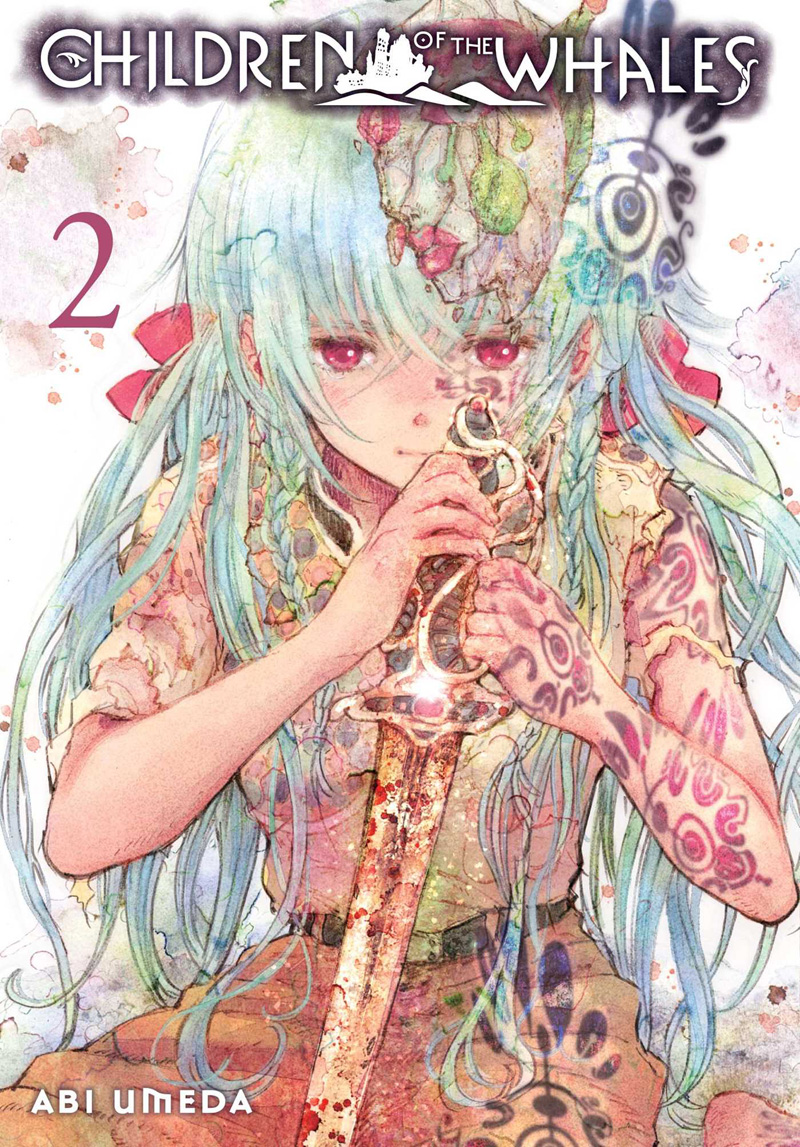
Children of the Whales, Volume 1Children of the Whales, Volume 1 by Abi Umeda. With such a striking cover, and interior artwork to match, I couldn’t help but be curious about the first volume of Children of the Whales. It also doesn’t hurt that the manga is the start of shoujo fantasy series, a category of work that I generally tend to appreciate. And indeed, I thoroughly enjoyed the first volume of Children of the Whales. The setting is incredibly intriguing, the majority of the story taking place on the Mud Whale, a largely self-sustaining ship-like island that has been adrift on a sea of sand for nearly a century. Most of the people on the Mud Whale can work a kind of magic based on the power of emotions. However, they are very short-lived; only the few people who aren’t magically inclined reach old age. This has an interesting impact on their civilization. Control over one’s feelings is very important culturally and the community as a whole has a disconcerting lack of knowledge about their own history and the greater world. And so when they encounter a human from outside the Mud Whale she is greeted with excitement, but her arrival is also a harbinger of greater misfortune.

Kakegurui: Compulsive Gambler, Volume 1Kakegurui: Compulsive Gambler, Volume 1 written by Homura Kawamoto and illustrated by Tōru Naomura. The cover art of Kakegurui is fairly eye-catching as well. The series takes place at Hyakkaou Private Academy, a school for the wealthy elite in which the entire social structure is based on how well the students can gamble. In many cases, this translates directly to how much money they can throw around or how skilled they are at cheating the system. Yumeko Jabami is a new transfer student whose sweet demeanor makes her appear to be an easy mark. However, her classmates soon discover that her personality completely changes when presented with a risky enough proposition. That and she has the skill and luck needed take any one of them down. Despite the dramatic artwork and high stakes, I actually didn’t find Kakegurui nearly as engaging as I hoped or expected it to be. While entertaining, I didn’t feel particularly invested in the characters or their plights. The games played were interesting, with some clever twists, but as a whole the first volume didn’t seem to have much depth to it.

Filed Under: FEATURES, My Week in Manga Tagged With: Abi Umeda, children of the whales, Homura Kawamoto, Kakegurui, manga, Toru Naomura

The Saga of Tanya the Evil: Deus lo Vult

December 25, 2017 by Sean Gaffney

By Carlo Zen and Shinobu Shinotsuki. Released in Japan by Enterbrain. Released in North America by Yen On. Translated by Emily Balistrieri and Kevin Steinbach.

The first thing I noticed when I saw the first volume of Tanya the Evil on my phone is that it is long. Really very long indeed. You could fit four volumes of Kagerou Daze into one volume of Tanya the Evil. I noticed that this volume has two translators, and I wonder if the main reason for it is that each volume is so long. (I double checked – the second volume is actually longer.) The second thing that I noticed about Tanya the Evil is that it is, at heart, a military novel with a dash of magic and “reincarnated into another world” as its gimmick. If you’re reading it for the reincarnation or the magic, you may be disappointed – if you’re reading it for the military maneuvers, you’re in luck, this is absolutely the book for you. This is the story of not-Germany, its new war hero who has the appearance of a small girl but the mind of a cynical, calculating HR director, and the evil God who sets things in motion.

OK, “evil God” may be stretching the point, as it’s more petulant hissy fit God, but once again we have a book I’d ask the hardcore religious to stay away from. Our hero is a ruthless HR director who is pushed in front of a train after laying off someone with a grudge. He meets God, who is upset at the lack of faith in him these days, which our hero can’t help but snark back at him for. In response, God reincarnates him in a world that is on the brink of war, as a young orphan girl. He keeps all his memories, though, and apparently in addition to being an HR director he was a bit of a military nut. As now we have Tanya von Degurechaff, a 9-year-old child prodigy sent to the front line to battle as a mage because, well, the Empire is mostly OK with this. The problem is that Tanya is just a bit too brilliant, and also somewhat disturbing…

One of the more interesting aspects of this book is also one of its most aggravating: the narration, which is mostly first person from Tanya’s perspective with a few exceptions, alternates between “I” and “Tanya” constantly, as the HR director still tends to think of himself as being slightly separate from the little girl’s body he now inhabits. This really shows off the disconnect that should normally be there for most people who go through the standard reincarnation schtick, but it’s also very disorienting, and by the end of the volume I was wishing the author had chosen a different way to achieve this. The gimmick that works much better in the book is Tanya constantly doing things as a way to ither a) stay alive or b) get herself assigned away from combat, and having her actions misinterpreted as insane gung-ho soldiering by the generals and powers that be. It doesn’t help that her main weapon that makes her even more powerful literally runs on the power of prayer, much to her bitter chagrin.

The author says at the end of the book that those who like happy endings should stay away from this series, and indeed I’m not sure I can read this on a regular basis. For this one volume, though, it was fascinating, even with all the military jargon. Yes, we have yet another Japanese author fascinated with World War I/II Europe, and our heroes are yet again essentially Germany with the fascism toned down (you’ll likely think of Legend of Galactic Heroes as you read it). But I just liked the back and forth between Tanya and the rest of the cast, and also liked the occasional glimpses we saw of her judging humans as something other than meat shields. Well, OK, one human. Pretty much just Visha. But you have to start somewhere. The Saga of Tanya the Evil is a rich and rewarding read, provided you spend the time to plough through it, and don’t mind Tanya’s constant first/third person perspective switches.

Filed Under: REVIEWS, saga of tanya the evil

Angels of Death, Vol. 1

December 25, 2017 by Sean Gaffney

By Makoto Sanada and Kudan Naduka. Released in Japan as “Satsuriku no Tenshi” by Media Factory, serialization ongoing in the magazine Comic Gene. Released in North America by Yen Press. Translated by Ko Ransom.

I’ve mentioned before that I will sometimes dip back into a genre that I’m not fond of to see if a new series might catch my eye. With horror, this has been something of a mixed back. When it works, it works seriously well – see Higurashi or Kurosagi Corpse Delivery Service. But for each one of those there are five or six “let’s gather a cast of people together and winnow them down one by one” that leaves me cold. Angels of Death is my latest look in to the horror/survival game genre. It’s based on a game which I believe you can actually get on Steam, and has an amnesiac heroine waking up in an abandoned building, where she’s informed she has to go from floor to floor and avoid being killed. What makes Angels of Death more interesting than most others of this sort is that the cast is kept to a bare minimum, which allows us to skip piles of introduction and get right to business. And also Rachel looks a bit more interesting than most faceless game protagonists.

The moment we see an adorable wounded bird get brutally slaughtered in a giant two-page spread, we know the emphasis here is not going to be on friendship, training or victory. She first runs into Zack, who is an absolute cliche of a serial killer and the sort of character you’d expect to get killed off pretty quickly in this sort of series, but somehow she manages to escape him. She then ends up on a different floor with Dr. Irie… sorry, Dr. Danny, who is very much like what Dr. Irie from Higurashi would be if he was deeply sociopathic and awful. To the manga’s credit, it doesn’t bother to try to convince us that he’s really another good guy – we already know there’s a killer on each floor, and he’s already so shady that it barely raises an eyebrow when he starts going on about eyes. Eventually Zack ends up chasing Rachel once more, but Zack is now put off by her personality so allies with her to try to get out.

As I said, the odd moments when Rachel shows off how broken she is are the best in the book. They manage to combine hidden tragedy and loss with a truly scary feeling, particularly when dealing with the bird. The artist, in fact, is very good at showing off the strengths of this genre – scary scenes, over the top faces, and a lot of bloody action. On the downside, unlike, say, Higurashi or Kurosagi Corpse Delivery Service, I doubt the final goal here is to show how a team can become true friends and band together to defeat the bad guy. The goal here is to frighten and shock. This first volume does a decent job of that, and therefore if you like survival horror, I’d definitely recommend it, though I likely won’t be reading further.

Filed Under: angels of death, REVIEWS

Kigurumi Guardians, Vol. 1

December 23, 2017 by Katherine Dacey

The first ten or so pages of Kigurumi Guardians are a gas. Hakka, a cheerful fifteen-year-old, comes home from school to find a kigurumi (animal mascot) in her kitchen. Though Ginger looks like the product of a Holstein/penguin tryst, no one in Hakka’s family is fazed by Ginger’s appearance, treating him like one of Hakka’s classmates. And if the Sasakuras’ warm embrace of Ginger wasn’t strange enough, Ginger’s method of communication puts things over the top: he’s reduced to scrawling short messages on cue cards since he can’t speak. Not until Hakka attends a school council meeting does she learn that Ginger is one of three animal-shaped guardians defending Earth from a race of puppet masters, and she’s his new handler.

So far, so good: the oddball premise, brisk pacing, and tart exchanges between Hakka and Ginger are executed with comic zest. As Hoshino begins laying the groundwork for the magical combat, however, it becomes clear that she’s making it up as she goes along. That tendency is most pronounced in the fight scenes, which are devoid of any tension, surprise, or humor, since it’s a forgone conclusion that Hoshino will think of a new rule or magical power that helps her heroes win the day.

More problematic is the dynamic between Hakka and Ginger. Bickering leads are a staple ingredient of romantic comedies, but the main point of contention between girl and mascot gets hammered into the ground by the end of chapter three. That joke — if one can call it a joke — is that Hakka must kiss Ginger to activate his magical powers; when she does, he immediately transforms into a dashing young warrior. Hakka hates kissing Ginger, but is repeatedly forced to go against her own wishes because, y’know, Earth’s future hangs in the balance. In our current #MeToo moment, this gag is an unpleasant reminder of how many books, movies, television shows, and manga reinforce the idea that women who refuse unwanted hugs and kisses are difficult, confused, or selfish.

It’s a shame that this gag is so central to the story, as Hoshino clearly intends Guardians to be naughty fun for teen girls — why else would all three mascots transform into tousle-haired bishonen?— but gets too caught up in drawing costumes and mascots to pay careful attention to the plot or consider the full implications of Hakka and Ginger’s relationship. By the end of volume one, the story has traded wacky hijinks for messy fight scenes and sappy conversations, losing its screwball zing in the process.

The verdict: File under D, for disappointment, and S, for squandered potential.

KIGURUMI GUARDIANS, VOL. 1 • STORY AND ART BY LILY HOSHINO • KODANSHA COMICS • RATED: TEEN (13+) • 160 pp.

Filed Under: Manga, Manga Critic, REVIEWS Tagged With: Comedy, Kigurumi, Kodansha Comics, Lily Hoshino, Magical Girl Manga

Accel World: The Red Crest

December 23, 2017 by Sean Gaffney

By Reki Kawahara and Hima. Released in Japan by ASCII Mediaworks. Released in North America by Yen On. Translated by Jocelyne Allen.

Why do we play fighting games? That’s the question being asked many times over the course of Accel World, and the idea of winning and losing seems to linger in some people more than others. Certainly in the case of Wolfram Cerberus, it’s a matter of life and death, especially as, for some odd reason, his Accelerated form seems to have multiple personalities, a la the legendary dog it’s named after. For others, it’s a way to bond with friends, such as the new character we meet here, Chocolat Puppeteer. Sadly, her friends have been infected with ISS kits, which leads to a chilling new revelation: you can now be infected against your will. Fortunately, Haruyuki and Chiyuri (and it’s nice to see the two of them team up without an overdose of sexual tension) manage to help her and temporarily save the day. Unfortunately, that just means that the enemy changes their focus, and the reader realizes that yes, this is another 4-5 book arc.

As for Kuroyukihime, we finally get the answers we’ve been waiting for since the first book – why did she kill Red Rider, and what drove her to leave her family? The answer turns out to be the same thing, unsurprisingly. Kuroyukihime may be strong and a guiding light to Haruyuki, but she’s also horrible at anything regarding subterfuge, much less outright lying, so it’s no surprise that she’s played like a sucker by White Cosmos. It’s nice to see Haruyuki has matured enough to take this calmly and offer support, even when she’s sobbing on his shoulder – a few volumes ago he would have been a total wreck. (It’s possible the author saved all the total wreck parts for the short story at the end of the book, which features 200% more Fuko teasing than normal, but also goes into the circumstances of her birth and dealing with being born without legs in the real world.)

It’s looking as if things might come to a head at the school’s culture festival, which may turn out to be a disaster as they’re all supposed to be keeping their real-life identities secret. As is usually the case with Accel World, the battles are well-written and concise, and I rarely find myself getting lost in technobabble. (It’s very clear that he wrote a lot of this after he had more experience, whereas Sword Art Online sometimes shows off his immaturity.) I’m not entirely sure if this will wrap up in the 13th book or not – at least, this particular arc, I’ve no doubt that White Cosmos is the Big Bad and will be part of whatever final End Kawahara has in mind – if he has one, the series is well over 20 volumes in Japan. That said, I’m perfectly content to let him slowly spin his tale – the fanservice may occasionally grate on me, but for the most part Accel World has developed into one of the most solid, dependable light novel series being put out by Yen.

Filed Under: accel world, REVIEWS

Random Musings: Notable in 2017

December 23, 2017 by Ash Brown

Towards the end of the year for the past few years here at Experiments in Manga, I have made a point to compile a list of some of the manga, comics, and other books that have been released during the previous twelve months that to me were particularly notable for one reason or another. It’s not a “best of” list, nor is it necessarily a list of my favorite releases from the past year (although admittedly some of them are). Instead, it’s a list of books which stood out to me for one reason or another that I both read and were released in 2017. I certainly haven’t read everything that was published in the last year, so the following titles have been taken from an already limited selection. For the sake of this list, I also decided to focus on debuts and one-shots rather than ongoing series. And while the list doesn’t include all of the noteworthy releases or even all of my favorites from the last year, I have tried to highlight one of the trends from 2017 that made me particularly happy–the continued growth and inclusion of queer representation and themes within the works being published.

The Girl from the Other Side: Siúil, a Rún, Volume 1That being said, one of the manga that left the deepest and most lasting impressions on me in 2017 was The Girl from the Other Side: Siúil, a Rún by Nagabe. Both the series’ haunting story and beautiful artwork are marvelously atmospheric. Nagabe delicately balances sweetness and charm with darkness and tragedy. It isn’t unusual for horror manga to explore the monstrosity of humans and the humanity of monsters, but The Girl from the Other Side does so with incredible nuance.

My Lesbian Experience with LonelinessManga tends to be a niche within the larger niche of comics, but every so often there is a work that gains recognition and acclaim outside of the usual audiences. Kabi Nagata ‘s autobiographical My Lesbian Experience with Loneliness is one example of a manga from 2017 that found a wide readership; Nagata’s authentic, frank, and honest depiction of her struggles with depression, anxiety, sexuality, and feelings of isolation resonated deeply with others’ personal experiences.

My Brother's Husband, Omnibus 1Gengoroh Tagame is an important creator who is known worldwide, so it’s probably no surprise that his series My Brother’s Husband would garner a fair amount of attention as well. Quite different in tone from Tagame’s sadomasochistic and homoerotic manga, My Brother’s Husband is a wholesome work which tackles and refutes socially and culturally ingrained prejudices–such as homophobia–through the lens of family. The manga’s message is not subtle, but it is a good one.

I Hear the Sunspot I Hear the Sunspot by Yuki Fumino is a quieter and more understated work dealing with the impact of disabilities on relationships, romantic and otherwise. It’s a lovely and thoughtful manga which treats its naturally complex characters with respect, acceptance, and understanding. I Hear the Sunspot is actually the beginning of a series, something that I didn’t realize when I first read it. The volume stands very well on its own, but I certainly look forward to reading more.

Sweet Blue Flowers, Omnibus 1My introduction to the work of Takako Shimura was through Wandering Son, a manga which is tremendously meaningful to me. I was very happy then when her other major series, Sweet Blue Flowers, finally received a proper release in English in 2017. (It only took three different publishers.) On the surface, Sweet Blue Flowers can tend towards the melodramatic, but Shimura’s layered portrayals of young women who love other young women are still emotionally convincing and compelling.

After Hours, Volume 1Most of the yuri that has so far been translated into English generally falls into the category of schoolgirl manga, so it is wonderfully refreshing to see series featuring adult women, like Yuhta Nishio’s After Hours, being published as well. It’s also immensely satisfying to see a relationship develop between two women that, while not without its complications, is largely free of angst. After Hours, along with Sweet Blue Flowers, is also notable for being Viz Media’s first real foray into the yuri genre.

Murciélago, Volume 1Yoshimurakana’s Murciélago is likewise a manga that features adult women in adult situations. But in this case, the series makes no attempt at realism. Murciélago is ridiculously over-the-top top and extreme. The manga is lewd and crass, but it can also be massively entertaining in its outrageousness. However, due to the explicit sex, violence, and gore, Murciélago is definitely not a series that can be recommended to just anyone. Predatory lesbian assassins understandably have limited appeal.

The Backstagers, Volume 1: Rebels without ApplauseThere were a great number of wonderful queer-friendly comics released in 2017, but James Tynion IV and Rian Sygh’s The Backstagers  is particularly delightful. The comic is a tremendous amount of fun, featuring energetic artwork, an entertaining story, and a marvelously diverse cast. Especially noteworthy is the series’ challenging of gender stereotypes through the positive representations of a wide range of masculinities. The Backstagers even includes a transguy as a prominent character!

So Pretty / Very RottenAnother engaging work from 2017 that deals with gender, identity, and self-expression in interesting ways is So Pretty / Very Rotten: Comics and Essays on Lolita Fashion and Cute Culture by Jane Mai and An Nguyen. The individual pieces in the collaboration vary significantly in tone and style, ranging from accessibly academic to intensely personal, but the volume is an informative and fascinating examination of Lolita culture and its influence both inside and outside of Japan.

A Small Charred FaceI don’t tend to seek out vampire fiction, so was it not for the fact that A Small Charred Face was written by Kazuki Sakuraba, translated by Jocelyne Allen, and published by Haikasoru, I might not have gotten around to reading the novel. Hearing A Small Charred Face described as being BL-adjacent certainly caught my attention, too. The novel is an unexpectedly beautiful and heartbreaking work about outsiders, found family, and the intimate connections that tie people together.

Notes of a CrocodileMiaojin Qiu was an influential lesbian author whose work has made a lasting impact on Taiwanese culture; her acclaimed novel Notes of a Crocodile is considered to be a cult classic of queer literature. The work is both metaphorical and literal in its exploration of gender, sexuality, and identity, combining fantasy and reality in a way that is tremendously compelling and at times even devastating. While not always an easy read, Notes of a Crocodile is a rich and powerful work.

Filed Under: FEATURES, Random Musings Tagged With: comics, manga, Nonfiction, Novels

Sweet Blue Flowers, Omnibus 2

December 22, 2017 by Sean Gaffney

By Takako Shimura. Released in Japan as “Aoi Hana” by Ohta Shuppan, serialized in the magazine Manga Erotics F. Released in North America by Viz. Translated by John Werry.

Shameful confession to make: while I always enjoy Shimura’s series when I read them, I will note that it’s sometimes hard for it to stay in my memory, particularly when so much other yuri is already coming out. Not helping the matter is the fact that, while I do love her art, I sometimes have trouble telling her characters apart, particularly secondary characters. And thirdly, this particular omnibus seems to have backloaded the more interesting material. (There is a very helpful “Let’s meet the cast” list at the start of the second half/4th volume, which I realize is meant to be something of a parody but which I could honestly have used at the beginning.) Add all these things together and I’m left with a volume that I did not enjoy as much as the first. I suspect Sweet Blue Flowers may be a series that rewards marathoning the entire series in one gulp.

The first half, Volume 3, has the cast invited to Kyoko’s summer home for a vacation, which has horseback riding, and scary stories, and one of the secondary girls falling for Akira’s brother, which I’m honestly happy about because he gets so much abuse from his sister that he could use some nice things happening to him. Akira, meanwhile, is stricken with a cold, as is Fumi. This means that Akira is there to overhear some of Kyoko’s family drama and also with Fumi finally admitting that Akira was her first love, with all the awkwardness that comes with it. And we write Yasuko out of the story, at least for now, as she comes to terms with the fact that her crush is marrying the girl he loves (which isn’t her), and tries to apologize to Fumi for what happened between them (which doesn’t go well), then flies off to England. And so the fourth volume introduces new first-years, new potential relationships, and more and more of Fumi being a bit of a wreck.

This is not an easy yuri series, one that goes down smoothly and leaves a smile on your face. And it’s also not a series that seems to magically have no men in it whatsoever. Men are here, and they get into relationships with some of the cast. Girls have crushes on other girls, and then get over them. But we also have their teacher Yamashina-sensei, who gets a chapter devoted to her which seems to be about the bitter, unrequited love of youth – followed by the bitter, unrequited love of a student with a crush on her – but ends in a sweet way that shows us that it’s not ALL going to be angst and drama. I think Shimura may have realized that she was laying it on a bit thick – in the second half we get Haruka and Ryoko, two students who seem so far to be a bit less burdened with baggage than others. But we still have Fumi, and her attempts to try to be a bit more outgoing – which doesn’t work well – are very true-to-life but also painful.

Sweet Blue Flowers is a good series. That said, it’s exhausting as well, and I suspect that it’s best enjoyed either in one gulp – waiting till the other two omnibuses are out – or in smaller quantities, such as reading only half and then coming back. There is such a thing as too much Fumi. (And too be fair, too much Akira, though that’s slightly less pressure-heated.)

Filed Under: REVIEWS, sweet blue flowers

  • « Go to Previous Page
  • Page 1
  • Interim pages omitted …
  • Page 228
  • Page 229
  • Page 230
  • Page 231
  • Page 232
  • Interim pages omitted …
  • Page 538
  • Go to Next Page »
 | Log in
Copyright © 2010 Manga Bookshelf | Powered by WordPress & the Genesis Framework