• Skip to primary navigation
  • Skip to main content
  • Skip to primary sidebar
  • Home
  • About Us
    • Privacy Policy
    • Comment Policy
    • Disclosures & Disclaimers
  • Resources
    • Links, Essays & Articles
    • Fandomology!
    • CLAMP Directory
    • BlogRoll
  • Features & Columns
    • 3 Things Thursday
    • Adventures in the Key of Shoujo
    • Bit & Blips (game reviews)
    • BL BOOKRACK
    • Bookshelf Briefs
    • Bringing the Drama
    • Comic Conversion
    • Fanservice Friday
    • Going Digital
    • It Came From the Sinosphere
    • License This!
    • Magazine no Mori
    • My Week in Manga
    • OFF THE SHELF
    • Not By Manga Alone
    • PICK OF THE WEEK
    • Subtitles & Sensibility
    • Weekly Shonen Jump Recaps
  • Manga Moveable Feast
    • MMF Full Archive
    • Yun Kouga
    • CLAMP
    • Shojo Beat
    • Osamu Tezuka
    • Sailor Moon
    • Fruits Basket
    • Takehiko Inoue
    • Wild Adapter
    • One Piece
    • After School Nightmare
    • Karakuri Odette
    • Paradise Kiss
    • The Color Trilogy
    • To Terra…
    • Sexy Voice & Robo
  • Browse by Author
    • Sean Gaffney
    • Anna Neatrour
    • Michelle Smith
    • Katherine Dacey
    • MJ
    • Brigid Alverson
    • Travis Anderson
    • Phillip Anthony
    • Derek Bown
    • Jaci Dahlvang
    • Angela Eastman
    • Erica Friedman
    • Sara K.
    • Megan Purdy
    • Emily Snodgrass
    • Nancy Thistlethwaite
    • Eva Volin
    • David Welsh
  • MB Blogs
    • A Case Suitable For Treatment
    • Experiments in Manga
    • MangaBlog
    • The Manga Critic
    • Manga Report
    • Soliloquy in Blue
    • Manga Curmudgeon (archive)

Manga Bookshelf

Discussion, Resources, Roundtables, & Reviews

My Week in Manga

My Week in Manga: October 20-October 26, 2014

October 27, 2014 by Ash Brown

My News and Reviews

I posted two reviews at Experiments in Manga last week. First up was my review of Baku Yumemakura and Jiro Taniguchi’s The Summit of the Gods, Volume 4. It’s the penultimate volume in one of my favorite manga series. It was also a particularly intense volume. The fifth and final book should be available sometime next year; I’m really looking forward to it. My second review last week was of Boogiepop Returns: VS Imaginator, Part 1, the second volume in Kouhei Kadono’s Boogiepop light novel series. I didn’t find it to be quite as dark as the first novel, but it still had an interesting mix of science fiction, horror, mystery, and even a bit of romance. I discovered Boogiepop late (the four novels and the four volumes of manga that were translated into English are now out of print) but I’m really enjoying the franchise so far. At this point I definitely plan on checking out the rest of the Boogiepop novels, manga, music, anime series, and live-action film.

On to other things online! Digital Manga has launched its most recent Tezuka Kickstarter project and it is…ambitious. At Manga Comics Manga, Deb Aoki has a nice roundup of some the concerns and criticisms fans have been expressing about the project. Justin has been busy posting more New York Comic Con content at Organization Anti-Social Geniuses, including interviews with Viz Media’s Andy Nakatani (editor-in-chief of Weekly Shonen Jump) and Leyla Aker (Vice President of Publishing). Also, in case you missed it (like I did), Brigid Alverson posted her NYCC interview of Takeshi Obata at Comic Book Resources a couple Fridays back. Ryan Holmberg’s most recent What Was Alternative Manga? column focuses on the proto-gekiga work of Masahiko Matsumoto. The post has great (and probably deliberate) timing–Matsumoto’s The Man Next Door is now available to order from Breakdown Press. Over at Manga Connection, Manjiorin is embarking on a new review project focusing on Crunchyroll’s digital manga. And speaking of manga reviews, Manga Blog’s inagural Bookmarked! feature was posted. I’m very happy to see Manga Blog so active again. Be sure to check it out for its link-blogging, too!

Quick Takes
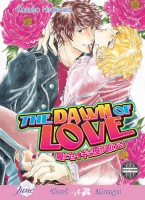
The Dawn of LoveThe Dawn of Love by Kazuho Hirokawa. Masahiro is infatuated with his fellow law student Takane and so is very happy to discover that Takane, like him, is also gay. Takane has multiple partners which doesn’t bother Masahiro at first, but eventually he decides that he wants Takane to exclusively date him. My biggest issue with The Dawn of Love is that Masahiro uses sex to manipulate Takane, basically forcing Takane to choose monogamy regardless of his own feelings about the matter; it’s really not a good basis for a healthy, long-lasting relationship. I think Hirokawa was trying to going for a sort of “true love conquers all” take with the manga, but The Dawn of Love isn’t successful in achieving that, mostly because I was never convinced that Masahiro and Takane were actually in love to begin with. Even Masahiro doesn’t bother to ask himself why he loves Takane until well into the story, and he never really answers that question. It’s obvious that the two of them enjoy having sex with each other (and there’s a lot of sex in The Dawn of Love), but sexual desire isn’t the same thing as romantic love. The Dawn of Love had great potential and was even rather funny in places, but overall I didn’t end up enjoying it much at all.
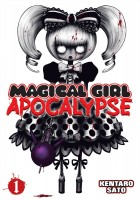
Magical Girl Apocalypse, Volume 1Magical Girl Apocalypse, Volume 1 by Kentaro Sato. I can’t tell for certain yet, but by the end of the first volume of Magical Girl Apocalypse it seems as though the series might actually be a parody. If that’s true, it makes the manga a little more interesting to me. If not, Sato is going to need to do something else to keep my attention. I’m more frightened that Yoruka will have a horrifying back injury due to her ridiculously large breasts than I am of the series’ “zombies.” Despite the inclusion of the creepy-cute magical girls instead of more traditional zombie-like monsters, the manga doesn’t really set itself apart yet. At this point, it somehow feels like a pretty generic zombie story. There’s plenty of disturbing scenes and well-drawn gore, and I appreciate that Sato isn’t afraid to kill off characters who in other series would actually manage to live for more than one chapter, but otherwise I found Magical Girl Apocalypse to be a fairly typical zombie survival manga. The series should be an entertaining read for those fond of the subgenre, and there’s nothing wrong with that, but personally I find myself a little zombied-out these days and prefer my horror to have a little more substance.
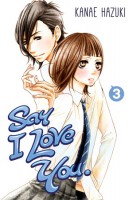
Say I Love You, Volume 3Say I Love You, Volume 3 by Kanae Hazuki. One of the things that really impresses me about Say I Love You is Hazuki’s forthright portrayal of teenage sexuality. The characters exhibit both maturity and immaturity in their relationships; they can be surprisingly levelheaded, but they can also let their feelings get the best of them. There’s conflict and selfishness in addition to the beginnings of new love and developing respect for others. The characters and their relationships are believable and have depth to them. The more I read of Say I Love You the more and more like Mei. She, like so many of the other characters, has been hurt in the past, but despite her nervousness and anxiety she’s at a point in her life that she’s able to stand up for herself and for others. (Bullying and dealing with bullies is a recurring theme in Say I Love You.) Though Mei tends not to take crap from other people, she is still vulnerable and she still experiences pain, especially now that she is beginning to open herself up to others again. She’s learning to trust, but it doesn’t always come easily for her. It’s this sort of realistic and layered characterization that Say I Love You does particularly well.
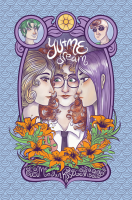
YU+ME: Dream, Omnibus 1YU+ME: Dream, Omnibuses 1-2 by Megan Rose Gedris. I only recently discovered YU+ME, a webcomic that was originally released online between 2004 and 2010. The comic is still freely available to read online, but the series has also now been collected into two omnibuses which include additional content. The first part of YU+ME comes across as a fairly standard girl-meets-girl high school love story. It’s certainly enjoyable, but not an exceptional story on its own. (Although it is noteworthy that the series may have been one of the earliest queer-focused webcomics.) What really makes the YU+ME outstanding is its second part, which places the first half within an entirely new context. Gedris wanted to turn the “but it was all a dream” trope on its head and she does so magnificently. Both the artwork and the storytelling are a bit rough in the beginning, but Gedris steadily improves and by the end the series has turned into something truly spectacular. The first part of YU+ME primarily uses a single art style while the second half explodes into a brilliant variety of design, color, and texture. YU+ME is an epic and surreal lesbian love story with a grand mythos to go along with it and a plot that is much more complex than it first appears.
Filed Under: FEATURES, My Week in Manga Tagged With: comics, Kanae Hazuki, Kazuho Hirokawa, Kentaro Sato, Magical Girl Apocalypse, manga, Megan Rose Gedris, Say I Love You, YU+ME

My Week in Manga: October 13-October 19, 2014

October 20, 2014 by Ash Brown

My News and Reviews

Only somewhat unintentionally, last week ended up being a yuri-filled week here at Experiments in Manga. My friend Jocilyn was inspired to write a guest review of Takako Shimura’s Sweet Blue Flowers, Volume 1 by Takako Shimura, which is currently only available digitally. (I’m hoping that one day the series will be available in print, but as Jocilyn points out, a few fixes may be needed for that to happen.) As for the manga review that I posted last week, I took a look at Chiho Saito’s Revolutionary Girl Utena: The Adolescence of Utena for my Year of Yuri monthly review project. Revolutionary Girl Utena is one of my absolute favorite anime series and I was quite pleased with Saito’s The Adolescence of Utena, finding it to be an incredibly compelling work in its own right. And speaking of my Year of Yuri project, I only have one more review to go! I haven’t quite decided which manga (or comic) my final review will tackle, so if you have any requests or would like to see something in particular, let me know! I also posted one other (non-yuri) review last week: Monkey Business: New Writing from Japan, Volume 4. Monkey Business is a literary journal featuring a mix of fiction, nonfiction, poetry, and even a bit of manga. The stories tend to be a little strange, but that also tends to be something that I enjoy.

Elsewhere online, New York Comic Con articles are still being posted. At Publishers Weekly, Deb Aoki has a general roundup of the manga industry’s presence at NYCC. Justin of Organization Anti-Social Geniuses has a few interesting things from his time at NYCC, including why publishers and fans think it’s worth it to buy manga and an interview with Gen Manga’s Robert McGuire. Vertical also posted a bit more information about the Vertical Comics imprint. Unrelated to NYCC but still interesting reading, at Contemporary Japanese Literature Kathryn Hemmann has an excellent critique of Helen McCarthy’s A Brief History of Manga, specifically addressing the male-centric focus of the work. (I’ve had the volume on my “to be read” pile since its release; I should really get around to actually reading it one of these days) Also, Frederick L. Schodt wrote a bit about the history of his groundbreaking work Manga! Manga!. (Exceptionally good timing, as I am just about to start reading it.) And last but not least, Digital Manga has licensed ninth and final volume of Hinako Takanaga’s The Tyrant Falls in Love! (I mistakenly thought the eighth volume was the series’ end, so I’m doubly happy for this license.)

Quick Takes

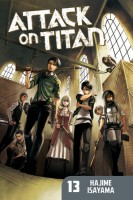
Attack on Titan, Volume 13Attack on Titan, Volume 13 by Hajime Isayama. Although I have largely been enjoying Attack on Titan since the beginning of the series, the thirteenth volume is a particularly good installment of the manga. As the series has progressed, mystery on top of mystery and twist on top of twist has been added, which is something that can only be sustained for so long. But with the thirteenth volume it feels as though some progress has actually been made with the plot and some answers are finally being given–or at least some convincing and appropriately disconcerting theories are being offered. The thirteenth volume begins with the aftermath of the Survey Corps’ rescue of Eren. The number of deaths and casualties incurred by the group is severe. Eren must come to terms with just how much ensuring his safety costs and just how much depends on him in the battles to come. The focus of Attack on Titan has shifted from confronting the Titans themselves to confronting the corruption within the government while trying to discover who or what is even behind the existence of the Titans. It’s a particularly effective development–the prospect of fighting Titans has a significantly different psychological impact than that of fighting, and even killing, humans.

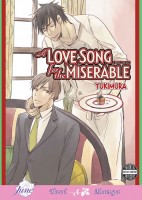
A Love Song for the MiserableA Love Song for the Miserable by Yukimura. Many of the boys’ love manga released in English are about high school or middle school students, so it’s always a refreshing to encounter a story about adults. A Love Song for the Miserable is one of those stories. Asada is hoping to work in events planning while Nao is studying to become a patissier. After a chance meeting, the two of them become friends and Asada ends up acting as Nao’s taste tester, developing feelings for the other man in the process. Sadly, Asada would much rather completely ruin any chance of a relationship with Nao than risk the possibility of being rejected after opening up. Their friendship ends badly which puts them both in an awkward position three years later when Asada meets Nao again while on the job. A Love Song for the Miserable captures Asada’s personality and insecurities extremely well and the complexities of his feelings are very realistic. It’s understandable that Asada’s lack of confidence in himself and his jealousy over Nao’s success when his own career is going nowhere would interfere with him developing a stable relationship. Asada has very good reasons for being miserable, and Nao has very good reasons for being upset with him, but they might just be able to make something work.

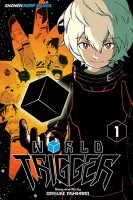
World Trigger, Volume 1World Trigger, Volumes 1-2 by Daisuke Ashihara. In an interesting move, Viz decided to simultaneously release two volumes of World Trigger. It certainly caught my attention, so I guess the gambit was a successful one. There were several things that I liked about World Trigger. For example, I particularly appreciate that strategy and tactics come into play in the fights and that the battles aren’t all about who happens to have the greatest brute strength or power. I also liked Yuma–since he is a Neighbor his perspective is very different from that of the other characters and it shows–although I can easily see how he might get on some readers’ nerves. Other aspects of the manga didn’t work quite as well for me. Right off the bat Border is described as a mysterious organization; the general population seems oddly accepting of its presence and seems to require no further explanation as long as Border continues to fight against the Neighbors, which I found a little difficult to believe. I assume this is probably something the series will explore in the future, but as it is the lack of information is frustrating, especially when other things are over-explained. For the most part I did enjoy the first volume, but the second didn’t do much to retain my attention. Though it has its good points, World Trigger hasn’t quite managed to set itself apart from other series yet and seems a little generic so far.

Filed Under: FEATURES, My Week in Manga Tagged With: attack on titan, Daisuke Ashihara, Hajime Isayama, manga, world trigger, Yukimura

My Week in Manga: October 6-October 12, 2014

October 13, 2014 by Ash Brown

My News and Reviews

Last week Experiments in Manga saw the introduction of a new feature–Adaptation Adventures. Basically, the feature is intended to explore and compare different versions of the same story, which I think should be an interesting approach. I specifically had things in mind like the Parasyte anime adaptation that recently began airing  (readers of Experiments in Manga have expressed interest in some sort of Parasyte comparison in the past), but I quickly realized that the feature provides nearly endless options. For the first Adaptation Adventures column, I took a look at Udon Entertainment’s Manga Classics, a line of manga-style graphic novel adaptations of classic literature. I was pleasantly surprised by the Manga Classics editions of Pride & Prejudice and Les Misérables and look forward to seeing future releases. I also posted an in-depth manga review last week of Yaya Sakuragi’s Bond of Dreams, Bond of Love, Volume 4, the last volume in the series. Sakuragi was my introduction to boys’ love manga and I’m always happy to see more of her work available in English. Bond of Dreams, Bond of Love isn’t my favorite Sakuragi manga, but I did enjoy its goofiness.

Elsewhere online, I was extremely happy to see that the one and only Manga Critic (Katherine Dacey) has come out of “retirement” and joined forces with Brigid Alverson at MangaBlog. Kate was one of my major inspirations for starting Experiments in Manga, so I’m very happy to see her return and look forward to reading her commentary. This also means that MangaBlog will be updated more regularly again, which will be great. In other news: Sean Gaffney at A Case Suitable for Treatment has a roundup of Seven Seas recent license announcements. Over at Comics Forum, the most recent Manga Studies column has been posted–Takeuchi Osamu and Manga Expression pt. 1: Tezuka Osamu as Manga Locus by Nicholas Theisen. Also, October’s issue of Sparkler Monthly is now available. It includes the launch of the third and final volume of Tokyo Demons as well as some additional bonus stories for the series. (Since I love Tokyo Demons, I’m particularly excited for and dreading the beginning of the end.)

The New York Comic Con took place over the weekend, and there was plenty of excitement to come out of that. Sean was there this year and has written up some notes on the panels he was able to attend. Vertical is spinning off Vertical Comics as a separate imprint to focus on manga and related material while Vertical continues to release prose and nonfiction. Vertical also licensed more Attack on Titan light novels, which will probably do pretty well. Viz Media also had a few new licenses to announce, as did Kodansha Comics. In addition to several other licenses, Yen Press has rescued Kaoru Mori’s Emma for a deluxe hardcover omnibus release! I only discovered Emma after CMX’s edition went out of print (and became extremely expensive), so I’m thrilled that I’ll finally be able to own the series in such a lovely format. (If you’re curious about Emma, I recommend checking out the archives for the Emma Manga Moveable Feast.)

Quick Takes

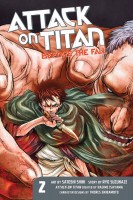
Attack on Titan: Before the Fall, Volume 2Attack on Titan: Before the Fall, Volume 2 written by Ryo Suzukaze and illustrated by Satoshi Shiki. I have largely been enjoying Attack on Titan‘s prequel manga Before the Fall, but I think I like it even more now that I have read the first Before the Fall novel that was recently released by Vertical. (My review of that volume can be found here.) Other than both being prequels to Attack on Titan, the stories of the novel and the manga aren’t directly related, but small references are made to the novel’s plot and characters in the manga. Which makes a fair amount of sense since the Before the Fall manga series is based on the second and third Attack on Titan light novels written by Suzukaze. In the second volume of the Before the Fall manga, Kuklo and Sharle have made their escape–Kuklo from the dungeons and Sharle from her overbearing father–but they are now faced with surviving among the common people. They actually make a pretty good life for themselves at first, but then Kuklo becomes obsessed with wanting to see a Titan for himself which, as anyone who is familiar with Attack on Titan will know, is an absolutely terrible idea that probably won’t end well for anyone involved.

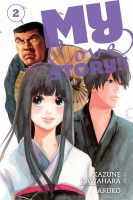
My Love Story!!, Volume 2My Love Story!!, Volume 2 written by Kazune Kawahara and illustrated by Aruko. I absolutely adored the first volume of My Love Story!!, so much so that I was actually a little afraid to read the second volume since my expectations had been set so high. However, I am very pleased to report that I also loved My Love Story!!, Volume 2. The entire series just makes me so extremely happy to read. Takeo and Yamato’s love is incredibly pure and sweet and the two of them are utterly endearing and charming together. Misunderstandings do happen on occasion, but forgiveness is quick in coming and no harm is done. My Love Story!! has the potential to be sickeningly sweet, but the romance and characters are handled with such humor and lightheartedness that, at least for me, the manga hasn’t reached that point. There isn’t much nuance or subtlety to the characters–Takeo is a manly many with a sensitive heart, Yamato is adorable and earnest, Suna is cool and aloof–but I like them all so much that I don’t mind. My Love Story!! is ridiculous and over-the-top and I love it. I’m still not sure how the story will be able to be sustained for an entire series now that the basic conceit has been so well-established, but I look forward to finding out.

A New Season of Young LeavesA New Season of Young Leaves written by Venio Tachibana and illustrated by Akeno Kitahata. Ever since reading the two-volume boys’ love manga series Seven Days (which I loved) I have made a point to seek out more of Tachibana’s work available in English. And so I was very excited when A New Season of Young Leaves was licensed. I’ll admit, at first I was actually a little disappointed with A New Season for Young Leaves. I simply didn’t understand the relationship and odd power dynamics between the super popular Mariya and the socially awkward Nachi. But then about halfway through the volume, during an extensive flashback that explores the evolution of their strange friendship, the manga finally clicked for me. I found it to be incredibly compelling and I immediately wanted to read it again, which I take as a very good sign. I didn’t realize it when I initially began reading A New Season for Young Leaves, but it’s actually the first manga in a series that is at least three volumes long. While there were definitely a few plot lines introduced that were left unresolved, for the most part A New Season of Young Leaves does tell a complete story. But I really do hope more of the series is licensed; I am very curious to see how things continue to develop between Mariya and Nachi and the rest of their classmates.

Filed Under: FEATURES, My Week in Manga Tagged With: Akeno Kitahata, Aruko, attack on titan, Kazune Kawahara, manga, My Love Story, Ryo Suzukaze, Satoshi Shiki, Venio Tachibana

My Week in Manga: September 29-October 5, 2014

October 6, 2014 by Ash Brown

My News and Reviews

Last week at Experiments in Manga there were three posts in addition to the usual My Week in Manga feature. To start with, the winner of the Triton of the Sea manga giveaway was announced. The post also includes a list of some of the manga available in English that feature mermaids and/or mermen. Next was my review of Ryo Suzukaze’s novel Attack on Titan: Before the Fall, which is a prequel to Hajime Isayama’s original Attack on Titan manga series. I liked the premise of the novel much more than I did its execution, but it should still be pretty interesting for Attack on Titan fans. And finally, over the weekend, September’s Bookshelf Overload was posted. As for other interesting things online…I’ve been so busy at work lately that I’ve not really been able to keep up with all that’s going on. However, I do know that Seven Seas is currently in the process of revealing seven new licenses via Twitter. I’m pretty sure that Sean will be doing a wrap-up at A Case Suitable for Treatment soon which I’ll link to, but in the meantime you can always check out Seven Seas’ Twitter timeline. (There have been some really interesting choices so far!)

Quick Takes

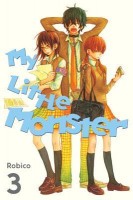
My Little Monster, Volume 3My Little Monster, Volume 3 by Robico. I have been thoroughly enjoying My Little Monster and its cast of rather quirky characters. However, the third volume doesn’t seem to really move the plot along much, nor does it really develop the characters further. If anything, the series has lost its forward momentum and undoes some of the progress that has been made. After the various confessions of love from the previous volumes, Haru and Shizuku spend most of the third going through it all again. Shizuku has once more decided that she doesn’t have time for friendships or romantic relationships and wants to focus on her studies. Haru is fitting in a little better at school and is actually able to put the fact that everyone except Shizuku is terrified of him to good use, although he’s still fairly volatile and his behavior and obliviousness of others occasionally causes some real problems. So overall, not much has really changed in My Little Monster except that a few more hints have been dropped about Haru’s brother, whom I’m very curious about. I’m still enjoying the series and find its deadpan humor amusing, but I do hope to see more plot and character development in future volumes.

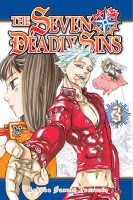
The Seven Deadly Sins, Volume 3The Seven Deadly Sins, Volume 3 by Nakaba Suzuki. As can be safely assumed from the cover, the third volume of The Seven Deadly Sins heavily features the newly introduced Ban, the Fox Sin of Greed. I’m okay with this because, well, I actually like Ban as a character. Despite being one of the Seven Deadly Sins and therefore being one of the series’ heroes (or at least one of its protagonists), Ban’s really not that nice of a guy. Frankly, he’s an unapologetic jerk (with a very nice set of abs and a fondness for alcohol, though he really can’t hold his drink). But, like the other Sins, Ban has a tragic past to go along with his arrogant personality. He’s also kind of a goofball. One of the things that I particularly enjoy about The Seven Deadly Sins is the ridiculously overpowered battles between the ridiculously overpowered characters. The action can sometimes be a little difficult to follow, but the resulting destruction is quite obvious. I’m also rather impressed by how well Suzuki visually handles Diane, the giantess of the Seven Deadly Sins. She’s huge, but her presence always seems very natural on the page and Suzuki does a nice job of incorporating her into the artwork.

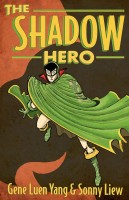
The Shadow HeroThe Shadow Hero written by Gene Luen Yang and illustrated by Sonny Liew. Initially I wasn’t planning on picking up The Shadow Hero, most likely because I’m generally not that interested in superheroes. Fortunately I realized that was a very silly reason not to read the comic, especially considering that Yang is a fantastic writer and I really like Liew’s artwork and use of color. Long story short, I absolutely loved The Shadow Hero. The story of The Shadow Hero was inspired by an obscure superhero from the 1940s called the Green Turtle which was created by Chu Hing, one of the first Asian Americans to work in American comics. (The volume also contains a reproduction of the first Green Turtle comic, which was a nice addition.) The Shadow Hero serves as the Green Turtle’s origin story. Hank Chu is the son of a Chinatown grocer who looks forward to taking over his father’s store. His mother, however, has much bigger plans for her son and has decided that he will become a superhero, despite the complete lack of any superpowers. With a great story and great art, and plenty of humor to balance the more serious aspects of the comic, The Shadow Hero is definitely recommended.

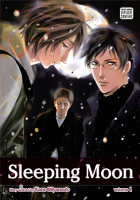
Sleeping Moon, Volume 1Sleeping Moon, Volumes 1-2 by Kano Miyamoto. I tend to really enjoy Miyamoto’s work, so I was pretty excited when SuBLime licensed her short boys’ love series Sleeping Moon. I was particularly looking forward to it due to its supernatural elements, but in the end I didn’t find it as compelling as some of her other manga which are more firmly based in reality. Part of that is probably because much of the romantic relationship between two of the leads felt as though it was tacked on simply because the series was supposed to be boys’ love. Still, there were parts of Sleeping Moon that I enjoyed, and Miyamoto’s artwork is as lovely as ever. Akihiko’s family is cursed–the male heirs all die young, never making it past their thirties. And since his thirtieth birthday is fast approaching, Akihiko has a vested interest in discovering the truth behind the curse in order to prevent his own death and the death of his cousin. And that’s when the time slips begin–Akihiko finds himself spontaneously traveling to the Meiji era where one of his distant relatives is trying to unravel the same mystery. The moody supernatural and horror elements work better than the manga’s romance and the time traveling is handled quite well, too.

Filed Under: FEATURES, My Week in Manga Tagged With: comics, Gene Luen Yang, Kano Miyamoto, manga, My Little Monster, Nakaba Suzuki, Robico, Seven Deadly Sins, sleeping moon, Sonny Liew

My Week in Manga: September 22-September 28, 2014

September 29, 2014 by Ash Brown

My News and Reviews

Last week unintentionally turned into an Osamu Tezuka Week at Experiments in Manga…sort of. First of all, this month’s manga giveaway features Tezuka’s Triton of the Sea. Tell me a little about the merfolk you’ve encountered in manga for a chance to win the first omnibus of the series. (The winner will be selected and announced on Wednesday, so you still have a little time!) I also reviewed Dororo, Volume 3. Out of all of Tezuka’s manga that has so far been released in English, Dororo is one of my personal favorites. It’s currently available from Vertical in an omnibus edition which contains the entire series, however it may not be reprinted. I highly recommend picking up a copy sooner rather than later if it seems like a series you’d be interested in. And then for something completely different, over the weekend I reviewed the tenth-century classic The Tale of the Cavern (also known as The Tale of the Hollow Tree) which has absolutely nothing to do with Tezuka, but everything to do with music, love, and Heian-era court life.

In other news, the second volume of Lianne Sentar’s Tokyo Demons is now available for purchase as an ebook from the Sparkler Shop, which means the print edition will be released in the near future as well! (If you missed my early review of the novel, I loved it.) And speaking of Sparkler, the membership drive is still going on. If Sparkler Monthly doesn’t get at least 1,000 subscribers it most likely won’t be able to continue beyond its second year, which would make me extraordinarily sad. Please consider supporting Sparkler Monthly, if you can!

Elsewhere online, Shonen Jump is soliciting questions for Takeshi Obata, who will be a guest at New York Comic Con this year. If, like me, you can’t make it out to NYCC, Obata’s panel will thankfully be streamed live online. (Hopefully it will also be recorded.) In London, the Cartoon Museum is currently showing the exhibit Gekiga: Alternative Manga from Japan. To coincide with the exhibition, The Cartoonists’ Club of Great Britain wrote a brief introduction to gekiga. Finally, Vertical released a particularly interesting post on its Tumblr account about manga’s English-language market and specifically about the pricing of books.

Quick Takes

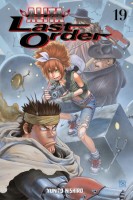
Battle Angel Alita: Last Order, Volume 19Battle Angel Alita: Last Order, Volume 19 by Yukito Kishiro. Last Order was my introduction to the Battle Angel Alita universe. It’s probably best described as an alternate ending to the original series. While I was never as taken with Battle Angel Alita as much as other people seem to be, there were parts that I really enjoyed: interesting characters and character designs, martial arts, great action scenes, and so on. But the plot just never seemed to pull together in a way that satisfied me. I didn’t realize or expect that the nineteenth volume would be the final volume of Last Order. It’s also one of the most frustrating volumes as Kishiro seems to rush through the story in order to bring everything to some sort of conclusion and, in my opinion, fails to do so. Even more disappointing is the fact that Alita doesn’t even really make much of an appearance in it. Apparently there is yet another Battle Angel Alita series that will soon be starting in Japan, but I have no idea how it relates to Last Order. There was certainly enough left confused and unresolved in Last Order that there’s plenty of material for Kishiro to choose from.

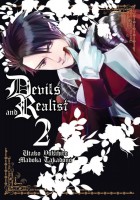
Devils and Realist, Volume 2Devils and Realist, Volume 2 written by Madoka Takadono and illustrated by Utako Yukihiro. Although I mostly enjoyed the first volume of Devils and Realist, I was unsure how far I wanted to pursue the series and so decided to read at least one more volume. After reading the second installment, I can say that I’ll probably be reading even more of Devils and Realist in the future. Generally stronger than the first volume and more even in tone, the second volume takes a slightly more serious and dramatic turn. The series’ humor is still present though, interspersed among the more life-threatening events of the manga and the story’s other dangerous mysteries. Yukihiro’s artwork and character designs are very attractive, and as a whole there are some definite homoerotic undertones to the manga as well. Readers’ enjoyment of Devils and Realist will probably largely depend on how well they like the lead and his personality. I, for one, am greatly amused by William’s refusal to believe in the supernatural despite it staring him in the face as he stubbornly tries to come up with any other possible explanation for the strangeness going on in his life.

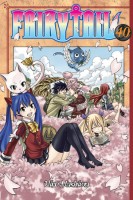
Fairy Tail, Volume 40Fairy Tail, Volumes 40-42 by Hiro Mashima. I’ve only read two series by Mashima–Fairy Tail and Monster Soul–but out of those two, I find that Fairy Tail is the better manga. The long Grand Magic Games tournament arc has now finally reached its conclusion with the fortieth volume. While I did find some of the Games enjoyable, for the most part I’m happy to be moving on to battles that actually have some real purpose and meaning behind them beyond securing bragging rights; I tend to enjoy Fairy Tail more when it feels like there’s something at stake. I’m glad to see the beginning of a new story arc that promises just that–things are starting to get a bit more serious again. (Granted, there was the whole dragon invasion during the Games arc; the possibility that the world will be destroyed is a pretty big deal.) It also looks like Gray will be getting some significant page time, too, which I’m not going to complain about. The Fairy Tail Guild’s latest mission requires Gray to confront his painful memories and past tragedies. It isn’t a pleasant experience for him, but he is also able to draw incredible strength from it.

Hetalia: Axis Powers, Volume 6Hetalia: Axis Powers, Volume 6 by Hidekaz Himaruya. Perhaps by this point I should no longer be surprised, but I always seem to unexpectedly learn something new whenever I read Hetalia. Sometimes it’s a historical tidbit, and sometimes it’s actually something more closely related to current events. This particular volume of Hetalia features micronations and Molossia makes an appearance among several others. (I had never even heard of Molossia before, and it’s in Nevada!) The Nordic states are also an important part of the sixth volume, which includes Iceland. (Ever since writing a report on Iceland in the sixth grade, I’ve always been interested in and fond of the country, so I did get a kick out of that.) Often the humor in Hetalia does require some familiarity with or prior knowledge of world history and politics to really appreciate it, so in the process of trying to make sense of some of the jokes I find that I’m learning about all sorts of interesting things. Admittedly, Hetalia frequently makes use of stereotypes as part of its gags, which some people may find offensive and has generated a fair amount of controversy.

Filed Under: FEATURES, My Week in Manga Tagged With: Battle Angel Alita, Devils and Realist, Fairy Tail, Hetalia, Hidekaz Himaruya, Hiro Mashima, Madoka Takadono, manga, Utako Yukihiro, Yukito Kishiro

My Week in Manga: September 15-September 21, 2014

September 22, 2014 by Ash Brown

My News and Reviews

Two manga reviews were posted at Experiments in Manga last week, both with a bit of queer bent to them. First, I took a look at Wandering Son, Volume 7 by Takako Shimura. Wandering Son is a series that means a tremendous amount to me personally, so I’m always happy when a new volume is released. (And speaking of releases–Fantagraphics assured me that the eighth volume will be published sometime next year.) My second review from last week was of Fumi Yoshinaga’s What Did You Eat Yesterday?, Volume 4, which I continue to thoroughly enjoy (even though it can sometimes make me hungry when I’m reading it).

A while back I, and a handful of other people, were interviewed by Justin Stroman about why we buy manga. He turned it into a pretty great article, so I hope you’ll check out Why It’s Worth It to Buy Manga over on Manga Bookshelf. As a followup of sorts, Justin also posted Life As a Manga Fan in the United Arab Emirates at Organization Anti-Social Geniuses which was a fascinating read. Another interesting interview from last week was Tofugu’s conversation with translator and interpreter Jocelyne Allen who has translated a ton of manga among other things. Also of note: Breakdown Press recently announced its next alternative manga publication–Masahiko Matsumoto’s “The Man Next Door.”

Quick Takes

I've Seen It All, Volume 1I’ve Seen It All, Volumes 1-2 by Shoko Takaku. The featured guest of this year’s YaoiCon was Shoko Takaku. I realized that I hadn’t actually read any of her work, so I decided to pick up I’ve Seen It All. Dr. Saikawa is a specialist in men’s health, specifically addressing concerns dealing with genitals. By chance he meets and soon falls in love with Asano who is blessed with a “cock of peerless beauty.” I’ve Seen It All easily has the most references to penises that I’ve ever come across in a boys’ love manga. Saikawa is completely unfazed about it–it is his job after all–and no one else seems to be either which just makes the manga even funnier. Asano and Saikawa are adorable as a couple. It was also nice to see that they both try to make sure that the other enjoys their more intimate moments (of which there are plenty). The other characters are pretty great, too. Despite some of the more realistic elements of the series, I’ve Seen It All leans slightly more towards the silly and sweet. Happily, there is at least one more volume of I’ve Seen It All; I just hope that the rest of the series will be translated because I loved the first two volumes.

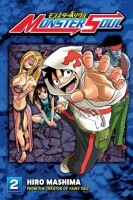
Monster Soul, Volume 2Monster Soul, Volume 2 by Hiro Mashima. I’ll admit, I did enjoy the second and final volume of Monster Soul slightly more than the first, but it’s still not a series that left much of an impression on me. Where the first volume was largely episodic, the majority of the second volume of Monster Soul focused on one story–the Black Airs’ efforts to rescue the souls of an entire kingdom of humans from the clutches of the Drei Kommandos. In the process, Mashima takes the opportunity to delve into the back stories of the individual members of the Black Airs. I personally appreciated that the characters were further developed, but the series is too short to really take advantage of it all. Although Monster Soul doesn’t stand out much, it is generally entertaining. The action sequences in particular are fairly well done. Admittedly, there are a few annoying character quirks that don’t make much sense within the context of the story as a whole, such as Mummy’s propensity for stripping for no particular reason. Overall, Monster Soul feels more like a prototype than anything else. It is very energetic, though.

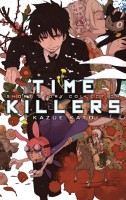
Time KillersTime Killers by Kazue Kato. While I largely enjoyed Kato’s manga series Blue Exorcist, I never seemed to be quite as taken with the story as so many others were. However, I’ve always been fond of Kato’s artwork. And so, I was very interested in reading Kazuo’s short story collection Time Killers. The anthology collects eleven short manga selected from over a decade’s worth of Kazuo’s work, including some of her earliest and debut stories. Many of the manga included in Time Killers simply consist of whatever elements Kazuo felt like exploring and mashing together, completely disregarding what readers might be interested in. The manga ends up being a somewhat odd conglomeration with a strong indie feel to it, but I rather enjoyed its quirkiness. The collection also includes a story that is derived from the same source material as Blue Exorcist, which was interesting to see. It’s also worth noting that Time Killers is probably the nicest release that I’ve seen from Viz Media’s Shonen Jump imprint. It has a slightly larger trim size, includes beautiful color pages, and is printed on high-quality, glossy paper, too.

Filed Under: FEATURES, My Week in Manga Tagged With: Hiro Mashima, I've Seen It All, Kazue Kato, manga, Monster Soul, Shoko Takaku

My Week in Manga: September 8-September 14, 2014

September 15, 2014 by Ash Brown

My News and Reviews

Two reviews were posted at Experiments in Manga last week. Coincidentally, they both happened to be for works that are a bit disconcerting. First up was my review of Boogiepop and Others, the light novel by Kouhei Kadono which launched the entire Boogiepop franchise. The book is a fantastic mix of science fiction, mystery, and horror with a particularly interesting narrative structure. I’ll definitely be tracking down more of the series to read. The second review was a part of my Year of Yuri monthly review project. I took a look at Erica Sakurazawa’s Between the Sheets, one of the very first josei manga to be released in English. It’s a story about obsessive love and is legitimately disturbing, but in an entirely different way than Boogiepop and Others.

I’ve been super busy at work recently (actually, life in general has been pretty busy) so I’ve not been able to keep up with a lot of manga news, but I did catch a couple of license announcements from this year’s YaoiCon. SuBLime has a new slate of digital and print manga to look forward to (I was particularly excited to see a Tomoko Yamashita manga licensed; sadly, I think it’s digital-only at this point) and Digital Manga will be releasing a collection of Kou Yoneda’s No Touching at All side stories, among other things. Also, Mangabrog posted translation of a Q Hayashida interview from a few years ago. As a fan of Hayashida’s Dorohedoro, I was very happy to have a chance to read the interview.

Quick Takes

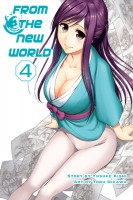
From the New World, Volume 4From the New World, Volumes 4-5 written by Yusuke Kishi and illustrated by Toru Oikawa. I continue to be completely torn by From the New World. There are parts of the manga that I absolutely love, but there are several things that frustrate me immensely and greatly inhibit my enjoyment of the series. I am not a prude and am generally not offended by fanservice, but the sex scenes in From the New World seem so incredibly out-of-place. I know that sexual relationships are an important aspect of the worldbuilding in From the New World, but the manga does not integrate them very well at all. I can only assume the original novel handles it better. Thankfully, the sex scenes in the manga are relatively rare. Unfortunately, they are very difficult to ignore and are only ever shown when young girls are involved. From the New World does much better with the story’s science fiction and horror elements. It is dark and disturbing, and these two volumes are particularly graphic and violent, as well. Despite my reservations–of which I have quite a few–I do plan on finishing the series. There are only two more volumes after all.

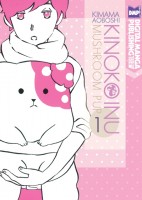
Kinoko Inu: Mushroom Pup, Volume 1Kinoko Inu: Mushroom Pup, Volume 1 by Kimama Aoboshi. The first volume of Mushroom Pup may very well be one of the oddest manga that I’ve read recently. And even though I enjoyed the volume, I’m still not exactly sure what to make of it. Calling Mushroom Pup quirky would be putting it extremely lightly. Hotaru Yuyami writes and illustrates horror books for children, but ever since his beloved dog Hanako died his creative impulse has completely left him. One evening a strange pink mushroom growing in his garden turns into an even stranger intelligent dog-like creature which attempts to help Yuyami get over his loss in some very bizarre ways. (This isn’t even attempted to be explained.) Also invading Yuyami’s life as he tries to grieve is his childhood friend-cum-editor and a mushroom researcher (with an amazing mohawk) who just so happens to be a huge fan of Yuyami’s work. For all of its strangeness, Mushroom Pup is actually rather subdued and even the humor tends to be straight-faced, which in some ways makes it even funnier. At the same time, it’s also a bit melancholy and heartwarming.

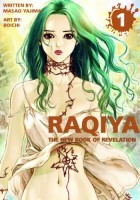
Raqiya: The New Book of Revelation, Volume 1Raqiya: The New Book of Revelation, Volumes 1-2 written by Masao Yajima, illustrated by Boichi. One Peace Books doesn’t tend to do much in the way of marketing or press releases, so it seems as though the publisher’s manga appears almost out of nowhere. Raqiya is a five-volume series focused around a young woman named Luna who seems to be the harbinger for the end of days. She has caught the interest of a small but extreme cult of heretical Christians as well as the attention of a secret and heavily armed Catholic organization charged with hunting down such heretics. It’s interesting to see Christianity play such a huge role in a manga, even if it is a highly fictionalized version of the religion. There’s also plenty of destruction and action in Raqiya–explosions, gun fights, car chases, and so on. Boichi’s artwork is effectively dynamic and extremely intense, if occasionally a bit over the top. Raqiya is definitely a violent and extreme manga; Boichi doesn’t hold back. Boichi is a Korean artist now working and living in Japan. His series Sun-Ken Rock has been available digitally, but Raqiya is his first manga to be released in English in print.

UQ Holder!, Volume 1UQ Holder!, Volumes 1-2 by Ken Akamatsu. Technically a sequel of sorts to Negima!: Magister Negi Magi (or at least set in the same universe), UQ Holder! seems to stand completely on its own and requires no knowledge of the earlier series. (Which is a good thing seeing as I haven’t read it.) So far I am fairly underwhelmed by UQ Holder!, though there are a few things I like about the series. Akamatsu’s fight and action sequences can be fairly entertaining, for one. Also, I tend to enjoy manga that explore the repercussions of immortality, which UQ Holder! is set up to do. Unfortunately, it hasn’t quite followed through on that potential yet, despite a wide variety of different types of immortals and immortality being introduced (vampires, genetically modified humans, cursed beings, and many others). In general, the story of UQ Holder! is lacking a clear direction with far too many different genre elements, tropes, and cliches being forced to share the same series. It doesn’t help that the goals and motivations of the series’ protagonist are left deliberately vague as well; Akamatsu tries to make a joke of it, but it either doesn’t quite work or just isn’t funny.

Filed Under: FEATURES, My Week in Manga Tagged With: Boichi, From the New World, Ken Akamatsu, Kimama Aoboshi, manga, Masao Yajima, Mushroom Pup, Raqiya, Toru Oikawa, UQ Holder, Yusuke Kishi

My Week in Manga: September 1-September 7, 2014

September 8, 2014 by Ash Brown

My News and Reviews

There were three posts of note at Experiments in Manga last week in addition to the usual My Week in Manga feature. First of all, the winner of the Nana manga giveaway has been announced. The post also includes a short list of manga that people gave a second chance only to discover that they enjoyed them better than they did the first time they read them. I also posted August’s Bookshelf Overload, revealing how out of hand things can get when it comes to the number of manga I obtain over the course of a month. The first in-depth manga review of the month was also posted, the honor going to Hinoki Kino’s No. 6, Volume 8, the series penultimate volume. As a bonus, the first print run of the volume also includes sixteen color pages!

A few things of note from elsewhere online: The Beautiful World, which hosted the Kaori Yuki Manga Moveable Feast a while back, has issued a call for participation for a blog carnival to feature female goth mangaka in January. Sean has a nice roundup of some of the recent license announcements at A Case Suitable for Treatment. And Anna at Manga Report checks out Sparkler Monthly, which is currently running a membership drive for its second year. Please consider subscribing if you can; Sparkler Monthly has some great content and I hope for its continued success.

Quick Takes

AliveAlive by Hajime Taguchi. Gen Manga publishes independent manga, mostly focusing on the seinen demographic. Often, Gen’s releases are the first time the creator’s doujinshi have received any sort of “official” publication. Alive is a collection of over a dozen short manga of varying lengths by Hajime Taguchi. There’s not really a central theme to the volume, and the stories aren’t related to each other, but they all tend to be fairly melancholy. A few of the tales have some fantastical or surreal elements to them–a pair of glasses that obscures everything the wearer dislikes, a bizarre frog-like creature that talks, and so on–but most of the manga in the collection tend to be realistic, slice-of-life stories. Alive primarily explores the emotional lives of the stories’ characters. Love, heartbreak, self-confidence, guilt, personal growth, and loss are all present within the manga. Generally Alive focuses on the darker aspects of the human psyche and experience, but there are glimpses happiness as well. As with any collection, some stories are stronger than others, but as a whole Alive is a satisfying and somewhat unusual read.

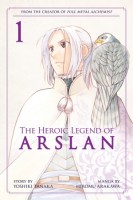
The Heroic Legend of Arslan, Volume 1The Heroic Legend of Arslan, Volume 1 by Hiromu Arakawa. Based on a series of fantasy novels by Yoshiki Tanaka, Arakawa’s The Heroic Legend of Arslan is one of several adaptations that have been made. Although the animated film had previously been released in English, Arakawa’s manga was actually my introduction to The Heroic Legend of Arslan. The first volume feels a bit like a prologue, introducing the characters and setting the stage for the story which will be the series’ real focus. Arslan is the young prince of Pars, mostly ignored by his parents but hoping to be seen as worthy by them. His chance to prove himself comes when the kingdom of Lusitania invades Pars, bringing war and destruction with it. In the first volume alone there have already been several battles and betrayals. Blood and death will not be strangers to Arslan, though it seems he would much prefer to find peaceful solutions to the fighting. So far, I’m enjoying The Heroic Legend of Arslan. It’s shaping up to be a solid fantasy series and the setting, which is influenced by historical Persia, is particularly interesting. I certainly look forward to reading more of the series to see how it develops.

Kokoro Connect, Volume 1 Kokoro Connect, Volume 1 written by Anda Sadanatsu, illustrated by CUTEG. I tend to enjoy series that involve body-swapping of some sort (it often provides clever opportunities for the exploration of personal identity), so I was curious about the Kokoro Connect manga, especially after hearing good things about the anime. In most of the body-swapping series that I’ve been exposed to generally only two people are involved, usually of the opposite gender. Kokoro Connect, however, involves five high school students–two boys and three girls–who one day begin to spontaneously switch places in all sorts of different combinations. This means that there are plenty of comedic possibilities for the series, but for the most part Kokoro Connect seems to be taking a more serious approach, addressing some of the more sobering implications of involuntarily swapping places with another person. The group does seem to be handling the whole situation remarkably well so far, though. There is a half-hearted attempt to begin to explain the whole swapping phenomenon, but it’s not especially compelling at this point.

Rabbit Man, Tiger Man, Volume 2Rabbit Man, Tiger Man, Volume 2 by Akira Honma. It might not be the most believable boys’ love series out there, but I was amused by and rather enjoyed the first volume of Rabbit Man, Tiger Man. While there is still plenty of humor in the second volume of the series, the manga has really started to take a turn for the serious. The yakuza plotline has become more prominent, introducing a significant amount of danger to the story. However, the delightful awkwardness between the series’ two leads still remains. Nonami and Uzuki are complete opposites in personality and demeanor. (They would be the titular tiger and rabbit.) It’s actually rather funny and sweet to see how hard the rough, tough yakuza boss has fallen for the meek, diminutive surgeon. I do think that I probably enjoyed the first volume of Rabbit Man, Tiger Man slightly more than the second, but I definitely want to read the third and final volume. Sadly, there’s no indication that it has or will be licensed. This is particularly frustrating since the second volume ends on one heck of a cliffhanger.

Filed Under: FEATURES, My Week in Manga Tagged With: Akira Honma, Anda Sadanatsu, CUTEG, Hajime Taguchi, Heroic Legend of Arslan, Hiromu Arakawa, Kokoro Connect, manga, rabbit man tiger man

My Week in Manga: August 25-August 31, 2014

September 1, 2014 by Ash Brown

My News and Reviews

The most recent manga giveaway at Experiments in Manga is currently underway, and there is still time to enter for an opportunity to win Nana, Volume 1 by Ai Yazawa. All you have to do is tell me whether or not you’ve ever given a manga a second chance and what your experience was. I also posted two reviews last week. The first was for the third and final volume of Off*Beat by Jen Lee Quick, which I was very happy with. Nearly ten years after the series first began, fans finally have a chance to read its conclusion thanks to the efforts of Chromatic Press. The second review last week was for Keigo Higashino’s most recently translated mystery novel, Malice. I enjoy Higashino’s work tremendously and was not at all disappointed with Malice. The novel will be released in October and is recommended for readers who enjoy smart, clever mysteries. Although it was from a couple of weeks ago, my Spotlight on Masaichi Mukaide has been making the rounds and gaining some attention. I worked pretty hard on it, so I’m extremely pleased that people are finding the post interesting.

Elsewhere online, Organization of Anti-Social Geniuses has an interview with Vertical’s Ed Chavez, discussing the success of Knights of Sidonia. And speaking of Vertical, the Fall 2014’s reader survey and license request form has been launched. Comics Alliance has an interesting interview with Felipe Smith (whose series Peepo Choo was published by Vertical). Yen Press announced some new light novel and manga licenses. And for your enjoyment, one of Kate Beaton’s recent Hark! A Vagrant comics focuses on Natsume Sōseki’s classic novel Kokoro. (I actually really like Kokoro and reviewed it a few years ago.)

Quick Takes

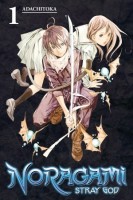
Noragami: Stray God, Volume 1Noragami: Stray God, Volume 1 by Adachitoka. Yato is a god of war that everyone has forgotten, or maybe never even knew about to being with. He has no temples or shrines, no followers or worshipers, but he’s determined to change all of that. Unfortunately, his personality leaves a bit to be desired and even his servants don’t like him; he’s had to resort to doing odd jobs and spreading his name (and number) by graffitiing the walls of bathroom stalls and alleyways. The beginning of Noragami: Stray God is somewhat uneven in tone, but by the end of the first volume it seems to have found a nice balance between the manga’s humor and the more serious aspects of the story. The introduction of the series’ other lead character–Hiyori, a human girl who has a little trouble with her spirit leaving her body after a near-death experience–helps to achieve this balance. She also happens to be a fan of professional wrestling, which actually comes into play in the story instead of just being a character quirk. I quite enjoyed the first volume of Noragami, finding it to be amusing and even a bit charming, and look forward to reading more of the series.

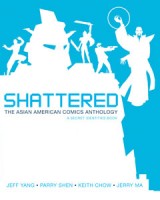
Shattered: The Asian American Comics AnthologyShattered: The Asian American Comics Anthology edited by Jeff Yang, Parry Shen, Keith Chow, and Jerry Ma. The followup anthology to Secret Identities, Shattered collects forty-three short comics and pin-ups from seventy-five contributors. Whereas Secret Identities focused on superhero stories, Shattered also includes other genres of comics–fantasy, science fiction, martial arts, historical, contemporary fiction, and so on. The volume is intended to address and subvert five stereotypical representations of Asians and Asian-Americans in media: The Brute, The Temptress, The Brain, The Alien, and The Manipulator. Although there are some absolute gems in the collection–personal favorites include Tak Toyoshima’s “Occupy Ethnic Foods” and the precursor to Gene Luen Yang and Sonny Liew’s graphic novel The Shadow Hero–for me Shattered works better in concept than in execution. Many of the comics are either incomplete or feel as though they are pitches for a longer series instead of being finished works in their own right, making for a rather unsatisfying reading experience. However, I did appreciate the wide variety of comics and creators included in the volume.

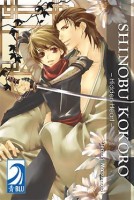
Shinobu Kokoro: Hidden HeartShinobu Kokoro: Hidden Heart by Temari Matsumoto. Way back when, Shinobu Kokoro: Hidden Heart was one of the first boys’ love manga that I ever read. Had it been my only exposure to the genre, I might have given up on boys’ love because I didn’t enjoy Shinobu Kokoro much at all. And honestly I still don’t, despite there being a few elements that I like. Actually, it might be some of those elements that hinder my enjoyment of the manga. Two of the three couples in Shinobu Kokoro are ninja. When handled well, I generally like ninja. Sadly, they’re not handled particularly well in Shinobu Kokoro, or at least not believably. Subaru is so incredibly naive, I’m not sure how he’s managed to survive. Also because of this, the unbalanced power dynamics in his relationship with the head ninja come across as disconcerting rather than romantic. And it’s surprising that the ninja clan has continued to exist at all since Hiiragi and Asagi find it appropriate to take time to have sex while in the middle of an escape from a difficult mission. The third set of stories is about snow spirits, but I’ve since read better snow spirit stories, too. There is some nice artwork here and there, but overall I wasn’t especially impressed by Shinobu Kokoro.

Filed Under: FEATURES, My Week in Manga Tagged With: Adachitoka, comics, manga, Noragami, Temari Matsumoto

My Week in Manga: August 18-August 24, 2014

August 25, 2014 by Ash Brown

My News and Reviews

Last week–last Monday, to be exact–Experiments in Manga celebrated its fourth anniversary. I’ve taken to writing what usually ends up being a rather lengthy anniversary post every year in which I reflect on the past three-hundred-sixty-five days, and this year was no different. I also posted a review last week of The World of the Shining Prince: Court Life in Ancient Japan, Ivan Morris’ classic study of Heian-era Japan and The Tale of Genji. The work was originally published in 1964 and it’s still a great read. Finally, for something a little different, I posted a Spotlight on Masaichi Mukaide who, in the late 1970s, became one of the first Japanese comics artists to be released in English. I rather enjoyed investigating this bit of comics history; I hope other people find it interesting as well.

While working on my random musings about Masaichi Mukaide, I discovered that the three short manga currently believed to be the earliest manga to have been translated into English (Akasegawa Genpei’s “Sakura Illustrated,” Shirato Sampei’s “Red Eyes,” and Tsuge Yoshiharu’s “The Stopcock”) are available online to read digitally. Another interesting piece of reading that I came across last week was Ryan Holmberg’s article on manga, art history, and Seiichi Hayashi at The Comics Journal. Elsewhere online, Sean at A Case Suitable for Treatment looks at some of the latest offerings from Crunchyroll Manga and Justin at Organization Anti-Social Geniuses was able to get some of the manga publishers to weigh in on their approaches to the last pages of manga volumes.

Quick Takes

Food Wars!: Shokugeki no Soma, Volume 1Food Wars!: Shokugeki no Soma, Volume 1 written by Yuto Tsukuda and illustrated by Shun Saeki. Soma Yukihira wants nothing more than to surpass his father in the kitchen, but his goal of becoming the ultimate chef becomes a little more difficult when his father closes up the family restaurant for three years. In the meantime, Soma is expected to transfer into the most elite and competitive culinary school in Japan. The other students aren’t very welcoming of the son of a low-end family restaurant, so it’s entirely up to the arrogant and uncouth Soma to prove that his cooking is just as impressive as their high-class cuisine. Overall, the artwork in Food Wars is great. The illustrations of the food in particular are incredibly sumptuous. And then there are the reaction shots–those who taste Soma’s cooking often fall into nearly orgasmic ecstasy which is accompanied by highly sexualized imagery. This does include such things as young women being molested by tentacles, which will certainly not appeal to every reader. Personally, I was for the most part rather amused by the ridiculous levels and absurdity of the occasional fanservice.
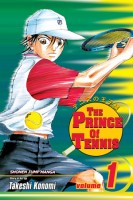
The Prince of Tennis, Volume 1The Prince of Tennis, Volumes 1-7 by Takeshi Konomi. While recently reading The Princess of Tennis, a memoir written by one of Konomi’s assistants, I came to the realization that I had never actually read any of The Prince of Tennis. The series is one of the most successful and popular sports manga in Japan, growing into a fairly substantial franchise. The Prince of Tennis is an oddly addictive series–I tore through the first seven volumes very quickly–but to some extent it’s also a bit frustrating. There is virtually no story or character development, simply game after game of tennis and middle school trash talk. Some of the most important games, the ones that actually impact the characters’ growth (what little there is) happen almost entirely off-page. All of the players are very strong to begin with, so there hasn’t been much evolution in their performance or skill levels, either. But the various games are interesting and entertaining, if a little over-the-top. There are a lot of good-looking characters of various types, too, which is probably a large part of the series’ appeal. I’m not in a rush to read more, but I did enjoy the first seven volumes.

Filed Under: FEATURES, My Week in Manga Tagged With: food wars, manga, Prince of Tennis, Shun Saeki, Takeshi Konomi, Yuto Tsukuda

My Week in Manga: August 11-August 17, 2014

August 18, 2014 by Ash Brown

My News and Reviews

So, as I briefly mentioned in my anniversary post this morning, my partners and I very recently became parents. We all ended up spending most of last week at the hospital; needless to say I was a bit preoccupied. But everyone is happy, healthy, and at home now, so everything’s good. Thankfully, I already had a couple of posts typed up and ready to go. Otherwise, it would have been a very quiet week here at Experiments in Manga since I didn’t get much reading or writing done at all. (For some reason.)

Anyway, I did somehow manage to post two reviews last week! First up was Denise Schroeder’s wonderful, delightful, and charming short comic Before You Go. The review is the latest installment in my Year of Yuri monthly manga review project, which focuses on manga and other comics with lesbian and yuri elements. Also reviewed last week was Jamie Lynn Lano’s memoir The Princess of Tennis: My Year Working in Japan As an Assistant Manga Artist. It’s a very interesting and informative book about the manga industry and Japan. The book can currently be purchased through Sparkler Monthly’s Distro program.

Despite being rather busy last week, I did come across a few things online that made for interesting reading. At Manga Connection, Manjiorin wraps up her Swan review project. The fourth Manga Studies column at Comics forum has been posted, focusing on Ishiko Junzō and gekiga. Joe McCulloch has a piece on the early work of Ryōichi Ikegami at The Comics Journal. Mangabrog has a translation of a conversation between Usamaru Furuya and Inio Asano. Also highly recommended is Comics Alliance’s interview with Vertical’s Ed Chavez.

Quick Takes

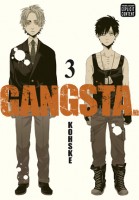
Gangsta3Gangsta, Volume 3 by Kohske. As can probably be inferred from the cover, much of the third volume of Gangsta delves into the pasts of Nic and Worick, how they met, and their somewhat complicated relationship with each other. In the process more is revealed about the history of Ergastulum and the Twilights, too. Gangsta is a very violent series. Even when Nic and Worick were young they found themselves surrounded by death in a harsh environment of political turmoil. In the case of Nic, he was being kept by a mercenary group hired to act as bodyguards to Worick’s family; he’s done plenty of killing of his own. He apparently has always been somewhat terrifying. The beginnings of Nic and Worick’s exceptionally close connection are seen in this volume. Neither of them come from a good family situation, both of them are seen as socially unacceptable (Nic because he’s a Twilight, Worick because he’s a bastard son), and both of them are physically abused by those who should care about them. Though they get off to a rough start, the two broken young men are able to find some solace in each other’s company. Nic and Worick fascinate me; I’m glad to have gotten more of their backstory in the third volume. I’ve enjoyed Gangsta from the very beginning and continue to do so.

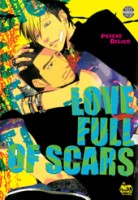
Love Full of ScarsLove Full of Scars by Psyche Delico. Okay. So, Love Full of Scars is a collection of utterly ridiculous and absurd boys’ love stories. The over-the-top humor certainly won’t be to every reader’s taste, but I loved the volume. Though I largely enjoyed all of the short manga included in Love Full of Scars, my favorite was probably the titular story. (It also happens to be the longest, with several chapters devoted to it and side stories of its own.) Kanda is a high school punk who has a crush on Uesaka, the school’s biggest badass. The problem is that every time Kanda tries to confess his feelings, he ends up picking a fight instead. Fortunately, Uesaka is able to see through all of Kanda’s posing. They’re both delinquents so more often than not communicating with their fists and punching each other in the face helps them to solve their differences. The sex in Love Full of Scars, when and if it actually happens, usually ends up being rather awkward and incredibly earnest at the same time. The stories in the collection generally avoid the stereotypical seme/uke dynamics of the boys’ love genre. There is also a bit of a fixation on facial and body hair. And, well, pubic hair, too, for that matter. (Granted, that’s mostly for the sake of gag.) The manga is rough, rude, and raunchy, but I found it to be highly amusing and entertaining.

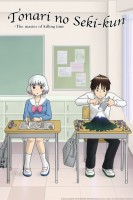
Tonari no Seki-kunTonari no Seki-kun: The Master of Killing Time directed by Yūji Mutoh. The anime adaptation of Takuma Morishige’s manga series My Neighbor Seki had completely slipped under my radar until Vertical announced that it had licensed the manga. My curiosity was piqued, so I decided to watch the anime while waiting for the manga to be released. The anime was an absolute delight; I wish there was more! I’m definitely looking forward to reading the manga next year. The premise of the series is disarmingly simple. Yokoi and Seki sit next to each other in the back of their high school classroom. But instead of studying, Seki occupies himself at his desk in all sorts of ways, messing around with erasers, shogi pieces, knitting, and so on. The scenarios are actually all very imaginative, creative, and elaborate. Try as she might, Yokoi can’t help but be caught up whatever it is Seki is doing, so she doesn’t get much studying done, either. The anime is much more entertaining than I’ve probably made it sound. Each episode is under eight minutes and they are all very funny. There is very little dialogue in the series. Instead, the narrative relies very heavily on Yokoi’s internal monologue. Yokoi’s voice actress, Kana Hanazawa, does a fantastic job with the role–she is exceptionally dynamic and expressive.

Filed Under: FEATURES, My Week in Manga Tagged With: anime, Gangsta, Kohske, manga, My Neighbor Seki, Psyche Delico

My Week in Manga: August 4-August 10, 2014

August 11, 2014 by Ash Brown

My News and Reviews

There were two reviews at Experiments in Manga last week in addition to the announcement of the Mecha Manga Giveaway Winner, which also includes a list of some of the mecha manga that has been licensed in English at one point or another. (Considering how many have been released in English, it’s not a comprehensive list. Instead it focuses on some favorites.) As for the reviews, I recently read Fuyumi Ono’s The Twelve Kingdoms, Volume 4: Skies of Dawn. Sadly, this was the last volume in the series to be translated into English. The Twelve Kingdoms is a great series of fantasy novels, all of which are worth tracking down. Keeping with last week’s unintentional theme of reviewing fourth volumes of epic series, I also took a look at Vinland Saga, Omnibus 4 by Makoto Yukimura. Vinland Saga is one of my favorite manga series currently being released and this volume hasn’t changed that.

The phenomenal Sparkler Monthly is currently running a membership drive for its second year, and there are some fantastic incentives. I highly recommend checking the project out and contributing if you’re able. Lori at Manga Xanadu has a nice post looking back at the first year of Sparkler Monthly and looking forward to Sparkler Monthly Year Two. For some of my own reviews and random musings on the excellent content being released by Sparkler Monthly, check out the Chromatic Press tag. (Actually, I’ll be posting a review of Denise Schroeder’s Before You Go later this week, too.)

Elsewhere online, ICv2 has a two-part interview with Viz Media’s Leyla Aker and Kevin Hamric looking at What’s Selling, Where, and Why as well as focusing On Specific Products and Programs. Justin at Organization Anti-Social Geniuses has a fun post about The Curious Case of Last Pages For US Manga Editions. Also, Mangabrog has translated some of Takehiko Inoue’s interviews from back when Vagabond was on hiatus.

Quick Takes

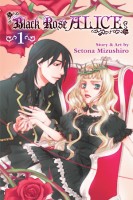
Black Rose Alice, Volume 1Black Rose Alice, Volume 1 by Setona Mizushiro. I’ll admit, even though I have enjoyed the other manga by Mizushiro that I have read and despite the very good things that I’ve heard about Black Rose Alice, I was still a little hesitant to read the series. Mostly because I’ve become a little weary, and therefore wary, of vampire stories. But the vampires in Black Rose Alice are so different that I’m actually hesitant to even call them vampires. Either way, the first volume was phenomenal. It’s creepy and disconcerting, tragic and chilling. Dimitri is a rising star, an operatic tenor with a beautiful voice and a handsome face who is astounded when a stranger tells him he is to blame for a sudden wave of suicides. The deaths in the story have tremendous emotional impact, which is particularly impressive since the characters have just been introduced. The characterization in Black Rose Alice is excellent, especially that of Dimitri, and the artwork is lovely and atmospheric. I am a little sad to see early 20th-century Vienna already left behind as a setting in exchange for modern-day Tokyo, but I’m very curious to see where the story goes from here. I’ll definitely be picking up more of Black Rose Alice.

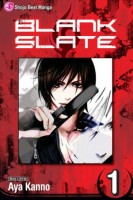
Blank Slate, Volume 1Blank Slate, Volumes 1-2 by Aya Kanno. I first read Blank Slate several years ago and recall really liking it. Upon rereading, it’s honestly not as good as I remember it being, though the art is pretty great. Even considering the flaws in its execution, I actually still really like the series. Apparently the story that Kanno originally planned was much longer and more complicated. Quite a few things changed plot-wise as well as character-wise when she shortened the series; the transition isn’t as smooth as it could have been. Blank Slate would have benefited from at least another volume or two so that all of the backstory that’s crammed into the second volume could have been more fully developed. Though in its way it is thrilling, there are so many plot twists and major reveals towards the series’ end that it’s almost absurd. Some of the characters are shown to be so different from who they were when they were first introduced that it’s almost difficult to believe the changes, but that does make their betrayals rather effective. And I do like that the completely amoral and nearly emotionless Zen, the series lead, remains a villain throughout despite a tragic past that is supposed to make him more sympathetic.

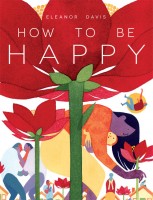
How to Be HappyHow to Be Happy by Eleanor Davis. I wasn’t previously familiar with Davis’ work, but after experiencing How to Be Happy I certainly want to read more of it. How to Be Happy is a collection of her short comics, some no longer than a page. Though her black and white illustrations are effective, Davis’ color work is especially striking. She exhibits a wide variety of styles in How to Be Happy, evoking a number of different moods. However, all of the comics come across as being at least a little surreal. Many, perhaps most, of the stories tend towards the melancholy and somber, but others have an underlying and almost hidden sense of humor and joy. As Davis points out in her author’s note, the book actually isn’t about how to be happy. And yet, I found reading the volume to be a wonderfully cathartic and thought-provoking experience. I would even go as far as to call it inspiring. Though she often employees fantastical elements, what Davis really seems to be doing in How to Be Happy is exploring the nature of life and reality through her short narratives. How to Be Happy is a beautiful, strange, and wondrous collection and one that I can definitely see myself returning to again.

Midaresomenishi: A Tale of Samurai LoveMidaresomenishi: A Tale of Samurai Love by Kazuma Kodaka. Although Midaresomenishi is self-described as a romantic epic, there’s not very much at all that is romantic about this boys’ love manga. Instead it’s an extremely dark tale with a focus on violence, sexual and otherwise. Truly terrible things happen in it. Blood, death, and sadism take precedence over affection and love. There is very little happiness to be found in Midaresomenishi, and what little there is is fleeting. Shirou is a young samurai who takes great pleasure in killing, but that is nothing in comparison to the joy that Sougetsu, a powerful and decadent master of bandits, takes in sexually dominating others. In order to protect the life of his younger brother Fujimura, Shirou allows himself to be subjugated by Sougetsu. What he doesn’t realize is that while Fujimura is alive, he has become a sexual plaything for Sougetsu’s underlings. There actually is some doomed love and strong familial bonds in Midaresomenishi, but for the most part the manga’s focus is on the more unpleasant relationships. Midaresomenishi doesn’t work for me as a love story, there’s simply too much force and coercion, but as a violent tragedy it is fairly successful.

Filed Under: FEATURES, My Week in Manga Tagged With: Aya Kanno, Black Rose Alice, Blank Slate, comics, Eleanor Davis, Kazuma Kodaka, manga, Setona Mizushiro

My Week in Manga: July 28-August 3, 2014

August 4, 2014 by Ash Brown

My News and Reviews

Another week, another few posts at Experiments in Manga. First up was my most recent manga giveaway. Tell me about your favorite mecha manga (if you have one) for a chance to win the first volume of Mohiro Kito’s Bokurano: Ours. (The winner will be announced on Wednesday, so there’s still time to send in comments!) The first in-depth manga review of August went to In Clothes Called Fat, the most recent manga by Moyoco Anno to have been released in English. I honestly believe it to be one of the best comics of the year. (Well, at least out of those that I’ve read so far.) I also posted July’s Bookshelf Overload over the weekend for those of you who are interested in the manga that I purchase or otherwise receive over the course of a month.

Elsewhere online, Sparkler Monthly is celebrating its first year of publication by offering a free sampler download that includes the first chapter of all of its series–prose, comics, and audio dramas. Deb Aoki has a nice overview of some of the manga happenings at this years San Diego Comic Con over at Publishers Weekly. Jamie Coville has also posted audio for some of the SDCC panels, including a few focusing on manga. (Actually, there are a ton of manga related files on that page from past comic events, too.)

August 1 was 801 Day (aka Yaoi or Boys’ Love Day), and though probably not technically related the most recent Manga Studies column at Comics Forum focused boys’ love research in Japan. (Did you know that Guin Saga‘s Kurimoto Kaoru was also a BL author, editor, and scholar? Now you do!) There have been a few new Fujojocast episodes posted recently, including one specifically for 801 Day. I found episode seven, Give what’s due to Saezuru, which talks about translation, adaptation, and frustrations over publishers’ quality and quality control to be especially interesting. SuBLime made a “new” license announcement–it has gained the digital rights to couple of series that were previously print-only. The announcement is particularly noteworthy because it seems to indicate that SuBLime was able to do this because the Japanese publishers are beginning to trust that fans won’t abuse digital downloads.

Quick Takes

Cowboy Bebop, Volume 1Cowboy Bebop, Volumes 1-3 written by Hajime Yatate and illustrated by Yutaka Nanten. Of the two Cowboy Bebop manga that were released (Cowboy Bebop: Shooting Star being the other), Nanten’s series is the one that is most similar to the anime. This makes a fair amount of sense considering that both the anime and the Cowboy Bebop manga were written by the same group of creators, whereas Shooting Star was really its own thing. The Cowboy Bebop manga is closer in tone to the anime’s more humorous episodes, though there is some seriousness as well. The overarching plot dealing with Spike’s feud with Vicious is largely missing, however the other character’s backstories are all filled in a little bit more. The manga, like the much of the anime, is generally episodic. Most of the stories wouldn’t have been too out-of-place with the anime itself, though for the most part I didn’t find them to be as strong as their televised counterparts. The manga will likely appeal most to those who have seen the anime and would like a chance to spend some additional time with the characters; the manga feels like bonus material and deleted scenes rather than anything substantial.

Deadlock, Volume 1Deadlock, Volume 1 written by Saki Aida and illustrated by Yuh Takashina. Though technically a boys’ love series, not much has happened in the way of romance after the first volume of Deadlock. However, there is a good deal of plot to be found, and I think that it’s a more interesting manga because of that. Yuto Lennix is a drug investigator who was framed for the murder of his best friend and partner. Incarcerated in the Californian state prison system, he has been given the chance to reduce his sentence by helping the FBI to determine the identity of terrorist leader who is believed to be a fellow inmate. That of course is assuming he doesn’t get himself killed first. It’s a somewhat idealized version of prison–everyone is very good-looking for one–but the portrayal of the racial tensions within the system is surprisingly realistic and generally avoids using stereotypes. So far, Deadlock has a fairly large cast. The social dynamics between the prisoners are a very important part of the manga as Yuto learns his place in the hierarchy while he carries out his investigation. Deadlock is currently an ongoing series; I sincerely hope that future volumes will be licensed when they’re released as well.

Madara, Volume 1Madara, Volumes 1-5 written by Eiji Otsuka and illustrated by Shou Tajima. Apparently, Madara was one of CMX’s debut manga. I’ve been discovering some fantastic series from CMX. Sadly, Madara is not one of them. I initially became interested in the series because the creators are also responsible for the extraordinarily dark and graphic MPD-Psycho. The premise of Madara also appealed to me–a young man prophesied to be king fighting demons to restore the body that his father tried to destroy–but that’s probably because it’s so similar to Osamu Tezuka’s Dororo. Except that Dororo is actually good. Madara comes across as a fairly generic sword-and-sorcery RPG more than anything else. (The series actually did go on to inspire several video games, and even an anime.) It also seems as though Otsuka and Tajima are just making things up as they go. There’s not much of an ending, either. Small glimmers of Tajima’s stunning art style (which I love) can be seen, especially towards the end of the series, but the illustrations in Madara are tragically lacking in comparison. Granted, it is a much earlier series. Here’s a fun fact about Madara, though: the series was created in a left-to-right format.

Sonny Leads, Volume 1Sonny Leads, Volume 1 written by Richard Mosdell and illustrated by Genshi Kamobayashi. Sonny Leads holds a black belt in karate but he’s unsatisfied with his progress and so has come to Japan to further his training. Unfortunately, he doesn’t know as much as he thinks he does, and he’s in for a bit of a culture shock, too. Both Mosdell and Kamobayashi are karateka and instructors. Their knowledge of and passion for karate definitely comes through in Sonny Leads. I especially like Kamobayashi’s artwork. Particular attention is given to the proper and realistic presentation of karate forms and stances as well as to more subtle details like the appearance of the knuckles developed and used for punches and strikes. As with most of Manga University’s publications, there’s also a strong educational element present in Sonny Leads–it’s possible to learn a bit of Japanese language and culture while reading it. A very interesting essay about high school karate clubs as well as a directory to the various karate organizations in Japan are also included in the volume. I’m not sure that Sonny Leads will have much general appeal, but as a karateka myself I’d be curious to see more of the series.

Filed Under: FEATURES, My Week in Manga Tagged With: Cowboy Bebop, Deadlock, Eiji Otsuka, Genshi Kamobayashi, Hajime Yatate, Madara, manga, Richard Mosdell, Saki Aida, Shou Tajima, Sonny Leads, Yuh Takashina, Yutaka Nanten

My Week in Manga: July 21-July 27, 2014

July 28, 2014 by Ash Brown

My News and Reviews

It wasn’t entirely intentional, but last week Experiments in Manga ended up being full of Vertical reviews. (And by full, I mean that two reviews were posted.) The first was of Fumi Yoshinaga’s gay slice-of-life and food manga What Did You Eat Yesterday?, Volume 3. With each volume that is released, I fall in love with the series a little more. I also reviewed Yoshikazu Yasuhiko’s Mobile Suit Gundam: The Origin, Volume 6: To War which continues to delve into the pasts of the characters and the war between the Earth Federation and the Principality of Zeon. The volume also features Char quite a bit. (I’ll admit, that made me happy.)

Elsewhere online, The Lobster Dance posted the seventh and final part of “Revealing and Concealing Identities: Cross-Dressing in Anime and Manga.” Kathryn Hemmann, the co-author, has a nice roundup and summary of the multi-part essay, and Leah has some final comments of her own as well. San Diego Comic Con was last week, which means the winners of the 2014 Eisner Awards were named (spoilers: Osamu Tezuka and Hayao Miyazaki were honored) and new manga licenses from Drawn & Quarterly, Kodansha Comics, and Udon Entertainment were announced. Also, the list from the Best & Worst Manga panel has been posted, with more commentary on the choices planned to be posted at a later date.

Quick Takes

9 Faces of Love9 Faces of Love by Wann. As can probably be gathered from its title, 9 Faces of Love is a collection of nine short manhwa dealing with themes of love and the meaning of love. 9 Faces of Love is the second volume in Netcomics’ Manhwa Novella Collection series which is meant to feature short works by prominent Korean creators. I hadn’t previously read any of Wann’s works, but I’d definitely be interested in reading more; I really enjoyed 9 Faces of Love. It’s an excellent collection of short manhwa selected from Wann’s work between 1998 and 2005. Most of the stories deal with romantic love, but a few of them also deal with friendship and familial love. I initially picked up the volume for the android story “Automaton,” which happily ended up being quite good. While they deal with similar themes, there is a nice variety to the stories in 9 Faces of Love. Many incorporate science fiction, fantasy, or horror elements while others are more firmly grounded in reality. Some are sweet, some are sad, and some are actually somewhat disconcerting.

All You Need Is KillAll You Need is Kill adapted by Nick Mamatas, illustrated by Lee Ferguson and Fajar Buana. A few years ago I read Hiroshi Sakurazaka’s All You Need Is Kill light novel and greatly enjoyed it. So I was rather curious when Haikasoru announced a graphic novel adaptation, the release conveniently timed to coincide with the Hollywood film adaptation Edge of Tomorrow. (Granted, I was much more interested in Takeshi Obata’s All You Need Is Kill manga which has now also been licensed.) Sadly, I was rather disappointed with the graphic novel. I’m not sure that anyone who hasn’t read the original would be able to follow the comic very easily or make sense of the importance of some of the scenes that were included. For example, I loved the umeboshi eating contest in the novel, but in the comic it’s difficult to realize that that’s what’s going on or why it matters. Romantic elements are introduced at the end more as an afterthought in an effort to neatly tie things together, but it’s a little too late by that point. For the most part the artwork was decent, but the battle suit design left something to be desired. I did like the color palette used, though. My copy of the graphic novel also had a printing error. At least I’m assuming it was an error—one of the signatures was repeated. Though, I suppose that does emphasize the plot’s time loop.

Crimson WindCrimson Wind by Duo Brand. A follow-up to White Guardian, Crimson Wind starts out as a sequel but really ends up being more of a prequel. The majority of the manga explores the backstories of General Sei and Baron Touri and their relationship with each other. Except for his attractive character design, I didn’t like Touri much at all in White Guardian and I like him even less in Crimson Wind. He’s a rapist and possessive, resorting to drugging the object of his desire when coercion and force isn’t enough to get what he wants. It’s not at all romantic even though Sei ends up falling for him. Most of the court intrigue and politics that made White Guardian interesting have been dropped in Crimson Spell; only the dubious love story remains. I would have much rather have seen the tale of how Sei became disillusioned and unhappy with the kingdom he pledged his life to protect. I may not have enjoyed the main story of Crimson Wind, however I really liked the short side story “Never Ever” which concludes the volume and features two completely different character who actually care for and respect each other.

Showa: A History of Japan, 1939-1944Showa: A History of Japan, 1939-1944 by Shigeru Mizuki. With this volume of Showa: A History of Japan the manga begins to cover history that I’m a little more familiar with—the Pacific War. While the factual recounting of the events that led up to the war and the war itself is well told, what makes the series particularly engaging is the incorporation of Mizuki’s own experiences as a student and eventually as a drafted soldier during the time period. The artwork in Showa: A History of Japan easily slips between photorealism and more stylized drawings to very good effect. Mizuki’s illustrations of naval and sea battles are particularly impressive and he uses some very interesting two-page layouts for many of them. He conveys the reality of war but doesn’t glorify it or the numerous deaths, treating the combatants of both sides of the conflict with respect. Mizuki’s Eisner-winning, semi-autobiographical Onward Towards Our Noble Deaths (also available from Drawn & Quarterly), which deals with a similar time period and story, makes an excellent companion to this volume of Showa: A History of Japan.

Terra Formars, Volume 1Terra Formars, Volume 1 written by Yu Sasuga and illustrated by Ken-ichi Tachibana. I have a peculiar love for Mars, and so when a manga has anything to do with the planet, however slight, it immediately catches my attention. I was looking forward to Terra Formars and really liked its basic premise. Efforts to terraform Mars using moss and cockroaches over hundreds of years has largely been successful, but now humans have a bit of a bug problem to deal with seeing as the cockroaches have evolved into a sentient race. Genetic experimentation has also allowed human and insect DNA to be combined, creating humans with bug-inspired superpowers. (Admittedly ridiculous, but kind of cool.) Terra Formars is an extremely violent and action-heavy manga requiring a tremendous amount of suspension of disbelief from it readers. There were parts of the manga that I loved, like the fight sequence paired with biblical verses about locusts. However, I really dislike the design of the cockroaches (inspired by Homo erectus), and not just because they’re unintentionally reminiscent of racist caricatures. They seem more mammalian than insectoid and feel out-of-place art-wise. At this point I’m torn over the series, but I’ll probably give it another volume or two to see what direction it takes.

GinTamaGin Tama, Episodes 50-74 directed by Shinji Takamatsu. It’s been a while since I’ve watched any of the Gin Tama anime, but I do like the series. I was in the mood for some absurd humor and antics, and so ended up binging on the first half of the second season. Like the manga which it more-or-less follows, the anime is mostly episodic. Occasionally there will be a set of episodes that form a larger story arc, but generally once someone is familiar with the characters and recurring jokes it doesn’t much matter in which order the anime is watched. Gin Tama is a series rife with parodies of and references to other pop culture media. (Mostly but not exclusively Japanese pop culture.) I’ve always been highly amused by Gin Tama, but the more manga that I read and the more anime that I watch the more of references I catch and appreciate. My interest in Japanese history has come in handy, too, since there are plenty of nods to historical figures and events in Gin Tama as well. For a comedy series, at times Gin Tama can also be surprisingly touching.

Filed Under: FEATURES, My Week in Manga Tagged With: All You Need Is Kill, anime, comics, Duo Brand, Fajar Buana, gin tama, Ken-ichi Tachibana, Lee Ferguson, manga, manhwa, Nick Mamatas, Shigeru Mizuki, Showa: A History of Japan, Terra Formars, Wann, Yu Sasuga

My Week in Manga: July 14-July 20, 2014

July 21, 2014 by Ash Brown

My News and Reviews

Two reviews were posted at Experiments in Manga last week, one of a manga and one not. The first review was part of my Year of Yuri monthly review project. I took a look at Milk Morinaga’s Gakuen Polizi, Volume 1, which is quite different from her other work currently available in English. The first volume at least is less of a romance and more of a buddy cop story, but it’s still fairly entertaining. (She does promise that more of the drama in the second volume will be romance-related and less crime-related, though.)

My second review last week was of Tokyo Demons, Book 2: Add a little Chaos, a novel written by Lianne Sentar with illustrations by Rem. In case it isn’t clear from the review, I absolutely adore Tokyo Demons. It can get pretty dark and heavy, but it’s a fantastic series. The second volume should be available as an ebook later this month and the print edition is currently scheduled for release in October. (Tokyo Demons is one of Chromatic Press and flagship series, so in the meantime it can also be read online at Sparkler Monthly.)

Once again I wasn’t actually online much last week, but I did catch a few things that other people may be interested in: Over at Comics Forum, Martin de la Iglesia writes about Early manga translations in the West. Kate at Reverse Thieves explains How the Library Became My Go-to Place for Manga and Comics. (I posted a bit about finding manga at the library a little while back, too.) And on Twitter, manga scholar and translator Matt Thorn hints that a project with Moto Hagio is in the works. Let’s hope so!

Quick Takes

Honey DarlingHoney Darling by Norikazu Akira. After reading and enjoying Beast & Feast I decided to track down more manga by Akira available in English. This led me to picking up Honey Darling. The manga isn’t the most realistic or believable, but it is cute, delightful, funny, and very sweet. Chihiro is a young man without any real goals in his life until he takes in a stray kitten. When Shiro falls ill, Chihiro ends up working as the live-in housekeeper for Kumazawa, the vet who treats her, and helping out in the animal clinic. Honey Darling has a lot going for it: nice art, a sense of humor, adorable cats and dogs, amusing and ttractive leads, likeable side characters (including women!), and so on. Ultimately Honey Darling is a boys’ love manga, though. As might be expected, Chihiro and Kumazawa become more than just roommates by the time the manga ends, but the development feels more like Akira fulfilling a requirement of the genre rather than being something that was necessarily called for by story itself. Still, I did enjoy Honey Darling a great deal, the two of them made me happy as a couple, and the manga frequently made me smile.

Lone Wolf and Cub, Omnibus 1Lone Wolf and Cub, Omnibuses 1-2 (equivalent to Volumes 1-5) written by Kazuo Koike and illustrated by Goseki Kojima. One of the first manga to be translated into English, Lone Wolf and Cub wasn’t released in its entirety until Dark Horse picked up the license. Sadly, the first Dark Horse edition was tiny and, while extremely portable, was difficult to read because the text was so small and crowded. Additionally, those original twenty-eight volumes have steadily been going out of print. Thankfully, Dark Horse recently started releasing Lone Wolf and Cub in an omnibus format with a larger trim size. Though quite hefty (each omnibus is around 700 pages and collects about two and a half volumes or so), the reading experience is much improved overall. Lone Wolf and Cub is an excellent series, so I’m very glad that the manga will remain in print for a bit longer. The series is fairly episodic, following the titular Lone Wolf and Cub: Ogami Ittō, who once served as the Shogun’s executioner but who has become an assassin-for-hire out of revenge over the destruction of his family, and his young son Diagorō.

Mail, Volume 1Mail, Volumes 1-3 by Housui Yamazaki. Summer is the time for ghost stories in Japan, so I felt it was appropriate to finally get around to reading Mail. I came across this short series thanks to The Kurosagi Corpse Delivery Service which shares the same illustrator. Reiji Akiba–detective, exorcist, and the protagonist of Mail–actually briefly appears in the fourth volume of The Kurosagi Corpse Delivery Service as well. One of the things that particularly struck me about Mail is how often the stories incorporated modern technology such as cell phones and computers. It’s as though traditional ghost stories and urban legends have been updated for a contemporary audience. Occasionally Akiba will present a sort of prologue to the individual chapters, giving the stories an almost Twilight Zone feel to them. Mail can be legitimately creepy and at times a bit bloody, but gore is not at all the focus of the series. In general Mail is episodic, although the final volume adds a recurring character who becomes Akiba’s assistant as a sort of homage to Osamu Tezuka’s Black Jack.

Stone Collector, Book 2Stone Collector, Book 2 written by Kevin Han and illustrated by Zom-J. I want to like Stone Collector more than I actually do, but at this point I can’t really say that I’ve been enjoying the manhwa much at all. It’s not all bad. The artwork in particular has moments when it can be impressively dynamic. The character’s facial expressions are great. Even the basic premise of the story isn’t terrible. As a whole though, Stone Collector just isn’t working for me. Though it moves along quickly, the plot is thin and the characters are underdeveloped, almost as if it’s an outline or draft than a finished product. The second half of the second volume of Stone Collector of is devoted to a side story, “Land of Ice.” I was more interested in “Land of Ice” than the main story more because of its tundra setting than anything else, but it still frustrated me and had many of the same problems that Stone Collector proper has. November 2013 was the last time there was a Stone Collector update. I’m not sure if there are plans to release more (it may simply be that “more” doesn’t exist yet), but the story clearly hasn’t reached its conclusion yet.

Sengoku Basara: Samurai KingsSengoku Basara: Samurai Kings, Season 2 directed by Kazuya Nomura. While I was entertained by the first season of Sengoku Basara: Samurai Kings, I really enjoyed the second season. While there are still fantastically outrageous fights and action sequences, there’s also more focus on the characters and their characterization and on battle strategies and tactics. Personally, I appreciate the added context this gives the series. The characters, who continue to be magnificently and ridiculously overpowered, come across as a bit more human since their pasts and motivations are clearer. Their confrontations carry more emotional weight because of this as well. Miyamoto Musashi makes an appearance in this season, too. I was greatly amused by the fact that he fights with a giant oar. (Legend has it that Musashi once forgot to bring a sword with him to a duel and so carved a bokken out of the oar he used to get there; this why his weapon choice in Samurai Kings is simply perfect.) Samurai Kings is a tremendous amount of fun. Based on a video game that’s nominally based on actual events and historic figures, it’s wonderfully absurd and irreverent.

Filed Under: FEATURES, My Week in Manga Tagged With: anime, Goseki Kojima, Housui Yamazaki, Kazuo Koike, Kevin Han, lone wolf and cub, Mail, manga, manhwa, Norikazu Akira, Sengoku Basara, Stone Collector, Zom-J

  • « Go to Previous Page
  • Page 1
  • Interim pages omitted …
  • Page 10
  • Page 11
  • Page 12
  • Page 13
  • Page 14
  • Interim pages omitted …
  • Page 17
  • Go to Next Page »
 | Log in
Copyright © 2010 Manga Bookshelf | Powered by WordPress & the Genesis Framework