• Skip to primary navigation
  • Skip to main content
  • Skip to primary sidebar
  • Home
  • About Us
    • Privacy Policy
    • Comment Policy
    • Disclosures & Disclaimers
  • Resources
    • Links, Essays & Articles
    • Fandomology!
    • CLAMP Directory
    • BlogRoll
  • Features & Columns
    • 3 Things Thursday
    • Adventures in the Key of Shoujo
    • Bit & Blips (game reviews)
    • BL BOOKRACK
    • Bookshelf Briefs
    • Bringing the Drama
    • Comic Conversion
    • Fanservice Friday
    • Going Digital
    • It Came From the Sinosphere
    • License This!
    • Magazine no Mori
    • My Week in Manga
    • OFF THE SHELF
    • Not By Manga Alone
    • PICK OF THE WEEK
    • Subtitles & Sensibility
    • Weekly Shonen Jump Recaps
  • Manga Moveable Feast
    • MMF Full Archive
    • Yun Kouga
    • CLAMP
    • Shojo Beat
    • Osamu Tezuka
    • Sailor Moon
    • Fruits Basket
    • Takehiko Inoue
    • Wild Adapter
    • One Piece
    • After School Nightmare
    • Karakuri Odette
    • Paradise Kiss
    • The Color Trilogy
    • To Terra…
    • Sexy Voice & Robo
  • Browse by Author
    • Sean Gaffney
    • Anna Neatrour
    • Michelle Smith
    • Katherine Dacey
    • MJ
    • Brigid Alverson
    • Travis Anderson
    • Phillip Anthony
    • Derek Bown
    • Jaci Dahlvang
    • Angela Eastman
    • Erica Friedman
    • Sara K.
    • Megan Purdy
    • Emily Snodgrass
    • Nancy Thistlethwaite
    • Eva Volin
    • David Welsh
  • MB Blogs
    • A Case Suitable For Treatment
    • Experiments in Manga
    • MangaBlog
    • The Manga Critic
    • Manga Report
    • Soliloquy in Blue
    • Manga Curmudgeon (archive)

Manga Bookshelf

Discussion, Resources, Roundtables, & Reviews

Features

My Week in Manga: August 19-August 25, 2013

August 26, 2013 by Ash Brown

My News and Reviews

Well, the biggest news from last week (at least for me and Experiments in Manga) is that I have officially joined the Manga Bookshelf family of blogs. I posted an introductory post for new readers and anyone else interested in learning a little more about me or Experiments in Manga. I’m still getting used to WordPress, and I still have some cleaning up to do, so if you notice anything amiss, I’d appreciate you letting me know!

I also posted a review of Edogawa Rampo’s collection of short stories Japanese Tales of Mystery and Imagination. Originally released in 1956, the volume was Rampo’s English-language debut. I had previously read and enjoyed Rampo’s novella Strange Tale of Panorama Island which is why I sought out more of his work. (And on a related note: Suehiro Maruo’s The Strange Tale of Panorama Island is also marvelous.)

I also had the opportunity to help out manga critic Jason Thompson last week (who I credit as one of the major reasons I became so interested in manga.) If you’re in Vancouver, Washington this coming Sunday, Jason is presenting “Manga Hell: The Worst Manga Ever Translated” at Kumoricon. It should be pretty great. I was able to provide some images of choice pages from Kazuo Koike and Ryoichi Ikegami’s notorious manga series Wounded Man. (I first learned about Wounded Man thanks when it was selected for Kate Dacey’s Manga Hall of Shame.)

On to a few interesting things found online! I either completely missed this when it was first announced or simply forgot about it, but Bento Books has licensed five novels from Hayakawa Publishing: Hiroko Minakawa’s Pleased to Dissect You, Yuka Nakazato’s Silver Wings of the Campanula, Yu Godai’s, Quantum Devil Saga: Avatar Tuner, Volume 1, Akimaro Mori’s The Black Cat Takes a Stroll, and Issui Ogawa’s Many Many Sheep. It’s an intriguing mix of fantasy, science fiction, and mystery and quite a change of pace from Bento’s first release Math Girls.

In other licensing news, Sean Gaffney has a roundup of the Japan Expo announcements from this weekend. Finally, if you have the time I recommend giving the most recent ANNCast episode a listen–Super Manga Pals Forever. The always marvelous Deb Aoki and Rebecca Silverman join host Zac Bertschy to talk about the manga they’ve been reading and discuss the use of rape and taboos as plot elements in entertainment media. (Warning: Spoilers for the ninth volume of Yumi Unita’s Bunny Drop if by some chance you haven’t been spoiled already.)

Quick Takes

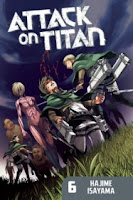
Attack on Titan, Volume 6 by Hajime Isayama. Despite the issues that I have with the art in Attack on Titan, which admittedly has been improving, I continue to be utterly absorbed and engaged by the story. The sixth volume picks up right where the fifth volume left off with the appearance of a new, seemingly intelligent, but still incredibly dangerous titan. It’s mostly one long action sequence as the titans tear through the ranks of the Survey Corps. Unsurprisingly, there are quite a few messy deaths. However, there’s a bit of character development as well. In particular, more is reveled about the members of the Special Operations Squad charged with guarding Eren who are also responsible for killing him should he get out of hand. The ending sets things up nicely for some major plot reveals in the next volume. Fortunately Kodansha has sped up the series release, so it won’t be too long of a wait to find out what happens next.

Awkward Silence, Volumes 1-3 by Hinako Takanaga. I tend to be fond of Takanaga’s boys’ love manga and so was happy when SuBLime picked up one of her ongoing series. Normally, I’m annoyed by manga where the plot hinges on a problem that would immediately be solved if the characters would just talk to one another. But in the case of Awkward Silence I didn’t mind as much because there is a very good reason that the characters don’t–Satoru has a difficult time expressing himself. It’s an integral part of his character and integral part of the story. One of the points of the series is that he and his boyfriend Keigo learn to overcome this. Their relationship is really quite sweet. Beginning with the third volume Awkward Silence starts to focus more on two of the secondary characters. (At least they started out as secondary characters.) Personally, I don’t find their relationship to be nearly as interesting. While still enjoyable, it feels more generic. Unlike the main couple, so far it’s missing something to really set it apart.

Saiyuki Reload, Volumes 4-6 by Kazuya Minekura. Although I was a little disappointed with the first three volumes of Saiyuki Reload, much preferring the earlier series Saiyuki, I think that Minekura has started to find her stride again. These volumes finish up the long flashback/backstory segement which included a look at Gojyo and Hakkai’s past when they were living together. (I’m a sucker for Hakkai, so I rather enjoyed that.) From there, Saiyuki Reload starts in on a new story arc, giving the plot the focus and direction that it needed. While the first few volumes of the series didn’t seem to be going anywhere, with the introduction of Hazel things are starting to get a bit more interesting. Sanzo and crew are faced with several moral conundrums and suddenly their journey west has some urgency behind it again. And speaking of The Journey to the West–the influences of the original work can definitely be seen. They aren’t always particularly prominent and Minekura is often very free with her interpretations, but The Journey to the West can still be found in there somewhere.

Tough, Volumes 1-6 by Tetsuya Saruwatari. Only six volumes of Tough were ever released in English. The series is actually a translation of Saruwatari’s Kōkō Tekken-den Tough and shouldn’t be confused with its sequel series which in Japan was called Tough. The fights are by far the best thing about Tough. Although the martial arts are taken to the extremes there are some legitimate styles and techniques being used. The manga is ultimately over-the-top, although dubious plausibility is maintained. Tough is violent and frequently brutal. The fighters deliver and sustain immense amounts of damage. Saruwatari doesn’t hesitate to show the resulting blood and broken bones. The few women, too, are shown to be martially capable. (Unfortunately they don’t make much of an appearance after the first volume.) The story, on the other hand, is nearly nonexistent and the attempts at humor fall flat. For the most part the plot is just an excuse to have men beat each other to a pulp. The actual fights are much more interesting than the weak justifications behind them.

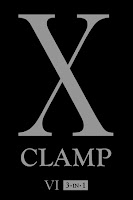
X, Omnibus 6 (equivalent to Volumes 16-18) by CLAMP. Well, here it is, what is very likely to be the last volume of X. The series went on hiatus in 2003 and it doesn’t seem that CLAMP will be returning to it anytime soon. I read the first volume of X a few years ago but didn’t think much of it. I gave the series another try when Viz began to release the omnibus volumes and I’ve been hooked ever since. There are many fans frustrated by the series’ lack of ending, waiting for the final battle which may never come; I suppose I can now be counted among them. Still, I thoroughly enjoyed X in all of its epic, melodramatic, twisted, and tragic glory even if it can be a bit ridiculously excessive at times. CLAMP also uses some of the most intriguing page layouts that I’ve seen. They are very effective in conveying the emotional and dramatic moments in the story, of which the series has more than its fair share. Love and death are very closely intertwined in X and there is plenty of heartbreak to be had.

FujikoMineLupin the Third: The Woman Called Fujiko Mine directed by Sayo Yamamoto. This series has style–the animation is distinctive but appealing, the jazz-influenced soundtrack fits it perfectly, the storytelling is mature and has both darkness and levity. Familiarity with the Lupin III franchise isn’t necessary to enjoy the series; The Woman Called Fujiko Mine is a different take on the characters and story and can stand alone. Fujiko Mine is a thief and femme fatale. She is very much in charge of her sexuality and is more than willing to use it to get what she wants. It shouldn’t be too surprising, but nudity is a fairly frequent occurrence in the anime, but it is handled tastefully and artistically. In the last four episodes, things take a surprising turn for the strange when the revelation of Fujiko’s backstory really beings. Up until that point the series seemed largely to be an episodic collection of the various heists with which Fujiko was involved. There were hints of what was to come and most everything is tied together rather nicely in the end.

Filed Under: FEATURES, My Week in Manga Tagged With: anime, attack on titan, awkward silence, clamp, Hajime Isayama, Hinako Takanaga, kazuya minekura, Lupin III, manga, Saiyuki, Tetsuya Saruwatari, Tough, X

Manga the Week of 8/28

August 22, 2013 by Sean Gaffney, Michelle Smith, MJ and Anna N Leave a Comment

SEAN: As the month of August draws to a close, it’s a quiet week for manga. Peaceful. Let us see what mild, calming titles we have out. But soft, lest we disturb the young ‘uns!

titan6We have a trio of titles from Kodansha. First is Attack on Titan 6, beginning its speedup! Oh dear, this doesn’t seem quiet and peaceful at all. In fact, it may involve people getting killed messily. Despite that, it really is a fantastic title that deserves your attention. Perhaps if you whispered the dialogue as you read.

MICHELLE: I still haven’t read any of this one, and now six volumes is seeming like quite an investment. I dunno…

MJ: I’m thinking that when I finally get around to restarting this series, I’ll definitely whisper the dialogue in my head.

SEAN: Fairy Tail has proven to be loud and boisterous in the past, and I suspect that Volume 29 will be no different, meaning it’s really not adding to the appeal of this quiet, peaceful week of manga. Still, it has a good heart, and is a great title for those who love a strong sense of loyalty and justice, the bonds of family and friendship, and punching things.

MICHELLE: Hee.

MJ: I *heart* punching things. You know. Quietly.

SEAN: The second volume of Sankarea is also shipping. I’m afraid that zombies are really never mellow and friendly. I blame their upbringing. That said, the first volume was funnier and more heartwarming than I expected, and has a father character who looks to explore a dark side to overprotective anime dads. A very dark side.

MICHELLE: That upbringing line is priceless.

MJ: What can I say? You’re weirdly making me feel like reading this.

chi10SEAN: Seven Seas has the second volume of Crimson Empire. I suspect the main reason this series was licensed is so that the company could release more volumes of the far more popular Alice in the Country of Hearts, whose one-shots tend to have Crimson Empire short stories in the back. Nevertheless, it’s filled with swordplay and battles, so absolutely does not meet our criteria at all.

MICHELLE: Zzzz.

MJ: What she said.

ANNA: I enjoyed the first volume, but I have a high tolerance for reverse harem titles.

SEAN: Lastly, there’s Chi! Yes, perfect! Chi’s Sweet Home 10 from Vertical gives us an adorable cat and her adventures with her family! It’s like floating downstream on a quiet river. Everyone loves Chi.

MICHELLE: I certainly love Chi!

MJ: A lovely addition to the week! Every week could use a little Chi.

SEAN: A perfect way to end this quiet, peaceful week of manga. Well, except for those other four titles. What looks good to you?

Filed Under: FEATURES, manga the week of

My Week in Manga: August 12-August 18, 2013

August 19, 2013 by Ash Brown

My News and Reviews

Two reviews, and some big news! First up was my review of Blade of the Immortal, Volume 24: Massacre by Hiroaki Samura. As you might suspect from the title, it’s a rather bloody volume. It also features what I think is one of the best visually executed battles in the series. I also reviewed Yukio Mishima’s novel Forbidden Colors which is a bit twisted but extremely engrossing and very good. Like his earlier novel Confessions of a Mask, it deals with homosexual themes and includes autobiographical elements.

As for the big news! Over the weekend Experiments in Manga celebrated it’s third anniversary and I wrote quite a lengthy post about it. If you don’t feel like reading the whole thing, here’s the really important bit: I am delighted to announce that in the very near future Experiments in Manga will be joining the Manga Bookshelf network of blogs!

I was traveling quite a bit last week (a couple of my friends were getting married), so I’m a little out of touch when it comes to some of the most recent manga news. However, there is one thing that I want to be sure to pass along. I personally don’t read much manga digitally, but Organization of Anti-Social Geniuses has a fantastic post looking at all the legal ways to read digital manga in 2013.

Quick Takes

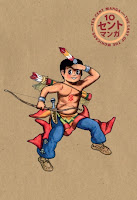
The Last of the Mohicans by Shigeru Sugiura. The Last of the Mohicans is the first volume in editor Ryan Holmberg’s Ten-Cent Manga series, exploring classic manga influenced by popular culture and comics from the United States. In addition to the manga itself, the volume also includes an article by Sugiura and an extensive essay by Holmberg which puts The Last of the Mohicans into context. For me, this was probably the greatest appeal of the volume. I more or less enjoyed the manga, but I valued to an even greater extent learning about its history and Sugiura’s influences. I don’t know that The Last of the Mohicans will necessarily entice casual manga readers, but for those interested in comics history it’s great.

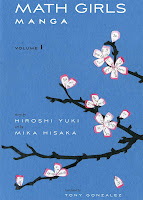
Math Girls Manga, Volume 1 written by Hiroshi Yuki and illustrated by Mika Hisaka. Based on the Math Girls series of novels, the manga focuses a little more on the romance and a little less on the math, but it still can teach a thing or two about it. Unfortunately, errors slipped into the English edition and some of the mathematical symbols are missing. Seeing as Math Girls is about, well, math, this is somewhat problematic. But if you can ignore that, Math Girls is a rather delightful and charming manga. Math lovers in particular will appreciate it, but as with the novels it’s possible to skip over the math-intensive sections and just enjoy the story. I wouldn’t mind seeing more of the Math Girls manga, but I suspect there won’t be another volume released anytime soon.

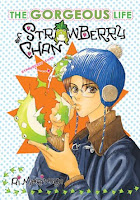
Strawberry Chan, Volumes 1-2 by Ai Morinaga. I picked up Morinaga’s Strawberry Chan manga on a whim. The series consists of two volumes, The Gorgeous Life of Strawberry Chan and The Super Cool Life of Strawberry Chan. The manga is fairly episodic and each chapter is very short. The titular Strawberry Chan is a small pet frog owned by Taro Akiyoshi, a sadistic high school student who delights in tormenting him. Despite his cruelty, Strawberry Chan adores his master. And then there’s Taro’s roommate who’s legitimately in love with Strawberry Chan and a masochistic classmate who just wants Taro to abuse him instead of the frog. Strawberry Chan is utterly ridiculous, random, and all sorts of wrong. I loved it.

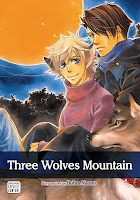
Three Wolves Mountain by Bohra Naono. So far, only two of Naono’s manga have been released in English. Yokai’s Hunger largely frustrated me but I thoroughly enjoyed Three Wolves Mountain; it’s easily my favorite manga out of the two. It’s an odd mix of comedy, drama, and the supernatural, but Naono makes it work this time. Kaya Susugi is a cafe owner by day and a grave keeper by night who ends up taking in Tarou and Jiro Tsukihara, two werewolf brothers. Susugi is used to being alone but becomes very close with both of the brothers, but especially with Jiro who has fallen in love with him. I wasn’t expecting Three Wolves Mountain to become such a family affair, but parents, siblings, and even cousins all have their role to play in the story. Three Wolves Mountain is great stuff.

Filed Under: FEATURES, My Week in Manga Tagged With: Ai Morinaga, Bohra Naono, Hiroshi Yuki, manga, Math Girls, Mika Hisaka, Shigeru Sugiura, Strawberry Chan, Ten-Cent Manga

Manga the Week of 8/21

August 15, 2013 by Sean Gaffney, MJ, Michelle Smith and Anna N 4 Comments

SEAN: Third week of the month, which is traditionally Yen Press time, and that’s true this month as well. But before we get to Yen, we have a few choice tidbits.

Kodansha has the 11th volume of Cage of Eden. Now that it’s getting serious enough to kill off some of its main cast, will things continue to take a turn for the deadly? And what will this mean for the female cast’s ability to strip naked and bathe in rivers? (Likely not much.)

helterskelter

Vertical continues to dip its toes into the josei market, this time with Kyoko Okazaki’s Helter Skelter: Fashion Unfriendly, a done-in-one manga volume from the pages of Shodensha’s Feel Young. The premise reminds me of the movie Death Becomes Her, though I suspect this won’t be as funny as that was. It’s still a highly awaited release.

MJ: I’m absolutely looking forward to this, and have been since the announcement last year at NYCC. I’ll be picking it up for sure.

MICHELLE: Me, too!

ANNA: I am looking forward to this as well! I think Vertical putting out more josei is a great thing, and I’ll absolutely be picking this up.

SEAN: Viz has its annual release of Ikigami: The Ultimate Limit, but it’s almost over, as I think the series ends with 10. I’m not sure if it’s still doing the ‘let’s see how people deal with impending death’ thing or if it’s moving into a big climax. Honestly, it was a bit too depressing for me.

MJ: I haven’t read this in a long time, and had actually thought it was already over. Oops?

MICHELLE: I have a bunch of volume of this but I haven’t read beyond volume two ‘cos it was too depressing for me, too.

SEAN: And now about that Yen. There’s Vol. 3 of BTOOOM!. Indeed. There is that.

MJ: Um. No.

MICHELLE: Big fat no.

SEAN: We have reached Vol. 9 of Bunny Drop, which ends the main storyline, though there is one more volume of side-stories coming out next year. This is the biggie, and now at last everyone can discuss THAT spoiler. Though not till next week, please. (It’s also still quite well-written, but I fear any discussion of it tends to be dwarfed by THAT.)

MJ: I’m diving in… with a little fear, I’ll admit, but I wouldn’t miss this for the world.

MICHELLE: I definitely feel that I have to read it for myself before formulating an opinion, but there is definitely some trepidation.

ANNA: I honestly stopped reading this because of THAT spoiler, I think I stopped at volume 3 or so.

SEAN: For those who liked the Doubt omnibus, we have Vol. 1 of Judge. I didn’t, so will be passing. But hey, more students trapped in a survival game who die one by one. We can never get enough of that. Apparently.

MJ: Heh.

pandora17

SEAN: Pandora Hearts 17 will no doubt excite MJas much as 15 and 16 did. Or perhaps even more. One day I’ll read it. (Likely whenever Squeenix titles are available digitally again.)

MJ: Definitely more! After volume 16, I’m pretty much dying for what comes next. DYING, I say.

MICHELLE: Big fat yes!

ANNA: Everyone is such a fan of this, one of these days I’m going to have to check this series out.

SEAN: Puella Magi Kazumi Magica is apparently the fluffier of the two spinoffs, but that’s really not saying much. Any series with Kyubey in it is guaranteed to get very dark, very fast. Vol. 2 is here.

Spice and Wolf’s 9th novel drops. Wolves. Economics. Econowolves.

Lastly, Umineko: When They Cry wraps up its 2nd Arc, Turn of the Golden Witch. In case you needed reminding, this manga contains some scary scenes that may not be suitable for children. PARTICULARLY the tea party. (shudder)

MICHELLE: I gave up on this a while ago. Has that kid stopped going “Uuuuu! Uuuuu!!” yet?

SEAN: Pretty much no, though we do eventually find out why she does that.

What manga are you reading with your tea and cake?

Filed Under: FEATURES, manga the week of

Escaflowne Eps 1-4

August 14, 2013 by Anna N

escaflowne

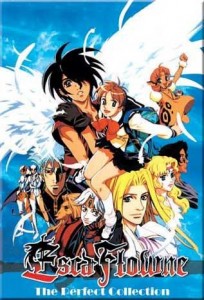
It was a funny coincidence that I decided that I would embark on a rewatch of The Vision of Escaflowne and finished the first disc the day before Funimation announced that they’d acquired rights to make this classic anime available again. I haven’t watched a ton of anime, but Escaflowne is by far my favorite series. Every two years or so I decide to watch it again, and I’m generally fine with just watching a show once or twice. This show really rewards those who see it multiple times, as the characterization, setting, and storyline are so rich and complex, I often feel like I find something new to appreciate with each viewing. I’ll see if I can work through my old Bandai DVDs by the time the new edition from Funimation comes out, and feel free to dig out your copies of Escaflowne and join me in a rewatch in anticipation of what Funimation decides to do with the rerelease.

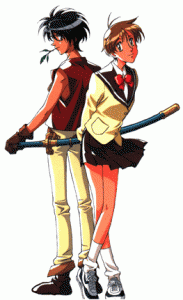
Hitomi the heroine of the show is sympathetic without being cloying. She’s a bit of a jock, as she’s dedicated to her track team. Hitomi also indulges in a bit of mysticism as she’s her school’s resident tarot card reader. She has a goofy crush on the captain of the boys’ track team at her school, and she spends plenty of time with her best friend awkwardly blushing and obsessing about him. Hitomi starts seeing visions as she’s running of destruction, giant metal monsters, and a young boy fighting. Her visions become true as Van Fanel appears on the high school track, pursued by a dragon. Hitomi and her friends narrowly escape while Van kills the dragon, but Hitomi and Van are carried off to to his world Gaea, where Earth appears as a second moon in the sky.

Van-Fanel-and-Hitomi-Kanzaki

Van is the reluctant prince of the country Fanelia, a place with a strong martial arts tradition, a missing older prince (this is significant), and a hazardous habit of sending out future rulers to slay dragons as a rite of passage. Van has a habit of initially addressing Hitomi by yelling “Hey Girl!” (and not in a Ryan Gosling sort of way) but he seems to call her by her first name whenever she’s in danger. Van seems to be doing the best he can in a role he doesn’t want, but he’s affected by violence and doesn’t particularly want to fight even though he can be good at it.

The world of Gaea is an interesting place. It is quasi-medieval, but people have ancient mecha called Guymelefs. There’s a bit of a steampunk and mystical vibe to the technology shown on Gaea, as you see cogs and gears snap into position, and the mecha seem to have the creaky joints of old machines. In addition to humans, there are humanoid animals that live on Gaea as well, with the most prominent being Van’s catgirl Merle. There’s trouble for Fanelia as the Zaibach Empire has cloaking technology for their mecha (like the Romulans!), and an insane military captain in the form of the androgynous and dangerously emotionally unstable Dilandau. Fanelia is razed to the ground and Van is suddenly a prince without a country. He manages to escape with Hitomi and his country’s greatest treasure – the Escaflowne Guymelef.

escaflownehitomialan

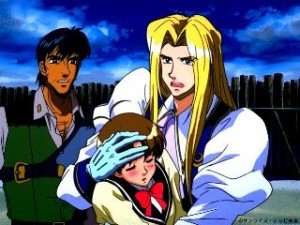
As Van and Hitomi try to figure out what to do, they fall in with Allen Shezar, whose talents as a swordsman are rivaled only by the puffiness of his sleeves. Alan is a Knight of the country Asturia, and he leads a somewhat piratical crew aboard the airship The Crusade. Hitomi promptly develops a crush on Allen, while Merle jealously guards Van’s attention. One of the things I enjoy about this series is that the world seems so rich, and there is plenty to think about between viewings. What were Allen’s adventures aboard his airship? How did Van and Merle develop a close bond? The world of Escaflowne just seems to exist in a special place where there’s space to ponder the history and relationships between the characters going beyond just the animated episodes.

The show was developed in 1996, but despite the limitations of animation at the time, it doesn’t feel all that dated. The rich setting combined with the strong orchestral and vocal score give the series an epic feel. The theme of the horrors of war and violence is established early, as the fighting provoked by the Zaibach Empire is portrayed as devastating, not glamorous. Even though I’ve probably seen Escaflowne already 5 or 6 times, it sill seemed fresh and interesting when I watched it again, which is the mark of a series that is just timeless. I’m looking forward to watching the rest of my old DVDs now and finding out more about the new edition of this series coming soon.

Filed Under: FEATURES Tagged With: bandai, funimation, Vision of Escaflowne

It Came from the Sinosphere: Laughing in the Wind

August 14, 2013 by Sara K. 1 Comment

xajh03

Ah, Laughing in the Wind. While I simply couldn’t resist putting this screenshot at the top, I think I should begin at the beginning.

The Opening Scene

I at first was planning to describe the opening scene fully, but then I realized that it would be easier to direct readers to Dramafever so they can watch the opening scene themselves. If you can, I suggest you watch the first eight minutes or so (up to the point where the horse-riders come in) before I share my observations. I realize not everyone can (for example, *I* cannot access this show on Dramafever, so I’m assuming that it’s the same as my DVD version), so I’ll try to provide enough description so that even those without access can follow along.

First of all, do you notice the theme song? I think that is one of the most low-key TV theme songs I have ever encountered. On the one hand, by being so low-key, it invites the viewers to judge the show for what it is. On the other hand, by being so low-key, it’s also saying ‘this show is different’.

A man is riding a donkey cart through a forest

Then, we see two strangers get along very well, playing music and drinking wine. However, it turns out that these two strangers belong to different factions – factions which insist that the other is Totally Awful and Should Always Be Treated as an Enemy. The older man seems to have no problem associating with a member of the other faction, and offers his friendship in spite of the difference in faction. The younger man, however, refuses, because *his* elders forbade him from having any dealings with the Sun Moon Cult.

An old man plays music while sitting on a tree branch.

Thus, in less than ten minutes, the viewers learn what pretty much the entire TV show is about: Montagues and Capulets (with lots of music, swords, and wine, of course).

The Story

I’ve already summarized this story once as a political allegory, but I’ll summarize it again, this time time with a Romeo-and-Juliet theme.

There is a group known as the Montagues Five Mountain Sword Sects, and another group known as the Capulets Sun Moon Cult. They are bitter enemies. Romeo Linghu Chong belongs to the Huashan Sect, which is part of the alliance. He has some rather antagonistic encounters with Juliet ‘Shenggu’ (that’s Chinese for ‘holy maiden’ or ‘lady saint’), who is of course part of the Sun Moon Cult.

xajh04

Liu Zhengfeng belongs to one of the Five Mountain Sword Sects, and love music. Qu Yang belongs to the Sun Moon Cult, and also loves music. In spite of the enmity between the Five Mountain Sword Sects and the Sun Moon Cult, these two become great friends, and compose a wonderful work of music which they title ‘The Laughing Proud Wanderer’.

Well, when the Montagues Five Mountain Sword Sects learn about Liu Zhengfeng and Qu Yang’s relationship, things turn out really badly. Before the conclusion of this particular story, Liu Zhengfeng and Qu Yang pass on the score of ‘The Laughing Proud Wanderer’ to Linghu Chong. They ask him to preserve it so that it may not be lost to the ages.

Ren Yingying plays music with Linghu Chong

The thing is, Linghu Chong knows nothing about music, so he can hardly play the tune itself. Now, ‘Shenggu’ is a musical expert, but … that would require Linghu Chong and ‘Shenggu’ to cooperate. And if they cooperated by pooling the musical score (Linghu Chong) and musical skills (Shenggu), they might start liking each other, which would be fascinating dangerous. Look at what happened to Liu Zhengfeng and Qu Yang because of their musical collaboration. Might the tune ‘The Laughing Proud Wanderer’ cause Romeo and Juliet Linghu Chong and ‘Shenggu’ to have a similar fate?

Background

This TV series is adapted from Jin Yong’s novel The Laughing Proud Wanderer (notice that the novel is named after the piece of music).

This series is significant because a) it is producer Zhang Jizhong’s first Jin Yong adaptation (I’ve written about Zhang Jizhong before) and b) the first Jin Yong TV adaptation ever made in mainland China.

For many years, all of Jin Yong’s works were banned in China, and as Jin Yong’s most political novel, The Laughing Proud Wanderer was probably especially unwelcome by the Chinese Communist Party. The fact that this was the first novel they adapted is, to me, quite interesting.

Shenggu holds a chick

I wonder if the makers of this TV series ever felt like a chick in Shenggu’s grasp.

Just before this series was produced, Jin Yong revoked TVB’s (in Hong Kong) license to adapt his works because he strongly disliked their last couple adaptations. I’ve read that he sold the rights to Zhang Jizhong for a single yuan on condition that he produce an adaptation as good as his adaptations of Water Margin and Romance of the Three Kingdoms.

In other words, the people making this series had pressure on them. They definitely had pressure from Jin Yong, who might never allow another adaptation to be made in mainland China if they disappointed him, they had indirect pressure from Chinese censors (my understanding is that, even when Chinese censors do not directly interfere, it’s always a lingering concern), and most of all, they had to prove to fans that a mainland Chinese Jin Yong production could be good.

The Scenery

One thing which really stands out about this TV show is the embarrassing abundance of gorgeous landscapes. Mist-filled forests, serene waterfalls, lofty mountains, you name it. This is actually pretty common in wuxia (just as it’s common in Westerns), but I know of no other work of wuxia which excels at natural scenery as much as this series.

Shenggu stands among mist-filled mountains

Obviously, some of the scenery is the ‘Wu Yue’ (Five Great Mountains), which according to this article are ecologically in better shape than equivalent non-sacred areas in China.

A traditional Chinese lotus pond

You gotta have a lotus pond.

I also get the feeling that most of this TV show was filmed in southern China – which would make sense since part of the story is set in southern China. The main reason I get this feeling is that much of the scenery looks similar to Taiwan, which (at lower elevations) is ecologically similar to south-eastern China.

Sandstone cliffs with lots of plants and a stream.

This looks like Taiwan.

After moving to Taiwan, I’ve become an outdoor enthusiast – I generally try to go out to Taiwan’s forests/grasslands/waterfalls etc. whenever feasible. And I’ve developed a personal attachment to Taiwan’s environment. Much of the landscape in this TV show feels really familiar to me – particular the landscapes which looks like subtropical forests on top of sandstone. That the characters live in a place which looks very much like where I like to hang out in my free time gives me an odd yet warm feeling.

A broad-leaf forest full of mist

This does not look so much like Taiwan (though maybe one could find something like this in Taiwan at the right elevation).

Faithfulness?

Since this is an adaptation, some people want to ask ‘is this faithful to the original novel?’

My short answer is ‘no’.

That said, I still consider it an adaptation, rather than fanfiction. Most of the overall plot and characters come through. However, there are a lot of changes, most of them small, but they add up.

Two broad changes stand out to me:

– The ‘Romeo-and-Juliet’ Slant. My summary above might have thrown off people familiar with the original novel. Trust me, it reflects the TV show.
– Courtesy. The characters show much more tact in this TV show than in the original novel. I actually didn’t realize just how rude the characters are until I saw their rudest behavior stripped away. No caves full of blind men insulting their enemies’ grandmothers in this adaptation. While I think the outrageous comments are the most memorable dialogue from the novel, the story actually stick works very well without the rudeness. Plus, one side-effect of the characters’ cleaning their mouths is that this TV show is significantly less trans-phobic than the original.

Blood mixes with flower petals as the lovers die (I'm not saying *which* lovers die, so this is not a spoiler)

Blood mixes with flower petals as the lovers die (I’m not saying *which* lovers die, so this is not a spoiler)

I don’t mind most of the changes. If I want something exactly like the original novel, I should just go re-read the original novel (and let me tell you, some parts of the novel are so flawed that even the most faithful adaptations alter them). I demand quality, not faithfulness to the source.

Speaking of changes…

Ren Yingying

Ren Yingying (aka ‘Shenggu’) has a much bigger presence in this show than in the novel. She appears in the very first episode, and appears in most episodes after that. By contrast, she doesn’t appear at all in the first half of the novel.

Ren Yingying wearing a veil

I had felt that the Linghu Chong / Ren Yingying romance was not as powerful as that of some of Jin Yong’s other romantic couples simply because they do not spend enough time together. This TV show definitely takes care of this, and I felt the rapport between them much stronger here than in the novel. Besides, some of the ‘new’ scenes between them are just plain fun (which, for me, compensates for the omission of Ren Yingying’s tartest comments in the novel).

However, it’s not just the romance which benefits from Yingying’s increased screentime – it’s her entire character development.

Ren Yingying without the veil.

In the novel, Yingying doesn’t seem to grow very much. I know that, technically, she does change in the novel, but she doesn’t show up enough for me to really feel it as a reader. But here, in this TV show, her growth as a character is much, much, much more apparent. And I think a character as interesting as here deserves a bit more spotlight.

There is More to Come…

I am not done talking about this TV show, but I think this is a good place to pause. In the mean time, if I have piqued your interest and you have Dramafever access, you can watch it and form your own opinions.


One can learn quite a bit about somebody just from their book collection. Sara K. has a set of books about the wildflowers of Taiwan, as well as three books about hiking in northern Taiwan, two travel books about other parts of Taiwan, and some hiking maps of Taiwan. Just like China, Taiwan has its own ‘Wu Yue’ – Yushan, Syueshan, Xiuguluanshan, Nanhudashan, and Beidawushan, which, though less famous, are actually much higher than China’s Wu Yue.

Filed Under: Dramas, It Came From the Sinosphere

BL Bookrack: Totally Captivated, MMF Edition

August 10, 2013 by MJ and Michelle Smith 1 Comment

TC1 TC2 TC3 TC4 TC5 TC6

MJ: Back in the spring of 2010, I undertook a digital marathon read of Totally Captivated, a Korean boys’ love series by Hajin Yoo, in preparation for a review of its final volume, which was soon to be released in print by its North American publisher, NETCOMICS. It was an intense 48 hours, to be sure, and at the time, I enjoyed the series so much that this quote from my review turned up on the back of that print volume: “In its early volumes, Totally Captivated was smart, sexy, and fabulously dramatic. Now at the end of its final volume, it has also grown into an unexpectedly satisfying love story, rivaling the best of its genre.”

Since we love Korean manhwa in general (and BL manhwa in particular), for our contribution to the BL Manga Moveable Feast, Michelle suggested that we devote a column to Totally Captivated. I was excited by the idea, but a little worried that I might not love the series as much after so much time (and so much BL), and in some ways my worry was justified. Having been a relative newcomer to both manga and manhwa back then, it’s only natural that my tastes would have evolved, even over the course of just three years. Fortunately, the things I loved most about Totally Captivated have endured, and I can ultimately stand by the quote above.

So what is Totally Captivated? Since I’ve always found summarizing a story’s premise to be the most difficult part of a review (no, seriously), I’ll let my 2010 self do the heavy lifting:

Ewon Jung is a 23-year-old scholarship student in Seoul, whose curiosity over whether or not it is possible to have great sex without love (“It was possible.”) leads him to cheat on his boyfriend, Jiho.

TC-itwaspossible1

TC-itwaspossible2

Devastated and yearning for revenge, Jiho persuades his new boyfriend, a small-time loan shark named Mookyul Eun, to force Ewon into service at his office where he is expected to run errands, clean, and balance the books, all without payment. Unfortunately for Jiho, Mookyul soon develops an interest in Ewon, and it isn’t long before Jiho ends up shunted aside once again. Mookyul is controlling and occasionally violent, and Ewon is far from a pushover, but they eventually reach a mutually beneficial arrangement and begin living together. Things do not continue peacefully for long, however, as Ewon becomes aware that he is falling harder for Mookyul than he intended and experiences his first real taste of jealousy. Though the story’s premise initially seems contrived, its real function is to provide a stylish, humorous background to what is essentially a very moving story about two deeply damaged men learning how to love.

Care to add to that summary, Michelle?

MICHELLE: Man, am I ever glad to see you say that your worry was justified, because up to volume four I was a bit fretful that I wasn’t enjoying the series as much as I had hoped to. Happily, that did change.

I don’t think I have anything in particular to add to the summary other than the fact that it takes these guys a long time to figure out where they’re coming from, and there are a lot of scenes (especially in volumes three and four) where you wonder, “Why on earth does Ewon stay with Mookyul?!” It’s like the stereotypical sadistic seme turned up to eleven. It’s only later that you start to gain some insight into why Mookyul is behaving like he is, so it’s definitely worth it to persevere even when you’re disgusted by him.

MJ: I was re-reading my full review of volume six, and I see that I’d mentioned there how hard it was to continue to root for the relationship during a few of the middle volumes, and that’s definitely what I found even harder to deal with this time around. Yet I had a similar reaction by the end as I’d had originally—that once we knew enough about both of them to understand why they were who they were, it was actually a really romantic story. I don’t know that any other story with such a controlling love interest has managed to redeem itself with me to that extent, which makes Totally Captivated special, indeed.

The thing that makes this really work, in my opinion, is Ewon, because he’s such a consistent character all the way through, and even if we don’t understand everything about his past from the beginning, everything we learn as we go slots right into Ewon as we know him. From the beginning, he avoids commitment and real emotional connection, he’s absolutely clear with himself about what he’s willing to put up with and what he’s not, and he’ll find a way to extract himself from a situation he can’t tolerate, one way or another (I think this is why I was able to stomach him staying with Mookyul during their worst times—because when he’s done with something, he actually does leave).

But most of all, something that I think is made very clear is that (and I think this answers your question), with all that emotional avoidance in mind, the reason Ewon gets together with Mookyul, and even the reason he stays with him for a long time, is that he finds him incredibly attractive. Mookyul is exactly Ewon’s kind of hot, and he’s pretty honest with himself about the fact that this is a highly motivating factor for him, even to the end.

MICHELLE: Yeah, I know Ewon has essentially regarded Mookyul as his dream guy since middle school, but still… No matter how attractive a guy, I wouldn’t endure what Ewon endures! That said, he does also mention at one point that, because of what happened between them in the past—young Ewon pledged to wait for delinquent Mookyul to return to school, and though he did wait, his adult self forgot all about it, when to Mookyul it became a sustaining memory—he feels somewhat responsible for how messed up Mookyul has turned out. So that’s part of it, as well.

(click images to enlarge — read left-to-right)

TC-chocolate1

TC-chocolate2

The big turning point for me came in volume four, when Ewon’s friends pressure him to invite Mookyul out to drink with them, and it all goes horribly wrong. I loved seeing how concerned Ewon’s friends are with how controlling his new lover is, and I love the argument that results when Ewon and Mookyul get back home. “All I wanted was to introduce you to my friends. Just like other normal people get to do!”

I feel like this was the point where we realize that this isn’t going to just be some standard BL romance, but an in-depth character study. From here on out, we start to realize that Mookyul may actually be pretty clueless, despite how suave he seems to be. He has no idea how to be in a real relationship, and he’s going about it the wrong way because he can tell that Ewon is just looking for that thing that’s going to give him an excuse to bolt.

MJ: I love that volume four argument as well (and I actually adore pretty much all of Ewon’s school friends whom we meet during the series, but I expect we’ll talk about a few of them in-depth later), and the fact that Ewon never just takes any of Mookyul’s crap—there’s always a fight.

As I was reading your response, though, it also occurred to me that I think Mookyul’s bad behavior is maybe even part of why Ewon is willing to be involved with him, because he is always looking for an excuse to bolt. And since Mookyul is providing those excuses on a pretty much daily basis, it keeps that escape route always open for Ewon. Unlike with Jiho, a genuinely sweet, devoted guy whom Ewon couldn’t help but feel guilty for betraying, Mookyul is someone he could betray almost out of a sense of righteousness. Who could ever blame him for stepping out on Mookyul? He’s practically asking for it, right? And Ewon actually does this at one point early on in their relationship (more than once, if you consider his behavior with Dohoon). In a twisted way, a jerk like Mookyul is the perfect match for someone who always has one foot out the door, and that’s Ewon all over.

TC-warning1

TC-warning2

(click images to enlarge — read left-to-right)

TC-warning3

MICHELLE: I can see that. I want to be clear, though, that I’m not putting responsibility for Mookyul’s horribly controlling ways on Ewon’s inability to commit. Because Mookyul really does and says some horrible things, from threatening to kill Ewon a couple of times to forcing himself on Ewon in volume four just after that argument in which it seems like he’s beginning to see the light, to concealing the fact that he’s in a sexual relationship with “Chairman Lee,” the father figure in his life, when his declarations of love had persuaded Ewon that it was safe to give his heart—that one, precious possession that he clung to when he had nothing else—to Mookyul.

TC-self

MJ: I should be clear that I’m not, either. Mookyul is 100% responsible for every shitty thing he says and does to Ewon. Ewon’s only responsible for his decision to stay with him (which, even then, I’d probably still lay on Mookyul, given all the threats he makes, if Ewon hadn’t made it perfectly clear time and again that he’s totally capable of leaving when he wants to—and does at least twice over the course of the series), and that’s where I see his inability to commit coming into play. I’m saying that Mookyul’s abusive behavior is is attractive in some way to Ewon because it makes it easier for him to avoid dealing with his real feelings. But that doesn’t erase the fact that Mookyul’s behavior is abusive.

In fact, I’d say Mookyul is unbelievably lucky—much more than he deserves to be—in that he’s managed to find someone (Ewon) who, over time, is willing to wade through all his abuse and teach him how to be a person. I think it might make me angry that he gets to have that, actually, if Ewon didn’t ultimately get something he really needs out of the relationship. The fact that Yoo is able to write all this in a way I can stomach at all is pretty incredible.

MICHELLE: Yes, I agree with that completely.

It’s only in the second half of the series that we start to see that Mookyul is actually pretty desparate to keep the people he cares about from leaving him. He’s jealous of any other guy Ewon talks to, and attempts to restrict his behavior, and yet also continues to sleep with Chairman Lee because he can’t just toss aside his own “father,” to whom he owes so much. Because he’s compartmentalized those two parts of his life, it’s almost like he can’t even see that sleeping with Lee qualifies as cheating on Ewon, which is something guaranteed to drive him away.

MJ: And, you know, I have so little sympathy for cheaters (it’s a thing), you think I’d have at least a moment of satisfaction when Ewon gets a taste of his own medicine (after all, the first thing we see Ewon do in the series is cheat on Jiho), but Ewon’s so genuinely distraught when he realizes that his pain over the discovery of Mookyul and Chairman Lee’s relationship is the same pain he’s inflicted on Jiho… I couldn’t even get there. And oh, Ewon’s pain. Yoo writes this perfectly, because it isn’t just pain Ewon feels, but also the humiliation of discovering that he’d been essentially made a fool—that he’d stood by, smiling, while Mookyul was cheating on him in the next room. Ewon’s sickening reaction and his remorse towards Jiho… it’s all written with such emotional truth.

(click images to enlarge — read left-to-right)

TC-ewon-sorry1

TC-ewon-sorry2

MICHELLE: Exactly! What I really loved about all of this is that it honestly, genuinely shocked me. We’re so conditioned by romantic fiction of all kinds to believe the behaviorally challenged (seriously, I tried out and rejected ten adjectives here) hero when he claims that his beloved is the only one for him that I totally did believe it when Mookyul said so. It never even occurred to me that Yoo would let him be lying. But, of course, in reality people lie all the time, and they hurt each other like this all the time. It’s a complication to Ewon and Mookyul’s relationship that I can love deeply because it is realistic and not just some genre trope.

MJ: Yes! And actually, there is a ton of lying in this series, perpetrated by characters we care about—in fact, Ewon does more of it than anyone. He lies frequently, sometimes to save himself from grief (or serious harm), sometimes to save someone else, and sometimes just because it’s easy to do and it makes a potentially complicated situation less complicated for him. And because he’s our POV character, we know about all of it.

MICHELLE: I love that, even though he’s our POV character, Yoo still lets him do some pretty shitty things. Like when he leaves Mookyul’s place and goes straight to Dohoon, the friend he knows has a thing for him, and proceeds to sleep with him. Poor Dohoon thinks that Ewon has chosen him at last, but it turns out not to be the case. Ewon’s just distracting himself from his
pain.

(click images to enlarge — read left-to-right)

TC-rent1

TC-rent2

MJ: Help! I’m torn between two emphatic responses!

First, yes, I so agree with what you’ve said here. I love the fact that Ewon is not always a good guy, at least when it comes to the way he treats his romantic and/or sexual partners (and in Dohoon’s case, his romantically-interested friends). Which isn’t to say that he’s an anti-hero by any means. He’s a protagonist you can’t help but love. It’s just that he’s a mess in a lot of ways, and one of the ways in which that manifests himself is in the way he takes advantage of his attractiveness to other men.

TC-dohoon-sad1

TC-dohoon-sad2

But what I maybe love even more is the way his circle of friends feels like the real thing, in all the best and worst ways. Dohoon is a fantastic character (one of my favorites in the series, actually), but more than that, I know that guy. Not necessarily in the most obvious sense—I don’t have many close friends from wealthy, connected families—but that friend, that long-time friend with whom one has weird sexual tension that is maybe mostly one-sided, but you’d do anything for each other no matter what shit is going down… I know that guy. And Ewon’s whole circle feels like that. They drink together, they date, they break up, they sometimes hate each other, but mostly love each other to bits. They can hurt and use each other and ultimately be forgiven. Those are friends I know and love. And though Ewon’s friends are sort of in the periphery of this story, they are fully realized all the same.

MICHELLE: I find I’m partial to a guy whose name I don’t know, so I’ll just call him the Peacemaker. He’s the one in the scene with Mookyul and Ewon’s friends who is trying to smooth things out, reinterpreting what other people are saying in order to foster understanding and avoid unpleasantness. I mean, he’s just a bit character, really, and we already can tell so much about him by how he acts in that situation.

MJ: I know that guy, too! I think I used to be that guy!

MICHELLE: I pretty much am that guy!

TC-peacemaker1

TC-peacemaker2

MJ: I think you’ve articulated something here, too, that is key to the success of this series. The fact that Yoo creates a character like the Peacemaker, whose name we don’t even know, but who is so immediately familiar and fully fleshed-out for us in his tiny role—that’s exactly what she does throughout the series, and she kind of does it on the sly. Particularly early on, before we start getting into the meat of Ewon and Mookyul’s histories (which takes a while, partly because Ewon avoids thinking about his past and because he lies so often), Totally Captivated is a deceptively light read. It’s over-the-top and genuinely funny (I’d forgotten, really, how funny it is), and on the surface it appears to be pretty much just a stylish romp. But Yoo is so skillful with things like characterization, that before you know it, you’re hooked into something much deeper, and you’re not even sure how you go there.

MICHELLE: And the story is just well constructed in general. The most significant action takes the form of conversations (or arguments), which I liked, but there’s also the storyline about the power struggle within Chairman Lee’s organization, and I thought that was handled quite well. There’s not too much of the gangster stuff to make it boring, but it ties together reasonably well and impacts our leads in significant ways.

MJ: Yeah, gangster stuff is not usually something I’m extremely interested in, but not only does it support the main romantic story in various ways, especially in terms of dealing with Mookyul’s relationship with Chairman Lee (which did not play out as I expected!), but the day-to-day stuff in the office of a loan shark actually provided some of my favorite moments in the series! Obviously the main relationship is developing in that office, but I also really love the way Ewon makes a place for himself with Mookyul’s underlings, and the way they all support him. There’s a scene somewhat early on in which Ewon is studying in the office and though he’s already asked everyone if they needed coffee, Mookyul fails to ask for any until later on. When he then does ask for coffee, his guys basically reprimand him, “You should have raised your hand when he asked.” It’s such a heartwarming little moment.

(click images to enlarge — read left-to-right)

TC-studying1

TC-studying2

Then, of course, there’s all the stuff with Byungsoo Yoo, which is so interesting. He’s an underling working for Mookyul, who gets kicked out early on for embezzling from the organization—a feat he clumsily accomplishes by convincing Ewon to let him temporarily take over the office bookkeeping (it had originally been his job before it was Ewon’s) while Ewon is busy with schoolwork. There are a whole slew of things I love about Byungsoo’s story, though not for his sake, but rather for what his story reveals about both Ewon and Mookyul over the course of the series.

First, during the scene in which he asks to take over the bookkeeping, Byungsoo makes a homophobic remark to Ewon, and Ewon’s reaction is so much exactly who he is. He doesn’t try to defend himself (why should he have to defend his existance to anyone, especially a guy like that?) or engage him on the subject at all, he just quietly writes him off as a person.

TC-homophobe1

TC-homophobe2

Then later, as the increasingly clueless Byungsoo walks away, spouting promises to buy him a drink, Ewon just gives him the finger. “I don’t want some stinking homophobe to buy me a drink.” It’s just Ewon all over. He’s totally comfortable with himself and his sexuality, and anyone who’s not simply isn’t worth his concern. And yet, still, when the shit inevitably hits the fan, Ewon throws himself to the lions (Mookyul) in order to save Byungsoo from a grisly death. Which, incidentally, ends up being a surprisingly hilarious moment, in the way that Yoo creates hilarious moments.

TC-homophobe3MICHELLE: I think that was our first inkling, too, that Ewon isn’t going to necessarily be completely honest about everything. Because he didn’t ever really confess that he pretty much knew that the guy was going to embezzle, only that he wanted to take over the accounting and Ewon let him.

MJ: Yes, you’re right. This is our first really clear glimpse of Ewon’s lying for self-preservation, something that happens a lot, and which I don’t even totally disapprove of, I find, which is interesting for me as a reader.

Then, later, when Byungsoo re-enters the story, it’s Mookyul we end up learning things about—namely that he’s smarter and more forgiving than I had realized, though it all seems so obvious once it’s out there.

MICHELLE: We start to see new facets of Mookyul once he’s given up everything for Ewon. It’s like he can relax at last because Ewon has come back to him. There’s a great scene early in volume six just after they’ve been reunited when he is still clearly himself and yet exudes a completely different vibe, saying, “It’s strange… I have nothing left now. But I’m happy.”

MJ: This brings up something that’s a point of discomfort for me in the series, and that definitely bothered me more on my second read than it had originally. Both Ewon and Mookyul have epic abandonment issues that make them each who they are, and it all feels very real. It rings true, even during the most super-dramatic portions of the series. Mookyul needs to control and Ewon needs to detach—this is how they’ve each learned to cope. Obviously each character’s behavior is destructive to himself and his relationships, and we watch that happening, over and over. Nobody, including Mookyul, Ewon, and the author thinks this behavior is healthy. It just is what it is.

TC-breakup1

Where I feel uncomfortable is where they ultimately end up, but I wonder if that’s just because it pings my own issues. By the end, they’ve each finally accepted that the other *isn’t going to leave* and that’s a huge relief for them both. They can worry about losing each other to outside forces, but they’re also there to keep each other safe from those things. And I really appreciate that this intense universe of two, which is so often just written as a super-romantic vision of controlling, over-protective behavior, is instead here a mutual coping mechanism that can help these two seriously damaged men build a happy life together—one happier than either of them ever hoped to find. It’s brilliant, actually. Yoo has taken an overused, unhealthy romantic cliche and turned it into something understandable and actually not creepy.

But a little bit? I’m still creeped.

MICHELLE: I’d say I’m more concerned than creeped. It’s just not healthy to be so dependent on another person that you declare “I won’t be able to breathe without you.” But, as you said, it’s understandable given what they’ve gone through. I hope that, with time and maturity, they’ll be able to achieve the ability to function separately as need be while retaining a feeling of certainty about their relationship.

MJ: The other thing that bothers me is that I worry that Ewon doesn’t get his way often enough in the bedroom, and this also was a bigger issue for me on my second read. Now, I’m not even talking about the non-con early on. The power dynamic is seriously screwed up in the beginning, and even though Ewon proves he can get out of situations he doesn’t want to be in, it’s still clear that he sometimes goes through with things he doesn’t want just because it’s easier, which isn’t the same as actual consent. This is a problem, and though it’s handled in a more complex manner here than in a lot of BL, it’s still yucky.

But what I’m talking about here is just their general bedroom dynamic. Ewon finds Mookyul to be pretty impossibly sexy, and clearly wants to sleep with him, so that’s not the issue. The issue is that they always have sex the way Mookyul wants to have it, and I never get the feeling that this is really okay with Ewon.

Yoo tackles the whole seme/uke (if we’re talking Japanese BL tropes), top/bottom business in a way that feels more authentic than what we usually see (I’m not saying it is authentic—how would I know?—just that it reads like it is, so I’m able to buy in), but where it works well in her scenes with Ewon and Dohoon (both exclusively “pitchers” who aren’t particularly interested in experimentation, which leads to verbal sparring), the arrangement between Ewon and Mookyul (also two “pitchers”) just reads as perpetually unsatisfying for Ewon. I’m unhappy with this state of affairs, and Ewon should be, too.

(click images to enlarge — read left-to-right)

TC-pitcher1

TC-pitcher2

MICHELLE: I wondered a bit about that myself. I think Ewon only makes one complaint about that aspect of their relationship, and it’s not followed up on. But after he leaves Mookyul and goes on his sex-as-distraction spree, he starts off by being “catcher” for Dohoon. I’m not sure what he does with those other guys, but I kind of thought maybe he realized he liked it after all. I do note here that this title is rated 16+, so we don’t get any kind of intimate details of bedroom relations, for which I’m grateful.

And I wonder how flexible Mookyul is in that department. When Ewon discovers that Mookyul and Lee are sleeping together, he implies that Mookyul is the catcher in that scenario and Mookyul doesn’t deny it, but doesn’t confirm it, either.

MJ: Hmmmmm, perhaps you’re right. I suppose my overall reaction is based on a sense that we mostly see Ewon just exhausted from sex with Mookyul, rather than basking in the afterglow. So I kind of felt that he never really liked it as much as he could. And when he goes to Dohoon, it’s out of a pretty destructive kind of need, so I’m not convinced he actually wants the sex then either, but rather just to be wanted, which is something Dohoon can easily deliver (unfortunately for Dohoon). I mean, Ewon’s a guy who clearly likes sex, but I’m not sure that particular spree is representative of his healthiest impulses.

Speaking of Chairman Lee… wow. There are very few characters I hate more than Chairman Lee, between the semi-incestuous (and definitely abusive) relationship with his “son,” to his downright *mean* behavior with Ewon, he enraged me more often than anyone else in the series, with a healthy side of SKEEVE. Though, true to form, Yoo managed to surprise me with him in the end.

MICHELLE: While majorly, majorly icky, I still found Chairman Lee pretty fascinating. Yoo could’ve easily turned him into a mustache-twirling villain, but he never feels like that at all.

(click images to enlarge — read left-to-right)

TC-lee1

TC-lee2

MJ: Yeah, he’s significantly less that kind of villain than, say, Papa Dino in Banana Fish. Fortunately, he’s also never portrayed as actually sympathetic, which I don’t think I could stomach. But he is a more fully-formed character than your average sexual abuser might be, and that at least makes it easier to understand Mookyul’s extreme loyalty. And this makes it feel that much more profound when he actually does cut Lee out of his life in order to be with Ewon, too. As twisted as Mookyul’s relationship is with Lee, I think they actually love each other. It’s just that this love is constantly compromised by Lee having established a deeply inappropriate sexual relationship with Mookyul.

And speaking of twisted relationships… oh, Jiho. Poor Jiho. Want to talk about him a bit?

MICHELLE: Sure! I actually grew to like him quite a lot. I like that he was still able to care about Ewon, despite everything that happened, and felt close enough to challenge him on some of his bad behavior. I think this may be another case of someone finding love and security—Jiho eventually acquires a sweet and adoring boyfriend—and then being able to move past some of their past hangups.

MJ: I was surprised to end up liking Jiho as much as I did, even though he was initially wronged by Ewon. I thought his revenge (or what I interpreted as simple revenge at the time) was disproportionate to the crime. But he absolutely won me over, and actually his friendship with Ewon is one of my favorites in the series. It’s one of those times where I think maybe they just got it wrong the first time around, and they were always meant to be friends. I love watching the two of them care for each other, which they do over and over. And Jiho’s little declaration of independence is possibly the cutest thing ever.

TC-prowl

And here’s another area where Yoo just really gets it right. When Ewon is going through his self-destructive sex spree, Jiho can’t help but care, and he kind of scolds himself for worrying about who Ewon is sleeping with when he’s got his own awesome boyfriend to care about now. And that’s exactly what would happen. It’s not like we stop caring about people who wrong us… if we did, they wouldn’t have been able to hurt us in the first place. So Jiho can’t help but care.

MICHELLE: And, of course, there’s that great moment above when Ewon is able to apologize to Jiho for the pain he caused, finally knowing what it feels like to be betrayed by the one to whom you’ve given your heart. I think we’re back to the “Ewon has great friends” point again. :) But actually, Mookyul has some loyal friends, too. Especially Sangchul, who’s his right-hand man in many ways.

MJ: You’re right, of course! I mean, technically Mookyul’s friends are kinda paid to be on his side, but it’s obvious that their loyalty to him is real. And later, when Mookyul really needs them, they come through, particularly Sangchul and, surprisingly, Byungsoo.

MICHELLE: I guess we are Friend Fangirls for this series. They provide a good deal of the humor, too.

MJ: It’s true, they do. Like the entire section where the the boys in the office are trying to cover up the fact that Ewon’s in hiding after having accidentally broken an important vase? That whole thing is hilarious, from start to finish.

Heh, I was going through the books to pick out some of my favorite bits of humor, and there are just so many! Humor is so much a part of the fabric of Yoo’s storytelling, I get the feeling that she’s barely trying; humor just happens. Sure, sometimes she takes the time to go all chibi-like to punctuate the humor (and her chibis are freaking adorable, I have to say). But so often it’s just part of the drama. I mean, there are are, in the middle of a life-or-death scene, and somehow there’s nothing funnier than Ewon suddenly exclaiming, “The crazy fucker that tried to grab your sac in elementary school was me!”

TC-crazyfucker

MICHELLE: I thought it was a good sign when I snickered on, like, page three. That “It was possible.” line is just so well-timed.

MJ: Heh, yes, it really is. I suppose this is what you get when an author is just plain funny herself, rather than trying to make jokes. She can’t help but endow her protagonist with the same natural comic timing she has. And the same self-deprectating humor, too.

TC-doujinshiWe get to see that directly aimed at Yoo, even, from time to time, during occasional breaks in the fourth wall. One of my favorite instances of this is in volume two, before Ewon is sexually or romantically involved with Mookyul, and he’s gossiping about Mookyul’s relationship to Chairman Lee with Sangchul. “Hajin Yoo says she’s gonna elaborate on the relationship between Mookyul and the big boss in a doujinshi,” says Sangchul. Ewon responds, “How can you trust what that lazy-ass says?” at which point he is punched in the eye by the text bubble.

MICHELLE: Hee. I’d forgotten that bit.

So, are we basically saying that Totally Captivated has it all (save for gratuitous sex scenes)? Good points, bad points, humor, romance, well-developed characters, and loads of profanity?

MJ: And eyes! I love the heavily-lined, detailed eyes we see in so much female-aimed manhwa. Yoo totally delivers on the eyes.

But yes, I guess that’s what we’re saying. Now that you’ve laid it all out there like that, it makes me want more.

MICHELLE: Alas, this appears to be Yoo’s only work released in English. It looks like she did follow through with writing a few doujinshi based on the series, though—including one featuring Ewon’s fourteen-year-old little sister.

MJ: I procrastinated on picking up the volumes that NETCOMICS printed (they were awfully spendy) and they sold out long ago. Though, given the 18+ rating, I suppose none of these is the little sister story. Sad.

MICHELLE: I actually had no idea they’d printed any of the doujinshi!

MJ: I still have some hope for a manhwa resurgence over here, and given how much I’ve enjoyed most of the Korean BL I’ve read, more of that (and more of Hajin Yoo) is absolutely on my wish list.

MICHELLE: Mine, too!


All images © Hajin Yoo, English text © NETCOMICS. This article was written for the 801 Manga Moveable Feast. Check out Otaku Champloo for more!


More full-series discussions with MJ & Michelle:

Moon Child | Fullmetal Alchemist | Paradise Kiss
The “Color of…” Trilogy | One Thousand and One Nights | Please Save My Earth
Princess Knight | Fruits Basket | Chocolat
Wild Adapter (with guest David Welsh) | Tokyo Babylon (with guest Danielle Leigh)

Full-series multi-guest roundtables: Hikaru no Go | Banana Fish | Basara | Gerard & Jacques | Flower of Life

Filed Under: BL BOOKRACK Tagged With: Manga Moveable Feast, manhwa, MMF, totally captivated, yaoi/boys' love

Manga the Week of 8/14

August 8, 2013 by Sean Gaffney, Anna N, Michelle Smith and MJ 3 Comments

SEAN: First of all, I’m giving up on moving Yen to when I get it. Diamond is shipping it next week to me, but that would mean 25 books this week, and only 3 to discuss next week. That’s just imbalanced. I’ll go back to using Amazon’s street date, and just revel in things on my own earlier.

triton1

We start off with another Tezuka manga, as Vol. 1 of Triton of the Sea hits stores via Digital Manga Publishing. Another late 60s/early 70s Tezuka title, this was serialized one page at a time in Kodansha’s daily newspaper Sankei Shimbun. The story involves humans and mermaids, and is not as peppy and cheerful as Unico and Atomcat were.

ANNA: This looks interesting!

SEAN: DMP are slowly returning to print, which means more BL titles as well. The Tyrant Falls in Love has hit 8 volumes, and judging by the description it’s done that by basically being a giant soap opera. Expect emotions.

MICHELLE: I’ve never read any of this series, but I’m very happy to see DMP returning to print editions.

ANNA: I’m also glad to see that DMP is returning to print.

MJ: I hated the first volume of this series and then loved the second. I’ve been warned off later volumes of the series by fans who know my tastes, but I’m still glad to see it returning to print.

SEAN: Meanwhile, Wild Honey is a one-and-done volume that involves… sigh… werewolves. Really hot werewolves, no doubt.

Kodansha has the 2nd Battle Angel Alita: Last Order omnibus. I think this volume will feature the title’s descent into the Tournament Arc from Hell, which it takes several years to emerge from. That said, the fights are quite well drawn.

And the second volume of No. 6 drops, where no doubt our hero continues to find out how this world really operates and has more not-quite-ship tease with his newfound companion.

MICHELLE: I’m going to give this series one more volume at least, but I’m feeling a little meh so far.

SEAN: SubLime has the 2nd volume of Blue Morning, for those who want butlers and masters and really well-done cover art.

MICHELLE: Yay!

MJ: I kinda can’t wait for this.

SEAN: For those who don’t want well-done cover art, there’s Embracing Love, debuting here in a 2-in-1 omnibus. See how the leads stare at you. They are serious about being gay. VERY serious.

MICHELLE: *snerk* I believe this is considered a BL classic, so I’m interested to read it.

MJ: Agreed.

SEAN: Viz has some amazing titles coming out this week, making my Pick of the Week either a chore or something I will have to cheat on. Dorohedoro hits double digits, which I am honestly delighted by. Still my favorite SigIkki title, and it looks like it may be hitting a point of no return soon in regards to Caiman.

excel26

EXCEL SAGA 26! The second to last volume! Do you realize that we are almost at a point where you will not be buying new volumes of Excel Saga? This makes me so sad! And yet, new volume! Everyone must buy it! It has Homestuck, Warehouse 13, and Welcome to Night Vale cameos in it! Really! Trust me! Would I lie to you?

MJ: Someday, Sean, I’m going to try to read this series, and it will be entirely because of your undying enthusiasm.

SEAN: InuYasha’s VIZBIG edition hits Vol. 16, containing… (calculates) 3 more volumes! Honestly, I can’t remember. I think it’s somewhere in the 40s. Takahashi fantasy at its most popular. I really must catch up one day.

MICHELLE: I still haven’t finished InuYasha. I think I have the last ten volumes hanging around here unread.

ANNA: I am frightened by the length of this series, but it is totally something I would check out of the library one day.

SEAN: Itsuwaribito 9 brings us to a village ruled by women who have no use for men. Oh dear. In a shonen manga? Please don’t have the village learn a valuable lesson about how awesome the male lead is…

magi1

I’ve been waiting for this debut for a while now. Magi is one of Shonen Sunday’s more successful current titles, and I hope the title breaks out here in North America in a big way. Retelling the Arabian Nights the shonen fantasy way, with verve and sass. And yes, starts slow. All Sunday titles start slow.

MICHELLE: I was pleasantly surprised by volume one, so if it gets even better from here, that’s definitely promising.

ANNA: Hmm, this sounds like a good shonen series for me to try out.

MJ: I’ve definitely got this in my queue!

SEAN: Neon Genesis Evangelion 3-in-1 gives us Vol. 4, containing Vols. 10-12 of the original title, and everything begins to go completely to hell here. Not that it had all that far to wander, honestly.

If you can’t get enough of the main Tiger & Bunny series, how about a doujinshi anthology? No, not like that, you pervs. This is 100% clean, though no doubt FILLED with ship tease. Vol. 1 of the anthology debuts from Viz.

MJ: I gotta say… meh. Unfortunately.

SEAN: Lastly, the X 3-in-1 hits Vol. 6. If I’m not mistaken, this is where the volumes will have to end, at least until CLAMP returns to the title to wrap it up. Which ain’t happening anytime soon. In the meantime, enjoy where it leaves off.

MICHELLE: I have no idea if it’s still available, but the anime did offer an ending of sorts. Or at least a reasonably satisfying stopping point.

ANNA: This is really one of my favorite CLAMP series despite the lack of ending.

MJ: I’m actually really looking forward to this, even though I’ve already read the not!ending. These lovely editions really have given me a new appreciation for the series.

SEAN: Besides EXCEL SAGA!, what else interests you here?

Filed Under: FEATURES, manga the week of

It Came From the Sinosphere: Shadow of Visions

August 6, 2013 by Sara K. Leave a Comment

Cover of Volume One of Shadow of Visions.

Example Scene

When I first picked this up and browsed through it, this was the scene that caught my eye.

shadow03

Wanxiang’s dream is to win the beauty pageant so she can win the prize, return to her hometown, marry her childhood friend, and live comfortably ever after.

shadow04

However, a seer has told her that it’s best for her to forget about the pageant and just return to her hometown now. But without the prize, she will be poor. And she’s certain she will win.

shadow05

The pageant has started, and Wanxiang is as confident as ever.

Wanxiang is on a boat displaying her beauty.

It is the most beautiful, splendid, glorious moment of her life …

Wanxiang is shot, is bleeding, falls, and dies.

… and the end of her life.

shadow02

I was struck by the contrast of her beauty and the serenity all around her, and the fact that she has just been murdered.

The Story

Yingshuang has a dream: the freedom to wander and go where she wants. Strange, I know. However, everybody expects her to marry the son of her wealthy neighbor, Wen Moyan. Though Moyan has been sweet on Yingshuang since childhood, she doesn’t have the slightest interest in being his wife.

Moyan visits Yingshuang

Then one day, an apparently blind man, Shan Yumu, appears in the village. He is said to bring bad luck. In fact, he’s not blind – he’s merely tired of seeing the future. And he sees that, unless Yingshuang gives up her dream and marries Moyan, her family will soon be destroyed.

Well … not long afterwards, her home is set on fire, and Yingshuang is the sole survivor of her family. It is eventually revealed that the arsonist/murderer is … Moyan, who is so in love with Yingshuang that, after her repeated refusals of his marriage proposals, was driven to destroy her family so that she would be completely dependent on him and finally agree to marry him (note: if this is “love,” then I hope nobody ever “loves” me).

After Yingshuang frees Yumu (who had been arrested as a suspected arsonist), they start wandering together. But Moyan does not give up so easily…

Background

This is yet another Star Girls title (I have written about StarGirls before). Sheau Giun (she seems to prefer her Taiwanese name to her Mandarin name) is a regular contributor to Star Girls – she has a series running in the magazine right now.

Artwork

shadow09

Can you tell this is from Taiwan and not Japan just by looking at the artwork?

shadow08

I can’t. Sure, the visual sensibility is certainly informed by Chinese traditions, but that’s also true of Japanese manga set in historical China.

shadow12

Of course, this is what I expect from Star Girls, which tries to be as much like Japanese shojo magazines as possible.

And this manhua can be just as bloody as Japanese shojo manga.

And this manhua can be just as bloody as Japanese shojo manga.

I like the artwork. First, it’s very effective at telling the story. It’s also clean, and pleasing to the eye (or at least my eye).

shadow11

While I could go into a detailed analysis of how the artwork works, this time, I think I’ll let the pictures speak for themselves.

shadow10

Choice vs. Predestination

Well, the premise of this story is: are our fates determined, or can we choose our fate? (the answer: both, because our choices are predetermined)

The story adds a feminist slant, in that society defines women’s fates more narrowly than men’s. Yingshuang *should* just go ahead and marry Moyan, who will “love” her and spend many happy years with her, while her family can continue to prosper. All she needs to do is give up on her dream of having some freedom.

And when Yingshuang refuses this path, and Moyan decides to burn her family because he “loves” her so much, it’s *Yingshuangs’s* fault that her family is gone and that Moyan is now a criminal. No, not Moyan’s fault at all. In the real world, this victim-blaming happens all the time when men punish women for exercising autonomy.

The thing is: it’s humans who determine this. There wasn’t any supernatural force which makes Moyan act as he does; Moyan, in spite of his claims that Yingshuang’s rejection of his love “forced” him, actually chooses his own actions. However, society assigns the blame to Yingshuang because she has rejected the status quo, whereas Moyan is acting in accordance to the status quo. We later learn that, though Yumu is male, his personal circumstances are more like Yingshuang’s than Moyan’s. This is why, repeatedly throughout the story, people trust Moyan but not Yingshuang or Yumu – Yumu looks like a bum, Yingshuang is a teenage girl, but Moyan is a “charming” man from a “good” (re: powerful) family.

Yingshuang, with her hair cut, wanders through the desert

The story puts a neatly ironic twist in Yingshuang’s ‘fate’, but that would be a spoiler.

My History With This Manhua

When I was first nursing a curiosity about Chinese-language comics, there was precious little information available. I could piece together some bits of information from the internet, but it was not very newbie-friendly. I did, however, learn about Star Girls, and lacking better guidance, I went to a Taiwanese comic book shop and picked up the first volume of every Star Girls manhua they had in stock.

This manhua was one of them.

Some of the manhua I picked up from that grab-bag were so terrible that I am grateful that I’ve already forgotten them.

This, however, made the deepest impression. It was one of the few which I bothered to track down in its entirety.

One of the reasons I write this column is so that it will be a little easier for the next person who becomes curious about Chinese-language comics. While this column is not a comprehensive guide, I hope it’s more useful than what I was working with when I started exploring.

Availability in English

This manhua has never been licensed in English *Sara K. experiences a coughing attack*.

Conclusion

This is overall a solid read. While I can quibble about its faults (for example, that plot hole left wide open in the last volume), overall, it’s competent storytelling. I also have fond memories of it being one of the first manhua I liked.

Yet, somehow, it falls short of being so wonderful that I simply MUST SHARE WITH EVERYONE!!!! But perhaps that’s just as well. I’m fine with it going on being the manhua which I like, but which nobody else reads (not that anybody reads the manhua which I enthusiastically recommend either).

Next time: Laughing in the Wind (TV show)


Hail. In Taiwan. In JULY. Sara knows it snows in the mountains in winter, but she sure did not expect the summer to be this cold. After spending three nights at temperatures of about 12 degrees C with only a sleeping bag to keep her warm, Sara was even looking forward to returning to humid, 30+ degrees-C weather. Well, one of the reasons she went to the mountains in the first place was to get away from summer heat. In that respect, the trip was a resounding success.

Filed Under: It Came From the Sinosphere Tagged With: manhua, Sheau Giun, star girls, taiwan

Manga the Week of 8/7

August 1, 2013 by Sean Gaffney, Michelle Smith, Anna N and MJ 9 Comments

SEAN: Can’t talk, too much manga.

Dark Horse has the 2nd Lone Wolf and Cub omnibus. I enjoyed the first one more than I thought, and will hope that the 2nd gives us just as much assassination intrigue and adorable toddlers with killer eyes.

MICHELLE: I also liked it more than I expected.

ANNA: I read the first five or so volumes of this back in the day, and am glad it is getting reissued.

MJ: I’m surprised to find myself really looking forward to this second omnibus!

kitaro

SEAN: Drawn and Quarterly finally, after a long gestation period, has the first in what I hope becomes a series of books based on Shigeru Mizuki’s 60s yokai classic, Gegege no Kitaro. Retitled Kitaro for North America (Gegege is sort of an untranslatable sound of fear), it’s over 400 pages of 60s shonen goodness. For those who love all the yokai manga coming out these days, here’s the King.

ANNA: I am intrigued by this!

MJ: Same here!

SEAN: I know only I care, but I still do care: Kodansha Comics has Vol. 31 of The Wallflower. 31 volumes! That’s more than Kenshin! Lots more than Fruits Basket! It’s 30 volumes more than Gaba Kawa! It’s a long series that rewards me with comedy, not romance.

MICHELLE: Back in the day, I bought the first six or seven volumes of this. But then I learned about its length and its episodic nature and I just went “Ugh.”

ANNA: I had a very similar reaction to Michelle’s. I found the first few volumes amusing but wasn’t willing to sign up for a neverending series.

SEAN: Seven Seas has a significant presence this week. There’s another Alice spinoff, The Clockmaker’s Story. The spinoffs are starting to glut the market, but I really enjoy Julius and his grumpypantsness. He reminds me of Austria from Hetalia. So I have hopes for this.

MICHELLE: I kinda like Julius, too, but I have really lost count of these spinoffs.

ANNA: I am pro-Julius!

SEAN: Hooray, a new volume of A Certain Scientific Railgun, the manga that reminds you once again that spinoffs can not only do better than the original, but inspire flamewars about the original! The athletics festival continues here, and we find out what Misaka does when her support team of good friends is taken from her.

Dance in the Vampire Bund continues to omnibus itself with Vols. 7-9. I understand it has vampires.

Kanokon also gives us an omnibus, featuring Vols. 3 and 4. I think I’ve already said what I need to about this series.

MICHELLE: I don’t even know what Kanokon is. Should I be glad?

sacredblacksmith

SEAN: The Sacred Blacksmith has a second volume, for fantasy swordplay fans. I seem to recall I liked this slightly better.

And World War Blue, Seven Seas’ attempt to license a Fairy Tail that’s all their own, has its own Volume 2, just a month after Vol. 1.

It’s rare I discuss artbooks, but I’m also a giant Haruhi Suzumiya fanboy, so this dovetails nicely. Udon is putting out the first of a series of Haruhi artbooks, this called Haruhi-Ism: Noizi Ito Artworks. I suspect, as opposed to Udon’s amazing Read or Die artbook, we’ll see more art and less infotext here. But hey, getting it anyway.

MJ: I’m actually kind of interested in this, too.

SEAN: Vertical gives us the 4th volume of Knights of Sidonia. What’s the chance they go back to the wacky harem comedy this time around? I’m guessing it’s more likely there will be body horror and space battles instead. But it’s good. I’m just being churlish.

MICHELLE: But it’s creepy body horror of the best kind! I love Sidonia a lot.

ANNA: I guess I am now two volumes behind on this series, but I look forward to getting caught up. I’m happy that Vertical is bringing over mecha manga like this and Gundam: The Origin.

MJ: I *heart* Knights of Sidonia very much.

SEAN: And Viz. Bakuman comes to an end with its 20th volume, and has proven to at least be a slightly happier ride than Death Note. Certainly more people know about the workings of Jump now…

MICHELLE: Stay tuned for a special Off the Shelf devoted to Bakuman., coming next month!

MJ: I’m really looking forward to the discussion with Michelle. This series surprised me at intervals, throughout, and I was especially surprised to find myself actually caring about the romance during the last volume. Can’t wait to see how it plays out!

SEAN: A Devil And Her Love Song hits double digits with Vol. 10. Given where last volume left off, it’s expecting this one will be a big ol’ angstfest, but you never know.

MICHELLE: I think angstfest is a good bet.

ANNA: I have read this and haven’t been able to write my review yet, but I would say that it goes beyond angsfest and heads strongly into severe emotional traumaland.

MJ: Oh, my.

hapimari1

SEAN: Happy Marriage?! is the new josei title from Shojo Beat, being another foray into the magazine that gave us Butterflies, Flowers. I must admit, I’m a bit wary – Butterflies, Flowers succeeded for me because of its ridiculousness – this may not have as much of that. But hey, any Petit Comic over here is good.

MICHELLE: I’m wary, too, but I’ll give it a shot.

ANNA: I liked it just fine! It is a lightweight, fun to read josei title. Not as goofy as Butterflies, Flowers, but still enjoyable.

MJ: I’m interested, for sure. Wary, but interested.

SEAN: Kamisama Kiss has caught up with Japan, at least as much as Viz allows itself to do, so it’s been a while since we’ve seen it. Lucky Number 13 should give us yokai manga of the week #2.

MICHELLE: I’m going to try to get caught up on this soon.

SEAN: Kaze Hikaru 21! Squee! OK, I admit, I’m still 20 volumes behind on this series. But hey, any series that comes out yearly is always in my wheelhouse, given Excel Saga was there for a while as well. Highly underrated shoujo, from what my friends tell me.

MICHELLE: I love Kaze Hikaru very much. Everyone should read it! But especially MJ.

ANNA: I adore this series and I always feel a bit giddy when a new volume comes out.

MJ: *hangs head in shame*

SEAN: Kimi ni Todoke 17. I have little to say about this series, even though I love it to bits. Just expect everyone to be even more sweet and adorable, OK?

MICHELLE: Works for me!

ANNA: Works for me too!

MJ: Count me in!

SEAN: Another series hits double digits as Library Wars: Love & War gets to Vol. 10. I think this got delayed a month or so, so I hope it’s worth the wait.

MICHELLE: I’m kind of surprised how much I’ve been enjoying Library Wars lately.

ANNA: I was always going to be a fan because it is not that often that my profession gets featured in a manga, but I think that this series has gotten more enjoyable several volumes in.

naruto62

SEAN: Naruto 62. That’s a whole lotta ninja.

Nura: Rise of the Yokai Clan wraps up Kyoto here at last, and moves on to a few side stories before the next big arc. It’s also yokai manga #3.

There’s always one Viz manga Diamond ships to my store late, and this month it’s Otomen 16. But the rest of you will get it. As always, I’m there for the Ryo.

Slam Dunk is in its closing volumes, but still not quite there yet. Here’s Vol. 29.

MICHELLE: It is taking a lot of willpower not to read the three unread volumes I have now collected, but this series is so good when read in chunks, so I’m tying to hold out ’til volume 31 gets here.

ANNA: I have less self control and generally read Slam Dunk as soon as it arrives because I can’t ration out my reading of this sports manga masterwork.

SEAN: Tegami Bachi is bachi-ing its tegami with Vol. 14. (Sorry, this has been a long post, I’m tired, and I don’t read the series.)

Lastly, Toriko 17 wraps everything up with some more tasty food fighting.

Assuming you didn’t move on halfway through this endless list, what are you getting this week?

Filed Under: FEATURES, manga the week of

Manga the Week of 7/31

July 25, 2013 by Sean Gaffney, Michelle Smith, MJ and Anna N 5 Comments

SEAN: It’s the dreaded 5th week of the month, but there’s more to find here than usual, with a couple of really tasty manga treats, particularly if you like old-school manga.

Dark Horse has the 28th volume of Gantz. I’m not certain if they’re still all wearing shiny leather catsuits. I have to assume they are. Sadly, this series is still not Hen or HEN, two series (yes, they are separate, though connected) by the same author that I would rather see licensed over here.

MICHELLE: Do they involve chickens? (Please say yes.)

henSEAN: Nope. Hen involves a straight high school boy falling in love with another boy, and trying to convince himself that his love is a girl who’s just trapped in a boy’s body. HEN is essentially the same, only the lead is a girl falling for another girl (this version got an anime). They’re both more interesting than they sound. (Hen means ‘strange’ in Japanese.)

MJ: Is it awful that I’m more excited about this Hen/HEN discussion than I am about the actual items on this week’s list?

MICHELLE: So am I. Gender-complicated romance trumps shounen fighting sagas.

MJ: Amen.

MICHELLE: Even if there are no chickens.

MJ: Even then.

SEAN: I also note that both Hen and HEN ran in Young Jump (which explains much of the fanservice scattered throughout both titles). So they’re not just seinen gay manga, but MANLY seinen gay manga. :) (They also take place in the same ‘universe’, and intertwine slightly.)

I found out about HEN from Erica, who has the series in Japanese.

MJ: I feel somehow that this week’s featured image should be Hen. Or HEN. One of the two. :D No?

SEAN: Sadly, it would require Viz to license the series (or sublicense it to Dark Horse, but honestly Gantz is more their style), which I doubt will happen unless the market changes a lot more than it has to date. This is late 80s-mid 90s stuff, let’s remember. :)

MJ: Oh, well. *sniff*

SEAN: Kodansha Comics has a new Fairy Tail, also a Vol. 28. Still speeding up, though if you have a digital option, you can get up to Vol. 33 now, I believe. I believe that fights are still happening.

MICHELLE: That is a good bet.

mohicansSEAN: Picturebox debut their new line of ’10-cent manga’, which seems to pick up various influential old-school titles, Yes, Tezuka is coming in the fall, but first we have Shigeru Sugiura, who was almost as influential but is criminally underrepresented outside Japan. His Last of the Mohicans came out in 1953, though I believe this hardcover release is from his 1970s redraw/touch-up of that. This is not a straight-up adaptation, though. Surreal is the word of the day. Highly anticipated.

MICHELLE: Huh. Interesting.

MJ: I’m definitely interested in this, though with the slightest concern over my ability to fully appreciate it. But I have high hopes!

ANNA: This sounds off the beaten path and very interesting. I’m always glad when something unconventional gets released, and old-school manga is something that we’ve not seen as much of over here as I would like.

SEAN: And in case you really wanted Tezuka, Vertical has the sequel to Princess Knight, Twin Knights. This came out in 1958, 5 years before the Princess Knight we saw over here, which was a redone version of the original Princess Knight from 1954, of which this is a direct sequel. If that made sense to you, congratulations, you are a Tezuka fanboy. This should be light, frothy adventure fun.

MICHELLE: Maybe it will be missing the elements of Princess Knight that kinda made me mad.

MJ: I’m hoping so. A lot.

ANNA: Looking forward to this!

SEAN: Lastly, Yen releases another in their series of Kingdom Hearts releases, this one an omnibus repackaging of Kingdom Hearts II. This is a full-on shonen adventure, which ran in Square Enix’s main magazine, Gangan. The only odd thing about it is Donald Duck and Goofy’s presence, really. Otherwise this could be Fairy Tail or Soul Eater.

MICHELLE: I regret to say that I could not possibly care less about Kingdom Hearts.

MJ: I probably could, but not a lot less.

SEAN: Are these titles too old-school for you? Or not old enough? Or do you want HEN as well? (No, it’s still not licensed – that image above is from the French release.)

Filed Under: FEATURES, manga the week of

It Came from the Sinosphere: Starry Starry Night

July 23, 2013 by Sara K. Leave a Comment

Right near the beginning of the film, our protagonist is sitting inside Taipei Train Station, with a train ticket in her hand. Then it begins to snow.

starry01

I think that says more about what kind of movie this is than any blurb I can think up.

The Story

Xiaomei is not as happy living in the city with her parents as she was when she lived with her grandfather in the countryside. She becomes friends with her new classmate, Xiaojie, who is often bullied by the other students.

There is a piece missing in her “Starry Starry Night” jigsaw puzzle, and she can’t find it or replace it.

starry06

Eventually, shortly after her grandfather’s death, Xiaomei’s parents announce that they are going to divorce. Afterwards, Xiaomei runs away with Xiaojie to go to the house where she lived with her (now dead) grandfather. But they get lost…

Background

This film is based on the picture book by the very successful Taiwanese illustrator/writer Jimmy Liao, which in turn was named after a certain Vincent Van Gogh painting. It was a Chinese-Taiwanese co-production (China supplied the money, Taiwan supplied the creativity), and the first public screening was at the Busan International Film Festival.

Location, Location, Location

Wow.

First of all, when I saw the first scene, which was filmed in Taipei Train Station, I thought “that is exactly how it looked when I was living in Taipei.” I remember when the scaffolding in the background was first put up. However, it’s been over a year since Taipei train station looked like that (the scaffolding was for the renovation), so I checked. Lo and behold, that scene was shot in March 2011, when I was still living quite close to the train station. Back then, I spent quite a bit of time wandering around Taipei station, pondering whatever was on my mind (for example, I remember one evening when I was walking around Taipei train station and couldn’t stop thinking about Basara). The fact that this is exactly how Taipei Train Station looked when I lived around there (minus the snow, of course) makes this specific scene very nostalgic to me. When I get around to discussing Mars (I can hardly believe that I haven’t dedicated a post to Mars yet) I will say more about the neighborhood.

And then there are the scenes in the Alishan mountains.

This looks like it's might still in the subtropical zone, so I suspect this scene isn't too deep into the Alishan mountains.

This is nothing compared to the famous cypress or bamboo forests in the Alishan region.

The film never says that Xiaomei’s grandfather lived in the Alishan mountains … but it looks like the Alishan mountains, and I know that it was filmed in the Alishan mountains.

The Alishan mountains have an important place in Taiwan’s cultural heritage. First of all, Taiwan’s most famous kind of tea, Alishan mountain tea, is grown there. A popular Taiwanese drink/desert, aiyu, originated in the Alishan mountains, and the best aiyu I’ve ever consumed was in Ruifeng, one of Alishan’s villages. Alishan is one of the most popular places to view Yushan, Taiwan’s highest – and most culturally revered – mountain. And then, there is the famous Alishan Forest Railway, which an important cultural symbol, as well as notorious for its many mishaps. Currently, only a few sections of the railway are in operation (the tracks have a tendency to collapse during earthquakes and typhoons). The silver lining is that, because the trains aren’t running, it is safe to walk on the tracks, which is sometimes the best way to get around the transportation-hostile Alishan range (roads are often washed-out, buses get cancelled, etc). In fact, during the film, Xiaomei and Xiaojie do walk on some train tracks.

There are tons of tea fields in the Alishan region.

There are tons of tea fields in the Alishan region.

Currently, the grandfather’s house is in the historic town of Fenqihu. The movie was not filmed there, but the county requested they move the film set to a place where tourists could visit it. At the time I visited it, I had not seen the movie, but I could see the loving and meticulous care put into all of the little details of the house.

What Does France Have To Do With It?

Xiaomei’s mother is into all things French. She wears French clothes, drinks French wine, decorates her home with French artwork, often talks in France, and after the divorce, she moves to France.

A scene in France.

A scene in France.

Until a few decades ago, most prominent visual artists in Taiwan received their training abroad, usually in Japan, China, or … France. When I visit art galleries focusing on Taiwanese artists from before 1980, I can often tell whether the artist trained in Japan, China, or France. Since the institutions to support native talent in the fine arts in Taiwan are relatively young, patrons of the arts who are not so interested in contemporary work often devote most of their attention to foreign art.

What I find interesting is that, in Xiaomei’s imagination, Alishan/Taiwan and France/Europe are not separate worlds. They are part of the same world – her world. Nothing illustrates this more clearly than the scene where an Alishan alpine train rolls through Van Gogh’s “Starry Starry Night.”

The Alishan alpine goes through Van Gogh's Starry Starry Night

Climate-wise, Alishan and France are also not so different. Though Taiwan is a tropical island, the Alishan region is at such as a high elevation that it’s climate is temperate, as you can tell in the movie. When I show some of the photos I’ve taken in Taiwan’s mountainous interior to both Taiwanese and European people, they often comment ‘that looks like Europe’.

The Alishan region also has a significant number of European Catholic missionaries – as reflected in the movie by the abandoned church.

The abandoned church, next to a section of the Alishan railway.  There are reasons why most of the Alishan train line is not operating right now, and reasons why, back when it was operating, it was unreliable and had a number of accidents which killed a bunch of passengers.

The abandoned church, next to a section of the Alishan railway. There are reasons why most of the Alishan train line is not operating right now, and reasons why, back when it was operating, it was unreliable and had a number of accidents which killed a bunch of passengers.

Strike ‘Em With Magical Realism

A lot of the appeal of this movie comes from juxtaposing ordinary things in an extraordinary way. For example, Taipei Train Station is ordinary, and snow is ordinary, but snow in Taipei Train Station is extraordinary. Ditto with the Alishan alipine train and the painting ‘Starry Starry Night’.

However, sometimes it’s a little more subtle – light the shadow of Xiaomei’s half-naked body in an abandoned church (I’m surprised that I’m calling the silhouette of an adolescent girl changing her clothes inside a church “subtle”).

starry09

However, the climax of the movie is Xiaomei’s nightmare.

starry04

In her nightmare, her friend Xiaojie, and then her parents, are a jigsaw puzzle – and the pieces are falling apart.

The Human Side

However, what makes a deeper impression on me than the magical realism is the human side of the story.

Xiaomei's Mother

Xiaomei’s Mother

One of the most memorable scenes is when Xiaomei is dining with her mother in a very posh establishment. Xiaomei asks her mother if she’s happy, and her mother says that she is very happy. It’s obvious to the audience, however, that she is not at all happy. To get away from the topic of her (un)happiness, her mother spontaneously pulls her daughter out of her seat for a dance. For a moment, mother and daughter are cheerfully dancing together and then … the cheerfulness recedes.

It’s little touches like this throughout the film which makes the characters feel lively and real.

Availability in English

This movie is available on DVD with English subtitles.

Conclusion

I don’t get this movie.

Though I appreciated many of the individual elements in this movie, for some reason, the trees would not come together in my mind to form a forest.

It’s not that the plot is hard to follow. The plot is quite easy to follow. It’s the significance of what happens which baffles me.

I know this is supposed to be a movie about the loss of childhood innocence, and I can get that the jigsaw puzzle is a metaphor for Xiaomei’s life/world. However, I still do not get how some elements tie into this, and I’m not completely sure what the movie is trying to say about the loss of childhood innocence.

Maybe if I were to see the movie again next year, I would totally get it, and wonder why it wasn’t obvious to me before. Or maybe I still wouldn’t get it.

In spite of all this, the movie is still recommended. Even though I had trouble figuring out the sum of the parts, nearly all of the parts are very charming.

Next Time: Shadow of Visions (manhua)


As long as there isn’t a typhoon, or a big earthquake, or roads closed by landslides, or huge rocks falling for no obvious reason, Taiwan’s mountains are an excellent place to get away from the heat of the Taiwanese summer. Sara K. plans to go into the mountains next week, partially for that very reason. Alas, there are plenty of things which can foil her plans. Fortunately, she is less susceptible to altitude sickness than many people, which makes things a little easier.

Filed Under: It Came From the Sinosphere Tagged With: movie, Starry Starry Night, taiwan

3 Things Thursday: Kouga’s Women

July 18, 2013 by MJ 3 Comments

If you’ve been a reader of this blog for any significant amount of time, you’ll know that I gravitate towards female writers—a tendency I wasn’t even fully aware of myself until the moment I realized that nearly all of the series that made my personal top ten list a couple of years ago had been written by women. Fortunately, this preference tends to offer me a fairly spectacular array of terrific female characters to meet and fall in love with, and I’ll be grateful to the Japanese comics industry forever for nurturing the talent of so many incredible female artists and publishing them in such volume.

Unfortunately, there is one female-dominated manga genre in which female characters are drastically under-utilized (and often vilified), and that would be boys’ love. And yes, I do realize that a love story in which both members of the primary romance are male will inevitably have male characters at its center, and that there isn’t often room in the romantic universe of two for anyone else of significance. Still, I admit I long to see relatable female characters as essential parts of any story, and I tend to hold BL authors who agree in the highest regard.

The male-centric sensibility often applies to shoujo manga as well—particularly those penned by creators who enjoy a strong undercurrent of BL subtext in their work, and this absolutely describes Yun Kouga. After all, even Gestalt‘s kick-ass heroine, Ouri, is actually a man temporarily endowed with a female form. Still, Kouga-sensei does not let me down! Female characters are always part of the fabric of her stories, even the most BL-rific of her worlds. For today’s 3 Things Thursday, I’ll look at three of these!

3 favorite female characters in the worlds of Yun Kouga:

1. Gestalt: Suzu – Ouri is a scene-stealing character from Gestalt‘s start to its finish, but I admit that my true heart belongs to dark elf Suzu, who begins as an antagonist, sent by the church to capture and return Father Olivier, and slowly but surely becomes part of our heroes’ party. Though she’s a character who is slow to open up, even to the reader, this scene in volume three in which she finds the courage to battle her sisters, by whom she’s been made to feel inadequate for pretty much her entire life, really begins to reveal who Suzu is. And that Suzu is awesome.

gestalt-suzu

2. Earthian: Elvira – Though Earthian‘s romantic drama revolves largely around its primary couple—partnered angels Chihaya and Kagetsuya—a major key to its larger plot is human/angel hybrid Elvira, daughter of the fallen angel Seraphim, who fell in love with a human woman. Her role is complicated in many ways, but it’s her persistence that brings to light the angels’ true plans for the Earthian. She’s smart, angry, manipulative when she needs to be, and I can’t get enough of her.

elvira

3. Loveless: Yamato & Kouya – It may seem like I’m cheating by choosing these two characters together, but together is the way they belong, and they’re willing to risk life as they know it to ensure that it’s how they’ll remain. The story of this “Zero” team is one of my favorites in Loveless‘ early volumes, and I particularly love the way that Kouga-sensei references and then rejects the trope sometimes known as “Bury Your Gays” by setting these two up to sacrifice themselves for the sake of their love, and then turning that completely on its head. Also, they just kick ass.

loveless-girl-zeros


Do you have favorite female characters created by Yun Kouga? Share them here!


To submit your contributions to the Yun Kouga MMF for inclusion in this month’s archive, please send your links by email to mj@mangabookshelf.com or via Twitter to @mjbeasi between now and Saturday, July 20th. If you would like your contribution(s) to be hosted at Manga Bookshelf, please email them to MJ, along with any included images. Contributions to the Yun Kouga MMF will be archived here.

Filed Under: 3 Things Thursday Tagged With: earthian, gestalt, loveless, Manga Moveable Feast, MMF, Yun Kouga

Manga the Week of 7/24

July 18, 2013 by Sean Gaffney, MJ, Michelle Smith and Anna N 1 Comment

SEAN: As you’d expect when I get Yen a week early, that makes this week look pretty damn tiny. What’s coming in? All final volumes this week!

bloodymonday11

Kodansha has the 11th and final volume of Bloody Monday. There are two sequels out in Japan, but I have a sneaking suspicion this may be it for the title on these shores. Let’s hope it ends better than your average season of 24!

MJ: I abandoned this series early on, though the fact that it wraps up in 11 volumes might be enough to draw me back to it eventually. I guess time will tell.

MICHELLE: I only ever bought the first two volumes of this one. I wonder if it’ll be the first series by this pseudonym-happy creator to actually finish in America, even if we don’t get the sequels. GetBackers, Drops of God, Kindaichi Case Files… all stopped short of the end. Oh, wait, there was Psycho Busters. Exactly my last choice of that group.

SEAN: Vertical has the 5th and I believe final volume of Heroman. Everyone on the cover looks happy, particularly the giant robot.

Lastly, Vertical also has the 6th and final volume of Limit, which has spend 5/6 of its time torturing its cast. Will it kill everyone off, or do we get to survive to see a sequel where they crash on a desert island or something?

MJ: This is definitely the most compelling item on the list for me this week. It has consistently kept me on the edge of my seat, so I’ll be anxious to find out what happens!

MICHELLE: I must confess that I haven’t read beyond volume one of Limit. One day I will!

ANNA: I need to catch up on this too! I enjoyed the first two volumes very much.

SEAN: Which series are you wrapping up?

Filed Under: FEATURES, manga the week of

It Came from the Sinosphere: The Crane-Iron Pentalogy (Part 2)

July 16, 2013 by Sara K. 12 Comments

I actually do not think this image from the manhua is quite in the spirit of the original novels, but it's still pretty.

I actually do not think this image from the manhua is quite in the spirit of the original novels, but it’s still pretty.

Read Part 1

The Development of a Pentalogy

Though the internal chronology is Crane Frightens Kunlun / Precious Sword, Golden Hairpin / Sword Force, Pearl Shine / Crouching Tiger, Hidden Dragon / Iron Rider, Silver Vase, the first novel to be written/published was the central one, Sword Force, Pearl Shine, followed by Precious Sword, Golden Hairpin, with Crane Frightens Kunlun.

In other words, Wang Dulu first went back in time, and then decided to go back forward in time.

Sword Force, Pearl Shine is the shortest of the five novels, and I suspect that it was originally intended to be a stand-alone novel. However, being shorter, it is also a little less developed than the other novels. This underdevelopment may have been a blessing in disguise, for I suspect it led Wang Dulu to ask himself about Yu Shulien and Li Mubai’s origins, which inspired Precious Sword, Golden Hairpin, and then he asked himself about Southern Crane, which led to writing Crane Frightens Kunlun. Crane Frightens Kunlun itself has a loose end, and tying that up leads to the creation of a key character (Yu Jiaolong) and much of the plot of Crouching Tiger, Hidden Dragon. Whether that loose end was put in Crane Frightens Kulun on purpose because Wang Dulu was already planning to write Crouching Tiger, Hidden Dragon, I do not know. I strongly suspect, however, that Wang Dulu did deliberately write that open-ended finale ine Crouching Tiger, Hidden Dragon because he was already planning to write Iron Rider, Silver Vase.

The point is, Wang Dulu did not have a master-plan when he was writing the pentalogy. He let it unfold organically, one book at a time, and even he probably didn’t know where the story was going to go more than a book in advance. The novels are much better because of this.

The scriptwriter Brian McDonald says that storytellers should be the slaves, not the masters, of their stories. To me, it seems that Wang Dulu was not the master of his stories, and I mean that in a good way. On the surface, they seem quite humble and not at all impressive, but they prove to be surprisingly powerful.

About the 2000 Ang Lee Film

Nowadays, even in the Chinese-speaking world, most people know about the Crane-Iron Pentalogy thanks to the 2000 film Crouching Tiger, Hidden Dragon. So how does it compare?

Crouching_tiger_hidden_dragon_poster

The film simplifies the story. A lot. It has to. It’s only two hours long, and most of the audience is not familiar with the events of Crane Frightens Kunlun / Precious Sword, Golden Hairpin / Sword Force, Pearl Light.

While I love the Crane-Iron Pentalogy as a whole, Crouching Tiger, Hidden Dragon is the novel I love the least. Unlike the other novels, I felt CTHD has some rather long, tedious sections. The film, quite wisely, leaves out all of the tedious stuff, while keeping the most interesting parts.

Of course, while the movie leaves out a lot detail, it certainly drops quite a few hints. For example, one of the major characters is Cai Xiangmei, a girl who performs acrobatics on the street, yet the only reference to her in the entire movie is a single shot showing a girl performing acrobatics on the street. I think this is Ang Lee’s way of saying ‘Yes, I read the novel, but I simply do not have the screen time to include this character’s story’. I do not think people who haven’t read the novels are consciously aware of these little hints throughout the movie … but I suspect they can still feel that this is just part of a broader story.

Ultimately, the feel of the movie is not the same as the novels. That does not make it a bad movie – in fact, it probably would have been a worse movie if it had tried to stick too close to the novel. I have trouble imagining the subtle psychological tug-and-pull in the novels translating well into film, and of course the gorgeous cinematography of the film is totally absent in the novels.

It’s a good movie, and I recommend it. But…

The Thing Which Bothers Me About the Movie

I am going to be a bit vague to avoid spoilers.

The message of the movie is that you need to recognize, pursue, and consummate (romantic) love before it’s too late. That’s not the message of the original novel, but that is not a problem, nor is it a problem that the movie changes the ending to pull this off. The movie implies that a certain couple never got married because they did not realize how much they loved each other / did not have the courage to pursue their love, and that they regret this. That is also not a problem. The problem is … the couple used to demonstrate this point is Character Y and Character Z (I said I was going to be vague).

In the novels, Y and Z know that they love each other, and they didn’t remain unmarried because of a lack of courage. They stayed unmarried because they decided they did not want to marry. While one could have a great discussion about why they make this choice, it clearly is a deliberate choice on their part.

And they put up with quite a bit of nonsense from other people because of this.

Years after they have made their decision clear, their friends are still scheming up ways to get them married. They get kicked out of shelter onto the street in the middle of the night because of their unmarried status. At one point, someone practically orders them to get married.

But the movie glosses all over this. If two people who are in love with each other refuse marriage, there simply must be a problem, they cannot just be mature adults making thought-out choices about their own personal lives.

I think that’s rather insulting to Character Y and Z, and I think it contradicts the point the novels try to make about freedom in personal relationships. I really wish the movie had found a different way to make this point.

About the New Movie

The word is that Yuen Wo Ping, who was the action choreographer for the Ang Lee film, will be directing the new movie, which I’ve seen titled as both Iron Rider, Silver Vase and Crouching Tiger, Hidden Dragon 2 – the Green Destiny.

My guess is that it will be even less faithful to the original novels than the Ang Lee film, but will probably incorporate at least parts of the story of Iron Rider, Silver Vase. Personally, as long as they make a good movie which does not do anything too irritating, I’ll be happy. That said, I do hope they will include Han Tiefang and not change him too much, since he’s one of my favorite characters in the pentalogy.

The Heart of Wuxia

One of the things which strikes me about wuxia is the emphasis on the characters’ thoughts, feelings, and relationships with each other. This introspective emphasis is much heavier in wuxia than in western speculative fiction (with some exceptions). That’s not to say that wuxia is better than western speculative fiction, since western speculative fiction explores plenty of other things. Nonetheless, the emphasis on feelings and relationships makes wuxia stories (particularly novels) sometimes feel more like romance fiction than the speculative fiction I grew up with.

The Taiwanese edition of Precious Sword, Golden Hairpin

The Taiwanese edition of Precious Sword, Golden Hairpin

I have not read many of the old (as in written before 1950) wuxia novels, so I cannot make my own analysis, but I’ve read that the older wuxia novels are full of lots of exciting, magical, action-packed adventures, and contain not so much psychology. The claim is that Wang Dulu, and the Crane-Iron Pentalogy in particular, changed that.

Now, anybody reading the Crane-Iron Pentalogy for the fights and action sequences is going to be disappointed. It’s not that it’s badly written, it’s just that all of the ‘action’ parts are really brief. Wang Dulu always uses violence/action as a tool to get the characters where they need to go, and never as an end in itself.

Some say Wang Dulu brought the wuxia genre to maturity. His wuxia-romances certainly became very popular very quickly, and I can tell that he has a strong influence on later writers. Based on what I know, it seems that his major contribution is putting the ‘heart’ – the passion, the introspection, the intense human relationships – into wuxia.

Availability in English

Simon and Schuster acquired the English translation rights to Crouching Tiger, Hidden Dragon, and possibly the other novels as well, and then did … nothing.

The 2001 Ang Lee movie, the 2004 movie, and manhua which bear the name Crouching Tiger, Hidden Dragon are all available in English. I haven’t seen the 2004 movie, though generally it’s considered inferior to the Ang Lee film. I have also yet to read the manhua, but the word is that the first two volumes are actually based on Precious Sword, Golden Hairpin, and that starting around volume 3 the story gets further and further away from the novels.

The manhua, again.

The manhua, again.

Conclusion

I love the Crane-Iron Pentalogy. I’m still left with a sense that there is something wonderful about the stories which I have totally failed to convey in these two posts.

My love, as you may have gathered, is not equally distributed among the novels. Crouching Tiger, Hidden Dragon gets the least love from me, whereas my favorites are Iron Rider, Silver Vase and Precious Sword, Golden Hairpin. Particularly Precious Sword, Golden Hairpin. It is a beautiful novel which swept me up and then left me in tears. Part of me wishes they would adapt Precious Sword, Golden Hairpin into a movie, and part of me cannot imagine any movie adaptation being as moving as the original.

Next Time: Starry Starry Night (movie)


Sara K. worked on this post as Typhoon Soulik made its way across Taiwan. Soulik managed to greatly annoy Sara K., but it did not do her any major harm.

Filed Under: It Came From the Sinosphere Tagged With: Chinese, Crane Frightens Kunlun, Crouching Tiger Hidden Dragon, Iron Rider Silver Vase, Iron-Crane, Novel, Precious Sword Golden Hairpin, Sword Force Pearl Shine, Wang Dulu, wuxia

  • « Go to Previous Page
  • Page 1
  • Interim pages omitted …
  • Page 71
  • Page 72
  • Page 73
  • Page 74
  • Page 75
  • Interim pages omitted …
  • Page 115
  • Go to Next Page »
 | Log in
Copyright © 2010 Manga Bookshelf | Powered by WordPress & the Genesis Framework