• Skip to primary navigation
  • Skip to main content
  • Skip to primary sidebar
  • Home
  • About Us
    • Privacy Policy
    • Comment Policy
    • Disclosures & Disclaimers
  • Resources
    • Links, Essays & Articles
    • Fandomology!
    • CLAMP Directory
    • BlogRoll
  • Features & Columns
    • 3 Things Thursday
    • Adventures in the Key of Shoujo
    • Bit & Blips (game reviews)
    • BL BOOKRACK
    • Bookshelf Briefs
    • Bringing the Drama
    • Comic Conversion
    • Fanservice Friday
    • Going Digital
    • It Came From the Sinosphere
    • License This!
    • Magazine no Mori
    • My Week in Manga
    • OFF THE SHELF
    • Not By Manga Alone
    • PICK OF THE WEEK
    • Subtitles & Sensibility
    • Weekly Shonen Jump Recaps
  • Manga Moveable Feast
    • MMF Full Archive
    • Yun Kouga
    • CLAMP
    • Shojo Beat
    • Osamu Tezuka
    • Sailor Moon
    • Fruits Basket
    • Takehiko Inoue
    • Wild Adapter
    • One Piece
    • After School Nightmare
    • Karakuri Odette
    • Paradise Kiss
    • The Color Trilogy
    • To Terra…
    • Sexy Voice & Robo
  • Browse by Author
    • Sean Gaffney
    • Anna Neatrour
    • Michelle Smith
    • Katherine Dacey
    • MJ
    • Brigid Alverson
    • Travis Anderson
    • Phillip Anthony
    • Derek Bown
    • Jaci Dahlvang
    • Angela Eastman
    • Erica Friedman
    • Sara K.
    • Megan Purdy
    • Emily Snodgrass
    • Nancy Thistlethwaite
    • Eva Volin
    • David Welsh
  • MB Blogs
    • A Case Suitable For Treatment
    • Experiments in Manga
    • MangaBlog
    • The Manga Critic
    • Manga Report
    • Soliloquy in Blue
    • Manga Curmudgeon (archive)

Manga Bookshelf

Discussion, Resources, Roundtables, & Reviews

Blog

My Week in Manga: August 26-September 1, 2013

September 2, 2013 by Ash Brown

My News and Reviews

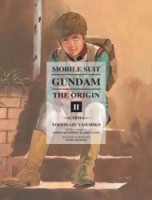
I only posted one review last week, but that wasn’t the only thing going on at Experiments in Manga. The review was for Yoshikazu Yasuhiko’s Mobile Suit Gundam: The Origin, Volume 2: Garma. The third volume is scheduled to be released later this month and I realized that I hadn’t reviewed the second one yet. If you enjoy science fiction manga the series is definitely worth checking out, even if you’re not a Gundam fan. What else was going on at Experiments in Manga? I posted August’s Bookshelf Overload for those interested in the absurd amounts of manga I manage to collect. My most recent manga giveaway is currently in progress as well; there’s still time to enter for a chance to win the first Blood Lad omnibus. Since Experiments in Manga is now part of the Manga Bookshelf team, I’ve also started to participate in some of the group features: Pick of the Week and Manga the Week of.

Elsewhere online, Dan Kanemitsu wrote an opinion piece for CBLDF about the recent ban of Keiji Nakazawa’s Barefoot Gen manga in Japan–The Inconvenience of Barefoot Gen. Happily, the ban has since been lifted. (In the past I reviewed both the first volume of Barefoot Gen and Nakazawa’s autobiography for the Barefoot Gen Manga Moveable Feast.) Sean Kleefeld at Kleefeld on Comics has put together some pie charts based on Alex Woolfson’s survey of the readers of his Young Protectors comic–Who Reads Yaoi Webcomics?. I found the results and demographics to be very interesting. Finally, Ng Suat Tong posted Island of Sex, Panorama of Empire at The Hooded Utilitarian, an in-depth analysis of Suehiro’s Maruo’s The Strange Tale of Panorama Island manga and Edogawa Rampo’s original novella. (In the past, I reviewed the manga and the novella separately.)

Quick Takes
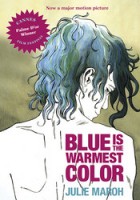
Blue Is the Warmest ColorBlue Is the Warmest Color by Julie Maroh. Originally published in French in 2010, Blue Is the Warmest Color has only recently been released in English. The graphic novel has won several awards as has its film adaptation. It’s a beautiful comic and a beautiful love story. Maroh’s artwork is wonderful. I particularly liked her use of color; much of the graphic novel is illustrated with muted tones with blue as an accent color.Clementine is in high school when she completely falls for Emma. She must come to terms with her identity and sexuality–something that is at first difficult for her to fully embrace and something even more difficult for many of her friends and her family to accept. Although the ultimate ending of Clementine and Emma’s story is known from the very beginning of Blue Is the Warmest Color, Clementine’s death still seems to come rather suddenly. Blue Is the Warmest Color is tragic and bittersweet, but it is also a lyrical exploration of love and desire.

Bunny Drop, Volume 7Bunny Drop, Volumes 7-9 by Yumi Unita. Parts of Bunny Drop were spoiled for me early on but I wanted to see how things played out and how Unita handled it all. These volumes actually do a great job showing Rin’s developing relationship with her mother as well as her struggle with her feelings for Daikichi and his response to them. But then along comes a huge plot reveal in the fifty-fourth chapter that attempts to smooth everything over and make it okay. (Honestly, I was kind of pissed off about it.) It’s as though Unita was trying to find an easy way out after backing herself into a corner. Unfortunately it doesn’t really work, contradicts earlier parts of the story, and even negates previous character developments. In part due to poor planning, the twist is neither satisfying nor believable. Perhaps if Unita had taken the time to show the intervening two years and how Daikichi’s feelings evolved it would have been more convincing. Even though I found the ending of Bunny Drop to be disappointing, I still plan on picking up the final volume of short stories.

Sankarea: Undying Love, Volume 2Sankarea: Undying Love, Volume 2 by Mitsuru Hattori. I’m a little surprised by how much I’m liking Sankarea. At least I can say that I enjoyed the second volume more than the first. I even chuckled out loud a few times while reading it. I hope the series continues to improve. At this point Sankarea is definitely more of a romantic comedy than it is a horror story. The horror elements are still there though, as are the nods to zombies in popular culture. But it’s Rea’s father who remains the creepiest part of the series. In one delightful scene, Chihiro even calls him out on it directly to his face. And even though Sankarea is a comedy, I’m glad to see that Danichiro’s disturbingly unhealthy relationship and obsession with his daughter isn’t seen as funny. On the other hand, Rea’s relationship with Chihiro–as weird as it is and as weird as they both are as individuals–is almost charming. Sankarea is kind of a strange series, but then so are hydrangea zombies.
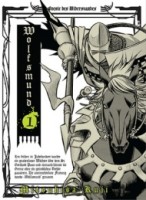
Wolfsmund, Volume 1Wolfsmund, Volume 1 by Mitsuhisa Kuji. Very few historical manga with a European setting have been licensed in English, and so I was intrigued by Vertical’s acquisition of Wolfsmund. I was even more interested when I learned that Kuji was once an assistant for both Kentaro Miura and Kaoru Mori, whose work I love. (I particularly noticed Mori’s influence in how Kuji draws many of the character’s eyes in Wolfsmund.) Wolfsmund takes place in 14th-century Switzerland and is a retelling of sorts of the legend of William Tell. So far the story has focused on those attempting to illicitly cross through the Sankt Gotthard Pass, generally unsuccessfully but not without putting up a fight. While Wolfsmund isn’t overly graphic–most of the gorier moments are implied rather than actually seen–it is a violent and brutal manga. Very dark and very intriguing, I’m looking forward to the next volume of Wolfsmund a great deal.
Filed Under: FEATURES, My Week in Manga Tagged With: bunny drop, comics, Julie Maroh, manga, Mitsuhisa Kuji, Mitsuru Hattori, Sankarea, Wolfsmund, Yumi Unita

Midnight Secretary, Vol. 1

September 1, 2013 by Anna N

While I enjoy reading paranormal romances set in high school as much as anyone, I attended high school more years ago than I’m willing to admit. So I’m happy to see a romance title that swaps out a twenty-something office lady for the typical teenage manga protagonist. Kaya is an Executive Secretary who is reassigned to the Managing Director at Tohma Corp. Kaya dresses severely, with her hair pulled back and sports fake glasses in order to combat her naturally youthful appearance. Her new boss Kyohei Tohma is an absolute boor, asking that she be reassigned as soon as he sees her because her appearance offends him. Kyohei spends long hours at the office, but he seems to take frequent breaks during the day as a parade of women keep visiting him at his office only to leave looking disheveled and pale.

Kaya is very dedicated to Tohma Corp. and her job, so she does a bit of sleuthing as she is worried that her new boss is doing drugs. She ends up discovering that he is in fact a vampire. Kyohei decides that Kaya’s discovery is a good thing, because she can be his secretary for real if she knows about his condition. He threatens her mother’s employment with the company to ensure Kaya’s silence and assures her that she won’t become his next victim because he only drinks from the finest of women.

As a heroine, Kaya has a bit of a subversive streak. She decides to subtly test vampire theories through her job duties by giving one of Kyohei’s women a silver cross and trying to see if he has a reflection in a mirror. Kaya figures out that the senior director, Kyohei’s older brother, is aware of Kyohei’s vampirism yet isn’t a vampire himself. Kyohei seems amused by Kaya’s detective attempts, and she resolutely resists his arrogant suggestions for her to improve her appearance. When Kyohei gets weakened and needs blood Kaya decides that her secretarial duties extend to becoming food, announcing that “Even if you’re a spoiled, arrogant philanderer…even if you’re sarcastic…and even if you’re a vampire…I want to protect you!”

Kaya and her boss gradually become a bit closer as he begins to trust her with more details of Tohma’s business dealings. Her protective streak is very strong, resulting in some goofy antics at an office Christmas party. I enjoyed the packaging for this manga, as all the extra purple scroll-work makes Midnight Secretary look appropriately gothic. Ohmi’s art is attractive, with believable shifts in the characters’ appearance and mannerisms when Kaya loses her glasses or when Kyohei is in the grips of vampiric compulsion. We see the couple’s professional facades begin to crack more and more as the volume progresses. I enjoyed this first volume of Midnight Secretary very much, and I’m looking forward to the rest of the series.

Review copy provided by the publisher

Filed Under: REVIEWS

Bookshelf Overload: August 2013

September 1, 2013 by Ash Brown

Quite a few interesting things made their way onto my bookshelves over the last month. In particular, I had a bit of luck when it came to out-of-print manga in August. I was able to find nice, relatively cheap copies of Sake Jock, a collection of underground Japanese comics published by Fantagraphics in 1995, and Manga, another manga sampler released sometime in the early 1980s. (I first learned about Manga when Jason Thompson covered it as part of his House of 1000 Manga column.) As for preorders that I’m especially happy to have in my hands, Shigeru Mizuki’s Kitaro and Kyoko Okazaki’s Helter Skelter: Fashion Unfriendly were both released in August. I’m also thrilled that SuBLime’s license rescue of Youka Nitta’s Embracing Love has begun. (It’s one of my favorite yaoi series and it will finally be released in its entirety in English!) And speaking of yaoi: Guilt|Pleasure has released One of These Nights, the third prequel to its series In These Words. If you find In These Words too dark but love Jo Chen’s artwork (which is fantastic), do give the prequels a try; they have a different, lighter tone. Another book that I’m particularly excited about is Manga: Introduction, Challenges, and Best Practices, edited by MJ and presented by the Comic Book Legal Defense Fund. The guide’s general release will actually be in December, but you can pick up an early copy from CBLDF at various conventions or from its website. Manga is a great resource; look for a review of it here soon!

Manga!
Attack on Titan, Volume 6 by Hajime Isayama
Battle Angel Alita: Last Order, Omnibus 1-2 by Yukito Kishiro
Blue Morning, Volumes 1-2 by Shouko Hidaka
Bunny Drop, Volume 9 by Yumi Unita
Dorohedoro, Volume 10 by Q Hayashida
Embracing Love, Omnibus 1 by Youka Nitta
Eyeshield 21, Volumes 24-25, 35-37 written by Riichiro Inagaki, illustrated by Yusuke Murata
Fairy Tail, Volume 29 by Hiro Mashima
Helter Skelter: Fashion Unfriendly by Kyoko Okazaki
How Good Was I? by Yamatogawa
Kitaro by Shigeru Mizuki
Knights of Sidonia, Volume 4 by Tsutomu Nihei
Library Wars: Love & War, Volume 10 by Kiiro Yumi
Manga edited by Masaichi Mukaide
Nana, Volume 21 by Ai Yazawa
No. 6, Volume 2 by Hinoki Kino
Otomen, Volume 16 by Aya Kanno
Ring X Mama, Volume 1 by Joji Manabe
Sake Jock edited by Adam Glickman
Sankarea: Undying Love, Volume 2 by Mitsuru Hattori
Tough Love Baby by Shiuko Kano
X, Omnibus 6 by CLAMP

Comics!
Blue Is the Warmest Color by Julie Maroh
One of These Nights by Guilt|Pleasure
Strangers in Paradise Omnibus by Terry Moore
Smut Peddler by Various

Light Novels!
Fullmetal Alchemist, Volumes 2-3 by Makoto Inoue

Novels!
Mobile Suit Gundam: Awakening, Escalation, Confrontation by Yoshiyuki Tomino

Anthologies!
The Melancholy of Mechagirl: Stories and Poems by Catherynne M. Valente

Nonfiction!
Manga: Introduction, Challenges, and Best Practices edited by MJ

Anime!
Berserk: The Golden Age, Arc II: The Battle for Doldrey directed by Toshiyuki Kubooka
Lupin the Third: The Woman Called Fujiko Mine directed by Sayo Yamamoto
This Boy Caught a Merman directed by Soubi Yamamoto
Tsuritama directed by Kenji Nakamura

Filed Under: UNSHELVED

Mobile Suit Gundam: The Origin, Vol. 2: Garma

August 30, 2013 by Ash Brown

GundamOrigin2Creator: Yoshikazu Yasuhiko
Original story: Yoshiyuki Tomino and Hajime Yatate

U.S. publisher: Vertical
ISBN: 9781935654889
Released: June 2013
Original release: 2006

Though I wouldn’t consider myself to be a fan of or even particularly knowledgeable about the massive Gundam franchise, at this point I would consider myself to be a fan of Yoshikazu Yasuhiko’s manga series Mobile Suit Gundam: The Origin. The manga is a retelling of the original 1979 Mobile Suit Gundam anime series from one of the artists who was heavily involved in its creation and visual design. Garma is the second volume in the collector’s edition of Yasuhiko’s The Origin manga, originally released in Japan in 2006. The English-language edition of the volume, published by Vertical in 2013, is a beautiful, high-quality release. This particular volume includes a small illustration gallery of Yasuhiko’s color work as well as a roundtable and special illustration from CLAMP. I was quite impressed with Activation, the first volume of The Origin, so I was looking forward to reading Garma a great deal.

After an eight-month armistice, the forces of the Earth Federation and the Principality of Zeon have once again come into conflict. The Federation’s colony Side 7 was attacked and destroyed when Zeon discovered the Federation military was secretly developing a highly advanced mobile suit there. White Base, the supply ship carrying the new weapon as well as hundreds of refugees from the colony, has reached Earth but Zeon’s pursuit has pushed it far off course. Trapped behind enemy lines and commanded by a young and inexperienced crew, White Base may have survived the initial confrontation with Zeon but the threat is far from over. The Zeon forces are determined to prevent White Base from breaking through to Jaburo; if they can’t capture the new technology, they are more than happy to destroy it. In particular, Colonel Garma Zabi, leader of the Zeon’s North American forces and the youngest son of its reigning family, is interested in the recognition, prestige, and military honor that successfully accomplishing such a feat would bring.

While in Activation the fighting primarily took place in space, the battles and skirmishes in Garma are surface based, occurring on Earth’s land, in its air, and even within a demolished urban center. Both Yasuhiko and the characters must make adjustments because of this. They must take into consideration and use the terrain and topography as part of their strategy. The battles in Garma literally, figuratively, and visually have weight. Even during the aerial maneuvers, Yasuhiko is constantly aware of the forces and gravity in play. The way he draws the battles makes them feel very different from those in Activation and they should be different–tactics and equipment change depending on the environment. Fighting on a planet is very different from fighting in space and he captures that remarkably well. The battles in Garma are engaging. Yasuhiko’s excellent pacing and layout combined with his color work result in some exceptionally stunning, cinematic sequences.

While the military aspect of The Origin is certainly important, perhaps even more important are the more personal human dramas of the story. As can be inferred by the volume’s title, Garma plays a particularly critical role at this point in the manga. Introduced at the very end of Activation, Yasuhiko quickly reveals Garma to be an arrogant and privileged young man. His relationship and association with Char, one of Zeon’s most formidable and calculating commanders, is crucial to the development of the story. Perhaps Garma’s complete opposite is Amuro Ray, the young pilot of the Federation’s new Gundam mobile suit. Drawn into war more by chance than by choice, at the age of fifteen he’s already seen more of battle than he ever wanted. He’s understandably terrified and struggling with the grave responsibility that has been thrust upon him. I’m very interested in seeing how the two sides of the conflict react to the events in Garma because they will have some major consequences.

Filed Under: REVIEWS Tagged With: Gundam, Hajime Yatate, manga, vertical, Yoshikazu Yasuhiko, Yoshiyuki Tomino

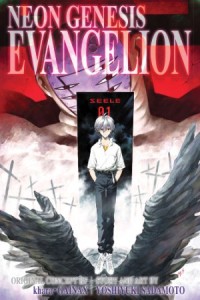
Neon Genesis Evangelion Omnibus, Vols. 10-12

August 30, 2013 by Sean Gaffney

By Yoshiyuki Sadamoto and GAINAX. Released in Japan by Kadokawa Shoten, serialized in the magazines Shonen Ace and Young Ace. Released in North America by Viz Media.

This fourth omnibus from Viz will be the last for a while, as Japan hasn’t even announced when the final volume is coming out yet. I assume it will be released simultaneously here and Japan, as Vol. 13 was, and that there will be a gap between that any any 5th omnibus. That said, there’s more than enough here to keep Evangelion fans busy. So much happens in this omnibus that it’s a bit difficult to know where to begin. One thing is for certain, though, and that’s the ongoing massacre of everyone Shinji loves and holds dear is still going to happen. Business as usual, folks.

evangelion4

Kaworu was introduced far earlier in each successive adaptation of Evangelion, probably as fans took him so quickly to their hearts. That doesn’t mean that he gets to be all warm and fuzzy, though he’s trying. I think it’s clear he wants to comfort Shinji and make him feel better, but he has no idea how people deal with grief – or indeed, emotions in general. He tries to make up for that by physical closeness, but Shinji, who’s already somewhat sexually confused due to simply being a teenager, lashes out at him. The manga makes things bigger – both Shinji’s rejection of Kaworu’s advances of friendship (or something more), and of his admitting how close Kaworu really got to him. In the end, Kaworu wanting Shinji to kill him manages to be rather heartwarming and sweet, in an Evangelion way.

And, in the opposite direction from heartwarming and sweet, we have Ritsuko, who has realized all along that Gendo is using her like he uses everyone else, but has been too wrapped up in her desire for him to really try to do anything about it. Gendo throwing her to the wolves of SEELE seems like it was a wake-up call, and she proceeds to give him the biggest ‘fuck you’ that she possibly can, with Misato and Shinji as witnesses. The idea of Rei being a clone is something that we’ve basically accepted, particularly given we see her get killed early on in this volume and then show up with the same body but without the emotional attachment to Shinji she had grown over the series. Despite that, the scene showing all the Rei bodies in the vat, waiting to be the next one, has not lost any of its power. It’s almost a relief that a suicidal and self-loathing Ritsuko destroys them all.

I talked last time about how Asuka gets much less to do in the manga, and that’s still true in this volume – until the end. Sticking her in her Eva may have been a safety precaution, but it was also the best possible thing for her psyche, as she manages to come to terms with what her mother was to her – and then goes to town on SEELE’s invading Evas, in the most glorious battle sequence we have seen to date in the series. Seeing Asuka, who has spent her entire life overcompensating for feeling useless and unwanted, take out these fakes with strength and purity of heart, is a beautiful thing, even if she can’t quite save the entire day. Mostly as it’s questionable as to whether there will be a tomorrow to be saved.

Because the JSSDF is invading NERV, and the orders are to kill everyone – even people who surrender, even people begging for their life. This we see, and it’s absolutely terrifying. It comes to the point where only Shinji in his Eva can save the day, but he is absolutely emotionally dead after everything that has happened to him (and remember, the timeline for the manga seems to be far faster than the anime one). Luckily, he has Misato,who gets her finest hour in the final part of this volume at the same time that Asuka is getting hers. Misato has always sort of straddled that line with Shinji between feelings of a mother, of a sister, and of a woman. It fits well with the rest of the series, where Shinji can’t tell if he loathes or is attracted to Kaworu, Ritsuko’s desire merges with her anger, and Gendo imprints her dead wife onto a clone that is both her and not her at the same time – something that she gets but he may not. All of these things are what makes up humanity – and that’s what Misato has to convince Shinji to save.

Has she done that? Well, you can get Vol. 13 right now and see for yourself, but whether we manage to get an ending that isn’t covered in orange goo is another matter. The manga has ended in Japan, so it’s a matter of Kadokawa scheduling the final volume. either way, it’s been an amazing ride. The manga world of Evangelion is still my favorite.

Filed Under: REVIEWS

Manga the Week of 9/4

August 29, 2013 by Sean Gaffney, Michelle Smith, Ash Brown, MJ and Anna N 4 Comments

SEAN: As I’ve noted before, Diamond Comics and Amazon’s street dates are looking farther apart than ever before. As a result, this list is a fusion of Amazon (the major, book-company publishers) and Midtown Comics (the comics-first publishers).

Dark Horse brings us the 4th volume of Blood Blockade Battlefront, the alliterative series from the Trigun creator.

shinji1

There’s also a new Evangelion spinoff coming out as well, with the first volume of Shinji Ikari Detective Diary. From the description, it sounds like this is aimed squarely at the BL Evangelion shippers, in much the same way that the Raising Project manga is aimed at harem fans.

Fanfare/Ponent Mon has the 4th volume of mountain climbing manga Summit of the Gods, one of those “blogger popular” titles I keep meaning to catch up on but have never quite done so. It is supposed to be excellent, though.

MICHELLE: Oh, nice! I really like Jiro Taniguchi, but have been waiting for this series to come out in full before reading it. I think there’s one more volume still.

ASH: Oh! I’m one of the reasons this is a “blogger popular” title. Summit of the Gods is easily my favorite Jiro Taniguchi collaboration; I’m very happy to see that Fanfare/Ponent Mon is continuing to release the series. Only one more volume to go after this!

MJ: Count me in for this one as well!

SEAN: Amazon has Wandering Son 5 listed for November 2nd. If Kodansha is the publisher that is consistently always arriving at bookstores first and comic shops later, Fantagraphics is the classic example of the opposite. Here’s Wandering Son 5, hitting comic shops. In this volume, I believe we get to high school and introduce some new supporting players.

MICHELLE: I am lamentably several volumes behind with Wandering Son, but it’s still nice to see new volumes make their appearance!

ASH: We actually have a few years of junior high to get through before reaching high school, but you’re right about the new supporting characters.

ANNA: I really need to catch up on this series!

MJ: I adore this series, and I can’t wait to read volume five, whenever it appears!

ymh3

SEAN: Seven Seas has the final volume of one of my favorite series from them, Young Miss Holmes by Kaoru Shintani (of Area 88 fame). This omnibus, containing Books 5-7, is even larger than the previous two, and is filled with mysteries, mayhem, and killer maids. There’s a sequel in Japan, featuring 17-year-old Christie continuing to solve crimes. Seven Seas has noted its possible license (Slightly Older Miss Holmes?) depends on sales of the first, so go get it! Also, there’s only one Conan Doyle story in here (the rest are originals based on ‘unseen cases’, so less danger of offending Holmes purists.

ANNA: I somehow missed that this was by the mangaka of Area 88! I still have all my ancient Eclipse Comics/Viz editions of Area 88 stashed in a box somewhere. Now, I might finally pick up Young Miss Holmes. I hope there are scenes of people in flight suits with floppy hair looking incredibly emo in Young Miss Holmes, because Area 88 was awesome at that.

SEAN: There’s also a 2nd omnibus from Seven Seas, with Vols. 3-4 of Zero’s Familiar. I was surprised that the dark shroud of fan opinion surrounding the tsundere heroine turned out to be more of a off-white silk scarf more than anything, and wonder if my opinion will stay the same as we go further into this fantasy harem series.

I presume that those who read Bleach either have done so for years, or are likely never to do so. But if you’ve been catching up via the omnibus, the 3 volumes collected in the 6th one are some of the very best, and remind me of those olden days when Kubo could pace properly.

MJ: Agreed. I have much nostalgia for those early volumes, and this is a particularly strong little set.

SEAN: Demon Love Spell has been one of Shinjo’s best titles at walking that fine line between ‘sexy, forceful guy’ and ‘complete ass’, and I’m hoping that Vol. 4 continues that balance.

ANNA: I have just read this and it was hilarious. This is rapidly becoming my favorite Shinjo series, despite my long-standing fondness for Sensual Phrase.

MJ: I’m absolutely addicted to this series.

SEAN: Dragon Ball has an omnibus as well, and it’s hit Vol. 2. New Dragon Ball readers are born every day! This omnibus is probably for them more than those of us who bought the VIZBig, or the original volumes. Or the digital volumes. And stay tuned for Dragon Ball cranial ports, coming in 2015.

midnightsecretary1

Midnight Secretary has a lot of good buzz. So much good buzz, in fact, that Viz has already licensed another title by the same author before this one has even come out. You know they trust it will do well. And why will it do well, you ask? One word: vampires. That said, the heroine is also apparently an excellent draw, and is not your usual Petit Comic office lady. I’m very intrigued about this one. Can’t wait.

ANNA: I think this will be a must get for paranormal romance manga fans. I am also looking forward to this. I mean, the title alone is fantastic.

MJ: Agreed on all counts!

SEAN: The 6th Naruto omnibus is out. I still need to catch up on this title. So… ninjas?

ASH: Yes. Ninja. Lots and lots of ninja.

SEAN: One Piece has reached Vol. 68. There is an awful lot of fighting happening here, and several of our heroes continue to be in the wrong bodies, leading to humorous situations. Recommended as top-drawer entertainment.

MICHELLE: I continue to love One Piece.

SEAN: Last time, Psyren turned its attention to our villains, and did a damn good job of fleshing them out. I expect it will go back to the heroes this time, as we’re getting near a climax (I think we’ve only 5 volumes to go).

MICHELLE: I need to catch up on Psyren. So many books (and responsibilities), so little time.

SEAN: And Strobe Edge hits its second half with Vol. 6. We may have resolved one of the obstacles standing between our two lovebirds last time, but the course of true love definitely doesn’t run smooth in this title. Something bad’s going to happen, I can feel it. Be there to read it when it does.

MICHELLE: I really love Strobe Edge, and I admit I kinda wouldn’t mind seeing something bad happen.

ANNA: This is one of those shoujo series that just seems to get better as it goes along.

MJ: This is a strong week for addictive shoujo, I see. Lovely, lovely.

SEAN: Any manga jump out at you this week?

Filed Under: FEATURES, manga the week of

New licenses from Yen and Viz

August 28, 2013 by Brigid Alverson

This weekend was the first ever Japan Expo in the U.S. and it was a big deal. Several of the major manga publishers were there, and they had announcements to make: Yen Press is licensing two Sword Art Online manga and Puella Magi Madoka Magica: The Different Story, as well as the Accel World and Sword Art Online light novels. Viz had two new licenses to announce as well: Tomu Ohmi’s Spell of Desire and Arina Tanemura’s Kamikaze Kaito Jeanne, which was originally released in North America by CMX; the Viz edition will have a new translation and will use the English title Phantom Thief Jeanne.

Check out ANN’s convention coverage, or if you’re in a hurry, Sean Gaffney’s roundup of the new licenses and what they mean.

Special guest Shaenon Garrity explains what’s so awesome about Cyborg 009 in the latest House of 1000 Manga column at ANN.

Here’s a preview of the French edition of Puella Magi Madoka Magica: A Different Story.

Blogging about blogging: Welcome to Manga Bookshelf, Ash Brown! We’re delighted to have you aboard.

News from Japan: The Matsue City school board has lifted its restrictions on Keiji Nakazawa’s Barefoot Gen: Once again, elementary school children can check it out of the school library. Meanwhile, the controversy has spurred sales of the book, and the publisher has gotten messages of support from the public. The Melancholy of Haruhi Suzumiya manga series will end next month, as will Code Geass: Renya of the Darkness.

Reviews: Here’s another account of a week’s worth of manga reading from Ash Brown, at Experiments in Manga. Sean, MJ, and Michelle give their short takes on recent releases in the Bookshelf Briefs column at Manga Bookshelf.

Matthew Warner on vol. 5 of 07-Ghost (The Fandom Post)
Kate O’Neil on vol. 6 of Attack on Titan (The Fandom Post)
Leroy Douresseaux on vol. 10 of A Devil and Her Love Song (The Comic Book Bin)
Sean Gaffney on vol. 10 of Dorohedoro (A Case Suitable for Treatment)
Justin on Helter Skelter: Fashion Unfriendly (Organization Anti-Social Geniuses)
Lesley Aeschliman on vol. 11 of Kamisama Kiss (Blogcritics)
Erica Friedman on Material Candy (Okazu)
Anna N on vols. 1-7 of Red River (Manga Report)
Sean Gaffney on vol. 4 of Umineko When They Cry (A Case Suitable for Treatment)

Filed Under: MANGABLOG

Manga Giveaway: Blood Lad Giveaway

August 28, 2013 by Ash Brown

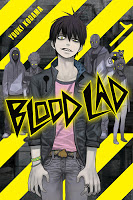
It’s the last Wednesday in August which means it’s the first day in Experiment in Manga’s monthly manga giveaway! Up for grabs this time around is the first omnibus volume of Yuuki Kodama’s Blood Lad manga as published by Yen Press, which is equivalent to the first two volumes of the original Japanese release. Since the anime is currently airing, I thought there might be some renewed interest in the series. As per usual, the contest is open worldwide!

BloodLad1

Vampires seem to be a perennial favorite in film and literature. Manga is no exception and vampires abound. They show up in many different genres–action, comedy, horror, romance (just to name a few)–and appear in all of the major demographics. Shōjo? Matsuri Hino’s Vampire Knight. Shōnen? Hirohiko Araki’s JoJo’s Bizarre Adventure. Josei? Tomu Ohmi’s Midnight Secretary. Seinen? Yuuki Kodama’s Blood Lad. (And that’s just off the top of my head…there are many, many more examples I could provide.) Generally, I prefer my vampires to be real monsters, terrifying creatures that pose a genuine threat to the humans around them. But I’ll admit, I am greatly amused by Staz in Blood Lad. He’s such an otaku goofball that I can’t help but like him.

So, you may be wondering, how can you win a copy of Blood Lad, Omnibus 1?

1) In the comments below, simply tell me who your favorite vampire in manga is and why. (Be sure to mention which manga they’re from, too.)
2) For a second entry, name a vampire manga that hasn’t been mentioned yet by me or by someone else.
3) If you’re on Twitter, you can earn a bonus entry by tweeting about the contest. Make sure to include a link to this post and @PhoenixTerran (that’s me).

And there you have it! Each person can earn up to three entries; you have one week to submit your comments. If you have trouble leaving comments, or if you would prefer, you can e-mail me your entries at phoenixterran(at)gmail(dot)com and I will post them in your name. The giveaway winner will be randomly selected and announced on September 4, 2013.

VERY IMPORTANT: Include some way that I can contact you. This can be an e-mail address, link to your website, Twitter username, or whatever. If I can’t figure out how to get a hold of you and you win, I’ll just draw another name.

Contest winner announced–Manga Giveaway: Blood Lad Giveaway Winner

Filed Under: FEATURES Tagged With: blood lad, manga, Yuuki Kodama

Cute, But Kind of Awful – Young Gangan Magazine

August 28, 2013 by Erica Friedman 4 Comments

YGanganEnglish-language readers are more familiar with the pages of Young Gangan than they might expect, due to Yen Press’s relationship with Square Enix.  Bamboo Blade, Sekirei, Working!! and Saki are other titles that have been brought over as manga or anime. Nonetheless, it’s hard to be an adult paging through this magazine without thinking one is missing something crucial to actually enjoying it.

On the other hand, Young Gangan is also home to award-winning, slightly wacky and unique Arakawa Under The Bridge, by Nakamura Hikaru. This is one of the most popular series in the magazine and the anime was licensed for North America by NIS, but the manga remains almost wholly unknown here.

The magazine website for Young Gangan, which is part of Square Enix’s family of magazines, has little original content. Ads for upcoming volumes, magazine specials, upcoming events and issue content fills the page.

Young Gangan runs just around 470 pages for 320 yen ($3.26 at time of writing), with twice monthly distribution. When you visit Japan, Young Gangan and magazines just like it fill convenience store racks, looking to hook young (nebbishy?) men with manga about other young (nebbishy) men and pictures of partially clothed girls. In fact, the above picture for the current volume at time of writing is not representative at all. The cover is far more likely to show a girl in a bikini, like this:

YG2

With not-quite softcore photos of “gravure” idols filling the pages and manga that is rarely standout good or bad, for better or for worse, I tend to categorize this as a magazine for the kind of guys who call girls “fake geeks.” The magazine is very boy’s club, but not very kind to its readers. Male leads in the manga in  biweekly Young Gangan are often slight loser-y nebbishes, confused by their lives and the madness that surrounds them. I have long felt that if I were a nebbishy guy, I’d rather read a story in which the nebbish triumphs over whatever, gets the girl and lives happily ever after. But that never seems to occur to the creators of these manga.

Young Gangan from Square Enix: http://www.square-enix.co.jp/magazine/yg/

Filed Under: Magazine no Mori Tagged With: Erica Friedman, Magazine no Mori, Manga Magazines, square enix

It Came From the Sinosphere: Laughing In the Wind (Part 2)

August 27, 2013 by Sara K. Leave a Comment

Read part 1

What Sense of Vision!

I have come to really appreciate the films of Li Han-hsiang. He once studied to be a painter, and it really shows in the way that his films are full of beautifully framed. He also happens to be one of the most influential Chinese-language movie directors ever.

This drama gives me the same sense of wonderfully arranged images (the people who made this drama most likely studied the work of Li Han-hsiang during their film studies).

I mentioned the gorgeous scenery in the previous post, but there is much more to making a visually beautiful TV drama than selecting locations well. Aside from the natural scenery, this drama has a dazzling abundance of striking imagery.

Take, for example, this picture of Lin Pingzhi:

Lin Pingzhi looks out a window.

I really like the way the windows (with its square pattern) frames Lin Pingzhi, and I like the way Lin Pingzhi’s body contrasts with the shadow of his right arm.

And here’s a shot of Yue Buqun and Ning Zhongze (though it’s hard to tell it’s them):

Yue Buqun and Ning Zhongze stand beside a tall stone structure, with a setting sun and mountain in the background.

I think we can agree that it’s not the setting itself that is impressive, but the composition of the stone structure, the sun, the mountains, and the figures which stands out. There’s also the effect of the light and prevalence of grey (which really fits the mood of this particular scene).

And look at these two women in the cave:

xajh16

It’s a nice cave, but what really makes this image work is the thin, diagonal slit through which we can see the characters. Diagonal lines are generally more eye-catching than horizontal or vertical lines.

I could keep on pulling more and more examples if I wanted, because this TV drama simply has so much fantastically composed images. I just need to pick a random spot in a random episode in order to find more noteworthy images in a short time.

There’s also the attention paid to the characters’ appearances. For example, Yu Canghai and his Qingcheng sect have rather imaginative costumes…

Yu Canghai wears a yellow mask in mid-fight.

… with the final touch being that, when he’s in a serious fight, he pulls various colorful masks out from his hyperspace arsenal.

And then there are the visual metaphors. For example, as Ren Yingying and Linghu Chong’s romantic feelings grown into a committed relationship, a group of ducklings grow into ducks. And, considering that this is wuxia, and that to be real wuxia, a story has to present someone weeping over an injured/dying loved one (or at the very least subvert this trope), I find it appropriate that we see the mature ducks as Ren Yingying weeps over a bashed-up Linghu Chong for the first time.

Ren Yingying bent over an injured Linghu Chong among a flock of ducks in a bamboo forest.

This TV drama truly is a feast for the eyes.

… And There’s the Ending

This is such a good drama … and then, at the end, it drops the ball.

Obviously, I cannot describe the problems with the ending in detail without spoilers. But I think I can make some general, spoiler-free observations.

The underground stronghold of the Sun Moon Cult

The best comparison I can make (which would be familiar to MangaBookshelf readers) is the first Neon Genesis Evangelion anime. The last two episodes are infamous for disappointing viewers. Of course, that wasn’t the ending which was originally planned, but Gainax went over-budget, so they needed and ending which could be produced cheaply.

In spite of the last two episodes, I still think that Neon Genesis Evangelion is one of the greatest anime ever made (I pretend that the original anime ends at episode 24). Likewise, I think that, in spite of the last few episodes, Laughing in the Wind is one of the best Chinese-language dramas I’ve ever seen.

Furthermore, the last few episodes are still as visually fantastic as the entire drama.

Furthermore, the last few episodes are still as visually fantastic as the entire drama.

The fact that the ending of Laughing In the Wind diverges from the original novel is not the problem. However, if you change the ending of a good story, you need to change things throughout the story in order to maintain consistency. The Ang Lee version of Crouching Tiger, Hidden Dragon was good about making the necessary changes throughout the story so that, when it does have an ending different from the original novel, it feels natural to the audience. Yet the the ending of the original novel would have felt more natural in Laughing In the Wind than the ending which the drama actually has. To me, that indicates that a) they had probably originally intended to have an ending closer to the one in the original novel and b) the choice to change the ending was probably not made for artistic reasons.

So why change the ending? I can speculate…

– Budget. I don’t think the original ending would have been any more expensive to produce, but maybe I’m wrong about that, and this show went over-budget just like Neon Genesis Evangelion (I can easily believe that it went over-budget at least).
– Other Production Reasons. Maybe they were originally promised 45 episodes, and then an executive somewhere told them that it can only be 40 episodes long.
– Audience Reaction. Maybe they thought audiences wouldn’t like the original ending so much. In that case, they are wrong – I have never seen/read any complaints about the ending of the original novel, whereas I have encountered quite a few complaints about the way that Laughing in the Wind ends.
– Political. It’s well known that many people interpret this story as a political allegory, so maybe some censor wanted to change the ending to de-politicize it. But I think this would have been a silly move. The original, uncensored novel is currently widely available in China, so changing the ending to make it more politically palatable seems pointless.

I think ‘Budget’ and ‘Other Production Reasons’ are the most likely speculations.

Ning Zhongze holds a red piece of cloth

Personally, I pretend that Laughing in the Wind ends the same way as the novel.

Availability in English

I’ve already mentioned that it’s available, in its entirety, on Dramafever. It’s also available on Region 1 DVDs with English subtitles, which you can find for sale on the internet very quickly using ordinary search techniques.

Conclusion

This drama feels like it was put together by an exquisite artisan. The casting of the actors is excellent, the scenery is spectacular, the script (barring the last few episodes) is superb, the costumes are imaginative, etc.

Yet it manages to pull off this artistry without ever feeling pretentious. It does not show off its artistic excellence to the audience. Instead, it invites the audience to entire a space which has been curated for virtuosity. It doesn’t need to tell the audience that it’s good, it simply just is good.

I think it is this attention to detail, in addition to the strength of the story itself, which makes this drama such a delight to watch. Highly recommended.

And Then There’s State of Divinity

State of Divinity 1996 is yet another TV adaptation of the same novel. In fact, this novel has been adapted for television a whopping six times (including the 2013 adaptation, starry Joe Chen from Fated to Love You, not to mention two sets of movie adaptations (and this is before we talk about the manhua and video game adaptations).

However, people generally hold up Laughing in the Wind and State of Divinity as being the best adaptations of the novel. Though I’m not familiar with every adaptation, I agree, these are the two best. But how do these two compare with each other? You’ll find out, because next time my subject will be State of Divinity 1996.

And I'm going to lock up the lesser of these two TV adaptations in this cage.

And I’m going to lock up the lesser of these two TV adaptations in this cage.


Sara K. just happened to be away from Taiwan proper when a typhoon came along. This is why she was at Fuao harbor an hour and a half before they started selling tickets for the Taima ferry – and the line was already long (lots of flights had been cancelled). She did get a ferry ticket – and while the Taima ferries are usually quite smooth and comfortable, this last ride through an approaching typhoon was the most stomach-churching boat ride Sara K. has ever been on. And the ride lasted nine hours (to be fair, the first 4-5 hours were okay – the ferry wasn’t so close to the typhoon at first). She remained dizzy for over an hour after she reached land (she kept on wondering why the ground was shifting under her).

Filed Under: Dramas, It Came From the Sinosphere Tagged With: China, jin yong, Laughing in the Wind, The Laughing Proud Wanderer, TV, wuxia, Zhang Jizhong

  • « Go to Previous Page
  • Page 1
  • Interim pages omitted …
  • Page 653
  • Page 654
  • Page 655
  • Page 656
  • Page 657
  • Interim pages omitted …
  • Page 1048
  • Go to Next Page »
 | Log in
Copyright © 2010 Manga Bookshelf | Powered by WordPress & the Genesis Framework