• Skip to primary navigation
  • Skip to main content
  • Skip to primary sidebar
  • Home
  • About Us
    • Privacy Policy
    • Comment Policy
    • Disclosures & Disclaimers
  • Resources
    • Links, Essays & Articles
    • Fandomology!
    • CLAMP Directory
    • BlogRoll
  • Features & Columns
    • 3 Things Thursday
    • Adventures in the Key of Shoujo
    • Bit & Blips (game reviews)
    • BL BOOKRACK
    • Bookshelf Briefs
    • Bringing the Drama
    • Comic Conversion
    • Fanservice Friday
    • Going Digital
    • It Came From the Sinosphere
    • License This!
    • Magazine no Mori
    • My Week in Manga
    • OFF THE SHELF
    • Not By Manga Alone
    • PICK OF THE WEEK
    • Subtitles & Sensibility
    • Weekly Shonen Jump Recaps
  • Manga Moveable Feast
    • MMF Full Archive
    • Yun Kouga
    • CLAMP
    • Shojo Beat
    • Osamu Tezuka
    • Sailor Moon
    • Fruits Basket
    • Takehiko Inoue
    • Wild Adapter
    • One Piece
    • After School Nightmare
    • Karakuri Odette
    • Paradise Kiss
    • The Color Trilogy
    • To Terra…
    • Sexy Voice & Robo
  • Browse by Author
    • Sean Gaffney
    • Anna Neatrour
    • Michelle Smith
    • Katherine Dacey
    • MJ
    • Brigid Alverson
    • Travis Anderson
    • Phillip Anthony
    • Derek Bown
    • Jaci Dahlvang
    • Angela Eastman
    • Erica Friedman
    • Sara K.
    • Megan Purdy
    • Emily Snodgrass
    • Nancy Thistlethwaite
    • Eva Volin
    • David Welsh
  • MB Blogs
    • A Case Suitable For Treatment
    • Experiments in Manga
    • MangaBlog
    • The Manga Critic
    • Manga Report
    • Soliloquy in Blue
    • Manga Curmudgeon (archive)

Manga Bookshelf

Discussion, Resources, Roundtables, & Reviews

Blog

Pick of the Week: Gangsta, Blood Lad

February 17, 2014 by Ash Brown, Michelle Smith, Sean Gaffney, Anna N and MJ 2 Comments

potw-2-17ASH: It’s another good week for manga releases (granted, I think just about every week is a good week), but there are two manga that I’m particularly interested in this time around–the fifth volume in Hinoki Kino’s manga adaptation of No. 6 and the first volume of Kohske’s Gangsta. No. 6 keeps getting better with each volume so I’m looking forward to reading the next installment, but I think my official pick of the week will have to go to Gangsta‘s debut.

MICHELLE: This is ordinarily the spot where I’d be all “Pandora Hearts!,” and I am still looking forward to volume twenty, but since I haven’t had a chance to mention it in a while, this week I’m going with Blood Lad, my official “Surprise Favorite of 2013.” Some elements of the series aren’t really my thing, but its sense of humor is, and I’m glad we’re finally getting a bit more of it!

SEAN: I’ll be brief: Gangsta for me as well!

ANNA: I’m going to have to go for Gangsta too. It certainly looks like the most intriguing manga coming out this week.

MJ: I’m certainly interested in Gangsta, but I’m going to stand in solidarity with Michelle here, and proclaim my love for Blood Lad! I feel a little guilty about forsaking my beloved Pandora Hearts, but Blood Lad was such a stunning surprise for me, I can’t help but rejoice that we’re finally seeing the next chunky volume! I really can’t wait to read it.

What looks good to you this week?

Filed Under: PICK OF THE WEEK

Blue

February 14, 2014 by Ash Brown

BlueCreator: Kiriko Nananan
U.S. publisher: Fanfare/Ponent Mon
ISBN: 9788493340971
Released: 2006
Original release: 1997

I first discovered Kiriko Nananan’s work while reading Secret Comics Japan: Underground Comics Now. Two of her short manga–“Heartless Bitch” and “Painful Love”–were included in the volume. I was quite taken by the pieces and so was determined to find more of Nananan’s manga in English. Sadly, very little has been translated. Another of her short manga, “Kisses,” was collected in Sake Jock: Comics from Today’s Japanese Underground, an early English anthology of alternative Japanese manga. Nananan debuted in the avant-garde manga magazine Garo in 1993, which is one of the reasons her work is found in these “underground” collections. She is particularly well-known for her short manga; Blue is her only long-form manga to have been released in English. Originally published in Japan in 1997, Fanfare/Ponent Mon published the English edition of the manga in 2006 after releasing a Spanish-language edition in 2004. Blue has also been translated into French and German. The manga was also popular enough to receive a live-action film adaptation directed by Hiroshi Ando in 2002.

“The sky that stretches out above the dark sea. The school uniforms and our desperate awkwardness. If those adornments of our youth held any color it would have been deep blue.” Thus begins Kiriko Nananan’s Blue. Kayako Kirishima, a senior at the Hijiri all-girls high school, is fascinated by her classmate Masami Endō, the young woman who sits directly in front of her. Endō was suspended from school the previous year. Because of that and her general attitude, many of the students at Hijiri find her difficult to approach. But Kirishima eventually musters up the courage to finally talk to Endō. Her fascination becomes friendship and eventually love. But their relationship isn’t an easy one. Uncertainty, worry for the future, and past regrets all have an impact on Kirishima and Endō and how they relate to each other and to the rest of their friends. Love can be a wonderful thing, but it can also be painful. As high school draws to an end, they must face the inevitable changes in their lives either together or alone.

Nananan’s artwork in Blue is very simple, almost minimalistic, and yet it is also incredibly arresting. There is very little shading employed. In fact, the use of negative and white space is just as important to the manga’s composition as the deep black of Nananan’s ink work. It has a distancing and cooling effect. The fragility of Kirishima and Endō’s relationship is reflected in the fragility of Nananan’s lines. At times the pages are nearly empty, giving a sense of loss and contemplativeness, as if the feelings of the two young women are in danger of disappearing altogether. Body language is especially important in Blue. Hands in particular are a recurring motif and are very expressive–they reach out to grasp someone or to push them away, they hide a face in shame or frustration. Nananan shows intimacy of varying degrees in Blue through the characters’ actions and touch. It can be extremely sensual, but it can also be very chaste.

Blue has a reflective, poetic, and lyrical quality to it. The manga is a fairly simple and straightforward story of first love which is both sweet and sad. However, Nananan is adept at capturing the realistic complexities of love and all of the feelings associated with it–the jealousy and heartache as well as the happiness and joy. Kirishima is constantly thinking about Endō. Even when she isn’t immediately present on the page Endō is the focal point of the manga and always on Kirishima’s mind. The two of them obviously care deeply about each other and so it is particularly unfortunate that they seem unable to be completely open and honest with each other or with themselves. They are both young and don’t always make the best or most mature decisions. Blue is told from Kirishima’s perspective as she looks back from some point in the future to her high school days with understandable sentimentality. Although the manga is frequently melancholic and intensely emotional, it never comes across as melodramatic. Blue is a beautiful and striking work; I would love to see more of Nananan’s manga translated.

Filed Under: REVIEWS Tagged With: Fanfare/Ponent Mon, Kiriko Nananan, manga, Year of Yuri

Manga the Week of 2/19

February 13, 2014 by Sean Gaffney, Michelle Smith, Ash Brown and MJ 1 Comment

SEAN: Third week of the month is pretty hefty this month thanks to Yen Press’s pile o’ stuff, plus a few titles from everyone else.

strikewitches1Kodansha brings us the 13th volume of Cage of Eden. The series has now ended in Japan, so we know there will be 21 total. That still leaves us many more volumes of huge killer animals and naked women bathing to go.

And for those of you who are of a more BL disposition, Kodansha also has the 5th No. 6.

ASH: I’m actually really enjoying this series! After a somewhat weak first volume, it keeps getting better and better.

MJ: Ash’s endorsement here makes me feel like I should check it out!

SEAN: Seven Seas debuts a new series whose anime is already famous – or, indeed, infamous. Strike Witches: Maidens in the Sky is known to me primarily as “that anime with the girls who are WWII fighter pilot archetypes and wear no pants.” Let’s see how the manga entertains.

MICHELLE: … So very not for me.

MJ: Uh. Yeah.

SEAN: There’s also Vol. 4 of World War Blue, which prefers to use video game companies for its archetype needs.

We have reached the penultimate volume of Bokurano: Ours from Viz, so surely the cast must be down to only 1 or 2 people, right?

MICHELLE: I need to get caught up with this one!

gangstaSEAN: The debut I’m most excited for this week is Gangsta, a seinen series from Shinchosha’s Comic Bunch with 87,000 tons of style.

ASH: I’m very interested in this one, too.

MJ: Agreed!

SEAN: Blood Lad has caught up with Japan, so it’s been a while since we saw it. This 4th omnibus should have Vols. 7 and 8 from Japan. Can’t wait, this is one of my big sleeper hits.

MICHELLE: Woot! It’s been a long time!

MJ: I am so happy to see more Blood Lad! It is one of my very favorite series currently running, and I am so surprised to be saying that.

SEAN: We have also reached Vol. 5 of BTOOOM!, which I understand has finally given its survival game heroine a name.

MICHELLE: I made myself snicker by imagining her name was “Crotchina.”

MJ: ❤

SEAN: Now that The Disappearance of Nagato Yuki-chan has gotten rid of its big plot surprise, can it still entertain while going back to slice-of-life cuteness?

Yen also has Vol. 7 of Is This A Zombie?. I keep wanting there to be a sequel called “Yes, This IS A Zombie!”

pandora20MICHELLE: *snerk*

SEAN: Vol. 9 of Jack Frost, one of Yen’s longer-running manwha titles. I lost track of it. Is it Horror? Action? Comedy?

Speaking of survival game manga, we also get Vol. 3 of Judge, which continues Doubt‘s basic themes with a (mostly) new cast.

It’s Pandora Hearts 20! Huzzah! Be warned, I think we’re nearly caught up with Japan. The days of every other month are almost over.

MICHELLE: Waah.

MJ: WOE IS MEEEEE. Though of course I’m happy to see this volume. :)

SEAN: Puella Magi Kazumi Magica 4 continues to ask the question: “How much more money can we earn by putting magical girls through horrible trauma?” The answer. A whole lot.

Lastly, there is the 3rd and final hardcover omnibus of Thermae Romae, Mari Yamazakis tribute to baths and bathing filtered though Ancient Rome. Can Lucius find a happy ending and a nice long soak?

MJ: I’m looking forward to this, if a bit passively.

What’s your manga valentine?

Filed Under: FEATURES, FEATURES & REVIEWS, manga the week of

A look at the French manga scene; Nijigahara Holograph preview

February 13, 2014 by Brigid Alverson

Here are some photos of Inio Asano’s Nijigahara Holograph, which is due out from Fantagraphics any day now.

Posting has been spotty because I’m busy writing up my Angouleme reports; here’s my look at the French manga market, which is very different from the North American scene.

The Manga Bookshelf team looks at this week’s new releases and discusses their Pick of the Week.

Erica Friedman takes a walk on the seinen side with a look at Futabasha’s Manga Action magazine.

Matthew Kirshenblatt has written a two-part essay on the suffering-artist figure in Osamu Tezuka’s Phoenix: Karma (part 1, part 2).

Competition update: George Alexopoulos, whose Go With Grace was one of the original Tokyopop OEL manga, has taken one of the Silver Awards in the Japanese foreign ministry’s international manga competition for his comic Paris. Meanwhile, on the Vertical Tumblr, Ed Chavez (I assume) explains why the Morning international manga contest is no more; basically, those interested in entering leaned toward shoujo and shonen genre manga while Morning is more varied and experimental.

I picked up that last fact from Justin’s roundup of manga and anime Tumblrs, which is very interesting and includes some news bites as well as a list of industry Tumblrs for those who want to start following them. Justin also has a helpful list of places where you can buy manga and anime.

News from Japan: Wandering Son creator Takako Shimura is working on a new series, tentatively titled Wagamama Chie-chan (Selfish Chie-chan), which will run in Comic Beam magazine. A new Saint Seiya manga, Saint Seiya Episode.G, will launch in the April 5 issue of Champion RED Ichigo magazine. Dengeki Daisy manga-ka Kyousuke Motomi has a new series, QQ Sweeper, which will begin in the April issue of Betsucomi. The Wallflower creator Tomoko Hakayawa is bringing her current series, Real Face, to an end. There are 1 million copies of Yu-Gi-Oh! Zexal in circulation.

Reviews: The Manga Bookshelf team lines up a new set of Bookshelf Briefs to keep us up to date on recent releases. Ash Brown looks back in manga with a week’s worth of manga reading at Experiments in Manga.

Anna N. on vol. 2 of Alice in the Country of Joker: Circus and Liar’s Game (Manga Report)
Anna N. on vol. 1 of Attack on Titan (Manga Report)
Joe Iglesias on vols. 1 and 2 and vols. 3 and 4 of Battle Angel Alita (Eastern Standard)
Ogiue on Busou Renkin (Ogiue Maniax)
Justin on vol. 1 of A Centaur’s Life (Organization Anti-Social Geniuses)
TSOTE on vol. 16 of C.M.B. (Three Steps Over Japan)
L.B. Bryant on vol. 1 of Deadman Wonderland (ICv2)
Maggie on vols. 1 and 2 of Don’t Tell My Husband (Organization Anti-Social Geniuses)
Sean Gaffney on vol. 27 of Excel Saga (A Case Suitable for Treatment)
Derek Bown on vol. 32 of Fairy Tail (Manga Bookshelf)
Ash Brown on vols. 2 and 3 of Genkaku Picasso (Experiments in Manga)
Sean Gaffney on vol. 23 of Hayate the Combat Butler (A Case Suitable for Treatment)
Naru on Her Sheikh Boss (Organization Anti-Social Geniuses)
L.B. Bryant on vol. 1 of High School Debut (3-in-1 edition) (ICv2)
Sean Gaffney on vol. 24 of Higurashi: When They Cry (A Case Suitable for Treatment)
Joe Iglesias on vol. 1 of Knights of Sidonia (Eastern Standard)
A Library Girl on vols. 1 and 2 of Legal Drug (A Library Girl’s Familiar Diversions)
A Library Girl on vol. 1 of Mixed Vegetables (A Library Girl’s Familiar Diversions)
A Library Girl on My Only King (A Library Girl’s Familiar Diversions)
Ash Brown on vols. 2 and 3 of No Longer Human (Experiments in Manga)
Philip Anthony on vol. 1 of Princess Knight (Manga Bookshelf)
Naru on vol. 1 of Raintree: Haunted (Organization Anti-Social Geniuses)
Derek Bown on the January 27 issue of Shonen Jump (Manga Bookshelf)
Ash Brown on vol. 2 of Short Cuts (Experiments in Manga)
Jocilyn Wagner on vol. 1 of Shrine of the Morning Mist (Manga Bookshelf)
Maggie on Start with a Happy Ending (Organization Anti-Social Geniuses)
Justin on part 2 of Summer Wars (Organization Anti-Social Geniuses)
Ash Brown on vol. 2 of Vinland Saga (Experiments in Manga)
Ash Brown on vol. 6 of Wandering Son (Experiments in Manga)
A Library Girl on vol. 1 of Yggdrasil (A Library Girl’s Familiar Diversions)

Filed Under: MANGABLOG

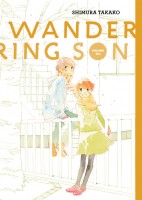
Wandering Son, Vol. 6

February 12, 2014 by Ash Brown

Wandering Son, Volume 6Creator: Takako Shimura
U.S. publisher: Fantagraphics Books
ISBN: 9781606997079
Released: January 2014
Original release: 2007

Wandering Son is currently the only manga by Takako Shimura to have been released in print in English. Although I would love to see more of her work translated and published, I am particularly grateful that it is Wandering Son that has been licensed for print release. (Fantagraphics’ large format hardcover edition is simply lovely, too.) Wandering Son is a beautiful series that explores the young protagonists’ search for personal identity and addresses issues of gender and sexuality in a very sincere, sensitive, and accessible way. Wandering Son often hits incredibly close to home for me which is one of the reasons that I personally hold the series so dear. I’m not sure how popular the series is in general, but it has been well-received by critics both inside and outside of Japan. The sixth volume of Wandering Son was initially published in Japan in 2007. Fantagraphics’ English-language edition of Wandering Son, Volume 6 was released in 2014.

As the school’s cultural festival approaches, the students are hard at work preparing for their classes’ projects. Chiba and Shuichi are trying to put the final touches on their script for a gender-swapped version of Romeo and Juliet despite some of their classmates’ well-intentioned interference. To Chiba and Shuichi the play is much more than a simple seventh-grade class production. It’s also a very personal expression of their desires: Chiba wants to see Shuichi in the role of Juliet and Shuichi wants to be seen as a girl. In some ways their version of Romeo and Juliet is a reflection of Shuichi and Takatsuki as the two of them are faced with challenging society’s established gender roles and expectations. Shuichi and Takatsuki’s bonding over the play is a source of immense frustration for Chiba. She’s in love with Shuichi, and Shuichi has feelings for Takatsuki, but Takatsuki isn’t interested in pursuing those feelings. The result is that there’s quite a bit of drama both on and off the stage.

For my part, I’m glad to see Shuichi and Takatsuki becoming close again after their relationship was disrupted by Shuichi’s confession of love. Thankfully, they were able to work through that and are once again able to lean and rely on each other as friends. This is particularly important for the two of them since they share so much in common. The additional support is something that Shuichi especially needs. At the beginning of Wandering Son, Shuichi was a very meek and hesitant person. However, as the series has progressed, Shuichi has grown, becoming much more assertive and confident and is now able to begin to express in words needs and desires. In a very touching scene with Takatsuki, Shuichi sums it up quite nicely, “It’s my wish. You as a boy…me as a girl…a happy ending for everybody.” It’s really the first time that Shuichi has been able to be so clear and forthright about the their situation. Happily, it’s not the last time that it happens, but it is a very formative and noteworthy moment.

One of the things that Shimura captures remarkably well in Wandering Son is the natural development of the characters and their relationships with one another. Wandering Son is a story about growing up and determining not only who you are as an individual but who you are in relation to other people; how people see themselves in addition to how others see them. Life itself could be said to be a performance. It’s particularly interesting then that in Wandering Son, Volume 6 so many parallels are made between Shuichi and Takatsuki’s real life and the very deliberately crafted Romeo and Juliet production. Through it they are able to reveal a part of themselves for everyone to see. It may not be a particularly subtle narrative technique on Shimura’s part, but it is a very effective one. The play echos their experiences, emphasizing specific aspects of their lives and relationships not only for the characters, but for the readers as well. Wandering Son continues to be an absolutely wonderful series. As always, I am very much looking forward to the next volume.

Filed Under: REVIEWS Tagged With: Fantagraphics Books, manga, Takako Shimura, Wandering Son

Ready for Some Manga Action

February 12, 2014 by Erica Friedman 2 Comments

actionIt’s the beginning of a new year and we’re all feeling energetic and stuff, right? I can’t think of a better time to tackle Manga Action (漫画アクション) magazine from Futabasha.  Manga Action is another one of the manly manga magazines that fills convenience store racks on Japanese street corners.

Like other purely seinen manga magazines, the audience is presumed to be adult males. The protagonists of the story are adult men, the stories told include sexual situations. The stories tend toward slice-of-adult-male-life, with a slight fantasy element thrown in, but the variety is surprising; Manga Action stories include comedy, sex, fantasy, adventure, psychological suspense and more.

Although you might not expect to have heard of any of the manga series running in  Manga Action, the late, lamented JManga had a good relationship with Futabasha and was translating Nakua Hakao’s “Masuikai Hana” as “Anesthesologist Hana” and “Odds GP,” Ishiwata Osamu’s sports manga about the short-track bicycle racing known as Keirin.

Originally debuted in 1967, Manga Action was published weekly until 2003, when it was suspended for a time. It is currently released twice a month. At 380 yen ($3.65 at time of writing), each issue includes just over 350 pages of manga, so it’s a pretty good, cheap form of light entertainment for the salaryman on his daily commute. The Japanese Magazine Publisher’s Association puts per-issue circulation at 200,000 for  Manga Action during October 2011-September 2012.

Like most other men’s manga magazines, Manga Action frequently sports a bikini-clad model on the cover and often has other pop culture tie-ins, like gravure photo shoots and girl-group news and interviews. Futabasha has a webpage for Manga Action, but to say it is “sparse” is an understatement. The single page with magazine and series information is more like a press kit than a website. However, there is a substantial Manga Action Webcomic Page, with sample chapters of many of the currently running stories. Manga Action has a dedicated Twitter account,  in case you’re looking for updates and news.

Manga Action from Futabasha publishing: http://webaction.jp/action/

Filed Under: Magazine no Mori Tagged With: Erica Friedman, Futabasha, Magazine no Mori, Manga Magazine

Weekly Shonen Jump Recap: January 27, 2013

February 11, 2014 by Derek Bown 1 Comment

January 27, 2014 CoverPretty good batch this week I have to say. Some chapters weren’t the greatest, but overall even the chapters I don’t usually care for were pretty good.

Naruto Ch. 662
All I can say about this chapter (well that’s not entirely true) is, “Ding dong the witch is almost dead!” But I jest, my condolences to anyone whose heart broke when Sasuke got stabbed last chapter and remained stabbed this chapter. Honestly I’m surprised he didn’t think to switch places with a handy log.

What really stands out this chapter is how romance in this series works. I know right? We start off talking about an almost dead person and suddenly it’s all about romance. Allow me to explain. As it turns out apparently Ino and Karin’s “love” for Sasuke is so great that they were able to telepathically realize that he is mortally wounded. I can understand Ino being capable of that, what with her ability to transmit thoughts across multiple minds. But how exactly is Karin realizing that he’s been mortally wounded? If the answer turns out to “True Love” then I just might break something.

More amusing is the fact that neither Sakura nor Hinata reacted when Naruto was mortally injured. In fact, Sakura was one of the only characters who’s ever had a thing for Sasuke that didn’t react when he got stabbed. Make of that what you will.

Overall the chapter is actually enjoyable if mostly because seeing our two main characters in such a life threatening situation makes for good drama no matter how the rest of the series fumbles the ball when it comes to storytelling. And the shipping implications are entertaining for anyone that enjoys watching the shipping communities go mad.

All You Need Is Kill Ch. 002
I didn’t get around to reviewing the first chapter because it was in a special issue instead of a regular issue. Should I have reviewed that special issue? I say Nay because there were only three chapters in it, all of them from Obata’s old series. Instead I’ll tell you what I thought right here.

The first chapter was interesting, the concept certainly has my attention and I do like body armor. But I find the female character designs a bit problematic in that they don’t seem to fit in the world this manga is trying to build. They look like they’d be more at home in Bakuman, rather than a gritty action sci-fi series.

The second chapter continues to be worth the time it takes to read by introducing the idea that Keiji can change the outcome of each time loop slightly. Ultimately he is unable to change his ultimate fate without more experience, but as he comes to realize that while his physical abilities will not increase, he can improve himself mentally by learning how to properly use his armor, learn battle strategies, and more importantly gain combat experience from facing the mimics over and over.

Seeing how this series is not only being made a manga, but a western style comic, as well as a movie, I have to say this odd cross promotion has been strangely effective. I originally wasn’t intending on seeing the movie “Edge of Tomorrow” but after seeing the basic concept handled well in the manga I’m curious to see how the big budget adaptation turns out.

One Piece Ch. 735
One Piece can be hard to review because each chapter has so much content that it almost deserves its own review. There’s so much to say that if I were to say only a fraction of it I would feel like what I did say didn’t do the chapter justice.

But enough creative stalling, the chapter was of course, as usual, excellent. I still don’t understand what Oda is trying to do with Señor Pink, but this time around I actually thought he was kind of cool. If he weren’t such an odd parody of I don’t know what he’d definitely be a cool type of character. I think it deserves mention that this is the first chapter of One Piece, ever, that acknowledges that sex exists in the One Piece world. Sure we’ve had children born in this series before, but never before has Oda gone into the specifics of how such an event comes to be. And then this chapter we have one of the random groupies flat out ask Señor Pink to “Make love to me, Señor!”

Fujitora’s plan to undo the seven warlord system is fascinating, and definitely makes him stand out as a character, and not just another Admiral. This arc has been very good with its characters, even moreso than the Fishman Island arc because with these characters we can expect them to stick around and show up later in the arc. At least we can with Fujitora and the newly appointed Lucy who is making his appearance in the finale of the tournament.

One Piece

Nisekoi Ch. 107
I continue to wonder why Haru gets so much focus in this series, even when she’s tolerable she’s far from my favorite character, so it becomes hard to enjoy chapters of which she is the focus. However, the reveal at the end where she discovers the truth about Raku and Chitoge’s relationship is definitely worth it. Now we just have to see how she reacts now that she knows her sister isn’t trying to steal another girl’s boyfriend.

Nisekoi

One-Punch Man Ch. 032
I think the main thing this chapter highlights is that the weakness of One-Punch Man is how the characters kind of appear without any real development towards their personalities. They usually are introduced during a fight, rather than the standard way of introducing them outside of a battle. To be fair, I call this a weakness, when I’m not sure that’s the right term I’m looking for. It’s a unique approach certainly, but it does mean that we’re spending a lot of time with characters that are perfectly fine, I just haven’t had enough time to grow attached to them, so anytime Saitama isn’t on screen I feel myself struggling to remain invested in the other characters.

One-Punch Man

Bleach Ch. 565
Not only do we get to learn Yhwach’s powers, but we also discover, in a kind of roundabout way, that Uryu definitely hasn’t turned against his friends, but that he most likely went to avenge his mother, only to find himself trapped. And the Quincies find themselves in a never ending battle because if Yhwach ever stops battling he will return to an infantile, helpless state.

An interesting concept, but the chapter was a bit too explainy to really be entertaining.

Dragonball Z Ch. 048
People can say what they want about Chi-Chi, I will contend that she’s in the right. Think about it, how happy would you be with your spouse if they got your child involved in a life or death battle for the sake of the planet? Sure everyone would have died had they not, but keep in mind this is your son that hasn’t even hit puberty yet. I’d be pretty furious too in that situation. So to see the characters all complain about what a terrible wife she is kind of pisses me off. What exactly was Toriyama trying to say? That caring about your offspring makes you a terrible spouse? Yes she’s overbearing, but the extent to which the other characters call her out on not caring about Goku is a bit sickening. Because, let’s face it, Goku isn’t exactly a model husband and father. Ultimately I feel that her portrayal in this chapter was excessively political in that she was clearly there to make a statement, and the statement being made is problematic at best.

Dragonball Z

El Viento Del Norte
I’ll spare you the rant about how Katanas are not the greatest swords ever made, and how the constant praise heaped on them by manga kind of pisses me off (We get it manga artists, your ancestors made good swords, well guess what so did my ancestors. And Katanas aren’t actually all that unique, the form was simultaneously developed/adopted on the asian mainland by Cambodia, Thailand, and Burma to name a few. Not identical, but the basic shape of the swords of these four countries are very similar. And how exactly does some goon in the middle of the US Mid-West (or wherever this is set exactly) know what in the flip a Katana is? These are the people for whom the basic name for Chinese people was offensive at best, and to them EVERYONE asian was Chinese. I doubt they’d even care to make the distinction between Chinese or Japanese, so how are they supposed to know what the smeg a flipping Katana is??!?!? And don’t get me started on cutting guns, a Katana can’t even cut a basic European longsword, how are they supposed to cut an entire gun?!?!?).

…sorry.

Anyway, as for the manga itself. The idea of a sword wielding cowgirl is interesting, and while I have to suppress my inner fanboy to accept that said cowgirl wields a Katana, the execution of this one-shot is amateur at best. Which, of course, makes sense considering it was written by an amateur. But it feels like the whole thing was an attempt to appeal both to the Japanese and the Americans voting. “Oh hey, Americans like Cowboys right? Well let’s make it a Cowgirl, and give lesbian overtones because the Japanese (and some Americans) like that along with Katanas.” It feels like something Nobuhiro Watsuki wrote at the beginning of his career. The art style even resembles it a bit. And if Watsuki wanted to write a western with Katanas I would be down, but this story feels like a watered down version of what he would have drawn.

The characters are difficult to get invested in, mostly because of lack of space, which is somewhat countered by the old manga fallback of exaggerating their every interaction. The lesbian overtones from Marianne are a good touch, as sexual attraction can easily explain the attachment between two characters, but the two act like they’ve been lifelong friends instead of people that have only known each other for less than two days.

It’s fun, but when compared to professional standards I wouldn’t expect this to be a long lasting series were it being given the chance at serialization.

El Viento Del Norte


If you want to hear more, check out the Manga^3 Podcast Archives.

Filed Under: FEATURES & REVIEWS, WSJA Recaps Tagged With: bleach, blue exorcist, Dragon Ball Z, naruto, nisekoi, One Piece, one punch man, toriko, world trigger

The Legal Manga Reading Sites You Don’t Know About

February 11, 2014 by Justin Stroman 19 Comments

You don’t really see it at ANN. You don’t really see it at Manga Bookshelf. You don’t really see these discussed amongst forums and various social media sites. I did list some of them though, because they proved they’re legit somehow. Needless to say though, it feels that’s the only type of exposure they’ve gotten. I’m guessing it’s not true, but it’s just a feeling. And it’s weird. Well, maybe not as weird as expected, since the online manga sites themselves might be the ones with some issues.

…Oh right, I guess I should explain a bit more what I’m talking about.

…

Read More

Filed Under: FEATURES Tagged With: Amimaru, Balloons and Chapters, Manga Reborn, Manga Samurai Style, Reading Manga Sites You Probably Don't Know About, Renta!

Bookshelf Briefs 2/10/14

February 10, 2014 by Sean Gaffney and Michelle Smith Leave a Comment

This week, Sean and Michelle look at recent releases from Yen Press, Seven Seas, and Viz Media.


circusliars14Alice in the Country of Joker: Circus and Liar’s Game, Vol. 4 | By QuinRose and Mamenosuke Fujimaru | Seven Seas – Another volume of Joker vs. everyone else in the battle as to whether Alice will live happily in denial or wake to reality and crushing guilt. Blood gets the cover, and it’s appropriate – of all Alice’s potential suitors, he’s the one that seems to understand why he loves her better than the others, who can’t move beyond ‘bafflingly attracted to her’. Like Ace, Blood enjoys seeing Alice’s changing facial emotions. Unlike Ace, he prefers those to be mostly centered around him and love – and if that means they’re all anger and venom, well hey. It also contrasts well with Peter’s overdevoted yet basically sexless love, and the ‘oneesama’ feelings of Vivaldi. Will we ever see Lorina’s fate in this series? Only if it heads towards a ‘bad end’, which I doubt. – Sean Gaffney

inu2Inu x Boku SS, Vol. 2 | By Cocoa Fujiwara | Yen Press – While there is still an undercurrent of darkness to this title, I must admit I wasn’t expecting this volume to be quite as light and silly as it was. Carta, in particular, is a walking punchline, with ‘Peking Duck!’ probably being my favorite. Likewise the flamboyant lunacy of Kagerou, Ririchiyo’s fiance, means everything seems divided into nothing but masochism or sadism. That said, everything always gets dialed back when we focus on the cute yet arm’s length relationship between Ririchiyo and Soushi. The story of his upbringing is where the humor ceases, and his letter to Ririchiyo, as well as his realization of what they have meant to him, is very touching. Given the plot and the suggestive covers, I was expecting this to be a lot more fanservicey of a title. Instead, it’s proven quite sweet. – Sean Gaffney

kamisama14Kamisama Kiss, Vol. 14 | By Julietta Suzuki | Viz Media – I spent an enjoyable weekend getting caught up on Kamisama Kiss, a manga I had neglected for far too long. Unfortunately, volume 14 isn’t the best representation of the series, since it’s largely introduction to an arc that finds Nanami paying a visit to Tomoe’s past in an attempt to save him from a 500-year-old curse in the present. That’s not to say there aren’t some very nice moments here—my favorite is the moment when Nanami realizes that her first plan would mean that Mizuki would never have come to their shrine, causing her to rush to his side and reassure him—but everything builds to the final moment, which promises some interesting developments to come. Just not, y’know, in this particular volume. Still, I like the series a lot in general, and have faith that the eventual payoff will be rewarding. – Michelle Smith

popular2No Matter How I Look At It, It’s You Guys’ Fault I’m Not Popular!, Vol. 2 | By Nico Tanigawa | Yen Press – Sometimes I read this and it’s the funniest thing ever, where I take my time and savor each horrible moment. And then sometimes it just hits far too near the knuckle, and I find myself flipping ahead because I really don’t want to cringe as I read about Tomoko’s new humiliations. Balancing on that knife edge is what this series is, and I like the fact that it seems to be different for each reader – I had immense trouble with the entire arc with Tomoko’s cousin, but seeing Tomoko spying on a couple with two younger boys or her father catching her with a massager and a BL tape were hysterical. There’s something that every fan of dark comedy here will love, but buyer beware: each volume will also give you the creeping shakes at how horrible her life really is. – Sean Gaffney

nura19Nura: Rise of the Yokai Clan, Vol. 19 | By Horoshi Hiibashi | Viz Media – There’s a wrap-up of the events in the past here, showing us Rihan supposedly taking out the Hundred Stories (as well as more of Otome’s psyche being quite fragile). However,k most of what we get here is complete chaos, as the Hundred Stories are back, and using the human tendency for rumors and mistrust to make life a living hell for our heroes. It’s impressive how well the author shows us things going completely to hell – you never quite lose track of what’s happening, but the sheer chaos of the sequences is fleshed out enough for you to care. Even Kana can’t escape the fact that Nura and his clan are yokai now, and it’s understandably making her a little upset. I anticipate next volume will have a lot of fighting, so it was good to see effective setup for that here. – Sean Gaffney

toriko10Toriko, Vol. 20 | By Mitsutoshi Shimabukuro | Viz Media – This volume mostly consists of a series of smaller short arcs meant to show Toriko and Komatsu on less life-threatening adventures. This ranges from Toriko playing Santa and delivering food to the hungry to the search for the stinkiest fruit in the world, the Durian Bomb. Having once been exposed to Durians, I can sympathize with this last one. This Durian also provides a healthy dose of humor, along with other one-shot gags such as the Full-course Meal of health-nut Aimaru. In the end, though, the best reason to read Toriko is also here in this volume: seeing Toriko obsess about food and be incredibly strong, and having Komatsu reveal how far he’s come as a character and show off his basic innate goodness. After 20 volumes, this title still makes me (sigh, sorry) hungry for more. – Sean Gaffney

Filed Under: Bookshelf Briefs

My Week in Manga: February 3-February 9, 2014

February 10, 2014 by Ash Brown

My News and Review

Last week I announced the winner of the Vinland Saga manga giveaway. The post also includes a list of the manga with memorable snowy scenes that were mentioned during the contest. (Just in case you haven’t had enough snow where you are this winter.) And speaking of Makoto Yukimura’s Vinland Saga, I also reviewed the second omnibus of the manga. I’m really loving the series and enjoyed the second volume even more than I did the first. Over the weekend I reviewed Mieko Kanai’s award-winning novel Oh, Tama! which I greatly enjoyed. I know quite a few people who find it to be a boring work, but I found it to be delightfully low-key with a quirky sense of humor.

As for news and interesting reading seen online this week: The fourth issue of the international edition of Monkey Business will be released later this month. I quite enjoy Monkey Business, so I’m looking forward to it. Seven Seas answered a question about some of the decisions that go into licensing manga for omnibus release over on its Tumblr. At Organization Anti-Social Geniuses, Justin posted a great List of Where You Can Buy Anime/Manga in 2014. Hooded Utilitarian’s Ng Suat Tong writes about some of the best online comics criticism of 2013, including some great articles on manga that I hadn’t previously come across.

Quick Takes

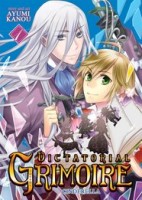
Dictatorial Grimoire, Volume 1: CinderellaDictatorial Grimoire, Volume 1: Cinderella by Ayumi Kanou. I have a feeling that Dictatorial Grimoire may very well be one of those manga that is so bad that it’s good. The story is admittedly a bit of a mess and sometimes doesn’t even make a whole lot of sense. However, I can’t deny that I had fun reading the manga. It’s all sorts of ridiculous. (I’m not sure that all of it is entirely intentional, though.) Otogi Grimm is the descendant of the Brothers Grimm which turns out to be a rather dangerous thing to be. The Brothers made a pact with demons offering up the lives of their descendants in exchange for the stories that formed the basis of their famous fairy tales. Many of those demons–such as the progenitor’s of Cinderella and Snow White–are now after Otogi in one way or another. He does seem to maintain some control over them, though it’s never explained how he learned, developed, or perhaps inherited this power. I did love that Cinderella is a complete masochist, although that fact is used mostly as a gag rather than for any meaningful characterization. I was, however, amused.

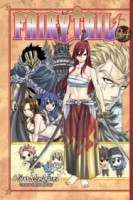
Fairy Tail, Volume 34Fairy Tail, Volume 34 by Hiro Mashima. The thirty-fourth volume of Fairy Tail gets off to a good start with the conclusion of Natsu’s confrontation with the Saber Tooth Guild. Then it’s back to the Grand Magic Games for the third day of competition. After a nice buildup to the day’s challenge event, called Pandemonium, Erza’s epic battle is largely reduced to a two-page spread. More time is spent on what basically amounts to target practice for the other teams than on what could have been a glorious combat sequence; it was extremely disappointing. Some of the other fights in this volume fare better, but others are completely rushed through. I’m more interested in the plots going on behind the scenes than I am in the tournament itself, but it seems that to some extent Mashima has given up on the Grand Magic Games. Even the event challenges, which were initially interesting because they required some actual thought and strategy to be put into them in addition to magic and martial skill, have become little more than all-out brawls in this volume. That, too, was a rather disappointing development.

Manic LoveManic Love by Satomi Yamagata. Manic Love is a prequel of sorts to Yamagata’s Fake Fur; it delves deeper into the back story of Maki Sonoda, an important side character. Yamagata jokes in the afterword that she had challenged herself to write a manga that was half nude scenes, so there’s quite a bit of sex in Manic Love. But it’s actually handled quite tastefully and the sex scenes are an important part of the manga and the themes with which Yamagata is working. As was the case with Fake Fur, Manic Love explores the relationship between romantic love and sexual desire and how they can influence each other. Sex is used as a form of communication and connection between the characters in addition to being something that they enjoy. One of the things that I particularly liked about Manic Love is that each chapter it told from a different characters’ point of view. Maki is in what is probably best described as a sort of love triangle, but it’s one without hard feelings or anger. It’s interesting to be able to see that unusual relationship from multiple perspectives, including one from someone who is outside of that triangle entirely.

Filed Under: FEATURES, My Week in Manga Tagged With: Ayumi Kanou, Dictatorial Grimoire, Fairy Tail, Hiro Mashima, manga, Satomi Yamagata

  • « Go to Previous Page
  • Page 1
  • Interim pages omitted …
  • Page 623
  • Page 624
  • Page 625
  • Page 626
  • Page 627
  • Interim pages omitted …
  • Page 1048
  • Go to Next Page »
 | Log in
Copyright © 2010 Manga Bookshelf | Powered by WordPress & the Genesis Framework