• Skip to primary navigation
  • Skip to main content
  • Skip to primary sidebar
  • Home
  • About Us
    • Privacy Policy
    • Comment Policy
    • Disclosures & Disclaimers
  • Resources
    • Links, Essays & Articles
    • Fandomology!
    • CLAMP Directory
    • BlogRoll
  • Features & Columns
    • 3 Things Thursday
    • Adventures in the Key of Shoujo
    • Bit & Blips (game reviews)
    • BL BOOKRACK
    • Bookshelf Briefs
    • Bringing the Drama
    • Comic Conversion
    • Fanservice Friday
    • Going Digital
    • It Came From the Sinosphere
    • License This!
    • Magazine no Mori
    • My Week in Manga
    • OFF THE SHELF
    • Not By Manga Alone
    • PICK OF THE WEEK
    • Subtitles & Sensibility
    • Weekly Shonen Jump Recaps
  • Manga Moveable Feast
    • MMF Full Archive
    • Yun Kouga
    • CLAMP
    • Shojo Beat
    • Osamu Tezuka
    • Sailor Moon
    • Fruits Basket
    • Takehiko Inoue
    • Wild Adapter
    • One Piece
    • After School Nightmare
    • Karakuri Odette
    • Paradise Kiss
    • The Color Trilogy
    • To Terra…
    • Sexy Voice & Robo
  • Browse by Author
    • Sean Gaffney
    • Anna Neatrour
    • Michelle Smith
    • Katherine Dacey
    • MJ
    • Brigid Alverson
    • Travis Anderson
    • Phillip Anthony
    • Derek Bown
    • Jaci Dahlvang
    • Angela Eastman
    • Erica Friedman
    • Sara K.
    • Megan Purdy
    • Emily Snodgrass
    • Nancy Thistlethwaite
    • Eva Volin
    • David Welsh
  • MB Blogs
    • A Case Suitable For Treatment
    • Experiments in Manga
    • MangaBlog
    • The Manga Critic
    • Manga Report
    • Soliloquy in Blue
    • Manga Curmudgeon (archive)

Manga Bookshelf

Discussion, Resources, Roundtables, & Reviews

Blog

Pick of the Week: Condition of the Heart

March 17, 2014 by Michelle Smith, Anna N, Sean Gaffney, Ash Brown and MJ Leave a Comment

potw-3-17MICHELLE: Probably I should pick something actually new, especially something as great as Vagabond, but as the cliché goes… the heart wants what the heart wants, and my heart wants xxxHOLiC to be back in print! In fact, my heart is even going “woo!” a bit at the prospect.

ANNA: I feel like it would be both a moral and ethical failing to not pick something as great as Vagabond, so that is my pick!

SEAN: I had issues with Negima ending, so I’m interested to see how it gets fixed, or indeed how much UQ Holder will mention Negima at all. In any case, I can’t quite quit Ken Akamatsu, so it’s my pick of the week.

ASH: I’m with Anna this week; Vagabond all the way!

MJ: I’ll bring things full circle, I guess, because though I’m looking forward to several of this week’s releases (okay, mostly March Story), my heart is decidedly with Michelle and the re-release of xxxHOLiC. On this rare occasion (and also for Michelle’s sake) I’ll even go along with the ridiculously random capitalization in the title. I’ve been a devoted fan of this series longer than I’ve been a manga blogger. In fact, it was the first CLAMP series I ever fell for, eventually leading me down a a path of no return. I can’t claim to love everything CLAMP has ever written—or even everything they wrote in xxxHOLiC, but without it (and them) my manga experience would be somehow lacking. I’m happy to see this series back in print!

What looks good to you this week?

Filed Under: PICK OF THE WEEK

My Week in Manga: March 10-March 16, 2014

March 17, 2014 by Ash Brown

My News and Reviews

I managed to post three in-depth reviews last week, and two of them were for manga! First up was my review of Mieko Kanai’s delightful novel Indian Summer. Technically, it’s the third book in her Mejiro series, following Oh, Tama!, which I also recently read and enjoyed. However, Indian Summer was actually her first novel to be translated in English. As part of my Year of Yuri review project, I took a look at the omnibus edition of Milk Morinaga’s manga Kisses, Sighs, and Cherry Blossom Pink. So far it has been my favorite yuri manga by Morinaga to have been released in English. It’s very cute, sweet, and romantic. And to wrap things up, over the weekend I posted the next review in my “Manga March Madness” project which focuses on Takehiko Inoue’s wheelchair basketball series Real. It was the third week in March, so I reviewed Real, Volume 3. I still think that Real is one of the best comics currently being released in English.

Quick Takes

HeartHeart written by Blair Butler and illustrated by Kevin Mellon. At one point Oren “Rooster” Redmond was a run-of-the-mill office worker. Bored with his job, he decides to take control of his life. Following in the footsteps of his older brother he starts by becoming an amateur MMA fighter. After months of grueling training he finally has the opportunity to go pro, but that’s when the hard work really begins. Heart follows the rise and fall of Rooster and the sacrifices that he makes. There’s too much face punching, blood, and machismo to call Heart sentimental, but it is a very human story. Rooster’s fights both in the cage and internally with himself are also representative of anybody’s struggle to accept themselves for who they are. Sometimes, no matter how hard someone tries or how much they improve, it will simply never be enough. It’s how someone deals with that fact that really determines who they are as a person. Heart is a great comic and one that I personally found to be inspirational, and not just because I’m a martial artist.

Prince of Cats, Issue 1Prince of Cats, Issues 1-4 by Kori Michele Handwerker. Prince of Cats is an ongoing webcomic that is free to read, however the print edition of the series includes some bonus content not available online. I knew going into Prince of Cats that the comic was a queer love story, but what I didn’t realize is that the series also features a transgender character, which I was rather pleased to discover. Handwerker hand paints each page of the comic and the watercolors are beautiful. The story itself is also lovely, focusing on the relationship between Lee and Frank who were once very close but who are starting to drift apart. Despite the high school drama, Prince of Cats tends to be quiet and subdued but very realistic (with the exception of talking cats, of course.) I could easily empathize with the characters and the portrayal of growing up in a conservative, rural area. It’s hard enough trying to fit in to begin with, let alone while also being a member of a minority (of any sort). I’m definitely looking forward to reading more of Prince of Cats.

Sherlock Bones, Volume 4Sherlock Bones, Volume 4 written by Yuma Ando and illustrated by Yuki Sato. In previous volumes of Sherlock Bones the answer to the various mysteries were known from the beginning. The challenge was simply to find evidence to prove who was guilty. However, in the fourth volume Sherdog and Takeru actually have to do some legitimate investigation and sleuthing. Granted, in all but one case the readers are already aware who the culprit is. I’m still enjoying Sherlock Bones more than I expected I would. The silliness of the premise is a bit at odds with the seriousness of many of the crimes (homicide, accidental and otherwise, is the one that is most frequently encountered), but for the most part it somehow works; Sherlock Bones can be unexpectedly entertaining. I would like to say that I will be extremely disappointed if Meowriarty doesn’t make another appearance in the series. As if Sherlock Holmes as a small puppy wasn’t ridiculous enough, Moriarty as a bruiser of a cat is marvelously absurd. Also, Sherdog needs an arch-nemesis.

Stone Collector, Volume 1Stone Collector, Book 1 written by Kevin Han and illustrated by Zom-J. Stone Collector is Gen Manga’s first manhwa series, but it reads from right to left, which is a little odd. I was rather surprised when I saw the first volume of Stone Collector; I’m used to the smaller trim sizes used by Gen Manga and hadn’t realized that Stone Collector was going to be so much larger. The oversized format shows off Zom-J’s artwork, which is very clean and fairly dynamic with great facial expressions. Frequently, I found that I was vaguely reminded of Kohta Hirano and especially Hellsing. Some of the battle sequences in Stone Collector are a little difficult to follow, and the lack of backgrounds often made it seem more like a storyboard than a fully realized comic. More attention is given to the fights and monsters than is given to a completely comprehensible plot or well-developed characters. However, it is a quickly paced, action-packed series. I could see a film adaptation of Stone Collector actually doing quite well.

Filed Under: FEATURES, My Week in Manga Tagged With: Blair Butler, comics, Kevin Han, Kevin Mellon, Kori Michele Handwerker, manga, manhwa, Prince of Cats, Sherlock Bones, Stone Collector, Yuki Sato, Yuma Ando, Zom-J

Bookshelf Briefs 3/17/14

March 17, 2014 by Sean Gaffney, Anna N and Michelle Smith 3 Comments

This week, Sean, Anna, & Michelle look at recent releases from Kodansha Comics and Viz Media.

fairytail35Fairy Tail, Vol. 35 | By Hiro Mashima | Kodansha Comics – Leaving aside the fight between Natsu/Gajeel and Saber Tooth’s Natsu and Gajeel-alike’s that takes up half this book, what struck me most was how it’s trying to have a lot of humor but it feels more and more that this is due to the fact that there will be little opportunity for it soon. We see future Levy talking about everyone dying in 2 days (including her beloved… hrm, Gajeel shiptease there?), and Jellal runs into the mysterious hooded figure, who is clearly someone he knows. And of course there’s the opening scene with Lucy beaten so bad she’s hospitalized. Given that, I am more charitable to the giant fanservice scene that is Chapter 298, and am highly amused by Gildarts’ entire chapter that shows that just because one is middle-aged does not mean you stop being a big dumb shonen hero. – Sean Gaffney

happymarriage5Happy Marriage, Vol. 5 | By Maki Enjoji | Viz Media – With all the yaoi manga coming out, I feel like it is a tiny bit unfair that there are so few currently translated smutty manga for older ladies who enjoy stories about forced marriages and vampire bosses! But it is all the more reason to celebrate the few series like that which are translated! Volume 5 of Happy Marriage continues to document the growing relationship between Chiwa and Hokuto along with plenty of Machiavellian corporate machinations. Hokuto is finally showing his more vulnerable side to Chiwa, but not without plenty of misunderstandings along the way. Even though this manga is fairly predictable, it is still consistently enjoyable. – Anna N

kamisama14Kamisama Kiss, Vol. 14 | By Julietta Suzuki | Viz Media – The gap between the volumes for this series is getting fairly long, but that just makes me appreciate it even more. Suzuki’s world building and unique character designs make every volume a pleasure to read. In this volume Nanami throws herself into another adventure in order to save a dying Tomoe. The long-lost Mikage of the shrine returns for a visit and drops a few not very helpful hints about Tomoe’s conditions, leading to Nanami undertaking a dangerous trip through time in order to prevent the curse that threatens Tomoe. Along the way she meets Tomoe’s first love and sees a much more warlike and aggressive version of the fox ayakashi that she holds so dear. It’ll be interesting to see the fallout from the journey through time, especially if it changes Nanami and Tomoe’s relationship in the present. – Anna N

monster1My Little Monster, Vol. 1 | By Robico | Kodansha Comics – Neither Shizuku Mizutani nor Haru Yoshida has any friends, the former because she’s obsessed with studying and the latter because of his tendency toward violent and/or bizarre behavior. They somehow manage to strike up a friendship, however, and as Haru learns to relate to the world a little better, Shizuku begins to see the benefits of involving herself with other people. This perhaps makes My Little Monster sound like it’s a drama, but it really isn’t. I snickered quite a few times (even at the back cover, a promising early sign!) and basically loved every time Haru’s pet chicken appeared, which was frequently. Again, I’d stop short of calling this series profoundly great, but it was definitely enjoyable and a nice surprise, since I had no knowledge of it prior to its release here. I’ll be checking out volume two! – Michelle Smith

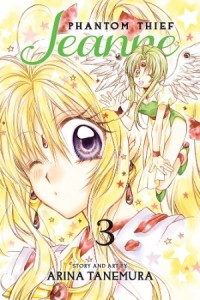
jeanne1Phantom Thief Jeanne, Vol. 1 | By Arina Tanemura | Viz Media – I am very seldom in the position of loving an Arina Tanemura series almost without reservation, but such is the situation I find myself in with Phantom Thief Jeanne. I suspect much of this reaction is due to nostalgia—I have fond memories of watching the anime back in the days of VHS fansubs—but I do honestly think Jeanne has much to recommend it. Maron is not your typical happy-go-lucky Magical Girl heroine, and is confident, to boot, with inner dialogue like, “I don’t need to be saved… I’m not a weak little girl.” Too, I really like how Tanemura paces the development of Maron’s relationship with neighbor/rival Chiaki, and how Maron learns he’s been deceiving her just as she’d decided she could trust him. True, the art can be distracting (those eyes!) and there are quite a few unfunny comedic gags, but on the whole this is a series I’m glad to see back in print! – Michelle Smith

sankarea5Sankarea: Undying Love, Vol. 5 | By Mitsuru Hattori | Kodansha Comics – Again, the cover tells the story, as things really aren’t going well with the whole ‘don’t eat people’ thing Rea’s trying to achieve. Luckily, the cavalry arrives in time, but now Rea and Chihiro are strangely embarrassed to be around each other. (Gosh, I wonder why?) What was more interesting to me was the Wanko subplot towards the end of the volume, where we see that her crush on Chihiro, and desperate realization that it’s not going to happen, is so bad that she ends up trying to turn herself into a zombie to get closer to him. Fortunately, the near-death experiment doesn’t take, and it seems to give her some sort of closure instead, which is a relief. Still, if you read Sankarea as a harem love comedy, I expect you may have run screaming by now. It’s the creepy horror that keeps things hopping. – Sean Gaffney

Filed Under: Bookshelf Briefs

Ranma 1/2, Vols. 1 & 2

March 16, 2014 by Sean Gaffney

By Rumiko Takahashi. Released in Japan by Shogakukan, serialized in the magazine Shonen Sunday. Released in North America by Viz.

(pre-review note #1: I use ‘Ryouga’ and ‘Ukyou’ when I romanize, though otherwise stick to Viz romanization. It’s a 90s fanfic writer quirk that I am unlikely to break the habit of, as I am stubborn.)

(pre-review note #2: Few comment on my reviews anyway, but just in case: please do not character bash in the comments, at all.)

It’s quite odd seeing reviews of the new Ranma 1/2 omnibus from people who haven’t read it before, as they talk about all the craziness that simply doesn’t register with me anymore. I am almost saturated with the first two volumes of Ranma contained here. Not only have I read it when Viz first released it in 32-page pamphlet comics, and then again as collected works, but so much Ranma fanfiction uses the same opening as a springboard for its own ideas (or lack thereof) that I can almost recite some of the dialogue. “And I’m better built to boot!” “She’s really a sweet girl, she’s just a violent maniac.” And so many others. So, in a sense, there’s no real way I can review this for a newbie. As such, this is more of a look at Ranma in retrospect, and will be liberally laced with spoilers. Short review for those who don’t want to read on: Ranma 1/2 is a lot of fun, and in these first two volumes you can see Takahashi shift her characters to where they are funniest.

ranma1-2

For those who picked up the last iteration of Ranma, the scans used do look better – there’s still no color pages (there weren’t in the Japanese volumes either), but it’s not as dark and muddy as it once was. The translation is ‘spiffed up’ a bit, but is still essentially the same, so anyone who wants honorifics is out of luck. There’s a bubble order error on Page 1 (which everyone has noticed), but otherwise things seem well put together.

It’s worth noting that this was the new series Takahashi had in Shonen Sunday to replace her breakaway hit, Urusei Yatsura. For all that it repeatedly failed in North America, the manga was an instant classic in Japan, and I imagine there was some pressure on her to keep the comedy she did best while making things slightly different. Akane in these first couple of volumes is not all that far off from Shinobu Miyaki, Ataru’s long-suffering childhood friend and ex-girlfriend. Same general sweetness when not placed in stressful situations, same hair-trigger temper, same ability to beat up anyone who activates that hair-trigger temper. As such, it’s refreshing that Ranma is so different – at least at first. Sure, he shoots his mouth off without thinking, but he’s quite observant here, noticing people’s emotional states without commenting and playing off that. Most importantly, Ranma’s interest in scoring with women is zero, and this will not change for the next 18 omnibuses after this one. Ataru was a giant lech who wanted every cute girl in the universe. Ranma has issues dealing with girls, and tends to prefer fighting instead.

As for the others, Genma comes from a line of horrible Takahashi fathers that extends from Mr. Fujinami all the way to Rin-Ne’s horrible debt-ridden dad. Genma is obsessed with fighting and training, but is too dumb to listen when people tell him there’s a cursed spring ahead – though, to be fair, so is Ranma. He also tends to stay in his panda form almost as much as Ranma does his girl form, possibly for the same reason – he looks cuter that way. Meanwhile, Soun is something of a nonentity, and this will not change much either – his observation is the opposite of Ranma, as he is in the bath when P-chan leaps in and Ryouga leaps out, but presumably does not ever think “should I stop this man with a pig curse from sleeping with my innocent daughter every night?”.

Kasumi and Nabiki seem quite different at the start of the series. Nabiki is the ‘normal’ girl, who’s clearly OK with being engaged if the guy is cute, but is unwilling to put up with the guy being weird – which Ranma definitely is. Kasumi seems actually vexed at several points in Chapter One, and talks about how she prefers older men – clearly meant to hint at the start of her plot with Dr. Tofu that goes nowhere. As the volume moves on, though, we see the light bulb go off over Takahashi’s head as to how they’ll be handled in the future. With Nabiki it’s selling the photos to Kuno, something for which she is gleefully unapologetic. It’s the start of something big. And Kasumi gets to visit Dr. Tofu, but he’s so oblivious to anything and everything while she’s around that it’s obvious to anyone what she does to him – obvious to anyone but her. Kasumi’s breezy Yamato Nadesico-ness, and her tendency to think the best of everyone while missing the darker points, will become her standard character trait.

So far, the only supernatural aspect of Ranma we’ve seen is the curse itself, as opposed to Urusei Yatsura’s aliens bringing the excuse for any sort of plot whatsoever simply by virtue of being from another world. But that’s OK, as Ranma is far more focused on fighting. Not only are Ranma and Genma perfecting their own style of Japanese martial arts – which utilizes many different styles, most of which I suspect are ‘what looks really cool?’ – but we also get to see Akane’s kempo-influenced style (her family and Ranma’s supposedly have the same ‘anything goes’ background, but Akane has not been training around Asia for the last 10 years either) and Kuno’s kendo training with a wooden sword. Ranma is shown to be an excellent fighter, but is thankfully not perfect – he tends to underestimate his opponents, such as Kuno and Ryouga here, and ends up not giving his best effort till he’s already injured as a result.

Speaking of Kuno and Ryouga, let’s talk about them. Shutaro Mendou had his moments of complete idiocy, but could at heart behave like a normal person if pressed or girls were watching him. Tatewaki Kuno has no such normalcy filter, for reasons that we won’t find out for some time but are essentially similar to Ranma’s – “boy, my entire family is screwed up”. It’s worth noting that he and Nabiki interact purely by dint of being in the same class, and he even notes casually that he despises her at one point. Well, that’s one ship sunk. No one could possibly write Tatewaki/Nabiki after reading that. :) As for Ryouga, what most struck me wasn’t all of the anger he possesses – Ryouga is an out-of-control berserker here, with none of the sweetness and depression that will flesh him out later – but how much he looked like Ataru. It won’t be as obvious to those who haven’t seen the final few volumes of UY – Takahashi’s art evolved exponentially during that series – but put a bandana on Ataru by the end of UY and he’s basically Ryouga here. Ryouga, notably, DOES have a libido, but knows better than to do more than snuggle in Akane’s boobs as a pig – we don’t have a true lecherous pervert in the series. Yet.

I was amused at Ryouga not caring about Akane at all during the first fight – Ryouga tends to be focused only on fighting and revenge in this volume, and it’s only when Akane kisses his pig-form that he’s smitten – possibly as it’s the most affection he’s ever gotten from anyone. Ryouga’s sense of direction also comes up for the first time here, and it’s already exaggerated to its maximum – we see him at the Northern and Southern ends of Japan. As for P-chan, his arrival in the Tendo household sets up an obvious tension about how long it will be before his secret is revealed and Akane finds out who he is. The answer, of course, is never – this never comes up, likely as Takahashi knew it would require a response that would be too serious to cope with in the series.

Other characters we’re introduced to include Dr. Tofu, who’s an excellent doctor who’s useless once he sees Kasumi. This was once an amusing running gag, but seeing Tofu suffering the same effects when he sees a middle-school Kasumi show up with her elementary-school aged Akane feels horribly creepy now, and I won’t be sorry when he’s quietly phased out of the manga in a few more volumes. We also meet Kodachi, though she barely gets to appear before the omnibus ends. It’s still enough time to see that she’s a little bit crazy, and also tends to win her matches by crippling the opponent beforehand. As for her own family situation, it will have to wait till next time.

Lastly, it’s worth noting how well Ranma and Akane get along, despite the bickering and occasional misunderstandings. Usually everything is resolved in a chapter or so, and Ranma is not QUITE as thoughtless as he gets later on. They have common interests, and tend to work well when fighting together. Takahashi had gotten burned on UY when Lum became so popular she had to change the story to make her the lead girl, and though she came to approve of that, it wasn’t going to happen again. So here we get two whole volumes setting up how well Ranma and Akane go together, with the villains/rivals that we see so far mostly being comedic and/or focused entirely on revenge against Ranma for non-romance reasons. It will take a villain of a higher caliber to really create the first big rift between these two, one that will leave self-confidence and trust issues that never really get settled throughout the series. But Shampoo is in the next volume. For now, we’re introduced to Ranma Saotome and the craziness that surrounds him, and there’s a lot of it. If you’ve read Ranma, read it again. If you haven’t, go read it. And for God’s sake, please don’t take it seriously! That’s the WORST thing to do with this series! (looks up at backscroll, coughs a bit)

Filed Under: REVIEWS

Return of the Son of License Roundups

March 15, 2014 by Sean Gaffney

These are coming in so fast that I honestly can’t keep up, and I’m so glad that I’m not a news site.

biohazard

Viz had one more title I missed in the last roundup, which is Biohazard – Marhawa Desire, a Shonen Champion title that Viz will release under the Resident Evil name that North America uses. Given the tie-in, you can likely expect some horror here. It’s 5 volumes long.

celebration

The doujinshi anthology has done pretty well for companies in the past few years, as we’ve seen Dark Horse do one for Evangelion and Bandai do several related to Code Geass. Yen already had The Misadventures of Kyon and Koizumi. This one from Yen Press will actually be three from the same company fused together, and I suspect lots of comedy will ensue. It’s a good value for money, in any case.

alicediamonds

I’d seen this up on Amazon a while ago, but wanted to wait for confirmation as the info I could find suggested it was a light novel. But wait, I said. Seven Seas? Didn’t Adam Arnold say he’d rather gnaw his own leg off rather than publish another light novel? And yet there it is. This is what happens when you have access to a cash cow franchise. In any case, this novel is in the Alice in the Country of Diamonds series, whose premise I seem to recall is that Alice arrives in the new country but no one knows who she is. My guess, judging by the cover, is it’ll be another Blood pairing.

KoenoKatachi

As for Crunchyroll, they’ve announced so much I’ve gotten ridiculously far behind. 3 YKO titles, including the old JManga favorite And Yet The Town Moves. Some digital editions of manga already licensed for print, such as Heroic Legend of Arslan and Ajin. Lots of Moyoco Anno titles, including mature josei from Shodensha’s Feel Young and cute slice-of-life newspaper comic manga. A Morning manga that likely would not make it over to print anytime soon in Investor Z. And most exciting to me, Koe no Katachi, coming out as A Silent Voice, a Shonen Magazine title about a deaf student and the boy who bullies her then tries to atone for it years later. This may be the keeper of the group.

So, got any favorites in here?

Filed Under: NEWS, UNSHELVED

Real, Vol. 3

March 15, 2014 by Ash Brown

Real, Volume 3Creator: Takehiko Inoue
U.S. publisher: Viz Media
ISBN: 9781421519913
Released: January 2009
Original release: 2003
Awards: Japan Media Arts Award

Takehiko Inoue is probably best known for his basketball manga series Slam Dunk. Now, I enjoy Slam Dunk quite a bit. However, it’s another basketball manga by Inoue that is my personal favorite–Real, which specifically features wheelchair basketball. Although Real and Slam Dunk both share some similar themes, Inoue’s approach in Real tends to be much more serious and realistic, which make sense as the series is intended for a more mature audience. Real began serialization in the manga magazine Weekly Young Jump in 2001. Later that year, Inoue would win a Japan Media Arts Award Excellence Prize for the manga. The third volume of Real was released in Japan in 2003. Viz Media published Real under its Signature imprint, releasing the English-language edition of Real, Volume 3 in 2009. Real is a fantastic series that starts strongly and only continues to get stronger with each volume.

Things always came easily for Takahashi and he naturally excelled at both school and sports. But now he is faced with one of the most daunting challenges of his life. The question is whether or not he will be able to meet that challenge. After being hit by a truck, Takahashi has lost all feeling in his legs along with his ability to walk. He is in complete denial about his condition and is convinced that with only a little effort he’ll be back to playing basketball in no time. Takahashi is in for quite a shock when he begins his physical rehabilitation and he doesnt’ take it well. Recovery, both mental and physical, will be a long and excruciating process and in the end Takahashi will never have the mobility he once enjoyed. Coming to terms with that fact and facing reality are the first steps that Takahashi needs to take in order to move on with his life, but they may be some of the most difficult ones to accomplish.

Although Takahashi is largely the focus of the third volume of Real, he is not the only one who is facing a significant crossroads in his life. Moving forward after a traumatic experience is one of the themes addressed in Real, Volume 3. Nomiya still feels incredibly guilty over the accident that he was in which caused Natsumi to lose the use of her legs. She, like Takahashi, has begun her rehabilitation. It’s a painful and exhausting process for the body, the mind, and the spirit. Seeing this, Nomiya desperately wants to change the direction his life is heading and to become a better person. This, too, is not an easy process. At this point in the series, Togawa serves as proof that these sorts of challenges can be overcome. Things certainly aren’t perfect for him and he still harbors intense anger and frustration, but even with a missing leg he leads a full life. However, it took hard work and effort to get to where he is now. Whether or not Takahashi will be able to do the same remains to be seen.

One of the things that impresses me about Real and Inoue’s work in general is his ability to create incredibly flawed characters who are still sympathetic. Takahashi in particular can be extremely harsh and unlikeable, but I still care about him and his situation. His tormented feelings over no longer being able to walk and how he believes that makes him a lesser person are counterproductive. But he is not the only person who shares them; others struggle with those types of feelings as well. Tamura, the captain of Togawa’s basketball team, has repeatedly expressed similar sentiments which either deflates the other players or pisses them off. (Togawa is particularly sensitive to this issue and has hauled off and punched Tamura at least once because of it.) Inoue’s adept handling of these concerns, while specific to the context of Real and its characters, is also more universally applicable. Almost everyone, no matter who they are, has experienced feelings of inadequacy and disappointment at some point in their lives. Real simply shows what can happen when that reality is faced head on.

Filed Under: REVIEWS Tagged With: Japan Media Arts Award, manga, real, Takehiko Inoue, viz media, VIZ Signature

Kisses, Sighs, and Cherry Blossom Pink

March 14, 2014 by Ash Brown

Kisses, Sighs, and Cherry Blossom PinkCreator: Milk Morinaga
U.S. publisher: Seven Seas
ISBN: 9781937867317
Released: June 2013
Original release: 2012

Kisses, Sighs, and Cherry Blossom Pink is the second yuri manga by Milk Morinaga to have been licensed in English. The first, and my introduction to her work, was her series Girl Friends. I quite enjoyed Girl Friends and so was looking forward to reading more of her manga, in this case one of her earlier series. Kisses, Sighs, and Cherry Blossom Pink was released in English by Seven Seas in 2013 in a single-volume omnibus edition. Morinaga first began creating the stories included in Kisses, Sighs, and Cherry Blossom Pink in 2003. In Japan, the earlier stories were collected into a single volume in 2006. However, Kisses, Sighs, and Cherry Blossom Pink was later released again in 2012 in two volumes that collected additional stories, including some that were previously unpublished. This two-volume edition of Kisses, Sighs and Cherry Blossom Pink is the one upon which Seven Seas’ omnibus is based. As such, the English-language edition of the manga collects nearly a decade’s worth of material into a single volume.

Nana and Hitomi were best friends who grew up together and attended the same elementary and junior high schools. Nana was looking forward to becoming a student at Sakurakai Girls’ High School, but that was when she thought Hitomi would be enrolling as well. However, Hitomi was accepted at Touhou Girls’ High School. Finding it too painful to continue to suppress her love for Nana after being rejected, Hitomi chooses to attend Touhou instead. Despite how close the two of them used to be, Nana finds Hitomi drifting away and she misses her terribly. But recognizing her own feelings is only the first step in mending their relationship as is begins to evolve into something more than just friendship. Similarly, several of the other young women at Sakurakai and Touhou are faced with their own first loves and crushes on classmates. It isn’t always easy to confess their feelings and falling in love with a person of the same gender often brings along challenges that other couples don’t have to deal with.

The stories collected in Kisses, Sighs, and Cherry Blossom Pink follow a vague chronological order, but many of them aren’t directly related to one another. They share the same setting and to some extent the same characters, but only Nana and Hitomi are the focus of multiple stories in the volume. I actually really enjoyed Morinaga’s structural approach to Kisses, Sighs, and Cherry Blossom Pink. Nana and Hitomi’s relationship provides a more developed, ongoing narrative, creating a framework which supports the supplementary side stories about their classmates and friends. Overall, I feel this gives the manga slightly more depth. Also included in Kisses, Sighs, and Cherry Blossom Pink is a diagram that visually shows how all of the different stories and characters overlap and are connected to one another. Although they are interrelated and occasionally make references to previous developments and chapters, most of the stories do stand perfectly well on their own in addition to contributing to the manga as a whole.

Kisses, Sighs, and Cherry Blossom Pink tends to be very cute, sweet, and romantic, which is not to say that every story is a happy one. I appreciated that some of the chapters in Kisses, Sighs, and Cherry Blossom Pink have touches of angst, sadness, and bittersweetness to them. Nana and Hitomi’s relationship, despite having its ups and downs, does have an ending that seems to tie everything up a little too easily and nicely, but I won’t deny that it made me smile. Morinaga also addresses some very real issues and concerns, such as homophobia, that are encountered by same-gendered couples, but many of the feelings expressed are relevant for any romantic relationship. The manga may be a bit melodramatic at times, but it is emotionally resonant. Kisses, Sighs, and Cherry Blossom Pink also incorporates a fair amount of humor. It’s a highly enjoyable and charming collection of short manga with likeable characters, a generally optimistic outlook, and a satisfying amount of realism to go along with its sweetness.

Filed Under: REVIEWS Tagged With: manga, milk morinaga, Seven Seas, Year of Yuri

Manga the Week of 3/19

March 13, 2014 by Sean Gaffney, Michelle Smith, Ash Brown, Anna N and MJ 1 Comment

SEAN: There are no quiet weeks for the month of March, each week having a surprisingly robust group of manga coming out. Here’s what’s next week.

Genshiken returned after a hiatus, never a good sign, and with a ‘next generation’ cast that almost immediately brought back the previous generation, an even worse sign. Despite this, it’s been incredibly entertaining, always remembering to focus on the people rather than the otaku. Vol. 4 of Season 2 comes out next week.

MICHELLE: Will I lose my manga badge if I admit I’ve never read Genshiken?

ASH: I only got around to it after the omnibuses were released, but I’m glad that I did. I’m enjoying the second season, too.

ANNA: I will have to lose my manga badge too, because I have never read it either.

MJ: I’ve had this on my “to read” list forever. Perhaps I can finally start picking up the omnibus release.

uqholder

SEAN: Speaking of returning after a hiatus with a next-gen cast, UQ Holder is Ken Akamatsu’s new work for Kodansha after the abrupt end of Negima. The series takes place in 2086, and magic is now known to the world after the events of Negima. The main cast (with perhaps one exception) is not from Negima, however, but a new crew getting ready for some adventure. Expect action, humor, and gratuitous nudity.

And while CLAMP has indeed gone back to the well and restarted their old series xxxHOLIC, we aren’t getting that new run yet. Instead, here’s the first omnibus putting back into print the old series that came out 11 years ago – an eternity in manga boom years! – from Del Rey Books, who also published Negima. And Genshiken.

MICHELLE: Ooh! I somehow missed out on buying the last couple of volumes of the first run of xxxHOLiC, and now they’re pretty expensive. Maybe I’ll pick up the final omnibus instead.

MJ: This makes me very happy!

SEAN: Seven Seas reminds manga bloggers who don’t follow the series that casual readers who don’t follow manga bloggers can’t get enough of Dance in the Vampire Bund. The spinoff The Memories of Sledge Hammer has Vol. 2 arrive, and still does not star David Rasche.

MJ: Heh.

SEAN: They are also bringing you Vol. 5 of Mayo Chiki, which is what it is, and no amount of my wishing it was more like Railgun or Toradora will change that.

And there’s another Witch Buster omnibus on the manwha front, as Vols 9-10 are due out next week.

marchstory5

On the Viz front, we have the final volume of March Story, which is not quite manwha – the creator is Korean, but the story itself ran in the Japanese Sunday GX, home of Black Lagoon. I never did get around to reading it, but always heard good things.

MJ: I’m looking forward to this! I’ve enjoyed it from the start!

SEAN: Lastly, it has been a full year since the last volume of Vagabond, so Vol. 35 had better be worth the wait. Oh wait, it’s still an Inoue manga, of course it is.

MICHELLE: Someday, I will read more Vagabond. I just seem to prefer basketball!Inoue, though I know Anna disagrees with me! :)

ASH: I adore Inoue’s work and Vagabond is fantastic. I’ve actually read the novel that the series is based on, too. They’re both epic, and I love Inoue’s interpretation.

ANNA: Vagabond is the best. I pine for more VizBig editions of this excellent series.

SEAN: Sadly, there are no Irish manga this week, just Japanese (and Korean). What are you getting?

Filed Under: FEATURES, manga the week of

Indian Summer

March 12, 2014 by Ash Brown

Indian SummerAuthor: Mieko Kanai
Translator: Tomoko Aoyama and Barbara Hartley
U.S. publisher: Cornell University East Asia Program
ISBN: 9781933947556
Released: August 2012
Original release: 1988

My introduction to Mieko Kanai was through her short novel Oh, Tama!, the second volume in her Mejiro series. I enjoyed it so much that I wanted to read more of her work, which is how I came to pick up Indian Summer. Although Indian Summer was Kanai’s first novel to be released in English, and only the second volume of hers to be translated (the first being the short story collection The Word Book), it’s actually the third book in the Mejiro series. Each novel in the Mejiro series, though they share some of the same characters, settings, and events, largely stands on its own. While it isn’t necessary to read one novel to enjoy another, it may add some additional depth. After being serialized between 1985 and 1987, Indian Summer was collected into a single volume with some slight modifications in 1988. The English translation of Indian Summer by Tomoko Aoyama and Barbara Hartley, published by Cornell University’s East Asia Program as part of its New Japanese Horizons series in 2012, is based on the later 1999 Japanese edition of the novel.

Momoko is a new student at a university in Tokyo. She’s looking forward to leaving her home in the country behind and setting out on her own in the city. Unfortunately, her overbearing mother isn’t about to let her nineteen-year-old daughter live unsupervised and plans for Momoko to stay with her aunt Chieko instead. The arrangement is meant to be temporary. In a year, Momoko’s younger brother Jun’ichi is also expected to be attending a Tokyo university and their mother intends for them to live together so that Momoko can look after him. Momoko isn’t at all interested in either of these plans, but happily she and her novelist aunt get along fairly well with each other. Chieko has her quirks, as does Momoko, but the two of them are doing what they can to make the best out of a rather awkward situation and to appease Momoko’s mother. Although the arrangement isn’t ideal, life does go on for Momoko as she beings university, makes friends (her classmate Hanako just so happens to be a huge fan of Chieko’s writing), and deals with any of the other curveballs that are thrown her way.

The structure of Indian Summer is particularly interesting. The novel is primarily told from Momoko’s point of view, but her narration is interspersed with the essays and stories that her aunt has written. Generally they are somehow related to whatever is currently going on in the story, but they do break it up somewhat. Much as in Oh, Tama!, Kanai frequently makes references to other works of literature as well as cinema in Indian Summer. Although I know there were some references that I didn’t recognize, I was delighted by those that I did, such as an homage of sorts to Nobuko Yoshiya’s Hana Monogatari. However, enjoyment of Indian Summer doesn’t depend on familiarity with the works being referenced, some of which are Kanai’s own. In Oh, Tama!, Kanai mentions that the characters in her Mejiro series are all based on real people. Indian Summer makes it fairly clear that she herself is at least partly if not primarily the inspiration for Chieko.

In Oh, Tama!, Momoko, Hanako, and Chieko were side characters. In Indian Summer, their roles are very much center stage. Momoko makes a genuinely appealing lead. She’s self-aware, a bit headstrong, forthright, and very capable of speaking her mind. Indian Summer, like Oh, Tama!, is lighthearted and humorous, focusing more on the characters themselves rather than on a complicated or involved plot. Not much actually happens in the novel. Mostly it’s about a young woman expressing herself and even venting a little as she deals with the very normal events in her life. Granted, while the actual events aren’t particularly unusual, the characters in Indian Summer all tend to be rather eccentric in one way or another. As Momoko begins to experience life away from home, the novel explores themes of family, interpersonal relationships, sexuality, and gender roles in a very amusing manner. Indian Summer was a wonderfully delightful and witty read. I can only hope that more of the Mejiro series will be translated in the future.

Filed Under: REVIEWS Tagged With: Mejiro Series, Mieko Kanai, Novels

One Piece, Vol. 70

March 11, 2014 by Sean Gaffney

By Eiichiro Oda. Released in Japan by Shueisha, serialization ongoing in the magazine Weekly Shonen Jump. Released in North America by Viz.

Sometimes you’re reading a manga and you get to one page, or even just one particular panel, that makes you grin so hard and flail around because it perfectly encapsulates everything about that series into one compressed image of fabulous. For One Piece 70, it was, believe it or not, Law giving his sandwich preferences. After everyone is setting sail again, Luffy demands food, which Sanji notes will be sandwiches today. The crew start giving their preferences, and Law briefly joins in, noting how he doesn’t want bread. He them stops and gasps, horrified. THEY’VE SUCKED HIM IN.

onepiece70

Once again we see in this volume how Luffy and his crew are different from the norm. They’re contrasted with the other pirates elsewhere in the world, particularly Donflamingo. They don’t want power as such (Luffy wants to beat the Four Kings, but it’s not so that he can take their domain away, it’s for the thrill). They don’t abuse, kill, or sexually assault anyone. They are the idealized kid version of a pirate, only actually making it happen. As the Marines note, they have to constantly belittle them and talk about how evil they are, as if they didn’t the Straw Hats would be far too easy to love.

This volume wraps up Punk Hazard, so as you’d expect there’s a lot of sections where the crew does awesome things. Usopp and Nami both get to show off (it’s even lampshaded, as Law talks about how they don’t have time to fool around, then later shows his grudging respect after they both do exactly what they bragged they would), Zoro gets to cut things, and of course Luffy gets to punch Caesar Clown into next week. As I sort of expected, the deadly poison gas is not quite as immediately deadly as it looks, so we were even able to rescue the marines who were hit by it. It calls for an arc-ending giant party, this time with Straw Hats and Marines, however grudgingly.

There’s a nice scene here where Tashigi begs Nami to be allowed to take care of the recovering children, and Nami agrees to it, noting she has a soft spot for ‘lady sailors’. I like that Bellemere and her upbringing is still very much a part of her life, and it helps to make sense of some of Nami’s maternal attitude during this arc – we’re not sure of all the details about her early childhood, but she and Nojiko were adopted, so seeing these kidnapped children probably spoke to her on that level.

So now we’re off to a new adventure, this time on the island of Dressrosa. Law and the captured Caesar are coming with the crew, however, and this is an island that Donflamingo already controls. We also get a harrowing shot of him beating Smoker nearly to death (hello, Aokiji cameo! Please arrive in the nick of time more) just to show how badass he is. Is the combination of Luffy and Law enough to stop Donflamingo? Well, yeah, probably. But can it stop… a TOURNAMENT ARC? (shudder)

Filed Under: REVIEWS

  • « Go to Previous Page
  • Page 1
  • Interim pages omitted …
  • Page 623
  • Page 624
  • Page 625
  • Page 626
  • Page 627
  • Interim pages omitted …
  • Page 1054
  • Go to Next Page »
 | Log in
Copyright © 2010 Manga Bookshelf | Powered by WordPress & the Genesis Framework