• Skip to primary navigation
  • Skip to main content
  • Skip to primary sidebar
  • Home
  • About Us
    • Privacy Policy
    • Comment Policy
    • Disclosures & Disclaimers
  • Resources
    • Links, Essays & Articles
    • Fandomology!
    • CLAMP Directory
    • BlogRoll
  • Features & Columns
    • 3 Things Thursday
    • Adventures in the Key of Shoujo
    • Bit & Blips (game reviews)
    • BL BOOKRACK
    • Bookshelf Briefs
    • Bringing the Drama
    • Comic Conversion
    • Fanservice Friday
    • Going Digital
    • It Came From the Sinosphere
    • License This!
    • Magazine no Mori
    • My Week in Manga
    • OFF THE SHELF
    • Not By Manga Alone
    • PICK OF THE WEEK
    • Subtitles & Sensibility
    • Weekly Shonen Jump Recaps
  • Manga Moveable Feast
    • MMF Full Archive
    • Yun Kouga
    • CLAMP
    • Shojo Beat
    • Osamu Tezuka
    • Sailor Moon
    • Fruits Basket
    • Takehiko Inoue
    • Wild Adapter
    • One Piece
    • After School Nightmare
    • Karakuri Odette
    • Paradise Kiss
    • The Color Trilogy
    • To Terra…
    • Sexy Voice & Robo
  • Browse by Author
    • Sean Gaffney
    • Anna Neatrour
    • Michelle Smith
    • Katherine Dacey
    • MJ
    • Brigid Alverson
    • Travis Anderson
    • Phillip Anthony
    • Derek Bown
    • Jaci Dahlvang
    • Angela Eastman
    • Erica Friedman
    • Sara K.
    • Megan Purdy
    • Emily Snodgrass
    • Nancy Thistlethwaite
    • Eva Volin
    • David Welsh
  • MB Blogs
    • A Case Suitable For Treatment
    • Experiments in Manga
    • MangaBlog
    • The Manga Critic
    • Manga Report
    • Soliloquy in Blue
    • Manga Curmudgeon (archive)

Manga Bookshelf

Discussion, Resources, Roundtables, & Reviews

Blog

My Week in Manga: January 2-January 8, 2017

January 9, 2017 by Ash Brown

My News and Reviews

Last week at Experiments in Manga the winner of the Kuroko’s Basketball giveaway was announced. The post also includes a list of some of the tournament and competition manga that has been licensed in English. As per usual these days, there wasn’t much else from me, but there is some other very exciting Manga Bookshelf news: The Manga Critic is back! Be on the lookout for some great content from Kate Dacey. Last week I also read Makoto Yukimura’s eighth Vinland Saga omnibus which was, as expected, excellent. (I highly recommend the series as a whole.) However, you won’t find a quick take of it below because I’m going to try to write up a full-length review of it instead. We’ll see how it goes!

Elsewhere online, The OASG has started a new series called How Fans Can Help the Anime & Manga Industries Grow in which industry folk share their experiences an thoughts on the subject. So far, the responses from Charlene Ingram, Viz Media’s senior manager of marketing, and Charis Messier, lead translator at Cross Infinite World, have been shared. Another interesting read courtesy of Sakuga Blog is a translation of a roundtable with three manga editors (Tatsuya Kusunoki, Katsuyuki Sasaki, and Ryouji Takamatsu) discussing the growth of the yuri genre. As for boys’ love, Khursten at Otaku Champloo takes a closer look at the Dangerous BL Manga list for 2017.

Quick Takes

Firefighter! Daigo of Fire Company M, Volume 2Firefighter! Daigo of Fire Company M, Volumes 2-10 by Masahito Soda. I enjoyed the first volume of Firefighter! well enough to seek out the rest of the manga (while the entire series is now available digitally, most of the individual volumes are well out-of-print) and I am so incredibly glad that I did. I’m only halfway through, but Firefighter! is fantastic. It has exciting action, compelling drama, and engaging characters. The titular Daigo is a rookie firefighter who, although he seems to have good instincts, has a lot to learn. Each rescue he’s a part of is more audacious than the last and he frequently ends up in the hospital as a result. Daigo hasn’t lost anyone yet, but his unorthodox ways, disregard for direct orders, and tendency to go overboard puts his own life and the lives of other rescue workers at risk. It seems like it’s only a matter of time before tragedy will strike, but no one can deny that he has saved people who would have otherwise died. Firefighter! is intense and thrilling, but it actually has a fair amount of humor as well. (For all his bravery, Daigo is kind of a goofball.) I’m definitely looking forward to reading the series’ second half.

Horimiya, Volumes 2-4 written by Hero, illustrated by Daisuke Hagiwara. While I wasn’t quite as taken with these few volumes as I was with the first, I am still enjoying Horimiya a great deal. After accidentally discovering each other’s secrets, Miyamura and Hori have developed a close friendship which is slowly evolving into something more. It takes some time, but eventually they’re able to recognize their feelings and actually act on them. In large part, Horimiya is a manga about relationships of all types. Friendship and family are just as important, and are sometimes even more important, than the series’ romance. It’s also a manga which excels in depicting the characters’ multifaceted natures, showing how they behave differently depending on who is present. As more characters are introduced (including Hori’s father and some of Miyamura’s friends from middle school), the social dynamics in the series naturally change. Horimiya isn’t a manga that has me on edge desperate to know what will happen next, but the characters are tremendously endearing and I do want to see things work out for all of them.
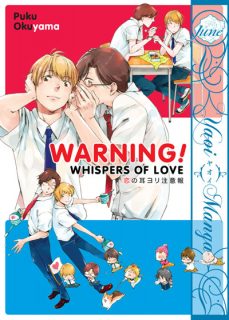
Warning! Whispers of LoveWarning! Whispers of Love by Puku Okuyama. So far, only two of Okuyama’s boys’ love manga have been released in print. I had previously read and wasn’t overly impressed by the more recent Caramel despite liking some of the manga’s individual elements (in fact, overall I can’t really say that I enjoyed it much) but I already had a copy of Warning! so I figured I should at least give it a try. I’m happy to say that I enjoyed Warning! much more than I did Caramel. It’s a collection of rather silly boys’ love stories ranging from the subtly amusing to the overtly goofy. They tend to be fairly cute as well and generally any physical intimacy that is shown is limited to a few kisses and chaste embraces. Most of Warning! is devoted to the story of Hajime, a first year at an all-boys school, and the incredibly awkward relationship that develops between him and an upperclassman who seems to want nothing more than to clean the wax from Hajime’s ears. It’s easily the most ridiculous setup in the entire volume but it can be legitimately funny–all the boys’ love tropes and jokes that would typically be applied to sex are applied to ear cleaning instead and it’s surprisingly effective.
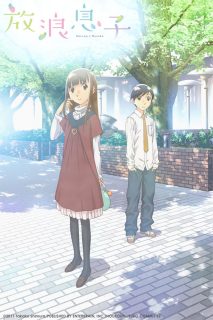
Wandering SonWandering Son directed by Ei Aoki. Takako Shimura’s manga Wandering Son is an incredibly important series to me personally, so I was greatly saddened when Fantagraphics stopped releasing it in English. Initially I wanted to read the entire manga before watching the anime adaptation but, seeing as the rest likely won’t be available any time soon, I finally gave in. The Wandering Son anime is a lovely series. It’s not an exact adaptation of the manga, but it is faithful to the original story and characters. In general, the narrative style of the anime tends to be a little more linear than that of the manga. However, both series provide an empathetic exploration of gender identity, following a group of middle school students who are learning who they are. It’s a fairly realistic portrayal, meaning that society isn’t always the most accepting which can be absolutely heartbreaking. However, seeing the characters become more confident in their selves even when that goes against what is expected of them is exceptionally validating. The anime only adapts a portion of the manga and doesn’t provide much of a resolution (though it does go beyond where Fantagraphics left off), but it is still very well done and well-worth watching.

Save

Filed Under: FEATURES, My Week in Manga Tagged With: anime, Daisuke Hagiwara, Firefighter, Hero, Horimiya, manga, Masahito Soda, Puku Okuyama, Wandering Son

Is It Wrong To Try To Pick Up Girls In A Dungeon?, Vol. 7

January 9, 2017 by Sean Gaffney

By Fujino Omori and Suzuhito Yasuda. Released in Japan as “Dungeon ni Deai o Motomeru no wa Machigatte Iru Darou ka?” by Softbank Creative. Released in North America by Yen On. Translated by Andrew Gaippe.

Writing books can be difficult. In addition to actually making sure that you have a decent plot, characterization, action scenes, etcetera, there’s always so much that can go wrong when your target audience is reading it. Maybe they don’t like a new character you introduced to be loved, or perhaps that scene you thought was really romantic is seen as a bit creepy when talked about by others on the internet. There is also page creep, a little-known malady that affects many long series, in which each successive book seems to get longer and longer, till you suddenly realize that you don’t so much have a book as you have a tome. That’s the case with the latest DanMachi, which is so long that you could fit three Kagerou Daze novels inside it. That said, it doesn’t feel all that padded or overdone. Sadly, it does have two major issues.

But first let’s talk about what did work. The new volume manages to build on the events of the last one while also undercutting it, as for a moment it looks like everyone wants to join the Hestia Family… till they hear about Hestia’s huge debt for the knife she bought for Bell, and all that just vanishes. Bell’s strength is less easy to hide, and things get even more difficult when Ishtar, the goddess in charge of the city’s prostitutes, discovers what Bell’s secret really is – she sees the stats on his back. Ishtar is a good villain, suffering from an obvious case of second best syndrome and overcompensating because of it. She’s second best here as well, as Freya simply wipes the floor with her. In fact, this book is packed with fights and chase scenes, and they’re all done quite well, and are what make the book so long. Mikoto finally gets a chance to shine, and she’s awesome, even if she reminds me a bit too much of Kyuubei from Gintama. And we also meet Haruhime, the newest addition to the cast, with her tragic past, terrible secret, amazing power, and self-hatred that’s more powerful than all of those.

I have two issues with this book, one small, one large. The first is more “I hate this cliche” than anything else: Ishtar’s prostitutes are all tall, strong, gorgeous Amazon warriors… except the strongest of them, who is a frog-faced crone who goes on about her beauty while making everyone around her shudder. Phyrne is a giant pile of “ugly = evil”, and that’s one stereotype I’d love to see end. The other is far more vexing. This novel revolves in many ways about prostitutes and virginity. Bell is, of course, a pure, virgin hero, and this purity is so blinding that he can even resist the charms of a goddess – in fact, it’s part of his basic nature. (This of course only makes them want him all the more.) And Haruhime tells Bell that she’s was bought and forced to work as a prostitute, and is therefore not worth saving. Bell rejects this, saying that even if she *is* a prostitute, she still deserves to be rescued as much as anyone. I liked this. It’s possibly the major theme of the book. So then WHY would you have the reader be told at the last minute “Oh, she was such a bad prostitute that she always fainted, so is still a virgin?” Why would you undercut Bell’s entire point? It is a really, really terrible moment.

But apart from those two things, this is a solid entry in the franchise. I believe that the next volume is short stories, so we may have to wait a bit to see what the fallout from this book is. Worth a pickup, but you may grind your teeth towards the end.

Filed Under: REVIEWS

Sakura Hime Volumes 1-4

January 8, 2017 by Anna N

Sakura Hime Volumes 1-4 by Arina Tanemura

One of my reading goals over winter vacation was to make some headway into some of the series that I’ve been hoarding but not finishing. The main ones I’ve had around the house are 07-Ghost, Magi, and Sakura Hime. Since Sakura Hime is the shortest, I decided to start with that. Also, for someone that genuinely loves Arina Tanemura manga as much as I do, it is just plain weird that I haven’t finished the series before now. I didn’t reach my goal of reading the entire series during winter vacation but I hope to whittle away at it over the next couple months.

Sakura is a 14 year old princess from the moon who is engaged to Prince Oura, the son of the emperor. She is extrmely unhappy about her upcoming marriage. Hanging out in a tree in protest, she falls into the arms of Aoba, a handsome and obnoxious emissary who has come to escort her to her new husband. They immediately start bickering in that “I hate you because I’m secretly attracted to you!” way that so often happens in shoujo romance. And in a not very great surprise, Aoba is actually Oura.

Sakura and Aoba are fighting from the start, as he thinks that she has the potential to turn into an evil demon due to her moon heritage, while Sakura is determined to protect humans. Demons called youko attack Sakura if she looks directly at the moon, and she is able to manifest magical girl powers when she calls on the somewhat cranky sword Chizakura. One interesting aspect of this manga is that each character has a unique soul symbol that defines their lives. Sakura’s is “Destroy” which highlights the tension between her otherworldly nature and her desire to protect humanity. It also feeds into Aoba’s worries that Sakura is dangerous.

A large supporting cast is introduced at a quick pace in the first few volumes, including the tiny mononoke Asagiri, who is a companion to Sakura. Sakura is also joined by a spunky ninja protector named Kohaku, who has a companion frog named Hayate who is actually a handsome ninja boy with an unfortunate curse. The Priestess Byakura serves in the role of mystical advisor. Lord Fujimurasaki shows up to hint at love triangle possibilities, and just be generally fabulous with a tendency to compose random poems as commentary on whatever is happening around him.

One thing I was surprised about as the story unfolded is that the relationship between Aoba and Sakura ends up evolving greatly in the first few volumes, as based on patterns in other Tanemura series, I expected the “I hate you, no I love you” dynamic to continue for at least 6-7 volumes. Sakura grows in capabilities and confidence as she continues to reclaim her heritage as a princess from the moon. It wouldn’t be a Tanemura series if the heroine wasn’t spending a great deal of time stressing out over a man so since the situation with Aoba is quickly resolved, Sakura’s long-lost brother Enju appears and takes her away.

Tanemura does a good job juggling the character relationships with such a large cast, and in the first few volumes she has moments of levity balanced with some serious mystical creepiness. The moon is a creepy, creepy place. Sakura’s good human companions are balanced out by Enju’s followers, and I’m looking forward to the coming conflict in the rest of the series. I had to laugh when I was reading one of the authors’ notes, as Tanemura commented that she was using less screentone, and I have to say I can’t see it. The combination of historical setting, magical girl hijinks, and moon people ensures that all the flowing ribbons and fluttering flower petals that Tanemura fans would expect are present in this series. After reading the first few volumes, I’m enjoying it very much.

Filed Under: REVIEWS Tagged With: sakura hime, shojo beat, shoujo, viz media

Scum’s Wish, Vol. 1

January 7, 2017 by Michelle Smith

By Mengo Yokoyari | Published by Yen Press

I admit that I initially judged this book by its cover, assuming that it was on the smutty side and aimed at a decidedly male audience. While it is true that Scum’s Wish is seinen, the mangaka (Mengo Yokoyari) is female, and the end result (for me, at least) feels more like dark shoujo.
Hanabi Yasuraoka has been in love with Narumi Kanai, a family friend, since she was little. He was around when her mother couldn’t be (Hanabi’s dad is out of the picture), and promised to always be there for her when she’s lonely. Now, Hanabi is in her second year of high school and Kanai has just started his first teaching job… as her homeroom teacher. Pretty quickly, he becomes smitten with another young teacher, pretty Akane Minagawa, and Yokoyari-sensei masterfully conveys through facial expressions just what Hanabi thinks about that. Soon, she meets Mugi Awaya, a boy who is in love with Minagawa (she used to be his tutor) and they strike up an odd sort of friendship as they hang out together, pining for their unrequited loves.

Eventually, through boredom, loneliness, and hormones, Hanabi and Mugi end up making out, each envisioning that the other is actually the one that they love. While there are a couple of bosom closeups during this part of the story, there are such complex emotions being felt in the scene that it doesn’t feel at all salacious. Ultimately, they decide to publicly become a couple so that they can fulfill each other’s physical desires as needed, though one of the rules they establish is that they won’t be having sex, so I’m assuming this arrangement leads to a great deal of frustration.

The concept of a young couple in a purely physical relationship reminded me of A Girl on the Shore, but happily there’s no disturbing power imbalance between Hanabi and Mugi. No one is merely accepting what they can get from someone who belittles them. They have a lot in common and there’s an inkling, too, that something more might develop (even though they made a rule forbidding that, too), with Hanabi thinking that Mugi has never let her down, unlike Kanai, and feeling possessive of him.

As the scope of the story widens, we meet other characters who are in love with the leads. In addition to a boy who hasn’t received a name yet, Hanabi’s admirers include a girl named Sanae Ebato, who appears for the duration of one chapter and has yet to be mentioned again. Mugi’s overly enthusiastic admirer is Noriko Kamomebata, who has worked very hard to become a princess worthy of him, and gives the impression of a newly hatched chick who imprinted on him.

The introduction of Noriko—who prefers the name Moka, for “most kawaii”—does lead to my one complaint about this volume. Although I’ve presented the story of Hanabi and Mugi in a linear fashion, it’s actually largely told through flashbacks. I followed all of these fine until Noriko is introduced, at which point she refers to herself and Mugi as both being first years. In the first chapter, though, Mugi and Hanabi are both confirmed to be seventeen years old, they discuss their scores on a test, and Hanabi clearly mentions being in the second year of high school. So, is Mugi a second year like her or is he a first year? The timing of when Noriko arrives and objects to their relationship, therefore, is fuzzy and confusing.

All in all, though, Scum’s Wish was far better than I had originally assumed. I have no idea where the story will go from here, so I am very curious to see how it develops.

Scum’s Wish is ongoing in Japan and seven volumes are available so far. Yen Press will release volume two in English later this month.

Review copy provided by the publisher.

Filed Under: REVIEWS

Sword Art Online, Vol. 9: Alicization Beginning

January 7, 2017 by Sean Gaffney

By Reki Kawahara and abec. Released in Japan by ASCII Mediaworks. Released in North America by Yen On. Translated by Stephen Paul.

Here we go, ladies and gentlemen. This is it. This is the Big One. This volume of Sword Art Online begins the Alicization Arc, an arc that will not end until Vol. 18 rolls around in December 2019. And you can tell from the writing in many ways, as Kawahara is taking his time to set things up and carefully introduce things that will clearly have relevance later – not least of which is Alice herself, whose disappearance is one of the major plot points of the book, but it’s not resolved here. For those who love the main heroines of Sword Art Online, well, you may be in for some hard times. Asuna is here at the start, as well as Shino. We even hear about future plans, as Shino discusses the next Bullet of Bullets tournament and Asuna and Kirito make plans for going to college overseas. Unfortunately, life has other plans. Fortunately, we have a new heroine, in the best Sword Art Online tradition, to help Kirito with this crisis. He’s even on the cover. Wait, he?

Yes, that’s right, the author has finally realized that the occasional appearance by Klein isn’t cutting it, and gives Kirito someone who can be an equal as well as (sort of) a childhood friend. The conceit of this book is that Kirito is testing a new VR system that’s the most realistic one yet – unlike Aincrad and the other VMRROs we’ve seen to date, this new system is able to mimic things down to the last detail. It’s also, apparently, able to give you vivid backstory if need be – the first 60 or so pages of this book are Kirito, Eugeo and Alice as kids hanging around their medieval fantasy hometown and getting involved in things that they should not. Unfortunately, after an attack in the real world by an ex-member of Laughing Coffin (really, all of these guys basically got away scot-free, didn’t they?), Kirito now finds himself, grown up, in the same world, though he’s now himself and Eugeo doesn’t seem to know him. Now he has to a) find out where he is, b) find out how to return to Asuna, and c) join forces with Eugeo and rescue Alice, who was taken away years ago by Knights as a punishment for transgressing one of the many Laws..

The viewpoint here is, with the exception of the childhood prologue, 1st person Kirito as usual. I find it more tolerable than others do, I suspect, mostly as I think the best way to remind us that Kirito isn’t superhuman is by showing us his thoughts and fears. I also really like Eugeo, the new guy. He’s sort of bright, shiny and innocent, the kind of really good guy that the girls all think Kirito is but he’s never quite managed to pull off. He’s also surprisingly skilled with a sword, and Kirito wonders if more training might even make the two of them a close match. (I hope so. It’s always refreshing seeing Kirito not be the best at something.) When this book is telling Kirito’s story, it’s excellent. Unfortunately, there is one big weakness – Kawahara is fascinated by his invented technobabble (this is also an issue in his other series), and there is endless discussion of vitual reality and what life and a soul actually means. I’m sure it will be highly relevant later, but having it come out in the form of an infodump made things a bit tedious, which is a shame given it was our one big scene with Asuna and Shino.

In any case, though, overall this was a very good start to a very big arc, introducing a new (missing) heroine, giving Kirito a potential male best friend and partner, allowing Kawahara to try his hand at a “fantasy” setting with knights and goblins (who talk about sexually assaulting a young girl, something that apparently is so common in Japanese light novels with goblins that I’ve now run across it three times in less than a month), and setting things up for the next book. Will we be cutting back to the real world and Asuna at all, though? And will Liz and Silica ever get More Appearances? (The back cover of Book 10 may offer a clue there.) Let’s see if Alicization hits the ground running next time.

Filed Under: REVIEWS

I Am a Hero, Vol. 1

January 6, 2017 by Katherine Dacey

At first glance, I Am a Hero looks like a Walking Dead clone, complete with gun-toting vigilantes and hungry zombie hordes. Peel back its gory surface, however, and it becomes clear that I Am a Hero is really a meditation on being trapped: by a dead-end job, by thwarted expectations, and by fears, real and imagined.

The “hero” of Kengo Hanazawa’s series is thirty-five-year old Hideo Suzuki. Though Hideo tasted success with the publication of his own manga, his triumph was short-lived: Uncut Penis was cancelled just two volumes into its run. He now toils as a mangaka’s assistant, working alongside other middle-aged artists whose professional disappointment has curdled into misogyny and grandiosity.

Compounding Hideo’s problems is his fragile mental state. He hallucinates, talks to himself, and barricades the door to his apartment against an unspecified threat, in thrall to the voices in his head. Despite his tenuous grasp on reality, Hideo is the only one of his co-workers who notices the small but telling signs that something is deeply amiss in Tokyo. Hideo soon realizes that his long-standing fears might actually be justified, and must decide whether to hunker down or flee the city.

Getting to Hideo’s do-or-die moment, however, may be a challenge for some readers. The first act of I Am a Hero is a tough slog: not only does it focus on a cluster of strenuously unpleasant characters, it documents their daily routines in painstaking detail. The tedium of these early chapters is occasionally punctuated by vivid, unexplained imagery that calls into question whether the zombies exist or are a figment of Hideo’s imagination. What the reader gradually realizes is that Hideo’s paranoia makes him alive to the possibility of catastrophe in a way that his bored, self-involved co-workers are not; they’re too mired in everyday concerns to notice the growing body count, a point underscored by the banality of their workplace conversations, and their shared belief that women are the real enemy.

When the zombie apocalypse is in full swing, Hanazawa delivers the gory goods: his zombies are suitably grotesque, retaining just enough of their original human form to make their condition both pitiable and disturbing. Hanazawa stages most of the action in tight spaces–an artist’s studio, a pedestrian footbridge, a hallway–giving the hand-to-hand combat the stomach-churning immediacy of a first-person shooter game. Only when Hanazawa cuts away to reveal a fire-ravaged, chaotic landscape do we fully appreciate the extent to which Tokyo has succumbed to the zombie plague.

It’s in these final moments of the book that Hideo glimpses an alternative to his miserable existence–the loneliness, anonymity, and failure that, in his words, have prevented him “from being the hero of my own life.” How he escapes these emotional traps–and those pesky zombies–remains to be seen, but it seems like a journey worth taking. Count me in for volume two.

A word to parents: I Am a Hero is less gory than either The Walking Dead or Fear the Walking Dead, but contains scenes of disturbing violence and frank sexual content. Dark Horse’s suggested age rating seems appropriate for this particular title.

BY KENGO HANAZAWA • PUBLISHED BY DARK HORSE • RATED 16+ FOR VIOLENCE, GORE, LANGUAGE AND PARTIAL NUDITY

* This review originally appeared at MangaBlog on June 4, 2016.


Filed Under: Manga, Manga Critic, REVIEWS Tagged With: Dark Horse, Horror/Supernatural, Kengo Hanazawa, Zombies

Guardians of the Louvre

January 6, 2017 by Katherine Dacey

One part Times of Botchan, one part Night at the Museum, Jiro Taniguchi’s Guardians of the Louvre is a stately, handsomely illustrated manga that never quite rises to the level of greatness.

The premise is simple: a Japanese artist lies ill in his Parisian hotel room, feverishly dreaming about the museum’s galleries. In each chapter, the hero is temporarily transported to a particular place and time in the Louvre’s history, rubbing shoulders with famous artists, witnessing famous events, and chatting with one of the museum’s most famous works–the Nike of Samothrace, who takes the form of a stone-faced tour guide. If the set-up sounds like The Times of Botchan, it is, though Guardians of the Louvre is less ambitious; Taniguchi’s primary objective is to celebrate the museum’s collection by highlighting a few of its most beloved works, rather than immersing the reader in a specific milieu.

The artist-as-time-traveler schtick is a little hackneyed, but provides Taniguchi with a nifty excuse to showcase the breadth of his artistry, offering the reader a visual feast of rural landscapes, gracious country manors, war-ravaged cities, and busy galleries. Using watercolor and ink, Taniguchi convincingly recreates iconic paintings by Van Gogh and Corot, effortlessly slipping into each artist’s style without slavishly reproducing every detail of the originals. Taniguchi’s characters are rendered with a similar degree of meticulousness, though their waxen facial expressions sometimes mar scenes calling for a meaningful display of emotion.

What prevents Guardians of the Louvre from taking flight is its relentlessly middlebrow sensibility. In one scene, for example, the Nike of Samothrace leads our unnamed hero through an empty Salle des États, home of the Mona Lisa. The artist examines the painting closely, musing about the tourist hordes that normally throng the gallery. “It’s not about art appreciation anymore. It’s wholly a popular tourist destination” he says wistfully. If his character was anything more than an audience surrogate, his comment might have registered as a thoughtful meditation on the commercialization of fine art, or the outsized fame of Da Vinci’s canvas. Absent any knowledge of who he is or what kind of art he creates, however, his remarks sounds more like a moment of bourgeois snobbery: don’t these peasants realize the Louvre is filled with other remarkable paintings?

A similarly pedestrian spirit animates the chapters documenting the 1939 evacuation of the Louvre. To be sure, the mechanics of packing and transporting the art are fascinating; Taniguchi’s expert draftsmanship conveys the complexity and physical demands of the task in vivid detail, inviting us to ride along with Delacroix’s monumental Raft of the Medusa on its perilous journey from Paris to Versailles. The dialogue that frames these passages, however, is rife with cliches. “They were ready to risk everything to evacuate the paintings,” the Nike solemnly informs our hero before implying that this operation was a little-known episode in French history–a strange claim, given the story’s romantic treatment in popular culture.

The manga’s most effective passages, by contrast, are wordless. We see our hero wander through a forest where Corot silently paints the undulating boughs, and a medieval town where Van Gogh sets up his easel in a sun-drenched hay field. In these fleeting moments, Taniguchi’s sensual imagery allows us to step into the artist’s shoes and relive the creative process that yielded Recollection of Mortefontaine and Daubigny’s Garden for ourselves. If only the rest of the manga wasn’t so insistent on telling us how to appreciate these paintings.

Guardians of the Louvre
By Jiro Taniguchi
No rating
NBM Graphic Novels, $24.99

This review originally appeared at MangaBlog on May 20, 2016.

Filed Under: Manga, Manga Critic, REVIEWS Tagged With: Jiro Taniguchi, Louvre Museum, NBM/Comics Lit

Handa-Kun, Vol. 1

January 6, 2017 by Katherine Dacey

By the time we meet Sei Handa in the first pages of Barakamon, he’s a twenty-something jerk who bristles at criticism, resents authority, and resists overtures of friendship. The tenth-grader we meet in Handa-kun isn’t as curmudgeonly, but he has a problem: he constantly misreads other people’s motives, whether he’s interpreting a love letter as a threat or perceiving a job offer as a “shady” attempt to unload stolen clothing. For all his weirdness, however, Handa’s classmates worship him, viewing his odd behavior and sharp calligraphy skills as proof of his coolness.

Author Satsuki Yoshino wrings a surprising number of laughs from this simple premise by populating the story with a large, boisterous cast of supporting players. Though the outcome of every chapter is the same–female suitors and male rivals alike profess their sincere admiration for Handa–the path to each character’s epiphany takes unexpected turns. Yoshino complements these humorous soliloquies with expressive, elastic artwork that sells us on the characters’ transformations.

In the volume’s best chapter, for example, Yoshino pits Handa against a bespectacled nerd named Juniichi. Juniichi’s entire self-image is rooted in his years of service as class representative–that is, until one of his peers nominates Handa for the honor. Yoshino makes us feel and smell Juniichi’s desperation by showing us how Juniichi sweats, grimaces, and paces his way through the vote-counting process, flagging or rallying with each ballot. By chapter’s end, Juniichi’s cheerful declaration that “Right now, I feel the best I have ever felt in my life” seems like the natural culmination of this fraught emotional journey–even though, of course, his feeling is rooted in a false sense of Handa’s moral rectitude.

My primary concern about Handa-kun is that the series will overstay its welcome. Handa seems fundamentally unable to learn from his interactions with peers, and his classmates seem just as clueless in their blind adoration of him. If Yoshino doesn’t take steps to change this dynamic–perhaps by introducing a character who is genuinely unimpressed with Handa–the series risks settling into a predictable routine. For a few volumes, however, the current set-up will do just fine, offering the same brand of off-kilter humor as Haven’t You Heard? I’m Sakamoto.

The bottom line: The first volume is funny enough to appeal to newbies and die-hard Barakamon fans.

Handa-kun, Vol. 1
By Satsuki Yoshino
Rated T, for teens
Yen Press, $15.00

This review originally appeared at MangaBlog on February 26, 2016.

Filed Under: Manga, Manga Critic, REVIEWS Tagged With: Barakamon, Comedy, Handa-kun, Satsuki Yoshino, yen press

Behind the Scenes!!, Vol. 1

January 6, 2017 by Katherine Dacey

Behind the Scenes!! embodies what’s good–and not so good–about Bisco Hatori’s storytelling. In the plus column, Hatori has a knack for writing ensemble pieces in which the principal characters exhibit a genuine fondness for one another. The stars of her latest series are Shichikoku University’s Art Squad, a scrappy outfit that makes props for the Film Club–or, more accurately, clubs, as there are several students groups competing for the Art Squad’s services, each with their own aesthetic objectives. Ranmaru, the series’ protagonist, gets a crash course in film making when he stumbles into the middle of an Art Squad project: a low-budget horror flick. As penance for disrupting the shoot, Ranmaru joins the Art Squad and is quickly pressed into service painting props, folding paper cranes, and building a fake hot spring.

These scenes–in which Ranmaru and the gang tackle set-design challenges–are among the series’ most enjoyable. Not only do they give us a sneak peek at the movie-making process, they also show us how the club members’ friendly overtures embolden the timid, self-doubting Ranmaru to let go of his painful childhood and become part of a community. In one exchange, for example, Ranmaru tells a fellow squad member about a black-and-white film that made a powerful impression on him. Hatori cuts between scenes from this imaginary film and Ranmaru’s face, registering how powerfully Ranmaru identified with the film’s principal character, a toy robot who dreams of flying. The symbolism of the toy is hard to miss, but the directness and simplicity with which Hatori stages the moment leavens the breezy tone with a note of poignancy.

In the minus column, Hatori often strains for comic effect, overwhelming the reader with too many shots of characters mugging, shouting, and flapping their arms. The Art Squad’s interactions with various student directors give Hatori license to indulge this tendency; the auteurs’ snits and whims frequently force the Art Squad members to behave more like the Scooby Doo gang–or Hollywood fixers–than actual college students juggling coursework and extra-curriculars. (The Art Squad even has a goofy dog mascot.)

At the same time, however, these wannabe Spielbergs bring out the best in Hatori’s draftsmanship. Each one’s personality is firmly established in just a single panel: one looks like a refugee from Swingin’ London (or perhaps an Austin Powers film); another dresses like a Taisho-era author, swanning around campus in a yukata; and a third sports a shaggy mane, Buddy Holly glasses, and a female entourage. The efficiency with which Hatori introduces these characters, and the range of personalities they embody, demonstrate just how crisp and distinctive her artwork can be. That Hatori’s heroes are visually bland by comparison says less about her skills, I think, than it does her desire to make Ranmaru’s new “family” seem normal–well, as normal as anyone who specializes in making fake zombie guts can be.

The bottom line: Tentatively recommended. If Hatori can tone down her characters’ antic behavior, Behind the Scenes!! could be a winner.

Behind the Scenes!!, Vol. 1
By Bisco Hatori
Rated T, for teens
VIZ Media, $9.99

This review originally appeared at MangaBlog on February 8, 2016.

Filed Under: Manga, Manga Critic, REVIEWS Tagged With: Bisco Hatori, Comedy, shojo, VIZ

The Best and Worst Manga of 2015

January 6, 2017 by Katherine Dacey

After a two-year hiatus from blogging, I donned my critic’s cap again in 2015. I’ve enjoyed writing my quasi-weekly column, but composing a year-end list reminded me why I stepped off the reviewing treadmill in 2012: mediocre books! This year yielded a veritable bumper crop of so-so manga, titles that were competently executed but otherwise unmemorable thanks to an abundance of generic characters, cliché settings, and predictable plot twists; you’d be forgiven for feeling that you’d read many of 2015’s debuts before, even if the artists were new to the US market.

Lurking among the paint-by-number romances and boy-saves-world titles, however, were a few gems. I’ve done my best to highlight the titles that made me feel something, whether that feeling was love, hate, or a mixture of both. To that end, I’ve included my nominees for the worst manga of 2015 alongside the books that made me laugh and cry.

Yowamushi-Pedal-Volume-1Best New Series: Yowamushi Pedal
By Wataru Watanabe • Yen Press
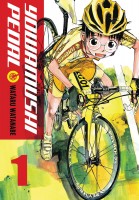
You know the rap on sports manga: American readers won’t buy it, and don’t like it. Yowamushi Pedal might just change that, however, thanks to a story that plays well across the nerd-jock divide. Onoda, the hero, is a self-professed otaku whose weekly bike rides into Akihabara have transformed him into a secret Lance Armstrong clone. Though Onoda wants to revive his school’s anime club, his amazing hill-climbing skills and stamina get noticed by more seasoned riders, all of whom convince Onoda to join the cycling team. The series’ races are nail-biting, page-turning affairs, but it’s the in-between stuff that makes Yowamushi Pedal work. Onoda doesn’t just discover a new skill; he discovers a community of people who share his passion for riding and respect his talent. In short, Yowamushi Pedal is a coming-of-age story in which a bike becomes the nerdy hero’s vehicle—pun intended—for self-actualization.

One-Punch ManBest New Shonen Series: One-Punch Man
By ONE and Yusuke Murata • VIZ Media
One-Punch Man is the ultimate have-your-cake-and-eat-it-too manga. On the surface, it’s an affectionate spoof of shonen clichés that pokes fun at goofy costumes, over-the-top training sessions, and speech-prone villains. On a deeper level, however, One-Punch Man is a great adventure series about an ordinary but strong-willed individual who sets out to rid his city of monsters, only to discover that there’s a much greater threat to mankind than the lobster-men and were-lions that roam the streets. The result is a sincere, gut-bustingly funny manga that reads like a Silver Age superhero comic, splats and all.

Horimiya_cover1Best New Romance Manga: Horimiya
By Hero and Daisuke Hagiwara • Yen Press
Horimiya is one of 2015’s most pleasant surprises, a teen rom-com that avoids cliché situations by focusing on the characters’ lives outside school. At first glance, its lead characters look like opposites: Kyouko is the class queen, while Izumi is a quiet loner. When they bump into each other off campus, however, they quickly realize they have more in common than their carefully constructed identities would suggest–a realization that leads to friendship and flirtation. In less imaginative hands, Kyouko and Izumi’s budding romance would be subjected to endless tests–school plays, beach trips, hot transfer students–but the authors resist the urge to trot out these over-used scenarios, relying instead on more ordinary settings for comedic (and dramatic) grist. It’s the perfect antidote to the wacky misunderstandings that drive the plots of Cactus’ Secret, Special A, and a dozen similar titles.

Cat_DiaryBest New Gag Manga: Junji Ito’s Cat Diary: Yon & Mu

By Junji Ito • Kodansha Comics
Draw a Venn diagram that shows the overlap between Junji Ito fans and cat lovers, and you’ve found the small but perfect audience for Junji Ito’s Cat Diary, a collection of anecdotes about Ito’s beloved pets Yon and Mu. Though the manga’s jokes explore familiar terrain, Ito’s exaggerated reaction shots are priceless, capturing the mixture of love and disgust that cats inspire in their owners. (Imagine Edvard Munch drawing a gag manga about cats, and you get the general idea.) Ito is refreshingly honest about the way animals change the dynamic between people, too; in some of the manga’s most memorable scenes, Ito and his fiancée compete fiercely for their cats’ affection, plying Yon and Mu with toys, treats, and cuddles. Though the prevailing tone is campy, Ito’s obvious affection for his cats helps prevents the Diary from becoming too arch.

ludwig_kansiBest Historic Title: Ludwig B.
By Osamu Tezuka • DMP, Inc.
Left unfinished at the time of Osamu Tezuka’s death, Ludwig B. is a fictionalized biography of Beethoven. Tezuka only completed two volumes, but oh, those two volumes! Tezuka draws evocative scenes of Beethoven at the keyboard, using striking visual metaphors to convey the sound of Beethoven’s music. Tezuka also does a good job of capturing the dynamic between Beethoven and his father, revealing the extent to which Johann’s drinking, gambling, and stage-parenting cast a long shadow over Beethoven’s adult life. Purists should note that Tezuka takes frequent liberties with the historical record, creating a mustache-twirling villain named Franz Kreuzstein to serve as a foil for the young, determined Beethoven. If you’re not offended by such creative license, however, Ludwig B. offers an interesting glimpse into Beethoven’s development as a composer, and Tezuka’s lifelong fascination with Beethoven.

planetesBest Reprint Edition: Planetes
By Makoto Yukimura • Dark Horse
Listen up, manga publishers: if you’re going to do a new edition of a fan favorite, Dark Horse’s two-volume omnibus of Planetes is a swell example of how to do it right. The story has a crisp new translation, full-color pages, and a bigger trim size that gives Makoto Yukimura’s artwork room to stretch out. Better still, the new edition collects more chapters in each volume, allowing newcomers to read far enough into Planetes for Yukimura’s episodic character studies to gel into a more coherent story about space travel and social inequality; by the time newbies reach the end of volume one, they’ll be hooked, too.

sakamotoBest Manga I Thought I’d Hate: Haven’t You Heard? I’m Sakamoto

By Nami Sano • Seven Seas
In theory, Haven’t You Heard? I’m Sakamoto is a one-note samba: the titular character is handsome, good at everything, and unfailingly logical in all situations. In practice, however, Haven’t You Heard? is the Goldberg Variations of gag manga, taking stock scenes and putting a bizarre twist on them. The secret? Sakamoto is just a little too perfect, behaving more like a well-programmed android than a flesh-and-blood person. His peculiar brand of sangfroid confounds enemies and admirers alike; no one can decide if he’s cool or crazy, or where his loyalties might lie, making it impossible to predict how he’ll respond to each new challenge.

jojo_phantom_blood1Worst Manga I Thought I’d Love: JoJo’s Bizarre Adventure, Part 1: Phantom Blood

By Hirohito Araki • VIZ Media
At the risk of becoming the Armond White of manga critics, I’m nominating Hirohito Araki’s bone-crunching, chest-thumping saga for Most Exhausting New Series of 2015. That’s because Phantom Blood is a prime example of all-caps theater, the sort of manga in which every word balloon is filled with emphatic punctuation, and every plot twist seems like the brainchild of six teenage boys hopped up on Mountain Dew. In small doses, this more-is-more approach to storytelling can be amusing, but in longer installments, the cumulative effect of so much narrative excess is numb resignation; I didn’t feel entertained so much as punched in the face. (Reviewed at Manga Blog on 5/22/15.)

mizuki_hitlerMost Disappointing Manga: Shigeru Mizuki’s Hitler
By Shigeru Mizuki • Drawn & Quarterly
Shigeru Mizuki’s Hitler is one of the artist’s lesser works, uncomfortably see-sawing between character study and history lesson in its efforts to show us the man behind the Third Reich. Mizuki’s signature blend of cartoonish figures and photo-realistic backgrounds have been deployed to powerful effect in Non Non Ba and Onwards Towards Our Noble Deaths. Here, however, Shigeru’s hybrid style is a poor match with the subject; seeing Hitler reduced to a crude caricature makes it all too easy to view the book as a curiosity, rather than a serious meditation on evil. The virtual absence of the Holocaust is an even greater shortcoming; Shigeru Mizuki’s Hitler never grapples with the Fuhrer’s most disturbing legacy save for one blurry image of stacked corpses. Perhaps Mizuki felt the subject was too complex to explore in this biography, but it’s hard to imagine any dramatization of the Fuhrer’s life that fails to examine his virulent anti-Semitism.

* * * * *

So what are other folks saying about 2015’s best titles? My Manga Bookshelf colleagues just posted their Pick of the Year, with Ash Brown posting a separate, more detailed run-down of his favorite titles at Experiments in Manga. At the B&N Sci-Fi & Fantasy Blog, Brigid Alverson has posted separate lists for her favorite new and continuing series.

This article originally appeared at MangaBlog on December 30, 2015.

Filed Under: Classic Manga Critic, Manga, Manga Critic, Recommended Reading Tagged With: BEST MANGA, Dark Horse, DMP, Drawn & Quarterly, Osamu Tezuka, Seven Seas, VIZ, yen press

  • « Go to Previous Page
  • Page 1
  • Interim pages omitted …
  • Page 453
  • Page 454
  • Page 455
  • Page 456
  • Page 457
  • Interim pages omitted …
  • Page 1048
  • Go to Next Page »
 | Log in
Copyright © 2010 Manga Bookshelf | Powered by WordPress & the Genesis Framework