• Skip to primary navigation
  • Skip to main content
  • Skip to primary sidebar
  • Home
  • About Us
    • Privacy Policy
    • Comment Policy
    • Disclosures & Disclaimers
  • Resources
    • Links, Essays & Articles
    • Fandomology!
    • CLAMP Directory
    • BlogRoll
  • Features & Columns
    • 3 Things Thursday
    • Adventures in the Key of Shoujo
    • Bit & Blips (game reviews)
    • BL BOOKRACK
    • Bookshelf Briefs
    • Bringing the Drama
    • Comic Conversion
    • Fanservice Friday
    • Going Digital
    • It Came From the Sinosphere
    • License This!
    • Magazine no Mori
    • My Week in Manga
    • OFF THE SHELF
    • Not By Manga Alone
    • PICK OF THE WEEK
    • Subtitles & Sensibility
    • Weekly Shonen Jump Recaps
  • Manga Moveable Feast
    • MMF Full Archive
    • Yun Kouga
    • CLAMP
    • Shojo Beat
    • Osamu Tezuka
    • Sailor Moon
    • Fruits Basket
    • Takehiko Inoue
    • Wild Adapter
    • One Piece
    • After School Nightmare
    • Karakuri Odette
    • Paradise Kiss
    • The Color Trilogy
    • To Terra…
    • Sexy Voice & Robo
  • Browse by Author
    • Sean Gaffney
    • Anna Neatrour
    • Michelle Smith
    • Katherine Dacey
    • MJ
    • Brigid Alverson
    • Travis Anderson
    • Phillip Anthony
    • Derek Bown
    • Jaci Dahlvang
    • Angela Eastman
    • Erica Friedman
    • Sara K.
    • Megan Purdy
    • Emily Snodgrass
    • Nancy Thistlethwaite
    • Eva Volin
    • David Welsh
  • MB Blogs
    • A Case Suitable For Treatment
    • Experiments in Manga
    • MangaBlog
    • The Manga Critic
    • Manga Report
    • Soliloquy in Blue
    • Manga Curmudgeon (archive)

Manga Bookshelf

Discussion, Resources, Roundtables, & Reviews

Blog

Manga Giveaway: Assassin’s Creed Giveaway

September 27, 2017 by Ash Brown

The month of September brings a number of things along with it, such as the autumnal equinox (for us in the Northern Hemisphere, at least) and yet another manga giveaway at Experiments in Manga. For some, other September delights include International Talk Like a Pirate Day. As such, a manga about pirates would seem to be thematically appropriate for a giveaway, and so this month you all have a chance to win the first trade volume of Takashi Yano and Kenji Oiwa’s Assassin’s Creed: Awakening as published in English by Titan Comics. As usual, the giveaway is open worldwide!
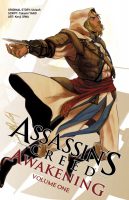
Assassin's Creed: Awakening, Volume 1

Pirates, noble or otherwise, are a fairly popular character type in all sorts of media. The presence of pirates in a story generally brings along with it a promise of action, adventure, and sometimes even a bit of romance. Often their portrayal in fiction tends to be fairly glamorized when compared with historical and modern-day realities although there are certainly some stories that favor a more gritty approach.  When it comes to manga, there’s one particularly successful series that most people probably immediately think of when considering pirates (Eiichiro Oda’s One Piece), but there are plenty of other, lesser-known manga that feature pirates of one ilk or another as well. Part of Assasin’s Creed: Awakening, for example, takes place on the high seas during the early eighteenth century and, yes, there are most certainly pirates to be found.

So, you may be wondering, how can you win a copy of Assassin’s Creed: Awakening, Volume 1?

1) In the comments below, tell me a little about your favorite pirate from a manga. (If you don’t have a favorite, or haven’t read any, simply mention that instead.)
2) If you’re on Twitter, you can earn a bonus entry by tweeting, or retweeting, about the contest. Make sure to include a link to this post and @PhoenixTerran (that’s me).

And there you have it! Anyone participating in the giveaway has one week to submit comments and can earn up to two entries. Comments can also be sent to me directly at phoenixterran(at)gmail(dot)com if either needed or preferred. Those comments will then be posted here in your name. The giveaway winner will be randomly selected and announced on October 4, 2017. Good luck!

VERY IMPORTANT: Include some way that I can contact you. This can be an e-mail address in the comment form, a link to your website, Twitter username, or whatever. If I can’t figure out how to get a hold of you and you win, I’ll just draw another name.

Contest winner announced–Manga Giveaway: Assassin’s Creed Giveaway Winner

Filed Under: FEATURES, Giveaways Tagged With: Assassin's Creed, Kendi Oiwa, manga, Takashi Yano

Shojo Fight!, Vol. 1

September 27, 2017 by Sean Gaffney

By Yoko Nihonbashi. Released in Japan by Kodansha, serialization ongoing in the magazine Evening. Released in North America digitally by Kodansha Comics. Translated by Rose Padgett.

One of the benefits of the wave of digital-only titles we’re seeing in 2017 is the glut of a genre that was almost invisible until a few years ago – sports manga. Kodansha in particular has been pouring out titles devoted to soccer, baseball, soccer, rugby, soccer… and now we have women’s volleyball, with the emotionally gripping Shojo Fight!. You’d expect, given that all the male-oriented soccer manga run in either shonen or seinen magazines, that this might be a shoujo title. The title might also make you think that. But no, this runs in Kodansha’s Evening magazine, a counterpart of the mainstream Weekly Morning and the otaku-oriented Afternoon. So Shojo Fight! is reaching an older male audience. Fortunately, this does not mean that the series is filled with cheesecake. Shojo Fight! is a sports title first and foremost.

The series seems to begin in medias res, but it turns out that the first volume is about the end of middle school, and we’re setting up for high school to be the main event. Our hero is Neri, a strong but short young woman with a natural talent for volleyball and a tragic past, which keeps her mostly benchwarming. Her teammates include Koyuki, who is the school idol but whose volleyball skills don’t measure up as much, and Chiyo, who is absolutely furious at Neri and yells at her all the time in that “I am only angry because I see you have given up” sort of way. Neri is in danger of getting cut from the team, which prioritizes tall girls, and she seems to be OK with that, despite pushback from various others. One accidental injury later, however, and Neri is playing in a real game. Can she keep her emotions under control and not let the driving need to play volleyball take over?

It seems to be a sort of cliche to mention that the art in this looks a bit like OEL, so I will say that as well. More to the point, though, the art fits the subject matter. The volleyball matches that we see are straightforward, lacking the ‘cool’ art that we see from titles such as Haikyu!, but being quite understandable and easy on the eyes. I also really liked Neri’s facial expressions, particularly when she’s traumatized in the second half of the book. That dazed, emotionally hollow look makes your heart ache, and you’re grateful for her future coach (I assume) from coming by to stop her making a choice that would be terrible. I’d mentioned the lack of cheesecake: Neri’s male friend Shigeru is a massage therapist, and when Neri strains her back he massages her – in the girl’s bathroom stall, as student’s aren’t supposed to fraternize. It’s quite innocent, but turns into a nasty rumor that gets people punished, and the art shows both the innocent act while signposting how it’s going to be viewed.

It looks like the cast is going to expand vastly in the second volume, not unusual with sports titles. There are some eccentrics in the high school team, and I have to admit the idea of a barbed-wire volleyball net made me laugh. The series isn’t perfect (some of the exposition about the tragedy was really shoehorned in), but it was highly enjoyable, and I can’t wait for future volumes to see if Neri comes into her own as a player.

Filed Under: REVIEWS, shojo fight!

A First Look at Shojo FIGHT!

September 26, 2017 by Katherine Dacey

We’re in the middle of a sports-manga renaissance in the US, with publishers offering an unprecedented range of titles from Kurokuro’s Basketball and Haikyu!! to Yowamushi Pedal and Welcome to the Ballroom. Leading the pack is Kodansha Comics, which is making an astonishing range of titles available through their digital-only and digital-first initiatives. And astonishing it is: alongside obvious choices like the baseball-centric Ace of the Diamond, you’ll also find soccer manga (Days, Giant Killing, Sayanora, Football), rugby manga (All Out!!), mixed-martial arts manga (All-Rounder Meguru), and card game manga (Chihayafuru). Kodansha’s latest acquisition is Shojo FIGHT!, a volleyball series that reads like Dynasty with knee pads.

I mean that as a compliment.

The first chapter briskly introduces us to the three principle members of the Hakuumzan Private Academy Middle School volleyball team: Neri, a talented but difficult personality who has trouble playing well with others (literally and figuratively); Koyuki, a telegenic setter who moonlights on the Junior National team; and Chiyo, a jealous teammate who slots into the Joan Collins role of Queen Bitch. As we learn in the opening pages, Neri’s temper frequently relegates her to the bench, even though her teammates firmly believe that she’s in a league of her own as both a setter and a hitter — a point that Chiyo lords over the emotionally vulnerable Koyuki. Koyuki, for her part, feels isolated from her teammates who say nice things to her face but trash her playing when she’s not around. Though Chiyo bluntly dismisses Neri as “a wolf in sheep’s clothing,” Koyuki makes a concerted effort to befriend Neri, whom she views as a peer on the court.

The dynamic between these three players would be enough for an entire series, but Yoko Nihonbashi surrounds them with a boisterous cast of supporting characters who run the gamut from Odagiri, a shy Neri fangirl, to the Shikisama brothers, two gifted volleyball players who are, of course, handsome, sharp-witted, and fiercely loyal to their childhood friend… well, I’ll let you figure out that particular triangle on your own, though it’s not hard to guess who she is. While these figures are sketched more hastily than the principle trio, Nihonbashi offers tantalizing clues about how they will figure into the conflict between Neri and her teammates.

What will make or break this series for most readers is the art. As numerous folks have observed, Nihonbashi’s thick lines, wide-eyed characters, and computer-generated fills more closely conform to Americans’ perception of what OEL manga looks like — think Peach Fuzz or Van Von Hunter — than a licensed seinen or shojo title. I think that’s a valid observation, though it’s worth noting that Nihonbashi is a Japanese artist writing for Evening magazine, not a Tokyopop Rising Star of Manga. The boldness of Nihonbashi’s linework, and her dense but well structured layouts, aren’t the least bit amateurish or unpolished. If anything, they demonstrate a good understanding of game mechanics and a flair for drawing expressive, animated faces that telegraph the characters’ emotional states; the malicious twinkle in Chiyo’s eye speaks more loudly than her poisonous words — and that’s saying something.

My suggestion: try before you buy! The first 50 pages of Shojo FIGHT! can be viewed for free at the Kodansha Comics website. There’s enough drama packed into that opening chapter to hook any soap opera fan or sports enthusiast, and if the sudsy plotting isn’t enough to pique your interest, Neri will be: she’s prickly and complicated but appealing, not least because she seems like a real teenage athlete struggling to reconcile her desire to dominate the court with her desire to be part of the team.

The entire first volume goes on sale today (September 26th) via Amazon, B&N, ComiXology, and other digital book platforms.

Filed Under: Manga, Manga Critic, REVIEWS Tagged With: Kodansha Comics, Seinen, Shojo Fight!, Sports Manga, Volleyball, Yoko Nihonbashi

My Youth Romantic Comedy Is Wrong As I Expected, Vol. 3

September 26, 2017 by Sean Gaffney

By Wataru Watari and Ponkan 8. Released in Japan as “Yahari Ore no Seishun Rabukome wa Machigatte Iru” by Shogakukan. Released in North America by Yen On. Translated by Jennifer Ward.

In many ways this third volume of OreGairu actually moves backwards: having seen Hachiman seemingly blow up his burgeoning friendship with Yui in the second book, much of this third one consists of he and Yukino trying to get Yui to return to the Service Club, if only as the teacher demands a certain number of people in the club. They are impeded by Yui’s hurt awkwardness, Yukino’s inability to really interact with people normally, and above all Hachiman being who he is. The point of this series to a degree is amusing the reader with Hachiman’s narration and analysis of himself and others, and I am frequently amused. But I do hope that eventually we get some sort of deconstruction of this mindset or attempt to take it apart, because it also reminds you how incredibly annoying this kind of guy really is. For someone in their late teens, Hachiman must seem awesome. He frequently exhausts me.

Yukino, on the other hand, does get quite a bit of attention devoted to her as well, and we start to see a few reasons why she is the way she is, first and foremost being the appearance of her older sister. Haruno is bright, vivacious, communicative, and seemingly nothing whatsoever like Yukino… except Hachiman, who is quite clever in ways that don’t involve himself, realizes is a false front. I’m not sure if Haruno is meant to be a villainous character here – she doesn’t actually seem to be secretly needling Yukino as you’d expect if she were, and the delight over Yukino having a boyfriend seems genuine, false front or no. Yukino is also more apparently making an effort to get closer to Hachiman, though because of who he is and who she is, this doesn’t go far at all, even with Hachiman’s sister trying to set them up.

The book ends with a “bonus chapter” that is the novelization of a drama CD included with the volume, but you get the sense that if it hadn’t come with a drama CD the author would have included it anyway, as it’s in no way irrelevant. By the end of the story Hachiman and Yui have made up and gone back to baseline, they’ve all had a cute birthday party at a karaoke place, and Hachiman has had romantic thoughts about his cute male friend Saika about 80,000 times, which has gotten less amusing as the book go on, and I wasn’t all that amused by it to start with. That said, there are also some very funny jokes here as well – I loved Yui completely misreading Hachiman’s present to her, as well as the brief narrative from Shizuka’s POV, showing that the teacher is every bit as bad as the students who she’s trying to rehabilitate.

The main reason to read this is still Hachiman’s first person snark and the jokes. But so far if I wanted to read a series about a quirky cynical narrator and a frosty socially awkward brunette beauty, I have the Monogatari Series. I’m hoping that in the next book we try to do a bit more with these people than just circling each other warily and grudgingly getting along.

Filed Under: my youth romantic comedy is wrong as i expected, REVIEWS

Bookshelf Briefs 9/25/17

September 25, 2017 by Michelle Smith and Sean Gaffney Leave a Comment

Arpeggio of Blue Steel, Vol. 11 | By Ark Performance | Seven Seas – One of the good things about this series is the way that not all of the ‘traitor’ mental models are changing sides due to love on Gunzou—in fact, almost none of them are. We’re gradually seeing that the mental models, as they gain more experience, are becoming more and more like humans. Which means they can screw up—I laughed out loud at Haruna’s “fake name.” But it also means they can bond with other humans, like Iona and her crew, or save other humans when it doesn’t gain them anything, like the two chibis who help Iori to not die in the engine room. As you can see, I may be very bad at names in this series, but that doesn’t mean I don’t enjoy it every time. – Sean Gaffney

Barakamon, Vol. 14 | By Satsuki Yoshino | Yen Press – We’re back on the island for this volume, as Handa goes forward with his decision to start a calligraphy school rather than try to follow in his father’s footsteps. That said, trying to make a real living at a school on an island where no one wants to pay that much money is going to be tough. Meanwhile, Miwa’s family is also having issues with finances, as her father decides to close the liquor store as he’s losing to the larger chain. Miwa’s frustration and indecisiveness is quite realistically shown—she doesn’t just go “I’ll take over for you, Dad” but has to be led there slowly because her future hasn’t really occurred to her. And the best news of all, Kanzaki goes back to Tokyo, and will not hopefully irritate future volumes with his presence. – Sean Gaffney

Dreamin’ Sun, Vol. 3 | By Ichigo Takano | Seven Seas – After Zen infuriating me in the second volume, I’m pleased to state that he’s much more tolerable here, possibly as I’m now sure that he’s not going to be endgame. That said, I do now suspect that endgame is going to be her landlord, which… well, on the bright side, he’s not her teacher. Much of this volume follows a theme of ‘dramatic shoujo,’ with the desire to chase your dreams warring with the reality of needing to actually deal with life crises, which may mean abandoning those dreams. Zen works much better in this plot than he did getting really angry at Shimana because he had no idea how to deal with love. This isn’t my favorite series by this author (I prefer orange), but it’s nice and solid shoujo. – Sean Gaffney

Everyone’s Getting Married, Vol. 6 | By Izumi Miyazono | Viz Media – While I’d appreciate this even more if Kamiya weren’t a creep and stalker, I do like the fact that the author is well aware of it and not really playing it as oh-so-sexy. In fact, sometimes it manages to be funny. A large part of this book involves Asuka and Ryu, still not getting married, deciding to get an apartment together—and naturally guess who their neighbor is. I also really enjoyed Asuka’s family, as her mom explains the reasoning behind why she got married, and her brother manages to be protective but not a brat. More to the point, I just really love Asuka and Ryu as a couple, married or not. The cliffhanger implies fresh disasters, but that’s OK. This series has really leveled up. – Sean Gaffney

Honey So Sweet, Vol. 8 | By Amu Meguro | VIZ Media – It feels like so many shoujo series have ended recently, and here’s one more. It doesn’t quite take the pair-the-spares approach, as one guy in the group remains single, but I do admit the sudden love interest for Sou is out of left field. However, seeing Yashiro and Misaki finally get together was freakin’ adorable, as is Onise’s crying when he realizes how much Sou loves Nao, followed by Sou actually laughing at Onise’s blinding honestly. A brief glimpse at the future six years hence is followed by the original short story that was the basis for the series. It’s cute, it’s frothy, and I’m totally okay with that. – Michelle Smith

Kiss Him, Not Me!, Vol. 12 | By Junko | Kodansha Comics – On the bright side, the couple I wanted to get together actually got together, and the author’s notes implied this was something she actually planned in advance (never a guarantee with this series). On the other hand, I’m always wary in a reverse harem (or indeed a regular harem) when the couple gets together and the series is still ongoing. Is this really going to last? It also doesn’t help that we get a lot of backstory of how they got to know each other in a flashback after the fact. Still, it’s sweet enough, The comedy comes from them behaving like a newlywed couple in class, much to the frustration of nearly everyone. As for the drama, god help us, we have another pissed off third party breaking things up. Variable even when it’s good. – Sean Gaffney

Nisekoi: False Love, Vol. 23 | By Naoshi Komi | Viz Media – Well, it’s finally become clear what the endgame is, as Raku realizes what his feelings really are. That said, we’ve got two more volumes after this, and he isn’t sure if his love for Chitoge is greater than his love for Onodera, even if the audience is. And so all the heroines who are still in Japan get one last lap around the track so show off why they would also be an awesome choice for any guy reading this series. What interested me most was 1) Fu-chan, Haru’s friend, who is as close to a girl in love with her female best friend as you can get in a Jump series, and 2) the ongoing beta pairing, which seems to get closer and closer to reality the more violent Ruri gets. (She’s not a lead girl, so isn’t attacked for violence, I guess.) Good but dragging on. – Sean Gaffney

Of the Red, the Light, and the Ayakashi, Vol. 8 | By nanao and HaccaWorks* | Yen Press – I’ve grown increasingly frustrated with the euphemisms “eating” and “taking a meal” in this series, so it’s nice to see that it’s made more explicit here—no, they don’t say “kill,” but you literally see the endgame happening on a pile of corpses that are the previous “meals.” We also see Tougo getting guilt-tripped into accepting his own sacrifice, showing him flashbacks that give us a lot more context regarding Akane’s disappearance. Combine that with the role his younger sister played now being complete, and what can he do except be eaten? That said, we have two more volumes to go after this, so I’m fairly confident that this isn’t the endgame. How do we avoid the meal, though? – Sean Gaffney

Sweetness & Lightning, Vol. 8 | By Gido Amagakure | Kodansha Comics – Tsumugi has started elementary school, which means tasty school lunches that she and her father replicate at home and a field day for which Tsumugi powers up by eating tonkatsu (lucky!) the night before and during which she runs with such determination that it actually made me cry. Meanwhile, Kotori has managed to convince her parents that she’s serious about taking over the restaurant. It looks like the series might be doing something new going forward—now that Inuzuka has enough skill to tackle new things on his own, he might be doing that while Kotori trains with her mother. That’d be interesting, too! Also, I am seriously considering attempting to make my own tonkatsu! – Michelle Smith

Filed Under: Bookshelf Briefs

My Week in Manga: September 18-September 24, 2017

September 25, 2017 by Ash Brown

My News and Reviews

I was running a little behind my intended schedule last week (and today for that matter–this seems to be somewhat par for the course lately), but over the weekend I was finally able to post my review of the ninth omnibus of Vinland Saga, an award-winning historical manga by Makoto Yukimura which has become one of my favorite series currently being released in English. Last week I also attend a talk by Hiroshi Yoshioka, a professor at Kyoto University’s Kokoro Research Center, called Hiroshima, Fukushima, and Beyond: Borders and Transgressions in Nuclear Imagination. Yoshioka’s research addresses the portrayal of nuclear power within popular culture, whether that be manga like Keiji Nakazawa’s Barefoot Gen, Sunao Katabuchi’s In This Corner of the World anime adaptation, other visual arts, or even Giant Baba’s “atomic drop” in professional wrestling. I won’t be doing a full write-up of the talk (although perhaps I should), but I did find it to be fascinating. A couple of other interesting things that I’ve come across recently include Ryan Holmberg’s two part article “Yokoyama Yuichi and Audiovisual Abstraction in Comics” as well as an edited version of a talk by Tyran Grillo, the translator working on the Legend of the Galactic Heroes novels, about the series and its author Yoshiki Tanaka.

Quick Takes

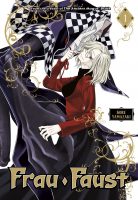
Frau Faust, Volume 1Frau Faust, Volume 1 by Kore Yamazaki. The German legend of Faust, a scholar who sells his soul to the Devil in order to gain great knowledge and worldly delights, has had numerous interpretations over the centuries. (Considering my background in music, I’m personally most familiar with the various operatic and symphonic renditions of the tale.) Faust being the subject of a manga would be enough for me to take an immediate interest, but the fact that Frau Faust is by Yamazaki, the creator of The Ancient Magus’ Bride which I greatly enjoy, made it a series that I absolutely knew I needed to read. One volume in, not only am I intrigued, I am completely on board with Yamazaki’s reimagining of the classic tale. As can be gathered from the title, Faust in this case is a woman. Johanna is strikingly enigmatic, the complexity of her true nature slowly revealed over the course of the first volume of the manga. The pacing of Frau Faust is excellent. Plenty of mystery remains by the first volume’s end, but rather than the story feeling like it’s being unnecessarily drawn out, it simply makes me want to read more. The only real complaint I have about the manga, and it’s a relatively minor one at that, is Johanna’s eyeglasses which tend to inexplicably appear and disappear from one panel to the next and I can’t tell if it’s meant to be intentional or not.

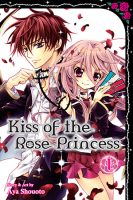
Kiss of the Rose Princess, Volume 1Kiss of the Rose Princess, Volumes 1-2 by Aya Shouoto. Since I’ve been enjoying The Demon Prince of Momochi House I’ve been making a point to try some of the other manga by Shouoto available in English. Sadly, I haven’t been nearly as taken with Kiss of the Rose Princess, one of Shouoto’s earlier series. I think that part of my lack of interest in the series stems from the fact that there’s not much of a plot even hinted at until the second volume. It’s almost as if the first volume, and much of the second, is devoted to a side quest before really getting to the meat of the story. Anise is a high school student who quite unexpectedly finds herself in command of a quartet of knights (who are also her classmates) that she can magically summon, a situation that hasn’t been fully explained. More than anything else, the setup comes across as a convenient excuse for the series’ heroine have a number of young men who are in some way bound to her if not vying for her attention. There’s nothing inherently wrong with that, but at this point most of the characters come across as “types” and any convincing romantic tension is nearly nonexistent. Everyone is very prettily drawn, however. Shouoto seems to be favoring silliness over seriousness in Kiss of the Rose Princess, which again isn’t necessarily bad, but a satisfying balance between the tones hasn’t been reached yet.

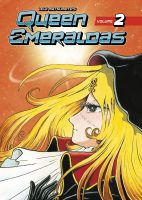
Queen Emeraldas, Volume 2Queen Emeraldas, Volume 2 by Leiji Matsumoto. In addition to being a classic manga, which I’m always happy to see more of in translation, I found the first half of Queen Emeraldas to be wonderfully engrossing, so I was looking forward to reading the conclusion of the series. One of the things that particularly appeals to me about the Queen Emeraldas is the mood that Matsumoto is able to create–the melancholic atmosphere of the manga as well as the portrayal of the great expanse and loneliness of the universe. (I also adore Matsumoto’s illustrations of space.) Emeraldas is a woman traveling the stars, her ship her only constant companion. However, her destiny still frequently crosses paths with those of others. Hiroshi Umino repeatedly finds himself drawn into her orbit as he tries to establish a life of freedom in space. The chapters of Queen Emeraldas are loosely-connected stories with the presence of Emeraldas as the uniting factor. She herself is frequently the narrator of the tales, but the focus is often on the follies and arrogance of the men she meets. I was actually hoping to learn more about Emeraldas and her personal story, but by the end of the series very little has been explicitly stated about her past. Even so, Emeraldas is a marvelously charismatic character, capable of great empathy and compassion but dedicated to justice.

Filed Under: FEATURES, My Week in Manga Tagged With: Aya Shouoto, Frau Faust, kiss of the rose princess, Kore Yamazaki, Leiji Matsumoto, manga, Queen Emeraldas

Pick of the Week: Girl Fight Tonight!

September 25, 2017 by Sean Gaffney, Katherine Dacey, Michelle Smith, Anna N and Ash Brown Leave a Comment

SEAN: Until a couple of days ago, this was an easy pick, as Frau Faust was greatly enjoyable. But a rival appears, and I’m afraid that it’s won me over… or should, I haven’t read it yet. Yes, my pick of the week is Shojo Fight!, which I’ve wanted licensed here for a while now. It’s digital only, but we can’t have everything. Also, potential Haikyu!! crossover fics?

KATE: I second Sean’s pick: more volleyball manga is a good thing, especially since Crimson Hero is out of print. I’m also curious about All Out!!, another digital-only sports title from Kodansha. I can’t claim to be a rugby fan, but my younger sister played on the Stanford women’s team and has fond memories of — and a few scars from — the experience. So as an act of sisterly loyalty, I’m also casting a vote for All-Out!!.

MICHELLE: Yep, it’s gotta be Shojo Fight! for me, too, though I am definitely looking forward to All-Out!! as well.

ANNA: Shojo Fight! is also my pick. Have we had an all sports manga pick of the week recently? It certainly sounds like an excuse to celebrate!

ASH: Well, were I a digital reader, I’m sure I would be joining you all in picking Shojo Fight!. Alas, I am still devoted to my print volumes. Happily, though this week is relatively light on physical releases, there is one manga in particular that has caught my eye–the debut of Frau Faust.

Filed Under: PICK OF THE WEEK

A Bride’s Story, Vol. 9

September 25, 2017 by Sean Gaffney

By Kaoru Mori. Released in Japan as “Otoyomegatari” by Enterbrain, serialization ongoing in the magazine fellows!. Released in North America by Yen Press. Translated by William Flanagan.

Pariya gets a second cover in a row, which makes perfect sense because this book is still all about her attempts to recover from the fire that devastated her dowry, try to get closer to her possible fiance, and make readers think of her as someone other than “the tsundere somehow trapped in the nineteenth century. That she succeeds admirably is a tribute to Kaoru Mori’s writing, which continues to be excellent. In particular, Mori has a talent for wedding her story and art in a way that few manga artists these days do, something that is especially gratifying given that Pariya’s specialty is that her emotions are showing all over her face. Which makes it even more amusing that everyone seems to be misreading her, particularly Umar, her intended.

The dowry continues to be the big issue. The devastating fire from last volume really sent Pariya back to square one, which is very concerning for her family because, well, Pariya is seen as someone not all that easy to marry off. She’s loud, she’s abrasive, and she seems to spend her days in a state of perpetual rage. The well-seasoned manga reader, of course, knows that the anger is to hide her shyness and embarrassment, but I like the fact that most of the village does NOT get this immediately, not even Umar, and Pariya really has to work hard to make herself clear. There’s no revelatory moment where people work out “this is how she is”, just a series of chapters that show Pariya gritting her teeth and watching others to see if she can work out what this strange Earth concept called conversation is. A good chunk of the volume has her and Umar go on a day journey to get supplies, which ends up getting extended when they stop to help an ill woman, then suffer a broken axle. But it also helps Umar see how awesome Pariya can really be.

The rest of the cast get something to do, though obviously except for Amir and Karluk it’s a very brief something to do. There’s a series of 4-koma at the start that check in on the rest of the cast we’ve seen to date, who are mostly getting on well, aside from Mr. Smith, who’s having bandit trouble, and the girl who he had a brief liaison with, who is still alone. As for Amir, her perfection has a tendency to become her character at times (I had trouble warming up to her), but we see a few flaws here, as she makes a bow so that her husband can learn archery, but makes it for the strength of a full-grown male, not the young boy that he still is. Karluk, of course, is determined to get the arm strength to learn it anyway. These two are cute, and I’m OK with having them be the return point for the series in general.

We apparently kick off a new arc next time, which will no doubt be next year, as A Bride’s Story does not come out all that frequently. When it does, though, the reader is always in for a treat. Curl up in a comfy chair and immerse yourself in this volume.

Filed Under: a bride's story, REVIEWS

Vinland Saga, Vol. 9

September 24, 2017 by Ash Brown

Vinland Saga, Omnibus 9Creator: Makoto Yukimura
Translator: Stephen Paul
U.S. publisher: Kodansha
ISBN: 9781632364456
Released: June 2017
Original release: 2016
Awards: Japan Media Arts Award, Kodansha Manga Award

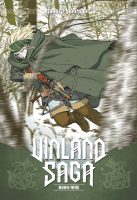
Having read and greatly enjoyed Makoto Yukimura’s near-future science fiction series Planetes, I was very curious to see how he would apply his character-driven approach to Vinland Saga, a manga with a historical setting. The resulting work is phenomenal–in addition to earning multiple awards, including a Japan Media Arts Award and a Kodansha Manga Award, Vinland Saga quickly became and remains one of my favorite manga series currently being released in English. The ninth hardcover omnibus of Vinland Saga was published in 2017 by Kodansha Comics with a translation by Stephen Paul. It collects the seventeenth and eighteenth volumes of the original Japanese series, both of which were released in 2016, in addition to the continuation of “Ask Yukimura,” a section of questions and answers providing further insight into the series and its creation which is exclusive to the English-language edition of Vinland Saga. “Ask Yukimura” was absent from the eighth omnibus, so I was very happy to see its return.

Hild, a skilled hunter, may have saved Thorfinn’s life as he and his companions were accosted by a man-eating bear, but now that she knows exactly who he is, she is determined to take that life from him. Thorfinn has killed countless people during his time employed as a mercenary in pursuit of his own revenge, drastically altering the lives of the victims’ surviving family members and loved ones. It’s a past that continues to haunt him and Hild isn’t the only person to have come to harm due to his actions or who he will have to confront once again. Thorfinn hopes to atone for the death, violence, and destruction he has helped to bring down upon others by establishing a new nation of peace away from the wars, conflict, and struggles for power that plague Europe. But it is a very difficult thing to try to put a stop to a cycle of systemic retribution condoned by society. Thorfinn has convinced others of the worthiness of his cause, but now he must convince Hild who has every right to want him dead.

Vinland Saga, Omnibus 9, page 191All-consuming revenge is one of the major themes of Vinland Saga. Yukimura explores how such a single-minded pursuit can dramatically change a person, impacting them on a deep, psychological level, and examines how that internalized violence is reflected in and perpetuated by the world at large. Much of Vinland Saga up until this point has been devoted to Thorfinn’s private struggles and growth as he has tried to come to terms with the irrevocable damage that he has wrought not only upon others but upon himself. With the introduction of Hild, Vinalnd Saga turns its focus outward, delving into the long-lasting and increasingly far-reaching effects of Thorfinn’s past misdeeds. Although this isn’t the first time that the series has shown this sort of tragedy, never before has it been made so cuttingly personal in the manga. Hild isn’t some nameless character met passing; Yukimura shows the entirety of Hild’s story–her life before her family was killed in front of her eyes and how she grew to become the fierce opponent who Thorfinn has no option but to face.

The parallels between Hild and Thorfinn’s individual quests for revenge are numerous although there are still significant differences and Thorfinn is much further along on his personal journey–while he’s chosen a path of peace, it remains to be seen what choices Hild will ultimately make fore herself. But even though Thorfinn is pursuing pacifism, he continues to be drawn into violent confrontations. A large part of why I find Vinland Saga such a tremendous series is due to the compelling character development that it exhibits, but another reason the manga is so incredibly engaging is the result of Yukimura’s spectacular action and fight sequences. They are exciting as well as meaningful, serving not only to move the plot along but frequently to provide an external expression of the characters’ internal struggles. How they fight and what they are willing to risk goes far to reveal who they truly are and what they value most. Vinland Saga continues to greatly impress me; I’m so glad that it’s being translated and look forward to future volumes with immense anticipation.

Filed Under: REVIEWS Tagged With: Japan Media Arts Award, kodansha, Kodansha Comics, Kodansha Manga Award, Makoto Yukimura, manga, Vinland Saga

Strike the Blood, Vol. 7

September 24, 2017 by Sean Gaffney

By Gakuto Mikumo and Manyako. Released in Japan by ASCII Mediaworks. Released in North America by Yen On. Translated by Jeremiah Bourque.

Let the drums roll out and the trumpets call, strike up the band as well as the blood because I am here to tell you that this is easily the best Strike the Blood to date. It has finally moved above its decent but uninspiring attempts at makework writing and had me say, after finishing this book, “yeah, that was pretty decent”. And it should come as no surprise to find that the main reason for this, in my opinion, is because it doesn’t abide by the formula of the first six books. Oh, yes, the middle section may make an awkward attempt at it, and indeed the section in the classroom was my least favorite in the book. But overall we get backstory revelations, setup for future books, a reasonable amount of character development… it makes me cry that we haven’t bothered to have this before now, but I’ll take it.

Now, don’t get me wrong, I don’t want to overhype this too much: this is rising to the level of ‘pretty good’, but that’s all it’s doing. I would not recommend reading through the previous six books to get to this point. That said, the first third of the book, which is a flashback to when Kojou and his sister meet the Fourth Primogenitor, is well-handled, and exists pretty much to tell us that what little we’d heard to date, including Kojou’s own memories, was pretty trustworthy. We also meet his father, who seems an Indiana Jones sort, and while he’s a pretty cool guy it’s not hard to see why he is divorced from Kojou’s mother. The last quarter or so of the book also does another “finally” and focuses on Yaze, who has occasionally helped out (and gotten beat up a lot) but whose thoughts we rarely get much beyond surface. He gets his own backstory here, and shows us he’s not merely someone who is Kojou’s friend because he has to be.

As I said earlier, I was annoyed at the wacky comedy in the classroom with Vattler’s minions, mostly as it once again felt cookie cutter, Strike the Blood’s worst fault – you have a feeling his editor had a line [INSERT COMEDY HERE] at the first pass. Once Natsuki passes out and the drama starts up again, though, it’s reasonably gripping and entertaining. Despite its lack of risk-taking, the series does fights well, and that’s true here too. The villain (if she is one) is a reasonably clever fake-out, which makes you wonder if the series is going to be turned completely on its ear. It’s not, but it does come with one big benefit – Asagi is present to see both Yukina and Kojou whip out their powers, and does not lose her memory, get knocked out, or otherwise forget afterwards. I’ve wanted her to find out the truth for 7 books now. Her reaction (as Yukina observes) is understated, but she explains why that makes sense. More to the point, setup for the next big arc hints that Asagi’s secrets are about to become big news. Will she learn about her own supernatural abilities?

This isn’t going to pick up any new readers, and old readers will be continuing the series anyway. But as for me, I’m just happy not to have to end a review with “well, yeah, it’s Strike the Blood, whatever”. This was solidly pretty good. 7 out of 10, maybe? Oh yes, and it gets bonus points for Kojou saying “this is my fight” at one point and Yukina not actually responding “No, sempai, this is OUR fight”, even if it feels like it’s only not there as the author forgot.

Filed Under: REVIEWS, strike the blood

  • « Go to Previous Page
  • Page 1
  • Interim pages omitted …
  • Page 411
  • Page 412
  • Page 413
  • Page 414
  • Page 415
  • Interim pages omitted …
  • Page 1053
  • Go to Next Page »
 | Log in
Copyright © 2010 Manga Bookshelf | Powered by WordPress & the Genesis Framework