• Skip to primary navigation
  • Skip to main content
  • Skip to primary sidebar
  • Home
  • About Us
    • Privacy Policy
    • Comment Policy
    • Disclosures & Disclaimers
  • Resources
    • Links, Essays & Articles
    • Fandomology!
    • CLAMP Directory
    • BlogRoll
  • Features & Columns
    • 3 Things Thursday
    • Adventures in the Key of Shoujo
    • Bit & Blips (game reviews)
    • BL BOOKRACK
    • Bookshelf Briefs
    • Bringing the Drama
    • Comic Conversion
    • Fanservice Friday
    • Going Digital
    • It Came From the Sinosphere
    • License This!
    • Magazine no Mori
    • My Week in Manga
    • OFF THE SHELF
    • Not By Manga Alone
    • PICK OF THE WEEK
    • Subtitles & Sensibility
    • Weekly Shonen Jump Recaps
  • Manga Moveable Feast
    • MMF Full Archive
    • Yun Kouga
    • CLAMP
    • Shojo Beat
    • Osamu Tezuka
    • Sailor Moon
    • Fruits Basket
    • Takehiko Inoue
    • Wild Adapter
    • One Piece
    • After School Nightmare
    • Karakuri Odette
    • Paradise Kiss
    • The Color Trilogy
    • To Terra…
    • Sexy Voice & Robo
  • Browse by Author
    • Sean Gaffney
    • Anna Neatrour
    • Michelle Smith
    • Katherine Dacey
    • MJ
    • Brigid Alverson
    • Travis Anderson
    • Phillip Anthony
    • Derek Bown
    • Jaci Dahlvang
    • Angela Eastman
    • Erica Friedman
    • Sara K.
    • Megan Purdy
    • Emily Snodgrass
    • Nancy Thistlethwaite
    • Eva Volin
    • David Welsh
  • MB Blogs
    • A Case Suitable For Treatment
    • Experiments in Manga
    • MangaBlog
    • The Manga Critic
    • Manga Report
    • Soliloquy in Blue
    • Manga Curmudgeon (archive)

Manga Bookshelf

Discussion, Resources, Roundtables, & Reviews

Blog

Arakawa Under the Bridge, Vol. 1

November 29, 2017 by Sean Gaffney

By Hikaru Nakamura. Released in Japan in two separate volumes by Square Enix, serialized in the magazine Young Gangan. Released in North America by Vertical Comics. Translated by Andrew Cunningham.

Some series work better in collected in volumes, and some work better in a magazine next to other titles that aren’t very much like it. I’m pretty sure that Arakawa Under the Bridge is one of the latter. Of course, since we don’t have too much opportunity to read Young Gangan over here, we’re only getting the volumes – and even worse, this is an omnibus edition, collecting two of them at once. I say “even worse” even though I did enjoy Arakawa a great deal, but it is, at heart, a gag comic, with its chapters being approximately 6-8 pages, and such series always have to deal with the question of “can this hold up when we get to Vol. 7 or 8?”. Even Nakamura’s other famous (and unlicensed) series, Saint Young Men, deals with this, as despite its fantastic and slightly blasphemous premise, it’s much the same – it rides on its weird humor. So far, though, Arakawa is worth the read.

The premise is paper-thin. Our hero is a successful, rich young man who lives his life (thanks to his somewhat abusive father) with the philosophy “never be in debt to anyone”. Then, through a series of ridiculous circumstances, he gets his life saved by Nino, a self-proclaimed Venusian woman who lives under one of the city bridges of the Arakawa river (so no, she is not the Arakawa under the bridge). He is thus forced to try to repay her so that he can move on with his life… which proves impossible, and he soon finds himself inveigled in her world as part-boyfriend, part-tsukkomi, meeting a series of increasingly ridiculous people who also live under the bridge. Despite apparently being a young heir with an important job in a highrise, no one from his family or friends ever comes looking for him. The outside world is not important in this. It’s about the weirdos.

Supposedly, Nino is the first of the weirdos that we meet, but she proves to be the calm, stable center of the series, her deadpan earnestness giving it grounding. It also allows the reader to make an emotional connection between her and “Recruit” (their nickname for our hero, which I tend to think of him as because his last name is too long), and I was surprised and pleased to find a few heartwarming, sweet moments scattered in among the zaniness. You actually want to see if they can form a real relationship. Might be a bit difficult, though, given the other cast members, which include a man who dresses as a kappa, a guy with a star for a head, a male nun who looks like he stepped out of the pages of Black Lagoon, a young yakuza wannabe girl, and a farm woman who confuses ‘teasing’ with abusive language.

As you might imagine, this series is for people who enjoy amusing, strange characters interacting. If you want narrative or character development, I’d look elsewhere. But Arakawa made me laugh, and by the end I wanted to see more of them. That’s the important thing.

Filed Under: arakawa under the bridge, REVIEWS

Bookshelf Briefs 11/28/17

November 28, 2017 by Michelle Smith and Sean Gaffney Leave a Comment

It’s a cornucopia of briefs!

Ace of the Diamond, Vol. 6 | By Yuji Terjima | Kodansha Comics (digital only) – Training camp continues, and the coach has arranged for some practice games right afterwards, the better to gauge how well the first years play when exhausted. For Furuya, the answer is initially “not well,” but he never loses his determination, and once he swallows his pride and asks Miyuki for advice, he finally internalizes the truth that, at Seido, he’s got teammates who are going to back him up, even if the batter does manage to get a hit. Eijun’s fun and everything, but Furuya is not your typical shounen protagonist, and I’m pleased that he’s getting his share of attention. I also liked that the boys hang out some with varsity teammates we’ve barely glimpsed before now, and we learn how awesome the captain is. I am already relishing the thought of future marathon rereads of this series. It’s a keeper for sure. – Michelle Smith

Cells at Work!, Vol. 5 | By Akane Shimizu | Kodansha Comics – Once again, Red Blood Cell is absent from this volume except a brief cameo. This allows us to focus our attention on the ‘normal cell’ from prior volumes, who still has a tendency to do dumb things on impulse. Fortunately, the cute adorable bacteria he’s harboring in his room are the GOOD kind of bacteria. Unfortunately, his attempt to get them to where they can do good is thwarted by a host of crises from which White Blood Cell and company must rescue him, most notably the return of Cancer Cell, who brings back the ethical ambiguity to the series as he asks essentially “are the needs of the many less important than the needs of the one?” The one being the body. This was a lot of fun. – Sean Gaffney

Delicious in Dungeon, Vol. 3 | By Ryoko Kui| Yen Press – The cast expands a bit in this third volume. We see one of our team’s old comrades, who left them due to actually wanting to get paid, and the complicated relationship she has with them, particularly Marcille, and it’s made clear she’s not a bad guy—everyone has their own needs and drives. As for Marcille, we also get a flashback to her school days, which shows how she met Laios’ sister (still being digested by a dragon, if you recall), which is rather cute. And of course more ridiculously gross yet amusing monster recipes. And plenty of humor, as it turns out tentacles can be peeled sort of like bananas. Still good, though I’d like to get the sister rescued or declare her dead. – Sean Gaffney

The Full-Time Wife Escapist, Vol. 6 | By Tsunami Umino | Kodansha Comics (digital only) – It was inevitable that Mikuri and Hiramasa would discover that they are in love with each other, but I am still kind of surprised that it actually happened. It’s lovely to see him grinning like a doofus at the office after an evening of fooling around, but I appreciate that the transition into a real marriage isn’t exactly going to be smooth. Mikuri is worried, for example, that she’ll be expected to do the same amount of work for free, while Hiramasa worries about his waning sex drive. Somehow I doubt we’ll ever see the latter issue addressed Everyone’s Getting Married! I also really enjoyed the scenes where Mikuri’s aunt and Kazami get to know each other better—I wholeheartedly approve of them hooking up! – Michelle Smith

Haikyu!!, Vol. 17 | By Haruichi Furudate | Viz Media – And so our heroes pull it off, and get to advance, while Aoba Johsai has to suffer an ignominious defeat. This is done in the best possible shonen way, with lots of noble tears and resolve to get even stronger. The cliches don’t FEEL like cliches—the author is adept at making this feel fresh even when you know where every plot beat is going to be. And so it’s on to the finals, and I suspect this game may drag on a while, as it’s a best 3-sets-of-5 game. Their opponent is Shiratorizawa, who I’m sure we’ll find out more about as we move on, but who clearly have one player who’s REALLY good, and the volume ends with our heroes down by quite a bit. I think they’ll come back, though. Just a hunch. – Sean Gaffney

Hana & Hina After School, Vol. 3 | By Milk Morinaga | Seven Seas – This turns out to be the final volume, and honestly you get the sense it was cut a bit short—the last half feels rushed. Of course, considering all we were getting before that was a slow-burning pile of angst, it might be best that it got the push. Morinaga Milk has always been better at fluffy than angsty, so it comes as something of a relief when our two heroines finally get over the whole “is it just me? Did she mean it when she said she’s not that way?” drama and get together (in all respects—as with previous MM titles, there’s a brief, not-that-explicit sex scene here). In the end, this was a cute read, but I’ve seen better yuri from this author. – Sean Gaffney

Horimiya, Vol. 9 | By Hero and Daisuke Hagiwara | Yen Press – Horimiya has always tried to be at least slightly more realistic than a lot of romance manga, and thus watching Yuki’s ongoing angst regarding her lies and deceit and how it’s impacting other people is particularly painful. I’m not really all that sure I want her to win here, even though the alternative will also suck. On the bright side, Hori and Morimiya are doing better than ever, and as Hori is forced to think about her future—something which she seemed to have given not a single thought to—but she realizes here that no matter what she does, she wants to be with Miyamura. This leads to a sort of adorable reverse proposal, which fits the general characterization. Still good, but I hope it’s wrapping up soon. – Sean Gaffney

JoJo’s Bizarre Adventure: Stardust Crusaders, Vol. 5 | By Hirohiko Araki | Viz Media And so, finally, JoJo’s has run up against my ability to get 500+ words out of each volume. Yes, this is the first volume to get a Brief rather than a full review, and I put the blame entirely on the rambling Road To Cairo plot that Araki has chosen to use this time around. Individual moments are as striking as ever—I felt the killer baby was more interesting as a killer within dreams than in the real world, and the surprise non-death of a character feels a bit cheap. But JoJo’s still has its bizarre visuals and grotesque violence, and as long as it keeps that up it should stay interesting, even if Jotaru continues to be the dullest Jo we’ve had to date. – Sean Gaffney

Kiss & White Lily for My Dearest Girl, Vol. 4 | By Canno | Yen Press – Most sports manga fail to show the heroes moving on to a professional career, with a few exceptions like Captain Tsubasa. In reality, a lot of sports careers end just the way we see Mizuki’s end here—she comes close to the Nationals, but doesn’t make it, and realizes that this is it, she has to stop doing track and decide on an actual career. There’s also her relationship with Moe, which may actually be hindering her for a spell—it’s gotten to the point where she forgets running was fun—but eventually proves stronger than both thought, and we get a proposal (of sorts) and a kiss. This is a bit stronger than Hana & Hina, even if it’s just as fluffy, and I’m pleased to see it continue. – Sean Gaffney

Log Horizon: The West Wind Brigade, Vol. 7 | By Koyuki and Mamare Touno | Yen Press – The comedy is kept to a minimum here, as we get the more dramatic parts of the third and fourth novel, intermixed with how it’s affecting the West Wind Brigade. Kawara’s on the cover, and we get a bit more insight into her character—basically, she’s an instinctual fighter but a bit of an idiot who got into the game because she wanted to be a shonen hero, and the West Wind Brigade was the only one that would take her in. It does also show off her strengths as well, though. That said, easily the most interesting part is the ending, where we get a surprise appearance by a seemingly insane Nureha, who’s met by a battle-crazy Soujiro. I want to see how this battle turns out. – Sean Gaffney

My Hero Academia, Vol. 10 | By Kohei Horikoshi | Viz Media – I appreciate that Horikoshi is willing to let Bakugo be a completely unlikable jerk, driven by rage and jealousy and every single negative emotion, and yet still show that he realizes the difference between good and evil—that he’s decided that he wants to be a HERO rather than a villain, even if that means going against what comes more naturally. It’s a terrific scene that really made me like him. On the flip side, the disguises used to infiltrate Evil HQ are hilarious, particularly Deku and Momo. The humor is needed, as this is something of a grim arc, especially with the arrival of a Bigger Bad towards the end. This volume shows off everything that has made this the hot new Jump title. – Sean Gaffney

Nisekoi: False Love, Vol. 24 | By Naoshi Komi | Viz Media – Even though it’s obvious Onodera’s going to lose, give credit to the author for not making it easy. She and Raku have really developed a close relationship, and even if it’s not romantic I hope they can stay friends. More to the point, the fact that Onodera is willing to help Raku track down Chitoge by FLYING TO AMERICA with him (because Chitoge has, like many tsundere heroines in denial, literally run halfway across the Earth to escape her love issues) shows off her truly ridiculous kindness. There’s the last popularity poll in this book, and Chitoge and Onodera are separated by barely 100 votes. That’s impressive for a harem title. In any case, it wraps up next time, so keep reading. – Sean Gaffney

One Piece, Vol. 84 | By Eiichiro Oda | VIZ Media – It’s been a while since we had a volume that focused on further sad backstory for one of the Straw Hat crew, but that’s what we get here, with many hard-to-read scenes about Sanji’s abuse at the hands of his family, intercut with a silly fight in which Luffy defeats a bunch of cracker soldiers by eating them. Because Big Mom is threatening to kill Chef Zeff if he doesn’t comply, Sanji is forced to both insult and attack Luffy in an attempt to get him to abort the rescue, but of course this doesn’t work. In addition to this riveting drama, there’s also the question of whether Pudding (Sanji’s seemingly sympathetic bride-to-be) can actually be trusted, more information about the ponegliffs (yay!), and a glimpse at the unintended consequences of toppling Doflamingo. Plus, Brook actually gets something important to do! This series is still excellent. – Michelle Smith

Filed Under: Bookshelf Briefs

Outbreak Company: The Power of Moe

November 28, 2017 by Sean Gaffney

By Ichiro Sakaki and Yuugen. Released in Japan by Kodansha. Released in North America by J-Novel Club. Translated by Kevin Steinbach.

It has almost become a running gag to say this, but I went into reading the first volume of Outbreak Company with rock-bottom expectations. The subtitle of the first volume alone made me roll my eyes, and the description of the plot didn’t help one bit. And yet once again, somehow, J-Novel Club has managed to snag a series that sounds wretched and shows that it’s actually pretty readable and entertaining once I get into it. Admittedly, the author is an old hand at novels rather than a web novelist turned published pro, which helps. Sakaki’s previous series include Scrapped Princess and Chaika the Coffin Princess, but we level up a bit here, as Outbreak Company has a Queen. The series is filled with cliches – our hero is an otaku and a bit of a perv, one heroine’s breasts are there to be pointed out every single time, and the Queen is sixteen but looks about eight. Fortunately, the book does things with these cliches.

Our hero is Shinichi, who’s living at home and has not been to school in about a year, but instead spends his life playing games, watching anime, and buying goods. After his parents give him an ultimatum (which may be the funniest scene in the novel, and I think was censored in the anime), he goes to find a job, and winds up interviewing at a sketchy company which tests his otaku knowledge. Mid-interview, he passes out and wakes up in a fantasy world. Turns out it’s connected to Japan, and the JSDF have assigned him to introduce otaku pursuits – anime, manga, etc. – to this fantasy kingdom. For cultural reasons. He’s assigned a maid (from the fantasy world) and a JSDF bodyguard (from Japan), both of whom are cute young women. And the Queen is also a cute young woman, as he observes the moment he sees her – though “little girl” is what her appearance screams. As the book goes on it seriously examines the ridiculousness of the premise, the casual racism and classism that infests the fantasy world, and whether Shinichi is really a good guy or not.

As I said, the series is rife with cliches, but they never actually descend to the creepy or annoying level, much to my surprise. Shinichi is a PG-rated otaku, looking at large breasts and going on about maids because he’s a teenager, but never going further than that, and he also has a genuine sense of right and wrong, which I suspect will get him in trouble in future books. His reaction to the treatment of Myucel, the half-elf maid who serves him (and falls in love with him almost immediately, mostly as he treats her like a real person) and Brooke (a lizardman servant, which does freak him out a bit at first) is not as subtle as the casual reader might like, but after so manty fantasy light novels where the reaction of the hero to slavery existing is “welp”, this is refreshing. And while he has a magic ring to communicate with others, it doesn’t work on other media, so translating is desperately needed – no easy outs in his new job.

This was clearly written from the start to be an ongoing series rather than “do the first one and we’ll see how it sells”, and it ends on a highly ambiguous note that makes the reader want to get the next book. I definitely will. As long as it sticks to gently poking at otaku cliches rather than leaping into them face-first, and keeps on tearing down the class and race-based structure of this fantasy universe, Outbreak Company is worth your time.

Filed Under: outbreak company, REVIEWS

My Week in Manga: November 20-November 26, 2017

November 27, 2017 by Ash Brown

My News and Reviews

For everyone following along with Experiments in Manga, it’s probably obvious that things are running a little behind here right now. I intended to post an in-depth review last week (actually, two weeks ago), but life intervened. While I did manage to make some significant progress, the review is just not quite ready. However, I can confidently say that I’ll be able to post it later this week. (For real, this time!) There’s this month’s manga giveaway to look forward to on Wednesday, as well. So, after a couple of weeks of quiet, this week will be relatively busy here at the blog.

Quick Takes

Descending Stories: Showa Genroku Rakugo Shinju, Volume 2Descending Stories: Showa Genroku Rakugo Shinju, Volumes 2-3 by Haruko Kumota. Although rakugo isn’t completely unknown to me (I’ve even seen a live performance), most of my exposure to the art form has been through reading Descending Stories. The first volume introduced Kyoji, a young man who is given the name of Yotaro as part of his apprenticeship under a Yakumo, a highly-respected rakugo artist. While Yotaro does put hard work into learning the craft, his successes can more often be attributed to his natural charisma and earnest enthusiasm than actual technique. Yakumo’s stage presence and approach to rakugo is dramatically different. With the second and third volumes, Descending Stories begins to explore Yakumo’s backstory in greater detail. He details his own coming of age and relationship with and to rakugo. Yakumo, like Yotaro, struggled to find a way express himself through performance, bringing him into conflict with those closest to him. Descending Stories is an engrossing drama that becomes more compelling with each volume; I definitely plan on reading more of the series.

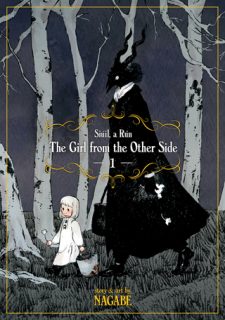
Girl from the Other Side: Siúil, a Rún, Volume 2The Girl from the Other Side: Siúil, a Rún, Volumes 2-3 by Nagabe. One of the most beautiful, unusual, and unsettling manga that I’ve encountered this year is Nagabe’s The Girl from the Other Side. The artwork in particular is striking, but the series as a whole is incredibly atmospheric, a chilling fairytale-like story that unfolds at a tantalizingly slow pace with bursts of shocking violence and heartbreak. At times The Girl from the Other Side can be delightfully charming, but a sense of foreboding is a constant shadow. Shiva was abandoned to the Outside, perhaps for her own sake or perhaps for the sake of others. Now, however, she is being deliberately sought out to be brought back Inside. But while for the time being Shiva’s life may no longer be in immediate danger, her innocence is still poised to be shattered. Teacher continues to guard and protect her even as the curse, and the human response to that curse, threatens to destroy the two of them and their world. With both exceptional artwork and storytelling, The Girl from the Other Side is easily one of my favorite manga currently being released in English.

Filed Under: FEATURES, My Week in Manga Tagged With: Descending Stories, Girl from the Other Side, Haruko Kumota, manga, Nagabe

Pick of the Week: Take A Chance On ACCA

November 27, 2017 by Sean Gaffney, Michelle Smith, Katherine Dacey, Ash Brown and Anna N 1 Comment

MICHELLE: I am very happy about new volumes of All Out!! and Giant Killing, and looking forward to Kodansha Digital’s new shoujo offerings, especially Lovesick Ellie, but I absolutely MUST have ACCA. I’ve missed Natsume Ono’s work and this one has an interesting premise regarding intrigue in some fictional country. Sign me up!

KATE: I second Michelle’s recommendation: it’s been waaaaaaaaaay too long since there was a new Natsume Ono title available in English.

SEAN: Yup, I have to agree, though I’m also drawn to SP Baby. But the Pick of the Week just has to be ACCA, the failed band that Agnetha and Anni-Frid put together with Christopher Cross… I mean, the newest offering from Natsume Ono.

ASH: No question about it, like everyone else, the debut of ACCA is absolutely my pick this week! House of Five Leaves was a particularly meaningful series for me, and I’ve greatly enjoyed many of the creator’s other manga, so I’m always interested in seeing what Ono is up to.

ANNA: I agree, a new Natsume Ono series is something that appears very rarely, and is definitely something to celebrate. ACCA is my pick as well!

Filed Under: PICK OF THE WEEK

A First Look at The Promised Neverland

November 27, 2017 by Katherine Dacey

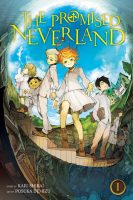
Crack pacing, crisp artwork, and a shocking plot twist in chapter one — those are just three reasons to pick up The Promised Neverland when it arrives in comic shops on December 5th. The first volume is a masterful exercise in world-building, introducing the principal characters and the main conflict in a few economic strokes, avoiding the trap that ensnares so many fantasy authors: the info-dump introduction. Instead, the writer-artist team of Kaiu Shirai and Posuka Demizu allow the reader to figure out what’s happening by revealing important plot details as the characters uncover them, and letting the artwork establish the setting. That makes the very earliest pages of the story flow more like a rollercoaster than a Star Wars screen crawl, making every page turn feel like an urgent necessity.

The story begins at Grace Field House, an orphanage plucked from a Victorian novel: the main building is a homey Tudor villa that’s surrounded by open meadows and lush forest, perfect for a game of tag. Our first hint that something is amiss comes just six pages into the story, as Emma, the narrator, makes a mental note of all the things she’s grateful for: “a warm bed, delicious food” and “an all-white uniform.” Before we can ponder the significance of the uniform, however, Demizu inserts a panel revealing that every resident of Grace Field House has a number tattooed on her neck, a sure sign that the orphans are more prisoners than temporary wards:

A smattering of other clues — including a series of daily IQ tests and a fence encircling the property — reinforce our perception that Emma and her friends Roy and Norman are in grave danger. And while the earliest chapters occasionally bow to Shonen Jump convention with on-the-nose narration, it’s the artwork, not Emma’s voice-over, that makes each new revelation feel so sinister. Consider the panel that introduces the testing ritual:

In the first ten pages of the story, Demizu uses little to no shading to create volume or contrast, instead depicting the setting and characters through clean, graceful linework. The image above, which appears on pages 12-13, is the first time that we see such a dramatic use of tone; the students at the back of the frame look like they’re being swallowed by a black hole, while the students at the front sit under a klieg light’s glare. Demizu’s subsequent drawings are more restrained than this particular sequence, but her artwork becomes more detailed and complex than what we saw in the story’s first pages — it’s as if the setting is coming into focus for the first time, complicating our initial impressions of Grace Field House as a place of refuge.

I’m reluctant to say more about the plot, since the first chapter’s spell loses some of its potency if you know the Big Terrible Secret beforehand. (If you absolutely, positively must know what happens, Wikipedia has a decent, one-paragraph summary of the premise.) By the time Emma, Roy, and Norman realize the real purpose of their incarceration, however, the basic “rules” of the Promised Neverland universe have been firmly established, and the characters fleshed out enough for us to care whether they succeed in escaping. More importantly, the lead trio are smart and capable without seeming like miniature adults, making their likelihood of success seem uncertain, rather than preordained. That element of suspense may be difficult to sustain for 10 or 20 volumes, but hot damn — volume one is a nail-biter. Count me in for more!

Volume one debuts on December 5th in print and ebook form. Chapters 1-3 are available for free on the VIZ website; the story is currently being serialized in the English edition of Weekly Shonen Jump.

Filed Under: Manga, Manga Critic, REVIEWS Tagged With: Fantasy, Shonen, Shonen Jump, The Promised Neverland, VIZ

Slumbering Beauty, Vol. 1

November 27, 2017 by Sean Gaffney

By Yumi Unita. Released in Japan by Hakusensha, serialization ongoing in the magazine Rakuen Le Paradis. Released in North America by Seven Seas. Translated by Angela Liu, Adapted by Marykate Jasper.

It can be difficult sometimes when your name becomes synonymous with something notorious. Slumbering Beauty has a lot of things I love. A snarky, emotionally repressed heroine who gradually opens up to other people even as we see that her home life is a wreck. A premise that can involve “situation of the week” yet still have an ongoing plot. Twists that become much darker when you think about them. And some very amusing humor. That said, it’s still hard for me to get past “from the creator of Bunny Drop” and not think “uh oh”. Fortunately, so far there seems to be absolutely no sign of any imbalanced and unsettling relationships here, though I felt the same way when I started Bunny Drop. It’s a good series with a dollop of fantasy, and I’m interested to see where it goes, though we appear to have caught up with Japan already.

Our heroine is Yaneko, a high school girl who really loves to sleep – in fact, it’s difficult for her to get up every morning. This is a problem for the sleep spirit Nerimu, whose job it is to ensure that humans get enough sleep and wake up on time. Yaneko has one of these things down. She can also see him, for reasons that aren’t quite clear yet, and over the course of the series becomes an apprentice as she accompanies him on his rounds to quiet flailing babies, ease the brains of constantly texting young ladies, and otherwise become the Japanese Sandman (it’s not clear whether she has to sneak out with the dew as well). In her interactions with him, Yaneko begins to make real human friends – she was very much the loner no one talks to before – and develop a bit more empathy, and Nerimu, the sleep spirit, is there to guide her.

One of Nerimu’s fellow spirits suggests that he take her on as an apprentice, and this was the part of the book that fascinated me the most, as it almost feels like a metaphor for suicide. Yaneko is making a couple of friends now, but her home life is so oppressive – the reason she seems to sleep so much and so deeply is her parents fighting all the time – that at one point she readily agrees to take on Nerimu’s job. He has to talk her down from this, saying that in effect she will be vanishing from the world, and pointing out his own tragic situation from centuries earlier – it’s not that he misses his mother, it’s that he can no longer even remember her face. I am hoping that Yaneko resists the urge for a volume or two longer, as I’m liking the way she’s gradually opening up and starting to care about others.

As I said earlier, this is the only volume out in Japan, so be prepared for a wait for the next one. It’s pretty good, though, and shows off the author’s innate skill without having any of the disquieting plotlines of her prior series. Give it a look.

Filed Under: REVIEWS, slumbering beauty

A Certain Magical Index, Vol. 13

November 26, 2017 by Sean Gaffney

By Kazumi Kamachi and Kiyotaka Haimura. Released in Japan as “To Aru Majutsu no Index” by ASCII Mediaworks. Released in North America by Yen On. Translated by Andrew Prowse.

Last time I bemoaned my dislike of the author trying to be funny, which he does every once in a while. Fortunately, this book is the sequel to Book 12, which had all the funny stuff front-loaded, and so it is content to be a giant series of fights, showing off Touma’s stubborn drive to help people, Accelerator realizing that no, anti-hero doesn’t quite fit yet, he’s still a villain, and Crowley using people as unwitting pawns to such an extent that he’s actually called out on it at the end. In short, it’s doing the things I like to read A Certain Magical Index for, and therefore I would argue it’s an excellent volume. It also features a significant role for Index, who contrasts with Accelerator so much that it boggles the mind that their paths keep intersecting. Still waiting for her to be useless and annoying, that must be anime-only, I swear.

Introduced in this volume: Acqua of the Back, Terra of the Left (voice only). Compared to the ranting, deeply broken Vento of the Front, whose hatred and fury at anything related to science has literally been weaponized by the Catholic… geh, by the Orthodox Church, Acqua looks to be fairly sensible and calm. Of course, he still threatens Touma with death, but honestly, Touma can be a bit overbearing. And frankly, Acqua was right, Vento can’t just say “wait, I was wrong all along” and switch sides the way so many other opponents Touma’s dealt with have done. In terms of chronology, we’re directly after the events in Book 12, and the two read as a two-book set. Uiharu is slightly less out of character here at least, in her one scene before she collapses like most of the population in the city.

We also see Hyouka Kazakiri as well, and honestly it’s been so look since the 6th book I won’t blame anyone who had forgotten her. Sadly, she’s mostly used as a walking plot device, and I have a sneaking suspicion will continue to be irrelevant after this book is finished. Presumable she and Index are out having burgers and Cokes whenever the focus is not on them. The really important plot here, though, is Accelerator, who gets his first real spotlight since his “rehabilitation” in the 5th book. It wasn’t much of a rehabilitation, to be honest, and those who like their heroes and villains to be black and white won’t like this book at all. Most of his victims are mooks who also seem to be happy to kill innocent civilians if it serves them, but it’s the WAY Accelerator kills them – in one case punching a woman’s jaw off and then crushing her in a hydraulic press – that leaves a bad taste in your mouth. Not that I think it’s bad – it’s exactly what the author wants to do, showing us how much of Accelerator’s goodwill is entirely tied to Last Order, and when she’s not around or captured, god help everyone. I will leave the mysterious black Angel Wings he sprouts before sending Kihara into the sky like a rocket for a later date.

If you have been reading Index, this is a good one – no surprise given it’s an odd number. Good fights, Index gets to actually do things using the magic the narrative keeps insisting she doesn’t have, Touma gets to alternately talk and punch a villain down to size, and the frog-faced Doctor draws a line in the sand – and also shows us how close he really is to the heart of Academy City. And next time we take another European field trip, this time to France, and finally see why fandom loves Itsuwa so much.

Filed Under: a certain magical index, REVIEWS

Nekomonogatari: Cat Tale (Black)

November 24, 2017 by Sean Gaffney

By NISIOISIN. Released in Japan by Kodansha. Released in North America by Vertical, Inc. Translated by Ko Ransom.

I had to reread my review of the Tsubasa Cat volume to make sure I didn’t repeat myself, as this book goes over a lot of the same ground that one did, even as it expands (and sometimes contradicts, as Nisio says himself in the afterword) on the story of Tsubasa Hanekawa and Golden Week. Indeed, it’s still not done, and Hanekawa’s tale will continue (and, for the most part, conclude) with Nekomonogatari (White) next time. But while Tsubasa Cat was more showing off Hanekawa’s stress due to her repressed love for Araragi, and ensuing jealousy at all the women in his life, particularly Senjogahara, this volume wants to examine what Hanekawa is like as a person, and how deeply screwed up and damaged she really is. And I’d also argue it’s even more about Araragi and Hanekawa’s deep-seated lust and passion for each other which never does blossom into anything more. This volume shows off why that’s probably a good thing.

The trend of “the heroine of the previous volume has a long scene with Araragi at the start of the following one” ends here (unless you count Hanekawa following herself), but man, what a way to bring it to a close. The conversation between Araragi and Tsukihi at the start of the volume may be the most rambling, pointless conversation in the history of the series, and that’s really saying something. It has such a reputation that Vertical actually sell it in the cover leaf copy. It is almost precisely one-quarter of the entire book. I don’t think it disappoints, though as always with Monogatari you’d better be prepared for some fanservice. The siblings’ conversation about love was used in the anime, but the conversation had to be cut to the absolute minimum – meaning the long dissertation taking in Anne of Green Gables, panties, more panties, and still more panties was left out. There’s also even more metatextual stuff than before – this was inevitable given that he wrote this as the anime was becoming really popular, but we get cute narrative mentions of Senjogahara, Hachikuji, and Kanbaru (who aren’t in the book, this taking place before the events of the main series) as well as Tsukihi saying, in response to a bad impersonation by her brother, that her voice sounds more like Yuka Iguchi.

As for the main plot, we’ve seen the prologue to it in Tsubasa Cat. Hanekawa was hit by her step-step-father – and the narrative makes it clear he really belted her, to the point where she hit the opposite wall – and subsequently, along with Araragi, buried a dead cat lying by the road. This ends up getting her possessed by an Afflicting Cat, which goes about “relieving her stress” by beating her parents nearly to death, cutting off Araragi’s arm, and going on a spree of draining energy from the town’s residents. The gimmick here is that in reality, it’s Hanekawa who is more of an aberration than the Afflicting Cat ever was, and the synthesis of the two of them has made her so powerful that even Meme Oshino (still around, this being a flashback volume) gets the crap beaten out of him. This is interesting as a look into Hanekawa’s broken psyche, though I found it less appealing when Oshino tries to excuse her abusive parents by saying she’s essentially asking for it. And Araragi’s solution, as one might expect, is overly violent and lethal to him, and doesn’t really achieve anything whatsoever except a temporary fix. But at least, in the end, he’s able to realize that repressing his love for Hanekawa is the right thing to do for both of them. Because trust me, he’s lying like a rug about not loving her. At least at this point in the series.

This is the end of the “first series” of Monogatari, and the next few books have a few minor but significant changes. The most obvious being the narrative voice. Next time we’ll see the White side of Nekomonogatari, which resolves Hanekawa’s story with her own first-person narration, and is also the first “Araragi-lite” book. Till then, enjoy the Black side, which is not only Araragi-heavy, but a heavy book in general. It’s depressing to see how screwed up everyone in it is. Honestly, Senjogahara will end up being the most well-adjusted of the cast once she comes along.

Filed Under: monogatari series, REVIEWS

Manga the Week of 11/29/17

November 23, 2017 by Sean Gaffney, Ash Brown, Anna N, Michelle Smith and MJ Leave a Comment

SEAN: Ugh. Let’s just lay it all out as quickly as possible. Cute comments to a minimum, there’s too much stuff!

Kodansha Digital… oof. New series include Lovesick Ellie, another cute Dessert shoujo, and My Brother the Shut-In, which I know nothing about except it runs in Morning Two. I always check out things from Morning Two.

MICHELLE: Yep, both of these are on my “check these out” pile.

ANNA: I’m intrigued but also overwhelmed at all the digital manga I haven’t read yet!

MJ: What Anna said.

SEAN: Also from Kodansha digital: All Out!! 3, Beauty Bunny 3, Cosplay Animal 3, DEATHTOPIA 6, Domestic Girlfriend 11, Drowning Love 5, Giant Killing 8, House of the Sun 11, Kounodori: Dr. Stork 6, and Peach Heaven 10. Phew. Cosplay Animal is what I’m interested in most from that pile.

MICHELLE: I’m already getting so far behind on All-Out!! and it’s just getting started!

ASH: It’s amazing how many titles are being released digitally these days, and how quickly, too!

SEAN: Kodansha still releases print as well, believe it or not. There’s Sweetness and Lightning 9, Waiting for Spring 3, and Welcome to the Ballroom 8.

MICHELLE: Aaaaand I’ll need all three of these, as well.

ASH: Sweetness and Lightning is definitely one of my priorities!

SEAN: There must have been a pileup at Seven Seas Interstate Thruway, as there are far more new titles this week than usual, starting with a debut that’s a mouthful: Anti-Magic Academy: The 35th Test Platoon. This seems to be a done in one omnibus.

Also debuting is Magical Girl Special Ops Asuka, which I think is another in the endless magical girl series for guys with fetishes. Whee.

There’s also continuing series: Devils and Realist 13, Don’t Meddle with My Daughter 2, Hana & Hina After School 3, Plum Crazy! 3, Re: Monster 3, The Seven Princes of the Thousand Year Labyrinth 4 (that’s a final volume), Shomin Sample 7, Tales of Zestria 3, and There’s a Demon Lord on the Floor 4.

ASH: That’s the last volume of Hana & Hina After School, too, I think. I’ll need to pick that up.

SEAN: Vertical Comics has a 5th To The Abandoned Sacred Beasts.

Viz has three titles delayed from the beginning of the month, as we get Anonymous Noise 5 and Idol Dreams 4.

Their debut is SP Baby, a new josei series from the author of Happy Marriage.

ASH: Glad for more josei being released.

ANNA: Unsurprisingly I enjoyed this!!!!

SEAN: And Yen Press still has some more titles. Digitally we see Aphorism 13, Crimson Prince 13, and Sekirei 13 on the manga side, and Accel World 5-8, Irregular at Magic High School 3-4, and The Isolator 1-3 on the light novel side.

The debut light novel is Wolf & Parchment, the sequel to Spice & Wolf.

Debuting on the manga end is ACCA, the newest manga from Ono Natsume, whose middle-aged men have been dearly missed the last couple of years. It runs in Big Gangan.

MICHELLE: Yaaay! I have indeed missed her work.

ASH: I am so excited for this!!

ANNA: I somehow forgot this was happening! But I am also excited!!!!!

MJ: YESSSSSSSSSSSSSSSS.

SEAN: There’s also a Sword Art Online artbook. I got the Japanese version, and it looks pretty great, let me tell you.

MJ: I’m so ready!

SEAN: Ongoing titles include BTOOOM! 19, Danmachi 8 (the manga version), The Isolator 2 (likewise), Karneval omnibus 8, Kiss & White Lily for My Dearest Girl 4, and Spirits & Cat Ears 4.

I think I compressed that as much as humanly possible. Be thankful. What are you getting?

Filed Under: FEATURES, manga the week of

  • « Go to Previous Page
  • Page 1
  • Interim pages omitted …
  • Page 396
  • Page 397
  • Page 398
  • Page 399
  • Page 400
  • Interim pages omitted …
  • Page 1048
  • Go to Next Page »
 | Log in
Copyright © 2010 Manga Bookshelf | Powered by WordPress & the Genesis Framework