• Skip to primary navigation
  • Skip to main content
  • Skip to primary sidebar
  • Home
  • About Us
    • Privacy Policy
    • Comment Policy
    • Disclosures & Disclaimers
  • Resources
    • Links, Essays & Articles
    • Fandomology!
    • CLAMP Directory
    • BlogRoll
  • Features & Columns
    • 3 Things Thursday
    • Adventures in the Key of Shoujo
    • Bit & Blips (game reviews)
    • BL BOOKRACK
    • Bookshelf Briefs
    • Bringing the Drama
    • Comic Conversion
    • Fanservice Friday
    • Going Digital
    • It Came From the Sinosphere
    • License This!
    • Magazine no Mori
    • My Week in Manga
    • OFF THE SHELF
    • Not By Manga Alone
    • PICK OF THE WEEK
    • Subtitles & Sensibility
    • Weekly Shonen Jump Recaps
  • Manga Moveable Feast
    • MMF Full Archive
    • Yun Kouga
    • CLAMP
    • Shojo Beat
    • Osamu Tezuka
    • Sailor Moon
    • Fruits Basket
    • Takehiko Inoue
    • Wild Adapter
    • One Piece
    • After School Nightmare
    • Karakuri Odette
    • Paradise Kiss
    • The Color Trilogy
    • To Terra…
    • Sexy Voice & Robo
  • Browse by Author
    • Sean Gaffney
    • Anna Neatrour
    • Michelle Smith
    • Katherine Dacey
    • MJ
    • Brigid Alverson
    • Travis Anderson
    • Phillip Anthony
    • Derek Bown
    • Jaci Dahlvang
    • Angela Eastman
    • Erica Friedman
    • Sara K.
    • Megan Purdy
    • Emily Snodgrass
    • Nancy Thistlethwaite
    • Eva Volin
    • David Welsh
  • MB Blogs
    • A Case Suitable For Treatment
    • Experiments in Manga
    • MangaBlog
    • The Manga Critic
    • Manga Report
    • Soliloquy in Blue
    • Manga Curmudgeon (archive)

Manga Bookshelf

Discussion, Resources, Roundtables, & Reviews

Blog

Pick of the Week: We Cannot Choose

August 26, 2019 by Sean Gaffney Leave a Comment

SEAN: Some of my favorites out this week – Witch Hat Atelier, a Monogatari novel, Silver Spoon – but we get A Bride’s Story so infrequently that I always feel a need to call attention to it when it’s out. It’s my pick.

MICHELLE: Lots of good stuff, indeed. I find I’m most looking forward to another installment of the always fascinating (and always gorgeous) The Girl from the Other Side.

KATE: Whoever decided to release new volumes of Silver Spoon, The Girl From the Other Side, Blank Canvas, Witch Hat Atelier and A Bride’s Story on the same day is trying to ruin me financially! C’mon, guys, have mercy on those of us with good taste…

ANNA: There’s so much great manga coming out this week! I love many of the series already mentioned, but if I have to be honest, the first thing I’m going to reach for is Witch Hat Atelier. It manages to create a slightly menacing yet absolutely charming fairy-tale like atmosphere in this story of a new young witch discovering her powers.

ASH: It really is such a bountiful week! My wallet weeps, but my soul sings. I wholeheartedly support everyone’s picks, but I’d like to express some extra love for Blank Canvas. Higashimura’s manga are always a hard-hitting but humorous treat.

MJ: Okay, I’ll be the one to go all in for Silver Spoon, because Hiromu Arakawa always wins for me, even with so many other fantastic books in the mix. I will admit, though, that I kind of regret that I haven’t paid more attention to Witch Hat Atelier.

Filed Under: PICK OF THE WEEK

Yona of the Dawn, Vol. 19

August 25, 2019 by Anna N

Yona of the Dawn Volume 19 by Mizuho Kusanagi

An evaluation of any volume of Yona of the Dawn boils down to the sentiment “if you are not reading this series, there might be something wrong with you.” This particular volume functioned well as bridge between story arcs, as well as including some bonding humor amidst a story of spiritual possession. As the reader can guess from seeing an unmasked Sinha on the cover, the first part of the volume delves more into the history of the Blue Dragon through his encounter with one of his predecessors. There’s plenty of group bonding time along the way as Yona and her companions tease Yun for taking on an inadvertent role as the group’s “mother,” but despite all the teasing he prepares snacks and worries with great maternal instincts.

Yona of the Dawn 19

Sinha’s spiritual possession causes a number of issues, as he returns to the group with another Blue Dragon in control over his body. Everyone but Yun ends up in a super creepy tomb filled with spirits, as they attempt to deal with Sinha’s vengeful spirit. As always, Yona manages to overcome difficulties by simply being true to herself and overcoming obstacles through her humanity and compassion. What initially seems like a story about a vengeful spirit ends up highlighting the strength inherent in forgiveness.

The broader story arc that begins to be set up is a return to the Water Tribe. When Yona and her companions left previously it was clear that they’d affected a small part of a systemic drug trade. While Su-Won strategizes with his generals and tribal leaders in his palace, Yona reunites with Riri and joins up with her again to help with her mission to help the Water Tribe people. As always Kusanagi does an excellent job juggling character development and storylines with such an expansive cast. While Yona is shoujo, the romance elements are fairly sparing, but fortunately there’s a wonderful scene between Yona and Hak as they have trouble sleeping that shows romance progressing slowly. I always put each volume of Yona of the Dawn down feeling immensely satisfied at the amount of story Kusanagi is able to express in just five or six chapters.

Filed Under: Manga Reviews, REVIEWS Tagged With: shojo beat, shoujo, viz media, yona of the dawn

Neon Genesis Evangelion: Anima, Vol. 1

August 25, 2019 by Sean Gaffney

By Ikuto Yamashita. Released in Japan as “Shin Seiki Evangelion Anima” by Kadokawa Shoten, serialized in the magazine Dengeki Hobby. Released in North America by Seven Seas. Translated by Nathan Collins. Adapted by Peter Adrian Behravesh.

There have been so many spinoffs of Evangelion that it’s hard to keep track. In addition to the original TV series, the long-running manga, the current series of reboot movies, the video games, the manga based on the video games, the manga based on Episode 26’s “what if Eva were a dull harem anime” gag, the manga as a bizarre murder mystery, the gag anthology, the manga based on the gag anthology… in fact, it’s a bit surprising that one of the few spinoffs we haven’t seen is a continuation of the original. Now, granted, the original did sort of end definitively for most of the cast. But these light novels, which were serialized in the late 00s – early 10s, throw the last two episodes out and ask: what would happen if the Human Instrumentality Project failed, and it’s now three years later? The answer is more attacks, the return of some Angels, some very well-thought out battle sequences, but something missing at its core.

Three years later, Gendo and Ritsuko have disappeared and Fuyutsuki is retired, so Misato is in charge of NERV and the Evas, which are still around. Toji now has artificial limbs, and is working for NERV. Asuka has matured and is at peace with herself. Theoretically Shinji has as well, but as we find out many of the same struggles he had in the anime continue to plague him. Maya has apparently dealt with the loss of Ritsuko by turning herself INTO Ritsuko. And then there’s Rei. Actually, there’s four Reis. The plot kicks off when one of the Reis goes rogue and the others have to figure out why and what’s going on. As they do, we find the return of the mass-production Evas, now with Angels inside them, also seemingly attacking. Shinji dies (he gets better), the Lance of Longinus is once again terrifying, and almost two million people – including Hikari’s older sister – turn to salt, because what’s Evangelion without Biblical allegory?

The main issue I had with this book, I think, is that it doesn’t really settle down and take a breath at any point. The new characterization of the regulars could be interesting, but it never really gets a chance to do much before we’re plunged into the next battle – indeed, one of the Reis has a heartwarming talk with Asuka that would be fantastic if it weren’t the Evangelion equivalent of saying that she’s retiring tomorrow and has bought a boat. Likewise, I’m all for Asuka gaining maturity and peace, but there’s not really a lot explaining how it happened except for one or two token paragraphs, leading to the reader sensing that Asuka is more mature just because the authors didn’t want to write her as constantly angry. On the bright side, the plot is somewhat interesting if you don’t mind apocalypses, and the cliffhanger promises some interesting betrayal going on, though again we’re not actually given any details as to what happened.

Honestly, a lot of this reminds me of the old Evangelion continuation fanfics that were written about 20 years ago, throwing out the ending and doing their own thing. It only lacks the Original Characters the author inevitably threw in. I think Evangelion fans might like it – particularly those who like the mech aspect of the series. I just wanted a few more scenes of the characters hanging around and nothing much happening so that we could appreciate their being older and wiser(?).

Filed Under: evangelion, REVIEWS

Urusei Yatsura, Omnibus 3

August 24, 2019 by Sean Gaffney

By Rumiko Takahashi. Released in Japan in two separate volumes by Shogakukan, serialized in the magazine Shonen Sunday. Released in North America by Viz Media. Translated by Camellia Nieh.

After the soft reboot of this series with the arrival of Shutaro Mendo, Takahashi is going back and trying to see how she can work the pile of characters she introduced at the start back into the series, while also introducing new and hilarious regulars. Sometimes this works and sometimes it does not. The first half of this volume succeeds in re-integrating Sakura into the cast, now the high school nurse in addition to a shrine priestess, and we also meet Mendo’s rival Tobimaro Mizunokoji, a baseball-obsessed samurai type who is after revenge but is too dim to get it. (He’s also really obsessed with his childhood friend/rival, and has a passel of gorgeous female bodyguards that he barely pays attention to. I don’t think Takahashi intended him to have gay overtones, but…) Sakura will stay a regular, and Tobimaro will pop up now and then throughout the series. But not every new character is destined to become part of our beloved cast.

(The cover art, which has Ryuunosuke and her father; Sugar, Ginger and Pepper; and Kotatsu-neko – none of whom are introduced yet – is a tad spoilery. As are the endnotes, which discuss Ran before Ran is introduced.)

The second part of this volume seems like a series of failed cast introductions. Hanako-sensei is introduced to be a variation on the “well-meaning teacher who wants to inspire youth”, but he’s honestly pretty dang dull, and will quickly be replaced by Onsen Mark (who we’ve seen before) becoming a regular. (I will gloss right over Onsen Mark’s name in this omnibus, thanks much.) Natsuko’s volleyball-obsessed girl filled with rage is a very amusing arc, with great facial expressions, but she’s not someone you can imagine showing up over and over again. The same with Kaede the runaway ninja girl, who honestly seems like she’d be better off far away from Ataru and company. Fortunately, at the very end we meet Lum’s cousin and childhood “friend” Ran, who arrives with a cute act and a thirst for revenge, and is easily the best part of the back half of the book. You can see why she sticks around.

As for our regulars, they do pretty well. Ataru and Lum are fighting less, and frequently team up against common enemies (my favorite part being “Cry, Lum.” “Waaaaaaahh!” “See, you made her cry!”). Now, Lum still gets angry, and can be seen hear biting Ataru on the arm in addition to shocking him, but Ataru doesn’t seem to resent her presence anymore. Which is good, as she transfers into his school in this volume, thus helping to avoid finding reasons for her to show up in the classroom. The addition of the other cast members also helps take the focus of the manga off “will Ataru choose Lum” and focus more on “this obnoxious cast of obnoxious humans and aliens”, which will help it survive for the remaining fourteen omnibuses.

So there are some growing pains in this book, but it’s still highly entertaining, and Takahashi’s art has gotten to the point where you don’t have to apologize for it anymore. Still essential.

Filed Under: REVIEWS, urusei yatsura

The Right Way to Make Jump

August 23, 2019 by Katherine Dacey

Most books about the manga industry fall into one of two categories: the how-to book, which offers advice on how to draw proportionate characters, plan a storyboard, and buy the right pens; and the how-I-became-an-artist story, which charts the emotional ups and downs of breaking into the manga biz. The Right Way to Make Jump takes a different approach, pulling back the curtain on the production process.

Our guide to the manga-making process is Takeshi Sakurai, an anxiety-ridden thirty-year-old who traded his dreams of becoming a professional manga-ka for a more predictable, less demanding life as an onigiri chef. Out of the blue, Sakurai receives a call from his former editor Momiyaxx-san about a once-in-a-lifetime opportunity to “create a non-fiction manga” that explains “how Jump is made.” After much hand-wringing and angst—and a friendly nudge from his cheerful, patient wife—Sakurai accepts the assignment, embarking on a series of factory tours and interviews to learn the nuts-and-bolts of publishing an issue of Weekly Jump. His odyssey takes him to a paper mill at the foot of Mt. Fuji, the editors’ bullpen at Shueisha headquarters, and VIZ’s corporate office in San Francisco, where Sakurai gets a first-hand look at how Jump is localized for different markets.

The book is cheekily divided into ten “arcs,” each of which focuses on a specific production step. The most interesting sections focus on the manufacturing process, explaining why Jump uses colored paper and how the magazines are cut, assembled, and bound. For readers who love the Discovery Channel—and I count myself among them—these early chapters are a blast, as they are studded with weird, wonderful facts about paper and machinery. (Among the most interesting: Jump paper dust plays an important role in Tokyo’s sewage treatment program.) The later chapters, by contrast, are less effective, as the editorial staff’s answers to potentially interesting questions are couched in polite, vague language that offers little insight into what they do; you’d be forgiven for rolling your eyes when a Jump staffer offers an essentialist justification for not hiring female editors, or chalks up the order of each issue to ‘intuition.’

Where The Right Way really shines is in Sakurai’s use of clever visual analogies to help the reader grasp the most  intricate parts of the manufacturing process. In “Platemaking,” for example, Sakurai creates a muscle-bound figure who represents the resin plate, a key element in the printing process:

The figure’s transformation neatly embodies the basic principles of creating a positive from a negative by comparing the process to suntanning—something that readers of all ages can relate to from personal experience.

As informative as such passages are, The Right Way can be a frustrating reading experience. Some chapters are briskly executed, achieving a good balance between education and entertainment, while others focus too much on slapstick humor, unfunny exchanges between Sakurai and Momiyaxx-san, and shameless plugs for Weekly Jump. Sakurai’s sardonic tone—expertly captured by translator Emily Taylor—helps mitigate some of these issues, but can’t always goose the tempo when Sakurai frets and fumes about meeting his deadlines; joking about your own shortcomings can be an effective strategy for ingratiating yourself to the reader, but not when you’re using those jokes to pad your weekly page count.

The overall structure of the book, too, leaves something to be desired. Though the first chapters focus on how the magazine is printed, the later chapters tackle a seemingly random selection of topics—Jump Festa, recycled paper stock, cover design, reader contests—suggesting that no one anticipated how long The Right Way would run in Weekly Jump. A topic-of-the-week approach is fine when readers wait for each new installment, but it makes for a chaotic, sometimes repetitive reading experience when collected in a single volume. The most logical strategy for organizing the tankubon edition would have been to start with the editorial process and end with the printing; not only does sequential presentation have obvious explanatory value, it also lends the material a compelling narrative arc, something that The Right Way to Make Jump sorely lacks.

Despite these shortcomings, I’d still recommend The Right Way to Make Jump, as it offers an all-too-rare glimpse of manga publishing’s less glamorous aspects, highlighting the contributions of professionals whose efficiency, creativity, and diligence have made Weekly Jump into a global phenomenon.

THE RIGHT WAY TO MAKE JUMP • ART AND STORY BY TAKESHI SAKURAI • TRANSLATED BY EMILY TAYLOR • VIZ MEDIA • 208 pp. • RATED T, FOR TEENS

Filed Under: Manga, Manga Critic, REVIEWS Tagged With: How-To, Shonen Jump, Takeshi Sakurai, VIZ

In Another World with My Smartphone, Vol. 16

August 23, 2019 by Sean Gaffney

By Patora Fuyuhara and Eiji Usatsuka. Released in Japan as “Isekai wa Smartphone to Tomo ni” by Hobby Japan. Released in North America digitally by J-Novel Club. Translated by Andrew Hodgson.

It is very telling – and a bit sad – that a chunk of this book is some of the best Smartphone prose I’ve seen in some time, and it’s the part narrated by someone else, with Touya absent. I do worry about the afterword, where the author and editor discussed cutting this bit as it did NOT feature Touya or his fiancees. I get the sense that we’re looking for different things in this series. Rest assured for Touya fans, though – if there are any Touya fans left – that he gets a lot to do here, including finding a lost heir to the throne, battling yet another evil and bonkers leader of a foreign country (this time, thankfully, not also taking out the rest of the country as well), and catching giant fantasy-world tuna. As for getting closer to his fiancees… well, thanks to Sue not knowing the basics, the fiancee horde learn about sex in this book. Perhaps more than they really wanted.

In the Reverse World, there’s a brief Phrase battle, but aside from ominous foreshadowing it’s fairly inconsequential. The main thrust of the book is the survivors of a destroyed kingdom asking Touya to find the missing heir, who disappeared as a newborn infant. The heir turns out to be in the place they’d last expect, and also not particularly invested in returning to help get revenge on those who killed his parents and destroyed their kingdom. Meanwhile, a third kingdom is trying to invade, using its awesome Golems and its mad scientist leader, who does all but scream about how they laughed at him at the academy and is a literal brain in a jar by the end. Touya is his usual callous self in the battle with this guy, but of course we’re made to see that he’s super-duper evil so it’s all good. And of course more jokes about Touya’s genocides. LOL.

Thankfully, the last third of the book is excellent. Touya joins forces with the Guild of Adventurers to start an Adventurer Academy, where they can compete to see who deserves to level up. He also puts an inside person on the job, Sarutobi Homura, last seen as one of “those three ninja girls”. We’d seen her mostly be the loud one who acts least like a traditional ninja, and there’s a bit of that here, but for the most part she actually proves to be quite competent and cool. The other adventurers are very much “I don’t want to work with that guy” sorts, so there’s a lot of struggle, and we see them screw up quite a bit, especially when their “test” mission turns out to be far more dangerous than expected. Everyone gets a chance to be sympathetic, the fights are cool, and Touya and company are there to make sure no one’s really hurt. I would not mind more of these guys.

Unfortunately, In Another World with My Smartphone still stars Touya. But that’s fine, we’re mostly here to wallow in the trash. It’s just nice to get a really good meal once in a while.

Filed Under: in another world with my smartphone, REVIEWS

Manga the Week of 8/28/19

August 22, 2019 by Sean Gaffney Leave a Comment

SEAN: This week’s Manga the Week of comes to you live from Stanfield International Airport in Halifax, Nova Scotia.

We start off with J-Novel Club, who have new volumes of An Archdemon’s Dilemma (7) and Der Werwolf (5).

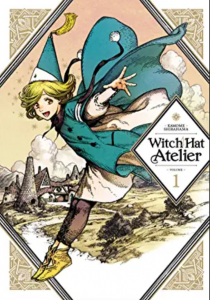
Kodansha’s print volumes include Attack on Titan: Before the Fall 17, Kiss Me at the Stroke of Midnight 9, L*DK 13, and Witch Hat Atelier 3.

ANNA: I love Witch Hat Atelier!

ASH: It really is such a lovely manga.

SEAN: The digital debut next week is Atsumori-kun’s Bride-to-Be (Atsumori-kun no Oyome-san (←Mitei)), a shoujo/josei series from Dessert. The author has also done House of the Sun. Country girl chases after a guy she likes by moving to Tokyo.

MICHELLE: I was looking at this earlier. It looks somewhat cuter than some of their shoujo fare, so I will probably check it out.

SEAN: And we get Domestic Girlfriend 20, Elegant Yokai Apartment Life 16, and My Boy in Blue 12.

No debuts from Seven Seas, but we do get Blank Canvas 2 *and* The Girl from the Other Side 7, as well as the 2nd and final Division Maneuver in print.

MICHELLE: Seven Seas really has some great titles these days.

ASH: It’s true. I adore The Girl from the Other Side and the first volume of Blank Canvas was terrific.

MJ: It’s really been a pleasure to watch Seven Seas become awesome.

SEAN: Vertical has the 2nd volume of the Koyomimonogatari short story collection, with one of the better cliffhanger’s Nisio has done. They also have To the Abandoned Sacred Beasts 9.

We get several more Yen titles, though again a lot of their August lineup shifted into September. Yen On has Kingdom Hearts Re:Coded, as well as the 9th KonoSuba novel.

Yen has two debuts. One is a done-in-one omnibus, Count Fujiwara’s Suffering (Fujiwara Hakushaku no Junan). Fujiwara is a cat. The cat is the straight man to two wacky siblings. This ran in Kodansha’s Shonen Sirius.

ANNA: Is there dog manga? I feel like we’ve gotten a bunch of cat manga and no dog manga.

SEAN: There’s Fullmetal Alchemist… (WHACK) Ow!

ANNA: Nooooooooooooooo!

MICHELLE: Now, that’s just wrong.

MJ: It huuuuurts.

SEAN: The other debut, Overlord A La Carte, is a comic anthology take on the Overlord light novels done by various artists. It runs in Kadokawa’s Comp Ace, also the home of the main Overlord manga.

Yen has A Bride’s Story 11 and Silver Spoon 10, which my sixth sense tells me I should separate from the others for the convenience of comments.

ASH: Both are phenomenal series! A Bride’s Story is gorgeous and Silver Spoon has so much heart.

MJ: You know Silver Spoon tends to blind me to any manga unfortunate enough to be sitting around it, but if anything’s got a shot, it’s A Bride’s Story!

SEAN: Yen also has Dimension W 15, Hatsu*Haru 8 (I actually really like this one), Re:Zero Arc 3 Volume 8, The Royal Tutor 12, Shibuya Goldfish 5, Smokin’ Parade 6, Tales of Wedding Rings 7, and Val x Love 6.

Not bad for the end of August. What are you getting?

Filed Under: FEATURES, manga the week of

Bookshelf Briefs 8/21/19

August 21, 2019 by Ash Brown, Sean Gaffney and Michelle Smith Leave a Comment

Accomplishments of the Duke’s Daughter, Vol. 4 | By Reai and Suki Umemiya | Seven Seas – Aside from praising Iris’s innovations, this volume focuses more on the political end of things than the commerce end. Iris ends up attending the ball, and it goes better than she expected, mostly as the Queen Dowager is in her corner. In fact, honestly, things may go a little TOO well—the entire ball seems engineered to show off how the guy who dumped and exiled Iris is a hothead idiot, and Yuri seems to be doing an excellent job of manipulating the country into… running itself into the ground. But how invested should Iris be in all this, especially as she has to look out for her own nation, because there’s war on the horizon. Still an excellent political drama. – Sean Gaffney

Behind the Scenes!!, Vol. 7 | By Bisco Hatori | Viz Media – I enjoy Bisco Hatori’s humor, but her plotting is not a thing to behold. That said, as predicted, things resolved with the Ruka plotline, followed by a quick epilogue showing the film Goda made (honestly, the plot of the film sounds like a manga I’d love to see Hatori write), and then another epilogue several years later showing the two pairings (mostly) resolved and the two stars at ease with themselves and successful. There’s fun to be had here, but I can’t deny that I think this started a lot stronger than it ended, and I’m glad it did not end up as long as Ouran. I’d still recommend it to Hatori fans, though. Oh yes, and the amnesia arc proves to be as inconsequential as I suspected it would be. – Sean Gaffney

Cocoon Entwined, Vol. 1 | By Yuriko Hara | Yen Press – Hoshimiya Girls’ Academy has a unique tradition. The students have exceedingly long hair, and as the middle school third-year students are being measured for their high school uniforms, the high school third-years are finally having their hair cut, which will be used to make said uniforms. Cocoon Entwined so far is light on plot, heavy on atmosphere. We meet Yokozawa, a girl who seems to be able to sense breathing and/or heartbeats from the uniforms, and Saeki, the princely girl whom Yokozawa has feelings for. We don’t meet, except in flashback, the elusive Hoshimiya, granddaughter of the headmistress, who has locked herself in her room and for whom Saeki seemingly pines, much to Yokozawa’s dismay. I really liked this volume, even though there’s not a lot happening so far. I look forward to more, whenever it comes. – Michelle Smith

Dead Dead Demon’s Dededede Destruction, Vol. 6 | By Inio Asano | Viz Media – Thankfully, and despite Kadode assuring her friends that something happened, it’s suggested nothing did, and the teacher is leaving the city due to the ongoing chaos. Honestly, the world may not have all that long to go—even if the aliens don’t bring things to an end, can Japan really hold off America and everyone else? This still has a bit of a post-apocalyptic feel to it. Still, Futaba does end up getting lucky, so to speak, though the implication is that her politics and his desire for a non-serious relationship will make that a very short relationship. The best part of the story was Oran’s surprise birthday party, which was sweet as pie. I hope there’s more sweet moments ahead. – Sean Gaffney

Emanon, Vol. 1: Memories of Emanon | By Shinji Kaijo and Kenji Tsuruta | Dark Horse – I initially picked up Emanon due to Tsuruta’s involvement since I’ve been enjoying Wandering Island; I only later realized that Kaijo is an award-winning author. The Emanon manga is an adaptation of a series of stories written by Kaijo (also illustrated by Tsuruta) featuring a young woman who calls herself Emanon. Kaijo’s somewhat melancholic but engaging narratives lend themselves well to Tsuruta’s atmospheric artwork. There’s very little action in the first volume of the manga. For the most part, Tsuruta is capturing a reminiscence of a conversation between two people, a young man who enjoys speculative fiction and Emanon. She intrigues him, not only because of the air of mystery surrounding her but because she tells him that she holds memories reaching back to the beginning of life on Earth. Memories of Emanon, adapting Kaijo’s original story, is self-contained, but I’m greatly looking forward to the continuation of the series. – Ash Brown

Idol Dreams, Vol. 6 | By Arina Tanemura | VIZ Media – It’s been almost two years since I read a volume of Idol Dreams. I’d stop short of saying it has gotten good in the intervening time—there’s a lot of melodrama here, from the death of Hibiki’s little sister and him carrying on despite his grief (leading to the spectacularly cheesy line, “Sayaka, can you hear Hibiki singing?”) to the plotline revolving around Hanami’s pregnancy and the fact that it isn’t Tokita’s—but it’s certainly somewhat better, and I think that’s because this volume puts much more emphasis on Deguchi as an adult interacting with adults rather than her masquerading as a teen interacting with teens. It was even a little gratifying to see this mousey character haul off and smack Hanami for leaving Tokita at the altar. Do I care enough to keep reading? Maybe, especially if the next volume is the final one. – Michelle Smith

Magi: The Labyrinth of Magic, Vol. 37 | By Shinobu Ohtaka | VIZ Media – And so, Magi comes to an end. There were some things I really liked about it, like how Ohtaka-sensei showed how Alibaba’s unfailing determination to fight the spell reminded various brainwashed people of other heroes they had known who had sacrificed everything for goals and countries that would no longer exist if everyone and everything returned to rukh. I liked how Kogyoku was desperately trying to get him to surrender to her before the arrival of the massive army in an attempt to save his life. The rest, though, is not completely clear. I get most of what Sinbad did, but I don’t really get how Aladdin emerged victorious. There was a big flash of light and then… happy epilogue? Which I guess is fine. The happy epilogue was what I really wanted, anyway. Overall, I enjoyed this series and its themes of self-determination. – Michelle Smith

My Hero Academia, Vol. 20 | By Kohei Horikoshi | Viz Media – This is an excellent volume, but it’s definitely a “wrap up one plot and start another” sort of book. Midoriya stops the “villains” and we see the small series of tragedies behind their backstory. He makes it back for the festival—just—and it’s a blast, with Jiro at her best (the redrawn art helps) and Eri dazzled. Then we see the new hero rankings post-All Might, and Endeavor is finally top of the charts, but being #1 also means that people are after you as well, and there’s a pretty nasty fight towards the end. Will Endeavor win the day? And will Todoroki care? Great volume, but I think it’s all about Jiro and Eri’s big grins in the end. Those are wonderful smiles. – Sean Gaffney

Shortcake Cake, Vol. 5 | By suu Morishita | VIZ Media – Ten has realized she likes Riku after all and returns early after summer vacation because he’s alone in the boardinghouse. Meanwhile, Chiaki is getting bolder about expressing his feelings. The great part is that not only does he get this pertain to Ten—including a smooch at the end and a “What can I do so that you consider me?”—but to Riku, as well. Chiaki’s oddball personality is starting to come through, and the best chapter here is a cute interlude where he lies about the origins of a cup Riku broke so that they can go out shopping for a replacement together. It involves Riku winning an enormous bag of potato chips for Chiaki from a crane game. I’m not super invested in the romance angle of this story, but I do like the main trio of characters! – Michelle Smith

Sword Art Online: Hollow Realization, Vol. 4 | By Tomo Hirokawa, based on the story by Reki Kawahara | Yen Press – There’s an attempt to ramp up the danger here, given that we’re dealing with the death of NPCs, who technically aren’t real people (though honestly, most of SAO has been built around proving that false lately) and the fact that this time you really can log out and go back to your life. But the threat of the game being hacked, as well as users using drugs to “enhance” their experience, means that this time the Japanese government may finally shut down all these VR games for good—something that Kirito and Asuna in particular are determined to stop. Can they help save Premiere from her fate? And what about Anti-Premiere? – Sean Gaffney

Takane & Hana, Vol. 10 | By Yuki Shiwasu | Viz Media – As expected, Okamon is shot down (very nicely) by Hana. Of course, Takane misunderstands. Indeed, the entire volume is about misunderstandings and poor communication, which is always a good fallback in romantic comedies like this one. We also get the backstory on how Takane met Nicola, and how, like Hana, he was at first completely annoyed by him till he saw his hidden nice side. There are not quite as many amusing faces as previous volumes (though the omake helps make up a lot of the difference). But in return we do get a bit more on the romance front, as a drunken Takane (they had a birthday party for him) ends up kissing Hana… on the nose. That said, the effect is devastating. Fun times. – Sean Gaffney

Yuri Life | By Kurukuruhime | Yen Press – We’ve seen quite a few yuri anthologies about adults lately and this one is a 4-koma one-shot, with each chapter focusing on a different couple, until we come around to the first one at the end. There are couples I found interesting. (One involves the Grim Reaper waiting for a woman to die, falling in love with her, and then having her romance be what enables the woman to keep living… so they have to part.) I will say they are “mostly” adult romances… one is teacher-student, with the student being sixteen, and it didn’t work for me. Nor did the one about the “yandere.” Still, there were more hits than misses, and if you’re looking for cute, sweet yuri that won’t stick in the head, this is decent enough. – Sean Gaffney

Filed Under: Bookshelf Briefs

Crest of the Stars: A War Most Modest

August 21, 2019 by Sean Gaffney

By Hiroyuki Morioka and Toshihiro Ono. Released in Japan by Hayakawa Bunko. Released in North America by J-Novel Club. Translated by Giuseppe di Martino.

When we left Jinto and Lafier, he was locked up in an evil Baron’s swank apartment along with the evil Baron’s sympathetic father. What follows for the next third or so of the book is a well-executed action movie, as we get escapes, chases, battles to the death, a clever use of propellant, and the two of them reunited and on their way once more. Unfortunately, it would appear that “drop Jinto off and continue on her merry way” is just not in the cards for Lafier, as the delay means that there’s now a huge war that they have to somehow get through. They’re able to evade pursuit in space, but that won’t last long, so they land on a planet that, it turns out, has just been captured by the enemy. Now they have to hide out, disguise the fact that Lafier is Abh, and try to get back off the planet and to safety. But they’re both smart kids. What could possibly go wrong?

It has to be said, the best reason to buy this volume is Jinto and Lafier’s pathetic attempt at being on the run. They are the worst wanted criminals ever, made even more silly when they hold up some joyriders and steal their car, then… hole up in the first inn they find for days at a time, thinking everyone will simply ignore them. This is very much played for laughs, though it’s more of a wry smile sort of laugh (that said, I was amused at Lafier trying subtly to convey to Jinto that she needed privacy to go to the bathroom, though I could have done without the author patting himself on the back in the afterword). By the time the resistance shows up to “kidnap” them, you’re ready to thank God that someone can save these idiot kids from themselves. Perhaps the crusty old cop who’s being forced to work with the planet’s new conquerors might help as well.

We get an origin story of the Abh here from Lafier, who’s rather matter-of-fact about it but it’s still pretty dark. There are also a few scenes away from our star couple, as we see the Empress of the Abh dealing with the human ambassadors “negotiating” with her, which goes about as well as you’d expect. You can see that the Abh are upset about Lafier’s supposed death, or at least as upset as Abh are allowed to get. And the war also seems to be coming towards them, though I suspect they won’t be so easily rescued. A lot of Japanese science-fiction has that old-fashioned space opera feel to it, and this is no exception. The Abh tend to be a fill-in for Japan at times, so it’s no surprise that they’re being shown as the good guys, but the author tries to make it clear how that appears to everyone else. It’s just the narrative sides with them.

Again, this is a good work of science fiction, and doesn’t feel like a light novel at all. It’s worth it as a real change of pace for those who are tired of isekai. Also, nice hat.

Filed Under: crest of the stars, REVIEWS

A Certain Scientific Railgun, Vol. 14

August 20, 2019 by Sean Gaffney

By Kazuma Kamachi and Motoi Fuyukawa. Released in Japan as “Toaru Kagaku no Railgun” by ASCII Media Works, serialization ongoing in the magazine Dengeki Daioh. Released in North America by Seven Seas. Translated by Nan Rymer, Adapted by Patrick Sullivan.

Out of the ‘core four’ heroines in Railgun, Uiharu Kazari has probably gotten the least amount of focus time. She’s the hacker friend of the bunch, and would be the weakest esper except that Saten is a Level 0, and Saten is also outgoing whereas Uiharu isn’t. But we’re past the events of Index 15, where Uiharu stared down a dangerous Level 5 in order to protect a child (and got a broken collarbone for her troubles), so we know that she’s made of sterner stuff. As a result, she gets a bit of the spotlight in this volume of Railgun, though true to her character most of the “spotlight” is spent offscreen. A prison is trying to boast of its impregnability, and asks students to try to infiltrate it and free a prisoner. There’s a big cash reward, so Saten’s in, and Mikoto’s pride is tweaked, so she’s there as well. But how impregnable is it really?

The volume opens with a lovely series of scenes where Uiharu takes Saten out on a date to try to cheer her up as she’s been down lately, and Saten admits (though doesn’t specify) that she’s upset about Frenda’s disappearance. (As with most yuri relationships in Railgun that don’t involve Kuroko, there is plausible deniability here, but the entire chapter reads as REALLY yuri if you ask me.) The majority of the volume, however, shows off the huge cast of Railgun that we’ve met over the last few volumes, as they’re also trying to get into the facility – along with some “new” characters, who readers of Index will recognize from the New Testament novels but we’re seeing in the timeline for the first time, who run the gamut from goofy to helpless to dangerous – well, actually, the goofy and helpless girls ARE the dangerous ones.

Everyone is busy using their powers to break into the facility, fight the robots that try to stop them, and get taken out by various scientific marvels, but it’s Uiharu who (we see, after the reveal that the contest is over) comes up with the best plan – hack the robots, hack the cameras, hack the security and waltz away with the prisoner. It’s a good reminder of how lucky we are that she’s on the side of the angels, and there’s a very amusing joke where she talks about donating all her winning to charity because after all, she can always hack into a bank for money anytime she wants. Unfortunately, there was a new “villain group” of students at the event, all of whom are traitors of some sort, and they’ve decided that their plan really needs someone like Uiharu in it. I smell a kidnapping coming up. In the meantime, let’s hope the wait for the next volume of Railgun isn’t as long as this one was.

Filed Under: a certain scientific railgun, REVIEWS

  • « Go to Previous Page
  • Page 1
  • Interim pages omitted …
  • Page 300
  • Page 301
  • Page 302
  • Page 303
  • Page 304
  • Interim pages omitted …
  • Page 1048
  • Go to Next Page »
 | Log in
Copyright © 2010 Manga Bookshelf | Powered by WordPress & the Genesis Framework