 MICHELLE: Hm, probably I shouldn’t pick Wave, Listen to Me! for two weeks in a row, so this time I’ll go for Kindred Spirits on the Roof, which has been on my to-get list for quite a while.
SEAN: There’s lots I’m interested in, including lots of light novels and some amusing/disgusting horror. But yes, my pick is definitely Kindred Spirits on the Roof. This makes three Seven Seas picks this month. Kudos to them.
ASH: While I’m certainly interested in Kindred Spirits on the Roof there can be no other pick for me this week than Dissolving Classroom. Josei horror by Junji Ito? Count me in!
KATE: My vote goes to Junji Ito’s The Dissolving Classroom. It looks gross — in the best possible way — and funny — as all of Ito’s manga are. I don’t know if it’s studded with references to Umezu’s Drifting Classroom, but it seems as if there’s drinking game potential here!
ANNA: I’m with the folks who are choosing The Dissolving Classroom, it isn’t every week a quality horror release comes out!


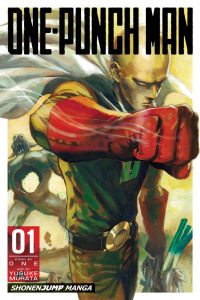 My name is Saitama. I am a hero. My hobby is heroic exploits. I got too strong. And that makes me sad. I can defeat any enemy with one blow. I lost my hair. And I lost all feeling. I want to feel the rush of battle. I would like to meet an incredibly strong enemy. And I would like to defeat it with one blow. That’s because I am One-Punch Man.
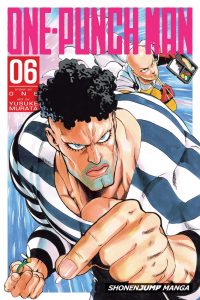 The balancing act ONE and Murata achieve here is impressive. On the one hand, One-Punch Man is gloriously silly. Heroes and foes alike are apt to be ludicrous, and some of the former have terrific names like Tank Top Vegetarian or Spring Mustachio (although I actually think he’s pretty cool). On the other hand, there is a lot of excellent shounen manga storytelling going on. The way Saitama lives his life without criticism for others makes me think he’d get along well with One Piece‘s Luffy, and the devotion his pupil Genos shows for him means they can always rely on each other. Too, after Saitama joins the Hero Association, we get regular updates on how his rank is improving, and this puts him in contact with even more heroes, some of whom are inept, some of whom are capable, and one of whom might actually be an enemy. He doesn’t seek glory, so many are unaware of his true strength, but I assume that eventually he will attain the rank he deserves (currently, due to poor performance on the written test, he’s far below Genos).
 As of volume eleven, there are several plotlines in play. Monsters are appearing everywhere, and appear to be organizing. Is this tied in with the prediction of an extinction-level event within the next six months? What about that hint of a possible traitor that was dropped a few volumes back? While a rogue martial artist named Garo is hunting heroes, Saitama is off at a martial arts tournament to learn more how to defeat Garo (not knowing that he totally already did) and seems destined to face off against another strong fighter who is desperate for a challenge. I admire how this story has widened in scope in a natural way, without compromising the balance of narrative and humor. It could conceivably go on for a very long time, and I deeply hope it does.


 and
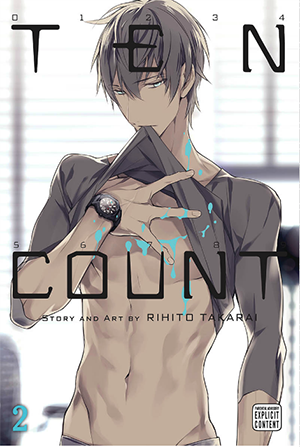
and  ) by Rihito Takarai, published here by SuBLime. From what I understand, the series has reached five volumes (ongoing) in Japan. The third volume is due out from SuBLime next month.
  Shirotani is a lifelong germaphobe, resigned to his condition, though it keeps him isolated from others. Fortunately, with the help of his understanding employer, he is able to tolerate his job as secretary to a corporate CEO. It is in the corporate line of duty, then, that he first meets Kurose, a therapist at a local mental health clinic. Kurose notices Shirotani’s condition immediately, and suggests he seek help, but though Shirotani is able to make his way to the clinic, he can’t bring himself to go inside. Acknowledging this difficulty, Kurose offers to help him in a non-clinical capacity, as a friend, an arrangement to which Shirotani eventually agrees. As Kurose slowly helps him accomplish progressively difficult tasks (touching a doorknob with his bare hand, buying a book from a bookstore), the two become close in ways that complicates their relationship and threatens the fragile boundaries between them.
  MICHELLE: Another thing that strikes me about the questions Kurose poses is how detached and clinical they can seem, even after a sexual act. One example is, “Were you more concerned with the possibility that I found you unpleasant than whether or not you found the situation itself unpleasant?” Leaving aside the tacit admission that he knows Shirotani could’ve been finding the situation unpleasant, attempting to reassert the therapist/patient dynamic at such a moment is, well, kind of creepy.


 I admit that I initially judged this book by its cover, assuming that it was on the smutty side and aimed at a decidedly male audience. While it is true that Scum’s Wish is seinen, the mangaka (Mengo Yokoyari) is female, and the end result (for me, at least) feels more like dark shoujo.
