• Skip to primary navigation
  • Skip to main content
  • Skip to primary sidebar
  • Home
  • About Us
    • Privacy Policy
    • Comment Policy
    • Disclosures & Disclaimers
  • Resources
    • Links, Essays & Articles
    • Fandomology!
    • CLAMP Directory
    • BlogRoll
  • Features & Columns
    • 3 Things Thursday
    • Adventures in the Key of Shoujo
    • Bit & Blips (game reviews)
    • BL BOOKRACK
    • Bookshelf Briefs
    • Bringing the Drama
    • Comic Conversion
    • Fanservice Friday
    • Going Digital
    • It Came From the Sinosphere
    • License This!
    • Magazine no Mori
    • My Week in Manga
    • OFF THE SHELF
    • Not By Manga Alone
    • PICK OF THE WEEK
    • Subtitles & Sensibility
    • Weekly Shonen Jump Recaps
  • Manga Moveable Feast
    • MMF Full Archive
    • Yun Kouga
    • CLAMP
    • Shojo Beat
    • Osamu Tezuka
    • Sailor Moon
    • Fruits Basket
    • Takehiko Inoue
    • Wild Adapter
    • One Piece
    • After School Nightmare
    • Karakuri Odette
    • Paradise Kiss
    • The Color Trilogy
    • To Terra…
    • Sexy Voice & Robo
  • Browse by Author
    • Sean Gaffney
    • Anna Neatrour
    • Michelle Smith
    • Katherine Dacey
    • MJ
    • Brigid Alverson
    • Travis Anderson
    • Phillip Anthony
    • Derek Bown
    • Jaci Dahlvang
    • Angela Eastman
    • Erica Friedman
    • Sara K.
    • Megan Purdy
    • Emily Snodgrass
    • Nancy Thistlethwaite
    • Eva Volin
    • David Welsh
  • MB Blogs
    • A Case Suitable For Treatment
    • Experiments in Manga
    • MangaBlog
    • The Manga Critic
    • Manga Report
    • Soliloquy in Blue
    • Manga Curmudgeon (archive)

Manga Bookshelf

Discussion, Resources, Roundtables, & Reviews

Michelle Smith

Off the Shelf: Anniversary Edition

June 1, 2011 by Michelle Smith, MJ, Katherine Dacey and David Welsh 13 Comments

MICHELLE: Gee, they told me that we’d be holding Off the Shelf here this week, but it’s dark and doesn’t look like anyone’s here yet…

MJ: Surprise!!

Er. Sort of?

MICHELLE: OMG, no way! You guys~!

KATE: It’s OK, Michelle–we figured you might be on to us. But you do an excellent job of feigning surprise, if that’s any consolation.

DAVID: I made punch! It’s vivid pink and thick with booze!

MJ: I’ll take a glass of that punch!

MICHELLE: Well, I did kind of invite all of you here to celebrate not only my official induction into the Manga Bookshelf family, but also the one-year anniversary of Off the Shelf!

DAVID: And we’re thrilled to be here!

MJ: That’s right, we’ve actually been doing this column for a full year as of today. How wonderful that this coincides with Michelle’s official entry into our ranks!

KATE: Call me a skeptic, but that seems planned!

MICHELLE: I can vouch for it being a happy accident! Once we realized the coincidence, we knew we had to have a partay!

MJ: So, we’ve never tried to do this with more than two people before. I guess I should ask someone… So, David, read any good books this week?

DAVID: Ah! I have the perfect tonic for skepticism! And it comes in an omnibus-sized dose!

MICHELLE: Lay it on us!

DAVID: Indeed I did! When not hiking the canyons of southern Utah or trying to figure out how the lights worked in a Las Vegas hotel, I was paying a visit to CLAMP Land.

Now, based on what I’ve read of their work, I’m not a huge CLAMP fan. I think they can be pretty self-indulgent, and coherent narrative is not their highest priority. So I was totally delighted to see how focused Cardcaptor Sakura is. I read Book 1 of Dark Horse’s re-release while I was on vacation, and it was a complete treat. (I also suspect I was the only 40-something gay man in Utah who happened to be reading Book 1 of Cardcaptor Sakura at that point in time, which was gravy in a strange way that I can’t fully explain.)

Everyone probably already knows this, but it’s in the magical girl genre. Our heroine, Sakura, finds a dusty old book that used to contain the powerful Clow Cards, which grant the user various abilities. The guardian of the book, an adorable little whatsit called Kero, informs Sakura that she has magical abilities and can collect the missing cards, thus preventing unspecified disaster. It’s your basic gather-stuff-and-get-stronger structure, but it isn’t bogged down in the details of that ongoing quest. The CLAMP quartet doesn’t neglect Sakura’s card-capturing adventures, but they aren’t encyclopedically obsessed, either.

Their primary interest seems to be to give you reasons to like Sakura and her friends and family, and they knock that out of the park. Sakura is spunky and funny. She knows she’s a novice at the whole magic thing, but she’s not insecure about it. She has good instincts and trusts them, and she has reliable helpers. There’s the previously mentioned Kero, and there’s her rich classmate Tomoyo who, in addition to being unfailingly supportive, provides fabulous costumes for Sakura and chronicles her adventures on video. She’s like Edna Mode with a camcorder.

I like Sakura’s brother, Toya, and his twin impulses to tease and protect Sakura seem entirely credible. I like Sakura’s rival in card collection, Syaoran, mostly for the fact that Sakura seems generally unfazed by his criticisms and finds him a useful indicator that she’s on the right track. And while I don’t have much of an opinion on Yukito, Toya’s best friend, I find the fact that Sakura and Syaoran both have huge crushes on him to be totally adorable and ceaselessly amusing. In fact, the undercurrents of homo-romanticism (I can’t really call it homo-eroticism) in the book give it such an interesting flavor, because they’re such non-issues. They’re just believable side notes that make things livelier.

I’ve already used the word “adorable” twice in this review, and you should gird yourself for me using it again, because this book is adorable in all of the best ways a thing can be adorable. The character designs? Adorable. The jokes and romance? Adorable. The sparkly, easy-to-read art? Adorable. It’s cheerful, heartwarming stuff that still manages to be thoughtful and exciting, and I can’t wait to read more of it, because, beyond being very endearing magical-girl manga, it seems like it might be heading interesting, even daring places. I’m not ready to excuse CLAMP School Detectives or the song lyrics and angel drag in Clover or anything that drastic, but this definitely gives CLAMP one for the win column.

MJ: David, the way you describe this, I feel like I need to rush out and buy the Dark Horse editions RIGHT NOW.

DAVID: You totally do. It is the best kind of cute manga. Of course, you’re the real CLAMP devotee of the group, Kate. What did you pull off the shelf?

KATE: Not CLAMP, I’m afraid! I think I’m beginning to outgrow them, honestly; when I want melodramatic, inter-dimensional craziness, I’m more inclined to reach for Keiko Takemiya or Saki Hiwatari these days. I still plan to buy Magic Knight Rayearth, X/1999, and Gate 7 as they’re released, but I don’t feel that same sense of giddy anticipation about a new CLAMP title that I might have back in the day. (Mind you, by “back in the day,” I mean, “about four years ago, when David interviewed me about my CLAMP habit.”)

No, I just finished the fourth volume of Neko Ramen. As the title suggests, Neko Ramen features a cat who likes noodles — or, to be more precise, a cat who runs a small ramen joint. The joke, of course, is that he’s a cat; the restaurant’s bathroom is a back-room letterbox, the dishes frequently come with cat-hair garnishes, and the food is all but inedible from a human perspective.

What makes Neko Ramen such an unexpected joy is that Kenji Sonishi goes a step further with the jokes; yes, there are scratching post gags in later volumes, but most of the series’ humor is rooted in Taisho’s crazy business schemes. Taisho is always cooking up new strategies for improving business, strategies that, on their face, make good sense: discount cards, buyer reward programs, giveaways. In practice, however, Taisho has a knack for undermining himself, developing ill-advised dishes — boomeramen, anyone? — and promotions that repel more diners than they attract.

At the beginning of volume four, for example, Taisho decides to “go green” and substitute hand-made clay bowls for plastic ones. The problem? His paw prints and fur are embedded in the new serving dishes. (“I feel kind of dirty eating this,” a customer mutters as Taisho serves him his meal.) An attempt to make 3-D noodles similarly goes awry: though the dish looks cool when viewed through 3-D glasses, Taisho used real paint to color the noodles red and blue, making them unsafe to eat.

The series’ best running joke is that Taisho hasn’t grasped his true market value. Taisho has figured out that animals are a potential draw for customers, however, and is endlessly experimenting with mascots and costumes. In volume one, for example, he himself dons a crab suit, while in volume four, he hires someone to greet customers dressed as a polar bear. (In a weird touch, the guy in the suit is actually an anteater.) The irony is that Taisho resists any attempt to make himself the star attraction; he vehemently refuses to act cute and cat-like for one of his animal-loving customers, viewing it as an affront to his dignity.

Better still, Neko Ramen reads like a good newspaper strip. The jokes and stories are self-contained, so readers can jump into Neko Ramen without knowing anything about the characters. But if you do choose to spend time with Taisho and his friends, you’ll find the humor has more layers than meet the eye.

MJ: Kate, I haven’t read any of this series, but you’re making it sound cuter to me than it has in the past.

KATE: I think Neko Ramen succeeds precisely because it isn’t cute. There’s a gleeful, absurd quality to many of Neko Ramen’s jokes. I mean — boomeramen, the dish that comes back to you? That’s both groan-worthy and totally inspired.

DAVID: It sounds great, but I’m confused. I thought all four-panel manga had to feature four to six high-school girls of different but complementary temperaments.

KATE: Me, too–that’s why I’m not usually a 4-koma kinda girl. Neko Ramen is the anti-Sunshine Sketch.

MICHELLE: I think I need another hit of punch after being reminded of Sunshine Sketch.

MJ: Pass some of that punch over here.

MICHELLE: Here you go. I also brought you one of those swirly bits of ham with a toothpick. So, what’d you read this week, MJ?

MJ: This week, I finally caught up with volume seven of Kou Yaginuma’s charming series, Twin Spica. This is a double-sized volume with a lot going on, especially for this type of manga, which I tend to think of as sort of sweetly lazy in terms of pace. It’s a warm, gentle manga, with just enough darkness to make it incredibly compelling, and this volume is a perfect example of that. We find out more about Marika’s unusual origins in this volume, and we get a bit more backstory for Asumi’s father, too.

Something I’ve really enjoyed about this series in its most recent volumes is the hint of teen romance, I think particularly because it is presented much more subtly than what I’m accustomed to in school-based romances, most of which are shoujo. This actually reminds me more of the YA novels I loved most as a teen and pre-teen, which were character-driven, certainly, and always contained some small nugget of romance, but were much less romance-focused than most of the shoujo I (gleefully) read. Yeah, Anne Shirley was *totally* going to get together with Gilbert Blythe someday, but most of the story was about Anne herself, only leaning heavily to romance in later installments of the series.

Despite its seinen roots, Twin Spica, to me, feels like one of these stories. It’s like Lucy Maud Montgomery, Maud Hart Lovelace, and Margaret Sutton all wrapped up together… IN SPACE. Okay, not really in space, but you get my point. It’s got all the best qualities of my favorite old YA novels, along with all the best qualities of my favorite younger-aimed sci-fi novels, with a small helping of whimsy on the side. Mr. Lion is a particular favorite of mine, and I think even Anne would have had difficulty dreaming him up.

I also really love that fact that though all the boys in this story seem vaguely (or not so vaguely) fascinated with Asumi, it’s because she’s genuinely awesome. Their interest in her is not remotely inexplicable. Also, all three of the series’ main female characters are really fantastic and richly written. Late in this volume, when the three of them are teamed up for a seemingly impossible mission, one of the boys observes that their team “has the toughest members.” And it’s wonderfully, actually true.

I know we’ve all praised this series in our blogs at least once, so none of this is news. But I continue to be bowled over by the loveliness of this series.

DAVID: Twin Spica is one of those series that just get better as you consume more of it. Not unlike this punch.

MICHELLE: I don’t know how I ended up so far behind on Twin Spica, but the Anne Shirley comparison makes me regret this terribly. It’s nice to think this series may be as meaningful to some tween girl as Anne of Green Gables was to me.

MJ: You know, I think it could have been that for me, easily. I dreamed so often of flying into space in those days. This really would have been a meaningful series for me. It’s a meaningful series to me now.

So what about you, Michelle? What do you have to share on this super-celebratory occasion?

MICHELLE: I have lately been loving the heck out of SangEun Lee’s manhwa series, 13th Boy, and its seventh volume (due later this month from Yen Press) is no exception.

One of the most endearing quirks about 13th Boy has always been Beatrice, the talking cactus who serves as confidante and advisor to Hee-So Eun, the series’ slightly spazzy protagonist. Beatrice watched over his master as she attempted to land the guy of her dreams, Won-Jun Kang, and now that she’s finally succeeded, he’s feeling lonely and jealous. More to the point, he has realized that he has feelings for her.

It’s these feelings that allow Beatrice to change into his human form (usually only possible on a full moon) and stay that way, but unfortunately, all this does is result in inconvenience for Hee-So. She has to hide him from her family, so they spend several days of her precious summer vacation hiding away in her room, eating noodles on a hot plate. She makes excuses to her friends, and bails on a couple of dates with Won-Jun. Poor Beatrice has gotten what he wished for, but he just feels like a burden, and eventually decides to relieve Hee-So of his presence.

Hee-So, in turn, realizes that the one who was truly dependent was her, and immediately launches out into the rain to search for Beatrice with little regard for her personal safety. One of the best things about this series is the dialogue that you’d never find anywhere else. Like this line, for example:

Once I find you, I’ll punch you in the face first, and then I’ll—I’ll get you some chicken.

Of course, there’s a little bit of romantic strife thrown in for good measure, as Hee-So is jealous of Won-Jun’s relationship with his friend Sae-Bom and Won-Jun is jealous of Hee-So’s interactions with magically inclined hottie, Whie-Young, but for the most part, this volume’s about a girl and her cactus.

MJ: You know I love this series, and I have to admit I totally ‘ship Hee-So with the cactus.

MICHELLE: I don’t think I actually ship Hee-So with anyone in particular, because each contender has his own unique baggage. I do love that she loves Beatrice so much that when he’s in peril or in pain, it drives any thought of dreamy romance right out of her head. And there’s a great panel, too, when she returns to her bedroom after having been unable to find him and realizes that, for the first time in eight years, she is all alone there.

KATE: We may be the only three women in North America who are eagerly anticipating volume 8! I smell a roundtable discussion here…

MJ: Yes, yes, we must convince them all! If a roundtable is what it takes, I’m up for it.

DAVID: Now I have to track down early volumes. If it makes the three of you this giddy, I feel positively foolish for waiting this long.

MJ: I think any series in which a talking cactus is a viable romantic option is a winner no matter how you look at it.

MICHELLE: Forsooth.

DAVID: And on that note, I’m letting the punch run its course. Welcome to the battle robot, Michelle, and thanks for the invitation to this week’s Off the Shelf!

KATE: Thanks for having us — y’all know how to host a great party!

MICHELLE: Thanks for coming! Can I be the green lion?

MJ: Today, Michelle, you can be anything you want. :)

And that’s a wrap!

Filed Under: OFF THE SHELF Tagged With: 13th boy, cardcaptor Sakura, neko ramen, twin spica

13th Boy 3-6 by SangEun Lee

June 1, 2011 by Michelle Smith

After I read the first two volumes of SangEun Lee’s 13th Boy, in which a pertinacious girl named Hee-So Eun does everything in her power to win the love of the handsome Won-Jun Kang, I had high hopes for the quirky series but apparently not high enough because, starting with volume three, the story veers into unexpectedly (and awesomely) dark territory. That’s not to say that the sense of whimsy—best represented by Beatrice, a talking cactus—has disappeared. Indeed, volume six has several silly moments. But both the reader and Hee-So discover that things are more serious than expected, with the result being that she reveals some admirable qualities that she had not previously displayed.

The bulk of the drama revolves around three childhood friends: Won-Jun, Whie-Young, and Sae-Bom. The three of them have been stuck in a love triangle for years, with Won-Jun pining away for Sae-Bom, and Sae-Bom pining for Whie-Young. But so much time has passed, they begin to question what it is they actually feel for each other. Won-Jun, for example, is staying near Sae-Bom partly out of guilt born of an awful secret that in turn led to a serious accident. Sae-Bom is stunted because of these incidents, behaving like her seven-year-old self (though she is now fifteen) in an attempt to return things to how they used to be. And Whie-Young doesn’t want much to do with either of them.

Into their group comes Hee-So, and though she first appears obnoxious (I didn’t like her much in the first two volumes) her bright outlook and unfiltered expression of what she’s feeling make a big difference in their lives. At first, she merely turns the triangle into a square, with Whie-Young drawn to her while she chases after Won-Jun, but soon begins to make an impact on the others as well. Although Hee-So initially befriends Sae-Bom because it hurts to see Won-Jun caring for his damaged friend so solicitously and she figures he’ll have to do less of that if she helps out, she throws herself into the friendship with true commitment and eventually helps Sae-Bom relinquish her tight hold (literal and mental) on Toe-Toe, a stuffed rabbit who at one point had been given life by Whie-Young, who has magical powers.

You might not think that convincing a teenage girl to give up her stuffed animal would be riveting drama, but it really is. There’s a lot of emotional baggage concerning Toe-Toe, like who was responsible for his death and what that has subsequently meant for Sae-Bom’s emotional state. Simultaneously, Hee-So’s ability to rebound after being snubbed by Won-Jun makes him relax, because even if he should hurt her accidentally, it doesn’t affect how she feels about him. In time, he grows to feel a profound peace in her company and once Sae-Bom actually starts to look at him instead of Whie-Young, it may already be too late for her, because Hee-So has gotten her wish at last.

Starting in volume three, each volume is full of major progress in the story, to the point where I began to think “And there are twelve volumes of this series?! We’re not supposed to find this stuff out until the very end!” But SangEun Lee continues to come up with unforeseen avenues for the story to travel, with the most recent development being that Beatrice, the talking cactus, has realized that he is in love with Hee-So. Although this results in some amusingly absurd dialogue, like “Please don’t say that. It’s an unworthy thought. I am a cactus. I don’t have the right to love her…” it’s still treated fairly seriously, and Beatrice’s wish to become human (something he already manages each month on the full moon) has the potential to complicate the story still further.

And yet, while the romantic feelings of each character are definitely important and inform their motivations, this is not a story that can simply be settled by Hee-So and Won-Jun getting together and living happily ever after. There are too many secrets and too many deep bonds for matters to wrap up so neatly. Will Sae-Bom succeed in redirecting Won-Jun’s attention onto herself? Will Won-Jun, now that he has conquered the symbolic hurdle of “crossing the bridge” into Hee-So’s neighborhood, regress back into childhood obligations or continue on his own path, which ultimately might not include Hee-So? Will Whie-Young, who purports to be tough but yet frequently grants magical favors at the cost of his own health, really fail to live to the age of twenty? In many series, I would doubt that the death of a major character would be allowed to occur, but not 13th Boy.

If you read only the beginning of the series and dismissed it as a romantic comedy, I urge you to reconsider, because 13th Boy is surprising, complex, and well worth reading.

Review copies for volumes three, five, and six provided by the publisher.

Filed Under: REVIEWS Tagged With: yen press

June MMF: Call for Participation

June 1, 2011 by MJ and Michelle Smith 18 Comments

MJ: So, Michelle, first of all, welcome to Manga Bookshelf! I must say, it feels like you’ve always been here.

MICHELLE: Probably because I have! I’m like the houseguest that wouldn’t leave.

MJ: No, you’re the houseguest we kidnapped and brainwashed as one of our own!

We’re thrilled to have you here as a permanent resident, and what better way to kick things off than to put out the call for this month’s Manga Moveable Feast featuring Kazuya Minekura’s Wild Adapter, a series beloved by us both!

MICHELLE: Oh, is that what happened? I’m a little fuzzy on the details. Must be the chloroform.

In truth, I am very happy to officially be part of the family, and delighted that this coincides with a celebration of Wild Adapter!

MJ: For those who are unfamiliar, Wild Adapter (from the creator of Saiyuki) is the story of a young yakuza who becomes involved in the investigation of a mysterious drug known as “W.A.” which turns people who take it into beasts. The series runs in a BL magazine, but there is no more overt BL content than you’d find in a series like Banana Fish. In fact, I often recommend it to fans of that series. That said, similar to Banana Fish, one of the series’ greatest draws is the relationship between the main character and another young man—a victim of W.A. whom he finds collapsed in the street. For people who don’t typically read BL, it’s an unusual example of the genre with broad appeal. It’s also told in an unsusual and effective style, with many chapters set from the POV of a side character. You can check out my review of volumes 2-6 for an overview, as well as some sample pages from the series. David described in on Twitter as, “an incredibly sly, sexy book that combines crime noir with BL goofiness,” which is as good a description as any.

So, the details! Michelle and I will be hosting the Feast here at Manga Bookshelf beginning on Sunday, June 19th through Saturday the 25th. We’ll post an introduction to the series to start, with a roundtable to follow later in the week, as well as a special edition of Let’s Get Visual and whatever else we can come up with. But of course, the real feast comes from you!

MICHELLE: It’s kind of like a potluck in that respect! If you’d like to contribute to the feast, all you need to do is… well, do it! Then send an email to either mj@mangabookshelf.com or swanjun@gmail.com and we will make sure your contribution becomes part of the official archive!

MJ: No blog? No problem! Just send one of us an e-mail with your contribution included and we’ll post it on your behalf! You may discuss this title any way that pleases you—reviews, essays, comparisons, character studies—whatever you’d like to share. If you have questions, feel free to ask us. You can also join the Feast’s Google Group to mingle with other participants and find out anything you need to know.

MICHELLE: Personally, I’d love to see someone express their appreciation of Wild Adapter through interpretive dance!

MJ: For that, my friend, I’d pay!

So join us on June 19th for the Manga Moveable Feast and Wild Adapter!

Filed Under: UNSHELVED Tagged With: Manga Moveable Feast, MMF, wild adapter

Soliloquy in Blue Joins Manga Bookshelf!

June 1, 2011 by Michelle Smith

Some might wonder “What took so long?” but personally, I’m sort of pinching myself. To be in the company of such esteemed bloggers as MJ, Kate Dacey, and David Welsh is a big honor, and I’m very flattered they wanted to make me officially part of the family.

You might notice regular Soliloquy in Blue features like Let’s Get Visual are now appearing on Manga Bookshelf’s front page, and there’s also a little corner there now for my reviews of prose works! MJ is responsible for the gorgeous site redesign—seriously, I find it hard to stop looking at it—which I actually find pretty inspiring. So, if there’s to be any change, it will probably be an increased frequency of posts!

Thanks for following me to my new home and if, for some inexplicable reason you’ve not visited the blogs of MJ, David, and Kate, I suggest you click the little ‘Manga Bookshelf’ icon in the top right and remedy that immediately!

Filed Under: NEWS

Kamisama Kiss 2 by Julietta Suzuki

May 31, 2011 by Michelle Smith

From the back cover:
Nanami Momozono is alone and homeless after her dad skips town to evade his gambling debts and the debt collectors kick her out of her apartment. So when a man she’s just saved from a dog offers her his home, she jumps at the opportunity. But it turns out that his place is a shrine, and Nanami has unwittingly taken over his job as a local deity!

Nanami doesn’t want to miss out on the fun when a hot teen idol joins the student body. Tomoe reluctantly agrees to let her go, as long as she conceals her divine mark. After all, what could possibly go wrong at high school…?

Review:
Nanami has been out of school for three months, living in the shrine that is her new home, but the appalling lack of worshippers means her days are very dull indeed. When she sees a TV news story about a famous pop idol transferring to her high school, her school spirit is suddenly reinvigorated and she decides to return, even though Tomoe (her fox-eared familiar) insists she wear a stupid-looking headscarf to cover the mark that identifies her as a tochigami (deity of a specific area of land), lest yokai detect her presence and attack.

The pop idol, Kurama, turns out to be a jerk, but he’s intrigued by Nanami’s ability to resist his charms. The other students aren’t too friendly, either, and tease Nanami about her poverty. Enter Tomoe to save the day, clearing her name when she is accused of theft, delivering a delicious lunch when she’s too poor to afford something from the cafeteria, and generally making it appear as if she’s now under the care of a wealthy family. When Tomoe later finds himself in need, having been shrunk by another deity who has taken over the shrine, Nanami is grateful to be able to give back to him, watching over him as his child’s body struggles to contain his powers. In the end, when the other deity is ousted, Tomoe chooses to reenter into a contract with Nanami.

I’m still unsure exactly what to make of Kamisama Kiss. I definitely like its sense of humor—it’s pleasantly absurd, like when Kurama (who predictably turns out to be a yokai) is chased through the halls of the school by one of Tomoe’s fireballs while in the form of an ostrich—and the supporting cast (like the two onibi-warashi who occupy the shrine along with Nanami and Tomoe), but the main characters have yet to really intrigue me. It’s nice that Tomoe and Nanami are building a more friendly relationship, and that both clearly care about each other, but there’s nothing to really distinguish this development from all the other stories in which two argumentative sorts wind up falling for each other.

I think part of the problem is that I am still mentally comparing it to Suzuki’s other series released in English, the very charming Karakuri Odette. I shouldn’t, because they’re very different types of stories, but every now and then Nanami gets an expression on her face that reminds me so much of Odette that I can’t help myself.

Because Karakuri Odette turned out to be so good, I am reasonably confident that Kamisama Kiss will eventually win me over, but in the meantime I’m left a little bit disappointed.

Review copy provided by the publisher.

Filed Under: Manga, REVIEWS, Shoujo, Supernatural Tagged With: Julietta Suzuki, shojo beat, VIZ

In the Presence of the Enemy by Elizabeth George

May 27, 2011 by Michelle Smith

Book description:
When a young girl disappears from the streets of London without a trace, her mother, a well-respected MP, is convinced she knows the identity of the kidnapper—the child’s father. But Detective Inspector Thomas Lynley and Sergeant Barbara Havers soon learn that nothing in this investigation is what it appears to be, and that in betrayal and deception, lies death.

Review:
Eleven years ago, at a Tory conference, a young political hopeful named Eve Bowen enjoyed a week-long fling with Dennis Luxford, a tabloid journalist with Labour Party views. There was no love between them, and when Eve found out she was pregnant, she informed Luxford that she didn’t want him to have anything to do with the child. Luxford respected her wishes, but when he receives an anonymous letter instructing him to acknowledge his firstborn on the front page of his newspaper or she’ll be killed, his first instinct is to comply.

Eve, now a Member of Parliament and an Undersecretary of the Home Office, won’t have it, however. Her suspicion of Luxford—he’s the only other person who knows the truth about the child’s parentage, after all—and obstinate refusal to even consider that he might be innocent blind her to the real peril her daughter, Charlotte, is in, and the delay ultimately costs Charlotte her life. Inspector Lynley and Sergeant Havers are called in to investigate, and then Luxford’s son, Leo, is taken.

It’s an intricate plot, with many enjoyable twists and turns, memorable characters, and a satisfying conclusion. Among the cast are two particularly infuriating women, though, whom I wanted to take a moment to describe. The first, Eve Bowen, views all events through the veil of what they might mean to her political career. She’s convinced that Luxford is out to ruin her, experiences essentially no grief when Charlotte dies, and is just thoroughly unpleasant throughout. The other, Corrine Payne, is the mother of the local constable with whom Havers works in Wiltshire. She’s convinced that Havers and her son are having an affair, and refuses to listen to any of Barbara’s denials. Plus, she’s manipulative in a feeble, whiny sort of way. I think what gets under my skin the most about both of them is the way they absolutely refuse to listen to reason. Irksome qualities aside, they’re both well-written characters, so this does not actually constitute a complaint of any kind.

Moving on to everything I liked! Because Eve refuses to go to the police, Luxford hires Simon St. James to do some investigating on his behalf, so a substantial portion of the beginning of the novel is Simon, Helen, and Deborah looking for clues. When Lynley finds out they were involved and could have gone to the police and possibly prevented Charlotte’s death, he is livid. And then Helen tells him off for being self-righteous. Everyone’s so likeable and flawed simultaneously; it’s great.

Also great is that Havers gets a chance to shine. Although Charlotte was kidnapped in London, her body is found in a canal in Wiltshire, so while Lynley—assisted by the increasingly charismatic DC Nkata—heads up the London end, Havers is given charge of the Wiltshire investigation, and performs admirably. George does employ the tried-and-true “female detective finds herself alone in the murderer’s clutches” plot development near the end, but Havers proves far from helpless, as does Leo Luxford.

The depiction of the Luxford family is also one of my favorite things about the book. Here’s a man, the editor of a sleazy tabloid newspaper, whom one would expect to care less about the life of a daughter he never met than her actual mother, but that turns out not to be the case at all. He also faces some unpleasant truths about his motives for attempting to toughen up his son, and realizes near the end of the book the tyrannical figure he’s become in that regard. The final scene concerns this family and it seriously made me cry.

I think this may actually be my favorite Lynley mystery yet!

Filed Under: Books Tagged With: Elizabeth George

Off the Shelf: Girls & Monsters

May 25, 2011 by MJ and Michelle Smith 6 Comments

MJ: Well, hello again, my friend! Does it seem possible that we’ve been writing this column together for nearly a year?

MICHELLE: Because I’m so proud of what we’ve accomplished and all the series we’ve covered, I’d say it does, actually, but it’s certainly gone by swiftly!

MJ: Indeed it has! So to continue being swift about it, I’ll get right to business. What have you been reading this past week?

MICHELLE: Heaps and heaps of good stuff, actually! In particular, the latest volumes of two shoujo series that were originally published by Del Rey and which have emerged from a long, gloomy hiatus into the optimistic sunshine of Kodansha Comics!

First off, there’s volume two of Arisa by Natsumi Ando. I’d heard good things about Ando’s Kitchen Princess—I’ve yet to read it, though this will soon be rectified—so it didn’t actually come as a surprise that Arisa is a lot of creepy, suspenseful fun, but that doesn’t diminish my gladness at all. The gist of the story is simple: Tsubasa Uehara and her twin, Arisa Sonoda, were separated by their parents’ divorce and haven’t seen each other in three years. They’ve been writing letters, though, and Arisa’s always depicted her life as close to perfect, with lots of friends, a cute boyfriend, and a successful school career. Imagine Tsubasa’s surprise, then, when soon after meeting up again, Arisa attempts suicide.

Tsubasa is determined to get to the bottom of what’s bothering her sister, and so attends Arisa’s school in her guise. At first, all seems normal, but she soon learns about a bizarre weekly ritual in which the students submit wishes to “the King,” who will choose one to grant. No wish is beyond the King’s power, and Tsubasa witnesses him/her successfully “disappear” a pervy gym teacher in fulfillment of a student’s wish. Her investigation suggests that the King is the class bad boy, Manabe, and volume two picks up with a twist about the King’s actual identity and the revelation that someone knows who Tsubasa really is and wants her to back off, else they’ll do something to still-comatose Arisa.

I’m a big fan of sheer atmosphere, and Arisa has it in spades. No one is what they initially seemed to be, and Arisa’s supposed best friend, Mariko, is shaping up to be positively unhinged. Then there’s her mild-mannered boyfriend, who really can’t be that benign, can he? It’s twisty and turny and suspenseful in an extremely delightful way, and I am quite glad that Kodansha’s got it on a bimonthly schedule because I am honestly going to dive into volume three the moment I get the tape off the box.

MJ: Wow, you know, I’d read a little bit about this series, but your description is the first that’s made me want to run to the bookstore and grab it up for myself. I’m especially interested in all this atmosphere you rave about.

MICHELLE: Now I worry I’ve overstated its brilliance, but it really is both entertaining and unique. If I had to liken it to anything, it’d be After School Nightmare, which has a similar “who among my classmates is the one I seek” sort of thing going on, at least in the one volume I’ve read.

How about you? Read anything good?

MJ: I have! My week has had a distinctly different flavor than yours, but also publisher-specific. It’s been a Vertical week for me, beginning with the fourth and final volume of Nobuaki Tadano’s 7 Billion Needles, one of my favorite new series last year. Adapted from Hal Clement’s 1950 novel, Needle, this series follows a sullen teenager named Hikaru whose life has changed forever thanks to an alien parasite (later two of them) who takes up permanent residence in her body.

Though I complained here a few months ago that the series’ third volume had taken an unfortunate turn, leaving behind its striking tale about human connection in order to explore new, less-coherant themes, I’m pleased to report that this is far from fatal. Though the story’s new plotline involving a planetary macro-evolution persists in its final volume, the series’ real focus turns back to Hikaru, whose personal journey really is what makes the whole thing work.

Contrary to anything she might have believed just a few volumes ago, Hikaru’s got people worth saving in her life, and save them she does, without anything more than her own desire. Sure, she’s got superpowers of a sort, what with all those aliens rumbling around inside, but her real strength is her own, and it’s a strength that she’s discovered by simply being human.

With all the excitement and chaos of final battles and whatnot, Tadano’s horror-tinged artwork really shines in this volume, particularly in its most esoteric moments. I’d even go so far as to say that the “macro-evolution” business is actually saved by the artwork, which manages to express itself more clearly than the narrative in those sections. Another treat is “Hikhikomori Headphone Girl,” the short comic that provided the template for Tadano’s Hikaru, which is included at the back of the volume.

7 Billion Needles isn’t a perfect series, but at just four volumes, it’s one of the few short manga series I personally can see myself voluntarily rereading. Given my preferences for epic storytelling, that’s no small praise.

MICHELLE: I’ve always planned to read this series, but after two or three volumes of a four-volume series have come out, one begins to think, “Well, maybe I’ll just wait and read it all in one swell foop.” I’m glad to hear, though, that it comes to a satisfying conclusion!

MJ: It really does, and I think it probably reads even better all at once. I plan to try it that way myself.

So what else have you got for us this week?

MICHELLE: The latest volume in a series that I know you adore, Shugo Chara!. After having meant to do so for ages, I’ve finally caught up on this charming magical girl series, just in time for Kodansha to release volume ten. And what an important volume this is!

When the story left off, heroine Amu Hinamori and her friends were infiltrating the headquarters of a sinister corporation known as Easter, who had finally acquired the Embryo, the magical wish-granting egg (long story) for which they had recklessly been searching. Although I found the big reveal of Easter’s boss to be predictable, his/her reasons for acquiring the Embryo are not at all what I expected. Amu works her Shoujo Heroine Magic upon him/her as well as upon his/her chief minion, who happens to be the stepfather to her love interest, Ikuto.

This, in turn, leads to some resolution in Ikuto’s home life, as he is finally freed of his obligation to help Easter and gets the chance to fully explain himself to Tadase, Amu’s other love interest, who has hated him the past two years. This is the best part of the volume for me because, as I read earlier volumes, I started to question exactly what Ikuto’s Guardian Character, the cat-like Yoru, said about him. Guardian Characters are supposed to have some quality the child would like to possess, and what was there about sweet but kind of cartoony Yoru that a brooding high schooler like Ikuto would desire? And then it came to me… freedom. Yoru is free. He can sleep when he likes, eat when he likes… No one can make a cat do something it doesn’t want to do. Freedom is something Ikuto has never had, until now. And now that he does have it, he’s going to put it to good use.

And then Amu and her classmates, most of them sixth graders, prepare to graduate. Honestly, there is so much resolution here, I began to seriously wonder what kind of material Peach-Pit could find to fill in the final two volumes! I needn’t have been concerned, however, as the final handful of pages serve up a shocking development that will, I suspect, ultimately compel Amu to make real progress on discovering what kind of person she really wants to be.

MJ: I’m so pleased that you are enjoying this series! Yes, I do adore it, and I’ve spent pages and pages of webspace explaining exactly why, so I won’t go into a lecture now, but yes. You’re so much on the nose regarding Ikuto and Yoru. And, okay, I will go on slightly about one thing. What I especially love about Amu as a heroine is that unlike so many shoujo heroines these days, she’s not an “ordinary” girl with no particular special qualities other than just being the heroine of the manga. She’s confused and unsure of who she is and who she even wants to be, but she’s got a multitude of possibilities in front of her. And though she’s interested in boys, certainly, her real journey is about choosing her own path, not choosing who to walk with. If that makes sense.

MICHELLE: It makes perfect sense, and that’s a great point about Amu! As a result, it doesn’t present as false when several boys are interested in her, like it does when the heroine is sort of hopeless. The series is magical girl done right, and I’m a bit sad that Peach-Pit hasn’t written more in this genre, though I’m now interested in checking out Zombie-Loan, another of their series (released in English by Yen Press).

So, you said it was a Vertical night, eh? What else is on the menu?

MJ: My second Vertical read this week was Usamaru Furuya’s Lychee Light Club. Adapted from a theater piece of the same name, Lychee Light Club is the story of a group of middle school boys who have created their own secret society sort of dedicated to their general rejection of the adult world.

As the story begins, they’ve just completed construction of a lychee-fueled humanoid machine (much in the mold of Dr. Frankenstein’s monster) apparently for the purpose of kidnapping pretty, young girls. After some trial and error, as the machine learns what things like”pretty” and “young” actually mean, they manage to capture one in particular whom they intend to imprison indefinitely as their own personal idol.

There are a couple of parallel plots going on here. When the boys are out at night, the girl ends up befriending the monster, tapping into its desire to become more human. Meanwhile, the boys are fighting amongst themselves over the morality of what they’re doing, who’s in charge, who’s devoted to whom, and so on. The overall point of it seems to be that the boys become monsters while their monster becomes human, though some of the specifics along the way get a bit muddled.

Let me begin by saying that I found this manga really fascinating and incredibly striking, visually. The whole thing feels like a theater piece, more than any comic I’ve ever read, and it’s honestly stunning. I am thrilled to have read it for this element alone.

That said, I also think it’s kind of a mess. Though the boys’ inner society is decently fleshed out, what I’m really missing here is a sense of context. I get what they’re doing, but I don’t get why. They’re rebelling against a world we never really see, and as a result, we can’t understand who these boys are. Where do they come from? What’s sickened them so much about the grownup world? And what kind of society do they live in where they can carry on with heinous crimes like kidnapping, mutilation, and murder without anyone even noticing?

There’s a lot here I can take on faith as a reader. I don’t need to know how they built a monster that runs on lychee fruit, for instance. It’s incredible, but well within what I’m willing to accept as premise. But the lack of context for the boys’ self-made way of life keeps me from being able to embrace Furuya’s universe fully, and that’s enough to keep the story from becoming truly engaging.

There are a lot of things that could be said here, too, about the manga’s extreme violence and treatment of women–issues that have been covered quite beautifully already by Kate and David. Overall, though, my biggest personal obstacle with this story was its lack of context for the boys’ actions. Without that, I found it difficult to commit as a reader.

MICHELLE: Believe it or not, this actually reassures me that I will find something to like about it! I haven’t read it yet, and therefore haven’t read Kate and David’s piece, but just the premise alone made me a little wary. I can deal with a few flaws if I get something stunning out of the deal!

MJ: I hope that you will find something to like about it. I certainly did. And I’m quite interested now in reading more of Furuya’s work.

Well, wow, talk about swift, nine-thirty and we’re already done? Whatever will we do with ourselves?

MICHELLE: My sink is full of dirty dishes, so it seems my fate is predetermined.

MJ: Well, that’s depressing. Godspeed?

MICHELLE: Well, I have got a dishwasher, at least.

MJ: My pity has turned to sheer envy.

MICHELLE: You poor soul.

MJ: *snif*

Filed Under: OFF THE SHELF Tagged With: 7 billion needles, arisa, lychee light club, shugo chara!

Full House 1-4 by Sooyeon Won

May 24, 2011 by Michelle Smith

There’s certainly plenty of precedent for romantic comedies in which a feisty, average girl exchanges snarky banter with a rich and handsome fellow (to whom she is often secretly attracted even while deeming him odious). It may just be a licensing fluke, but it seems that a large portion of the sunjeong manhwa that I’ve read (Very! Very! Sweet, Sugarholic, Goong: The Royal Palace, There’s Something About Sunyool) also follows this formula. Now, I can add Sooyeon Won’s Full House to that list.

Ellie Ji is a Korean living alone in the UK after the deaths of her parents. Although her family relocated while Ellie was in primary school, she still doesn’t feel quite at home in England, so the lovely house her architect father built and left to her is an important refuge. One morning, she is unceremoniously ousted by emissaries of Ryder Baye, a famous actor, who claim that he is now the owner of the home, known as Full House. Hot-tempered Ellie vows to get the house back, no matter what it takes, and when Ryder hits her with his car, the perfect opportunity arises.

Ellie demands Ryder hand over Full House as compensation for her injuries, but he’s not having that, and thus they embark upon the first of what will be many, many, many arguments. Finally, Ellie declares, “I’ll even marry you, if that’ll do the trick!!” Ryder is far from enthused (“How could you say such a thing, when the very idea of wedding you is so horrific?! It’s beyond absurd, and even more disgusting than vomit and foot odor!”) but his manager, Miranda, likes the idea because it’ll help quash some nasty rumors that Ryder is gay. Eventually, everyone ends up agreeing to the arrangement.

So, once Ellie is discharged from the hospital, she and Ryder officially announce their engagement and move into Full House, with Ryder occupying the first floor and Ellie the second. Whereupon they proceed to have the rest of those many, many, many arguments I mentioned earlier. Ellie can be hyper-defensive and obnoxious, while Ryder is somewhat more sympathetic but yet unable to say what needs to be said to defuse a hostile situation. Sometimes they almost seem to get along, then something happens to derail that. Seriously, I can’t even list all the things they find to get up in arms about, because it’s kind of ridiculous and, more importantly, absolutely wearing upon the reader. Probably the worst moment is when Ryder offers to introduce Ellie, an aspiring screenwriter, to a director and she scathingly retorts, “I’m so grateful I’m about to break into tears! Should I bow down and kiss your feet to show my appreciation?”

The characters do and say things that make one want to shake them, like Ellie’s reluctance to just tell Ryder that her dad built that house and that she’d been living in it. They’d also rather let misunderstandings and misconceptions of their motives persist than deign to provide an exonerating explanation for their behavior. Sometimes this kind of dynamic can work for me in a couple—I actually like all those series I mentioned above—but here, I just really found it maddening. They’re bound and determined to be nasty to each other, even though they both surely realize there’s something good about their influence on each other. For Ryder, Ellie serves as a “stimulant,” when compared with all the other docile fangirls who throw themselves upon him. For Ellie, Ryder’s insistence upon public appearances awakens her potential as a stunning beauty and helps the once uncouth girl develop genuine poise.

Beyond its aggravating central relationship, Full House has some other odd quirks. As demonstrated by the quotes above, the dialogue is often over-the-top and laughable. (Felix, Ellie’s former beau, on learning of her engagement: “I couldn’t fall asleep from being so overwhelmed and busy sobbing.”) There are some grammatical errors, as well. On the plus side, some effort is made to make the speech sound British, with a scattering of “bloke”s and “bloody wanker”s peppering the script. Plotting is also similarly melodramatic. For example, volume four concludes with the sudden revelation that Ryder has a brain tumor and only three to five months to live. Dun dun dun!

Despite my gripes, I actually don’t hate Full House at all. I do marvel, though, that there are sixteen volumes in this series, plus a five-volume sequel. Are they all like this? I positively long for these two to have a civil conversation, and perhaps they will do, if the events of the first chapter of volume five (the only portion of that volume currently available on the NETCOMICS website) are any indication.

And now I’ve just realized that my opinion toward this series—it drives me crazy, but I can’t seem to leave it alone—is exactly what’s going on between its two leads. So, perhaps what I really ought to be saying is “Well done, Miss Won?”

Full House was originally published in English by the now-defunct CPM, but only the first four volumes—out of a total of sixteen—were released. The series is being released on the NETCOMICS website with a new translation, though the last update (the first chapter of volume five) was just over three months ago. No print editions have yet been produced.

Review copies provided by the publisher.

Filed Under: Uncategorized Tagged With: netcomics, Sooyeon Won

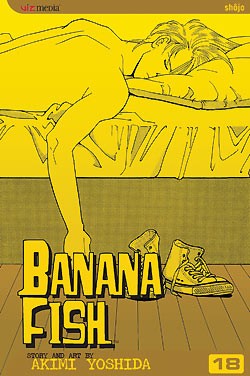
Breaking Down Banana Fish, Final

May 24, 2011 by MJ, Michelle Smith, Connie C., Eva Volin, Robin Brenner and Khursten Santos 25 Comments

Welcome again, and for the very last time, to our roundtable, Breaking Down Banana Fish!

We greet you this month with our final installment, covering volumes seventeen through nineteen of this epic series, as well as two side stories (“Angel Eyes” and “Garden of Light”) which are included in the final volume of the English-language edition of the manga. It’s hard to believe we’ve finally come to the end!

I’m joined again in this round by Michelle Smith (Soliloquy in Blue), Khursten Santos (Otaku Champloo), Connie C. (Slightly Biased Manga), Eva Volin (Good Comics For Kids), and Robin Brenner (No Flying, No Tights).

Just a note before we begin, this final edition of “Breaking Down Banana Fish” contains in-depth discussion of the series’ final chapters, including the outcome of the all series’ main conflicts and the fates of its characters. Obviously this means spoilers, so if you’re new to the series we recommend you begin reading along with the discussions listed below.

Read our roundtable on volumes one and two here, volumes three and four here, volumes five and six here, volumes seven and eight here, volumes nine and ten here, volumes eleven through thirteen here, and volumes fourteen through sixteen here. On to roundtable eight!

…

Read More

Filed Under: FEATURES Tagged With: banana fish, breaking down banana fish, roundtables

Pick of the Week: A Bride’s Story & Others

May 23, 2011 by Katherine Dacey, Michelle Smith, David Welsh and MJ 8 Comments

New manga from Kaoru Mori (unsurprisingly) steals the show at Midtown Comics this week, but check out our recommendations for additional picks as well!


KATE: A new Kaoru Mori manga is always cause for celebration, so I’m getting this week’s party started by recommending A Bride’s Story, which debuts on Wednesday. Like Emma and Shirley,A Bride’s Story is as much about the historical period — its customs, its social hierarchies, its clothing — as it about the characters. In this case, the setting is the Silk Road in the nineteenth century, and the characters are Amir, a twenty-year-oldwoman, and Karluk, her twelve-year-old husband. Their union is one of political expedience, but their growing respect for one another suggests that their marriage has the potential to evolve. Not a whole lot happens in the first volume, but the artwork is lovely, and the gently meandering storylines allow us to see just how capable and complex Amir really is. I’m already pining for volume two!

MICHELLE: I’m keen to read A Bride’s Story myself, but my pick this week goes to the second volume of Natsume Ando’s Arisa, back from a long hiatus as publishing rights shifted from Del Rey to Kodansha Comics. Volume one served up delicious shoujo creepiness as a tough girl named Tsubasa disguised herself as her more refined twin to figure out what in her school life caused her to attempt suicide, and ended just as she was on the verge of discovering the identity of “the King,” a mysterious person with the ability to grant any wish. Not only is the series back, it’s also on a bimonthly schedule from this point on.

DAVID: I’m going to have to second Kate’s pick of A Bride’s Story. I’m such a fan of Mori’s Emma that it would seem treasonous to do otherwise. (Though I’m also very much looking forward to Arisa.)

MJ: You can add me to the list of Manga Bookshelf-ers eagerly anticipating A Bride’s Story, but I’ll also take this opportunity to give a shout-out to one of my favorite shoujo series, Peach Pit’s Shugo Chara!. Kodansha Comics brings out volume 10 this week, following its long run with Del Rey Manga, and I can’t wait to pick it up! I’ve written a lot about this series (including a heartfelt plea for lowering its age rating) much of which can be accessed via my Shugo Chara! Evangelism post. After all that, can I pass up the chance to recommend it one more time? I think not!


Amazon.com Widgets


Readers, what looks good to you this week?

Filed Under: PICK OF THE WEEK Tagged With: a bride's story, arisa, shugo chara!

Bookshelf Briefs 5/22/11

May 23, 2011 by MJ, Katherine Dacey, David Welsh and Michelle Smith 6 Comments

This week, MJ, Kate, David, & Michelle take a look at a slew of manga from Viz Media and one lonely manhwa from Yen Press.


13th Boy, Vol. 7 | By Sangeun Lee | Yen Press – There are few currently-running romance series I find as charming as Sangeun Lee’s 13th Boy, and exactly none can match it in sheer whimsy. Volume seven’s main drama revolves around sometimes-talking-cactus Beatrice who, in the midst of some serious heartache, reverts to his human form off-schedule without any sign of turning back, placing him smack in the middle of Hee-So’s newfound romance without a comfortable pot to retreat to. It’s an absurd situation, obviously, but though the series’ author doesn’t try to deny that fact, the emotional drama created for the story’s main characters is utterly serious. Lee’s sense of humor never sinks to self-concious eye-rolling, even in its most outrageous moments. It doesn’t hurt that I kinda ‘ship the story’s heroine with the cactus. What can I say? Still recommended. -MJ

Afterschool Charisma, Vol. 3 | By Kumiko Suekane | Viz Media – After two volumes of build-up and teasing, Kumiko Suekane finally offers readers a reward for their patience: not only does stuff blow up in volume three, but Suekane drops a nasty little surprise in one of her characters’ laps, forcing him to question his very identity as a clone. Good as volume three may be, pacing remains an issue; every time Suekane stages a bit of comic relief, the series’ creepy, unsettling vibe dissipates in a cloud of fanservice and lame historical jokes. Still, Afterschool Charisma gathers enough momentum in these chapters to overcome its narrative weaknesses, ending on a cliffhanger that’s sure to please fans. And really, what’s not to like about a manga that portrays Freud and Mozart as petulant bishies, or Rasputin as the class bad boy? -Katherine Dacey

Detroit Metal City, Vol. 9 | By Kiminori Wakasugi | Viz Media – As I struggle to come up with a summary for this volume that might distinguish it from those before, I think it may be time to admit that I’ve reached my limit with this series. I’ve been a fan since the beginning, but as is the case with so many gag manga, Detroit Metal City has worn out its gag. Yes, Negishi still wants to be a Swedish pop star, and yes, he still reverts to his death metal alter-ego whenever things (inevitably) do not go right in his sweet, cheese-tart-filled life. Though it was once interesting (and certainly hilarious) to ponder on Negishi’s real personality, the question has long outlived its potential for fascination, and even the best jokes are beginning to wear thin. Detroit Metal City, it was good to know you. But all things must pass. -MJ

Gente, Vol. 3 | By Natsume Ono | Viz Media – Is this the best Ono title available in English? Heavens, no. Did I enjoy it a great deal? Certainly. This volume is even more of a collection of casually related shorts than the previous two, but they’re good shorts with a gracious nature and a warm sense of humor. Ono takes closer looks at the lives of the distinguished staff of the Ristorante Casetta Dell’Orso. We see one man’s life before he took up the work of a waiter, and it’s an intriguing surprise. A married couple, regulars at the restaurant, brings their marital strife to the dining room, sparking a lot of gossip and some intriguing revelations. There’s family, friendship, romance, and food, and there are many worse ways to spend a sunny afternoon than in the company of Ono’s cast. Should you also be reading House of Five Leaves? Clearly. -David Welsh

Saturn Apartments, Vol. 3 | By Hisaw Iwaoka | Viz Media – The third volume of Saturn Apartments serves a hearty slice of sometimes disheartening, sometimes uplifting, and sometimes downright mysterious life. It seems that everyone besides the members of the window washers guild themselves think it’s a wretched occupation, and Mitsu refuses several job offers from wealth clients before ultimately being able to prove the importance of his job to a former classmate. Meanwhile, underemployed engineer Sohta begins work designing a craft with the capability to descend to Earth and thinks Mitsu might just be the perfect candidate to test it out someday. I’d say this volume is still about 90% episodic, but a 10% focus on an ongoing plot is a welcome change! -Michelle Smith

Vampire Knight, Vol. 12 | By Matsuri Hino | Viz Media – Volume twelve advances the narrative a full year ahead: Cross Academy is in shambles, Yuki’s uncle Rido is presumed dead, and Yuki is about to make her vampire society debut. The time jump is a wise decision, allowing Matsuri Hino to transition away from school-oriented plot lines while bringing different characters to the fore. As rewarding as it is to see villain Sara Shirabuki get a proper turn in the spotlight, however, Vampire Knight still suffers from a glaring problem: mediocre artwork. Hino lavishes so much attention on hairstyles and accessories that more basic design elements — background detail, panel flow, facial expressions — often feel like an afterthought. Though hardcore fans will be more focused on the relationships than on the art, readers with a more casual investment in the story may find the blandly undifferentiated character designs an impediment to following the story. -Katherine Dacey

Filed Under: Bookshelf Briefs Tagged With: 13th boy, afterschool charisma, detroit metal city, gente, saturn apartments, vampire knight

Arisa 1 by Natsumi Ando

May 22, 2011 by Michelle Smith

From the back cover:
Tsubasa thinks that her pretty and popular twin sister, Arisa, has the perfect life. Everyone at school loves Arisa—unlike the hot-tempered Tsubasa, whose nickname is “the Demon Princess.” But when Arisa attempts suicide, Tsubasa learns that her seemingly perfect sister has been keeping some dark secrets. Now Tsubasa is going undercover at school—disguised as Arisa—in search of the truth. But will Arisa’s secrets shatter Tsubasa’s life, too?

Review:
So, you’ve read After School Nightmare and are casting about for more creepy and suspenseful school-based shoujo to consume. Have I got the manga for you!

Despite their different surnames, Tsubasa Uehara and Arisa Sonoda are twin sisters who, due to split custody arising from their parents’ divorce, have not seen each other in person for three years. They’ve kept in contact via letters, however, and tomboyish Tsubasa has envied her sister’s seemingly perfect life, as conveyed by her letters. When Arisa proposes they meet, Tsubasa is overjoyed, and she also goes along with her sister’s suggestion to pose as Arisa for the following day at school. Everything seems to go so well—Arisa is popular, respected by classmates and teachers, and has a cute boyfriend—until the end of the day when Tsubasa discovers a cryptic card in her sister’s shoe locker. “Arisa Sonoda is a traitor.”

Arisa is surprised to hear that Tsubasa had fun, and after cryptically remarking, “You don’t know their secrets… or mine,” leans backward out of the open apartment window. Trees break her fall enough that she survives, but the accident leaves her in a coma. Tsubasa, determined to find out what’s going on, returns to Arisa’s school and soon discovers a weekly ritual known as “King Time,” during which the students submit a wish to some mysterious person, who grants one per week. On this particular occasion, a pervy gym teacher is made to disappear quite effectively. When a fellow classmate questions his fate, she too receives the “traitor” notice and is thereafter bullied and ostracized. Did Arisa raise similar objections and receive the same treatment?

Mangaka Natsumi Ando handles Tsubasa’s confusion expertly, as students (particularly Arisa’s best friend, Mariko) go from chipper to menacing in the blink of an eye. Whom can she trust? Manabe, the bad boy who attacked her with a 2×4 but who also expressed a desire to destroy “the King”? Midori, Arisa’s mild-mannered and considerate boyfriend? At least she has an ally in her friend Takeru, who does some investigation on her behalf. I like how the initially friendly mood of the class breaks down into genuine creepiness, and am really looking forward to seeing how the mystery progresses from here.

The first volume of Arisa was published in English by Del Rey, but Kodansha Comics took over beginning with the second volume, which was released last Tuesday. (I’m saving that one for Wednesday’s Off the Shelf column.) The series is still ongoing in Japan, where it is currently up to seven volumes.

Review copy provided by the publisher.

Filed Under: Manga, Shoujo, Suspense Tagged With: del rey, Natsumi Ando

Shugo Chara! 1-9 by Peach-Pit

May 21, 2011 by Michelle Smith

Shugo Chara! has all the basic requirements for a magical girl series: costume changes, loads of sparkles and hearts, and a focus on dreams, believing in one another, and protecting the people one cares about. And yet somehow, it doesn’t feel generic at all!

The main character is Amu Hinamori, a shy fourth grader who, because of her awkward communication skills, comes off as tough and cool. As a result, her classmates admire her but keep their distance. One day, Amu wishes for the courage to “be reborn as the person I want to be,” and the next morning, she wakes up with three brightly colored eggs in her bed. One by one, the eggs hatch into Guardian Characters. There’s perky Ran, who is good at sports; level-headed Miki, who is good at artistic endeavors; and sweet Su, who is good at domestic tasks, especially cooking. Each one represents something that Amu would like to be, and can lend these traits to her as needed.

Eventually, Amu is invited to join a group at her elementary school known as the Guardians. Each of the other students has a Guardian Character of their own, and soon they become involved in fending off the efforts of an evil corporation known as Easter, who is extracting heart’s eggs from children (these represent their dreams for the future) and casually destroying them in their search for a particular wish-granting egg known as the Embryo. This aspect of the story reminds me of Sailor Moon, specifically the S season, where the villains are targeting victims with pure hearts and extracting their “pure heart crystals,” which are then examined to see whether they happen to be a “talisman.”

So far, the action in Shugo Chara! has spanned nearly two years (it’s the winter break of Amu’s sixth-grade year in volume nine) and is paced very well. The Guardians go up against Easter time and time again, but actually make progress—usually by reforming its operatives by reminding them of their own dreams—instead of being stuck in a “monster of the week” loop. New characters come and go, characters harbor and hint at their secrets, and everyone powers up at a believable rate of speed. Of course, Amu is the awesomest, eventually hatching a fourth Guardian Egg, and has the most power and tranformation potential, but this is somehow never irritating, nor is the fact that several boys fall for her over the course of the series.

The interpersonal relationships between the kids are also important. Amu has long had a crush on Tadase, the “king” figure of the Guardians, and though he initially rejects her, then goes through a period where he’s infatuated by one of her transformations, he eventually comes to return her feelings. Complicating matters is Ikuto, the tortured high school senior who’s being manipulated by Easter into doing their bidding. Amu can’t help but be interested in him, and he’s certainly flirty enough in his own right, but this brings about conflict with Tadase, who hates Ikuto due to an incident that occurred before the beginning of the series.

Friendship is equally important. Amu quickly becomes close with Nadeshiko, the “queen” of the Guardians, but Nadeshiko has a secret that she still hasn’t shared with Amu, and which might damage their friendship. Rima, who replaces Nadeshiko as queen after the latter departs to study dance abroad, is rather obnoxious at first, but once Amu understands where she’s coming from, a friendship begins to develop between them that allows Rima to enjoy her life more. A similar thing occurs with Utau, Ikuto’s little sister, who worked with Easter for a time in an effort to save her brother.

Even while expertly managing a long-term plot and evolving character relationships, Shugo Chara! doesn’t forget that a magical girl series needs a lot of cute. As mentioned, sparkles and hearts abound, as do feathers and twinkly crystals, like the Humpty Lock Amu carries, which matches the Dumpty Key in Ikuto’s possession. Sometimes things are carried to a silly extreme, though, particularly in the realm of the Character Transformations, which occur when a child merges with one of their Guardian Characters. Yaya, the youngest and most immature of the Guardians, wishes to forever remain a pampered baby, so her character transformation is suitably ridiculous, with a bib and a mysteriously large posterior. Her attack moves involve rubber duckies and mobiles. Tadase, meanwhile, transforms into a frilly and ruffled princely personage known as Platinum Royale. Hands up if you think that sounds like a stripper name!

Ultimately, Shugo Chara! is a lot of fun to read. It’s the perfect shoujo blend of feelings and fighting, and emphasizes the importance of figuring out one’s own goals and desires. Though the series is rated for ages 13+ (presumably because of the slightly steamy interaction between Amu and Ikuto), it would probably be suitable for kids the same age as its protagonists.

Shugo Chara! was originally published in English by Del Rey, who put out the first nine volumes. Kodansha Comics then took over releasing the series, the tenth volume of which just came out on May 10th. (I’m saving that one for an Off the Shelf column on Wednesday.) The series is complete in Japan with twelve volumes, and will wrap up in the US in September. Kodansha has also licensed Shugo Chara Chan!, a spin-off four-panel manga, which will debut in November.

Review copies for volumes seven and nine provided by Del Rey.

Filed Under: Fantasy, Manga, Shoujo Tagged With: del rey, Peach-Pit

License Request: Crazy for You

May 20, 2011 by Michelle Smith

I contributed a guest license request to David Welsh’s weekly feature at his blog, Manga Curmudgeon. My pick was Crazy for You, a six-volume shoujo series by Karuho Shiina, creator of Kimi ni Todoke: From Me to You, a series which I adore.

I don’t expect to love Crazy for You to the same extent, but it certainly sounds interesting! Check out the post for more details. In the meantime, I’ve got the German editions (published by TOKYOPOP!) on their way here, and will be getting my Google Translate on something fierce.

Filed Under: FEATURES Tagged With: Karuho Shiina

The Color of Love by Kiyo Ueda

May 20, 2011 by Michelle Smith

For this month’s BL Bookrack, I decided to check out The Color of Love, which was among the BL titles Amazon recently removed from its store for (theoretically) violating its content requirements.

Did it deserve this fate? Not in my opinion! Check out my review for the details.

Filed Under: Boys' Love, Manga Tagged With: digital manga publishing, Juné, Kiyo Ueda

  • « Go to Previous Page
  • Page 1
  • Interim pages omitted …
  • Page 140
  • Page 141
  • Page 142
  • Page 143
  • Page 144
  • Interim pages omitted …
  • Page 182
  • Go to Next Page »
 | Log in
Copyright © 2010 Manga Bookshelf | Powered by WordPress & the Genesis Framework